Skip to content

NAD+ has become one of the most talked-about compounds in the healthy-aging market. It appears in capsules, powders, liquid sticks, sublingual products, and wellness infusions, often surrounded by ambitious claims about energy, metabolism, brain health, skin, and longevity. The excitement is understandable. NAD+ is involved in cellular energy metabolism, DNA-related processes, stress responses, and the activity of enzymes that help cells adapt to changing conditions. The problem begins when a real biological role is turned into a guaranteed consumer benefit.
The most clearly demonstrated NAD+ supplement benefit is an increase in blood NAD+ or related metabolites after taking certain precursors, particularly nicotinamide riboside and nicotinamide mononucleotide. Possible benefits involving metabolic health, mobility, vascular function, sleep, and inflammation remain under investigation. Claims involving age reversal, longer lifespan, disease prevention, major weight loss, or instant energy have not been proven in humans.
That distinction can save people from both unnecessary skepticism and unrealistic expectations. NAD+ supplements are not meaningless simply because they have not been proven to reverse aging. At the same time, raising a laboratory marker does not automatically mean a person will feel younger, think faster, lose weight, or perform better. The most useful way to explore NAD+ is to separate what human trials consistently show from what early research suggests—and from what marketing has moved far ahead of science.
What Are NAD+ Supplement Benefits?
NAD+ supplements are intended to support the body’s NAD+ metabolism. The strongest evidence shows that certain oral precursors can increase circulating NAD+-related compounds. Whether that biochemical change produces a noticeable benefit depends on the ingredient, dose, tissue, health condition, and outcome being measured.
How Do NAD+ Supplements Work?
NAD+ supplements either provide NAD+ directly or supply precursor compounds that the body can convert through established biosynthesis and recycling pathways.
Nicotinamide adenine dinucleotide exists mainly in oxidized NAD+ and reduced NADH forms. These forms move electrons during metabolic reactions, helping cells extract energy from carbohydrates, fats, and amino acids. NAD+ is also consumed by enzymes involved in cellular signaling, DNA-damage responses, gene regulation, inflammation, and metabolic adaptation.
Products described as NAD+ supplements do not all use the same route. Some contain direct NAD+, while others contain precursor ingredients such as nicotinamide riboside, commonly called NR, or nicotinamide mononucleotide, known as NMN. Niacin and nicotinamide can also contribute to NAD+ production through vitamin B3 pathways.
After a person swallows a supplement, the ingredient must survive storage, digestion, intestinal conditions, absorption, circulation, and cellular conversion. It may be transformed before reaching the intended tissue. For this reason, the compound printed on the front of a package may not remain unchanged throughout the entire process.
NR and NMN have been studied more extensively as oral NAD+ precursors. Direct oral NAD+ has a smaller human evidence base, and questions remain about how much intact NAD+ is absorbed versus how much is broken into smaller components and reused.
What Does NAD+ Do in the Body?
NAD+ helps cells transfer energy and supports enzyme systems connected with metabolism, cellular repair, stress responses, gene activity, and normal mitochondrial function.
Every cell needs a steady way to move energy through biochemical reactions. NAD+ helps make that possible by accepting electrons and becoming NADH. NADH can later donate those electrons during processes linked to ATP production. ATP is the usable energy currency that supports muscle contraction, nerve activity, protein synthesis, transport across cell membranes, and daily cellular maintenance.
NAD+ is also used by sirtuins, poly-ADP-ribose polymerases, CD38, and other enzymes. These enzyme groups are studied in connection with metabolic regulation, DNA-damage responses, inflammation, immune activity, cellular stress, and aging biology.
This wide biological involvement explains why NAD+ products are marketed for many different goals. However, a molecule being essential does not mean that providing more will improve every related function. Water is essential, but drinking more water does not solve every cause of tiredness. Iron is essential, but extra iron does not help someone who already has adequate iron stores.
NAD+ supplementation is best viewed as an intervention aimed at a metabolic pathway. Its value depends on whether that pathway is meaningfully limited and whether supplementation changes an outcome that matters to the person using it.
Why May NAD+ Levels Decline?
NAD+ availability may change with aging, metabolic stress, inflammation, DNA damage, altered enzyme activity, illness, sleep disruption, and differences in nutrient intake.
Age-related NAD+ decline is often presented as though every person loses the same percentage at the same age. Human biology is not that uniform. NAD+ can be measured in whole blood, plasma, immune cells, skeletal muscle, skin, liver-related samples, or other tissues. Results from one compartment cannot automatically describe the entire body.
A recent review of NAD+ precursor research noted that consistent age-related decline in human NAD+ has been directly demonstrated in a more limited number of studies than popular discussions sometimes suggest. Evidence from animal models is stronger and more consistent, while human measurements vary by tissue, analytical method, age, health status, and study design.
Several mechanisms may still contribute to reduced NAD+ availability. The body may produce less, recycle it less efficiently, or consume more through enzymes activated by inflammation and cellular damage. Poor metabolic health may also influence the balance between NAD+ creation and use.
Rather than assuming everyone over a certain age has an NAD+ deficiency, it is more accurate to say that NAD+ metabolism may become less resilient in some people and tissues. This helps explain why individuals may respond differently to the same supplement.
Which NAD+ Supplements Raise NAD+?
NR and NMN currently have the clearest human evidence for increasing blood NAD+ or related metabolites. Evidence for direct oral NAD+ remains more limited.
Multiple controlled studies have shown that oral NR can increase whole-blood NAD+ and alter related metabolites. In one dose-ranging study, daily NR doses of 100, 300, and 1,000 milligrams produced dose-related increases in whole-blood NAD+ over eight weeks.
NMN has also increased blood NAD+ in several trials. A systematic review and meta-analysis covering 12 studies and 513 participants found that NMN supplementation significantly elevated blood NAD levels overall. Most clinically relevant outcomes, however, were not significantly different from control groups.
This pattern is central to understanding NAD+ supplement benefits. A precursor can successfully reach and affect the intended metabolic system without producing a large change in body weight, glucose control, muscle performance, cognition, or perceived energy.
Direct oral NAD+ products are appealing because they provide the complete named molecule. Yet the evidence cannot simply be copied from NR or NMN research. Direct NAD+, NR, and NMN have different chemical structures, metabolic routes, stability considerations, and research histories.
| Supplement form | Strongest current human evidence | Main limitation |
|---|---|---|
| Nicotinamide riboside | Raises blood NAD+ and related metabolites | Broader health outcomes remain inconsistent |
| Nicotinamide mononucleotide | Raises blood NAD+ in short-term trials | Long-term clinical value is unclear |
| Direct oral NAD+ | Emerging evidence and growing consumer use | Fewer controlled oral human trials |
| Niacin | Supports vitamin B3 and NAD+ pathways | May cause flushing at certain doses |
| Nicotinamide | Contributes to NAD+ synthesis | Higher intake does not prove anti-aging effects |
Are NAD+ Precursors More Effective?
NR and NMN are not proven to be universally superior, but they currently have more oral human research than direct NAD+ supplements.
A biochemical pathway diagram can make one precursor look better because it appears one step closer to NAD+. Human absorption and metabolism are more complicated. The ingredient must move through digestion, circulation, tissue transport, cellular uptake, and enzymatic conversion before it can influence a specific outcome.
NR has substantial evidence showing increased blood NAD+ and related metabolites. NMN also has a growing clinical research base, including studies using daily doses ranging from a few hundred milligrams to higher amounts. Direct comparisons between NR and NMN remain limited, so claims that one is definitively more effective for every person are premature.
A newer randomized study comparing different NAD+ boosters found that these compounds can have different effects on circulating metabolites, reinforcing the idea that they should not be treated as interchangeable simply because they all relate to NAD+.
The best choice may depend on the intended outcome, available human evidence, serving amount, formulation stability, delivery format, price, and personal tolerance. A well-documented dose of a researched precursor may be more useful than a larger but poorly explained proprietary blend.
Which NAD+ Supplement Benefits Are Proven?
The most reliable human finding is that NR and NMN can increase blood NAD+ or related metabolites. Short-term studies also suggest acceptable tolerability in selected adults. Broader claims involving anti-aging, cognition, weight loss, or increased physical performance have not reached the same level of evidence.
Do NAD+ Supplements Raise NAD+?
Yes. Human trials show that oral NR and NMN can raise circulating NAD+ or related metabolites, although individual responses and tissue-level effects may differ.
In a randomized crossover trial involving healthy middle-aged and older adults, NR supplementation increased NAD+ concentrations and was generally well tolerated. The study also explored cardiovascular measurements, but it was not large enough to establish NR as a treatment for cardiovascular disease.
NMN trials have produced similar biochemical results. One 60-day study examined daily doses of 300, 600, and 900 milligrams and reported increased blood NAD concentrations across active-treatment groups. The ingredient was generally well tolerated during the study period.
These findings demonstrate target engagement. In simple terms, the supplement reached the NAD+ metabolic system and changed measurable markers.
Target engagement is an important first step, but it is not the final answer. A cholesterol medication must do more than enter the bloodstream; it must change cholesterol and eventually reduce meaningful health risks. In the same way, a NAD+ supplement must do more than raise NAD+ before it can be described as improving aging, metabolism, cognition, or physical function.
How Fast Do NAD+ Supplements Work?
Blood NAD+ changes may appear after a single dose or within several weeks, while noticeable health outcomes may require longer and may not occur at all.
Some pharmacokinetic research has detected NAD+-related changes shortly after NR consumption. Longer controlled studies commonly evaluate participants after four, eight, or twelve weeks. This means the biochemical pathway may respond before a person notices any difference in daily life.
The phrase “works quickly” therefore needs context. If success means increasing a blood marker, changes may happen relatively soon. If success means improved walking ability, better sleep, increased strength, reduced fatigue, or improved glucose control, the timeline is less predictable.
A person’s experience can also be influenced by sleep, hydration, caffeine, diet, training, stress, and expectations. Feeling more alert one afternoon does not prove a supplement raised cellular energy. Likewise, not feeling a dramatic change does not prove the ingredient had no biochemical effect.
NAD+ precursors are not stimulants. They should not be expected to create the immediate sensation associated with caffeine. A reasonable trial period should match the goal being monitored and should avoid changing many other habits at the same time.
Which Biomarkers Do NAD+ Supplements Change?
Studies commonly measure whole-blood NAD+, immune-cell NAD+, NADH, nicotinamide metabolites, methylated breakdown products, and other compounds within the NAD+ metabolome.
Not every study measures the same marker. Some examine total blood NAD+, while others analyze peripheral blood mononuclear cells, plasma metabolites, skeletal muscle, or extracellular vesicles associated with neuronal tissues. This variation can make study results look more consistent than they actually are.
A trial may report a substantial rise in a related metabolite but only a smaller change in NAD+ itself. Another study may show a blood change without demonstrating a corresponding effect in muscle or brain tissue.
In older adults with mild cognitive impairment, NR increased blood NAD+ concentrations but did not improve cognition during the intervention. This is a clear example of a successful biomarker response without a matching functional outcome.
A separate study of healthy older adults found that NR increased NAD+ in plasma extracellular vesicles enriched for neuronal origin and altered several exploratory biomarkers. The research was valuable, but biomarker changes should not be interpreted as proof of disease prevention or cognitive improvement.
Are NAD+ Supplements Well Tolerated?
Short-term NR and NMN trials generally report acceptable tolerability, but long-term safety data and evidence in medically complex populations remain limited.
Studies have tested NR and NMN across a range of daily doses. Commonly reported complaints are usually mild and may include digestive discomfort, nausea, headache, changes in bowel habits, or fatigue. Serious supplement-related events have not been common in controlled oral trials involving carefully selected adults.
This evidence should still be interpreted within its limits. Many studies last only several weeks or months. Participants are often screened to exclude pregnancy, severe liver or kidney disease, active cancer treatment, unstable cardiovascular disease, and other conditions that could increase risk.
Product quality also matters. A clinical trial ingredient is tested for identity, purity, stability, and serving accuracy. A commercial product does not automatically share the same quality simply because its label names the same compound.
Oral supplements should also be separated from intravenous NAD+ services. The FDA has received reports of severe chills, shaking, vomiting, and fatigue after use of certain compounded injectable NAD+ products, with contamination by endotoxins identified as a concern.
Who May Notice NAD+ Supplement Benefits?
People with age-related, metabolic, vascular, or functional limitations may have more room for improvement than healthy adults whose NAD+ metabolism is already adequate.
This pattern is common in nutrition. Vitamin B12 produces a clearer benefit in someone with a deficiency than in someone with sufficient B12. Protein supplementation may help a person with low intake more than someone already meeting daily needs.
A small trial in postmenopausal women with prediabetes and overweight or obesity found that 250 milligrams of NMN daily for ten weeks improved muscle insulin sensitivity and selected insulin-signaling measures. The result was promising, but the study was small and did not establish the same effect in men, younger adults, healthy individuals, or people with diabetes.
Another trial found that NR improved six-minute walking distance in people with peripheral artery disease after six months. This result relates to a defined medical population with impaired walking—not to guaranteed exercise enhancement in healthy gym users.
The question is increasingly shifting from “Does NAD+ work?” to “Who responds, under what conditions, and for which outcome?”
| Evidence area | What research currently supports | Confidence |
|---|---|---|
| Blood NAD+ increase | Repeatedly demonstrated with NR and NMN | Relatively strong |
| Short-term tolerability | Generally acceptable in screened adults | Moderate |
| Tissue NAD+ changes | Demonstrated in selected studies | Developing |
| Noticeable daily energy | Inconsistent and difficult to isolate | Limited |
| General anti-aging effect | Not established in humans | Very limited |
Which NAD+ Supplement Benefits Are Possible?
Possible NAD+ supplement benefits include support for selected metabolic, vascular, muscular, neurological, inflammatory, and sleep-related outcomes. Human studies have produced promising signals, but results vary considerably. These areas deserve further study rather than universal claims about what every user should expect.
Can NAD+ Supplements Support Energy?
NAD+ is essential for cellular energy metabolism, but supplements have not been proven to provide an immediate or reliable energy boost for every user.
Cells need NAD+ to help process carbohydrates, fats, and amino acids. This metabolic role makes “energy support” biologically plausible. However, the word energy can describe several different experiences: physical endurance, mental alertness, reduced fatigue, motivation, wakefulness, or ATP production inside a cell.
A supplement may affect cellular metabolism without creating a noticeable feeling. It also cannot be expected to correct every cause of low energy. Fatigue can be related to poor sleep, anemia, thyroid dysfunction, infection, low calorie intake, dehydration, depression, medication effects, sleep apnea, or excessive training.
Human trials have not consistently shown a stimulant-like effect from NR or NMN. Some participants report subjective improvements, while others notice no clear difference. These experiences are difficult to interpret without controlled conditions.
The most accurate language is that NAD+ supports normal cellular energy pathways. Claims such as “instant energy,” “eliminates fatigue,” or “keeps you energized all day” go beyond what current human evidence can reliably support.
Can NAD+ Supplements Support Metabolism?
Early studies suggest possible metabolic effects in selected groups, but pooled evidence does not show consistent improvements in glucose control, insulin, or blood lipids.
Metabolic research has examined fasting glucose, insulin sensitivity, glycated hemoglobin, lipid profiles, liver fat, body composition, and energy expenditure. Results often differ between individual trials.
The study in postmenopausal women with prediabetes found improved muscle insulin sensitivity after NMN supplementation. This suggests that a targeted population with existing metabolic impairment may respond differently from healthy adults.
However, a 2024 review of eight randomized trials involving 342 middle-aged and older adults found no significant overall benefit of NMN for fasting glucose, fasting insulin, glycated hemoglobin, insulin-resistance measurements, or lipid profiles.
These two findings are not necessarily contradictory. A small, clearly defined subgroup may experience a benefit that disappears when results from broader populations are combined.
NAD+ supplements should not replace physical activity, resistance training, adequate sleep, dietary fiber, appropriate calorie intake, and medical management. Those strategies have much stronger evidence for supporting metabolic health.
Can NAD+ Supplements Support Muscle Health?
Research on muscle performance is mixed. Some trials report improvements in selected walking or aerobic measures, while others find no meaningful change in strength or function.
Skeletal muscle contains many mitochondria and requires efficient energy metabolism. Because muscle function commonly declines with age, it has become an important target for NAD+ research.
Some NMN studies have reported improvements in walking speed, aerobic capacity, or lower-limb function. A study in older adults found that twelve weeks of NMN supplementation increased blood NAD+ and produced selected changes in walking and sleep-related measurements.
Other trials have been less encouraging. A high-dose NMN study reported substantial dose-related increases in blood NAD+ but did not find significant improvements in body composition, muscle strength, muscle fatigability, aerobic capacity, or stair-climbing performance.
A 2025 systematic review and meta-analysis concluded that current evidence does not support NR or NMN supplementation for preserving muscle mass and function in adults with an average age above 60.
NAD+ supplements may eventually prove useful for selected mobility conditions, but they cannot replace training, protein intake, and recovery.
Can NAD+ Supplements Support Brain Health?
NAD+ precursors can influence blood and neurological biomarkers, but reliable improvements in memory, attention, or neurological disease outcomes have not been established.
The brain requires a large and continuous energy supply. It also depends on mitochondrial health, blood flow, cellular repair, and regulation of inflammation. These connections make NAD+ metabolism an active area of neurological research.
Studies have explored NR in mild cognitive impairment, Parkinson’s disease, neuroinflammation, and age-related cognitive changes. Researchers have demonstrated that oral supplementation can alter blood NAD+ and selected biomarkers associated with nervous-system function.
However, changing a biomarker is not the same as improving how a person thinks or functions. In the trial involving older adults with mild cognitive impairment, NR significantly increased blood NAD+ but did not improve cognition.
Research involving neuronal extracellular vesicles has identified changes in NAD+ and exploratory proteins associated with insulin signaling and inflammation. These findings may guide future trials, but they do not show that supplements prevent dementia or treat cognitive decline.
Persistent memory problems or brain fog should be medically evaluated rather than treated solely with a supplement.
Can NAD+ Supplements Support Healthy Aging?
NAD+ supplementation may influence pathways connected with aging, but human studies have not demonstrated a broad or reliable anti-aging effect.
Healthy aging involves much more than one molecule. It includes mobility, muscle mass, metabolic health, cognition, cardiovascular function, sleep, immunity, independence, and quality of life.
NAD+ is scientifically interesting because it participates in many processes that change with age. Selected trials have reported improvements in arterial stiffness, walking ability, muscle insulin sensitivity, sleep measurements, or inflammatory markers. Other studies have found strong biochemical changes without meaningful functional benefits.
A systematic review covering human and animal intervention studies through October 2025 concluded that NAD+-raising strategies show clear biological activity. Evidence for general anti-aging and wellness effectiveness in humans remains inconclusive.
This does not make the research unimportant. It shows that the field has moved beyond asking whether NAD+ can be raised. Researchers now need to establish whether raising it changes outcomes people care about.
Exercise, adequate protein, quality sleep, sun protection, preventive care, and management of blood pressure and glucose remain the foundations of healthy aging.

Which NAD+ Supplement Benefits Are Unproven?
NAD+ supplements have not been proven to reverse human aging, extend lifespan, prevent disease, cause substantial weight loss, or visibly rejuvenate skin. These ideas are often based on laboratory mechanisms, animal research, small exploratory studies, or personal testimonials rather than conclusive human outcomes.
Do NAD+ Supplements Reverse Aging?
No NAD+ supplement has been shown to reverse the overall biological aging process in humans, even when selected biomarkers change during supplementation.
Aging is influenced by genetic changes, epigenetic regulation, cellular senescence, altered immunity, mitochondrial dysfunction, protein damage, vascular changes, hormonal shifts, environmental exposure, and accumulated disease burden.
A supplement that influences one part of this network cannot automatically be described as reversing the entire process. Researchers sometimes use epigenetic clocks, inflammatory markers, mitochondrial measurements, or gene-expression patterns as indicators related to aging. These tools can be useful, but they do not directly show that a person has become biologically younger in every tissue.
In the mild cognitive impairment trial, exploratory analyses identified changes in certain epigenetic-age measurements. Cognitive performance did not improve, and the findings would require confirmation in larger studies specifically designed to evaluate biological aging.
Words such as “rejuvenation,” “cellular reset,” and “turn back time” can make early science sound far more conclusive than it is. Current evidence supports NAD+ pathway engagement, not proven age reversal.
Can NAD+ Supplements Extend Lifespan?
No controlled human study has shown that NR, NMN, direct NAD+, or another NAD+-raising supplement extends human lifespan.
Human lifespan research requires large populations, long follow-up periods, careful control of lifestyle and medical differences, and clear mortality outcomes. Most NAD+ trials last several weeks or months and include dozens of participants rather than thousands.
Animal studies can provide valuable information about mechanisms, dosing, and possible effects. They cannot guarantee the same result in humans. Laboratory animals have different lifespans, genetics, diets, environments, disease patterns, and exposure levels.
Even when an intervention improves lifespan in one animal model, it may not improve lifespan in another. A dose calculated relative to body weight can also create exposures that are difficult to reproduce safely or practically in humans.
NAD+ supplements may eventually contribute to healthspan—the number of years lived with good function—without extending maximum lifespan. At present, neither outcome has been established broadly enough to support longevity promises on consumer products.
Do NAD+ Supplements Improve Skin?
Oral NAD+ supplements have not been conclusively shown to reduce wrinkles, increase skin hydration, improve elasticity, or reverse visible skin aging.
Skin cells use NAD+ like other cells, and NAD+ participates in energy metabolism and cellular stress responses relevant to skin biology. That mechanistic relationship does not prove that an oral NAD+ supplement will visibly change the skin.
Skin appearance is influenced by ultraviolet exposure, smoking, sleep, genetics, hormones, nutrition, hydration, skincare products, air pollution, and age. A study that measures only blood NAD+ cannot support a direct skin claim.
Multi-ingredient formulas can make interpretation more complicated. A product may combine NAD+ with collagen peptides, hyaluronic acid, vitamin C, antioxidants, or plant extracts. Any observed change could come from one ingredient, several ingredients, lifestyle changes, or expectation.
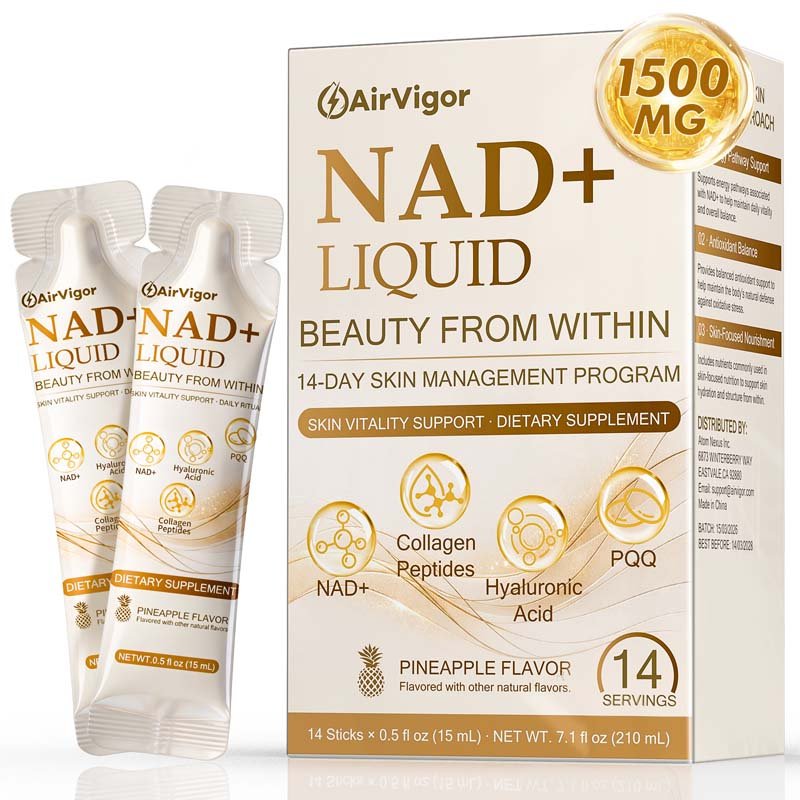
AirVigor’s liquid-stick concept combines NAD+ with ingredients such as collagen peptides, hyaluronic acid, PQQ, and quercetin. This creates a broader beauty and daily-wellness direction, but it should not be treated as proof that NAD+ alone produces visible skin rejuvenation.
Can NAD+ Supplements Support Weight Loss?
NAD+ supplements have not demonstrated reliable reductions in body weight or body fat and should not be presented as stand-alone weight-loss products.
The connection between NAD+ and energy metabolism can make weight-loss claims sound reasonable. The body’s weight regulation system is much broader. Calorie intake, appetite, activity, muscle mass, sleep, medication, hormones, stress, and the surrounding food environment all influence body composition.
Most NR and NMN studies have not shown meaningful reductions in body weight, body mass index, waist size, or fat mass. In the high-dose NMN trial, blood NAD+ increased substantially, yet body weight and body composition did not significantly improve.
A supplement might influence a selected metabolic marker without creating the sustained energy deficit required for fat loss. Improving insulin signaling in a specific tissue is also not the same as reducing body weight.
Claims such as “activates fat burning,” “restores a youthful metabolism,” or “melts stubborn fat” are not supported by current NAD+ clinical research.
Can NAD+ Supplements Prevent Disease?
NAD+ supplements are not proven to prevent or cure cancer, diabetes, dementia, cardiovascular disease, Parkinson’s disease, or other medical conditions.
NAD+ biology is complex because both healthy and diseased cells use metabolic pathways involving NAD+. Supporting a normal cellular process does not automatically prevent every condition connected with that process.
Research is exploring NAD+ precursors in peripheral artery disease, mild cognitive impairment, Parkinson’s disease, metabolic dysfunction, and rare premature-aging disorders. Some studies have produced promising signals. These are condition-specific research findings rather than evidence that general consumers can prevent disease by taking a daily supplement.
People receiving chemotherapy, radiation, immunotherapy, or treatment for a serious chronic disease should speak with their medical team before taking NAD+-related products. The same caution applies to people with severe liver or kidney disease, those preparing for surgery, and those taking medications with a narrow safety range.
Dietary supplements may support normal nutritional and physiological functions. They are not substitutes for screening, diagnosis, medication, rehabilitation, vaccination, or preventive medical care.
How Should You Evaluate NAD+ Supplement Benefits?
Evaluate NAD+ products by examining the ingredient form, disclosed amount, research relevance, quality controls, directions, packaging, and safety information. A high number on the front label is less useful when the ingredient identity, stability, testing, or expected outcome remains unclear.
Which NAD+ Supplement Form Is Best?
There is no single best form for everyone. The right choice depends on human evidence, serving amount, delivery preference, stability, transparency, and personal tolerance.
NR has a relatively established human research history and repeatedly increases circulating NAD+-related markers. NMN also has a growing clinical evidence base, although broader outcomes are inconsistent. Direct oral NAD+ requires more product-specific evidence because it cannot automatically rely on results from precursor trials.
Dosage form affects convenience. Capsules offer compact servings and straightforward storage. Powders may provide flexible amounts but require measuring and mixing. Liquid sticks offer premeasured portability and can be easier for people who dislike swallowing pills. Gummies may improve the experience but can limit ingredient capacity and introduce stability or sweetness concerns.
Convenience does not prove better absorption or stronger effects. However, a product that fits a person’s routine may be used more consistently than one requiring several preparation steps.
The best option is usually the one that clearly identifies its ingredients, provides meaningful serving information, matches the consumer’s preferences, and avoids claims that exceed the evidence for that specific form.
What NAD+ Supplement Dose Is Studied?
Clinical trials have tested a wide range of NR and NMN doses, but no single amount has been established as ideal for every person or goal.
NR studies have commonly used daily amounts ranging from approximately 100 to 1,000 milligrams, with some trials using higher intakes. In an eight-week study, 100, 300, and 1,000 milligrams of NR increased whole-blood NAD+ by approximately 22%, 51%, and 142%, respectively.
NMN trials have examined amounts ranging from approximately 125 milligrams to 2,000 milligrams per day. One controlled study reported increased NAD+ and acceptable short-term tolerability at doses up to 900 milligrams daily.
These numbers are study doses, not universal recommendations. The selected amount depends on the ingredient, participant population, duration, health status, and outcome.
A formula should clearly show:
- The specific NAD+-related ingredient
- The amount per serving
- The serving frequency
- Other active ingredients and amounts
- Storage and usage directions
- Relevant warnings and allergen information
Higher amounts may increase cost without creating a greater meaningful benefit.
How Long Should You Use NAD+ Supplements?
Most human trials last several weeks or months, and there is no universally established duration for long-term NAD+ supplementation.
A supplement trial should begin with a realistic and measurable goal. “I want to become younger” cannot be tracked meaningfully. “I want to monitor afternoon fatigue, sleep quality, walking tolerance, or training recovery over eight weeks” is more specific.
Even then, changes can be influenced by many factors. Starting a NAD+ supplement while changing diet, caffeine intake, exercise, bedtime, and several other supplements makes it difficult to identify what caused a result.
Blood NAD+ may increase before a noticeable benefit appears. A person may also experience a biochemical change without feeling different. This does not mean the product must be continued indefinitely.
After a defined period, users can evaluate adherence, cost, tolerance, and whether the original goal has changed. Continuing simply because a subscription renews automatically is not the same as making an informed decision.
Long-term human safety data remain less extensive than short-term data, so ongoing use should be reviewed when health conditions, medications, or personal needs change.
Who Should Avoid NAD+ Supplements?
Pregnant or breastfeeding people, children, medically complex adults, and people receiving cancer treatment should seek professional guidance before using NAD+-related supplements.
Anyone with unexplained or persistent fatigue should avoid assuming that low NAD+ is the cause. Fatigue may result from anemia, thyroid conditions, infection, sleep apnea, nutrient deficiencies, medication effects, anxiety, depression, blood-sugar disorders, or other medical concerns.
Extra caution is appropriate for people with severe liver or kidney disease, active cancer, unstable cardiovascular conditions, upcoming surgery, or multiple prescription medications.
Intravenous NAD+ should not be treated as a stronger version of an oral dietary supplement. IV administration introduces separate risks involving sterility, venous access, infusion reactions, preparation quality, and dosing. FDA reports involving compounded injectable NAD+ reinforce the importance of distinguishing oral products from medical infusion services.
People should also stop using a product and seek appropriate advice when they experience persistent digestive symptoms, allergic reactions, unusual fatigue, dizziness, or another unexpected response.
How Does AirVigor Approach NAD+ Supplements?
AirVigor focuses on ingredient transparency, formulation logic, dosage-form convenience, quality management, realistic communication, and consistent product experience rather than exaggerated anti-aging promises.
AirVigor develops dietary supplements through a coordinated process involving nutritional research, food engineering, formulation evaluation, raw-material review, production management, packaging testing, and label verification.
According to the company’s operating framework, raw materials are reviewed according to supplier qualifications, identity requirements, purity considerations, formula compatibility, and production needs. Manufacturing partners operate under systems associated with GMP, HACCP, ISO, FSSC 22000, and FDA facility-registration requirements.
For a NAD+ product, this approach should be visible in practical details rather than hidden behind scientific language:
- Clearly identified active ingredients
- Understandable serving amounts
- No undisclosed dilution or substitution
- Directions that match the dosage form
- Packaging suited to product stability
- Market-specific label and warning reviews
- COA and related quality documentation
- Claims aligned with the available evidence
AirVigor’s liquid-stick format is intended to make daily supplementation easier for people who prefer a portable, premeasured option. Its broader formula direction may include NAD+, collagen peptides, hyaluronic acid, PQQ, and quercetin, combining cellular-wellness and beauty-nutrition concepts in one convenient format.
| Quality question | What to look for |
|---|---|
| Is the NAD+ form named? | NR, NMN, direct NAD+, or another clearly stated source |
| Is the amount disclosed? | Exact amount per serving, not only a blend total |
| Are claims realistic? | Cellular and nutritional support rather than disease cures |
| Is quality documented? | Identity, purity, production, and batch records |
| Is the format practical? | Easy serving, storage, opening, and daily use |
| Is the label understandable? | Clear directions, warnings, and ingredient information |

Conclusion
NAD+ supplements sit between established biochemistry and developing human research. The proven benefit is relatively narrow but meaningful: NR and NMN can increase blood NAD+ or related metabolites, and short-term clinical trials generally report acceptable tolerability in screened adults. This shows that oral supplementation can influence the intended metabolic pathway.
The possible benefits are more conditional. Research has produced encouraging findings involving muscle insulin sensitivity, walking distance, selected vascular measurements, sleep, inflammation, and neurological biomarkers. Other well-designed studies have found no meaningful improvement in cognition, muscle performance, body composition, glucose control, or daily function. NAD+ supplements have not been proven to reverse aging, extend human lifespan, prevent disease, guarantee increased energy, or produce reliable weight loss.
AirVigor approaches this category through transparent ingredient selection, clearly presented formulas, convenient dosage forms, manufacturing coordination, packaging evaluation, and realistic product communication. Consumers interested in AirVigor branded NAD+ products may contact the team for availability and ordering support. Retailers, distributors, wellness companies, and supplement brands may also request custom formulation, samples, packaging options, minimum-order information, and OEM or ODM pricing.