Skip to content

Electrolyte powders and electrolyte capsules are often treated as if they were simply two delivery styles for the same result. In real use, the difference is more meaningful. University Hospitals notes that electrolyte powders and similar add-to-water products have become popular because they are convenient to carry and quick to use. MD Anderson, however, frames the question in a more useful way by identifying the specific conditions in which electrolyte support matters most: prolonged sweating, heavy exercise, vomiting, diarrhea, and long periods in extreme heat. Once those two points are placed together, the comparison becomes clearer. The better format is not the one that looks more modern or more convenient in isolation. The better format is the one that best matches the body’s real hydration demand.
Electrolyte powder is often the stronger choice when the goal is more deliberate rehydration, especially after sweating, in heat, or when fluid-plus-electrolyte intake needs to feel more substantial. Capsules often become the stronger choice when the priority is compactness, pre-portioned intake, and low-clutter convenience. The real decision usually depends less on format preference and more on whether the customer needs stronger hydration support or simpler supplement-style usability. Verywell Fit’s expert review supports this distinction directly, noting that drinks and powders generally provide greater hydration benefit than more compact supplement formats because they deliver more electrolytes together with more water.
That distinction matters because customers are rarely asking a theoretical nutrition question. The practical questions are much sharper: what belongs in a gym bag, what makes more sense on a hot travel day, what feels easier after a sweat-heavy session, and what creates a more complete recovery routine instead of a minimal supplement habit. Once the comparison is framed as hydration-first use versus supplement-first use, it becomes much easier to explain why powder and capsules can both be useful without serving the same purpose equally well.
What Is the Difference Between Electrolyte Powder and Capsules?
The most important difference is not that one contains electrolytes and the other does not. Both do. The more important difference is delivery logic. Powder is usually mixed into a larger volume of water, which makes it part of a hydration act. Capsules are usually swallowed as a compact supplement, which makes them easier to carry and easier to portion, but less naturally connected to a fuller rehydration routine. University Hospitals emphasizes convenience and quick use for add-to-water formats, while Banner Health highlights supplement formats for portability, exact dosing, and on-the-go use, while also noting that they may take longer to absorb than powders or drinks.
What does electrolyte powder do?
Electrolyte powder is generally built to support hydration in a more deliberate way because it is consumed together with water. Harvard explains that electrolyte beverages are designed to help rebalance fluid and mineral levels, and Northwestern Medicine adds that hydration is not only about drinking fluids, but also about having the electrolytes needed to move fluid in and out of cells properly. When powder is mixed into a bottle or shaker, the user is not merely swallowing minerals. The user is pairing electrolyte intake with a meaningful fluid intake, and that changes the practical value of the product.
This matters because many customers are not simply trying to “take electrolytes.” They are trying to recover from a real hydration burden. A powder format often fits that goal better because it naturally encourages a more complete response: mix, drink, and restore. MD Anderson’s guidance on prolonged sweating, heavy exercise, heat exposure, vomiting, and diarrhea aligns closely with this use pattern. In those situations, the value of the product is not only what minerals it contains. The value is that it supports fluid-plus-electrolyte replacement in the same step.
The table below summarizes the hydration-first role using the guidance above.
| Product type | Main strength | Best-fit situations |
|---|---|---|
| Electrolyte powder | More deliberate hydration support | Heat, sweating, structured recovery, travel strain |
| Electrolyte capsules | Compact supplement delivery | Portability, low-clutter routines, pre-portioned intake |
That is why electrolyte powder is usually better understood as a rehydration format, not simply as a flavored supplement.
What do electrolyte capsules do?
Electrolyte capsules usually appeal to customers who want compactness, portability, and more exact serving control. Banner Health says supplement-style electrolyte products are convenient and portable, easy to take on the go, and give an exact electrolyte dose without added sugar or calories. It also notes, however, that these products may have no flavor, require access to drinking water, and may take longer to absorb than powders or drinks. Those details capture the format well: capsules are efficient and easy to transport, but they do not naturally create the same hydration behavior as a water-mixed powder.
This matters because convenience is not a superficial detail in hydration products. A format that fits in a small pouch, pocket, or carry-on is much more likely to be present when needed. Capsules solve the availability problem extremely well. The tradeoff is that availability is not the same as full hydration support. A capsule may be the easier format to keep nearby, but it does not automatically create the same fluid intake that a powder mixed into a bottle encourages. That is the central tradeoff customers need to see clearly. Capsules usually look stronger before the hydration moment begins. Powders usually look stronger once the hydration moment actually arrives.
The practical strengths of the capsule format can be summarized in this way.
| Capsule advantage | Why it matters |
|---|---|
| Pre-portioned intake | Easier serving consistency |
| Small physical format | Better for travel and everyday carry |
| Lower routine clutter | No scoop, no packet tearing, no flavor prep |
| Easy backup option | Simple to keep nearby |
That is why capsules are best understood as a supplement-first format, not automatically a hydration-first one.
How are the two used differently?
The two formats are often used differently because they solve different customer problems. Powder is more often chosen when the person wants the hydration act itself to feel more complete: mix, drink, and recover. Capsules are more often chosen when the person wants fast, compact, predictable intake with less mess. University Hospitals frames electrolyte supplements around convenience, while MD Anderson makes it clear that electrolyte support becomes most relevant under real fluid-and-mineral strain rather than on every ordinary day. Taken together, those points suggest a practical rule: the heavier the hydration demand becomes, the more natural the case for a water-mixed format becomes.
This matters because the phrase “easy to use” can hide very different expectations. Easy to carry is not the same as easy to turn into a serious rehydration response. A capsule may be easier before the user needs it. A powder may be easier once the user decides to respond properly to sweat loss, heat, or recovery strain. The better product decision usually begins with a clearer question: is the customer mainly solving a portability problem or a rehydration problem? In many cases, that question determines the better format more reliably than any general statement about which category is “best.”
Which Is Better for Hydration?
For hydration specifically, powder usually has the stronger case because it naturally pairs electrolytes with a more meaningful fluid intake. University Hospitals discusses electrolyte powders and tablets as rehydration tools, while MD Anderson links electrolyte support to the conditions where rehydration becomes more demanding: sweating, heat, vomiting, and diarrhea. Northwestern Medicine adds a key physiological point: without the right electrolyte balance, drinking water alone may not adequately hydrate the body in some situations. Powder fits that hydration logic especially well because it is typically consumed as part of a drink rather than as a compact swallow-and-move-on supplement.
Is powder better for stronger rehydration?
In many targeted-use situations, yes. Powder often supports stronger rehydration, not because the powder itself is inherently superior, but because the format is tied to a larger fluid intake and a more complete rehydration behavior. Verywell Fit’s expert review states that drinks and powders generally provide greater hydration benefit than more compact supplement forms because they contain more electrolytes and more water for hydration. When the body is recovering from heavy sweat loss or heat exposure, that relationship between electrolytes and fluid becomes especially important.
This matters because customers sometimes overvalue compactness and undervalue fluid volume. A capsule can feel efficient, but hydration support is not only about swallowing minerals. It is about restoring a better fluid-and-mineral balance. That is one reason powders are often preferred after long workouts, hot outdoor work, or repeated sweating. In those conditions, a format that naturally encourages a more meaningful amount of water usually fits the recovery logic better than one that emphasizes compact delivery above all else.
The following comparison summarizes that difference.
| Hydration goal | Better fit |
|---|---|
| Light convenience use | Capsules may be enough |
| More deliberate rehydration | Powder often fits better |
| Heat-heavy or sweat-heavy support | Powder often fits better |
| Carry-first convenience | Capsules often fit better |
That is why the hydration comparison should be judged by fluid need and strain level, not only by supplement format.
Do capsules work well enough for light support?
Yes, often they do. Capsules can make sense when the need is modest, the user wants a compact option, and the hydration support does not need to feel especially substantial. Cleveland Clinic emphasizes that electrolyte products should be reviewed carefully rather than assumed useful by default, and that moderation matters. That guidance fits capsules well in lighter-use situations, where convenience and serving discipline may matter more than building a full rehydration routine.
This matters because not every electrolyte moment is a heavy-recovery moment. A traveler wanting a backup option, a commuter wanting a compact reserve supplement, or a customer with a light routine may not need the most fluid-forward format available. In those cases, the most useful product is often the one that is actually present, easy to count, and easy to take. Capsules perform strongly there. Their role is often sufficient and efficient, even if they are not always the strongest answer after larger fluid loss.
Which one makes more sense after sweating or heat?
After significant sweating or heat exposure, powder usually makes more sense because the hydration demand is higher and the need for fluid-plus-electrolyte replacement becomes more obvious. MD Anderson directly identifies prolonged sweating and extreme heat as situations where electrolyte drinks can be useful. Northwestern Medicine also explains that electrolytes help move fluid properly in and out of cells, which is one reason fluid replacement can feel more complete when electrolytes are consumed in a drink format rather than as a minimal supplement dose.
This matters because once the body is genuinely under strain, compact convenience becomes less important than the quality of the rehydration response. Heat and heavy sweating usually shift the need away from “easy to carry” and toward “more effective hydration support.” That is where powders usually gain a practical advantage. They are easier to build into a defined amount of water and easier to position as a fuller recovery step. Capsules may travel better, but powders often recover better when the loss is larger.
This practical situation map reflects the guidance above.
| Situation | Better fit |
|---|---|
| Mild routine support | Capsules may be enough |
| Travel backup use | Capsules often fit well |
| Heavy sweating | Powder often fits better |
| Heat-heavy recovery | Powder often fits better |
That is why the hydration comparison should start with the level of strain, not with which format looks cleaner in the supplement cabinet.
Which Is Easier to Use?
Electrolyte capsules are usually easier to carry, store, and portion, while electrolyte powder is often easier to use when the goal is more deliberate hydration support. University Hospitals notes that add-to-water electrolyte formats are convenient to carry and quick to use, while Banner Health highlights supplement-style electrolyte products for portability and exact dosing. Banner also notes that these supplement formats may take longer to absorb than powders or drinks and still require access to drinking water.
This distinction matters because convenience is not one question. It includes portability, dose accuracy, flavor experience, mixing effort, storage, and how naturally the product fits daily behavior. A capsule may be easier before the hydration moment begins because it is compact and low-clutter. A powder may be easier once the hydration moment begins because it encourages a fuller fluid intake and feels more like a complete rehydration step. That is why the better format depends on what kind of convenience the customer actually values.
Which one is easier to carry?
For pure portability, capsules usually have the advantage. Banner Health describes supplement-style electrolyte products as convenient and portable, which is one of the clearest reasons customers choose them for travel, commuting, hiking, and workday routines. A capsule bottle or blister pack usually takes up less room than a powder tub and often less room than multiple sachets or sticks.
This matters because a hydration product only helps if it is present when the need appears. Many customers do not fail because the formula is weak. They fail because the product stayed at home. Capsules solve that problem well. They reduce bulk, reduce mess, and make it easier to keep a backup option in a carry-on, desk drawer, glove compartment, or small pouch. Powders can still travel well, especially in single-serve formats, but capsules usually create less physical friction in highly mobile routines.
| Carry question | Powder | Capsules |
|---|---|---|
| Fits in a very small pouch | Moderate | Strong |
| Easy to keep several servings nearby | Moderate | Strong |
| Better for travel-light routines | Moderate | Strong |
| Better for minimal bulk | Moderate | Strong |
That is why capsules often win the carry-first convenience part of the comparison, even when they do not always win the broader hydration comparison.
Which one gives better dose control?
For serving precision, capsules often have the edge. Banner Health says supplement-style electrolyte products provide an exact dose, and that is one of the format’s clearest strengths. A capsule creates a fixed serving unit, which reduces casual overserving and makes the routine feel more controlled.
This matters because serving drift is common with scoop-based products. A customer who is rushed, traveling, or using a large container may under-scoop or over-scoop powder without realizing it. Capsules reduce that margin of error. That does not automatically make them better overall, because exact dosing is only one part of good hydration support. But for customers who care strongly about repeatability, especially during travel or tightly scheduled routines, capsules often feel more disciplined and easier to use consistently.
| Portion question | Powder | Capsules |
|---|---|---|
| Exact serving built in | Sometimes | Often |
| Higher chance of user variation | Higher | Lower |
| Easier to repeat the same dose daily | Moderate | Strong |
That is why capsules usually look stronger when dose consistency is the main priority.
How do taste and water intake change the choice?
Taste and water intake often shift the decision more than customers expect. Powder usually offers a more beverage-like experience and often gives the user a clearer reason to drink a meaningful amount of water at the same time. Capsules remove flavor entirely, which some customers prefer, but they also remove the “mix and drink” behavior that a powder naturally creates. Northwestern Medicine explains that electrolytes matter because they help move fluid in and out of cells properly, which makes fluid intake part of the practical outcome, not just a side detail.
This matters because routine adherence is strongly shaped by experience. Some users prefer a flavored drink because it helps them consume more fluid. Others prefer capsules because they do not want sweetness, mixing steps, or flavor fatigue. The better format therefore, depends on whether the user wants a hydration ritual or a quick supplement action. Powder often fits the first pattern. Capsules often fit the second.
| Experience question | Powder | Capsules |
|---|---|---|
| More beverage-like | Stronger | Weaker |
| Lower physical clutter | Moderate | Stronger |
| More likely to increase water intake | Stronger | Weaker |
| Better for quick supplement-style use | Moderate | Stronger |
That is why ease of use should include both the physical format and the hydration behavior it creates.

Which Is Better for Daily Use?
For daily use, the better choice usually depends on whether the customer needs portable light support or more deliberate hydration support. University Hospitals notes that electrolyte supplements are popular with both athletes and non-athletes because they are convenient, while the Cleveland Clinic says electrolyte powders and tablets can both help, provided the formula is reviewed carefully. MD Anderson, however, makes an important distinction: electrolyte support becomes easier to justify in vomiting, diarrhea, prolonged sweating, and long exposure to extreme heat, not simply because a product is available.
This matters because daily use is not one scenario. One customer may want a backup option for work, flights, and commuting. Another may want more serious support for training, sweat-heavy routines, or repeated heat exposure. Those routines call for different strengths. Capsules often fit better when the routine is light, mobile, and convenience-centered. Powder often fits better when the routine requires a fuller hydration act and a more structured recovery step.
Are capsules better for travel and convenience?
In many cases, yes. Capsules are often better for travel and convenience because they are smaller, easier to pack, and easier to keep on hand without clutter or liquid weight. Banner Health’s emphasis on portability and exact dosing makes capsule-style electrolyte products especially attractive for customers who want a low-friction backup option.
This matters because travel creates two problems at once: hydration becomes less predictable, and carrying extra product becomes more annoying. Capsules solve the preparedness problem efficiently. They may not always be the strongest answer for serious rehydration, but they are often the easiest answer for staying ready without hassle. That makes them especially relevant for flights, road trips, conferences, long commutes, and hot days when the customer wants something nearby but does not want to carry bottles or multiple packets.
| Travel or convenience need | Powder | Capsules |
|---|---|---|
| Smallest carry format | Moderate | Strong |
| Easy backup option | Moderate | Strong |
| Lower packing hassle | Moderate | Strong |
| Minimal routine clutter | Moderate | Strong |
That is why capsules often win when convenience is defined mainly as carry-first simplicity.
Is powder better for targeted support?
Yes, in many situations. MD Anderson points to vomiting, diarrhea, prolonged sweating, and long exposure to extreme heat as the clearest situations where electrolyte drinks are useful. Northwestern Medicine also explains that electrolytes help fluids move in and out of cells properly. Because powder is usually consumed with a more meaningful amount of water, it often fits those higher-strain situations more naturally than a capsule format.
This matters because targeted support is not only about taking electrolytes. It is about creating a stronger fluid-plus-electrolyte response. Powder usually leads the user into drinking more water at the same time, which makes the hydration step feel more complete. Capsules may still help, but powders often feel stronger when the customer is not merely topping up minerals lightly, but actively trying to recover after strain. That is especially relevant for sports, outdoor work, hot weather, and more serious rehydration routines.
| Support question | Powder | Capsules |
|---|---|---|
| Better for a fuller hydration routine | Stronger | Moderate |
| Better after heavier sweating | Stronger | Moderate |
| Better for light backup use | Moderate | Stronger |
| Better for fluid-plus-electrolyte recovery | Stronger | Moderate |
That is why powders generally become more attractive as the hydration need becomes more functional and less casual.
Which one fits workouts and active routines better?
For more active routines, powder often has the advantage, especially when sweat loss and fluid replacement matter. University Hospitals notes that electrolyte products are popular with active users, and MD Anderson’s condition-based guidance makes it clear that electrolyte support becomes more useful as sweating and heat exposure increase. In those conditions, a format tied to a larger fluid intake generally fits the recovery logic more naturally.
This matters because not all workouts create the same hydration demand. A short, cool, low-sweat session may not require much more than convenience, and capsules may be sufficient. A long, hot, sweat-heavy session creates a different need. In those conditions, the better format is usually the one that supports more fluid intake and a clearer recovery pattern. Powders fit that pattern well. Capsules still have value, especially before or after activity when portability matters, but they are often better understood as lighter-support tools rather than the strongest format for more demanding rehydration.
| Active routine | Better fit |
|---|---|
| Light exercise with low sweat loss | Capsules may be enough |
| Travel workout backup | Capsules often fit well |
| Long session with heavy sweating | Powder often fits better |
| Heat-heavy recovery | Powder often fits better |
That is why the best daily-use choice depends on what “daily” actually means in the customer’s life: light support and portability, or more deliberate hydration recovery.
What Should You Look For in the Formula?
When customers compare electrolyte powder and capsules, the format is only part of the decision. The formula often matters more. The American Heart Association notes that electrolyte products can vary widely in sodium, potassium, magnesium, sugar, and calories, while the Cleveland Clinic advises customers to review powders, tablets, and similar products carefully so they get the electrolytes they want without unnecessary sugar or dyes. That means the stronger product is not automatically the one in the more convenient format. It is the one whose composition matches the actual hydration demand the customer is trying to address.
This matters because powder-versus-capsules can easily become the wrong question if the label is weak. A capsule may be compact and easy to swallow, but still too light for heat-heavy or sweat-heavy use. A powder may look more substantial, but still be too sugary or too aggressive for mild daily support. A better formula is one that makes its purpose visible through the numbers: the sodium level, the supporting electrolytes, the sugar load, the serving size, and the instructions. When those pieces align, the product feels more trustworthy and easier to use correctly.
Which electrolytes matter most?
For many hydration situations, the electrolytes that matter most are sodium, potassium, magnesium, and chloride. Cleveland Clinic explains that electrolytes help regulate fluid balance and support the heart, muscles, brain, and nerves. The American Heart Association also highlights sodium, potassium, and magnesium as major variables across electrolyte products, which is one reason labels in this category can differ so much in practical usefulness.
This matters because customers often over-focus on category language and under-focus on electrolyte function. A long ingredient list can look impressive without being especially useful. For hydration support, the more helpful question is whether the core electrolytes are present in a relationship that fits the intended use. A formula for heat, sweating, or structured recovery should not look the same as one meant for lighter, more casual support. In that sense, formula quality begins with electrolyte logic, not with the number of ingredients on the label.
A practical ingredient guide helps:
| Electrolyte | Why it matters |
|---|---|
| Sodium | Central for fluid balance and sweat-related replacement |
| Potassium | Supports broader electrolyte balance and muscle function |
| Magnesium | Supports muscles, nerves, and heart function |
| Chloride | Works with sodium in hydration balance |
That is why stronger formulas usually look more disciplined than decorative. They put the main minerals in a useful relationship and make that relationship easier to understand.
Is the sodium level more important than format?
In many workout, heat, and recovery situations, yes. Ohio State notes that sodium is the primary electrolyte people lose in sweat, and the American Heart Association also points out that sports and electrolyte products vary substantially in sodium content. That means sodium level often tells the customer more about the formula’s real purpose than the delivery format does. A compact capsule with a weak sodium profile may be less useful after heavy sweat loss than a powder designed around clearer replacement logic.
This matters because format answers only part of the problem. Capsules may solve portability and dose precision. Powder may solve fluid-plus-electrolyte delivery more directly. But if the formula is not aligned to the actual loss pattern, neither advantage matters as much. A more sodium-aware product tends to make more sense after long exercise, heat exposure, or outdoor work. A lighter formula may be more suitable for casual support. The better choice, therefore, depends on the relationship between sodium level and use case, not on whether the product comes in a scoop or a capsule shell.
A practical comparison helps:
| Recovery question | Lower-sodium formula | More sodium-aware formula |
|---|---|---|
| Light routine support | May be enough | May be unnecessary |
| Heavy sweating or heat | May feel insufficient | Often makes more sense |
| Structured rehydration need | Sometimes limited | Often a better fit |
That is why customers comparing powder and capsules should often check sodium before they decide which format feels more attractive.
How can AirVigor position itself as the better option?
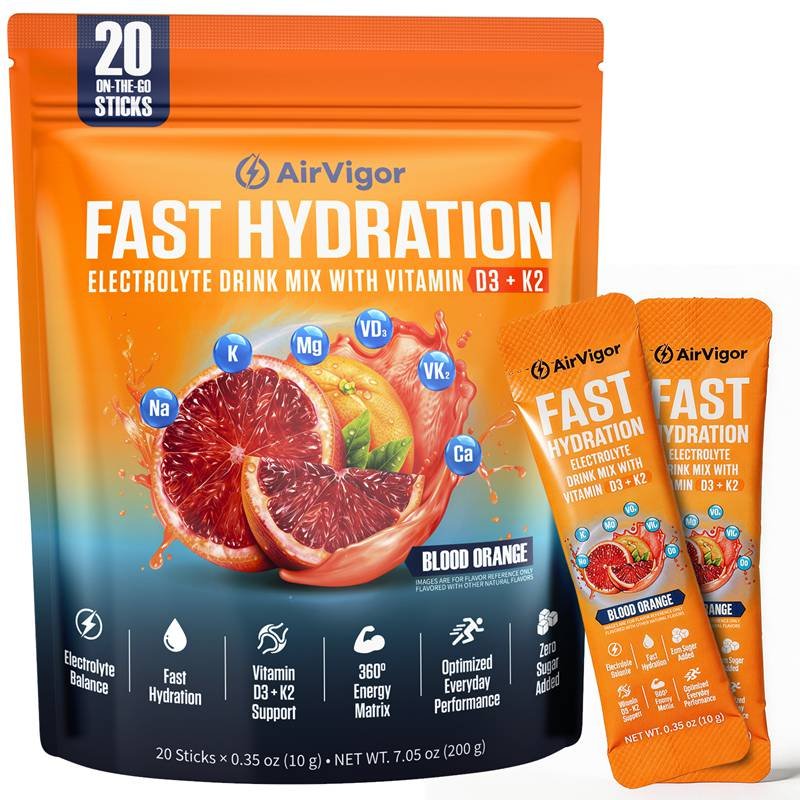
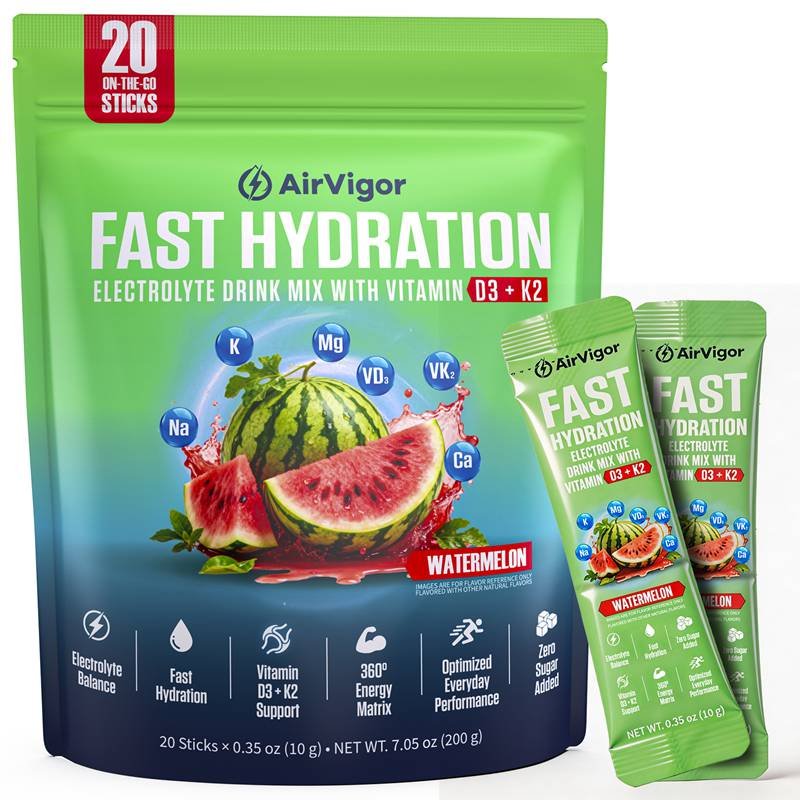
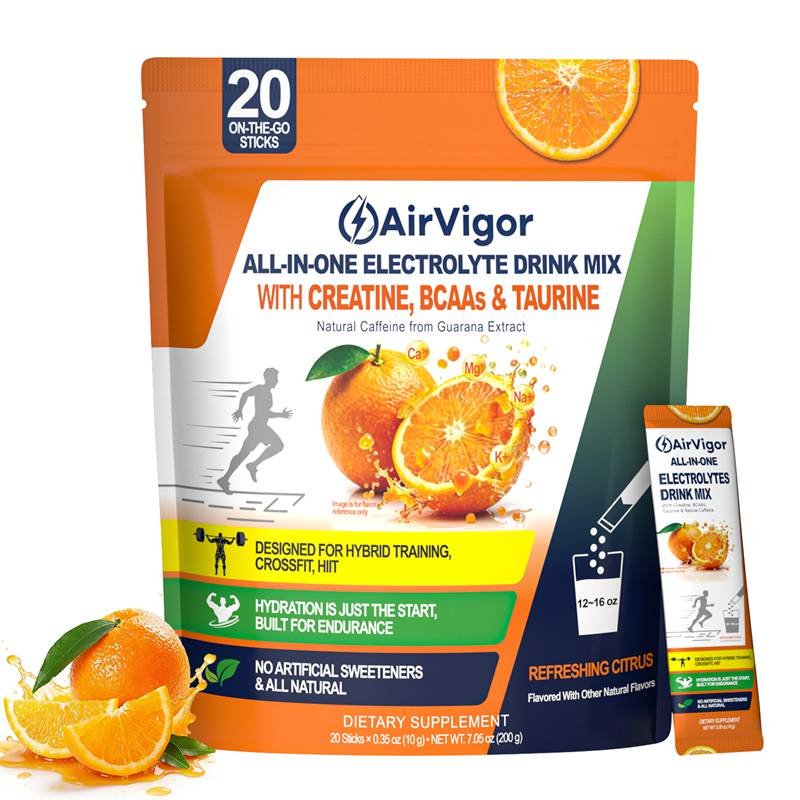
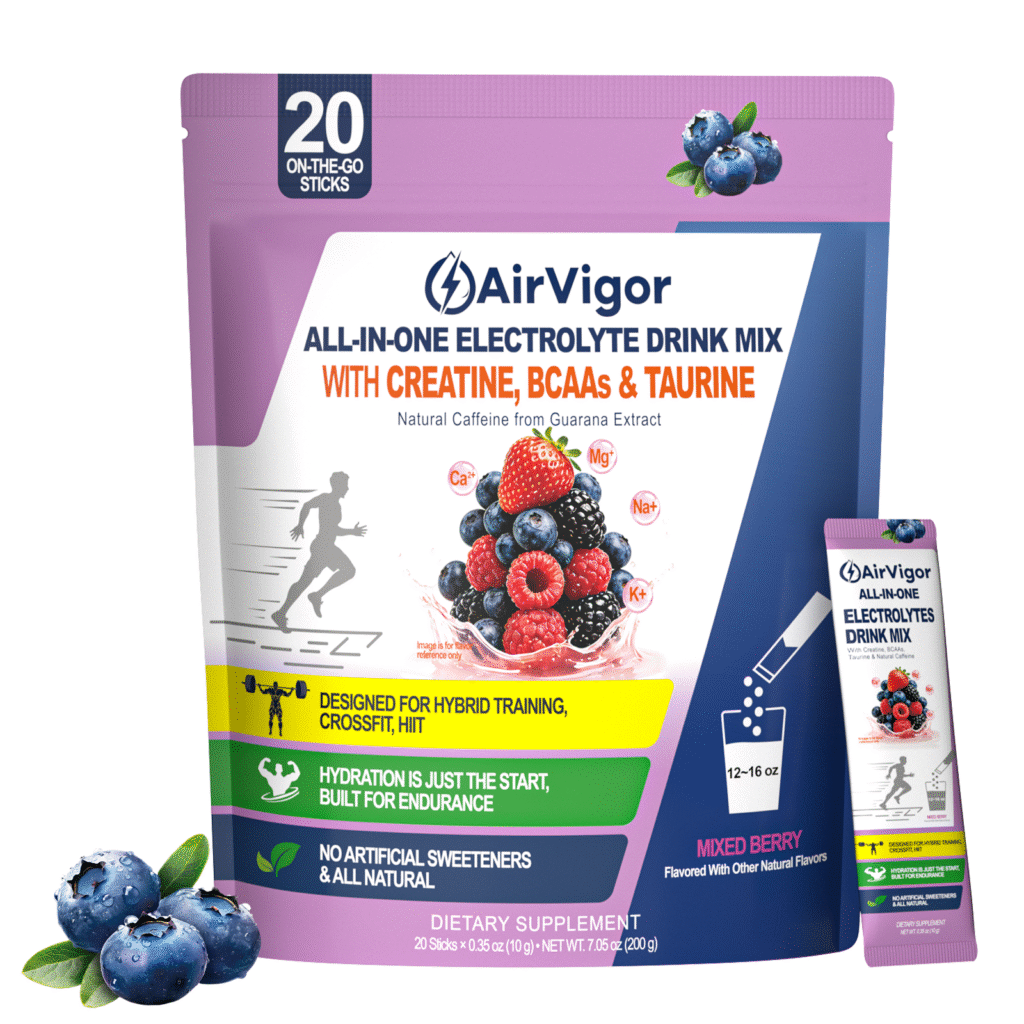
AirVigor can position itself as the better option by refusing to claim that one format wins in every situation. Banner Health says supplement-style electrolyte products are convenient, portable, and exact-dose, while MD Anderson ties electrolyte drinks and powders more clearly to conditions involving real fluid-and-mineral strain. Together, those points support a more credible positioning strategy: powder is often better for stronger hydration support, while capsules are often better for compact convenience and serving control.
This matters commercially because customers trust specificity more than broad superiority claims. AirVigor does not need to argue that powder is always better than capsules. A stronger message is more practical: choose powder when the routine calls for fuller rehydration after sweating, heat, or recovery strain; choose capsule-style support when the priority is portability, readiness, and cleaner supplement-style use. That kind of positioning is easier to believe because it respects real customer behavior instead of forcing one format into every scenario. It also gives OEM and ODM development a clearer path by tying format choice to actual user routines.
A positioning comparison helps:
| Positioning style | How it sounds | Commercial strength |
|---|---|---|
| “Powder is always better” | Too broad | Weaker |
| “Capsules are always easier” | Too narrow | Weaker |
| “Powder for stronger hydration support, capsules for lighter portable use” | Clear and believable | Strongest |
That is where AirVigor can stand out most effectively: not by making a bigger claim, but by making a more accurate one.
Final Thoughts
Electrolyte powder and capsules are both useful formats, but they are not best understood as identical tools. Powder often becomes the stronger option when hydration support needs to feel more complete, especially after heavy sweating, in heat, or in more structured recovery settings. Capsules often become the stronger option when portability, dose precision, and low-clutter convenience matter most. The available guidance points in the same general direction: electrolyte support is most relevant when the body is under meaningful fluid-and-mineral strain, and format should be matched to how the product will actually be used.
That is why the best customer question is not simply which format is better. The better question is what kind of routine the product is meant to support. If the routine is travel-heavy, capsule convenience may matter more. If the routine is sweat-heavy or heat-heavy, powder may make much more sense. A customer who reads the label through that lens is more likely to choose a product that feels useful, repeatable, and worth trusting.
Looking to Develop a Better Electrolyte Product?
If the goal is to build an electrolyte product that performs well in travel routines, daily portability, workout recovery, or heat-heavy hydration support, the better starting point is not “powder or capsules” in the abstract. The better starting point is the user scenario: how much sweat loss is expected, how much fluid intake the routine supports, how important portability is, and how exact the serving needs to be. Once that is clear, the stronger format choice usually becomes much easier.
AirVigor can support both finished branded products and private-label or custom formulation projects. The strongest products in this category are the ones that solve a real use problem clearly, and that is exactly where a well-positioned electrolyte powder or capsule can create stronger long-term value.