Skip to content

The electrolyte category looks straightforward until you compare labels side by side. Almost every product promises hydration, balance, recovery, or performance. Yet the formulas behind those claims can be very different. Harvard notes that electrolyte beverages are designed to help rebalance fluid and mineral levels, while the American Heart Association warns that products in this category can differ widely in sodium, potassium, magnesium, sugar, and calories. That means two powders can sit on the same shelf, speak the same marketing language, and still be built for completely different situations.
A good electrolyte powder should do three things clearly: match a real hydration use case, provide a sensible electrolyte balance, and make the serving logic easy to understand. For many customers, sodium is the first number worth checking because it is the primary electrolyte lost in sweat, while potassium and magnesium usually play supporting roles. Sugar level, calories, and total serving size matter because a useful hydration product should fit real routines, not just look impressive on the label.
That is why the best buying question is not which powder sounds strongest. The better question is what the formula is actually built to do. Is it meant for heavy sweating, high heat, travel strain, light daily support, or casual flavored hydration? A customer who starts there is much less likely to overpay for vague branding, misuse a stronger formula on low-need days, or mistake a crowded label for a well-designed one. The most useful powders are usually not the loudest. They are the easiest to interpret and the easiest to match to a real physical need.
What Makes a Good Electrolyte Powder?
A good electrolyte powder is not defined by novelty ingredients, bold packaging, or long benefit lists. It is defined by whether the formula makes physiological sense for the use case it claims to support. Cleveland Clinic advises customers to review electrolyte products carefully so they get the electrolytes they want without unnecessary sugar or additives. The American Heart Association makes the same general point from another angle: more is not always better. A better formula is one that is easier to justify, easier to dose correctly, and easier to trust over time.
What should the formula actually do?
The first job of an electrolyte powder is not to sound premium. Its first job is to support fluid and mineral balance in a situation where that support is actually useful. Harvard states that electrolyte beverages are designed to be absorbed in the gut to quickly rebalance mineral and fluid levels. MD Anderson identifies the clearest need states as vomiting, diarrhea, prolonged exercise or heavy sweating, and long exposure to extreme heat. A good formula should therefore be built around a real hydration problem, not a vague promise of “better wellness.”
This point matters because many powders are positioned too broadly. They are marketed as if every person, every day, needs the same electrolyte support. That is not what the available guidance suggests. On an ordinary indoor day, water is usually enough for most people, according to the American Heart Association. A stronger electrolyte formula becomes easier to justify when the body has clearly lost more through sweat, heat, or illness-related fluid loss. In practical terms, a good powder should make its intended use easy to recognize. It should feel like a tool for a defined situation, not a generic upgrade to ordinary drinking habits.
A useful way to judge formula’s purpose is to ask the following:
| Formula purpose | What it should do well |
|---|---|
| Light hydration support | Fit routine use without feeling too intense or too sugary |
| Sweat-heavy recovery | Replace fluid and emphasize key electrolytes more clearly |
| Heat or travel support | Offer portable, understandable rehydration logic |
| Illness-related rehydration support | Make fluid-and-electrolyte replacement straightforward |
That is why the best formulas usually begin with functional clarity. They tell the customer what problem they are meant to solve, and they do not pretend that every day requires the same solution.
Which ingredients matter most?
The most important ingredients in an electrolyte powder are usually the core electrolytes themselves: sodium, potassium, magnesium, and often chloride. MedlinePlus explains that sodium helps control the amount of fluid in the body and supports nerves and muscles; potassium helps cells, heart, and muscles work properly; magnesium helps muscles, nerves, and the heart work properly; and chloride also helps control fluid balance and healthy blood volume. These are the minerals doing the real physiological work.
This matters because many labels try to create perceived value by surrounding the main electrolytes with unrelated extras: vitamin blends, fruit concentrates, adaptogens, amino acids, or performance language that has little to do with the primary hydration function of the product. Those additions are not automatically harmful, but they are often secondary to the real evaluation question: Does the electrolyte structure make sense? A better powder usually looks more disciplined than crowded. It puts the right minerals in a useful relationship to one another and makes that relationship easy to understand. Customers shopping for hydration support are often better served by a cleaner formula with clear sodium, potassium, and magnesium logic than by a more decorative formula with weaker core numbers.
A practical ingredient guide helps:
| Ingredient | Why it matters |
|---|---|
| Sodium | Core support for fluid balance and sweat-related replacement |
| Potassium | Broad electrolyte balance and muscle function |
| Magnesium | Muscle, nerve, and heart support |
| Chloride | Supports hydration balance alongside sodium |
This is why a serious hydration formula usually earns trust through its mineral structure first. Everything else on the label is secondary until that part is right.
How do you tell support from hype?
The clearest way to separate real support from hype is to compare the use-case logic, the serving logic, and the electrolyte logic. Cleveland Clinic recommends avoiding unnecessary sugar or additives when reviewing electrolyte products. The American Heart Association warns that more is not always better. Taken together, those two points create a useful filter: a stronger product usually sounds more precise, not more dramatic.
This matters because a large share of poor product decisions come from vague optimism. Customers see words like recovery, balance, performance, clean hydration, or daily support and assume the formula must be broadly beneficial. A better powder is usually much narrower in its logic. It tells the customer whether it makes sense after heavy sweating, in high heat, during travel strain, or in another clearly defined condition. It also makes the serving size visible enough that the product cannot quietly drift into all-day, habit-based use. In that sense, clarity is one of the best quality signals a formula can offer. Serious support products reduce guesswork. Hype products increase it.
A practical evaluation grid helps:
| Signal | Often stronger support | Often more hype |
|---|---|---|
| Use-case explanation | Clear and specific | Broad and vague |
| Serving guidance | Easy to follow | Easy to ignore |
| Ingredient story | Centered on core electrolytes | Distracted by unnecessary extras |
| Tone | Measured | Overstated |
That is why the best powders usually read like disciplined hydration tools, not like exaggerated performance slogans.
Which Electrolytes Matter Most?
The electrolytes that matter most depend on the situation, but sodium is often the first one to evaluate when the product is intended for sweat, heat, or more serious rehydration support. Ohio State states that the primary electrolyte people lose in sweat is sodium. MedlinePlus makes clear that sodium, potassium, and magnesium all support essential fluid, muscle, nerve, and heart functions. The practical lesson is simple: not every electrolyte matters equally in every context, and the label should reflect that.
Is sodium the first thing to check?
For many customers, yes. If the powder is being used for workouts, hot weather, outdoor work, or prolonged sweating, sodium is often the most informative number on the label. Ohio State says directly that sodium is the primary electrolyte lost in sweat and that this is what sports drinks are really trying to replace. That makes sodium much more than a background mineral in performance hydration. It is often the central one.
This matters because sodium is also one of the easiest numbers to misunderstand. A low-sodium powder may look “cleaner” or lighter, but it may feel underpowered after heavy sweat loss. A more sodium-forward powder may make much more sense in a recovery setting, but feels unnecessary for calm routine sipping. The American Heart Association’s broader sodium guidance is helpful here because it reminds customers that sodium is already abundant in the modern diet. The question is therefore not whether sodium is good or bad. The question is whether the sodium level makes sense for the actual losses the customer is trying to replace. A label that helps answer that question is much more useful than one that simply boasts about electrolytes in general.
A practical sodium view helps:
| Sodium question | What it usually suggests |
|---|---|
| Light sodium level | Better suited to light support, not major sweat replacement |
| Moderate sodium level | Often more flexible across mixed-use situations |
| More sodium-forward formula | Often better for sweat-heavy or heat-heavy use |
That is why sodium is often the first mineral worth checking on the panel. It usually tells the customer more about the formula’s real purpose than any front-label slogan does.
Which role do potassium and magnesium play?
Potassium and magnesium usually play important supporting roles rather than replacing the importance of sodium in sweat-related recovery. MedlinePlus explains that potassium helps cells, heart, and muscles work properly, while magnesium helps muscles, nerves, and the heart work properly and also helps control blood pressure and blood glucose. Harvard’s nutrient pages reinforce that potassium is central to fluid balance at the cellular level and magnesium is deeply involved in muscle and nerve function.
This matters because many products try to present electrolyte quality as a kind of broad mineral abundance. But a good formula is not simply one that contains more named minerals. It is one that places them in a useful relationship to the likely losses and the intended user. Potassium and magnesium can improve the completeness of a formula, especially when the product is aimed at active users, hot-weather support, or broader muscle-related comfort. But in many formulas, they should be read in context, not in isolation. A product can list all the right minerals and still be weak if the proportions do not fit the use case. That is why serious product selection requires more than checking whether potassium and magnesium appear on the label. The better question is what role they are playing in the formula as a whole.
A practical roles table helps:
| Electrolyte | Main role in the formula |
|---|---|
| Sodium | Most relevant for sweat-related fluid replacement |
| Potassium | Supports broader electrolyte balance and muscle function |
| Magnesium | Supports muscles, nerves, and heart function |
That is why a stronger formula does not just list good ingredients. It shows an intentional relationship between them.
How do sweat loss and heat change what matters?
Heat and sweat change what matters by increasing the importance of fluid balance and sodium replacement. MD Anderson says electrolyte drinks can be useful before, during, and after prolonged exercise or heavy sweating and when a person is in extreme heat for a long time. Ohio State’s observation that sodium is the primary electrolyte lost in sweat helps translate that into a practical label-reading rule. A formula that may feel unnecessary on a low-need day may become much more appropriate when the body is under heavier strain.
This matters because many customers choose hydration products without connecting the label to the environment. They may buy a powder for summer travel, outdoor work, intense exercise, or long humid runs, but evaluate it as if every day were a mild indoor day. That mismatch leads to bad decisions in both directions. Some products look stronger than they really are once sweat and heat are involved. Others are criticized for being “too much,” even though they may be well-matched to the harder conditions they were built for. The more useful habit is contextual reading: check the formula through the lens of the day it is supposed to support. That is how a customer avoids both underpowered recovery products and unnecessary overuse.
A simple context map helps:
| Situation | What matters more |
|---|---|
| Mild indoor routine | Overall moderation and label clarity |
| Heat-heavy day | Stronger hydration logic and clearer sodium purpose |
| Sweat-heavy workout | Sodium becomes more important |
| Casual beverage use | Sugar and serving size may matter more than intensity |
That is why the best electrolyte powder is usually not the strongest one in the abstract. It is the one that best matches the actual condition it is being used for.
What Should You Check on the Label?
A good electrolyte powder should be easy to evaluate before it is easy to drink. The most useful label details are usually the serving size, the sodium amount, the potassium and magnesium levels, the sugar and calorie load, and whether the formula gives a clear clue about the situation it is meant to support. The American Heart Association notes that electrolyte products can vary widely in sodium, potassium, magnesium, sugar, and calories, and Cleveland Clinic similarly advises customers to review formulas carefully rather than assuming every product in the category is built the same way.
This matters because front-of-pack language is often too broad to be useful. “Hydration,” “recovery,” and “balance” may all sound appealing, but they do not tell the customer whether the product is light enough for mild daily support, strong enough for sweat-heavy use, or sweet enough to feel more like a sports drink than a practical hydration tool. A serious buying decision starts with a label-first mindset: the formula should explain not only what is inside, but also how much, how often, and for what kind of routine it is likely to make sense.
How much sodium is too little or too much?
For many customers, sodium is the first number worth checking because it is often the electrolyte most directly tied to sweat-related replacement. Ohio State explains that sodium is the primary electrolyte lost in sweat, and the American Heart Association also reminds consumers that total sodium intake already runs high in the average diet. That means a sodium number cannot be judged as “good” or “bad” in isolation. It has to be interpreted through the intended use case. A lower-sodium formula may be perfectly suitable for light support or mild use. A more sodium-forward formula may be more appropriate after prolonged sweating, heat exposure, or other conditions that create a real replacement need.
This distinction matters because many customers use electrolyte powders in mixed conditions. The same person may use a product after a hard workout one day and sip it casually at a desk another day. A formula that looks ideal in one context may look excessive in another. That is why sodium is often the most informative label number: it reveals whether the formula is leaning toward structured rehydration or lighter support. It also helps separate products designed around actual loss patterns from products built more around lifestyle positioning. In practical terms, the right sodium level is the one that matches the strain the body has actually gone through, not the one that simply sounds stronger.
A practical label view helps:
| Sodium profile | What it often suggests |
|---|---|
| Lower sodium | Better suited to light support or milder use |
| Moderate sodium | More flexible across mixed-use situations |
| Higher sodium | More relevant for sweat-heavy or heat-heavy support |
Is the sugar level as important as electrolytes?
In many real purchase decisions, yes. Sugar often determines whether a formula feels practical for routine use or whether it feels more like a sports drink aimed at harder recovery conditions. Cleveland Clinic advises customers to avoid unnecessary sugar and additives when reviewing electrolyte products, and the American Heart Association notes that many drinks in this category can carry meaningful calories and sugar alongside the electrolytes. Johns Hopkins Medicine makes a similar point from a sports-hydration angle, noting that some sports drinks have a high sugar content and can add calories if overconsumed.
This matters because sugar changes the role of the product. A formula with a higher sugar load may feel more appropriate in longer, harder, sweat-heavy conditions. The same formula may feel like too much during office hours, light travel, or casual daily hydration. Customers often focus on sodium and potassium first, but repeat use is strongly influenced by whether the product feels light, clean, and easy to incorporate without turning into an accidental calorie source. In practical terms, the better powder is not the one that only performs well in theory. It is the one that the customer can use appropriately in the situations it is actually meant for.
A useful comparison helps:
| Label question | Why it matters |
|---|---|
| Is the sugar level light, moderate, or heavy? | Shapes how well the product fits routine use |
| Does the sweetness match the use case? | Helps separate light support from harder recovery formulas |
| Are there extra colors or additives? | Affects how clean and disciplined the formula feels |
Which serving-size details matter most?
Serving size matters because misuse usually comes from repetition, not from one isolated scoop. The most useful details are the amount per serving, the number of servings per container, the recommended water amount, and whether the instructions make it obvious how concentrated the product is supposed to be. The American Heart Association warns that more is not always better, and the Cleveland Clinic also advises against turning electrolyte drinks into all-day default beverages.
This matters because many customers do not overuse electrolyte powders intentionally. They drift into overuse through vague serving logic. One serving after exercise becomes another later because the drink tastes good, then another because the product still “sounds healthy.” A better powder makes the boundaries clearer. It helps the customer understand whether one serving is meant for light support, whether multiple servings are ever appropriate, and how much water should accompany each serving. That kind of clarity is part of formula quality, not just packaging quality. When a label explains concentration and use frequency well, it reduces confusion and improves trust.
A practical checklist helps:
| Serving detail | Why it matters |
|---|---|
| Scoop or packet size | Reduces accidental overuse |
| Recommended water amount | Helps preserve intended concentration |
| Servings per container | Helps estimate total intake over time |
| Use guidance | Clarifies whether the powder is for light support or higher-strain use |

When Does Electrolyte Powder Actually Make Sense?
Electrolyte powder makes the most sense when the body has a clear reason to replace both fluid and minerals, not simply when the customer wants a drink that sounds functional. MD Anderson points to vomiting, diarrhea, prolonged exercise or heavy sweating, and long periods in extreme heat as the clearest situations where electrolyte drinks become more useful. Cleveland Clinic describes electrolyte drinks as specialty products rather than something to make into an all-day habit, and Harvard frames electrolyte beverages as tools for rebalancing fluid and mineral levels rather than universal daily upgrades.
This matters because a large share of product misuse starts with a category mistake. Customers assume that because electrolytes are useful in harder conditions, they must be useful all the time. That is not what the current guidance supports. A better rule is simpler: electrolyte powder becomes easier to justify when the day has clearly created more fluid and mineral strain than ordinary water and normal meals are likely to cover on their own. When that condition is absent, the formula may still be drinkable, but it is no longer as clearly necessary.
Is water enough on normal days?
For many people, yes. Harvard notes that most people usually get enough electrolytes from food and beverages under normal conditions, and the Cleveland Clinic’s guidance similarly suggests that electrolyte drinks should be viewed as specialty products rather than the default answer to ordinary thirst. That means plain water remains the better baseline for many mild indoor days, normal errands, and low-sweat routines.
This matters because hydration and targeted rehydration are not the same need. On many calm days, the body does not need a structured electrolyte formula. It simply needs adequate fluid intake. Treating electrolyte powder as automatically superior to water creates the wrong hierarchy and makes routine overuse more likely. A more disciplined reading of the category respects water’s role first. Water is not the weak option. On many ordinary days, it is the correct one. A good electrolyte powder should therefore be easy to justify when conditions are harder, not marketed as if it should replace common-sense hydration on every occasion.
A practical comparison helps:
| Day type | Is water often enough? |
|---|---|
| Indoor office day | Usually yes |
| Normal errands and routine movement | Usually yes |
| Light activity with limited sweat loss | Often yes |
| Heat, heavy sweat, vomiting, or diarrhea | Sometimes not |
Which situations justify electrolyte powder more clearly?
The clearest situations are the ones MD Anderson names directly: vomiting, diarrhea, prolonged exercise or heavy sweating, and long periods in extreme heat. These are conditions where fluid loss is more likely to involve electrolyte loss as well, making a more structured replacement strategy easier to justify. Harvard’s explanation of electrolyte beverages as fast rebalancing tools reinforces the same logic.
This matters because good product use depends on a clear threshold. A long humid run, an outdoor jobsite in summer, repeated sweating during training, or illness-related fluid loss are all stronger reasons to consider electrolyte powder than vague tiredness or ordinary thirst. The more clearly a product is matched to these circumstances, the easier it becomes for the customer to trust the formula and use it correctly. In contrast, a powder sold without clear boundaries invites misuse because it makes every condition sound worthy of supplementation. Better formulas usually feel more disciplined because they are easier to connect to a real source of fluid and mineral strain.
A practical use-case map helps:
| Situation | Do electrolytes often make sense? |
|---|---|
| Heavy sweating | Often yes |
| Extreme heat exposure | Often yes |
| Vomiting or diarrhea | Often yes |
| Mild routine thirst | Often no |
How do you avoid overusing it?
The safest way to avoid overuse is to tie intake to a clear need, follow the serving size, and avoid treating every vague symptom as evidence of “low electrolytes.” The American Heart Association warns that more is not always better, and the Cleveland Clinic explicitly says it is not a good idea to turn electrolyte drinks into an all-day go-to beverage. It also notes that one or two electrolyte drinks are enough for most people after depletion, with water often being the better next step if thirst continues.
This matters because overuse usually happens gradually. One serving after a workout becomes another later in the afternoon, then another because the product tastes good or feels healthier than plain water. But as the American Heart Association points out, symptoms of too much and too little electrolytes can overlap, which makes casual self-correction unreliable. A better strategy is preventive rather than reactive: use electrolytes when the day clearly justifies them, count all electrolyte sources, and let water remain the foundation on ordinary days. That approach is not only safer. It also makes the product’s real purpose easier to understand.
A practical prevention checklist helps:
| Prevention step | Why it works |
|---|---|
| Link use to heat, sweat, or illness-related loss | Reduces casual misuse |
| Follow the label serving size | Helps limit excess intake |
| Count all sources, not just one powder | Prevents stacking |
| Choose water first on ordinary days | Keeps baseline hydration simple |
How Can AirVigor Position a Better Formula?
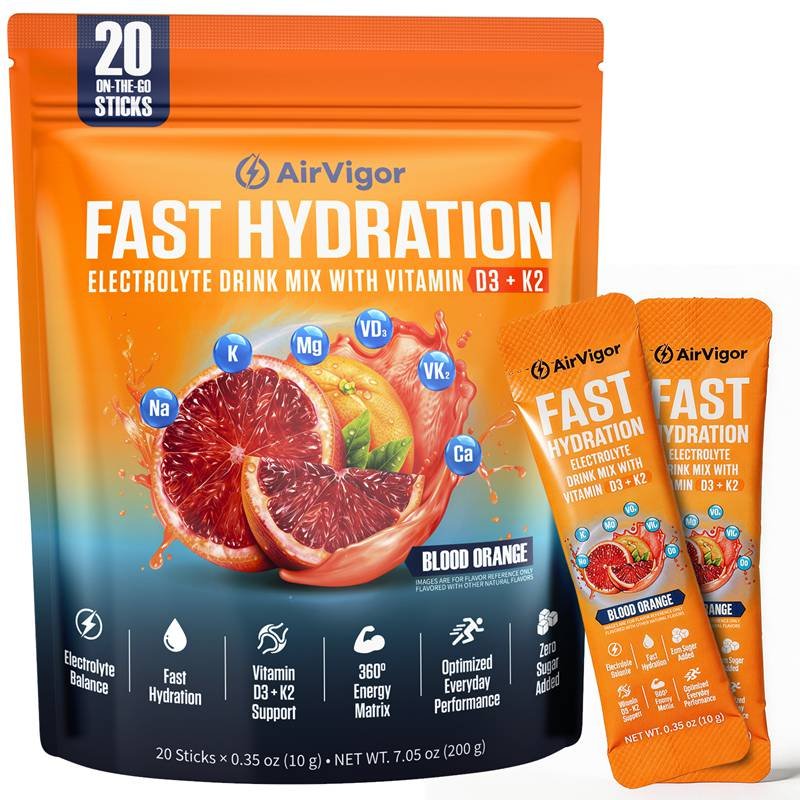
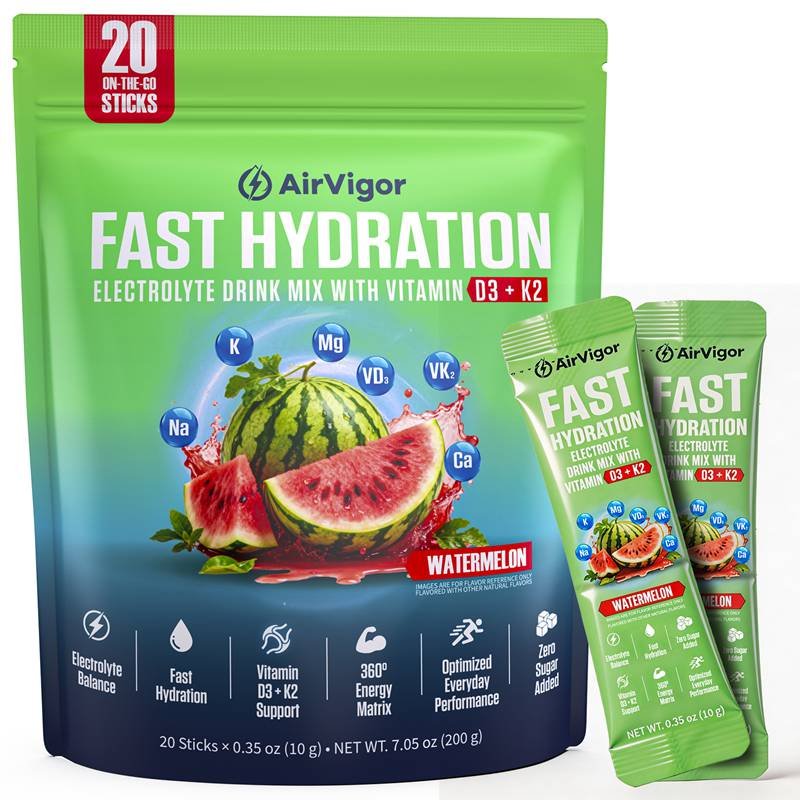
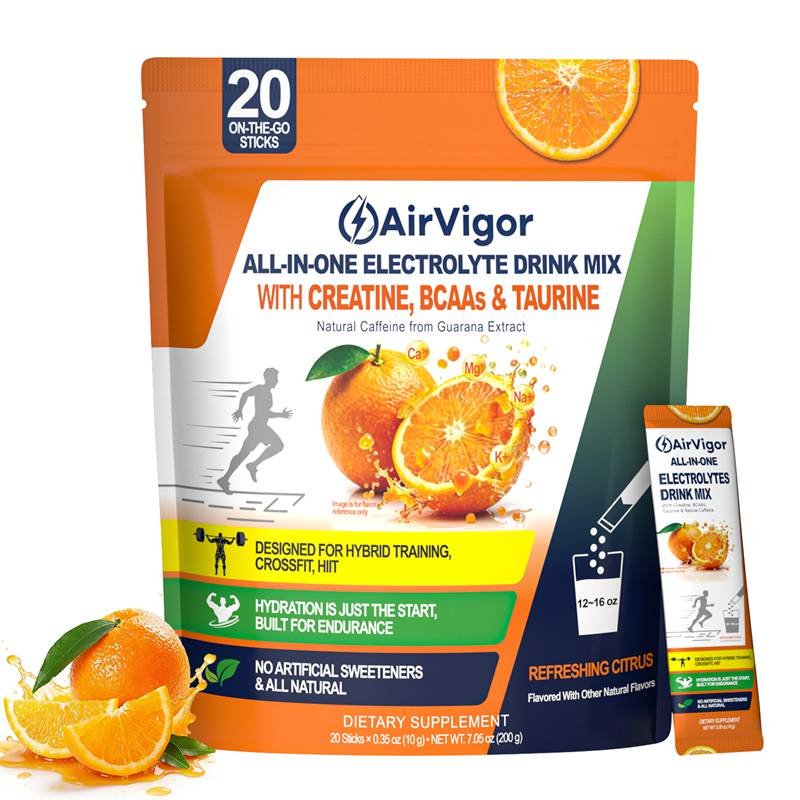
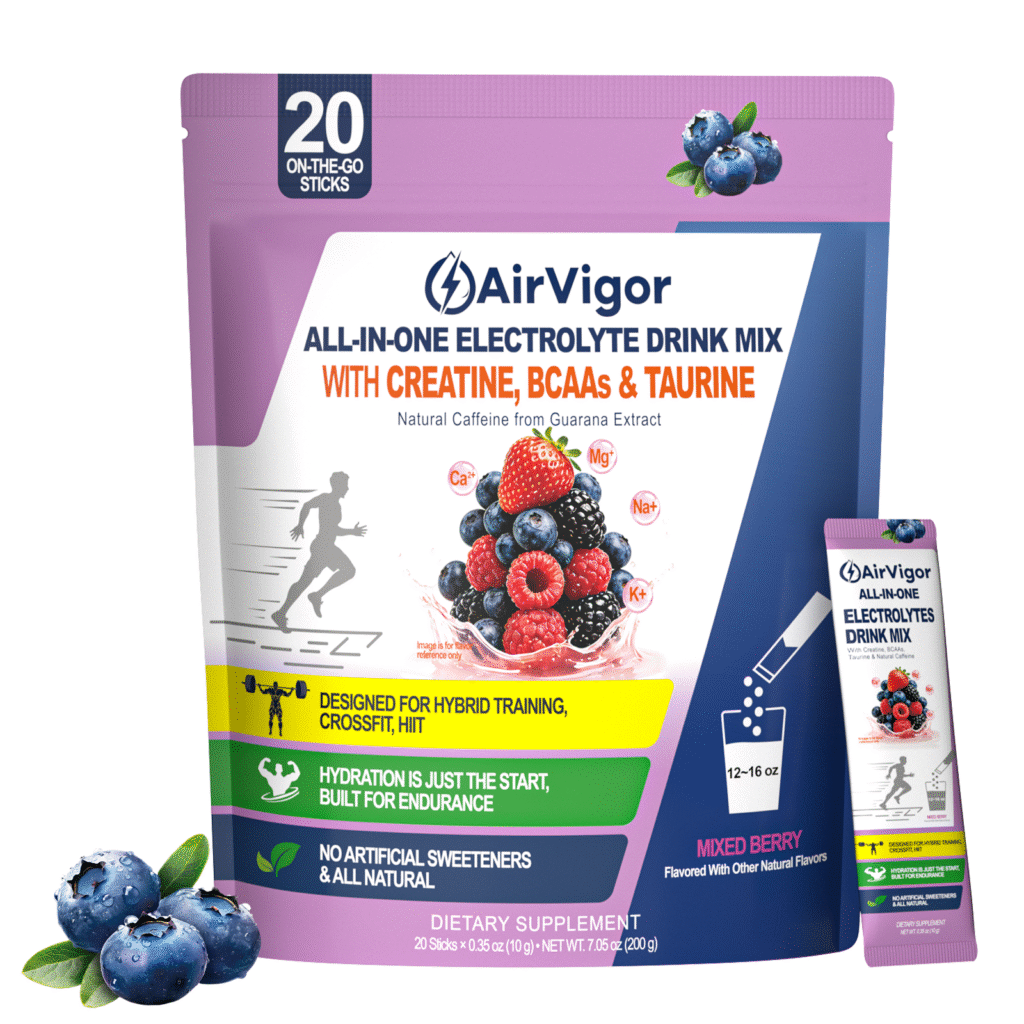
AirVigor can position a stronger electrolyte powder by making the product’s use case, electrolyte logic, and serving discipline immediately clear. That approach aligns well with current guidance. The American Heart Association notes that electrolyte products differ widely in sodium, potassium, magnesium, sugar, and calories, while Harvard explains that electrolyte beverages are designed to rebalance fluid and mineral levels rather than serve as universal everyday drinks for everyone.
This matters because many products in the category still rely on broad language such as hydration, recovery, balance, or performance without explaining what the formula is actually built to support. A more credible formula story is narrower and more practical. It explains who the product is for, when it makes sense, why the sodium level is what it is, and how often the product should realistically be used. MD Anderson’s guidance is especially useful here because it links electrolyte support to specific conditions such as prolonged sweating, extreme heat, vomiting, and diarrhea, not to vague all-day wellness messaging.
What makes a clearer hydration support story?
A clearer hydration support story begins with a simple distinction: electrolyte powder is not the answer to every kind of thirst or fatigue. It is a situational hydration tool. MD Anderson identifies the clearest higher-need scenarios as heavy sweating, prolonged exercise, vomiting, diarrhea, and long heat exposure. Cleveland Clinic also frames sports and electrolyte drinks as specialty products rather than all-day default beverages.
This matters because vague product language tends to weaken trust. When a powder is presented as something useful for everyone, every day, under all conditions, the formula starts to sound less precise and less believable. A better message does the opposite. It shows that the powder is meant for hotter days, more physically demanding routines, travel-related strain, or post-sweat recovery. That kind of explanation is easier for customers to apply, and it also reduces the chance that the product will be treated like flavored water with a health halo. Harvard’s guidance that electrolyte beverages are designed to rebalance fluid and minerals supports this more disciplined position.
A practical message comparison helps:
| Product story style | What it sounds like | Trust effect |
|---|---|---|
| Broad hydration-for-everyone claim | Easy to market, but vague | Lower |
| Heat, sweat, travel, and recovery-specific claim | More precise and useful | Higher |
| “More electrolytes means better hydration” | Aggressive, but less credible | Lower |
| “Use when fluid-and-mineral strain is real” | Clear and disciplined | Higher |
That is why a stronger hydration story usually sounds more exact, not more dramatic.
Which users need targeted support most?
The customers who need targeted support most are usually the ones whose routines create higher fluid-and-mineral strain rather than ordinary thirst. MD Anderson points most clearly to people dealing with heavy sweating, prolonged exercise, vomiting, diarrhea, and long exposure to extreme heat. Harvard Health also notes that electrolyte drinks or supplements can be helpful during persistent vomiting or diarrhea and in strenuous jobs or frequent high-intensity exercise, especially in hot or humid climates.
This matters because not all active lifestyles create the same hydration demand. Someone working indoors in mild conditions is not facing the same fluid-loss pattern as a person training outdoors in summer, traveling through heat, or doing physical labor for hours. A better formula becomes easier to justify when the intended user is visible and specific. That is also where AirVigor can sharpen its positioning. Instead of speaking to everyone who wants “better hydration,” the brand can speak more directly to heavy sweaters, outdoor workers, endurance exercisers, heat-exposed travelers, and users recovering from meaningful fluid loss.
A practical audience map helps:
| User type | Why targeted support may make sense |
|---|---|
| Heavy sweater | Greater sodium and fluid loss |
| Outdoor worker | Repeated heat exposure and longer recovery demand |
| Endurance exerciser | Prolonged training with clearer replacement needs |
| Traveler in heat | Lower hydration consistency and higher fluid strain |
| Illness-recovery user | Greater risk of fluid-and-mineral imbalance |
That is why the best electrolyte powder is rarely the one trying to fit every user equally. It is usually the one built around a more clearly defined problem set.
How can a formula feel balanced and trustworthy?
A formula feels balanced and trustworthy when the electrolyte profile, sugar level, and serving logic all point in the same direction. Cleveland Clinic advises customers to review electrolyte products carefully and avoid unnecessary sugar or additives. The American Heart Association also makes clear that sodium, potassium, magnesium, sugar, and calorie levels differ substantially across products.
This matters because trust is often built through restraint. A powder that tries to be high-sodium, high-sugar, all-purpose, and suitable for every kind of use often creates confusion instead of confidence. A better formula feels intentional. The serving size is easy to understand. The sodium level makes sense for the intended hydration demand. The sugar level does not undermine the routine the product is meant to fit. The label gives enough information for the customer to understand when to use it, when to stop, and when plain water may still be the better option. That kind of logic is where a brand like AirVigor can stand out most effectively. The product does not need to sound more intense than the market. It needs to sound more coherent and more trustworthy.
A trust-building checklist helps:
| Formula quality signal | Why it matters |
|---|---|
| Clear serving size | Reduces misuse and confusion |
| Sodium level aligned to purpose | Improves use-case fit |
| Sensible sugar profile | Helps match the routine |
| Narrower use-case guidance | Makes the powder easier to trust |
| Cleaner label logic | Separates function from hype |
That is why the strongest formulas often look more controlled than dramatic. Customers usually trust what they can interpret clearly.
Final Thoughts
A good electrolyte powder should not only contain electrolytes. It should make hydration decisions easier. The strongest formulas usually do three things well: they provide a sensible electrolyte balance, they match a clear use case, and they make serving logic easy to follow. The American Heart Association’s warning that formulas vary widely, and that more is not always better, is one of the most useful principles in the category. A stronger powder is not simply the one with the biggest numbers. It is the one that fits the actual strain the body is under.
That is why the best buying question is not which powder sounds strongest. The better question is what the formula is built to support, and whether that matches the day the customer is actually having. On ordinary days, water may still be enough. On hotter, sweat-heavier, or more physically demanding days, a well-designed electrolyte powder may make much more sense. A customer who reads the label through that lens is far more likely to choose a product that feels useful, repeatable, and worth trusting.
Looking to Develop a Better Electrolyte Powder?
If the goal is to create a formula that feels more balanced, more credible, and more useful than generic hydration products, the strongest starting point is not flavor or packaging. It is use-case clarity. A better product is usually built around who needs it, when they need it, how much sodium and supporting electrolytes make sense, and how clearly the serving size guides the routine. That is what makes a formula feel trustworthy rather than overbuilt.
AirVigor can support both finished branded products and private-label or custom formulation projects. The strongest electrolyte powders are the ones that solve a real hydration problem clearly, and that is exactly where a well-positioned formula can create stronger long-term value than broad claims alone.