Skip to content
What Happens When Electrolyte Levels Drop Suddenly: A Science Guide
# Your Trusted Dietary Supplement Brand In US
- Emily

Table of Contents
Most people think electrolyte problems are something that happens slowly—after days of illness, extreme dehydration, or marathon-level endurance events. But in real life, electrolyte imbalance often shows up suddenly. One workout feels normal. The next one, you’re dizzy, weak, cramping, or fighting a pounding headache. You didn’t change much—so what happened?
Electrolytes are invisible regulators. You don’t feel them working when levels are stable, but when they drop, the effects can feel immediate and confusing. Sudden electrolyte loss can affect hydration efficiency, muscle contraction, nerve signaling, heart rhythm, and even mental clarity. And because many symptoms overlap with “just being tired” or “not drinking enough water,” the real cause is often missed.
When electrolyte levels drop suddenly, the body can’t maintain fluid balance, muscle function, or nerve signaling. This may lead to headaches, dizziness, muscle cramps, weakness, and rapid fatigue. Sudden drops often occur from heavy sweating, intense exercise, illness, or drinking water without replacing lost minerals. Restoring balance requires electrolytes—not just fluids—to stabilize performance and recovery.
The tricky part is that electrolyte imbalance rarely announces itself clearly. Instead, it shows up as off-days, sudden fatigue, or unexplained discomfort. Understanding why this happens—and how to correct it—can prevent small imbalances from turning into performance-killing or health-disrupting problems. Let’s break it down, step by step.
What Are Electrolytes and Why Do They Matter?
Electrolytes are electrically charged minerals—such as sodium, potassium, magnesium, and calcium—that regulate fluid balance, muscle contraction, nerve signaling, and heart rhythm. They allow the body to absorb and use water efficiently and maintain stable cellular function. Without adequate electrolytes, hydration, physical performance, and neurological control decline rapidly, even if fluid intake is sufficient.
What are electrolytes in the human body?
Electrolytes are minerals that dissolve in bodily fluids—blood, sweat, and intracellular fluid—and carry an electrical charge. This electrical property is not theoretical; it is essential for how the body functions at a cellular level.
Every movement you make, every heartbeat, and every nerve impulse depends on electrolytes creating electrochemical gradients across cell membranes. These gradients allow cells to:
- Move water in and out
- Transmit nerve signals
- Contract and relax muscles
- Maintain stable internal pressure
The primary electrolytes involved in daily physiological regulation include:
- Sodium (Na⁺)
- Potassium (K⁺)
- Magnesium (Mg²⁺)
- Calcium (Ca²⁺)
Because the body cannot produce these minerals on its own, they must be consistently replenished through diet or supplementation.
Why are sodium, potassium, magnesium, and calcium essential?
Each electrolyte performs a distinct and non-interchangeable role. Losing balance in one cannot be fully compensated by increasing another.
- Sodium regulates blood volume and fluid retention. It is the primary electrolyte lost through sweat and the most critical for maintaining effective hydration.
- Potassium works in opposition to sodium at the cellular level, supporting muscle contraction, nerve signaling, and intracellular fluid balance.
- Magnesium acts as a modulator, helping muscles relax after contraction and supporting hundreds of enzyme-driven reactions related to energy metabolism.
- Calcium initiates muscle contraction, including cardiac muscle, and plays a central role in nerve transmission.
From a physiological standpoint, electrolyte balance is not about “high levels,” but about proper ratios. This is why well-formulated electrolyte products focus on balance rather than megadoses.
How do electrolytes regulate hydration efficiency?
A common misconception is that hydration is simply about drinking more water. In reality, hydration is about water absorption and retention, not intake alone.
Electrolytes regulate hydration through osmosis—the movement of water across cell membranes. Sodium, in particular, creates the gradient that pulls water into the bloodstream and then into cells.
Without sufficient electrolytes:
- Water passes quickly through the digestive system
- Urination increases
- Cells remain functionally dehydrated
This explains why people can drink large amounts of water yet still experience symptoms like dizziness, fatigue, or headaches. Electrolytes are what make water usable by the body.
Why do electrolytes matter for muscles and nerves?
Muscle contraction and nerve signaling are both electrical events. Electrolytes enable these events to happen in a controlled, repeatable way.
During muscle contraction:
- Sodium and calcium trigger the contraction signal
- Potassium helps reset the muscle fiber
- Magnesium allows the muscle to relax afterward
When electrolyte levels drop, this sequence becomes inefficient or unstable. The result can be:
- Muscle cramps or twitching
- Sudden weakness
- Loss of coordination
Nerves behave similarly. Electrolyte imbalance slows signal transmission, leading to brain fog, delayed reaction time, and reduced focus—effects that impact both athletes and non-athletes.
Why electrolyte balance matters beyond exercise
Although electrolytes are often associated with sports, their importance extends far beyond training sessions.
Electrolytes influence:
- Heart rhythm stability
- Blood pressure regulation
- Cognitive clarity and alertness
- Stress response and nervous system balance
Modern lifestyles—long work hours, caffeine intake, air-conditioned environments, travel, and irregular meals—can all disrupt electrolyte balance without obvious sweating. This is why electrolyte-related symptoms frequently appear in office workers, travelers, and high-stress professionals, not just athletes.
Electrolytes are not optional performance enhancers or niche sports nutrients. They are foundational regulators of hydration, movement, and neurological control. When electrolyte balance is maintained, the body operates efficiently and predictably. When it is disrupted, symptoms often appear quickly and without clear warning.
Understanding what electrolytes are—and why they matter—is the first step toward preventing sudden drops in energy, performance, and overall stability.
What Causes Electrolyte Levels to Drop Suddenly?
Electrolyte levels can drop suddenly when the body loses minerals faster than it can replace them—most commonly through heavy sweating, vomiting/diarrhea, or rapid fluid loss. Levels can also fall from dilution (drinking large amounts of plain water), low intake (fasting or restrictive diets), or sudden shifts caused by medications or intense exercise. These rapid changes can trigger headaches, cramps, dizziness, and sudden performance decline.
Can electrolyte imbalance happen suddenly?
Yes—electrolyte imbalance can develop within hours, and sometimes within a single training session. Your body constantly tries to keep blood and cellular electrolyte concentrations stable, but it has limits. When mineral loss is rapid (sweat, GI illness) or when electrolytes become diluted (excess water without minerals), the body may not compensate fast enough.
This is why electrolyte problems often feel “random.” One day you’re fine; the next day you’re cramping, dizzy, or unusually fatigued. It’s not always about fitness level—sometimes it’s simply that the rate of loss exceeded the rate of replacement.
A helpful way to understand sudden drops is to think in four buckets:
- Loss (sweat, GI fluids)
- Dilution (water without minerals)
- Low intake (dieting, fasting)
- Shifts (medications, metabolic stress)
What causes electrolyte levels to drop?
1) Heavy sweating (most common for active people)
Sweat carries electrolytes out of the body—especially sodium, which is typically lost first and fastest. Hot weather, indoor training with poor airflow, sauna sessions, and double workouts can accelerate loss. People often replace the water but forget the minerals, so symptoms show up later.
2) Vomiting and diarrhea (fast depletion)
GI illness can strip both fluids and minerals quickly. Because this loss is “invisible” (you’re not seeing sweat), people underestimate how fast electrolyte levels can fall.
3) Excess plain water (dilution)
If you drink a lot of water without electrolytes—especially after sweating—you can dilute sodium concentration. This is a common reason people say, “I keep drinking, but I still feel worse.”
4) Low intake from dieting or fasting
Low-carb dieting, intermittent fasting, and “clean eating” can unintentionally reduce sodium, potassium, and magnesium intake—especially if processed foods are removed but replacement strategies aren’t added.
Do intense workouts accelerate electrolyte depletion?
Yes—because intense training increases mineral demand and mineral loss.
- High sweat rate = faster sodium loss
- Frequent muscle contraction = higher potassium/calcium turnover
- High stress hormones during intense sessions can change how kidneys handle sodium and water
A common pattern is: you feel okay at the start, then suddenly hit a wall mid-session—your legs feel heavy, your pump disappears, your heart rate feels “off,” or you get a headache afterward. That’s often a sign that hydration and electrolytes weren’t matched to the workload.
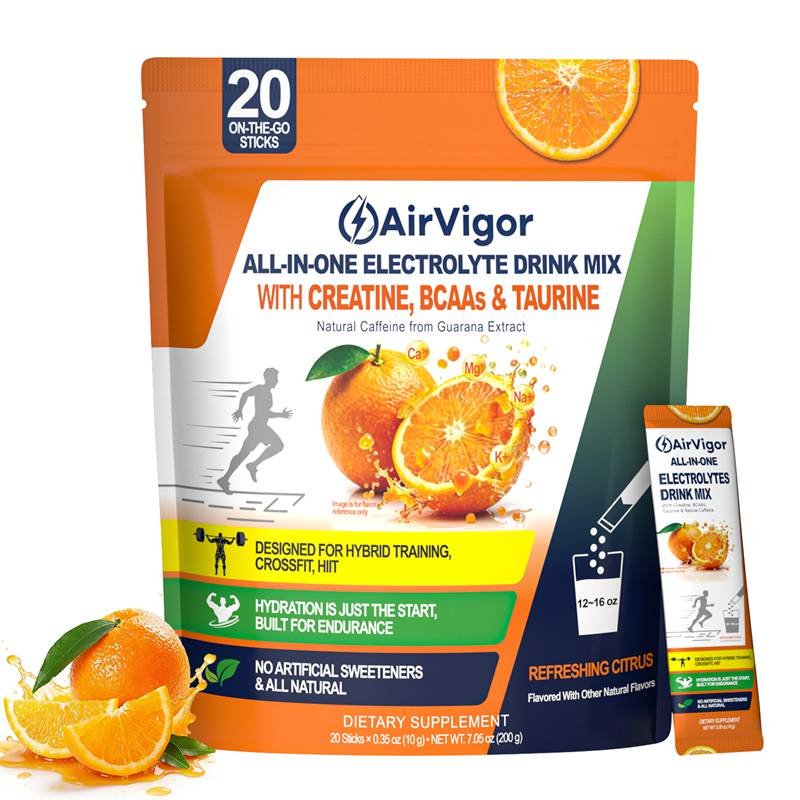
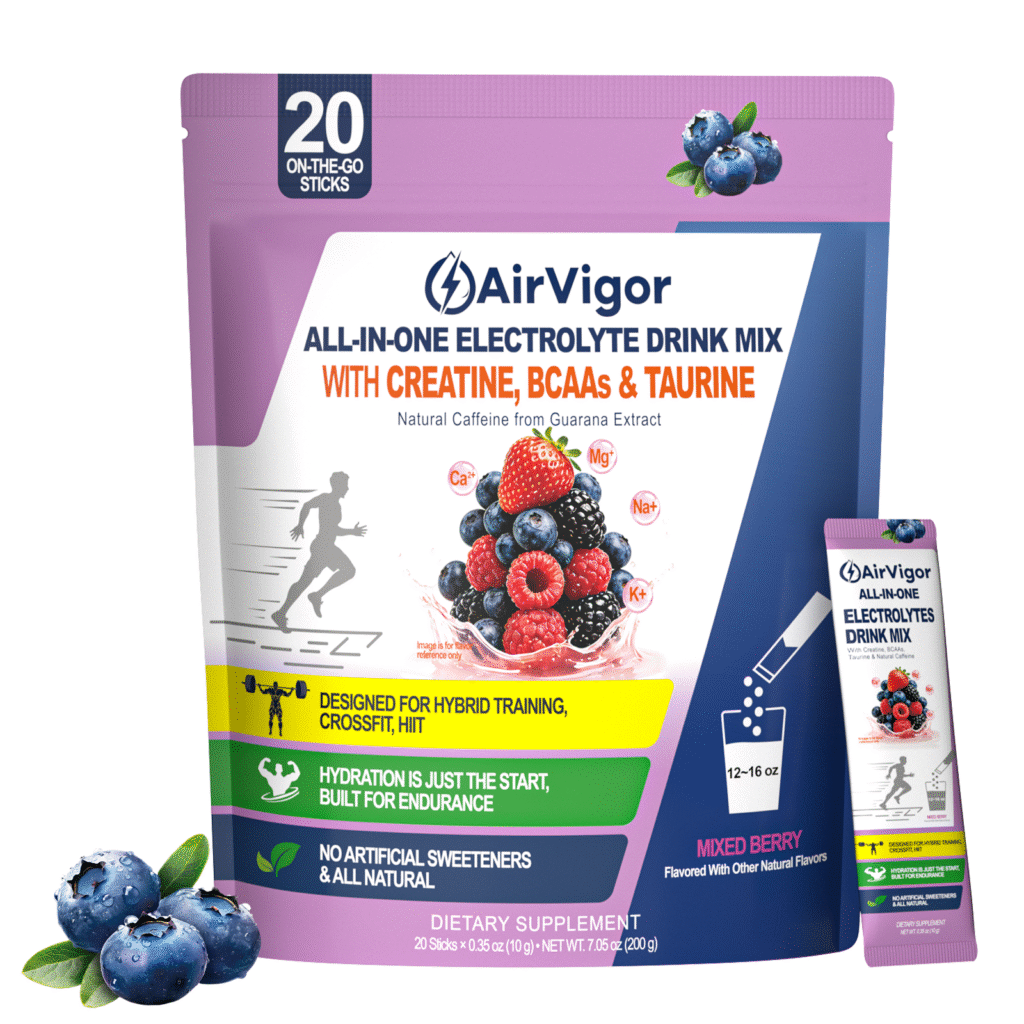
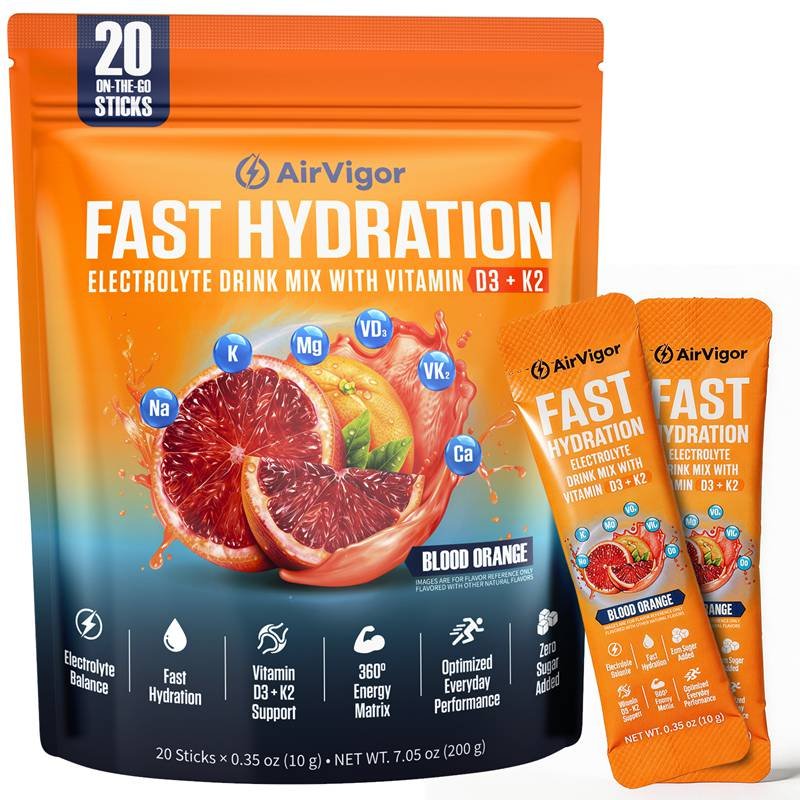
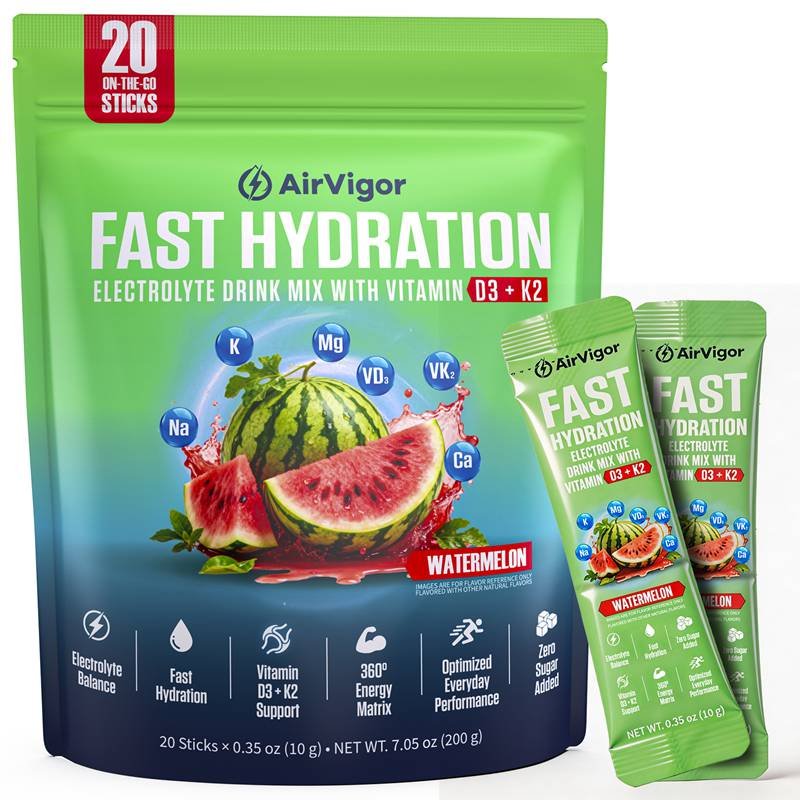
This is exactly why many athletes choose a balanced electrolyte powder like AirVigor: it’s a controlled way to replace key minerals without relying on sugary sports drinks or guessing.
Quick cause-to-symptom map
| Sudden Cause | What Drops First | Common “Sudden” Signs |
|---|---|---|
| Heavy sweating | Sodium | Headache, dizziness, fast fatigue |
| Vomiting/diarrhea | Sodium + potassium | Weakness, cramps, lightheadedness |
| Too much plain water | Sodium (dilution) | Headache, nausea, “water not helping” |
| Low intake/dieting | Sodium + magnesium | Fatigue, tight muscles, poor recovery |
| Hard training + heat | Sodium + potassium | Performance crash, cramps, brain fog |
What Symptoms Appear When Electrolytes Drop?
When electrolytes drop, early symptoms often include thirst, headaches, dizziness, fatigue, and brain fog. As imbalance worsens, muscle cramps, weakness, reduced coordination, and rapid performance decline may appear. In more pronounced cases, heart rhythm irregularities and confusion can occur. Symptoms often appear suddenly and are frequently mistaken for dehydration or general fatigue.
What early warning signs appear first?
The earliest symptoms of electrolyte imbalance are usually subtle and nonspecific, which is why they’re so often ignored or misattributed.
Common early signs include:
- Persistent thirst even after drinking water
- Lightheadedness when standing up
- Unusual fatigue during normal activities
- Difficulty concentrating or “mental fog”
At this stage, the body is signaling that fluid balance at the cellular level is off, not that you simply need more water. Because blood volume and nerve signaling are beginning to destabilize, performance and clarity decline before pain or cramping appear.
This is the phase where many people push through—continuing to train, work, or travel—unintentionally driving the imbalance deeper.
Can electrolytes cause headaches?
Yes. Headaches are one of the most common and earliest signs of electrolyte imbalance, especially when sodium levels drop below the body’s optimal range. Because electrolytes play a direct role in regulating blood flow and fluid balance in the brain, even mild imbalances can trigger noticeable head discomfort before other symptoms appear.
Electrolytes regulate:
- Blood volume
- Vascular tone
- Fluid pressure in and around brain tissue
When sodium drops too low, blood volume decreases and cerebral blood flow regulation becomes less stable. The result is a dull, persistent headache that often:
- Appears after exercise or heat exposure
- Does not fully resolve with water alone
- Is sometimes accompanied by nausea or pressure behind the eyes
This is why “hydration headaches” often improve only after electrolyte intake—not just fluid replacement.
Why do muscle cramps, twitching, and weakness occur?
Muscle contraction and relaxation rely on precise electrolyte signaling between nerves and muscle fibers. When this balance is disrupted—even briefly—muscles may fire unpredictably, struggle to relax, or lose force output much sooner than expected.
Typical muscular symptoms include:
- Calf, hamstring, or foot cramps
- Muscle twitching or spasms
- Sudden loss of strength or endurance
- Heavy, unresponsive feeling in working muscles
Low potassium and magnesium are most commonly involved here. Potassium affects contraction strength, while magnesium allows muscles to relax after contraction. Without enough of either, muscles fatigue faster and recover more slowly.
These symptoms often appear mid-workout or shortly afterward, catching people off guard.
How do electrolyte drops affect energy and coordination?
Electrolytes don’t just affect muscles—they directly influence the nervous system.
When levels fall:
- Nerve signal transmission slows
- Reaction time increases
- Coordination becomes less precise
People often describe this as:
- Feeling “off” or clumsy
- Slower decision-making
- Reduced motivation or mental sharpness
For athletes, this raises injury risk. For office workers or drivers, it can reduce productivity and focus. These effects explain why electrolyte imbalance is not just a sports issue—it’s a whole-body performance issue.
When do symptoms become more serious?
If electrolyte imbalance continues without correction, symptoms may escalate. While severe cases require medical evaluation, warning signs that imbalance is progressing include:
- Persistent dizziness or confusion
- Palpitations or irregular heartbeat sensations
- Severe muscle cramping that does not resolve
- Extreme fatigue disproportionate to activity
These signs indicate that critical systems like the heart and brain are under stress from unstable electrical signaling.
Early recognition and correction—before symptoms escalate—is key.
Symptom pattern by electrolyte loss
| Electrolyte Low | Common Symptoms | Often Feels Like |
|---|---|---|
| Sodium | Headache, dizziness, nausea | “Dehydrated but water doesn’t help” |
| Potassium | Weakness, cramps, poor endurance | Sudden muscle failure |
| Magnesium | Tight muscles, twitching, poor sleep | Stiffness, slow recovery |
| Multiple | Brain fog, fatigue, coordination loss | Full-body “off” feeling |
Electrolyte-related symptoms often appear earlier and faster than people expect—and they rarely present as a single, obvious sign. Headaches, fatigue, cramps, and mental fog are the body’s way of signaling that hydration and mineral balance are no longer aligned.
Recognizing these symptoms early—and responding with proper electrolyte replacement rather than just water—can prevent minor imbalances from becoming performance-limiting or disruptive to daily life.
Which Electrolytes Are Most Affected First?
When electrolyte levels drop suddenly, sodium is usually affected first, especially through sweat and fluid dilution. Potassium and magnesium often decline next, impacting muscle function and recovery. Calcium is more tightly regulated by the body and typically changes later, but prolonged imbalance can still affect it. The order of depletion matters because each electrolyte supports different physiological systems.
Which electrolyte drops first during sweating?
Sodium is almost always the first electrolyte to drop.
This is not because it is less important, but because it is lost in the greatest quantity.
Sweat contains significantly more sodium than potassium, magnesium, or calcium. During exercise, heat exposure, or long active days, sodium loss can be rapid—sometimes exceeding what the body can immediately replace from food alone.
When sodium drops:
- Blood volume decreases
- Water absorption efficiency declines
- The body struggles to maintain stable circulation
This is why early symptoms of electrolyte imbalance—such as headaches, dizziness, and sudden fatigue—are often tied to sodium loss rather than overall dehydration.
From a formulation standpoint, this is why well-designed electrolyte products (including AirVigor’s) prioritize adequate sodium delivery, rather than focusing only on “trace minerals.”
Is sodium loss more critical than potassium loss?
Sodium and potassium are both critical, but they affect the body in different ways.
- Low sodium primarily disrupts fluid balance, blood pressure stability, and hydration efficiency.
- Low potassium directly affects muscle contraction, nerve signaling, and endurance capacity.
Sodium loss tends to create system-wide symptoms first—headache, lightheadedness, mental fog—because it alters circulation and hydration at the whole-body level.
Potassium loss often becomes noticeable slightly later, showing up as:
- Muscle weakness
- Reduced power output
- Difficulty sustaining repeated contractions
This is why replacing sodium alone may relieve dizziness but not fully restore performance if potassium is also low. Balanced replenishment matters.
When does magnesium become affected?
Magnesium depletion is usually slower and less obvious, but its impact can be just as disruptive.
Magnesium is not lost in large amounts through sweat compared to sodium, but:
- Dietary intake is often marginal
- Stress and high training volume increase magnesium demand
- Low magnesium impairs muscle relaxation and nervous system stability
When magnesium levels decline, people often notice:
- Persistent muscle tightness rather than sharp cramps
- Slower recovery between sessions
- Poor sleep quality or restless legs
This is why magnesium-related symptoms are often described as “nagging” rather than sudden—but they compound other electrolyte issues if left unaddressed.
Why is calcium usually affected later?
Calcium is more tightly regulated by hormonal systems (such as parathyroid hormone and vitamin D pathways), which means short-term losses are often buffered.
However, prolonged electrolyte imbalance, heavy sweating combined with low intake, or chronic low energy availability can still influence calcium availability at the muscle level.
Low functional calcium availability may contribute to:
- Reduced muscle contraction efficiency
- Increased fatigue during repeated efforts
- Longer-term stress on bone and connective tissue
While calcium is rarely the first electrolyte to drop, it becomes relevant when imbalance is sustained over time.
Typical order of electrolyte impact
| Electrolyte | Usually Affected | Why It Drops |
|---|---|---|
| Sodium | First | High sweat loss, dilution by water |
| Potassium | Second | Muscle use, intracellular shifts |
| Magnesium | Gradual | Low intake, stress, recovery demand |
| Calcium | Later | Tightly regulated, affected long-term |
Why the order of loss matters
Understanding which electrolytes are affected first helps explain why symptoms appear in a specific sequence:
- Headache, dizziness, fatigue → often sodium-related
- Weakness, cramping, poor endurance → potassium involvement
- Persistent tightness, poor recovery → magnesium deficiency
- Chronic performance decline → broader mineral imbalance
This is also why “one-mineral” solutions often fail. Effective electrolyte support must address both the order of loss and the interaction between minerals.
Electrolyte imbalance does not happen all at once. Sodium is typically lost first, setting off early symptoms. Potassium and magnesium follow, affecting muscle performance and recovery. Calcium usually changes later but becomes important with prolonged imbalance.
Recognizing this sequence helps explain why symptoms feel sudden—and why balanced electrolyte replacement is more effective than guessing or relying on water alone.

How Does Sudden Electrolyte Loss Affect Performance?
Sudden electrolyte loss reduces strength, endurance, coordination, and mental focus by disrupting muscle contraction, nerve signaling, and fluid balance. Performance may drop abruptly rather than gradually, even when hydration and calories seem adequate. Athletes and active individuals often experience early fatigue, weaker contractions, slower reaction time, and higher perceived effort due to inefficient neuromuscular signaling.
How does electrolyte imbalance impact strength output?
Strength depends on efficient nerve-to-muscle signaling. Electrolytes—especially sodium, potassium, and calcium—enable the electrical impulses that trigger muscle contraction.
When electrolyte levels fall suddenly:
- Motor unit recruitment becomes less efficient
- Peak contraction force drops
- Muscles fatigue earlier within a set
This often feels like an unexplained loss of power: weights that felt manageable suddenly feel heavy, bar speed slows, and reps break down earlier than expected. Importantly, this is not a muscle problem—it’s a signal transmission problem.
Many strength-focused users report that restoring electrolytes before or during training stabilizes output, even when training volume and sleep remain unchanged.
Why does endurance suddenly decline?
Endurance performance relies on maintaining fluid balance inside working muscles over time. Electrolytes regulate how long muscles can sustain repeated contractions without fatiguing.
When electrolytes drop:
- Water delivery to muscle cells becomes less efficient
- Metabolic byproducts accumulate faster
- Perceived exertion rises sharply
This is why endurance decline from electrolyte loss feels abrupt. Instead of a slow fade, athletes hit a sudden wall: pace drops, legs feel heavy, and maintaining rhythm becomes difficult—even at familiar intensities.
This effect is common in hot environments, long sessions, or indoor training where sweat loss is underestimated.
How does electrolyte loss differ from dehydration in performance?
Dehydration and electrolyte loss are related—but not the same.
- Dehydration reduces total fluid volume
- Electrolyte loss reduces the body’s ability to use fluid
You can be well-hydrated on paper but still underperform if electrolyte levels are low. In fact, drinking large amounts of plain water without minerals can worsen performance by diluting sodium concentration.
This distinction explains why performance sometimes fails despite frequent drinking. Electrolytes are what allow hydration to translate into usable energy and output.
Can coordination, reaction time, and focus be affected?
Yes—significantly. Electrolytes play a direct role in nerve conduction speed and brain signaling.
When levels drop:
- Reaction time slows
- Fine motor control decreases
- Focus and decision-making become less sharp
Athletes may feel clumsy or “off.” Office workers may experience brain fog and reduced productivity. Drivers and machine operators may have delayed responses.
These cognitive and coordination effects often appear before severe physical fatigue, making them an important early indicator of imbalance.
Why does perceived effort increase so quickly?
One of the most overlooked effects of electrolyte loss is its impact on perceived exertion.
With impaired muscle signaling and fluid balance:
- Movements feel harder
- Breathing feels less efficient
- Motivation drops despite unchanged workload
This mismatch—high effort for normal output—leads many people to assume they are “out of shape” or overtrained. In reality, restoring electrolyte balance often normalizes effort perception within a short time.
Performance impact by electrolyte loss
| Performance Area | Effect of Electrolyte Loss | Common User Experience |
|---|---|---|
| Strength | Lower peak force | “Weights feel heavier than usual” |
| Endurance | Faster fatigue | Sudden pace drop |
| Coordination | Reduced precision | Clumsiness, missteps |
| Reaction time | Slower responses | Delayed decisions |
| Mental focus | Brain fog | Poor concentration |
| Perceived effort | Disproportionately high | “Everything feels harder” |
Sudden electrolyte loss doesn’t just make you tired—it changes how your body produces and controls force. Strength drops, endurance fades abruptly, coordination suffers, and effort feels disproportionately high. These effects often appear even when hydration and calorie intake seem sufficient.
For consistent performance—whether in the gym, on the field, or at work—electrolyte balance is not optional. It is a core requirement for stable output, efficient movement, and mental clarity.

How Can Electrolyte Drops Be Corrected Safely?
Electrolyte drops can be corrected safely by replacing lost minerals—not just fluids—using balanced electrolyte intake. Mild imbalances often improve within hours with proper supplementation, while water alone may worsen dilution. Safe correction focuses on matching electrolyte type and amount to the cause of loss, avoiding excessive sugar or megadoses, and monitoring symptoms as balance is restored.
How quickly can electrolyte balance be restored?
For mild to moderate electrolyte drops, balance can often begin to improve within 30–90 minutes after appropriate electrolyte intake. This timeframe depends on three factors:
- Severity of loss (sweat vs. illness)
- Ongoing loss (continued sweating, heat exposure)
- Form and balance of electrolytes consumed
Because electrolytes directly affect fluid distribution and nerve signaling, symptom relief—such as reduced headache, improved energy, or better muscle responsiveness—often appears before full hydration status normalizes.
The key safety principle is gradual normalization, not rapid overcorrection. Well-formulated electrolyte powders are designed to restore balance steadily rather than spike individual minerals.
Is drinking water alone enough?
In most real-world scenarios, no—and in some cases, it can make symptoms worse.
When electrolyte levels are already low:
- Drinking plain water dilutes sodium concentration further
- Urination increases, accelerating mineral loss
- Symptoms like headache, dizziness, or fatigue may persist
This is why people often report: “I kept drinking water, but I still felt off.”
Water replaces volume; electrolytes make that volume usable.
The safest approach is pairing fluids with electrolytes—especially after sweating, intense exercise, travel, or illness.
How should electrolytes be reintroduced safely?
Safe correction follows a match-the-loss principle:
- Heavy sweating / heat → prioritize sodium, then potassium
- Muscle cramps / tightness → include magnesium
- General fatigue / brain fog → balanced multi-electrolyte intake
Electrolytes should be consumed with adequate water, not dry or overly concentrated. Balanced formulas reduce the risk of gastrointestinal discomfort and excessive intake of any single mineral.
This is where structured electrolyte powders (like those developed by AirVigor) are useful: they provide predictable ratios, clear serving guidance, and consistent absorption—removing guesswork from recovery.
How do electrolyte powders compare to sports drinks?
| Factor | Electrolyte Powder | Traditional Sports Drink |
|---|---|---|
| Electrolyte density | High | Low |
| Sugar content | Low or none | Often high |
| Hydration efficiency | High | Moderate |
| GI tolerance | Generally good | Can cause bloating |
| Daily use | Suitable | Often excessive |
Sports drinks were designed primarily for endurance events with high carbohydrate needs. For daily correction of electrolyte drops—especially outside of long races—electrolyte powders offer more precise mineral support without unnecessary sugar.
How can overcorrection be avoided?
Safety is about balance, not maximal intake. Overcorrection risks are minimized by:
- Following serving guidelines
- Avoiding stacking multiple electrolyte products simultaneously
- Paying attention to symptom response rather than chasing numbers
Most people do not need extreme doses. The goal is to restore normal function, not push electrolytes above physiological ranges.
If symptoms improve—headaches fade, energy stabilizes, cramps subside—that’s a sign balance is being restored appropriately.
Safe correction by scenario
| Situation | Primary Need | Safe Strategy |
|---|---|---|
| Post-workout fatigue | Sodium + potassium | Electrolyte + water |
| Headache after sweating | Sodium | Electrolyte, not plain water |
| Muscle cramps | Potassium + magnesium | Balanced electrolyte intake |
| Travel / long workdays | Multi-electrolyte | Low-sugar electrolyte daily |
| Hot climate exposure | Sodium-focused | Regular electrolyte sipping |
Correcting electrolyte drops safely is not about drinking more—it’s about replacing what was lost, in the right balance, at the right pace. Water alone cannot restore electrolyte-dependent functions like muscle contraction, nerve signaling, or hydration efficiency.
Using balanced electrolyte support allows the body to re-stabilize quickly and predictably—reducing symptoms, improving performance, and preventing repeated crashes from recurring imbalance.
Are Some People More at Risk Than Others?
Yes. Athletes, people who sweat heavily, those in hot climates, travelers, high-stress office workers, and older adults are at higher risk of electrolyte imbalance. The heart, brain, and nervous system are particularly sensitive to electrolyte shifts, meaning symptoms can appear quickly even with mild depletion. Risk increases when fluid loss, low intake, or dilution occur together.
Which organ is particularly sensitive to electrolyte imbalances?
The heart is the most electrolyte-sensitive organ in the body. Electrolytes—especially sodium, potassium, and calcium—control the electrical signals that regulate heart rhythm. Even moderate imbalances can alter how consistently those signals fire.
The brain and nervous system are next in sensitivity. Electrolyte shifts affect:
- Nerve conduction speed
- Blood flow regulation
- Cognitive clarity and balance
This sensitivity explains why early electrolyte imbalance often presents as headaches, dizziness, brain fog, or a vague “off” feeling before more obvious physical symptoms appear. The body prioritizes protecting these systems, so when balance is strained, warning signs show up quickly.
Are athletes and physically active people at higher risk?
Yes—and not just endurance athletes.
Anyone who trains regularly is at higher risk because:
- Sweat loss removes sodium rapidly
- Repeated muscle contractions increase potassium and calcium demand
- High training stress alters how the kidneys regulate fluid and minerals
Importantly, short, intense workouts (HIIT, CrossFit, heavy lifting in warm gyms) can deplete electrolytes just as effectively as long endurance sessions—often without the athlete realizing how much they’ve lost.
This is why electrolyte imbalance frequently shows up as sudden performance drops, not gradual fatigue, in active individuals.
Can non-athletes still experience electrolyte drops?
Absolutely. Electrolyte imbalance is not limited to sports.
Common non-athletic risk scenarios include:
- Long office hours with caffeine intake
- High mental stress and poor meal timing
- Air travel and dry cabin environments
- Irregular hydration patterns
In these cases, electrolyte loss or dilution happens quietly. People may drink coffee or water throughout the day but fail to replace minerals—leading to headaches, fatigue, or difficulty concentrating that feels unrelated to hydration.
Are travelers and people in hot climates more vulnerable?
Yes. Travel and heat exposure combine multiple risk factors:
- Increased fluid loss through respiration and sweat
- Disrupted eating schedules
- Greater reliance on plain water
Hot and humid environments amplify sodium loss even at rest. Travelers often underestimate this because activity levels may seem low, but electrolyte depletion still accumulates.
This is why travelers frequently report feeling drained, foggy, or “off” despite drinking fluids.
Does age increase electrolyte imbalance risk?
Age is an important but often overlooked factor.
As people get older:
- Thirst sensation becomes less reliable
- Kidney efficiency in regulating electrolytes declines
- Muscle mass (a reservoir for electrolytes) decreases
This makes older adults more susceptible to sudden imbalance during heat exposure, illness, or physical exertion—even at lower activity levels than younger individuals.
High-risk groups at a glance
| Group | Why Risk Is Higher | Common Symptoms |
|---|---|---|
| Athletes | Sweat + muscle demand | Fatigue, cramps, performance drop |
| Office workers | Low intake, stress, caffeine | Headache, brain fog |
| Travelers | Dry air, disrupted meals | Dizziness, low energy |
| Hot climate residents | Constant sodium loss | Weakness, poor hydration |
| Older adults | Reduced regulation capacity | Fatigue, confusion |
Why overlapping risk factors matter most
The highest risk occurs when multiple factors stack together. For example:
- Training + heat + low sodium intake
- Travel + caffeine + poor meals
- Stress + dehydration + dieting
In these cases, electrolyte imbalance can develop quickly and feel disproportionate to the situation—catching people off guard.
Recognizing personal risk patterns allows earlier correction, preventing repeated cycles of sudden fatigue, headaches, or performance crashes.
Electrolyte imbalance does not affect everyone equally. Certain people—athletes, stressed professionals, travelers, those in heat, and older adults—are significantly more vulnerable due to how their bodies lose, dilute, or regulate minerals.
Because the heart and nervous system are highly sensitive to electrolyte shifts, even mild depletion can produce noticeable symptoms. Understanding personal risk is the final step in preventing sudden electrolyte drops—and correcting them safely before they escalate.
Conclusion
Sudden electrolyte imbalance is more common than most people realize—and it’s often mistaken for simple dehydration, fatigue, or poor recovery. When drinking water doesn’t seem to help, when performance drops without warning, or when headaches, cramps, and brain fog appear unexpectedly, electrolyte balance is frequently the underlying issue.
Understanding how electrolytes work—and how quickly they can be depleted—makes it easier to respond early, correct imbalances safely, and prevent repeated crashes in energy or performance. Consistent, well-balanced electrolyte intake is not just for elite athletes; it’s a practical tool for anyone training regularly, working long hours, traveling, or living in hot or stressful environments.
AirVigor focuses on science-backed electrolyte formulas designed for real-world use: clean ingredient profiles, balanced mineral ratios, reliable dissolution, and clear usage guidance. For most users, choosing a ready-to-use, professionally formulated electrolyte product is the simplest and most effective way to maintain hydration efficiency and stable performance.
Ready to take the next step?
- Buy AirVigor electrolyte products on Amazon — in stock, fast delivery, and suitable for daily use, training, and recovery
- For brands or organizations, custom formulation and bulk supply options are also available upon request
Whether your goal is better workouts, steadier energy during long days, or a hydration strategy you can rely on consistently, AirVigor is built to support balance you can feel—and sustain.
Share:
Contact Expert Team
At AirVigor, performance becomes effortless. We transform advanced nutrition science into clean, effective supplements that help you hydrate, recover, and feel stronger every day. Shop AirVigor Supplements on Amazon and experience athlete-trusted formulas—backed by real science and supported by our world-class R&D and production capabilities.
Trust AirVigor
At AirVigor, turning your performance goals into reality is no longer a struggle—it’s a science-driven journey we build together. Whether you’re a runner, lifter, cyclist, yogi, outdoor athlete, or someone simply seeking better daily energy, AirVigor transforms advanced nutrition research into clean, effective, and trustworthy supplements you can feel.
Backed by our U.S. scientific team, global certifications, and world-class production standards, every formula is engineered to deliver real hydration, real recovery, and real performance. And when you’re ready to experience the difference, you’ll find AirVigor products available on Amazon and other major platforms—fast shipping, consistent quality, and a community of athletes already seeing results.
Behind the scenes, our R&D and manufacturing ecosystem also supports specialized formulation development, ensuring AirVigor continues to lead with innovation while keeping quality and safety uncompromised. But at the core, everything we create is built for you—your health, your performance, your momentum.
Choose AirVigor. Feel the science. Elevate your every day.


Subscribe to our newsletter
Sign up to our newsletter and we’ll keep you up to date with the latest arrivals.