Skip to content
What Does Potassium in Electrolyte Powder Do: A Practical Science Guide
# Your Trusted Dietary Supplement Brand In US
- Emily

Table of Contents
Most people notice electrolyte powder when they feel drained, sweat heavily, travel often, or start paying closer attention to hydration. But the real value of an electrolyte formula is not simply that it helps you drink more water. The more important question is whether the water you drink is being used well inside the body. That is where potassium becomes much more important than many people realize.
A person can drink water throughout the day and still feel tired, heavy, flat, or slow to recover. This often happens because hydration is not only about fluid volume. It is also about mineral balance. Sodium usually gets most of the attention, but potassium plays a different and equally important role. It helps manage fluid movement inside cells, supports normal muscle contraction, and contributes to stable nerve signaling. When potassium intake is too low or poorly balanced in a formula, hydration may feel incomplete even when water intake looks adequate.
Potassium in electrolyte powder helps the body use water more effectively by supporting intracellular fluid balance, muscle function, and nerve activity. It works alongside sodium rather than replacing it. A well-balanced electrolyte formula can help users feel more stable, less fatigued, and better supported during work, training, travel, and daily hydration routines.
That is why some electrolyte powders feel noticeably more useful than others. The difference is often not the label size or the trendiness of the formula. It is whether the ingredients are balanced in a way that fits real life. Once you understand potassium better, it becomes much easier to judge whether an electrolyte product is actually designed to work.
What Is Potassium in Electrolyte Powder?
Potassium in electrolyte powder is a functional mineral used to support cellular hydration, muscle activity, and nerve communication. It is one of the core electrolytes in the body and works best when paired with the right sodium level rather than used in isolation.
What is potassium in electrolyte powder made from?
Potassium in electrolyte powder is usually provided through mineral salts chosen for solubility, stability, taste, and practical use in finished formulas. The source affects how the product mixes, tastes, and fits different usage scenarios.
In most electrolyte powders, potassium does not appear as raw elemental potassium. It is typically delivered in compound forms that make it easier to manufacture, dissolve, and consume. The most common forms include potassium citrate, potassium chloride, and potassium bicarbonate. Each one has different formulation advantages.
| Potassium Source | Main Advantage | Common Use Case |
|---|---|---|
| Potassium Citrate | Good solubility, smoother taste | Daily hydration formulas |
| Potassium Chloride | Higher potassium density | Stronger performance-focused formulas |
| Potassium Bicarbonate | Useful in specific pH-focused systems | Recovery-oriented blends |
For customers, this matters more than it may seem. A poorly selected potassium source can lead to a product that tastes harsh, mixes slowly, settles at the bottom, or feels unpleasant to drink regularly. A better source can improve daily compliance because the product is easier to use again and again.
This is especially important for brands like AirVigor that emphasize real formulation quality rather than decorative label claims. If a formula is meant for repeat use, the potassium source has to work not just in theory, but in a shaker bottle, in room-temperature water, during a workday, after exercise, and across different climates and storage conditions.
Why is potassium in electrolyte powder essential?
Potassium in electrolyte powder is essential because it supports fluid balance inside cells, helps muscles contract normally, and contributes to more stable hydration outcomes when used with sodium. Without enough potassium, hydration can feel incomplete even when water intake is high.
Many people think hydration means replacing what is lost in sweat and stopping there. That is only part of the picture. The body manages fluid in different compartments, and potassium has a key role in the intracellular side of that system. Sodium tends to influence fluid outside cells, while potassium helps regulate fluid inside cells. This distinction is one of the main reasons potassium matters so much in electrolyte design.
When potassium intake is too low relative to fluid intake or sodium intake, the result may be disappointing hydration performance. Users may report that they are drinking water consistently but still feel:
- low in energy
- slightly heavy or bloated
- mentally flat during long work periods
- tight in the muscles after training
- slower to recover after heat or sweating
These are not always dramatic symptoms, but they are common reasons customers start looking for a better electrolyte product.
The difference between sodium and potassium becomes easier to understand when viewed side by side:
| Function Area | Sodium | Potassium |
|---|---|---|
| Main fluid role | Supports extracellular fluid balance | Supports intracellular fluid balance |
| Hydration effect | Helps retain circulating fluid | Helps support fluid use inside cells |
| Performance value | Supports blood volume and sweat replacement | Supports cellular function and muscle control |
A well-constructed electrolyte powder should not force users to choose between sodium and potassium. It should balance both based on the intended use case. That is one reason formula transparency matters so much. Customers increasingly look for products that are not overloaded with one mineral while underdelivering on another.
Is potassium in electrolyte powder different from food potassium?
Potassium in electrolyte powder differs from food potassium mainly in delivery speed, dose consistency, and convenience. Food remains the long-term nutritional foundation, while electrolyte powder offers more controlled support for specific hydration situations.
Customers often ask whether they can simply eat a banana or drink coconut water instead of using an electrolyte powder. In some cases, those foods can contribute useful potassium. But they do not always solve the same problem.
Food-based potassium has value, but it comes with practical limits:
- intake varies widely from meal to meal
- absorption timing depends on digestion
- serving size is not always convenient during training or travel
- food is not always available when hydration needs are immediate
Electrolyte powder works differently because it is built for targeted use. It gives a defined amount per serving and can be used more predictably before, during, or after situations where hydration support matters.
A simple comparison helps:
| Source | Strength | Limitation |
|---|---|---|
| Fruits and vegetables | Good for long-term daily nutrition | Harder to standardize around timing |
| Coconut water | Natural potassium source | Sugar level and mineral ratio may vary |
| Electrolyte powder | Consistent per-serving delivery | Depends on formula quality |
This is why many customers use both approaches rather than choosing only one. Food supports baseline nutrition. Electrolyte powder supports situations where precision, convenience, and repeatability matter more. For busy professionals, active adults, travelers, and training-focused users, that difference is highly practical.
How Does Potassium in Electrolyte Powder Work?
Potassium in electrolyte powder works by supporting electrical activity across cell membranes, helping regulate fluid movement into cells, and contributing to normal muscle and nerve function. Its role becomes more noticeable when the body is under heat, stress, exertion, or inconsistent daily routines.
How does potassium in electrolyte powder support hydration?
Potassium in electrolyte powder supports hydration by helping the body move and use fluid more effectively at the cellular level. This makes hydration feel more complete, especially when water alone does not seem to solve fatigue or dryness.
One of the most common customer complaints in hydration is simple: “I drink enough water, but I still do not feel hydrated.” In many cases, the issue is not just the amount of water consumed. The issue is whether fluid is being distributed and used properly.
Potassium matters because effective hydration is not only about replacing lost fluid. It is also about helping cells maintain the right internal environment. When potassium intake is inadequate, users may feel as though fluid is sitting in the body without really helping performance, focus, or recovery.
This is especially relevant in these scenarios:
- office workers drinking coffee and forgetting balanced mineral intake
- gym users sweating but only replacing plain water
- travelers dealing with dry air, irregular meals, and disrupted routines
- people in hot climates who feel drained even after frequent drinking
A practical way to understand hydration support is this:
| Hydration Situation | Likely Experience Without Good Electrolyte Balance | Potential Benefit of Better Potassium Balance |
|---|---|---|
| High water intake, low minerals | Still feels flat or thirsty | Better hydration efficiency |
| Long workday with low intake quality | Midday fatigue, poor focus | More stable daily hydration pattern |
| Heat exposure or sweating | Low energy and heavy legs | Better fluid support under stress |
Good electrolyte design helps water do its job better. That is why customers often judge electrolyte powders not by the ingredient list alone, but by how they actually feel an hour later.
How does potassium in electrolyte powder affect muscles?
Potassium in electrolyte powder affects muscles by helping regulate the electrical signals that control contraction and relaxation. When potassium intake is too low, muscle performance may feel less stable, especially during repeated effort or long days with poor hydration habits.
This is one of the most practical reasons people care about potassium. Muscles do not only need water. They need the right mineral environment to contract efficiently and relax properly. Potassium is part of that system.
When customers describe issues like these, potassium balance is often part of the conversation:
- muscles feeling tight after exercise
- performance dropping sharply in the second half of a workout
- legs feeling heavy after sweating
- occasional twitching or mild cramp tendencies
- reduced sense of physical smoothness or control
In exercise settings, potassium loss is lower than sodium loss, but that does not make it unimportant. A lower-loss mineral can still have a high functional impact. Potassium contributes directly to the signaling quality that muscles rely on.
Approximate potassium loss may look like this:
| Activity Level | Approximate Potassium Loss Per Hour |
|---|---|
| Light activity | 100–200 mg |
| Moderate exercise | 200–400 mg |
| Intense exercise or heat | 400–800 mg |
These numbers vary by sweat rate, climate, and body size, but they show why potassium cannot be ignored in real-world hydration. Customers looking for performance support often benefit more from a balanced formula than from a sodium-only approach.
How does potassium in electrolyte powder balance sodium?
Potassium in electrolyte powder balances sodium by helping regulate where fluid is held and how hydration functions across different compartments of the body. The goal is not to minimize sodium, but to create a formula that uses both minerals intelligently.
A common mistake in the electrolyte market is to over-focus on one number. Some products push very high sodium. Others make potassium sound like the only mineral that matters. In reality, good hydration depends on interaction, not exaggeration.
Sodium and potassium serve different roles. When they are properly balanced, the body is better supported during:
- sweating
- prolonged work hours
- exercise recovery
- travel-related dehydration
- hot weather routines
When the balance is off, the experience may be less effective. Too much sodium without enough potassium can leave some users feeling puffy or unevenly hydrated. Too little sodium in a performance setting may not support fluid retention well enough during heavy sweat conditions.
A practical formulation range often looks like this:
| Electrolyte | Common Per-Serving Range |
|---|---|
| Sodium | 300–600 mg |
| Potassium | 150–400 mg |
This does not mean every user needs the same ratio. A sedentary office worker, a frequent flyer, and a high-sweat athlete may all benefit from different formula priorities. That is why well-designed products should be built around actual use cases, not just marketing extremes.
For customers comparing products, one useful question is not “Which electrolyte is highest?” but “Does this formula make sense for how I actually live?” That is where better product judgment begins, and it is also where brands like AirVigor can stand apart through clearer formulation logic and more stable quality execution.
How Much Potassium in Electrolyte Powder Is Enough?
The right amount of potassium in electrolyte powder is not about reaching the highest possible number, but about matching your daily routine and maintaining balance with sodium. A well-designed intake level helps support hydration efficiency, muscle stability, and consistent energy without creating unnecessary variability.
How much potassium in electrolyte powder per serving?
Potassium in electrolyte powder is usually provided in moderate, repeatable amounts per serving, allowing users to maintain consistent hydration support without relying on large or irregular intake.
In most products designed for daily use, potassium is not intended to be consumed in large single doses. Instead, it is distributed in controlled amounts that can be used consistently throughout the day.
A practical range commonly seen in well-balanced electrolyte powders:
| Usage Scenario | Potassium per Serving | Practical Purpose |
|---|---|---|
| Daily hydration | 150–250 mg | Maintain baseline fluid balance |
| Light to moderate activity | 200–300 mg | Support routine electrolyte loss |
| High sweat / hot climate | 300–400 mg | Compensate increased mineral loss |
What matters more than the number itself is how often and how consistently it is used.
Customers often experience better results when:
- intake is stable day-to-day
- dosage matches actual activity level
- the product is easy to use repeatedly
On the other hand, relying on occasional high intake may lead to:
- inconsistent hydration results
- unnecessary mineral imbalance
- difficulty building a routine
This is why many experienced users prefer electrolyte powders that deliver moderate, predictable potassium levels rather than extreme dosing.
Which potassium in electrolyte powder level is optimal?
The optimal potassium level in electrolyte powder depends on lifestyle, activity level, and environmental conditions, rather than a fixed universal number suitable for every user.
There is no single “best” potassium amount that works for everyone. The ideal level depends on how the product is actually used.
To make this more practical, users can think in terms of daily context rather than absolute dosage:
| User Type | Typical Daily Pattern | Suggested Potassium Range |
|---|---|---|
| Office / low activity | Long sitting hours, low sweat | 150–250 mg |
| Active lifestyle | Regular workouts or movement | 200–350 mg |
| High-intensity / outdoor | Heavy sweat, heat exposure | 300–400 mg |
Other factors that influence optimal intake:
- climate (dry vs humid environments)
- duration of activity
- frequency of electrolyte use
- overall diet quality
A key point many customers overlook is that optimal does not mean maximum. A formula that is too strong for daily use may:
- feel unnecessary for low-activity days
- create imbalance when combined with diet
- reduce long-term usability
This is why products designed for real-life routines tend to focus on flexibility and repeatability, not just peak numbers.
AirVigor formulations follow this principle by aligning potassium levels with actual use cases, allowing users to maintain a stable intake pattern rather than constantly adjusting dosage.
How to balance potassium in electrolyte powder with sodium?
Balancing potassium in electrolyte powder with sodium is essential for maintaining proper fluid distribution and avoiding inefficient hydration caused by overemphasis on a single mineral.
Sodium and potassium are often discussed separately, but in practice they function as a coordinated system.
A useful way to understand this is to look at what happens when balance is off:
- High sodium, low potassium → fluid retention, uneven hydration
- Low sodium, high potassium → reduced fluid stability during activity
- Balanced intake → smoother hydration and more stable performance
Most practical electrolyte formulations follow a ratio that supports real-world use:
| Electrolyte | Common Range per Serving | Functional Role |
|---|---|---|
| Sodium | 300–600 mg | Supports fluid retention and circulation |
| Potassium | 150–400 mg | Supports intracellular hydration and muscle function |
This results in a working ratio of approximately:
2:1 to 3:1 (Sodium : Potassium)
This ratio is not arbitrary. It reflects how the body typically manages fluid during:
- daily hydration
- sweating
- physical activity
For customers comparing products, focusing on ratio often provides more insight than looking at a single number.
A balanced formula tends to feel:
- more stable over time
- less likely to cause bloating or imbalance
- easier to integrate into daily routines
This is one reason why formulation transparency is becoming more important. Users are no longer just asking “how much potassium,” but also “how does it work with everything else in the formula.”

Who Needs Potassium in Electrolyte Powder?
Potassium in electrolyte powder is not limited to athletes or high-performance users. It is increasingly relevant for people whose daily routines make it difficult to maintain consistent hydration and mineral intake through food alone, especially under modern lifestyle conditions.
Who benefits from potassium in electrolyte powder daily?
People with irregular schedules, inconsistent diets, or long working hours often experience subtle fluctuations in hydration and energy, even without obvious signs of dehydration. In these situations, potassium intake may become inconsistent, which can affect how efficiently the body maintains fluid balance throughout the day.
In practice, this is more common than most people expect. Daily habits such as extended screen time, high caffeine consumption, and low intake of potassium-rich foods can gradually reduce mineral stability. These changes do not usually produce strong symptoms, but they may contribute to patterns like mild fatigue, reduced focus, or a general sense of low energy consistency.
Rather than treating these issues as isolated problems, many users benefit from stabilizing their hydration approach. A structured intake of electrolytes can help make daily hydration more predictable, especially for individuals who do not have a fixed meal schedule or balanced dietary intake. Over time, this tends to support more stable day-to-day performance rather than short-term noticeable effects.
Do athletes need potassium in electrolyte powder more?
Athletes and physically active individuals tend to have a more direct and measurable need for potassium due to electrolyte loss during sweating. While sodium is lost in higher amounts, potassium still plays an important role in maintaining muscle function and performance consistency during repeated effort.
During exercise, the body continuously loses electrolytes through sweat, and this loss accumulates over time. Potassium contributes to muscle contraction quality and coordination, which means that even moderate depletion can affect how movements feel, especially in the later stages of training sessions.
| Electrolyte | Typical Loss per Liter Sweat |
|---|---|
| Sodium | 800–1500 mg |
| Potassium | 200–400 mg |
This imbalance does not always reduce peak performance immediately, but it can affect endurance, control, and recovery. Athletes often describe this as a gradual drop in performance rather than a sudden limitation.
For this reason, potassium is not primarily about boosting output, but about maintaining stability. Balanced electrolyte intake helps support consistent performance across the full duration of activity, which is often more valuable than short-term intensity gains.
Is potassium in electrolyte powder useful for travel and work?
Potassium in electrolyte powder is also relevant in non-athletic contexts, particularly for individuals dealing with travel, long work hours, or irregular daily routines. In these situations, hydration challenges are often subtle but persistent.
Travel environments such as flights or long-distance commuting can reduce fluid intake quality due to low humidity and disrupted schedules. Similarly, work environments that involve long meetings or extended periods of focus often lead to inconsistent hydration habits.
Over time, these patterns may result in:
- gradual energy decline
- reduced mental clarity
- mild but persistent dehydration symptoms
Unlike exercise-related dehydration, these effects are less obvious but can still impact daily performance. Electrolyte powders provide a practical way to introduce consistency, especially when food-based mineral intake is unpredictable.
For many users, the benefit is not immediate intensity but improved stability. Hydration becomes less dependent on memory or timing, and more integrated into a repeatable routine that supports both physical and cognitive performance.
Are Low Potassium Levels a Problem Without Electrolyte Powder?
Low potassium levels are not always obvious, but they can gradually affect hydration quality, muscle function, and daily energy stability. In many cases, the issue is not severe deficiency, but inconsistent intake that leads to small but noticeable performance changes over time.
What are signs of low potassium without electrolyte powder?
Low potassium without electrolyte powder often shows as mild fatigue, reduced endurance, or muscle tightness that develops gradually. These signs are easy to overlook but tend to repeat under similar daily conditions.
Most people do not experience a clear “deficiency signal.” Instead, they notice patterns that repeat across workdays, workouts, or travel situations.
Common signs include:
- feeling tired despite normal sleep
- reduced physical or mental endurance
- muscles feeling slightly tight or less responsive
- occasional twitching or discomfort
These symptoms are often mistaken for workload, stress, or lack of rest. However, when they appear consistently, they may indicate unstable electrolyte balance rather than simple fatigue.
| Daily Pattern | Possible Explanation |
|---|---|
| Afternoon energy drop | Inconsistent hydration quality |
| Muscle tightness after light activity | Electrolyte imbalance |
| Difficulty maintaining focus | Poor fluid utilization |
| Repeated mild fatigue | Low potassium consistency |
Electrolyte powders help by making intake more predictable, which reduces these fluctuations over time.
Do cramps relate to low potassium in electrolyte powder intake?
Cramps can relate to low potassium intake, especially when combined with sweating, prolonged activity, or imbalanced electrolyte ratios. While not the only factor, potassium plays a key role in muscle contraction stability.
Muscle cramps are usually not caused by a single issue. They are often the result of combined factors, including hydration level, sodium intake, and potassium balance.
Potassium contributes to:
- smooth contraction and relaxation cycles
- controlled electrical signaling in muscle fibers
- reduced likelihood of sudden tightening
When potassium levels are too low relative to sodium, muscle signaling becomes less stable, increasing the chance of:
- sudden cramping during activity
- tightness after workouts
- slower recovery between sessions
| Electrolyte Balance | Muscle Response |
|---|---|
| Balanced sodium + potassium | Stable and controlled movement |
| Low potassium relative to sodium | Higher cramp tendency |
| Low overall hydration | General fatigue and weakness |
This is why many users notice better stability not just from drinking more water, but from improving electrolyte balance, especially potassium consistency.
How to recognize potassium imbalance in daily hydration?
Potassium imbalance can often be recognized when hydration feels ineffective, even with regular water intake. This usually indicates that fluid is not being properly distributed or utilized inside the body.
A common experience is:
drinking water frequently but still feeling tired, dry, or mentally slow
This happens because hydration depends on how water is used, not just how much is consumed.
Signs of imbalance include:
- frequent thirst despite regular drinking
- bloated or heavy feeling after water intake
- unstable energy levels throughout the day
- reduced clarity or focus
| Hydration Experience | Likely Issue |
|---|---|
| Drinking more but not improving | Poor electrolyte balance |
| Feeling bloated after water | Fluid not entering cells efficiently |
| Energy fluctuates daily | Inconsistent mineral intake |
Improving potassium balance helps shift hydration from “quantity” to quality, making water intake more effective in real use.

Is Potassium in Electrolyte Powder Safe to Use?
Potassium in electrolyte powder is safe for most people when used within reasonable daily ranges. The key is not high intake, but consistent and balanced use, especially when combined with sodium and other electrolytes.
Is too much potassium in electrolyte powder harmful?
Too much potassium can create imbalance when intake exceeds practical needs, particularly if multiple supplements are used together. However, standard electrolyte powder levels are generally safe for daily use.
Most electrolyte products are formulated within a moderate range that supports hydration without approaching excessive intake levels.
Typical intake reference:
| Intake Level | Situation | Practical Impact |
|---|---|---|
| 150–400 mg per serving | Standard use | Safe and effective |
| 400–800 mg total daily | Multiple servings | Usually acceptable with balance |
| 800 mg+ combined intake | Multiple sources | May require monitoring |
The main issue is not individual products, but total combined intake from:
- multiple supplements
- fortified drinks
- dietary sources
This is why clarity in labeling and formulation matters. Users should be able to understand exactly what they are consuming per serving.
Who should limit potassium in electrolyte powder intake?
Some individuals should monitor potassium intake more carefully, especially those with specific health conditions or medical guidance. For most healthy users, moderate intake remains safe and beneficial.
Groups that may require caution include:
- individuals with kidney-related conditions
- those taking medications affecting potassium levels
- users advised to follow controlled mineral intake
For these individuals, the focus should be on:
- total daily intake
- consistency rather than high dosage
- alignment with medical guidance
For general users, electrolyte powders provide a safe and structured way to maintain hydration balance without overcomplicating daily routines.
How does AirVigor ensure potassium in electrolyte powder quality?
AirVigor ensures potassium quality through controlled sourcing, precise formulation, and consistent manufacturing systems. This approach focuses on stability, transparency, and real-world usability rather than exaggerated claims.
In practice, this means:
- selecting high-purity potassium sources
- testing dissolution and mixability
- verifying formulation consistency before production
- maintaining batch-level quality control
| Quality Control Step | Purpose |
|---|---|
| Raw material screening | Ensure purity and stability |
| Formula verification | Maintain correct mineral balance |
| Dissolution testing | Ensure consistent usability |
| Batch testing | Guarantee repeatable performance |
Manufacturing follows GMP, HACCP, ISO, and FDA-aligned systems, ensuring products remain stable across different environments and usage conditions.
Conclusion: Choosing the Right Potassium in Electrolyte Powder
Potassium in electrolyte powder is not about increasing intake, but about maintaining the right balance for effective hydration, stable energy, and consistent performance. Without proper potassium support, water alone may not deliver reliable results.
The most practical approach is to focus on:
- balanced electrolyte ratios
- consistent daily use
- formulas that match real-life routines
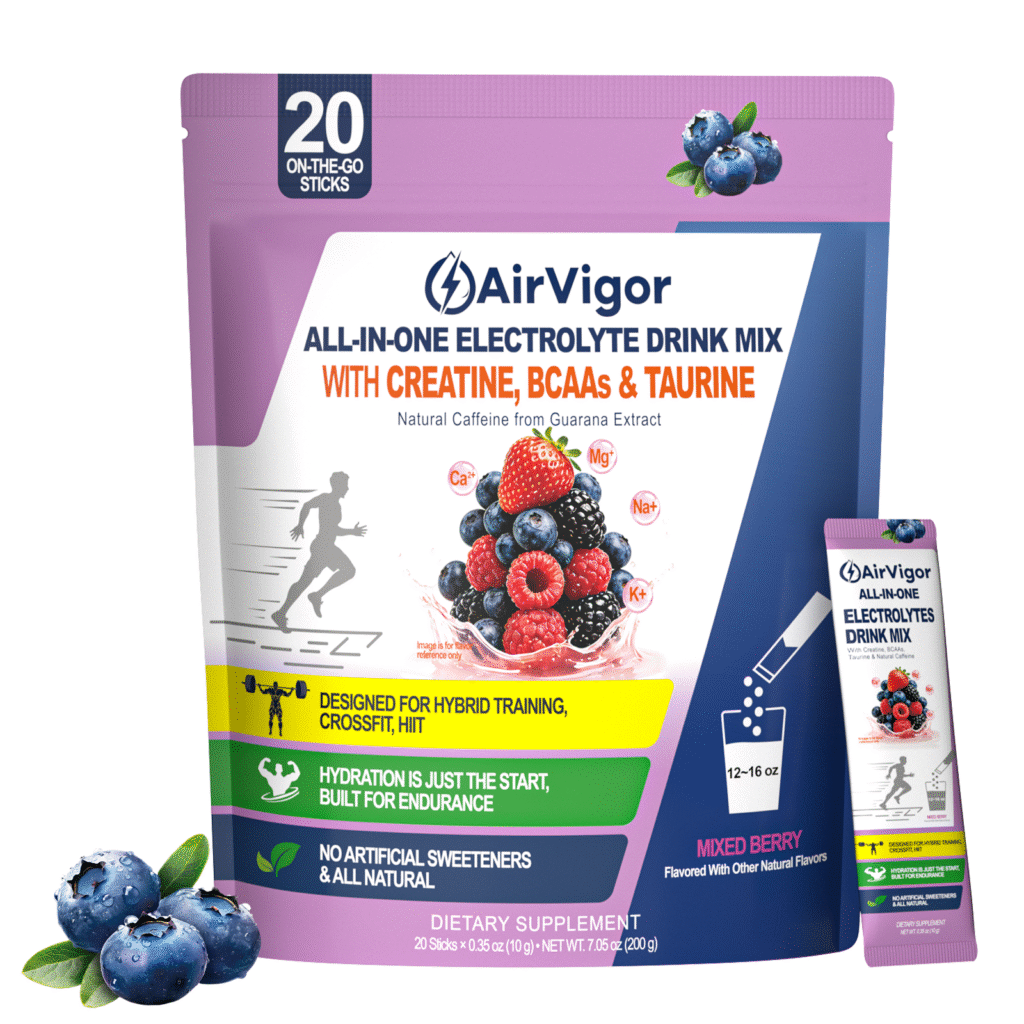
AirVigor electrolyte products are designed with clear ingredient structure and stable formulation standards, making them suitable for daily hydration, training support, and routine use without unnecessary complexity.
For most users, ready-to-use AirVigor electrolyte products provide a simple and reliable solution for maintaining consistent hydration.
For brands or partners with specific formulation needs, customization options are also available as an additional solution.
Share:
Contact Expert Team
At AirVigor, performance becomes effortless. We transform advanced nutrition science into clean, effective supplements that help you hydrate, recover, and feel stronger every day. Shop AirVigor Supplements on Amazon and experience athlete-trusted formulas—backed by real science and supported by our world-class R&D and production capabilities.
Trust AirVigor
At AirVigor, turning your performance goals into reality is no longer a struggle—it’s a science-driven journey we build together. Whether you’re a runner, lifter, cyclist, yogi, outdoor athlete, or someone simply seeking better daily energy, AirVigor transforms advanced nutrition research into clean, effective, and trustworthy supplements you can feel.
Backed by our U.S. scientific team, global certifications, and world-class production standards, every formula is engineered to deliver real hydration, real recovery, and real performance. And when you’re ready to experience the difference, you’ll find AirVigor products available on Amazon and other major platforms—fast shipping, consistent quality, and a community of athletes already seeing results.
Behind the scenes, our R&D and manufacturing ecosystem also supports specialized formulation development, ensuring AirVigor continues to lead with innovation while keeping quality and safety uncompromised. But at the core, everything we create is built for you—your health, your performance, your momentum.
Choose AirVigor. Feel the science. Elevate your every day.


Subscribe to our newsletter
Sign up to our newsletter and we’ll keep you up to date with the latest arrivals.