Skip to content
Why Is Vitamin D3 Added to Electrolyte Powder: A Complete Guide
# Your Trusted Dietary Supplement Brand In US
- Emily

Table of Contents
Most people understand electrolyte powder in a very simple way: it helps with hydration, especially after sweating. But the moment Vitamin D3 appears on the label, the product starts to feel different. Customers immediately want to know whether it is still mainly a hydration product, whether the D3 is actually doing anything useful, and whether this type of formula is genuinely more complete or simply more crowded. That is exactly why this topic matters. A plain electrolyte formula usually focuses on sodium, potassium, magnesium, and fluid balance. A formula with D3 suggests a second layer of purpose. It points toward something broader: not just rehydration, but a more complete support story around calcium use, muscle-related function, and daily recovery logic.
According to MedlinePlus, vitamin D helps the body absorb calcium and also supports muscles, nerves, and the immune system. The NIH Office of Dietary Supplements also makes it clear that vitamin D is required for calcium to be absorbed in the gut. That means D3 is not replacing the role of electrolytes. Sodium, potassium, magnesium, calcium, and chloride still do the main hydration work. What Vitamin D3 adds is a second layer of formula value: it helps explain why minerals like calcium belong in the product in the first place, and it makes the formula feel more intentional for customers who want more than simple sweat replacement.
That distinction matters because modern customers are no longer comparing electrolyte powders only by flavor or stick count. They are comparing them by purpose. Once you understand that shift, the label starts to make much more sense. A plain electrolyte product may still be right for straightforward hydration. But when a brand adds Vitamin D3, it is usually trying to build a broader product story — one that can speak to hydration, daily support, and a more premium recovery angle at the same time.
What Is Vitamin D3 in Electrolyte Powder?
Vitamin D3 in electrolyte powder is usually there to expand the formula beyond hydration alone. Electrolytes still handle fluid balance, but Vitamin D3 adds broader support by helping the body absorb calcium and by contributing to muscle-related function. That is why a D3 electrolyte formula often feels more complete than a plain electrolyte powder.
What does Vitamin D3 in electrolyte powder do?
The easiest way to explain it is this: Vitamin D3 changes the job description of the product.
A plain electrolyte powder usually has a narrow role:
- support hydration
- replace minerals lost in sweat
- help the body feel more restored after heat or activity
A formula with Vitamin D3 usually signals something broader:
- hydration support
- broader mineral support
- calcium-use support
- muscle-related support
- a more advanced daily-use formula story
This matters because customers rarely buy based on ingredients alone. They buy based on what they believe the formula will do for them in real life.
A plain electrolyte powder may answer this question:
- “Will this help after sweating?”
A D3 formula starts answering a bigger one:
- “Is this just hydration, or is it a more complete support product?”
That is a meaningful difference in customer perception.
According to MedlinePlus, vitamin D helps the body absorb calcium, and your muscles need vitamin D to move. That means D3 is not there to “hydrate you” in the same direct way sodium or potassium do. Instead, it adds a different kind of value. It supports the logic behind the wider mineral system.
A useful way to understand it is to separate the formula into layers:
| Formula Layer | Main Role |
|---|---|
| Electrolytes | Support fluid balance and sweat-related mineral replacement |
| Calcium and magnesium | Add broader mineral depth |
| Vitamin D3 | Helps make calcium support and muscle-related support more meaningful |
This is exactly why customers often perceive D3-containing formulas as more advanced. The product no longer feels like “salt in flavored water.” It begins to feel like a more complete-use formula designed for hydration plus broader support.
Why is Vitamin D3 in electrolyte powder added?
Vitamin D3 is usually added because the brand wants the product to do more than basic hydration.
This is especially true when the formula also contains:
- calcium
- magnesium
- broader mineral support ingredients
- a recovery-focused positioning
The NIH Office of Dietary Supplements explains that vitamin D promotes calcium absorption in the gut and helps maintain adequate calcium and phosphate concentrations in the body. That matters because once calcium appears in the formula, customers naturally begin asking whether the product is designed with real logic or whether ingredients were simply added to make the label look busier.
That is where D3 becomes important.
Without D3, calcium on the label may still look useful, but the formula can feel less connected.
With D3, the structure becomes easier to explain:
- electrolytes support hydration
- calcium adds broader mineral value
- Vitamin D3 supports calcium use
- the product becomes easier to position as a more complete daily or recovery-support formula
That is one reason D3 works especially well in formulas meant for:
- active adults
- daily hydration plus broader support
- post-sweat recovery
- premium hydration products
- wellness-focused electrolyte formulas
This is not only a nutrition decision. It is also a product design decision.
A basic hydration formula may compete mostly on:
- price
- taste
- sodium level
A broader formula with D3 can compete on:
- completeness
- premium feel
- mineral logic
- broader use case
- stronger differentiation
That is a much more powerful story in a crowded market.
Is Vitamin D3 in electrolyte powder different from plain electrolytes?
Yes — not necessarily in how it tastes, but definitely in how the formula is perceived and positioned.
A plain electrolyte formula is mainly about:
- hydration
- sweat replacement
- fluid balance
A D3 electrolyte formula often feels like:
- hydration plus support
- hydration plus recovery
- hydration plus broader mineral logic
This is a major difference from a customer point of view.
A plain formula may feel great for:
- tough workouts
- heat
- post-sweat use
- short-term hydration support
A formula with Vitamin D3 may feel more appealing when the customer also wants:
- a daily-use formula
- a broader wellness angle
- a more complete label
- stronger muscle and mineral support logic
- a product that looks more advanced than standard sports hydration
The NIH calcium fact sheet makes the relationship especially clear by stating that vitamin D is required for calcium to be absorbed in the gut. That single idea changes how the whole formula is read.
Here is a simple comparison:
| Formula Type | Main Customer Impression | Main Product Role |
|---|---|---|
| Plain electrolyte powder | Basic hydration support | Sweat replacement and fluid balance |
| Electrolyte powder with D3 | More complete support | Hydration plus calcium- and muscle-related logic |
| Electrolyte powder with D3 + calcium + magnesium | More advanced formula | Hydration plus broader recovery and daily support |
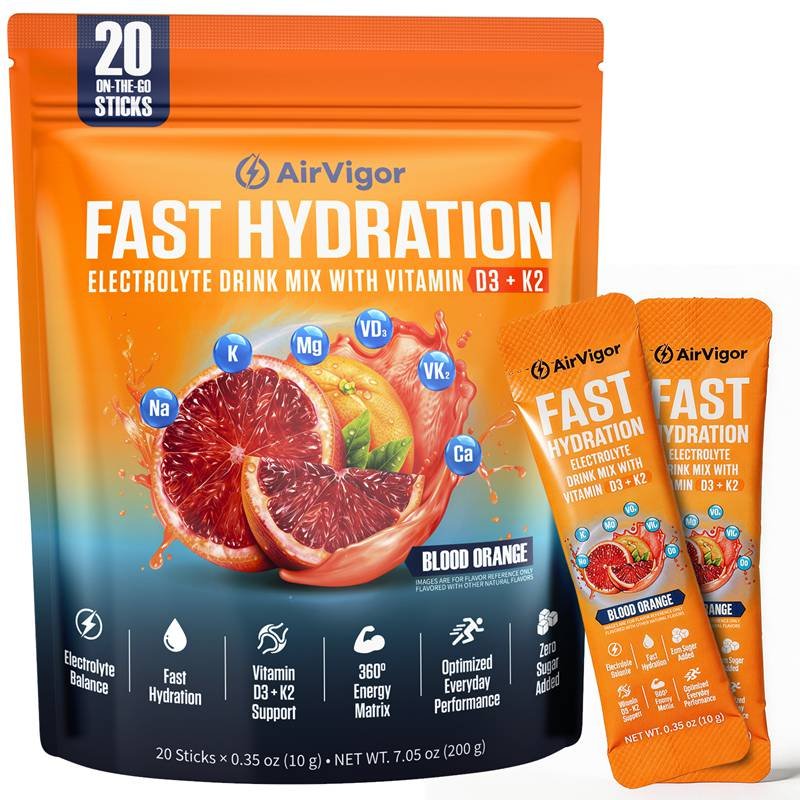
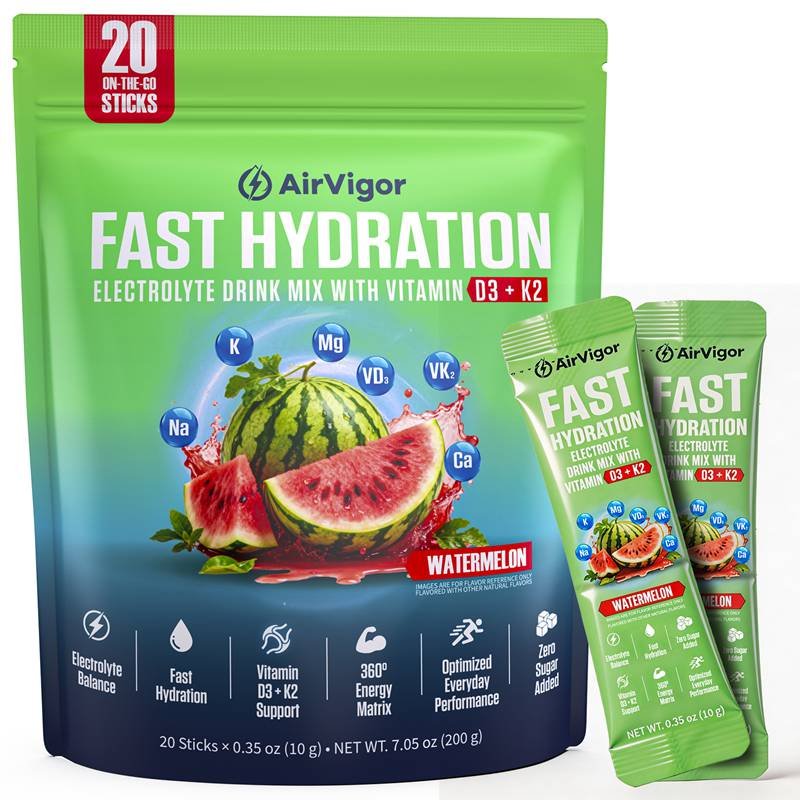
This is exactly why products like AirVigor’s concept can stand out more clearly. When D3 is included alongside a broader mineral structure, the product no longer looks like just another hydration mix. It starts to look like a smarter, more complete-use formula.
How Does Vitamin D3 in Electrolyte Powder Help?
Vitamin D3 in electrolyte powder helps by adding a second layer of support beyond hydration. It does not replace what electrolytes do, but it supports calcium absorption and contributes to muscle-related function, which is why the overall formula can feel more complete, more purposeful, and more premium than a plain electrolyte powder.
How does Vitamin D3 in electrolyte powder work?
Vitamin D3 works differently from the hydration minerals in the formula.
This is one of the most important things customers need to understand, because it prevents confusion about what the product is really doing.
Electrolytes such as:
- sodium
- potassium
- magnesium
- chloride
are there to support hydration and fluid balance.
Vitamin D3 is there for a different reason.
The NIH Office of Dietary Supplements explains that vitamin D promotes calcium absorption in the gut and helps maintain adequate calcium and phosphate concentrations. MedlinePlus also explains that vitamin D helps the body absorb calcium and that muscles need it to move.
So when customers ask how D3 “works” in electrolyte powder, the best answer is:
- it does not replace the electrolyte job
- it strengthens the broader nutritional purpose of the formula
- it makes calcium-related support more meaningful
- it helps the product feel more connected and complete
This is also why D3 often appears in formulas that want to speak to more than simple rehydration. A brand that adds D3 is usually trying to tell the customer:
- this is not only about replacing what sweat removed
- this is also about broader support for daily active use and recovery
That positioning becomes much stronger when the rest of the formula supports it.
How does Vitamin D3 in electrolyte powder support calcium?
This is one of the clearest and strongest reasons D3 belongs in a more advanced formula.
The NIH calcium fact sheet states very directly that vitamin D is required for calcium to be absorbed in the gut. MedlinePlus says the same thing in simpler terms: vitamin D helps the body absorb calcium.
That relationship matters for two reasons.
First, it makes the formula easier to understand
If the product contains calcium, customers naturally want to know whether that calcium is there with a purpose or simply as label decoration. Adding D3 gives the formula a much stronger answer.
Second, it makes the formula feel more intentional
A product with calcium alone may still look useful. But a product with calcium plus D3 usually looks more thoughtfully built because the relationship between the two ingredients is already well understood.
This becomes especially relevant in formulas positioned for:
- broader recovery support
- active daily use
- premium hydration
- mineral-support beverages
- post-workout or post-sweat replenishment
A simple comparison helps explain the shift:
| Calcium Formula Style | How It Often Feels |
|---|---|
| Calcium alone | Helpful, but less complete |
| Calcium + D3 | More logical and easier to trust |
| Calcium + magnesium + D3 | More premium and more advanced |
This is one reason D3 is more than a decorative add-on. It helps calcium feel like a meaningful part of the formula instead of just another ingredient.
How does Vitamin D3 in electrolyte powder support muscles?
Vitamin D3 supports muscles in a way that makes a lot of sense inside a broader electrolyte formula.
According to MedlinePlus, your muscles need vitamin D to move, and vitamin D also plays a role in the nervous system. That matters because electrolyte powders are already used around situations where muscles are part of the customer conversation:
- after sweating
- during hot days
- around workouts
- during recovery routines
- when customers want better support than plain water
This is exactly why D3 fits naturally in a broader support formula.
Electrolytes already help the product speak to:
- hydration
- fluid balance
- post-sweat replenishment
D3 helps the same product speak more naturally to:
- muscle-related support
- daily active use
- broader mineral logic
- a more complete recovery story
That does not mean D3 and electrolytes do the same job. They do not. But they support the same overall customer experience in a complementary way.
A customer may not think:
- “I need a calcium-absorption support drink today.”
They are more likely to think:
- “I want a formula that feels more complete.”
- “I want hydration, but I also want a stronger recovery feel.”
- “I want a product that makes more sense than a plain sports drink.”
That is exactly where D3 helps.
A practical comparison looks like this:
| Ingredient Focus | Main Formula Contribution |
|---|---|
| Electrolytes | Hydration and fluid balance |
| Magnesium | Broader muscle and nerve support feel |
| Calcium | More structural mineral depth |
| Vitamin D3 | Supports calcium use and muscle-related formula logic |
This is why products like AirVigor’s concept can feel stronger in the market. Once D3 is added to electrolytes, calcium, and magnesium, the formula begins to tell a much clearer story: not just hydration, but hydration with broader support.

Is Vitamin D3 in Electrolyte Powder Good for Hydration?
Vitamin D3 does not do the main hydration work in an electrolyte powder. Hydration still depends mostly on electrolytes such as sodium, potassium, and chloride, because those are the minerals most closely tied to fluid balance. What Vitamin D3 adds is a broader support layer that can make the formula feel more complete, especially when calcium, magnesium, and daily recovery support are also part of the product story.
Is Vitamin D3 in electrolyte powder good for hydration?
This is one of the most important questions to answer clearly, because it helps customers understand what the formula is actually doing.
The short answer is: Vitamin D3 is useful in the formula, but not as the main hydration driver.
Hydration is still mainly supported by the classic electrolytes. As MedlinePlus explains, electrolytes help regulate the amount of water in the body and support muscles and nerves. That means the hydration side of the formula still depends first on ingredients like:
- sodium
- potassium
- chloride
- magnesium
Vitamin D3 has a different role. According to MedlinePlus, vitamin D helps the body absorb calcium and also helps support muscles and nerves. So D3 is not there to replace sodium or potassium. It is there to make the formula do more than hydration alone.
This distinction matters because customers often see a more advanced label and assume every ingredient must be helping hydration in the same direct way. That is not how a better formula works. A stronger formula often has different layers of purpose.
A useful way to explain it looks like this:
| Formula Layer | Main Job | Why It Matters |
|---|---|---|
| Core electrolytes | Hydration and fluid balance | Helps the body deal with sweat and fluid loss |
| Support minerals | Broader mineral structure | Makes the formula feel less narrow |
| Vitamin D3 | Calcium-use and muscle-support logic | Gives the formula more depth and purpose |
That is why a D3 electrolyte formula can still make perfect sense. It is not saying D3 replaces hydration ingredients. It is saying the formula is built to support more than hydration only.
Which part of electrolyte powder helps hydration most?
If the question is strictly about hydration, the ingredients that matter most are still the electrolyte minerals.
The most hydration-relevant ingredients are usually:
- sodium
- chloride
- potassium
- magnesium
These are the ingredients customers should pay attention to first when they want to know whether the product is really designed for fluid support.
That is important because customers often compare products that look similar on the front of the package, but are built very differently once the full label is reviewed.
A basic hydration formula usually focuses on:
- sodium
- potassium
- chloride
- maybe magnesium
A broader support formula may also include:
- calcium
- Vitamin D3
- additional minerals
- a recovery or wellness angle
That does not make one automatically better than the other. It means the formulas are trying to solve different levels of need.
A clear comparison helps:
| Ingredient Type | Supports Hydration Most Directly? | Adds Broader Formula Value? |
|---|---|---|
| Sodium | Yes | Yes |
| Potassium | Yes | Yes |
| Chloride | Yes | Yes |
| Magnesium | Often yes | Yes |
| Calcium | Less directly | Yes |
| Vitamin D3 | No, not directly | Strongly yes |
This table is useful because it gives customers a smarter way to read the formula. If someone only wants a very straightforward hydration product, they may focus mostly on the electrolyte side. If they want a formula that feels broader and more complete for daily support, then Vitamin D3 becomes much more relevant.
That is also why education matters so much in this category. A good brand explains not only what is in the formula, but why those ingredients belong together.
Why does Vitamin D3 make the formula feel more complete?
Because it changes the formula from “hydration only” to “hydration plus broader support.”
This is one of the main reasons customers respond positively to D3 in electrolyte powder. Even when they do not know every detail of the science, they can still feel that the product is trying to do more than a plain hydration drink.
A plain electrolyte formula usually communicates:
- hydration
- sweat replacement
- fluid support
A formula with Vitamin D3 often communicates:
- hydration
- mineral support
- calcium-related support
- muscle-related support
- daily-use or recovery-friendly positioning
That is a big difference in customer perception.
People increasingly compare formulas by asking:
- Does this look basic or more advanced?
- Is it only for hydration, or does it support more?
- Does the ingredient list feel connected?
- Is this something I can justify using beyond workouts?
This is exactly where Vitamin D3 becomes valuable. It helps the formula answer those questions more clearly.
It does not make the product “better” automatically. A plain electrolyte formula can still be excellent if the goal is simple sweat replacement. But when a brand wants to create a product that feels more premium, more thoughtful, and easier to position for broader daily use, D3 helps a lot.
That is also where a formula like AirVigor’s can stand out more naturally. When electrolytes are combined with calcium, magnesium, and D3, the product no longer feels like just another hydration stick. It starts to feel like a more complete support formula for active daily use, light recovery, and broader mineral support.
Who Needs Vitamin D3 in Electrolyte Powder?
Vitamin D3 in electrolyte powder is usually most relevant for customers who want more than plain hydration support. It makes the most sense for people who like hydration formulas but also care about broader mineral logic, muscle-related support, or a more complete daily-use product. In other words, this kind of formula fits best when the customer wants a product that goes beyond simple sweat replacement.
Who may benefit most from Vitamin D3 in electrolyte powder?
This kind of formula usually makes the most sense for people who are already looking for something more complete than a standard electrolyte mix.
That often includes:
- active adults with repeated workout routines
- customers interested in hydration plus broader support
- people who already compare formulas by calcium and magnesium content
- customers looking for a recovery-oriented hydration product
- users who prefer a “daily support” story instead of a pure sports story
- people who want one product to cover more than one purpose
This matters because Vitamin D3 changes the identity of the formula.
A plain electrolyte powder often answers one practical question:
- How do I support hydration after sweating?
A D3 formula can answer a broader one:
- How do I support hydration while also choosing a formula that feels more complete and more intentional?
That difference is especially valuable in premium or wellness-oriented product categories. Customers in those categories often care less about the simplest hydration story and more about whether the formula feels thoughtfully built.
A comparison helps here:
| Customer Need | Plain Electrolyte Powder | Electrolyte Powder with D3 |
|---|---|---|
| Basic hydration | Strong fit | Strong fit |
| Sweat replacement | Strong fit | Strong fit |
| Broader mineral support | Limited | Better fit |
| Daily wellness positioning | Limited | Better fit |
| Premium formula feel | Moderate | Stronger |
| More complete recovery logic | Moderate | Stronger |
This is why D3 often appeals to customers who already want a more advanced formula. It gives the product a stronger “why” beyond hydration alone.
Is Vitamin D3 in electrolyte powder useful for non-athletes?
Yes, very often.
This is actually one of the strongest reasons the formula concept works so well.
If the product only spoke to hydration during sports, then D3 might feel unnecessary to some customers. But once the formula is positioned around daily support, light recovery, active routines, and broader mineral logic, the audience becomes much wider.
Non-athletes may still find this kind of product relevant if they care about:
- hydration in hot weather
- active workdays
- travel fatigue
- daily routines that include repeated light sweating
- muscle-related support
- a product that feels more complete than flavored electrolyte water
This matters because a large part of the market now sits in the middle ground. These people are not endurance athletes, but they still want hydration products that feel smarter than a basic sports drink.
For example, a non-athlete may still think:
- “I want hydration, but I also want a better formula.”
- “I don’t want something that feels overly sporty.”
- “I prefer a daily-use product with more logic behind it.”
- “I want one product that fits both activity and routine wellness.”
That is exactly where a D3-containing formula becomes attractive. It helps the product move beyond a narrow workout-only identity.
This is also why cleaner positioning matters. A brand that explains D3 as part of a broader daily-support structure will usually sound much stronger than one that simply adds it and hopes customers understand the reason on their own.
Which routines make Vitamin D3 in electrolyte powder more relevant?
The most relevant routines are usually the ones where customers want both hydration support and broader formula value at the same time.
That often includes:
- morning hydration after a workout
- active days with repeated sweating
- hot-weather use
- recovery support after light or moderate exercise
- travel days when a broader support formula feels more appealing
- daily routines where customers want more than a basic hydration mix
This is important because the product becomes much more relevant once it fits more than one real-life moment.
A plain hydration product may feel very situational:
- after a workout
- in heat
- after sweating
A D3 electrolyte formula may feel more flexible:
- morning active routine
- workout support
- daily hydration plus broader support
- recovery-friendly use
- wellness-oriented hydration
A useful comparison looks like this:
| Routine Type | Plain Electrolytes | Electrolytes with D3 |
|---|---|---|
| Post-sweat use | Strong fit | Strong fit |
| Daily active hydration | Good fit | Better fit |
| Travel and hot weather support | Good fit | Better fit |
| Broader daily support | Limited | Better fit |
| Premium daily-use formula | Moderate | Stronger |
This is one reason products like AirVigor’s concept are commercially stronger. A formula with electrolytes, calcium, magnesium, and D3 can be positioned across more situations without feeling random. That wider relevance makes it easier to explain, easier to market, and easier for customers to justify choosing over a more basic product.
Why this audience matters for product positioning
The audience for this kind of formula is not just “people who sweat.”
It is more often:
- people who compare formulas carefully
- people who want hydration plus something more
- people interested in broader mineral support
- people who respond to a complete-use formula
- people willing to pay more for stronger formula logic
That is a much more valuable group from a positioning standpoint.
A plain electrolyte powder often competes mainly on:
- price
- flavor
- stick count
- sodium level
A broader D3 electrolyte formula can compete on:
- completeness
- formula intelligence
- premium feel
- wider use case
- stronger daily-support positioning
That difference matters because the more reasons a customer has to understand and trust the formula, the easier it is to stand out in a crowded category.

What Should You Look For in Vitamin D3 in Electrolyte Powder?
A stronger formula should make sense as a whole. The hydration side still needs real electrolyte logic, and the Vitamin D3 side needs to fit naturally with the rest of the mineral system. The best products are usually the ones that answer a very practical customer question clearly: Why are these ingredients together? When the answer is obvious, the formula feels more credible, more premium, and easier to trust.
Which minerals work best with Vitamin D3?
Vitamin D3 works best when it is paired with minerals that make its role clear. The most logical partners are usually calcium and magnesium, while the hydration foundation still comes from sodium, potassium, and chloride. [MedlinePlus] supports the hydration side by explaining that electrolytes help regulate fluid balance and support muscles and nerves, while the [NIH Office of Dietary Supplements] explains that vitamin D promotes calcium absorption in the gut.
That combination matters because customers rarely evaluate a formula ingredient by ingredient. They evaluate whether the label feels basic or thoughtfully built. A product with sodium and potassium may feel like a straightforward hydration powder. A product with electrolytes plus calcium, magnesium, and D3 usually feels more complete because the formula appears to serve more than one purpose.
A simple comparison helps show why this matters:
| Ingredient Group | Main Job | Why It Strengthens the Formula |
|---|---|---|
| Sodium + chloride | Hydration and fluid balance | Gives the product real rehydration logic |
| Potassium | Broader electrolyte balance | Helps the formula feel more balanced |
| Magnesium | Muscle and nerve-related support | Adds recovery and daily-support relevance |
| Calcium | Structural mineral support | Gives Vitamin D3 a clear partner |
| Vitamin D3 | Supports calcium use and muscle-related function | Makes the formula feel more advanced |
This is one reason broader formulas are easier to position in the market. They give the customer more than one reason to choose the product. Instead of selling only “hydration,” the brand can talk about hydration plus broader mineral support, daily-use logic, and a more complete recovery feel.
Is calcium important in this formula?
Yes, calcium is one of the most important partners for Vitamin D3 in this kind of product. The reason is simple: vitamin D helps the body absorb calcium. [MedlinePlus] states that vitamin D helps the body absorb calcium, and the [NIH calcium fact sheet] explains that vitamin D is required for calcium to be absorbed in the gut by active transport.
That relationship gives the formula much stronger logic. If calcium appears on the label without D3, the product may still look useful, but the customer may not immediately understand the connection. Once Vitamin D3 is included, the structure becomes easier to explain:
- electrolytes support hydration
- calcium adds broader mineral value
- Vitamin D3 helps the body use calcium more effectively
That is a strong product story because it is easy to understand and easy to remember.
It also matters from a positioning standpoint. A formula with calcium plus D3 feels more premium than a formula with calcium alone because it suggests the product has been built with more intention. Customers often read that as a sign of higher quality, even if they do not use scientific language. They simply feel that the formula “makes more sense.”
A practical comparison looks like this:
| Calcium Formula Style | Customer Impression |
|---|---|
| Calcium alone | Helpful, but less connected |
| Electrolytes + calcium | Broader mineral support |
| Electrolytes + calcium + D3 | More complete and easier to trust |
This is exactly why calcium is not just a decorative extra in this context. It helps explain why D3 belongs in the formula at all.
Is magnesium important too?
Yes, magnesium is also important, and in many cases it makes the formula feel more balanced and more useful in everyday life. [MedlinePlus] explains that magnesium helps muscles, nerves, and the heart work properly. That makes it a natural fit in any formula that already wants to speak to hydration, muscle-related support, and daily recovery.
Magnesium plays a different role from calcium, but it is just as valuable in the overall product story. Calcium helps explain the D3 relationship more directly. Magnesium helps strengthen the formula’s “feel” from a customer point of view. It makes the product look less like a narrow hydration powder and more like a broader support formula.
That is especially useful for products aimed at:
- active adults
- frequent sweaters
- customers who want more than plain hydration
- people comparing premium formulas
- customers looking for a recovery-oriented product rather than a sports drink copy
A formula with electrolytes, calcium, magnesium, and D3 often feels more advanced than a product built around hydration plus a single vitamin. It is easier to explain, easier to differentiate, and easier to position for daily use. That matters in a crowded category where many hydration powders still look interchangeable.
A useful comparison:
| Formula Type | How It Usually Feels |
|---|---|
| Plain electrolyte powder | Basic hydration support |
| Electrolytes + D3 | Broader support, but may still feel incomplete |
| Electrolytes + calcium + D3 | Stronger formula logic |
| Electrolytes + calcium + magnesium + D3 | More premium and more complete |
That last structure is exactly where formulas like AirVigor’s concept can become more commercially compelling. The more connected the formula looks, the easier it is to justify as a higher-value product.
How Can Vitamin D3 in Electrolyte Powder Fit Daily Use?
Vitamin D3 in electrolyte powder fits daily use best when the product is positioned as a broader hydration-and-support formula rather than only a sweat-replacement drink. It makes the most sense in routines where customers want something more complete than plain hydration, but still light enough to use regularly.
How can it fit daily hydration?
This kind of formula fits daily hydration best when the customer already wants more than basic water support. That often includes:
- hot-weather routines
- repeated light sweating
- active workdays
- travel
- daily hydration habits that feel inconsistent
- customers looking for a broader wellness angle
The reason this works is straightforward. A plain hydration product answers a narrow question: How do I replace fluid and electrolytes? A D3-containing formula answers a broader one: How do I support hydration while also choosing a product with stronger mineral logic?
That difference becomes more valuable when the day includes more than simple thirst. For example, a customer may not be training hard, but they may still want a product that feels:
- more useful than flavored water
- more modern than a sugary sports drink
- more complete than a plain electrolyte mix
This is exactly where D3 helps. It gives the product another reason to exist. It helps the formula feel more substantial without forcing the hydration story to do all the work on its own.
A simple comparison helps:
| Daily Hydration Style | What It Feels Like |
|---|---|
| Plain water | Basic hydration |
| Plain electrolyte powder | Hydration with sweat-support logic |
| Electrolyte powder with D3 | Hydration plus broader daily-support logic |
That is one reason this kind of product often appeals to customers who want a smarter routine, not just a more intense one.
How can it fit recovery support?
Recovery is one of the strongest use cases for this kind of formula. Customers already associate recovery with more than one thing. They are not only asking whether they replaced fluids. They are also asking whether the product feels more complete after activity, heat, or a draining day.
A D3 electrolyte formula fits recovery support well because it can speak to several connected needs at once:
- hydration after sweating
- broader mineral balance
- calcium-related formula logic
- muscle-related support
- daily active use rather than only hard training
That does not mean D3 is a direct “recovery ingredient” in the same way sodium is a sweat-replacement mineral. It means D3 strengthens the recovery story by making the full mineral system feel more connected. Customers often respond strongly to that because they do not want a formula that feels random. They want one that feels built with purpose.
A useful recovery comparison:
| Recovery Need | Plain Electrolytes | Electrolytes + D3 + Minerals |
|---|---|---|
| Fluid replacement | Strong fit | Strong fit |
| Broader mineral support | Limited | Better fit |
| More complete daily recovery feel | Moderate | Stronger |
| Premium formula positioning | Moderate | Stronger |
This is where broader formulas stand out in the market. They not only replace what sweat removed. They also support a more complete daily recovery narrative.
How can AirVigor position itself more naturally?
AirVigor can position this kind of formula naturally by avoiding the idea that D3 is a random upgrade. The strongest message is not “now with Vitamin D3.” The stronger message is that the formula has a clear internal structure:
- electrolytes for hydration
- calcium and magnesium for broader mineral depth
- Vitamin D3 to support calcium use and a more complete formula logic
That is much easier for customers to understand.
From a direct-to-consumer perspective, this gives AirVigor several natural positioning angles:
- hydration plus support
- active daily routines
- hot-weather and sweat-related replenishment
- broader mineral balance
- cleaner daily-use recovery support
From a B2B and OEM/ODM perspective, it also gives the product a stronger reason to exist in a crowded market. Instead of competing as another plain electrolyte powder, it becomes an advanced hydration-and-support formula with a clearer premium story.
A positioning table makes this easier:
| Positioning Style | How It Sounds | Commercial Strength |
|---|---|---|
| Plain hydration powder | Rehydrate after sweating | Easy to understand, but crowded |
| Electrolytes + D3 | Hydration plus broader support | Stronger differentiation |
| Electrolytes + calcium + magnesium + D3 | Hydration plus mineral-support logic | Strongest premium positioning |
This is one of the biggest opportunities in the formula. When AirVigor explains the ingredient relationship clearly, the product becomes easier to trust and much easier to market.
Final Thoughts
Vitamin D3 in electrolyte powder does not replace the role of electrolytes. Sodium, potassium, magnesium, calcium, and chloride still do the main hydration work. What Vitamin D3 adds is a second layer of formula value. It helps the product feel more complete, more intentional, and more premium because it supports calcium use and strengthens the broader mineral logic of the formula.
That is why this type of product can be so compelling. A plain electrolyte powder can still be a very good hydration product. But once D3 is added together with calcium and magnesium in the right way, the formula starts to do more than support hydration alone. It becomes easier to position for:
- daily hydration
- active recovery
- broader mineral support
- customers who want a more advanced formula
This is exactly where a concept like AirVigor’s can stand out. A broader mineral structure with Vitamin D3 gives the product a much clearer reason to exist in a competitive market. It is not just about hydration anymore. It is about hydration with a stronger formula logic.
Looking to Source a Better Formula or Build Your Own?
If you are looking for:
- an electrolyte powder with Vitamin D3
- a broader hydration-and-recovery formula
- a product with calcium and magnesium support
- a more premium mineral-support positioning
- an OEM / ODM partner for custom formula development
AirVigor can support both:
- finished branded products
- private label and custom formulation projects
Whether your goal is a market-ready product or a more distinctive formula for your own brand, the key is the same: build something that makes sense on the label, in the routine, and in the customer’s mind.
Share:
Contact Expert Team
At AirVigor, performance becomes effortless. We transform advanced nutrition science into clean, effective supplements that help you hydrate, recover, and feel stronger every day. Shop AirVigor Supplements on Amazon and experience athlete-trusted formulas—backed by real science and supported by our world-class R&D and production capabilities.
Trust AirVigor
At AirVigor, turning your performance goals into reality is no longer a struggle—it’s a science-driven journey we build together. Whether you’re a runner, lifter, cyclist, yogi, outdoor athlete, or someone simply seeking better daily energy, AirVigor transforms advanced nutrition research into clean, effective, and trustworthy supplements you can feel.
Backed by our U.S. scientific team, global certifications, and world-class production standards, every formula is engineered to deliver real hydration, real recovery, and real performance. And when you’re ready to experience the difference, you’ll find AirVigor products available on Amazon and other major platforms—fast shipping, consistent quality, and a community of athletes already seeing results.
Behind the scenes, our R&D and manufacturing ecosystem also supports specialized formulation development, ensuring AirVigor continues to lead with innovation while keeping quality and safety uncompromised. But at the core, everything we create is built for you—your health, your performance, your momentum.
Choose AirVigor. Feel the science. Elevate your every day.


Subscribe to our newsletter
Sign up to our newsletter and we’ll keep you up to date with the latest arrivals.