Skip to content
Pre Workout vs Electrolyte Stack : Do You Need Both
# Your Trusted Dietary Supplement Brand In US
- Emily

Table of Contents
Many people compare pre workout vs electrolyte stack because they want the same result: better training. But these two supplements do not work the same way. Pre workout is usually chosen for energy, focus, and workout intensity, while an electrolyte stack is chosen for hydration, sweating, muscle function, and recovery. If you choose the wrong one, you may feel stimulated but still tired, thirsty, cramped, or drained after exercise.
The simple answer is this: pre workout is better when your main problem is low motivation, poor focus, or lack of drive before training. An electrolyte stack is better when your main problem is heavy sweating, heat, dehydration, muscle tightness, cramps, or slow recovery. Some people use both, especially for intense workouts, hot-weather training, CrossFit, HIIT, running, cycling, or long gym sessions.
Think of pre workout as the product that helps you start stronger, and electrolyte stack as the product that helps your body stay balanced while you train. If your workout feels good at the beginning but crashes halfway through, the problem may not be energy alone. It may be hydration, minerals, sweat loss, or recovery. That is why understanding the difference can help you build a smarter supplement routine instead of simply reaching for more caffeine.
What Is Pre Workout?
Pre workout is a supplement taken before exercise to help users feel more energized, focused, and ready to train. Most formulas are designed for short-term workout intensity, especially during lifting, HIIT, CrossFit, sprint intervals, or demanding gym sessions.
How Does Pre Workout Work?
Pre workout works by supporting the body’s “ready-to-train” state before exercise. For most customers, the first noticeable change is mental. They feel more awake, more motivated, and more willing to push through hard sets or high-intensity intervals.
The most common reason people buy pre workout is simple: they want to overcome low energy before training. This often happens after a long workday, poor sleep, early morning schedules, or mentally demanding routines. A good pre workout can make the start of a session feel easier, especially when the user already knows they need to train but does not feel fully prepared.
In most formulas, caffeine is the main driver of fast energy. It helps reduce the feeling of tiredness and may improve alertness during exercise. Other ingredients are usually added to support pump, endurance, focus, or repeated power output. The exact experience depends heavily on the formula, dose, and the user’s caffeine tolerance.
| What Users Want | How Pre Workout May Help | What to Watch |
|---|---|---|
| More energy before training | Caffeine may increase alertness | Too much may cause jitters |
| Better gym focus | Focus-support ingredients may help concentration | Effects vary by formula |
| Stronger workout drive | Stimulation may improve motivation | Can become habit-forming |
| Better pump | Citrulline may support blood flow | Dose needs to be meaningful |
| Harder sets | Beta-alanine may support endurance | Tingling can feel uncomfortable |
| Better strength output | Creatine may support repeated power | Works best with consistent use |
The key point is that pre workout usually helps users feel more prepared to train. It does not replace hydration, food, sleep, or recovery. If someone is tired because they are dehydrated, under-fueled, or not recovering well, a strong pre workout may cover the feeling for a short time, but it may not solve the real problem.
For example, a customer who trains after work may think, “I need stronger energy.” But if they drank coffee all day, skipped lunch, and barely drank water, the real need may be hydration and mineral support instead of another high-caffeine product. This is why many users compare pre workout vs electrolyte stack when they start noticing crashes, cramps, or poor recovery.
Which Ingredients Matter?
The most important pre workout ingredients are the ones that match the user’s actual training goal. Caffeine supports fast energy, citrulline supports pump, beta-alanine supports high-intensity endurance, creatine supports repeated power, and electrolytes may help when sweating is part of the problem.
Not every pre workout needs every ingredient. A lifter chasing a better pump may care more about citrulline. A CrossFit user may care more about endurance and hydration. A person training at 7 PM may want low caffeine or stimulant-free support because sleep matters more than a short energy rush.
This is where customers often make mistakes. They choose the loudest label, highest caffeine dose, or most aggressive marketing claim instead of checking whether the formula fits their workout, schedule, and tolerance.
| Ingredient | Main Purpose | Best Fit | Customer Concern |
|---|---|---|---|
| Caffeine | Energy and alertness | Morning workouts, heavy gym sessions | Jitters, crash, sleep issues |
| Citrulline | Pump and blood flow support | Weightlifting, bodybuilding-style training | Low-dose formulas may feel weak |
| Beta-Alanine | High-intensity endurance | HIIT, CrossFit, repeated hard sets | Tingling sensation |
| Creatine | Strength and power support | Strength training, sprint work | Needs daily consistency |
| Taurine | Performance and hydration support | Mixed training, endurance support | Often misunderstood |
| Tyrosine | Focus under stress | Long or mentally demanding sessions | Subtle effect for some users |
| Electrolytes | Fluid and muscle function support | Sweaty workouts, hot gyms, outdoor training | Often underdosed in pre workouts |
A clear pre workout label should make the formula easy to understand. Customers should not need to guess what the product is built for. If the formula is energy-heavy, the caffeine amount should be easy to find. If the product claims pump support, citrulline should be included at a meaningful level. If it claims endurance or hydration support, the mineral and performance ingredient structure should be visible.
For long-term customer satisfaction, comfort matters as much as intensity. A product that feels powerful but causes nausea, shaky hands, headaches, or sleep problems may not become part of a stable routine. Many users now prefer formulas that feel clean, mix well, taste light, and support training without making them feel overstimulated.
Is Pre Workout Good for Every Workout?
Pre workout is not necessary for every workout. It is usually more useful for demanding sessions that require focus, drive, and intensity. For light exercise, recovery training, stretching, walking, yoga, or late-night workouts, a strong pre workout may be unnecessary or even uncomfortable.
The best way to decide is to look at the workout type and the user’s body condition before training. If the user needs mental drive for a heavy lifting session, pre workout may make sense. If the user is sweating heavily, training in heat, or feeling dehydrated, an electrolyte stack may be more relevant. If the user is already stressed, anxious, or sleep-deprived, a high-stimulant pre workout may make the day feel worse.
| Workout Situation | Is Pre Workout a Good Fit? | Better Consideration |
|---|---|---|
| Heavy leg day | Often yes | Energy, focus, pump support |
| Early morning lifting | Often yes | Moderate caffeine may help |
| Long outdoor run | Not always | Electrolytes may matter more |
| Hot yoga | Usually not needed | Hydration and minerals |
| Evening gym session | Use carefully | Low-stim or electrolyte support |
| Recovery workout | Usually not needed | Gentle hydration support |
| HIIT class | Sometimes | Depends on sweat and caffeine tolerance |
| Fasted training | Sometimes | Hydration and minerals are important |
Another issue is caffeine timing. Many customers underestimate how long caffeine can stay active in the body. A pre workout taken late in the day may improve a one-hour gym session but reduce sleep quality later that night. Poor sleep then makes the next day’s energy worse, which can lead to stronger caffeine dependence.
This is one reason pre workout works best as a targeted tool, not as the only solution for training energy. It can be useful on heavy days, low-motivation days, or high-intensity sessions, but users still need proper hydration, meals, sleep, and recovery habits.
For customers comparing pre workout vs electrolyte stack, the more helpful question is not “Which one is stronger?” The better question is, “What is limiting my workout today?” If the answer is low focus, pre workout may help. If the answer is sweat, heat, cramps, thirst, or slow recovery, electrolytes may be the smarter place to start.
What Is an Electrolyte Stack?
An electrolyte stack is a supplement blend that helps the body manage hydration, fluid balance, muscle function, and recovery. It usually includes minerals such as sodium, potassium, magnesium, and calcium, making it especially useful for sweating, heat, long workouts, and active daily routines.
How Does an Electrolyte Stack Work?
An electrolyte stack works by helping the body use water more efficiently. When people sweat, they lose both fluid and minerals. Replacing water alone may not be enough if sodium, potassium, magnesium, and calcium levels are also being reduced through sweat and daily activity.
Many customers first become interested in electrolyte stacks because they feel tired, thirsty, tight, or drained even though they are drinking water. This is common after hot workouts, sauna sessions, outdoor activity, travel, or long workdays with too much coffee and too little balanced hydration.
Electrolytes help support the electrical signals and fluid movement that the body relies on during exercise. Sodium helps the body retain fluid more effectively. Potassium supports muscle and nerve function. Magnesium is closely connected with muscle relaxation and recovery comfort. Calcium helps support muscle contraction and nerve communication.
| Electrolyte | Main Role in the Body | Why Customers Care |
|---|---|---|
| Sodium | Helps maintain fluid balance | Important for heavy sweating and endurance |
| Potassium | Supports muscle and nerve function | Helps with active movement and daily hydration |
| Magnesium | Supports muscle relaxation | Often linked with tightness and recovery comfort |
| Calcium | Helps muscle contraction | Supports normal movement and nerve signaling |
This is why an electrolyte stack can feel different from plain water. Water helps replace fluid, but electrolytes help the body hold and use that fluid more effectively. For someone training hard or sweating heavily, this difference can affect how stable they feel during and after exercise.
For example, a person may drink a full bottle of water before a hot yoga class but still feel lightheaded afterward. Another person may drink water during a long bike ride but still develop heavy legs in the final miles. In these cases, the issue may not be water volume alone. Mineral loss and fluid balance may also be involved.
A well-designed electrolyte stack is not about creating a “rush.” It is about helping the body stay steady. Customers often describe the effect as less dramatic than pre workout, but more practical for real life: fewer crashes after sweating, better comfort during heat, and easier recovery after repeated activity.
Which Electrolytes Matter Most?
The most important electrolytes in a workout and daily hydration stack are sodium, potassium, magnesium, and calcium. Each mineral supports a different part of hydration, muscle function, or recovery, so the formula should be balanced around the intended use rather than simply listing many minerals.
Sodium is often the most important electrolyte for people who sweat heavily. It helps the body retain fluid and supports hydration during longer activity. Many customers try to avoid sodium in food, but exercise hydration is different from general salty snacking. During sweating, sodium loss can be significant, especially in hot weather or long sessions.
Potassium works closely with sodium to support fluid balance and normal muscle contraction. Many customers associate potassium with bananas, but relying on food alone may not always be convenient during workouts, travel, or outdoor activity. This is why potassium is commonly included in electrolyte powders.
Magnesium is especially important for customers who care about muscle tightness, cramps, and recovery comfort. It is not a magic solution by itself, but it plays a meaningful role when included in a balanced mineral system. Calcium also supports normal muscle signaling and helps round out the formula.
| Customer Need | Electrolyte Focus | Common Use Situation |
|---|---|---|
| Heavy sweating | Sodium | Summer workouts, running, cycling, outdoor work |
| Muscle function | Potassium | Gym training, daily hydration, active lifestyles |
| Muscle tightness | Magnesium | Recovery days, evening training, frequent exercise |
| Muscle signaling | Calcium | Balanced performance and recovery formulas |
| Long-duration activity | Sodium + potassium | Hiking, endurance sports, outdoor events |
| Recovery comfort | Magnesium + calcium | Post-workout and rest-day support |
A common mistake is judging an electrolyte product only by whether it contains electrolytes. Customers should look at the full formula structure. A product with very low mineral amounts may taste good but may not provide meaningful support for heavy sweating. On the other hand, a high-sodium formula may be useful for endurance athletes but may not be the best choice for a light daily hydration routine.
The best electrolyte stack depends on the customer’s real use case. A hot-weather runner, an office worker, a CrossFit athlete, and a traveler may all need hydration support, but not in exactly the same way. This is why clear labels and understandable serving guidance matter so much.
For AirVigor-style product development, this means the formula should not look complicated just to appear advanced. It should help customers quickly understand what the minerals do, when to use the product, and how it fits into training or daily life.
Is an Electrolyte Stack Only for Athletes?
An electrolyte stack is not only for athletes. Athletes may have the most obvious sweat loss, but everyday customers also deal with hydration stress from heat, travel, caffeine intake, long workdays, low-carb eating, sauna use, outdoor activity, and inconsistent water habits.
This is one reason electrolyte powders have moved from sports nutrition into daily wellness. Many people now use them at work, during travel, after sweating, before outdoor events, or on days when plain water does not feel like enough. The customer is no longer only a marathon runner or gym athlete.
A busy office worker may drink several cups of coffee but forget to drink enough water. A traveler may feel dry and tired after a long flight. A hot yoga user may leave class feeling weak even after drinking water. A warehouse worker or outdoor worker may lose fluids for hours in warm conditions. These are all real-life situations where an electrolyte stack can make sense.
| User Type | Why They May Use Electrolytes | Best Use Moment |
|---|---|---|
| Gym user | Sweat and recovery support | Before or after training |
| Hot yoga user | Heavy sweating and post-class fatigue | After class |
| Traveler | Dry cabin air and irregular hydration | During travel day |
| Office worker | Coffee-heavy routine and afternoon fatigue | Midday hydration |
| Outdoor worker | Heat exposure and fluid loss | During work shift |
| Hiker | Long activity and sweat loss | Before and during hiking |
| Low-carb dieter | Mineral balance during diet changes | Morning or workout days |
| Sauna user | Heavy sweat loss | After sauna |
This wider customer base changes how electrolyte products should be positioned. The message should not only be about athletic performance. It should also speak to comfort, routine, recovery, and daily practicality.
Customers usually care about simple questions:
- Do I feel less drained after sweating?
- Does it taste light enough to drink often?
- Does it mix quickly in cold water?
- Can I carry it to work, the gym, or travel?
- Does the label clearly show what I am taking?
That is why packaging and user experience matter. Stick packs work well for travel, gym bags, and office drawers. Larger tubs may work better for families or frequent users. Clear serving instructions reduce confusion and help customers use the product correctly.
For a modern electrolyte stack, the strongest selling point is not only mineral content. It is whether the product can become part of a real routine. A formula that tastes too salty, feels too sweet, clumps in water, or has confusing instructions may not earn repeat use, even if the ingredient list looks good.
How Is It Different from Pre Workout?
An electrolyte stack is different from pre workout because it is built for hydration and body balance, not stimulation. Pre workout usually helps users feel more alert and driven before exercise, while electrolytes help support fluid balance, muscle function, and recovery during or after physical stress.
This difference matters because many customers confuse energy with hydration. If a person feels tired before training, they may assume they need caffeine. But if the tiredness comes from poor hydration, heat, sweating, or mineral loss, a pre workout may not solve the real issue.
A pre workout can make someone feel more ready to push harder. An electrolyte stack can help the body handle the stress of sweating and movement more steadily. In many real training situations, the two products can work together, but they should not be treated as the same thing.
| Comparison Point | Pre Workout | Electrolyte Stack |
|---|---|---|
| Main purpose | Energy, focus, intensity | Hydration, fluid balance, recovery |
| Common feel | Fast, noticeable stimulation | Steady, balanced support |
| Key ingredients | Caffeine, citrulline, beta-alanine | Sodium, potassium, magnesium, calcium |
| Best timing | 20–40 minutes before training | Before, during, or after sweating |
| Best use case | Heavy lifting, HIIT, low motivation | Heat, sweating, endurance, recovery |
| Main concern | Jitters, crash, sleep disruption | Formula balance and mineral dose |
For customers comparing pre workout vs electrolyte stack, the better question is not which product is stronger. The better question is what the body is asking for.
If the issue is low focus before heavy lifting, pre workout may fit better. If the issue is sweating, cramps, thirst, heat fatigue, or feeling drained after activity, an electrolyte stack may be the smarter first choice. If both issues happen at the same time, a combined routine may make sense.
This practical difference is also important for brands and product pages. Customers do not want vague claims. They want to understand when to use the product, why it matters, and what problem it solves. Clear positioning helps them choose correctly and builds more trust over time.
Pre Workout vs Electrolyte Stack for Energy
Pre workout usually gives faster energy because it often contains caffeine and focus-support ingredients. An electrolyte stack supports steadier energy by helping hydration, fluid balance, and muscle function. The better choice depends on whether the user needs stimulation, hydration support, or both.
Which Gives Faster Energy?
Pre workout usually gives faster noticeable energy because many formulas are built around caffeine. Users often feel more awake, focused, and motivated within 20 to 40 minutes. This makes pre workout more attractive before heavy lifting, HIIT, CrossFit, or early morning gym sessions.
For many customers, the biggest selling point of pre workout is the fast “ready to train” feeling. Someone may walk into the gym tired after work, drink a pre workout, and feel mentally switched on before the first set. That quick effect is why pre workout remains popular among people who struggle with workout motivation.
However, fast energy is not always the same as better training support. Caffeine can make fatigue feel less noticeable, but it does not directly replace fluids, sodium, potassium, magnesium, or calcium lost through sweat. If the user is already dehydrated, under-fueled, or recovering poorly, a high-stimulant pre workout may only cover the problem for a short time.
This is where many customers misunderstand the difference between pre workout vs electrolyte stack. Pre workout may make the brain feel ready. Electrolytes help the body stay more stable when sweating, heat, or longer training starts to create stress.
| Energy Need | Better Fit | Why |
|---|---|---|
| Need quick alertness | Pre workout | Caffeine works faster and feels more noticeable |
| Need better focus before lifting | Pre workout | Focus ingredients may support concentration |
| Feel drained after sweating | Electrolyte stack | Mineral and fluid support may matter more |
| Train in hot weather | Electrolyte stack | Sweat loss can reduce stable performance |
| Need both drive and hydration | Combination | Energy and fluid support address different needs |
| Train late at night | Electrolyte stack or low-stim option | High caffeine may affect sleep |
A common customer example is the person who says, “My pre workout works for the first half of training, then I crash.” That crash may not mean they need a stronger pre workout. It may mean the body is running into hydration or electrolyte stress once sweating increases.
Fast energy can be useful. But if the goal is to train consistently, recover well, and avoid feeling wrecked afterward, the user should also consider hydration quality.
Which Feels More Stable?
An electrolyte stack often feels more stable because it supports the systems that help the body function during physical stress. It does not create a strong stimulant rush, but it may help users feel less drained, less shaky, and less affected by sweat-related fatigue.
Many customers describe pre workout energy as sharp and fast. That can be helpful before intense training, but it may also feel uncomfortable if the formula is too strong. Some users feel great for 45 minutes, then experience an energy dip, stomach discomfort, jitters, or a tired-but-wired feeling later in the day.
Electrolyte energy is different. It is usually not dramatic. It may feel more like the body is working normally instead of struggling. This is especially noticeable during long workouts, hot gyms, outdoor training, hiking, cycling, sauna use, and hot yoga.
| User Experience | Pre Workout Energy | Electrolyte Stack Support |
|---|---|---|
| How fast it feels | Fast and obvious | More gradual and subtle |
| Main sensation | Alert, driven, stimulated | Steady, hydrated, less drained |
| Best moment | Before hard training | Before, during, or after sweating |
| Common downside | Jitters, crash, sleep issues | Less dramatic “kick” |
| Better for daily use | Depends on caffeine level | Often easier for routine use |
| Better for heat | Not always | Usually more relevant |
For customers who train several times per week, stability becomes more important than intensity. A product that creates a strong rush but hurts sleep or recovery may reduce weekly training quality. A product that supports hydration and recovery may not feel as exciting, but it can help the user show up again tomorrow.
This matters for people with busy lives. Many supplement customers are not only athletes. They are working adults, parents, students, travelers, and shift workers trying to fit exercise into a demanding schedule. They may already consume coffee during the day, sit in air-conditioned offices, sleep less than ideal, and train while slightly dehydrated.
In that situation, adding more stimulation is not always the smartest answer.
A more stable routine may look like this:
| Situation | More Stable Choice |
|---|---|
| Morning workout after good sleep | Pre workout or light stack |
| Afternoon workout after coffee all day | Electrolyte stack |
| Summer outdoor training | Electrolyte stack |
| Heavy lift day with good hydration | Pre workout + electrolytes |
| Evening training | Electrolytes or low-stim support |
| Recovery-focused day | Electrolyte stack |
The customer concern is not only “Will I feel something?” It is also “Will I feel good after using it?” That question is why electrolyte stacks have become more important in modern performance routines.
Which Is Better Before Training?
Pre workout is usually better before training when the main goal is focus, motivation, and intensity. An electrolyte stack is usually better before training when the main concern is sweat, heat, endurance, cramping, or dehydration. Some users benefit most from taking both in a balanced way.
The best pre-training choice depends on the workout environment. Indoor lifting in a cool gym is very different from outdoor running in summer heat. A 40-minute strength session is different from a 2-hour cycling ride. A low-sweat upper body workout is different from a high-sweat conditioning class.
| Workout Type | Better Before Training | Reason |
|---|---|---|
| Heavy strength training | Pre workout | Focus, drive, and intensity matter more |
| Bodybuilding pump session | Pre workout | Citrulline-style pump support may help |
| Long run | Electrolyte stack | Hydration and sweat replacement matter more |
| Hot yoga | Electrolyte stack | Heavy sweating without need for stimulation |
| HIIT class | Both may help | Intensity and sweat both matter |
| Hiking in heat | Electrolyte stack | Fluid and mineral balance matter more |
| Evening gym session | Electrolyte stack or low-stim | Sleep protection matters |
| CrossFit | Combination | High intensity plus heavy sweating |
Timing is also important. Pre workout is commonly taken 20 to 40 minutes before training because users want the energy effect to arrive near the start of exercise. Electrolytes can be used before, during, or after training, depending on sweat level and workout duration.
For a sweaty workout, starting hydration before training may work better than waiting until the body already feels depleted. Many people only drink electrolytes after they feel thirsty, but thirst often appears after fluid stress has already started.
A practical timing guide:
| Goal | Suggested Timing |
|---|---|
| Fast gym energy | Pre workout 20–40 minutes before training |
| Better hydration before sweating | Electrolytes 30–60 minutes before training |
| Long session support | Electrolytes during training |
| Post-sweat recovery | Electrolytes after training |
| Energy plus hydration | Moderate pre workout before + electrolytes during or after |
For customers comparing pre workout vs electrolyte stack, the smartest approach is to match the product to the limiting factor.
If the workout fails because the user cannot get mentally started, pre workout may be useful. If the workout fails because the user overheats, cramps, loses fluids, or feels wiped out afterward, electrolytes may be the better foundation.
Do Electrolytes Give Energy?
Electrolytes do not give energy in the same way caffeine does. They do not create a stimulant rush. Instead, they support hydration, muscle contraction, nerve signaling, and fluid balance, which can help the body feel more stable and less fatigued during physical activity.
This difference is important because customers often use the word “energy” to describe several different feelings.
Sometimes “low energy” means the person is sleepy. In that case, caffeine may feel more effective. Sometimes “low energy” means the person feels heavy, weak, lightheaded, or drained after sweating. In that case, electrolytes may be more relevant.
| What the Customer Means by “Low Energy” | More Likely Support |
|---|---|
| Sleepy and mentally tired | Pre workout |
| Not motivated to start training | Pre workout |
| Weak during hot workouts | Electrolyte stack |
| Drained after sweating | Electrolyte stack |
| Cramping or tight muscles | Electrolyte stack |
| Energy crash after stimulants | Electrolyte stack or lower stimulant routine |
| Hard training plus heavy sweating | Combination |
Electrolytes help the body perform basic functions that affect how energy feels during exercise. When fluid balance is poor, muscles may feel heavier, concentration may drop, and the workout may feel harder than expected. The customer may describe this as “no energy,” even though the problem is not lack of caffeine.
This is especially common among:
- Heavy sweaters
- Outdoor athletes
- Hot yoga users
- People training while fasted
- Low-carb diet users
- Frequent travelers
- People who drink a lot of coffee
- Workers exposed to heat
For these users, electrolyte support can feel like better energy because the body is no longer fighting hydration stress.
In customer-friendly terms, pre workout can help you feel more switched on. Electrolytes can help you feel less drained. Both matter, but they are not the same kind of energy support.
Can Pre Workout Cause an Energy Crash?
Yes, some users experience an energy crash after pre workout, especially when the formula contains high caffeine, the user is under-hydrated, or the workout creates heavy sweat loss. The crash may feel like fatigue, low mood, headache, shakiness, or a sudden drop in motivation.
This does not happen to everyone, but it is common enough that customers search for it frequently. The crash often depends on total daily stimulant intake, sleep quality, meal timing, and hydration status.
A pre workout crash is more likely when:
| Risk Factor | Why It Matters |
|---|---|
| High caffeine dose | Stronger rise may lead to stronger drop |
| Empty stomach | Stimulants may feel harsher |
| Poor hydration | Fatigue and headache risk increases |
| Heavy sweating | Fluid and mineral loss adds stress |
| Late-day use | Sleep may be affected |
| Daily use | Tolerance may build over time |
The important point is that a crash is not always caused by caffeine alone. Sometimes the stimulant wears off and reveals the real condition underneath: poor hydration, low food intake, poor recovery, or mineral loss.
This is why adding an electrolyte stack can improve the overall training routine for some users. It does not cancel caffeine, but it helps address the hydration side of performance.
A more balanced routine may include:
- Using pre workout only on harder training days
- Choosing moderate caffeine instead of extreme doses
- Drinking electrolytes before sweaty workouts
- Taking electrolytes during longer sessions
- Avoiding high-stim pre workout close to bedtime
- Paying attention to sleep, meals, and water intake
For AirVigor customers, this is where education matters. The goal is not to scare people away from pre workout. The goal is to help them understand that energy support should feel useful, not punishing. A good supplement routine should help customers train better and recover better, not create a cycle of stimulation, crash, and fatigue.

Pre Workout vs Electrolyte Stack for Recovery
Pre workout is mainly designed to help users train harder before exercise, while an electrolyte stack is more directly connected to hydration recovery after sweat loss. For recovery, electrolytes usually matter more because fluid balance, minerals, muscle comfort, and sleep quality all affect how the body feels after training.
Which Helps Hydration More?
An electrolyte stack helps hydration more directly because it replaces key minerals involved in fluid balance. Pre workout may improve training energy, but most formulas are not built to restore sodium, potassium, magnesium, and calcium lost through sweat.
After exercise, many customers drink water and still feel tired, dry, heavy, or headachy. This usually happens because sweat loss is not only water loss. Sweat also contains electrolytes, especially sodium. When fluid is replaced without enough minerals, the body may not retain water as effectively, and the user may continue feeling drained.
This is especially common after hot workouts, long cardio sessions, sauna use, outdoor activity, hot yoga, or high-intensity training. In these situations, an electrolyte stack is often more useful than another stimulant-based product.
| Recovery Need | Pre Workout | Electrolyte Stack |
|---|---|---|
| Replace sweat-related fluid loss | Not the main purpose | Strong fit |
| Support fluid retention | Limited | Strong fit |
| Reduce post-workout dry feeling | Limited | Strong fit |
| Support after hot workouts | Not ideal alone | Strong fit |
| Improve training drive before workout | Strong fit | Limited |
| Help after heavy sweating | Limited | Strong fit |
A practical example is someone who trains hard in a hot gym and finishes with a soaked shirt. If they only drink plain water afterward, they may urinate quickly and still feel thirsty. With a balanced electrolyte drink, the body has minerals that help manage fluid balance more efficiently.
This is why many serious athletes and lifestyle fitness users now think about hydration in three stages:
| Timing | Goal | Product Fit |
|---|---|---|
| Before training | Start hydrated | Electrolyte stack, especially for sweaty sessions |
| During training | Maintain fluid balance | Electrolyte stack for long or hot sessions |
| After training | Replace sweat loss | Electrolyte stack for recovery |
Pre workout can help the session begin stronger, but electrolyte support often decides how the user feels later that day and the next morning.
Which Helps Muscle Recovery?
An electrolyte stack is usually more relevant for muscle recovery because muscles depend on fluid and mineral balance to contract, relax, and recover comfortably. Pre workout may help users push harder, but pushing harder can also increase recovery demands.
Many customers think muscle recovery is only about protein. Protein is important, but it is not the whole story. If the body is dehydrated or minerals are low after sweating, muscles may feel tighter, heavier, or more uncomfortable. The user may still meet their protein goal but feel poorly recovered because hydration was incomplete.
Electrolytes support the recovery environment. Sodium helps replace what is lost through sweat and supports fluid balance. Potassium supports muscle and nerve function. Magnesium is often associated with muscle relaxation and comfort. Calcium supports normal muscle contraction and nerve signaling.
| Recovery Feeling | Possible Hydration Link | Electrolyte Role |
|---|---|---|
| Muscle tightness | Fluid and mineral imbalance | Magnesium, sodium, potassium support |
| Cramping after training | Sweat-related electrolyte loss | Sodium and potassium are important |
| Heavy legs next morning | Poor fluid recovery | Sodium and fluid balance matter |
| Weakness after cardio | Sweat and mineral loss | Broad electrolyte replacement helps |
| Headache after workout | Dehydration or sodium loss | Electrolytes may support rehydration |
| Poor training readiness | Incomplete recovery | Hydration and sleep both matter |
Pre workout can indirectly affect recovery because it may cause users to train harder than usual. That can be positive when the body is prepared. But if the user is under-hydrated, under-fed, or sleep-deprived, a strong pre workout may push them into a harder session than their recovery capacity can comfortably handle.
This is why some people say, “My workout was great, but I felt destroyed afterward.” In many cases, the issue is not that the pre workout failed. It did its job. The missing part was recovery support.
For customers with frequent training schedules, recovery is not only about how they feel one hour later. It affects whether they can train again tomorrow, stay consistent all week, and avoid turning every workout into a recovery debt.
Which Is Better After Sweating?
After sweating, an electrolyte stack is usually the better choice because it is designed to help replace minerals and support fluid balance. Pre workout is generally not the best post-sweat recovery tool unless the user is preparing for another session and needs energy again.
Heavy sweating creates a different problem from low motivation. When sweat loss is high, the body needs fluid replacement and electrolyte support, not only stimulation. This is why people who sweat heavily often feel better using electrolytes after workouts, hot yoga, sauna, hiking, cycling, outdoor work, or summer sports.
| Sweating Situation | Better Recovery Choice | Why |
|---|---|---|
| Hot yoga class | Electrolyte stack | Heavy sweating without need for stimulation |
| Outdoor run | Electrolyte stack | Fluid and sodium replacement matter |
| CrossFit session | Electrolyte stack after, possibly pre workout before | Intensity plus sweat loss |
| Sauna session | Electrolyte stack | Sweat loss is the main issue |
| Long hike | Electrolyte stack | Long-duration fluid loss |
| Heavy lifting with little sweat | Protein and meals may matter more | Electrolytes may still help if hydration is low |
| Two-a-day training | Electrolytes between sessions | Helps prepare for next session |
Customers often notice the difference most clearly the next day. A strong pre workout may help them perform today, but electrolyte support may help them feel less depleted tomorrow. This is especially important for people who train repeatedly during the week.
There are several signs that a customer may need better post-sweat electrolyte support:
- They feel thirsty even after drinking water.
- They get headaches after sweaty workouts.
- Their muscles feel tight or cramp-prone.
- They feel unusually tired after hot training.
- They wake up feeling dry after evening workouts.
- Their performance drops during back-to-back training days.
For these users, electrolyte recovery is not a luxury add-on. It becomes part of the basic routine that helps training feel sustainable.
Can You Stack Pre Workout and Electrolytes?
Yes, pre workout and electrolytes can be stacked when they serve different needs. Pre workout supports focus and training intensity, while electrolytes support hydration, fluid balance, and muscle function. The best stack depends on sweat level, caffeine tolerance, workout length, and training time.
How Do You Take Them Together?
Pre workout and electrolytes can be taken together, but the timing should match the workout. Pre workout is usually taken before training for energy and focus. Electrolytes can be used before, during, or after training depending on sweat loss and hydration needs.
For most customers, the smartest stack is not “take everything at once.” It is building a simple routine around the workout environment. A short indoor lifting session does not create the same hydration demand as a 90-minute outdoor run in summer heat. A morning HIIT class does not create the same caffeine concern as a late-night gym session after work.
A practical stack starts with one question: what is most likely to limit the session today? If the answer is low drive, poor focus, or lack of motivation, pre workout may be useful. If the answer is heat, sweat, muscle tightness, cramping, or post-workout exhaustion, electrolytes should be prioritized. If both are true, combining them can make sense.
| Workout Situation | Pre Workout Use | Electrolyte Use | Better Routine |
|---|---|---|---|
| Heavy indoor lifting | 20–40 minutes before | After training if sweating | Pre workout before, electrolytes after |
| Hot outdoor run | Optional or low-stim | Before and during | Electrolytes first, light caffeine if needed |
| CrossFit class | Before training | During or after | Both may be useful |
| Long cycling session | Optional | Before, during, after | Electrolytes are the foundation |
| Evening gym workout | Low-stim or skip | Before or after | Avoid high caffeine close to sleep |
| Hot yoga | Usually not needed | After class | Electrolytes after sweating |
| Fasted morning workout | Moderate use | Before training | Hydration support before stimulation |
The timing also matters. Pre workout is usually most useful 20–40 minutes before exercise because users want the energy effect to arrive near the start of training. Electrolytes are more flexible. They may be used 30–60 minutes before exercise to start hydrated, during long or sweaty sessions to maintain fluid balance, or after exercise to replace sweat-related mineral loss.
For many customers, the most comfortable approach is separating the two products instead of mixing everything into one very strong drink. For example, they may drink pre workout before the gym and keep an electrolyte bottle for training or recovery. This avoids an overly concentrated taste and gives the user better control.
A simple customer-friendly routine could look like this:
| Goal | Suggested Timing |
|---|---|
| More drive before lifting | Pre workout 20–40 minutes before training |
| Better hydration before sweating | Electrolytes 30–60 minutes before training |
| Long workout support | Electrolytes during training |
| Post-sweat recovery | Electrolytes after training |
| Energy plus hydration | Moderate pre workout before, electrolytes during or after |
| Sleep-friendly evening training | Electrolytes or low-stim support instead of high caffeine |
The key is not how many products the customer uses. The key is whether each product has a clear role.
Is It Safe to Stack Them?
Stacking pre workout and electrolytes is generally manageable for healthy adults when serving sizes are followed and caffeine intake is controlled. The main safety concern is usually not the electrolytes themselves, but excessive stimulant use, poor hydration habits, and taking high-caffeine products too late in the day.
Many customers forget that pre workout may not be their only caffeine source. A person may drink coffee in the morning, iced coffee in the afternoon, and then take a pre workout before the gym. If the formula is strong, total caffeine intake can become much higher than expected.
This matters because too much stimulant intake may cause discomfort during or after exercise. The user may think the product is “working hard,” but the body may actually be overstimulated.
| Concern | Why It Matters | What Customers Should Check |
|---|---|---|
| High caffeine intake | May cause jitters, fast heartbeat, anxiety, or crash | Total caffeine from coffee, energy drinks, and pre workout |
| Late-day use | May affect sleep and recovery | Time between pre workout and bedtime |
| Heavy sweating | Increases fluid and mineral loss | Electrolyte intake before or after training |
| Empty stomach | May make stimulants feel harsher | Meal timing and personal tolerance |
| Strong flavor concentration | May cause stomach discomfort | Water amount and serving size |
| Repeated daily use | May increase tolerance | Use pre workout on demanding sessions only |
Electrolytes also need reasonable use. More minerals are not always better. A formula should match the customer’s activity level, sweat rate, and daily routine. A high-sodium endurance formula may be useful for a sweaty long-distance athlete, but it may not be necessary for someone doing light indoor exercise.
This is why serving instructions matter. Customers should avoid stacking multiple products blindly, especially if both products contain overlapping ingredients. Some pre workouts already include sodium, potassium, taurine, or magnesium. If the user adds a separate electrolyte product, they should understand what they are combining.
A good label should make this easy. Customers should be able to quickly see:
| Label Detail | Why It Helps |
|---|---|
| Caffeine per serving | Helps manage stimulant intake |
| Sodium amount | Helps match sweat and hydration needs |
| Potassium amount | Helps understand muscle and fluid support |
| Magnesium amount | Helps recovery and comfort positioning |
| Suggested timing | Reduces misuse |
| Serving size | Prevents accidental overuse |
| Warnings or cautions | Helps sensitive users make safer decisions |
For most everyday customers, the safest approach is to start with one serving, avoid doubling scoops, drink enough water, and pay attention to how the body responds. People with medical conditions, blood pressure concerns, kidney issues, heart conditions, pregnancy, medication use, or strict sodium restrictions should speak with a healthcare professional before using stimulant or electrolyte supplements regularly.
The goal of stacking should be better training comfort, not stronger discomfort. If the routine causes shaking, nausea, headaches, racing heartbeat, poor sleep, or a hard crash, the stack is not well matched to the user.
Who Should Use Both?
People who may benefit most from stacking pre workout and electrolytes are those who need both training drive and hydration support. This often includes CrossFit users, heavy sweaters, outdoor athletes, endurance users, gym lifters in hot conditions, and busy professionals who train after long workdays.
Not every customer needs both every day. A person doing a light recovery walk may only need water. A person doing a short strength session in a cool gym may only need pre workout, or may not need anything at all. But when training is intense, sweaty, long, or performed under stress, the combination can become more useful.
The customers most likely to notice value from both products often have one thing in common: they are not only trying to start the workout. They are trying to finish strong and recover well enough to train again.
| Customer Type | Why Pre Workout Helps | Why Electrolytes Help |
|---|---|---|
| CrossFit user | Supports focus and intensity | Supports sweat and recovery |
| Heavy lifter | Helps drive and concentration | Helps hydration during longer sessions |
| HIIT user | Supports high-effort intervals | Supports fluid balance after sweating |
| Runner | May help motivation before training | Helps with sweat and endurance support |
| Cyclist | May support alertness | Important for long-duration hydration |
| Hot yoga user | Usually less needed | Stronger fit after heavy sweating |
| Outdoor worker who trains | May help after work fatigue | Helps heat and fluid stress |
| Frequent traveler | May help workout motivation | Helps dry travel days and hydration balance |
A good example is a person who goes to the gym after an eight-hour workday. They may feel mentally tired and need pre workout to get started. But if they also had coffee all day, ate irregularly, and barely drank water, electrolytes may be just as important. Without hydration support, the workout may start well but end with headache, weakness, or a hard evening crash.
Another example is a CrossFit user training in a humid gym. Pre workout may help them attack the session with better focus, but the workout itself creates high sweat loss. In this case, electrolytes during or after training can support the part of performance that caffeine does not cover.
This is also where customer education matters. Many people think supplementation is about choosing the “strongest” product. In reality, the better routine is often the one that matches the day.
| Training Day | Better Stack Decision |
|---|---|
| Heavy lifting, low sweat | Pre workout may be enough |
| Heavy lifting, high sweat | Pre workout + electrolytes |
| Long cardio | Electrolytes first |
| Hot weather training | Electrolytes before and after |
| Poor sleep day | Use caution with high stimulants |
| Evening workout | Lower stimulant, more hydration support |
| Recovery day | Electrolytes only if needed |
For customers building a long-term routine, stacking should feel practical. If the plan is too complicated, too expensive, or too uncomfortable, it will not last. The best supplement routines are easy to repeat.
Why Choose AirVigor Electrolyte Stack?
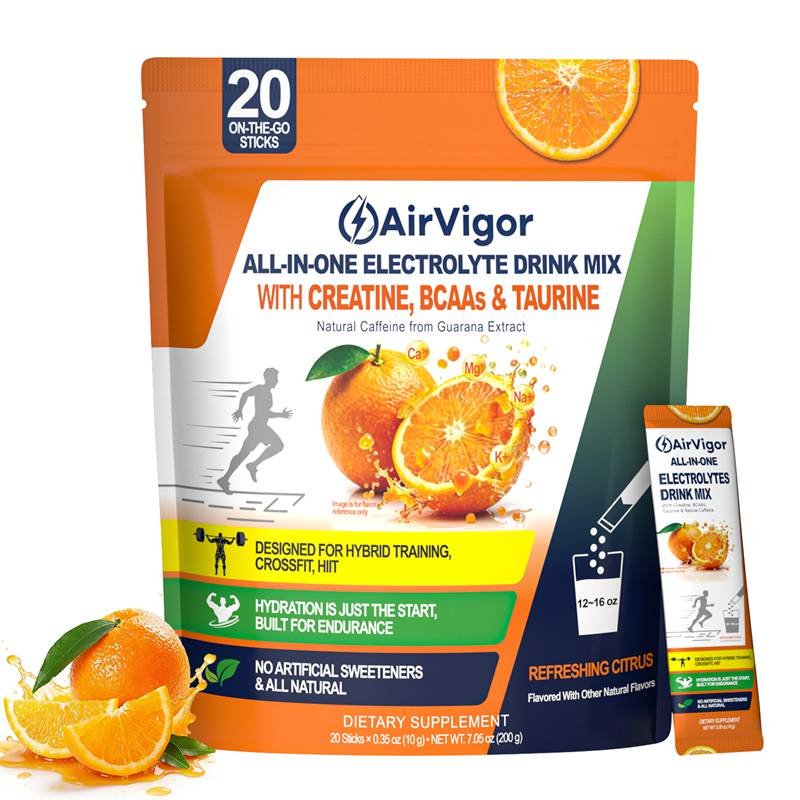
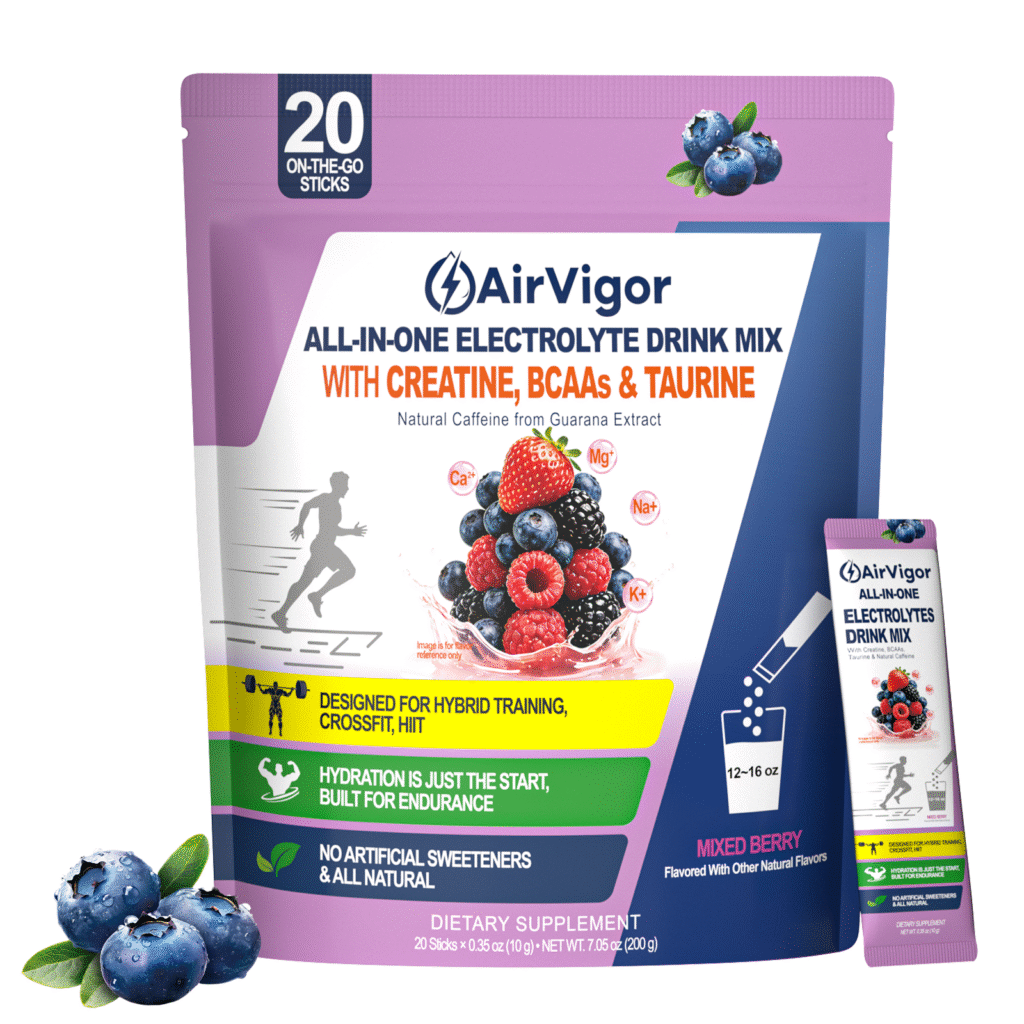
AirVigor Electrolyte Stack is designed for people who want hydration support that feels practical, clear, and easy to use. The focus is not only on minerals, but also on formula transparency, taste, solubility, packaging convenience, and stable product quality for long-term routines.
What Makes AirVigor Different?
AirVigor focuses on real ingredient inclusion, clear formula expression, and practical daily use. Instead of making electrolyte support feel complicated, AirVigor aims to help customers understand what they are taking, when to use it, and how it fits into training, recovery, travel, work, or hot-weather routines.
Many electrolyte products look similar from the outside. They may all mention hydration, minerals, performance, or recovery. But customers usually make repeat purchases based on smaller details that are easy to overlook at first: how fast the powder dissolves, whether the taste is too sweet or too salty, whether the serving size feels reasonable, whether the label is easy to understand, and whether the product is convenient enough to use several times per week.
AirVigor builds its electrolyte product direction around these real customer concerns. For active users, hydration support is not only a workout accessory. It may become part of a daily routine before training, after sweating, during travel, or on long workdays. If the product is hard to mix, hard to carry, or unclear on usage, customers are less likely to keep using it.
| Customer Concern | AirVigor Product Direction |
|---|---|
| “I don’t know which electrolytes matter.” | Clear mineral structure with easy-to-understand ingredient expression |
| “Some drinks taste too salty or too sweet.” | Flavor and solubility are considered during product development |
| “I need something for gym, work, and travel.” | Portable packaging formats can support multiple use scenarios |
| “I want to know what I’m taking.” | Formula transparency and visible ingredient information are prioritized |
| “I don’t want a complicated routine.” | Usage guidance is designed to be simple and practical |
| “I care about consistency.” | Quality management and batch control are part of the production process |
For customers comparing pre workout vs electrolyte stack, AirVigor Electrolyte Stack provides a different type of support from stimulant-based products. It does not try to create a strong caffeine rush. Instead, it supports the hydration side of performance, which many people only notice after they start sweating, cramping, feeling drained, or struggling to recover.
This makes it especially suitable for customers who care about steady support rather than extreme stimulation. A gym user may use it after a hard session. A runner may use it before outdoor training. A traveler may keep it in a bag. A hot yoga user may drink it after class. A busy worker may use it when plain water does not feel like enough.
The value is not only in the formula. It is in how easily the product can become part of real life.
How Does AirVigor Control Quality?
AirVigor controls product quality through ingredient screening, formula review, production process management, packaging checks, and finished product confirmation. The goal is to create a more stable product experience across taste, solubility, label clarity, packaging condition, and batch consistency.
In the dietary supplement market, customers often judge quality only after they have used a product several times. The first serving may feel fine, but the real question is whether the product remains consistent across the whole package and across repeat purchases. Does it dissolve the same way? Does the flavor stay stable? Does the powder remain protected from moisture? Is the serving instruction still easy to follow? Does the next batch feel like the last one?
AirVigor pays attention to these details because electrolyte products are often used repeatedly. A customer may use the product after every workout, during work, while traveling, or throughout summer. Small quality issues can quickly affect trust.
The company’s broader manufacturing and quality system includes support from research, production, inspection, and packaging teams. AirVigor’s production framework is built around established management systems such as GMP, HACCP, ISO-related standards, FSSC22000-related production structures, and FDA registration support. These systems help guide raw material handling, production control, batch management, packaging review, and quality documentation.
| Quality Area | Why It Matters to Customers |
|---|---|
| Raw material screening | Helps support ingredient consistency and formula reliability |
| Formula review | Reduces mismatch between label claims and actual product design |
| Solubility evaluation | Helps the powder mix better in daily use |
| Flavor adjustment | Supports repeat use without taste fatigue |
| Packaging testing | Helps protect powder from moisture, heat, and transport stress |
| Label review | Makes serving size, ingredients, and usage guidance easier to understand |
| Finished product checks | Supports batch consistency before release |
AirVigor’s related production capabilities include a 100,000-level clean production workshop, 30,000+ square meters of facility space, 1,000+ personnel scale, 25+ nutrition biochemistry, food engineering, and nutrition research professionals, and 30+ quality inspection personnel. These resources support product development, formula evaluation, production execution, and finished product quality confirmation.
For customers, this matters because a supplement is not only judged by the ingredient list. It is also judged by whether the product arrives in good condition, mixes easily, tastes consistent, and feels trustworthy over repeat use.
For B2B customers, this quality structure also supports private label, OEM, ODM, sample development, packaging coordination, and multi-market product adaptation. This is important for Amazon sellers, Shopify brands, health retail partners, and regional distributors who need a reliable electrolyte product that can be developed, produced, packaged, and supplied with clearer operational control.
Which AirVigor Stack Fits Your Goals?
The right AirVigor electrolyte stack depends on how the customer plans to use it. Heavy sweaters, gym users, runners, travelers, hot yoga users, outdoor workers, and daily hydration customers may all need electrolyte support, but they may not need the same formula emphasis or packaging format.
A good electrolyte product should not force every customer into one use case. Some people need stronger sweat support. Some need light daily hydration. Some need recovery after training. Some need portable sticks for work, travel, or sports bags. Some B2B customers need a formula that can be adjusted for a specific market, flavor profile, serving size, or packaging structure.
This is where AirVigor’s broader product development system becomes useful. The brand direction covers electrolyte supplements, protein nutrition, creatine products, vitamins, minerals, probiotics, collagen nutrition, plant extracts, and functional wellness formulas. This allows AirVigor to support both individual product needs and broader supplement line development.
| Customer Goal | AirVigor Stack Direction |
|---|---|
| Heavy sweating during exercise | Electrolyte-focused hydration support |
| Long outdoor activity | Portable electrolyte powder for before and during use |
| Post-workout recovery | Mineral support after sweat loss |
| Hot yoga or sauna | Electrolytes after heavy sweating |
| Office hydration | Light, easy-to-drink daily electrolyte format |
| Travel hydration | Stick packs for bags, luggage, and hotel use |
| Gym routine | Electrolytes before, during, or after training |
| B2B product launch | OEM/ODM formula, flavor, packaging, and label support |
For customers comparing pre workout vs electrolyte stack, the AirVigor Electrolyte Stack is especially relevant when the main problem is not motivation, but hydration. If a user feels tired because of poor sleep, caffeine may help temporarily. But if they feel drained because of sweat loss, heat exposure, or poor fluid balance, electrolytes may be the better foundation.
The product is also suitable for users who want a lower-stimulation routine. Not every training day requires a strong pre workout. Some days require better hydration before training. Some require recovery after sweating. Some require a simple drink that helps the body feel more balanced during a busy day.

Conclusion
Pre workout vs electrolyte stack is not about which supplement is stronger. It is about which one fits your real training need. Pre workout helps with energy, focus, and intensity before exercise, while an electrolyte stack supports hydration, muscle function, sweat replacement, and recovery.
If you feel tired before training, pre workout may help you get started. If you feel drained after sweating, struggle with cramps, train in heat, or want steadier recovery, an electrolyte stack may be the better foundation. For many active users, the smartest routine is not choosing one forever, but using each product at the right time.
AirVigor Electrolyte Stack is designed for people who want clear formula expression, practical hydration support, easy daily use, and stable product quality. Whether you are looking for branded electrolyte products, wholesale orders, or OEM/ODM supplement customization, AirVigor can support hydration, sports nutrition, and wellness product development for real customer needs.
Share:
Contact Expert Team
At AirVigor, performance becomes effortless. We transform advanced nutrition science into clean, effective supplements that help you hydrate, recover, and feel stronger every day. Shop AirVigor Supplements on Amazon and experience athlete-trusted formulas—backed by real science and supported by our world-class R&D and production capabilities.
Trust AirVigor
At AirVigor, turning your performance goals into reality is no longer a struggle—it’s a science-driven journey we build together. Whether you’re a runner, lifter, cyclist, yogi, outdoor athlete, or someone simply seeking better daily energy, AirVigor transforms advanced nutrition research into clean, effective, and trustworthy supplements you can feel.
Backed by our U.S. scientific team, global certifications, and world-class production standards, every formula is engineered to deliver real hydration, real recovery, and real performance. And when you’re ready to experience the difference, you’ll find AirVigor products available on Amazon and other major platforms—fast shipping, consistent quality, and a community of athletes already seeing results.
Behind the scenes, our R&D and manufacturing ecosystem also supports specialized formulation development, ensuring AirVigor continues to lead with innovation while keeping quality and safety uncompromised. But at the core, everything we create is built for you—your health, your performance, your momentum.
Choose AirVigor. Feel the science. Elevate your every day.


Subscribe to our newsletter
Sign up to our newsletter and we’ll keep you up to date with the latest arrivals.