Skip to content

Direct NAD+ sounds like the most logical supplement choice. NAD+ is the molecule the body ultimately uses, so taking the finished molecule may appear more efficient than relying on a precursor that still requires conversion. However, nutritional science rarely follows such a simple “final form is best” rule. What matters is not only what appears on the label, but also what survives digestion, crosses intestinal barriers, circulates in the blood, enters tissues, and becomes available inside cells.
NAD+ precursors are commonly used instead of direct NAD+ because smaller compounds such as nicotinamide riboside, nicotinamide mononucleotide, niacin, and nicotinamide can enter established metabolic pathways that rebuild NAD+ inside the body. These precursors also have more published human oral research than direct NAD+, although increasing NAD+ biomarkers does not automatically prove better energy, slower aging, or broader health improvements.
The difference becomes clearer when following the journey of a supplement from the digestive tract to the cell. Direct NAD+ may be broken into smaller reusable components, while precursors may also be transformed several times before contributing to NAD+ production. The real question is therefore not simply which ingredient is closest to NAD+, but which form has the clearest evidence, suitable dose, reliable formulation, and realistic purpose.
What Happens to Direct NAD+?
Direct NAD+ does not necessarily travel unchanged from the digestive tract into human cells. Enzymes, intestinal barriers, circulation, and cellular membranes can alter the molecule before use, making its actual biological route more complicated than the product name suggests.
Is Direct NAD+ Absorbed Intact?
Direct NAD+ is a relatively large and electrically charged molecule, which may limit how easily it crosses intestinal and cellular membranes without first being converted into smaller compounds.
NAD+ is chemically larger than commonly used precursors such as nicotinamide, nicotinic acid, or nicotinamide riboside. Its charged structure also makes passive movement through lipid-based cell membranes more difficult. These characteristics do not prove that intact absorption is impossible, but they create biological barriers that must be considered.
After oral consumption, direct NAD+ first encounters stomach acidity, digestive fluids, intestinal enzymes, and microorganisms. Even before reaching circulation, some of the molecule may be converted into smaller NAD-related metabolites. These metabolites may include nicotinamide, nicotinamide mononucleotide, nicotinamide riboside, adenosine-related compounds, or other breakdown products.
This creates an important distinction between consuming direct NAD+ and delivering direct NAD+ intact to a target tissue. A supplement may contain genuine NAD+ at the time of manufacturing, yet the body may still process much of it as raw material rather than transporting the full molecule unchanged.
Researchers are continuing to investigate the pharmacokinetics of orally consumed NAD+. Important questions include how much remains intact, which metabolites appear in blood, how quickly those metabolites rise, and whether meaningful amounts reach specific tissues.
How Is Direct NAD+ Broken Down?
Extracellular enzymes can convert NAD+ into smaller molecules before those components are absorbed, transported, or reused through the body’s NAD+ synthesis pathways.
Several enzymes outside cells participate in NAD+ metabolism. CD38 is one of the best-known NAD-consuming enzymes and can break NAD+ into compounds involved in signaling and metabolism. CD73 and related enzymes may also help produce smaller molecules that can enter cellular pathways more easily.
This process should not automatically be viewed as waste. The body regularly breaks nutrients into smaller components before rebuilding them into usable forms. Proteins are digested into amino acids, carbohydrates into sugars, and dietary fats into fatty acids and related compounds. NAD+ may follow a similar principle, although the exact proportions and pathways remain under investigation.
When NAD+ is broken down, its nicotinamide-containing portion may still be recovered. The body can then use this material through the salvage pathway to produce new NAD+ inside cells. In that situation, the original supplement still contributes to NAD+ metabolism, but not through direct intact delivery.
The main issue is therefore accuracy of communication. A claim that direct NAD+ “goes straight into cells” is stronger than current oral evidence supports. A more careful statement would be that direct NAD+ may provide NAD-related material that the body can process and reuse.
Can Direct NAD+ Enter Cells?
Intact NAD+ may enter certain cells under specific conditions, but evidence from cell systems does not establish efficient oral delivery to all human tissues.
Cell membranes are selective. They regulate which compounds can enter and leave, often requiring transport proteins or channels. Historically, NAD+ was widely considered unable to cross most outer cell membranes efficiently. More recent laboratory findings suggest that certain channels may permit NAD+ entry in specific cell types or biological conditions.
These findings are valuable because they show that intact NAD+ transport may be biologically possible. However, they do not prove that an oral NAD+ supplement travels intact through digestion, enters the bloodstream, reaches every tissue, and crosses each cell membrane in meaningful quantities.
Transport between compartments inside a cell is another separate issue. Scientists have identified transport systems that move NAD+ into mitochondria after NAD+ is already present in the cell. This explains part of intracellular NAD+ distribution, but it does not answer how orally consumed NAD+ reaches the cell in the first place.
The complete journey contains multiple stages:
| Biological Stage | Main Question |
|---|---|
| Stomach and intestine | Does NAD+ remain chemically intact? |
| Intestinal absorption | Can the full molecule cross the gut barrier? |
| Blood circulation | Which NAD-related compounds are measurable? |
| Tissue delivery | Do metabolites reach the intended organs? |
| Cell entry | Can intact NAD+ cross the outer membrane? |
| Intracellular transport | How is NAD+ distributed within the cell? |
Evidence at one stage should not be used to make assumptions about every other stage.
Does Direct NAD+ Still Help?
Direct NAD+ may still provide useful NAD-related components even when complete intact absorption is limited or uncertain.
A nutrient does not need to remain unchanged to contribute value. If direct NAD+ is broken into nicotinamide, NR, NMN, or other reusable components, those materials may still enter pathways that support NAD+ synthesis.
Formulation may also influence the result. Liquid products, capsules, powders, sublingual formats, and protected delivery systems may differ in stability and exposure to digestive conditions. However, each format should be evaluated on its own evidence rather than assuming that all direct NAD+ products behave identically.
Direct NAD+ should therefore not be dismissed as completely ineffective. The more accurate position is that its oral human evidence is less developed than the evidence for several precursors. Questions about intact absorption, tissue delivery, optimal dose, and long-term outcomes remain open.
Customers comparing products should avoid two opposite assumptions:
- Direct NAD+ is not automatically useless because some of it may be metabolized.
- Direct NAD+ is not automatically superior because it is the final molecule used by cells.
- A delivery claim should be supported by research on the actual formulation.
- Changes in blood metabolites do not necessarily prove meaningful effects in every tissue.
The current evidence supports careful evaluation rather than a simple yes-or-no conclusion.
How Do NAD+ Precursors Work?
NAD+ precursors work by supplying smaller compounds that the body can convert into NAD+ through existing metabolic pathways. Their usefulness depends on absorption, enzyme activity, tissue demand, dose, and the route each precursor follows.
What Are NAD+ Precursors?
NAD+ precursors are compounds that can be transformed into NAD+ through one or more enzymatic steps inside the body.
The main nutritional NAD+ precursors include nicotinic acid, nicotinamide, nicotinamide riboside, and nicotinamide mononucleotide. Tryptophan can also contribute to NAD+ synthesis through a longer pathway, although it is less commonly promoted as a direct NAD+ supplement ingredient.
These compounds differ in molecular size, metabolic entry point, tolerability, cost, and research history. Nicotinic acid and nicotinamide are established vitamin B3 forms. NR and NMN are newer commercial ingredients that enter the NAD+ network closer to the final synthesis stage.
The term “precursor” does not mean an ingredient is inactive. It means the body must convert it before NAD+ is formed. Many essential nutrients work through similar conversion processes. The body regularly transforms vitamins, amino acids, and fatty acids into biologically active compounds.
NAD+ precursors are attractive to researchers because their metabolic routes can be measured through blood samples, tissue analysis, and changes in NAD-related metabolites. This has created a larger body of oral human evidence for NR and NMN than currently exists for direct NAD+.
How Do NAD+ Precursors Become NAD+?
Each precursor follows a different pathway, but all routes eventually contribute material used to create NAD+.
NR is converted into NMN through enzymes called nicotinamide riboside kinases. NMN is then converted into NAD+ by NMNAT enzymes. This route places NR two main conversion steps away from NAD+.
NMN is already one step closer to NAD+. However, scientists are still studying whether orally consumed NMN enters cells intact in large amounts or whether much of it is first converted into NR, nicotinamide, or other metabolites.
Nicotinamide uses the salvage pathway. An enzyme called NAMPT converts nicotinamide into NMN, after which NMNAT enzymes form NAD+. Nicotinic acid follows the Preiss–Handler pathway through a different series of intermediates.
| Precursor | Main Entry Route | Key Conversion |
|---|---|---|
| Nicotinic acid | Preiss–Handler pathway | Converted through nicotinic acid intermediates |
| Nicotinamide | Salvage pathway | NAM to NMN to NAD+ |
| NR | NR kinase pathway | NR to NMN to NAD+ |
| NMN | NMNAT pathway | NMN to NAD+ |
| Direct NAD+ | Breakdown or possible transport | Route remains less clearly defined orally |
The number of conversion steps is only one part of the comparison. A shorter pathway does not automatically guarantee better absorption, stronger tissue delivery, or greater clinical value.
What Is the NAD+ Salvage Pathway?
The salvage pathway recycles nicotinamide released when NAD+ is consumed, allowing cells to rebuild NAD+ instead of creating it entirely from new nutrients.
NAD+ is constantly used in normal metabolism. It participates in redox reactions that help convert food into usable energy and also serves as a substrate for enzymes involved in cellular signaling and stress responses.
When NAD+ is consumed by certain enzymes, nicotinamide can be released. The salvage pathway recovers that nicotinamide and converts it back into NMN through NAMPT. NMN is then converted into NAD+ by NMNAT enzymes.
This pathway is one reason nicotinamide-related ingredients can support NAD+ metabolism. Rather than delivering the complete coenzyme through every biological barrier, a precursor provides material that cells already know how to recycle.
However, the salvage pathway is regulated. Enzyme availability, age, inflammation, nutritional status, tissue type, and metabolic health may influence how efficiently the process works. The same precursor dose may therefore produce different responses among individuals.
The pathway also illustrates why correcting a deficiency is different from increasing NAD+ above normal levels. Vitamin B3 is essential, and inadequate intake can impair NAD+ production. In a person who already consumes sufficient vitamin B3, additional supplementation may alter biomarkers without necessarily creating a noticeable improvement in daily function.
Why Are NAD+ Precursors Smaller?
Smaller molecular size may make some precursors easier to process, but size alone does not determine which NAD+ ingredient performs best.
NR is smaller than NMN, and both are smaller than NAD+. Nicotinamide and nicotinic acid are smaller again. Smaller compounds may cross biological barriers more easily or use established nutrient transport systems.
At the same time, smaller molecules may require additional enzymatic conversion. A compound closer to NAD+ may require fewer steps but face different challenges related to stability, charge, transport, or digestion.
Gut microorganisms may also influence the pathway. Some NAD+ precursors can be transformed by intestinal microbes before their components enter circulation. This means that a supplement may contribute to NAD+ production through more than one route.
The most accurate model is not a straight line from capsule to cell. It is a network involving digestion, microbial metabolism, intestinal transport, liver processing, blood circulation, tissue uptake, and intracellular conversion.
This network explains why precursors are widely studied. Researchers can measure several stages of their metabolism and determine whether oral intake changes circulating NAD-related compounds. The evidence is still incomplete, but the pathway is more clearly characterized than the oral pathway of direct NAD+.

Which NAD+ Precursors Are Most Studied?
NR and NMN receive the greatest attention in modern NAD+ research, while niacin and nicotinamide have longer nutritional histories. Each form has distinct evidence, tolerability, metabolic routes, and formulation considerations.
How Does NR Support NAD+?
Nicotinamide riboside supports NAD+ synthesis by entering the NR kinase pathway and being converted first into NMN and then into NAD+.
Human studies have repeatedly shown that oral NR can increase blood NAD+ or related metabolites. This evidence has made NR one of the most extensively studied modern NAD+ precursors.
Trials have included healthy adults, older adults, people with metabolic concerns, and individuals with selected age-related conditions. The most consistent result is a measurable change in the blood NAD+ metabolome. Some studies have also examined blood pressure, muscle metabolism, cognitive function, inflammation, exercise response, and mitochondrial markers.
The outcomes beyond biomarkers have been mixed. In some trials, selected physiological measures improved. In others, NR increased NAD-related markers without changing cognition, body composition, muscle performance, or metabolic health.
This pattern does not mean NR has no value. It means the evidence is stronger for biochemical activity than for broad claims about energy, longevity, or visible age-related changes.
Another consideration is dose. Human studies have used different daily amounts and treatment durations. Customers should not assume that a larger serving automatically provides better results. Tolerability, formulation quality, individual health, and long-term use all matter.
How Does NMN Support NAD+?
Nicotinamide mononucleotide supports NAD+ production by serving as the immediate substrate used by NMNAT enzymes to form NAD+.
Human NMN studies have expanded rapidly. Trials have measured blood NAD+ concentrations, insulin sensitivity, walking ability, sleep quality, vascular function, exercise capacity, and other outcomes.
Many studies report that oral NMN increases blood NAD+ or related metabolites. This confirms that NMN affects human NAD+ metabolism. However, it does not prove that the same increase occurs equally in the brain, muscle, liver, skin, or every other tissue.
Functional findings remain inconsistent. Some research suggests possible improvements in selected outcomes, while other trials find no meaningful difference from placebo. Differences in age, health status, dose, study duration, product purity, and measurement methods may contribute to these variations.
NMN is often described as being only one step away from NAD+. That statement is chemically correct, but it can be misleading when used as proof of superior absorption. The body may convert orally consumed NMN before cellular entry, and the dominant route may vary by tissue and individual.
NMN remains a promising research ingredient, but it should not be described as a proven anti-aging treatment or guaranteed performance enhancer.
How Does Niacin Support NAD+?
Niacin forms support NAD+ production through established vitamin B3 pathways and have a much longer nutritional history than NR or NMN.
Nicotinic acid and nicotinamide are both considered forms of vitamin B3, yet they behave differently in the body.
Nicotinic acid enters the Preiss–Handler pathway and can eventually be converted into NAD+. At larger supplemental doses, it commonly causes skin flushing, warmth, or itching. Pharmacological doses have also been used in medical settings, but such use should not be confused with routine nutritional supplementation.
Nicotinamide enters the salvage pathway without producing the same flushing response. It is widely used in multivitamins and dietary supplements. However, high-dose nicotinamide is not automatically harmless. Long-term intake at elevated levels may require additional caution, particularly for people with liver concerns, metabolic conditions, or complex medication routines.
These established forms are sometimes overlooked because they are less fashionable than NR or NMN. Yet they remain nutritionally important and can support NAD+ production at a lower ingredient cost.
Their main limitation is that meeting a vitamin requirement does not guarantee that taking much more will create stronger wellness effects. Adequacy and optimization are not the same question.
Is One NAD+ Precursor Better?
No NAD+ precursor has been proven universally superior across all people, tissues, doses, and wellness goals.
NR and NMN have stronger modern human biomarker research. Nicotinic acid and nicotinamide have longer histories as essential vitamin forms. Each option comes with different strengths and limitations.
A useful comparison should examine:
- Human evidence for the exact ingredient form
- Amount per serving and frequency of use
- Short-term and long-term tolerability
- Ingredient stability in the finished product
- Suitability for capsules, liquids, powders, or other formats
- Regulatory status in the intended sales market
- Cost and practicality for continued use
Blood testing also creates an important limitation. A rise in whole-blood NAD+ does not necessarily show what happened in muscle, brain, liver, skin, or other tissues.
The best ingredient may therefore depend on the goal of the formula. A research-focused capsule may prioritize a studied precursor dose. A general wellness formula may use a lower dose alongside other nutrients. A liquid product may need to consider flavor, pH, stability, and ingredient interactions.
The stronger question is not “Which precursor always wins?” but “Which ingredient is appropriate for the intended formula and supported by honest evidence?”
Do NAD+ Precursors Work Better?
NAD+ precursors have stronger oral human evidence than direct NAD+ for changing circulating NAD-related markers. However, a biomarker increase does not guarantee noticeable improvements in energy, aging, cognition, recovery, or long-term health.
Do NAD+ Precursors Raise NAD+ Levels?
NR and NMN have both been shown in human studies to increase blood NAD+ or related metabolites under certain dosing conditions.
This is the most consistent scientific argument supporting precursor use. Researchers can administer an oral precursor, collect blood samples, and measure changes in NAD+, NMN, nicotinamide, methylated metabolites, and other compounds in the NAD+ network.
The size of the increase differs across studies. Dose, duration, participant age, baseline health, measurement timing, and laboratory methods can all affect the result.
Blood results must also be interpreted carefully. Whole blood contains several cell types, including red blood cells, that may respond differently from muscle, liver, brain, or skin tissue. An increase in circulation confirms that metabolism changed, but it does not prove that every organ received the same benefit.
The most defensible conclusion is that several precursors can alter human NAD+ metabolism. Stronger statements require additional evidence.
A product may reasonably discuss supporting NAD+ production or contributing to NAD+ pathways. It should not use a blood biomarker study as proof of age reversal, disease treatment, immediate energy, or extended lifespan.
Are NAD+ Precursors Better Absorbed?
Precursors are generally supported by more oral absorption and metabolism research, although many are transformed before reaching their final cellular destination.
The word bioavailability can create confusion. A precursor does not need to remain chemically unchanged to be biologically useful. NR may be converted into nicotinamide or other metabolites. NMN may be dephosphorylated, transformed by gut microbes, or processed in the liver before contributing to cellular NAD+.
Direct NAD+ may also be broken down and reused. The difference is not that precursors remain perfectly intact while direct NAD+ does not. The difference is that the metabolic consequences of oral precursor use have been measured more extensively in humans.
| Evidence Question | NR and NMN | Direct NAD+ |
|---|---|---|
| Published oral human trials | Multiple studies | Relatively limited |
| Blood NAD-related changes | Frequently reported | Not yet well established |
| Metabolic pathways | Increasingly characterized | Oral route remains less clear |
| Intact absorption required | No | Often implied by marketing |
| Proven broad wellness benefit | Not established | Not established |
Precursors currently have the stronger evidence position because researchers know more about how oral doses affect measurable NAD-related metabolites.
Do Higher NAD+ Levels Improve Health?
Increasing a blood NAD+ marker does not automatically mean a person will feel more energetic, think more clearly, recover faster, or age more slowly.
NAD+ is essential for normal metabolism. It participates in energy transfer and serves as a substrate for several families of enzymes. These roles make NAD+ biologically important, but biological importance does not guarantee that supplementation produces a meaningful benefit in every person.
Clinical trials often follow a sequence. First, researchers test safety and determine whether the ingredient changes a biomarker. Later studies investigate whether the biomarker change leads to a functional improvement.
For NAD+ precursors, the first step is better established than the second. Blood NAD+ frequently increases, while outcomes involving cognition, exercise, insulin sensitivity, muscle function, sleep, vascular health, and quality of life vary between studies.
Three levels of evidence should remain separate:
- NAD+ is essential to human biology.
- A precursor can change an NAD-related measurement.
- The same precursor improves a meaningful health outcome.
Evidence for the first level does not prove the third. Customers deserve clear communication about where the research is strong and where uncertainty remains.
Is Direct NAD+ Less Effective?
Direct NAD+ is better described as less well studied orally rather than conclusively less effective.
Biological reasoning suggests that direct NAD+ may face more barriers than smaller precursors. It may be degraded outside cells, converted before absorption, or require specialized transport conditions.
However, limited evidence is not the same as proof of failure. Direct NAD+ may contribute through its breakdown products, and future delivery technologies may improve stability or transport.
Different delivery routes also require separate evaluation. Oral, sublingual, liposomal, and intravenous NAD+ should not be treated as the same intervention. Bypassing the digestive tract may change pharmacokinetics, but it does not automatically establish long-term clinical benefit.
The most responsible comparison is based on current evidence:
- Precursors have more published oral human studies.
- Direct NAD+ has more unresolved pharmacokinetic questions.
- Neither approach has proven universal anti-aging effects.
- Product quality and dose transparency remain essential.
- Research on one delivery format should not be used to validate another.
Precursors are commonly selected because their evidence is easier to defend, not because every direct NAD+ formula has been proven ineffective.
How Should NAD+ Products Be Compared?
NAD+ products should be compared through ingredient identity, disclosed dose, human evidence, delivery format, manufacturing controls, and realistic claims. Front-label language alone is not enough to determine formula quality or expected value.
Is the NAD+ Form Clearly Named?
The label should state whether the product contains direct NAD+, NR, NMN, nicotinic acid, nicotinamide, or a combination of these ingredients.
Broad phrases such as “NAD support,” “NAD booster,” or “cellular energy complex” may describe a product category without revealing the actual active form. The Supplement Facts panel should provide a more precise answer.
Ingredient identity matters because each compound follows a different route and has a different research history. A nicotinamide product should not be presented as equivalent to an NMN product. A direct NAD+ liquid should not borrow evidence from an NR capsule without explaining the difference.
Customers should also review whether the label names the material clearly enough to understand what has been added. Trademarked ingredients, salt forms, and purity specifications can matter, but they should not replace disclosure of the basic compound.
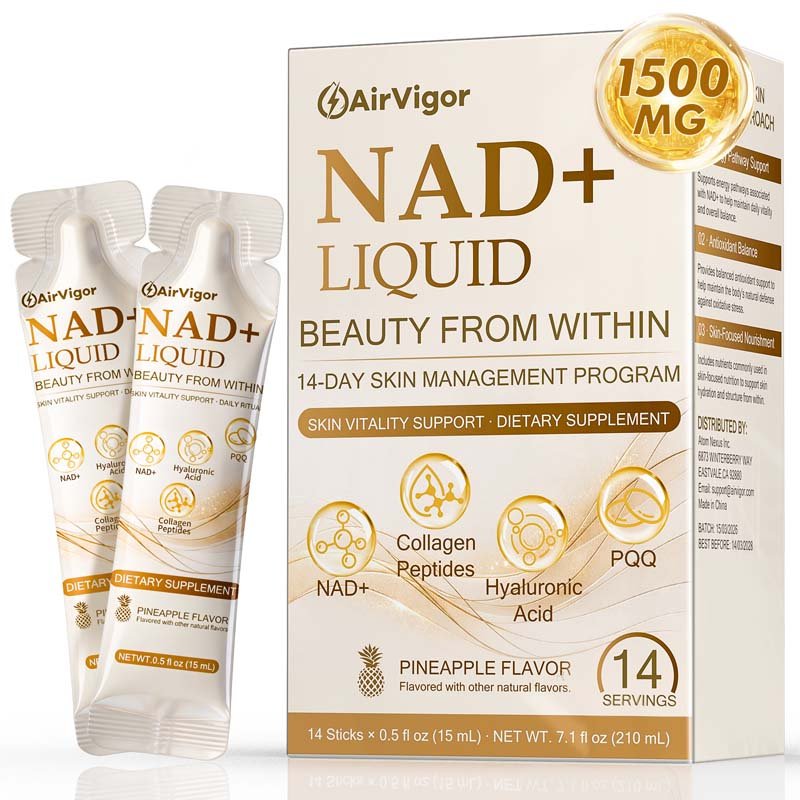
AirVigor places emphasis on clear formula expression so users can understand what they are consuming. This approach helps customers compare products based on ingredients and amounts rather than relying only on promotional language.
Is the NAD+ Precursor Dose Clear?
A useful NAD+ label should show the amount of each active ingredient per serving rather than hiding important quantities inside an unclear blend.
Dose determines whether a product can be compared with human research. A label may contain a familiar precursor but provide only a very small amount. Another formula may use a higher dose that creates additional tolerability or compliance considerations.
A research dose should not automatically be copied into a commercial product. Studies are designed around specific participants, time periods, endpoints, and medical supervision. Product developers must also consider flavor, serving size, stability, interactions, intended frequency, and regulations.
Customers can review several practical questions:
- How much of each NAD-related ingredient is present?
- Is the serving size clearly defined?
- How often is the product intended to be used?
- Does another daily supplement already provide vitamin B3?
- Is the ingredient amount disclosed individually?
- Does the product explain its delivery format?
Transparent dosing allows a customer to compare products more accurately and reduces the risk of unknowingly combining several sources of the same nutrient.
Are NAD+ Claims Evidence-Based?
NAD+ product claims should distinguish established biological roles from early-stage human findings and unproven wellness promises.
NAD+ is essential for metabolism, but that does not prove that every NAD+ supplement produces more energy or slows aging. The final claim should match the type of evidence available.
A human study measuring blood NAD+ cannot establish lifespan extension. A short trial in older adults cannot automatically predict outcomes for healthy younger users. A study using NR cannot validate a direct NAD+ liquid without additional evidence.
Strong product evaluation asks whether:
- The exact ingredient form was studied
- The amount was similar to the commercial serving
- The research involved humans
- The study included an appropriate comparison group
- The endpoint was meaningful to daily life
- The study duration matched the claim being made
Responsible communication may discuss supporting normal metabolic pathways, contributing vitamin B3 material, or influencing NAD-related biomarkers when supported. It should avoid guaranteed language around age reversal, disease prevention, permanent energy, or dramatic cellular repair.
Clear evidence boundaries improve trust and help customers form realistic expectations.
How Does AirVigor Review NAD+ Formulas?
AirVigor reviews NAD+ formulas by considering ingredient identity, dose, stability, delivery format, manufacturing suitability, label clarity, and the intended daily-use experience.
A good formula is not created by selecting a popular ingredient and adding it to a package. The ingredient must remain suitable throughout sourcing, mixing, filling, storage, transportation, and normal use.
AirVigor works with a research and development team of more than 25 professionals covering nutritional biochemistry, food engineering, formulation, and related disciplines. The company’s development system can assess ingredient content, solubility, stability, flavor, compatibility, and format suitability.
For an NAD-related formula, relevant questions may include:
- Is the ingredient stable in the selected format?
- Does the dose fit the intended serving?
- Are companion ingredients compatible?
- Can the formula maintain acceptable flavor and texture?
- Is the label consistent with the actual formulation?
- Are the claims suitable for the intended market?
- Can the finished product be manufactured consistently?
The review continues through raw-material assessment, production controls, packaging compatibility, finished-product testing, and quality documentation. Available records may include certificates of analysis, safety data, batch information, and market-specific compliance files.
This process does not convert preliminary science into guaranteed results. It helps create products that are easier to understand, more stable in use, and more consistent from one production batch to another.

Conclusion
NAD+ precursors are widely used instead of direct NAD+ because they can enter established metabolic pathways and have a stronger body of oral human research. NR and NMN frequently increase circulating NAD-related markers, while niacin and nicotinamide have long-established nutritional roles. Direct NAD+ may still contribute useful components, but its intact oral absorption and tissue delivery remain less clearly understood.
The evidence does not support extreme conclusions. Direct NAD+ has not been proven useless, and precursors have not been proven to reverse aging or improve every health outcome. The strongest current conclusion is that precursors offer a more developed oral research foundation, while meaningful benefits beyond blood biomarkers remain dependent on the ingredient, dose, population, duration, and outcome studied.
AirVigor develops dietary supplement formulas around clear ingredient expression, appropriate format selection, manufacturing consistency, and realistic product communication. Customers can order available AirVigor products or contact the team to discuss custom NAD+, NR, NMN, vitamin B3, liquid, capsule, powder, or multi-ingredient supplement projects.
Standard custom projects may begin from 500 units. Samples are commonly prepared within 3–7 days when suitable materials are available, while projects requiring new raw-material sourcing or more complex development may require additional time. Regular production commonly takes 15–30 days depending on formulation complexity, packaging, ingredient preparation, order quantity, and factory scheduling.