Skip to content

Electrolyte powder looks easy to use, and that is exactly why people often use it the wrong way. Some people mix it too strongly because they think a stronger flavor means stronger hydration. Some people drink it all day like flavored water. Others only use it after intense workouts, even though heat, diarrhea, vomiting, long travel days, and heavy sweating are often the more practical reasons it becomes useful. Harvard says most people usually get enough electrolytes from food and water under normal conditions, while MD Anderson says electrolyte drinks make more sense in situations like prolonged sweating, vomiting, diarrhea, or long periods in extreme heat. The American Heart Association also warns that more is not always better.
The right way to use electrolyte powder is to treat it like a situational hydration tool, not a default beverage. Start with the serving size and water amount printed on the label, because formulas vary widely in sodium, potassium, sugar, and sweetness. On ordinary days, water is often enough. Electrolyte powder becomes more useful when your body is losing both fluid and minerals, not just fluid alone.
That distinction matters because customers are no longer only asking whether electrolyte powder “works.” They are asking how to use it in real life: before training, after a long, hot day, during travel, after a stomach bug, or as part of a daily routine. Once you understand that the real issue is appropriate use, the whole category becomes easier to understand. It stops being about hype and starts being about context, dilution, timing, and whether your day gives your body a real reason to need more than plain water.
What Does Electrolyte Powder Do?
Electrolyte powder helps the body manage fluid balance and supports functions tied to muscles, nerves, and hydration. It does not replace water, but it can make hydration more effective in the right situations by helping rebalance fluid and mineral levels. That is why it can feel more useful than plain water during heat, sweating, or illness, but unnecessary on many quiet, ordinary days.
What does electrolyte powder do in the body?
Electrolyte powder works by adding charged minerals to the water you drink. MedlinePlus explains that electrolytes help balance the amount of water in the body, move nutrients into cells, move waste out of cells, support muscle and nerve function, and help keep heart rhythm and blood pressure steady. That is why electrolyte powder is not really a “sports-only” product. It is built around functions your body relies on every day.
For customers, this matters because hydration is often reduced to one simple idea: drink more water. Water is still the foundation, but the body also depends on minerals to manage that water correctly. Sodium helps control fluid balance and helps nerves and muscles work properly, according to MedlinePlus. Potassium supports heart, nerve, and muscle functions. Chloride helps maintain body fluids. Magnesium supports muscles, nerves, and the heart. When a product contains these minerals in a sensible way, it is trying to support how the body uses water, not just the fact that water was consumed.
A simple body-function guide makes that easier to picture:
| Support area | What the body needs | Where electrolyte powder helps |
|---|---|---|
| Basic hydration | Fluid intake | Adds support only when mixed with water |
| Fluid balance | Water plus minerals | Strong fit |
| Muscle and nerve function | Sodium, potassium, magnesium, chloride | Strong fit |
| Heat or illness recovery | Fluid plus lost electrolytes | Strong fit |
That is why electrolyte powder is best understood as hydration support with mineral logic, not as a magic drink and not as a daily requirement for everyone.
How does electrolyte powder help hydration?
Harvard says electrolyte drinks are designed to be easily absorbed in the gut to quickly rebalance mineral and fluid levels. That is the core reason people use them. Electrolyte powder can help hydration when the body is dealing with more than ordinary thirst — for example, after long sweating, during extreme heat, or when vomiting or diarrhea has caused fluid loss. MedlinePlus says mild dehydration may often be treated with water, but if electrolytes are lost, sports drinks may help.
This is the point many customers miss. Electrolyte powder is not automatically “better” than water. It is just more useful when the hydration problem is bigger than plain fluid alone. On an ordinary indoor workday, water may do the job very well. On a day with repeated sweat loss, heat exposure, or stomach illness, water may start to feel incomplete because the body is losing both fluid and salts. That is where electrolyte powder usually earns its place.
A practical comparison helps:
| Situation | Is water often enough? | Can electrolyte powder help more? |
|---|---|---|
| Mild indoor day | Usually yes | Often no |
| Long hot outdoor day | Sometimes not | Often yes |
| Vomiting or diarrhea | Sometimes not | Often yes |
| Hard sweaty workout | Sometimes not | Often yes |
This pattern is much more useful than the oversimplified idea that electrolyte powder is either always necessary or never necessary.
Why does electrolyte powder feel different from water?
Electrolyte powder can feel different from water for two reasons. First, it changes the mineral content of what you drink. Second, many formulas also change the taste, sweetness, and concentration. The American Heart Association points out that electrolyte products vary widely in sodium, potassium, magnesium, sugar, and calories. Harvard Health also notes that many electrolyte drinks contain added sugars, sweeteners, and other ingredients that customers may or may not want.
That matters because customers often confuse a stronger taste with a better formula. A stronger drink may feel more “powerful,” but that can simply mean it is more concentrated, sweeter, or saltier. Sometimes that stronger feeling matches the situation, such as long, sweat-heavy heat exposure. Sometimes it just means the formula is heavier than the day requires. That is one reason proper use starts with asking why you are drinking it, not simply whether it tastes stronger than water.
How Much Electrolyte Powder Should You Use?
The safest and most practical starting point is the serving size on the label. There is no single “perfect scoop” that works across all powders, because formulas vary widely in sodium, potassium, magnesium, sugar, and sweetness. Start with one labeled serving mixed into the amount of water the brand recommends, then evaluate based on the situation rather than guessing. That is the most reliable way to stay close to the product’s intended concentration.
How much electrolyte powder should you use at one time?
The simplest answer is: one serving at a time, using the product’s own instructions first. The American Heart Association highlights how much electrolyte products can differ from one another, and MD Anderson also emphasizes checking labels because many electrolyte beverages contain large amounts of added sugar, artificial sweeteners, flavors, and colors. That tells you something important: one serving is not the same across every brand.
For customers, this matters because it is easy to assume that if one serving helps, two must help more. But hydration does not work that way. A more concentrated drink can become too sweet, too salty, or simply unnecessary for the situation. The better rule is to match the serving to the problem. A normal day may not need any. A very hot or sweat-heavy day may justify one serving. More than that should be driven by the situation and the product directions, not by the idea that more always means better support. Cleveland Clinic’s guidance is also helpful here: even when electrolyte drinks are appropriate, restraint still matters.
A practical starting guide helps:
| Situation | Sensible starting point |
|---|---|
| Ordinary indoor day | Often no serving needed |
| Hot day or heavy sweating | Start with one labeled serving |
| Illness-related dehydration | One labeled serving may be useful |
| Endurance-style exertion | Depends on sweat loss and the label |
That is a more useful and more honest rule than pretending every product has the same dose logic.
How much water should you mix with electrolyte powder?
The best answer is: start with the exact water volume on the package. This is not a vague answer. It is the most accurate one because powders vary widely in concentration. If you use much less water than directed, the drink becomes stronger and more concentrated. If you use much more, it becomes lighter and more diluted. The label water amount is the formula balance the manufacturer intended.
This matters because many customers do the opposite. They adjust the water first and only later think about whether the drink still matches the use case. Some people want a stronger taste, so they underdilute it. Others want something lighter and over-dilute it so much that the product barely resembles the formula they bought. A much more practical approach is to mix it correctly first, then decide whether the product feels right for the situation. If it seems too strong when prepared as directed, the formula may simply be more concentrated than your routine needs.
A simple mixing guide helps:
| Mixing choice | What usually happens |
|---|---|
| Less water than directed | Stronger taste, more concentrated drink |
| Label water amount | Intended formula balance |
| More water than directed | Lighter taste, more diluted drink |
That is why the package direction should be your first move. Adjustment comes second, not first.
Do you need more than one serving a day?
Sometimes, yes, but not automatically. MD Anderson says electrolyte drinks may be useful after vomiting or diarrhea, before, during, or after prolonged exercise or heavy sweating, and during long periods in extreme heat. The American Heart Association warns against assuming more is better. Cleveland Clinic goes even further and says one or two electrolyte drinks are enough for most people after depletion, and if you are still thirsty after that, water is a better next step.
This matters because customers often use electrolyte powder either too casually or too aggressively. Using more than one serving may be reasonable on a very hot day, during a long, physically demanding event, or while recovering from significant fluid loss. But if an ordinary day seems to require repeated servings just to feel normal, the issue may be something else entirely: not enough plain water, too much caffeine, poor sleep, illness, or a formula that does not fit your routine. Electrolyte powder should support hydration, not become a reflex for every low-energy moment.
When Should You Drink Electrolyte Powder?
Electrolyte powder works best when the day creates a real hydration challenge. The clearest examples are heavy sweating, long periods in extreme heat, and illness with vomiting or diarrhea. MD Anderson says those are some of the main situations when electrolyte drinks can help with rehydration, while MedlinePlus says mild dehydration may often be treated with water, but sports drinks may help if electrolytes were lost. That is the key idea: proper timing depends less on habit and more on whether your body is losing both fluid and minerals, not just fluid alone.
When should you drink electrolyte powder before or after an activity?
The best time to use electrolyte powder around activity is when the activity is long enough, hot enough, or sweaty enough to create more than ordinary thirst. MD Anderson specifically says electrolyte water can be useful before, during, and after prolonged exercise or heavy sweating. That means electrolyte powder is usually more relevant for harder workouts, long outdoor sessions, and hot-weather training than for a short, easy workout in mild conditions.
For customers, this matters because many people use electrolyte powder either far too casually or far too late. Some drink it before every gym session, even when the workout is short, and the environment is cool. Others wait until they already feel weak, crampy, or clearly dehydrated. A more practical rule is simple: if the session is long, hot, or very sweaty, electrolyte powder makes more sense. If it is short, light, and followed by normal eating and drinking, water is often enough. Harvard’s guidance supports that middle-ground view by noting that most people usually get enough electrolytes from food and water under ordinary conditions.
A simple timing map helps:
| Situation | Water often enough? | Electrolyte powder may make more sense? |
|---|---|---|
| Short light workout | Usually yes | Often no |
| Long hot outdoor workout | Sometimes not | Often yes |
| Heavy sweating session | Sometimes not | Often yes |
| Easy indoor movement | Usually yes | Often no |
This kind of timing advice is more useful than a blanket “drink electrolytes before every workout” message.
Can you drink electrolyte powder without exercise?
Yes, you can, and sometimes it makes very good sense. MD Anderson says electrolyte drinks can help after illnesses with vomiting and diarrhea, and when in extreme heat for a long time, even when exercise is not part of the picture. MedlinePlus makes a similar point by saying mild dehydration may often be treated with water, but if electrolytes are lost, sports drinks may help.
This matters because hydration strain is not limited to workouts. A person can lose fluids and minerals during a hot commute, an outdoor work shift, a stomach bug, a long day at a festival, or while traveling in high heat. In those moments, the customer is not really asking, “Was I exercising?” The better question is, “Did my body lose enough fluid and minerals that water may not be the whole answer?” That is exactly where electrolyte powder can fit naturally. Harvard still keeps the baseline clear: for many normal days, food and water are enough. Electrolyte powder becomes more useful when the day becomes more draining than normal.
A practical non-exercise guide helps:
| Non-exercise situation | Is electrolyte powder often useful? |
|---|---|
| Calm indoor workday | Often no |
| Long hours in extreme heat | Often yes |
| Vomiting or diarrhea | Often yes |
| Long travel day with poor hydration | Sometimes yes |
That is one reason good hydration advice always comes back to context.
Which situations make electrolyte powder more useful?
The strongest use cases are the ones where the body is dealing with heat, sweat, or fluid loss. MD Anderson points to three especially clear scenarios: vomiting or diarrhea, prolonged exercise or heavy sweating, and being in extreme heat for a long time. MedlinePlus supports the same logic from the dehydration angle: water may be enough for mild cases, but if electrolytes were lost, sports drinks may help.
This is useful because it gives customers a much better decision rule than “use electrolyte powder whenever you feel tired.” Tiredness alone is too vague. A more reliable question is whether the body is under visible hydration strain. If the day includes obvious sweating, a stomach illness, or long heat exposure, electrolyte powder becomes easier to justify. If the day is mild and the main issue is simply not drinking enough water, the first fix is often still water and better routine habits. The American Heart Association also warns that more electrolytes are not automatically better, which is another reason situational use is smarter than reflex use.

Can You Use Electrolyte Powder Every Day?
Yes, you can use electrolyte powder every day, but that does not mean you need it every day. For many healthy people in normal conditions, ordinary food and water already provide enough electrolytes. Harvard says most people usually get enough electrolytes from the foods and beverages they already consume, and the American Heart Association says much the same thing while also warning that overdoing electrolytes can create problems. Daily use makes more sense when the routine includes repeated heat exposure, repeated heavy sweating, or another clear reason for extra hydration support.
Can you use electrolyte powder every day safely?
For many people, using electrolyte powder every day in moderate amounts may be fine, but “safe” is not the same as “necessary.” The more important question is whether daily use actually matches the routine. Harvard says most people do not need electrolyte drinks under normal conditions because food and water already cover ordinary electrolyte needs. The American Heart Association also warns that excess sodium, potassium, and magnesium can be a problem.
That matters because customers often assume that a product sold as hydration support must be harmless at any frequency. But daily use only makes sense when the day keeps creating the same kind of hydration strain. A warehouse worker in summer, a landscaper, or someone living in prolonged extreme heat may have a stronger case for regular use than a person sitting indoors in mild weather. The better rule is not “every day is fine” or “every day is wrong.” The better rule is “daily use should match daily need.” That is a more practical, more honest way to use the category.
A simple routine map helps:
| Daily routine | Is daily electrolyte powder often necessary? |
|---|---|
| Mild indoor day | Often no |
| Long outdoor work in heat | Sometimes yes |
| Frequent heavy sweating | Sometimes yes |
| Illness recovery | Temporarily yes |
This is one reason “every day” is not really the right first question. “What is my day actually doing to my hydration?” is better.
Is water enough on normal days?
For many people, yes. Harvard’s guidance is very clear that most people usually get enough electrolytes through food and beverages already, and its healthy beverage guidance still puts water in the central position for daily hydration. MedlinePlus also says mild dehydration may often be treated with water.
This is important because hydration marketing can make plain water sound weak or outdated. In reality, water is still the default answer for most quiet, ordinary days. The fact that electrolyte powders can help in specific situations does not make water inadequate in general. A lot of customers do not actually need stronger hydration products. They need to drink water more consistently, eat regular meals, and avoid falling behind until thirst becomes obvious. That simpler answer is often less exciting, but it is usually closer to the truth.
A practical comparison helps:
| Day type | Is water often enough? |
|---|---|
| Indoor workday | Usually yes |
| Regular meals and mild weather | Usually yes |
| Short light activity | Often yes |
| Hot weather, vomiting, diarrhea, or prolonged sweating | Sometimes not |
This is why water remains the first hydration tool, while electrolyte powder is better understood as support for harder-than-normal days.
Who may benefit from more regular use?
People who may benefit from more regular use are usually those whose days repeatedly create heat stress, heavy sweating, or routine fluid strain. That can include outdoor workers, people living in very hot climates, athletes training hard in the heat, and people recovering from illness for a short period. MD Anderson’s “when to drink electrolyte water” guidance supports this by specifically pointing to prolonged heavy sweating, extreme heat, and vomiting or diarrhea.
This matters because the people who benefit most are not always the people who drink electrolyte products the most casually. Someone with a calm indoor routine may have less reason for daily use than someone doing manual work in summer heat. That is why the best customer education does not ask only, “Do you like electrolyte powder?” It asks, “Does your routine actually create a repeat hydration problem?” When the answer is yes, more regular use can make sense. When the answer is no, routine water and a balanced diet are often enough. That is also the more credible way for a brand like AirVigor to position daily-use formulas: not as something everyone must have, but as something that makes sense when the routine clearly supports it.
What Should You Avoid When Using Electrolyte Powder?
The biggest mistake is treating electrolyte powder like ordinary flavored water. Harvard says most people usually get enough electrolytes from food and regular fluids under normal conditions, while the American Heart Association warns that too much sodium, potassium, or magnesium can also become a problem. That means proper use is not only about when to drink it. It is also about knowing when not to overuse it, over-concentrate it, or choose a formula that does not match the day.
Can you use too much electrolyte powder?
Yes, you can. This is one of the most overlooked parts of the category because electrolyte powders are often marketed as if “more support” always sounds better. The American Heart Association says excess electrolytes can create problems, and Harvard makes the broader point that most people do not need electrolyte drinks under normal conditions because food and water already provide enough for daily life. That means extra servings are not automatically helpful just because the product is sold as hydration support.
For customers, this matters because overuse usually does not happen in dramatic ways. It happens in quiet habits. A person starts adding a stick pack to every bottle of water. Then they take a second serving because the day feels busy. Then they use it again in the evening because the taste is pleasant and the product feels healthy. But a calm indoor day with regular meals is not the same as a long outdoor shift in heat or a day with vomiting and diarrhea. The right question is not “Can I have another serving?” The better question is “What has my body actually lost today that needs replacing?” That is a much smarter way to use the category.
A simple guide helps:
| Habit | Why it can become a mistake |
|---|---|
| Drinking it all day “just in case” | Can add unnecessary sodium, minerals, or sweeteners |
| Taking repeated servings on normal days | May not match a real hydration need |
| Using it instead of water by default | Ignores that water is still the foundation |
That is why proper use always starts with the situation first, product second.
Which formula mistakes should you avoid?
One of the most common mistakes is choosing a formula only by taste, trend, or how “strong” it feels. MD Anderson warns that many electrolyte drinks contain large amounts of added sugar, artificial sweeteners, flavors, and colors. The American Heart Association also points out that formulas vary widely in sodium, potassium, magnesium, sugar, and calories. That means two products can both be called “electrolytes” and still be built for very different jobs.
Another mistake is ignoring the use case. A formula built for prolonged endurance activity may not be the best fit for daily hydration, travel, or mild non-exercise use. A very salty or very sugary product can feel powerful, but that does not always mean it is the smartest option for a short workout, a mild warm day, or a routine office schedule. A better formula is usually the one that matches the problem clearly. If the day is about heavy sweat loss, a stronger formula may make sense. If the day is about light support, a more balanced powder often feels better and is easier to repeat.
A practical mistake checklist helps:
| Mistake | Why it matters |
|---|---|
| Choosing by flavor alone | Good taste does not guarantee good fit |
| Ignoring the label serving size | Makes it easier to over-concentrate the drink |
| Using a sports formula for every situation | Can add unnecessary sugar or sodium |
| Assuming stronger taste means better hydration | Can lead to overuse |
That kind of clarity matters because a strong hydration routine is usually less dramatic than the marketing around it.
Are sugary formulas always the best choice?
No. In many cases, they are not. MD Anderson notes that many electrolyte drinks contain large amounts of added sugar, and the American Heart Association warns that many people already consume too much sodium and do not need more by default. A sugary formula may make sense in some prolonged, sweat-heavy situations, but that does not automatically make it the right choice for daily use, travel, office hydration, or mild routine fatigue.
This matters because customers often assume “sports-style” means “more effective.” But the best formula depends on the reason for using it. A long, hot, physically demanding day may justify a different profile than a person who simply wants light hydration support during travel or after a mildly dehydrating routine. A lower-sugar or sugar-free powder often feels more practical for repeat use because it is easier to fit into ordinary life. The formula should match the body stress, not force every situation into the same sports-drink model.
A useful comparison helps:
| Formula style | Best fit |
|---|---|
| Higher-sugar formula | Longer, harder, sweat-heavy situations |
| Moderate-sugar formula | Mixed-use situations |
| Lower-sugar or sugar-free formula | Daily support, travel, mild non-exercise use |
That is why “better” is not really about whether the powder is sweeter. It is about whether the formula fits the day.
How Can You Choose a Better Electrolyte Powder?
A better electrolyte powder is not simply the one with the loudest claims or the longest ingredient list. It is the one with the clearest hydration purpose. Harvard says electrolyte drinks are designed to rebalance mineral and fluid levels, while MD Anderson emphasizes that they make most sense in specific situations such as prolonged sweating, vomiting, diarrhea, or extreme heat. So the better choice is usually the formula that matches your real routine: workouts, travel, hot weather, illness recovery, or broader daily-use support.
Which electrolytes matter most in the formula?
For most electrolyte powders, the most important minerals are usually sodium, potassium, chloride, and magnesium. Sodium and chloride carry much of the hydration logic because they are closely tied to fluid balance, while potassium and magnesium help make the formula feel more balanced and more useful for muscles and nerves. The American Heart Association highlights the wide variation in sodium, potassium, and magnesium across products, which is exactly why reading the label matters so much.
For customers, this matters because many formulas are compared by total ingredients instead of by function. A powder with extra add-ons is not automatically better than one with a cleaner electrolyte structure. In many cases, a better formula is simply the one that clearly answers: what hydration problem is this helping with? If the powder is meant for heat, sweat, travel, or routine support, the mineral profile should sound believable for those situations. That usually builds more trust than piling on unnecessary extras.
A simple ingredient guide helps:
| Electrolyte | Why it matters |
|---|---|
| Sodium | Core fluid-balance support |
| Potassium | Broader electrolyte balance |
| Chloride | Supports hydration logic with sodium |
| Magnesium | Adds muscle- and nerve-support value |
That kind of structure is often what makes a powder feel purposeful instead of random.
What makes electrolyte powder feel more balanced?
A balanced electrolyte powder usually has three qualities: a clear mineral base, a sensible sweetness level, and a believable use case. Harvard says most people do not need electrolyte drinks under normal conditions, and the American Heart Association warns that more is not always better. Together, those points explain why balance matters so much. A formula should not sound like it is trying to solve every hydration problem for every person at every hour. It should solve one hydration problem clearly.
This matters from both a customer and brand perspective. Customers trust formulas more when the message is calm and specific. A balanced product sounds like it was built for something real: long hot days, repeated sweating, travel, illness recovery, or more supportive hydration than water alone can sometimes provide. It does not need dramatic language to be useful. In fact, the less exaggerated the promise, the more credible the formula usually feels.
A useful checklist helps:
| What to check | Why it matters |
|---|---|
| Clear sodium and potassium levels | Shows real hydration purpose |
| Reasonable sweetness | Helps determine whether it fits daily use |
| Straightforward serving size | Makes proper use easier |
| Clear use-case language | Helps people know when to use it |
This is one reason stronger formulas often feel simpler rather than louder.
How can AirVigor position electrolyte powder more clearly?
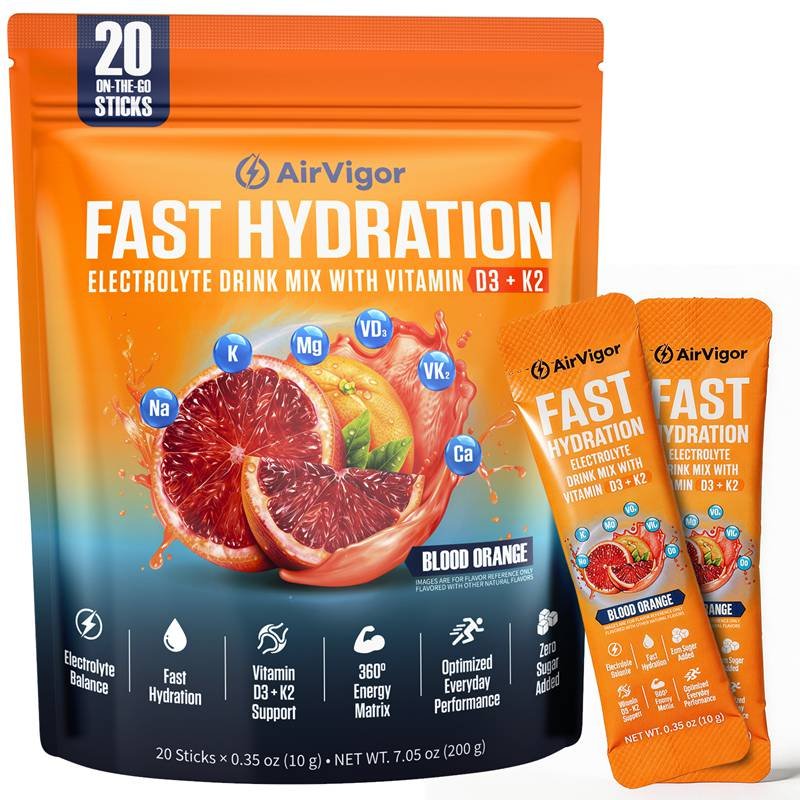
AirVigor can position electrolyte powder more clearly by focusing on proper use, not just ingredient stacking. The strongest message is not “more electrolytes.” The stronger message is that the formula is built for the moments when hydration is genuinely under more strain: heat, sweat, travel, illness-related fluid loss, and routine support on harder days. That lines up much better with Harvard’s, MD Anderson’s, and the American Heart Association’s guidance than a blanket “everyone needs electrolytes every day” message.
For direct customers, that creates several natural positioning angles:
- hydration support for hotter or more draining days
- balanced support for workouts, travel, and routine strain
- a cleaner alternative to heavy sports drinks
- an easier-to-understand formula for daily life, not just performance
For OEM and ODM clients, it creates a stronger development direction too. Instead of building another extreme sports formula, the concept becomes a more balanced hydration-support product with broader, more believable relevance. That matters in a crowded market because the winning formula is often not the one that sounds the most intense. It is the one that solves the customer’s real hydration problem most clearly.
A positioning comparison helps:
| Positioning style | How it sounds | Commercial strength |
|---|---|---|
| Sports-only hydration powder | For athletes and intense workouts | Narrower audience |
| Daily electrolyte for everyone | Broad, but less credible | Weaker trust |
| Proper-use hydration support | For heat, sweat, illness, travel, and active routines | Strongest balance |
That is exactly where AirVigor can stand out: not louder, but clearer.
Final Thoughts
Using electrolyte powder properly is not complicated, but it does require judgment. Start with the label serving size and the recommended water amount. Let the situation guide the decision. On ordinary days, water is often enough. Electrolyte powder makes more sense when heat, heavy sweating, illness, or disrupted routines create a real reason to replace both fluid and minerals. That practical middle-ground view is the one most consistent with Harvard, MD Anderson, and the American Heart Association.
That is why the best electrolyte powder is usually not the most extreme one. It is the one that feels balanced, easy to use, and appropriate for the real moments when water may feel incomplete. For a brand like AirVigor, that creates a strong opportunity: not just another hydration powder, but a better-designed electrolyte formula for modern daily life.
Looking to Source a Better Formula or Build Your Own?
If you are looking for:
- an electrolyte powder with clearer serving logic
- a balanced formula for heat, sweat, travel, and daily support
- a lighter alternative to sugary sports drinks
- a hydration-support concept that fits more than one use case
- an OEM or ODM partner for custom electrolyte development
AirVigor can support both finished branded products and private-label or custom formulation projects. The strongest products in this category are the ones that solve a real hydration problem clearly, and that is exactly where a well-positioned, balanced electrolyte powder can win.