Skip to content
How Much Water Should You Use With Electrolytes : A Deep Dive
# Your Trusted Dietary Supplement Brand In US
- Emily

Table of Contents
One of the biggest mistakes people make with electrolytes is assuming every packet belongs in the same bottle. It does not. Official directions already show how different the category really is: Pedialyte Fast Hydration powder packs are mixed with 8 fl oz, Pedialyte Sport powder packs with 16 fl oz, Gatorade Zero sticks with 20 fl oz, Propel sticks with 20 fl oz, and DripDrop Zero Sugar Plus with about 16 oz. That means the water amount is not a minor detail. It is part of the formula design.
The safest and most useful rule is simple: start with the exact water amount on the label. Different electrolyte products are built for different finished drink strengths, so too little water can make the mix feel overly concentrated, while too much water can make it feel weak, flat, or less satisfying.
That matters because most people are not really asking a chemistry question. They are asking a routine question: How do I make this drink feel right for the reason I bought it? MD Anderson’s guidance helps frame the bigger picture: electrolyte support becomes more useful after illnesses with vomiting or diarrhea, before, during, and after prolonged exercise or heavy sweating, and during long periods in extreme heat. In those moments, getting the ratio right matters more because the drink needs to feel both purposeful and easy to use.
Why Does the Water Amount Matter?
The amount of water matters because it changes the concentration of everything in the drink: electrolytes, sweetness, acidity, and overall drinkability. The same packet can feel balanced in one bottle and completely wrong in another.
What happens if you use too little water?
Using too little water makes the mix more concentrated. In real use, that usually means the drink tastes stronger, feels sharper, and can come across as too salty, too sweet, or simply too intense for the moment. That is especially easy to do with products designed for larger bottles. If a packet built for 20 fl oz is poured into a much smaller bottle, the user is not really tasting the product as designed anymore. They are tasting a compressed version of it.
This matters because many customers mistakenly interpret stronger taste as better hydration. In practice, that is often the opposite of what helps. A drink that is too concentrated may be harder to sip steadily, more tiring over time, and less comfortable during exercise or heat. The product may get blamed when the real problem is simply that the user shrank the water amount too far. This is one reason brand instructions matter so much. They are not only about preparation. They protect the intended experience of the formula.
The table below shows what usually changes when the water amount drops below the label amount. The product examples and official ratios behind this comparison come from brand preparation directions.
| If you use too little water | What users often notice |
|---|---|
| Higher concentration | Stronger taste |
| Less total liquid | Faster flavor fatigue |
| Same packet in smaller bottle | Drink feels harsher than expected |
| Larger-bottle workout stick underfilled | Mix feels overly strong |
That is why “less water” is not a shortcut to a better electrolyte drink. It is usually just a move away from the formula’s intended balance.
What happens if you use too much water?
Using too much water dilutes the formula. That usually makes the drink taste lighter, feel thinner, and come across as less distinct. For some people, that may be fine in a low-demand situation. But it also means the product is no longer being used at the concentration it was designed around. If a product is intentionally formulated for 8 oz or 16 oz and then stretched much further, the finished drink may feel weaker than intended.
This matters most when the reason for using electrolytes is real: long exercise, heavy sweating, heat exposure, or illness-related fluid loss. In those settings, over-dilution can make the drink feel flat or unhelpful, not because the formula is bad, but because the user has spread it across too much water. Customers often describe that as “ineffective,” when the more accurate explanation is that the drink no longer matches the formula’s intended serving strength.
A practical comparison helps clarify the tradeoff. The ratios below reflect official brand directions and the user experience that follows from changing them.
| If you use too much water | What users often notice |
|---|---|
| Lower concentration | Lighter taste |
| More total liquid | Easier sipping, but weaker feel |
| Small-volume product heavily diluted | Less satisfying overall |
| Workout product over-diluted | Can feel flatter than expected |
That is why “more water” is not automatically wrong. It is a preference change, and sometimes that preference no longer fits the reason the product was chosen.
Why can the same electrolyte mix feel different with different water amounts?
The same mix can feel very different because water changes everything the user notices first: sweetness, saltiness, acidity, body, and aftertaste. A formula that feels smooth at the intended dilution may taste too sharp or too weak once the ratio moves too far in either direction. This is especially obvious when you compare official directions across products. Even within one broad category, there is no single standard bottle size.
This matters because customers often judge the powder when they are really judging the ratio. One person follows the label. Another uses a much larger tumbler. A third uses a much smaller bottle because they want a “stronger” drink. All three may describe the same product differently, even though they never actually drank the same finished mix. That is why clear directions are a real commercial advantage. They reduce first-use disappointment and make the product easier to trust.
Official directions below show how much the category varies by product style.
| Product example | Official water amount |
|---|---|
| Pedialyte Fast Hydration Powder Packs | 8 fl oz |
| Pedialyte Sport Powder Packs | 16 fl oz |
| DripDrop Zero Sugar Plus | About 16 oz |
| Gatorade Zero Stick | 20 fl oz |
| Propel Stick | 20 fl oz |
That is why the smartest first move is not guessing based on whatever bottle is nearby. It is reading the label and treating the water amount as part of the formula itself.
Which Water Amount Should You Follow First?
The first water amount you should follow is the one on the label. There is no universal electrolyte-to-water ratio across the category, and official directions vary widely by product type and intended use.
Why should you start with the label directions?
You should start with the label directions because the product was built around that exact concentration. The label amount gives you the drink the brand actually intended you to experience. If you skip that step and go straight to your own bottle size, you may never really learn whether the product itself fits your needs. You may only learn whether your improvised ratio does.
This matters because many users judge products too quickly. A first try that feels too sweet, too salty, or too weak often leads them to say the flavor is bad or the formula is poor. But if the water amount was wrong from the start, that conclusion may be unfair. Starting with the label gives the product a fair test. After that, small and intentional adjustments make more sense because the user is changing from a known baseline instead of guessing from zero.
A practical first-use rule helps:
| First-use step | Why it matters |
|---|---|
| Use the exact label amount once | Gives the formula a fair trial |
| Notice taste, body, and drinkability | Helps you judge the product correctly |
| Adjust only after that | Keeps changes intentional, not random |
That is why “follow the label first” is the most useful starting rule in the whole category.
Why do some packets use 8 oz, 16 oz, or 20 oz?
Different packets use different water amounts because they are built for different finished-drink experiences. Smaller-volume products often create a more concentrated hydration style. Larger-volume products often create a lighter, more workout-friendly sipping style. That is why official directions vary so much: an 8 oz product is not trying to behave like a 20 oz workout stick. They are solving different hydration jobs.
This matters because customers often compare packet size without comparing the intended water amount. That leads to confusion. A smaller packet does not always mean a weaker drink. A larger packet does not always mean a stronger one. The finished volume matters just as much. Once users understand that bottle size is part of the product experience, the category becomes much easier to navigate. They can stop asking, “Why does this one taste stronger?” and start asking the better question: “What kind of finished drink was this product designed to create?”
A practical comparison helps:
| Water target | What it often suggests |
|---|---|
| 8 oz | More concentrated hydration style |
| 16 oz | Mid-strength, balanced support |
| 20 oz | Lighter, larger-bottle workout style |
That is why different water amounts are not inconsistencies. They are part of how different brands define the product’s role.
Is there one universal rule for mixing electrolytes?
No. There is no single universal water rule for electrolyte products. The closest thing to a universal rule is this: use the label amount first, then adjust only if you understand why you are changing it. Official directions across major brands are already too different for a one-number shortcut to work across the whole category.
This matters because many customers want a simple blanket rule, such as “every stick goes into 16 ounces” or “all electrolyte packets belong in a 20-ounce bottle.” The market simply does not work that way. A better mental model is to treat the ratio like part of the product identity. Once you understand that, the category becomes far less frustrating. The label stops looking like a small instruction and starts looking like what it really is: part of the formula.
A useful rule-of-thumb table helps:
| Question | Best answer |
|---|---|
| Is there one standard water amount? | No |
| What should you follow first? | The label |
| Can you adjust later? | Yes, but intentionally |
| Should packet size alone guide mixing? | No, finished water volume matters too |
That is why the smartest mixing habit is not memorizing one bottle size. It is understood that the water amount is part of the product design.
How Much Water Should You Use for Exercise?
The right water amount during exercise depends on two things at the same time: the official mixing ratio of the product and the kind of workout you are doing. The first rule stays simple: start with the label. The second rule gives that label real meaning. Mayo Clinic says sports drinks become more useful when exercise lasts more than 60 minutes, and Mayo Clinic Health System recommends about 8 ounces of fluid every 20 minutes during a run, noting that sports drinks are a stronger option for longer sessions because they provide minerals and salts lost in sweat. MD Anderson also highlights prolonged exercise, heavy sweating, and long periods in extreme heat as some of the clearest situations where electrolyte support becomes more useful.
How does workout length change the mix?
Workout length changes the mixing question because longer sessions usually make drinkability much more important. In a short session, many users care mostly about taste and convenience. In a longer session, the drink has to remain comfortable to sip again and again. A mix that feels fine in the first ten minutes can start feeling too sweet, too salty, or too heavy after forty minutes if the concentration is wrong. That is one reason official directions vary so much across products. Pedialyte Fast Hydration powder packs are designed for 8 fl oz, while Gatorade Zero sticks are designed for 20 fl oz. Those are two very different finished-drink experiences by design.
This matters in real training because many users pour a packet into whatever bottle they already have. That is convenient, but it can distort the formula. A long workout often exposes that mistake faster than a short one. If the mix is too concentrated, flavor fatigue builds sooner. If it is too diluted, the drink can feel flat and unconvincing. In other words, workout length does not change the chemistry inside the packet, but it changes how noticeable a bad ratio becomes. Longer sessions reward products that are mixed in the volume they were actually designed for.
A practical guide helps:
| Workout length | Better mixing mindset |
|---|---|
| Short session | Label amount first, taste is the main checkpoint |
| Moderate session | Label amount still matters, drinkability starts to matter more |
| Longer session | Product type and intended bottle size matter a lot |
| Long repeated-sipping session | A ratio that stays easy to drink becomes essential |
That is why a “correct” ratio is not only about following rules. It is also about giving the drink a fair chance to perform well over the full session.
Which sessions make a stronger mix more understandable?
A stronger mix is more understandable when the product itself was built for a smaller-volume, more concentrated hydration style. Pedialyte Powder Packs and DripDrop Original are both built around 8 ounces of water, which creates a much more concentrated finished drink than a product designed for a 20-ounce sports bottle. That does not make the smaller-volume formula automatically “better.” It means the concentration is intentional. The product identity includes that stronger feel.
This distinction matters because many people accidentally create a strong mix and assume they have improved the product. Usually, they have not. There is a big difference between a formula intentionally designed for less water and a formula designed for a larger bottle that has simply been poured into too little water. In the first case, the concentration is part of the formula design. In the second case, the customer has moved the product away from its intended balance. That is why a stronger mix only makes sense when the product was meant for that style or when the user clearly understands the tradeoff.
A practical comparison helps:
| Situation | Is a stronger feel more understandable? |
|---|---|
| Product officially designed for 8 oz | Yes |
| User wants a smaller-volume hydration style and the formula supports it | Sometimes |
| 20 oz workout stick used in a half-full bottle | Usually not |
| Long sipping workout where comfort matters | Often less ideal |
A stronger taste can feel more serious, but seriousness and suitability are not the same thing. In long or active use, comfort often matters just as much as intensity.
How does heat change the water-to-electrolyte balance?
Heat changes the equation because it usually raises sweat loss and makes steady drinking more important. Mayo Clinic Health System recommends 8 ounces every 20 minutes during a run and says sports drinks are a better option when the run goes longer than 60 minutes, because they help replace minerals and salts lost through sweat. MD Anderson also lists prolonged heat exposure as one of the clearest situations where electrolyte beverages can become useful.
This matters because hot conditions expose bad mixing habits quickly. A drink that feels fine indoors can start feeling too sweet, too salty, or too weak when the body wants to drink more often. In heat, the question is not only whether you are carrying enough fluid. It is whether the drink still feels acceptable after repeated use. That is one reason the official ratio matters even more in hot weather. The intended dilution gives the product the balance it was designed to have when the user is under more strain. If someone changes the ratio in heat, it should be a careful decision based on real routine needs, not an accident caused by the wrong bottle.
A practical heat guide helps:
| Condition | Mixing priority |
|---|---|
| Cool indoor workout | Label amount plus taste preference |
| Warm outdoor session | Label amount becomes more important |
| Long hot session | Drinkability and intended dilution matter a lot |
| Extreme heat / heavy sweat | Product choice and ratio both matter more |
In hot conditions, getting the ratio wrong becomes more expensive because the body notices it faster.
Can You Adjust the Mix for Taste or Routine?
Yes, but adjustment should come after the label ratio, not instead of it. There is no universal bottle rule for electrolyte products because official mixing directions vary too much across brands and formula types. Pedialyte Powder Packs, Pedialyte Sport, DripDrop, and Gatorade Zero are all mixed with different amounts of water. That means adjustment should be treated as a deliberate user preference, not a default guess.
Can you dilute electrolytes with more water?
Yes. Adding more water makes the drink less concentrated. That usually means lighter taste, lower intensity per ounce, and easier casual sipping. For some people, especially in low-demand situations such as desk work, travel, or general routine hydration, that may be a perfectly reasonable preference. But it also means the product is no longer being used at its intended ratio. A formula designed around 8 ounces or 16 ounces will not feel the same when stretched across a much larger bottle.
This matters because some customers dilute a drink to make it “healthier” or “easier,” then decide the product feels weak or unnecessary. In reality, they may simply be drinking a much lighter version than the one the brand designed. In light-use situations, that may still be fine. In harder-use situations such as long exercise, heat, or heavy sweat, over-dilution can make the product feel less purposeful than intended. A better routine is simple: mix it correctly once, decide whether it truly feels too strong for your real use case, then make small adjustments if needed. That approach gives the product a fair trial and gives the user better control over the result.
A practical guide helps:
| Adjustment | What it usually does |
|---|---|
| More water | Lighter taste, less concentration per ounce |
| Label amount | Intended balance |
| Much more water | Easier sipping, but weaker flavor and weaker feel |
Dilution is not automatically wrong, but it should be an informed choice rather than the starting habit.
Does a stronger taste always mean a better mix?
No. A stronger taste only proves the drink is more concentrated. It does not prove the mix is better. If a stick designed for 20 fl oz is mixed into a much smaller bottle, it will taste more intense, but that does not mean the hydration experience has improved. It often means the user has moved the formula away from the balance the brand intended. Gatorade Zero’s official directions are very clear: mix 1 stick with 20 fl oz of water. That tells you directly that the product is built for a lighter, larger-bottle style of use.
This matters because people often mistake stronger taste for stronger performance. In reality, a drink that feels too intense may be harder to sip steadily, less pleasant across time, and more likely to create flavor fatigue. The opposite mistake happens too: some users over-dilute the drink until it becomes almost invisible, then conclude the formula is useless. In both cases, they are no longer judging the product as designed. They are judging an altered version of it. The better question is not “How strong can I make this?” It is “At what ratio does this formula actually work well for my routine?”
A useful comparison helps:
| What you notice | What it usually means |
|---|---|
| Much stronger taste | Higher concentration |
| Much lighter taste | More dilution |
| Balanced flavor at label amount | Formula used as intended |
| Better comfort over time | Usually a better-fit ratio for the routine |
A stronger drink can sound appealing, but a better drink is the one you can actually use well.
Which routines need a lighter or stronger feel?
A lighter feel often works better for daily sipping, travel, desk use, commuting, and lower-demand hydration moments. A stronger feel is more understandable when the product itself was designed for a smaller water volume or when the user wants a more concentrated style for a clear reason. Even then, the adjustment should still make sense relative to the formula’s intended role. Product examples across the category show this clearly: some formulas are inherently smaller-volume concentrates, while others are explicitly built for larger workout bottles.
This matters because routine fit is often what decides whether a customer continues using a product. A drink that is too intense for normal life may only feel usable in a narrow set of conditions. A drink that is too weak for heat or sweat-heavy use may fail when it matters most. That is why the best approach is not to search for one “perfect” strength. It is to match the concentration to the real moment while respecting what the formula was built to do. Good hydration products are easier to trust when the ratio makes sense for the occasion.
A practical routine guide helps:
| Routine type | Better feel |
|---|---|
| Daily carry / work / travel | Lighter feel often works better |
| Standard workout | Label amount first |
| Heat-heavy or sweat-heavy use | Intended workout dilution often matters more |
| Smaller-volume rehydration style | Stronger feel can make sense if the product is built for it |
The best ratio is rarely the strongest or the weakest. It is the one that fits both the formula and the moment.

Which Mixing Mistakes Should You Avoid?
The most common mixing mistake is assuming every electrolyte product belongs in the same bottle. The category itself shows why that fails. Pedialyte Fast Hydration powder packs are mixed with 8 fl oz, Pedialyte Sport powder packs with 16 fl oz, and Gatorade Zero or Propel single-serve sticks with 20 fl oz. DripDrop Zero Sugar Plus is formulated for about 16 oz per stick. That means “one packet = one bottle” is not a real rule unless the bottle matches the label.
Do people use too little water too often?
Yes. This usually happens when someone pours a workout stick into a smaller bottle because they want a “stronger” drink or because that is the bottle they happen to have nearby. The result is a much more concentrated mix than the product was designed for. With products intended for 20 oz, shrinking the water can make the drink taste too sweet, too salty, too sharp, or simply tiring to sip over time. That is especially noticeable during exercise or in heat, when drinkability matters almost as much as the formula itself.
This matters because people often misread the problem. They conclude that the flavor is bad or the formula is “too strong,” when the real issue is that they used the wrong amount of water. In many cases, the product is working exactly as expected for its intended volume. The user has simply moved it out of that intended range. That is one reason good first-use instructions matter so much: they protect the product from being judged unfairly and help the customer understand what the formula was designed to feel like.
A practical comparison helps:
| Mistake | What usually happens |
|---|---|
| 20 oz workout stick used in a much smaller bottle | Too concentrated, stronger taste, harder to sip |
| 8 oz rehydration-style packet used correctly | More concentrated by design |
| Label amount used correctly | Intended balance |
That is why “stronger” and “better” are not the same thing. A stronger taste may simply mean the product has moved too far away from the ratio it was built for.
Can too much water make the product feel ineffective?
Yes. Too much water does not make the electrolytes disappear, but it does spread them across more liquid, which changes both taste and the way the drink feels in use. A product designed for an 8-oz or 16-oz bottle may feel very flat if it is stretched into a much larger bottle. That can make customers say the product “does nothing,” when what really happened is that the mix became much lighter than intended.
This matters most in harder situations such as long exercise, heavy sweating, or heat. MD Anderson says electrolytes become more useful after illnesses with vomiting and diarrhea, before, during, and after prolonged exercise or heavy sweating, and when in extreme heat for a long time. In those situations, over-dilution can make the drink feel less satisfying and less purposeful because the user is trying to solve a real hydration problem with a formula that has been weakened beyond its design point.
A practical guide helps:
| Water amount | Likely user experience |
|---|---|
| Less than directed | Too strong for many users |
| Exactly as directed | Most balanced |
| Far more than directed | Easier sipping, but weaker taste and weaker feel |
That is why adding more water is not automatically wrong, but it should be understood as a preference change, not the default best practice.
Which habits make electrolyte products harder to use well?
Three habits cause most of the confusion: using whatever bottle is nearby, judging the product before trying the label ratio once, and mixing based on taste assumptions instead of use case. Another common mistake is treating all packets like they are interchangeable. They are not. A smaller-volume hydration pack, a sport-focused powder, and a large-bottle zero-sugar workout stick are often built for very different finished drinks.
This matters because bad mixing habits can make a good product feel unreliable. A better routine is simple. First, use the label ratio exactly once. Second, decide whether the drink feels right for the actual situation. Third, make only small, intentional adjustments if your routine truly calls for a lighter or slightly stronger feel. That approach keeps the first impression accurate and helps users separate product quality from mixing error.
How Do You Choose the Best Electrolyte Format and Ratio?
The best electrolyte format and ratio depend on why you are using it, how you plan to drink it, and how much water you realistically want to carry or sip. There is no universal best ratio across the whole category. Some products are clearly designed for a smaller-volume, more concentrated drink. Others are clearly meant for a larger workout bottle and lighter sipping style. The official directions across Pedialyte, DripDrop, Gatorade Zero, and Propel make that variation obvious.
What should you check on the label before mixing?
The most important label details are: how much water to use, whether the product is positioned for fast rehydration, sports use, or daily hydration, and whether one stick equals one full serving at that volume. The water amount should always come first. Without it, the rest of the label is hard to judge fairly because concentration changes how the whole formula feels.
This matters because many users read only the front of the pack and skip the actual preparation instructions. But in electrolyte products, preparation is part of the formula. A packet meant for 8 oz and a stick meant for 20 oz are not asking for the same drinking experience. The ratio is not a small technical note. It is part of what the product is. Once customers start reading the water amount as carefully as the flavor and sugar content, the category becomes much easier to navigate.
A quick checklist helps:
| Label item | Why it matters |
|---|---|
| Exact water amount | Defines the intended concentration |
| Product type | Helps explain why the ratio is smaller or larger |
| Serving wording | Tells you whether one packet equals one full finished drink |
That is why the smartest first step is not choosing the largest bottle. It is choosing the correct ratio for the packet in your hand.
Which product types need different water amounts?
Smaller-volume hydration or rehydration products often use lower water amounts because they are designed to be more concentrated. Sport or workout sticks often use larger amounts because they are meant for easier, repeated sipping during activity. In the current market, examples include 8 oz fast-hydration or oral-rehydration-style packs, 16 oz sport-support or zero-sugar-plus styles, and 20 oz large-bottle workout sticks. Even within one broad category, product lines can differ because the intended experience is different.
This matters because customers often shop by convenience first and assume the drink will adapt to whatever bottle they prefer. Sometimes that works. Often, it creates a mismatch. If your routine is centered on all-day carrying and lighter sipping, a large-bottle style may fit better. If your routine is centered on a smaller, more concentrated hydration feel, an 8 oz or 16 oz formula may make more sense. The right ratio is really a reflection of the product’s job. Once that is clear, choosing the format becomes much easier.
A practical format guide helps:
| Product style | Common water target | Often best for |
|---|---|---|
| Fast-hydration / concentrated packs | 8 oz | Smaller-volume, stronger-feel hydration |
| Mid-strength sport formulas | 16 oz | Balanced hydration support |
| Large-bottle workout sticks | 20 oz | Repeated sipping during activity |
That is why the best ratio is not a universal number. It is the number that matches the product’s intended role.
How can AirVigor fit into a smarter hydration plan?
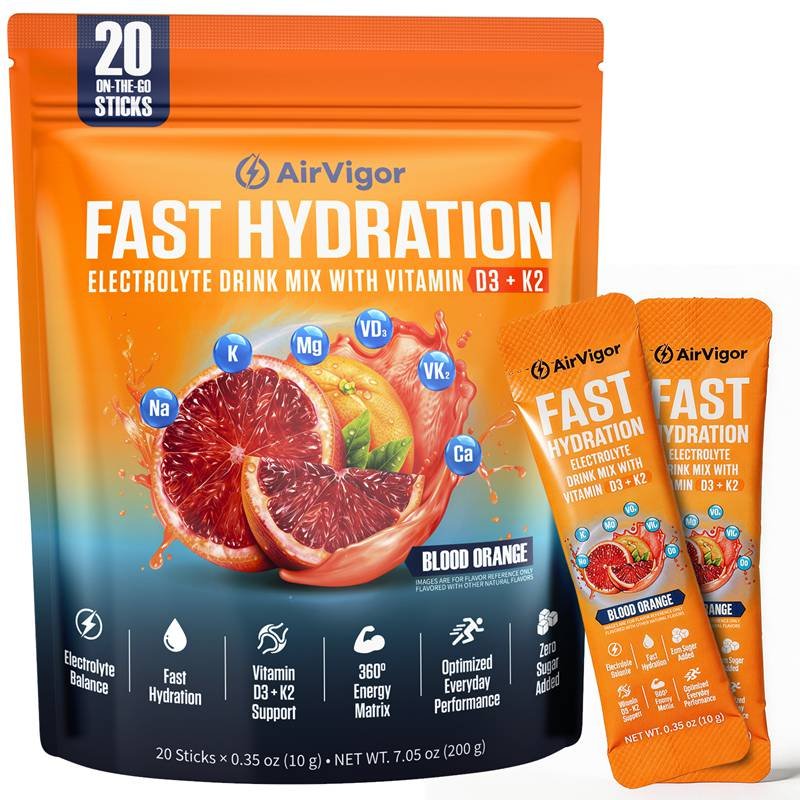
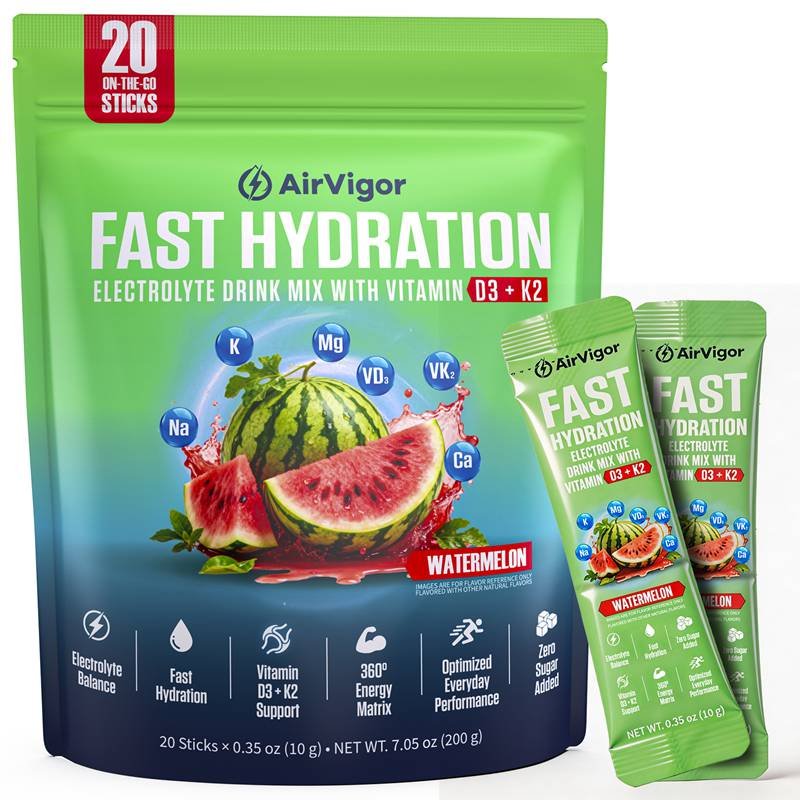
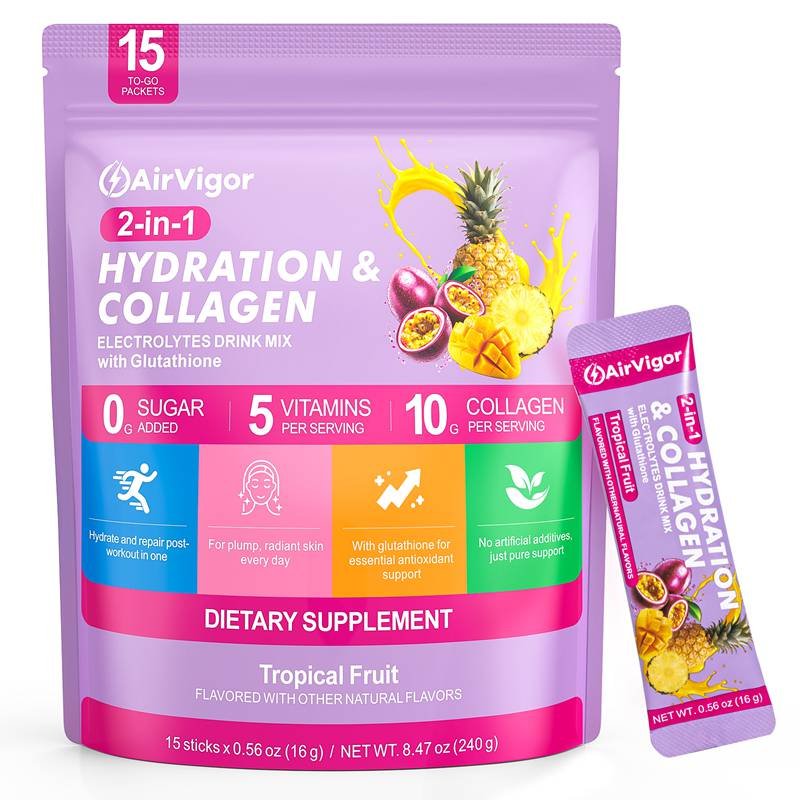
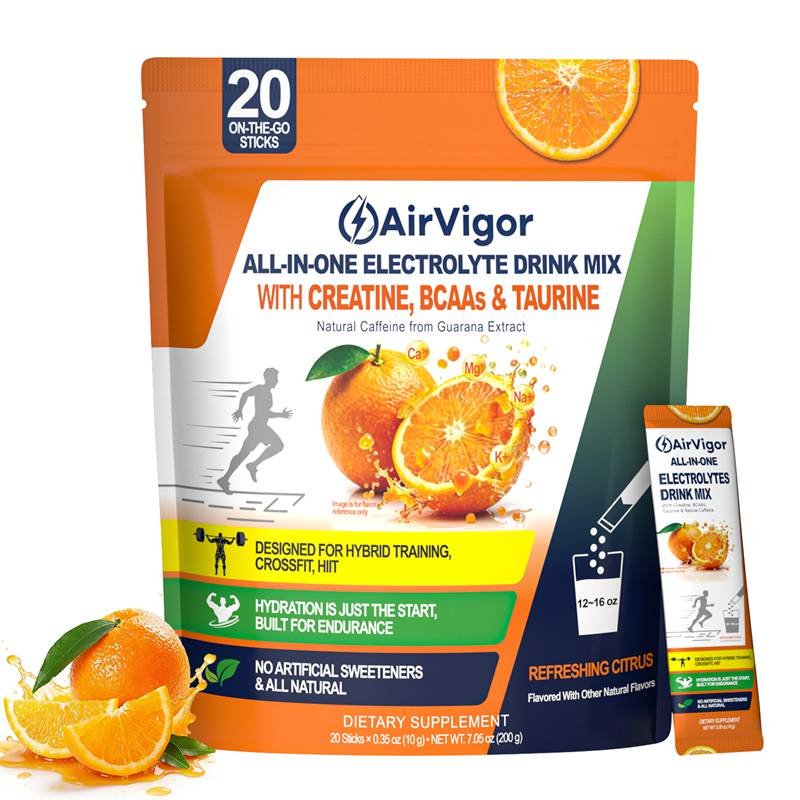
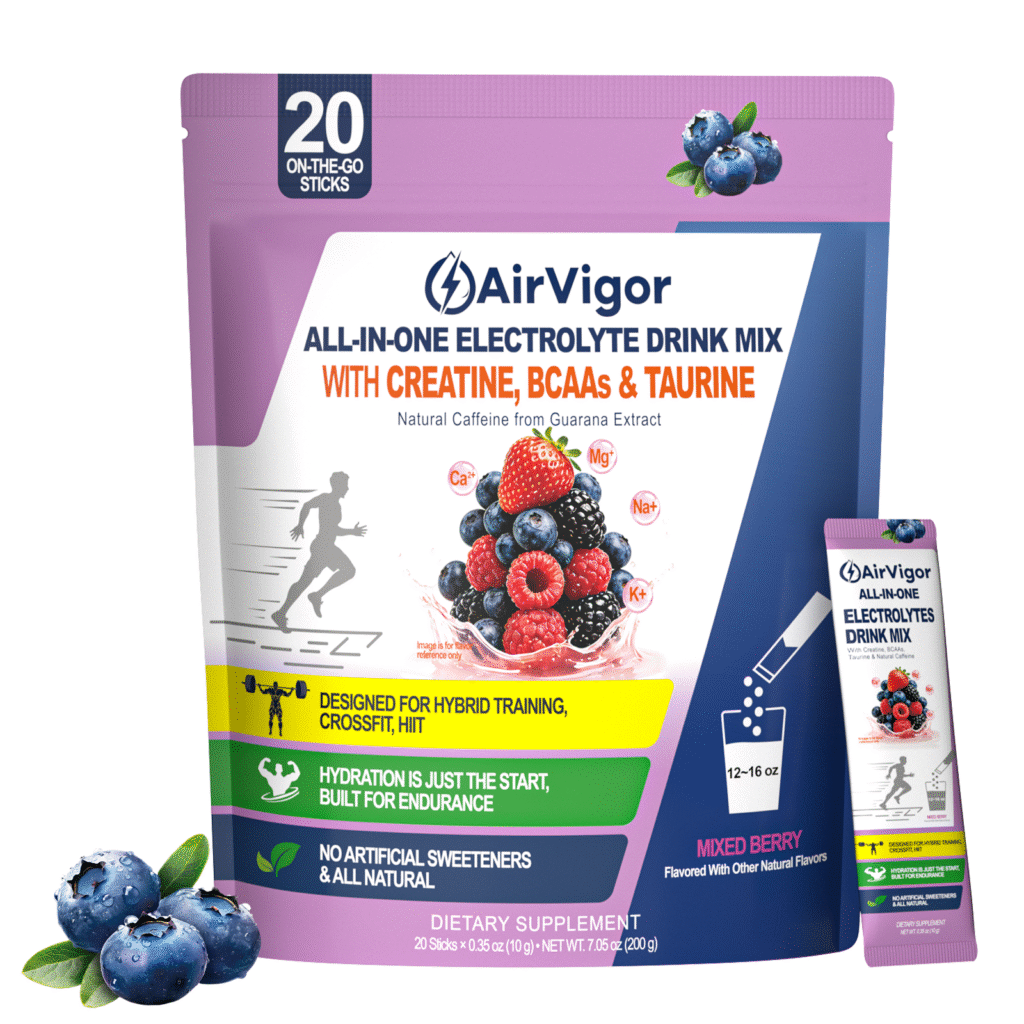
AirVigor fits best where the market still has one of its biggest practical frustrations: people want electrolyte support, but they also want clearer directions, clearer use cases, and easier routine fit. The strongest product story is not “one ratio for every situation.” It is a line of formulas or formats that clearly tell the user what bottle size to use, what kind of hydration moment the product is built for, and whether the experience is meant to be lighter, more concentrated, or more workout-oriented. That kind of clarity is exactly what customers need when official directions across the market already vary so widely.
This matters because the best hydration products are not just formulated well. They are hard to misuse. For direct customers, that means less confusion and a better first experience. For OEM and ODM projects, it means a clearer commercial story: one product for smaller-volume concentrated hydration, one for balanced mid-strength use, or one for larger workout bottles. That makes the line easier to understand, easier to market, and easier to trust.
A practical brand-fit guide helps:
| Need | Where AirVigor can stand out |
|---|---|
| Clear mixing directions | Easier first-use success |
| Better routine fit | Product-to-bottle logic that makes sense |
| Smarter product segmentation | Different ratios for different hydration moments |
| OEM / ODM opportunity | More coherent formula families and user guidance |
That is where an electrolyte brand stops feeling like just another packet and starts feeling like a better hydration system.
Final Thoughts
There is no single universal amount of water to use with electrolytes. The right answer depends first on the label, then on the routine. Official directions across major products range from 8 oz to 20 oz, which means the most reliable first step is always to mix the product exactly as directed once before adjusting for taste or use case.
That is why the smartest mixing habit is simple: follow the label first, understand what kind of hydration experience the product was designed to create, and only then make small, intentional changes if your routine truly calls for them. For a brand like AirVigor, that creates a strong opportunity: not only to offer electrolyte formulas, but to offer clearer ratio guidance and better routine matching for real users.
Looking to Source a Better Electrolyte Formula or Build Your Own?
If you are looking for:
- a more concentrated hydration format for smaller bottles
- a lighter workout-style formula for larger bottles
- clearer mixing directions that reduce customer confusion
- an OEM / ODM partner for custom electrolyte powder development
AirVigor can support both finished branded products and private-label or custom formulation projects. The strongest products in this category are the ones that solve a real mixing and routine problem clearly, and that is exactly where a well-designed electrolyte line can stand out.
Share:
Contact Expert Team
At AirVigor, performance becomes effortless. We transform advanced nutrition science into clean, effective supplements that help you hydrate, recover, and feel stronger every day. Shop AirVigor Supplements on Amazon and experience athlete-trusted formulas—backed by real science and supported by our world-class R&D and production capabilities.
Trust AirVigor
At AirVigor, turning your performance goals into reality is no longer a struggle—it’s a science-driven journey we build together. Whether you’re a runner, lifter, cyclist, yogi, outdoor athlete, or someone simply seeking better daily energy, AirVigor transforms advanced nutrition research into clean, effective, and trustworthy supplements you can feel.
Backed by our U.S. scientific team, global certifications, and world-class production standards, every formula is engineered to deliver real hydration, real recovery, and real performance. And when you’re ready to experience the difference, you’ll find AirVigor products available on Amazon and other major platforms—fast shipping, consistent quality, and a community of athletes already seeing results.
Behind the scenes, our R&D and manufacturing ecosystem also supports specialized formulation development, ensuring AirVigor continues to lead with innovation while keeping quality and safety uncompromised. But at the core, everything we create is built for you—your health, your performance, your momentum.
Choose AirVigor. Feel the science. Elevate your every day.


Subscribe to our newsletter
Sign up to our newsletter and we’ll keep you up to date with the latest arrivals.