Skip to content

Electrolytes are often described in the marketplace as if they were a faster, cleaner, more “functional” form of energy. That description is convenient, but it is not very precise. Electrolytes do not usually work like caffeine, stimulants, or fast-acting nootropics. Their importance is more fundamental. They help the body maintain fluid balance, support nerve signaling, regulate muscle contraction, and keep several basic physiological systems working within a normal range. When those systems are stressed by dehydration, sweating, heat, illness, or prolonged physical demand, people often do not describe the problem as “electrolyte imbalance.” They usually say they feel tired, weak, heavy, foggy, cramp-prone, or simply less capable than usual. MedlinePlus says fluid and electrolyte balance helps regulate body water, supports muscle and nerve function, keeps heart rhythm steady, and helps move nutrients into cells and wastes out of cells. Cleveland Clinic lists fatigue among common symptoms of electrolyte imbalance, and Harvard Health notes that low fluid status can leave the body feeling tired and weaker than usual.
A more accurate way to explain the relationship is this: electrolytes usually influence energy indirectly. They do not create stimulation in the way caffeine does. They help preserve the conditions that allow normal energy, steadier physical function, and better tolerance for heat, sweat loss, and daily strain. In the right setting, electrolyte support can therefore feel like an energy improvement, not because it produces a stimulant effect, but because it reduces fatigue linked to dehydration or imbalance. That distinction is important for product credibility, label strategy, and customer education. MedlinePlus, Harvard Health, and Cleveland Clinic all support this more functional interpretation of the topic.
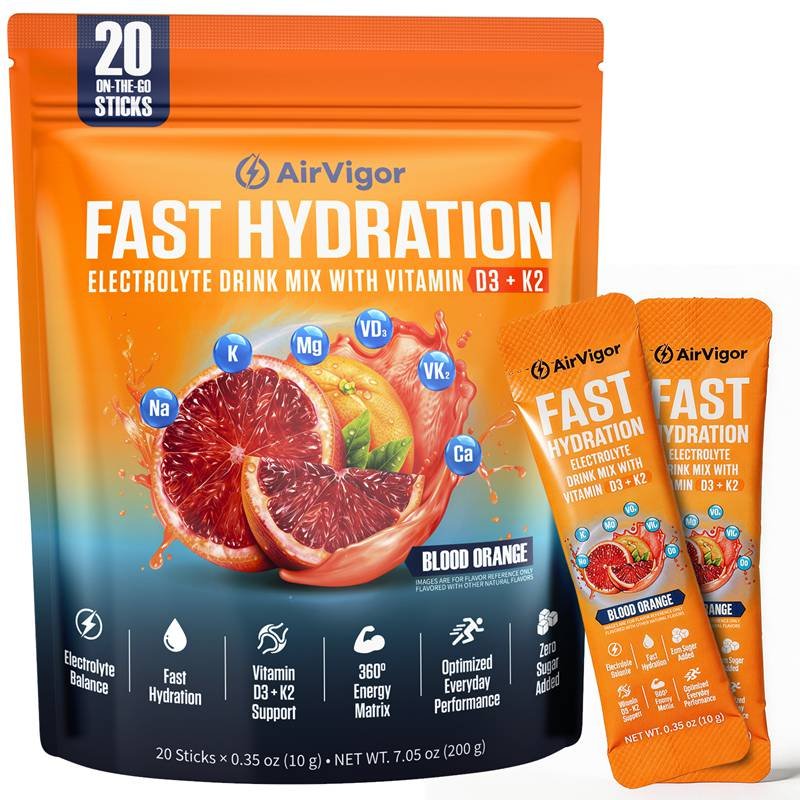
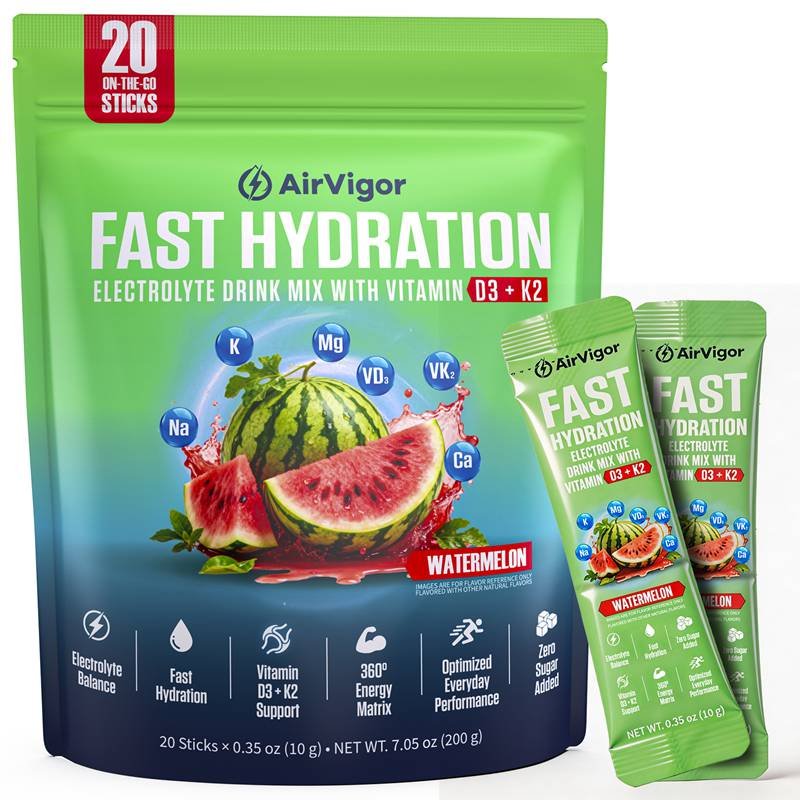
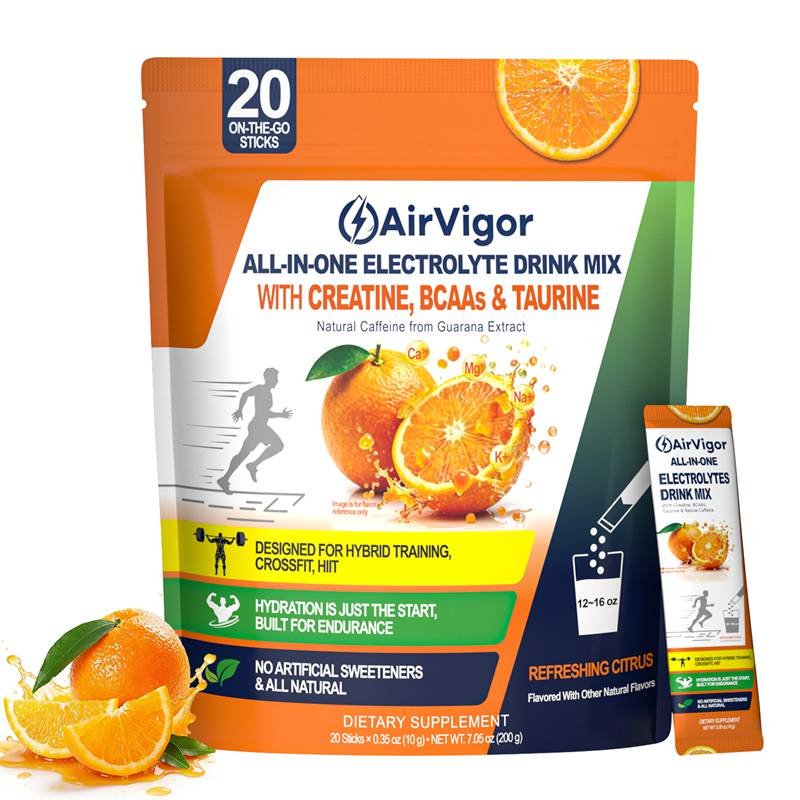
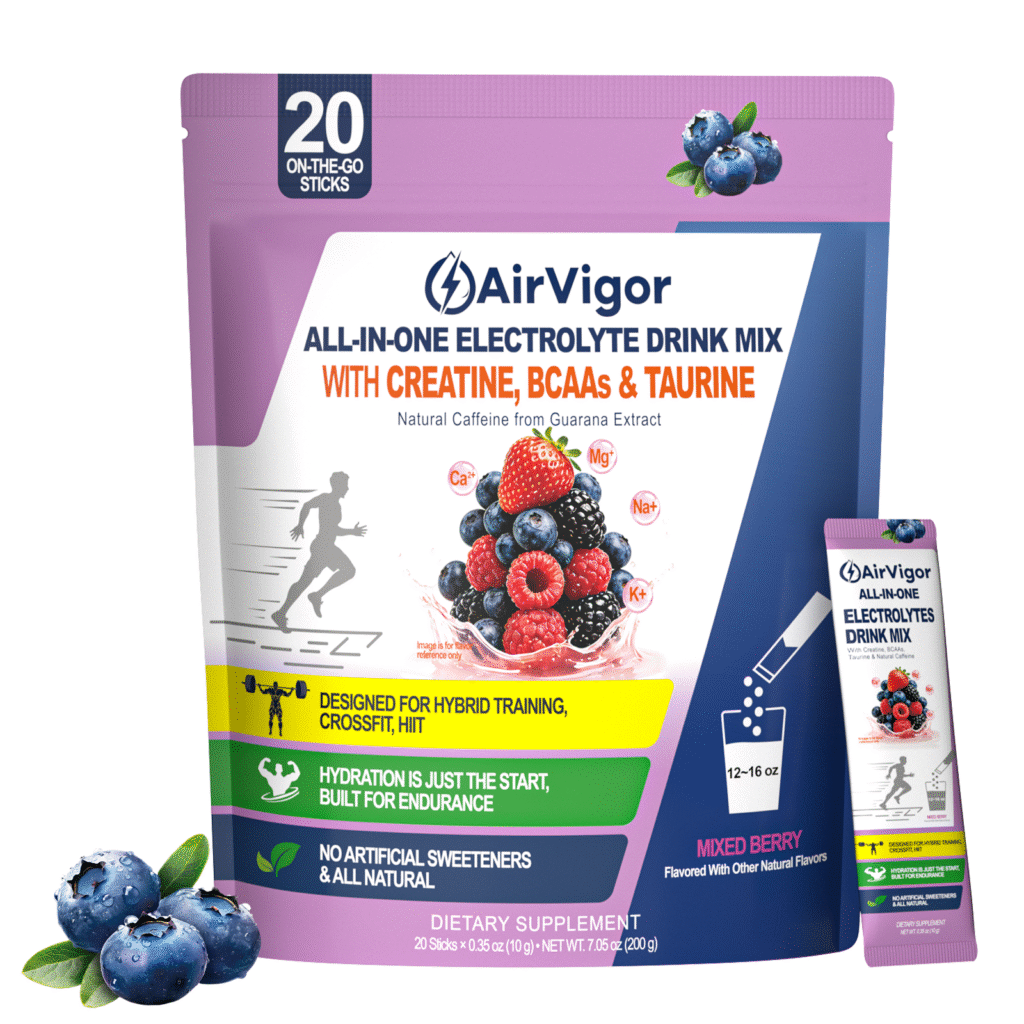
That is why a serious formula story should not promise “instant energy” in the stimulant sense. A stronger message is narrower and more believable: support hydration, support fluid balance, and help the body stay physically steadier when heat, sweat, exertion, travel, or illness-related fluid loss are dragging performance down. That is the part of the category where a brand such as AirVigor can sound more credible than products that collapse hydration support into generic energy language.
What Do Electrolytes Actually Do in the Body?
Electrolytes are charged minerals that help the body regulate water balance, nerve activity, muscle function, heart rhythm, and movement of nutrients and waste at the cellular level. MedlinePlus explains that fluid and electrolyte balance helps regulate the amount of water in the body, maintain acid-base balance, move nutrients into cells, move wastes out of cells, and support muscle and nerve function. The NIH Office of Dietary Supplements says potassium is required for normal cell function because of its role in maintaining intracellular fluid volume and transmembrane electrochemical gradients, and that magnesium is a cofactor in more than 300 enzyme systems.
That matters because people often think about “energy” too narrowly. In daily life, feeling energetic depends not only on alertness, but also on whether the body is functioning smoothly. If fluid distribution is off, muscles feel weaker, nerves signal less efficiently, or cells are operating under poorer conditions, the person may not describe the problem in technical terms. They may just feel slower, flatter, weaker, or more fatigued than usual. The physiological role of electrolytes helps explain why that happens.
What makes electrolytes important for daily function?
Electrolytes matter because they support systems the body relies on constantly, rather than occasionally. MedlinePlus says sodium helps control the amount of fluid in the body and helps nerves and muscles work properly, potassium helps cells, heart, and muscles work properly, and magnesium helps muscles, nerves, and the heart work properly while also helping control blood pressure and blood glucose. These are not minor background tasks. They sit under movement, circulation, physical steadiness, and cellular work throughout the day.
This matters for the energy conversation because many people treat energy as if it were only about mental stimulation. In practice, a large share of what people call “low energy” is reduced functional steadiness. That can mean feeling physically flat, more easily tired by ordinary activity, slower to recover from heat or exertion, or less resilient over the course of the day. When electrolytes are out of balance, those sensations can appear without any dramatic warning signs. Cleveland Clinic’s electrolyte imbalance guidance reflects this by listing fatigue, muscle cramps, weakness, confusion, and changes in heart rate among possible symptoms.
A practical distinction helps:
| Function type | Main effect | How people often describe it |
|---|---|---|
| Stimulant support | Raises alertness more directly | “More energy right now” |
| Electrolyte support | Helps maintain normal fluid and nerve-muscle function | “I feel steadier, less weak, less drained” |
That is why electrolytes are better understood as support for normal operating conditions than as a shortcut to stimulation. MedlinePlus and the Cleveland Clinic both support that more grounded explanation.
How do electrolytes support hydration and fluid balance?
Electrolytes support hydration by helping regulate where water is distributed in the body and how it moves in relation to cells and tissues. MedlinePlus says fluid and electrolyte balance regulates body water and helps move nutrients into cells and wastes out of cells. The NIH potassium fact sheet adds that potassium is required for normal cell function because of its role in intracellular fluid volume and electrochemical gradients, while sodium is a main regulator of extracellular fluid volume.
This matters because hydration is not simply about total water intake. A person can drink fluid and still feel physically poor if the broader fluid-balance system is strained. Harvard Health says low fluid status can make the body feel tired and weaker than usual, and Cleveland Clinic lists tiredness, weakness, dizziness, headache, and muscle cramps among dehydration symptoms. When electrolyte balance is also off, those symptoms can feel more pronounced or last longer.
A practical hydration view helps:
| Hydration factor | Why it matters for energy and function |
|---|---|
| Total fluid intake | Supports circulation and overall hydration status |
| Sodium and potassium balance | Helps regulate fluid distribution and signaling |
| Repeated sweat loss or heat exposure | Raises the chance that water alone may feel incomplete |
That is one reason people sometimes report that electrolytes “help their energy.” In many cases, they are feeling the effect of improved hydration balance rather than a direct energy mechanism.
Which body systems rely on electrolytes the most?
The systems most visibly affected are the nervous system, muscular system, cardiovascular system, and cell-transport system. MedlinePlus says electrolyte balance supports muscle and nerve function, steady heart rhythm, stable blood pressure, and transport of nutrients and wastes. The NIH magnesium fact sheet says magnesium is involved in protein synthesis, muscle and nerve function, blood glucose control, and blood pressure regulation through more than 300 enzyme systems.
This matters because “low energy” is often a blended sensation rather than one isolated complaint. A person may feel weak because muscles are not functioning normally. They may feel mentally dull because dehydration and fatigue overlap. They may feel physically drained because long heat exposure, sweat loss, and reduced fluid balance are all occurring together. The broader the system involvement, the easier it becomes to understand why electrolyte imbalance can present as a general decline in steadiness rather than one simple symptom. Cleveland Clinic’s broader electrolyte symptom discussions fit that pattern by connecting imbalance with fatigue, weakness, headache, confusion, muscle cramps, and rhythm changes.
A system-level table makes this clearer:
| Body system | Electrolyte relevance | How disruption may be felt |
|---|---|---|
| Nervous system | Supports signaling | Foggy, lightheaded, less steady |
| Muscular system | Supports contraction | Weak, heavy, cramp-prone |
| Cardiovascular system | Supports rhythm and fluid status | Tired, faint, less resilient |
| Cellular transport | Supports nutrient and waste movement | Lower overall functional efficiency |
That is why electrolyte status can affect how energized or depleted a person feels without acting like a stimulant. The influence is often indirect, but it can still be very noticeable in real life.
Can Low Electrolytes Make You Feel Tired?
Yes. Low electrolytes can contribute to tiredness, weakness, reduced physical steadiness, and other symptoms that people often interpret as “low energy.” Cleveland Clinic lists fatigue among the common symptoms of electrolyte imbalance. Harvard Health says that when the body is low on fluids, it may feel tired and weaker than usual. Cleveland Clinic’s dehydration guidance separately lists tiredness, dizziness, weakness, lightheadedness, headache, and muscle cramps among dehydration symptoms.
That matters because fatigue is easy to misread. People often attribute it immediately to lack of sleep, stress, or low motivation. Those causes can certainly matter, but dehydration and electrolyte imbalance can overlap with them or intensify them. That overlap is one reason the problem is often missed early. A person may not think, “I am low on fluids or minerals.” They may simply feel more drained, more fragile, or less tolerant of heat, exertion, or long workdays than usual.
Is fatigue one of the first warning signs?
Fatigue is one of the most common early signs people notice, although it is not unique to electrolyte problems. Cleveland Clinic includes fatigue in its electrolyte imbalance symptom list, and MedlinePlus makes clear that fluid and electrolyte balance supports systems central to ordinary physical and mental function. When those systems are stressed, fatigue may show up before a person thinks in more specific terms, such as sodium, potassium, or magnesium.
This matters because fatigue is often treated as too broad to be useful. In reality, it becomes much more informative when it appears with the right context: heat exposure, heavy sweating, vomiting, diarrhea, cramps, weakness, headache, or unusual physical heaviness. Harvard Health’s dehydration guidance supports this contextual reading by linking fluid loss with tiredness and weakness rather than thirst alone. In practical terms, fatigue becomes a stronger electrolyte-related clue when it appears together with signs of hydration strain.
A practical fatigue check helps:
| Context | When electrolyte-related fatigue becomes more plausible |
|---|---|
| Hot weather or poor cooling | Higher |
| Heavy sweating | Higher |
| Vomiting or diarrhea | Higher |
| Ordinary indoor routine with normal meals and fluids | Lower |
That does not mean every fatigue episode is an electrolyte problem. It means electrolyte status deserves serious consideration when fatigue appears alongside fluid loss or dehydration risk.
How do dehydration and electrolyte imbalance work together?
Dehydration and electrolyte imbalance often overlap because fluid loss changes the body’s mineral balance, and mineral imbalance can make the effects of dehydration feel more disruptive. MedlinePlus explains that fluid and electrolyte balance regulates body water and several key body functions. Harvard Health notes that dehydration can happen when you do not drink enough or lose too much fluid, including through heat or heavy sweating, and the Cleveland Clinic says dehydration symptoms can include tiredness, weakness, dizziness, headache, and cramps.
This matters because people often treat dehydration and electrolytes as if they were separate issues. In real life, they are frequently part of the same pattern. A person loses fluid through sweat, heat, or illness; the body’s water balance becomes less stable; electrolyte levels may shift; and symptoms such as fatigue, weakness, headache, muscle discomfort, or lightheadedness become more noticeable. The person may describe all of that simply as “low energy.” That is one reason electrolyte support can seem helpful in the right settings. It often addresses a hydration problem that includes mineral strain, not just a lack of water.
A practical interaction table helps:
| Problem | What it can contribute to |
|---|---|
| Dehydration | Tiredness, dizziness, weakness |
| Electrolyte imbalance | Fatigue, cramps, weakness, headache |
| Dehydration plus imbalance | More noticeable drop in steadiness and tolerance |
That is why energy complaints during heat, long activity, or illness should not always be interpreted as a need for stimulation. Sometimes, the more relevant question is whether hydration and electrolyte balance have fallen behind.
Which symptoms often appear with low electrolytes?
The symptoms most commonly associated with low electrolytes include fatigue, weakness, headache, cramps, spasms, nausea, confusion, numbness or tingling, and changes in heart rhythm. Cleveland Clinic lists fatigue, cramps, confusion, numbness or tingling, and heart-rate changes among electrolyte imbalance symptoms. MedlinePlus says low sodium can include weakness, fatigue, headache, and confusion, while low potassium can include fatigue, muscle weakness or spasms, palpitations, tingling or numbness, nausea, and vomiting. Cleveland Clinic’s magnesium deficiency guidance also lists fatigue and weakness among early signs.
This matters because the symptom pattern is broad. Low electrolytes do not always present as one dramatic sign. More often, people notice that they feel less resilient, more physically uncomfortable, and less able to tolerate normal demands. That broad presentation is exactly why many consumers describe the issue as “low energy” rather than as a mineral or hydration problem. A better hydration-support formula should therefore be positioned around steadier function in the right conditions, not around exaggerated stimulant-style promises.
A symptom map helps keep the discussion practical:
| Symptom cluster | Why it matters for the energy conversation |
|---|---|
| Fatigue and weakness | Often interpreted as “low energy” |
| Headache and dizziness | Often overlap with dehydration signs |
| Muscle cramps or heaviness | Suggest that physical function is under strain |
| Nausea, tingling, or palpitations | Suggest the issue may be broader than thirst alone |
That is why a more credible electrolyte product story begins with supporting steadier function under hydration strain, not with borrowing the language of stimulation.

Which Electrolytes Matter Most for Energy Levels?
When people ask which electrolytes matter most for energy, the more accurate answer is that different electrolytes influence different parts of physical function that people often describe as “energy.” Sodium is central to fluid balance and nerve-muscle function. Potassium is essential for normal cell function, nerve transmission, and muscle contraction. Magnesium is involved in hundreds of enzyme systems and is required for energy production, muscle and nerve function, and normal heart rhythm. MedlinePlus and the NIH Office of Dietary Supplements describe these roles clearly.
That distinction matters because “low energy” is usually not one single biological event. A person may feel tired because fluid balance is off, because muscles are functioning poorly, because nerve signaling is less steady, or because several of those problems are happening at the same time. Electrolytes do not all carry the same job, but together they help maintain the conditions under which normal daily performance feels stable rather than strained.
Is sodium the first electrolyte to understand?
For many real-world situations, yes. Sodium is often the first electrolyte to be understood because it plays a major role in controlling fluid balance and supporting normal nerve and muscle function. MedlinePlus explains that sodium helps control the amount of fluid in the body and helps nerves and muscles work properly, while its sodium-testing guidance notes that low sodium can be associated with weakness, fatigue, headache, confusion, and muscle symptoms.
This matters because many “energy” complaints are actually complaints about physical steadiness. A person may not say, “My sodium balance feels off.” They may say, “I feel weak,” “I feel worn down,” or “I feel like I cannot push through the day the way I usually can.” Sodium deserves first attention because it often tells the clearest story about whether hydration strain, sweating, heat exposure, or poor fluid replacement may be part of the reason daily performance feels worse.
A practical sodium lens helps frame the issue more clearly:
| Sodium-related question | Why it matters for energy support |
|---|---|
| Is fluid balance under strain? | Sodium helps regulate body water balance |
| Is the person sweating heavily? | Sodium becomes more relevant in replacement logic |
| Are weakness and fatigue showing up with heat or dehydration signs? | Low sodium may be one contributor |
| Is the product positioned for active or sweat-heavy use? | Sodium should usually be easy to identify on the label |
That is why sodium is often the first electrolyte people should understand when trying to connect hydration with how steady or drained they feel during the day.
How do potassium and magnesium affect energy and muscle function?
Potassium and magnesium matter because they support the systems that make steady daily function possible. The NIH Office of Dietary Supplements says potassium is required for normal cell function and is needed for muscle contraction and nerve transmission. The NIH magnesium fact sheet says magnesium is required for energy production, oxidative phosphorylation, glycolysis, muscle and nerve function, and normal heart rhythm, and that it acts as a cofactor in more than 300 enzyme systems.
This matters because people rarely experience low potassium or low magnesium as abstract lab concepts. They experience them as reduced resilience. MedlinePlus notes that low potassium can involve fatigue, muscle weakness or spasms, and tingling or numbness. Cleveland Clinic’s electrolyte and magnesium guidance also links low magnesium states with fatigue, weakness, muscle symptoms, and impaired cellular energy handling.
A practical comparison makes the distinction easier to understand:
| Electrolyte | Main relevance to the energy conversation |
|---|---|
| Sodium | Fluid balance, nerve function, muscle support |
| Potassium | Cell function, muscle contraction, nerve transmission |
| Magnesium | Energy production, enzyme activity, muscle and nerve function |
That is why a stronger electrolyte formula usually feels more credible when it has a clear role for sodium, potassium, and magnesium rather than relying on broad “energy” language without a meaningful mineral structure.
Which imbalances are most likely to affect daily performance?
The imbalances most likely to affect daily performance are the ones that disrupt fluid balance, muscle function, or nerve signaling enough to show up as fatigue, weakness, cramps, dizziness, headache, or reduced tolerance for ordinary demands. Cleveland Clinic lists weakness, fatigue, muscle spasms, and other performance-relevant symptoms among general electrolyte imbalance signs. MedlinePlus links low sodium with fatigue, weakness, headache, and confusion, and low potassium with fatigue, muscle weakness or spasms, palpitations, nausea, and numbness or tingling.
This matters because “daily performance” is broader than athletic performance. It includes work tolerance, concentration, steadiness during heat, exercise capacity, recovery from exertion, and late-day resilience. A person whose hydration and electrolyte balance are stable often feels physically more organized. A person whose balance is slipping may simply describe the day as harder than it should be. That is one reason electrolyte support can feel beneficial in the right conditions, even though it does not act like a stimulant.
A practical symptom map helps:
| Symptom cluster | Electrolyte-related concern it can reflect |
|---|---|
| Fatigue and weakness | General imbalance, low sodium, low potassium, or low magnesium |
| Cramps or spasms | Muscle function under strain |
| Dizziness or headache | Dehydration and imbalance may be overlapping |
| Tingling, palpitations, or unusual shakiness | More specific signaling or rhythm-related concerns |
That is why the energy conversation becomes more useful when it focuses on function under strain rather than on whether electrolytes “act like energy.”
Do Electrolyte Drinks Give You Energy or Just Help You Function Better?
Electrolyte drinks usually help people function better rather than giving them energy in the stimulant sense. Harvard Health says that when you are low on fluids, your body may feel tired and weaker than usual. Cleveland Clinic lists fatigue, weakness, dizziness, and headache among common signs of dehydration and electrolyte imbalance. In that setting, electrolyte support can feel like an energy improvement because it reduces one of the underlying reasons a person feels physically depleted.
That distinction is important because it prevents a common misunderstanding. Electrolytes can be highly useful without behaving like caffeine. They may improve steadiness, physical tolerance, and perceived resilience when dehydration, heat, sweat loss, or imbalance are part of the problem. But they do not usually increase alertness through stimulation of the central nervous system. That is a different mechanism entirely, and confusing the two often leads to weak product positioning.
Is electrolyte support the same as an energy boost?
No. Electrolyte support is not the same as a classic energy boost. A stimulant such as caffeine can increase alertness more directly for a period of time. Harvard Health describes caffeine as something that can increase alertness and help people think faster temporarily, while its hydration guidance describes fluid loss as a cause of tiredness and weakness.
This matters because the two experiences can feel similar in the moment, even though they come from different causes. If a person is tired because they are dehydrated, overheated, or depleted after sweating, electrolyte support may help them feel noticeably better. But the improvement is coming from restoring steadier body function, not from stimulation. A more credible electrolyte formula should therefore be explained as support for normal function under strain rather than as an instant energy shortcut.
A practical distinction helps:
| Product type | Main effect |
|---|---|
| Electrolyte drink | Supports hydration and steadier function |
| Energy drink or stimulant formula | Increases alertness more directly |
That distinction is one of the most important foundations for responsible hydration messaging.
How are electrolyte drinks different from energy drinks?
Electrolyte drinks and energy drinks are built around different goals. Cleveland Clinic says energy drinks commonly contain caffeine, sugar, amino acids, and herbal ingredients, while Mayo Clinic notes that many energy drinks contain substantial caffeine and other stimulatory components. Electrolyte drinks, by contrast, are built around minerals that support fluid balance and related body functions.
This matters because consumers often use the word “energy” loosely and may compare both categories as if they solve the same problem. They do not. An energy drink is usually designed to increase alertness. An electrolyte drink is usually designed to support hydration and help the body tolerate fluid and mineral loss more effectively. The first can feel more immediate. The second is often more situationally appropriate when fatigue is linked to sweating, heat, dehydration, long work periods, travel strain, or prolonged activity.
A practical beverage comparison helps:
| Drink type | Core ingredients | Main reason people use it |
|---|---|---|
| Electrolyte drink | Minerals such as sodium, potassium, magnesium | Hydration and fluid-balance support |
| Energy drink | Caffeine, sugar, taurine, herbal extracts | Alertness and stimulation |
That is why an electrolyte product should not be positioned as a substitute for every kind of low-energy problem. Its strength is narrower and more credible.
When does electrolyte powder make more sense than caffeine?
Electrolyte powder usually makes more sense than caffeine when the main problem is dehydration, sweating, heat exposure, or fluid-and-mineral loss rather than low alertness by itself. Harvard Health says dehydration can leave the body feeling tired and weaker than usual, and the Cleveland Clinic describes fatigue, weakness, dizziness, headache, and cramping as dehydration-related symptoms. In those situations, more caffeine may not address the real cause of the problem.
This matters because the wrong response is often easy to choose. If a person feels drained during heat, after sweating, during travel, or at the end of a long, physically demanding day, the first instinct may be to reach for stimulation. But if the fatigue is being driven partly by hydration strain, electrolyte support is often the more logical first move. Caffeine still has a place when low alertness is the dominant issue. It is simply solving a different problem.
A practical decision map helps:
| Situation | What often makes more sense first |
|---|---|
| Heat, sweating, dehydration signs | Electrolyte support |
| Need for short-term alertness without hydration strain | Caffeine may be more relevant |
| Long active day with weakness, cramps, or headache | Electrolyte support often deserves consideration first |
That is why electrolyte powder is best positioned as support for steadier function under hydration strain, not as a generic replacement for energy drinks.
When Should You Use Electrolyte Powder for Energy Support?
Electrolyte powder makes the most sense for energy support when the real problem is not low alertness by itself, but hydration strain, heat exposure, prolonged sweating, gastrointestinal fluid loss, or physically demanding conditions that make normal function harder to maintain. Harvard’s Nutrition Source says electrolyte drinks or supplements are most useful when people are losing a lot of fluid through persistent vomiting or diarrhea, strenuous exercise, or strenuous jobs in hot or humid conditions. Cleveland Clinic and Harvard Health both note that fatigue, weakness, dizziness, and headache commonly appear with dehydration or electrolyte imbalance.
This matters because consumers often use the word energy too loosely. In many real-life situations, the issue is not a lack of stimulation. The issue is that fluid balance, sweat loss, heat load, or poor replacement is making the body function less efficiently. In those situations, electrolyte support can feel like an energy improvement because it reduces one of the reasons the body feels physically drained. That is a very different claim from saying electrolytes behave like caffeine. MedlinePlus, Harvard, and the Cleveland Clinic all support this more grounded interpretation.
Which situations justify electrolyte support most clearly?
The clearest situations are the ones where fluid and electrolyte loss are most plausible: heavy sweating, intense exercise, hot or humid conditions, strenuous work, vomiting, and diarrhea. Harvard’s Nutrition Source states that extra electrolyte drinks or supplements are most helpful in these circumstances rather than on routine days. Cleveland Clinic also describes dehydration-related symptoms such as fatigue, dizziness, weakness, headache, and muscle cramps, which helps explain why some people feel noticeably worse when these conditions are present.
This matters because it helps separate justified use from casual use. A person finishing a long outdoor session, working through prolonged heat, or recovering from gastrointestinal fluid loss is facing a very different physiological situation from someone sitting indoors with normal meals, low sweat exposure, and no illness-related fluid depletion. In the first group, electrolyte powder may support steadier function because the hydration problem is larger and more specific. In the second group, the product may be unnecessary or only marginally useful. That distinction protects both product credibility and customer trust.
A practical decision map helps make that boundary clearer:
| Situation | Does electrolyte support often make more sense? |
|---|---|
| Heavy sweating during exercise | Often yes |
| Hot or humid strenuous work | Often yes |
| Vomiting or diarrhea | Often yes |
| Mild indoor routine with normal meals and fluids | Often no |
| General sleepiness without dehydration signs | Less clearly justified |
The logic behind this table follows Harvard’s guidance on when electrolyte drinks are most useful and the Cleveland Clinic’s symptom descriptions of dehydration and imbalance.
Is water enough on normal days?
For many people, yes. Harvard’s Nutrition Source says that on ordinary days, most people can get the electrolytes they need from regular foods and beverages, and that electrolyte drinks are mainly useful in more demanding fluid-loss situations. MedlinePlus explains that electrolyte imbalance often happens when body fluid balance changes substantially, which means routine hydration habits still matter more than specialty products on most normal days.
This matters because water is often framed as if it were the weaker choice. On many normal days, it is the correct choice. If a person is eating normally, not sweating heavily, not ill, and not under unusual heat or physical strain, plain water plus normal food intake will usually cover daily hydration needs. Electrolyte powder becomes easier to justify when the day has clearly moved beyond that baseline. A stronger formula story, therefore, does not compete against water all the time. It explains when water may no longer feel complete by itself.
A practical baseline table helps:
| Day type | Is water often enough? |
|---|---|
| Indoor desk day | Usually yes |
| Normal errands and low-intensity routine | Usually yes |
| Light exercise with limited sweating | Often yes |
| Heat, heavy sweating, or illness-related fluid loss | Sometimes not |
That is why the strongest hydration guidance is conditional rather than universal. It starts with water and adds electrolytes only when the conditions clearly justify them.
How can AirVigor position a more useful energy-support hydration formula?
AirVigor can position a stronger formula by avoiding stimulant-style promises and instead explaining that electrolytes help support steadier function when hydration and mineral balance are under strain. Cleveland Clinic’s symptom guidance and Harvard’s hydration guidance both support that narrower framing: fatigue, weakness, dizziness, headache, cramps, and reduced function can appear when dehydration or electrolyte imbalance is part of the picture. A formula positioned around heat, sweat, long activity, travel strain, or physically demanding days is therefore more believable than one positioned as a universal “energy” shortcut.
This matters commercially because customers are becoming more skeptical of vague energy language. A more credible product story is narrower and more useful: supports hydration and fluid balance during heat, sweat, travel, long active days, or other situations where normal function can drop. That message is easier to trust because it reflects the actual role electrolytes play in the body. It also gives AirVigor more room to create formulas for distinct use occasions instead of forcing one broad energy claim across every consumer need. MedlinePlus and the Cleveland Clinic both support a physiology-first explanation of how electrolyte balance affects everyday function.
A positioning framework helps:
| Positioning style | How it sounds | Credibility |
|---|---|---|
| “Instant energy” | Too close to stimulant language | Lower |
| “Supports steadier function during heat, sweat, and hydration strain” | Clear and believable | Higher |
| “Hydration plus balanced mineral support for demanding conditions” | Functional and practical | Higher |
That kind of positioning fits the underlying physiology much better and gives the product a stronger long-term trust profile.
Final Thoughts
Electrolytes affect energy levels mainly by helping the body maintain the conditions required for normal function. They support hydration, fluid balance, nerve signaling, muscle function, and key cellular processes. When those systems are under strain, people may feel tired, weak, cramp-prone, lightheaded, or generally less steady. In that context, electrolyte support can feel like an energy improvement because it helps remove one of the underlying causes of fatigue rather than acting like a stimulant. MedlinePlus, Harvard, and Cleveland Clinic all support that interpretation.
That is why the most useful question is not simply whether electrolytes “boost energy.” The better question is whether fatigue is being worsened by dehydration, sweat loss, heat, illness, or fluid-and-mineral imbalance. When the answer may be yes, electrolyte support often deserves serious consideration. When the answer is no, water, regular meals, better sleep, or a different intervention may make more sense. That distinction is what makes electrolyte guidance more accurate and more useful for both consumers and brands.
Looking to Develop a More Credible Energy-Support Hydration Formula?
If the goal is to build a product that supports energy in a credible way, the strongest starting point is not stimulant language. It is hydration logic, electrolyte structure, use-case clarity, and repeat-use practicality. A better formula is usually built around the conditions that actually drive fatigue from hydration strain: heat, sweat, travel, strenuous work, longer activity, and recovery after fluid loss. Harvard’s Nutrition Source and MedlinePlus both support this more functional approach.
AirVigor can support both finished branded products and private-label or custom formulation projects. The strongest products in this category are the ones that explain their role clearly and solve a real fatigue-related hydration problem without borrowing exaggerated energy claims. That is where a better-structured electrolyte formula can create stronger long-term value.