Skip to content
What Do Electrolytes Do in the Body for Hydration and Energy:A Science-Based Guide
# Your Trusted Dietary Supplement Brand In US
- Emily

Table of Contents
What Do Electrolytes Do in the Body?
Most people think hydration is just about drinking enough water. But if that were true, why do so many people still feel tired, cramp easily, or lose energy halfway through the day—even when they are drinking regularly? The real issue is not just how much you drink, but how well your body can actually use that fluid.
Electrolytes are the key to that process. They are charged minerals that help regulate fluid balance, support muscle contractions, and enable nerve signaling. Without enough electrolytes, water alone cannot properly hydrate the body, which can lead to fatigue, poor performance, and unstable energy levels.
In simple terms, water fills the system, but electrolytes help control it. Once you understand how electrolytes work, it becomes much easier to improve hydration, maintain consistent energy, and avoid the common drop-offs that many people experience in daily life or training.
What Are Electrolytes in the Body?
Electrolytes are charged minerals that help regulate fluid balance, nerve communication, and muscle function. They allow the body to maintain internal stability and ensure that water, energy, and signals move efficiently across cells and tissues.
What Are Electrolytes Made Of?
Electrolytes are made up of essential minerals that dissolve in water and become electrically active. The most important ones for daily function are sodium, potassium, magnesium, calcium, and chloride.
Here is how these electrolytes function in practical terms:
| Electrolyte | Where It Works Most | What It Actually Does for You |
|---|---|---|
| Sodium | Outside cells (blood, fluid) | Helps retain water, supports hydration during sweat |
| Potassium | Inside cells | Helps muscles function smoothly and supports cellular hydration |
| Magnesium | Muscles & nerves | Helps reduce tightness and supports recovery |
| Calcium | Muscles & nerves | Supports controlled contraction and signaling |
| Chloride | Body fluids | Helps maintain fluid and pH balance |
From a customer perspective, the key takeaway is simple:
Electrolytes are not interchangeable. Each one has a role, and the balance between them is what determines how effective hydration and performance support will be.
Where Do Electrolytes Come From?
Electrolytes come from everyday foods, but intake is often less consistent than people expect—especially for those with active lifestyles, irregular schedules, or high sweat loss.
Common food sources include:
| Electrolyte | Typical Food Sources | Practical Note |
|---|---|---|
| Sodium | Salt, sauces, processed foods | Easy to get, but often lost quickly through sweat |
| Potassium | Bananas, potatoes, yogurt | Intake depends on diet quality |
| Magnesium | Nuts, seeds, greens | Often under-consumed in modern diets |
| Calcium | Dairy, fortified foods | More stable intake for some people |
| Chloride | Salt-based foods | Usually paired with sodium |
The challenge is not just intake—it is consistency.
Electrolytes are lost daily through:
- Sweat (especially during exercise or heat)
- Urine (affected by hydration habits)
- Daily metabolic activity
This means your electrolyte levels are always changing.
Here is what that looks like in real life:
| Lifestyle Situation | What Happens Internally | What You Notice |
|---|---|---|
| Long workout | Electrolyte loss increases | Energy drops faster |
| Hot weather | Sweat loss rises | Feeling drained, thirsty |
| Travel | Hydration disrupted | Puffiness, fatigue |
| Busy schedule | Irregular intake | Low, unstable energy |
For many customers, the issue is not a severe deficiency—it is small, repeated imbalances that build up over time.
Why Does the Body Need Electrolytes?
The body needs electrolytes because they control how water, energy, and signals move internally. Without them, even basic hydration becomes less effective.
Electrolytes support:
- Fluid balance between cells and bloodstream
- Muscle contraction and relaxation cycles
- Nerve signal transmission
- Stable internal conditions under stress
A simple comparison helps explain this:
| Hydration Approach | What Happens |
|---|---|
| Water only | Fluids enter but are not efficiently retained |
| Electrolytes + water | Better absorption and distribution |
This is why many people experience:
- Drinking frequently but still feeling thirsty
- Energy dropping despite proper meals
- Muscle tightness during or after activity
Electrolytes do not act as a “boost.” Instead, they help the body operate more efficiently.
For customers choosing a product, this is where formulation matters. A well-designed electrolyte product should not only list ingredients but provide meaningful amounts, balanced ratios, and usability in real-life conditions.
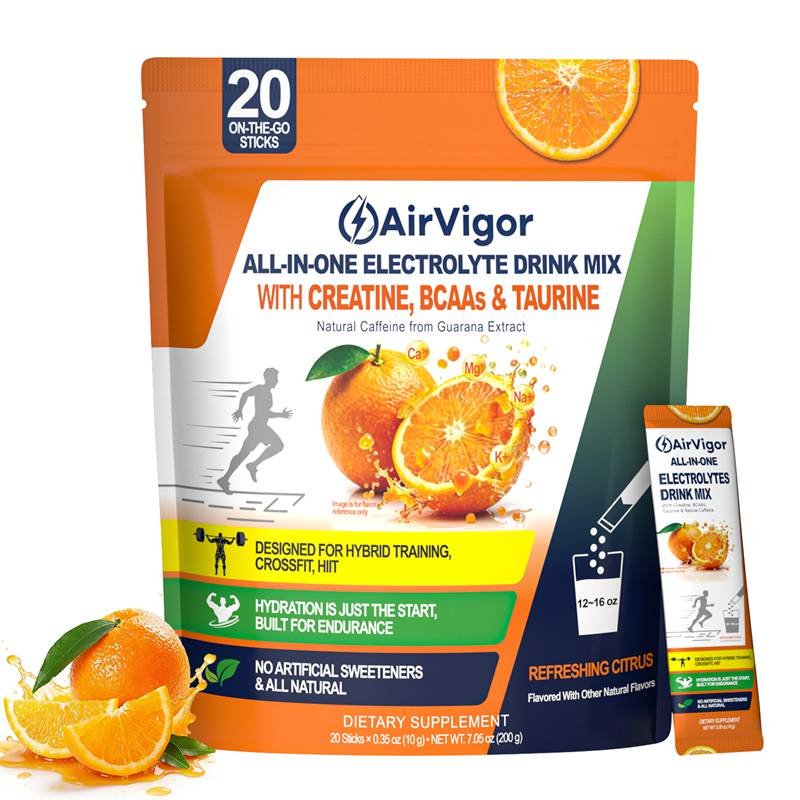
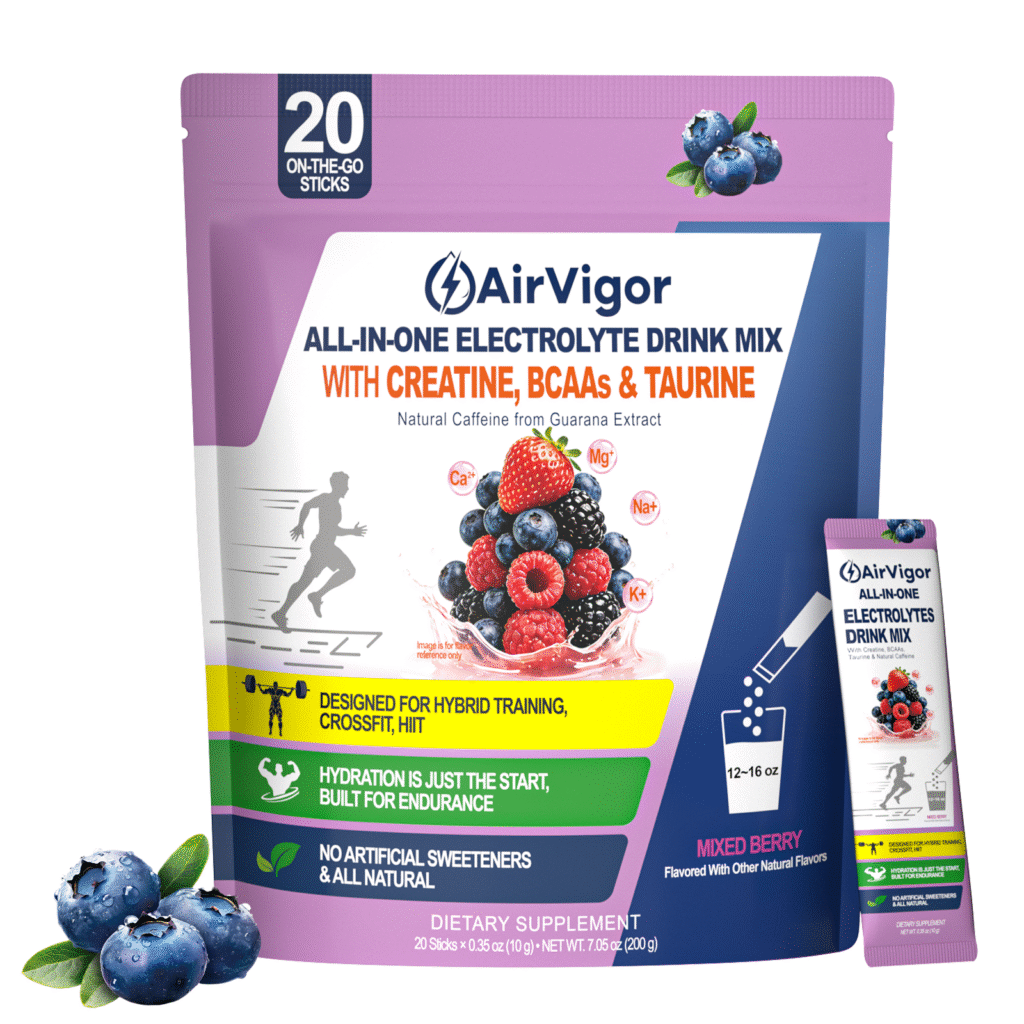
AirVigor focuses on this by emphasizing clear formulation logic, real ingredient inclusion, and stable quality standards—so the product works consistently, not just in theory but in everyday use.
What Do Electrolytes Do in the Body?
Electrolytes regulate hydration, support muscle contractions, enable nerve signaling, and help maintain overall stability. They allow the body to function smoothly under both normal conditions and physical or environmental stress.
How Do Electrolytes Control Hydration?
Hydration is not just about drinking more. It is about where that water goes after you drink it. Sodium helps keep fluid in circulation, while potassium helps move fluid into cells. This balance determines whether hydration actually “works.”
When electrolyte levels are low, customers often experience:
- Drinking a lot but still feeling thirsty
- Frequent urination without feeling hydrated
- A “flat” or depleted feeling during the day
- Poor tolerance to heat or long activity
Here is a practical comparison:
| Hydration Type | What Happens in the Body | What You Feel |
|---|---|---|
| Water only | Rapid fluid movement, low retention | Short relief, still thirsty |
| Electrolytes + water | Better absorption and retention | More stable hydration |
Even mild dehydration (around 2% body weight loss) can affect endurance and focus. Electrolytes help reduce that drop by improving how efficiently the body uses fluids.
How Do Electrolytes Support Muscles?
Electrolytes allow muscles to contract and relax in a controlled and repeatable way. When this balance is disrupted, muscle performance becomes less stable.
Every muscle movement depends on electrical signals. Sodium and calcium help trigger contraction, while potassium and magnesium help muscles relax after contraction. This cycle happens constantly, whether you are training or just moving throughout the day.
When electrolytes are not balanced, customers often report:
- Muscle cramps during or after activity
- Tightness building earlier than expected
- Reduced strength in later sets
- Slower recovery between efforts
| Muscle Function | With Low Electrolytes | With Balanced Electrolytes |
|---|---|---|
| Contraction control | Less stable | More consistent |
| Endurance | Drops faster | Maintained longer |
| Recovery | Slower | More efficient |
A key point customers often miss:
Muscles do not only need strength—they need signal stability. Electrolytes help maintain that stability.
How Do Electrolytes Help Nerves Work?
Electrolytes allow nerve cells to send signals quickly and accurately, supporting coordination, focus, and reaction speed. Nerve communication depends on the movement of sodium and potassium across cell membranes. This process controls how signals are sent between the brain and body.
When electrolyte balance is off, people may notice:
- Brain fog or reduced focus
- Slower reaction time
- Headaches
- A general feeling of low mental energy
These effects are not always dramatic, but they are noticeable over time, especially in:
- Long workdays
- Travel or jet lag situations
- High mental demand environments
| Nervous System Function | Low Electrolytes | Balanced Electrolytes |
|---|---|---|
| Signal speed | Slower | More efficient |
| Focus | Reduced | Improved |
| Coordination | Less precise | More stable |
This is why electrolytes are not just relevant for physical performance. They also influence how mentally sharp and responsive you feel during the day.
How Do Electrolytes Help Maintain Overall Balance?
Electrolytes help the body maintain internal stability by regulating fluid levels, pH balance, and cellular function under changing conditions.
The body is constantly adjusting to:
- Temperature changes
- Activity levels
- Hydration status
- Stress and fatigue
Electrolytes help keep these systems stable.
When balance is disrupted, customers may experience:
- Fatigue without clear reason
- Feeling “off” or less stable physically
- Lower tolerance to stress or heat
- Inconsistent performance across the day
| Internal Balance Factor | Role of Electrolytes |
|---|---|
| Fluid balance | Controls distribution of water |
| pH balance | Maintains stable internal environment |
| Cellular function | Supports efficient nutrient and signal flow |
For most people, the issue is not extreme deficiency—it is small, ongoing imbalance that affects how the body feels day to day.
Practical Takeaway for Customers
Electrolytes do not act like stimulants or quick fixes. Instead, they improve how efficiently the body works in the background.
That shows up as:
- More stable energy instead of sudden crashes
- Better hydration instead of constant thirst
- More consistent performance instead of early drop-off
- Less muscle discomfort during and after activity
This is why product design matters. A useful electrolyte product should not only include these minerals, but provide them in meaningful amounts, balanced ratios, and formats that are easy to use consistently.
AirVigor focuses on this by building formulas around real-world use—hydration, performance, and recovery—so customers can maintain stability, not just chase short-term effects.
Which Electrolytes Does the Body Use?
The body relies on several key electrolytes—mainly sodium, potassium, magnesium, and calcium—to regulate hydration, muscle function, and nerve signaling. Each plays a distinct role, and balance between them is more important than focusing on one alone.
What Does Sodium Do as an Electrolyte?
Sodium is the primary electrolyte lost through sweat, and it plays a central role in maintaining blood volume and hydration stability. When sodium levels drop too low, the body struggles to retain water efficiently.
Customers often notice sodium imbalance through:
- Persistent thirst even after drinking
- Faster fatigue in heat or workouts
- Headaches after sweating
- Reduced endurance
| Sodium Function | Practical Impact |
|---|---|
| Fluid retention | Helps keep hydration stable |
| Nerve signaling | Supports coordination |
| Blood volume | Maintains circulation efficiency |
For active individuals or hot environments, sodium becomes one of the most important electrolytes to replenish.
How Does Potassium Work as an Electrolyte?
Potassium helps regulate fluid inside cells and supports muscle contractions, making it essential for maintaining cellular hydration and muscle stability.
While sodium works outside the cells, potassium works inside them. This balance allows water to move properly across cell membranes.
When potassium intake is low or unbalanced:
- Muscles may feel weak or unstable
- Cramping becomes more likely
- Hydration feels incomplete
| Potassium Role | Customer-Relevant Effect |
|---|---|
| Cellular hydration | Supports fuller muscle function |
| Muscle signaling | Reduces instability |
| Fluid balance | Works with sodium for distribution |
Customers rarely think about potassium directly, but it plays a key role in how “complete” hydration feels.
Why Are Magnesium and Calcium Electrolytes Important?
Magnesium and calcium help regulate muscle contraction, relaxation, and nerve signaling, making them important for recovery, comfort, and consistent physical performance.
Magnesium is often associated with muscle relaxation and recovery. Calcium, on the other hand, is involved in triggering muscle contractions.
When these are not balanced:
- Muscles may feel tight or overactive
- Recovery feels slower
- Movement feels less controlled
| Electrolyte | Key Benefit |
|---|---|
| Magnesium | Supports relaxation and recovery |
| Calcium | Supports controlled contraction |
For many customers, these minerals become more noticeable when they are missing rather than when they are present.
Why Are Electrolytes Important for the Body?
Electrolytes are important because they support stable energy, reduce muscle disruption, and help maintain consistent performance throughout the day. Without proper balance, the body may feel fatigued, unstable, or less responsive.
Do Electrolytes Affect Energy Levels?
Electrolytes help stabilize energy by supporting hydration and nutrient transport, making energy feel more consistent rather than fluctuating throughout the day.
When electrolytes are low:
- Energy feels inconsistent
- Fatigue appears earlier
- Output drops unexpectedly
| Energy Factor | Low Electrolytes | Balanced Electrolytes |
|---|---|---|
| Stability | Fluctuating | Consistent |
| Endurance | Drops early | Sustained |
| Focus | Reduced | Improved |
Customers often describe this as “less crashing” rather than “more energy.”
Can Electrolytes Prevent Cramps?
Electrolytes help reduce the likelihood of muscle cramps by supporting proper contraction and relaxation cycles, especially during prolonged activity or sweating. Cramps are often linked to disrupted signaling between nerves and muscles.
When electrolyte balance is off:
- Muscles contract too easily
- Relaxation is delayed
- Repetition increases strain
Common customer experiences:
- Cramps during workouts
- Tightness at night
- Muscle fatigue building faster
Electrolytes help stabilize this system over time through consistent intake.
Do Electrolytes Support Daily Performance?
Electrolytes support daily performance by helping maintain hydration, muscle responsiveness, and mental clarity across different environments.
Performance includes more than exercise. It includes:
- Work productivity
- Physical comfort
- Mental focus
- Recovery ability
| Scenario | Without Electrolytes | With Electrolytes |
|---|---|---|
| Workday | Fatigue, low focus | More stable |
| Training | Early drop-off | Sustained output |
| Travel | Dehydration | Better balance |
This is why electrolyte use is expanding beyond sports into daily routines.

When Does the Body Need More Electrolytes?
The body needs more electrolytes when fluid loss increases or intake becomes inconsistent. This typically happens during sweating, heat exposure, travel, long workdays, or any situation where hydration demand rises beyond normal daily levels.
Do You Need Electrolytes After Sweating?
Electrolytes are often needed after sweating because sweat contains key minerals—especially sodium—that must be replaced to maintain hydration and physical stability.
Sweating is one of the fastest ways to lose electrolytes, and the loss is not evenly distributed. Sodium is lost first and in the largest amount, followed by smaller amounts of potassium and other minerals.
The more you sweat, the more this imbalance builds.
| Sweat Intensity | Estimated Sodium Loss |
|---|---|
| Light (daily activity) | 200–400 mg/hour |
| Moderate (exercise) | 400–800 mg/hour |
| Heavy (intense training / heat) | 800–1500+ mg/hour |
When these minerals are not replaced:
- Hydration becomes less effective
- Endurance drops earlier
- Fatigue builds faster
- Recovery takes longer
Many customers describe this as “hitting a wall” even when they feel prepared. In reality, it is often a hydration-mineral issue, not a motivation issue.
Replacing electrolytes after sweating helps restore balance more efficiently than water alone, especially in repeated or long-duration activity.
Are Electrolytes Needed in Hot Weather?
Electrolytes become more important in hot weather because increased temperature raises sweat rate, even during light daily activity. Heat exposure creates a constant, low-level loss of both fluid and minerals. This means electrolyte demand rises even if you are not actively exercising.
Common signs customers notice in hot conditions:
- Feeling tired earlier in the day
- Headaches or light discomfort
- Reduced tolerance to activity
- Increased thirst without full relief
| Environment | Electrolyte Demand |
|---|---|
| Cool / indoor | Low |
| Warm climate | Moderate |
| Hot / humid | High |
One important detail customers often overlook is that humidity makes cooling less efficient, which increases sweat loss without obvious signs.
This is why many people feel more drained in humid environments than in dry heat.
Electrolytes help maintain stability in these conditions by supporting fluid retention and reducing the stress placed on the body’s cooling system.
Do Active People Need More Electrolytes?
Active individuals generally need more electrolytes because repeated movement, longer sessions, and sweating increase both fluid and mineral turnover.
Electrolyte demand increases with:
- Training frequency
- Session duration
- Intensity level
- Environmental stress (heat, humidity)
| Activity Level | Electrolyte Demand |
|---|---|
| Sedentary | Low |
| Light activity | Moderate |
| Regular training | High |
| High-intensity / endurance | Very high |
Customers who train regularly often report:
- Performance drops in later sets
- Inconsistent endurance
- Slower recovery between sessions
Electrolytes help smooth these fluctuations by supporting hydration and neuromuscular efficiency.
This is why many modern performance products combine hydration support with other functional ingredients, rather than treating electrolytes as a separate category.
How Do You Get Enough Electrolytes?
Electrolytes can be obtained through food, beverages, or supplements, but consistency, balance, and practicality are key factors in choosing the right approach.
Which Foods Contain Electrolytes?
Electrolytes are naturally present in many foods, but intake can vary depending on diet quality, eating habits, and lifestyle consistency.
Common sources include:
| Electrolyte | Food Sources |
|---|---|
| Sodium | Salt, soups, processed foods |
| Potassium | Bananas, potatoes, yogurt |
| Magnesium | Nuts, seeds, leafy greens |
| Calcium | Dairy, fortified foods |
| Chloride | Salt-based foods |
While these foods provide a foundation, many customers find it difficult to maintain consistent intake due to:
- Irregular meals
- Busy schedules
- Limited food variety
- Travel or lifestyle disruption
Food alone works best when routines are stable. When they are not, gaps can appear.
Are Electrolyte Drinks Necessary?
Electrolyte drinks are not always necessary, but they become highly practical when hydration demand is higher or consistency is difficult to maintain.
Customers typically benefit from electrolyte drinks when:
- They sweat frequently
- They train multiple times per week
- They travel often
- They struggle with consistent hydration
Compared to food sources, drinks and powders offer:
- Faster absorption
- More precise intake
- Greater convenience
| Option | Advantage | Limitation |
|---|---|---|
| Food | Natural intake | Less consistent |
| Water | Easy access | No electrolyte support |
| Electrolyte drinks | Balanced hydration | Requires product selection |
The decision is less about necessity and more about efficiency and lifestyle fit.
How Do You Choose a Good Electrolyte Product?
Choosing a good electrolyte product depends on clarity, balance, and real usability rather than marketing claims alone.
Customers should focus on:
- Transparent ingredient labeling
- Meaningful mineral amounts (not underdosed)
- Balanced sodium, potassium, and magnesium ratios
- Clean taste and easy mixability for daily use
| Selection Factor | What Matters Most |
|---|---|
| Formula clarity | Easy to understand ingredients |
| Dosage | Functional, not minimal |
| Balance | Multiple electrolytes working together |
| Usability | Fits daily routine |
Many products look similar on the surface but differ significantly in how they perform in real use.
AirVigor focuses on:
- Real ingredient inclusion without dilution
- Clear formulation logic based on actual use scenarios
- Stable production and quality control systems
For customers, this reduces uncertainty and improves long-term usability.

Conclusion
Electrolytes play a central role in how the body maintains hydration, energy, and physical stability. From fluid balance to muscle function and nerve signaling, they influence how you feel and perform throughout the day.
For many people, improving electrolyte intake is not about doing more, but about doing it more consistently and with better structure. That is where product quality and formulation clarity begin to matter.
AirVigor focuses on building electrolyte solutions with clear ingredient logic, balanced mineral systems, and stable quality standards, making it easier to support real hydration needs across daily life, training, and recovery.
If you are looking to develop or source electrolyte products that align with real-world performance and consistent quality, AirVigor offers flexible OEM, ODM, and global supply solutions tailored to your market.
Share:
Contact Expert Team
At AirVigor, performance becomes effortless. We transform advanced nutrition science into clean, effective supplements that help you hydrate, recover, and feel stronger every day. Shop AirVigor Supplements on Amazon and experience athlete-trusted formulas—backed by real science and supported by our world-class R&D and production capabilities.
Trust AirVigor
At AirVigor, turning your performance goals into reality is no longer a struggle—it’s a science-driven journey we build together. Whether you’re a runner, lifter, cyclist, yogi, outdoor athlete, or someone simply seeking better daily energy, AirVigor transforms advanced nutrition research into clean, effective, and trustworthy supplements you can feel.
Backed by our U.S. scientific team, global certifications, and world-class production standards, every formula is engineered to deliver real hydration, real recovery, and real performance. And when you’re ready to experience the difference, you’ll find AirVigor products available on Amazon and other major platforms—fast shipping, consistent quality, and a community of athletes already seeing results.
Behind the scenes, our R&D and manufacturing ecosystem also supports specialized formulation development, ensuring AirVigor continues to lead with innovation while keeping quality and safety uncompromised. But at the core, everything we create is built for you—your health, your performance, your momentum.
Choose AirVigor. Feel the science. Elevate your every day.


Subscribe to our newsletter
Sign up to our newsletter and we’ll keep you up to date with the latest arrivals.