Skip to content
Most people do not wake up thinking about electrolyte balance. They think about feeling tired, dry, flat, puffy, foggy, or strangely thirsty even after drinking water. That is why daily hydration has become a much more interesting topic than it used to be. People are no longer asking only, “How much water should I drink?” They are asking better questions: Why does plain water feel enough on some days but not others? Why do travel, hot weather, long workdays, poor sleep, or repeated sweating make hydration feel harder to maintain? Why does one hydration product feel light and useful while another feels too sweet or unnecessary?
According to MedlinePlus, electrolytes help regulate the amount of water in the body and support muscle and nerve function. At the same time, both the Cleveland Clinic and MD Anderson make an important point: electrolyte drinks are most useful in certain situations, not as a replacement for water all day long.
Electrolytes can support a daily hydration routine by helping the body manage fluid balance, especially when sweat, heat, illness, travel, or repeated activity make plain water feel incomplete. Most people still do not need electrolyte drinks for every glass of water, but a well-matched formula can be helpful when daily life causes more fluid and mineral loss than usual. That is the real question behind this article: not whether electrolytes are “good,” but when they actually make sense in everyday life.
What Do Electrolytes Do for Daily Hydration?
Electrolytes support daily hydration by helping the body manage water balance more effectively, especially when the day includes heat, sweating, fatigue, travel, or fluid loss. Water is still the foundation, but electrolytes can make hydration feel more complete when daily conditions become more draining than usual.
What do electrolytes do in daily hydration?
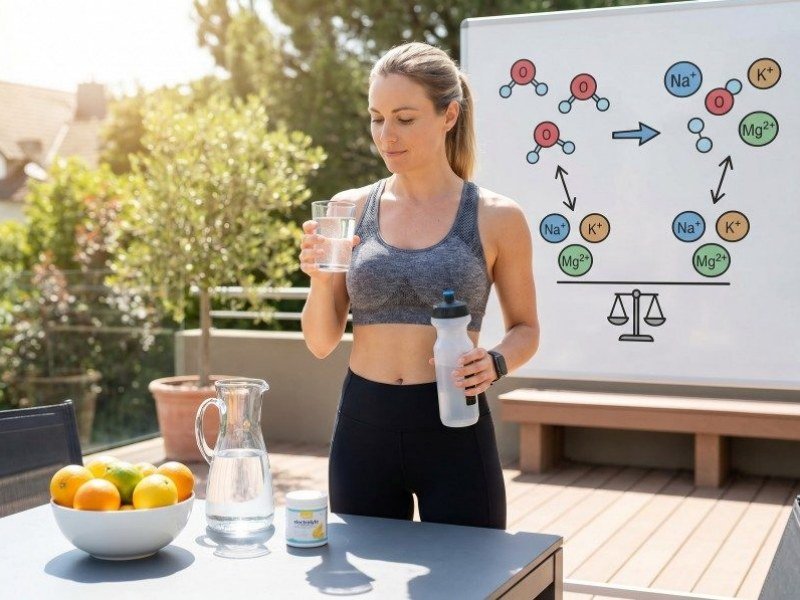
Electrolytes are not just “extra minerals in a drink.” As MedlinePlus explains, they are minerals in blood and body fluids that carry an electric charge and help regulate water balance, acid-base balance, muscle function, nerve function, heart rhythm, and blood pressure. In plain English, that means hydration is not only about getting water into the body. It is also about how well the body uses that water once it is there.
That distinction matters because many customers assume hydration is simply a volume problem. Drink more water, feel better. Sometimes that works. Sometimes it does not. When the day includes high heat, more sweating, long hours on your feet, travel, or illness-related fluid loss, the body may be dealing with more than thirst alone. In those situations, electrolytes can make a difference because they support the system behind hydration, not just the liquid itself.
A helpful way to think about it is this:
- water gives the body fluid
- electrolytes help the body manage that fluid
- the harder the day is on your body, the more that difference may matter
This is one reason customers often describe good hydration support in practical terms instead of technical ones. They do not usually say, “My fluid-electrolyte balance improved.” They say things like:
- “I felt less dried out.”
- “I recovered better in the heat.”
- “Water helped, but this felt more complete.”
- “I didn’t feel as drained by the end of the day.”
Those reactions make sense because daily hydration is not always a neutral, low-stress process. Some days ask more from the body than others. A well-designed daily hydration product works best when it recognizes that difference instead of pretending every day is the same.
How do electrolytes help daily hydration?
Electrolytes help daily hydration by making the water you drink more functional when the body is under more strain than usual. MedlinePlus lists sodium, potassium, calcium, magnesium, and chloride among the key electrolytes that support body function and water balance. That is why electrolyte products can feel more useful than plain water in the right situations.
But the keyword here is right.
Electrolytes do not need to be part of every sip, every hour, or every routine. They are most useful when the day is more dehydrating than normal. That might include:
- hot weather
- long hours outdoors
- repeated sweating
- travel days
- poor sleep plus high caffeine intake
- illness with vomiting or diarrhea
- active schedules with inconsistent fluid intake
This is where daily hydration becomes less about “drink enough” and more about “match the day.” A cool, low-activity office day does not create the same need as a summer day full of commuting, movement, and heat. The product that feels useful in one setting may feel unnecessary in another.
This is also why daily hydration formulas need different logic from old-style sports drinks. A good daily-use product should not feel heavy, syrupy, or overly intense. It should feel:
- light enough to repeat
- balanced enough to feel useful
- clean enough to fit ordinary life
That is the real opportunity in this category. Customers want support, but they do not want to feel like they are drinking a race-day sports beverage every afternoon.
Why does daily hydration feel different with electrolytes?
For many people, the difference is not dramatic. It is steady, subtle, and situational.
That is actually one reason daily hydration products are so easy to misunderstand. If someone tries electrolytes during a calm indoor day, they may not feel much difference at all. If the same person uses electrolytes after repeated sweating, during a long travel day, or in extreme heat, the experience may feel much more noticeable. MD Anderson specifically points to illness, prolonged exercise, heavy sweating, and long exposure to extreme heat as situations where electrolyte beverages may help.
This explains why customer opinions on electrolytes can sound so inconsistent. One person says they are unnecessary. Another says they make a huge difference. Both may be telling the truth. The missing factor is context.
A simple way to think about it is:
| Situation | How water may feel | How electrolytes may feel |
|---|---|---|
| Mild indoor workday | Usually enough | Often optional |
| Light movement, low sweat | Usually enough | Sometimes helpful |
| Hot day with repeated sweating | Sometimes incomplete | Often more supportive |
| Long travel day | Sometimes incomplete | Often more supportive |
| After fluid loss from illness | Helpful, but limited | Often more useful |
This is why daily hydration content works best when it avoids extremes. Electrolytes are not a miracle drink, and they are not useless. They are simply more useful when the day creates a real reason for more than plain water alone.
Do You Need Electrolytes for Daily Hydration?
Most people do not need electrolytes for every day in the sense of replacing water as their default drink. Plain water is still enough for many normal routines. Electrolytes become more useful when heat, repeated sweating, travel, illness, or active schedules make hydration harder than usual.
Do you need electrolytes for daily hydration every day?
For most healthy adults, not necessarily.
That is one of the most important things to say clearly because hydration marketing often makes electrolyte products sound universal. In reality, both MD Anderson and the Cleveland Clinic make a more balanced point: plain water is still the best everyday drink for most people, while electrolyte products are more useful in certain conditions, such as heat, heavy sweating, longer activity, or fluid loss from illness.
This matters because the better question is not:
- “Should everyone take electrolytes every day?”
The better question is:
- “Does my routine create enough fluid and mineral loss to make electrolyte support useful?”
For some people, the answer may be yes several times a week. For others, it may be only on hot days, travel days, or after workouts. The point is that the need should come from the routine, not from the trend.
This kind of guidance actually helps customers trust the category more. It says:
- water still matters most
- electrolytes are situational support
- the best routine is flexible, not extreme
That is also why daily hydration products need to feel different from workout-only drinks. The goal is not to make people think every normal day is an endurance event. The goal is to offer a cleaner, lighter option for the days that are more dehydrating than average.
When is water enough for daily hydration?
Water is enough for many everyday situations, especially when the routine is stable and the environment is not very demanding.
According to Mayo Clinic, fluid needs vary by body size, environment, activity level, and health status, but many healthy adults meet hydration needs through ordinary fluid intake from beverages and food. That means a lot of people do not need a special hydration product on a calm, low-sweat, low-heat day.
Water is often enough when:
- the weather is mild
- activity is low to moderate
- meals are regular
- sweat loss is small
- sleep and daily rhythm feel stable
- there is no illness-related fluid loss
This is where common sense still matters. Customers do not need a powder for every glass of water, and pretending otherwise usually makes the product less trustworthy, not more.
A simple comparison helps here:
| Daily situation | Is water often enough? |
|---|---|
| Indoor desk day | Usually yes |
| Light errands, mild weather | Usually yes |
| Short low-sweat activity | Often yes |
| Normal meals and regular drinking | Usually yes |
This is also why hydration advice can feel confusing online. Some content is written for average daily life. Some is written for heat, exercise, or illness. The problem is not that one side is wrong. The problem is that they are often talking about different situations. The better answer always depends on the day.
When are electrolytes better for daily hydration?
Electrolytes become more useful when the day is more draining than normal.
That usually means:
- hot weather
- long periods outdoors
- physically demanding work
- repeated sweating
- travel disruption
- poor food and fluid timing
- illness-related fluid loss
MD Anderson specifically lists heavy sweating, extreme heat, prolonged exercise, and vomiting or diarrhea as examples of when electrolyte beverages can help. MedlinePlus also notes that when electrolytes are lost, sports drinks may help, and oral rehydration solutions are sometimes used depending on the situation.
This is why so many people find electrolytes useful not during ordinary hydration, but during “harder-than-normal” days.
A customer might say:
- “I drank water, but I still felt off.”
- “I travel all day and dry out fast.”
- “On hot days, water alone feels too light.”
- “I don’t need electrolytes constantly, just when the day is more draining.”
That is actually a very healthy way to understand the category.
A good daily hydration formula should not try to replace water. It should fill the gap on the days when the body clearly needs more support than water alone can give.
A better way to think about daily hydration
Most customers make better choices when they stop asking, “Do I need electrolytes every day?” and start asking, “What kind of day am I having?”
That question is much more useful because it immediately puts hydration into a real-life context.
A practical framework looks like this:
Water is often enough when:
- the day is mild
- sweat loss is low
- the routine is normal
- thirst and energy feel stable
Electrolytes are often more useful when:
- the day is hot
- the body is sweating more than usual
- travel disrupts hydration habits
- physical activity stacks up
- recovery feels incomplete with water alone
This is the point where better formulas stand out. A strong daily hydration product is not the one that tries to be everything. It is the one that fits the exact moments where customers actually need support.

Which Routines Need Better Daily Hydration?
Daily hydration usually needs more support when the day includes more heat, more movement, longer hours, or more interruptions than normal. That often means travel days, hot-weather routines, physically active workdays, repeated short workouts, and mornings that begin with low fluid intake. Plain water still works well for many people, but these higher-friction routines are where electrolytes can start to feel more useful.
Which habits affect daily hydration the most?
A lot of people think hydration is only about drinking enough water. In reality, routine design affects hydration just as much as total volume.
Some of the most common daily habits that make hydration harder include:
- going long stretches without drinking
- relying heavily on coffee or caffeinated drinks
- skipping meals or eating very lightly
- working long hours without regular breaks
- spending much of the day in warm environments
- doing short but repeated activities that add up to more sweat than expected
These habits matter because they slowly push the body away from a steady hydration rhythm. The problem is not always dramatic dehydration. More often, it is inconsistency.
That inconsistency is exactly why some customers say things like:
- “I drink water, but I still feel dry.”
- “I always feel flat by the afternoon.”
- “I don’t feel obviously dehydrated, but I never feel fully hydrated either.”
This is one reason a smarter daily routine often works better than simply “trying to drink more.” A more structured approach usually means:
- starting earlier in the day
- drinking more consistently instead of catching up late
- using electrolytes only when the day is clearly more draining than usual
That kind of routine feels more manageable because it matches real life instead of asking for perfect habits.
How do heat and travel affect daily hydration?
Heat affects hydration in a very direct way: it increases sweating, even when the activity itself is not intense.
According to OSHA, workers who sweat for several hours in hot environments may benefit from electrolyte-containing beverages, while regular meals can also help restore electrolytes for many people. That is a useful reminder that heat alone can make daily hydration more difficult, even outside of formal exercise.
This matters because customers often underestimate how much a hot day changes the hydration picture. A routine that feels easy in mild weather can feel very different when the day includes:
- outdoor commuting
- walking in summer heat
- standing for long periods
- physically active work
- long hours without air conditioning
Travel creates a different kind of hydration problem. The issue is often not visible sweating, but disruption.
A travel day may include:
- low fluid intake during flights or driving
- dry cabin air
- more caffeine than usual
- missed meals
- long sitting periods
- irregular access to water
That is why customers often describe travel dehydration as feeling “off” rather than obviously thirsty. They may feel dry, puffy, tired, or slow, even when they have had some water. In those situations, electrolytes may help daily hydration feel more complete because the routine itself is working against consistency.
A useful comparison looks like this:
| Daily Situation | Main Hydration Problem | Why Electrolytes May Help |
|---|---|---|
| Hot workday | Repeated sweating and heat stress | Helps support water plus mineral balance |
| Travel day | Dry air, poor routine, inconsistent drinking | Helps make hydration feel more complete |
| Normal mild day | Ordinary thirst | Water is often enough |
| Long outdoor event | Heat + activity + delayed drinking | Electrolytes may feel more supportive |
This is one reason daily-use electrolyte products are growing beyond the sports category. They fit the middle ground between ordinary water needs and extreme dehydration situations.
Is morning daily hydration more important?
Morning hydration is often more useful than people realize, not because morning has some magic property, but because it is the easiest place to build consistency.
After a full night without fluids, many people wake up already needing water. Recent dietitian guidance from EatingWell also points out that drinking earlier in the day can make it easier to stay ahead on hydration instead of trying to catch up later. For a lot of customers, that is the real value of a morning routine.
Morning hydration becomes even more important when the day includes:
- early workouts
- hot weather
- long commutes
- physically demanding work
- poor breakfast habits
- very busy mornings with limited fluid intake
That does not mean everyone needs electrolyte powder first thing in the morning. For many people, plain water is still a very good first drink. But if mornings are consistently dehydrating or physically active, a light electrolyte formula may fit more naturally than waiting until the body already feels behind.
A simple morning structure might look like this:
- Water first on normal days
- Electrolytes first or second on hot, active, travel, or workout mornings
- More fluid consistency before noon instead of trying to catch up late in the day
This is one of the easiest ways to improve daily hydration without making the routine complicated.
| Morning Routine Type | What Often Works Best |
|---|---|
| Calm indoor morning | Water first |
| Workout morning | Water or electrolytes depending on sweat expectations |
| Hot commute morning | Water plus electrolyte support if needed |
| Travel morning | Water first, electrolytes if routine disruption is likely |
This kind of structure helps because most customers do not need a perfect hydration system. They need a repeatable one.
Who Benefits Most From Daily Hydration?
People who benefit most from a stronger daily hydration routine are usually the ones whose days are longer, hotter, more active, or less predictable than average. That includes outdoor workers, heavy sweaters, frequent travelers, active adults, and non-athletes whose daily life still creates enough fluid loss that water alone may feel incomplete.
Who may benefit most from daily electrolytes?
The people most likely to benefit are not always the most athletic. They are often the people whose routine creates more friction around hydration.
That includes:
- people living in hot climates
- people working outdoors or on their feet
- people who sweat often, even without structured workouts
- people doing repeated short workouts across the week
- frequent travelers
- adults with irregular schedules and inconsistent meals
- people recovering after illness-related fluid loss
This matters because the “daily hydration customer” is much wider than many brands assume.
It is not only:
- runners
- gym users
- endurance athletes
It is also:
- teachers walking all day
- warehouse staff
- parents constantly moving
- event workers
- travelers
- people who dry out easily in the heat
According to MD Anderson, electrolyte beverages can be useful in situations involving heavy sweating, prolonged activity, extreme heat, or illness-related fluid loss. That matches daily life for many more people than just the sports market.
This is one reason the category has grown so quickly. It solves a broader real-life problem: some days simply take more out of the body than others.
Are electrolytes useful for non-athletes too?
Yes, very often.
This is one of the biggest shifts in how the category is understood now. Electrolyte products are still strongly associated with sports, but the real need is wider.
Electrolytes may also be useful for non-athletes in situations such as:
- hot workdays
- long travel days
- outdoor events
- repeated walking in the heat
- physically demanding home or job routines
- recovery after vomiting or diarrhea
Cleveland Clinic makes a useful point here: sports drinks and similar products can help rehydrate after tough workouts or illness, but they are not meant to replace water all day. That balance is important because it keeps the message realistic.
A stronger and more useful explanation is not:
- “Electrolytes are for athletes.”
It is:
- “Electrolytes are for situations where fluid and mineral loss matter.”
That framing is easier to trust because it matches what non-athletes actually experience.
A non-athlete may still say:
- “I feel drained in the heat.”
- “Travel dries me out badly.”
- “Water helps, but some days I still feel off.”
- “I don’t work out that hard, but I sweat a lot.”
Those are all very valid daily hydration situations, and they help explain why lighter, cleaner electrolyte products are now more relevant than ever.
Which signs show poor daily hydration?
Most customers do not measure hydration with numbers. They notice it through how they feel.
According to MedlinePlus, common dehydration symptoms include thirst, dark-colored urine, tiredness, dizziness, dry mouth, and urinating less than usual. In real daily life, many people notice the earlier, more subtle signs first.
Those often include:
- feeling flat by the afternoon
- stronger fatigue on hot days
- headaches that show up when drinking have been inconsistent
- feeling unusually dry after travel
- slower recovery after light sweating
- needing caffeine to push through low-energy periods
- water helping, but not fully fixing the feeling
These are the kinds of signs that make customers start looking for a better routine instead of just “more water when I remember.”
A useful way to think about signs is to separate them into two levels:
| Sign Type | What It May Suggest |
|---|---|
| Mild signs | Daily hydration may be inconsistent |
| More noticeable signs | The day may have been more draining than water alone covered |
Here are some examples:
Mild routine signs
- dry mouth
- afternoon thirst
- low energy
- darker urine than usual
More draining-day signs
- stronger fatigue after heat
- feeling depleted after sweating
- dizziness or headaches when fluids were low
- travel-related dryness or sluggishness
This does not mean every one of these signs automatically calls for electrolyte powder. It means customers should pay attention to the pattern.
The better question is:
- Is this an occasional issue?
- Or does my routine regularly leave me under-supported?
That is how better hydration habits start. Not from panic, but from pattern recognition.
Which people usually need a stronger daily hydration routine?
A simple comparison helps make this easier:
| User Type | Why Daily Hydration May Need More Support | What Often Helps Most |
|---|---|---|
| Indoor desk worker | Long gaps without drinking | Better timing with plain water |
| Outdoor worker | Heat and repeated sweating | Water plus electrolytes when needed |
| Traveler | Dry air and irregular routine | Portable, lighter electrolyte support |
| Active adult | Repeated sweating across the week | Water plus situational electrolyte use |
| Non-athlete in hot climate | Daily heat stress | Cleaner repeat-use formula |
| Illness recovery user | Fluid and mineral loss | More targeted hydration support |
This table is useful because it shows there is no single “electrolyte person.” The better way to think about it is that many different kinds of people can benefit when their day creates enough heat, loss, or disruption to make hydration harder than usual.
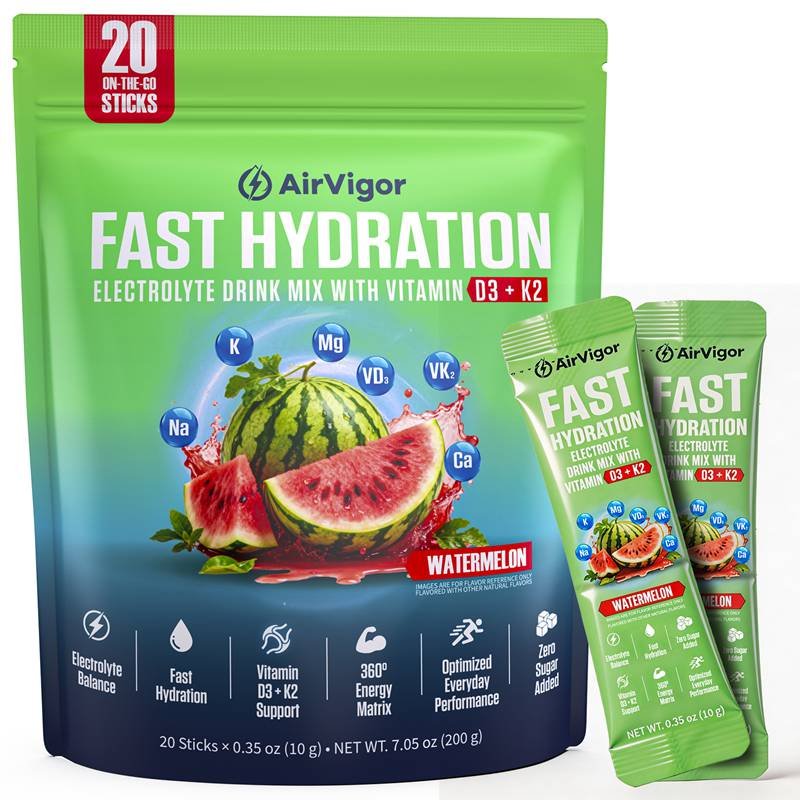
That is also why broader, daily-use formulas can stand out more naturally. A product like AirVigor’s can fit this space well because a wider mineral profile can support not just activity hydration, but also a more complete daily-use story for heat, travel, and everyday fatigue support.
What Should You Look For in Electrolytes for Daily Hydration?
A better daily hydration formula should feel useful enough to matter, but light enough to keep using. For most daily-use customers, the best product is not the strongest one on the shelf. It is the one that matches real routines: hot days, long work hours, travel, mild daily recovery, and repeat use without feeling too sweet or too heavy.
Which minerals matter most for daily hydration?
For daily hydration, the most practical minerals to focus on are sodium, potassium, magnesium, calcium, and chloride. As MedlinePlus explains, these electrolytes help regulate water balance and support muscle and nerve function.
The reason this matters is simple: many customers assume all electrolyte products are basically the same. They are not.
A very narrow formula may support hydration in a basic way, but a broader formula often feels more complete because it better reflects what customers actually want from a daily product:
- support during heat
- better hydration after light sweating
- steadier daily balance
- a cleaner alternative to sugary sports drinks
- something usable across work, travel, and active routines
A simple label-reading framework helps here:
| Mineral | Why It Matters for Daily Hydration | What Customers Often Care About |
|---|---|---|
| Sodium | Supports fluid balance and sweat replacement | “Will this feel effective?” |
| Potassium | Supports broader electrolyte balance | “Will this feel more balanced than plain water?” |
| Magnesium | Supports muscle and nerve function | “Will this help on active or tiring days?” |
| Calcium | Adds broader mineral support | “Does this formula feel more complete?” |
| Chloride | Works with sodium in hydration balance | “Does the formula have stronger hydration logic?” |
Most customers do not want a deep technical explanation. They want to know whether the formula is basic, balanced, or more complete. A broader mineral profile often creates a stronger premium impression because it tells a fuller story. It suggests the product is designed for more than just “flavored hydration.”
That is one reason broader daily-use products stand out better in a crowded market. A formula with a more complete mineral structure is easier to position for daily hydration, light recovery, travel support, and active use without sounding too narrow.
Is sugar-free better for daily hydration?
For many daily-use situations, yes.
A sugar-free or lower-sugar formula usually fits better when the goal is repeatable daily hydration, not endurance fueling. Cleveland Clinic makes the broader point that sports drinks can be useful after tough workouts or illness, but they are specialty drinks, not something most people need as an all-day replacement for water.
That is exactly why sugar level matters so much.
A daily hydration product often works better when it feels:
- lighter
- cleaner
- less syrupy
- easier to drink repeatedly
- less like a sports drink
This does not mean sugar is always wrong. It means sugar changes the product’s role.
A sweeter formula may make more sense for:
- long workouts
- harder sweating
- sports-style use
- more performance-driven situations
A sugar-free or lower-sugar formula often makes more sense for:
- workdays
- travel
- hot weather
- casual active routines
- people who want hydration support without extra calories
A practical comparison makes this easier:
| Formula Style | How It Usually Feels | Better Fit |
|---|---|---|
| Higher-sugar sports style | Heavier and more workout-focused | Hard exertion or longer sessions |
| Moderate-sugar formula | More flexible, but still sweet | Mixed-use customers |
| Sugar-free or low-sugar formula | Lighter and cleaner | Daily hydration and repeat use |
This is also where repeat purchase is decided. A formula may look impressive on paper, but if it tastes too sweet for normal life, customers often stop using it. Daily hydration products need to feel sustainable, not just functional.
What makes daily hydration feel more complete?
Daily hydration feels more complete when the formula solves more than one real-life problem at once.
Most customers are not looking for a product that simply tastes like water with flavor. They want something that feels like a meaningful step up from plain water when the day is more draining than usual, but still easy enough to use often.
A more complete daily hydration formula usually has:
- a practical sodium level
- broader support from potassium and magnesium
- sometimes calcium and chloride for added depth
- a lighter taste profile that still feels refreshing
- a sugar level that matches repeat use
- a clear purpose in daily life, not just sports
This is where a lot of formulas separate themselves.
A product may say “hydration” on the front, but if it is:
- too narrow
- too sweet
- too heavy
- too workout-specific
- too unpleasant to keep drinking
Then customers quickly lose interest.
By contrast, a stronger daily-use formula usually feels:
- easy to understand
- easy to carry
- easy to drink again
- useful in more than one real-world scenario
That is one reason daily hydration products are becoming more lifestyle-oriented than sports-oriented. Customers want support for ordinary but draining situations: hot days, travel fatigue, long work hours, light sweating, and active routines that do not always look like formal exercise.
A product that can fit those moments naturally is much easier to trust and much easier to keep using.
How Can Electrolytes Improve Daily Hydration?
Electrolytes improve daily hydration when they are used as a support tool for the parts of the day that create more strain than usual. The most helpful approach is not “replace water with electrolytes.” It is “use electrolytes when the day makes hydration harder to maintain.”
How can electrolytes fit into a daily hydration routine?
The easiest way is to let water remain the base and use electrolytes more strategically.
That approach fits well with guidance from MD Anderson, which makes it clear that most people can get enough electrolytes from normal food and water in many everyday situations, while electrolyte beverages make more sense when the body is under more stress than usual.
This is why the best daily hydration routine usually does not look extreme. It often looks like this:
- water first on ordinary days
- more consistent intake earlier in the day
- electrolytes used on hotter, more active, more draining days
- lighter formulas used for travel, heat, work, or repeated sweating
- no attempt to replace every glass of water with a flavored product
That kind of structure works well because it is flexible.
A practical routine often succeeds when it answers these questions:
- Is today hotter than normal?
- Am I going to sweat more than usual?
- Is my schedule disrupting regular drinking?
- Do I often feel drained even when I have had some water?
- Does this day feel more demanding than a plain-water day?
If the answer is yes, electrolytes often make more sense.
This is also where daily-use formulas win over old sports-drink logic. A daily support product should fit the customer’s routine naturally. It should not feel like a special event every time it is used.
What does a simple daily hydration routine look like?
A simple routine works better than a perfect one that nobody can maintain.
That is one of the biggest reasons hydration habits fail. Customers do not usually need a more advanced plan. They need one that is easier to repeat.
A practical daily hydration structure may look like this:
| Time or Situation | What Often Works Best |
|---|---|
| Morning | Water first, electrolytes if the day is hot, active, or dehydrating |
| Standard work block | Mostly water |
| Hot afternoon or active work period | Water plus electrolytes if sweating or fatigue rises |
| Travel day | Water regularly, electrolytes when routine disruption is high |
| After light sweating or mild exercise | Water first, electrolytes if recovery feels incomplete |
This is useful because it breaks hydration into familiar situations instead of treating it like one big target number.
A good daily hydration routine usually has these qualities:
- simple enough to remember
- flexible enough to match different days
- light enough to repeat
- supportive without becoming excessive
That is also why customers often prefer powders or sticks over ready-to-drink sports beverages in daily life. Powders tend to feel:
- easier to carry
- easier to store
- easier to use only when needed
- more adaptable to different routines
The strongest daily hydration products usually work because they fit real life, not because they sound extreme.

How can AirVigor support daily hydration?
This is where product design matters.
A daily hydration product has to solve a difficult balance: it must feel useful enough to matter, but light enough to keep using. That is exactly why broader, cleaner formulas are becoming more appealing than older sports-drink styles.
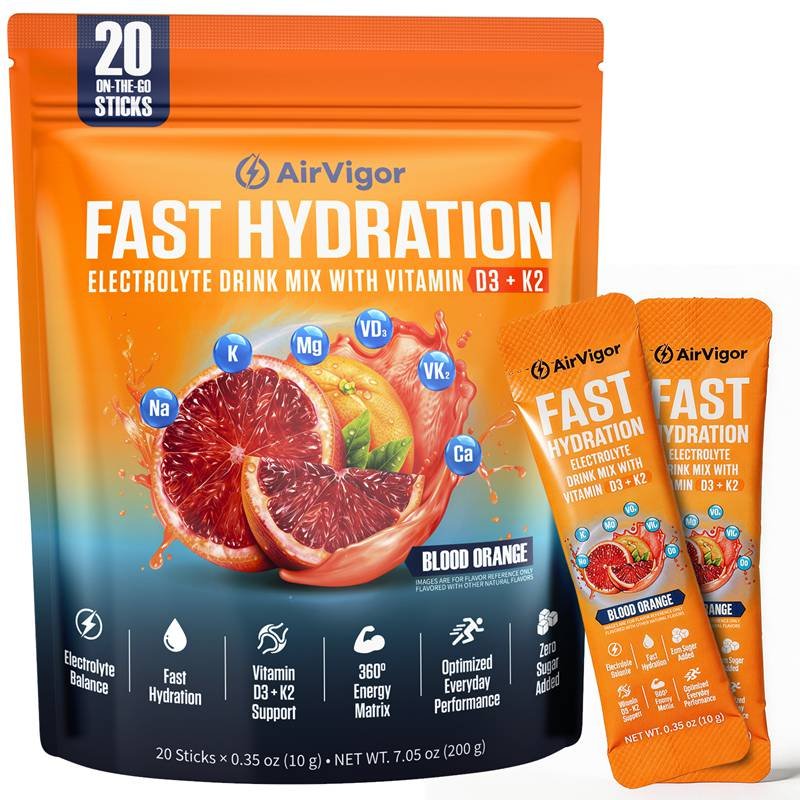
AirVigor can fit daily hydration naturally because the formula direction you shared is broader than a very basic hydration mix. Instead of relying only on one or two electrolytes, it includes a wider mineral structure with:
- sodium
- potassium
- chloride
- magnesium
- calcium
And in your concept, it also carries a stronger recovery-oriented angle through D3 and K2.
That gives the formula a more flexible role in everyday life.
It can be positioned for:
- hot days
- workday fatigue
- travel support
- light daily recovery
- hydration after mild sweating
- active routines that need more than plain water but less than a sugary sports drink
This matters for both customer experience and product positioning.
For direct customers, AirVigor can feel like a more complete-use product. It is easier to explain and easier to justify because it does more than imitate a classic sports beverage.
For business clients, this creates a stronger OEM / ODM story as well. Instead of developing just another hydration drink, the formula can be positioned as a broader daily hydration and recovery support product with a cleaner, more modern use case.
That kind of formula is easier to stand out with in a crowded category.
A simple checklist for choosing daily hydration electrolytes
Most customers do not need a technical checklist. They need a useful one.
Here is a simple version:
| What to Check | Why It Matters |
|---|---|
| Sodium level | Shows whether the formula has real hydration value |
| Potassium and magnesium | Makes the product feel more balanced |
| Calcium and chloride | Adds broader formula depth |
| Sugar level | Helps match the product to daily use vs sports use |
| Flavor profile | Strongly affects repeat use |
| Overall purpose | Helps avoid buying something too narrow or too intense |
That last point is especially important.
A better daily hydration product is not the one with the loudest front label.
It is the one that makes sense in the situations where the customer actually wants support.
Final Thoughts
A daily hydration routine does not need to be complicated, but it does need to match real life.
For many people, water is still the main answer. But on hotter days, more active days, travel days, or routines that create repeated fluid loss, electrolytes can make hydration feel more complete and more supportive.
That is why the most useful way to think about daily hydration is not:
- “Should I drink electrolytes every day?”
It is:
- “When does my day create a reason for more than plain water?”
That question leads to better decisions.
It helps customers build routines that are:
- lighter
- smarter
- more flexible
- easier to repeat
- better matched to actual need
This is also where products like AirVigor’s electrolyte powder fit naturally. A broader mineral profile and a more recovery-oriented structure make the formula easier to position for heat, daily activity, travel, and real-life hydration support — not just for intense workouts.
Looking to Source a Better Daily Hydration Formula or Build Your Own?
If you are looking for:
- a more complete daily hydration electrolyte powder
- a lighter sugar-free or lower-sugar formula
- a broader mineral profile for repeat use
- a hydration product designed for heat, travel, work, or active routines
- an OEM / ODM partner for custom daily hydration development
AirVigor can support both:
- finished branded products
- private label and custom formulation projects
Whether your goal is a market-ready product or a more distinctive daily hydration concept for your own brand, the focus is the same: create something that fits real routines, real customers, and real repeat use.