Skip to content
What Is Inside Electrolyte Powder: An Ingredient Guide
# Your Trusted Dietary Supplement Brand In US
- Emily

Table of Contents
Most people buy electrolyte powder for a simple reason: they want to feel better hydrated. But once they start comparing labels, the category gets confusing very quickly. One product contains only sodium and potassium. Another adds magnesium and calcium. Another includes sugar, fruit powder, vitamins, and sweeteners. Some formulas feel like sports drinks in powder form, while others are marketed as light daily hydration. That is exactly why more people are now asking a better question: what is actually inside electrolyte powder, and why does it matter?
Electrolyte powder usually contains key minerals such as sodium, potassium, magnesium, calcium, and chloride. Many formulas also include acids, flavors, sweeteners, fruit powders, or added nutrients to improve taste, support daily use, or shape the product for workouts, heat, travel, or recovery.
That distinction matters because customers are no longer looking for a vague hydration promise. They want to know whether a formula is built for heavy sweat, light daily support, muscle comfort, or post-workout recovery. In other words, the ingredient list is not just a technical panel. It tells you what kind of product you are really buying. And once you start reading electrolyte powder that way, the category becomes much easier to understand — and much easier to choose from.
What Is in Electrolyte Powder?
Electrolyte powder is usually made of charged minerals that help support fluid balance, muscle function, and nerve signaling. Most formulas also include flavoring ingredients, acids, and a sweetening system, so the product is easier to drink consistently. The exact ingredient mix depends on whether the formula is designed for heavy sweating, everyday hydration, or recovery support.
What ingredients are in electrolyte powder?
At its core, electrolyte powder is built around a mineral system. The main purpose is to replace or support electrolytes that may be lost through sweat, heat exposure, or extended activity. In most formulas, the ingredient list starts with a combination of minerals, then adds ingredients that improve taste, mixability, and daily usability.
The most common ingredient groups include:
- Core electrolytes such as sodium, potassium, magnesium, calcium, and chloride
- Acids such as citric acid to create brightness and improve taste
- Flavors such as blood orange, watermelon, lemon, berry, or tropical fruit
- Sweeteners such as sugar, glucose, stevia, or other low-calorie options
- Optional support ingredients such as vitamins, trace minerals, or fruit powders
This matters because electrolyte powder is not one fixed product category. One formula may be built for intense sweat replacement during long workouts. Another may be designed for lighter, cleaner daily hydration. Another may lean into recovery support by adding a broader mineral profile.
For customers, the practical lesson is simple: the ingredient list tells you the product’s real purpose. A short ingredient list may suggest a more minimal formula. A broader ingredient list may suggest a product trying to support more than hydration alone.
Here is a simple way to read the label:
| Ingredient Group | What It Usually Does | Why It Matters to the Customer |
|---|---|---|
| Sodium / Potassium / Magnesium | Supports hydration and electrolyte balance | Helps explain the formula’s functional value |
| Citric acid / natural flavors | Improves taste and drinkability | Affects whether users will want to drink it often |
| Sugar / stevia / glucose | Shapes sweetness and use case | Helps show whether the formula is workout-focused or daily-use friendly |
| Vitamins / fruit powders / extras | Adds wider wellness or recovery positioning | Makes the product feel more complete or more premium |
A formula that looks good on paper but tastes too salty, too sweet, or too artificial usually struggles with repeat purchase. This is why ingredient logic and user experience matter equally.
Which minerals are in electrolyte powder?
Most customers expect electrolyte powder to contain sodium and potassium, and that is a good starting point. But many better formulas go further by also adding magnesium, calcium, and chloride. Each mineral helps shape the identity of the product.
The five minerals people most often see are:
- Sodium
- Potassium
- Magnesium
- Calcium
- Chloride
These are not included in the same amounts in every formula. That difference is important.
A very simple electrolyte formula may focus mainly on sodium and potassium. This often works for straightforward sweat replacement. But a broader mineral system usually feels more complete because it connects hydration to muscle comfort, daily balance, and recovery support.
Customers often compare products this way, even if they do not say it directly:
| Mineral Profile | What the Formula Feels Like |
|---|---|
| Sodium only or sodium-heavy | Strong hydration or sweat-replacement product |
| Sodium + potassium | Basic electrolyte support |
| Sodium + potassium + magnesium | More balanced hydration and muscle support |
| Five-electrolyte system | More complete daily or recovery-focused formula |
This is one reason a broader mineral profile often creates stronger value perception. It tells the customer that the product is not just trying to replace salt. It is trying to support a fuller hydration experience.
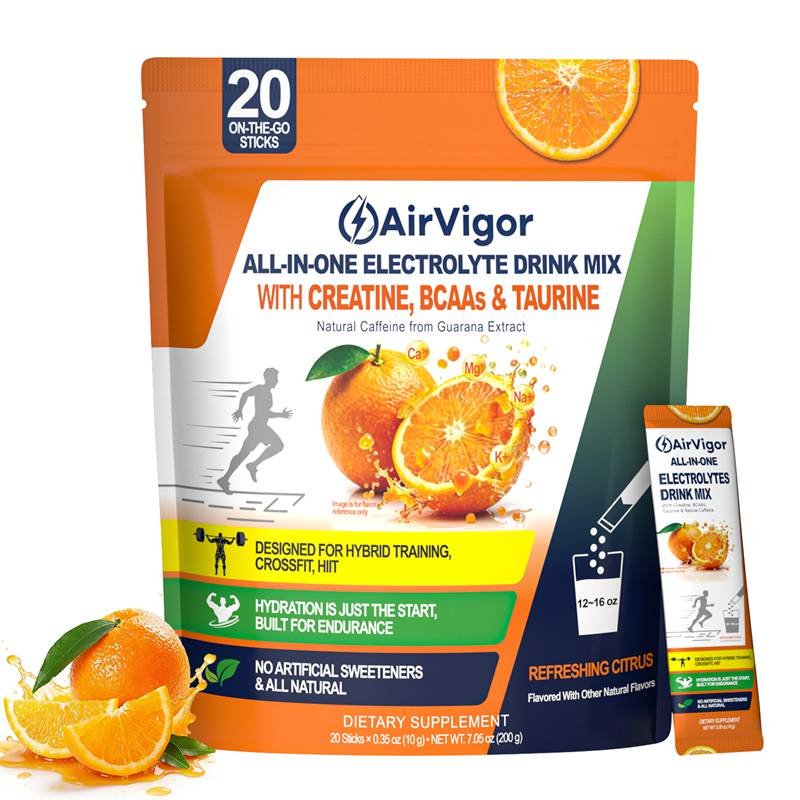
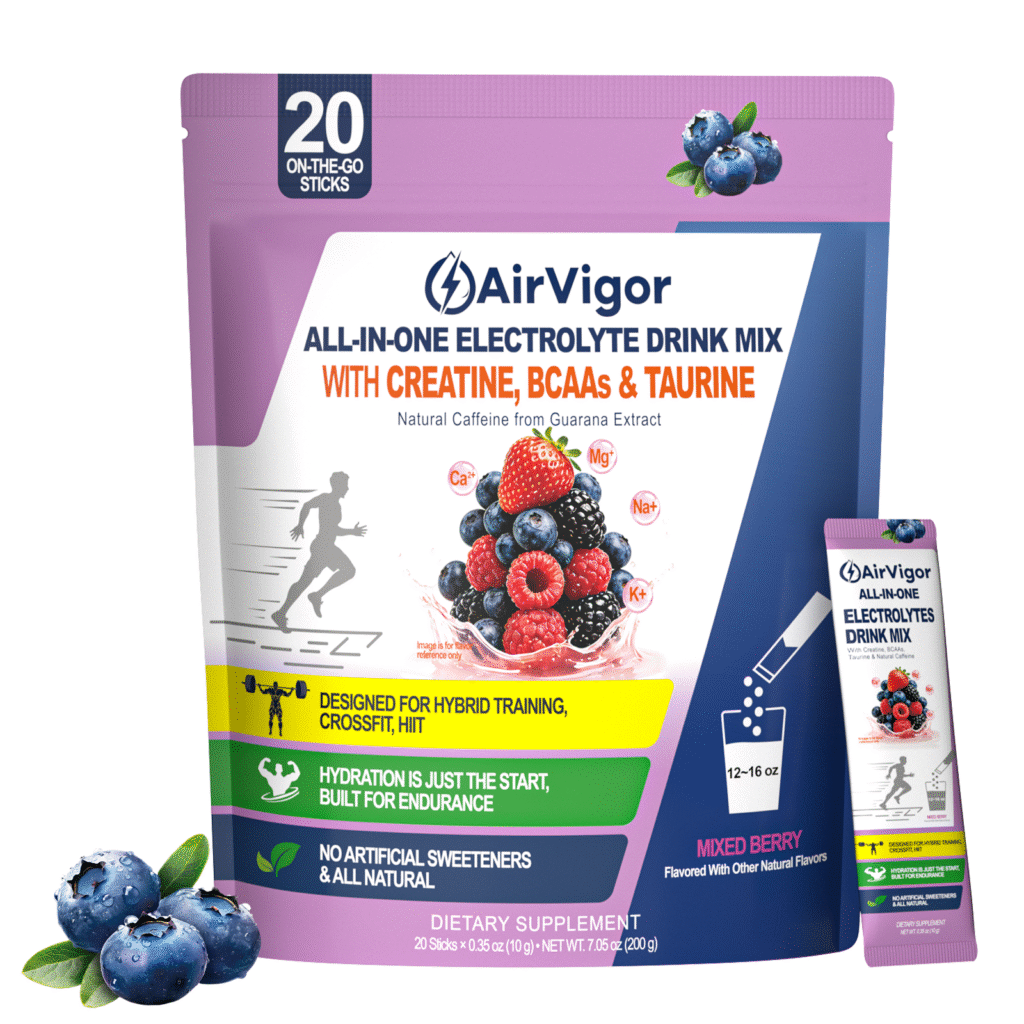
For brands like AirVigor, this matters because a wider mineral structure naturally supports a stronger story. A formula with sodium, potassium, magnesium, calcium, and chloride feels more intentional than a product that only covers the basics.
Are flavors added to electrolyte powder?
Yes, almost always — and that is not a small detail.
Taste is one of the biggest hidden reasons people stop using hydration products. A formula may contain strong ingredients, but if it tastes too salty, too flat, too sweet, or too artificial, customers often do not reorder it.
That is why flavor systems matter so much in electrolyte powder. Common flavor-related ingredients include:
- citric acid
- natural flavors
- fruit powders
- sweeteners such as stevia or glucose
- acidity regulators that improve taste balance
The goal is not only to make the drink pleasant. It is to make the product easy to use repeatedly.
This becomes even more important for daily-use products. A formula designed for everyday hydration has to feel lighter and easier to drink than a product designed for extreme endurance. That is why the category has moved toward:
- more fruit-forward flavors
- less syrupy sweetness
- cleaner aftertaste
- lower-sugar or sugar-free profiles
Customers may say they care most about minerals, but in real buying behavior, flavor plays a huge role in repeat purchase.
A useful way to think about it is this:
- Strong function gets the first purchase
- Good taste gets the second purchase
That is exactly why flavor is not just a cosmetic part of electrolyte powder. It is part of the formula’s long-term success.
Which Electrolytes Are in Electrolyte Powder?
The main electrolytes in electrolyte powder are usually sodium, potassium, magnesium, calcium, and chloride. Sodium is often the lead mineral because it is closely tied to fluid balance and sweat replacement. Potassium and magnesium help make the formula feel more balanced, while calcium and chloride can make the product feel more complete and more recovery-focused.
Why is sodium in electrolyte powder?
Sodium is usually the most important electrolyte in the formula because it plays a central role in fluid balance. When people sweat, sodium is one of the main minerals they lose, which is why sodium often leads the label.
From a customer’s point of view, sodium often determines what kind of hydration product they are really buying.
A formula with very low sodium may feel light and pleasant, but it may not do enough after heavy sweating. A formula with higher sodium may be more effective for intense heat or longer training, but it may feel too salty for casual daily use.
That is why sodium level is one of the clearest clues about product positioning:
| Sodium Strategy | What It Often Means |
|---|---|
| Low to moderate sodium | Daily hydration or lighter use |
| Moderate sodium | General workout and active lifestyle support |
| Higher sodium | Heavy sweating, heat exposure, or stronger rehydration focus |
This is also where customer frustration often begins. Many people buy electrolyte powder expecting it to “work better than water,” but they never check the sodium level. If the sodium is too low for their actual sweat loss, the formula may feel underpowered.
Sodium matters because it is often the mineral that gives the powder its real hydration backbone.
Why are potassium and magnesium in electrolyte powder?
Potassium and magnesium are what often make an electrolyte powder feel more balanced instead of one-dimensional.
Potassium is commonly associated with fluid balance and muscle function.
Magnesium is commonly associated with muscle comfort, nerve function, and broader mineral support.
When these minerals are added alongside sodium, the formula starts to feel less like a simple salt drink and more like a complete hydration system.
This is especially important for customers using electrolyte powder in real-life situations, such as:
- workouts
- hiking
- summer heat
- travel fatigue
- long workdays
- daily recovery after sweating
A sodium-only formula may still help in a narrow hydration context. But once potassium and magnesium are included, the product often becomes more relevant to how people actually feel after sweat loss:
- tired
- tight
- drained
- less recovered than expected
That is why formulas with potassium and magnesium often feel more appealing to customers who are not just thinking about hydration, but also about what comes after hydration.
Are calcium and chloride in electrolyte powder?
Yes, and when they are included, they often signal a more complete product design.
Chloride usually works closely with sodium and plays an important role in the wider hydration picture.
Calcium is more interesting because many customers do not expect to see it in electrolyte powder at all.
When calcium is added, the formula often shifts from “basic hydration” toward “hydration plus broader mineral support.” That can be especially useful in products positioned for:
- recovery
- active daily use
- muscle support
- long-term mineral balance
This does not mean every formula needs calcium and chloride. But when they are present in the right context, they can make the product feel more advanced and more premium.
Here is how the five main electrolytes usually compare:
| Electrolyte | Main Customer Perception | Formula Impact |
|---|---|---|
| Sodium | Core hydration mineral | Gives the formula rehydration strength |
| Potassium | Supports balance | Makes the formula feel more complete |
| Magnesium | Supports muscle comfort | Adds recovery relevance |
| Calcium | Adds broader mineral value | Makes the formula feel more premium |
| Chloride | Supports hydration structure | Helps strengthen the full electrolyte system |
This is why a five-electrolyte formula often feels more convincing on the shelf. It gives the customer a clearer reason to believe the product is built for more than one simple function.
That is also where products like AirVigor’s electrolyte powder can stand out more naturally. A broader electrolyte structure supports a stronger customer story: not just hydration, but hydration with better mineral logic and a more recovery-oriented feel.
How customers usually judge the mineral profile
Most customers are not memorizing mineral science. They are making quick decisions based on whether the label feels:
- basic
- complete
- modern
- premium
- suitable for daily use
This is why mineral design matters so much.
A formula with only one or two electrolytes may look too simple.
A formula with five electrolytes often feels more complete.
A formula with five electrolytes plus a clean flavor system often feels easier to trust.
That combination — function, completeness, and usability — is what makes a good electrolyte powder stand out in a crowded category.
Is Sugar in Electrolyte Powder?
Some electrolyte powders contain sugar, glucose, or carbohydrates, while others are completely sugar-free. The difference usually comes down to what the formula is trying to do. Some products are built for longer exercise sessions or stronger rehydration support. Others are designed for lighter daily hydration, lower calories, and cleaner everyday use. That means sugar is not always “good” or “bad.” It depends on the situation.
Why is sugar in some electrolyte powder?
Sugar is included in some electrolyte powders for two main reasons:
- to improve taste
- to support certain types of hydration or endurance use
This is one of the most misunderstood parts of the category.
Many customers assume sugar is added only because brands want the drink to taste better. Taste is definitely part of the reason, but not always the whole reason. In some formulas, glucose or carbohydrates help support a more “performance” or “rehydration” style product. In those cases, the formula may be trying to do more than lightly replace minerals. It may also be designed for:
- extended exercise
- heavier sweating
- faster post-exercise replenishment
- a more sports-drink-like experience
That does not mean every user needs sugar in electrolyte powder. It simply means that sugar can make sense in some formulas.
The key point for customers is this:
Sugar changes the type of product you are buying.
A powder with sugar often feels more like:
- a sports support formula
- an endurance-friendly drink
- a stronger “during or after training” product
A powder without sugar often feels more like:
- a daily hydration product
- a lighter electrolyte support option
- a cleaner, everyday-use formula
That is why the ingredient list matters so much. Two products may both be called electrolyte powder, but one may be built for harder workouts while the other is meant for daily hydration without extra calories.
Here is a practical way to look at it:
| Sugar Style | What It Usually Signals | Best Fit |
|---|---|---|
| Glucose or carbohydrate added | Stronger workout or rehydration positioning | Longer activity, higher sweat loss |
| Moderate sugar | More sports-drink-like profile | Exercise or high-output use |
| Sugar-free | Cleaner daily hydration positioning | Daily use, lighter activity, lower-calorie needs |
This is also why some customers feel disappointed after buying the wrong product. They may choose a sugary formula for casual daily use and find it too heavy. Or they may choose a very light sugar-free formula for a long, intense activity and feel it is not enough. The better choice is usually not the “best product overall.” It is the product that matches the real use case.
Is sugar-free electrolyte powder still useful?
Yes, very often.
In fact, for many customers, sugar-free electrolyte powder is the more practical option.
A sugar-free formula can still provide:
- sodium
- potassium
- magnesium
- calcium
- chloride
- hydration support
- muscle-related mineral support
That means the core electrolyte function is still there. The product is still doing its main job.
This is especially relevant for people using electrolyte powder in situations like:
- hot weather
- commuting
- office fatigue
- daily workouts
- travel
- light sweating
- lower-carb lifestyles
- weight-conscious routines
In these cases, many customers do not want their hydration product to feel like a sugary beverage. They want something that feels:
- lighter
- cleaner
- easier to drink often
- easier to fit into a daily routine
That is exactly where sugar-free formulas are strong.
There is also an important repeat-purchase factor here. A product may taste exciting once, but if it feels too sweet, too heavy, or too much like a dessert drink, customers often stop using it. A sugar-free or lower-sugar formula often performs better in everyday life because it creates less taste fatigue.
A useful way to think about it is this:
- Sugary formulas may work better for some high-demand situations
- Sugar-free formulas usually work better for frequent, flexible use
That is why sugar-free electrolyte powder has become much more popular. It feels more compatible with modern customer preferences:
- fewer unnecessary calories
- lower sugar intake
- cleaner label perception
- easier long-term use
This is also where a recovery-focused product can become more appealing. If an electrolyte powder supports hydration and mineral balance without making the drink feel heavy, it becomes much easier for customers to use it consistently.
Which electrolyte powder is better for daily use?
For daily use, the better electrolyte powder is usually the one that feels easy to repeat.
That sounds simple, but it matters a lot.
Most customers are not training for a marathon every day. They are dealing with more common situations such as:
- sweating during workouts
- being outdoors in the heat
- long hours at work
- travel fatigue
- mild dehydration
- wanting something better than plain water sometimes
For these situations, a daily-use electrolyte powder often works best when it has:
- moderate mineral support
- a clean taste
- lower or no sugar
- easy mixability
- a flavor profile people do not get tired of quickly
This is why many modern products are moving away from very sweet “sports drink” flavor profiles and toward lighter options that feel more drinkable in normal life.
Here is a simple comparison:
| Formula Type | Daily Use Experience | Customer Reaction |
|---|---|---|
| High-sugar formula | Feels heavier and more sports-focused | Good for some workouts, not ideal for frequent use |
| Moderate-sugar formula | More flexible, but still sweet | Works for mixed-use customers |
| Sugar-free formula | Feels lighter and cleaner | Often better for repeat daily use |
That is also why many customers now want hydration products that sit between two extremes:
- not just plain water
- not a full sports drink
A well-designed daily electrolyte powder fills that middle space very well.
This is where products like AirVigor’s recovery-focused electrolyte formulas can feel more relevant. A product that combines meaningful minerals with a cleaner daily-use profile naturally fits people who sweat, recover, and want support without turning hydration into something overly sweet or overly complicated.

How Does Electrolyte Powder Work?
Electrolyte powder works by giving the body both fluid support and mineral support at the same time. When mixed with water, it helps replace not only what is lost through sweat, but also some of the minerals that help the body manage fluid balance, muscle activity, and nerve signaling. That is why it often feels more supportive than plain water in the right situations.
How does electrolyte powder support hydration?
This is the core reason the category exists.
Water is essential, but when people sweat heavily, they lose more than just fluid. They also lose minerals. That matters because hydration is not only about drinking volume. It is also about how the body handles and distributes that fluid.
Electrolyte powder helps support hydration by adding minerals that are closely tied to fluid balance, especially:
- sodium
- chloride
- potassium
These minerals help give the drink more functional value than plain flavored water.
For the customer, the important idea is this:
Electrolyte powder does not replace the need for water. It makes water more useful in the right situations.
Those situations often include:
- prolonged sweating
- summer heat
- exercise
- outdoor work
- long travel days
- post-activity fatigue
This is one reason people often describe a good electrolyte powder as making them feel “more restored” or “less drained” than plain water alone. It is not magic. It is simply that the product supports both fluid and mineral balance.
A useful comparison looks like this:
| Drink Type | What It Mainly Provides | When It Often Feels Best |
|---|---|---|
| Plain water | Fluid only | Regular hydration needs |
| Electrolyte powder + water | Fluid + minerals | Sweat, heat, activity, recovery |
| Sugary sports drink | Fluid + minerals + sugar | Stronger performance or endurance settings |
That table helps explain why electrolyte powder has become so popular. It gives customers a middle option between plain water and heavier sports drinks.
How does electrolyte powder support muscles?
Many people begin using electrolyte powder because they think they need “better hydration,” but what they are actually trying to fix is something more physical.
They may be dealing with:
- muscle tightness
- cramping
- feeling drained after sweating
- slower recovery than expected
- low-energy, heavy-leg feelings after heat or workouts
That is where electrolytes become more interesting.
Minerals such as sodium, potassium, magnesium, and calcium are commonly associated with muscle and nerve function. This is why electrolyte powder often feels relevant not only during exercise, but after it as well.
For customers, this changes how they think about the product.
Instead of seeing it as only a hydration tool, they begin to see it as:
- a post-sweat support product
- a muscle comfort support product
- a recovery-supporting drink mix
- a more balanced alternative to plain water after exertion
This is also why broader formulas often feel more complete. A powder with sodium alone may still help with hydration, but a product that also includes potassium, magnesium, and calcium usually tells a stronger story around muscle support and recovery.
Here is a simple way to understand the difference:
| Mineral Focus | What the Formula Feels Like |
|---|---|
| Mostly sodium | Hydration-first product |
| Sodium + potassium | Basic electrolyte support |
| Sodium + potassium + magnesium | Hydration plus muscle-support feel |
| Five-electrolyte blend | More complete recovery-oriented support |
This is one reason customers often perceive broader formulas as more premium. They are not just buying “hydration.” They are buying a formula that seems more connected to how the body feels after sweating.
What happens when electrolyte powder replaces sweat loss?
When the body sweats, it loses:
- water
- sodium
- chloride
- smaller amounts of other minerals, such as potassium and magnesium
That loss affects how people feel.
Some of the most common feelings after sweat loss are:
- fatigue
- low energy
- heaviness
- thirst that plain water does not fully satisfy
- reduced comfort during or after activity
This is why electrolyte powder can feel so useful after sweating. It is not only putting fluid back in. It is helping rebuild the mineral side of the equation, too.
But this is also where customers need a balanced explanation.
Not every sweaty moment needs a specialized hydration product. For very ordinary situations, plain water is often enough. Electrolyte powder becomes more useful when the stress on the body is greater, such as:
- high temperatures
- longer workouts
- repeated sweating
- travel dehydration
- outdoor labor
- illness-related fluid loss
The mistake many customers make is assuming electrolyte powder should be used all day no matter what. The smarter approach is to use it when the body has a real reason to need more than water alone.
That is why situation matching matters so much.
A better formula is not always the most intense one.
It is the one that fits the level of loss and the customer’s actual routine.
How customers experience electrolyte powder in real life
Customers usually do not describe electrolyte powder in scientific terms. They describe it in practical terms:
- “It helps me feel less wiped out.”
- “It works better than water after sweating.”
- “It makes recovery feel easier.”
- “It’s easier to stay consistent with.”
- “I don’t want something too sugary.”
That is important because it shows what really drives repeat use.
In practice, a successful electrolyte powder usually needs to deliver four things at once:
- A meaningful mineral system
- A clean and repeatable taste
- A formula that fits the user’s real-life situation
- An experience that feels better than plain water when it matters
This is where stronger products separate themselves from weaker ones.
A formula that is too basic may not feel effective enough.
A formula that is too sweet may not feel daily-use friendly.
A formula that balances hydration, muscle-related support, and taste often feels more usable and more worth repurchasing.
That is also where products like AirVigor’s electrolyte powder can naturally stand out. A broader mineral profile combined with a cleaner recovery-oriented structure helps the product feel like more than a simple hydration mix. It becomes a practical support formula for people who sweat, recover, and want something easy to trust day after day.
Is Electrolyte Powder Better Than Sports Drinks?
Electrolyte powder is not automatically better than sports drinks. The better option depends on how much you sweat, how long the activity lasts, how much sugar you want, and whether you are looking for performance support, lighter daily hydration, or recovery after heat and fatigue. For many everyday situations, plain water is still enough. Electrolyte powder becomes more useful when people want a more flexible, often cleaner, and easier-to-control option than a bottled sports drink.
How is electrolyte powder different from sports drinks?
The biggest difference is usually formula control.
A sports drink is ready to drink. The formula is fixed. The sweetness is fixed. The calorie level is fixed. The taste is fixed. This is convenient, but it also means the customer has less control over what they are consuming.
Electrolyte powder works differently. The user mixes it into water, which creates a different experience from the beginning. It feels more flexible and often more intentional.
From a customer’s point of view, electrolyte powder usually offers these advantages:
- easier to carry and store
- easier to adjust to different routines
- more options for sugar-free or lower-sugar formulas
- more variety in mineral profiles
- often a lighter feel than ready-to-drink sports beverages
This is one reason the category has expanded so quickly. Many customers no longer want a hydration product that feels like a soft drink in disguise. They want something that supports hydration without automatically bringing:
- high sugar
- artificial taste
- extra calories
- a “sports only” image
A sports drink still makes sense in some situations, especially during longer, more demanding activities. But a lot of customers today want a middle-ground option: more functional than plain water, but lighter and cleaner than a bottled sports drink. That is exactly where electrolyte powder often wins.
Here is a simple comparison:
| Product Type | What It Usually Feels Like | Best Match |
|---|---|---|
| Plain water | Basic hydration only | Normal daily hydration |
| Sports drink | More energy and sweetness | Long exercise or higher-output use |
| Electrolyte powder | More flexible and often cleaner | Heat, workouts, travel, recovery, daily support |
The reason this matters is simple: most people are not looking for the most intense formula every day. They are looking for the one they can actually use consistently.
How is electrolyte powder different from ORS?
This is one of the most important distinctions customers should understand.
Electrolyte powder and ORS are not the same thing, even though both are mixed into water and both are linked to hydration.
ORS, or oral rehydration solution, is usually built for more targeted dehydration support. It is often associated with situations such as:
- diarrhea
- vomiting
- illness-related fluid loss
- stronger dehydration concerns
The formula logic behind ORS is much more specific. It is designed around a more structured rehydration purpose.
Electrolyte powder, by contrast, is often more flexible and lifestyle-oriented. Depending on the product, it may be designed for:
- workouts
- sweating in hot weather
- long travel days
- daily hydration support
- recovery after physical activity
- outdoor work or hiking
That difference matters because many customers use the words “electrolyte powder” and “rehydration solution” as if they mean the same thing. They do not.
A simple way to think about it is this:
| Product | Main Purpose | Customer Use Case |
|---|---|---|
| ORS | More targeted dehydration support | Illness or more significant fluid loss |
| Sports drink | Fluids + electrolytes + often sugar | Exercise and endurance use |
| Electrolyte powder | Flexible mineral support | Daily hydration, recovery, heat, workouts, travel |
This helps explain why some powders are sugar-free, and some are not. It also explains why two products can both say “electrolyte” on the front but feel completely different in real use.
The smarter customer question is not “Which one is best?”
It is: Which one matches the reason I need it?
Which electrolyte powder works best for heat or workouts?
The best electrolyte powder for heat or workouts is the one that matches the level of sweat loss and the user’s real routine.
This sounds obvious, but many customers still choose based on hype instead of match.
For example:
- a short, light workout may not require a heavy formula
- a long run in summer heat may require more sodium and a stronger hydration feel
- a day of outdoor work or hiking may need something easy to sip and repeat
- a travel-focused formula may need to feel light, portable, and easy on the stomach
This is where product positioning matters.
A good electrolyte powder should answer questions such as:
- Is this for intense sweat or lighter daily support?
- Is this easy to drink more than once a day?
- Is the flavor light enough for hot weather?
- Does the mineral profile feel complete for the intended use?
Customers are getting much better at asking these questions. They are no longer impressed by generic “advanced hydration” language alone. They want the formula to feel matched to real life.
That is also why better electrolyte powders are often not the most aggressive ones. They are the ones that support the body without overshooting the need.
A stronger formula is not always a better formula.
A better-matched formula is usually the better formula.

Who Needs Electrolyte Powder?
Electrolyte powder is most useful for people who lose more fluid and minerals than water alone can replace. That can include people who sweat heavily, work or exercise in heat, travel often, or want a cleaner hydration option that fits daily routines better than sugary sports drinks. Not everyone needs electrolyte powder all day, but for the right person in the right situation, it can be much more useful than plain water alone.
Who should use electrolyte powder most often?
The people who benefit most are usually those dealing with repeated fluid and mineral loss.
In real life, that often includes:
- runners
- cyclists
- gym users
- hikers
- campers
- outdoor workers
- festival goers
- frequent travelers
- hot-yoga users
- people recovering from heavy sweating
- people who simply feel more drained in the heat than plain water seems to solve
This is important because it shows how much the category has changed. Electrolyte powder is no longer just a “sports performance” product. It has become a broader support tool for people whose routines regularly include:
- sweating
- heat
- fatigue
- travel
- inconsistent meals or hydration
- long hours on their feet
It also appeals to people who are not necessarily athletes, but who still want something more functional than plain water.
That includes:
- busy professionals
- people in warm climates
- parents on the go
- adults trying to improve daily hydration habits
- customers who want recovery support after activity without drinking something too sugary
This is why the category has widened so much. The need is no longer limited to “sports.” It now includes many everyday situations where hydration and mineral balance matter.
What should you check before buying electrolyte powder?
This is where smarter customers separate marketing from formula quality.
A lot of people buy based on the front of the package:
- flavor
- bright claims
- workout language
- “premium hydration” phrases
But the back label usually tells the real story.
When comparing electrolyte powder, customers should check:
- sodium level
- whether potassium and magnesium are included
- whether calcium and chloride are added
- whether the formula contains sugar or is sugar-free
- what sweetening system is used
- whether the taste profile sounds light or heavy
- whether the product is clearly built for workouts, heat, travel, or daily use
Here is a useful buying table:
| What to Check | Why It Matters |
|---|---|
| Sodium level | Helps show whether the product is strong enough for sweat replacement |
| Broader mineral profile | Helps show whether the formula is more complete |
| Sugar amount | Helps indicate whether it is daily-use friendly or more sports-focused |
| Flavor system | Strongly affects repeat use |
| Intended use | Helps avoid buying a mismatched formula |
| Format and portability | Matters for travel, work, and daily convenience |
This is also where customers often realize that a more expensive product may actually make more sense if the formula is better matched, easier to drink, and easier to use consistently.
The real value of electrolyte powder is not just the ingredient count.
It is whether the whole formula makes practical sense.
How can a better electrolyte powder support recovery?
A better electrolyte powder supports recovery by doing more than simply replacing water.
After sweating, many customers are not only thirsty. They also feel:
- depleted
- heavy
- drained
- less steady than expected
- slower to recover
That is why recovery positioning matters so much.
A stronger recovery-oriented electrolyte powder usually does three things well:
- Replaces core hydration minerals
- Supports a broader mineral balance
- Feels easy to use after activity, not too sweet or too heavy
This is where broader formulas often stand out. A powder that includes sodium, potassium, magnesium, calcium, and chloride often feels more complete than a basic hydration mix, especially when the customer wants support not only during exertion, but after it.
This is also why the category is moving toward more thoughtful product design.
Customers increasingly want formulas that support:
- hydration
- muscle comfort
- daily recovery
- hot weather use
- active lifestyles
- repeat daily use
They do not want one product for every extreme situation. They want one product that fits more naturally into how they actually live.
That is where a broader recovery-oriented formula becomes more attractive than a narrow sports formula.
For example, AirVigor’s electrolyte powder approach fits this shift well. By combining a broader mineral system with a cleaner recovery-focused structure, the product can speak to customers who want more than basic hydration. It feels more like a practical daily support formula than a one-dimensional sports drink substitute.
Which electrolyte powder fits best
Here is a simple way to understand who benefits most:
| User Type | Main Need | Best Formula Style |
|---|---|---|
| Heavy sweaters | Stronger mineral replacement | More functional hydration formula |
| Outdoor workers | Heat support and repeat sipping | Easy-drink daily-use formula |
| Travelers | Portable hydration support | Convenient, lighter formula |
| Workout users | Post-sweat recovery support | Recovery-focused electrolyte powder |
| Daily wellness users | Cleaner hydration than sugary drinks | Sugar-free or lower-sugar formula |
| Customers wanting more complete support | Broader mineral logic | Five-electrolyte or recovery-style formula |
This kind of comparison helps customers stop asking:
Which electrolyte powder is the best?
And start asking the more useful question:
Which electrolyte powder is best for the way I actually live?
That shift usually leads to better product choices and better satisfaction after purchase.
Final Thoughts
Electrolyte powder is more than flavored minerals in a packet. A good formula is built to solve a real problem: fluid loss, sweat loss, heat fatigue, and the need for hydration that feels more supportive than plain water without becoming as heavy as a sports drink.
Once customers understand what is inside electrolyte powder, the category becomes much easier to navigate.
They can start to see that:
- sodium often gives the formula its core hydration strength
- potassium and magnesium help create a more balanced support feel
- calcium and chloride can make the formula feel more complete
- sugar changes the use case
- flavor and sweetness strongly affect repeat use
- the best product is usually the one that matches the situation best
That is exactly why formula design matters so much now.
Customers today are not just buying hydration.
They are buying:
- cleaner support
- better usability
- more complete mineral logic
- easier daily routines
This is also where products like AirVigor’s electrolyte powder fit naturally. A formula that combines a broader electrolyte profile with a cleaner recovery-oriented structure feels more practical for modern customers who want support for workouts, heat, travel, and daily active living without unnecessary heaviness.
Looking for a Better Electrolyte Powder or a Custom Formula?
If you are looking for:
- a more complete electrolyte powder for branded retail
- a recovery-focused hydration product
- a sugar-free or lower-sugar electrolyte formula
- a custom powder designed for your target market
- a smarter OEM / ODM electrolyte solution
AirVigor can help.
With experience in broader mineral systems, recovery-oriented product design, and flexible formula development, AirVigor supports both:
- finished branded products
- private label and custom formulation projects
Whether you want a cleaner daily hydration product, a stronger workout recovery formula, or a more market-ready electrolyte powder designed around real customer needs, AirVigor offers a strong starting point for both direct product sourcing and custom development.
Share:
Contact Expert Team
At AirVigor, performance becomes effortless. We transform advanced nutrition science into clean, effective supplements that help you hydrate, recover, and feel stronger every day. Shop AirVigor Supplements on Amazon and experience athlete-trusted formulas—backed by real science and supported by our world-class R&D and production capabilities.
Trust AirVigor
At AirVigor, turning your performance goals into reality is no longer a struggle—it’s a science-driven journey we build together. Whether you’re a runner, lifter, cyclist, yogi, outdoor athlete, or someone simply seeking better daily energy, AirVigor transforms advanced nutrition research into clean, effective, and trustworthy supplements you can feel.
Backed by our U.S. scientific team, global certifications, and world-class production standards, every formula is engineered to deliver real hydration, real recovery, and real performance. And when you’re ready to experience the difference, you’ll find AirVigor products available on Amazon and other major platforms—fast shipping, consistent quality, and a community of athletes already seeing results.
Behind the scenes, our R&D and manufacturing ecosystem also supports specialized formulation development, ensuring AirVigor continues to lead with innovation while keeping quality and safety uncompromised. But at the core, everything we create is built for you—your health, your performance, your momentum.
Choose AirVigor. Feel the science. Elevate your every day.


Subscribe to our newsletter
Sign up to our newsletter and we’ll keep you up to date with the latest arrivals.