Skip to content
What Are the Signs You Need Electrolyte Powder: A Complete Guide
# Your Trusted Dietary Supplement Brand In US
- Emily

Table of Contents
Many people assume that feeling tired, heavy, or mentally slow means they simply need more rest or more water. In real life, the situation is often more specific than that. A person can drink water throughout the day, carry a water bottle everywhere, and still feel drained by mid-afternoon. Another person may finish a workout, rehydrate immediately, and still deal with muscle tightness, a headache, or unusual fatigue later in the day. These patterns are common, and they often point to one overlooked issue: the body is not only low on fluid, but low on the minerals that help fluid work properly.
Electrolytes help regulate how water moves through the body. They support muscle contraction, nerve signaling, fluid balance, and physical steadiness. When electrolyte intake does not match what the body loses through sweat, heat, activity, stress, travel, alcohol, or illness, the result is often a group of symptoms that feel vague at first but become harder to ignore over time.
The most common signs you need electrolyte powder include unusual fatigue, muscle cramps, headaches, dizziness, brain fog, poor exercise recovery, and a feeling that water alone is not helping enough. These symptoms often appear after sweating, heavy activity, hot weather, long travel days, or periods of high fluid loss. In many cases, the problem is not just dehydration, but poor mineral balance.
This matters because many people keep trying to solve the wrong problem. They drink more water, cut caffeine, or blame sleep, yet the same symptoms return. Once you understand how electrolyte imbalance shows up in daily life, it becomes much easier to see why some people feel better quickly after adding the right electrolyte support. That is where the conversation becomes practical, not theoretical.
What Is Electrolyte Powder?
Electrolyte powder is a drink mix that helps replenish key minerals such as sodium, potassium, and magnesium. These minerals help the body retain and use water properly, support muscles and nerves, and restore balance after sweating, heat exposure, exercise, or other forms of fluid loss.
What Does Electrolyte Powder Do?
Electrolyte powder is often misunderstood as just another hydration product, but its real function is more specific. It helps the body maintain internal balance when fluid intake alone is not enough. Water is essential, but the body also needs minerals to guide where that water goes, how long it stays available, and how effectively cells can use it.
A useful way to understand this is to compare two common situations. In the first, a person drinks a large amount of plain water after sweating. In the second, a person drinks water with electrolytes. In both cases, fluid is consumed, but the second person is more likely to feel restored rather than simply full of liquid. That difference comes from how electrolytes support fluid retention, nerve function, and muscle stability.
Electrolyte powder can support the body in several practical ways:
- It helps replace minerals lost through sweat.
- It supports more efficient hydration than water alone in high-loss situations.
- It helps maintain muscle function during and after physical effort.
- It supports clearer mental focus when low electrolyte status is contributing to fatigue or sluggishness.
- It can reduce the feeling of being “off” after heat exposure, travel, or long active days.
The effect is often most noticeable in people who lose fluid regularly but do not replace minerals in a targeted way. This includes active adults, people working outdoors, frequent travelers, and those who sweat heavily even during moderate exercise.
The table below shows why electrolyte powder matters more than many consumers realize:
| What the Body Needs | Why It Matters | What You May Feel When It Is Off |
|---|---|---|
| Sodium | Helps maintain fluid balance and blood volume | Fatigue, dizziness, low energy, headache |
| Potassium | Supports nerve signals and cellular hydration | Weakness, muscle tightness, poor recovery |
| Magnesium | Supports muscle relaxation and energy processes | Cramping, tension, restless sleep, fatigue |
A customer usually does not think in terms of sodium gradients or fluid compartments. They think in terms of real outcomes: “Why am I still tired?” “Why do I cramp after light exercise?” “Why do I feel dehydrated even after drinking all day?” Electrolyte powder matters because it addresses those real questions at the body level.
Which Electrolytes Matter Most?
Not all minerals contribute in the same way, and customers often benefit from understanding the different roles clearly. A product that only highlights hydration without explaining the actual minerals inside can feel generic. A stronger article should explain what each electrolyte does and why the user should care.
The three most recognized electrolytes in daily hydration support are sodium, potassium, and magnesium. Calcium also plays an important role, especially in muscle contraction, but in most consumer electrolyte powder discussions, the first three are the primary focus.
Sodium matters most for fluid balance. It helps the body hold onto the water it needs and supports circulation and nerve communication. This is why sodium loss through sweat can lead to a noticeable drop in energy and steadiness. People often avoid sodium because they associate it only with processed food, but sweat-related sodium loss is a completely different context. In active or high-heat settings, sodium becomes highly functional.
Potassium works more at the cellular level. It helps regulate how fluid moves into cells and supports normal muscle and nerve activity. When potassium intake is poor or losses are not balanced, people may notice weakness, poor muscle control, or a flat, low-function feeling during recovery.
Magnesium is closely associated with muscle relaxation, nerve support, and recovery quality. It is one of the first minerals consumers think about when they experience cramps or tightness. It also matters for people who feel physically tense, sleep poorly, or do not seem to bounce back well after training.
The table below helps show why these minerals should be considered together, not in isolation:
| Electrolyte | Primary Daily Role | Common Low-Level Signs Consumers Notice |
|---|---|---|
| Sodium | Fluid retention, blood volume, nerve signaling | Dizziness, headaches, unusual fatigue, low endurance |
| Potassium | Cell hydration, muscle and nerve support | Weakness, muscle heaviness, slower recovery |
| Magnesium | Muscle relaxation, recovery, nervous system support | Cramps, tightness, fatigue, poor sleep quality |
For customers choosing a product, this means one important thing: a better electrolyte powder is not just about having minerals on the label. It is about whether the formula supports the body in a balanced, useful way. If the sodium level is too low, it may not do enough for real fluid replacement. If the formula ignores magnesium, it may miss an important part of recovery support. If it contains too much sugar without enough mineral value, it may feel more like a flavored drink than functional hydration support.
How Do You Lose Electrolytes Daily?
Many people think electrolyte loss only happens during long-distance running or intense sports, but daily loss is much broader than that. The body can lose meaningful amounts of electrolytes through ordinary routines, especially when several small stressors build up across the same day.
The most common causes include sweating, heat exposure, high water intake without mineral replacement, frequent urination, alcohol use, travel, poor sleep, digestive upset, and physically demanding work. Even a person who does not consider themselves “athletic” may still have repeated mild electrolyte loss if they live in a hot climate, walk a lot, sweat easily, or work long hours outdoors.
This is part of why customers often feel confused. They do not match the stereotype of an endurance athlete, yet they still experience symptoms that fit low electrolyte status. From a practical perspective, the question is not whether someone is an athlete. The question is whether their daily output is greater than their daily replacement.
Here is a simple view of common daily loss scenarios:
| Daily Situation | Why Electrolytes Drop | What the Person May Notice |
|---|---|---|
| Sweaty workout | Mineral loss through sweat | Fatigue, cramps, slow recovery |
| Hot weather | Ongoing sweat even without exercise | Headache, irritability, low energy |
| Long travel day | Dry air, irregular drinking, fatigue | Headache, brain fog, dehydration feeling |
| Alcohol intake | Increased urination and fluid loss | Thirst, weakness, next-day fatigue |
| Stomach upset | Rapid fluid and mineral loss | Dizziness, low energy, muscle weakness |
Another overlooked issue is dilution. Some people drink large amounts of plain water in an effort to “stay hydrated,” but if their body is already low in electrolytes, that habit may leave them feeling worse rather than better. They may urinate frequently, still feel thirsty, and notice that their energy does not improve. This is one reason electrolyte powder has become relevant not just for sport, but for daily wellness and recovery routines.
What Signs You Need Electrolyte Powder?
The signs you need electrolyte powder often include fatigue, muscle cramps, headaches, dizziness, poor concentration, sluggish recovery, and ongoing thirst that does not improve much with water alone. These signs are especially relevant after sweating, workouts, heat exposure, travel, alcohol intake, or other forms of fluid loss.
Why Do You Feel Tired Without Electrolyte Powder?
Fatigue is one of the most common and most misunderstood signs. Many people immediately blame sleep, workload, or age when their energy starts to feel less stable. Those factors matter, but hydration quality also matters more than people think.
When electrolyte balance is off, the body has a harder time maintaining fluid distribution, nerve efficiency, and muscle readiness. The result is often a kind of tiredness that feels different from normal end-of-day fatigue. It can feel flat, heavy, and strangely persistent. A person may feel like they are functioning, but not functioning well.
Customers often describe this kind of state in familiar ways:
- “I feel drained even though I slept.”
- “I hit a wall much earlier than usual.”
- “I’m drinking water, but my energy still feels off.”
- “My body feels tired faster than my schedule explains.”
This is especially common in people who exercise several times a week, spend time in heat, or sweat more than average. It is also common in people whose days look normal from the outside but include repeated hidden losses, such as coffee, commuting, stress, and inconsistent hydration.
The table below shows how this pattern often appears:
| Energy Pattern | What It May Suggest |
|---|---|
| Morning feels slow even after sleep | Poor overnight rehydration or low mineral balance |
| Afternoon crash despite water intake | Fluid intake without enough electrolyte support |
| Workout energy drops too early | Sweat loss not being replaced effectively |
| Recovery fatigue lasts too long | Ongoing imbalance after exertion |
This does not mean every case of fatigue is caused by electrolytes. It means electrolytes are often part of the answer, especially when the tiredness appears alongside headaches, cramping, or poor hydration response.
Is Cramping a Sign You Need Electrolyte Powder?
Cramping is one of the clearest body signals that something is off. It is also one of the symptoms customers connect most quickly to electrolytes, although the full picture is more nuanced than many short-form articles suggest.
Muscle cramps can be related to workload, fatigue, nerve signaling, sweat loss, and mineral imbalance. Electrolytes do not explain every cramp, but they are often a meaningful factor when cramping shows up during exercise, after sweating, at night, or after long active days.
From a customer perspective, the important point is not just the cramp itself. It is the pattern around it. Does the cramping happen after heat exposure? After workouts? During sleep after a physically demanding day? Along with fatigue or headaches? If the answer is yes, electrolyte support becomes much more relevant.
Common cramp-related patterns include:
- Calf cramps after cardio or long walks
- Foot cramps at night
- Tight hamstrings after moderate exercise
- Muscle twitching during periods of fatigue
- General muscular tightness that feels harder to release
Magnesium and potassium are often discussed here, but sodium also matters because it supports fluid balance and nerve signaling. A person who only focuses on one mineral may miss the broader issue of total hydration balance.
Here is a simple view of what customers often experience:
| Muscle Issue | Common Situation | Why Electrolytes May Matter |
|---|---|---|
| Calf cramp | After sweating or exercise | Fluid and mineral loss affects muscle control |
| Tightness that lingers | After training or heat | Recovery support may be incomplete |
| Night cramps | End of active day | Daytime losses were not fully replaced |
| Muscle twitching | Stress, fatigue, dehydration | Nerve and muscle signaling may be less stable |
For many customers, this is the moment hydration becomes real. A cramp is not abstract. It is immediate, uncomfortable, and memorable. That is why this symptom often drives product interest faster than general discussions about hydration.
Why Headaches Mean You Need Electrolyte Powder?
Headaches are often treated as a water problem, but many are better understood as a balance problem. A person may drink water repeatedly and still feel pressure, heaviness, or dull head pain if the body is short on the minerals needed to manage fluid distribution properly.
This pattern is especially common after long hot days, intense sweating, flights, alcohol intake, or periods of very high water intake without enough mineral replacement. In these situations, the body may have enough fluid passing through it, but not enough electrolyte support to make that fluid work efficiently.
Customers often notice headache patterns such as:
- Headache after exercise even after drinking water
- Headache during travel days
- Headache in hot weather with low appetite
- Dull pressure when feeling both tired and thirsty
- Headache the morning after alcohol intake
These are all practical, real-life situations where electrolyte support can make more sense than simply drinking more plain water.
The table below shows how context changes the likely hydration need:
| Headache Situation | What May Be Happening |
|---|---|
| After sweating | Mineral loss and reduced fluid balance |
| After flight or travel | Dry environment and disrupted hydration |
| After alcohol | Increased fluid loss and lower retention |
| In heat | Ongoing sweat loss and rising imbalance |
| After large water intake | Dilution without enough minerals |
A customer does not need a technical explanation first. They need to understand why the same pattern keeps repeating. Once they see that the headache is part of a broader fluid-and-mineral issue, electrolyte powder starts to feel like a practical daily tool rather than a niche sports product.
Do You Feel Dehydrated Without Electrolyte Powder?
Some people say, “I drink water all day and still feel dry.” That complaint is more common than many brands realize, and it often reveals the difference between fluid intake and true hydration support.
Feeling dehydrated can show up in several subtle ways:
- Dry mouth that returns quickly
- Constant thirst
- Low energy despite drinking often
- Frequent urination without feeling refreshed
- Feeling washed out after exercise or heat
In these situations, the problem may not be that the person is failing to drink enough. The problem may be that the body is not holding or using that fluid efficiently.
This is one of the strongest reasons customers turn to electrolyte powder. They are not necessarily looking for a performance edge. They are looking for relief from the frustrating feeling that water is not doing enough.
A practical way to explain this is through comparison:
| Water-Only Pattern | Electrolyte-Supported Pattern |
|---|---|
| Drinks often but still feels thirsty | Feels more restored after drinking |
| Urinates quickly after high fluid intake | Hydration feels more stable |
| Energy stays flat | Energy feels steadier |
| Recovery feels incomplete | Recovery feels more supported |
For customers, this is a high-conversion insight because it matches daily experience closely. Many people are not searching for complex physiology. They are searching for why their current hydration habit is failing them.
Does Brain Fog Mean You Need Electrolyte Powder?
Brain fog is one of the most overlooked signs in hydration content, yet it is highly relevant in modern daily life. People often think of electrolyte issues as purely physical, but the nervous system also depends on proper fluid and mineral balance.
When electrolytes are low, mental performance can feel slower and less steady. The effect may not be dramatic enough to feel like illness, but it is often noticeable enough to affect work, mood, and daily comfort.
Customers may describe this as:
- Trouble focusing
- Slower thinking
- Feeling mentally “flat”
- Reduced tolerance for stress
- Difficulty staying sharp in the afternoon
This is especially relevant for people with demanding schedules, long screen time, frequent travel, hot-weather routines, or regular workouts. If they are already operating under physical and mental stress, even a mild electrolyte imbalance can make the day feel heavier.
Here is how customers often connect the dots:
| Mental Symptom | Common Daily Context |
|---|---|
| Poor focus | Busy workday with low-quality hydration |
| Afternoon brain fog | Water intake without enough minerals |
| Irritability | Heat, stress, and fluid loss |
| Slower reaction or clarity | Post-workout or travel fatigue |
This section matters because it expands the conversation beyond sports. It shows that electrolyte powder can also fit the needs of office workers, travelers, parents, and people simply trying to feel more stable through long, demanding days.
What These Signs Often Look Like in Real Life
Most customers do not experience just one isolated issue. More often, they notice a group of signs that show up together. This pattern-based view is much more helpful than treating each symptom separately.
Here is what that often looks like:
| Symptom Group | What It Often Suggests |
|---|---|
| Fatigue + headache + thirst | Fluid intake may be high, but mineral balance is low |
| Cramping + tightness + poor recovery | Sweat loss may not be fully replaced |
| Brain fog + low energy + dizziness | Hydration efficiency may be poor |
| Heat intolerance + irritability + headache | Daily electrolyte loss may be building up |
This is why electrolyte powder has become increasingly relevant across more consumer groups. It is not only for marathon runners or intense athletes. It is for people who keep noticing that something feels off, but plain water is not fixing it.

When Do You Need Electrolyte Powder More?
You need electrolyte powder more when your daily fluid loss increases and your regular intake cannot keep up. This usually happens during sweating, heat exposure, physical activity, travel, alcohol intake, or long periods of stress. In these situations, water alone often cannot restore balance effectively.
Do You Need Electrolyte Powder After Sweating?
Sweating is the most direct and measurable way your body loses electrolytes, especially sodium.
Most people underestimate how much they lose because sweat is not just water—it contains a significant amount of minerals. The exact amount varies by person, but the range is wide enough to matter in everyday scenarios.
Here is a realistic breakdown:
| Sweat Level | Sodium Loss per Hour | What It Feels Like |
|---|---|---|
| Light sweat | 300–600 mg | Slight fatigue, mild thirst |
| Moderate sweat | 600–1000 mg | Energy drop, reduced performance |
| Heavy sweat | 1000–2000+ mg | Dizziness, cramps, strong fatigue |
Now consider this in a real situation:
- A 45-minute workout in warm conditions
- A long walk outdoors in summer
- A physically active job shift
In all these cases, the body can lose enough electrolytes to affect how you feel within hours.
What many people do next is drink water. That helps with fluid, but it does not replace what was lost. As a result, the body may feel “hydrated” in volume but still off in function.
Common post-sweat signs include:
- Energy dropping faster than expected
- Lightheadedness when standing
- Muscles feeling tighter than usual
- Recovery taking longer
Electrolyte powder directly addresses this gap by replacing minerals in a usable form, helping the body return to a more stable state.
Do Workouts Increase Electrolyte Powder Needs?
Yes, and the reason goes beyond sweating.
Workouts increase demand in two key ways:
- Fluid loss through sweat
- Higher reliance on muscle and nerve function
Electrolytes are involved in both. This is why many people feel strong at the beginning of a workout but struggle to maintain performance later on.
A common pattern looks like this:
| Workout Phase | What You Feel | What May Be Happening |
|---|---|---|
| Start | Strong, controlled | Balanced hydration |
| Middle | Fatigue increases | Electrolyte levels dropping |
| End | Performance declines | System stability reduced |
This pattern is not always about strength limits. It is often about the body losing the ability to maintain internal balance.
In practical terms, people who support their workouts with electrolytes often notice:
- More stable energy across sets
- Less sudden drop in strength
- Better coordination under fatigue
- Faster recovery between sessions
This is especially important for:
- Resistance training
- High-intensity interval workouts
- Running and endurance activity
Electrolyte powder helps shift workouts from “start strong, fade early” to a more consistent output.
Do You Need Electrolyte Powder in Heat?
Heat increases electrolyte loss even when you are not exercising.
The body uses sweat to regulate temperature, and this process continues throughout the day in warm environments. The loss may feel gradual, but it accumulates.
Common situations include:
- Working outdoors
- Walking in hot or humid weather
- Commuting in high temperatures
- Living in warm climates year-round
The challenge is that the symptoms are subtle at first.
People often notice:
- Energy dropping earlier in the day
- Mild but persistent headaches
- Difficulty focusing
- Feeling more easily irritated
These are not always recognized as hydration-related, but they often are.
Here is how heat-related loss builds over time:
| Time in Heat | What Happens |
|---|---|
| First 1–2 hours | Mild sweat, small losses |
| 3–5 hours | Accumulated mineral loss |
| Full day exposure | Noticeable fatigue, imbalance |
If these losses are not replaced, the body gradually shifts into a less stable state.
Electrolyte powder is useful here not as a recovery tool, but as a way to maintain balance throughout the day. This is particularly relevant for people whose daily routine includes consistent heat exposure rather than short bursts of activity.
Do Travel and Alcohol Increase Electrolyte Powder Needs?
Yes, and this is one of the most practical use cases outside of fitness.
Travel disrupts hydration in several ways at once:
- Dry air environments (especially flights)
- Irregular drinking habits
- Sleep disruption
- Increased caffeine intake
Even without sweating, the body loses fluid more quickly under these conditions.
Alcohol adds another layer:
- It increases fluid loss through urination
- It reduces the body’s ability to retain water
- It disrupts recovery processes
This combination often leads to familiar next-day symptoms:
- Headache
- Low energy
- Poor sleep recovery
- General sluggishness
Many people try to correct this by drinking large amounts of water, but that often leads to temporary relief rather than full recovery.
Here is a simple comparison:
| Situation | Water Only | With Electrolytes |
|---|---|---|
| After flight | Still tired, dry | More stable hydration |
| After alcohol | Thirst returns quickly | Better recovery feel |
| Long travel day | Brain fog persists | Improved clarity |
This is why electrolyte powder is increasingly used as part of travel routines. It addresses the underlying imbalance more directly than water alone.
Is Water Enough Without Electrolyte Powder?
Water is essential, but it is not always enough. Without electrolytes, your body may struggle to absorb, retain, and use fluid effectively. This can lead to ongoing symptoms even when you are drinking regularly.
Why Water Alone Is Not Enough Without Electrolyte Powder?
Hydration is not just about how much you drink. It is about how well your body uses what you drink.
Water enters the bloodstream quickly, but without enough electrolytes, it does not stay in the right places long enough to be useful. Instead, it passes through the body, leading to frequent urination and limited improvement in how you feel.
This is why some people say:
- “I drink a lot but still feel dehydrated.”
- “I’m constantly thirsty.”
- “Water doesn’t seem to fix it.”
The issue is not effort—it is efficiency.
Electrolytes help regulate fluid movement at the cellular level. They allow the body to:
- Retain fluid where it is needed
- Maintain stable circulation
- Support nerve and muscle function
Without them, hydration becomes incomplete.
How Water Can Dilute Electrolytes Without Powder?
Drinking large amounts of plain water can lower the concentration of electrolytes in your body.
This is more common than people think, especially in:
- High water intake habits
- Long workouts
- Hot environments
The process works like this:
- Water enters the bloodstream
- Electrolyte concentration decreases
- The body responds by removing excess fluid
This can lead to symptoms such as:
- Headaches
- Dizziness
- Fatigue
- Reduced physical performance
Even mild dilution can make you feel off.
Here is how the pattern appears:
| Behavior | Result |
|---|---|
| High water intake, low minerals | Diluted electrolyte levels |
| Frequent urination | Reduced hydration efficiency |
| Persistent thirst | Body still seeking balance |
This explains why simply increasing water intake does not always improve hydration.
What Happens Without Electrolyte Powder?
When electrolyte intake does not match daily loss, the body operates below its optimal level. This does not always cause severe symptoms, but it creates a consistent background of reduced performance and comfort.
People often experience:
- Lower energy throughout the day
- Slower recovery after activity
- Increased sensitivity to heat
- More frequent minor discomforts
Over time, these small issues become normalized. People adjust to them and stop questioning why they feel this way.
The difference becomes clearer when balance is restored.
Here is how the contrast typically looks:
| Without Electrolytes | With Electrolyte Support |
|---|---|
| Energy fluctuates | Energy feels more stable |
| Recovery feels slow | Recovery improves |
| Thirst persists | Hydration feels effective |
| Symptoms repeat | Symptoms reduce |
This is why electrolyte powder is not just about fixing extreme dehydration. It is about improving daily consistency.

How to Use Electrolyte Powder Daily?
You can use electrolyte powder daily by adjusting intake based on your activity level, sweat loss, and lifestyle. The goal is not to drink it all the time, but to use it when your body actually needs support—when fluid loss increases or when water alone is not enough.
How Much Electrolyte Powder Do You Need?
There is no single “correct” dosage for everyone. What matters is matching intake to real loss.
A practical way to think about it is this:
the more you sweat, move, travel, or stress your body, the more support you need.
Here is a realistic guideline based on daily scenarios:
| Daily Situation | Recommended Intake | Why It Works |
|---|---|---|
| Sedentary / office day | 1 serving every 1–2 days | Maintains baseline balance |
| Light activity | 1 serving daily | Supports general hydration |
| Regular workouts | 1 serving post-workout | Replaces sweat losses |
| Heavy sweat / heat | 1–2 servings daily | Prevents imbalance buildup |
| Travel / alcohol | 1 serving before or after | Helps restore balance faster |
A well-formulated electrolyte serving typically contains:
| Mineral | Effective Range | Why It Matters |
|---|---|---|
| Sodium | 300–1000 mg | Fluid balance, circulation |
| Potassium | 100–400 mg | Cellular hydration |
| Magnesium | 50–150 mg | Muscle relaxation, recovery |
Many products on the market underdose these minerals, which is why some users feel no difference. On the other hand, overuse without context can also be unnecessary.
The key is simple:
use enough to match what your body is losing—not more, not less.
When Should You Take Electrolyte Powder?
Timing affects how noticeable the benefits are.
Instead of thinking in fixed rules, it helps to think in terms of moments when your body needs support the most.
Here are the most effective timing options:
| Timing | Best Use Case | What You May Notice |
|---|---|---|
| Morning | After sleep, low hydration | Better energy start |
| Before workout | Preparing for sweat loss | More stable performance |
| During workout | Long or intense sessions | Less energy drop |
| After workout | Recovery phase | Faster recovery, less fatigue |
| Late day (light use) | High stress or heat exposure | More balanced feeling |
For most people, the two most impactful moments are:
- Morning (reset hydration)
- Post-activity (replace losses)
If your routine includes travel, long workdays, or heat exposure, spreading intake across the day works better than using a single dose.
How to Choose a Good Electrolyte Powder?
This is where many customers make the wrong decision.
Most electrolyte powders look similar on the surface, but their actual effectiveness can vary significantly.
Here is how to evaluate a product in a practical way:
1. Check the Electrolyte Balance
A good formula should include:
- Sodium for fluid balance
- Potassium for cellular hydration
- Magnesium for muscle and recovery
If one of these is missing or extremely low, the product may not deliver noticeable results.
2. Look at Real Dosages
Some products list electrolytes but in amounts too small to matter.
For example:
- Very low sodium → weak hydration support
- Minimal magnesium → limited recovery benefit
Always compare actual milligram values, not just ingredient names.
3. Avoid Overloaded Sugar Formulas
Some electrolyte drinks rely heavily on sugar.
While small amounts can help absorption, excessive sugar may:
- Add unnecessary calories
- Reduce daily usability
- Make the product feel like a soft drink
A cleaner formula is easier to use consistently.
4. Consider Multi-Functional Formulas
More advanced products combine electrolytes with additional support ingredients.
These may include:
- Collagen peptides → daily recovery support
- Amino acids → muscle function
- Creatine → performance consistency
This approach reduces the need to use multiple products separately.
For many users, simplicity increases consistency—and consistency drives results.
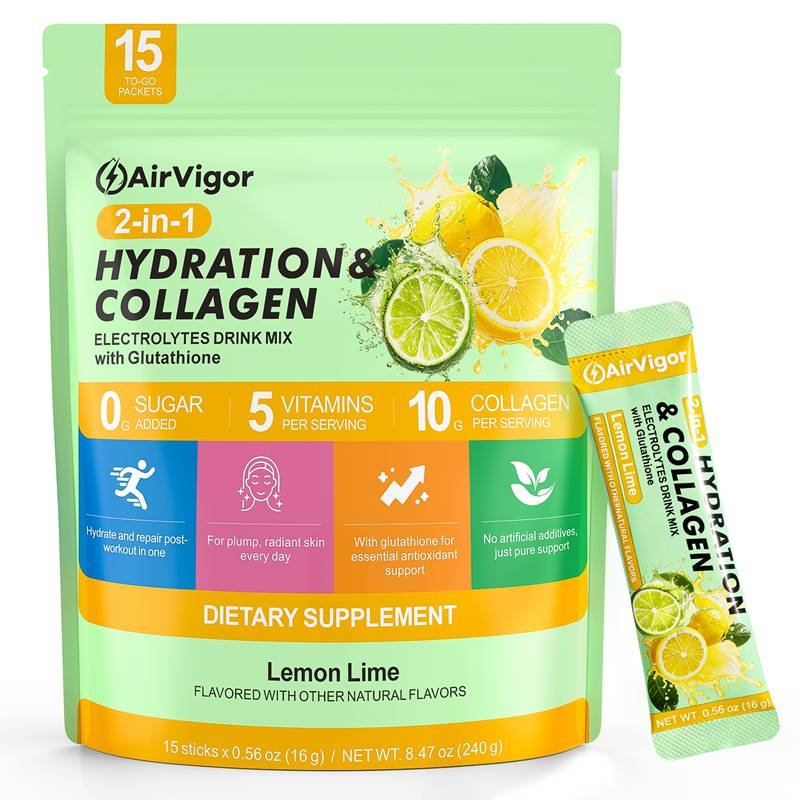
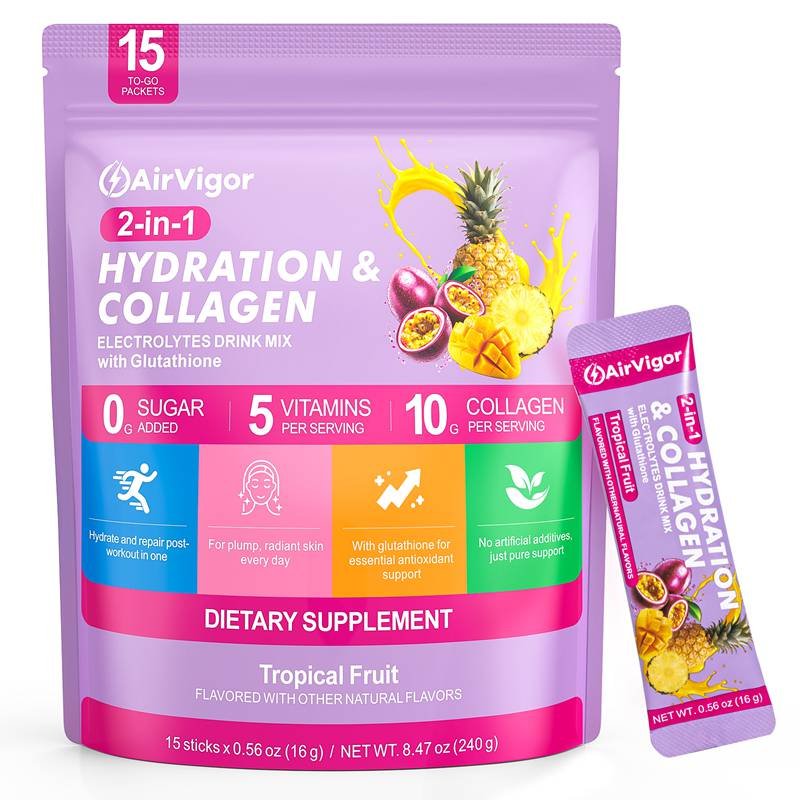
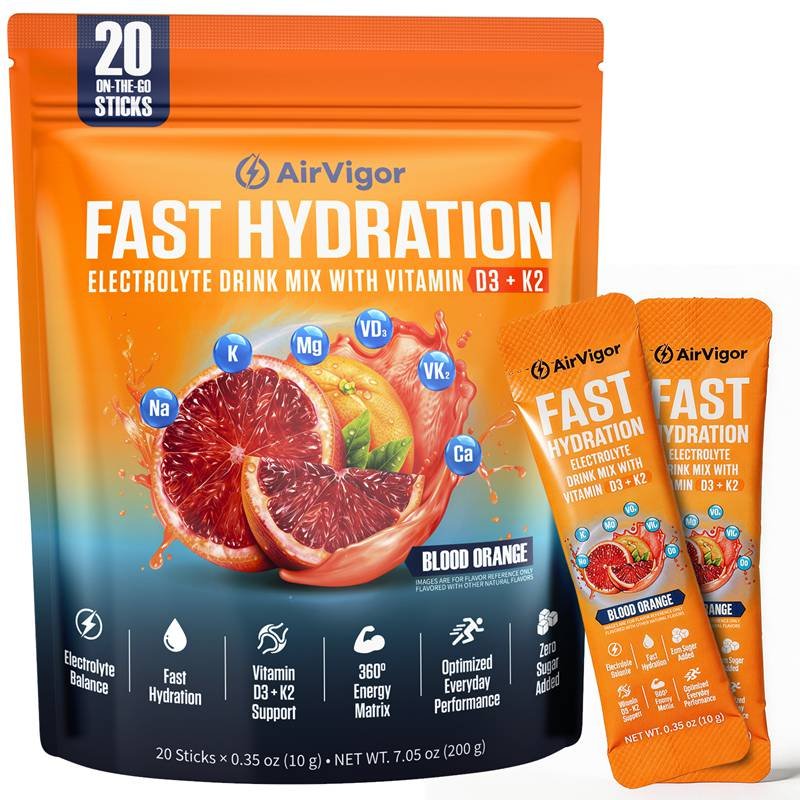
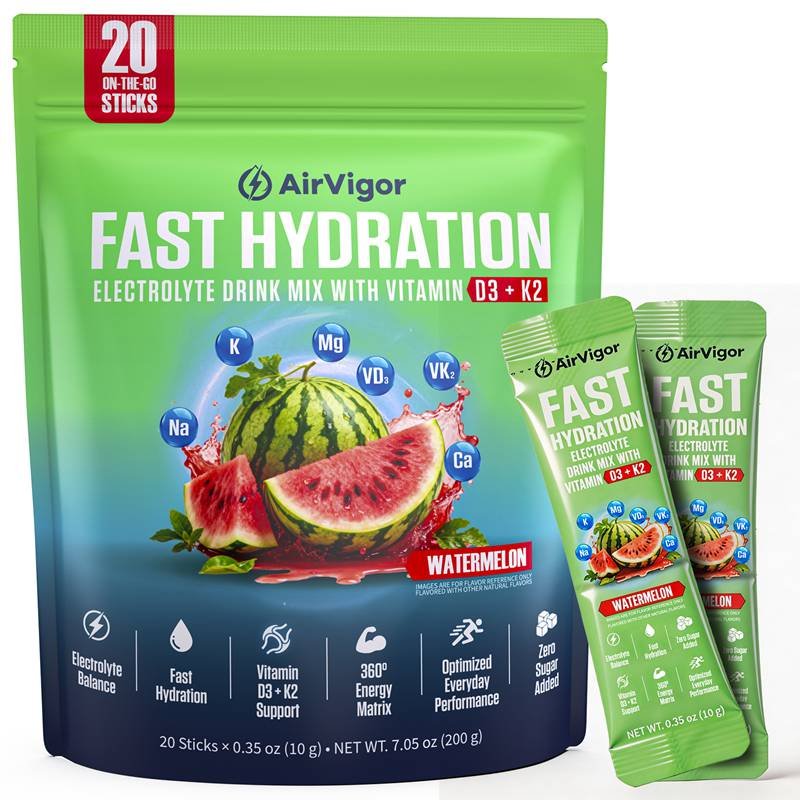
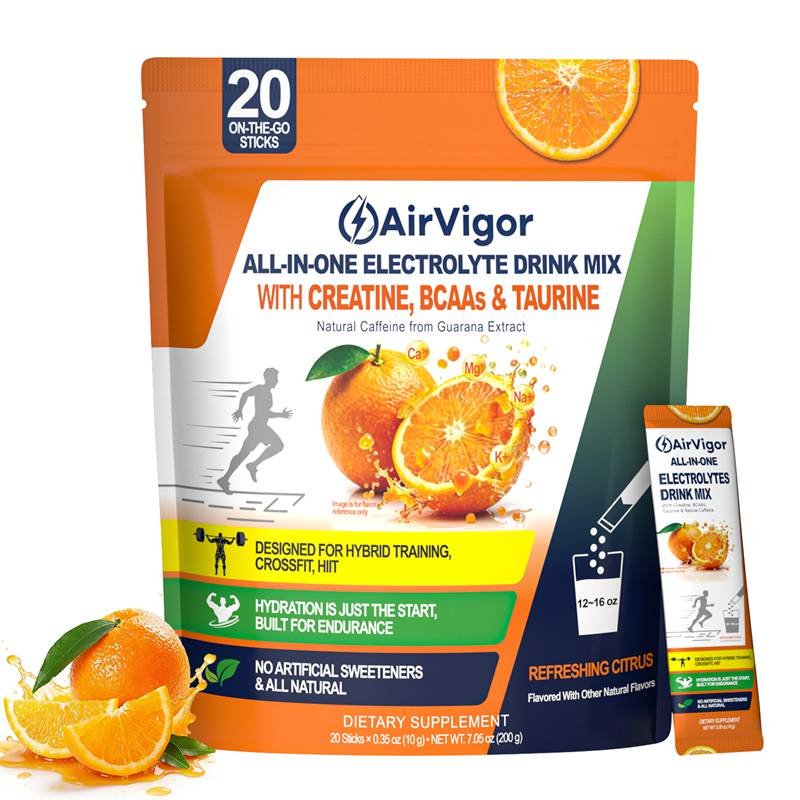
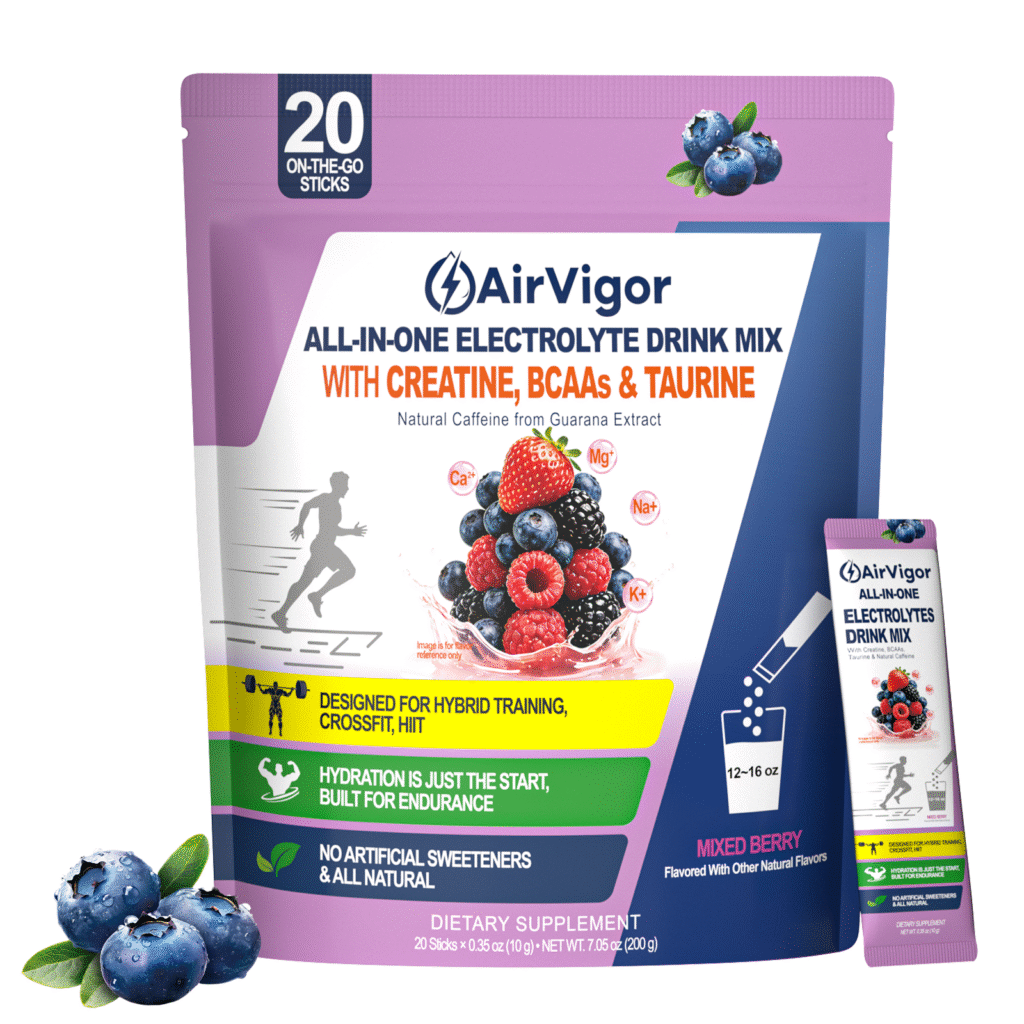
How AirVigor Electrolyte Powder Fits Daily Use?
AirVigor is designed around how people actually live, not just how they train.
Most hydration products focus on a single use case, such as endurance sports. In reality, modern users deal with multiple stress factors in the same day:
- Work stress
- Screen fatigue
- Irregular hydration
- Exercise or movement
- Travel or poor sleep
AirVigor addresses this by combining hydration with recovery support in a single formula.
Instead of treating electrolytes as a standalone solution, it integrates:
- Electrolytes → support fluid balance
- Collagen peptides → support recovery and daily function
- Additional functional nutrients → improve overall effectiveness
This creates a more practical system.
From a user perspective, the benefits are straightforward:
- Fewer products to manage
- Easier daily routine
- More consistent use over time
For example:
| Traditional Routine | AirVigor Approach |
|---|---|
| Electrolyte drink + protein + recovery supplement | One combined solution |
| Multiple timing decisions | Simple daily use |
| Inconsistent usage | Higher adherence |
This matters because most people do not struggle with knowledge—they struggle with maintaining a routine.
A simpler system is more likely to be used consistently, and that is what leads to better results over time.
Conclusion
Most people do not immediately recognize the signs they need electrolyte powder.
They experience fatigue, headaches, or poor recovery and assume it is:
- Lack of sleep
- Stress
- Nutrition issues
Sometimes it is—but often, hydration imbalance is part of the problem.
The key insight is simple:
Water alone does not guarantee hydration. Balance does.
Once you start paying attention to how your body responds, the pattern becomes clear.
And once you correct that imbalance, the difference is noticeable.
Ready to Upgrade Your Hydration with AirVigor?
If you recognize any of the signs discussed in this article, it may be time to move beyond water-only hydration.
AirVigor offers a practical, well-designed solution for:
- Daily hydration support
- Workout performance and recovery
- Travel and high-stress routines
Whether you are an individual user, a brand looking to expand your supplement line, or a distributor exploring new product opportunities, AirVigor provides flexible options.
Share:
Contact Expert Team
At AirVigor, performance becomes effortless. We transform advanced nutrition science into clean, effective supplements that help you hydrate, recover, and feel stronger every day. Shop AirVigor Supplements on Amazon and experience athlete-trusted formulas—backed by real science and supported by our world-class R&D and production capabilities.
Trust AirVigor
At AirVigor, turning your performance goals into reality is no longer a struggle—it’s a science-driven journey we build together. Whether you’re a runner, lifter, cyclist, yogi, outdoor athlete, or someone simply seeking better daily energy, AirVigor transforms advanced nutrition research into clean, effective, and trustworthy supplements you can feel.
Backed by our U.S. scientific team, global certifications, and world-class production standards, every formula is engineered to deliver real hydration, real recovery, and real performance. And when you’re ready to experience the difference, you’ll find AirVigor products available on Amazon and other major platforms—fast shipping, consistent quality, and a community of athletes already seeing results.
Behind the scenes, our R&D and manufacturing ecosystem also supports specialized formulation development, ensuring AirVigor continues to lead with innovation while keeping quality and safety uncompromised. But at the core, everything we create is built for you—your health, your performance, your momentum.
Choose AirVigor. Feel the science. Elevate your every day.


Subscribe to our newsletter
Sign up to our newsletter and we’ll keep you up to date with the latest arrivals.