Skip to content
How to Fix Too Much Electrolytes: You Need to Know
# Your Trusted Dietary Supplement Brand In US
- Emily

Table of Contents
Electrolytes used to be “an athlete thing.” Now they’re everyday—desk hydration sticks, gym powders, and flavored bottles you refill all day. The upside is real: electrolytes can help when sweat loss is high. The downside is just as real: too much electrolyte intake—especially sodium-heavy mixes—can leave you feeling puffy, thirsty, headachy, nauseated, or simply “off.”
What makes this tricky is that overload can feel like dehydration. You keep drinking electrolyte mixes because you’re still thirsty, but the real fix is often the opposite: pause the minerals, return to plain water, and let your kidneys reset the balance. That “stacking loop” (electrolyte drinks + salty food + caffeine + multiple servings) is the most common reason people end up with swelling or water retention.
This guide breaks down what “too many electrolytes” actually means, the early signs to watch for, and the safest way to recover—plus when symptoms cross the line and you should seek medical help.
What Does “Too Much Electrolytes” Mean in the Body?
“Too much electrolytes” usually means you’ve taken in more minerals than your current fluid level and sweat loss justify, often from sodium-heavy drinks plus a salty diet. Your kidneys try to restore balance by increasing excretion, but symptoms can show up when intake repeatedly overshoots needs or when water intake doesn’t match mineral intake. Severe imbalance (like high blood sodium) is a medical condition that requires careful correction.
What are electrolytes?
Electrolytes are charged minerals—mainly sodium, potassium, magnesium, and calcium—that help regulate fluid distribution, nerve signaling, and muscle contraction. The key word is regulate, not “maximize.” Your body wants these minerals in a narrow range. When you add electrolyte powders on top of normal meals (which already contain minerals), you can push that range—especially if you take multiple servings a day or mix them too strong.
A helpful mindset: electrolytes are “targeted tools.” They’re most useful when you’re losing minerals through heavy sweating, heat exposure, or illness-related fluid loss. Outside those contexts, they can become noise that your body has to correct.
How do sodium, potassium, magnesium, and calcium interact?
Think of electrolytes as a team managing electricity and water movement. Sodium strongly influences where water sits (inside vs. outside cells) and drives thirst. Potassium is crucial for cellular signaling and works in opposition with sodium in many physiological processes. Magnesium plays a support role in muscle/nerve function and helps maintain normal neuromuscular activity. Calcium participates in muscle contraction and signaling.
When one mineral is consistently high—most often sodium—the body compensates by shifting water and increasing urinary excretion. That compensation can feel like: thirst that won’t quit, “puffy” tissue, or a heavy, bloated sensation even though you’re drinking plenty.
Why is “more electrolytes” not always better for hydration?
Because hydration is a ratio problem, not a “more ingredients” problem. You can’t out-supplement a mismatch between:
- how much you’re sweating,
- how much water you’re drinking,
- and how much sodium you’re consuming from foods + drinks.
If you’re a casual exerciser doing a 30–45 minute workout in mild weather, daily electrolyte drinks can be unnecessary—and sometimes counterproductive. But if you’re doing CrossFit in a hot box, a long run, or outdoor labor in high heat, electrolytes can be smart and performance-supportive.
| What you feel | Could be too many electrolytes | Could be too few electrolytes | Best first step (safe) |
|---|---|---|---|
| Thirst + dry mouth | common (sodium-heavy) | common (dehydration) | Sip plain water, pause electrolytes, reassess in 2–4 hrs |
| Bloating / puffiness | common | less common | Reduce sodium + electrolyte servings for 24–48 hrs |
| Headache | possible | possible | Water + rest; avoid stacking caffeine + electrolytes |
| Nausea / stomach “off” | possible (strong mix) | possible | Stop concentrates; use plain water + normal food |
| Confusion / fainting / severe weakness | can be serious | can be serious | Seek urgent medical care |
Which Electrolytes Are Most Commonly Overconsumed?
Sodium is the most commonly overconsumed electrolyte because it’s abundant in modern diets and often the primary mineral in electrolyte mixes. Excess sodium can contribute to thirst and fluid retention, and in extreme cases can be part of clinically high blood sodium (hypernatremia). Potassium and magnesium overload are less common from typical use but can matter for people with kidney issues or high-dose supplementation habits.
Which electrolyte is easiest to consume in excess?
Sodium, by far. You can be “not adding salt” and still be high-sodium if you eat restaurant meals, sauces, packaged snacks, deli foods, or takeout. Then you add an electrolyte mix on top—sometimes two or three servings a day—and suddenly your “hydration plan” becomes a sodium plan.
This is why people can feel swollen even when they’re training consistently: the body retains water to keep sodium concentration in check, and that can show up as puffy face, tight rings, or heavy legs.
How does sodium overload differ from potassium or magnesium excess?
- Sodium overload often feels like thirst, headache, puffiness, or restlessness. Severe high sodium states are associated with primarily neurologic symptoms (confusion, neuromuscular excitability, seizures, coma).
- Potassium overload is less likely from normal electrolyte products but is medically important because abnormal potassium can affect heart rhythm—risk rises with kidney disease or potassium-heavy supplements (this is a “don’t DIY” zone).
- Magnesium excess is uncommon from sports electrolyte powders at typical use, but high-dose magnesium supplements can cause GI upset and other issues.
Are multi-electrolyte powders riskier than single-mineral supplements?
They can be riskier if you treat them like flavored water all day. Multi-electrolyte products aren’t automatically bad—they’re often better than single-mineral products for athletes when dosed appropriately. The risk comes from:
- using them too often,
- mixing too strong,
- stacking with salty meals,
- and not alternating with plain water.
If you’re worried you overdid it, the solution isn’t to hunt for a “perfect ratio” immediately—it’s to stop stacking and let your body normalize.

What Causes Too Much Electrolytes Intake?
Most electrolyte overload comes from stacking: electrolyte powders + sports drinks + salty meals + not enough plain water. It also happens when people mistake dehydration symptoms for “I need more electrolytes” and keep dosing. Another driver is convenience—sipping electrolytes all day because they taste good. The fix is usually behavioral: match electrolytes to sweat loss, not routine habit.
How does overusing electrolyte drinks lead to imbalance?
Electrolyte mixes are concentrated on purpose. That’s great when you need them, but easy to overdo when you don’t. A common pattern:
- morning electrolyte bottle “for energy,”
- pre-workout electrolytes,
- during-workout electrolytes,
- post-workout electrolytes,
- then another bottle “to prevent cramps.”
Even without “crazy high” single doses, the frequency adds up. Your kidneys can handle a lot, but they still have to do the work—meaning you can feel puffy or “weird” while your body sorts it out.
Can diet, supplements, and sports drinks stack sodium unintentionally?
Yes—and this is the #1 reason normal people end up feeling overloaded.
Here’s a realistic day:
- Breakfast sandwich
- Lunch bowl with dressing + side snack
- Pre-workout electrolyte mix
- Dinner out
- Another electrolyte serving “just to be safe”
Your total sodium can be far higher than you think. In physiology literature, sodium balance after intake changes is often described as taking about 3–4 days to reach a new steady state where excretion matches intake.
So even if you “fix it today,” the feeling might take a couple days to fully settle—especially if your routine has been high-sodium for weeks.
Do clean-label or zero-sugar electrolytes still cause excess intake?
Absolutely. Sugar isn’t what makes electrolytes “too much.” Minerals do. Zero-sugar products can actually increase risk because people sip them more freely. Also watch for caffeine: if an electrolyte product includes stimulants, it can change how you perceive thirst and fatigue.
| Scenario | What usually happened | What it feels like | Best correction |
|---|---|---|---|
| “I drink electrolytes all day at my desk” | Habit sipping with low sweat loss | Puffy, thirsty, headache | Switch to water; electrolytes only for workouts/heat |
| “I doubled my servings during training week” | Sweat loss increased and servings stacked | Heavy legs, bloating, restless sleep | Use a sweat-based plan; alternate water + electrolytes |
| “I mixed it super strong for fast results” | Concentration too high | Nausea, GI upset, thirst | Dilute or pause; reintroduce slowly |
| “I eat out often + use electrolyte drinks” | High dietary sodium + added sodium | Swelling, weight spikes | Reduce salty meals 48–72 hrs; water to thirst |
What Are the Symptoms of Too Much Electrolytes?
Symptoms vary by mineral, but common signs of electrolyte overload include persistent thirst, bloating/puffiness, headache, nausea, weakness, and feeling “off” despite drinking. In severe sodium imbalance (hypernatremia), symptoms can be primarily neurologic—confusion, neuromuscular excitability, seizures, coma—and require medical attention. If symptoms are intense, persistent, or include chest/neurologic signs, don’t self-treat. (Merck Manuals)
What are the early signs of electrolyte overload?
Most people don’t go straight to an emergency. Early signs are subtle but consistent:
- You keep drinking, but you don’t feel “rehydrated”
- You feel more swollen after “hydration”
- Your mouth feels dry even after several bottles
- You notice quick scale weight increases (water retention)
- Your stomach feels uneasy or you feel slightly nauseated
If you see this pattern, the right move is not “find a stronger electrolyte.” It’s usually the opposite: back off.
Can electrolytes cause ankle swelling or water retention?
They can—especially when the issue is excess sodium. Many clinical education resources on edema note that salt can cause the body to retain water and contribute to swelling.
That said, ankle swelling has many possible causes (injury, prolonged sitting, medications, vascular issues, heart/kidney concerns). Treat electrolytes as a possible contributor, not the only explanation.
When to be cautious: one-sided swelling, pain, redness, shortness of breath, sudden onset—those warrant prompt medical evaluation.
How do symptoms differ by electrolyte type?
- Too much sodium: thirst, puffiness, headache; severe cases may include confusion and seizures.
- Too much potassium: can be dangerous for the heart rhythm in high-risk people (kidney disease); symptoms may be nonspecific early.
- Too much magnesium: more likely to show GI symptoms first when taken in high-dose supplement form.
When should electrolyte-related symptoms be taken seriously?
Seek urgent care if you have:
- confusion, severe headache, fainting
- seizures or severe weakness
- chest pain or palpitations
- persistent vomiting or inability to keep fluids down
Hypernatremia is defined by elevated serum sodium and is tied to a water deficit; clinical references highlight careful correction and monitoring rather than DIY “flushes.”

How Do You Fix Too Much Electrolytes Safely?
A safe reset is usually straightforward: stop electrolyte supplements temporarily, drink plain water to thirst, and reduce high-sodium foods for 24–72 hours. Avoid extreme water loading or diuretics. If you’re severely symptomatic, pregnant with concerning swelling/vomiting, or have kidney/heart disease, consult a clinician—electrolyte disorders (especially sodium disorders) require careful correction and monitoring.
What should you stop or adjust first when electrolytes are too high?
Start with the highest-impact levers:
- Pause electrolyte powders/tablets for 24–72 hours
- Stop stacking products (no powder + sports drink + salty snack combo)
- Choose low-sodium meals for a day or two
- Return to water as the baseline beverage
- If your electrolyte contains caffeine, pause that too—sleep and recovery matter here
This isn’t about being “anti-electrolyte.” It’s about matching the tool to the moment.
How can I flush sodium out of my system fast?
“Fast” should mean safe and steady, not extreme.
A reasonable approach:
- Drink plain water according to thirst (don’t force gallons)
- Eat normal, potassium-containing whole foods (unless restricted)
- Reduce obvious sodium sources (takeout, sauces, salty snacks)
- Light movement can help circulation and comfort
Physiology discussions commonly describe sodium clearance as occurring over roughly 24–72 hours, and steady-state balance shifts over several days after intake changes.
If you suspect clinically high sodium (hypernatremia), medical guidance emphasizes replacing free water deficit carefully, with monitoring and controlled correction.
How does increasing water intake help rebalance electrolytes?
Your kidneys use water to excrete excess minerals. In hypernatremia management, standard references emphasize addressing free water deficit and correcting sodium carefully over time (often 48–72 hours in clinical contexts).
For mild “overdid it” situations, that translates into a simple rule: make water your baseline, and don’t keep adding mineral concentrate.
Should you avoid electrolyte supplements temporarily?
Yes—temporarily. A pause helps you:
- confirm the electrolytes were the issue
- let the body normalize
- reintroduce with better dosing later
When you come back, start with:
- fewer servings
- more dilution
- and only in situations that justify it (heavy sweat, heat, long sessions)
When is medical testing recommended for electrolyte imbalance?
Consider labs or clinician guidance if:
- symptoms are significant or persistent beyond 48–72 hours
- you have kidney disease, heart disease, high blood pressure
- you’re pregnant with strong nausea/vomiting or concerning swelling
- you take diuretics, ACE inhibitors, ARBs, or other meds affecting fluid/electrolytes
| Timeframe | What to do | What to avoid | What you’re looking for |
|---|---|---|---|
| 0–6 hours | Pause electrolytes; sip water to thirst | Chugging huge volumes | Thirst decreases, stomach settles |
| 6–24 hours | Low-sodium meals; normal hydration | Takeout + salty snacks | Puffiness starts improving |
| 24–48 hours | Continue water baseline; light activity | “Just in case” electrolyte servings | Energy/clarity returns |
| 48–72 hours | Reintroduce electrolytes only if sweating hard | Daily habit use | Stable hydration without swelling |
How Long Does It Take for Electrolyte Levels to Normalize?
Many people feel better within 24–72 hours after stopping extra electrolytes, hydrating normally, and reducing sodium. But if intake has been high for weeks, it may take longer to feel fully “normal.” Physiologic discussions describe a new sodium steady state often forming over about 3–4 days after intake changes. Your sweat rate, hydration status, kidney function, and the size of the excess all affect timing.
How long does it take to flush out electrolytes naturally?
For most healthy people, the uncomfortable symptoms (puffiness, thirst, heaviness) often improve in a day or two once you stop stacking. But the “full reset” can take longer if:
- you’ve been consuming high sodium daily
- you have poor sleep and high stress
- you’re dehydrated (low urine output slows clearance)
Remember: a one-off salty day is not the same as a month-long routine.
How do the kidneys regulate excess electrolytes?
Your kidneys continuously filter blood, deciding what to keep and what to excrete. This is why people with kidney issues need to be much more cautious with electrolyte supplements. Clinical resources describe hypernatremia as a water deficit relative to sodium and emphasize careful correction and monitoring when severe. (Merck Manuals)
What factors slow or speed electrolyte clearance?
Speeds it up (safely):
- reducing incoming sodium/electrolyte load
- water as baseline (to thirst)
- normal sleep and recovery
- light movement
Slows it down:
- ongoing high intake
- dehydration (less urine)
- kidney dysfunction
- alcohol and poor sleep
Do athletes and heavy sweaters recover differently?
Yes. Heavy sweaters may “clear” sodium faster because they’re losing it through sweat. But athletes can also overdo electrolytes during training blocks out of fear of cramping or bonking—then experience puffiness and discomfort. The answer isn’t “never use electrolytes.” It’s: use the right dose for the right session.
Are Electrolyte Supplements Safe for Daily Use?
Electrolyte supplements can be safe daily when the dose matches real needs (heat exposure, high sweat volume, endurance work) and you’re not stacking multiple sodium sources. For many casual exercisers and desk workers, daily electrolyte use is often unnecessary and may contribute to puffiness or excess sodium intake. People with kidney, heart, or blood pressure conditions should be more cautious and consult a clinician.
Who actually needs daily electrolyte supplementation?
Daily use can make sense for:
- endurance athletes training long and often
- CrossFit/HIIT athletes training in heat with heavy sweat loss
- outdoor workers in high temperatures
- frequent travelers who struggle with hydration
- people with clinician-guided needs (illness recovery)
If your activity is short, low sweat, and in mild climate, water + food is often enough.
How do training intensity, climate, and sweat rate affect daily needs?
Electrolyte needs change with:
- temperature and humidity
- session length
- clothing and indoor heat
- individual sweat rate (some people are salty sweaters)
- your baseline diet
The big mistake is using the same electrolyte plan year-round without adjusting for season and training block.
Why does dosage clarity matter more than ingredient count?
A label with 10 ingredients can still be “wrong for you” if sodium is too high for your day. What users want (and what Google/AI search increasingly rewards) is clarity:
- how much sodium per serving
- how many servings per day
- when to use it and when not to
| Your situation | Water only | Electrolytes optional | Electrolytes recommended |
|---|---|---|---|
| Desk day, mild climate | √ | ➖ | ➖ |
| 30–45 min workout, light sweat | √ | √ (small dose) | ➖ |
| 60–90 min training, moderate sweat | ➖ | √ | √ |
| Long endurance / heavy sweat / heat | ➖ | ➖ | √ |
| Vomiting/diarrhea | ➖ | ➖ | Clinician-guided ORS approach |
How to Prevent Electrolyte Overload in the Future?
To prevent electrolyte overload, use electrolytes based on sweat loss, not as an all-day beverage. Read labels for sodium per serving, start with the lowest effective dose, and alternate with plain water. Avoid stacking multiple electrolyte products in a day, and remember that dietary sodium from meals often exceeds what people realize. If you see puffiness or persistent thirst, reduce sodium and pause extra electrolytes for 24–72 hours. (PMC)
How should you read electrolyte labels correctly?
Look at:
- Sodium per serving (this is the big one)
- servings per container and your intended daily servings
- potassium and magnesium amounts
- add-ons like caffeine (can change perceived hydration)
A practical habit: if you’re not sweating hard, cut the dose (half serving or dilute).
What questions should you ask before choosing an electrolyte powder?
Ask:
- What scenario is this built for—endurance, HIIT, heat work, travel?
- Is the label transparent and easy to follow?
- Can you dose it flexibly (half serving, diluted)?
- Is it designed for performance timing (pre/during/post), or just “sip forever”?
Why do formulation ratios matter more than high sodium numbers?
High sodium isn’t automatically wrong—some athletes truly need it during long, sweaty sessions. But for most people, “high sodium by default” creates unnecessary retention and discomfort. A better product philosophy is:
- balanced electrolytes
- clear timing guidance
- and realistic dosing that fits real-world users
How Does a Structured Electrolyte Formula Reduce Overuse Risk?
A structured formula isn’t just “what’s inside.” It’s also how it’s used. When a brand is serious, it gives:
- clear per-serving mineral amounts
- scenario-based use guidance (training vs. rest day)
- quality controls so each batch matches the label
That structure reduces the biggest cause of overload: people guessing.
Why balanced electrolyte ratios prevent chronic overload
Balanced ratios help prevent a single mineral (usually sodium) from dominating your day, especially if you use the product more than once.
How scenario-based dosing reduces unnecessary daily intake
Scenario-based dosing teaches the most important habit in hydration: water baseline, electrolytes strategically. This one rule prevents most cases of “too much electrolytes.”
What Makes Electrolyte Products Like AirVigor Different?
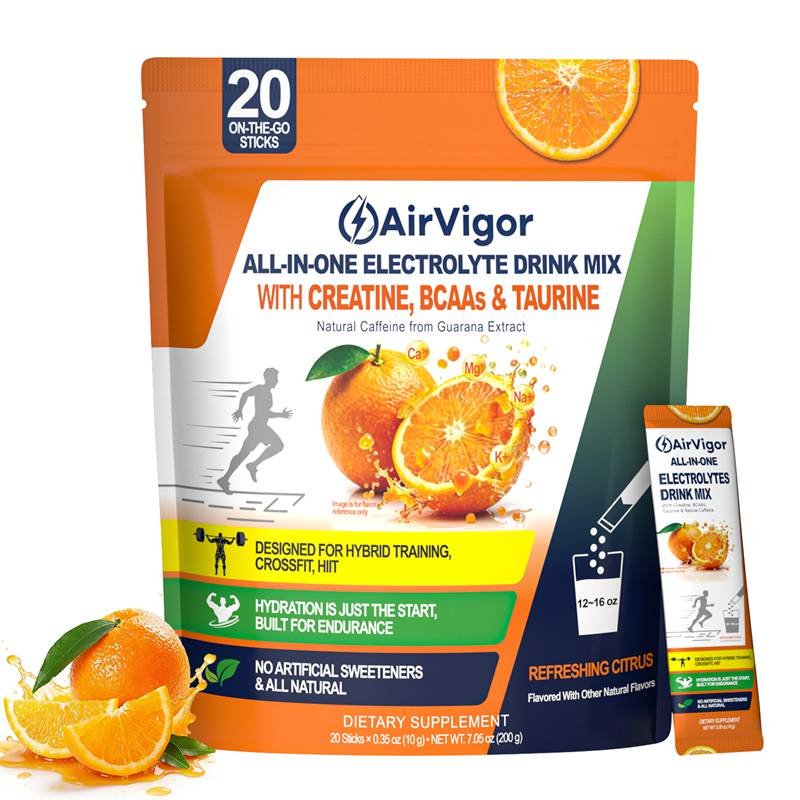
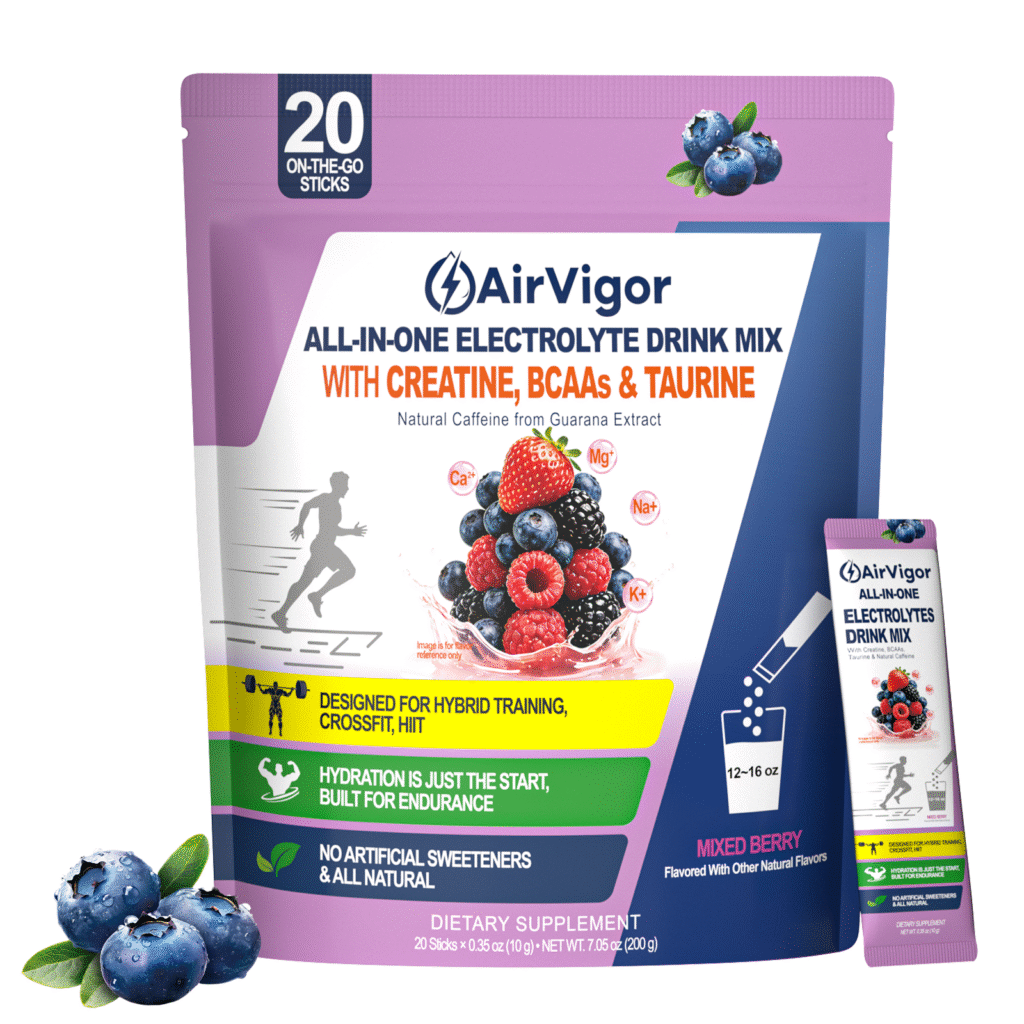
AirVigor is built around performance nutrition for training populations—CrossFit, HIIT, hybrid training, running—and it operates with a manufacturer mindset: ingredient traceability, batch consistency, and clear labeling. When users can see and understand dosage, they’re less likely to overdo it.
How transparent labeling reduces dosing confusion
Confusion is what drives stacking. Clear dosing reduces stacking.
Why performance-based formulas are not designed for constant sipping
Performance formulas are meant for specific moments (sweaty sessions, endurance blocks, heat exposure), not every sip of your day. That positioning protects the user from overuse.
Is It Possible to Be Dehydrated and Have Too Many Electrolytes?
Yes. You can be dehydrated and still have “too many electrolytes” if you consume a high-mineral drink without enough water, or if water losses exceed intake. Hypernatremia is defined as high serum sodium and usually reflects a deficit of water relative to sodium. Because dehydration and electrolyte excess can share symptoms (thirst, headache), people often make it worse by stacking electrolytes instead of restoring water.
How can dehydration and electrolyte excess coexist?
If you’re losing water rapidly (heat, sweating, illness) and you add mineral concentrate without sufficient water, blood sodium concentration can rise. Clinically, hypernatremia implies water deficit relative to sodium and is often accompanied by intense thirst and neurologic symptoms in severe cases.
Why does fluid-to-mineral ratio matter more than total intake?
Two people can both drink “two bottles,” but one might drink plain water while the other drinks concentrated electrolytes. Their bodies will experience those two bottles very differently. Hydration works when the ratio supports normal fluid distribution.
What common training mistakes lead to this condition?
- only drinking electrolyte mixes, no plain water
- not adjusting for weather and sweat loss
- copying another athlete’s sodium strategy
- stacking caffeine + electrolytes while already underhydrated
What Questions Do People Commonly Ask About Too Much Electrolytes?
Common questions include whether too many electrolytes are dangerous, whether they cause nausea/headaches, if they affect blood pressure, and whether swelling is related. Mild overload is usually manageable with a short reset, but severe symptoms (confusion, seizures, chest symptoms) can indicate a true electrolyte disorder like hypernatremia and require medical evaluation. Don’t troubleshoot severe symptoms alone.
Is too much electrolytes dangerous?
It can be, depending on severity and your health status. Hypernatremia is a recognized medical condition defined by elevated serum sodium and is associated with neurologic symptoms in more severe cases.
Can too many electrolytes cause fatigue, nausea, or headaches?
Yes—those are common user-reported “I overdid it” symptoms. They’re also nonspecific, which is why people misread them. If you feel worse after electrolyte drinks, that’s a signal to pause and reset rather than add more.
Do electrolytes affect blood pressure or circulation?
Sodium affects fluid balance and can influence blood pressure dynamics. If you’re salt-sensitive or managing blood pressure, talk with a clinician before making high-sodium electrolyte drinks a daily habit.
Can electrolytes cause swelling in legs or ankles?
High salt intake can contribute to water retention and edema in some cases, and reputable clinical education resources note salt as a possible contributor to swelling.
But because swelling has many causes, persistent or severe swelling should be evaluated clinically.
How Do You Know If You Actually Need Electrolytes?
You likely need electrolytes when you’re losing meaningful fluid and minerals—long sessions, heavy sweating, heat exposure, or illness-related losses. If your activity is short and low-sweat, water and normal meals are often enough. The most reliable approach is to match electrolytes to sweat rate, climate, and session duration—not to use them as a default daily beverage.
What factors determine true electrolyte needs?
Use these as your “real needs” checklist:
- session duration (longer = more likely needed)
- heat/humidity (higher = more likely needed)
- sweat rate (heavy sweaters benefit more)
- diet sodium level (already high? use less)
- recovery demands (double sessions, travel)
If you’re unsure, start low and scale only when performance or symptoms justify it.
What to drink for electrolytes while pregnant?
Pregnancy changes hydration needs, and many people ask what’s safe. The most practical guidance:
- Ask your OB/midwife if you have swelling, blood pressure concerns, or frequent vomiting.
- If you use electrolyte drinks, prefer moderate dosing, avoid megadoses of sodium, and don’t use them as a daily “habit beverage.”
- For morning sickness or dehydration, clinician-guided rehydration approaches may be more appropriate.
Popular pregnancy resources often state electrolytes can be helpful in certain situations, while emphasizing moderation and individualized medical guidance—especially for daily use. (Bump)
| Option | When it can help | What to watch for |
|---|---|---|
| Plain water | Baseline daily hydration | If nausea makes intake difficult |
| Diluted electrolyte drink | Hot weather, light sweating, occasional dehydration | Avoid high-sodium “all day” use; watch swelling/BP |
| Oral rehydration-style solutions | Significant vomiting/diarrhea (clinician-guided) | Use clinician-recommended product/dose |
| High-sodium sports mixes | Rarely needed routinely | Can worsen puffiness; avoid without clear reason |
How do endurance, strength training, and daily hydration differ?
- Endurance + heat: electrolytes often matter
- Strength training: may need less unless the environment is hot and sweaty
- Daily life: most people do fine with water + balanced meals
Can taking electrolytes too often reduce natural thirst signals?
It can encourage “habit sipping,” where you drink because it tastes good rather than because your body needs it. That habit can lead to unnecessary sodium intake and water retention. The best long-term solution is simple: water baseline, electrolytes earned by sweat.
Conclusion
Most “too many electrolytes” situations come from stacking: sodium-heavy mixes on top of salty meals, plus not enough plain water. The safest reset is usually simple—stop electrolyte supplements for 24–72 hours, drink water to thirst, and keep meals lower-sodium. If you develop severe symptoms (confusion, fainting, chest symptoms, persistent vomiting), treat it as medical—not a DIY hydration problem.
For long-term use, the goal isn’t “more electrolytes”—it’s the right dose for the right day. If you want a clean electrolyte option with clear dosing so it’s easier to avoid overdoing it, AirVigor is designed for training, heat, and travel routines without turning electrolytes into an all-day habit.
Ready to Hydrate Smarter?
If your goal is performance hydration without the “too much electrolytes” downside, choose a formula built for real training scenarios and clear dosing.
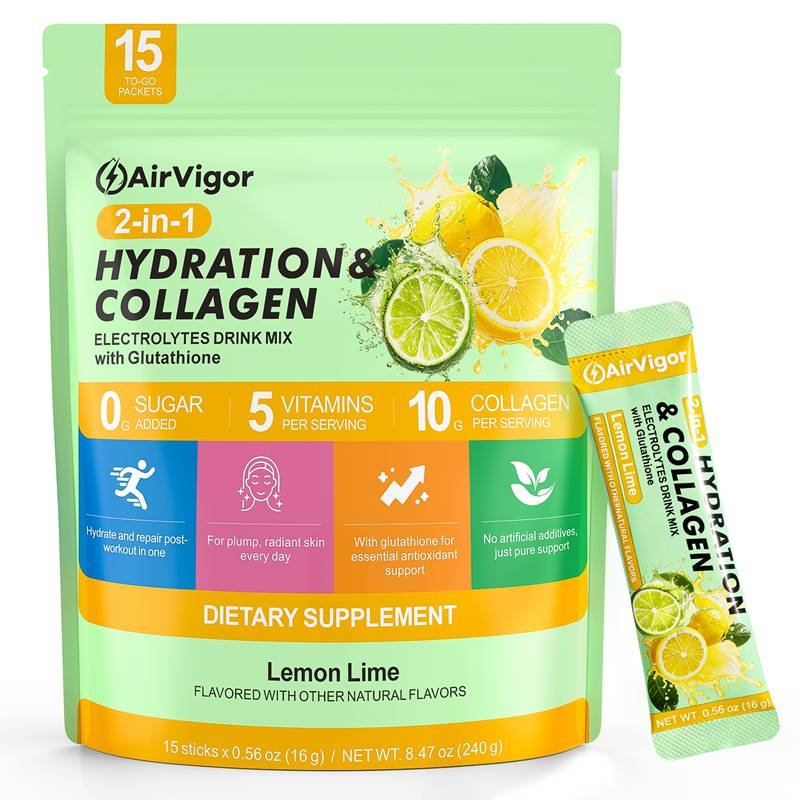
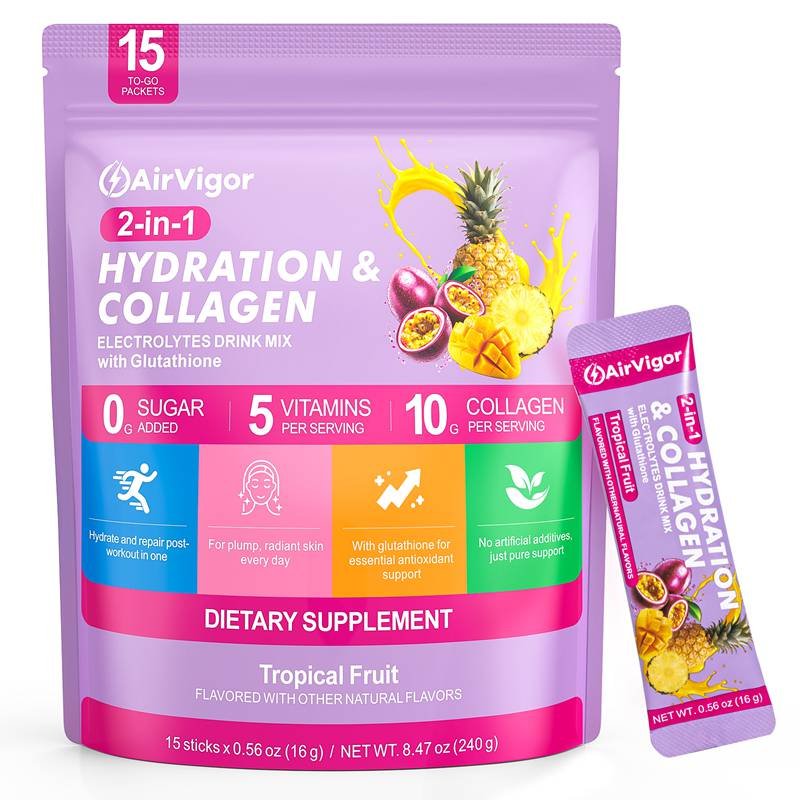
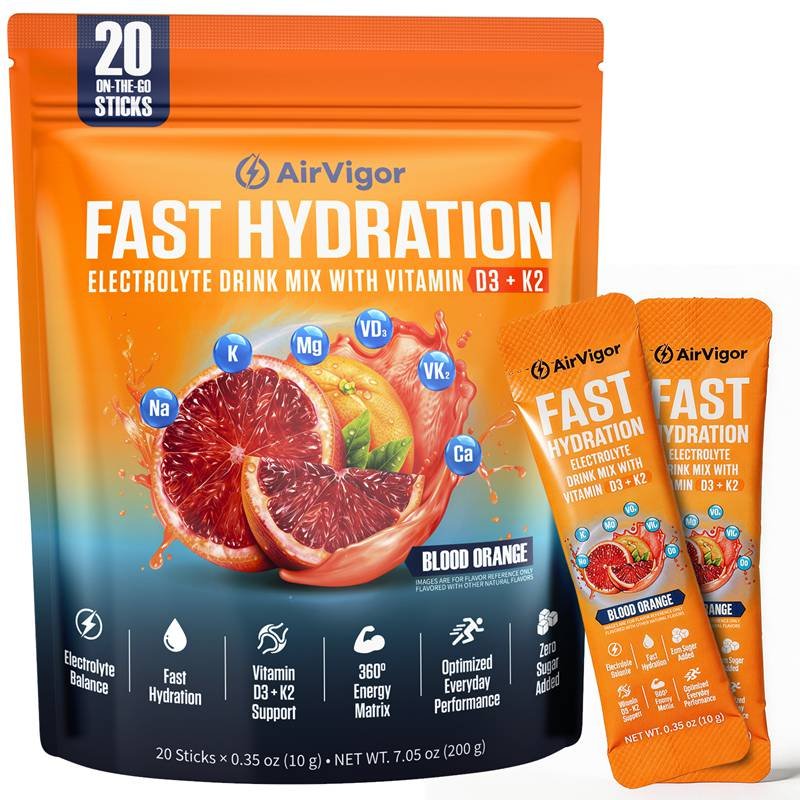
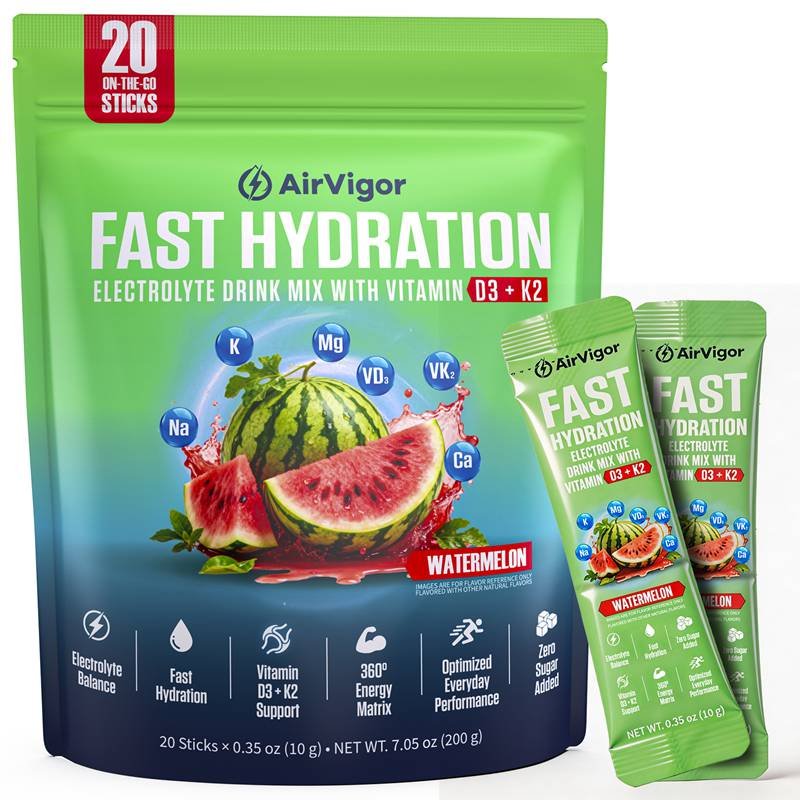
- Buy AirVigor on Amazon (in-stock): stock-friendly options for athletes, hybrid training, and high-sweat sessions.
- Need OEM/ODM or custom formula pricing? AirVigor (Atom Nexus Inc., Eastvale, CA) supports formulation, flavor work, compliant labeling, batch QA, and FBA-ready packaging.
Share:
Contact Expert Team
At AirVigor, performance becomes effortless. We transform advanced nutrition science into clean, effective supplements that help you hydrate, recover, and feel stronger every day. Shop AirVigor on Amazon and experience athlete-trusted formulas—backed by real science and supported by our world-class R&D and production capabilities.
Trust AirVigor
At AirVigor, turning your performance goals into reality is no longer a struggle—it’s a science-driven journey we build together. Whether you’re a runner, lifter, cyclist, yogi, outdoor athlete, or someone simply seeking better daily energy, AirVigor transforms advanced nutrition research into clean, effective, and trustworthy supplements you can feel.
Backed by our U.S. scientific team, global certifications, and world-class production standards, every formula is engineered to deliver real hydration, real recovery, and real performance. And when you’re ready to experience the difference, you’ll find AirVigor products available on Amazon and other major platforms—fast shipping, consistent quality, and a community of athletes already seeing results.
Behind the scenes, our R&D and manufacturing ecosystem also supports specialized formulation development, ensuring AirVigor continues to lead with innovation while keeping quality and safety uncompromised. But at the core, everything we create is built for you—your health, your performance, your momentum.
Choose AirVigor. Feel the science. Elevate your every day.


Subscribe to our newsletter
Sign up to our newsletter and we’ll keep you up to date with the latest arrivals.