Skip to content
Electrolytes for Long Work Shifts: Stay Focused & Hydrated
# Your Trusted Dietary Supplement Brand In US
- Emily

Table of Contents
Long work shifts don’t just test your patience—they quietly drain your body in ways most people underestimate. Whether you’re pulling a 12-hour hospital shift, rotating nights at a warehouse, coding late into the night, or juggling meetings across time zones, fatigue often shows up long before the work is done. And while caffeine and sheer willpower may carry you through the first few hours, they rarely address the real issue happening underneath: progressive fluid and electrolyte imbalance.
What makes long shifts especially challenging is that dehydration isn’t always obvious. You might still be drinking water, yet feel foggy, tense, or inexplicably tired. That’s because hydration isn’t just about fluid volume—it’s about how well your body can retain and distribute that fluid at the cellular level. Electrolytes play a central role here, influencing muscle function, nerve signaling, and even mental clarity. Without them, water simply passes through your system without doing much of the work you expect.
Electrolytes help shift workers maintain hydration, focus, and physical stability during long or night shifts. Unlike water alone, electrolytes such as sodium, potassium, and magnesium support fluid retention, nerve signaling, and muscle control. For people working extended hours, proper electrolyte balance can reduce fatigue, support cognitive performance, and improve overall endurance—especially in high-stress or low-sleep environments.
But here’s the part most people miss: electrolyte needs aren’t limited to athletes or extreme heat. Long hours of mental effort, screen exposure, irregular meals, air-conditioned environments, and disrupted sleep all shift how your body manages fluids and minerals. In the sections below, we’ll break down what actually happens during long work shifts, why water alone often isn’t enough, and how a well-formulated electrolyte strategy—like the ones developed by AirVigor—can fit into real, everyday work routines without adding complexity or burden.
What Happens During Long Work Shifts?
During long work shifts, the body experiences gradual fluid and electrolyte loss due to continuous breathing, stress-related hormonal changes, limited movement, and irregular eating patterns. Even without intense physical activity, these factors reduce hydration efficiency, impair muscle and nerve function, and accelerate mental fatigue. Over time, this imbalance leads to declining focus, physical discomfort, and slower recovery between shifts.
How does the body lose fluids during work?
Fluid loss during long work shifts is often invisible but constant. Unlike exercise-related dehydration, which is obvious and fast, work-related fluid loss happens quietly over hours. Every breath you take releases water vapor. In climate-controlled environments—offices, hospitals, warehouses, control rooms—dry air accelerates this loss without triggering thirst.
Stress further compounds the issue. Elevated cortisol increases urinary output and shifts sodium handling in the kidneys, causing the body to excrete fluids and minerals more rapidly. Caffeine consumption, common during long shifts, increases fluid turnover even when it doesn’t cause net dehydration. The result is a slow but steady reduction in effective hydration.
What makes this problematic is that thirst lags behind actual fluid needs. By the time thirst is noticeable, fluid and electrolyte imbalance has already begun affecting performance, posture stability, and concentration.
| Source of Loss | Why It Matters |
|---|---|
| Breathing (respiration) | Continuous water vapor loss |
| Dry indoor air | Increases evaporation |
| Stress hormones | Increase fluid and sodium excretion |
| Caffeine intake | Raises fluid turnover |
| Limited movement | Reduces circulation efficiency |
Why fatigue builds over extended shifts?
Fatigue during long shifts is not only about energy intake or sleep. As fluids and electrolytes decline, the body becomes less efficient at basic tasks. Muscles require electrolytes to contract and relax smoothly; nerves rely on them to transmit signals quickly and accurately. When levels drop, everything feels harder—even if workload hasn’t changed.
Cognitively, mild dehydration has been shown to reduce attention span, working memory, and reaction speed. This is why people often report that “the last few hours feel disproportionately exhausting.” The brain is operating under suboptimal conditions, compensating for reduced hydration by slowing non-essential functions.
Another overlooked factor is posture fatigue. Prolonged sitting or standing reduces blood circulation in the lower body, making it harder to deliver fluids and nutrients efficiently. This creates a feedback loop: reduced circulation worsens fatigue, which further discourages movement.
| Time Into Shift | Common Changes |
|---|---|
| First 2–3 hours | Mild thirst, stable focus |
| 4–6 hours | Reduced alertness, muscle stiffness |
| 7–10 hours | Brain fog, slower reactions |
| 10+ hours | Sudden energy drops, poor recovery |
What symptoms suggest electrolyte imbalance?
Electrolyte imbalance rarely announces itself clearly. Instead, it shows up as a cluster of nonspecific symptoms that are often misattributed to stress, aging, or lack of motivation. Early signs include headaches, jaw or neck tension, and a sense of heaviness in the legs. Many workers describe feeling “wired but tired”—alert yet unable to focus smoothly.
As imbalance continues, muscle tightness, night cramps, and difficulty sleeping after a shift may appear. Importantly, these symptoms can occur even when water intake seems adequate, because water without electrolytes is poorly retained and rapidly excreted.
Recognizing these signs early is critical. Addressing hydration and electrolyte balance proactively is far easier than trying to recover once multiple systems are already under strain.
| Stage | Common Symptoms |
|---|---|
| Early | Headache, dry mouth, mild fatigue |
| Mid-stage | Brain fog, muscle tightness |
| Advanced | Cramps, poor sleep, slow recovery |
Understanding what happens during long work shifts reframes fatigue as a physiological management issue, not a personal failure. It explains why solutions focused only on stimulants or calories often fall short—and why hydration quality, not just quantity, becomes a foundational strategy for people working extended or irregular hours.
Are Electrolytes More Than Water?
Yes. Electrolytes do far more than hydrate. While water restores fluid volume, electrolytes regulate how that fluid is absorbed, retained, and distributed throughout the body. Without electrolytes, water passes through the system inefficiently, leading to continued dehydration, fatigue, and reduced cognitive and muscle performance—especially during long or mentally demanding work shifts.
What do electrolytes do in the body?
Electrolytes are minerals that carry an electrical charge when dissolved in fluid. This property allows them to regulate some of the body’s most fundamental processes, including nerve signal transmission, muscle contraction, heart rhythm, and cellular hydration. Sodium, potassium, magnesium, calcium, and chloride each play distinct roles, but they work as an interconnected system rather than in isolation.
During long work shifts, these systems are under constant demand. Even without physical exertion, your nervous system is active, your muscles maintain posture, and your brain processes information continuously. Electrolytes ensure that electrical signals travel efficiently across cell membranes, allowing muscles to relax after contraction and neurons to fire accurately. When electrolyte availability declines, these signals become less precise, contributing to stiffness, slower reactions, and mental fatigue.
Unlike calories, electrolytes are not “stored” in large reserves. They must be replenished regularly to maintain equilibrium, which is why prolonged periods without balanced intake can quietly degrade performance.
Why water alone may not sustain energy?
Water is essential, but it is only the carrier, not the controller, of hydration. When you drink plain water without sufficient electrolytes—especially sodium—the body struggles to retain it. The kidneys respond by increasing urine output, and much of that water leaves the system before it can be used effectively at the cellular level.
This explains a common experience during long shifts: drinking frequently yet still feeling thirsty, foggy, or low on energy. The issue isn’t volume; it’s utilization. Without electrolytes, water fails to support blood volume, muscle function, and neural activity for extended periods.
Additionally, overconsumption of water without electrolytes can dilute existing mineral levels, further impairing hydration efficiency. This is particularly relevant for workers who sip water constantly throughout a long shift while consuming minimal food.
| Hydration Factor | Water Only | Water + Electrolytes |
|---|---|---|
| Fluid retention | Low | High |
| Cellular absorption | Inefficient | Efficient |
| Energy stability | Short-lived | Sustained |
| Thirst relief | Temporary | Longer-lasting |
How electrolytes support fluid retention?
Electrolytes act as regulators that determine where water goes and how long it stays. Sodium maintains blood plasma volume, ensuring that fluids remain available for circulation. Potassium directs water into cells, supporting intracellular hydration critical for muscle and brain function. Chloride works alongside sodium to balance fluids and maintain acid-base stability.
Magnesium plays a subtler but equally important role by supporting the enzymes involved in energy production and helping muscles and nerves return to a resting state after activity or stress. Together, these minerals create an environment where hydration is not just achieved but maintained.
For long work shifts, this means fewer sudden drops in energy, reduced muscle tightness, and more consistent mental clarity. Hydration becomes proactive rather than reactive—supporting the body continuously instead of trying to correct deficits after fatigue has already set in.
| Electrolyte | Primary Function | Impact During Long Shifts |
|---|---|---|
| Sodium | Fluid retention | Prevents rapid dehydration |
| Potassium | Cellular hydration | Supports muscle & focus |
| Magnesium | Energy enzymes | Reduces fatigue & tension |
| Chloride | Fluid balance | Maintains stability |
Electrolytes are more than water reframes hydration as a functional system, not a simple habit. For people working extended hours, staying hydrated isn’t about drinking more—it’s about drinking smarter. Electrolytes provide the structure that allows hydration to translate into real-world benefits: steadier energy, clearer thinking, and better recovery between shifts.
Which Electrolytes Matter Most?
Long work shifts don’t just “use up energy”—they gradually nudge your body off balance. The tricky part is that not all electrolytes matter equally in every situation. A warehouse picker sweating under heat lamps, a nurse running between units, and a programmer sitting under air conditioning for 12 hours may all feel tired… but the electrolyte stressors behind that fatigue can differ.
What stays consistent is this: sodium, potassium, and magnesium tend to be the “big three” for shift workers because they directly affect fluid retention, nerve signaling, muscle control, and stress recovery. Calcium and chloride still matter, but the first three usually drive the biggest day-to-day difference in how you feel across a long shift.
For shift workers, the most important electrolytes are sodium, potassium, and magnesium. Sodium helps retain fluids and stabilize blood volume, potassium supports muscle and nerve function, and magnesium assists energy metabolism and relaxation. The best results come from balanced ratios rather than megadoses, especially for people working long hours, high-stress shifts, or night schedules.
A common misunderstanding is thinking “electrolytes” are just a sports thing. In reality, electrolytes are an everyday performance system—especially when you’re working long hours, skipping meals, relying on caffeine, sitting too long, or sweating more than you realize.
Also: more electrolytes is not always better. Many products over-index on sodium alone (good for heavy sweaters, not ideal for everyone), or include tiny “label dusting” amounts of magnesium and potassium. For long shifts, what you want is a balanced, daily-usable profile that supports hydration efficiency without causing digestive discomfort or rebound thirst.
AirVigor’s approach (as a sports-nutrition manufacturer with in-house R&D and batch testing) fits this work-shift logic well: steady hydration and steady performance, not “extreme endurance” dosing designed for marathon-only use. The goal is to help you feel consistent at hour 10 the way you felt at hour 2.
Which electrolyte is most important for shift workers?
If you force me to pick one, sodium is usually the first domino—because it directly controls whether water stays in circulation long enough to be useful. Sodium helps maintain blood volume, which supports oxygen delivery, thermoregulation, and overall stability. That’s why people can drink a lot of water and still feel foggy: without enough sodium, water may be absorbed but not retained.
That said, the “most important electrolyte” is often situation-dependent:
- If you sweat heavily or work in heat → sodium becomes the priority
- If you cramp, feel weak, or “legs feel heavy” → potassium & magnesium rise in importance
- If you feel wired/tight after long stress → magnesium becomes a bigger lever
for shift workers, the best “single electrolyte” is rarely a single one. A smarter choice is a formula that makes sodium the foundation but doesn’t neglect potassium and magnesium.
| What You Feel During/After Shift | Electrolyte Most Often Involved | What It Usually Means |
|---|---|---|
| Still thirsty after lots of water | Sodium | Poor fluid retention |
| Heavy legs, weakness, low drive | Potassium | Muscle/nerve signaling strain |
| Tight shoulders/jaw, poor sleep | Magnesium | Stress recovery and relaxation deficit |
| Headache + dry mouth | Sodium + fluid | Dehydration pattern |
How sodium supports hydration and stamina
Sodium is often misunderstood because people associate it only with blood pressure. But physiologically, sodium is also the primary extracellular electrolyte—meaning it’s the mineral that most strongly determines how much fluid stays in the bloodstream.
Here’s what sodium does that matters during long shifts:
- Improves fluid retention: helps water remain available instead of being quickly excreted
- Supports circulation stability: helps maintain blood volume, which influences energy perception
- Assists glucose and water absorption in the gut: key for people who snack lightly or eat irregularly
- Reduces “late shift crash” risk: when dehydration builds, the crash feels sudden
Where people go wrong is either:
- choosing zero-sodium hydration strategies (water only), or
- choosing very high-sodium products meant for extreme endurance athletes, which can feel too intense for daily work use.
A balanced electrolyte powder aimed at everyday performance (the kind AirVigor formulates) is often the sweet spot: enough sodium to retain water, but not so much that it triggers bloating or thirst rebound.
| Work Condition | Sweat/Fluid Loss | Sodium Priority |
|---|---|---|
| Air-conditioned office | Low–Moderate | Medium |
| Warehouse, kitchen, outdoor | Moderate–High | High |
| Night shift + caffeine + low meals | Moderate | Medium–High |
| Double shift / high activity | High | High |
Why potassium and magnesium affect performance?
If sodium is about keeping fluid available, potassium and magnesium are about what your body can do with that fluid—especially for muscles, nerves, and recovery.
Potassium:
Potassium is the primary intracellular electrolyte. It helps regulate muscle contraction and nerve impulses. When potassium dips, you may notice:
- muscle weakness (not just cramps)
- “flat” energy, low drive
- slower recovery after activity
- higher perceived exertion doing normal tasks
For long shifts, potassium is especially relevant if you:
- don’t eat enough fruits/veg/whole foods during shifts
- sweat a lot
- drink lots of coffee (which increases mineral turnover)
Magnesium:
Magnesium supports hundreds of enzymatic reactions, including those involved in ATP production. It also helps the nervous system shift out of “fight-or-flight” mode. Workers often notice magnesium support as:
- less muscle tightness at the end of a shift
- fewer night cramps
- better sleep quality after late shifts
- a calmer, steadier energy curve
Many electrolyte products underdose magnesium because it’s more expensive and can affect taste if not formulated well. A manufacturer with strong formulation capability tends to handle this better—this is where AirVigor’s sports nutrition background is a real advantage, because their formulas aim for performance + usability rather than just label marketing.
| Electrolyte | “What You Notice” | Main Benefit for Shifts |
|---|---|---|
| Sodium | thirst relief, steadier energy | fluid retention & stamina |
| Potassium | less weakness, better muscle feel | muscle/nerve performance |
| Magnesium | less tension, better sleep | recovery & relaxation |
Why “Balance” Beats “Megadose”?
A lot of people ask: Should I just take more electrolytes?
Not necessarily.
For shift workers, the goal is steady physiological support. Too much sodium without enough potassium can feel unbalanced. Too much magnesium at once may cause digestive discomfort. And too much anything without enough water doesn’t work well.
What tends to work best is:
- moderate, repeatable dosing
- clean ingredients (low sugar, no heavy stimulants)
- a formula designed for daily use (not just extreme sport)
That’s also why single-serve packets or measured powder servings fit shift life better than “random sips” of sports drinks.
Mini “How to Choose” Checklist
If you’re choosing an electrolyte for long shifts, look for:
- Sodium present (not zero)
- Potassium included (not token amounts)
- Magnesium included (ideally meaningful, not just label dust)
- Low sugar / low sweetness
- Easy on the stomach
- Transparent labeling and testing (COA / batch control signals quality)
That’s the logic behind electrolyte systems designed by performance nutrition manufacturers like AirVigor—built for consistent output across hours, not just quick “hydration feeling” for 20 minutes.
Do Long Shifts Increase Electrolyte Loss?
Long shifts don’t just feel draining—they measurably increase electrolyte turnover, even when physical activity is low. The drivers aren’t only sweat and heat; they include mental stress, circadian disruption, irregular meals, caffeine use, and prolonged posture. Together, these factors change how your kidneys handle fluids and minerals, making losses steadier and harder to notice. The result is a slow slide into imbalance that shows up as fog, tightness, and abrupt energy drops late in the shift.
Yes. Long work shifts increase electrolyte loss through stress hormones, altered kidney regulation, disrupted circadian rhythms, and subtle fluid loss from breathing and posture. Night shifts intensify this effect by impairing fluid retention and increasing mineral excretion. Over time, sodium, potassium, and magnesium deficits can develop—even without heavy sweating—leading to fatigue, reduced focus, and slower recovery.
Does mental stress increase electrolyte demand?
Absolutely—and this is one of the most underestimated mechanisms. Prolonged cognitive load elevates cortisol and adrenaline, which directly influence kidney handling of sodium and potassium. Under stress, the body prioritizes short-term alertness and blood pressure control, often at the expense of mineral conservation. That means more sodium and potassium are excreted in urine, even if fluid intake stays the same.
Mental stress also increases respiratory rate, raising insensible water loss (water lost through breathing). Over a 10–12 hour shift, this adds up. The nervous system remains “on,” muscles hold tension to maintain posture, and magnesium demand rises because it’s required to calm neuromuscular activity after sustained activation. When intake doesn’t keep pace, workers notice tight shoulders, jaw clenching, headaches, and a sense of being “wired but tired.”
| Stress Pathway | What Changes | Electrolyte Impact |
|---|---|---|
| Cortisol elevation | Increased urine output | Sodium & potassium loss |
| Adrenaline | Faster breathing | Water loss |
| Sustained tension | Higher neuromuscular load | Magnesium demand |
| Reduced meal timing | Lower mineral intake | Net deficit |
How heat and prolonged sitting affect balance?
Heat is an obvious contributor, but prolonged sitting or standing can be just as disruptive. In warm or poorly ventilated environments, low-level sweating continues without triggering thirst. Meanwhile, long periods of sitting compress blood vessels in the legs, reducing circulation efficiency and slowing the delivery of fluids and electrolytes to tissues.
Standing all day presents a different challenge: gravity increases venous pooling, which the body compensates for by shifting fluids and adjusting sodium balance to maintain blood pressure. Both scenarios subtly increase electrolyte use and loss—without the clear “I’m sweating a lot” signal people rely on to hydrate properly.
Add caffeine to the mix (common during long shifts), and fluid turnover rises further. While caffeine isn’t a net dehydrator in moderation, it accelerates mineral turnover, increasing the need for balanced replenishment rather than more plain water.
| Condition | Fluid/Electrolyte Effect | Common Outcome |
|---|---|---|
| Warm indoor air | Continuous micro-sweat | Gradual sodium loss |
| Prolonged sitting | Reduced circulation | Heaviness, stiffness |
| Prolonged standing | Fluid shifts | End-of-shift fatigue |
| High caffeine use | Faster turnover | Mineral depletion |
Are electrolytes good for night shifts?
Yes—and night shifts are where electrolyte support often matters most. Working against the circadian clock alters hormones that regulate hydration, especially antidiuretic hormone (ADH). At night, ADH signaling is frequently blunted, which means the kidneys excrete more water and sodium. This is why night workers often urinate more and feel dry or crampy despite drinking fluids.
Night shifts also bring irregular meals, reduced appetite, and heavier reliance on coffee or energy drinks. Together, these reduce mineral intake while increasing losses. Electrolytes help counter this by improving fluid retention, supporting nerve signaling for alertness, and reducing muscle cramps that can disrupt post-shift sleep.
Importantly, the goal isn’t stimulation. For night work, balanced, low-sugar electrolytes support steady hydration and focus without spiking energy and causing a crash.
| Factor | Day Shift | Night Shift |
|---|---|---|
| ADH regulation | More stable | Often impaired |
| Urine frequency | Normal | Increased |
| Meal regularity | Higher | Lower |
| Electrolyte loss risk | Moderate | High |
| Cramp/sleep issues | Occasional | Common |
The takeaway isn’t that long shifts are “bad”—it’s that they change the rules of hydration. Losses become subtle, cumulative, and hormonally driven. That’s why simply “drinking more water” often fails. Proactive electrolyte intake—timed before and during long or night shifts—addresses the root causes: mineral turnover, fluid retention, and neuromuscular stability.
For workers aiming to feel consistent at hour 10 the way they did at hour 2, understanding (and managing) electrolyte loss is a practical, evidence-based advantage—not a niche sports tactic.
How Can Electrolytes Support Focus?
Long work shifts challenge focus in a very specific way: attention doesn’t simply “run out”—it degrades as the brain’s hydration, blood flow, and electrical signaling become less efficient. Electrolytes matter here because focus is not just a psychological state; it’s a biological output that depends on stable fluid balance, fast nerve transmission, and steady energy metabolism.
Electrolytes support focus by maintaining brain hydration, stabilizing nerve signal transmission, and preserving blood volume. Sodium helps retain fluids for cerebral circulation, potassium enables efficient neuron firing, and magnesium regulates neural excitability. Together, they reduce brain fog, slow reaction times, and mental fatigue that commonly appear during long or night work shifts—especially when water alone is insufficient.
How does hydration influence cognitive performance?
The brain is roughly 75% water, and even small hydration shifts can affect how it performs. Research consistently shows that mild dehydration—often defined as just 1–2% loss of body water—can impair attention, short-term memory, processing speed, and executive function. During long shifts, this dehydration rarely feels dramatic; instead, it manifests as slower thinking, more mistakes, and difficulty sustaining attention.
Electrolytes determine whether the water you drink actually reaches brain tissue and stays there. Sodium maintains plasma volume, which supports consistent cerebral blood flow. Potassium helps regulate osmotic balance inside neurons, ensuring they can fire repeatedly without “misfiring” or slowing down. Without adequate electrolytes, water is absorbed but rapidly excreted, leaving the brain underhydrated despite frequent drinking.
| Hydration State | Typical Cognitive Impact |
|---|---|
| Optimal hydration + electrolytes | Clear focus, stable attention |
| Mild dehydration | Brain fog, slower processing |
| Water only (no electrolytes) | Temporary clarity, quick drop-off |
| Dehydration + stress | Errors, irritability, poor recall |
Can electrolytes reduce mental fatigue?
Mental fatigue is often misunderstood as “low motivation,” but physiologically it reflects reduced efficiency in neural signaling. Neurons rely on sodium and potassium gradients across their membranes to transmit electrical impulses. When these gradients weaken—even slightly—signals slow down and require more effort to sustain.
Magnesium adds another layer of protection. It acts as a natural regulator of excitatory neurotransmitters, helping prevent the nervous system from staying locked in a high-alert state for too long. During long shifts, especially high-responsibility or night work, magnesium demand increases as the brain cycles between alertness and attempted recovery. Inadequate magnesium can contribute to mental exhaustion, tension headaches, and difficulty “switching off” after a shift.
Electrolyte support doesn’t act like a stimulant. Instead of forcing alertness, it reduces the background friction that drains mental energy—allowing focus to last longer with less perceived effort.
| Strategy | Short-Term Effect | Late-Shift Outcome |
|---|---|---|
| Caffeine only | Quick alertness | Sharp crash |
| Water only | Mild relief | Inconsistent focus |
| Electrolytes | Gradual stability | Sustained clarity |
Why electrolyte balance supports alertness?
Alertness depends on the brain’s ability to rapidly switch between tasks, maintain reaction speed, and filter irrelevant stimuli. Electrolytes support this by stabilizing the electrochemical balance and ensuring reliable energy delivery. Sodium helps maintain blood pressure and cerebral perfusion; potassium ensures neurons reset quickly after firing; magnesium prevents excessive neural noise that can feel like anxiety or restlessness.
For long shifts, this balance is critical. Many workers describe a paradoxical state late in the shift: feeling awake but unfocused. This often reflects imbalanced hydration, where stimulants keep the brain “on,” but electrolyte depletion reduces signal quality. Balanced electrolytes restore signal clarity rather than amplifying stimulation.
This is also why electrolytes pair well with moderate caffeine use. When hydration and mineral balance are optimized, smaller amounts of caffeine feel more effective and produce fewer jitters—supporting alertness without overstimulation.
| Factor | Role in Alertness |
|---|---|
| Sodium | Maintains cerebral blood flow |
| Potassium | Enables fast neuron reset |
| Magnesium | Reduces neural overstimulation |
| Proper hydration | Supports energy delivery |
Electrolytes don’t create focus out of thin air—they protect the systems that make focus possible. By improving hydration efficiency, stabilizing nerve signaling, and reducing stress-related neural fatigue, electrolytes help workers maintain consistent mental performance across long or irregular shifts. The result isn’t a sudden boost, but a smoother, more reliable cognitive curve from start to finish.
How Should Electrolytes Be Used?
Knowing that electrolytes help is only half the equation. The real impact comes from how and when they’re used. For long or irregular work shifts, electrolyte use isn’t about emergency correction—it’s about preventive support. Small timing and dosing choices can determine whether hydration feels steady and supportive, or inconsistent and ineffective.
Electrolytes should be used proactively during long work shifts, ideally before fatigue appears. Moderate, evenly spaced intake supports hydration efficiency better than large, infrequent doses. For most shift workers, one serving before work and another midway through the shift—mixed with adequate water—helps maintain focus, reduce fatigue, and improve recovery without digestive burden.
When should shift workers take electrolytes?
Timing matters more than most people expect. Waiting until you feel thirsty, foggy, or crampy usually means the imbalance has already developed. For long shifts, electrolytes work best when used ahead of demand, not in response to symptoms.
A practical approach is to anchor intake to shift phases rather than clock time. Taking electrolytes shortly before starting work helps establish fluid retention early, especially if you’re coming off sleep, commuting, or caffeine use. A second intake midway through the shift supports stability as stress and subtle losses accumulate. For night shifts, an additional small serving near the end can support post-shift recovery and reduce cramping or headaches.
| Shift Length | Suggested Timing |
|---|---|
| 6–8 hours | Before shift |
| 9–12 hours | Before + midway |
| 12+ hours | Before + midway + optional end |
| Night shift | Before + midway + recovery-focused end |
How much electrolyte intake is appropriate?
More is not better. The goal is balance and repeatability, not saturation. Excessive sodium can cause bloating or rebound thirst, while too much magnesium at once may upset digestion. For shift workers, moderate daily-use formulas tend to outperform high-dose endurance blends.
Appropriate intake depends on sweat rate, environment, and diet, but most people benefit from consistent, moderate servings rather than a single large dose. Electrolytes should complement meals, not replace them, especially for potassium and magnesium intake.
A good self-check: electrolytes should make you feel steadier, not heavy, jittery, or overly thirsty.
| Feeling After Use | Likely Interpretation |
|---|---|
| Steady energy, less thirst | Appropriate intake |
| Bloating, excessive thirst | Too much sodium |
| Loose digestion | Magnesium too high |
| No noticeable effect | Under-dosed or poorly timed |
What form works best for work shifts?
The best format is the one you’ll actually use consistently during a busy shift. For most workers, powdered electrolytes—especially single-serve packets—strike the best balance between control, portability, and transparency.
Powders allow you to adjust concentration based on conditions (heat, workload, sweat) and avoid unnecessary sugars found in many ready-to-drink beverages. Capsules can work in travel scenarios but lack hydration support unless paired with sufficient water. Sports drinks are convenient but often over-sweetened for long, everyday use.
| Format | Pros | Limitations | Best Use |
|---|---|---|---|
| Powder packets | Precise, portable | Requires mixing | Long shifts |
| Bulk powder | Cost-effective | Less portable | Home/office |
| Capsules | No taste | No hydration | Backup option |
| RTD drinks | Convenient | High sugar | Occasional use |
How Electrolyte Use Fits Real Work Routines?
Electrolytes are most effective when they become part of the workflow, not an interruption. Many shift workers find success by pairing electrolyte intake with natural breaks—start of shift prep, meal breaks, or scheduled check-ins. This reduces guesswork and builds consistency.
Another overlooked factor is water volume. Electrolytes need sufficient fluid to work properly. Mixing with too little water can feel harsh; too much water without enough electrolytes dilutes the effect. Following the product’s recommended mixing ratio—and adjusting slightly based on taste and conditions—keeps hydration efficient and comfortable.
| Tip | Why It Helps |
|---|---|
| Mix before shift | Prevents forgetting |
| Sip, don’t chug | Improves absorption |
| Pair with breaks | Builds consistency |
| Adjust for heat | Matches real losses |
For long work shifts, electrolytes aren’t a “fix”—they’re infrastructure. Used consistently and in the right amounts, they support hydration, focus, and recovery without adding strain. The most effective strategy is one that fits seamlessly into your schedule, feels light on the body, and delivers steady support hour after hour.
Are Electrolytes Safe for Daily Use?
For most healthy adults, electrolytes are safe for daily use when consumed in balanced amounts and within normal dietary ranges. Daily use is especially appropriate for people working long or night shifts, where ongoing fluid and mineral loss occurs. Safety depends on formulation quality, dosage, individual health conditions, and avoiding excessive sodium, sugar, or stimulant-heavy products.

Are electrolytes safe for daily consumption?
Electrolytes are not foreign substances to the body—they are essential minerals required every day to maintain fluid balance, nerve signaling, muscle function, and cardiovascular stability. From a physiological standpoint, the body is designed to use and recycle electrolytes continuously, not occasionally. This is why daily dietary intake of sodium, potassium, magnesium, and chloride is already assumed in nutritional guidelines.
Daily electrolyte supplementation becomes relevant when intake from food and fluids does not match daily losses, which is common in long-shift scenarios. Prolonged working hours, irregular meals, caffeine use, dry indoor air, and disrupted sleep cycles all increase electrolyte turnover. In these contexts, daily supplementation does not introduce excess—it often restores baseline balance.
Safety concerns usually arise not from daily use itself, but from:
- formulas designed for extreme endurance use being consumed daily,
- excessive sugar or stimulant content,
- or use in individuals with specific medical conditions affecting fluid regulation.
When electrolytes are formulated for everyday use—moderate dosing, balanced ratios, and clear labeling—daily consumption aligns with normal physiological needs rather than exceeding them.
| Use Context | Safety Profile |
|---|---|
| Balanced formula, daily work shifts | Generally safe |
| High-sodium endurance formula, daily | May cause imbalance |
| Low-sugar, stimulant-free | Lower long-term risk |
| Hidden blends, unclear dosing | Higher uncertainty |
Who benefits from regular electrolyte use?
Regular electrolyte use is not necessary for everyone, but it is particularly relevant for specific populations whose daily routines consistently challenge hydration balance. Shift workers fall squarely into this category because electrolyte loss occurs incrementally and repeatedly, rather than as a single acute event.
Groups most likely to benefit from daily or near-daily use include:
- people working long shifts (9–12+ hours),
- night shift workers, where circadian disruption alters fluid regulation,
- individuals in warm or physically demanding environments,
- workers with high mental stress and limited movement,
- people who rely heavily on caffeine and eat irregularly.
In these populations, regular electrolyte intake is associated with:
- steadier hydration throughout the shift,
- reduced late-shift fatigue and headaches,
- fewer muscle tightness or cramping episodes,
- improved recovery between consecutive workdays.
For individuals with short shifts, balanced meals, minimal caffeine, and low stress, daily electrolyte supplementation may offer less noticeable benefit and can be used more situationally.
| Work/Lifestyle Pattern | Expected Benefit |
|---|---|
| Long or night shifts | High |
| Heat exposure or sweating | High |
| High cognitive load, sedentary | Moderate |
| Short, low-stress workdays | Low–Moderate |
Are there intake limits for long-term use?
Yes—electrolytes are safe long term within appropriate intake ranges, and those ranges depend on both formulation and individual context. Long-term issues are uncommon when products are used as directed, but certain boundaries are worth understanding.
Potential concerns typically relate to:
- excess sodium when combined with a high-salt diet,
- large single-dose magnesium, which may cause digestive discomfort,
- potassium intake in individuals with kidney or medication-related restrictions.
For most healthy adults, the practical limit is not a strict number but a tolerance-based signal system. The body is usually good at indicating when intake exceeds need.
Signs intake is appropriate:
- thirst normalizes,
- energy feels steadier,
- no digestive discomfort.
Signs intake may be excessive or poorly matched:
- persistent bloating or rebound thirst,
- stomach upset,
- feeling “off” despite adequate hydration.
This is why formulas intended for daily use emphasize moderation and balance, rather than aggressive dosing. Adjusting intake based on workload, temperature, and diet is more effective—and safer—than fixed high-dose strategies.
| Body Feedback | Likely Interpretation |
|---|---|
| Stable hydration, clear head | Intake appropriate |
| Thirst increases after use | Sodium too high |
| GI discomfort | Magnesium dose/form issue |
| No noticeable effect | Under-dosed or mistimed |
From a long-term perspective, electrolyte use should function like infrastructure—not intervention. For shift workers, daily electrolyte intake is often less about boosting performance and more about preventing gradual decline caused by repeated, low-grade dehydration and mineral loss.
What Should You Look for in a Formula?
Choosing an electrolyte formula for long or night shifts isn’t about chasing the strongest label claims—it’s about fit, consistency, and tolerance over time. A formula that works for a marathon may be uncomfortable or counterproductive when used daily at work. The right choice supports hydration efficiency and focus without spikes, crashes, or digestive issues, and it should be easy to repeat day after day.
The best electrolyte formula for long work shifts is balanced, low in sugar, and designed for daily use. Look for moderate sodium for fluid retention, meaningful potassium and magnesium for nerve and muscle function, clean ingredients, transparent labeling, and quality testing. Avoid extreme dosing, heavy stimulants, and high sugar—especially for night shifts or frequent use
What is the best electrolyte for night shift routines?
Night shifts change the rules. Circadian disruption alters fluid regulation and increases nighttime urination, while appetite is often reduced and caffeine intake rises. For this reason, the best electrolyte for night shifts is one that stabilizes hydration without stimulating the nervous system.
Key characteristics to prioritize:
- Moderate sodium (enough to retain fluids, not so much it increases thirst)
- Included magnesium to support neuromuscular relaxation and post-shift sleep
- Low or no sugar to avoid insulin swings late at night
- No mandatory caffeine (electrolytes should support, not replace, alertness strategies)
Many “sports” formulas are built for short, intense exertion and rely on high sodium and sweetness to drive intake. For night workers, these can feel harsh or disruptive. A daily-use formula—like those developed by AirVigor—is typically better suited because it prioritizes balance and tolerance over intensity.
| Feature | Night-Shift Friendly | Poorly Matched |
|---|---|---|
| Sodium level | Moderate, balanced | Extremely high |
| Magnesium | Included | Missing/trace |
| Sugar | Low or none | High sweetness |
| Stimulants | Optional/none | Built-in caffeine |
What supplements should I take if I work night shift?
Electrolytes are often the foundation—not the only supplement. Hydration status determines how well other supplements work. If fluids and minerals are off, protein, vitamins, or nootropics tend to underperform.
A simple, practical hierarchy for night workers:
- Electrolytes – support hydration, nerve signaling, and muscle comfort
- Protein (as needed) – supports recovery when meals are irregular
- Magnesium (if not fully covered) – aids relaxation and sleep quality
- Vitamin D (context-dependent) – relevant for those with limited sunlight exposure
The mistake many night workers make is stacking stimulants (energy drinks, caffeine pills) without addressing hydration. This can create a cycle of alertness followed by sharp crashes. Electrolytes help smooth that curve by supporting blood volume and neural efficiency, making moderate caffeine more effective when used.
| Supplement | Works Best When… | Limitation Without Electrolytes |
|---|---|---|
| Electrolytes | Used consistently | — |
| Protein | Hydration adequate | Slower recovery |
| Magnesium | Dosed appropriately | GI discomfort if excessive |
| Caffeine | Hydration optimized | Jitters, crash |
How to choose a clean and balanced formula?
“Clean” doesn’t just mean minimal ingredients—it means transparent, purposeful formulation. For daily use, especially in work settings, the formula should be predictable and gentle on the system.
Look for these quality signals:
- Clear mineral amounts (not proprietary blends)
- Ratios designed for daily use, not race-day extremes
- Low sugar or alternative sweetening that doesn’t overwhelm
- Manufacturing transparency (testing, batch control, certifications)
- Consistent taste and solubility, which supports adherence
A good formula should feel neutral in the body: no heavy sweetness, no stomach load, no “wired” feeling. If you can drink it during a long shift and forget about it—that’s often a sign it’s well designed.
| Criterion | Why It Matters |
|---|---|
| Transparent label | Enables safe daily use |
| Balanced minerals | Prevents rebound thirst |
| Low sugar | Reduces metabolic swings |
| Testing & QC | Ensures consistency |
| Easy digestion | Supports long-term adherence |
The right electrolyte formula for long or night shifts isn’t the strongest—it’s the most repeatable. It should support hydration efficiency, protect focus, and fit seamlessly into real work routines without creating new problems. When a formula is balanced, clean, and designed for daily life, electrolytes become quiet infrastructure—helping you feel stable at hour 10 the way you did at hour 2.
Conclusion
Long work shifts quietly drain fluids and electrolytes—even when you’re not sweating heavily—leading to brain fog, muscle tightness, and late-shift crashes that water alone often can’t fix. A balanced electrolyte routine supports hydration efficiency, nerve signaling, and steadier focus, especially for night shifts where circadian disruption increases fluid loss.
For daily use, the best results come from repeatable, moderate formulas: enough sodium for retention, plus meaningful potassium and magnesium for performance and recovery—without excessive sugar or built-in stimulants.
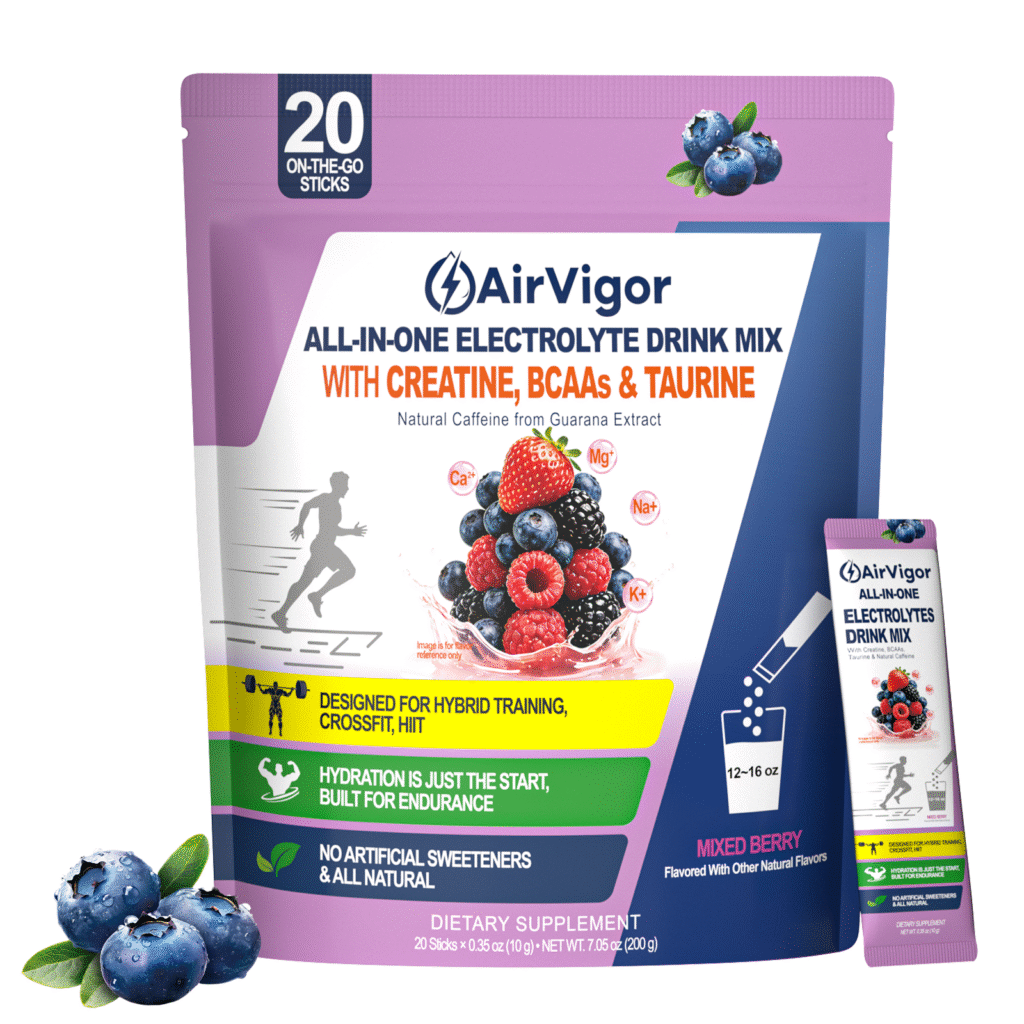
If you’re ready to hydrate smarter during long shifts, AirVigor electrolytes are available with Amazon in-stock fulfillment for fast delivery. For teams, brands, or bulk needs, contact AirVigor for OEM/ODM customization and pricing quotes.
Share:
Contact Expert Team
At AirVigor, performance becomes effortless. We transform advanced nutrition science into clean, effective supplements that help you hydrate, recover, and feel stronger every day. Shop AirVigor on Amazon and experience athlete-trusted formulas—backed by real science and supported by our world-class R&D and production capabilities.
Trust AirVigor
At AirVigor, turning your performance goals into reality is no longer a struggle—it’s a science-driven journey we build together. Whether you’re a runner, lifter, cyclist, yogi, outdoor athlete, or someone simply seeking better daily energy, AirVigor transforms advanced nutrition research into clean, effective, and trustworthy supplements you can feel.
Backed by our U.S. scientific team, global certifications, and world-class production standards, every formula is engineered to deliver real hydration, real recovery, and real performance. And when you’re ready to experience the difference, you’ll find AirVigor products available on Amazon and other major platforms—fast shipping, consistent quality, and a community of athletes already seeing results.
Behind the scenes, our R&D and manufacturing ecosystem also supports specialized formulation development, ensuring AirVigor continues to lead with innovation while keeping quality and safety uncompromised. But at the core, everything we create is built for you—your health, your performance, your momentum.
Choose AirVigor. Feel the science. Elevate your every day.


Subscribe to our newsletter
Sign up to our newsletter and we’ll keep you up to date with the latest arrivals.