Skip to content
Does Vitamin C Help With Recovery: A Science-Based Guide
# Your Trusted Dietary Supplement Brand In US
- Emily

Table of Contents
Most people do not think about vitamin C until something in their body feels slower than usual. Maybe your legs stay sore for two days after a workout. Maybe a long workweek leaves you feeling flat, even when you are eating “normally.” Maybe you get back into training after a break and notice that your joints, muscles, and energy do not bounce back the way they used to. In those moments, vitamin C becomes more than a basic immune vitamin. It becomes part of a bigger question: what does the body actually need to recover well?
Vitamin C does help with recovery, but not as a quick fix. It supports collagen formation, antioxidant defense, immune balance, and normal tissue repair. These are the background systems your body uses after exercise, stress, travel, poor sleep, or daily physical strain. If your intake is already strong, adding more may not feel dramatic. But if your diet is inconsistent or your recovery demand is high, vitamin C can help make recovery feel more stable.
The important point is that recovery is not one thing. It is not only muscle soreness. It includes connective tissue repair, oxidative stress control, hydration, sleep quality, protein intake, and micronutrient sufficiency. Vitamin C does not replace those basics, but it helps several of them work better together. That is why it belongs in a serious recovery discussion, especially for active adults, busy professionals, and people building a long-term supplement routine.
A helpful way to think about vitamin C is this: it does not push your body beyond normal limits; it helps prevent small nutritional gaps from becoming recovery bottlenecks. Like keeping enough fuel in the tank before a long drive, vitamin C may not make the car faster, but running low at the wrong time can make the whole trip harder.
Does Vitamin C Help With Recovery Basics?
Vitamin C helps with recovery by supporting collagen formation, antioxidant protection, and immune balance. It does not directly rebuild muscle or replace sleep and hydration, but it helps your body maintain the internal conditions needed for consistent repair.
What does vitamin C do in the body?
Vitamin C is a water-soluble vitamin, which means your body uses it continuously and does not store large amounts. Because of this, daily intake matters more than occasional high doses.
From a recovery perspective, vitamin C works across multiple systems at the same time. It does not act as a single “recovery trigger,” but supports the environment your body relies on to repair itself.
In practical terms, vitamin C helps the body:
- Support collagen production for tendons, ligaments, and connective tissue
- Reduce excessive oxidative stress after physical or lifestyle strain
- Maintain normal immune activity during recovery
- Improve iron absorption, which supports oxygen delivery and energy
These roles may seem separate, but they often overlap during recovery. For example, after a workout, your body is not only repairing muscle—it is also supporting blood flow, connective tissue, and cellular balance.
One important point for users is that intake from food is often inconsistent. While fruits and vegetables are good sources, real-life eating habits don’t always match ideal recommendations.
- Recommended intake for adults: about 75–90 mg per day
- Active or high-demand lifestyles: often closer to 100–200 mg
- Many people fall below optimal levels on busy or irregular days
This is why some people notice better recovery consistency when they maintain steady vitamin C intake, rather than relying on occasional high consumption.
Is vitamin C only for immunity?
Vitamin C is strongly associated with immune health, but its role in recovery goes beyond preventing illness. Immune activity is directly involved in the recovery process.
After stress—whether from exercise, work, or lack of sleep—the body activates immune-related pathways to:
- Manage inflammation
- Remove damaged cells
- Support early-stage tissue repair
This is where vitamin C becomes relevant.
It helps maintain balance in this process:
- Some inflammation is necessary for adaptation
- Too much inflammation can prolong soreness and fatigue
- Poor regulation can make recovery feel inconsistent
Vitamin C does not block inflammation. Instead, it supports a more controlled response, helping the body return to baseline more efficiently.
This becomes more noticeable in real-life situations such as:
- Training multiple times per week without full recovery
- Experiencing high work or mental stress
- Sleeping less than usual
- Going through travel or irregular schedules
In these cases, people often feel “not fully recovered,” even without injury. Vitamin C supports the body’s ability to handle these repeated stress cycles more smoothly.
Why is vitamin C linked to recovery?
Vitamin C is linked to recovery because recovery is not only about muscles. It involves connective tissue, oxidative stress, and overall system balance.
A practical way to understand this is to break recovery into three layers:
- Muscle recovery → soreness, strength, fatigue
- Tissue recovery → joints, tendons, stiffness
- System recovery → energy, readiness, overall feeling
Vitamin C plays a stronger role in tissue and system recovery. It supports collagen-related structures and helps manage oxidative stress, both of which influence how the body feels after strain.
Different users tend to experience this in different ways:
| User Type | Typical Recovery Issue | Where Vitamin C Helps |
|---|---|---|
| Gym users | Soreness and joint stress | Supports tissue repair and stress balance |
| Runners | Repetitive impact strain | Supports connective tissue |
| Office workers | Stiffness and fatigue | Supports daily recovery baseline |
| Busy professionals | Low energy and inconsistency | Supports overall system stability |
What most users notice is not a sudden improvement, but fewer “bad recovery days.” Recovery feels more predictable, especially during periods of higher demand.
This is why vitamin C is best understood as a support nutrient. It does not replace core recovery habits, but it helps the system work more consistently when those habits are in place.
How Does Vitamin C Help With Recovery?
Vitamin C helps with recovery by supporting collagen synthesis, helping control oxidative stress, and contributing to normal tissue repair. It does not directly speed up recovery, but it improves the conditions that recovery depends on.
How does it support collagen?
Collagen is one of the most important structural components involved in recovery. It is found in tendons, ligaments, cartilage, skin, and blood vessels. These tissues are under constant stress during movement, training, and even daily activity.
Vitamin C is required for proper collagen synthesis. It helps specific enzymes stabilize collagen fibers during formation. Without enough vitamin C, the body can still produce collagen, but the structure may be less stable and less efficient in supporting repair.
This becomes relevant in everyday situations:
- After strength training, tendons and joints absorb load along with muscles
- During running or cycling, repetitive movement places stress on connective tissue
- Long hours of sitting can lead to stiffness in joints and fascia
- Minor strains or discomfort may take longer to settle
Vitamin C supports the process that helps these tissues recover and maintain their structure over time.
For customers comparing products, this is why vitamin C is often paired with collagen:
- Collagen provides amino acids such as glycine and proline
- Vitamin C supports the process that helps the body use those amino acids
This combination is not about faster results, but about improving how effectively the body carries out repair.
How does it reduce oxidative stress?
Oxidative stress increases when the body produces more free radicals than it can comfortably manage. This happens during exercise, but also during stress, poor sleep, travel, and long workdays.
A moderate level of oxidative stress is normal and even necessary for adaptation. However, when levels become too high, recovery may feel more difficult.
Vitamin C acts as an antioxidant, helping the body manage excess free radicals. It does not eliminate oxidative stress completely, but it helps keep it within a range that the body can handle more efficiently.
In practical terms, users may notice:
- Less lingering fatigue after workouts
- More stable energy throughout the day
- A quicker return to normal feeling after busy or stressful periods
This is not an immediate effect, but something that becomes more noticeable with consistent use.
The situations where oxidative stress tends to be higher include:
- High-intensity or long-duration training
- Lack of sleep over several days
- High work or mental stress
- Frequent travel or schedule disruption
Vitamin C helps support the body during these periods by reducing excess strain on cellular systems.
How does it support tissue repair?
Recovery is a continuous process that involves identifying stress, managing inflammation, rebuilding tissue, and strengthening structures over time. Vitamin C contributes to several stages of this process.
It supports tissue repair by:
- Assisting collagen formation for connective tissue
- Helping regulate oxidative stress during recovery
- Supporting immune function involved in repair processes
However, vitamin C does not work in isolation. Its effect depends on the overall recovery environment.
For example:
- Without enough protein, muscle repair will be limited
- Without hydration, nutrient transport and cellular function are affected
- Without sleep, hormonal recovery processes are reduced
Vitamin C works best when these basic factors are already in place.
A practical recovery setup often includes:
- Protein for muscle repair
- Electrolytes and fluids for hydration
- Vitamin C and other micronutrients for tissue and system support
- Adequate rest to allow repair processes to complete
This is why vitamin C is best viewed as part of a system rather than a standalone solution.
Does Vitamin C Help With Recovery Speed?
Vitamin C may help recovery feel faster in certain situations, especially when intake is low or recovery demand is high. However, it does not act as a direct “speed enhancer.”
A more accurate way to describe its effect is that it improves recovery efficiency. It helps reduce delays caused by nutritional gaps, making recovery more consistent rather than dramatically faster.
From a user perspective, this often shows up as:
- Soreness becoming easier to manage
- Recovery between sessions feeling more stable
- Energy returning more predictably
It does not mean:
- Immediate recovery after a workout
- Complete elimination of soreness
- Replacement for proper nutrition and rest
For most customers, this is actually more useful. Instead of relying on short-term effects, vitamin C supports a routine that works over time.
When evaluating recovery supplements, this is an important distinction. Products that promise rapid results may not deliver consistent outcomes, while nutrients like vitamin C provide steady support that becomes more noticeable with regular use.

Does Vitamin C Help With Recovery After Workouts?
Vitamin C helps with recovery after workouts by supporting tissue repair, helping manage oxidative stress, and improving overall recovery stability. It does not directly rebuild muscle like protein, but it plays a supporting role that becomes more noticeable when training frequency or intensity increases.
Does it reduce soreness?
Soreness after exercise, often called delayed onset muscle soreness (DOMS), usually appears 12–48 hours after training. It is influenced by muscle damage, inflammation, and metabolic stress.
Vitamin C does not remove soreness completely, but it can help reduce how long it lasts and how intense it feels. This happens because it supports tissue repair and helps control excessive oxidative stress.
From a practical point of view, soreness depends on several factors:
- Training intensity and volume
- Whether the exercise is new or unfamiliar
- Protein intake after training
- Sleep quality
- Hydration and electrolyte balance
Vitamin C fits into this picture as a supporting factor.
In real-life use, people often report:
- Soreness still occurs, but feels less heavy
- The “tight” feeling resolves more quickly
- Less discomfort when returning to the next session
This is more noticeable when training frequency increases, such as working out 4–5 times per week.
A useful way to look at soreness support:
| Factor Affecting Soreness | Primary Role | Where Vitamin C Helps |
|---|---|---|
| Muscle damage | Structural stress from exercise | Indirect support through repair processes |
| Inflammation | Necessary for adaptation | Helps maintain balance |
| Oxidative stress | Increases after training | Helps reduce excess strain |
This shows why vitamin C alone cannot eliminate soreness, but it can support a smoother recovery process.
Does it improve recovery feel?
Recovery is not only about measurable outcomes. It is also about how your body feels the next day.
Two people can complete the same workout and have similar physical recovery, but one may feel more fatigued, less motivated, or slower to move. This difference often comes from how well the body manages overall stress.
Vitamin C contributes to what many users describe as a “better recovery feel.” This includes:
- Less overall fatigue after training
- More stable energy during the day
- Reduced feeling of being physically drained
This becomes especially relevant for people who:
- Train regularly while working full-time
- Have limited recovery windows between sessions
- Experience inconsistent sleep or meal timing
For these users, recovery is not about a single workout. It is about maintaining a consistent rhythm across days or weeks. Vitamin C supports this by helping the body handle repeated stress more efficiently.
Is it useful for different training types?
Vitamin C supports recovery across different types of exercise, although the role may vary slightly depending on the activity.
For example:
- Strength training places load on muscles and connective tissue
- Endurance training increases oxidative stress over longer durations
- High-intensity training combines both stress and fatigue
- Light or daily activity still requires ongoing repair
Vitamin C works across all of these by supporting general recovery processes rather than targeting one specific outcome.
A simple comparison:
| Training Type | Common Recovery Challenge | Role of Vitamin C |
|---|---|---|
| Strength training | Muscle soreness, joint stress | Supports tissue repair and stress balance |
| Endurance training | Fatigue, oxidative load | Helps manage oxidative stress |
| HIIT training | High intensity, short recovery time | Supports overall recovery stability |
| Daily activity | Low-level fatigue | Maintains baseline recovery |
This is why vitamin C is commonly included in general recovery formulas rather than specialized performance products.
Does faster recovery mean better results?
Many users assume that faster recovery automatically leads to better performance. In reality, recovery and adaptation are closely linked, and pushing recovery too aggressively is not always beneficial.
The body needs a certain level of stress to adapt. When you train, the body responds by rebuilding stronger or more efficient structures. If this process is disrupted, adaptation may be reduced.
Vitamin C supports recovery without overstimulating it. It helps maintain balance rather than forcing the body to recover faster than normal.
However, very high intake over long periods may not provide additional benefits. In some cases, excessive antioxidant intake can reduce certain training signals.
For most users, the practical takeaway is:
- Recovery should be supported, not forced
- Consistency matters more than speed
- Moderate intake works better than extreme intake
This is especially important for customers choosing supplements. Products that promise fast results may not deliver consistent outcomes. Nutrients like vitamin C are more useful for maintaining stable recovery over time.
Who Needs Vitamin C Help With Recovery?
Vitamin C helps with recovery most in people who have higher physical stress, inconsistent diets, or increased recovery demand. This includes active individuals, busy professionals, and people who do not consistently consume enough fruits and vegetables.
Who benefits the most?
Vitamin C becomes more useful when recovery demand increases. This usually happens when the body is dealing with repeated stress, either from physical activity or daily lifestyle factors.
People who tend to benefit more include:
- Individuals training 3–5 times per week or more
- People doing high-intensity or long-duration workouts
- Workers with physically demanding jobs (construction, warehouse, healthcare)
- Individuals under constant mental or work pressure
- People who frequently feel tired or slow to recover
In these cases, the body is constantly repairing tissue, managing stress, and maintaining balance. Vitamin C supports these processes so they do not fall behind.
A simple way to look at it:
| User Group | Main Recovery Pressure | Why Vitamin C Matters |
|---|---|---|
| Active individuals | Frequent muscle and tissue stress | Supports collagen and repair processes |
| Endurance users | Long-duration oxidative stress | Helps manage oxidative load |
| Physically demanding jobs | Repetitive strain | Supports daily tissue maintenance |
| High-stress professionals | Mental and physical fatigue | Supports system recovery balance |
For these users, vitamin C is not about improving performance directly. It is about maintaining consistency.
Which lifestyles increase recovery demand?
Many people underestimate how much daily lifestyle affects recovery. Even without formal training, recovery demand can be high.
Common lifestyle factors that increase demand include:
- Long working hours with limited movement
- Poor or inconsistent sleep patterns
- Frequent travel or changing schedules
- High mental stress or pressure
- Low intake of fresh fruits and vegetables
- Hot environments or heavy sweating
These factors increase the need for:
- Antioxidant support
- Tissue repair
- Immune balance
- Hydration and nutrient stability
Over time, this can lead to a pattern where the body feels “slightly off” rather than clearly unhealthy.
For example:
- Feeling tired after a normal day
- Taking longer to feel ready after light exercise
- Noticing more stiffness or tightness than before
Vitamin C helps support recovery in these situations by maintaining baseline function, not by creating sudden improvements.
What are common signs of low or inconsistent intake?
Severe vitamin C deficiency is rare, but suboptimal intake is common, especially in people with irregular diets.
Early signs are usually mild and easy to overlook. They often appear as slower or less efficient recovery rather than clear symptoms.
Some signs that may suggest low or inconsistent vitamin C intake include:
- Recovery taking longer than expected after workouts
- Increased fatigue during normal activity
- Soreness or stiffness lasting longer than usual
- Skin appearing less resilient or slower to recover
- Feeling run-down during busy or stressful periods
These signs do not always mean vitamin C is the only issue, but they indicate that recovery support may not be fully in place.
Why consistency matters more than intensity
One of the most common mistakes is focusing on high-dose supplements instead of consistent intake.
Vitamin C works best when:
- Intake is steady from day to day
- It is combined with a balanced diet
- It fits easily into a daily routine
Inconsistent intake often looks like:
- Eating well one day, poorly the next
- Taking supplements occasionally instead of daily
- Relying on high doses only during illness or fatigue
A more effective approach is:
- Moderate intake every day
- Simple routine that is easy to follow
- Products that do not require extra effort
A comparison makes this clearer:
| Approach | Result Over Time |
|---|---|
| High dose, irregular use | Unstable recovery, inconsistent results |
| Moderate, daily intake | More stable and predictable recovery |
This is where product format becomes important. People are more likely to stay consistent when supplements are:
- Easy to carry
- Quick to use
- Clearly labeled
- Simple to include in daily habits
For many users, the real benefit of vitamin C comes from routine, not intensity. When intake is consistent, recovery tends to feel more stable, especially during periods of higher demand.

How Much Vitamin C Help With Recovery?
Vitamin C helps with recovery most effectively when taken in moderate, consistent amounts. For most adults, 100–300 mg per day is enough to support recovery, while higher doses are not always necessary and may offer diminishing returns.
What is the right daily amount?
The “right” amount of vitamin C is less about a fixed number and more about how much stress your body is handling on a regular basis. Basic recommendations are designed to prevent deficiency, not to support recovery.
General nutrition guidelines suggest:
- 75 mg per day for adult women
- 90 mg per day for adult men
These levels are enough for basic health, but recovery demand often requires slightly more support, especially for active individuals.
A more practical way to look at intake is by lifestyle:
| Lifestyle Type | Typical Daily Need | Why It Matters |
|---|---|---|
| Low activity, balanced diet | 75–100 mg | Covers basic needs |
| Moderate activity | 100–200 mg | Supports daily recovery |
| Frequent training or stress | 150–300 mg | Helps maintain consistency |
| High demand periods | 200–400 mg | Supports increased repair load |
For most users, the goal is not to reach the highest range, but to stay within a consistent and realistic range.
Is dietary intake enough?
Getting vitamin C from food is ideal, but consistency is often the challenge. Even people who eat healthy may not get the same amount every day.
Common sources include:
- Citrus fruits such as oranges and lemons
- Berries such as strawberries
- Bell peppers
- Kiwi
- Leafy greens
However, everyday habits often look different. Meals change, schedules shift, and food quality varies. This is where intake becomes uneven.
In practice:
- A balanced day may provide over 150 mg
- A busy or irregular day may provide less than 30–50 mg
This fluctuation is what affects recovery over time, not just the average intake.
Is more always better?
It is common to assume that higher doses will lead to better recovery, but vitamin C does not work this way. The body uses what it needs and removes the rest.
Increasing intake from low to adequate levels can make a difference. However, increasing beyond that point usually provides limited additional benefit.
For most users:
- Going from low intake to moderate intake improves consistency
- Going from moderate to very high intake does not significantly change recovery
This is why moderate, steady intake is more effective than occasional high doses.
Can too much vitamin C be a problem?
Vitamin C is generally safe, but very high intake over time is not necessary for recovery and may lead to minor issues.
Possible effects of excessive intake include:
- Mild digestive discomfort
- Unnecessary nutrient imbalance
- Reduced efficiency in certain recovery signals when overused
Typical upper limits are often set around 2000 mg per day, but most people do not need anywhere near that amount.
A more practical approach is to stay within a moderate range that supports daily needs without going to extremes.
How to adjust intake based on real-life situations
Recovery demand changes depending on your routine. Instead of using the same intake every day, small adjustments based on lifestyle can be more useful.
For example:
- Regular training → maintain 100–200 mg daily
- Intense training periods → increase toward 200–300 mg
- Travel or stress → keep intake consistent even if diet changes
- Lower activity → basic intake is usually enough
This flexible approach helps support recovery without making the routine complicated.
Why form and usability matter
Even a well-designed formula will not work if it is difficult to use consistently. In real life, convenience often determines whether a supplement becomes part of a daily routine. People are far more likely to stick with products that are easy to carry, quick to prepare, and clearly dosed, especially when they can be used without changing existing habits. This is why formats like capsules, drink powders, or single-serve packs are widely used—they reduce friction and make daily use more realistic. For most users, the goal is not to find the highest dose, but to find something they can use consistently without effort.
When to Use Vitamin C Help With Recovery?
Vitamin C helps with recovery most effectively when it becomes part of a consistent daily routine. It can be taken after workouts, with meals, or during periods of higher stress. Timing is not the most important factor—consistency is.
Should you take it after workouts?
Taking vitamin C after a workout is a common and practical choice. After exercise, the body is actively repairing tissue, managing oxidative stress, and restoring balance. This makes post-workout a convenient time to include vitamin C.
In real use, post-workout intake works well because it can be paired with existing habits:
- Drinking water or electrolyte mixes
- Consuming protein or a light meal
- Cooling down and transitioning out of training
This helps reinforce consistency.
What vitamin C supports after workouts:
- Collagen-related tissue repair
- Antioxidant balance after physical stress
- Overall recovery stability
However, it is important to keep expectations realistic. Vitamin C is not a fast-acting recovery trigger. It supports the process, but it does not replace protein intake, hydration, or rest.
A simple guideline:
| Timing Option | Practical Benefit |
|---|---|
| After workout | Easy to combine with hydration and nutrition |
| Within 1–2 hours | Supports overall recovery routine |
| Same time daily | Builds consistent intake habit |
For most users, post-workout timing works well because it is easy to remember and easy to repeat.
Does timing really matter?
From a physiological perspective, timing is not strict. Vitamin C is used continuously in the body, so it does not require a narrow timing window to be effective.
What matters more:
- Daily intake consistency
- Total amount consumed over time
- How well the routine fits into your lifestyle
In real-life situations, timing becomes more about behavior than biology.
People are more consistent when they:
- Take vitamin C at the same time each day
- Attach it to an existing habit
- Use formats that require minimal effort
For example:
- Taking it with breakfast
- Mixing it into a drink after training
- Using it during a work break
These patterns improve adherence, which has a bigger impact on results than exact timing.
When should intake be more consistent?
There are periods when maintaining steady vitamin C intake becomes more important because recovery demand increases.
Common situations include:
- Training more frequently than usual
- Starting a new workout program
- Increasing intensity or volume
- Experiencing high work or mental stress
- Traveling or dealing with irregular schedules
- Sleeping less than usual
During these periods, the body is under more strain and requires more consistent support.
Users often notice that recovery feels less predictable during these times. Maintaining steady vitamin C intake helps reduce fluctuations.
A simple comparison:
| Situation | Recovery Challenge | Role of Consistent Vitamin C |
|---|---|---|
| New training phase | Increased soreness | Supports tissue adaptation |
| High stress work period | Fatigue, low energy | Supports system balance |
| Travel | Irregular meals and sleep | Maintains nutrient stability |
| Busy weeks | Reduced recovery time | Supports consistency |
This is where vitamin C becomes more relevant—not because it changes recovery instantly, but because it helps maintain stability when routines are disrupted.
How to build a routine that works
The biggest challenge for most users is not choosing supplements, but maintaining them.
A practical vitamin C routine should:
- Take less than one minute to complete
- Fit into an existing daily habit
- Require minimal preparation
- Be easy to repeat in different environments
Examples of simple routines:
- Taking a capsule with breakfast
- Using a stick pack after workouts
- Mixing a drink during a work break
- Keeping a supply in a gym bag or travel kit
The key is reducing friction. The easier the routine, the more likely it will be followed consistently.
This is especially important for recovery, because the body benefits more from steady input than from occasional use.
Can vitamin C be combined with other nutrients?
Vitamin C is often used alongside other recovery-related nutrients because recovery is a multi-step process.
Common combinations include:
- Vitamin C + collagen → supports connective tissue
- Vitamin C + electrolytes → supports hydration and balance
- Vitamin C + protein → complements muscle recovery
- Vitamin C + magnesium → supports muscle relaxation
These combinations reflect how users actually approach recovery. Most people are not looking for a single ingredient, but for a routine that covers multiple needs.
For example:
- A gym user may combine protein and hydration with vitamin C
- A runner may focus on electrolytes and antioxidant support
- A busy professional may use a simple daily formula for general recovery
The goal is not to complicate the routine, but to make it complete and easy to maintain.
Conclusion:
Vitamin C does help with recovery, but its role is supportive rather than immediate. It contributes to collagen formation, helps manage oxidative stress, and supports more stable recovery over time. It works best when combined with consistent habits like proper nutrition, hydration, and sleep.
For most users, the practical value of vitamin C is simple: it helps reduce inconsistency. Recovery may not feel dramatically faster, but it becomes more predictable and easier to maintain.
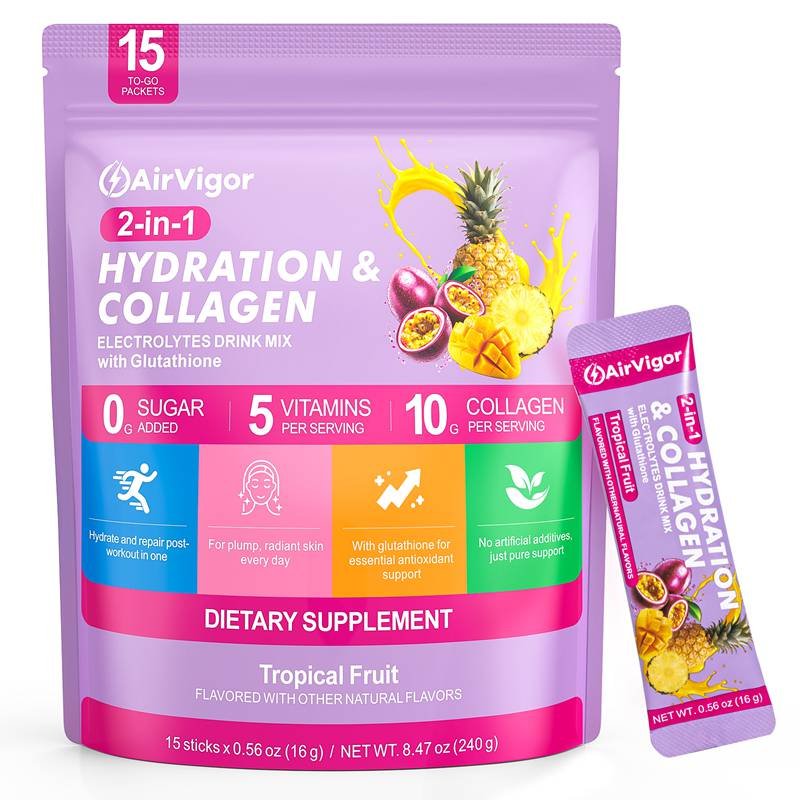
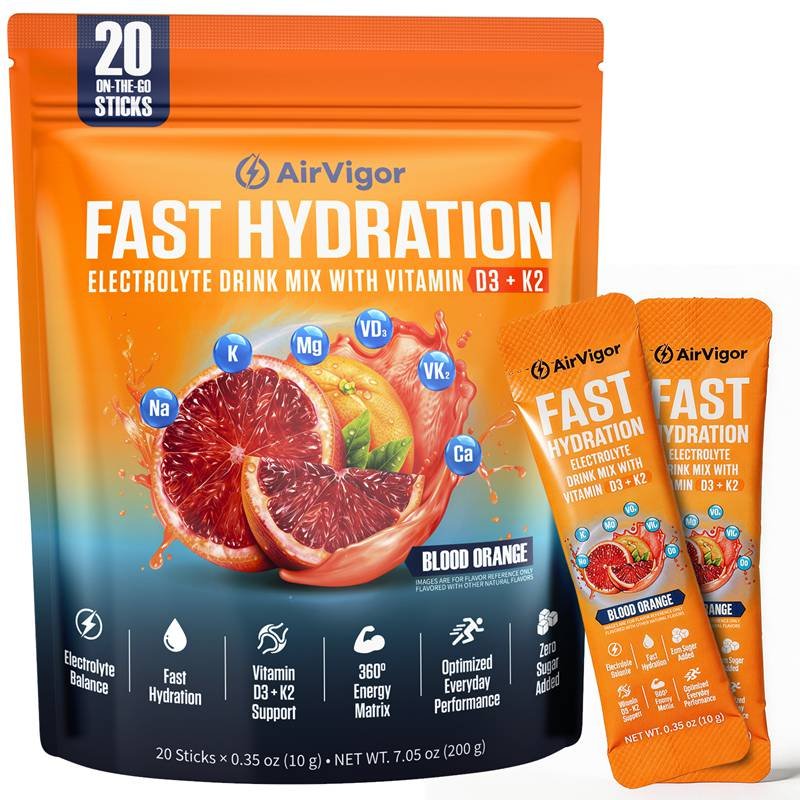
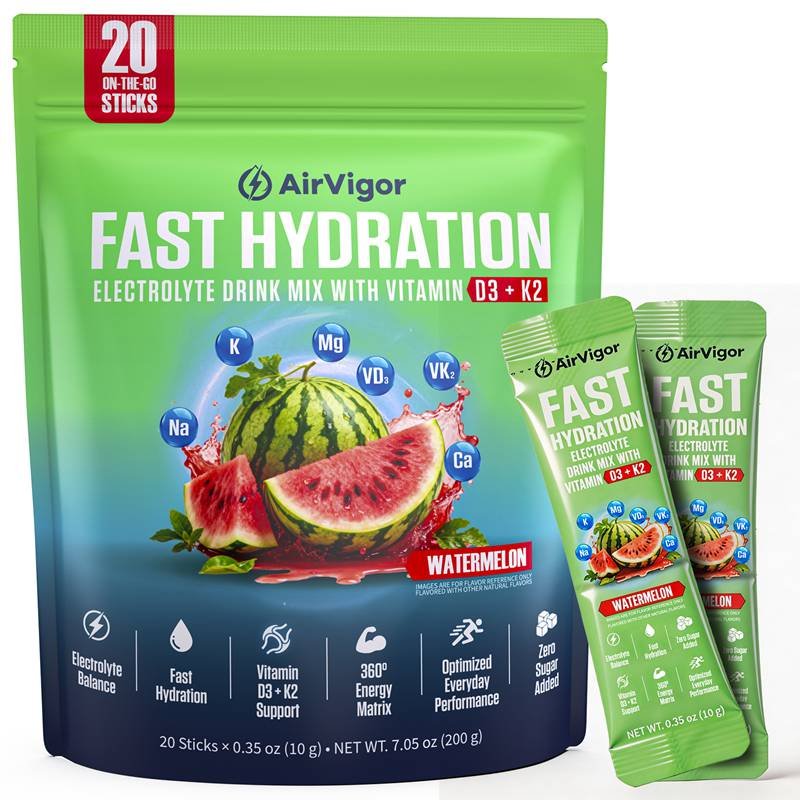
If you are looking to improve your daily recovery routine, choosing a ready-to-use, well-formulated product is usually the most efficient option. AirVigor offers recovery-focused supplements designed for convenience, clear dosage, and consistent use, making them easier to integrate into everyday life.
For brands or businesses exploring product development, custom formulation is also available, but for most users, starting with a reliable, ready-made product is the more direct and practical choice.
Share:
Contact Expert Team
At AirVigor, performance becomes effortless. We transform advanced nutrition science into clean, effective supplements that help you hydrate, recover, and feel stronger every day. Shop AirVigor Supplements on Amazon and experience athlete-trusted formulas—backed by real science and supported by our world-class R&D and production capabilities.
Trust AirVigor
At AirVigor, turning your performance goals into reality is no longer a struggle—it’s a science-driven journey we build together. Whether you’re a runner, lifter, cyclist, yogi, outdoor athlete, or someone simply seeking better daily energy, AirVigor transforms advanced nutrition research into clean, effective, and trustworthy supplements you can feel.
Backed by our U.S. scientific team, global certifications, and world-class production standards, every formula is engineered to deliver real hydration, real recovery, and real performance. And when you’re ready to experience the difference, you’ll find AirVigor products available on Amazon and other major platforms—fast shipping, consistent quality, and a community of athletes already seeing results.
Behind the scenes, our R&D and manufacturing ecosystem also supports specialized formulation development, ensuring AirVigor continues to lead with innovation while keeping quality and safety uncompromised. But at the core, everything we create is built for you—your health, your performance, your momentum.
Choose AirVigor. Feel the science. Elevate your every day.


Subscribe to our newsletter
Sign up to our newsletter and we’ll keep you up to date with the latest arrivals.