Skip to content
Does Creatine Make You Retain Water: A Practical Guide
# Your Trusted Dietary Supplement Brand In US
- Emily

Table of Contents
Creatine is one of the few supplements that can make the scale jump fast—so it’s normal to wonder if you’re retaining water or getting “puffy.” The key is understanding what kind of water you’re seeing. Creatine most commonly increases intracellular water (inside muscle), which can improve training performance and make muscles look fuller. That’s very different from subcutaneous water (under the skin) or digestive bloating, which are more often driven by carb/sodium swings, poor sleep, stress, alcohol, or inconsistent hydration.
In practical terms: creatine can raise scale weight in the first 1–3 weeks, especially with a loading phase, higher carbs, or harder training. For most people it stabilizes once muscle stores saturate. This guide breaks down where the water goes, how long it lasts, how to prevent bloating, and the simplest routine to keep results predictable—especially if you sweat a lot and need electrolytes to keep hydration consistent.
What Does “Water Retention” Mean?
“Water retention” can mean digestive bloating, fluid under the skin, or water stored inside muscle cells. Creatine is most associated with intracellular water (in muscle), which can support training performance and a fuller look. If you notice “puffiness,” it’s often driven by sodium/carb swings, stress, poor sleep, hormonal shifts, or inflammation—not creatine alone.
What is water retention vs bloating?
When people say “creatine made me retain water,” they might mean one of two experiences:
Bloating (GI):
- stomach feels distended
- gassy, pressure
- happens soon after taking a dose
- often improves by adjusting how you take creatine
Water retention (fluid shift):
- scale weight changes
- body looks “fuller” or occasionally “softer”
- can fluctuate with diet, sleep, stress
- often stabilizes over weeks
A huge mistake is treating both as the same thing. If your stomach is the issue, you troubleshoot dosing and mixing. If your whole-body look is the issue, you troubleshoot consistency: carbs, sodium, sleep, stress, training inflammation.
Where does excess fluid build up?
Your body stores water in different “compartments.” The big three for physique and comfort are:
- Intracellular (inside muscle cells): can improve “pump” and muscle fullness
- Subcutaneous (under the skin): can blur definition, especially midsection
- Gastrointestinal (in the gut): feels bloated; may not change “definition” elsewhere
You can’t solve the problem if you don’t identify the compartment. The scale doesn’t tell you. Your symptoms do.
Can creatine cause fluid build up?
Creatine can increase total body water for some people, but the most common and expected shift is water moving into muscle. That’s not “bad water.” That’s part of why creatine can help performance in short, intense efforts.
If you’re seeing obvious swelling in ankles/hands with other symptoms, don’t self-diagnose that as “creatine water.” Healthy training-related water shifts are common. Medical fluid retention patterns are a different category.
Let’s be blunt: most “water retention” fear is actually control fear. People hate not knowing whether they’re moving toward their goal. Creatine can temporarily blur the signal because the scale moves faster than your confidence.
Here’s why water changes are so easy to misread:
Training creates water shifts.
Hard sessions cause micro-damage. Your body increases local fluid to support repair. That’s why people can weigh more after heavy legs even without changing diet.
Carbs store with water.
When you store glycogen, you store water with it. So if you start creatine and also eat more carbs (very common), you’ll gain water from both.
Sodium changes water distribution.
A higher-sodium day can increase temporary water retention. A lower-sodium day can make you look “drier.” The body seeks balance, and that balance fluctuates.
Stress and sleep are water levers.
Poor sleep and high stress can change fluid regulation, appetite, and inflammation. People often start a new training block (plus creatine) during busy life periods, then blame the supplement.
So what’s the practical win? Stop trying to eliminate water. Instead, make your inputs consistent so water becomes predictable.
For active people, creatine works best inside a system: training + hydration + recovery. That’s why many users pair creatine with a straightforward electrolyte routine, especially when sweat is high. If you sweat a lot and you replace sweat losses with plain water only, you can feel off, chase hydration late in the day, and create the “puffy rebound” effect. That pattern can look like “creatine water retention,” but it’s really inconsistent hydration + electrolytes.
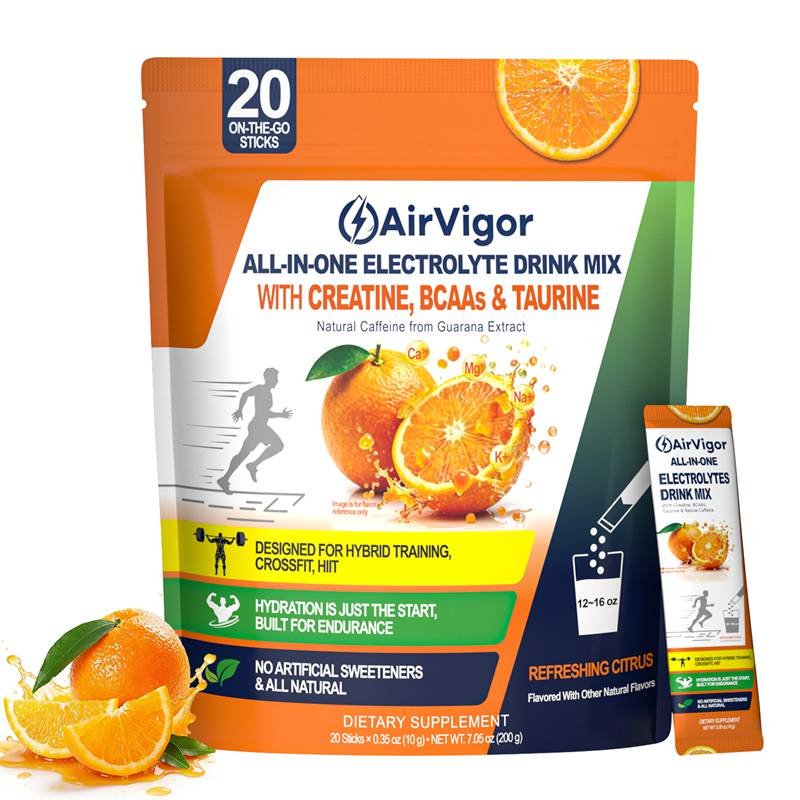
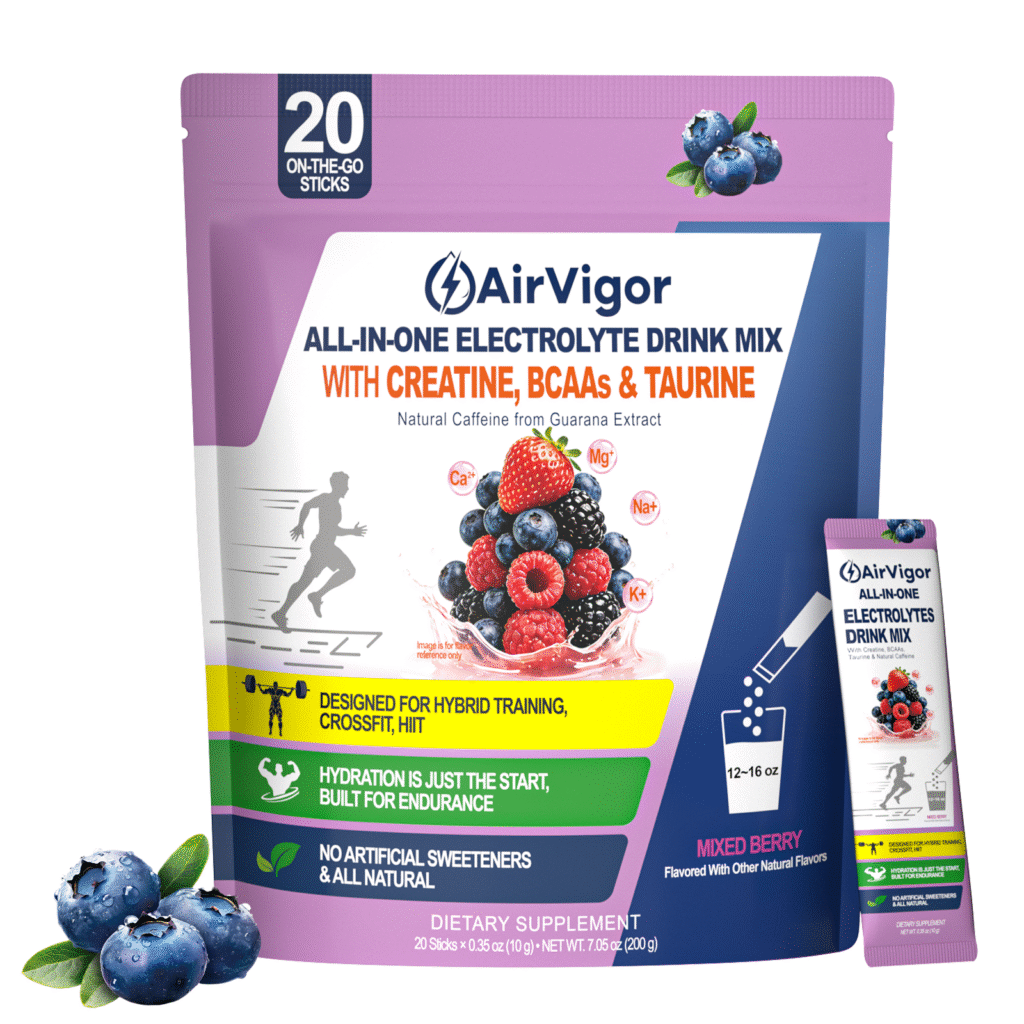
AirVigor’s approach is built for consistency: products designed for people who train, sweat, and want routines that are easy to repeat. The goal isn’t to overwhelm you with options. The goal is to remove the “why do I feel different every day?” problem.
If you remember one thing from this section: water retention isn’t one thing. It’s several things. Creatine is mostly linked to muscle water. If your issue is GI bloating, you adjust dosing. If your issue is “soft look,” you stabilize the week—sleep, sodium, carbs, hydration—and give your body time to settle.
Does Creatine Cause Water Retention?
Yes, creatine can increase scale weight early, most noticeably in the first 1–3 weeks. This is usually due to increased water stored with creatine in muscle (and often higher glycogen from better training and eating). A loading phase can intensify the initial jump. For most people, water changes stabilize once muscle creatine stores reach a steady level.
Does creatine increase total body water?
For many people, yes—but “total body water” is not the most useful phrase. What matters is where that water goes.
Most practical outcomes people notice:
- slightly higher scale weight
- better pumps
- fuller muscles
- improved performance consistency in repeated efforts
If those happen and your waist measurement stays stable, that’s usually a good sign—not a problem.
Why did I gain 10 pounds after taking creatine?
This is a top anxiety search because it feels extreme. Here’s the honest answer:
A 10-pound increase can happen, but it’s rarely one single cause. It’s often a stack:
- Loading dose (big daily grams)
- More carbs (more glycogen + water)
- Harder training (inflammation + repair fluid)
- More sodium (common during bulking or eating out)
- More overall food volume (gut content weighs something too)
If you started creatine and also started “taking training seriously,” you changed multiple levers at once.
Is creatine water retention real or overstated?
It’s real, but often misunderstood. The water shift is usually:
- most noticeable early
- self-limiting (it levels off)
- not fat
- often inside muscle
The fear is overstated because many people interpret “scale up” as “fat up,” even when other metrics disagree.
If you want a 2-year evergreen article that actually helps readers, you need to teach them how to think about the scale.
The three-metric rule
If you only track weight, you’ll overreact. Use three metrics:
- Weekly average weight (not one day)
- Waist measurement (same spot, weekly)
- Performance trend (strength, reps, or training density)
If weight rises but waist stays stable and performance improves, you’re likely seeing water/glycogen effects—not fat gain.
The biggest culprit: loading + lifestyle changes
Loading is optional. Some people love it because it saturates faster. Others hate it because it creates:
- faster scale shifts
- more GI issues
- more confusion
If your reader is anxious about water retention, the best advice is often: skip loading. Use a maintenance dose and let saturation happen gradually.
| If This Is You… | Most Likely Cause | Best Next Step |
|---|---|---|
| Up 2–6 lb in 2 weeks, waist stable | muscle water + glycogen | keep dose consistent 2–4 weeks |
| Up 8–10 lb fast, started loading + eating more | loading + carb/sodium increase | stop loading; normalize diet for 7 days |
| Stomach bloated after dose | GI tolerance issue | split dose; take with food; mix fully |
| Look “soft” after salty meals, poor sleep | sodium/sleep/stress swings | fix week basics; don’t change creatine yet |
| Weight up + waist up steadily | calorie surplus trend | adjust calories; creatine isn’t the main driver |
Why AirVigor matters here?
People don’t quit creatine because creatine is “bad.” They quit because the experience feels unpredictable. AirVigor’s role in a customer’s routine is to reduce friction: consistent dosing guidance, stable product quality, and an ecosystem that supports real training life—especially hydration and electrolytes for heavy sweaters.
If you want long-term results, avoid dramatic moves. Make the routine boring. The boring plan is what gets repeated long enough to matter.

Where Does Creatine Store Water?
Creatine is stored mainly in skeletal muscle, and water associated with creatine storage tends to be intracellular—inside muscle cells. This can increase scale weight while making muscles look fuller. Subcutaneous “puffiness” is more often driven by diet swings, stress, poor sleep, hormonal shifts, and inflammation than by creatine itself.
Is water stored inside muscle cells?
Yes. This is why creatine can change how your muscles look and feel.
Intracellular water can:
- increase muscle “fullness”
- improve workout pumps
- support repeated high-intensity performance
- make training feel more stable
If your arms and shoulders look fuller while your waist stays stable, that’s a common pattern of intramuscular storage—not “getting fat.”
Does creatine cause subcutaneous water?
Some people feel that it does, but it’s not consistent—and that inconsistency is the clue.
Subcutaneous water is heavily influenced by:
- sodium intake changes
- carb intake changes
- stress/sleep
- menstrual cycle (for women)
- inflammation after hard training
- alcohol
If someone changes all those variables while starting creatine, they’ll blame creatine for a broader physiology story.
Why muscle fullness feels like bloating?
If you’re used to being lean and “flat,” muscle fullness can feel like puffiness—especially during a cut or if you’re hyper-aware of your body.
Use objective checks:
- waist measurement
- photos in consistent lighting
- weekly averages
If those are stable, you’re usually fine.
This section is where your article earns trust—because it separates “looks” from “mechanisms.”
Many readers don’t care about intracellular vs subcutaneous water as science terms. They care about:
- Do I look worse or better?
- Do I feel heavy or strong?
- Will this ruin my definition?
So let’s translate:
Intracellular water = performance-friendly water
When water is inside muscle, many people like the result:
- muscles look more rounded
- pumps come easier
- training feels less “flat”
It can also support the mental side of training. Feeling a better pump and stronger sets increases adherence. Adherence is what drives long-term transformation.
Subcutaneous water = usually a lifestyle signal
When someone looks “soft,” it’s often not creatine. It’s the weekly pattern:
- inconsistent sleep
- salty meals + low activity
- big carb swing weekend
- stress + poor recovery
- training soreness and inflammation
That’s why the solution isn’t usually “stop creatine.” It’s “stabilize the week.”
A simple “definition protection” approach
For physique-focused readers, this is gold:
- Keep sodium roughly consistent day to day
- Avoid massive carb swings
- Don’t judge your physique the day after a brutal session
- Sleep like it’s part of your program
- Hydrate consistently, and use electrolytes when sweat is high
This is where AirVigor’s electrolyte line fits naturally for the target audience: active people who sweat. When electrolytes are stable, hydration is stable. When hydration is stable, water distribution is less chaotic. Readers don’t want complicated. They want repeatable.
If you’re building this as a pillar page, you can also include internal links later to supporting articles like:
- “Creatine on a cut: should you keep it?”
- “Creatine monohydrate vs HCl: what’s the difference?”
- “Electrolytes for training: sodium vs potassium vs magnesium”
Those build topical authority around this page without changing the core structure.
Is Creatine Bloating or Weight Gain?
Creatine-related weight gain is usually water + glycogen, not fat. “Bloating” is typically digestive and often caused by large doses (especially loading), poor mixing, or taking creatine on an empty stomach. Using 3–5g/day, splitting doses, and maintaining consistent hydration/electrolytes reduces discomfort for many users.
Is creatine weight gain fat or fluid?
Creatine doesn’t contain calories and doesn’t “turn into fat.” Early weight changes are most often:
- muscle water
- glycogen storage (from better training and carbs)
- increased food volume
- temporary inflammation fluid from hard training
If you want to know if it’s fat, use the waist measurement trend over weeks—not a single weigh-in.
Why early creatine use feels uncomfortable?
Discomfort is usually about how it’s taken:
- too much at once
- minimal water, poor mixing
- empty stomach
- combined with harsh pre-workouts or sweeteners
The fix is usually easy: smaller dose, better mixing, with food.
Does dosage affect digestive bloating?
Yes. Dose size is a common driver of GI complaints. If a reader says “creatine bloats me,” your pillar page should give them a tolerance-first protocol:
- 3g/day for 7 days
- then 5g/day if tolerated
- split into 2 doses if needed
- take with a meal or post-workout shake
- stay consistent for 2–3 weeks before judging
This section is where you turn skeptical readers into long-term customers—because you give them a plan that respects real life.
The “GI-friendly creatine” protocol
If your stomach is sensitive, don’t start with an aggressive approach. Start with something your gut will accept. Here’s a practical ramp:
- Days 1–7: 3g/day with food
- Week 2+: 5g/day with food
- If bloating occurs: split into 2–3g twice/day
- Mix thoroughly in enough liquid
- Avoid stacking with too many new products at once
| Protocol | Typical Dose | Pros | Cons | Best For |
|---|---|---|---|---|
| Maintenance-only | 3–5g/day | stable scale changes; fewer GI issues | slower saturation | most people |
| Loading + maintenance | 20g/day 5–7 days then 3–5g | fastest saturation | more GI risk; bigger scale jump | short timeline athletes |
| Split maintenance | 2–3g twice/day | best tolerance | requires consistency | GI-sensitive users |
“Bloat” is sometimes not creatine
A high-quality pillar page also admits what readers suspect: sometimes it’s not creatine.
If they changed any of these at the same time, the “bloating” could be from:
- more protein or new protein powders
- higher fiber suddenly
- sugar alcohols in “zero sugar” products
- carbonated drinks
- new pre-workouts or caffeine habits
Your guidance: change one variable at a time. If creatine is the only new thing, adjust dosing. If multiple things changed, simplify.
Where AirVigor fits?
AirVigor customers often want two things:
- performance support (creatine)
- hydration stability (electrolytes)
When both are consistent, many users report fewer “random bad days.” That matters because bad days cause people to quit routines too early. The best supplement is the one you actually stick with.
How Long Does Water Retention Last?
Creatine-related water changes are usually most noticeable in the first 1–3 weeks, then stabilize by weeks 3–4 once muscle stores reach a steady state. If you stop creatine, scale weight may gradually decrease over several weeks, depending on your diet, training intensity, and hydration consistency.
Will creatine water retention go away?
For most people, the “sudden jump” goes away—meaning it stops climbing and becomes stable. While using creatine, you may maintain slightly higher muscle water. That’s normal and often part of the benefit.
If your concern is appearance, the key is not chasing day-to-day “dryness.” It’s creating a stable routine so your look is consistent.
What happens after the loading phase?
After loading, many users feel better because:
- dosing becomes smaller
- GI issues often reduce
- scale changes slow down
- the body settles into a steady level
If loading stresses you out, skip it. Results still happen—just more gradually.
Does stopping creatine reduce water weight?
Often yes, but not instantly. Your body’s creatine stores decline over time if you stop supplementation, and the associated water shift may fade. But remember: if you keep training hard and eating carbs, you’ll still store glycogen and water. So don’t expect to return to an exact “before” number if your lifestyle has upgraded.
The biggest reason people fail to benefit from creatine is timing. They judge too early.
Timeline expectations that keep people sane
If you want this page to hold rankings for years, give readers a timeline they can trust.
Week 1:
- potential weight bump (especially loading)
- possible GI sensitivity if dosing is sloppy
- performance may not “feel” different yet
Weeks 2–4:
- water changes stabilize
- performance benefits become more noticeable
- routines feel smoother, especially with consistent hydration
Month 2+:
- steady-state benefits: training consistency, strength and volume support
- scale is less dramatic; progress becomes clearer
| Time on Creatine | What’s Typical | What to Track | What to Avoid |
|---|---|---|---|
| Days 1–7 | mild scale bump | daily weight (for avg), hydration | judging single weigh-ins |
| Weeks 2–4 | stabilization | waist, photos, performance | big carb/sodium swings |
| Month 2+ | steady routine | strength trend, recovery | quitting “because scale” |
The “why does it keep changing?” problem
If a reader says, “I’m 4 weeks in and still fluctuating,” the honest answer is: fluctuations are normal, but the biggest drivers are usually lifestyle:
- sodium changes
- weekend carb swings
- inconsistent sleep
- stress
- alcohol
- soreness/inflammation from training
Creatine doesn’t create chaos; chaotic weeks create chaos. Creatine just got added during the chaos.
How AirVigor helps stability?
For many active people, the missing link is hydration quality. If they sweat and they only drink plain water, they might feel off and overcorrect later. A consistent electrolyte routine—especially during intense blocks—helps keep hydration stable and makes the “creatine phase” feel calmer.
A calm routine is what people stick with. A routine people stick with is what changes their body over months.

How Can You Reduce Creatine Water Retention?
To reduce unwanted “puffiness,” avoid loading, use a consistent 3–5g/day dose, split doses if needed, and stabilize carbs/sodium and sleep. Hydrate consistently rather than chugging randomly. If you sweat heavily, use electrolytes to prevent dehydration-rebound fluid swings and fatigue. The goal is predictable hydration—not zero water.
Do I need to drink more water when taking creatine?
You don’t need to flood yourself, but you do need consistency.
A good guideline for readers:
- Don’t “panic-chug.”
- Instead, set a baseline: a consistent number of bottles per day.
- Watch thirst, urine color, and training performance.
If you train harder (common when starting creatine), your fluid needs may rise because sweat rises. That’s a training reality, not a creatine danger.
How hydration affects creatine uptake?
Hydration doesn’t “activate” creatine, but it affects how you feel during training:
- dehydration can make workouts feel harder
- pumps feel weaker
- recovery feels slower
- headaches/cramps become more likely (especially with sweat loss)
People sometimes blame creatine for these feelings when the real issue is hydration and electrolytes.
Does electrolyte balance matter?
Yes—especially if your training includes sweat (HIIT, CrossFit, hot yoga, long gym sessions, outdoor work, endurance).
Sweat contains sodium and other minerals. If you only replace sweat with plain water, you can feel:
- weak or “flat”
- headachy
- crampy
- unusually tired
That’s not “creatine bloat.” That’s hydration imbalance. Electrolytes make your hydration more functional.
Should creatine be taken daily?
For most users, daily use is the simplest method to maintain steady muscle creatine stores. It reduces “on/off swings,” and it makes your experience more predictable. If you prefer cycling, you can, but consistency generally wins for most people.
Here’s the section readers will screenshot and actually follow.
The “Predictable Creatine” playbook
If your goal is to keep benefits and minimize water drama:
Pick maintenance dosing first
Start with 3–5g/day. Skip loading unless you have a time-sensitive reason and you tolerate it well.
Split the dose if you’re sensitive
2–3g twice/day often reduces GI issues and makes hydration feel smoother.
Take with enough fluid and preferably food
This is one of the simplest ways to reduce discomfort.
Stabilize carbs and sodium for 7–10 days
Not “perfect nutrition.” Just consistent. If you eat wildly different weekend vs weekday, your water will be wildly different too.
Use electrolytes when sweat is real
If you sweat a lot, electrolytes can prevent the “dehydrated → overdrink → puffy rebound” loop.
| Symptom | Most Likely Cause | Fix Now | Re-check In |
|---|---|---|---|
| Scale up fast, waist stable | muscle water + glycogen | keep dose steady | 2 weeks |
| Scale up fast, started loading | loading + lifestyle stack | stop loading, 5g/day | 7 days |
| Stomach bloating | dose too big / poor mixing | split dose, take with food | 3–5 days |
| Puffy after salty meals | sodium swing | keep sodium consistent | 3–7 days |
| Headache/cramps on creatine | sweat + low electrolytes | add electrolytes on training days | 1 week |
| “Soft look” + poor sleep | stress/sleep issue | fix sleep routine | 1–2 weeks |
Where AirVigor fits?
If you’re a serious trainee, you’re not just buying creatine. You’re buying consistency.
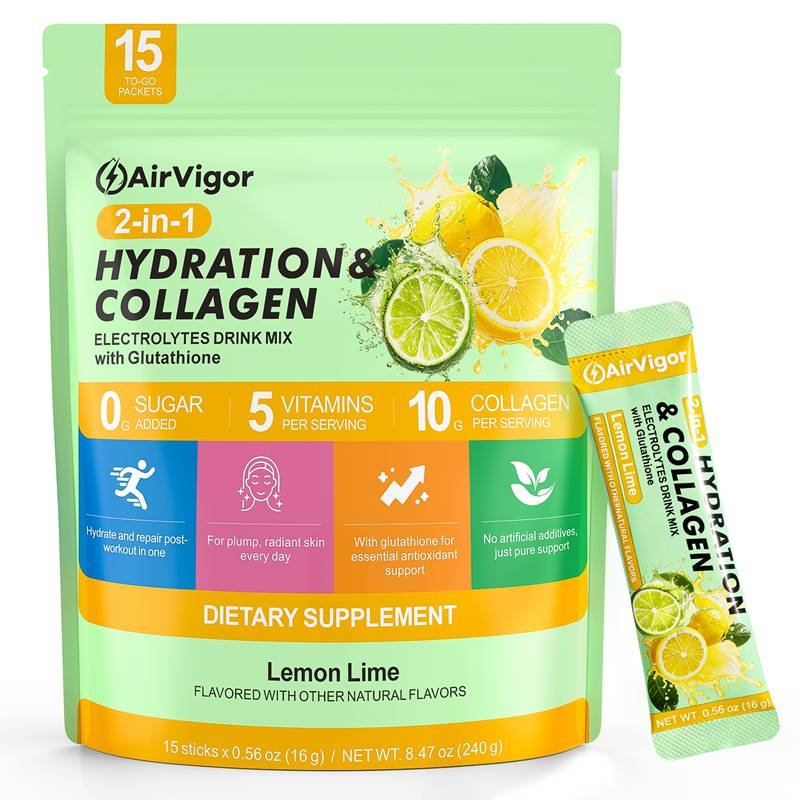
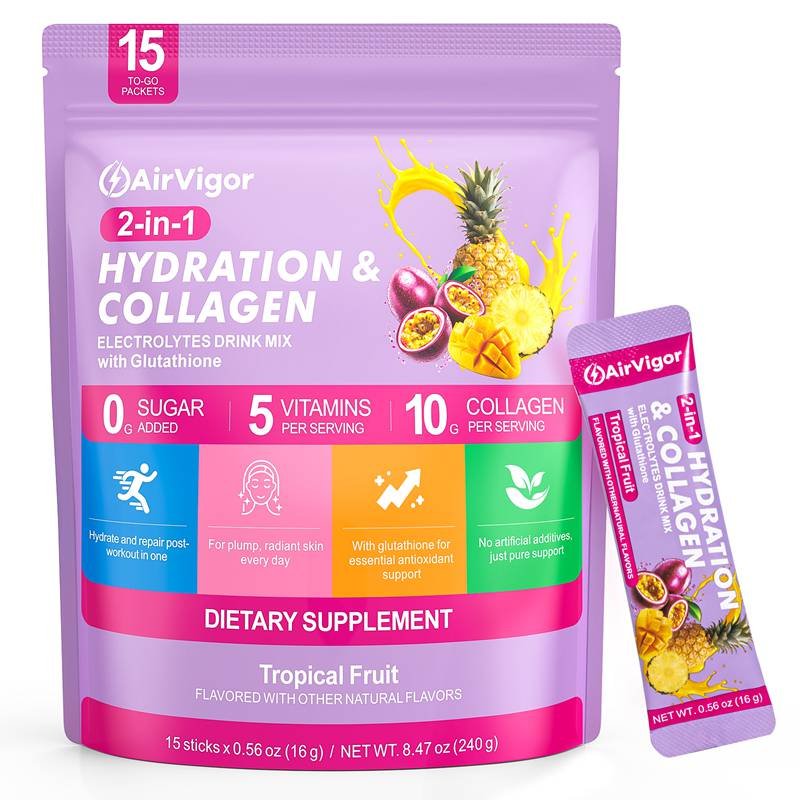
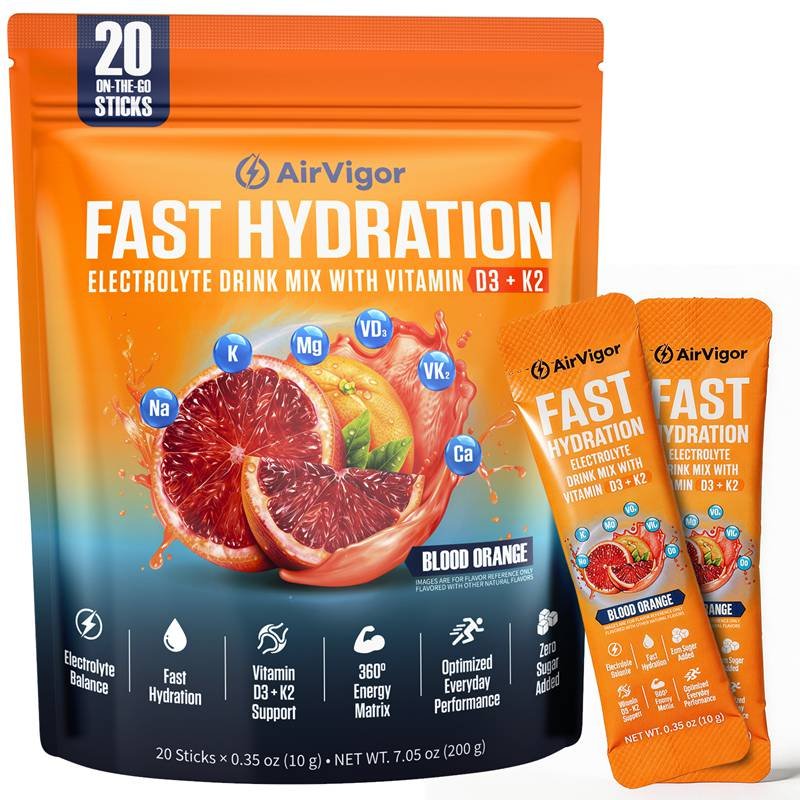
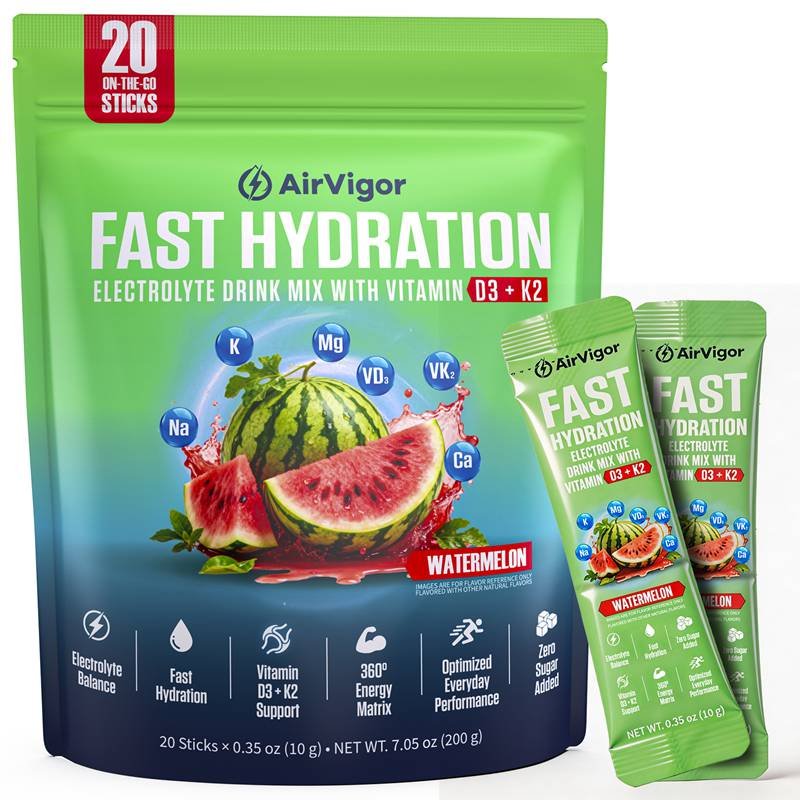
- If you sweat hard: AirVigor electrolyte formulas support hydration routines that are easier to execute.
- If you want a simple creatine plan: consistent daily dosing + clear mixing guidance reduces confusion.
- If you run a brand, gym, or retail channel: AirVigor’s manufacturing and documentation (COA, compliance-oriented production systems) supports repeatable product quality and customer trust.
The best conversion strategy isn’t pressure. It’s clarity. When readers feel “I understand what’s happening,” they become buyers because uncertainty disappears.
Conclusion
Creatine can increase scale weight early, but the “retained water” is usually inside muscle, not under the skin—and it typically stabilizes after a few weeks. If you feel bloated, the fix is usually practical: skip loading, use 3–5g/day, split doses if needed, mix well, and keep carbs/sodium/sleep consistent. For heavy sweaters, pairing creatine with electrolytes can prevent dehydration-rebound swings that people often mistake for “creatine puffiness.”
If you want a routine that’s simple and repeatable, build it around a consistent daily creatine dose and hydration support you can trust—this is exactly where AirVigor Creatine (and AirVigor electrolytes on sweaty training days) fits naturally for long-term performance without confusion.
Ready to Buy AirVigor or Request Custom Quotes?
If you want a routine that feels reliable—creatine for performance plus hydration support that matches real training—AirVigor is built for active people who value consistency.
Option 1: Buy AirVigor (In Stock)
If you want fast delivery and a simple setup, purchase AirVigor products through Amazon inventory. Choose creatine for daily performance support and add electrolytes if your training involves meaningful sweat.
Option 2: Custom Formula + Wholesale Pricing
If you’re a brand, gym, retailer, or distributor, AirVigor (Atom Nexus Inc.) supports custom development across:
- Creatine powders
- Electrolyte powders
- Protein powders
- Multi-function blends (performance + hydration + recovery)
Packaging options include stick packs, tubs, pouches, and bulk formats, with sampling and production timelines designed for commercial needs.
Share:
Contact Expert Team
At AirVigor, performance becomes effortless. We transform advanced nutrition science into clean, effective supplements that help you hydrate, recover, and feel stronger every day. Shop AirVigor on Amazon and experience athlete-trusted formulas—backed by real science and supported by our world-class R&D and production capabilities.
Trust AirVigor
At AirVigor, turning your performance goals into reality is no longer a struggle—it’s a science-driven journey we build together. Whether you’re a runner, lifter, cyclist, yogi, outdoor athlete, or someone simply seeking better daily energy, AirVigor transforms advanced nutrition research into clean, effective, and trustworthy supplements you can feel.
Backed by our U.S. scientific team, global certifications, and world-class production standards, every formula is engineered to deliver real hydration, real recovery, and real performance. And when you’re ready to experience the difference, you’ll find AirVigor products available on Amazon and other major platforms—fast shipping, consistent quality, and a community of athletes already seeing results.
Behind the scenes, our R&D and manufacturing ecosystem also supports specialized formulation development, ensuring AirVigor continues to lead with innovation while keeping quality and safety uncompromised. But at the core, everything we create is built for you—your health, your performance, your momentum.
Choose AirVigor. Feel the science. Elevate your every day.


Subscribe to our newsletter
Sign up to our newsletter and we’ll keep you up to date with the latest arrivals.