Skip to content
What Is Creatine in Electrolyte Powder:How Does It Work
# Your Trusted Dietary Supplement Brand In US
- Emily

Table of Contents
Many workouts don’t fail at the start — they fall apart halfway through. You may feel strong in the first few sets, but then your energy drops, your muscles fatigue faster, and your pace becomes harder to maintain. This is often not a motivation issue, but a mismatch between how your body produces energy and how it manages hydration.
Creatine and electrolytes support two critical systems that directly affect performance. Creatine helps maintain rapid energy output for high-intensity efforts, while electrolytes regulate fluid balance, muscle contraction, and nerve signaling. When these systems are not aligned, performance becomes inconsistent, especially during longer or more demanding sessions.
Creatine in electrolyte powder combines both functions into one formula. It supports energy availability and hydration at the same time, helping reduce fatigue, improve consistency, and make daily supplementation easier to maintain. For users who want stable performance without managing multiple products, this approach offers a more practical solution.
What Is Creatine in Electrolyte Powder
Creatine in electrolyte powder is a combined supplement that delivers creatine for energy support and electrolytes for hydration in one formula. It is designed to help maintain strength, fluid balance, and muscle function during training or daily activity, especially when fatigue, sweat loss, or inconsistent recovery become limiting factors.
What Does Creatine Do in the Body
Creatine helps regenerate ATP, the body’s primary energy source for short, high-intensity activity, allowing muscles to sustain strength and repeated output during training.
Creatine works by increasing phosphocreatine stores in muscle cells. During high-intensity efforts such as lifting or sprinting, ATP is rapidly depleted within seconds. Without efficient regeneration, muscle output declines quickly.
With consistent creatine intake, users typically experience:
- improved strength consistency across sets
- reduced performance drop in later rounds
- better recovery between high-intensity efforts
In real training scenarios, this means:
- the last 2–3 reps feel more controlled
- explosive movements stay more stable
- overall training volume increases
Typical performance improvements observed:
- strength output: +5% to +15%
- repeated sprint ability: improved sustainability
- training volume: gradual increase over time
However, creatine does not directly replace fluids or minerals lost through sweat. This is why users may still experience fatigue or instability if hydration is not properly managed.
What Is Electrolyte Powder Made For
Electrolyte powder supports hydration by replacing minerals lost through sweat, helping maintain fluid balance, muscle contraction, and nerve signaling.
Electrolytes control how water moves in and out of cells. Drinking water alone does not guarantee effective hydration if sodium and other minerals are not balanced.
Key roles of electrolytes:
| Electrolyte | Function in Body | Real Impact |
|---|---|---|
| Sodium | fluid retention | prevents dehydration |
| Potassium | muscle contraction | reduces fatigue |
| Magnesium | muscle relaxation | improves recovery |
Typical sweat loss during activity:
| Activity Level | Fluid Loss | Sodium Loss |
|---|---|---|
| Light activity | 0.5–1.0 L/hour | 200–500 mg |
| Moderate training | 1.0–1.5 L/hour | 300–800 mg |
| High intensity / heat | 1.5–2.5 L/hour | 500–1200 mg |
Without electrolyte replacement:
- water absorption becomes inefficient
- fatigue appears earlier
- muscle coordination declines
This explains why many users report:
- “I drink water but still feel tired”
- “I cramp or lose strength late in workouts”
Electrolytes are not just for athletes — they are relevant whenever fluid loss or imbalance occurs.
Why Combine Creatine with Electrolyte Powder
Combining creatine with electrolyte powder supports both energy production and hydration, helping reduce fatigue and maintain consistent performance.
When taken separately, users often face:
- good strength but poor endurance
- good hydration but low power output
- inconsistent results across sessions
The combination aligns both systems:
| Function | Creatine | Electrolytes | Combined Result |
|---|---|---|---|
| Energy output | strong support | minimal | sustained strength |
| Hydration | limited | strong | stable fluid balance |
| Muscle function | indirect | direct | improved coordination |
| Performance consistency | partial | partial | more stable sessions |
This is especially beneficial for:
- long training sessions (45–90 min)
- high-intensity workouts (HIIT, CrossFit)
- hot environments or heavy sweating
- users experiencing “mid-workout crash”
From a user perspective, the benefit is not extreme performance gain, but:
- fewer sudden drops in energy
- smoother training experience
- less need to manage multiple supplements
Instead of solving one problem at a time, this approach reduces the gap between energy demand and hydration support.
How Creatine in Electrolyte Powder Works
Creatine in electrolyte powder works by supporting two key systems at the same time: rapid energy production and fluid balance. Creatine helps maintain ATP availability for high-intensity efforts, while electrolytes ensure proper hydration, muscle contraction, and nerve signaling. This combination helps reduce performance drop-off, improve endurance stability, and maintain consistent output across training or physically demanding days.
How Creatine Supports Strength and Power
Creatine increases ATP regeneration speed, allowing muscles to sustain force output and recover faster between repeated high-intensity efforts.
During short, intense activity, ATP stores are depleted within seconds. The body relies on phosphocreatine to quickly restore ATP, which is where creatine supplementation becomes relevant. When muscle creatine stores are sufficient, ATP regeneration becomes more efficient, directly affecting how long a person can maintain high output.
In practical use, this translates into:
- more consistent strength across sets
- improved control in later repetitions
- reduced drop in performance during repeated efforts
Typical observable outcomes in training environments:
| Performance Factor | Without Creatine | With Creatine |
|---|---|---|
| Strength consistency | drops after early sets | remains more stable |
| Repeated effort output | declines quickly | sustained longer |
| Recovery between sets | slower | more efficient |
For users doing strength training or interval-based workouts, this often means the difference between completing a session as planned or cutting it short due to fatigue.
It is important to note that creatine does not increase hydration directly. Its primary function is energy-related, which is why combining it with electrolytes provides a more complete support system.
How Electrolyte Powder Supports Hydration
Electrolytes regulate fluid absorption and retention, helping maintain hydration, muscle function, and endurance during activity.
Water alone does not determine hydration status. The body requires a balance of electrolytes, particularly sodium, to properly absorb and retain fluids. When sodium levels are too low, water intake may not effectively support performance.
During exercise, fluid and electrolyte loss can be significant:
| Condition | Fluid Loss | Sodium Loss |
|---|---|---|
| Moderate training | 1.0–1.5 L/hour | 300–800 mg |
| High intensity / heat | 1.5–2.5 L/hour | 500–1200 mg |
If these losses are not replaced:
- blood volume can decrease
- muscle contraction becomes less efficient
- fatigue and perceived exertion increase
Electrolytes help stabilize:
- plasma volume (supporting cardiovascular function)
- muscle contraction efficiency
- nerve signaling between muscles and brain
In real scenarios, users often notice:
- less sudden fatigue during longer sessions
- improved endurance in hot environments
- reduced muscle tightness after exercise
Hydration is not only about fluid intake quantity, but about how effectively that fluid is used by the body.
How Creatine and Electrolytes Work Together
Creatine supports energy production while electrolytes support hydration and muscle function, creating a more balanced system that improves performance consistency.
When creatine is taken alone, it increases intracellular water within muscle cells. However, if overall hydration and electrolyte levels are not sufficient, this process may not function optimally.
Electrolytes ensure that:
- fluid is properly absorbed and retained
- water distribution between cells remains balanced
- muscle contraction and nerve signaling remain stable
The combined effect can be summarized as:
| System | Role | Limitation Alone | Combined Benefit |
|---|---|---|---|
| Creatine | energy regeneration | lacks hydration support | sustained power output |
| Electrolytes | fluid balance | no direct energy support | improved endurance stability |
This combination is especially useful in situations where both systems are stressed:
- long-duration training sessions
- high sweat conditions
- repeated high-intensity efforts
From a user perspective, the difference is often described as:
- fewer energy crashes mid-session
- more stable pacing
- improved ability to complete planned workouts
Instead of focusing on a single performance factor, the combination supports how the body operates under real conditions, where energy demand and hydration needs change simultaneously.
Who Needs Creatine in Electrolyte Powder
Creatine in electrolyte powder is most suitable for individuals who experience performance drop-off, high sweat loss, or inconsistent energy levels during training or daily activity. It is particularly useful for people who need both strength support and hydration balance in a simple, repeatable routine.
Is Creatine Electrolyte Powder Good for Training
Creatine in electrolyte powder helps maintain strength and hydration at the same time, making it especially useful for training sessions where performance tends to decline over time.
In structured training, performance loss rarely happens at the beginning. Most users start sessions feeling capable, but experience noticeable decline in the second half. This pattern is often linked to two factors happening simultaneously:
- decreasing ATP availability
- increasing fluid and sodium loss
When only one of these is addressed, results remain inconsistent.
Typical training scenarios where this becomes visible:
| Training Type | Common Issue | Practical Impact |
|---|---|---|
| Strength training | strength drops after 3–4 sets | reduced total workload |
| HIIT / interval training | early fatigue | incomplete rounds or slower pace |
| Cross-training | inconsistent output | uneven performance across exercises |
| Endurance + strength mix | pacing breakdown | loss of control in later stages |
By supporting both energy regeneration and hydration, this type of formula helps reduce:
- sudden fatigue
- strength inconsistency
- pacing instability
Users often report that the main benefit is not feeling stronger at the start, but being able to maintain performance longer.
Who Benefits Most from Electrolyte Powder
Electrolyte powder is most beneficial for individuals who lose fluids through sweat, have long active days, or experience fatigue related to hydration imbalance.
Users more likely to benefit include:
- individuals training in warm or humid environments
- people who sweat easily or heavily
- users consuming low-sodium diets
- individuals with long workdays and irregular hydration
Typical real-world categories:
| User Type | Daily Condition | Why Electrolytes Help |
|---|---|---|
| Gym users | moderate sweat loss | supports hydration during workouts |
| Outdoor workers | prolonged heat exposure | prevents dehydration and fatigue |
| Travelers | irregular meals and fluid intake | stabilizes hydration balance |
| Office professionals | long sedentary hours + caffeine | reduces mild dehydration effects |
A common misunderstanding is assuming water alone is sufficient. In practice, without adequate sodium and supporting minerals:
- fluid retention decreases
- hydration becomes less effective
- fatigue develops earlier
Electrolytes are therefore not limited to sports use. They are relevant whenever fluid balance is disrupted by lifestyle factors.
Is It Useful for Daily Energy and Recovery
Creatine in electrolyte powder can support daily energy stability and recovery by maintaining both cellular energy processes and hydration balance.
Not all users are focused on athletic performance. Many are looking for:
- more consistent energy during the day
- reduced physical fatigue
- improved recovery between activities
This is especially relevant in situations such as:
- long working hours with limited movement
- frequent travel or time zone changes
- inconsistent sleep patterns
In these contexts, two common issues appear:
- mild but persistent fatigue
- reduced physical and mental clarity
Creatine supports cellular energy availability, while electrolytes help maintain hydration and nerve function. Together, they contribute to a more stable physical state.
Observed daily-use benefits may include:
- reduced mid-day energy decline
- less muscle tightness after long periods of sitting
- improved overall physical comfort
This shifts the use case from performance-focused supplementation to broader daily support, where consistency and ease of use become more important than peak performance gains.

When to Take Creatine in Electrolyte Powder
Creatine in electrolyte powder can be taken before, during, or after activity, but consistent daily intake is the main factor that determines effectiveness. Timing can improve how the product supports performance, hydration, and recovery depending on the situation.
Should You Take Creatine Before Workout
Taking creatine in electrolyte powder before a workout helps prepare the body for both energy demand and fluid loss, supporting a more stable start and better early performance.
Many users begin training slightly dehydrated, especially in the morning or after long workdays. At the same time, ATP demand increases quickly once exercise begins. Pre-workout intake helps address both issues before they become limiting factors.
Recommended timing:
- 20–30 minutes before training
This allows:
- fluid absorption to begin
- sodium levels to support hydration
- creatine availability to increase in circulation
Practical benefits observed in pre-workout use:
- smoother transition into high-intensity effort
- reduced early fatigue
- better control in the first half of the session
This is particularly useful for:
- high-intensity training (HIIT, CrossFit)
- early morning workouts
- training in warm environments
Pre-workout use does not replace daily intake consistency, but it improves how well the body handles the initial phase of training.
Can You Use Electrolyte Powder During Exercise
Using creatine in electrolyte powder during exercise helps maintain hydration and reduce fatigue, especially in longer sessions or conditions with high sweat loss.
During training, the body continuously loses fluid and electrolytes. In sessions longer than 45–60 minutes, this loss becomes a primary factor affecting performance.
Typical fluid loss during exercise:
| Session Type | Duration | Fluid Loss |
|---|---|---|
| Moderate workout | 45–60 min | 0.7–1.2 L |
| Intense training | 60–90 min | 1.0–2.0 L |
| High heat conditions | 60+ min | 1.5–2.5 L |
Without replenishment:
- dehydration increases
- heart rate rises faster
- muscle efficiency declines
Using electrolyte powder during exercise helps:
- maintain fluid balance
- support muscle contraction
- stabilize energy output
Best practice:
- sip gradually throughout the session rather than consuming all at once
This approach helps maintain a more stable internal state instead of reacting to dehydration after it occurs.
Intra-workout use is most beneficial for:
- long-duration sessions
- high-intensity circuits
- hot or humid training environments
Should You Take Creatine on Rest Days
Creatine should be taken on rest days to maintain muscle saturation, while electrolytes can support recovery and hydration balance depending on daily activity.
Creatine does not work only when taken immediately before training. Its effectiveness depends on maintaining consistent levels in muscle tissue over time.
If intake is inconsistent:
- creatine stores gradually decrease
- performance benefits become less stable
Daily intake helps:
- maintain muscle creatine saturation
- support recovery between sessions
- stabilize long-term performance
Electrolyte use on rest days depends on individual conditions:
| Situation | Recommendation |
|---|---|
| Active rest day | moderate intake |
| Hot weather | maintain intake |
| Low activity | reduce or optional |
Electrolytes can still support:
- fluid balance after previous training
- muscle relaxation
- reduction of residual fatigue
The key principle is consistency for creatine and flexibility for electrolytes. Maintaining a steady routine allows the body to stay prepared for the next training session rather than rebuilding from a depleted state.
How to Choose Creatine in Electrolyte Powder
A high-quality creatine in electrolyte powder should provide effective creatine dosing, meaningful electrolyte levels, and clear labeling. The goal is not a long ingredient list, but a formula that supports real hydration and performance needs with consistent daily use.
How Much Creatine Should Be in Electrolyte Powder
An effective creatine electrolyte product should deliver enough creatine per serving to support muscle saturation and sustained performance over time.
Most practical usage follows a daily intake range of:
- 3–5 grams for full support
- 2–3 grams for maintenance or lighter use
Common product ranges on the market:
| Creatine per Serving | Practical Effect |
|---|---|
| <2g | limited impact over time |
| 2–3g | basic support, slower saturation |
| 3–5g | full functional range |
What customers should check:
- is the creatine amount clearly stated per serving
- is it listed as a single ingredient or hidden in a blend
A frequent issue is underdosed formulas labeled as “performance blends,” where creatine content is not sufficient to deliver noticeable results over time.
Consistency matters more than single-use timing. A clearly labeled dose allows users to maintain daily intake without confusion.
Which Electrolytes Matter Most
A well-structured electrolyte profile should prioritize sodium, supported by potassium and magnesium, to effectively maintain hydration and muscle function.
Not all electrolyte formulas are equally effective. The balance and dosage of key minerals determine how well hydration is supported.
Core electrolyte roles:
| Electrolyte | Function | Practical Benefit |
|---|---|---|
| Sodium | fluid retention, blood volume | prevents dehydration and fatigue |
| Potassium | intracellular balance | supports muscle contraction |
| Magnesium | neuromuscular function | reduces muscle tightness |
Sodium is the most critical component, yet often underdosed in many products.
Typical effective sodium ranges:
| Use Case | Sodium Range |
|---|---|
| Light activity | 200–300 mg |
| Moderate training | 300–600 mg |
| High sweat / heat | 600–800 mg |
If sodium content is too low:
- fluid retention is reduced
- hydration becomes less effective
- performance declines faster
Balanced ratios are more important than simply including many minerals. A product listing multiple electrolytes in trace amounts may appear complete but may not function effectively.
How to Read a Creatine Electrolyte Label
A clear and transparent label helps determine whether a product is built for real use or primarily for marketing presentation.
Customers should focus on four key areas:
1. Ingredient transparency
- all active ingredients listed with exact amounts
- no proprietary blends hiding dosages
2. Functional dosing
- creatine at least 2–3 grams per serving
- sodium within a meaningful range
3. Formula structure
- ingredients serve defined roles
- no unnecessary additions that do not support hydration or performance
4. Practical usability
- mixes easily in water
- suitable for daily use without heavy taste or residue
A simplified evaluation checklist:
| Criteria | What to Look For |
|---|---|
| Creatine | clearly listed, ≥2–3g |
| Sodium | ≥300 mg for active use |
| Label clarity | no hidden blends |
| Mixability | dissolves without clumping |
Products that meet these criteria are more likely to:
- support consistent performance
- fit into daily routines
- deliver predictable results
In contrast, formulas that prioritize appearance over structure often lead to inconsistent user experience.
Choosing the right creatine in electrolyte powder is less about brand claims and more about whether the formulation aligns with real physiological needs and daily usage patterns.
Is Creatine in Electrolyte Powder Worth It
Creatine in electrolyte powder is worth considering for users who want more stable performance, better hydration support, and a simpler routine. Its value is not in extreme short-term gains, but in reducing fatigue, improving consistency, and making daily supplementation easier to maintain over time.
Does Creatine Cause Water Retention
Creatine increases water content inside muscle cells, which supports muscle function and performance, rather than causing unwanted external bloating when hydration is properly managed.
Many users associate creatine with water retention, but the type of water retention matters. Creatine promotes intracellular hydration, meaning water is stored inside muscle cells where it supports strength and contraction.
In practical terms, this can lead to:
- improved muscle function
- better strength output
- slightly fuller muscle appearance
What is often perceived as “bloating” is more commonly linked to:
- inconsistent fluid intake
- low sodium levels
- sudden changes in supplementation
When creatine is used together with electrolytes:
- fluid distribution becomes more balanced
- water retention is better regulated
- discomfort is less likely to occur
A simplified comparison:
| Situation | Likely Outcome |
|---|---|
| Creatine without proper hydration | inconsistent water balance |
| Creatine with balanced electrolytes | stable cellular hydration |
For most users, the concern is not creatine itself, but how it is used within the overall hydration context.
Is Electrolyte Powder Safe Daily
Electrolyte powder is safe for daily use when intake is adjusted based on activity level, helping maintain hydration, reduce fatigue, and support normal muscle function.
Daily life often creates mild electrolyte imbalance due to:
- prolonged sitting
- frequent caffeine intake
- irregular meals
- low fluid intake
These factors can contribute to:
- subtle dehydration
- reduced physical energy
- muscle tightness or discomfort
Daily electrolyte use can help maintain:
- consistent hydration levels
- stable nerve and muscle function
- reduced fatigue during long days
Recommended usage depends on conditions:
| Activity Level | Suggested Intake |
|---|---|
| High training load | regular use |
| Moderate activity | adjusted use |
| Low activity | optional or reduced |
It is not necessary to use high doses every day. The goal is to match intake with demand rather than maximize consumption.
When used appropriately, electrolyte supplementation supports normal physiological function without unnecessary excess.
Is an All-in-One Formula Better
An all-in-one creatine electrolyte formula is often more practical for most users because it simplifies intake and improves consistency, which directly affects long-term results.
There are two common approaches to supplementation:
| Approach | Advantage | Limitation |
|---|---|---|
| Separate products | flexible dosing | complex routine |
| Combined formula | simple routine | less adjustable |
In real use, many users struggle with:
- remembering multiple supplements
- measuring separate doses
- maintaining consistency over time
This leads to:
- missed intake
- uneven results
- reduced effectiveness
A combined formula reduces these issues by:
- simplifying daily use
- reducing preparation time
- improving adherence
For most users, especially those with:
- busy schedules
- frequent travel
- variable training times
consistency becomes more important than precision.
Users who switch to simplified routines often report:
- more regular supplement use
- more stable performance
- less decision fatigue
The value of an all-in-one formula is therefore not just in formulation, but in how well it fits into real daily behavior patterns.
Overall, creatine in electrolyte powder is not essential for every individual, but for those experiencing fatigue, inconsistency, or difficulty maintaining routines, it provides a practical and structured approach to improving both hydration and performance stability.

Conclusion
Creatine in electrolyte powder offers a practical way to support both energy and hydration in one routine. Instead of managing separate supplements, it helps simplify daily use while improving performance consistency and recovery stability.
For users who experience fatigue, hydration imbalance, or inconsistent training output, a well-structured formula can make a noticeable difference over time.
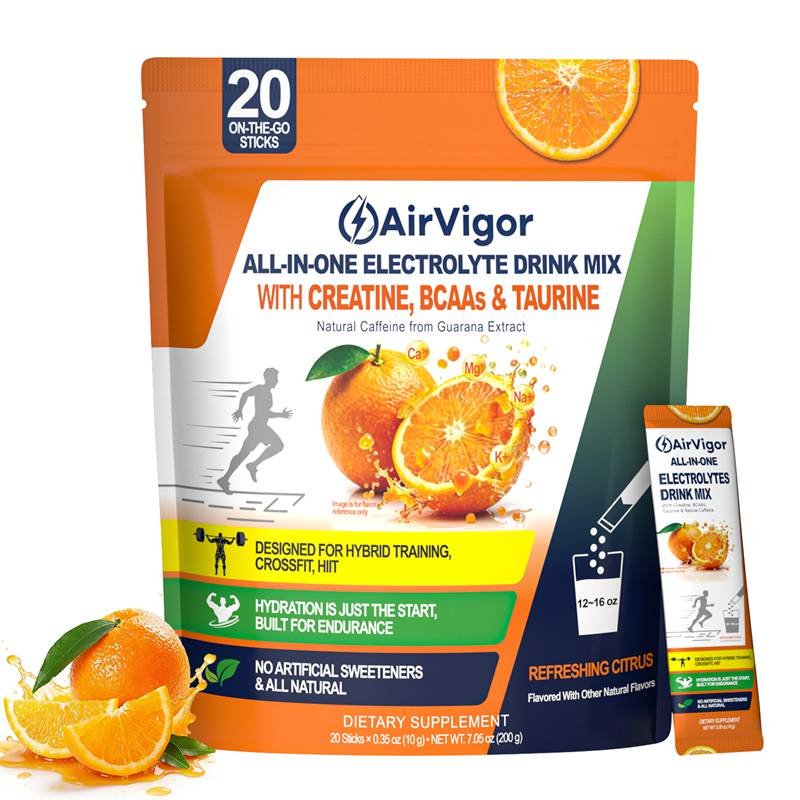
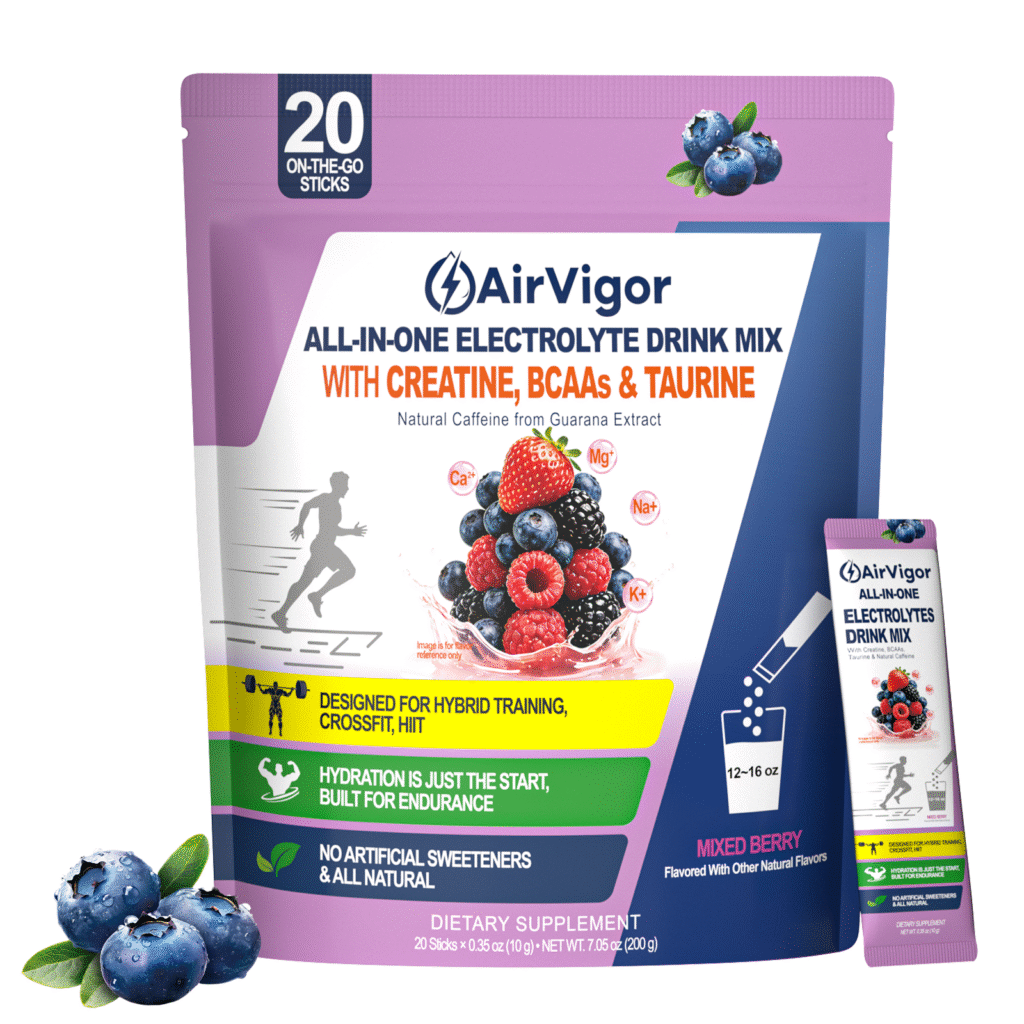
AirVigor focuses on building formulations with clear dosing, balanced electrolytes, and reliable quality standards. If you are looking to develop or source a creatine electrolyte product that aligns with real user needs, AirVigor provides both ready-to-market solutions and customized formulation support.
Share:
Contact Expert Team
At AirVigor, performance becomes effortless. We transform advanced nutrition science into clean, effective supplements that help you hydrate, recover, and feel stronger every day. Shop AirVigor Supplements on Amazon and experience athlete-trusted formulas—backed by real science and supported by our world-class R&D and production capabilities.
Trust AirVigor
At AirVigor, turning your performance goals into reality is no longer a struggle—it’s a science-driven journey we build together. Whether you’re a runner, lifter, cyclist, yogi, outdoor athlete, or someone simply seeking better daily energy, AirVigor transforms advanced nutrition research into clean, effective, and trustworthy supplements you can feel.
Backed by our U.S. scientific team, global certifications, and world-class production standards, every formula is engineered to deliver real hydration, real recovery, and real performance. And when you’re ready to experience the difference, you’ll find AirVigor products available on Amazon and other major platforms—fast shipping, consistent quality, and a community of athletes already seeing results.
Behind the scenes, our R&D and manufacturing ecosystem also supports specialized formulation development, ensuring AirVigor continues to lead with innovation while keeping quality and safety uncompromised. But at the core, everything we create is built for you—your health, your performance, your momentum.
Choose AirVigor. Feel the science. Elevate your every day.


Subscribe to our newsletter
Sign up to our newsletter and we’ll keep you up to date with the latest arrivals.