Skip to content
What Is the Best Way to Use Electrolyte Stick Packs : A Buyer-Friendly Guide
# Your Trusted Dietary Supplement Brand In US
- Emily

Table of Contents
Electrolyte stick packs look simple: tear open the packet, pour it into water, shake, and drink. But the real value is not just convenience. The real value is knowing when your body needs more than plain water. A 30-minute desk break, a 90-minute summer run, a long flight, and a hot warehouse shift do not create the same hydration need.
The best way to use electrolyte stick packs is to mix one packet with the water amount shown on the label, usually around 12–20 oz, then drink it around sweat-heavy, heat-heavy, travel-heavy, or workout-heavy moments. Most people do not need electrolyte packets all day. They work best when used with a clear reason: heavy sweating, hot weather, long training, dry travel days, or low water intake.
A good electrolyte routine should feel easy, not medical or complicated. Keep a few packets in your gym bag, work drawer, suitcase, car, or hiking pack. Use one when plain water does not feel like enough, but avoid turning every bottle of water into an electrolyte drink. The smartest users do not use more packets. They use them at the right time.
What Are Electrolyte Stick Packs?
Electrolyte stick packs are single-serving powder packets mixed with water to support hydration during sweat, heat, workouts, travel, or busy days. Their value is not only the formula, but also the convenience: one packet, one bottle, one clear serving.
What Do Electrolyte Stick Packs Do?
Electrolyte stick packs help add key minerals back into water, especially when the body loses fluid through sweat, heat, or long activity. They are most useful when plain water feels less satisfying or harder to keep up with.
Electrolyte stick packs are designed for moments when hydration needs become more demanding. During a normal indoor day, water and meals may be enough for many people. But during a sweaty workout, hot yoga class, summer hike, warehouse shift, or long travel day, the body may lose more fluid and minerals than usual.
The main purpose is simple: make hydration easier to manage. A packet usually contains minerals such as sodium, potassium, magnesium, calcium, or chloride. These minerals support normal fluid balance, muscle function, and nerve function. When mixed into water, they create a drink that fits real-life use better than carrying a large tub, scoop, or premixed sports drink.
Many users do not notice the need for electrolytes until the signs are obvious. They drink water but still feel dry. Their shirt has salt marks after training. They finish a hot yoga class and feel flat. They fly for five hours, drink coffee, skip meals, and feel drained after landing. These are the situations where electrolyte stick packs can be useful.
Electrolyte packets are not meant to replace meals, sleep, or regular water intake. They work best as a support tool. The smartest routine is not “drink more packets.” It is “use one packet when the day actually creates a hydration gap.”
| Real-Life Moment | What the User May Feel | Why Electrolyte Stick Packs Help |
|---|---|---|
| 60–90 minute workout | Heavy sweat, dry mouth, lower energy | Adds minerals to water during sweat loss |
| Hot yoga class | Soaked clothes, lightheaded feeling after class | Supports post-sweat hydration |
| Long flight | Dry mouth, tired feeling, irregular meals | Easy to mix after airport security |
| Outdoor work | Constant sweating, repeated water breaks | Helps make hydration more structured |
| Summer hiking | Thirst returns quickly, salty sweat | Easy to carry and sip on the route |
| Busy office day | Coffee-heavy routine, low water intake | Makes a full bottle easier to finish |
The most common customer expectation is “Will this make me feel more hydrated?” The better answer is: it can help when dehydration, sweating, heat, or low fluid intake is part of the problem. If the issue is poor sleep, skipped meals, overtraining, or illness, one packet cannot solve everything.
A useful way to think about electrolyte stick packs is this: water is still the base, electrolytes are the support. The packet makes the bottle more useful during higher-demand moments, but it does not replace the need to drink enough fluid throughout the day.
What Is in Electrolyte Stick Packs?
Most electrolyte stick packs include sodium, potassium, magnesium, calcium, or chloride. Some formulas stay simple, while others add caffeine, vitamins, amino acids, creatine, collagen, fruit powder, or zero-sugar sweeteners for specific use cases.
The ingredient list matters because not every electrolyte packet is built for the same person. A light daily hydration packet may have a different mineral level than a sports hydration packet. A travel-friendly packet may focus on easy drinking and low sweetness. A workout-focused formula may include stronger sodium support or added performance ingredients.
Sodium is often the most important mineral to check because sweat contains sodium. For casual daily use, some users prefer a moderate amount. For heavy sweating, hot climates, or endurance activity, users may want a formula with clearer sweat-support positioning. Potassium is commonly included to support normal muscle and nerve function. Magnesium and calcium are often used to round out the mineral profile.
The front label may say “electrolytes,” but the supplement facts panel tells the real story. Customers should compare serving size, sodium amount, sugar, caffeine, and water direction before choosing.
| Label Item | Why It Matters | Customer-Friendly Check |
|---|---|---|
| Sodium | Key mineral lost through sweat | Is it light-use or sweat-focused? |
| Potassium | Supports normal muscle and nerve function | Is the amount clearly listed? |
| Magnesium | Often used in broader hydration formulas | Is it included without making the drink heavy? |
| Calcium | Supports normal muscle function | Is it part of the mineral blend? |
| Sugar | Affects calories and daily use | Is it zero sugar, low sugar, or sweetened? |
| Caffeine | Affects timing and sleep | Is it suitable for evening use? |
| Added ingredients | Changes product purpose | Is it for sport, beauty, recovery, or daily hydration? |
| Water amount | Controls taste and concentration | Is the mixing direction easy to follow? |
A good electrolyte stick pack should make the label easy to understand. Users should not need to guess whether a packet is for daily hydration, high-sweat workouts, travel, or recovery. Clear formula expression helps customers choose faster and reduces wrong-use complaints.
This is especially important for users who already take other supplements. Someone using pre-workout, coffee, multivitamins, creatine, collagen, or protein powder should know exactly what is in their electrolyte packet. Overlapping caffeine, minerals, or sweeteners can affect comfort and routine.
For product development, the best formulas are not always the longest formulas. A packet can look impressive with many ingredients, but if the taste is too strong, the serving is confusing, or the powder does not dissolve well, users may not reorder. Real customer value comes from a formula that is clear, drinkable, and easy to repeat.
Who Needs Electrolyte Stick Packs?
Electrolyte stick packs are useful for people who sweat heavily, exercise regularly, work in heat, travel often, or struggle to drink enough water. They fit athletes, busy professionals, outdoor workers, hot yoga users, hikers, and frequent flyers.
The best users are not only serious athletes. Many everyday customers use electrolyte packets because life gets busy. They forget water at work. They sweat during errands in summer. They fly often. They train after work. They take hot yoga classes. They want something cleaner and more portable than a bottled sports drink.
A customer may benefit from electrolyte stick packs if they often experience:
- Heavy sweating during workouts, work, sauna, or hot weather
- Long periods without regular water because of travel, meetings, or shifts
That does not mean every person needs one every day. The need depends on sweat level, meals, climate, exercise length, and personal health. Someone doing a short walk in cool weather may only need water. Someone cycling for two hours in summer may need a stronger plan.
| User Type | When Stick Packs Make Sense | What to Look For |
|---|---|---|
| Gym user | HIIT, CrossFit, circuit training, heavy sweat | Fast mixing, clean taste, clear sodium amount |
| Runner | Hot runs, long runs, salty sweat | Sip-friendly flavor, sweat-support formula |
| Cyclist | Rides over 60 minutes, summer routes | Light taste, bottle-friendly mixing |
| Hot yoga user | After class, soaked clothes, high sweat | Caffeine-free, gentle flavor |
| Office worker | Low water intake, coffee-heavy day | Light daily formula, zero sugar option |
| Traveler | Long flights, hot destinations, walking-heavy trips | Portable packets, no scoop, easy mixing |
| Outdoor worker | Heat, long shifts, repeated sweating | Clear label, practical water directions |
| Sauna user | After heavy sweating | Easy-to-drink, caffeine-free formula |
For cautious users, health status matters. People with kidney disease, heart conditions, blood pressure concerns, sodium restrictions, or medications affecting fluid balance should ask a healthcare professional before using electrolyte supplements regularly. This keeps the advice responsible without making the product feel intimidating.
For most healthy adults, the easiest way to start is to use one packet during a clear hydration-need moment: after a sweaty workout, during a hot outdoor day, after travel, or when water intake has fallen behind. Start with one serving, use the label water amount, and notice taste, thirst, stomach comfort, and how easy the drink is to finish.
Why Are Stick Packs Better for Daily Use?
Stick packs are easier to carry, portion, store, and use than tubs or ready-to-drink bottles. They work well for people who want hydration support at work, in the gym, while traveling, or during outdoor activity.
The biggest advantage is portion control. One packet equals one serving. Users do not need to guess the scoop size, worry about spilling powder, or carry a large container. This matters for people who use electrolytes outside the kitchen. A packet can fit into a pocket, suitcase, purse, bike bag, tennis bag, office drawer, or lunch box.
Stick packs also reduce mess. Powder tubs can collect moisture, clump around the scoop, and take up space. Ready-to-drink bottles are convenient but heavier, more expensive to ship, and less flexible for travel. Stick packs give the user more control because they only need water.
| Format | Best Advantage | Common Limitation |
|---|---|---|
| Stick packs | Portable, pre-measured, clean, travel-friendly | Higher packaging cost per serving |
| Powder tub | Better for home use and high-frequency users | Scoop mess, less portable |
| Ready-to-drink bottle | No mixing needed | Heavy, bulky, more storage space |
| Tablets | Compact and easy to carry | May dissolve slower, less flavor flexibility |
| Homemade mix | Low cost, flexible | Harder to measure accurately |
For daily use, stick packs also make habit building easier. A person can keep them in several places instead of remembering one large tub at home. This is why they work well for modern supplement routines. Users move between home, work, gym, car, airport, hotel, and outdoor spaces. Their hydration product needs to move with them.
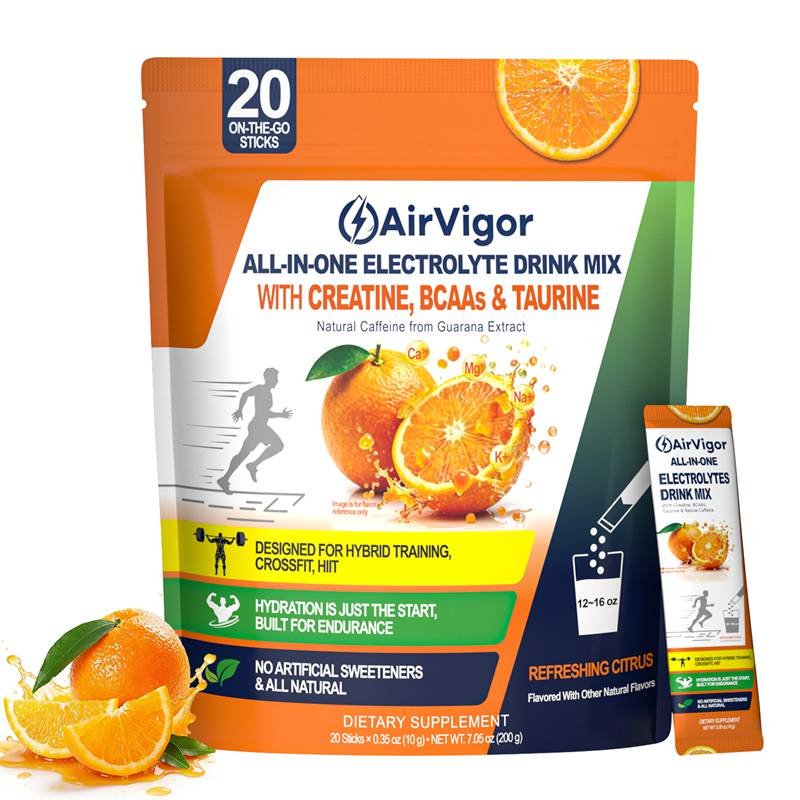
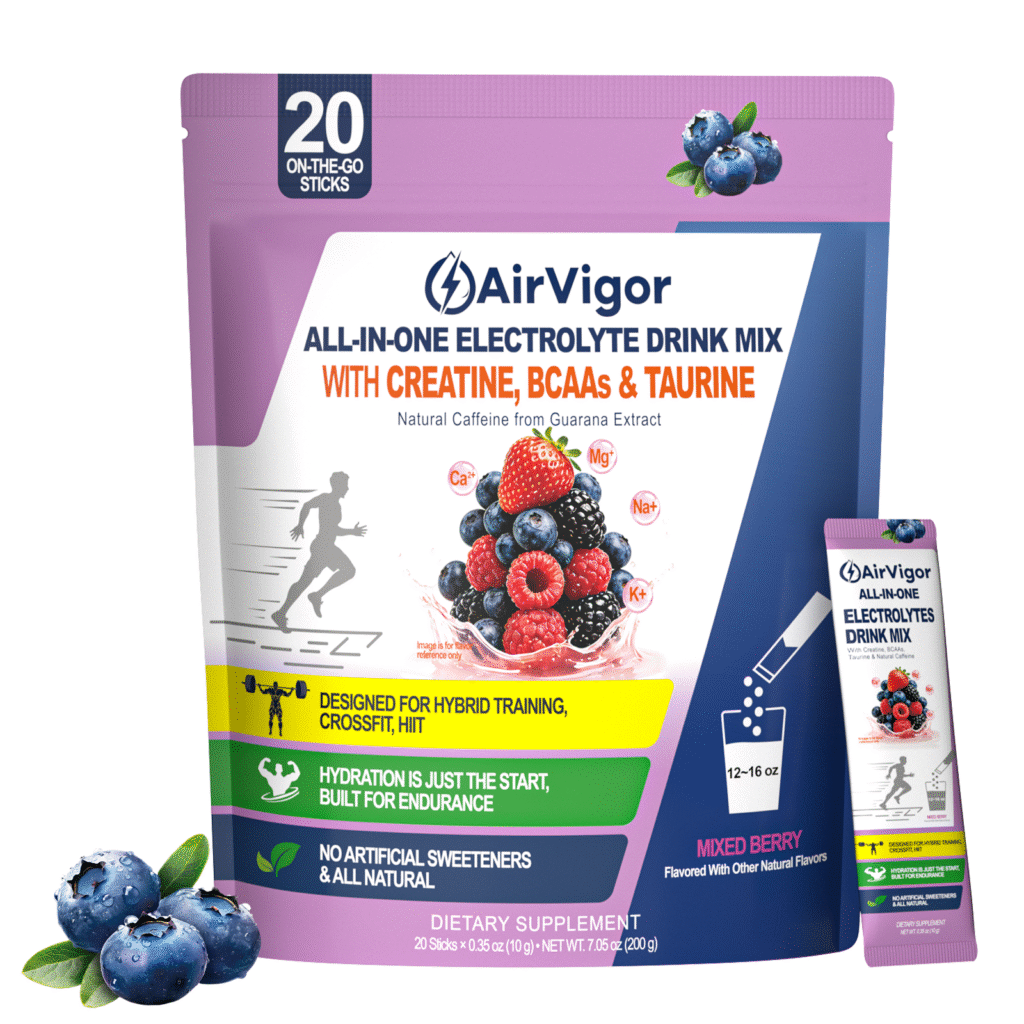
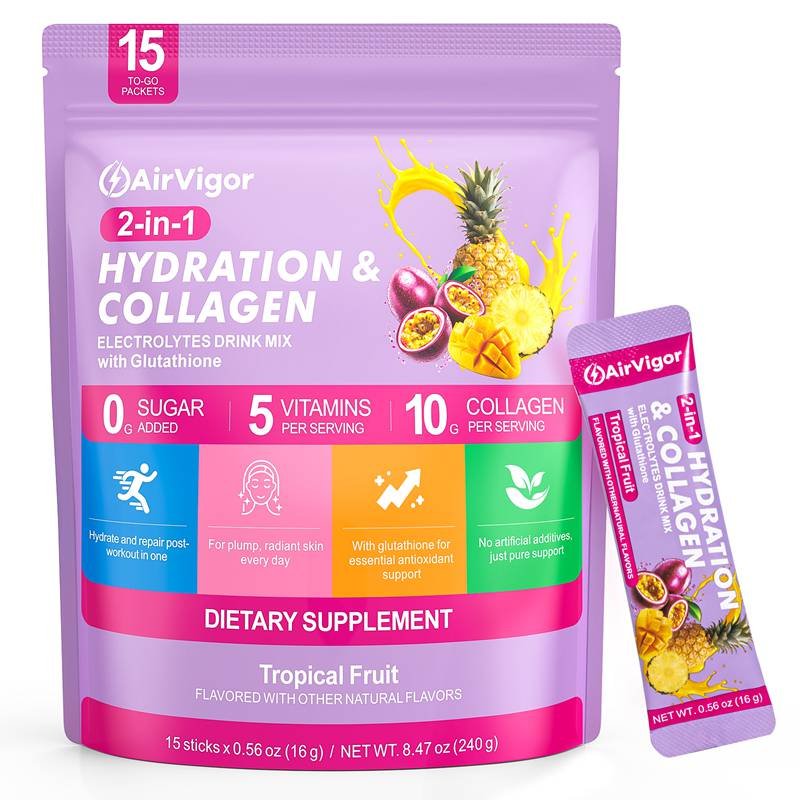
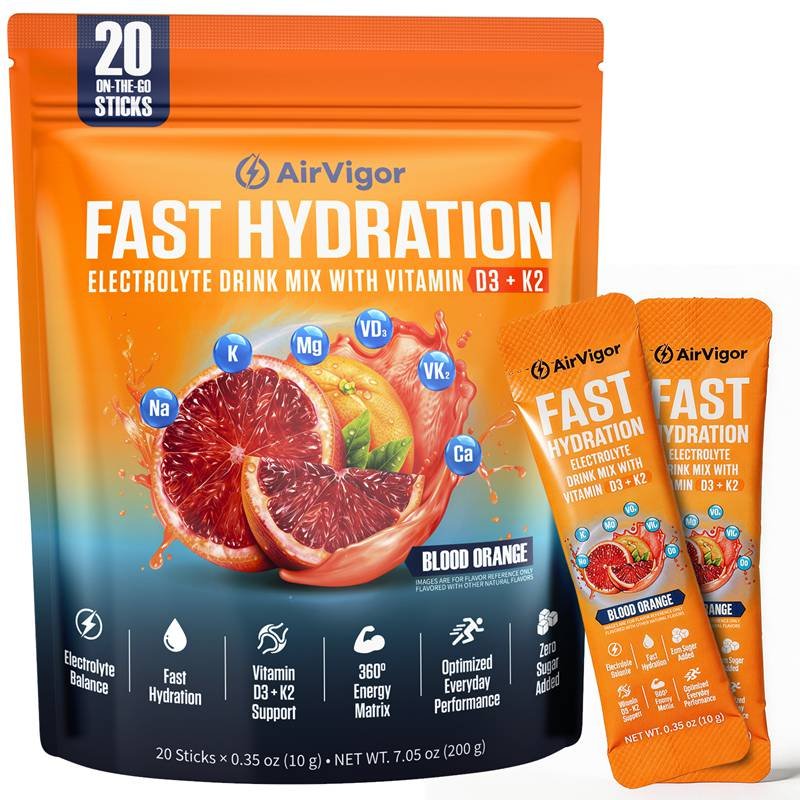
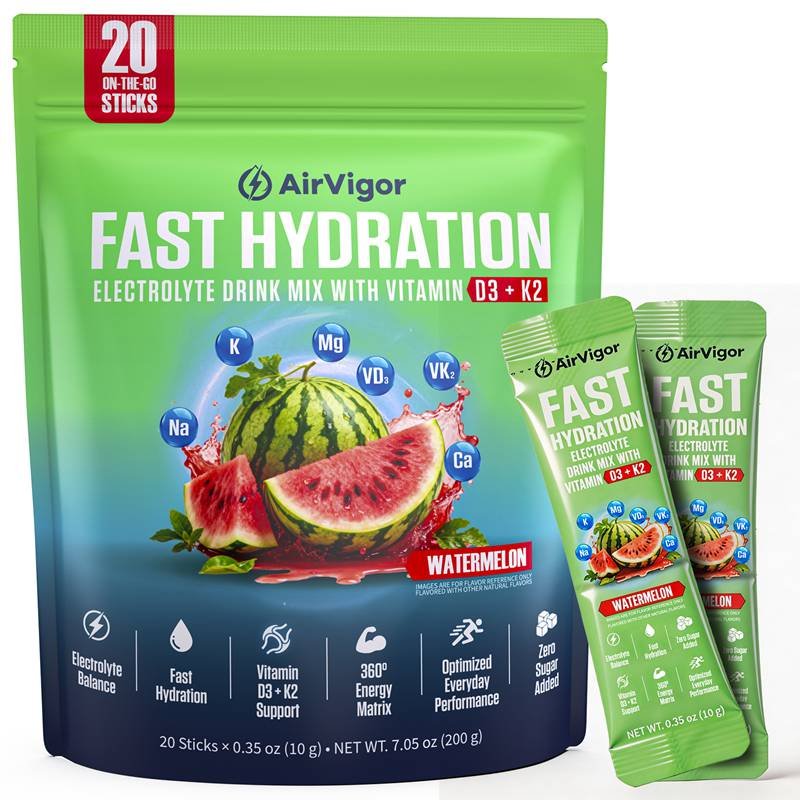
For brands like AirVigor, the stick pack format also fits a more user-centered product strategy. It allows clear serving control, convenient trial use, travel-friendly packaging, and formula positioning for different groups such as daily hydration users, athletes, outdoor workers, wellness customers, and frequent travelers.
How Do Electrolyte Stick Packs Work?
Electrolyte stick packs work by adding minerals to water so the body can better manage fluid balance during sweat, heat, workouts, travel, or low-water days. Water still does the main hydration work, while electrolytes help support how that fluid is used.
How Do Electrolyte Stick Packs Hydrate?
Electrolyte stick packs hydrate by combining water with minerals such as sodium, potassium, magnesium, and calcium. These minerals help support fluid balance, muscle function, and normal nerve signaling when the body loses fluid through sweat.
Many people think hydration is only about drinking more water. That is partly true, but it is not the full picture. During a normal indoor day, plain water and meals may cover most hydration needs. During heavy sweating, heat exposure, long activity, or travel, the body may lose both water and minerals. That is where electrolyte stick packs can become more useful.
The packet itself does not hydrate the body without water. The water provides the fluid. The electrolyte minerals help support the body’s fluid balance. This is why mixing directions matter so much. If one packet is meant for 16–20 oz of water but is mixed with only a few ounces, the drink may taste too strong and may not feel comfortable. If it is mixed with far too much water, the flavor and mineral concentration may feel too diluted.
Sodium is often the first mineral customers should check because sweat contains sodium. Potassium supports normal muscle and nerve function. Magnesium and calcium help support normal muscle function and broader mineral balance. The exact amount needed depends on sweat level, diet, activity time, heat, and personal tolerance.
| Electrolyte | Why It Matters in Hydration | Common Customer Question |
|---|---|---|
| Sodium | Helps support fluid balance, especially during sweating | “Is this enough for heavy sweat?” |
| Potassium | Supports normal muscle and nerve function | “Does this help after workouts?” |
| Magnesium | Supports muscle function and mineral balance | “Will this feel heavy on my stomach?” |
| Calcium | Supports normal muscle function | “Is this a complete electrolyte blend?” |
| Chloride | Often paired with sodium in electrolyte formulas | “Why does the label show salt-based ingredients?” |
A good hydration routine should not feel extreme. Most users can start with one packet mixed with the label-recommended amount of water during a clear need: after a sweaty workout, during a hot day, on a long flight, or after a sauna session. Then they can judge taste, thirst, stomach comfort, and whether the drink is easy to finish.
Electrolyte stick packs work best when they are used early enough. Waiting until the body feels completely drained often makes hydration feel harder. For workouts, heat, and travel, it is usually better to plan ahead than to chase discomfort later.
Are Electrolyte Stick Packs Better Than Water?
Electrolyte stick packs are not always better than water. Plain water is usually enough for normal low-sweat days. Electrolyte packets become more useful when sweating, heat, long activity, travel, or irregular water intake creates higher hydration demand.
The better question is not “Should I drink water or electrolytes?” The better question is “What does this moment require?” If someone is sitting indoors, eating regular meals, and drinking enough water, plain water may be the right choice. If someone is running in humid weather, taking hot yoga, working outdoors, or flying all day, electrolyte support may fit better.
Many customers make the mistake of turning every bottle into an electrolyte drink. That is not always necessary. Electrolyte stick packs should not replace plain water. They should sit next to it as a support option. Water covers the foundation. Electrolytes help when the day creates a bigger hydration challenge.
| Situation | Plain Water May Be Enough | Electrolyte Stick Packs May Help More |
|---|---|---|
| Normal desk day | Yes, if meals and water are regular | If water intake is very low |
| Short walk | Usually yes | If weather is very hot or humid |
| 30-minute light gym session | Often yes | If the user sweats heavily |
| 60–90 minute workout | Sometimes | Often useful, especially with sweat |
| Hot yoga | Water is needed | Electrolytes may help after class |
| Long flight | Water helps | Packets may help when meals and fluids are irregular |
| Outdoor summer work | Water is essential | Packets may help with steady sweat loss |
| Sauna | Water is needed after | Electrolytes may help after heavy sweating |
A practical daily rule is simple: drink water regularly, then add electrolyte stick packs when the day has a clear trigger. Strong triggers include soaked clothes, salty sweat, high heat, long training, extended walking, dry travel, sauna, hot yoga, or several hours with very little water.
This approach also helps customers avoid overuse. More electrolytes do not automatically mean better hydration. The body needs balance. A packet should solve a real problem, not simply add flavor all day.
Do Electrolyte Stick Packs Give Energy?
Electrolyte stick packs may help users feel less drained when dehydration or sweat loss is part of the problem. Basic electrolyte formulas do not provide energy like calories, carbohydrates, or caffeine, unless those ingredients are included in the formula.
This is one of the most common misunderstandings. A customer drinks an electrolyte packet and says, “I feel more energetic.” Sometimes that feeling comes from better hydration support, not from direct energy. If the body was low on fluid after sweating or travel, restoring hydration may make the person feel more normal, clearer, or less flat.
However, electrolyte minerals themselves are not the same as food energy. A packet with zero sugar and no caffeine is not going to fuel a long endurance race the way carbohydrates can. A caffeine-free electrolyte drink is also not the same as a pre-workout. If a formula includes caffeine, creatine, amino acids, B vitamins, or carbohydrates, the product may feel different because it is no longer just a basic electrolyte formula.
| Formula Type | What the User May Feel | Best-Fit Use |
|---|---|---|
| Basic electrolyte | Less dry, more balanced after sweating | Heat, travel, casual workouts |
| Zero sugar electrolyte | Light hydration support without added sugar | Workdays, travel, daily use |
| Higher sodium electrolyte | Stronger sweat-loss support | Heavy sweaters, endurance users |
| Caffeinated electrolyte | More alert feeling | Morning workouts, active mornings |
| Creatine electrolyte | More complete gym routine support | Strength training, HIIT, CrossFit |
| Collagen electrolyte | Hydration plus wellness-style positioning | Beauty, Pilates, daily routines |
| Carb electrolyte | Fluid plus fuel support | Longer endurance training |
For everyday users, the goal should not be a dramatic “kick.” A good electrolyte routine should feel smoother: easier to finish water, less dry after sweating, better comfort during heat, and a more reliable hydration habit. If someone wants energy for training, meals, sleep, carbohydrates, and workout programming still matter.
This distinction is also important for choosing the right product. A user who wants evening hydration should usually avoid caffeine. A runner training over a long distance may need more than minerals. A gym user may like a creatine electrolyte blend. A daily office user may prefer a zero-sugar, caffeine-free formula. The label should make the product purpose clear.
How Fast Do Electrolyte Stick Packs Work?
Electrolyte stick packs usually begin supporting hydration once they are mixed with water and consumed, but the user experience depends on sweat loss, water amount, stomach comfort, activity level, and how far behind hydration already is.
Many customers want to know, “How long does it take to feel electrolytes?” The honest answer is that it varies. Someone who is mildly dry after a short workout may feel better after finishing a bottle. Someone who has been sweating for hours in high heat may need more time, more fluids, food, cooling, and rest. A packet can support hydration, but it cannot instantly undo hours of fluid loss.
Timing also changes the experience. Using electrolytes before or during a sweat-heavy activity may feel better than waiting until the end. Once the body already feels very drained, the user is playing catch-up. For long workouts, outdoor work, hot weather, and travel, steady sipping is often more comfortable than drinking one large bottle quickly.
A simple timing guide can help:
| Use Moment | What to Expect | Better Habit |
|---|---|---|
| Before workout | Helps start from a better hydration point | Sip 30–60 minutes before training |
| During workout | Helps support ongoing fluid intake | Sip small amounts regularly |
| After workout | Helps replace fluid and minerals lost through sweat | Drink with water and a normal meal |
| During travel | Helps when meals and water intake are irregular | Use after flights or hot walking days |
| During heat | Helps when sweat loss continues | Use with regular water breaks |
| After sauna | Helps after short-time heavy sweating | Cool down first, then sip slowly |
Electrolyte stick packs are not emergency medicine. If someone has severe dehydration symptoms, ongoing vomiting, confusion, fainting, chest pain, or serious illness, they should seek medical help. For normal everyday use, electrolyte packets are best seen as a hydration support tool for mild to moderate fluid-loss situations.
How Do You Know If Electrolyte Stick Packs Are Working?
Users can often tell electrolyte stick packs are working when the drink is easy to finish, thirst feels more controlled, the body feels less dry after sweating, and hydration feels easier to maintain during heat, travel, or workouts.
The signs are usually practical, not dramatic. A person may notice they drink a full bottle instead of leaving it half-finished. A runner may feel less thirsty after a hot session. A traveler may feel less dry after a long flight. A hot yoga user may feel more comfortable after class. These small changes are often more realistic than expecting a sudden performance jump.
Still, users should look at the whole day. If someone feels tired because they slept four hours, skipped lunch, and trained hard, an electrolyte packet may help hydration but not fix the entire problem. If someone feels weak during long endurance training, they may also need carbohydrates. If someone feels unwell often, they should not assume electrolytes are the only answer.
A good self-check includes:
- Did I mix the packet with enough water?
- Did I use it during a real sweat, heat, travel, or workout moment?
- Did my stomach feel comfortable?
- Was the flavor easy to finish?
- Did I also eat and drink normally that day?
For repeat use, the best sign is consistency. If a product fits the user’s routine, tastes good enough to finish, does not feel heavy, and is easy to carry, it has a much better chance of becoming a lasting habit.
For AirVigor, this is where formula clarity and user experience matter. A good electrolyte stick pack should not confuse people with vague claims. It should help users understand what is inside, how much water to use, when to drink it, and which daily situation it fits best.
How to Mix Electrolyte Stick Packs?
Electrolyte stick packs are easiest to use when mixed with the right amount of water. Most users should start with the label direction, often around 12–20 oz per packet, then adjust slightly based on taste, activity, sweat level, and stomach comfort.
How Much Water for Electrolyte Stick Packs?
Most electrolyte stick packs are mixed with about 12–20 oz of water. The best starting point is usually one regular 16 oz water bottle, unless the product label gives a different direction.
Water amount changes the whole drinking experience. One packet mixed with too little water may taste salty, sour, overly sweet, or too concentrated. It may also feel heavy on the stomach, especially before running, HIIT, hot yoga, or cycling. One packet mixed with too much water may taste weak and may not feel like the formula was used as intended.
A 16 oz bottle is often the easiest starting point because it is common, portable, and gives enough room to shake. Users who prefer stronger flavor can move closer to 12 oz. Users who want a lighter drink for sipping during a workout, summer walk, or long shift may prefer 18–20 oz.
The goal is not to make the flavor as strong as possible. The goal is to make the drink easy to finish. A hydration product only works if the user actually drinks the full bottle.
| Water Amount | Taste Strength | Best Use Situation | Customer Tip |
|---|---|---|---|
| 8 oz or less | Very strong | Usually not ideal unless label allows | May taste too salty or too sweet |
| 12 oz | Strong | After workouts or for bold flavor users | Better for slow drinking |
| 16 oz | Balanced | Daily use, gym, travel, work | Best starting point for most users |
| 18–20 oz | Light | During workouts, hot weather, outdoor work | Easier for sipping |
| 24 oz or more | Very light | Long casual drinking | May taste diluted |
For first-time users, the safest routine is simple: mix one packet with 16 oz of water, shake well, taste it, then adjust next time. If the flavor feels too strong, add more water. If it feels too light, use less water within the recommended range. Avoid using two packets at once just to make the drink stronger because that also doubles the mineral intake.
For brands and retailers, clear water directions matter more than many people think. A label that only says “mix with water” leaves too much room for error. Customers prefer clear instructions such as “mix one packet with 16–20 oz of water.” This helps improve first-use satisfaction and reduces complaints about taste or concentration.
Can Electrolyte Stick Packs Go in Cold Water?
Yes, electrolyte stick packs can usually be mixed with cold water. Cold water often makes the drink taste fresher, cleaner, and easier to finish, especially after workouts, during hot weather, after sauna, or while traveling.
Cold water works especially well with fruit-style electrolyte flavors. Citrus, berry, grape, watermelon, tropical, peach, orange, and cucumber lime flavors often taste better chilled. For many users, temperature affects whether they finish the bottle. A warm electrolyte drink may feel heavy or too sweet, while a cold drink can feel lighter and more refreshing.
The tradeoff is that very cold water may slow down powder dissolution. This does not always mean the product is poorly made. Minerals, acids, flavor powders, and sweeteners can need a few extra seconds to spread evenly in cold liquid. A good habit is to shake for 10–20 seconds, let the bottle sit for a short moment, then shake again if needed.
The order of mixing also matters. Adding powder directly onto ice can cause clumps because the powder may stick to the ice surface before it dissolves. A better method is water first, powder second, shake third, ice last.
| Water Temperature | Taste Experience | Mixing Speed | Best For |
|---|---|---|---|
| Cold water | Fresh and easy to drink | Slightly slower | Workouts, summer, travel |
| Room-temperature water | Neutral taste | Usually faster | Office, quick mixing, testing flavor |
| Ice water | Very refreshing | May clump if powder hits ice first | Hot weather, post-workout |
| Hot water | May change flavor | Depends on formula | Only use if label allows |
Cold water is also more realistic for modern use. Most customers mix packets in bottled water, gym bottles, office cups, airport water bottles, or hiking flasks. They do not want to use a blender or wait several minutes. For this reason, a good electrolyte stick pack should be tested for normal shaking, not only perfect mixing conditions.
For users who see small powder spots after shaking, the solution is usually simple: shake longer, wait 30 seconds, then shake again. If powder remains gritty every time, the formula may not have ideal solubility for daily use.
How Should You Shake Electrolyte Stick Packs?
The best way to shake electrolyte stick packs is to add water first, pour in one packet, close the bottle tightly, shake for 10–20 seconds, and let the drink settle briefly before drinking.
The sequence is important because powder behaves differently depending on what it touches first. If powder is poured into a dry bottle and water is added later, some powder may stick to the bottom. If powder is poured directly onto ice, it may clump. If the bottle is filled to the top, shaking may cause leaking or foam overflow.
A simple mixing routine works for most users:
- Fill the bottle with the recommended water amount, leaving a little room at the top.
- Add one packet, close the lid, shake for 10–20 seconds, then drink after the foam settles.
This method works well in a gym bottle, disposable water bottle, shaker cup, cycling bottle, travel bottle, or office tumbler. Users do not need special equipment unless the formula includes heavier ingredients such as collagen, creatine, fiber, or plant powders. Even then, a normal shaker bottle is often enough if the formula is designed well.
Shaking also affects taste. If powder settles at the bottom, the first few sips may taste weak and the final sip may taste too strong. Proper shaking helps the flavor and minerals spread more evenly throughout the bottle.
| Mixing Problem | Likely Cause | Easy Fix |
|---|---|---|
| Powder sticks to bottom | Powder added before water | Add water first |
| Small clumps appear | Powder hit ice or cold water too quickly | Mix before adding ice |
| Drink tastes too strong | Too little water | Add more water |
| Drink tastes weak | Too much water | Use label range next time |
| Foam rises | Shaking too hard or using sparkling water | Let it settle before drinking |
| Grit at the bottom | Poor dissolution or short shaking | Shake longer and wait briefly |
| Bottle leaks | Filled too high before shaking | Leave space at the top |
For brands, this is a key repeat-purchase detail. Customers may not describe the issue as “solubility” or “particle dispersion.” They will simply say the powder is clumpy, gritty, messy, or hard to drink. A stick pack formula should be developed for real user behavior: quick shaking, cold water, normal bottles, and busy routines.
Can Electrolyte Stick Packs Mix with Sparkling Water?
Electrolyte stick packs can mix with sparkling water, but users should add the powder slowly and leave extra space because carbonation can foam quickly. Plain still water is easier for first-time testing.
Sparkling water can make electrolyte drinks feel more refreshing, especially for users who dislike flat water. Citrus, berry, lemon lime, grapefruit, and tropical flavors often pair well with carbonation. It can also help office users or travelers enjoy hydration without reaching for soda.
The main issue is foam. Powder contains minerals, acids, flavors, and sometimes sweeteners. When added to carbonated water, the bubbles can rise fast. If the bottle is nearly full, it may overflow. If the bottle is sealed and shaken aggressively, pressure can build. This can create a messy experience.
A safer sparkling water method is simple: pour sparkling water into a large cup, add the powder slowly, stir gently, wait for foam to settle, then add ice if desired. Avoid shaking a sealed bottle of sparkling water with powder inside.
| Sparkling Water Mixing Step | Better Method |
|---|---|
| Container | Use a large cup or bottle with extra space |
| Powder | Add slowly, not all at once |
| Stirring | Stir gently instead of shaking hard |
| Foam | Wait until bubbles settle |
| Ice | Add after powder is mostly dissolved |
| First-time use | Try half the packet first if flavor is strong |
Sparkling water is best for casual use, not necessarily during intense workouts. During running, cycling, HIIT, or hot yoga recovery, carbonation may feel uncomfortable for some users. For sports use, still water is usually easier on the stomach and easier to sip.

When to Take Electrolyte Stick Packs?
Electrolyte stick packs work best when the body is likely to lose more fluid or minerals than usual. The right timing depends on sweat, heat, workout length, travel, meals, and water intake—not a fixed rule that every person must follow daily.
Before Workout Electrolyte Stick Packs
Before-workout electrolyte stick packs are useful when training will be sweaty, hot, long, or intense. They help users start with better hydration support instead of waiting until the body already feels dry or tired.
Many people begin exercise slightly behind on fluids without realizing it. Morning exercisers may wake up after 7–8 hours without drinking water. Evening gym users may arrive after coffee, meetings, commuting, and irregular meals. Outdoor runners may start in warm weather already losing sweat before the first mile feels difficult.
This is where taking electrolytes before training can make sense. The goal is not to drink a packet before every small workout. The goal is to support the body before a session that is likely to create noticeable sweat loss.
A practical timing window is usually 30–60 minutes before exercise. This gives the user time to sip steadily, use the restroom if needed, and avoid a heavy stomach during movement. Chugging a full bottle five minutes before running, jumping, or high-intensity training can feel uncomfortable.
| Workout Situation | Pre-Workout Packet? | Better Timing |
|---|---|---|
| 20–30 minute easy walk | Usually not needed | Plain water is often enough |
| 30–45 minute light strength session | Optional | Use only if water intake is low |
| 45–60 minute HIIT or CrossFit | Often useful | 30–45 minutes before |
| Summer outdoor run | Useful | 30–60 minutes before |
| Morning workout after sleep | Useful if little water was consumed | Sip after waking |
| Hot yoga class | Useful for heavy sweaters | Sip before class, not all at once |
| Long cycling session | Useful | Begin before ride and continue sipping |
| Evening gym after busy workday | Useful if fluids were low | Sip before training |
Before-workout electrolyte use may be a good fit when:
- The workout will last longer than 45–60 minutes.
- The user expects heavy sweating because of heat, humidity, or high intensity.
For users with sensitive stomachs, lighter mixing can help. Instead of mixing one packet with a small amount of water, use the full label-recommended water amount or slightly more within the allowed range. A lighter drink is often easier before running, jumping, rowing, or high-rep training.
Caffeine also matters. If the electrolyte stick pack contains caffeine, it may work better for morning or early afternoon sessions. For evening workouts, a caffeine-free formula is usually easier to fit into recovery and sleep routines.
During Workout Electrolyte Stick Packs
During-workout electrolyte stick packs are most useful during longer, sweatier sessions where fluid loss continues over time. They fit running, cycling, hiking, tennis, outdoor sports, CrossFit, summer training, and labor-heavy activity.
During exercise, the best habit is sipping, not chugging. A bottle mixed too strongly or consumed too quickly can feel heavy in the stomach. Small sips every 10–15 minutes often feel more comfortable during long movement, especially in heat.
For short workouts in cool conditions, water may be enough. A 30-minute low-sweat strength session in an air-conditioned gym does not always need an electrolyte packet. But a 75-minute run in humid weather, a long bike ride, or a high-sweat outdoor bootcamp creates a different need.
During-workout use becomes more important when sweat is visible and ongoing. Salt marks on clothing, sticky skin, dry mouth, and thirst that returns quickly after water are signs that hydration may need more structure.
| Activity | When Electrolytes During Workout Make Sense | Suggested Use Style |
|---|---|---|
| Running | Runs over 60 minutes, heat, salty sweat | Sip small amounts regularly |
| Cycling | Long rides, summer routes, indoor trainer sweat | Keep bottle within reach |
| Hiking | Warm weather, long routes, elevation | Sip during breaks |
| CrossFit / HIIT | Longer classes or heavy sweat sessions | Sip between rounds |
| Tennis / pickleball | Outdoor matches, repeated sets | Sip at changeovers |
| Team sports | Hot practices, long games | Sip during breaks |
| Indoor cycling | Heavy sweat in closed rooms | Sip throughout session |
| Outdoor work | Long heat exposure | Use with planned water breaks |
The bottle should be mixed for drinkability. Many users prefer 16–20 oz of water for during-workout use because the flavor feels lighter and easier to sip. A strong drink may taste good at first but become too intense during movement.
During-workout electrolyte packets are especially practical for endurance and outdoor users because they are easy to carry. Runners can keep a packet in a belt. Cyclists can mix one into a bottle before leaving. Hikers can carry several packets without adding much weight. Workers can keep packets in a lunch bag or cooler.
After Workout Electrolyte Stick Packs
After-workout electrolyte stick packs are useful when sweat loss is noticeable and the user wants a more complete rehydration routine. They fit hard workouts, long runs, hot yoga, sauna, cycling, outdoor sports, and summer training.
Post-workout hydration is one of the easiest times to use electrolyte packets because the need is obvious. Clothes may be soaked. The face may feel dry. The mouth may stay thirsty after plain water. Legs may feel heavy. A shirt may show white salt marks. These are everyday signs that fluid and minerals were lost through sweat.
The best post-workout routine is simple: cool down, mix one packet with the label-recommended water amount, sip steadily, and eat a normal meal or snack when possible. Electrolytes support hydration, but recovery also needs food, rest, and enough total fluids.
| Post-Workout Sign | What It May Mean | What to Do |
|---|---|---|
| Soaked shirt | High sweat loss | Use one packet with water |
| Salt marks on clothes | Noticeable sodium loss through sweat | Consider electrolyte support |
| Dry mouth after water | Hydration may still feel incomplete | Sip electrolyte drink slowly |
| Heavy legs | Training and fluid loss may both contribute | Pair fluids with food and rest |
| Head feels flat after heat | Heat and sweat may be involved | Cool down first, then drink |
| Evening workout fatigue | Recovery routine may be weak | Choose caffeine-free electrolyte |
| Long cardio session | Higher fluid demand | Rehydrate gradually after |
Evening users should pay attention to caffeine. Some electrolyte formulas include caffeine or energy-support ingredients. That may be helpful before a morning workout but less ideal after a night gym session. For after-workout use, especially after 5 p.m., many customers prefer caffeine-free electrolyte stick packs.
Post-workout electrolyte use should not be treated as a cure-all. If the workout was long or intense, the body may also need protein, carbohydrates, sleep, and active recovery. A packet supports the hydration part of recovery; it does not replace the full recovery process.
Electrolyte Stick Packs for Workdays
Electrolyte stick packs can be useful during workdays when water intake is low, sweat is high, or the schedule makes regular drinking difficult. They fit office workers, outdoor workers, warehouse staff, delivery drivers, nurses, event teams, and shift workers.
Office users often struggle for a different reason than athletes. They are not sweating heavily, but they forget to drink water. Coffee, long meetings, screen time, and skipped meals can make hydration feel inconsistent. A light electrolyte drink can make a full bottle easier to finish, especially in the afternoon.
Physical workers face a different challenge. Outdoor jobs, warehouse work, landscaping, delivery routes, and event setup can involve steady sweating. In these settings, electrolyte stick packs are useful because they are portable, pre-measured, and easy to mix with bottled water.
| Work Situation | Hydration Issue | Best Timing |
|---|---|---|
| Office meetings | Low water intake | Midday or afternoon |
| Coffee-heavy morning | Fluid routine may fall behind | Late morning with water |
| Warehouse shift | Heat and movement | During planned break |
| Outdoor work | Ongoing sweat loss | Before or during shift |
| Delivery route | Heat, walking, limited breaks | Keep packets in cooler bag |
| Healthcare shift | Long hours, few breaks | Use when water intake drops |
| Event setup | Physical labor and heat | Use during water breaks |
Workday use should stay moderate. One packet during a clear hydration gap may be helpful. Multiple packets on a low-sweat indoor day may not be necessary. Users should still drink plain water and eat normally.
For work use, the best formulas are usually easy to drink, not too sweet, and clearly labeled. If the packet contains caffeine, users should be careful about stacking it with coffee or energy drinks.
Which Electrolyte Stick Packs Fit Your Day?
The right electrolyte stick packs should match the way your day actually looks. A desk day, hot work shift, long flight, gym session, summer hike, and evening workout all create different hydration needs. The best choice depends on timing, sweat, flavor, caffeine, and convenience.
Electrolyte Stick Packs for Work
Electrolyte stick packs for work fit people who forget water during meetings, drink too much coffee, work long shifts, or sweat during physical jobs. The best work formula should be easy to drink, portable, and not too sweet.
Workday hydration problems are often boring but real. Many people do not feel “dehydrated” in a dramatic way. They just notice dry mouth, afternoon heaviness, headache, low focus, or thirst that keeps coming back. In an office, the problem may be long screen time, back-to-back calls, coffee, and very little plain water. In a warehouse, delivery route, outdoor job, or event setup, the problem may be steady sweating and limited break time.
This is where electrolyte stick packs can help. A packet can sit in a drawer, laptop bag, lunch box, locker, delivery bag, or work truck without taking up much space. The user only needs a bottle of water. For office workers, a lighter daily formula usually makes more sense than a very aggressive sports-style formula. For physical workers, a formula with clear sodium and potassium information may be more useful during sweat-heavy shifts.
| Workday Type | Common Hydration Problem | Better Stick Pack Choice | Best Timing |
|---|---|---|---|
| Desk job | Coffee-heavy day, low water intake | Light flavor, zero sugar, caffeine-free | Midday or afternoon |
| Remote work | Long screen time, poor drinking habit | Easy daily hydration formula | Keep near desk |
| Warehouse shift | Movement, heat, sweating | Clear sodium amount, bottle-friendly mixing | During break |
| Delivery route | Heat, walking, limited restroom stops | Portable packets, light taste | Planned water stop |
| Outdoor labor | Steady sweat loss | Sweat-support formula | Before and during shift |
| Healthcare shift | Few breaks, long hours | Gentle flavor, easy mixing | Short break window |
| Retail/event work | Standing, talking, heat exposure | Low-sugar drinkable formula | Between busy periods |
For office use, the goal is not to drink electrolytes all day. One packet during a clear hydration gap may be enough. For example, if someone has had two coffees, skipped lunch, and barely touched water by 2 p.m., one packet mixed with a full bottle can help them finish fluids more easily.
For physical work, electrolyte use should be part of a larger habit. A packet does not replace shade, rest, meals, or regular water breaks. It simply gives the worker a measured hydration option that is easier than carrying a tub or sugary sports drink.
The best workday electrolyte stick packs usually have three traits:
- Clear water directions, so users can mix quickly without guessing.
- A flavor light enough to drink during work, not just after exercise.
Electrolyte Stick Packs for Travel
Electrolyte stick packs for travel are useful because flights, road trips, hotel stays, hot destinations, and walking-heavy days often break normal hydration habits. A good travel packet should be small, durable, easy to mix, and gentle on the stomach.
Travel creates hydration gaps in ways many people ignore. On flights, cabin air feels dry. In airports, coffee often replaces water. On road trips, people may drink less to avoid restroom stops. On vacations, hot weather, long walking days, alcohol, different meals, and late nights can make the body feel off. Even business travel can create the same issue: early flights, meetings, hotel gyms, and irregular meals.
Electrolyte stick packs work well for travel because they are pre-measured and flat. They fit into a passport pouch, toiletry bag, laptop case, purse, backpack, or suitcase side pocket. The user can buy water after airport security, pour in one packet, shake, and drink without needing a scoop or shaker.
| Travel Situation | Why Hydration Gets Harder | How Stick Packs Fit |
|---|---|---|
| Long flight | Dry cabin air, less water intake | Mix after buying bottled water |
| Road trip | Fewer breaks, more snacks | Use during planned stop |
| Business trip | Coffee, meetings, time zones | Keep in laptop bag |
| Hotel gym | Workout away from home | Use before or after session |
| Theme park | Heat, walking, long lines | Sip during the day |
| Beach trip | Sun, sweat, salty foods | Use with regular water |
| Hiking trip | Long activity, limited supplies | Carry several lightweight packets |
| City vacation | 15,000–25,000 steps/day possible | Use after heavy walking |
For travel, caffeine status is especially important. A caffeinated electrolyte packet may work for a morning workout, but it may not be ideal before a night flight or during jet lag. Many travelers prefer caffeine-free formulas because they can use them morning, afternoon, or evening without worrying about sleep timing.
Flavor also matters. A strong flavor that tastes good at home may feel too much after a long flight or during a hot walking day. Light citrus, berry, tropical, peach, cucumber lime, or unflavored options often feel easier for travel.
A simple travel routine is to pack 2–4 packets for short trips and more for hot-weather or outdoor trips. Use them when the day creates a real reason: long flight, heavy walking, hotel workout, beach heat, or poor water intake.
Electrolyte Stick Packs for Heat
Electrolyte stick packs for heat fit summer workouts, outdoor work, yard work, beach days, sauna, hot yoga, and humid weather. The hotter the day and the heavier the sweat, the more important timing, water amount, and formula choice become.
Heat changes hydration because the body sweats to cool itself. In dry heat, sweat may evaporate quickly, so people may not notice how much fluid they are losing. In humid heat, sweat may stay on the skin and make the body feel heavy and overheated. In both cases, water intake and electrolyte balance become more important than on a cool indoor day.
Not every hot day requires electrolyte packets. A person sitting indoors with air conditioning may only need water. But if the day includes outdoor work, summer running, tennis, hiking, mowing the lawn, beach volleyball, theme parks, sauna, or hot yoga, an electrolyte packet may fit better.
| Heat Situation | Sweat Level | Best Use Pattern | Formula Tip |
|---|---|---|---|
| Short outdoor errands | Low to moderate | Plain water may be enough | Light use only |
| Yard work over 60 minutes | Moderate to high | Use before or during | Clear sodium amount |
| Summer run | High | Before and during | Sip-friendly flavor |
| Beach day | Moderate to high | During the day | Not too sweet |
| Hot yoga | High in short time | After class | Caffeine-free |
| Sauna | High in short time | After cooling down | Gentle flavor |
| Outdoor sports | High | Before, during, after | Sweat-support formula |
| Construction/landscaping | High and repeated | During shift | Use with water breaks |
For heat, drinking too late is a common mistake. If someone waits until they feel dizzy, weak, confused, or seriously unwell, that is no longer a normal hydration moment. They should stop activity, cool down, drink fluids, and seek help if symptoms are severe. Electrolyte stick packs are useful for everyday hydration support, but they do not replace heat-safety precautions.
The best heat routine is steady and realistic. Start with water before going outside. Mix one packet if sweating will be heavy or extended. Sip gradually. Keep drinking plain water. Eat normally. Take breaks when needed. Hydration works better when it is planned before the body feels pushed too far.

What Electrolyte Stick Packs Mistakes Matter?
Electrolyte stick packs are easy to use, but small mistakes can make them less helpful. The most common issues are taking packets too often, using too little water, ignoring caffeine or sodium, mixing with the wrong drinks, and choosing products only by flavor.
Taking Electrolyte Stick Packs Too Often
Taking electrolyte stick packs too often usually happens when users treat them like flavored water. One packet during a sweaty workout or hot travel day may make sense, but several packets on a normal low-sweat day may be unnecessary.
The biggest misunderstanding is that more electrolytes always means better hydration. In real life, the body needs balance. Sodium, potassium, magnesium, and calcium are important minerals, but daily needs depend on sweat, diet, activity, climate, and health status. Someone training outdoors in July may have a different need than someone sitting in an air-conditioned office all day.
A good routine starts with a reason. If the day includes heavy sweat, heat, long workouts, sauna, hot yoga, outdoor labor, long flights, or poor water intake, one packet may fit well. If the day is calm, meals are normal, and water intake is steady, plain water may be enough.
| Daily Situation | Packet Use | Better Choice |
|---|---|---|
| Normal indoor day | Usually not needed repeatedly | Plain water most of the day |
| Short easy walk | Usually not necessary | Water before and after |
| Sweaty gym session | Often useful | One packet around training |
| Summer outdoor work | Often useful | Use with planned water breaks |
| Long flight | Useful when fluids are irregular | Carry 1–2 packets |
| Hot yoga or sauna | Useful after heavy sweating | Sip after cooling down |
| Coffee-heavy office day | Optional | One packet if water intake is low |
| Low-sweat evening | Usually not needed | Water or caffeine-free light drink |
For most healthy adults, electrolyte packets should be used with intention rather than out of habit. This does not mean they cannot be used often. It means the user should understand why they are using one.
People with kidney disease, heart conditions, blood pressure concerns, sodium restrictions, or medications affecting fluid balance should ask a healthcare professional before regular electrolyte use. This is especially important if they plan to take packets daily or use higher-sodium formulas.
Mixing Electrolyte Stick Packs with Too Little Water
Mixing electrolyte stick packs with too little water can make the drink taste too salty, sour, or sweet. It may also feel heavy on the stomach, especially before running, HIIT, cycling, or hot yoga.
The water direction on the label is not just about flavor. It affects concentration, comfort, and how easy the drink is to finish. If one packet is designed for 16–20 oz of water but is mixed into 6–8 oz, the user is still taking a full serving, but in a much stronger drink. That can make a good product feel unpleasant.
Too little water is especially common when users pour powder into a half-finished bottle. They may not realize they are mixing one packet with only a small amount of liquid. Another common mistake is mixing a packet like a “shot” before a workout. This may feel convenient, but it is usually not the best way to use an electrolyte drink unless the label specifically allows it.
| Water Mistake | What Happens | Better Habit |
|---|---|---|
| 1 packet in 6–8 oz water | Strong taste, possible stomach heaviness | Use label water amount |
| Powder added to half-empty bottle | Accidental over-concentration | Refill bottle first |
| Mixing as a quick shot | Harsh taste, poor drinkability | Sip with enough water |
| Adding two packets for flavor | Doubles minerals and other ingredients | Adjust water, not serving count |
| Using a full 40 oz bottle | Flavor may taste too weak | Stay near label range |
| No shaking | Powder settles at bottom | Shake 10–20 seconds |
A simple fix is to start with 16 oz of water unless the label says otherwise. If the flavor feels too strong, add more water next time. If it feels too light, use slightly less water within the recommended range. Users should not double packets just to increase flavor.
For brands, clear mixing instructions help prevent this mistake. “Mix with water” is too vague. “Mix one packet with 16–20 oz of water” gives customers a better first experience and reduces negative feedback about taste.
Ignoring Caffeine in Electrolyte Stick Packs
Ignoring caffeine is one of the most common mistakes because some electrolyte stick packs are also positioned for energy, workouts, focus, or performance. Users may not realize they are adding caffeine to coffee, pre-workout, tea, or energy drinks.
Caffeine is not automatically bad, but timing matters. A caffeinated electrolyte packet may fit a morning run, early gym session, or active workday. It may not fit an evening workout, late flight, sauna recovery, or bedtime hydration routine. Users who are caffeine-sensitive may feel jittery, uncomfortable, or have trouble sleeping if they do not check the label.
The problem often comes from stacking. A user drinks coffee in the morning, takes a caffeinated pre-workout before the gym, then uses an electrolyte packet that also contains caffeine. Each product may seem normal on its own, but together they can feel too strong.
| Common Combination | Possible Issue | Better Habit |
|---|---|---|
| Coffee + caffeinated electrolyte | Higher caffeine intake | Check label before mixing |
| Pre-workout + electrolyte | Ingredient overlap | Use caffeine-free electrolytes if needed |
| Energy drink + electrolyte | Too much sweetness or caffeine | Avoid stacking |
| Evening workout + caffeine packet | Sleep disruption | Choose caffeine-free |
| Travel + caffeine packet | Jet lag or sleep timing issue | Use caffeine-free for flights |
| Hot yoga + caffeine packet | May feel too stimulating | Use gentle formula |
Even if a packet does not contain caffeine, users should still check for other energizing ingredients such as guarana, green tea extract, yerba mate, or similar sources. These may affect timing and tolerance.
For evening use, travel, hot yoga, sauna, or daily hydration, caffeine-free formulas are usually more flexible. For morning training, a caffeinated version may be useful if the user wants that effect and understands the total intake.
Choosing Electrolyte Stick Packs Only by Flavor
Choosing electrolyte stick packs only by flavor can lead to the wrong product. A flavor may taste great, but the formula may contain too much sugar, unexpected caffeine, low electrolytes, high sodium, or added ingredients that do not fit the user’s routine.
Flavor matters because people will not drink a product they dislike. But flavor should be the second step, not the only step. The first step is the use case. Is the packet for work, travel, heat, workouts, recovery, daily use, or sports performance? Once the purpose is clear, flavor can help choose the most drinkable option.
A customer using electrolytes at work may want a light flavor and zero sugar. A runner may care more about sodium and sip-friendly taste. A hot yoga user may prefer caffeine-free hydration after class. A traveler may want something gentle and not too sweet. These customers may all like “berry,” but they do not all need the same formula.
| If You Need It For | Do Not Choose Only By | Check This First |
|---|---|---|
| Office hydration | Sweet taste | Sugar, caffeine, water amount |
| Long workouts | Flavor popularity | Sodium, serving size, sip comfort |
| Travel | Package design | Caffeine, stomach comfort, portability |
| Hot yoga | Fruity flavor | Caffeine-free status, light taste |
| Evening recovery | Strong flavor | Caffeine and sugar |
| Daily use | Trendy flavor | Mineral level and label clarity |
| Outdoor work | Low price | Sodium amount and durability |
A better shopping routine is simple: choose the use case, check the label, then choose the flavor. This helps users avoid buying a product that tastes good once but does not fit their daily life.
For product developers, flavor should support the formula, not hide it. A clean citrus, berry, tropical, or cucumber lime profile can make electrolytes easier to drink, but the product still needs clear mineral amounts, good solubility, and realistic serving directions.
Stacking Electrolyte Stick Packs with Too Many Supplements
Stacking electrolyte stick packs with too many supplements can make the routine harder on the stomach and harder to understand. The issue is not one ingredient alone, but the total intake across powders, drinks, capsules, and meals.
Many active users already take several products. A morning may include coffee, protein powder, creatine, pre-workout, a multivitamin, and an electrolyte packet. Another person may mix electrolytes with collagen, greens powder, fiber, and a smoothie. These routines can work for some people, but they need label awareness.
The common problem is overlap. A user may not realize they are getting caffeine from two products, sodium from a packet plus salty meals, magnesium from both electrolytes and a supplement, or sweeteners from several drinks in the same day.
| Stack Example | What Can Overlap | Better Habit |
|---|---|---|
| Electrolyte + pre-workout | Caffeine, flavor acids, sweeteners | Check stimulant content |
| Electrolyte + multivitamin | Minerals, B vitamins | Compare labels |
| Electrolyte + magnesium supplement | Magnesium | Watch total intake |
| Electrolyte + creatine powder | Creatine if formula also includes it | Avoid duplicate servings |
| Electrolyte + collagen drink | Flavor and sweeteners | Check stomach comfort |
| Electrolyte + energy drink | Caffeine and sweetness | Usually avoid |
| Electrolyte + smoothie | Sugar, fiber, protein, added powders | Add one new product at a time |
The easiest way to test a product is to use it alone in plain water first. Once the user understands taste, comfort, and timing, they can decide whether it fits with coffee, smoothies, creatine, collagen, or other supplements.
For people building a daily routine, fewer steps often work better. One clear product used correctly is easier to maintain than five products stacked without a plan.
Conclusion
Electrolyte stick packs work best when they are used with purpose. Mix them with the right amount of water, use them around sweat, heat, travel, workouts, or low water intake, and choose a formula that fits your real routine. For customers and partners looking for clear, convenient, and quality-controlled electrolyte products, AirVigor offers both ready-to-order branded options and customized stick pack development support.
Share:
Contact Expert Team
At AirVigor, performance becomes effortless. We transform advanced nutrition science into clean, effective supplements that help you hydrate, recover, and feel stronger every day. Shop AirVigor Supplements on Amazon and experience athlete-trusted formulas—backed by real science and supported by our world-class R&D and production capabilities.
Trust AirVigor
At AirVigor, turning your performance goals into reality is no longer a struggle—it’s a science-driven journey we build together. Whether you’re a runner, lifter, cyclist, yogi, outdoor athlete, or someone simply seeking better daily energy, AirVigor transforms advanced nutrition research into clean, effective, and trustworthy supplements you can feel.
Backed by our U.S. scientific team, global certifications, and world-class production standards, every formula is engineered to deliver real hydration, real recovery, and real performance. And when you’re ready to experience the difference, you’ll find AirVigor products available on Amazon and other major platforms—fast shipping, consistent quality, and a community of athletes already seeing results.
Behind the scenes, our R&D and manufacturing ecosystem also supports specialized formulation development, ensuring AirVigor continues to lead with innovation while keeping quality and safety uncompromised. But at the core, everything we create is built for you—your health, your performance, your momentum.
Choose AirVigor. Feel the science. Elevate your every day.


Subscribe to our newsletter
Sign up to our newsletter and we’ll keep you up to date with the latest arrivals.