Skip to content
Are You Using Electrolytes Wrong : A Complete Guide
# Your Trusted Dietary Supplement Brand In US
- Emily

Table of Contents
Many people start using electrolyte powder because their hydration does not feel complete. They may feel low on energy after training, wake up thirsty after a late night, feel dry after a long flight, or notice afternoon sluggishness after drinking coffee but very little water. In those moments, electrolytes can seem like an easy solution. The issue is not that electrolytes are unnecessary. The issue is that many people use them without checking whether the formula, timing, sodium level, sugar content, and water amount actually fit the situation.
Most people use electrolytes wrong when they drink them too often, choose the wrong formula, ignore sodium and sugar levels, or mix the powder with too little water. Electrolytes work best when they match real fluid loss from sweating, heat, travel, training, or poor water intake. On low-sweat days, plain water may be enough.
This matters because hydration is no longer only a sports topic. Office workers, travelers, gym users, runners, hot-weather workers, low-carb dieters, and wellness-focused consumers now use electrolyte powders in very different ways. A marathon runner training in summer heat does not need the same hydration strategy as someone working indoors all day. A person using electrolytes before hot yoga does not need the same formula as someone looking for a light daily hydration drink.
This guide will help you understand when electrolytes are useful, when they may be unnecessary, which label details matter most, and how to choose an electrolyte powder that fits your routine instead of simply following the strongest-looking formula.
What Does Using Electrolytes Wrong Mean?
Using electrolytes wrong means the serving size, formula strength, timing, or mixing method does not match the body’s real hydration need. Electrolytes can be helpful when fluid and minerals are lost through sweating, heat exposure, travel, sauna use, illness-related fluid loss, or poor water intake. They become less useful when people drink them without a clear reason, choose a formula that is too strong for the situation, mix the powder with too little water, or treat electrolyte drinks as a full replacement for plain water.
What Do Electrolytes Do?
Electrolytes are minerals that help the body manage fluid balance, muscle contraction, nerve signaling, and normal cellular function. The main electrolytes found in hydration powders usually include sodium, potassium, magnesium, calcium, and sometimes chloride. These minerals are not stimulants, so they do not create energy in the same way caffeine does. Their role is more fundamental: they help the body maintain normal fluid movement and support key functions that become more noticeable during sweating, heat exposure, physical activity, and long periods of low fluid intake.
Sodium receives the most attention in sports hydration because it is the main electrolyte lost through sweat. This is why many endurance and high-sweat formulas contain meaningful sodium levels. Potassium helps support normal fluid balance inside cells, magnesium contributes to normal muscle function and energy metabolism, and calcium supports normal muscle contraction and nerve function. A balanced electrolyte formula should make these roles easy to understand instead of relying only on broad hydration claims.
Confusion often begins when people assume every electrolyte product serves the same purpose. A high-sodium endurance drink, a zero-sugar daily hydration stick, a caffeinated pre-workout hydration powder, and a medical-style rehydration product are designed for different situations. Before using any electrolyte powder, the more useful question is not “Does this product have electrolytes?” but “Does this formula fit what my body is losing today?”
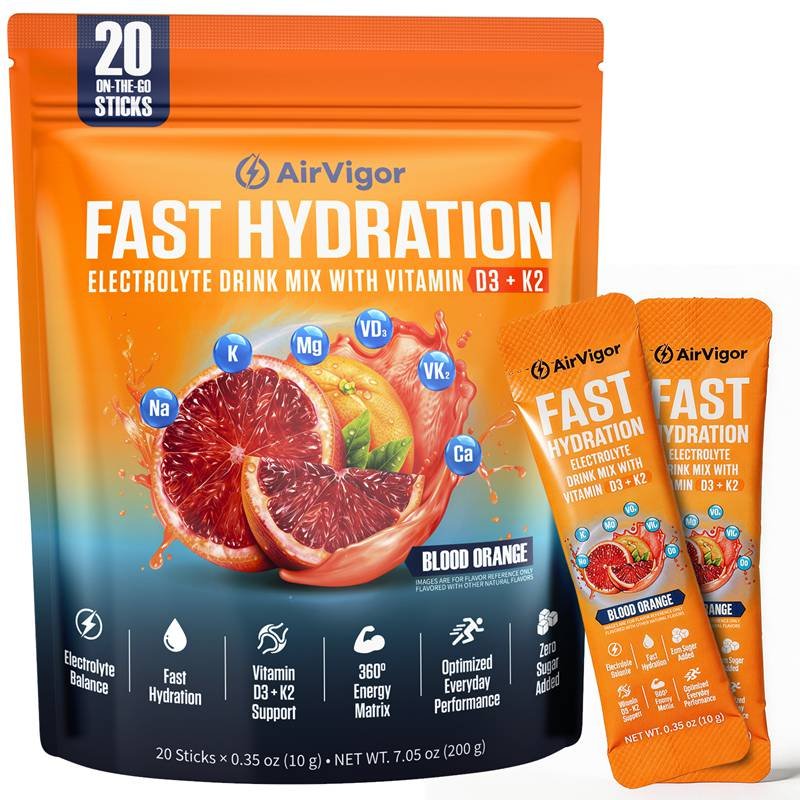
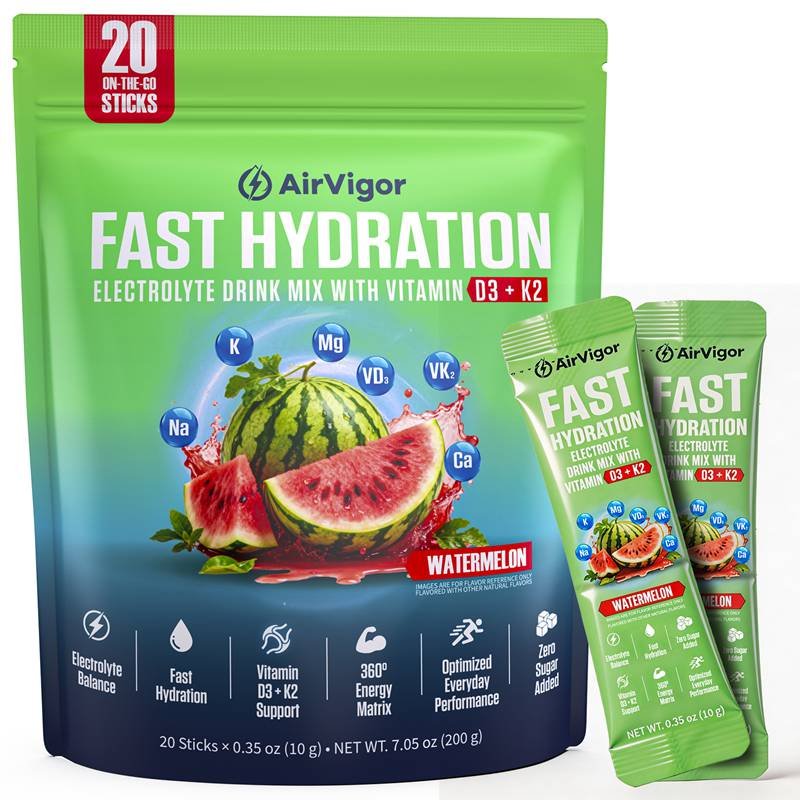
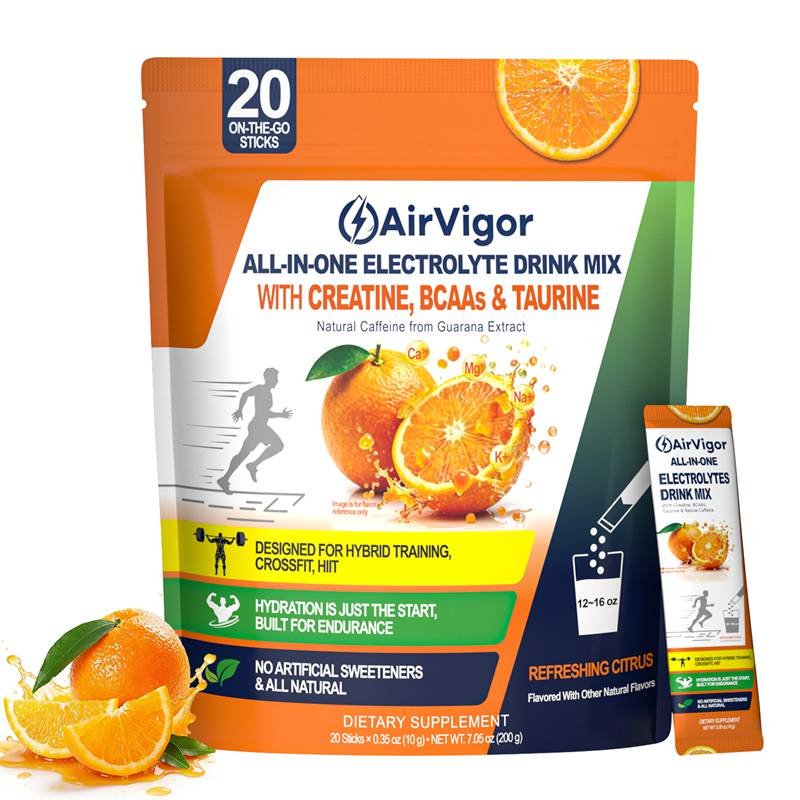
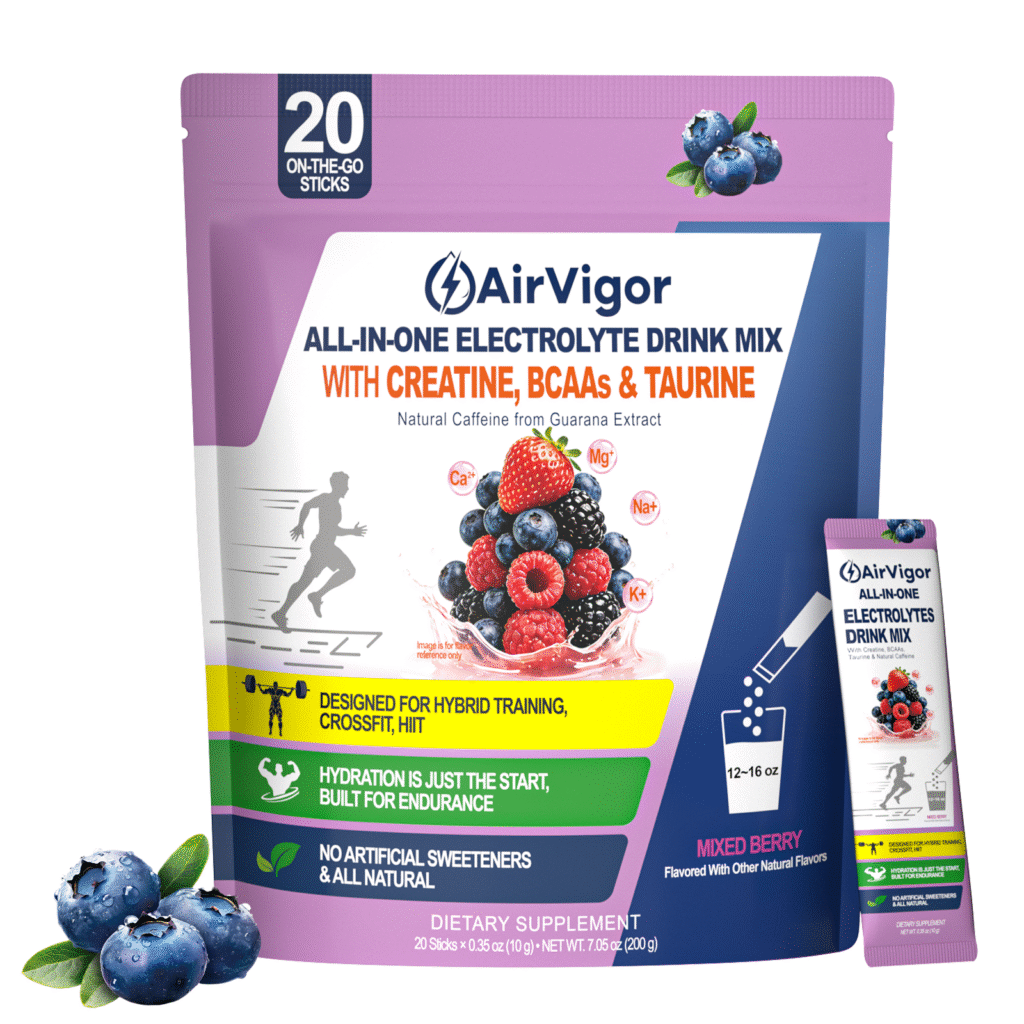
A well-designed electrolyte product should make correct use easier. The serving should be clear, the mineral profile should be transparent, and the mixing instructions should be simple enough for real routines such as workouts, travel, hot weather, office days, and post-sweat recovery. AirVigor’s hydration approach fits this logic by focusing on portable stick packs, clear usage moments, and formulas that help customers use electrolytes with more intention rather than guessing from a tub or choosing the strongest-looking option.
Why Is Water Not Always Enough?
Water remains the foundation of daily hydration. For normal thirst, light movement, balanced meals, and low-sweat days, plain water is often the most appropriate choice. Electrolytes become more relevant when the body loses water and minerals together. This commonly happens during hard training, outdoor activity, sauna sessions, hot yoga, long travel days, summer work shifts, or any routine that causes repeated sweating or poor fluid intake.
The mistake is treating hydration as the same problem every day. A person walking for 15 minutes in mild weather usually does not need the same drink as someone doing 75 minutes of indoor cycling, trail running, hot yoga, or warehouse work in summer heat. In the first situation, water may be enough. In the second, electrolyte support may help replace minerals lost through sweat and make rehydration feel more complete.
Many users also think electrolytes are either only for athletes or necessary for everyone every day. Both ideas are too extreme. Electrolytes are best understood as a situational tool. They are not required for every glass of water, but they can be useful when sweat, heat, travel, or inconsistent water intake creates a stronger hydration demand.
| Situation | Water Usually Enough? | Electrolytes May Help? | Why It Matters |
|---|---|---|---|
| Sitting at a desk with normal meals | Yes | Sometimes | Mainly useful when water intake is poor |
| Short walk under 30 minutes | Yes | Usually not needed | Sweat loss is usually low |
| 45-minute indoor gym session | Often | Sometimes | Depends on sweat level and room temperature |
| 60–90 minute HIIT session | Sometimes | Yes | Higher sweat and repeated effort |
| Hot yoga or sauna | Often not enough alone | Yes | Sweat loss can be high |
| Long flight or road trip | Sometimes | Yes | Low water intake and dry conditions |
| Outdoor work in summer | Often not enough alone | Yes | Repeated sweat over many hours |
The clearest way to decide is to look at the day’s conditions. If there was little sweating, normal food intake, and steady water consumption, plain water may be enough. If the day involved heat, long workouts, travel, sauna use, or repeated sweat loss, electrolytes may serve a clearer purpose. The product should support the situation rather than replace the habit of drinking water throughout the day.
Can You Take Too Many Electrolytes?
Yes, it is possible to take too many electrolytes, especially when several products are combined across the same day. A person may drink an electrolyte powder in the morning, take a pre-workout before training, sip a sports drink during exercise, eat salty packaged foods, and finish the day with restaurant meals. Each choice may seem normal by itself, but together they can increase sodium, caffeine, sweeteners, minerals, and calories more than expected.
Sodium is the easiest number to overlook. It plays an important role in hydration during sweat loss, and it can be very useful for runners, cyclists, gym users, outdoor workers, and people training in heat. However, a high-sodium electrolyte formula may not be appropriate for someone sitting indoors most of the day, eating sodium-rich meals, and barely sweating. The concern is not that sodium is inherently harmful. The concern is using a sweat-replacement product when there has not been much sweat to replace.
This is also why reading the full daily context matters more than looking at a single product label. Electrolyte powders may add sodium, potassium, magnesium, and sweeteners. Pre-workout products may add caffeine, stimulants, amino acids, and additional minerals. Sports drinks may add sugar and calories. Restaurant meals and packaged foods may already contribute a high amount of sodium. When these sources overlap, the user may be taking in more than intended.
For healthy active adults, one properly mixed electrolyte serving after a high-sweat workout is very different from drinking multiple strong formulas throughout a low-sweat day. A good rule is to use electrolytes when there is a clear reason: sweating, heat, travel, sauna use, long training, or recovery after fluid loss. When that reason is not present, start with plain water and normal meals before adding another supplement serving.
How Are Electrolytes Different From Water?
Water provides fluid volume, while electrolytes help regulate how fluid is balanced and used in the body. This is why electrolyte drinks may feel useful after heavy sweating but unnecessary during a normal low-sweat day. They are not a better version of water, and they should not replace water as the main daily beverage. They are a targeted hydration tool for moments when mineral support matters.
This distinction is important because many people begin drinking electrolytes as if they were simply upgraded water. That habit can lead to unnecessary sodium intake, extra sweeteners, unwanted caffeine, or formula fatigue when the product is used too often. Plain water should still support most daily hydration needs for many people. Electrolyte drinks fit best around higher-demand situations such as training, hot weather, long travel, sauna use, heavy sweat, or inconsistent fluid intake.
Serving format also affects correct use. Powder tubs can work well at home, but they require measuring and can lead to inconsistent scooping. Bottled drinks are convenient but bulky and often less flexible. Tablets are compact, though some users dislike the taste or mouthfeel. Stick packs are easier for many modern routines because each serving is already measured and can be carried in a gym bag, desk drawer, travel pouch, car console, or outdoor pack.
AirVigor’s stick-pack format supports this more structured approach to hydration. The customer does not need to guess the serving size or carry a large tub throughout the day. Correct use becomes easier: choose the right moment, mix one serving with enough water, drink it at the appropriate time, and continue using plain water as the foundation of daily hydration.
Are You Taking Electrolytes Too Often?
You may be taking electrolytes too often if you use them daily or several times per day without sweating, training, heat exposure, travel, poor water intake, or another clear hydration need. Electrolytes are most useful when they help replace minerals lost through real conditions. On low-sweat days with balanced meals and steady water intake, plain water may already be the better choice.
Do You Need Electrolytes Every Day?
Some people have a valid reason to use electrolytes every day, while others may only need them occasionally. The answer depends on sweat level, climate, training routine, diet, caffeine intake, travel schedule, body size, and health status. A person who trains hard five days a week, sweats heavily, works in hot conditions, follows a low-carb diet, or travels frequently may have a stronger case for regular electrolyte support. A person who spends most of the day indoors, eats balanced meals, drinks enough water, and rarely sweats may not need an electrolyte drink every day.
Confusion usually comes from treating daily electrolyte use as a simple yes-or-no question. Daily use is not automatically wrong, but daily use without a clear reason is where many people misuse hydration powders. The better question is whether the day created extra fluid or mineral demand. A sweaty workout, hot commute, sauna session, long flight, or coffee-heavy morning with little water can make electrolyte support more useful. A quiet indoor day with normal meals and steady water intake may not require it.
For repeat use, the formula should be easy to fit into a normal routine rather than overly strong, overly sweet, or difficult to mix. Customers who use electrolytes several times per week usually care about sugar, sodium, taste, caffeine, and serving control because these details affect comfort and consistency.
| Daily Use Factor | Why It Matters |
|---|---|
| Zero sugar | Easier to use often without adding sugar to the diet |
| Clear sodium amount | Helps users avoid unexpected sodium stacking |
| Smooth taste | Makes repeat use more realistic |
| Fast dissolution | Reduces clumps, grit, and bottle residue |
| Single-serving sticks | Prevents over-scooping and makes carrying easier |
| Clear caffeine labeling | Helps users avoid unwanted stimulant intake |
| Moderate formula strength | Fits more daily active routines |
AirVigor fits best for people who have repeatable hydration needs rather than people looking for a product to drink without purpose. Gym users, travelers, outdoor workers, busy professionals, hot-weather users, and wellness-focused consumers often need a hydration option that is portable, sugar-free, easy to mix, and simple to use at the right moment. Before opening a stick, the user should review the day honestly: training, sweat, heat, travel, caffeine intake, and water intake all matter. If none of those factors apply, water may be enough.
Do You Need Them Without Sweating?
Electrolytes can still be useful without visible sweating, but the reason should be related to hydration context. Sweating is the clearest signal because it removes both fluid and minerals. Without sweating, electrolyte use is usually more relevant during long travel, dry indoor environments, poor water intake, low-carb eating, sauna use before or after, heavy caffeine intake, or irregular meals and fluids. In these situations, electrolytes may help structure hydration and make water intake more consistent.
A long flight is a good example. A traveler may not sweat much, but dry cabin air, limited beverage access, and avoiding water to reduce bathroom trips can leave the person feeling dry and sluggish after landing. Office routines can create a similar pattern. Someone may work in air conditioning, drink coffee throughout the morning, and barely drink water until late afternoon. A light electrolyte drink may be useful in these cases, not because the person is sweating heavily, but because the day created poor hydration conditions.
The mistake is using electrolytes whenever energy feels low. Low energy can come from poor sleep, skipped meals, stress, under-eating, excess caffeine, low iron, overtraining, or long screen exposure. Electrolytes support hydration; they do not solve every fatigue problem. If the problem is poor sleep or not eating enough, an electrolyte drink may make water more appealing, but it will not replace rest, calories, or a balanced routine.
A more reliable decision comes from asking whether the low-energy feeling has a hydration-related cause. Heavy sweating, heat exposure, long flights, coffee-heavy mornings, and poor water intake create a stronger reason to use electrolytes. Stress, sleep loss, skipped meals, and screen fatigue usually require a broader solution. This honest boundary makes the product more credible and helps users avoid treating hydration powder as a fix for every uncomfortable afternoon.
Is Water Better for Light Activity?
For light activity, water is usually the better first choice. A short walk, gentle stretching session, easy bike ride, light errands, or low-sweat gym visit usually does not require a full electrolyte strategy. If the person eats normal meals and drinks water steadily through the day, the body may already have enough fluid and minerals for that level of activity.
Many people buy electrolyte powder and then use it for routine low-level thirst. After several days, the product may start to feel too strong, too salty, too sweet, or unnecessary. In many cases, the formula is not the real problem; the product may simply not match the situation. A 30-minute casual walk is not the same as a 90-minute summer run. A quick stretch at home is not the same as a hot yoga class. A low-sweat office day is not the same as an outdoor work shift in high heat.
The better approach is to keep plain water as the foundation and reserve electrolytes for higher-need moments. For light activity, start with water, eat normal meals, and pay attention to whether the day includes heat, sweat, travel, or poor fluid intake. If the goal is light daily hydration support, a moderate zero-sugar formula may fit better than a high-sodium sports formula built for heavy sweat replacement.
This kind of product discipline improves long-term trust. When users understand when electrolytes are useful and when water is enough, they are less likely to feel disappointed by the product. AirVigor can support this habit by positioning electrolyte sticks around active, sweaty, travel-heavy, or heat-exposed routines rather than encouraging unnecessary all-day use.
What Are Signs of Poor Hydration?
Poor hydration can appear in everyday ways before it becomes severe. Common signs may include dry mouth, stronger thirst, darker urine, headache, sluggishness, lightheadedness, reduced workout comfort, or an unusually heavy feeling during exercise. During training, a person may notice that effort rises faster than normal, pacing becomes harder to maintain, or recovery feels slower after a sweaty session.
These signs do not automatically mean the person needs electrolytes. They mean the full day should be reviewed. Fluid intake, sweat level, room temperature, caffeine intake, food intake, alcohol, sleep quality, travel, and training duration can all affect how hydrated someone feels. A person who drank very little water and trained in heat may benefit from electrolytes. A person who slept poorly and skipped lunch may need food and rest more than a hydration powder.
A useful pattern is to connect symptoms with context. Darker urine after a hot workout, dry mouth after flying, or sluggishness after a coffee-heavy morning with little water may point toward hydration support. Persistent dizziness, severe weakness, confusion, unusual swelling, irregular heartbeat, or symptoms linked to illness should not be handled as a supplement decision. Those situations require professional medical advice.
For most healthy adults, the best response is measured and practical. Start with water, review the day, and use electrolytes when sweat, heat, travel, sauna use, or poor water intake creates a clear reason. AirVigor fits best in these higher-need moments by making electrolyte use easier, more portable, and more consistent without turning every drink into a supplement decision.

How Should You Time Electrolytes?
Electrolyte timing should match the period when fluid and mineral loss is most likely to affect comfort, performance, or recovery. For most people, the most useful moments are before a sweaty workout, during longer or hotter training, after noticeable sweating, or during travel and heat exposure when water intake is inconsistent. For short, low-sweat activity, timing matters much less because plain water may already be sufficient.
Should You Take Them Before Exercise?
Taking electrolytes before exercise can be useful when the session is expected to be long, hot, intense, or sweat-heavy. The purpose is not to force extra minerals into the body before every workout. It is to avoid beginning exercise with low fluid intake, especially when the day has already included sleep, coffee, meetings, commuting, or several hours without water. Many people do not realize they are starting training from a weaker hydration point until the workout feels harder than expected.
Many users do best with electrolytes about 30–60 minutes before training, mixed with the recommended amount of water and consumed steadily. This timing gives the body enough time to take in fluid without making the stomach feel overly full. It is especially useful before hot yoga, sauna sessions, outdoor running, cycling, hiking, court sports, CrossFit, HIIT, rowing, boxing, or long gym sessions where sweat loss is likely. For early morning workouts, a smaller amount before training and continued sipping during warm-up may feel more comfortable than drinking a full bottle too quickly.
Problems usually start when people use a strong electrolyte drink before every workout, even when the session is short, cool, and low-sweat. A 25-minute light strength session in an air-conditioned gym may not require much beyond plain water. A 75-minute conditioning session in summer heat is different. Formula details also matter before exercise. Caffeinated electrolyte products should be timed carefully, high-sodium formulas should match expected sweat loss, and sugary drinks usually fit longer or more demanding sessions better than short casual workouts.
AirVigor fits this timing window when training conditions create a real reason for hydration support. A pre-measured stick can be mixed before leaving for the gym, carried to a class, or used before outdoor training without scooping powder from a tub. The better habit is not to use electrolytes before every session automatically, but to use them when sweat, heat, duration, or poor earlier water intake makes support more useful.
Should You Drink Them During Training?
Drinking electrolytes during training makes the most sense when the session is long enough, hot enough, or sweaty enough that plain water no longer feels sufficient. For short workouts, plain water can be enough. During longer HIIT classes, cycling sessions, runs, outdoor sports, hiking, or multi-hour work shifts in heat, steady fluid and electrolyte intake can be more useful than waiting until the body already feels dry, heavy, or unusually drained.
During-training hydration is often about staying ahead of the problem rather than correcting it afterward. Once strong thirst, dry mouth, dizziness, or unusual fatigue appears, the user may already be behind on fluid intake. Smaller, steady sips during training are usually easier on the stomach than drinking a large amount after the session. This matters for high-movement activities such as running, boxing, rowing, cycling, CrossFit, tennis, soccer, and bootcamp-style workouts, where a heavy or overly concentrated drink can quickly become uncomfortable.
Some electrolyte products become harder to use during movement because the taste is too salty, too sweet, too acidic, or too heavy. A drink that tastes pleasant at a desk may feel overwhelming during a sweaty session. Mixability also matters. If the powder is too concentrated, it may feel heavy in the stomach. If it is too diluted, users may drink less because the flavor feels weak. A good training formula should dissolve quickly, taste clean, and remain easy to sip when breathing rate and body temperature are elevated.
AirVigor stick packs are useful in this setting because they are portable and already measured. A user can keep one in a gym bag, running belt, work backpack, car console, or travel pouch and mix it when the session requires more than plain water. This convenience may seem minor, but it often determines whether hydration support is used at the right time or skipped until the workout is already over.
Should You Use Them After Sweating?
Using electrolytes after sweating is one of the clearest use cases because the body has lost both water and minerals. Replacing only water may reduce thirst, but electrolyte support can make rehydration feel more complete after long, hot, or intense activity. This applies not only to athletes, but also to gym users, hot yoga participants, sauna users, delivery drivers, outdoor workers, travelers, and parents spending hours outside at summer sports events.
A common recovery mistake is finishing a sweaty session and delaying hydration. People often check their phone, drive home, drink coffee, eat something salty, or return to work before replacing fluid. Two hours later, they may feel dry, tired, headachy, or unusually hungry. In many cases, the workout was not the only issue; the recovery routine simply started with too little fluid and mineral support.
The first 30–60 minutes after heavy sweating is a useful window to begin rehydrating. This does not mean every user needs an extreme sports formula. It means fluid intake should begin steadily, electrolytes should be considered when sweat loss was meaningful, and food should be included when recovery matters. A normal meal or snack can contribute sodium, potassium, carbohydrates, and other nutrients, while an electrolyte drink can help address the hydration side of recovery.
AirVigor works naturally in this post-sweat moment because the use case is easy to understand. A stick can be stored in a locker, gym bag, office drawer, car cup holder, or travel kit and mixed after the session. Clear product instructions should tell users how much water to use, whether the formula contains caffeine, and whether the product is better suited for pre-workout, during-workout, or post-sweat hydration.
Can You Take Them on an Empty Stomach?
Many people can take electrolytes on an empty stomach, but comfort depends on the formula, mineral level, flavor acidity, sweeteners, caffeine content, water amount, and personal sensitivity. Some users tolerate a morning electrolyte drink well, especially before an early workout, sauna session, commute, travel day, or long active morning. Others may notice stomach tightness, acidity, nausea, or a strong salty taste if the drink is too concentrated or consumed too quickly.
Empty-stomach use is most reasonable when there is a clear hydration reason. Early training after sleep, poor water intake the previous day, hot weather, long travel, sauna use, or a busy morning with limited fluid intake can all make a properly mixed electrolyte drink more useful. On a low-sweat morning with normal thirst, plain water may be the better first choice. The goal is to support hydration when the routine creates demand, not to turn every morning into a supplement routine.
The most common mistake is mixing one serving with too little water and drinking it quickly before eating. A concentrated electrolyte mix can taste harsh and may feel uncomfortable for people with sensitive stomachs or reflux tendencies. A better method is to use the full recommended water amount, sip slowly, and take the drink with a small snack if discomfort happens. Caffeine-sensitive users should also check whether the formula contains caffeine before using it early or late in the day.
Timing becomes easier when the label is clear. Customers should not have to guess whether an electrolyte powder fits morning use, pre-workout use, evening hydration, or empty-stomach drinking. AirVigor product pages should make water amount, caffeine status, serving size, and best-use moments easy to find, helping users choose the right timing instead of relying on trial and error.
| Timing Moment | When Electrolytes May Help | When Water May Be Enough |
|---|---|---|
| Before exercise | Long, hot, intense, or sweat-heavy sessions | Short, cool, low-sweat workouts |
| During training | Sessions over 60 minutes, heavy sweat, heat, or repeated effort | Short indoor sessions with low sweat |
| After sweating | Soaked clothes, sauna, hot yoga, outdoor work, endurance activity | Light sweating after easy movement |
| Empty stomach | Early workout, travel morning, heat exposure, poor prior water intake | Normal low-sweat morning with steady meals |
Which Electrolyte Mistakes Matter Most?
The most important electrolyte mistakes usually come from using the wrong formula for the wrong situation. Some people choose too much sodium for low-sweat days, ignore potassium and magnesium, drink unnecessary sugar, mix powder with too little water, or use sports formulas as casual flavored drinks. A good electrolyte product should match sweat level, timing, diet pattern, activity type, and daily routine.
Are You Getting Too Much Sodium?
Sodium is essential, but context matters. It is one of the main electrolytes lost through sweat, which is why many hydration products include it. For endurance athletes, heavy sweaters, outdoor workers, hot yoga users, and people training in heat, sodium can play an important role in fluid balance. The mistake happens when a high-sodium formula is used on low-sweat days without considering sodium from meals, snacks, sauces, restaurant food, and other beverages.
Many new electrolyte users assume a larger sodium number means a more effective formula. That can be true for long runs, cycling, outdoor labor, or summer training, but it may not be the best fit for desk work, short indoor workouts, or casual daily hydration. A person who eats salty foods and barely sweats may not need the same sodium level as someone finishing a 90-minute outdoor session in high heat.
The smarter question is not whether sodium is good or bad. The better question is whether the amount fits the day. If there was visible sweat, heat exposure, or a long training session, sodium support may be useful. If the day was mostly indoors with normal meals and steady water intake, a lighter or more moderate electrolyte formula may be more appropriate. People with blood pressure concerns, sodium restrictions, kidney issues, or heart conditions should be especially careful and follow professional guidance before using high-sodium products regularly.
AirVigor’s strongest product logic here is clarity. Customers should be able to see the sodium amount, understand the intended use case, and know whether the formula is built for daily hydration, active training, travel, heat support, or heavy sweat replacement. Clear labeling builds more trust than simply promoting the highest mineral number.
Are You Missing Potassium or Magnesium?
Sodium often gets the most attention, but hydration is not only about sodium. Potassium supports normal fluid balance inside cells, magnesium contributes to normal muscle function and energy metabolism, calcium supports normal muscle contraction and nerve function, and chloride often works alongside sodium in fluid balance. A formula that only talks about sodium may feel incomplete for users who want broader hydration support.
This is especially important for active consumers. Gym users, runners, hot yoga participants, hikers, and outdoor workers often connect electrolyte products with sweat, muscle function, recovery comfort, and daily performance. While electrolyte powders should not make medical claims, a balanced mineral profile can make the formula feel more complete and easier to understand.
More minerals do not automatically make a product better. Potassium and magnesium still need to be used responsibly, especially for people with kidney disease, heart conditions, or medications that affect electrolyte balance. For healthy active adults, the goal is usually not to chase the highest possible mineral numbers. The goal is to choose a formula that provides meaningful support without becoming too heavy for repeat use.
AirVigor product content should explain minerals in plain language without becoming overly technical. A customer should quickly understand why sodium, potassium, magnesium, and calcium are included, how the formula fits training or daily routines, and whether the product contains sugar, caffeine, creatine, amino acids, or other active ingredients. Transparent formula communication is increasingly important because consumers compare labels across Amazon, Google, Reddit, TikTok, and AI search before making a purchase.
Are You Choosing Too Much Sugar?
Sugar can be useful in certain sports settings, but it is often unnecessary for casual hydration. During longer endurance exercise, carbohydrates may help provide fuel. During a short gym session, office day, travel day, low-sweat routine, or weight management phase, a sugary sports drink may add calories without matching the actual hydration demand.
Growing demand for zero-sugar electrolyte powder comes from this shift in consumer behavior. Many people want hydration support that fits daily routines without adding sugar to every bottle. They may be reducing added sugar, following a low-carb or keto lifestyle, managing calories, or simply trying to avoid the taste and heaviness of traditional sports drinks.
The mistake is assuming every sports drink is a hydration upgrade. Many bottled sports drinks were designed around athletic fueling, not ordinary daily use. A person training for two hours may have a legitimate reason to use carbohydrates. A person working indoors, driving, flying, walking lightly, or doing a short workout may be better served by a zero-sugar electrolyte stick with clear mineral levels.
AirVigor’s zero-sugar direction fits this customer shift because many users want hydration that works across the gym, office, travel, heat exposure, and post-sweat recovery without adding unnecessary sugar. The message should stay balanced: sugar is not always wrong, but it should match the activity. Choose sugar when fueling is part of the goal; choose zero sugar when the main goal is hydration support.
Are You Using Too Little Water?
Using too little water is one of the easiest ways to make an electrolyte powder feel less comfortable. The drink may taste too salty, too sour, too sweet, or too strong, and it may feel heavier on the stomach before exercise or first thing in the morning. In many cases, the formula is not the main problem; the mixing ratio is.
Powdered hydration products are designed around a specific serving size and water amount. If one stick is intended for a full bottle and the user mixes it into a small cup, the concentration changes significantly. A stronger taste does not mean stronger hydration. It usually means the drink is less balanced than intended.
This mistake is common because people often mix powder quickly with whatever bottle or cup is available. They may skip the instructions, use too little water for stronger flavor, or add a second serving because they assume more powder works faster. Better use starts with a simple habit: follow the recommended water amount, shake or stir until fully dissolved, and sip steadily rather than drinking a concentrated mix too quickly.
Stick packs help reduce part of this problem because the powder serving is already measured. Users still need to add enough water, but they are less likely to over-scoop compared with a tub. AirVigor can improve the product experience by making mixing directions visible in product images, website FAQs, Amazon bullets, and packaging callouts instead of relying only on small back-label instructions.
Are Sports Formulas Always Right?
Sports formulas are not automatically right for every person or every day. Some electrolyte products are designed for endurance athletes, heavy sweaters, long training sessions, race fueling, or high-heat work. These products may contain higher sodium, sugar, caffeine, creatine, amino acids, or other workout-support ingredients. That can be valuable for the right user, but unnecessary for someone looking for light daily hydration.
Many shoppers are attracted to formulas that appear stronger, but “stronger” does not always mean more suitable. A hydration product for office use does not need to look like an endurance formula. A product for evening hydration should probably avoid caffeine. A zero-sugar travel stick does not need the same carbohydrate profile as a race-day drink. The best formula depends on when and why the person drinks it.
The product should clearly explain its intended use case. Office hydration, gym training, HIIT, hot yoga, endurance sports, travel, heat exposure, low-carb routines, and post-sweat recovery all create different expectations. When the use case is clear, customers can choose more confidently and are less likely to feel disappointed after purchase.
| Common Mistake | Why It Happens | Better Choice |
|---|---|---|
| Choosing the highest sodium formula | Bigger numbers appear more effective | Match sodium to sweat, heat, and diet |
| Ignoring potassium and magnesium | Sodium gets most of the attention | Look for a balanced mineral profile |
| Drinking unnecessary sugar | Sports drinks feel familiar | Choose sugar-free when fueling is not needed |
| Mixing with too little water | Stronger taste feels more powerful | Use the recommended water amount |
| Using sports formulas casually | Performance claims sound appealing | Choose a formula that fits the actual routine |
AirVigor can support this decision process with clear product positioning. A daily hydration stick, an active training electrolyte, a travel-friendly formula, and a heat-support product should not all communicate the same way. For branded product customers, that clarity improves confidence. For wholesale, distributor, and private label partners, it also creates stronger product segmentation and better long-term repeat purchase.

How Do You Choose Electrolyte Powder?
Choose electrolyte powder by reading the Supplement Facts panel before trusting the front label or marketing claims. A good formula should clearly show sodium, potassium, magnesium, calcium, sugar, calories, caffeine, serving size, and mixing directions. The right choice depends on how the product will be used: training, travel, heat exposure, office hydration, sauna, post-sweat recovery, or daily active routines.
What Should the Label Show?
The Supplement Facts panel is the best place to start because it shows the actual formula profile, not just the product positioning. Front labels often highlight phrases such as “advanced hydration,” “rapid hydration,” “daily electrolytes,” or “sports performance,” but those claims are only useful when the mineral amounts, sugar level, caffeine content, serving size, and water instructions are clear. A good electrolyte powder should help users understand what they are drinking, when to drink it, and whether the formula fits their routine.
Sodium is usually the first number to check because it strongly affects the product’s use case. A higher-sodium formula may fit endurance training, heavy sweating, hot weather, or outdoor work, while a moderate sodium level may be more suitable for gym users, travel, and daily active hydration. Potassium and magnesium also matter because many users want a formula that goes beyond sodium-only hydration. These minerals support normal fluid balance, muscle function, and daily activity, but the amounts should still be appropriate for repeat use.
Sugar and caffeine deserve the same attention. Many customers now prefer zero-sugar electrolyte powder because they want hydration support without adding sugar to every bottle. This is especially relevant for office routines, weight management, low-carb eating, and frequent weekly use. Caffeine can be useful before training or during daytime focus moments, but it may not fit evening hydration, caffeine-sensitive users, or people who already rely heavily on coffee or energy drinks.
| Label Detail | What to Check | Why It Matters |
|---|---|---|
| Sodium | Amount per serving | Helps match sweat loss, heat exposure, and daily sodium intake |
| Potassium | Amount and mineral form | Adds balance beyond sodium-only hydration |
| Magnesium | Amount and mineral form | Supports normal muscle function and daily activity |
| Calcium | Amount per serving | Supports normal muscle and nerve function |
| Sugar | Grams per serving | Important for daily use, low-carb routines, and calorie control |
| Calories | Total per serving | Helps users fit the drink into their normal diet |
| Caffeine | Amount per serving | Affects timing, sleep, and stimulant stacking |
| Serving size | Grams per stick or scoop | Reduces accidental overuse |
| Water amount | Suggested ounces or milliliters | Improves taste, comfort, and mixing consistency |
| Other actives | Creatine, amino acids, vitamins, herbs | Shows whether the product is daily hydration or performance-focused |
Transparent labeling is especially important when customers compare products across Amazon, Google, TikTok, Reddit, and AI search. If a product hides key amounts inside a proprietary blend or makes the water instructions hard to find, users may not know whether the drink fits their needs. AirVigor should keep formula communication simple: clear minerals, clear serving size, clear mixing direction, clear use case, and no unnecessary confusion.
Which Formula Fits Active Users?
Active users need a formula that matches the way they train, not just a formula with the biggest mineral numbers. A person doing HIIT, CrossFit, strength training, running, cycling, hot yoga, hiking, tennis, or outdoor fitness may need more hydration support than someone doing light daily movement, but active routines still vary widely. A runner may need sodium support based on distance and heat. A hot yoga user may need sweat replacement and stomach comfort. A strength athlete may want hydration support without a heavy sugary drink.
A good active formula should be easy to mix, easy to sip, low in unnecessary sugar, and clear about caffeine or performance-support ingredients. Taste matters more during movement than many brands realize. A drink that tastes acceptable at a desk can feel too sweet, too salty, or too heavy during intervals, cycling, rowing, or hot yoga. Solubility also affects repeat use because clumps, grit, or bottle residue can make a product feel lower quality even when the formula looks strong on paper.
Active users also care about convenience. A powder tub can work at home, but it is less convenient for gym lockers, running belts, car consoles, outdoor bags, and travel pouches. A stick pack helps because one serving is already measured and easy to carry. AirVigor’s stick-pack format fits active routines by reducing the friction that often prevents users from drinking electrolytes at the right moment.
For active hydration, the best product is not always the most aggressive formula. It is the formula that matches sweat level, training duration, flavor tolerance, sugar preference, caffeine timing, and portability. A product built for a long outdoor run should not communicate the same way as a product built for a short indoor strength session.
Which Formula Fits Travel and Heat?
Travel and heat create hydration problems that are different from a gym workout. During travel, people often drink less water because bathrooms are inconvenient, schedules are rushed, and bottled water is not always available. Airplane cabins, long drives, airport waiting, hotel routines, and time zone changes can make users feel dry, sluggish, or poorly hydrated even without visible sweating.
Heat exposure creates another challenge because sweat loss can build gradually over several hours. A person walking through a theme park, hiking in summer, working outdoors, attending a sports tournament, or spending the day at the beach may not notice fluid loss until thirst becomes stronger. In these situations, an electrolyte powder should be portable, easy to mix, low in unnecessary sugar, and comfortable enough for repeat use.
Stick packs often work better than tubs, bottles, or concentrates in these settings because they are lighter, cleaner, and easier to carry. A user can keep a few sticks in a carry-on, backpack, desk drawer, purse, gym bag, or car console without measuring powder or carrying a bulky container. The product still needs the right water amount, but the serving is already controlled.
Travel and heat formulas should be designed around real use conditions: bottled water, limited space, warm environments, changing schedules, and repeated use. A travel-focused electrolyte stick may benefit from a lighter taste, zero sugar, clear sodium content, and no unnecessary caffeine. A heat-support formula may need stronger sodium positioning and balanced minerals. A sports formula may include additional performance-support ingredients. Clear product segmentation makes the brand easier to understand and helps customers choose more confidently.
How Does AirVigor Fit Daily Use?
AirVigor fits daily use when customers have a real reason for hydration support, such as workouts, sweating, travel, hot weather, sauna use, outdoor activity, office routines with low water intake, or busy days that disrupt normal drinking habits. The product should not be positioned as something every person must drink all day. A stronger message is that AirVigor helps users add hydration support when plain water may not feel complete.
Daily use depends on comfort and consistency. Customers may try a product because of the label, but they continue using it when the taste, solubility, serving size, and convenience fit their routine. A daily hydration product should not feel too salty, too sweet, too gritty, or too complicated. Zero sugar, clear mineral amounts, fast dissolution, and stick-pack portability all support repeat use because they reduce common barriers.
AirVigor can serve both branded product customers and custom product partners through the same core logic: build formulas around real use cases. For direct consumers, that means easy daily hydration for active lifestyles. For supplement brands, distributors, gyms, and e-commerce sellers, it means formula development, flavor options, stick-pack manufacturing, private label support, and product positioning that can be translated into Amazon listings, WordPress content, product images, and repeat-purchase bundles.
| Use Case | Better Formula Direction |
|---|---|
| Office hydration | Zero sugar, smooth taste, moderate minerals, clear caffeine status |
| Gym training | Sweat support, fast dissolution, easy pre/post workout use |
| HIIT or CrossFit | Clean flavor, portable sticks, minerals matched to visible sweat |
| Travel | Single-serving sticks, bottled-water mixing, low sugar |
| Heat exposure | Sodium support, balanced minerals, clear water instructions |
| Hot yoga or sauna | Sweat replacement, stomach comfort, zero or low sugar |
| Low-carb routine | Zero sugar, clear sodium and potassium levels |
| Private label line | Clear formula segmentation by use case and target audience |
A clear daily-use strategy also supports stronger SEO and conversion. Customers want to know whether the product fits a morning workout, office drawer, travel bag, gym bottle, or summer routine. Business clients want to know whether the formula can become a sellable product line. AirVigor can answer both needs by pairing transparent formulation with practical stick-pack formats and flexible customization.
Why Are Stick Packs Easier?
Stick packs are easier because they reduce two common problems: measuring and carrying. With a tub, users need a scoop, dry hands, enough space, and a clean bottle. They may scoop too much, scoop too little, spill powder, or leave the tub at home. With a stick pack, the serving is already measured and ready to pour into water.
This matters because hydration is a behavior, not just a formula. A person may understand that electrolytes are useful after sweating or during travel, but if the product is inconvenient, it may not become part of the routine. Stick packs fit modern hydration habits because they can be used in gyms, offices, airports, cars, hotels, hiking packs, lockers, and outdoor work bags without extra tools.
The format also improves product presentation for e-commerce. Each serving is easy to show in product images, usage scenes are simple to explain, and keywords naturally match real customer searches such as electrolyte packets, hydration sticks, electrolyte powder packets, travel electrolytes, and zero sugar electrolyte sticks. For private label clients, stick packs also support variety packs, seasonal flavors, trial packs, subscription bundles, gym sample kits, influencer boxes, and retail display formats.
Powder tubs still work well for home use, especially when cost per serving is the main concern. Stick packs are stronger when portability, serving control, sampling, travel, and repeat-use convenience matter more. For AirVigor, this format supports both consumer usability and scalable product development, making it easier to build hydration products around real daily routines rather than one-size-fits-all formulas.
Are Electrolytes Safe for Everyone?
Electrolytes are generally suitable for many healthy adults when used as directed, but they are not appropriate for every person in every amount. Safety depends on the formula, serving size, sodium level, potassium level, frequency of use, health status, medication use, and total daily intake from food and other drinks. People with kidney disease, heart disease, high blood pressure, sodium restrictions, fluid restrictions, or medications that affect mineral balance should ask a qualified healthcare professional before using electrolyte powder regularly.
Is High Sodium a Concern?
High sodium can be a concern when the person does not sweat much, already eats sodium-rich foods, drinks multiple electrolyte servings per day, or has been advised to limit sodium. Sodium is useful in electrolyte products because it is one of the main minerals lost through sweat, but appropriate use still depends on intake level and health status. A formula that fits a heavy sweater or endurance athlete may be excessive for someone sitting indoors most of the day.
A higher-sodium electrolyte powder can make sense for long outdoor training, hot-weather work, endurance sports, sauna use, heavy sweating, or repeated sweat loss across the day. It may not be the best choice for light office hydration, short low-sweat workouts, or users who already consume frequent restaurant meals, packaged snacks, sauces, canned foods, and salty convenience foods. The same mineral can be helpful in one setting and unnecessary in another.
People choosing electrolyte powders should avoid judging product quality by the largest sodium number alone. A better sodium decision comes from matching the formula to sweat level, activity duration, climate, diet pattern, and medical considerations. Someone with blood pressure concerns, kidney disease, heart disease, a sodium-restricted diet, or fluid restrictions should be more cautious with high-sodium formulas and follow professional guidance.
AirVigor should communicate sodium levels and intended use cases clearly. If a product is designed for active sweat support, the label and product page should make that use case obvious. If a formula is designed for lighter daily hydration, the sodium level should support that positioning. Clear sodium communication helps consumers choose more confidently and also supports better product development for daily wellness, endurance, keto, heat-support, and travel hydration formulas.
Can Electrolytes Affect Blood Pressure?
Electrolyte products may matter for blood pressure mainly because of sodium. Blood pressure is influenced by many factors, including diet quality, body weight, stress, sleep, exercise, age, genetics, alcohol intake, potassium intake, medical conditions, and medication use. Even so, people who are sodium-sensitive or have been advised to watch sodium should choose electrolyte drinks carefully and read the sodium amount per serving before regular use.
One electrolyte serving after a sweaty workout is very different from using a high-sodium formula several times a day while eating salty meals. Frequency matters. Total daily intake matters. The surrounding diet matters. A product sold as a wellness drink is not automatically appropriate for every individual, especially when it contains meaningful sodium, potassium, caffeine, or other active ingredients.
Potassium also deserves attention. Many wellness consumers associate potassium with healthy hydration, but people with kidney disease or certain medications may need to control potassium intake. This is why electrolyte safety cannot be reduced to a simple “safe or unsafe” answer. For healthy active adults, electrolyte powder used as directed around sweat, heat, travel, or training may fit well. For people with medical conditions or medication-related mineral concerns, professional guidance is the more appropriate option.
Responsible hydration brands should avoid positioning electrolytes as a solution for blood pressure, fatigue, cramps, headaches, or illness-related dehydration. AirVigor’s safer and more credible positioning is hydration support for appropriate use cases: workouts, sweating, heat exposure, travel, sauna use, and busy routines with poor water intake. Clear boundaries make the product more trustworthy, not less attractive.
Are Kidney Issues a Concern?
Kidney issues require special caution because the kidneys help regulate fluid, sodium, potassium, magnesium, and other minerals. When kidney function is impaired, the body may not process electrolyte intake in the same way as a healthy person. A general electrolyte powder that is suitable for an active adult after sweating may need medical review for someone with kidney disease or reduced kidney function.
This concern is especially relevant for formulas containing potassium or magnesium. These minerals are useful in many hydration products, but people with kidney problems or medications that affect electrolyte balance may need specific intake limits. A product should never suggest that electrolyte powder can treat kidney problems, prevent dehydration-related illness, or replace medical rehydration guidance.
Health status should guide the decision. Healthy adults using electrolyte powder as directed for workouts, sweat, heat, travel, or sauna routines are in a different situation from someone with kidney disease, fluid restrictions, potassium-related medication concerns, or severe dehydration symptoms. Children, older adults, pregnant people, and people with chronic conditions also require more careful judgment during illness, vomiting, diarrhea, fever, or ongoing dehydration.
| Situation | Better Safety Decision |
|---|---|
| Healthy adult after heavy sweating | Usually reasonable when used as directed |
| Healthy traveler with poor water intake | Often reasonable with proper water amount |
| High blood pressure or sodium restriction | Ask a healthcare professional before regular use |
| Kidney disease or reduced kidney function | Ask a healthcare professional before use |
| Potassium-related medication concern | Ask a healthcare professional before use |
| Fluid restriction or heart condition | Ask a healthcare professional before use |
| Child, older adult, or pregnant person during illness | Use medical guidance, not general supplement advice |
| Severe weakness, confusion, fainting, irregular heartbeat, or persistent dehydration symptoms | Seek medical care |
AirVigor can show responsibility by making safety guidance visible without turning the product page into a medical document. Labels, website content, Amazon listings, and product images should avoid disease-treatment language, keep serving directions clear, explain sodium and caffeine status, and remind users with medical concerns to seek professional advice.
When Should You Ask a Doctor?
A person should ask a doctor or qualified healthcare professional before regular electrolyte use if they have kidney disease, heart disease, high blood pressure, sodium restrictions, fluid restrictions, or take medications that affect sodium, potassium, magnesium, or fluid balance. Professional guidance is also important when symptoms are severe, unusual, persistent, or connected to illness.
Electrolyte powder is a hydration support product, not a medical treatment. A healthy person who sweats heavily during training may use electrolytes as part of a normal hydration routine. A person with vomiting, diarrhea, fever, confusion, severe weakness, fainting, irregular heartbeat, unusual swelling, or ongoing dehydration symptoms may need medical care rather than a general sports hydration powder.
Everyday use should stay simple and responsible: read the Supplement Facts panel, follow the recommended serving size, mix with the suggested water amount, avoid replacing all plain water with electrolyte drinks, and do not combine multiple high-sodium or caffeinated products without considering total intake. If a product repeatedly causes discomfort, the user should stop using it and review the formula, water amount, timing, and personal tolerance.
AirVigor’s role is to make appropriate use easier. Clear labels, visible mixing directions, transparent mineral levels, and responsible safety language help users understand whether the product fits their routine. For branded products, wholesale supply, and private label development, this type of communication protects consumer trust and supports long-term repeat purchase.
Conclusion: Use Electrolytes With Purpose
The biggest electrolyte mistake is not choosing the wrong flavor or missing the newest hydration trend. It is using electrolyte powder without understanding why the body needs it in that moment. Electrolytes can be valuable after heavy sweating, long training sessions, hot-weather activity, travel, sauna use, and days when water intake has been poor. They are less useful when they become an automatic daily habit with no connection to sweat, heat, diet, timing, or actual fluid loss.
Smarter hydration starts with a simple routine: drink water consistently, review the day honestly, read the Supplement Facts panel, and choose electrolyte support when the situation calls for it. The best electrolyte powder is not always the strongest formula. It is the formula that fits the use case clearly. A gym user may need a zero-sugar stick pack before or after training. A traveler may need portable hydration that mixes easily with bottled water. A heavy sweater may need stronger sodium support. A wellness user may prefer a lighter daily formula with clear minerals, no added sugar, and no unnecessary caffeine.
AirVigor builds electrolyte products around these real hydration moments: active training, travel, heat exposure, office routines, post-sweat recovery, and convenient stick-pack use. The goal is not to make hydration more complicated. It is to make the right choice easier through transparent formulas, practical serving formats, clear mixing directions, and product options that fit how people actually drink electrolytes.
For retailers, gyms, distributors, Amazon sellers, and wellness brands, this same logic also matters commercially. A successful electrolyte product should not try to serve every customer with one vague formula. It should have a clear audience, a clear use case, a clear mineral profile, and a clear reason to be used again. AirVigor can support ready-to-sell branded electrolyte products as well as custom OEM/ODM hydration formulas, including zero-sugar electrolyte sticks, sports hydration powders, travel-friendly electrolyte packets, heat-support formulas, and private label stick-pack solutions.
If you are looking for AirVigor branded electrolyte products, wholesale supply, or a custom hydration formula for your own brand, contact AirVigor to request product details, samples, flavor options, wholesale pricing, and a private label quote.
Share:
Contact Expert Team
At AirVigor, performance becomes effortless. We transform advanced nutrition science into clean, effective supplements that help you hydrate, recover, and feel stronger every day. Shop AirVigor Supplements on Amazon and experience athlete-trusted formulas—backed by real science and supported by our world-class R&D and production capabilities.
Trust AirVigor
At AirVigor, turning your performance goals into reality is no longer a struggle—it’s a science-driven journey we build together. Whether you’re a runner, lifter, cyclist, yogi, outdoor athlete, or someone simply seeking better daily energy, AirVigor transforms advanced nutrition research into clean, effective, and trustworthy supplements you can feel.
Backed by our U.S. scientific team, global certifications, and world-class production standards, every formula is engineered to deliver real hydration, real recovery, and real performance. And when you’re ready to experience the difference, you’ll find AirVigor products available on Amazon and other major platforms—fast shipping, consistent quality, and a community of athletes already seeing results.
Behind the scenes, our R&D and manufacturing ecosystem also supports specialized formulation development, ensuring AirVigor continues to lead with innovation while keeping quality and safety uncompromised. But at the core, everything we create is built for you—your health, your performance, your momentum.
Choose AirVigor. Feel the science. Elevate your every day.


Subscribe to our newsletter
Sign up to our newsletter and we’ll keep you up to date with the latest arrivals.