Skip to content

A lot of people have heard the same message again and again: vitamin D3 and K2 are “better together.” The problem is that this phrase is repeated far more often than it is explained. Most customers are not looking for abstract nutrient theory. They want a straight answer. Does this combination really help with bone support? Does it make calcium support feel more complete? Does it matter for daily wellness, or is it just another supplement trend with smart packaging and familiar health language? These questions matter because D3 + K2 now appears in capsules, softgels, gummies, powdered drink mixes, and increasingly in hydration-focused formulas. When a combination becomes this common, customers become more selective. They stop asking whether the formula sounds interesting and start asking whether it actually makes sense.
The reason this pairing gets so much attention is practical. According to the NIH Office of Dietary Supplements Vitamin D fact sheet, vitamin D promotes calcium absorption in the gut and helps maintain calcium and phosphate concentrations needed for normal bone mineralization. The NIH Office of Dietary Supplements Vitamin K fact sheet explains that vitamin K is required for proteins involved in blood clotting and bone metabolism. That is why people often discuss D3 and K2 together: one is strongly tied to calcium absorption, and the other is linked to vitamin K–dependent proteins involved in bone-related physiology.
Vitamin D3 and K2 are often paired because they support related parts of the same bigger conversation: calcium use, bone support, and long-term daily nutrition. D3 helps the body absorb calcium. K supports proteins involved in bone metabolism. Together, they create a more complete formula story than vitamin D alone, especially for adults who want practical daily support rather than a single-ingredient product with a narrow role.
That still does not mean every D3 + K2 product is automatically strong. Dose matters. Format matters. Daily routine matters. And in real markets, the products that win long-term are usually the ones that are easiest to understand and easiest to keep using. That is exactly where AirVigor has room to stand out: not by making the combination sound mysterious, but by explaining it clearly and connecting it to everyday use in a way customers can actually follow.
What Do Vitamin D3 and K2 Actually Do?
Vitamin D3 and K2 are often grouped together, but they do not do the same job. Vitamin D3 is best known for helping the body absorb calcium and supporting normal bone mineralization, while vitamin K is involved in the synthesis of proteins related to blood clotting and bone metabolism. The combination makes sense because customers are usually not thinking about one isolated nutrient. They are thinking about how nutrients work together in a daily routine.
What Is Vitamin D3?
Vitamin D3 is one of the most recognized nutrients in the supplement market, and for good reason. The NIH Office of Dietary Supplements Vitamin D fact sheet states that vitamin D promotes calcium absorption in the gut and helps maintain adequate serum calcium and phosphate concentrations to enable normal bone mineralization. It is also needed for bone growth and bone remodeling. Without sufficient vitamin D, bones can become thin, brittle, or misshapen.
From a customer perspective, the message is simple: vitamin D3 helps the body make better use of calcium. That is one of the main reasons it appears in so many bone-support products and daily wellness formulas. It also explains why D3 has stayed commercially strong for years while many trendy nutrients come and go. People understand bone health. They understand calcium. And they quickly understand the role of a nutrient that helps the body absorb calcium more effectively.
That said, not every D3 product feels equally convincing. Customers are getting better at reading labels. They want to know how much D3 is in the formula, whether the dose makes sense, and whether the product is built for general maintenance or a more targeted use case. A stronger brand does not assume the customer will be impressed by “vitamin D” alone. It explains why the chosen format and dosage belong in the formula.
What Is Vitamin K2?
Vitamin K2 sits inside the broader vitamin K family, but in supplement positioning, it has developed a much more specific identity. The NIH Office of Dietary Supplements Vitamin K fact sheet explains that vitamin K functions as a coenzyme required for the synthesis of proteins involved in blood clotting and bone metabolism. That is one reason it is so often paired with D3 in bone-support products.
Customers often hear simplified marketing phrases about K2, but many of those phrases flatten the science too much. A more accurate and more trustworthy way to explain it is that vitamin K supports vitamin K–dependent proteins involved in bone-related physiology. That gives it a natural place next to vitamin D in products focused on calcium-related health and long-term structural support.
Commercially, K2 adds important depth to a formula. D3 already has broad recognition. K2 helps move the product away from “basic vitamin D” and toward a more complete daily nutrition story. That matters because customers are increasingly looking for formulas that feel intentional rather than generic. A D3 + K2 product is easier to justify than a random multivitamin blend with too many unrelated ingredients and no clear purpose.
How Do D3 and K2 Work Together?
The D3 + K2 pairing became popular because the two nutrients sit naturally in the same health conversation without overlapping completely. Vitamin D supports calcium absorption. The NIH Office of Dietary Supplements Calcium fact sheet explains that vitamin D is required for calcium to be absorbed in the gut by active transport and for normal calcium balance. Vitamin K, meanwhile, is involved in proteins related to bone metabolism. Together, they create a formula that feels more complete than vitamin D alone when the product goal is bone-related support.
That combined logic is one reason the pairing is so commercially durable. Customers are not usually asking whether they need “a random second vitamin.” They are asking what fits with vitamin D and whether a more complete formula makes sense. D3 + K2 answers that question quickly. It is easy to understand, easy to position, and easy to explain on a label, a landing page, or an Amazon image panel.
For AirVigor, this is particularly useful because your brand already emphasizes real formula logic, clear ingredient expression, and long-term product stability. D3 + K2 is the kind of pairing that rewards that kind of brand voice. It gives you room to educate customers, build trust, and connect nutrient science with routine use instead of relying on vague wellness language.
Why Is This Pair So Widely Used?
This pair is widely used because it solves several supplement-positioning problems at once. First, vitamin D has very high consumer awareness. Second, K2 makes the formula feel more structured and more complete. Third, the combination aligns with one of the clearest supplement goals in the market: bone and calcium support.
That makes the pair strong in both education and e-commerce. It works in article content, on product labels, in Amazon graphics, on Shopify pages, and in wellness landing pages. Customers do not need a long explanation to understand why the combination exists. The logic is already intuitive once it is explained properly.
It also fits modern supplement-buying habits. A lot of customers want fewer products with clearer reasons for being in the routine. They do not necessarily want ten isolated bottles. They want cleaner product decisions. D3 + K2 works well in that environment because it gives them a formula that feels more deliberate without becoming hard to understand.
Quick Reference Table: D3 vs K2
| Nutrient | Main role most relevant to customers | Why it matters in a combination |
|---|---|---|
| Vitamin D3 | Helps absorb calcium and supports normal bone mineralization | Builds the calcium-absorption side of the formula |
| Vitamin K2 | Supports vitamin K–dependent proteins involved in bone metabolism | Adds depth to bone-related support |
| Calcium | Structural mineral central to bone health | Depends on vitamin D for active absorption |
| D3 + K2 together | More complete bone and calcium support story | Easier to position than D3 alone |
Which D3 and K2 Benefits Matter Most?
The benefits that matter most are the ones customers can understand, compare, and act on. In practice, that usually means four areas: bone support, calcium-related support, broader daily wellness relevance, and better formula completeness. The strongest way to explain these benefits is to stay grounded. D3 helps the body absorb calcium. K supports proteins involved in bone metabolism. That is already enough to make the pairing meaningful without stretching the story into claims the label does not need.
How Does D3 and K2 Support Bone Health?
Bone health is the clearest and most commercially relevant reason customers choose D3 + K2. The NIH Office of Dietary Supplements Vitamin D fact sheet states that vitamin D helps maintain calcium and phosphate levels needed for normal bone mineralization and is necessary for bone growth and remodeling. The NIH Office of Dietary Supplements Vitamin K fact sheet explains that vitamin K is involved in proteins related to bone metabolism. That makes the combination highly relevant in bone-support formulas.
From a customer point of view, this matters because bone health is no longer a narrow “senior-only” topic. Women, active adults, aging adults, and long-term wellness users all care about keeping their structure strong over time. Bone health is a future-focused concern, and D3 + K2 fits that mindset very well. It feels like a product built for consistency and long-term sense rather than a dramatic short-term sensation.
This is also why the pairing works so well in premium supplement positioning. It has a strong scientific foundation, high consumer recognition, and a very clear use case. When explained properly, it sounds purposeful rather than trendy.
How do D3 and K2 Help Calcium Use?
This is where the combination makes the most immediate sense. The NIH Office of Dietary Supplements Calcium fact sheet makes it clear that vitamin D is required for calcium to be absorbed in the gut by active transport. That alone gives D3 a central role in calcium-related nutrition. Vitamin K does not replace that role, but because it is involved in proteins tied to bone metabolism, it helps create a more complete calcium-support conversation.
Customers often do not want calcium by itself. They want to know whether the body is equipped to use calcium properly. That is why D3 + K2 is often more appealing than calcium alone or vitamin D alone. It feels more structured. It feels more thoughtful. And it gives brands a cleaner story to tell: not just calcium intake, but calcium-related support.
That is a powerful sales angle when handled responsibly. The key is to stay practical. A strong product page should not overcomplicate this. It should explain that D3 helps absorb calcium and K supports related bone physiology, then let the formula logic speak for itself.
Can D3 and K2 Support Cardiovascular Health?
This is one area where careful wording matters. There is strong customer curiosity here, especially because vitamin K is often discussed in relation to vascular biology. But a responsible article should not treat this as a confirmed sales promise. The NIH Office of Dietary Supplements Vitamin K consumer fact sheet notes that scientists are studying whether low blood levels of vitamin K are linked with coronary heart disease and whether vitamin K supplements might help, but more research is needed.
That means the stronger commercial approach is balanced. A brand can acknowledge that interest exists and that vitamin K is studied in this broader context, while still keeping the primary emphasis on bone support and calcium-related nutrition. Customers tend to trust this kind of restraint more than inflated health promises. It sounds more serious, more compliant, and more credible.
In practical terms, this is a good example of why D3 + K2 works so well for well-built brands. It gives you room to sound informed without overreaching. That matters if your goal is long-term trust rather than short-term curiosity clicks.
How do D3 and K2 fit into Daily Wellness?
D3 + K2 fits daily wellness because it is both useful and understandable. D3 has broad recognition. K2 adds structure. Together, they create a formula that feels more complete than a basic single-nutrient supplement but is still easy enough for everyday use.
This matters because most customers are not looking for a complicated solution. They are looking for something they can actually keep doing. A daily wellness product needs to feel realistic. It needs to fit breakfast, commute, desk routine, post-workout hydration, or evening wind-down habits. D3 + K2 has an advantage here because the formula story is clear enough to support long-term routine use.
For AirVigor, this becomes especially valuable when D3 + K2 is placed inside a hydration product. Hydration already belongs to daily behavior. When D3 + K2 is integrated into that pattern, the product can feel less like “one more supplement to remember” and more like a smarter version of something the customer already uses.
Benefit Snapshot Table
| Benefit area | Why customers care | Why D3 + K2 fits well |
|---|---|---|
| Bone support | Long-term strength and aging concerns | D3 supports calcium absorption; K supports bone-related proteins |
| Calcium-related support | Helps customers think beyond calcium alone | D3 plays a direct role in calcium absorption |
| Daily wellness | Easy to keep in routine | Familiar, practical, and not overly complex |
| Formula completeness | More persuasive than D3 alone | K2 adds depth without clutter |

Who May Benefit Most From D3 and K2?
Vitamin D3 and K2 are most relevant for people whose daily routine, life stage, or nutrition priorities make bone support and calcium-related health a more immediate concern. This usually includes adults with low sunlight exposure, older adults, people focused on bone health, active adults, and people who want a more structured daily wellness routine. The reason is straightforward: vitamin D helps the body absorb calcium and maintain normal bone mineralization, while vitamin K is involved in proteins related to blood clotting and bone metabolism. In real life, that makes the combination most useful for people who want stronger daily support for bone-related nutrition rather than a one-dimensional single-ingredient formula.
Who Is More Likely to Need Vitamin D Support?
Vitamin D support becomes more relevant when sunlight exposure is limited or when the body is less efficient at maintaining vitamin D status. According to the NIH Office of Dietary Supplements, groups more likely to have inadequate vitamin D status include older adults, people with limited sun exposure, people with dark skin, people with conditions that limit fat absorption, and people with obesity. That list is more useful than many customers realize because it describes very common modern lifestyles, not just extreme medical situations.
A large share of adults now spend most of the day indoors. Office workers, remote workers, warehouse staff, drivers, frequent travelers, and people with long commutes may go days with very little meaningful sunlight exposure. Even when they feel generally healthy, their daily routine may still make vitamin D support more relevant. The NIH also notes that UVB radiation does not pass through glass in a way that produces vitamin D, so sitting near a sunny window is not the same as actual skin exposure to outdoor sunlight.
People with darker skin are another important group to mention carefully and accurately. The NIH explanation of vitamin D status states that greater amounts of melanin reduce the skin’s ability to produce vitamin D from sunlight. This does not mean every person with darker skin needs the same supplement strategy. It means the question becomes more relevant, especially when combined with low outdoor exposure, indoor work, or aging.
This is where a D3 + K2 formula starts to make more sense than a basic “general wellness” product. It gives the customer a clearer reason to supplement and a more complete structure around calcium-related support.
| Group | Why D3 support may matter more |
|---|---|
| Indoor workers | Low weekday sunlight exposure |
| Older adults | Reduced skin synthesis with age |
| People with darker skin | Lower vitamin D production from sunlight |
| Frequent travelers | Routine disruption and long indoor hours |
| People with absorption issues | Lower nutrient absorption efficiency |
| People with obesity | Higher risk of inadequate vitamin D status |
The real value here is not fear-based marketing. It is helping customers recognize when daily life may quietly increase the need for better vitamin D support.
Are D3 and K2 Helpful for Older Adults?
Older adults are one of the strongest-fit groups for D3 + K2 because both the vitamin D side and the bone-support side of the formula become more relevant with age. The NIH consumer guidance on vitamin D lists the recommended daily amount at 800 IU for adults aged 71 and older, compared with 600 IU for most adults aged 19 to 70. That change alone shows how age affects vitamin D considerations.
The reason is not only that older adults think more about bone health. The NIH discussion of vitamin D and aging also explains that aging skin becomes less efficient at producing vitamin D. At the same time, bone-related nutrition becomes a more visible part of long-term health planning. This makes D3 + K2 easier to justify because the formula supports a concern that feels concrete, not abstract.
From a product perspective, older adults also tend to be more selective. They often read labels more carefully, compare formulas more seriously, and value consistency more than novelty. They want to understand what each ingredient is doing and why it belongs in the product. A D3 + K2 formula works well here because the story is clear. D3 supports calcium absorption. K supports proteins involved in bone metabolism. The combination feels more complete than vitamin D alone, but still simple enough to trust.
This audience also responds well to products that reduce routine complexity. A formula that supports more than one daily need without becoming crowded is often more appealing than a shelf full of single-ingredient bottles. That is one reason D3 + K2 continues to perform well in the market, especially when the labeling is clean and the format is easy to maintain.
Are D3 and K2 Useful for Active Adults?
Yes, but the reason should be framed in a practical way. D3 + K2 is not a fast-effect sports product. It is more useful as part of a stronger daily foundation. Active adults often care about consistency, long-term structural support, and formulas that fit into a routine they can actually keep. Since vitamin D supports calcium absorption and bone mineralization, and vitamin K is involved in bone metabolism, the pairing makes sense for people who train regularly and want more than a short-term “performance” product.
This group includes runners, cyclists, gym users, yoga practitioners, hikers, and general fitness-minded adults. Many of them are not looking for dramatic claims. They are looking for formulas that help them support the long game. Bone-related nutrition, mineral-related support, and reliable daily structure matter more once training becomes a habit instead of a phase.
There is also a routine advantage. Many active adults already use hydration products, protein products, or recovery-support formulas. A D3 + K2 product can fit naturally into that environment because the customer already understands daily-use nutrition. The combination feels purposeful rather than random.
This becomes even more relevant when D3 + K2 appears in a hydration-support format. A customer who already drinks an electrolyte mix several times a week may be much more consistent with a D3 + K2 hydration product than with a separate capsule. That does not change the underlying nutrient science. It changes real-world compliance, which is often the difference between a product that sounds good and a product that actually stays in the routine.
| Active-lifestyle need | Why D3 + K2 may appeal |
|---|---|
| Long-term training consistency | Supports a more foundational routine |
| Bone-related nutrition | Relevant for repeated physical load |
| Simpler supplement routine | Easier than adding more separate bottles |
| Daily habit fit | Works well with hydration or recovery patterns |
For this group, the product wins when it feels useful, steady, and easy to maintain over time.
Can Busy Adults Benefit From Daily Use?
Busy adults are one of the most commercially important D3 + K2 audiences because they often have the exact conditions that make the formula attractive: limited sunlight, long indoor work hours, inconsistent meals, frequent travel, and not much patience for complicated supplement routines. The NIH consumer fact sheet on vitamin D states that vitamin D helps the body absorb calcium and supports muscles and nerves. That makes it easy for busy adults to see D3 as a foundational nutrient rather than a specialty product.
The main issue for this audience is not awareness. It is follow-through. Many working adults already know they should take better care of themselves. What they struggle with is keeping anything consistent. If a formula requires too much effort, it usually gets dropped. That is why D3 + K2 becomes more appealing when the product fits an existing behavior. A customer may not remember a separate supplement bottle every day, but they may reliably mix a hydration product at their desk, in the gym, or during travel.
This is one reason format matters as much as formula. A D3 + K2 product that fits into a hydration routine can be easier to keep using than a formula that depends on a completely separate behavior. For AirVigor, this is an especially useful point because it allows the brand to connect D3 + K2 not only with nutrient logic, but with daily usability.
| Lifestyle pattern | Why D3 + K2 may fit well |
|---|---|
| Long office hours | Lower sun exposure and greater routine fatigue |
| Frequent travel | More disruption and lower consistency |
| Time-limited professionals | Prefers fewer separate daily products |
| Customers who dislike pills | More likely to stay compliant with drink formats |
The buying decision often comes down to one simple question: Will this product still feel manageable on a busy weekday? If the answer is yes, the formula becomes much more valuable.
Are D3 and K2 Relevant for Women Focused on Bone Health?
Yes. Women who are thinking seriously about bone health are one of the most natural audiences for this combination. The NIH consumer information on vitamin D explains that vitamin D helps the body absorb calcium, one of the main building blocks of strong bones, and that together with calcium it helps protect against osteoporosis. While D3 + K2 is not a replacement for all bone-related nutrition decisions, it fits strongly into the kind of daily formula many women actively look for once bone support becomes a higher priority.
This audience is often highly label-aware. They are not only looking for the right ingredients. They are looking for clear formula logic, sensible amounts, and a product that feels worth taking long-term. D3 + K2 performs well in this context because it sounds structured and relevant without becoming unnecessarily complicated.
There is also a commercial advantage here. Many women do not want another generic “women’s wellness” formula with too many disconnected ingredients. They prefer a formula with a sharper reason for existing. D3 + K2 gives brands a sharper reason. It is specific enough to feel meaningful and broad enough to fit daily use.
For a brand like AirVigor, this audience can be addressed effectively through education rather than hype. The more clearly the product explains why D3 and K2 belong together, the more credible it becomes for women making long-term, careful purchasing decisions.
Quick Audience Snapshot
| Audience | Why the combination makes sense |
|---|---|
| Older adults | Higher vitamin D need and stronger bone-health focus |
| Indoor workers | Limited sun exposure |
| Busy adults | Needs a practical daily-use product |
| Active adults | Wants structural support, not hype |
| Women focused on bone health | Clear relevance to long-term wellness priorities |
| Travelers | Benefits from portable, routine-friendly support |
Which D3 and K2 Product Makes More Sense for Real Life?
The best D3 + K2 product is not automatically the one with the biggest number on the label or the most “advanced” presentation. It is the one that fits how a person actually lives. That sounds simple, but it is one of the most important buying decisions in this category. A customer may fully believe in D3 + K2 and still fail to use the product consistently if the format feels inconvenient, the directions are vague, or the formula does not match the reason they wanted it in the first place.
This is where real product design matters. Some customers do well with a classic softgel taken with breakfast. Others forget capsules constantly but never skip their daily hydration routine. Some want a highly focused D3 + K2 formula. Others prefer a broader daily-use product that combines hydration, minerals, and bone-support nutrients in one simpler step. In other words, success is not only about nutrient science. It is also about behavioral science. The NIH Office of Dietary Supplements makes clear that intake adequacy matters. In practice, that means the best product is often the one a customer will actually keep using, not just the one that sounds strongest on the first read.
What Should You Look For in a D3 and K2 Formula?
A strong D3 + K2 formula should be easy to understand in under a minute. A customer should be able to answer a few basic questions immediately. How much D3 is included? How much K2 is included? What is the formula supposed to support? Does the label explain daily use clearly? If those answers are not obvious, the formula starts losing trust very quickly.
This is one reason many products underperform even when the ingredient concept is fine. The formula may include D3 and K2, but the presentation is weak. The purpose is unclear. The dose feels random. The rest of the formula muddies the message. Customers are far more label-aware than they were a few years ago. They increasingly reward formulas that feel intentional rather than crowded.
A strong D3 + K2 formula usually includes these features:
| What to look for | Why it matters |
|---|---|
| Clearly stated D3 amount | Helps customers judge daily relevance |
| Clearly stated K2 amount | Improves trust and transparency |
| A visible formula role | Makes the product easier to compare |
| Realistic daily directions | Supports consistency |
| Clean supporting structure | Keeps the formula focused |
Which Delivery Format Fits Daily Use Best?
The best delivery format depends on the customer’s actual routine, not on what looks most premium in theory. Capsules and softgels are familiar and straightforward, especially for people who already have a stable supplement habit. Powdered drink formats can be more practical for customers who already mix hydration products daily or who dislike swallowing pills. Stick packs work especially well for travel, commuting, gym bags, and office routines.
This matters because routine friction is one of the most common reasons customers stop using otherwise good products. It is not always dissatisfaction with ingredients. Sometimes it is just an inconvenience. A product that requires a behavior the customer does not already have is harder to maintain. A product that fits a behavior they already repeat every day is much easier to keep.
A simple way to think about delivery fit is this:
| Format | Best fit |
|---|---|
| Capsules or softgels | Stable supplement users |
| Powder drink mix | Customers with daily drink habits |
| Stick packs | Travel, desk, gym, commuting |
| Multi-function hydration formula | Customers who want fewer separate products |
Why Do Transparency and Quality Control Matter?
D3 + K2 is not a novelty category. Customers come into it with expectations. They have heard about vitamin D. They may already know a little about K2. They have seen many labels, many claims, and many “premium” products. That means the trust threshold is higher. A vague formula page or weak label presentation hurts more here than it does in less familiar categories.
Transparency matters because the customer wants a reason to believe the product is worth daily use. Quality control matters because this is not a one-time product. It is a repeat-use formula. If the product is going to stay in the routine for months, the customer needs confidence that the formula, packaging, and general experience will remain stable. AirVigor’s broader manufacturing and quality systems matter here because they help translate that stability into something customers can feel: clearer labeling, better product consistency, and more believable claims.
These are some of the strongest trust signals in this category:
| Trust signal | Why it matters |
|---|---|
| Clear ingredient amounts | Faster product understanding |
| Stable manufacturing | Better repeat confidence |
| Quality review systems | Stronger brand credibility |
| Practical packaging | Better day-to-day usability |
| Honest education | Less hesitation before purchase |
In a crowded D3 + K2 market, this kind of quiet credibility often works better than dramatic language. Customers may click because of the ingredients, but they stay because the product feels reliable.
Can D3 and K2 Work Better in a Hydration Formula?
For many users, yes. Not because hydration somehow changes the biological role of D3 and K2, but because hydration is already part of a repeated daily behavior. That makes it a strong delivery context. If a customer already uses a hydration product in the morning, after training, during work, or while traveling, adding D3 + K2 to that routine may feel much more natural than asking them to remember another separate supplement.
This is especially relevant for busy adults, active users, travelers, and people who prefer powders over capsules. A hydration-based product also changes the emotional feel of the formula. Instead of being “one more vitamin,” it becomes part of a broader daily support habit. That is a very strong commercial advantage when the formula is built clearly and positioned honestly.
This kind of format can help in several ways:
| Reason hydration format can help | Why it matters |
|---|---|
| Easier habit stacking | Customers already drink fluids daily |
| Lower routine friction | Less likely to forget than separate capsules |
| Broader value perception | Hydration plus added daily nutrient support |
| Better portability | Easier for travel and workday use |

How Does AirVigor Bring D3 and K2 Into Daily Hydration?
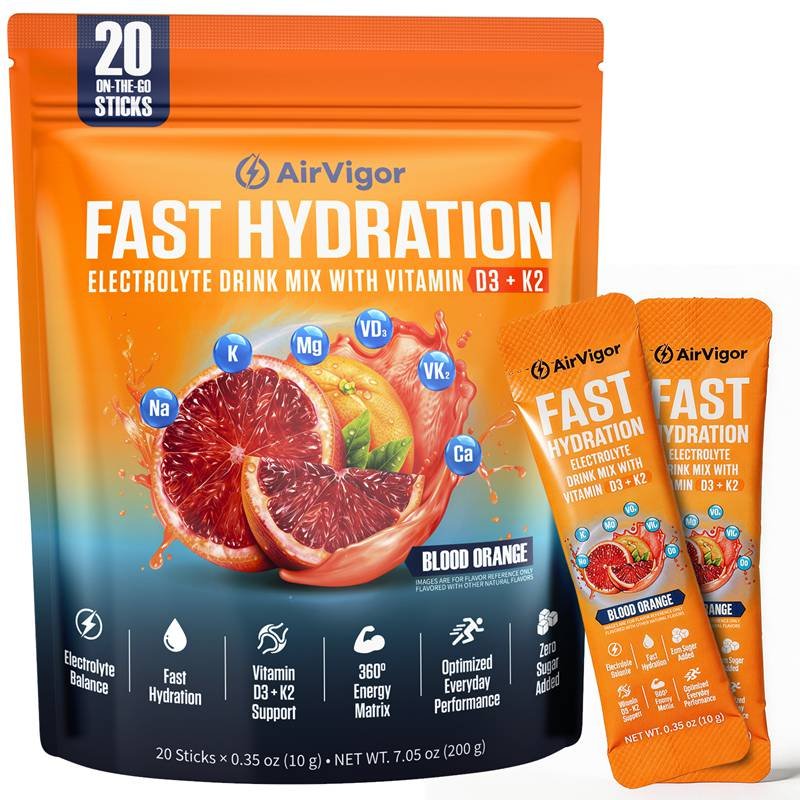
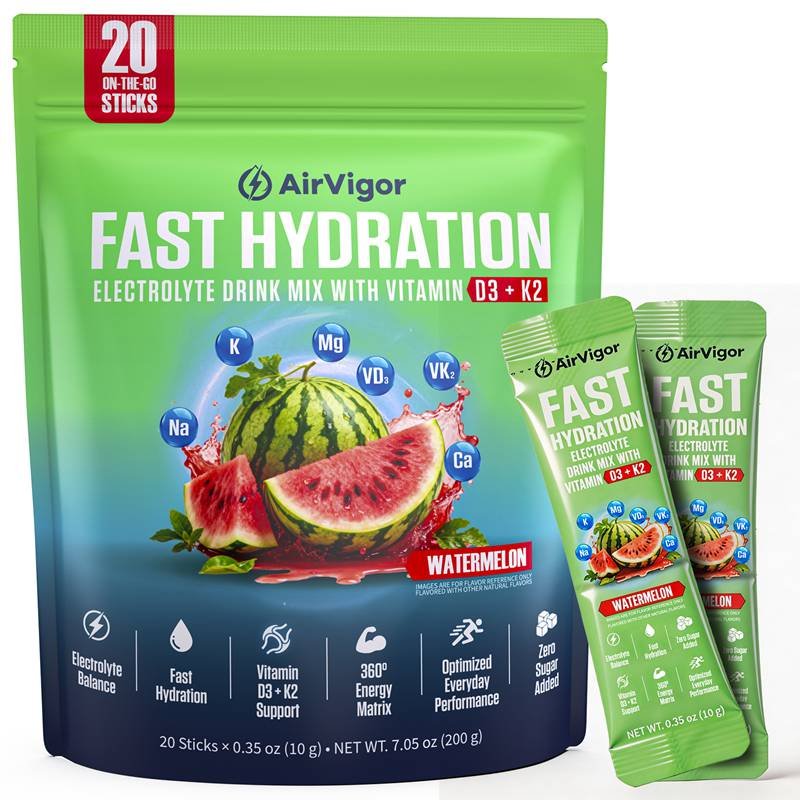
AirVigor’s advantage is not only that it can include D3 and K2 in a formula. It is that it can place those nutrients into a format that already makes sense for how many customers live. AirVigor Recovery Electrolyte with D3K2 is a good example of this logic. Instead of asking customers to treat D3 + K2 only as a separate capsule category, it brings the pairing into a hydration product that already fits active routines, hot-weather use, general daily replenishment, and convenient repeat behavior.
That positioning is important because it solves a real customer problem. A lot of adults do not need more isolated bottles. They need fewer products that do more useful work together. A hydration product with D3 + K2 can feel more practical because it reduces routine fragmentation. It turns an existing habit into a smarter one. For customers who already think in terms of drink mixes, stick packs, or daily hydration support, this is often easier to accept than an additional standalone supplement.
AirVigor is also in a strong position to explain this format well. Your company profile already emphasizes raw material screening, formula review, stability, packaging suitability, and quality control. That gives the D3 + K2 hydration concept more weight. It feels structured, not random.
Why Add D3 and K2 to an Electrolyte Powder?
Adding D3 and K2 to an electrolyte powder creates a more layered daily-support formula. Electrolytes already connect naturally with routine hydration, active lifestyles, travel, heat, and repeated use. D3 + K2 adds another dimension by bringing bone- and calcium-related daily support into the same format. That makes the product easier to position as more than a basic hydration mix.
For many customers, this is attractive because it reduces the feeling of “one product for every tiny job.” Instead of managing hydration from one item and bone-focused nutrient support from another, the routine begins to feel more integrated. The key is to explain this clearly. The product is not trying to replace every other supplement. It is making one daily habit more valuable.
This creates a stronger product message:
| Product angle | Why it works |
|---|---|
| Hydration support | Easy daily relevance |
| Added D3 + K2 | More complete daily nutrition story |
| Convenient format | Better routine fit |
| Multi-benefit use | Stronger perceived value |
That is a very good commercial position because it feels modern, useful, and easier to maintain.
Which Users May Prefer This Format?
This format is especially appealing to people who already use drink-based products, want fewer separate supplements, or value convenience over supplement complexity. It is a strong fit for active adults, working professionals, travelers, and people who dislike pills.
A few especially strong-fit customer groups include:
| User type | Why the format may fit |
|---|---|
| Active adults | Already use hydration products regularly |
| Busy professionals | Prefer fewer separate daily products |
| Travelers | Need portable daily support |
| Daily wellness users | Want a routine product that feels practical |
| People who dislike pills | More likely to stay compliant with drink formats |
This is why AirVigor’s format is commercially smart. It does not force customers into an unfamiliar supplement behavior. It supports the ones they already have.
How Does AirVigor Make D3 and K2 Easier to Use Daily?
AirVigor makes D3 and K2 easier to use daily by putting them into a format that fits ordinary routines instead of complicating them. A hydration powder or stick pack is naturally easier to carry, easier to remember, and easier to build into work, gym, commute, or travel patterns. That matters because consistency is one of the biggest hidden drivers of supplement value. A product that sounds good but is hard to remember often gets dropped. A product that naturally fits the day is much more likely to stay.
This is also where brand communication matters. AirVigor can speak to customers in a much more real-life way. Instead of describing D3 + K2 only through abstract nutrient language, the product can be explained through moments customers already understand: morning hydration, post-workout replenishment, desk drawer convenience, travel support, and easier daily structure.
That makes the product feel more usable, not just more scientific.
What Should Customers Know Before Choosing AirVigor Recovery Electrolyte With D3K2?
Customers should understand three practical points before choosing this format.
First, this is broader than a basic electrolyte powder because it also includes D3 and K2, which makes it more relevant to customers who want bone- and calcium-related daily support in addition to hydration.
Second, it makes the most sense for people who prefer powders or hydration routines over capsules. That includes active adults, busy professionals, and customers who want a simpler daily setup.
Third, it should still be judged by the same standards as any good supplement product: clear label, believable amounts, stable manufacturing, practical format, and good routine fit.
A helpful pre-purchase checklist looks like this:
| Question | Why it helps |
|---|---|
| Do I already use a hydration product regularly? | Shows whether the format fits |
| Do I want fewer separate daily products? | Clarifies convenience value |
| Does the product explain the D3 + K2 role clearly? | Strengthens trust |
| Will I realistically use this often enough? | Helps predict routine success |
For many customers, the answer will be yes. And when that happens, the AirVigor format becomes easier to justify than a more traditional supplement style.
Final Thoughts
Vitamin D3 and K2 work well together because they support one of the most practical nutrition goals in everyday supplementation: building a more complete approach to calcium-related support and long-term bone-focused nutrition. D3 helps the body absorb calcium. K supports proteins involved in bone metabolism. Together, they create a cleaner and more useful formula story than vitamin D alone.
But in the real market, good ingredients are only part of the decision. The product also has to fit the customer’s actual routine. That is why format, transparency, and daily usability matter so much. The strongest D3 + K2 product is not simply the one with the largest dose or the loudest promise. It is the one that feels clear, useful, and easy to keep using.
For customers who want a more practical way to bring D3 and K2 into everyday life, AirVigor Recovery Electrolyte with D3K2 offers a more integrated option by combining hydration support with added D3 and K2 in one easier-to-use format. And for partners, distributors, and private-label clients who want a more market-ready D3 + K2 concept, AirVigor can also support OEM, ODM, and customized supplement development with stronger formula logic, packaging fit, and scalable manufacturing support.
If your goal is to order AirVigor’s branded D3 + K2 electrolyte product, develop a custom D3 + K2 formula, or request a quote for a private-label wellness product, AirVigor is ready to help turn that concept into a supplement that is easier to understand, easier to use, and easier to trust.