Skip to content

Hydration sounds easy until your body starts giving mixed signals. You drink plenty of water, but still feel drained after a workout. You travel for half a day and end up tired, bloated, and thirsty at the same time. You sweat heavily in hot weather and notice that plain water helps, but not quite enough. This is usually the point where people begin asking about electrolytes. The problem is that the internet gives two extreme messages. One side says plain water is always enough. The other side makes it sound like everyone needs electrolyte drinks all day long. Real life sits somewhere in the middle.
Electrolytes are charged minerals such as sodium, potassium, magnesium, calcium, and chloride that help regulate fluid balance, nerve signals, muscle contraction, and normal cell function. Hydration means having enough body fluid for those systems to work properly. Water is the base of hydration, but electrolytes help the body manage and use that water more effectively, especially when sweat loss, heat, exercise, or illness increase fluid and mineral loss. MedlinePlus explains that electrolyte imbalance can happen when one or more electrolytes are too low or too high, and that water balance and electrolyte balance are tightly connected.
That is exactly why this topic matters for both consumers and brands like AirVigor. Hydration is not just about drinking more fluid. It is about drinking the right kind of support for the situation you are in. Sometimes that really is just water. Sometimes it is water plus electrolytes. Sometimes the problem is not low intake at all, but poor balance, poor timing, or a product that does not fit real needs. Once you understand that difference, hydration stops feeling confusing and starts becoming something you can explain clearly, use intelligently, and sell more credibly.
What Are Electrolytes and Hydration?
Electrolytes are minerals with an electrical charge, and hydration is the state of having enough body fluid for normal function. They work together because water provides the fluid, while electrolytes help regulate where that fluid goes, how it is retained, and how muscles, nerves, and organs perform while the body is trying to stay balanced. Cleveland Clinic and MedlinePlus both describe electrolytes as essential to fluid balance and normal body function.
What Are Electrolytes?
Electrolytes are minerals in your blood and body fluids that carry an electrical charge. That may sound technical, but the everyday meaning is simple: they help the body run its most basic systems. According to MedlinePlus, electrolytes affect the amount of water in your body, the acidity of your blood, nerve and muscle function, and other important processes. Cleveland Clinic adds that they help regulate chemical reactions and maintain the balance between fluids inside and outside your cells.
The most discussed electrolytes are sodium, potassium, magnesium, calcium, and chloride. These are not trendy “performance ingredients.” They are normal body minerals that matter every day whether a person is working out, commuting to the office, flying for business, or simply sitting in air conditioning for too many hours. That is why the topic of electrolytes is much broader than sports nutrition. Customers who think electrolytes are only relevant to marathon runners usually do not realize how strongly daily life, climate, travel, and work rhythm can affect hydration quality.
A simple reference table makes this easier to understand:
| Electrolyte | Main role | Why customers should care |
|---|---|---|
| Sodium | Helps regulate fluid balance and nerve signaling | Matters most in sweat-heavy situations |
| Potassium | Supports muscle contraction and heart rhythm | Important for muscle function and balance |
| Magnesium | Helps nerve, muscle, and enzyme function | Often linked to muscle comfort and recovery support |
| Calcium | Supports muscles, nerves, and bones | Important but not usually the first hydration focus |
| Chloride | Helps fluid balance and acid-base stability | Often works alongside sodium |
In practical customer language, electrolytes are part of the body’s fluid-management system. Water is the medium, but electrolytes help control the system. That is why hydration can feel “off” even when fluid intake looks okay on paper.
What Is Hydration?
Hydration means giving the body enough fluid to support normal circulation, temperature control, digestion, cellular activity, and physical performance. Mayo Clinic explains that the body loses water constantly through breathing, sweating, urine, and digestion, and those losses have to be replaced. It also notes that fluid needs vary by body size, environment, activity level, and overall health.
This is where a lot of hydration advice becomes too shallow. People are often told to “drink more water,” but that does not explain why two people can drink similar amounts and feel very different. Hydration is not just about liquid volume. It is about whether the body is able to use that fluid well in the conditions it is dealing with. A person sitting indoors in mild weather has a very different hydration challenge from someone sweating through a 90-minute summer workout or spending the day on planes and in airports.
A practical intake table makes the point clearer:
| Situation | Main hydration need |
|---|---|
| Office day, cool environment | Basic fluid replacement |
| Hot outdoor work | Higher fluid + electrolyte support |
| Long exercise session | Fluid plus sweat-loss support |
| Air travel day | Steady fluid intake, often more than usual |
| Illness with vomiting or diarrhea | Fluid plus electrolyte replacement may matter more |
Hydration, then, is not just a number. It is a state of functional fluid balance. That is why better hydration advice should always be connected to a real-life context.
How Do Electrolytes Help Hydration?
Electrolytes help hydration by influencing how water is distributed, retained, and used in the body. MedlinePlus says electrolytes help balance the amount of water in your body. Harvard Nutrition Source also notes that electrolyte beverages are often promoted because they may hydrate better than water under certain circumstances, especially when there is significant sweat loss or a need to replace minerals as well as fluid.
The simplest way to explain this for customers is: water gives your body fluid, but electrolytes help your body manage that fluid more effectively when conditions become more demanding. Sodium is especially important here because it plays a central role in fluid balance. That does not mean everyone should chase high-sodium drinks all day. It means sodium becomes more relevant when sweating and fluid loss rise together.
This is also why hydration products can feel different from plain water in certain situations. A person finishing a long, sweaty training session may feel noticeably better with a well-structured electrolyte drink than with water alone. But that same person may gain no extra benefit from electrolytes on a low-sweat office day. Cleveland Clinic makes this exact point by describing sports drinks as helpful in certain settings but not necessary as default drinks for everyone.
A clear comparison table helps:
| Hydration choice | Best fit |
|---|---|
| Plain water | Daily baseline hydration |
| Electrolyte drink | Heavy sweat, heat, recovery, travel strain |
| Sports drink with carbs | Longer, more demanding exercise |
| Sugary beverage without clear purpose | Usually less effective for hydration quality |
For product education, this is one of the most valuable truths to explain clearly: electrolytes do not replace water; they support hydration when water alone is not the full answer.
Which Electrolytes Matter Most?
All electrolytes matter, but not in equal ways in every hydration situation. For most customers, sodium is the most practical electrolyte to pay attention to first because it is central to fluid balance and sweat replacement. Cleveland Clinic highlights sodium, potassium, magnesium, and calcium as common electrolytes added to sports drinks, while MedlinePlus notes that electrolytes help balance water, support muscles and nerves, and keep heart rhythm and blood pressure stable.
That said, customers should not be taught to think only in one way. A better way to explain it is to connect electrolyte emphasis to real needs:
| Situation | Electrolyte priority |
|---|---|
| Heavy sweat | Sodium becomes more important |
| Muscle comfort and contraction | Potassium and magnesium matter more |
| General hydration support | Water first, electrolytes as needed |
| Longer endurance output | A broader profile often makes more sense |
This kind of explanation is stronger than generic “contains essential electrolytes” language because it helps customers understand why a formula is built the way it is. That is especially useful for AirVigor, where clear formula logic is already part of the brand story.
How Do Electrolytes and Hydration Work Together?
Electrolytes and hydration work together because water provides fluid, while electrolytes help regulate how that fluid moves, stays balanced, and supports nerve, muscle, and cellular function. When sweat loss, heat, or physical demand rise, the body is not only losing water. It is also losing some of the minerals that help maintain fluid balance. That is why hydration can feel different depending on the situation. MedlinePlus directly links water balance and electrolyte balance, and the Cleveland Clinic explains that electrolytes help keep the balance between fluids inside and outside the cells.
Why Does Water Alone Not Always Work?
Water is usually the first hydration choice, and in many daily situations, it works perfectly well. But it does not solve every hydration challenge equally well. Mayo Clinic explains that water is generally best for replacing lost fluids, while sports drinks can become more useful during exercise lasting longer than about 60 minutes. Harvard Nutrition Source makes a similar point by positioning sports drinks for longer, more vigorous exercise rather than ordinary low-demand movement.
For customers, the easiest way to understand this is to think in terms of what was lost. If a person lost mostly fluid, water usually works well. If a person lost fluid plus a meaningful amount of sweat minerals, plain water may not feel as complete. That does not make water weak. It just means the situation changed. The real problem is that many consumers hear “water is best” and assume it must solve every hydration need equally well, or they hear “electrolytes are better” and assume water is outdated. Both ideas are too simplistic.
This is one reason AirVigor has room to stand out. A hydration brand sounds much more trustworthy when it teaches customers that water and electrolytes are not enemies. They are tools for different levels of demand.
How Does Sweat Change Hydration?
Sweat changes hydration because sweating removes both water and minerals. Mayo Clinic notes that extra water is needed when you sweat more, while Cleveland Clinic explains that sports drinks can help rehydrate after tough workouts or illness precisely because both fluid and electrolyte losses can matter.
That is what makes sweat-heavy conditions different from ordinary thirst. A low-sweat office day and a 90-minute outdoor run are not the same hydration problem. One is mostly about routine fluid replacement. The other may involve larger losses of water plus sodium and other electrolytes. This is why customers often say water “helps, but not enough” after hard training or heavy heat exposure. They are noticing the difference between simple fluid intake and fuller hydration support.
A sweat-loss comparison helps make it clearer:
| Situation | Sweat effect on hydration |
|---|---|
| Cool indoor routine | Low fluid turnover |
| Warm commute day | Mild increase in fluid need |
| Hot outdoor exercise | High fluid + electrolyte turnover |
| Hot yoga or HIIT | Fast sweat loss in a short window |
| Outdoor labor shift | Sustained fluid and mineral loss |
When brands explain sweat this way, the customer does not feel sold to. They feel understood.
How Do Electrolytes Move Water?
Electrolytes do not “push” water in a simple way, but they help regulate fluid balance across the body. MedlinePlus says electrolytes help balance the amount of water in the body, and Cleveland Clinic explains that they help maintain the balance between fluids inside and outside your cells.
For customers, this concept is easier to understand in practical terms. Hydration is not just “liquid in, problem solved.” It is a balance process. The body needs enough fluid, but it also needs the right internal conditions to use that fluid properly. That is one reason electrolyte drinks can feel more effective than plain water in some settings and unnecessary in others. The drink is not magically better. It is simply better matched to the situation.
This also helps explain why some formulas work better for certain users than others. A formula built for heavy sweat support should not be explained the same way as a light daily hydration product. Clear product education matters because the body’s needs are not the same in every environment.
What Happens When Balance Is Off?
When fluid and electrolyte balance is off, the body often gives signals that feel frustratingly vague at first: thirst, fatigue, headache, cramps, weakness, dizziness, or a general sense that energy and recovery are not where they should be. MedlinePlus says an imbalance can happen when one or more electrolytes are too low or too high, often when body water changes as well.
This is one of the most important customer education points in the whole article. Poor hydration is not always about drinking too little. Sometimes it is about bad timing, poor fit between the drink and the situation, too much reliance on sugary sports drinks, or too little support after meaningful sweat loss. In other words, hydration problems are often mismatch problems.
That is also where AirVigor’s positioning can become stronger. A hydration product should not just offer minerals. It should help customers avoid the mismatch between what they are drinking and what their day actually demands.

When Do You Need Electrolytes for Hydration?
Most people do not need electrolyte support every time they drink water. Electrolytes become more useful when fluid loss and mineral loss rise together, such as during long exercise, heavy sweating, hot weather, stomach illness, or physically demanding work. In many ordinary daily situations, plain water still does the job very well. Mayo Clinic and Harvard Nutrition Source both support this more practical view: water is the baseline, while sports drinks and electrolyte beverages make more sense when physical demand is meaningfully higher.
That distinction is one of the most useful things a hydration brand can explain clearly. Many customers are not actually asking, “Are electrolytes good?” They are asking, “Do I need them right now?” That is a much better question. It reduces confusion, helps people avoid overusing products they do not need, and makes the final purchase feel more rational. For AirVigor, this is also a strong trust signal. A brand sounds more professional when it explains use conditions honestly instead of turning every moment of thirst into a sales opportunity.
A simple fit table helps:
| Situation | Are electrolytes usually needed? |
|---|---|
| Desk work in mild weather | Usually no |
| Short indoor workout | Often no |
| Long outdoor training session | Often yes |
| Heavy sweating in hot conditions | Often yes |
| Vomiting or diarrhea recovery | Sometimes yes |
| Frequent travel with dry air and irregular intake | Sometimes yes |
When Is Water Enough?
Water is enough more often than many people think. Mayo Clinic explains that the body loses water through normal daily processes and that fluid needs vary depending on heat, activity, and health status. In routine daily life, when sweat loss is low to moderate and meals are reasonably balanced, water usually covers basic hydration very well.
This point matters because many consumers have started treating hydration products like permanent lifestyle accessories. A packet in the morning, a bottle in the car, a sports drink in the afternoon — all of it can sound “healthier” than plain water, even when there is no real physiological need. But in practice, that often means spending more, consuming more sodium or sweeteners than needed, and slowly making hydration feel more complicated than it really is.
A realistic customer rule is this: if the day is low-sweat, low-heat, and low-strain, water is often enough.
| Daily scenario | Water usually enough? |
|---|---|
| Office work, errands, light walking | Yes |
| Mild weather, normal meals | Yes |
| Short gym session under an hour | Often yes |
| Normal home routine | Yes |
| Light yoga or stretching | Often yes |
This kind of guidance gives people confidence. It tells them they do not need to “upgrade” every glass of water to stay healthy.
When Do Electrolytes Help More?
Electrolytes help more when the body is losing both water and minerals at a higher rate. That is why they are more relevant during long workouts, hot-weather exercise, repeated sweating, outdoor labor, or illness involving vomiting or diarrhea. Cleveland Clinic notes that sports drinks can help the body rehydrate and recover after tough workouts or illness, while Mayo Clinic points out that exercise beyond about 60 minutes may justify a drink that supports electrolyte balance.
For customers, the most important idea is not that electrolytes are “stronger” than water. It is that they are more appropriate in certain conditions. The better the match between the product and the situation, the better the experience usually feels. That also means a hydration formula should be positioned around context, not hype. A customer running in summer heat has a different need from someone sitting in traffic with a reusable bottle.
A situation-based table makes this clearer:
| Situation | Why electrolytes may help more |
|---|---|
| Long run or cycling session | Higher sweat and mineral loss |
| HIIT or CrossFit in a hot gym | Faster fluid turnover |
| Outdoor job in summer heat | Repeated sweating over hours |
| Recovery after stomach illness | Fluid and mineral replacement may both matter |
| Air travel plus low intake | Hydration support may feel more complete |
This is also where AirVigor has room to differentiate. A product becomes easier to trust when it is clearly tied to a real use case instead of a vague “for anyone, anytime” promise.
Do You Need Electrolytes Every Day?
Not everyone needs electrolytes every day. Daily need depends on activity level, sweat rate, climate, diet, travel frequency, and overall routine. Harvard Nutrition Source makes it clear that electrolyte beverages are often marketed as better than water, but that does not mean everyone benefits from using them constantly. Cleveland Clinic is similarly direct: these are specialty drinks, not everyday defaults for all people.
That does not mean daily use is always unnecessary. Some people genuinely live in conditions where repeated electrolyte support makes sense: athletes who sweat heavily, people working outside, people in very hot climates, or travelers whose hydration habits are frequently disrupted. The problem starts when “daily use” becomes a marketing habit instead of a needs-based decision.
A more honest framework looks like this:
| User pattern | Daily electrolytes make sense? |
|---|---|
| Sedentary office routine | Usually not necessary |
| Frequent high-sweat training | Often yes |
| Outdoor labor in heat | Often yes |
| Constant air travel or dry environments | Sometimes yes |
| Mild routine with normal meals | Often unnecessary |
For customers, that kind of explanation feels fair and intelligent. It respects the fact that people live different lives and do not all need the same hydration strategy.
Which People Need More Hydration Support?
Some groups are more likely to benefit from targeted hydration support because their bodies face higher or more frequent fluid turnover. These include endurance athletes, high-sweat exercisers, outdoor workers, travelers, people living in hot climates, and those recovering from fluid loss caused by illness. Mayo Clinic Sports Medicine explains that when you sweat, you lose both fluid and electrolytes such as sodium and chloride, which is why rehydration sometimes requires more than plain water.
Customers usually understand hydration best when it is connected to real-life identities and routines, not abstract biology. Someone may not think of themselves as “an electrolyte user,” but they do think of themselves as “someone who works construction,” “someone who runs in the heat,” “someone who travels every week,” or “someone who always feels drained after hot yoga.” Those are the moments where education becomes practical, and purchase decisions become easier.
A target-user table helps bring that to life:
| User type | Why support may matter more |
|---|---|
| Runner or cyclist | Sustained sweat loss |
| CrossFit / HIIT participant | High sweat in shorter sessions |
| Outdoor worker | Heat plus long exposure |
| Frequent flyer | Dry air, disrupted routines, uneven intake |
| Hot yoga user | Concentrated sweat loss |
This kind of scenario-based explanation is exactly the kind of content that can help AirVigor convert more readers into real customers because it connects the formula to the person’s life.
How Can You Improve Electrolytes and Hydration?
Improving hydration is less about finding the “strongest” drink and more about making better daily decisions. Most people do best with a simple framework: use water as the baseline, increase fluids earlier when heat or sweat rises, add electrolytes when the situation clearly calls for them, and avoid turning every hydration moment into a supplement moment. Mayo Clinic and Harvard Nutrition Source both support this practical, situation-based approach.
This matters for customers because better hydration usually does not come from doing something extreme. It comes from making hydration easier to understand and easier to repeat. For brands like AirVigor, this is also where educational content becomes part of product quality. A formula can be strong on paper, but if the customer does not know when to use it, how to compare it, or what to avoid, the overall experience becomes weaker than it should be.
How Much Should You Drink?
There is no single number that works for every person every day. Mayo Clinic explains that fluid needs depend on body size, environment, health status, and activity. Hot weather, exercise, altitude, illness, and pregnancy can all change how much fluid a person may need.
For most customers, the most useful hydration guidance is practical, not obsessive. Drink consistently through the day, increase fluid intake when sweating rises, and watch for simple indicators such as strong thirst, dark urine, unusual fatigue, or a noticeable drop in how you feel during activity. People do not usually need complicated hydration math for ordinary life. They need better awareness and better timing.
A practical guide looks like this:
| Condition | Better hydration move |
|---|---|
| Normal indoor day | Drink steadily through the day |
| Hot weather | Start drinking earlier, not only after thirst hits hard |
| Workout day | Drink before, during, and after as needed |
| Heavy sweat session | Increase fluid and consider electrolytes |
| Travel day | Sip more regularly than usual |
This is one of the most customer-friendly messages a brand can share: hydration is easier to manage when it becomes part of a routine, not a reaction to already feeling depleted.
How Should You Read a Hydration Label?
A hydration label should answer four questions quickly: how much sodium is in one serving, what other electrolytes are included, whether sugar is part of the formula, and how many servings a customer is actually likely to use. The American Heart Association is especially useful here because sodium is one of the easiest minerals to overconsume from multiple sources in a day.
This is where many products lose customer trust. The front of pack may sound clean and impressive, but the customer still has to dig through the label to understand whether the product is built for everyday hydration, high sweat loss, or sports performance. A strong hydration brand makes that logic easy to see.
A practical label checklist:
| Label question | Why it matters |
|---|---|
| How much sodium per serving? | Sodium is central to many hydration formulas |
| Are potassium and magnesium included? | Helps define the formula’s broader support role |
| Is sugar included? | Helps show whether the drink fits sport or everyday use |
| How many servings will I really drink? | Real intake matters more than label theory |
| Is the use timing clear? | Builds trust and reduces misuse |
For AirVigor, this is a big opportunity. Since your brand already emphasizes clear formula expression and real ingredient levels, hydration labels should reinforce that same clarity instead of forcing customers to guess the product’s purpose.
Which Drinks Help Most?
The best drink depends on the situation. Plain water is still the best everyday baseline for most people. Electrolyte drinks help more when sweat loss, heat, or travel stress make fluid support feel incomplete. Sports drinks with carbohydrates fit longer or more intense exercise, where energy support matters too. Harvard Nutrition Source explains that sports drinks were created to provide both quick hydration and carbohydrate support, while Mayo Clinic ties them more directly to exercise beyond about 60 minutes.
That means customers should not choose hydration drinks only by flavor or trend. They should match the drink to the actual need. This is one of the strongest ways to reduce disappointment and build repeat trust.
A drink-matching table makes this simpler:
| Drink type | Best fit |
|---|---|
| Water | Daily baseline hydration |
| Electrolyte drink | Heat, sweat, travel, recovery support |
| Sports drink with carbs | Longer, more demanding activity |
| Sugary beverage with no clear use case | Usually less effective for hydration quality |
This kind of practical comparison is helpful for both retail customers and B2B clients thinking about product positioning.
What Mistakes Should You Avoid?
The most common hydration mistakes are surprisingly ordinary. People wait too long to drink, use electrolyte drinks when water would have been enough, ignore total sodium intake from food, assume more product means better hydration, or choose drinks based only on flavor. Cleveland Clinic and Harvard Nutrition Source both push back against the idea that hydration drinks should become all-day defaults.
The customer-centered lesson here is important: better hydration usually comes from fewer mistakes, not from more products. If the formula is good but the use habit is bad, the outcome is still disappointing. This is why strong educational content improves not only SEO performance, but also conversion quality and retention.
A common mistakes table makes this concrete:
| Mistake | Better move |
|---|---|
| Using electrolyte drinks all day automatically | Match them to sweat and real need |
| Ignoring sodium from meals | Look at the full-day picture |
| Assuming water is never enough | Keep water as the baseline |
| Choosing only by taste | Check formula and use case first |
| Waiting until you feel terrible | Hydrate earlier and more steadily |
That kind of guidance helps customers avoid waste, feel better faster, and trust the brand that taught them something useful.
What Should Customers Know Before Choosing a Product?
Most customers do not just want hydration support. They want clarity. They want to know what the formula is designed to do, whether the ingredient levels make sense, whether the taste and format fit their routine, and whether the brand sounds honest enough to trust. That matters even more in electrolytes because many products look similar on the shelf while serving very different needs. Some are built for hard training. Some are made for lighter daily hydration. Some lean heavily on sodium. Others focus more on broader mineral support or convenience. If a customer cannot tell the difference quickly, the product becomes harder to trust.
This is exactly where AirVigor has room to stand out. Based on the company information you shared, your advantage is not only formula development. It is the combination of real ingredient expression, stable quality systems, multi-format packaging capability, and the ability to connect products to real use situations. In a crowded hydration category, that combination matters. Customers are more likely to buy when they understand three things clearly: what the product is, who it is for, and when it should be used.
What Makes a Good Electrolyte Formula?
A good electrolyte formula is not just “higher” or “stronger.” It is balanced, readable, and matched to a real hydration need. For most customers, the first thing to notice is sodium, because sodium plays a major role in fluid balance and sweat replacement. The American Heart Association is especially useful here because it reminds people that sodium is already coming from many sources throughout the day. That means a hydration formula should make its sodium role clear instead of hiding behind vague front-label language.
A good formula also needs to feel good in real use. Customers care about more than the ingredient list. They care about mixability, aftertaste, sweetness level, stomach comfort, portability, and whether the product feels easy to repeat day after day. A formula can look impressive on paper and still fail if it tastes too salty, sits too heavily, or feels confusing. That is one reason your emphasis on formula transparency and stable product experience matters so much.
A practical product-quality table:
| What customers notice first | Why it matters |
|---|---|
| Clear sodium level | Helps them understand the hydration purpose |
| Broader electrolyte balance | Makes the formula feel more complete |
| Good taste and easy mixing | Increases compliance and repeat use |
| Real serving logic | Reduces confusion and misuse |
| Clean, understandable label | Builds confidence quickly |
In simple terms, a good hydration formula is one that can be explained honestly in one sentence and still hold up when customers use it in real life.
How Should AirVigor Explain Hydration?
AirVigor should explain hydration in a way that feels calm, clear, and realistic. The strongest hydration education today is not “everyone needs more electrolytes.” It is “different situations need different hydration strategies.” That approach fits much better with the public guidance from Mayo Clinic, Cleveland Clinic, and Harvard Nutrition Source, all of which treat water as the daily foundation and put electrolyte support into more demanding contexts.
For customers, this style of communication feels trustworthy because it matches how real life works. Some days, water is enough. Some days, heat, sweat, travel, or recovery make electrolyte support more useful. A brand that says this openly sounds more credible than one that tries to turn all thirst into a product moment.
AirVigor can explain hydration in a very strong, customer-friendly way:
| Message style | Why it works |
|---|---|
| Water is the daily base | Feels practical and honest |
| Electrolytes are situational support | Matches real-world use |
| Formula clarity matters | Supports trust and easier comparison |
| Better fit beats more hype | Helps customers choose more confidently |
| Packaging and usage guidance matter | Reduces friction in everyday use |
This approach also fits your broader brand identity. Since AirVigor already positions itself around real ingredients, clear formula logic, and stable quality management, hydration education becomes one of the most natural ways to show those strengths.
Which Product Format Fits Best?
Format matters more than many brands admit. A customer may agree with the formula but still stop using the product if the format does not fit daily life. That is why stick packs, tubs, refill pouches, bottles, and larger shared-use formats should not be treated as interchangeable. Product format should follow behavior.
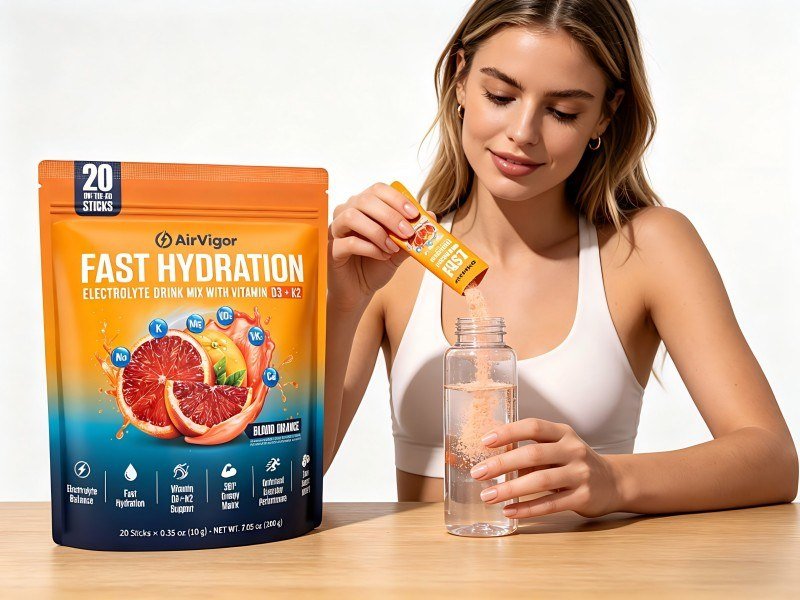
This is one of the strongest parts of the AirVigor story because your company profile already connects packaging with real use scenarios. That is exactly the right way to think about hydration products. Stick packs fit travel, gym bags, office drawers, and fast routines. Tubs fit home users and repeat buyers who want better cost per serving. Refill pouches fit practical long-term users. Larger formats fit families, teams, or high-frequency use.
A format-fit table makes this easier:
| Format | Best fit |
|---|---|
| Stick packs | Travel, work bag, gym, on-the-go use |
| Tubs | Home routine, frequent use, better value per serving |
| Refill pouches | Repeat customers who already like the formula |
| Ready-to-drink bottles | Convenience-first users |
| Larger formats | Team, family, or high-usage scenarios |
This matters commercially too. Better format fit usually means better repeat use, fewer abandoned purchases, and stronger customer satisfaction. For OEM and ODM hydration projects, format is not just packaging. It is part of the product strategy.
How Can Brands Build More Trust?
In hydration, trust is built when the brand sounds clear before it sounds exciting. Customers are increasingly skeptical of products that promise “better hydration” without explaining what that actually means. Trust grows when a brand makes the product’s role obvious, explains when it should be used, and does not force every customer into the same message.
For AirVigor, trust can be built in a very strong and practical way:
| Trust signal | Why customers care |
|---|---|
| Transparent formula amounts | Easier to compare and believe |
| Realistic use guidance | Feels honest instead of overhyped |
| Stable taste and mixability | Builds everyday confidence |
| Strong manufacturing story | Supports premium positioning |
| Clear packaging logic | Makes the product easier to choose |
| Quality control language with substance | Signals long-term reliability |
This is where your manufacturing and quality profile becomes especially valuable. Customers may not read every detail about GMP, HACCP, FSSC22000, supplier screening, or multi-stage label review, but they do feel the result when a product is consistent, understandable, and professionally presented. The same goes for B2B clients. They are not only buying a formula. They are buying confidence that the formula can be produced, packed, labeled, and delivered in a stable way.
That is why hydration trust is not built on one claim. It is built from a full chain: clear formula, clear reason, clear format, clear labeling, and clear execution.

Final Thoughts
Electrolytes and hydration only seem confusing when they are explained in extremes. Real life is much simpler. Water is the foundation of hydration. Electrolytes become more useful when heat, sweat, exercise, travel, or recovery create a bigger demand on the body. That means the smartest hydration strategy is usually not the most complicated one. It is the one that matches the situation.
For customers, the biggest benefit comes from understanding when plain water is enough and when a well-designed electrolyte formula makes more sense. For brands, the biggest advantage comes from making that choice easier, clearer, and more credible. That is where real product quality and real content quality meet.
AirVigor is in a strong position to do exactly that. With your focus on transparent formulas, high-standard raw material screening, stable manufacturing systems, multi-format packaging capability, and global market adaptability, you have the structure to support both direct customers and business clients in a much more convincing way than generic hydration brands.
If the goal is to order finished AirVigor products, strengthen hydration education on your site, or develop an OEM / ODM electrolyte formula with clearer market positioning and stronger product logic, AirVigor has the capability to support both branded product sales and customized development.