Skip to content
What Does Calcium Do in Pre-Workout Electrolytes: A Science-Based Guide
# Your Trusted Dietary Supplement Brand In US
- Emily

Table of Contents
Most people see “calcium” and think bone health. But in training, calcium shows up in a different way—it’s one of the switches that helps muscles contract and helps nerve signals stay steady when intensity and sweat start stacking up. That’s why some athletes feel fine early, then suddenly go “flat” later: hydration can be okay, but the mineral system behind muscle firing isn’t keeping up.
So what does calcium do in pre-workout electrolytes? In practical terms, it supports clean muscle contraction, stable neuromuscular signaling, and steadier performance under sweat stress—especially in HIIT, CrossFit-style intervals, hot training, and longer sessions where small mineral shifts add up.
If you’ve ever hit that moment where your heart is willing but your legs feel “disconnected,” you’re not alone. Keep reading—because the right calcium dose, form, and electrolyte balance can be the difference between a strong finish and a frustrating drop-off.
What Is Calcium in Pre-Workout Electrolytes?
Calcium in pre-workout electrolytes is not there for bone marketing. It’s included to support real-time muscle contraction and neuromuscular control during exercise.
When you train, especially at higher intensity, your muscles rely on calcium ions to trigger every single contraction. Without calcium release inside muscle cells, contraction does not happen efficiently. That’s not theory — it’s basic physiology.
Most athletes never think about calcium until something feels “off” mid-session.
Common complaints that often relate to mineral imbalance include:
- Strong first half of workout, then sudden power drop
- Calves or feet tightening late in the session
- Feeling hydrated but still “weak”
- Shaky or unstable reps in final sets
- Increased cramp tendency during heat training
These are not always caused by calcium alone — but calcium is part of the system behind them.
Calcium in the Body vs. Calcium in Performance
Almost 99% of your calcium is stored in bones and teeth. That sounds like it has nothing to do with workouts — but the remaining 1% is what matters during training.
That small circulating portion:
- Regulates muscle contraction
- Supports nerve signal transmission
- Helps control enzyme activity involved in energy use
Even though it’s a small fraction, it controls a large part of movement quality.
Here’s a simple breakdown:
| Calcium Location | Approx % of Total | Why It Matters for Training |
|---|---|---|
| Bones & Teeth | ~99% | Long-term structural support |
| Blood & Soft Tissue | <1% | Immediate contraction & signaling |
| Inside Muscle Cells (released during exercise) | Dynamic | Controls force production |
So when calcium is included in an electrolyte formula, it’s not trying to rebuild bone during your workout. It’s there to help keep the contraction system stable while you’re under stress.
Why Is Calcium Added to Electrolytes Instead of Just Sodium?
Sodium gets most of the attention because it drives fluid retention. But performance doesn’t fail only because of fluid loss. It fails when fluid loss and contraction instability happen together.
Sodium helps maintain blood volume.
Potassium supports electrical balance.
Magnesium supports relaxation.
Calcium triggers contraction.
If a formula includes only sodium, you may feel hydrated — but still experience late-session tightness or inconsistent power.
A structured electrolyte formula includes moderate calcium because it supports:
- Muscle firing consistency
- Stability under repeated contraction cycles
- Reduced neuromuscular “misfires” when fatigued
Especially in:
- CrossFit-style interval training
- Sprint work
- High-rep strength circuits
- Hot outdoor sessions
Is Calcium Actually Lost During Exercise?
Yes.
While sodium losses are much higher, calcium loss through sweat is measurable and accumulative.
Average Sweat Mineral Loss
| Mineral | Average Loss | Heavy Sweater Range |
|---|---|---|
| Sodium | 800–1,800 mg | 1,500–2,300 mg |
| Potassium | 200–400 mg | 300–500 mg |
| Calcium | 20–100 mg | 60–150 mg |
| Magnesium | 5–25 mg | 15–40 mg |
Now apply that to real training:
If someone sweats:
- 1.5–2 liters per hour
- For 90 minutes
- 4–5 days per week
They could lose:
150–400 mg calcium weekly from sweat alone.
That doesn’t cause a medical deficiency.
But in high-intensity athletes, small cumulative shifts in mineral balance can affect performance feel.
This is why moderate calcium inclusion makes sense for heavy sweaters and high-output individuals.
How Much Calcium Is Usually Included?
Performance-focused electrolyte formulas typically include:
50–250 mg calcium per serving
That amount:
- Supports contraction function
- Replaces part of sweat loss
- Avoids interfering with magnesium balance
- Does not overload digestion
It is intentionally much lower than bone-focused supplements, which often contain 500–1,000 mg.
The goal is not daily replacement.
The goal is session stability.
What Form of Calcium Is Used?
For drink powders, solubility matters.
The most common forms include:
| Form | Why It’s Used in Electrolytes |
|---|---|
| Calcium Citrate | Better dissolution, gentler digestion |
| Calcium Carbonate | Cheaper, less soluble |
| Calcium Lactate | Moderate solubility |
For athletes, calcium citrate is often preferred because:
- It mixes more cleanly
- It causes less stomach heaviness
- It integrates well with sodium and potassium systems
Powder consistency is important. If calcium doesn’t dissolve well, it can:
- Settle at the bottom
- Deliver inconsistent dosing
- Reduce customer confidence
Manufacturing precision matters here — mineral blending must be accurate at small milligram levels to avoid variation across batches.
How Does Calcium in Pre-Workout Electrolytes Support Muscle Function?
Muscle function during training depends on one core event: controlled contraction. Calcium is the mineral that turns contraction on.
Every rep you perform — whether it’s a sprint stride, a deadlift, or a burpee — requires calcium to be released inside your muscle fibers. Without calcium release, the muscle cannot generate force efficiently.
That’s not an exaggeration. It’s basic movement biology.
But here’s where it gets interesting for athletes:
The harder and more frequently you contract, the more you rely on rapid calcium cycling inside your muscle cells.
When mineral balance shifts due to sweat loss or fatigue, contraction quality can decline even if your energy systems are still intact.
Let’s break down how that works in real terms.
Calcium Triggers Every Muscle Contraction
Inside your muscle fibers, contraction happens through interaction between two proteins: actin and myosin.
Calcium allows those proteins to “lock” together and generate force.
Here’s the simplified sequence:
- Brain sends signal to muscle
- Electrical impulse reaches muscle fiber
- Calcium is released from storage inside the cell
- Calcium binds to regulatory proteins
- Muscle contracts
- Calcium is pumped back to reset the system
This cycle can repeat:
- 1–2 times per second in strength training
- 3–5 times per second in sprinting
- Thousands of times in endurance events
If calcium release or reuptake becomes inefficient:
- Contraction strength drops
- Rep speed slows
- Explosive power decreases
Athletes often describe this as:
- “My legs just stopped responding.”
- “The weight felt heavier than it should.”
- “I couldn’t generate snap anymore.”
That’s contraction fatigue, not necessarily cardiovascular fatigue.
Calcium Controls Contraction Intensity
Calcium doesn’t just allow contraction — it influences how strong the contraction is.
More calcium released inside the muscle fiber = stronger contraction signal.
Less efficient calcium cycling = weaker force output.
Research in exercise physiology shows that during high-intensity training:
- Repeated contraction can temporarily reduce calcium release efficiency.
- Fatigue increases the energy cost of pumping calcium back into storage.
- Electrolyte imbalance may increase neuromuscular instability.
What this means practically:
If mineral balance is off, you may feel:
- Reduced explosive power
- Slower bar speed
- Shorter sprint stride
- Less drive in final intervals
Even if you’re still breathing fine.
This is why balanced electrolyte formulas — not just sodium — matter for high-output training.
Calcium and Muscle Fiber Recruitment
Your body recruits different muscle fibers depending on intensity:
| Fiber Type | Used For | Calcium Demand |
|---|---|---|
| Type I (slow-twitch) | Endurance | Moderate |
| Type IIa | Mixed intensity | High |
| Type IIx (fast-twitch) | Explosive power | Very high |
Fast-twitch fibers rely heavily on rapid calcium release for explosive contraction.
In workouts like:
- CrossFit metcons
- Sprint intervals
- Olympic lifting
- Hill cycling
Fast-twitch fibers are repeatedly recruited.
If calcium cycling becomes less efficient due to fatigue or imbalance:
- Explosiveness declines first
- Speed drops
- Bar acceleration slows
Athletes often notice power loss before total exhaustion.
That early power drop is often neuromuscular, not aerobic.
Calcium and Muscle Relaxation Between Reps
Contraction gets the attention, but relaxation matters just as much.
After each contraction, calcium must be pumped back into storage areas inside the muscle cell.
This process:
- Requires ATP
- Is influenced by magnesium balance
- Slows down under fatigue
If calcium isn’t properly regulated:
- Muscles may stay partially contracted
- Tightness increases
- Recovery between reps slows
This is one reason athletes sometimes feel:
- Calf tightness during long runs
- Forearm tightness in high-rep workouts
- Hamstring stiffness in sprint intervals
Balanced calcium intake, especially when paired with appropriate magnesium, supports smoother contraction–relaxation cycling.
Calcium and Cramp Susceptibility
Muscle cramps are multi-factorial, but neuromuscular fatigue plays a large role.
Cramps are often linked to:
- Increased motor neuron excitability
- Electrolyte imbalance
- Dehydration
- Fatigue accumulation
Calcium contributes to contraction control. When the system becomes unstable:
- Small firing irregularities increase
- Muscle fibers may contract involuntarily
- Cramp likelihood rises in susceptible individuals
Calcium alone does not “prevent cramps.”
But in combination with:
- Adequate sodium
- Proper potassium levels
- Balanced magnesium
It supports contraction stability under stress.
Real-World Training Example
Let’s compare two athletes.
Athlete A
- Drinks water only
- Sweats heavily
- 60-minute HIIT session
Mid-session feeling:
- Heavy legs
- Slower reps
- Calf tightness
Athlete B
- Uses balanced electrolyte formula including moderate calcium (100–200 mg)
- Same sweat rate
- Same workout
Mid-session feeling:
- More stable pacing
- Less tightness
- Fewer sudden drop-offs
Is calcium the only difference? No.
But mineral structure influences contraction consistency.
How Much Calcium Is Enough for Muscle Support?
For muscle function during training:
100–200 mg per serving is often sufficient for:
- Supporting contraction cycling
- Replacing moderate sweat loss
- Maintaining balance with magnesium
Higher amounts are not necessarily better.
Muscle function depends on balance, not overload.

Does Calcium in Pre-Workout Electrolytes Affect Hydration?
When people think about hydration, they think about water and sodium. That’s fair — sodium is the primary driver of fluid retention. But hydration during training is more than just replacing lost water. It’s about maintaining fluid balance + electrical stability + muscle responsiveness at the same time.
Calcium does not control how much water you retain.
But it influences how well your muscles and nerves function while fluid levels shift.
For athletes, that distinction matters.
Let’s break it down properly.
What Actually Happens to Hydration When You Sweat?
Sweating reduces:
- Plasma volume (blood volume)
- Sodium concentration
- Overall electrolyte balance
- Circulatory efficiency
As blood volume drops:
- Heart rate increases
- Perceived effort rises
- Oxygen delivery becomes less efficient
- Neuromuscular control becomes more sensitive
Most hydration discussions stop here.
But here’s the missing piece:
When electrolytes shift, nerve excitability changes.
That’s where calcium enters the picture.
Average Mineral Loss Per Liter of Sweat
| Mineral | Average Loss (mg/L) | Heavy Sweater Range (mg/L) |
|---|---|---|
| Sodium | 800–1,800 mg | 1,500–2,300 mg |
| Potassium | 200–400 mg | 300–500 mg |
| Calcium | 20–100 mg | 60–150 mg |
| Magnesium | 5–25 mg | 15–40 mg |
If someone sweats:
- 1.5–2 liters per hour
- For 90 minutes
- In hot conditions
They may lose:
- 2,000–3,000 mg sodium
- 100–300 mg potassium
- 60–200 mg calcium
While sodium drives hydration volume, calcium contributes to contraction stability during that fluid loss.
Does Calcium Directly Control Fluid Retention?
No. Sodium is the primary mineral responsible for holding water in the bloodstream.
However, hydration is not just about how much fluid you retain — it’s about whether your muscles and nerves still function normally while dehydrated.
Calcium helps regulate:
- Muscle membrane permeability
- Signal transmission between nerves and muscle
- Contraction stability under stress
As dehydration progresses:
- Electrolyte concentration in blood increases
- Nerve sensitivity rises
- Muscles become more prone to irregular firing
Balanced calcium levels help stabilize those responses.
What Is “Functional Hydration”?
Functional hydration means:
You’re not just hydrated — your muscles perform normally under fluid stress.
Many athletes say:
- “I drank enough water but still felt weak.”
- “I wasn’t dizzy, but my legs felt unstable.”
- “Hydration wasn’t the issue, but performance still dropped.”
This usually happens when:
- Fluid volume is partially restored
- Sodium is replaced
- But contraction control minerals are under-supported
Here’s a comparison:
| Hydration Strategy | Fluid Volume | Neuromuscular Stability | Performance Feel |
|---|---|---|---|
| Water only | Low | Poor | Sluggish |
| Sodium only | Moderate | Partial | Hydrated but tight |
| Balanced electrolytes (incl. calcium) | Moderate | Stable | Steady output |
Calcium contributes to the “stable” column.
It supports how your muscles behave when dehydration stress accumulates.
Why Heavy Sweaters Notice Calcium More
If you sweat lightly, calcium loss is small and often insignificant.
If you sweat heavily (salt stains on clothes, dripping within minutes), mineral drift becomes more noticeable.
Signs you may benefit from structured electrolytes including calcium:
- Calf tightness during long runs
- Foot cramps in hot training
- Late-session shakiness
- Sudden drop in bar speed
- Performance decline before cardio fatigue
These patterns often appear after 45–90 minutes of training.
That timing is important.
Hydration breakdown is gradual.
Neuromuscular instability increases as minerals shift.
Calcium does not “hydrate” you — it helps maintain contraction stability while hydration is challenged.
How Much Calcium Makes Sense for Hydration Support?
For hydration-related performance stability:
100–200 mg per serving is generally sufficient for:
- Moderate sweat sessions
- High-intensity training
- 60–120 minute workouts
This amount:
- Replaces a portion of sweat calcium loss
- Supports contraction cycling
- Maintains mineral balance
- Avoids excessive intake
Higher amounts are not necessarily better.
Hydration formulas must respect mineral ratios:
| Mineral | Practical Per-Serving Range |
|---|---|
| Sodium | 300–1,000 mg |
| Potassium | 200–400 mg |
| Calcium | 100–200 mg |
| Magnesium | 50–100 mg |
Balance prevents:
- Over-contraction (too much calcium)
- Sluggish contraction (too much magnesium)
- Water dilution (too little sodium)
Hydration performance is structural.
Real Training Example
Let’s compare two cyclists training in 85°F heat for 90 minutes.
Cyclist A
- Drinks water only
- No mineral replacement
Result:
- Heart rate drifts upward
- Legs feel heavy
- Late-session instability
Cyclist B
- Drinks balanced electrolyte formula with sodium, potassium, magnesium, moderate calcium
Result:
- More stable pacing
- Fewer late-session tight calves
- Less sudden output drop
Calcium alone didn’t cause the difference.
Balanced electrolyte structure did.
But without calcium, the contraction system lacks one of its stabilizers.
How Does Calcium in Pre-Workout Electrolytes Impact Performance?
Performance rarely drops all at once. It usually fades in stages.
First, explosiveness declines.
Then rep speed slows.
Then stability weakens.
Finally, overall output collapses.
Many athletes assume this is purely cardiovascular fatigue. In reality, a large part of late-session performance decline is neuromuscular — and calcium plays a role in that system.
Calcium does not act like caffeine. It does not create energy. Instead, it helps maintain the quality of contraction and nerve signaling while intensity and sweat loss accumulate.
Let’s look at how that translates into real training performance.
Calcium and Explosive Power Output
Explosive movements rely on fast-twitch muscle fibers (Type II fibers). These fibers require rapid and high-volume calcium release inside muscle cells.
Examples of movements that depend heavily on this system:
- Olympic lifts
- Sprint starts
- Box jumps
- Heavy compound lifts
- Short-interval cycling bursts
When calcium cycling inside muscle cells becomes less efficient:
- Bar speed drops
- Sprint acceleration weakens
- Jump height decreases
- Peak force output declines
Studies on muscle fatigue show that repeated high-intensity contractions reduce calcium release efficiency over time. As fatigue builds, the body struggles to maintain peak contraction force.
For athletes training in heat or high sweat conditions, mineral imbalance may amplify this effect.
What athletes often report:
- “My first rounds were strong, but I couldn’t keep the same snap.”
- “Explosiveness dropped before endurance did.”
- “I still had gas, but not power.”
Balanced electrolyte intake, including moderate calcium, supports the contraction mechanism that drives explosive output.
Calcium and Rep-to-Rep Consistency
Performance isn’t just about max strength — it’s about how consistent each rep feels.
In high-rep or circuit-style training:
- Contraction cycles happen rapidly
- Minimal rest increases calcium turnover demand
- Fatigue stresses neuromuscular control
When contraction control declines:
- Rep quality becomes uneven
- Movement feels less stable
- Form begins to deteriorate
This is common in:
- CrossFit-style workouts
- HIIT circuits
- Metabolic conditioning sessions
- Bootcamp training
Athletes describe it as:
- “The movement felt sloppy.”
- “I lost control in the last rounds.”
- “I couldn’t keep the same rhythm.”
Calcium supports the contraction signal that keeps motor units firing smoothly under repeated stress.
It doesn’t make you stronger.
It helps you maintain what you already have.
Calcium and Endurance Stability
Endurance fatigue isn’t only about glycogen depletion. Neuromuscular fatigue builds gradually during long sessions.
During extended efforts (60–120+ minutes):
- Sweat losses accumulate
- Blood volume shifts
- Electrolyte concentrations change
- Calcium cycling demand continues
Here’s a practical breakdown of what endurance athletes experience as minerals drift:
| Time Into Session | Common Sensation | Possible Contributing Factor |
|---|---|---|
| 0–30 min | Strong output | Fully fueled + balanced |
| 30–60 min | Slight heaviness | Fluid loss begins |
| 60–90 min | Reduced snap | Mineral imbalance increases |
| 90+ min | Stability decline | Neuromuscular fatigue |
Calcium plays a role in maintaining contraction efficiency during this timeline.
In endurance athletes who replace sodium but ignore other minerals, late-session performance may feel:
- Heavy but not breathless
- Sluggish but not fully exhausted
- Tight but not injured
Balanced electrolyte structure including moderate calcium can help maintain steadier pacing during these later phases.
Calcium and Nervous System Stability
Performance depends on communication between the brain and muscles.
Calcium contributes to:
- Neurotransmitter release
- Signal transmission at the neuromuscular junction
- Controlled motor unit firing
As dehydration increases:
- Electrolyte concentrations shift
- Nerve excitability rises
- Muscle firing can become irregular
That’s when athletes may feel:
- Twitchy calves
- Shaky hands
- Small involuntary contractions
- Reduced coordination
These aren’t always dramatic cramps. Sometimes they’re subtle instability.
Balanced calcium levels help maintain signal control under stress.
In sports requiring coordination (agility drills, sprint mechanics, lifting technique), this stability directly affects performance quality.
Calcium and Fatigue Resistance in High-Intensity Training
High-intensity training stresses both energy systems and contraction systems.
Repeated contraction cycles increase:
- Calcium release frequency
- ATP demand for calcium reuptake
- Stress on the sarcoplasmic reticulum (muscle calcium storage system)
As fatigue builds:
- Calcium release becomes less efficient
- Force production declines
- Perceived effort increases
Athletes often think:
“I just ran out of gas.”
But sometimes the issue is contraction efficiency, not fuel availability.
Balanced mineral intake does not eliminate fatigue.
It helps delay contraction breakdown.
For example:
An athlete performing repeated 30-second sprints may notice:
- Sprint 1–3: Strong
- Sprint 4–6: Slight drop in acceleration
- Sprint 7–10: Noticeable power decline
Hydration plus balanced electrolytes can reduce how quickly that drop-off occurs.
How Much Calcium in Pre-Workout Electrolytes Is Ideal?
When it comes to calcium in a pre-workout electrolyte formula, more is not better. The right amount depends on:
- Sweat rate
- Training intensity
- Session length
- Overall diet
- Magnesium balance
The goal is simple: support contraction stability without disrupting mineral balance.
For most performance-focused formulas, that range falls between:
50 mg and 250 mg per serving
Let’s break down how to determine what makes sense.
What Is a Practical Calcium Range for Different Training Types?
The ideal amount changes depending on how hard and how long you train.
Practical Dosing Guide
| Training Type | Sweat Level | Suggested Calcium Per Serving |
|---|---|---|
| Light gym session (≤60 min) | Moderate | 50–100 mg |
| Strength training (moderate volume) | Moderate | 75–150 mg |
| HIIT / CrossFit | High | 100–200 mg |
| Endurance (90+ min) | High | 150–250 mg |
| Heat-exposed outdoor training | Very high | 150–250 mg |
Why these ranges?
Because sweat studies show calcium loss typically ranges:
20–100 mg per liter of sweat
Heavy sweaters can lose up to:
150 mg per liter in hot conditions
If someone sweats 1.5–2 liters per hour during intense training, they may lose:
60–300 mg calcium in one long session
Replacing part of that — not all of it — supports contraction stability without overloading digestion.
Why High-Dose Calcium (500+ mg) Is Not Ideal for Pre-Workout
Some people assume that since the daily recommended intake for calcium is around 1,000 mg, pre-workout formulas should contain large doses.
That logic doesn’t apply to performance hydration.
High single-dose calcium can:
- Compete with magnesium absorption
- Reduce zinc and iron uptake
- Increase risk of stomach discomfort
- Create mineral imbalance in the short term
Bone-focused supplements often use:
500–1,000 mg per serving
Performance hydration formulas typically use:
100–200 mg per serving
The difference is intentional.
Pre-workout calcium is about supporting contraction cycles during stress — not covering your entire daily intake.
How Should Calcium Be Balanced with Magnesium?
Calcium triggers contraction.
Magnesium supports relaxation.
If calcium is too high relative to magnesium:
- Muscles may feel tight
- Relaxation between reps slows
- Recovery quality may decline
If magnesium is too high relative to calcium:
- Contraction strength may feel muted
- Output may feel “soft”
A practical performance ratio often falls between:
2:1 to 3:1 (Calcium : Magnesium)
Example Balanced Structure
| Mineral | Common Range | Why It Matters |
|---|---|---|
| Sodium | 300–1,000 mg | Fluid retention |
| Potassium | 200–400 mg | Electrical stability |
| Calcium | 100–200 mg | Contraction trigger |
| Magnesium | 50–100 mg | Relaxation support |
When these are balanced properly, athletes tend to report:
- Smoother contraction feel
- Fewer late-session tight calves
- Better repeat sprint stability
- More consistent rep quality
Electrolyte formulas should be built around structure, not single-ingredient hype.
How Does Sweat Rate Influence Ideal Calcium Intake?
Your sweat rate matters more than generic recommendations.
Signs you’re a heavy sweater:
- Salt crust on clothing
- 1+ pound weight loss per hour of training
- Visible dripping within minutes
- Headaches after heat workouts
- Calf or foot cramps in long sessions
Let’s look at realistic loss estimates:
Example: Heavy Sweater in Heat
- Sweat rate: 2 liters/hour
- Workout: 90 minutes
- Estimated calcium loss: 120–300 mg
In this case, including 150–200 mg calcium in a pre-workout electrolyte makes sense.
Now compare that to:
Light Sweater, Indoor Gym
- Sweat rate: 0.5 liter/hour
- Workout: 60 minutes
- Estimated calcium loss: 10–30 mg
In this case, 50–100 mg is sufficient.
Personalization matters.
How Should Customers Read Calcium on a Label?
Here’s how to evaluate whether the calcium amount makes sense.
Step 1: Look at the Exact Milligrams
Is it between 50–250 mg?
If it’s over 400 mg, it’s likely positioned more for bone support than workout performance.
Step 2: Check the Form
Is it calcium citrate or carbonate?
Citrate tends to dissolve and absorb better in drink mixes.
Step 3: Check the Magnesium Amount
If calcium is 200 mg but magnesium is only 10 mg, the ratio may be imbalanced.
Step 4: Consider Your Diet
If you already consume high-calcium foods daily (dairy, fortified beverages, leafy greens), you may not need higher supplemental doses.
Step 5: Assess Your Training Demands
Long duration + high sweat + high intensity = higher mineral needs.

Why Manufacturing Precision Matters for Electrolyte Products
Electrolyte formulas look simple on the surface — sodium, potassium, calcium, magnesium. But in reality, they are highly sensitive systems. Small errors in mineral measurement, blending, or packaging can noticeably change how a product tastes, dissolves, or performs during training.
Unlike protein powder, where slight variation may go unnoticed, electrolyte products operate within narrow milligram ranges. A small shift in ratio can change how your muscles feel during high-intensity or long-duration sessions.
Here’s why precision truly matters.
Small Mineral Variations Change Performance Feel
Electrolytes are typically dosed in tight ranges:
| Mineral | Common Performance Range |
|---|---|
| Sodium | 300–1,000 mg |
| Potassium | 200–400 mg |
| Calcium | 100–200 mg |
| Magnesium | 50–100 mg |
If blending errors cause:
- 20% less magnesium
- 15% more calcium
- 10% less sodium
The balance shifts.
That shift can result in:
- Increased muscle tightness
- Slower relaxation between reps
- Different hydration feel
- Reduced contraction stability
Athletes may not know the cause — but they feel the difference.
In performance products, consistency matters more than marketing numbers.
Blending Uniformity Affects Every Serving
Electrolyte powders contain minerals with different densities and particle sizes. Without proper blending control:
- Heavier minerals may settle
- Early scoops may differ from later scoops
- Individual servings may not match label claims
Good manufacturing practices include:
- Blend homogeneity testing
- In-process weight checks
- Final batch mineral verification
Without uniform mixing, customers may experience:
- One week feeling “great”
- The next week feeling “off”
That inconsistency erodes trust quickly — especially for daily-use products.
Dissolution and Moisture Control Impact Usability
Electrolytes are moisture-sensitive.
Poor environmental control during production or weak packaging can lead to:
- Clumping
- Hardening inside tubs
- Slower mixing
- Uneven mineral intake
Calcium and magnesium are especially sensitive to moisture exposure.
Quality facilities control:
- Production humidity levels
- Packaging seal integrity
- Barrier performance of pouch or container materials
If your electrolyte powder doesn’t dissolve smoothly, it’s not just inconvenient — it may also mean mineral distribution is inconsistent.
For athletes mixing bottles mid-workout, clean dissolution matters.
Batch-to-Batch Consistency Protects Brand Reputation
Electrolytes are often used daily or weekly. Customers expect the same taste and performance every time.
If one batch feels different, you’ll see comments like:
- “This one tastes saltier.”
- “Doesn’t mix like before.”
- “I feel tighter than usual.”
For online brands and Amazon sellers, this directly affects:
- Star ratings
- Subscription retention
- Repeat purchases
- Refund rates
Even small variations can reduce conversion rates over time.
Reliable manufacturers maintain:
- Batch-level Certificates of Analysis (COA)
- Lot traceability
- Retained samples for quality verification
Consistency drives long-term customer loyalty.
Quality Control Systems Reduce Risk
Electrolyte precision depends on structured quality systems.
Look for manufacturers that operate under:
- GMP (Good Manufacturing Practices)
- HACCP food safety standards
- ISO-certified management systems
- Raw material identity and purity testing
Mineral ingredients should undergo:
- Identity verification
- Heavy metal testing
- Active ingredient assay confirmation
If calcium is labeled at 150 mg, lab testing should confirm it falls within an acceptable range (usually ±5–10%).
Without proper quality control, label values become estimates instead of guarantees.
Who Should Use Calcium-Containing Pre-Workout Electrolytes?
Not everyone needs extra calcium in their workout drink. For some people, water and sodium are enough. For others — especially those training hard, sweating heavily, or pushing volume — calcium becomes more relevant.
The key question is not:
“Is calcium good?”
The better question is:
“Does my training create enough stress to justify including calcium in my electrolyte system?”
Let’s look at who benefits most.
1. High-Intensity Athletes (HIIT, CrossFit, Sprint Training)
If your workouts include:
- Rapid, repeated contractions
- Minimal rest periods
- Explosive lifts
- Sprint intervals
You rely heavily on fast-twitch muscle fibers.
Fast-twitch fibers demand rapid calcium release for contraction. In workouts lasting 20–40 minutes at high intensity, calcium cycling inside muscle cells happens hundreds of times.
Common feedback from this group when mineral balance drifts:
- “First few rounds felt great, then power dropped.”
- “Bar speed slowed unexpectedly.”
- “Legs felt unstable even though I wasn’t out of breath.”
These athletes often sweat 1–2 liters per hour, especially in indoor gyms with poor airflow.
Estimated calcium loss during a 60-minute high-intensity session:
40–150 mg
For this group, including 100–200 mg calcium per serving can help support contraction stability.
2. Endurance Athletes (Cycling, Running, Triathlon)
Long-duration athletes experience cumulative mineral loss.
For example:
- 90-minute run
- 2-hour ride
- Marathon training session
Even moderate sweat rates (1 liter/hour) can lead to meaningful calcium loss over time.
Example: 2-Hour Ride in Warm Conditions
| Factor | Estimate |
|---|---|
| Sweat rate | 1.5 L/hour |
| Duration | 2 hours |
| Calcium loss | 60–200 mg |
While sodium is the primary focus for endurance hydration, many athletes report late-session issues such as:
- Calf tightness
- Reduced push-off power
- Lower stride efficiency
- Increased muscle “heaviness”
Balanced electrolyte formulas that include moderate calcium can support contraction consistency over longer efforts.
3. Heavy Sweaters and Heat-Exposed Individuals
Some people naturally lose more minerals than others.
Signs you may be a heavy sweater:
- Salt crust on clothing
- White residue on hat or face
- 1–2+ pounds lost per hour
- Early cramp tendency
- Headaches post-workout
Heavy sweaters may lose up to:
100–150 mg calcium per liter of sweat
If someone sweats 2 liters/hour during heat training, that could mean:
200–300 mg calcium lost in a single long session
For these individuals, calcium inclusion is more relevant than for light sweaters.
This group includes:
- Outdoor athletes
- Construction workers
- Military personnel
- Delivery workers
- Hot yoga participants
For heat-exposed users, mineral structure matters more than flavor or branding.
4. Athletes Experiencing Late-Session Instability or Tightness
Some people don’t sweat excessively but still notice:
- Calf or foot tightness during longer workouts
- Shaky legs in final sets
- Slight twitching in heat
- Reduced rep consistency under fatigue
These symptoms are not always caused by calcium deficiency. But they often relate to neuromuscular fatigue combined with electrolyte imbalance.
If you notice performance declines like:
- “My cardio is fine, but my legs won’t cooperate.”
- “I feel tight before I feel tired.”
- “Power drops faster than endurance.”
Including balanced electrolytes with moderate calcium may help support contraction control.
This is especially relevant for:
- 45+ minute sessions
- Back-to-back training days
- Multi-day competitions

5. Who May Not Need Calcium in Their Electrolyte Drink?
Calcium inclusion isn’t mandatory for everyone.
You may not need additional calcium if:
- Your workouts are short (<30 minutes)
- You sweat minimally
- You train in cool environments
- Your diet is already high in calcium (dairy, fortified foods)
- You use electrolytes occasionally, not daily
For example:
A person doing light strength training indoors, sweating lightly, and consuming 1,000+ mg dietary calcium daily may not notice significant benefit from added calcium in a hydration product.
Electrolytes should match workload.
Conclusion
Calcium in pre-workout electrolytes isn’t about chasing big numbers—it’s about keeping your muscle contraction and nerve signaling stable when you sweat, fatigue builds, and performance usually starts to slide. When it’s dosed intelligently and balanced with sodium, potassium, and magnesium, it supports a smoother, more consistent session—especially for heavy sweaters and high-intensity training.
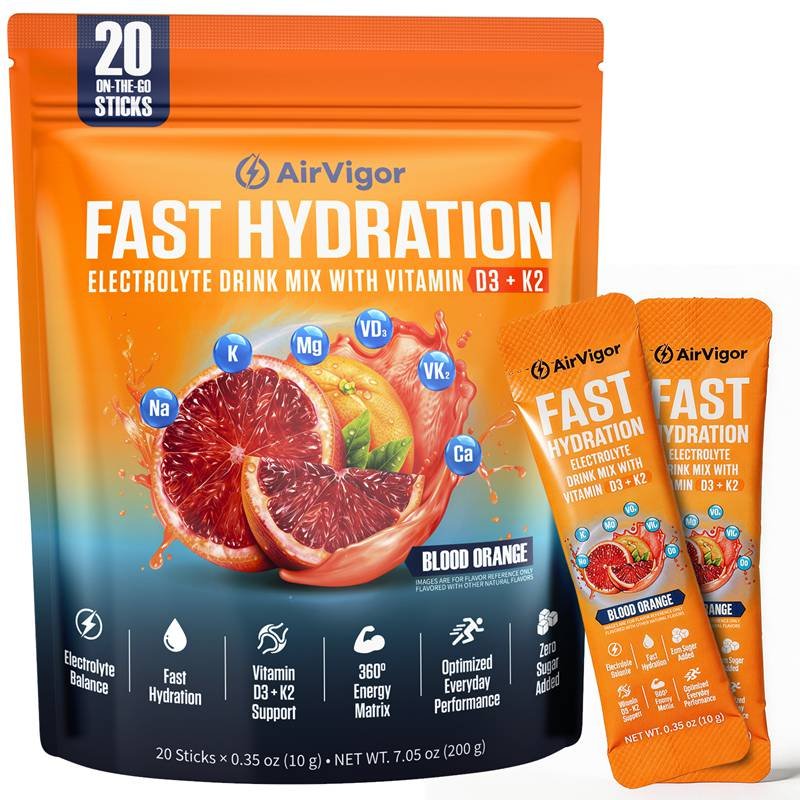
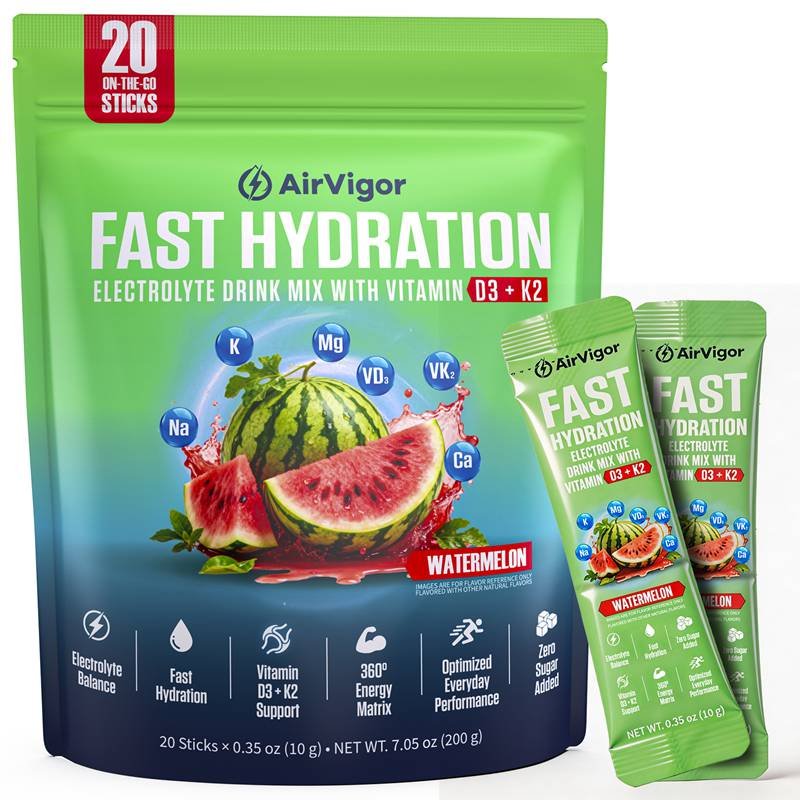
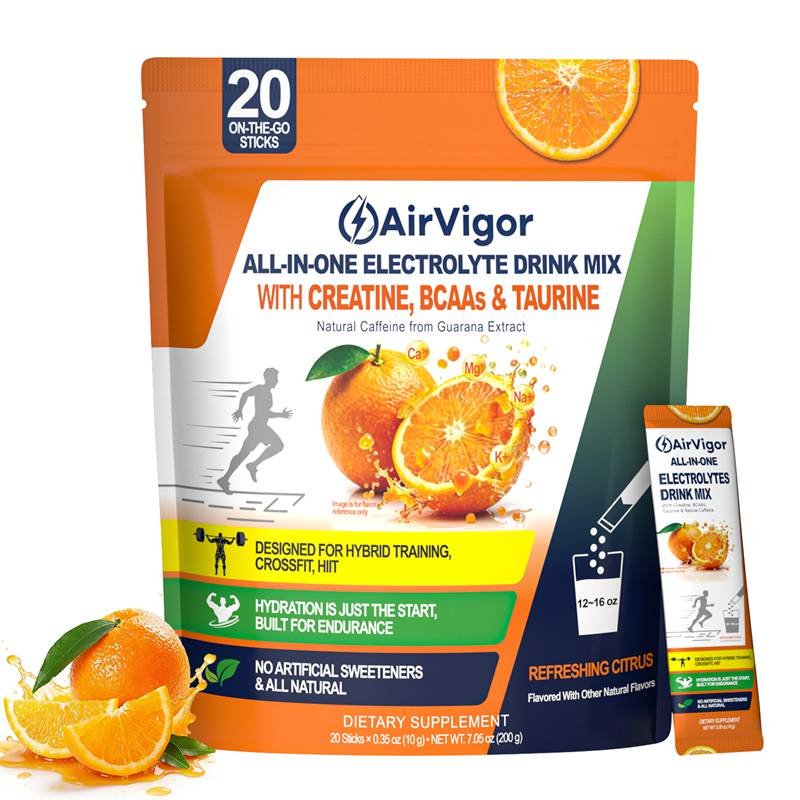
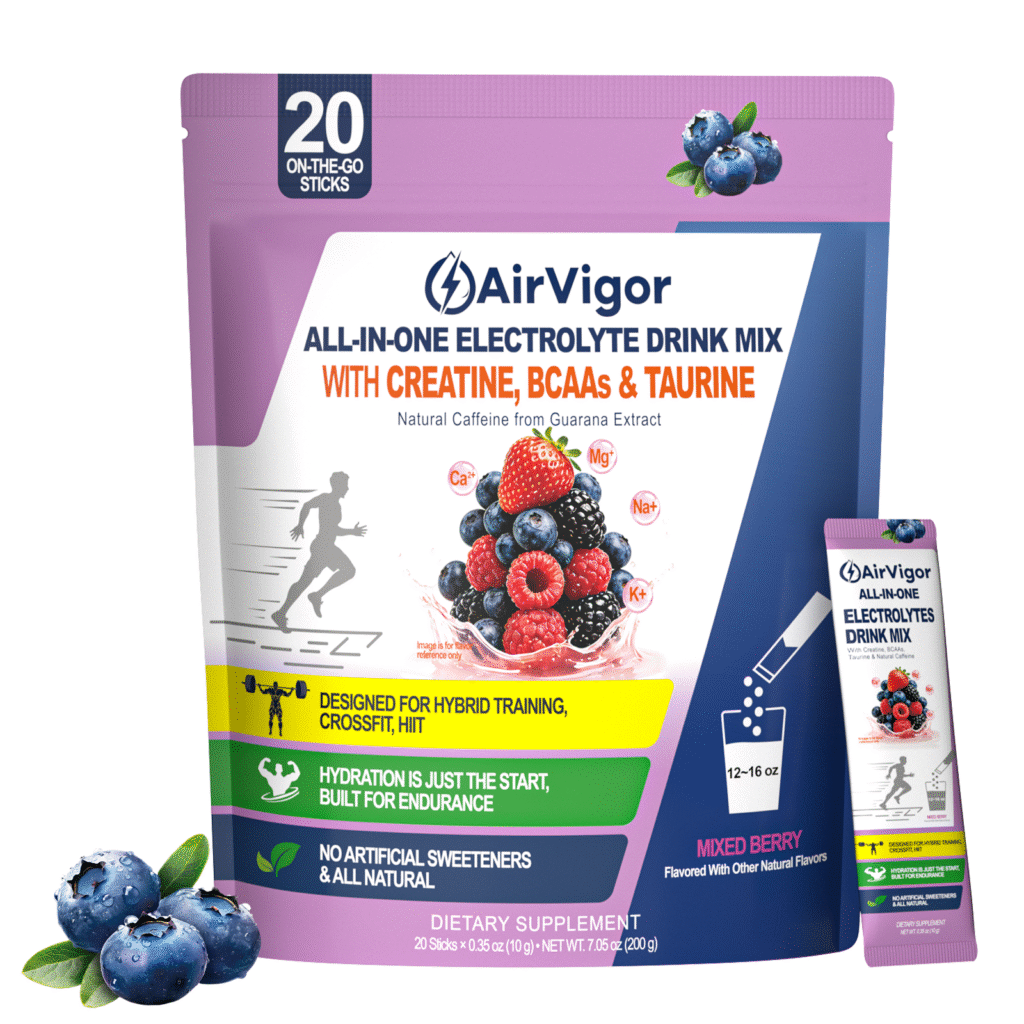
If you’re looking for a reliable electrolyte product or want to build your own calcium-balanced formula, AirVigor can support both finished-goods orders and OEM/ODM customization with controlled mineral ratios, verified quality systems, and scalable production. Reach out to support@airvigor.com to discuss your target market, dosage structure, and packaging options.
Ready to Order or Customize?
Whether you are:
- An individual athlete
- A fitness retailer
- An Amazon seller
- A private label brand owner
- A global distributor
AirVigor provides structured, science-informed electrolyte solutions with controlled mineral ratios and stable production systems.
Share:
Contact Expert Team
At AirVigor, performance becomes effortless. We transform advanced nutrition science into clean, effective supplements that help you hydrate, recover, and feel stronger every day. Shop AirVigor Supplements on Amazon and experience athlete-trusted formulas—backed by real science and supported by our world-class R&D and production capabilities.
Trust AirVigor
At AirVigor, turning your performance goals into reality is no longer a struggle—it’s a science-driven journey we build together. Whether you’re a runner, lifter, cyclist, yogi, outdoor athlete, or someone simply seeking better daily energy, AirVigor transforms advanced nutrition research into clean, effective, and trustworthy supplements you can feel.
Backed by our U.S. scientific team, global certifications, and world-class production standards, every formula is engineered to deliver real hydration, real recovery, and real performance. And when you’re ready to experience the difference, you’ll find AirVigor products available on Amazon and other major platforms—fast shipping, consistent quality, and a community of athletes already seeing results.
Behind the scenes, our R&D and manufacturing ecosystem also supports specialized formulation development, ensuring AirVigor continues to lead with innovation while keeping quality and safety uncompromised. But at the core, everything we create is built for you—your health, your performance, your momentum.
Choose AirVigor. Feel the science. Elevate your every day.


Subscribe to our newsletter
Sign up to our newsletter and we’ll keep you up to date with the latest arrivals.