Skip to content
Electrolytes That Reduce Muscle Tightness: Pillar Guide
# Your Trusted Dietary Supplement Brand In US
- Emily

Table of Contents
Muscle tightness is one of those problems that’s hard to label: you’re not injured, but you don’t feel “loose,” strong, or coordinated. Calves feel like cables on stairs, shoulders creep up all day, and even after stretching you end up tight again—especially after training, heat exposure, travel, or stressful weeks. That’s why many people search for electrolytes that reduce muscle tightness: they want a fix that addresses what stretching can’t.
Here’s the key idea: tight muscles aren’t always short muscles—they’re often over-signaled muscles. When hydration and electrolytes are low or out of balance, the muscle contraction–relaxation cycle can feel less “clean,” and your nervous system may keep muscles slightly switched on. In practice, that shows up as stiffness, recurring “knots,” twitchiness, or tightness that returns on a predictable schedule.
In this pillar guide, you’ll learn which electrolytes matter most (magnesium, potassium, sodium, calcium), how to time them for post-workout and nighttime tightness, safe ranges, and how to choose a formula that actually works in real life—because consistency and tolerability are what make tightness improve.
What to Do Based on Your Tightness
If you only read one part of this article, read this. Most people don’t need a perfect plan—they need the right first move.
| What your tightness feels like | Most likely cause | Try this first (simple) | What to watch |
|---|---|---|---|
| Tightness late in workouts (esp. heat) | Sodium + fluid loss | Electrolytes during + water | Headache, dizziness, performance drop |
| Next-day stiffness after training | Incomplete reset + recovery gap | Electrolytes after workout | Sleep quality, morning range of motion |
| Night calf/foot tightness | Neuromuscular irritability | Low-dose electrolytes evening | GI tolerance, cramps frequency |
| “Knots” in traps/neck from desk stress | Stress tone + dehydration | Midday electrolytes + posture breaks | Headaches, jaw tension |
| Tight + “wired” (caffeine/stress) | High nervous system load | Magnesium-support electrolytes | Less twitching, smoother sleep |
| One-sided swelling/pain or severe weakness | Not a supplement problem | Medical evaluation | Red flags (see below) |
Fast rule: If tightness improves within 3–7 days of consistent electrolytes, it’s likely part of the puzzle. If it doesn’t budge at all, treat electrolytes as supportive—but look deeper (training load, mobility, sleep, and medical red flags).
What Causes Muscle Tightness?
Muscle tightness is commonly caused by sustained low-level muscle contraction driven by nerve signaling, dehydration, and electrolyte imbalance. When electrolytes like magnesium, potassium, sodium, or calcium are low—or out of ratio—muscles may contract normally but fail to fully relax. Tightness can also come from fatigue, stress, long sitting, or overtraining. It’s often a neuromuscular “reset” issue, not just flexibility.
- Tightness often reflects nervous system tone, not short tissue
- Sweat + stress can increase electrolyte needs
- Imbalance can feel like stiffness without full cramping
- One-sided pain/swelling is a red flag, not a hydration issue
Tightness Is Usually a “Control” Problem
Muscles don’t randomly stay tight. They stay tight when the body believes tension is useful—either for stability, protection, or because the system that turns contraction “off” is underpowered.
Most tightness falls into three buckets:
- Mechanical tightness: tissue adaptation from posture or repetitive motion
- Neuromuscular tightness: your nervous system keeps the muscle semi-activated
- Chemical/environment tightness: fluid + electrolytes + fatigue change muscle firing
Electrolytes matter most for #2 and #3.
Can low electrolytes cause tight muscles?
Yes. Electrolytes support nerve signaling and muscle function, and electrolyte imbalance is commonly associated with symptoms like muscle cramps and neuromuscular issues.
But here’s the nuance: you don’t need to be “clinically deficient” to feel tight. You can be functionally under-replaced—especially if you sweat a lot, train hard, travel, or drink large volumes of plain water without minerals.
Many active people experience a pattern: workouts feel fine, but tightness builds in the evening or the next morning. That’s often what “being behind” on electrolytes looks like.
Is dehydration a factor in muscle tension?
Dehydration is a big amplifier because fluid loss often comes with electrolyte loss. Severe diarrhea/vomiting and illness are classic examples where dehydration causes rapid loss of water and minerals (electrolytes).
For athletes and active adults, the everyday version is sweat and heat. If you replace sweat only with water, you may dilute sodium further and continue to feel “off”—tight, headachy, or flat.
Do electrolyte imbalances affect muscles differently than deficiencies?
Absolutely. Tightness isn’t always “low magnesium.” It can be “too much sodium relative to potassium,” or “calcium intake is fine but magnesium intake is low,” or “sweat losses are high but replacement is inconsistent.”
Think ratios, not single nutrients:
- Sodium + calcium help initiate electrical activity and contraction
- Potassium + magnesium help restore balance and support relaxation pathways
Is nerve signaling involved in tight muscles?
Yes—tightness is often a nervous system story. Your body increases muscle tone when you’re stressed, sleep-deprived, under-fueled, or fatigued. Magnesium, for example, is involved in hundreds of enzyme systems including muscle and nerve function.
So if you’re in a high-stress season, your “electrolyte needs” can rise even if your training volume doesn’t.
When it’s NOT an electrolyte problem?
Electrolytes can help a lot, but they’re not a magic eraser. Seek medical evaluation if you have:
- One-sided swelling, redness, or warmth
- Chest pain, fainting, severe confusion
- Severe whole-body cramps or weakness
- Symptoms after prolonged vomiting/diarrhea that don’t improve
Cleveland Clinic notes that electrolyte imbalance symptoms can include concerning signs (e.g., heart-rate changes, confusion) and advises contacting a provider in those situations.
If you’re seeing red flags, don’t “DIY” it with powders.

What Are Electrolytes?
Electrolytes are electrically charged minerals that regulate fluid balance, nerve transmission, and muscle contraction/relaxation. Key electrolytes include sodium, potassium, magnesium, calcium, and chloride. In muscles, electrolytes help generate electrical impulses and restore the resting state after contraction. When electrolyte balance is off, muscles can feel stiff, twitchy, or more prone to cramping.
- Electrolytes = electrical control + fluid control
- Tightness often improves when the “reset” works better
- Food provides electrolytes, supplements provide consistency
- The best formula matches your sweat + routine
The “Electrical” Side of Hydration
Electrolytes are what make hydration work. Water is the delivery medium. Electrolytes are the regulators that determine where that water goes and how your cells behave once it gets there.
When electrolytes dissolve in fluid, they carry charge. That charge:
- Powers nerve signaling
- Stabilizes muscle contraction and relaxation
- Helps maintain normal fluid distribution
Cleveland Clinic explains that electrolytes help your body regulate nerve and muscle function and other essential processes.
What do electrolytes do in muscles?
In muscle cells, electrolytes influence excitability (how easily a muscle fires) and recovery (how quickly it returns to baseline). When the environment is stable, contraction is strong and relaxation is clean. When the environment is unstable, muscles can feel reactive—tight, twitchy, or “hard to loosen.”How do electrolytes regulate muscle contraction?
The simplest mental model:
- Sodium + calcium help initiate activation/contraction
- Potassium helps restore resting electrical state
- Magnesium supports normal nerve/muscle function and helps keep the system from being overly excitable
No single electrolyte does the whole job. That’s why balanced formulas tend to outperform single-mineral approaches for “tightness” complaints.
Are electrolytes different from supplements?
Electrolytes are nutrients; supplements are a format. You can absolutely get electrolytes from food (salt, fruit, dairy, vegetables). Supplements simply help you do it reliably, especially when sweat losses or schedules make food timing difficult.
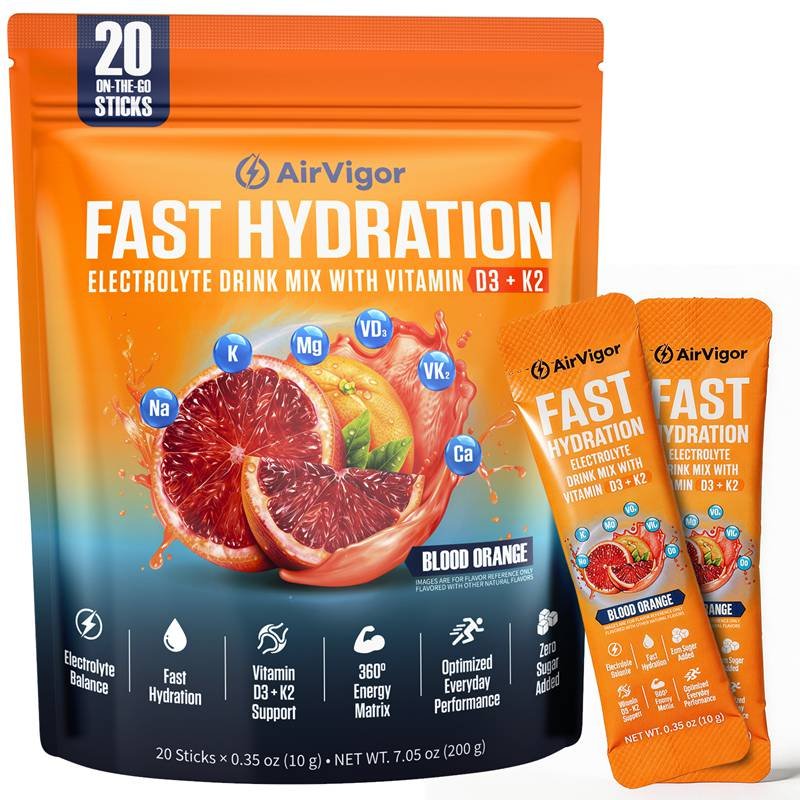
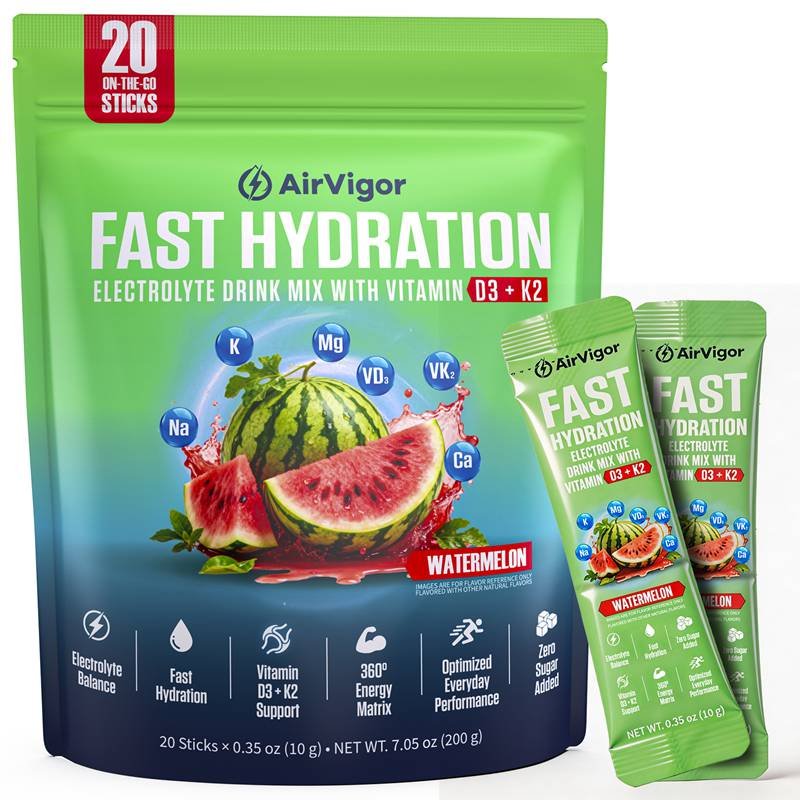
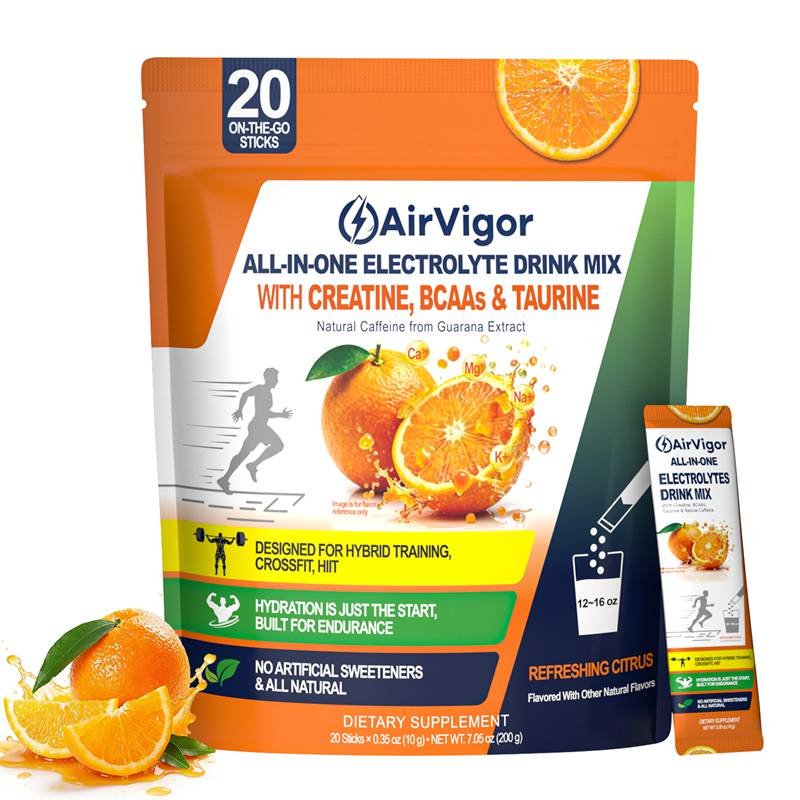
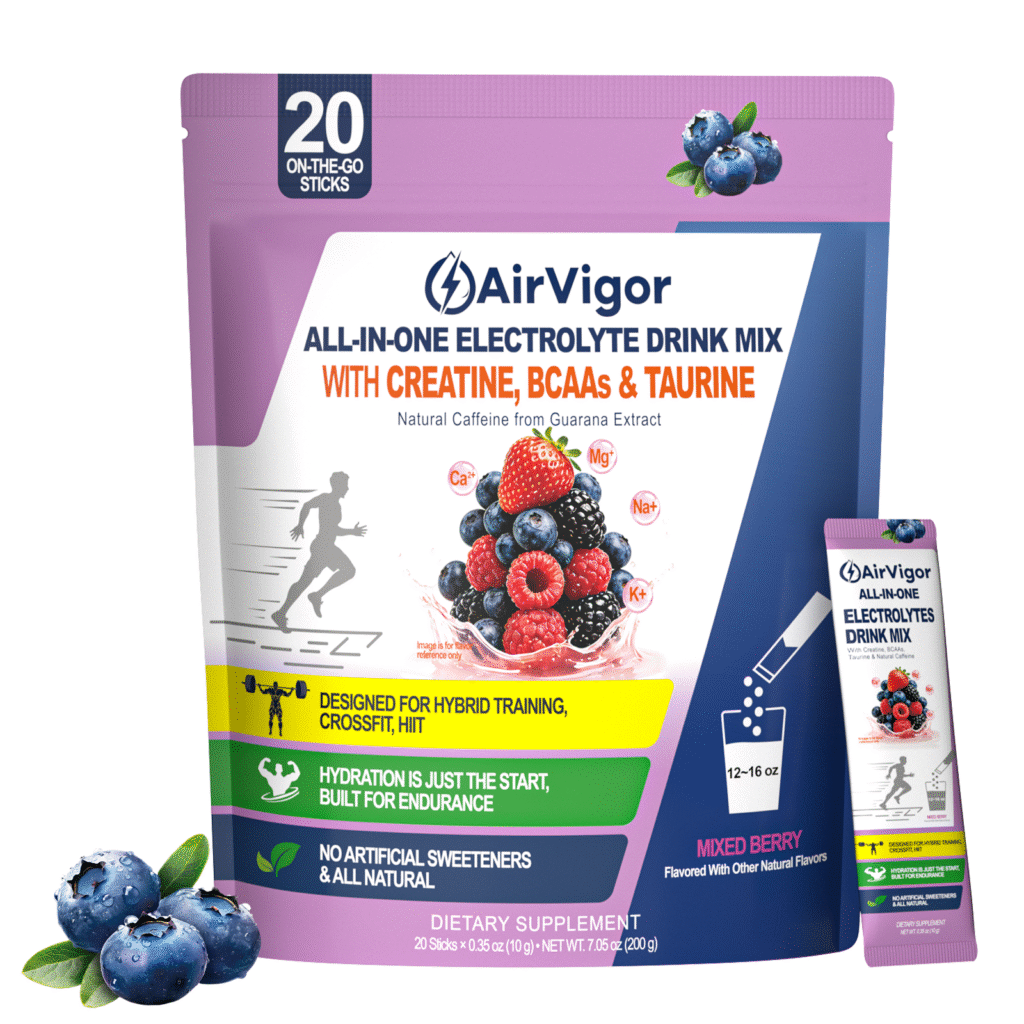
This is where a sports-focused, consistency-first brand matters. AirVigor’s positioning (sports nutrition, global distribution, batch testing/COA systems, and regulated manufacturing standards—per your company profile) supports what users care about most: predictable results. People don’t re-buy electrolyte powders because they’re “cool.” They re-buy because the same routine keeps working.
Which Electrolytes Reduce Tightness Most?
The electrolytes most associated with reducing muscle tightness are magnesium and potassium, supported by adequate sodium and balanced calcium. Magnesium supports relaxation and neuromuscular calm; potassium helps reset electrical balance after contraction; sodium maintains fluid and nerve signaling stability; calcium supports contraction-release cycling. Most people do best with a balanced electrolyte formula rather than high doses of one mineral.
- The “big four”: magnesium, potassium, sodium, calcium
- Tightness = often imbalance, not one missing nutrient
- Heavy sweaters need more sodium, not just magnesium
- Potassium supports the reset, especially post-sweatWhat Each Electrolyte Does (and What It Feels Like)
People ask, “Which electrolyte reduces tight muscles?” because they want a direct answer. Here it is: magnesium is the most talked about, but it works best when the rest of the system (especially sodium and potassium) is supported.
What electrolytes are good for muscle tension?
The most relevant electrolytes for muscle tension are:
- Magnesium: supports normal muscle and nerve function and overall biochemical regulation
- Potassium: key for cellular electrical balance; low potassium is linked to weakness/cramps in electrolyte imbalance discussions
- Sodium: essential for fluid balance and nerve signaling; critical for sweat replacement strategies in sports hydration guidance
- Calcium: essential in muscle contraction processes; imbalances can contribute to neuromuscular symptoms
Does magnesium help relax muscles?
Magnesium supports muscle and nerve function and is involved in hundreds of enzyme systems
In real life, people often notice magnesium-support products help most with:
- Night tension
- Stress-related tightness
- “Wired but tired” muscle tone
But magnesium isn’t a guaranteed cure-all for cramps in every population. If someone has tightness because they’re under-salted and sweating hard, magnesium alone may do very little until sodium replacement is addressed.
Does potassium reduce muscle tightness?
Potassium is a quiet hero for recovery. If you sweat heavily and your diet is low in potassium-rich foods (many people are), muscles can feel heavy and slow to reset. Cleveland Clinic’s electrolyte overview lists muscle weakness and cramps among symptoms associated with low potassium.
A practical clue: if you feel “tight + flat” after heat workouts, potassium support alongside sodium often helps more than stretching.
Does sodium support neuromuscular balance?
Sodium is essential for sweat replacement. ACSM’s position stand notes that during exercise lasting longer than 1 hour, adding sodium to fluids (about 0.5–0.7 g sodium per liter) is recommended as part of effective fluid replacement strategies.
If you’re a heavy sweater, sodium is not optional—it’s the foundation. Under-salting is a common reason people feel tight, headachy, or “off” even when they drink a lot of water.
Is calcium needed for release?
Calcium is essential for contraction mechanics, but tightness is rarely solved by simply adding calcium. What matters is balance—especially magnesium’s support for normal neuromuscular function. If your calcium intake is adequate through food, the priority for tightness tends to be sodium/potassium for sweat balance and magnesium for relaxation support.
| Electrolyte | Core role | “You might need it if…” | Best way to support it |
|---|---|---|---|
| Magnesium | Muscle + nerve function; relaxation support | Night tightness, stress tone, twitchy muscles | Balanced electrolyte powder; consistent routine |
| Potassium | Electrical reset; cellular balance | Heavy legs, flat recovery, heat sensitivity | Potassium-rich foods + balanced formula |
| Sodium | Fluid retention; signaling stability | Tightness late workout, salt crust, headaches after sweat | Sodium-containing electrolytes during/after |
| Calcium | Contraction mechanics | Rarely low in balanced diets; issues vary | Meet baseline through diet; keep magnesium supportive |

How Do Electrolytes Relax Muscles?
Electrolytes relax muscles by stabilizing nerve impulses, supporting calcium movement in muscle cells, and restoring electrical balance after contraction. Magnesium supports neuromuscular calm, potassium helps reset membrane potential, sodium maintains fluid and signaling stability, and calcium enables proper contraction-release cycling. When electrolytes are balanced, muscles can fully “turn off” instead of staying partially contracted—reducing tightness and helping prevent recurring knots.
- Relaxation is an active process, not automatic
- Electrolytes help muscles “turn off” cleanly
- Tightness can be “low-level firing,” not injury
- Knots recur when the system stays unstable
The Muscle “Off Switch” People Forget Exists
It’s easy to believe muscles relax because you stop moving. But physiologically, relaxation requires the body to:
- Stop firing nerve signals
- Restore cell electrical gradients
- Move calcium back into storage
- Restore fluid balance inside and around the cell
Electrolytes influence those steps. When they’re off, you can feel like you’re constantly “holding tension” even when you’re trying to relax.
How do electrolytes affect nerve signals?
Nerves communicate through electrical impulses, and electrolytes are what make those impulses possible. When sodium is low after sweat, signals can become unstable. When potassium is low, the reset to baseline becomes sluggish. When magnesium support is inadequate, the system can feel more excitable and harder to calm (especially under stress). Magnesium’s role in muscle and nerve function is specifically described in authoritative nutrition references.
How do electrolytes reduce involuntary contraction?
Involuntary contraction is often “protective tone” + fatigue. If you’re under-replaced after sweating or training, the nervous system may keep muscles partially activated. Balanced electrolytes help restore a calmer environment so muscles can downshift instead of staying guarded.
Do electrolytes help with muscle knots?
Muscle knots (trigger points) are complicated—local contraction, sensitivity, and sometimes decreased blood flow. Electrolytes won’t replace manual therapy, but they can reduce how often knots return by improving the underlying neuromuscular stability.
A practical combo that works well:
- Local release (massage, heat, mobility)
- System reset (electrolytes + hydration + sleep)
If knots keep coming back in the same spots, treat electrolytes as a “baseline fix,” not a one-time rescue.
When Should You Take Electrolytes?
Take electrolytes based on sweat loss and muscle stress: before exercise to start hydrated, during long/hot sessions to replace ongoing sweat losses, and after workouts to support relaxation and recovery. People prone to nighttime tightness may benefit from a small evening dose. For exercise lasting longer than an hour, sports hydration guidance supports adding sodium to fluids to help replace sweat losses.
- Best “tightness timing”: after workouts
- Best “heat timing”: during + after
- Night tightness: small evening dose can help
- Consistency beats perfect timing
Timing That Fits Real Life
Timing matters because tightness often appears after deficits accumulate, not the moment you become low. If your first electrolyte of the week is when you’re already cramping, you’re playing catch-up.
Should electrolytes be taken before workouts?
If you train early, fasted, or in heat, pre-workout electrolytes help you start with a stable baseline. This is especially useful if you wake up feeling stiff, or if your workouts start fine and then “tightness creeps in.”
Simple routine:
- 12–20 oz water + electrolytes 30–60 minutes pre-workout
Do electrolytes help during long training sessions?
Yes—especially beyond 60 minutes, in heat, or with repeated intervals. ACSM guidance supports sodium in fluids during longer exercise as part of sweat-loss replacement strategies.
During long sessions, electrolytes are not “recovery.” They’re damage control—preventing the system from drifting into instability.
Can electrolytes reduce post-workout tightness?
This is the biggest win for most people. Post-workout electrolytes support rehydration and help muscles complete the relaxation/reset process. If your tightness shows up the next morning, post-workout electrolytes are one of the fastest levers to pull.
Is nighttime electrolyte intake helpful?
For people who get calf/foot tightness at night or feel “wired” in the evening, a low-dose electrolyte drink can help. If you’re using it nightly, you want a formula you tolerate and can trust—because long-term routines fail when the product is too harsh, too sweet, or inconsistent.
Safe, Practical Ranges
These are general ranges for healthy adults and athletes—not medical prescriptions. Needs vary by sweat rate, climate, diet, and health conditions.
| Situation | Typical electrolyte approach | Notes / safety |
|---|---|---|
| Normal day, light exercise | 1 serving electrolyte drink as needed | Don’t force daily use if you don’t need it |
| Heavy sweat day (heat, long training) | Electrolytes during + after | ACSM supports sodium in fluids for >1 hour sessions |
| Vomiting/diarrhea illness | Oral rehydration with electrolytes | Mayo Clinic notes dehydration treatment involves replacing fluids and electrolytes |
| “I drink lots of water and still feel tight” | Add electrolytes, reduce plain-water overdrinking | Overhydration can contribute to low sodium risk in some cases (PubMed) |
| Kidney/heart conditions or diuretics | Talk to clinician first | Electrolyte shifts can be risky with medical conditions |
Important: If you have kidney disease, heart rhythm issues, uncontrolled hypertension, or take diuretics/ACE inhibitors, talk to a clinician before increasing potassium, magnesium, or sodium intake.
Are Electrolyte Supplements Effective?
Electrolyte supplements are effective when they provide meaningful mineral amounts in balanced ratios and forms you tolerate. Powders often work faster than pills because they combine fluid and electrolytes and allow flexible dosing. Effectiveness depends more on matching intake to sweat loss and maintaining consistency than on taking high doses of a single mineral. If symptoms are severe or persistent, seek medical evaluation.
- Powders = fast + flexible dosing
- Ratios matter more than “mega milligrams”
- Daily use can be fine if matched to output
- Severe symptoms need medical attention
“Effective” Means Repeatable and Tolerable
A supplement is only effective if:
- You take it consistently
- It doesn’t upset your stomach
- It matches your actual needs (sweat + stress + training)
What supplements are good for muscle tightness?
If “tightness” is the core complaint, most people do best with:
- Balanced electrolyte powders (magnesium + potassium + sodium, with supportive calcium)
- Magnesium-support products for stress-related tone (but not megadoses)
- Recovery habits that reduce nervous system load (sleep, carbs when needed, deload weeks)
Electrolyte imbalance and dehydration are both commonly linked to muscle cramping and neuromuscular symptoms in clinical education resources.
Do electrolyte powders work better than pills?
Often, yes—especially for active people. Powders:
- Pair minerals with water (the delivery system)
- Are easier to scale up/down by sweat rate
- Usually provide sodium meaningfully (many pills don’t)
If you’re trying to fix heat-related tightness, sodium is usually non-negotiable—so powders tend to be more practical.
Are electrolyte ratios more important than dosage?
For tightness, yes. Too much sodium without potassium can feel like “hydration that doesn’t recover.” Too much magnesium can cause GI issues. Balanced formulas aim for a practical middle ground you can use repeatedly.
Is daily electrolyte supplementation safe?
For many healthy active adults, moderate use is safe—especially when you sweat often. But purpose matters. If you’re not losing electrolytes (no sweat, no illness), constantly drinking high-electrolyte beverages can be unnecessary. And if you’re at risk for sodium issues, hyponatremia is a real medical condition and should be taken seriously.

How Do You Choose the Right Formula?
Choose an electrolyte formula with clear dosing, balanced sodium/potassium/magnesium (and supportive calcium), minimal unnecessary additives, and a taste you’ll actually use consistently. If muscle tightness is your goal, prioritize magnesium and potassium support—but ensure sodium is adequate if you sweat. Look for clean labeling, quality documentation (like COAs), and a format that fits your routine (stick packs for training, tubs for daily use).
- Pick for your sweat profile, not influencer trends
- Clear label > proprietary blend
- “Clean + consistent” beats “strong + harsh”
- The right product is the one you’ll use for 2+ weeks
A Buyer Checklist That Prevents Wasted Money
This is where most customers get stuck: too many products, too many claims, not enough clarity. Here’s how to choose without overthinking it.
What electrolyte ratios support muscle relaxation?
Relaxation-oriented users typically benefit from:
- Enough sodium to support hydration stability (especially if you sweat)
- Enough potassium to support reset and reduce “flat recovery”
- A tolerable amount of magnesium for neuromuscular calm
- Calcium as supportive, not dominating
If you’re tight in heat: sodium + potassium become priority.
If you’re tight under stress: magnesium support often matters more.
Should sugar be low for muscle recovery?
Most of the time, yes. Unless you’re doing long endurance sessions where carbs are part of fueling, high sugar can be unnecessary and can make daily use unpleasant. A moderate or low-sugar electrolyte tends to be easier to stick with for weeks, which is how you actually change tightness patterns.
Does clean labeling matter for long-term use?
Yes—especially for “2-year content” where you’re asking people to adopt a repeatable routine. Clean labeling matters because it reduces uncertainty and supports trust. It also supports SEO credibility: users (and Google) want transparency in YMYL topics.
AirVigor’s manufacturer + brand profile (in-house testing systems, batch documentation like COA, and multi-market compliance discipline) maps to the kind of reliability serious users look for. In practice, that means fewer “this batch tastes different” surprises and more consistent outcomes.
Who benefits most from daily electrolytes?
Daily electrolytes help most when at least one of these is true:
- You sweat frequently (training, heat, sauna, outdoor work)
- You do high-intensity training that taxes neuromuscular control
- You sit long hours and feel chronic tension
- You travel often (dry air + irregular hydration)
- You’re in a low-carb phase and feel “flat” (often sodium/potassium related)
| What to check | Why it matters | Best practice |
|---|---|---|
| Sodium amount | Sweat replacement + stability | Higher need for heavy sweaters |
| Potassium amount | Reset + recovery feel | Avoid “sodium-only” formulas |
| Magnesium form & dose | Tolerance + calm tone | Moderate dose you can use daily |
| Sugar content | Daily usability + gut comfort | Lower unless endurance fueling |
| Transparency | Trust + repeatability | No proprietary blends |
| Quality docs | Batch consistency | COA/testing culture is a plus |
| Format | Compliance with real life | Stick packs for travel; tubs for home |
Real-World Routine: A 14-Day Tightness Reset Plan
If you want an approach that’s realistic and trackable:
Days 1–3: Establish baseline
- Drink your normal water intake
- Add one electrolyte serving per day (post-workout or midday if sedentary)
- Notice: morning stiffness, night tightness, and training “feel”
Days 4–10: Match to output
- Training days: electrolytes after every workout
- Hot/long sessions: electrolytes during + after
- Sedentary days: electrolytes midday if you get desk tension
Days 11–14: Personalize
- If night tightness persists: try a small evening serving
- If you feel puffy or off: reduce frequency or serving size
- If nothing changes: look harder at sleep, training load, mobility, and medical factors
This plan works because it turns a vague symptom (“I’m tight”) into a measurable experiment.
Conclusion
Muscle tightness is often a “reset” problem—your muscles can contract, but they don’t fully downshift when hydration, sweat loss, and electrolyte balance drift. For most people, the practical solution isn’t megadosing one mineral; it’s using a balanced electrolyte approach that matches your sweat level and daily stress, with smart timing (especially post-workout and, for some, a small evening dose).
If you want a simple routine you can stick with for 14–21 days, choose a formula with clear labeling, meaningful sodium for sweat days, and supportive magnesium/potassium for relaxation. AirVigor is built around that repeatable, training-friendly use case—clean dosing, consistent batches, and an easy daily format that helps reduce “tight muscle days” without overcomplicating recovery.
Buy on Amazon or Request a Custom Quote
Buy AirVigor
If your goal is fewer “tight muscle days” and better recovery you can feel, start with a balanced electrolyte routine for 14–21 days. AirVigor products are available via Amazon (FBA inventory), making it easy to start immediately and stay consistent.
Bulk Pricing
If you’re building a hydration or recovery line—or you want a custom electrolyte ratio for your market—AirVigor supports formulation, flavor development, compliance-ready labeling, and scalable production.
Share:
Contact Expert Team
At AirVigor, performance becomes effortless. We transform advanced nutrition science into clean, effective supplements that help you hydrate, recover, and feel stronger every day. Shop AirVigor on Amazon and experience athlete-trusted formulas—backed by real science and supported by our world-class R&D and production capabilities.
Trust AirVigor
At AirVigor, turning your performance goals into reality is no longer a struggle—it’s a science-driven journey we build together. Whether you’re a runner, lifter, cyclist, yogi, outdoor athlete, or someone simply seeking better daily energy, AirVigor transforms advanced nutrition research into clean, effective, and trustworthy supplements you can feel.
Backed by our U.S. scientific team, global certifications, and world-class production standards, every formula is engineered to deliver real hydration, real recovery, and real performance. And when you’re ready to experience the difference, you’ll find AirVigor products available on Amazon and other major platforms—fast shipping, consistent quality, and a community of athletes already seeing results.
Behind the scenes, our R&D and manufacturing ecosystem also supports specialized formulation development, ensuring AirVigor continues to lead with innovation while keeping quality and safety uncompromised. But at the core, everything we create is built for you—your health, your performance, your momentum.
Choose AirVigor. Feel the science. Elevate your every day.


Subscribe to our newsletter
Sign up to our newsletter and we’ll keep you up to date with the latest arrivals.