Skip to content
Is Creatine Safe for Women:Science-Backed Guide
# Your Trusted Dietary Supplement Brand In US
- Emily

Table of Contents
Creatine is one of the most researched performance supplements—but for women it’s still surrounded by the same questions: Will it cause weight gain? Bloating? Hormone issues? The truth is simpler than the internet makes it: creatine isn’t a steroid or hormone, and most healthy women tolerate it well. What typically changes first is not body fat, but intracellular water inside muscle—which can look like a “scale jump” if you’re not tracking the right metrics.
Creatine’s real value for women is consistency: better strength output, less drop-off across sets, and more productive training sessions over time—especially with resistance training, HIIT, or busy schedules where you want maximum return from every workout. In this guide, you’ll get the evidence-backed safety answer, the real reasons some women feel bloated, how to dose without drama, and how to choose a tested product you can trust.
What Is Creatine?
Creatine is a naturally occurring compound stored mainly in muscle that helps regenerate ATP—your body’s rapid energy currency. Supplementing creatine increases muscle creatine stores, improving short-burst performance (strength, sprinting, repeated high-intensity efforts) and often supporting training volume and recovery. For women, the core mechanism is the same as men, but the experience can feel different due to cycle-related water shifts, body composition goals, and scale sensitivity.
What creatine really is?
Creatine gets misunderstood because it sits in the overlap of fitness culture and biology. It’s not caffeine. It’s not a fat burner. It’s not a hormone. It’s closer to a cellular fuel buffer—a helper molecule that supports fast energy recycling when you demand high output.
Your body runs on ATP (adenosine triphosphate). The catch: ATP stores are tiny. During a hard set of squats, a sprint, or a brutal interval, your muscles burn through ATP quickly. Creatine—specifically phosphocreatine—helps regenerate ATP so you can continue producing force.
This is why creatine tends to shine in situations like:
- heavy resistance training (sets of 3–12 reps)
- repeated sprints or hills
- HIIT circuits
- sports with bursts (soccer, tennis, basketball, CrossFit-style training)
Women sometimes assume creatine is “for bulking.” That’s a cultural myth. Creatine supports performance, and performance supports training quality. If you train better, you may build more lean mass over time—but that depends on training stimulus, protein intake, calories, and recovery. Creatine doesn’t override those fundamentals.
The second misunderstanding is water. Creatine can increase water inside muscle cells. That’s not automatically a bad thing—cell hydration is one reason muscles can perform better. But if you’re scale-sensitive or starting creatine during a phase when you already retain water (PMS week, high-carb week, travel week), it can feel like creatine “did something to you.” What it did was predictable—your tracking method just wasn’t set up to interpret it correctly.
| Type | Evidence strength | Typical user experience | Bottom line |
|---|---|---|---|
| Creatine monohydrate | Highest | Reliable results, best value | Best default for most women |
| Creatine HCl | Moderate/limited | May feel gentler for some | Not clearly superior |
| Buffered / “pH” | Limited | Similar outcomes claimed | Often pricier, not proven better |
| Proprietary blends | Varies | Depends on actual dose | Watch for under-dosing |
What does creatine do in the body?
Creatine increases stored phosphocreatine in muscle. Practically, women often notice:
- slightly better strength or rep performance
- less drop-off in power late in workouts
- easier time maintaining intensity
- more “repeatability” in high-intensity sessions
What will creatine do to a woman’s body?
Most commonly: it helps you train with better quality. Over weeks to months, that can translate to improved strength, better body composition, and improved recovery—without dramatic changes unless your training and nutrition drive those changes.
How is creatine naturally obtained?
You get creatine from red meat and fish and you also synthesize some internally. But many women eat less total protein, less meat, or maintain calorie deficits—especially during cutting phases. That can reduce dietary creatine intake.
Supplementation gives a consistent, measurable amount without changing your entire diet. It’s also one of the simplest supplements to take: no cycling required for most people, no complicated timing rules.
Is creatine different for women?
Creatine is the same molecule for everyone. What differs is context:
- women experience monthly shifts in water balance
- women are more likely to have physique goals where scale changes feel high-stakes
- women may be more cautious about supplements due to historical misinformation
So the best approach isn’t “women need a different creatine.” It’s “women need a different decision framework.”
Is Creatine Safe for Women?
For healthy women, creatine is widely considered safe at standard doses (3–5 g/day). Evidence in healthy adults consistently shows no meaningful harm to kidney function when used appropriately. Most reported issues are manageable: temporary water weight, mild bloating, or GI discomfort (often from high doses or loading). Safety improves when you use a transparent, batch-tested product and follow consistent dosing.
Safety is a triangle—biology, dose, and product quality
When people ask “Is creatine safe?” they usually mean one of three things:
- Will it harm my kidneys or organs?
- Will it mess with my body in a way I don’t like?
- Can I trust what’s actually in the tub?
For most healthy women, the first concern is largely answered by decades of research: creatine at standard doses is generally well tolerated. But the second and third concerns are where people actually get burned—by poor dosing strategies, unrealistic expectations, or low-quality products.
Dose matters. Many side effects are dose-related. The “loading phase” (20 g/day for several days) can increase the chance of bloating or stomach upset. If you want a low-drama plan, daily maintenance dosing is the move.
Quality matters. Supplements are only as good as manufacturing and verification. The biggest practical risk for consumers is often not creatine as an ingredient—it’s inconsistency, contamination, or inaccurate labeling across brands.
AirVigor is positioned well here because it’s not just a brand—it’s also a manufacturer with strong quality infrastructure (GMP/HACCP/ISO-style controls, batch documentation like COA, internal lab capabilities, traceable sourcing, and multi-region compliance). For long-term daily supplements, those “boring” systems are exactly what protect customers.
| Your situation | Risk level | What to do |
|---|---|---|
| Healthy adult, no kidney disease | Low | 3–5 g/day; hydrate normally |
| History of kidney disease | Higher | Get medical guidance first |
| Pregnant or breastfeeding | Uncertain | Ask OB/provider; avoid guessing |
| GI sensitivity | Medium | Split dose; take with food |
| High scale anxiety | Not medical, but real | Track measurements + strength |
What does science say about safety?
In healthy populations, creatine is one of the best-studied performance supplements available. Most women do not need special “detoxes,” cycling, or complicated protocols. What they need is a product they can trust and a plan they can execute consistently.
If you want to be extra responsible: treat creatine like any routine supplement—if you’re under medical care, have chronic conditions, or take medications that affect kidneys, discuss it with your clinician. That’s not fear; that’s good adult behavior.
Are there negative effects of creatine for women?
Yes. Most are mild, and most are preventable.
Common negatives:
- temporary water weight (often early)
- bloating (more common with loading)
- GI discomfort (too much at once)
- false alarm anxiety (“I gained weight!”)
| What you notice | Likely cause | Best fix |
|---|---|---|
| Stomach upset | Large single dose | Split into 2 doses; take with food |
| Bloating | Loading or poor mixing | Skip loading; mix fully |
| Scale jump | Intracellular water | Track waist/hips + performance |
| Puffy feeling | Cycle + water overlap | Compare same cycle week |
| No results | Under-dosing/inconsistency | Daily 3–5 g for 6–8 weeks |
Are long-term studies available?
Longer-term use has been studied in various contexts, and the overall safety profile remains favorable for healthy adults. Practically: if you take creatine daily, the safest strategy is boring consistency and smart basics (hydration, adequate protein, reasonable training).
Is creatine FDA approved?
Dietary supplements in the U.S. aren’t “FDA approved” like drugs. That’s why brand credibility comes from manufacturing standards and documentation, not slogans. Look for clear labeling, testing, and batch verification (COA).
Does Creatine Affect Hormones?
Creatine is not a hormone and does not act like a steroid. In healthy women, there’s no strong evidence that creatine meaningfully disrupts estrogen or causes “male-like” hormonal changes. What women often perceive as hormonal changes is usually water fluctuation overlapping with menstrual cycle shifts. If you have endocrine conditions (PCOS, thyroid issues), creatine isn’t automatically off-limits—but tracking and personalized guidance are smart.
The “hormone fear” is mostly misattribution
This is one of the top anxiety queries because it’s emotionally loaded: “Will creatine mess with my hormones?” It sounds plausible if you’ve ever seen creatine associated with bodybuilding culture or “bulk” transformations.
Here’s the key clarity: creatine’s primary function is cellular energy support, not endocrine manipulation. Creatine doesn’t convert into testosterone. It doesn’t mimic estrogen. It doesn’t work like anabolic steroids.
So why do women sometimes feel like hormones are involved?
- They start creatine during PMS week, when bloating is already higher.
- They notice a weight change and assume hormones.
- They train harder because creatine helps, which can influence sleep, appetite, stress—things that affect how you feel.
That’s not creatine “changing your hormones.” That’s creatine changing your training output and your body’s water distribution—plus normal life factors.
If you’re someone with PCOS or thyroid issues, your baseline state is more complex. The best approach is conservative dosing (3 g/day), consistent routine, and symptom tracking. The decision isn’t “no creatine.” It’s “use it intelligently.”
Can creatine affect female hormones?
For healthy women, there’s no strong evidence of meaningful hormonal disruption. Creatine does not function as an endocrine disruptor in the way people fear. Most perceived hormone effects are actually changes in water balance or training response.
Does creatine raise testosterone?
Creatine is not testosterone. It does not “turn you into a man.” That myth survives because it’s sticky—not because it’s accurate.
If you’re androgen-sensitive or anxious about this, the best strategy isn’t avoidance—it’s controlled experimentation: consistent dose, consistent tracking, and evaluating real markers (performance, measurements, how you feel across cycles), not assumptions.
Does creatine affect estrogen levels?
There’s no strong evidence it meaningfully alters estrogen in healthy women. Again, cycle timing matters: if you start creatine right before your period, the combination of PMS water retention + creatine-related intracellular water can feel like “something hormonal happened.” The fix is expectation management, not panic.
Is creatine safe during menstrual cycles?
For most women, yes. The practical tip: compare how you feel at the same point in your cycle. If bloating is your concern, skip loading and stick to 3–5 g daily.

Does Creatine Cause Weight Gain?
Creatine can cause a small increase in body weight early on, usually due to water stored inside muscle cells, not fat gain. This water can support training performance and recovery. Women who are scale-sensitive often do best with 3–5 g daily, no loading, and progress tracking based on measurements, photos, and strength—not scale weight alone.
Your scale is data—not a verdict
Creatine is one of the few supplements that can change the scale quickly. That’s why it’s emotionally powerful, and why it gets blamed.
But you need to separate fat gain from water shift.
Creatine has no calories. It doesn’t directly cause fat gain. If fat increases, it’s from a calorie surplus—not creatine. What creatine can do is increase water inside muscle cells as stores rise. That may show up as:
- a small weight increase in week 1–3
- a slightly “fuller” feeling
- sometimes a short-term bloated sensation if dosing is aggressive
Women often interpret early water changes as “it made me bigger.” But if you measure waist/hips, track photos, and track strength, you’ll usually see the truth: performance improves, body composition trends stay stable or improve over time.
| Your goal | Creatine fit | Best plan |
|---|---|---|
| Strength & physique | Excellent | 3–5 g/day, no loading |
| HIIT / CrossFit | Strong | 5 g/day; support hydration |
| Pilates / yoga | Optional | Try 3 g/day; assess recovery |
| Cutting, scale-sensitive | Still useful | Track waist/hips; expect water |
| Endurance only | Mixed | Helps surges; test 6–8 weeks |
Is weight gain fat or water?
Almost always water—especially early. Over months, if you train and eat for performance, you might gain lean mass. That’s not creatine “doing it.” That’s you training well, with creatine making training slightly more effective.
Where does water retention occur?
Mostly inside muscle cells. That’s different from subcutaneous “puffy” water. Some women still feel it subjectively, especially if starting during a high-fluctuation time (cycle phase, travel, stress).
Is bloating common in women?
It can happen, but it’s not inevitable. Most bloating is protocol-driven:
- big single doses
- loading phases
- poor mixing
- taking on an empty stomach if you’re sensitive
The low-drama solution: skip loading, mix well, and take with food if needed.
Which Women Benefit Most?
Women benefit most from creatine if they do resistance training, HIIT, or sports requiring repeated bursts of effort. It can also help women with busy schedules by improving training consistency and recovery. If you’re asking “Should a female take creatine?” the best answer depends on your goal, your tolerance for water weight, and whether you want performance-driven progress without stimulant-like effects.
Creatine is a tool
If you want results that last (and a WordPress article that stays useful for years), here’s the honest framework:
Creatine is most valuable when it helps you do more high-quality work in training and recover enough to repeat it. That’s why women who strength train, do HIIT, or play burst sports benefit most.
It’s also a strong fit if you:
- train 2–4 times/week and want better ROI from each session
- want strength gains without relying on stimulants
- care about long-term function and muscle preservation
Women who might not “need” it right now:
- those who don’t do any resistance training at all
- those who are extremely distressed by any scale fluctuation (until tracking improves)
- those with medical contexts requiring individualized guidance
AirVigor fits naturally here because it’s built around performance routines: creatine, electrolytes, and other sports nutrition categories designed for predictable, repeatable use. Serious customers want a routine that’s simple and reliable—not a supplement drawer full of half-used tubs.
Should a female take creatine?
If you train for strength, body composition, athletic performance, or consistency—and you can tolerate small water shifts—creatine is often a smart choice.
If your main goal is “I want the scale to never move,” creatine may stress you out early. In that case, fix tracking first (measurements + photos + strength), then decide.
Do active women benefit more?
Yes. Creatine benefits are easiest to notice when training includes high-intensity output. That’s why lifters and HIIT athletes feel it most.
Is creatine useful without heavy training?
It can be, but benefits are subtler. If you do light training, creatine may help energy and recovery, but the biggest gains come when you pair it with resistance training—even twice a week.
Are there age-related benefits?
As women age, maintaining muscle and strength supports metabolic health, bone health, and daily function. Creatine can be a helpful part of that plan—especially with resistance training and adequate protein.

How Should Women Take Creatine?
Most women do best with 3–5 g of creatine monohydrate daily, consistently. Loading is optional and often unnecessary, especially if you want to minimize bloating or GI upset. Timing is flexible; consistency matters more than “perfect timing.” If you sweat heavily or train in heat, pairing creatine with electrolytes can improve comfort and training readiness.
Make it simple, sustainable, and low-drama
Creatine works by saturating stores over time. That’s why consistency beats perfection.
The easiest plan for most women:
- take 3–5 g daily
- take it with any meal or post-workout
- skip loading unless you have a reason
- keep hydration normal (don’t force-gallon water rituals)
If you’re a heavy sweater, train long sessions, or get headaches/cramps when training hard, electrolytes can make the routine feel smoother. Electrolytes don’t “activate” creatine; they support hydration and comfort so you can train well and recover.
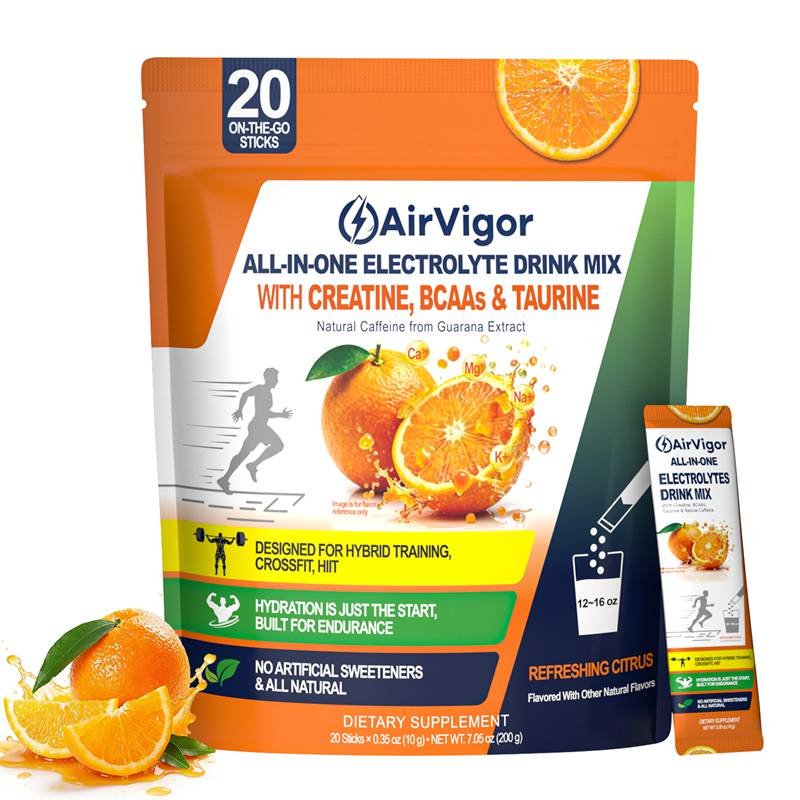
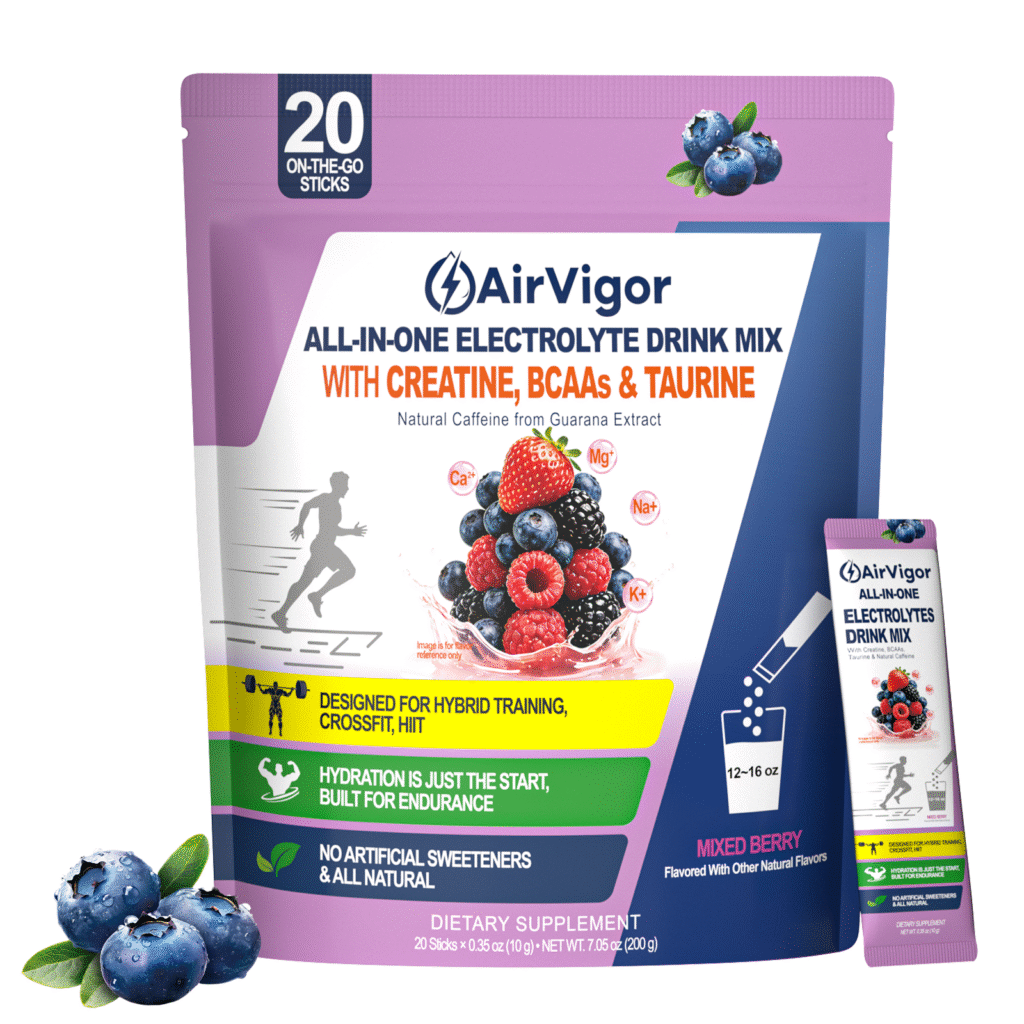
This is where AirVigor’s ecosystem makes sense in real life:
AirVigor creatine as the daily foundation
AirVigor electrolytes around training, heat exposure, or high-sweat days
Simple, repeatable, and consistent with how athletes actually live.
| User type | Daily dose | Loading? | Notes |
|---|---|---|---|
| Beginner, scale-sensitive | 3 g | No | Reduce “first-week drama” |
| Strength & physique | 3–5 g | Optional | Most women don’t need loading |
| HIIT / CrossFit | 5 g | Optional | Hydration support helps |
| GI sensitive | 3 g split | No | Take with food |
| Busy schedule | 5 g | No | Pick a daily anchor habit |
How much creatine is recommended?
3–5 g/day is the standard for most women. Start at 3 g if you’re cautious; increase to 5 g if you tolerate it well.
Is loading necessary for women?
Not necessary. Loading saturates stores faster, but it increases the risk of bloating and stomach upset. If you want a calm experience, skip it.
Should creatine be stacked with electrolytes?
Often yes, especially if you sweat heavily, train in heat, or do long sessions. Electrolytes help maintain hydration balance and comfort—making your routine easier to sustain.
Conclusion
For most healthy women, creatine is safe, well-studied, and high-upside when used correctly. Expect the most common “downsides” to be manageable: a small early water-weight shift, occasional bloating if dosing is aggressive, and rare GI discomfort—usually solved by skipping loading and taking 3–5 g/day consistently. Creatine does not act like a hormone, and it won’t “make you bulky” unless your training and nutrition are designed for that outcome.
If you want a simple, reliable routine, AirVigor Creatine is built for daily consistency—clear dosing and quality-first positioning—so you can focus on training progress instead of second-guessing what’s in your scoop.
Buy AirVigor Now
If you want a straightforward routine with predictable quality, search Amazon for:
“AirVigor Creatine Monohydrate”
Choose the size that fits your training frequency, and pair it with AirVigor electrolyte powder on heavy sweat days for a smoother experience.
Need Custom Formulas or Bulk Pricing?
AirVigor (Atom Nexus Inc., Eastvale, CA) supports OEM/ODM and custom sports nutrition development—electrolyte powders, creatine, proteins, and functional blends—with rapid sampling and scalable production.
Share:
Contact Expert Team
At AirVigor, performance becomes effortless. We transform advanced nutrition science into clean, effective supplements that help you hydrate, recover, and feel stronger every day. Shop AirVigor on Amazon and experience athlete-trusted formulas—backed by real science and supported by our world-class R&D and production capabilities.
Trust AirVigor
At AirVigor, turning your performance goals into reality is no longer a struggle—it’s a science-driven journey we build together. Whether you’re a runner, lifter, cyclist, yogi, outdoor athlete, or someone simply seeking better daily energy, AirVigor transforms advanced nutrition research into clean, effective, and trustworthy supplements you can feel.
Backed by our U.S. scientific team, global certifications, and world-class production standards, every formula is engineered to deliver real hydration, real recovery, and real performance. And when you’re ready to experience the difference, you’ll find AirVigor products available on Amazon and other major platforms—fast shipping, consistent quality, and a community of athletes already seeing results.
Behind the scenes, our R&D and manufacturing ecosystem also supports specialized formulation development, ensuring AirVigor continues to lead with innovation while keeping quality and safety uncompromised. But at the core, everything we create is built for you—your health, your performance, your momentum.
Choose AirVigor. Feel the science. Elevate your every day.


Subscribe to our newsletter
Sign up to our newsletter and we’ll keep you up to date with the latest arrivals.