Skip to content
What Does Magnesium Do for Recovery and Cramps:Complete Guide
# Your Trusted Dietary Supplement Brand In US
- Emily

Table of Contents
Muscle cramps and “slow recovery” feel unfair because they show up when you’re doing everything right—training consistently, drinking water, eating clean—yet your calves still grab at night or your legs stay tight for days. That’s because recovery isn’t only about muscle tissue. It’s also about nerve signals, fluid balance, and how well your muscles can switch from contract → relax.
Magnesium is a key part of that switch. It supports muscle relaxation by balancing calcium-driven contraction, helps keep nerve firing more stable, and plays a role in energy production (ATP). When magnesium intake is low—or your needs rise due to sweat, stress, travel, and poor sleep—your body can feel more “wired”: twitchy muscles, cramps, restless legs, and recovery that drags.
In this guide, you’ll learn what magnesium actually does for recovery and cramps, who benefits most, how to dose safely, and how to pair magnesium with a balanced electrolyte strategy for athlete-friendly results.
What does magnesium do in muscles?
Magnesium helps muscles work smoothly by supporting contraction-relaxation cycles, stabilizing nerve signals, and enabling energy production inside muscle cells. It acts like a “release” mineral that counterbalances calcium’s contraction trigger. When magnesium is low, muscles may contract normally but relax poorly, increasing tightness, twitching, fatigue, and cramp susceptibility—especially during heavy training, sweating, stress, or poor sleep.
How does magnesium support muscle contraction?
Muscle contraction starts with calcium. Calcium enters the muscle cell and flips the switch that allows fibers to pull. But muscles don’t just need to contract—they need to reset so you can contract again and again without “locking up.” Magnesium supports this reset by helping regulate calcium handling and the enzymes that control the contraction cycle.
A simple way to think about it:
- Calcium = “Go” signal (contract)
- Magnesium = “Release” signal (relax and reset)
When magnesium availability is adequate, your muscles can switch between contraction and relaxation smoothly. When it’s inadequate, you can still train—but you may feel stuck: tightness that doesn’t respond much to stretching, a “wired” muscle sensation, or cramps that appear late in workouts or during sleep.
This is also why magnesium is often discussed in recovery: it’s not just about today’s workout. It’s about restoring normal muscle function so tomorrow’s training feels controlled rather than fragile.
How does magnesium affect nerve signaling?
Cramps are as much a nervous system event as they are a muscle event. Nerves tell muscles when to contract, how hard, and for how long. Magnesium helps regulate nerve excitability—basically, whether your nervous system is calm and stable, or jumpy and trigger-happy.
When magnesium is low, nerves may fire more easily. In real life, that looks like:
- twitching eyelids or calves
- restless legs at night
- sudden cramp “grabs” during a sprint, a set, or after sweating
- a general sense that your muscles won’t fully relax
This matters for athletes and fitness-focused people because training itself increases neural demand—especially high-intensity work, heavy lifting, and long endurance sessions.
What happens when magnesium is low in muscle tissue?
Your body stores magnesium mostly inside cells and bone, not floating freely like a “bonus mineral.” So shortfalls don’t always show up as obvious signs right away. Often the first signs are performance and comfort signals: tightness, poor sleep, slower recovery, and cramps that appear under stress.
Here’s a practical checklist that many active people relate to.
| Common Symptom | What it can mean | When it shows up most |
|---|---|---|
| Tight calves/hamstrings | Poor relaxation cycle | After hard training, at night |
| Twitching | Higher nerve excitability | Stress, fatigue, low sleep |
| Night cramps | Mineral + fatigue combo | Heavy training weeks, travel |
| “Heavy legs” recovery lag | Lower ATP efficiency | Back-to-back training days |
| Sleep feels shallow | Nervous system not downshifting | Late workouts, high stress |
Important note: these signs don’t prove deficiency. They simply signal that magnesium is worth evaluating—especially if your hydration and sodium/potassium strategy is already decent.
Does magnesium actually reduce cramps?
Magnesium can reduce cramps when cramping is driven by fatigue, electrolyte imbalance, dehydration-related nerve excitability, or insufficient magnesium intake. But not all cramps are magnesium-related—some are caused by overreaching, conditioning gaps, injury, or sodium loss. Magnesium is most reliable as part of a complete recovery + electrolyte plan rather than a single-nutrient fix.
How does magnesium help relieve cramps?
Cramps are often described as “muscles locking,” but under the hood, cramps often involve a combination of:
- muscle fatigue
- electrolyte shifts
- nervous system over-activation
- insufficient relaxation signaling
Magnesium supports the relaxation side of contraction and helps calm overactive nerve firing. That’s why people often notice magnesium helps most when cramps happen:
- late in long workouts
- after heavy sweat loss
- during sleep following intense training
- during travel or stressful periods (when sleep and diet are off)
However, magnesium works best when you’re not missing the bigger pieces—especially hydration and sodium. Many athletes “chase cramps” with magnesium when the real culprit is low sodium from heavy sweating. In those cases, magnesium alone may help a little, but it won’t solve the root cause.
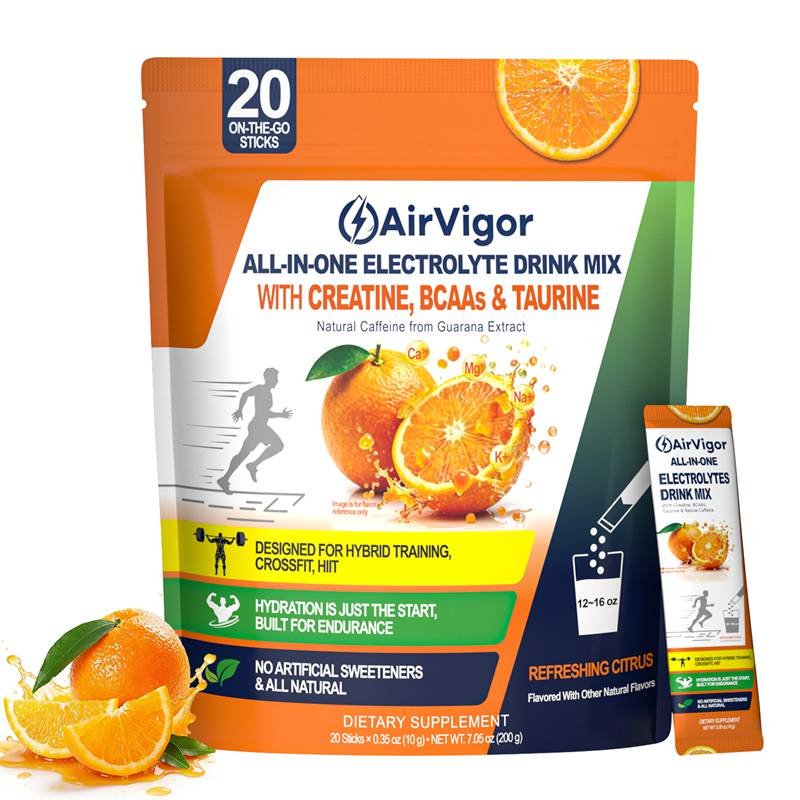
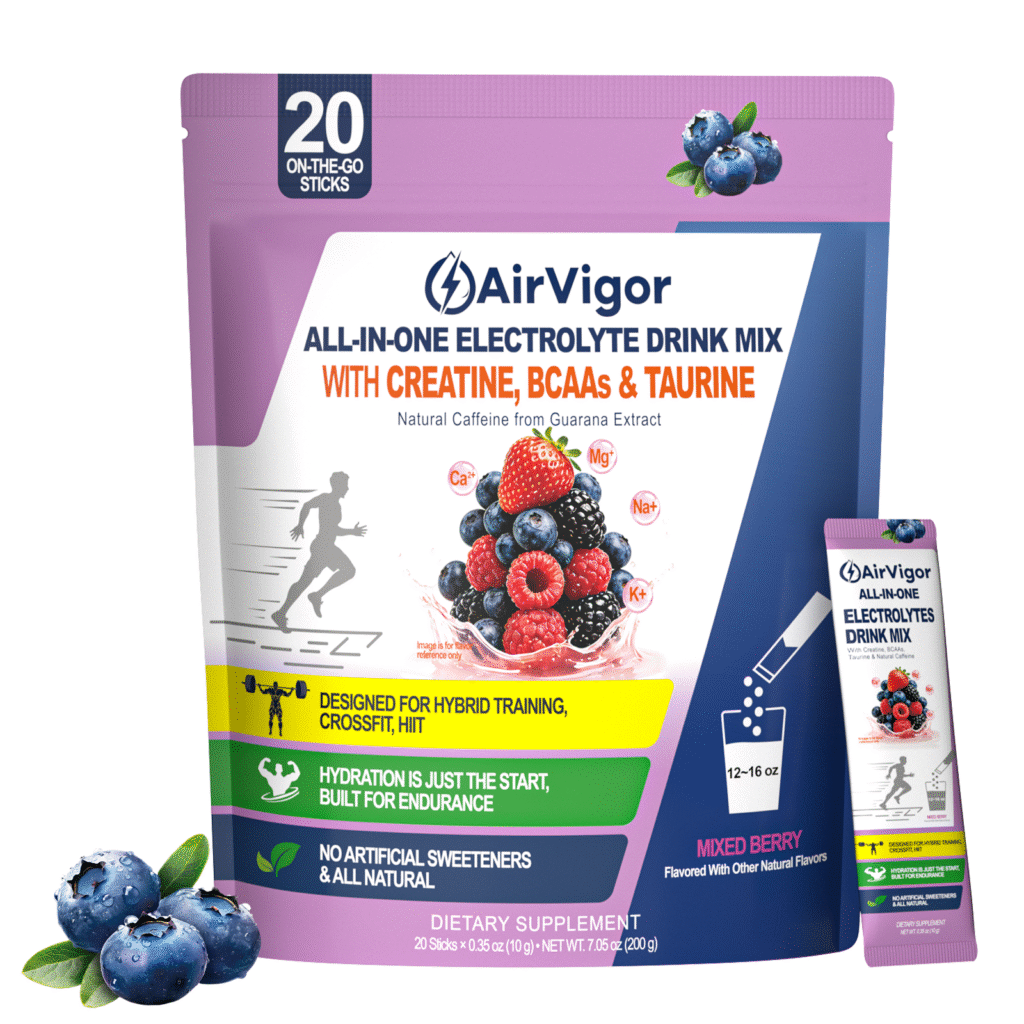
This is where an athlete-focused electrolyte strategy matters. AirVigor’s approach (as a sports nutrition brand and manufacturer) is not to megadose a single mineral. It’s to build a balanced system—electrolytes that support fluid absorption, nerve function, and training-day consistency.
Which types of cramps respond best to magnesium?
Magnesium tends to be most helpful for cramps that have a “systemic” pattern:
- recurring nighttime leg cramps
- cramps after sweat-heavy sessions
- cramps during high-volume training blocks
- cramps paired with twitching, tightness, and poor sleep
Cramps that are mainly mechanical (like a strain, tendon issue, or localized injury) respond less reliably to magnesium. Similarly, cramps from extreme fatigue or sudden intensity jumps often require better progression, recovery days, and conditioning.
| Cramp Scenario | Likely Driver | Magnesium Role | What else matters |
|---|---|---|---|
| Night cramps after hard training | fatigue + mineral shifts | Often helpful | sleep, hydration, sodium |
| Cramps late in endurance workouts | sweat loss + fatigue | supportive | sodium, fluids, carbs |
| Sudden cramps in first 10 minutes | poor warm-up, neural spike | limited | warm-up, pacing |
| Localized cramps near injury | mechanical irritation | low | rehab, load management |
| “Twitchy + tight” weeks | stress + low recovery | helpful | sleep, total recovery plan |
Are leg cramps always caused by magnesium deficiency?
No—and this is where many online answers oversimplify things. Leg cramps are a common endpoint for many causes. If you want consistent results, you need to treat cramps like a diagnosis process, not a superstition.
A practical order of operations:
- Hydration basics (drink to thirst, avoid extremes)
- Sodium strategy if you sweat heavily
- Magnesium if you have tightness/twitching/poor sleep patterns
- Training load (are you overreaching?)
- Mechanical factors (shoes, form, injuries, nerve compression)
Magnesium belongs in the plan—but the plan should be complete.
How does magnesium support recovery?
Magnesium supports recovery by helping muscles relax, supporting energy production (ATP), improving sleep quality, and stabilizing the nervous system after intense training. It may reduce the “wired and tight” feeling that drags out recovery and can indirectly reduce soreness by improving relaxation and sleep—two major recovery multipliers.
Does magnesium help with muscle recovery?
Yes, and the most useful way to understand this is: recovery is an energy-and-signal problem. Your muscles need energy to repair, restore glycogen, regulate inflammation, and normalize contraction patterns. Magnesium supports enzymes involved in ATP production, which is why low magnesium can feel like “recovery doesn’t bounce back.”
Athletes often describe this as:
- heavy legs
- unusually long fatigue
- reduced training quality day after day
- poor tolerance to volume
Magnesium isn’t a substitute for protein, calories, or sleep. But if magnesium is limiting, you can do everything else “right” and still feel stuck.
For performance-focused customers, AirVigor often fits best as a system brand: electrolytes for hydration performance, creatine for training output, and mineral support (including magnesium strategy) for recovery consistency—built around clear labeling, stable dosing, and a manufacturing quality culture.
Does magnesium reduce post-exercise soreness?
DOMS is complex. It’s not just lactic acid, and it doesn’t disappear from one supplement. But magnesium can help some people feel less “stiff” by supporting muscle relaxation and nervous system downshift. There’s also a practical reality: if magnesium improves sleep even slightly, soreness tends to feel more manageable and recovery accelerates.
So the best expectation is:
- Magnesium may reduce perceived tightness and improve next-day readiness
- Magnesium may support better sleep, which reduces soreness impact
- Magnesium is not a “DOMS eraser,” but it can be a meaningful recovery tool
How does magnesium improve sleep quality for recovery?
Sleep is where recovery compounds. Magnesium supports relaxation and may help the body shift from stress mode into rest mode. Many active people aren’t short on motivation—they’re short on downshift. Late training, caffeine, screen time, travel, and stress can leave the nervous system “on,” even after the workout ends.
If magnesium helps you fall asleep faster, sleep deeper, or wake up less, the recovery payoff can be big:
- better muscle repair
- lower cramp risk
- improved mood and training consistency
This is one reason many athletes take magnesium in the evening, often paired with a hydration strategy that prevents middle-of-the-night dehydration.

Which magnesium form should you choose?
Choose magnesium form based on your goal and tolerance: glycinate is gentle and often used for relaxation and sleep; citrate is commonly used for cramps but can loosen stools; malate is popular for fatigue support; taurate is associated with calm nerve function. The “best” form is the one you can take consistently without GI issues.
Which magnesium form is easiest to absorb?
Absorption is part chemistry, part tolerance. If a form causes GI upset, you won’t take it consistently—and consistency matters more than perfection. Many active adults do best with well-tolerated chelated forms.
Also consider your delivery method:
- Capsules are simple for dosing precision
- Powders can be easier to stack with electrolytes or recovery drinks
- “High-dose in one shot” often backfires due to GI response
AirVigor’s R&D philosophy (as a brand + manufacturer) is to prioritize real-world tolerance, not lab-theory optimization. A form that dissolves well, tastes clean, and doesn’t upset the stomach is usually the best athlete choice.
Is magnesium glycinate better for sleep and recovery?
Glycinate is popular because it’s often gentle and fits the “recovery + sleep” goal. If your issues include restless legs, shallow sleep, or stress-related tightness, glycinate is commonly chosen because it’s typically easier on digestion.
It’s especially useful if:
- you train late
- you’re under high mental stress
- you want magnesium without bathroom surprises
Is magnesium citrate better for cramps?
Citrate is often used for cramps and general magnesium replenishment, but it can have a mild laxative effect—especially at higher doses. Some people love it; others can’t tolerate it. If your stomach is sensitive, start low or consider switching forms.
Citrate can make sense if:
- you’re prone to constipation
- you’re testing magnesium response for cramps
- you can tolerate it without GI issues
What about magnesium malate or taurate?
Malate is often chosen by people who feel fatigue-heavy rather than cramp-heavy, and taurate is often discussed in “calm nerve” contexts. You don’t need to overthink it. Pick one form aligned with your main goal and tolerance, then reassess after 2–4 weeks of consistent use.
| Form | Best For | Tolerance Notes | Best Time |
|---|---|---|---|
| Glycinate | sleep, recovery calm | usually gentle | evening |
| Citrate | cramps, general replenishment | may loosen stools | evening or split |
| Malate | fatigue support | usually moderate | morning/afternoon |
| Taurate | calm nerve balance | usually gentle | evening |
How much magnesium is safe daily?
Most active adults do well with a moderate supplemental magnesium range (often 200–400 mg/day of elemental magnesium), adjusted for diet, sweat loss, and tolerance. Splitting doses improves comfort. Too much supplemental magnesium can cause diarrhea and GI upset. If pregnant, managing a medical condition, or taking medications, consult a clinician before supplementing.
What magnesium dose supports active adults?
People want a single number, but dosing is personal because needs change with:
- sweat rate
- training volume
- diet quality
- stress and sleep
A practical approach is “start low, go consistent”:
- Start around 100–200 mg/day (elemental)
- Increase gradually if needed and tolerated
- Split into AM + PM if GI sensitivity exists
If you’re using a hydration powder plus magnesium capsules, avoid stacking blindly. It’s easy to accidentally overshoot if you take multiple products daily.
AirVigor’s labeling and “use-case clarity” approach is designed to reduce this problem: users should be able to understand what they’re taking, why, and how to adjust based on training days vs rest days.
Is magnesium good for you when pregnant?
Magnesium is an essential mineral during pregnancy, but supplementation needs to be handled carefully and individually. The safest guidance is simple:
- Prioritize food sources first
- If supplementing, do so under medical guidance
- Avoid high-dose experiments during pregnancy
If pregnancy is part of your customer base, the best long-term brand trust comes from conservative, responsible language and transparent dosing—exactly the kind of compliance-forward approach AirVigor applies across markets and label systems.
What are signs of too much magnesium?
The most common sign is GI upset:
- loose stools
- nausea
- abdominal cramping
This doesn’t mean magnesium is “bad.” It means the dose or form doesn’t match your tolerance. Reduce dose, split it, or switch forms.
Which medications interact with magnesium?
Magnesium can interfere with absorption of certain medications (for example, some antibiotics or thyroid medications). The practical rule is spacing: separate magnesium supplements from medications by a few hours unless your clinician advises otherwise.
How do you prevent cramps long term?
Long-term cramp prevention works best with a system approach: balanced electrolytes (especially sodium for heavy sweaters), adequate magnesium, smart hydration, sufficient sleep, and training progression. Magnesium helps most when cramps are linked to tightness, nerve excitability, poor sleep, or mineral shortfalls—but it’s strongest as part of an overall hydration + recovery routine.
Which electrolytes work together with magnesium?
Magnesium doesn’t work alone. Muscles and nerves operate in an electrolyte environment where sodium, potassium, calcium, and magnesium each play different roles:
- Sodium supports fluid retention and absorption
- Potassium supports cellular balance and nerve function
- Calcium triggers contraction
- Magnesium supports relaxation and stability
If you’re cramping during heavy sweat sessions, sodium is often the first lever. If you’re tight, twitchy, and sleeping poorly, magnesium rises in priority.
This is why many athletes prefer a complete electrolyte powder (like AirVigor-style athlete formulas) over random single-mineral fixes.
How does hydration affect magnesium balance?
Overhydrating with plain water can dilute electrolytes. Underhydrating concentrates stress hormones and increases cramp risk. The goal is not more water—it’s effective hydration.
A simple, practical rule:
- Use water as your baseline
- Use electrolytes when you sweat, train hard, travel, or feel depleted
- Avoid extremes (gallon-chugging or “no water until thirsty all day”)
Hydration powders are popular because they make hydration executable. AirVigor’s product philosophy emphasizes fast dissolution, clean taste, and clear instructions—so people actually use them consistently.
Is magnesium good for headaches related to dehydration?
Some headaches are dehydration/electrolyte headaches—often paired with fatigue, travel, heat, or heavy training. Magnesium may help by supporting nerve stability and vascular tone, but it’s not a guaranteed fix for every headache.
If headaches appear after sweating or travel, try a system approach:
- electrolytes + water
- magnesium consistency
- better sleep routines
This is also where “clean taste” matters—if your hydration product is too sweet or heavy, people avoid it, and the plan fails. AirVigor’s lighter flavor direction helps compliance.
How do you build a long-term recovery routine?
Here’s a routine that’s realistic for athletes and busy professionals:
| Situation | What to do | Why it helps |
|---|---|---|
| Heavy sweat workout | electrolytes during/after | replaces sodium, supports absorption |
| Night cramps | magnesium in evening + hydration | supports relaxation + sleep |
| Back-to-back training days | consistent minerals + sleep focus | reduces cumulative fatigue |
| Travel / flights | electrolytes + steady water | counters dehydration patterns |
| “Wired but tired” weeks | reduce intensity + magnesium + sleep | calms nervous system load |
The real win is not a perfect protocol. It’s a protocol you can follow without friction.

FAQ
Is magnesium good for cramps at night?
It can be, especially if cramps are linked to fatigue, tightness, and poor sleep. Magnesium supports relaxation and nervous system stability, which often matters most at night.
How long does magnesium take to work for cramps?
Some people notice improvements within a few days; for others it takes 2–4 weeks of consistent use. Magnesium is not a “one-dose rescue” for most cramp patterns.
Do athletes need more magnesium than non-athletes?
Often yes, because training increases metabolic demand and sweat can increase mineral loss. Needs vary by sweat rate, diet, and training volume.
Are electrolytes enough without magnesium?
Electrolytes can help hydration and cramp risk significantly—especially sodium for heavy sweaters. But if you also have tightness, twitching, poor sleep, or stress overload, magnesium may be the missing piece.
Conclusion
Magnesium supports recovery and cramp prevention mainly by improving muscle relaxation, nerve stability, and sleep quality—but it works best as part of a complete plan, not a standalone “magic fix.” If your cramps show up during heavy sweat weeks, late in long sessions, or at night after hard training, the most reliable strategy is consistent hydration plus balanced electrolytes (especially sodium/potassium) alongside a tolerable magnesium routine.
For athletes and active people who want results that feel predictable, AirVigor is built around repeatable routines: clean, easy-to-mix electrolyte solutions and performance-focused products designed to support hydration, recovery, and training consistency without overcomplicating the plan.
Ready to Recovery with AirVigor?
If you’re training hard, sweating often, traveling, or simply trying to recover faster, magnesium is worth taking seriously—not as a hype supplement, but as a core mineral that supports muscle relaxation, nerve stability, sleep quality, and recovery consistency.
If you want to buy now
AirVigor products are available through major e-commerce channels with reliable delivery. If your customers want immediate, no-wait access, Amazon in-stock purchase is the simplest path.
If you want to build a product
AirVigor supports:
- athlete-focused magnesium + electrolyte concepts
- flavor, dissolution, stability, and label compliance design
- low MOQ starting around 500 pcs (depending on format)
- fast sampling timelines (commonly 3–7 days for powders)
Whether you’re a consumer trying to stop cramps from sabotaging your training—or a brand looking to launch a recovery-focused formula—your best results come from the same thing: a complete, balanced system that people can actually follow. AirVigor is built for exactly that.
Share:
Contact Expert Team
At AirVigor, performance becomes effortless. We transform advanced nutrition science into clean, effective supplements that help you hydrate, recover, and feel stronger every day. Shop AirVigor on Amazon and experience athlete-trusted formulas—backed by real science and supported by our world-class R&D and production capabilities.
Trust AirVigor
At AirVigor, turning your performance goals into reality is no longer a struggle—it’s a science-driven journey we build together. Whether you’re a runner, lifter, cyclist, yogi, outdoor athlete, or someone simply seeking better daily energy, AirVigor transforms advanced nutrition research into clean, effective, and trustworthy supplements you can feel.
Backed by our U.S. scientific team, global certifications, and world-class production standards, every formula is engineered to deliver real hydration, real recovery, and real performance. And when you’re ready to experience the difference, you’ll find AirVigor products available on Amazon and other major platforms—fast shipping, consistent quality, and a community of athletes already seeing results.
Behind the scenes, our R&D and manufacturing ecosystem also supports specialized formulation development, ensuring AirVigor continues to lead with innovation while keeping quality and safety uncompromised. But at the core, everything we create is built for you—your health, your performance, your momentum.
Choose AirVigor. Feel the science. Elevate your every day.


Subscribe to our newsletter
Sign up to our newsletter and we’ll keep you up to date with the latest arrivals.