Skip to content

Two-a-day training looks simple on paper: one workout in the morning, another later in the day. In real life, the second session often tells the truth. Legs feel heavier than expected. The warm-up takes longer. Thirst comes back quickly. A normal pace suddenly feels harder. Many athletes blame discipline, sleep, or motivation, but the real issue may be much simpler: the body has not fully replaced the fluid and minerals lost during the first workout.
The best electrolyte powder for two-a-day training should support sweat-related mineral replacement, fit the short recovery window, mix quickly, taste light, and be easy to use more than once a day. It should help athletes manage hydration before the first workout, between sessions, during longer training, and after the second session without adding unnecessary sugar, stomach heaviness, or complicated preparation.
This is especially important for runners, CrossFit users, cyclists, strength athletes, team-sport players, hot-yoga users, and busy professionals who split training into two smaller sessions. When the day includes repeated sweating, plain water may not always feel complete. A balanced electrolyte powder can make hydration more organized, especially when sodium, potassium, magnesium, and calcium are clearly listed on the label. The goal is not to turn every workout into a science project. The goal is to help the body feel ready when the second session starts.
What Is Two-a-Day Training?
Two-a-day training means completing two planned workouts within the same day. It may include strength plus cardio, running plus mobility, cycling plus lifting, sport practice plus conditioning, or two separate skill sessions. The challenge is not just doing more work. The real challenge is recovering enough between sessions so the second workout still feels useful, safe, and controlled.
Why Is It Hard?
Two-a-day training is hard because the body has to recover on a tighter timeline. After the first workout, the body may need to restore fluid, electrolytes, muscle fuel, body temperature balance, and overall energy. When the second workout starts only a few hours later, even a small hydration gap can feel much bigger.
A common example is a morning training session followed by a normal workday. The athlete finishes sweaty, drinks a little water, has coffee, gets busy, and does not think about recovery again until the evening. By the second workout, the body may already be behind. The result is not always dramatic dehydration. More often, it feels like lower drive, slower warm-up, weaker output, or early fatigue.
| Training Pattern | What Often Happens | What the Athlete May Feel |
|---|---|---|
| Morning HIIT + evening lifting | High sweat loss early in the day | Heavy legs, lower focus, weaker sets |
| Morning run + evening gym | Fluid loss plus muscle fatigue | Thirst, slower warm-up, reduced power |
| Cycling + strength training | Long sweat exposure and repeated effort | Salt marks, tight legs, low appetite |
| Sport practice + conditioning | Heat, repeated sprints, limited recovery | Headache, cramping risk, poor second-half energy |
| Hot yoga + evening cardio | Heavy sweat and short recovery time | Lightheaded feeling, strong thirst, fatigue |
For two-a-day training, the recovery period is not empty time. It becomes part of the training plan. A good day is not only measured by how hard the first workout feels. It is also measured by how well the athlete can arrive at the second session without feeling drained before it begins.
This is why hydration planning matters. Water is necessary, but when sweat loss is meaningful, water alone may not replace the minerals lost during training. Electrolytes help make the recovery window more complete, especially for athletes who sweat heavily, train in heat, or notice salt stains on clothing.
Who Needs It?
Two-a-day training is not limited to elite athletes. Many regular fitness users train twice a day because modern routines are crowded. A person may lift in the morning and run after work. A cyclist may ride before breakfast and do strength work at night. A CrossFit user may attend class and add skill practice later. A runner may split mileage into two shorter sessions to reduce stress on one workout.
People who may benefit from a more structured hydration plan include:
- Athletes who train again within 4–8 hours
- Heavy sweaters who leave shirts, hats, or towels soaked
- Salty sweaters who notice white marks on clothing
- Runners, cyclists, CrossFit users, and HIIT athletes
- Hot-weather or humid-gym training users
- Busy professionals who train before and after work
- Travelers who train while meals and water intake are inconsistent
| User Type | Common Two-a-Day Routine | Main Hydration Concern |
|---|---|---|
| Runner | Easy morning run + evening speed work | Replacing sweat before the second session |
| Strength athlete | Morning lifting + evening conditioning | Avoiding flat performance later in the day |
| CrossFit user | Class + accessory training | Managing sweat, intensity, and recovery |
| Cyclist | Long ride + gym work | Sodium loss and leg tightness |
| Office worker | Short morning workout + evening gym | Forgetting fluids during the workday |
| Hot-yoga user | Sweat-heavy class + later cardio | Strong fluid and mineral loss |
Two-a-day training only works well when recovery is handled properly. Without enough fluid, minerals, food, and rest, the second session may become less productive. For some people, training twice a day can be useful. For others, it can become a fast way to build fatigue. The difference often comes down to planning.
Electrolyte powder is not the only solution, but it can remove one common problem: guessing whether hydration is enough. A measured serving gives users a simple way to support fluid and mineral intake when the day demands more than plain water.
How Can Electrolyte Powder Help?
Electrolyte powder helps two-a-day training by turning hydration into a repeatable routine. Instead of waiting until thirst becomes strong, athletes can use electrolytes around the moments when the body is most likely to need support: before the first session, after sweating, between workouts, and after the final session of the day.
The most useful electrolyte powders for repeated training usually focus on minerals that matter during sweat loss. Sodium helps support fluid balance. Potassium supports normal muscle and nerve function. Magnesium is involved in muscle function. Calcium supports normal muscle signaling. The amounts do not need to be extreme, but they should be clear.
| Use Moment | Main Goal | How Electrolyte Powder Helps |
|---|---|---|
| Before first workout | Start the session hydrated | Adds minerals to morning fluid intake |
| After first workout | Replace sweat-related losses | Helps make water intake more complete |
| Between sessions | Prepare for the second workout | Supports hydration before fatigue appears |
| During longer training | Maintain drinking rhythm | Makes sipping water easier during sweat loss |
| After second workout | Support next-day readiness | Helps restore hydration after repeated effort |
A good electrolyte powder should also match real daily behavior. Two-a-day athletes often do not have time to prepare complicated drinks. They may need something that works in a shaker bottle, gym bag, office desk, car, hotel room, or bike bag.
Key product details customers usually care about include:
- Does it mix quickly without clumps?
- Is the taste light enough to drink more than once a day?
- Are sodium, potassium, magnesium, and calcium clearly shown?
- Is the sugar level suitable for daily use?
- Can it be carried to work, the gym, or travel?
- Does it feel comfortable before evening training?
This is where convenience becomes part of performance. A formula that looks strong but tastes heavy may not be used consistently. A product that mixes poorly may stay in the cabinet. For two-a-day training, the best electrolyte powder is the one that helps users repeat the right habit without making the day harder.
Why Use Electrolyte Powder?
Electrolyte powder is useful for two-a-day training because repeated sweating can reduce both fluid and mineral balance before the day is over. Plain water is still important, but athletes who train twice in one day may need sodium, potassium, magnesium, and calcium support, especially during hot weather, long sessions, heavy sweating, or short recovery windows.
What Does It Replace?
Electrolyte powder replaces minerals commonly lost through sweat. The most important electrolyte for many sweaty athletes is sodium, because sweat contains meaningful sodium loss and sodium plays a major role in fluid balance. Potassium, magnesium, calcium, and chloride may also matter depending on diet, training style, and formula design.
Sweat loss is not the same for every person. One athlete may finish a 45-minute session barely damp. Another may soak through a shirt and leave salt marks after the same workout. That is why two-a-day training needs personal awareness. The right product should support the athlete’s actual sweat pattern rather than rely on a one-size-fits-all message.
| Electrolyte | Role in Training | What Users Often Notice When Intake Feels Low |
|---|---|---|
| Sodium | Supports fluid balance during sweat loss | Strong thirst, salt stains, washed-out feeling |
| Potassium | Supports normal muscle and nerve function | Muscle fatigue, low training sharpness |
| Magnesium | Involved in normal muscle function | Tightness, poor relaxation after hard days |
| Calcium | Supports normal muscle signaling | Less stable muscle function during repeated effort |
| Chloride | Works with sodium in fluid balance | General sweat-related mineral loss |
A clear electrolyte powder label helps customers choose with confidence. People should not need to guess what “hydration blend” means. They should be able to see the mineral amounts per serving and decide whether the formula fits light daily hydration, sweat-heavy workouts, or more demanding two-a-day training.
For practical use, customers often compare products by looking at:
- Sodium level per serving
- Sugar or calorie level
- Magnesium source and amount
- Potassium amount
- Serving size
- Flavor intensity
- Mixing instructions
- Whether the formula contains caffeine
The goal is not to take the highest mineral dose possible. The goal is to replace what the training day is likely to use. A light yoga day and a hot-weather running day do not need the same hydration strategy. A good electrolyte powder gives users enough flexibility to match the product to the day.
Why Is Water Not Enough?
Water is enough for many short, light, or low-sweat workouts. The issue is that two-a-day training often creates more fluid and mineral loss than a single casual session. When athletes drink only plain water after heavy sweating, they may replace fluid volume but still feel thirsty, flat, or poorly recovered because sweat contains more than water.
This does not mean water is weak. Water is the foundation. The question is whether the day creates enough sweat loss that water needs support from electrolytes. For many two-a-day athletes, that answer changes depending on training intensity, heat, humidity, and recovery time.
| Situation | Water May Be Enough | Electrolyte Powder May Help More |
|---|---|---|
| 30-minute easy walk | Yes | Usually not needed |
| Light stretching or mobility | Yes | Usually not needed |
| One moderate gym session | Often | If sweat is heavy |
| Two workouts in one day | Sometimes | Often useful |
| Summer running | Less likely | Often useful |
| Long cycling session | Less likely | Often useful |
| Salt stains after training | Less likely | More useful |
Electrolyte powder may be worth using when:
- The second workout feels much harder than expected
- Thirst returns quickly after drinking water
- Sweat leaves visible salt marks
- Training happens in heat or humidity
- The athlete sweats heavily in indoor classes
- There is limited time to eat and drink between workouts
- The person drinks lots of water but still feels drained
One common mistake is drinking a large amount of plain water all at once after the first workout. This may feel like recovery, but it can also leave the stomach heavy and does not always address mineral loss. A more useful approach is to sip fluids steadily and pair hydration with electrolytes and food when the training day is demanding.
For customers, this is where a low-burden electrolyte powder becomes attractive. It does not need to replace meals or become a complicated supplement stack. It simply helps water work better during the moments when sweat loss is higher.
How Does Sweat Change Training?
Sweat changes training because it removes fluid and electrolytes while also increasing the body’s cooling demand. During one workout, this may only feel like thirst. During two-a-day training, the effect can carry into the next session. If the first workout creates a large sweat loss and recovery is incomplete, the second session may begin with less reserve.
Sweat rate is affected by many factors, including body size, training intensity, temperature, humidity, clothing, fitness level, and personal biology. Some athletes sweat early and heavily. Others sweat less but still lose sodium. This is why looking only at workout time can be misleading. A 45-minute workout in a hot garage gym may create more sweat loss than a 75-minute easy session in cool weather.
| What the Athlete Notices | What It May Suggest | Helpful Response |
|---|---|---|
| Shirt is soaked after first session | Fluid loss may be high | Rehydrate before the second workout |
| White salt marks on clothing | Sodium loss may be meaningful | Use electrolyte powder on heavy-sweat days |
| Thirst returns quickly | Water alone may not feel complete | Sip fluids with electrolytes |
| Warm-up feels unusually slow | Recovery may be incomplete | Check fluid, food, and rest |
| Headache after training | Hydration and recovery may need attention | Add water, electrolytes, and a balanced meal |
| Evening session feels flat | Short recovery window may be the issue | Hydrate earlier, not only during training |
A useful two-a-day hydration habit is to check the body after the first workout instead of waiting until the second workout goes poorly. The signs are often easy to miss during a busy day. Salt on a hat, dark urine, unusual thirst, or a heavy afternoon slump can all suggest that hydration needs more attention.
A simple sweat-aware routine can include:
- Checking clothing for salt marks after training
- Drinking before strong thirst appears
- Using electrolytes after sweat-heavy sessions
- Pairing fluids with meals between workouts
- Keeping a portable serving available for work or travel
- Adjusting intake on hot days instead of using the same plan year-round
Electrolyte powder cannot replace sleep, calories, protein, carbohydrates, or smart programming. It is one part of the recovery picture. But for athletes who train twice in one day, it is one of the easiest parts to improve because it requires little preparation and fits directly into water intake.
How to Take Electrolyte Powder for Two-a-Day Training?
Electrolyte powder works best for two-a-day training when it is used around the real pressure points of the day: before the first workout, after the first sweat-heavy session, between workouts, during longer training, and after the second session. The goal is not to drink more for no reason. The goal is to help the body stay ahead of thirst, sweat loss, and poor recovery timing.
Before Training?
Before the first workout, electrolyte powder can help athletes start the day with a more complete hydration base. This matters most for morning training, fasted workouts, hot-weather runs, early gym sessions, and athletes who sweat quickly. After 6–8 hours of sleep, the body has gone a long time without fluids. If the first drink of the day is only coffee, the athlete may begin training with less hydration support than expected.
For two-a-day training, the first session affects the rest of the day. If the athlete starts under-hydrated, sweats heavily, and then goes straight into work, school, or errands, the second workout may feel harder before it even begins. A light electrolyte drink before the first session can be a simple way to reduce that gap.
| Morning Training Situation | Why It Matters | Better Hydration Move |
|---|---|---|
| Fasted workout | No recent food or fluid intake | Drink water with electrolytes before training |
| Early gym session | Limited time to eat or prepare | Mix one serving 20–45 minutes before workout |
| Hot-weather run | Sweat loss begins quickly | Use electrolytes before and after the run |
| Coffee before training | Coffee does not replace hydration planning | Pair coffee with water or electrolyte drink |
| Heavy sweater | Sodium loss may start early | Use electrolytes on harder training mornings |
A simple pre-training routine starts before the athlete reaches the gym. Drinking water soon after waking helps rebuild the fluid base after a night without intake. On sweaty, intense, or outdoor training mornings, mixing electrolyte powder into that first bottle can make hydration feel more complete. If the session is long or high intensity, a small snack may also help the body feel steadier.
The goal is simple: do not wait until the first warm-up set, first mile, or first interval to realize the body is already thirsty. This does not mean every person needs electrolytes before every easy workout. A short mobility session or low-sweat walk may not require it. But when the day includes two workouts, the morning session should not be treated casually. It creates the starting point for everything that follows.
For many users, the best time to use electrolyte powder is not when they feel completely drained. It is before that point. Once heavy thirst, headache, or weak performance appears, the body may already be playing catch-up. Pre-training hydration is a small habit, but for repeated training days, small habits decide whether the second session feels manageable or messy.
Between Workouts?
The time between workouts is the most important hydration window for two-a-day training. This is where many athletes lose control of the day. The first workout ends, the athlete feels fine, then work, meetings, classes, errands, or family responsibilities take over. By the time the second workout starts, hydration has been forgotten for several hours.
Electrolyte powder fits this window because it is quick and does not require a full supplement setup. It can be mixed with water after the first workout, taken with lunch, kept at a desk, or carried in a gym bag. It should not replace food, but it can support fluid and mineral replacement while the athlete also gets carbohydrates, protein, and regular meals.
| Between-Workout Need | Why It Matters | Practical Action |
|---|---|---|
| Fluid | Replaces water lost through sweat | Sip steadily after the first workout |
| Sodium | Supports fluid balance after sweating | Use electrolyte powder on heavy-sweat days |
| Carbohydrates | Helps restore training fuel | Eat rice, oats, fruit, potatoes, bread, or pasta |
| Protein | Supports muscle recovery | Add eggs, yogurt, lean meat, tofu, or protein |
| Time | Recovery window may be short | Start recovery soon after session one |
| Digestion comfort | Heavy meals may affect session two | Choose food and fluids that feel easy to tolerate |
A stronger between-workout routine begins soon after the first session ends. After a sweat-heavy workout, an electrolyte drink can be used with water before the day becomes busy. A real meal should follow when possible, especially one that includes carbohydrates and protein. During work, class, or errands, steady sipping is usually more useful than waiting until the second warm-up to drink heavily.
The most important point is timing. Hydration between workouts should happen before the second session starts, not after performance already drops. Athletes often know what a poor second session feels like: sluggish warm-up, lower strength, heavier breathing, slower pace, or a workout that feels harder than the plan suggests. Hydration is not the only cause, but it is one of the easiest variables to improve.
This is also where many customers care about portability. A large tub may work well at home, but it is less convenient when the athlete is moving between the gym, office, car, locker room, or airport. Single-serve powder formats are easier to keep in multiple places.
| Storage Spot | Why It Helps |
|---|---|
| Gym bag | Easy to use right after training |
| Office drawer | Helps avoid forgetting hydration during work |
| Car console | Useful for outdoor training days |
| Travel bag | Supports routine when meals and water change |
| Locker | Convenient for school or team-sport athletes |
| Bike pouch | Helpful for longer rides or outdoor sessions |
For two-a-day training, the between-workout drink is not just about thirst. It is about protecting the second session. The first workout drains more than energy. It changes the body’s fluid and mineral balance for the rest of the day. A portable electrolyte powder makes it easier to respond before the second workout becomes harder than it should be.
During Long Sessions?
Electrolyte powder may be useful during longer workouts, especially when the session lasts over 60–90 minutes, produces heavy sweat, or happens in heat. This applies to long runs, cycling, outdoor conditioning, sport practice, hot yoga, high-volume gym work, and CrossFit-style sessions with repeated intervals.
During training, the goal is not to wait until the body feels bad. The goal is to avoid falling too far behind. Once thirst becomes intense, pace drops, or focus starts slipping, the workout may already be harder than it needs to be. Sipping an electrolyte drink during sweat-heavy sessions can help the athlete maintain a steadier hydration rhythm.
| Workout Type | Water May Be Enough | Electrolytes May Help More |
|---|---|---|
| Under 45 minutes, light sweat | Often yes | Usually not necessary |
| 45–75 minutes, moderate sweat | Sometimes | Useful if heat or intensity is high |
| 75+ minutes, heavy sweat | Less likely | Often helpful |
| Indoor high-sweat class | Sometimes | Helpful if clothes are soaked |
| Long cycling session | Rarely enough alone | Often useful with fuel |
| Hot outdoor training | Less likely | Usually helpful |
| Two workouts on same day | Depends on sweat | More useful when recovery time is short |
During long sessions, taste and stomach comfort matter more than many people expect. If a drink is too sweet, too salty, or too strong, the athlete may drink less. That defeats the purpose. A good electrolyte powder for two-a-day training should be easy to sip repeatedly without causing flavor fatigue.
Athletes may want to use electrolytes during a session when they notice:
- Sweat begins early and clothing becomes soaked
- Salt marks appear on shirts, hats, or skin
- Thirst returns quickly even after drinking water
- Pace, strength, or focus drops faster than expected
- Heat makes a normal workout feel unusually hard
For endurance athletes, electrolytes may need to be paired with carbohydrates. A cyclist riding for two hours may need more than minerals. A runner doing a long morning session before evening gym work may need both electrolyte support and real food afterward. This is why electrolyte powder should be part of a larger plan, not the only recovery tool.
A useful rule is to match the drink to the session. Light session, light need. Long session, higher need. Hot day, more attention. Two-a-day schedule, less room for guessing.
After Training?
After the second workout, electrolyte powder can help support the body’s hydration reset before the next day. This is especially important for people who train again the following morning. Two-a-day training often creates a cycle: what happens tonight affects tomorrow morning.
Post-training hydration should not mean chugging a huge amount of water at bedtime. That may feel uncomfortable and may interrupt sleep. A better approach is to start rehydrating soon after the second workout and continue with fluids, food, and rest through the evening.
| After-Workout Sign | What It May Mean | What to Do |
|---|---|---|
| Strong thirst after drinking water | Fluid and mineral replacement may be incomplete | Sip water with electrolytes |
| Salt stains on shirt or hat | Sodium loss may be meaningful | Use electrolytes after heavy sweat |
| Dark urine for several hours | Fluid intake may be low | Spread fluids across the evening |
| Muscle tightness at night | Recovery may need more support | Pair hydration with food and rest |
| Evening headache | Hydration, food, or heat stress may be involved | Rehydrate and eat a balanced meal |
| Poor next-morning energy | Recovery may not be complete | Improve evening hydration routine |
A post-training routine should feel realistic, not complicated. If sweat loss was high, mixing electrolyte powder after the second session can be useful. A normal meal with protein, carbohydrates, and minerals should follow when possible. Fluids are usually better spread across the evening instead of taken all at once. For athletes who train early the next morning, preparing the next day’s serving before bed can also make the morning routine easier.
This routine is especially helpful during heavier training blocks. A runner increasing weekly mileage, a CrossFit athlete adding extra skill work, or a cyclist training for a long event may not feel the effect of one poor hydration day immediately. The problem often appears after several days, when fatigue builds and training starts to feel less stable.
AirVigor’s value in this situation is convenience. A product that is easy to mix and easy to carry has a better chance of being used after the workout, not forgotten until the next day. For athletes training twice daily, the best hydration routine is the one that actually survives a busy schedule.

Which Electrolyte Powder Formula Works Best?
The best electrolyte powder for two-a-day training should match sweat loss, training intensity, taste preference, sugar goals, and daily routine. A useful formula usually includes clear sodium, potassium, magnesium, and calcium levels, mixes smoothly, tastes light, and avoids unnecessary complexity. The label should make sense within a few seconds.
How Much Sodium Matters?
Sodium matters because it is the main electrolyte athletes pay attention to during heavy sweat loss. It helps support fluid balance, and it is commonly lost through sweat. In two-a-day training, sodium becomes more important when the athlete sweats heavily in the first session and has limited time before the second session.
The right sodium amount is not identical for everyone. Sweat rate and sweat sodium loss vary a lot. Some athletes finish training with dry clothing. Others leave visible salt marks after a single hard session. Climate also matters. A workout in a cool room and the same workout in a hot garage gym can create completely different hydration needs.
| Athlete Situation | Sodium Need Usually Trends | Why |
|---|---|---|
| Light sweater | Lower | Less sweat-related loss |
| Heavy sweater | Higher | More fluid and sodium loss |
| Salty sweater | Higher | Salt marks suggest stronger sodium loss |
| Hot-weather athlete | Higher | Sweat rate often increases |
| Indoor low-sweat user | Lower to moderate | Mineral loss may be smaller |
| Two-a-day endurance user | Moderate to higher | Repeated sweat loss across the day |
| Evening trainer after work | Depends on first session | Hydration may be forgotten during the day |
Users should not choose a product only because the sodium number looks aggressive. More is not always more useful. A formula that feels too salty or heavy may reduce repeat use. The best sodium level depends on whether the user is doing light daily hydration, sweat-heavy training, long endurance work, or repeated sessions.
For two-a-day training, sodium becomes more important when:
- The first workout leaves clothing soaked
- Salt marks appear on shirts, hats, or skin
- The athlete drinks water but still feels thirsty
- Training happens in heat or humidity
- The second workout feels worse than usual
- The athlete has limited time to eat a salty meal between sessions
A clear label matters here. Serious active users want to know what they are drinking. If a product hides sodium inside a vague blend, it is harder to judge whether it fits the training day. AirVigor’s formula philosophy focuses on clear ingredient expression because users should not need to guess the purpose of a hydration product.
Is Sugar Needed?
Sugar is not automatically good or bad in electrolyte powder. It depends on the training goal. Some athletes need carbohydrates during long endurance sessions, long rides, team-sport practice, or hard training blocks. Other users prefer low-sugar or zero-sugar electrolyte powder because they already eat carbohydrates from meals and do not want a sweet drink every day.
For two-a-day training, it helps to separate hydration from fueling.
| Need | Main Purpose | Common Sources |
|---|---|---|
| Electrolytes | Support fluid and mineral balance | Electrolyte powder, food, mineral-containing drinks |
| Carbohydrates | Support training fuel | Rice, oats, bread, fruit, potatoes, pasta, sports fuel |
| Protein | Support muscle recovery | Eggs, yogurt, meat, tofu, protein powder |
| Fluids | Replace water lost through sweat | Water, electrolyte drinks, food with high water content |
A sugar-free electrolyte powder may fit users who want daily hydration without extra sugar, prefer a lighter taste, follow low-carb or controlled-carb eating, or get carbohydrates from meals instead of drinks. It can also work well for people who want something suitable for work, travel, and gym use without the sticky mouthfeel of sweet sports drinks.
A formula with carbohydrates may fit users who train longer than 90 minutes, struggle to eat between workouts, need quick fuel during long sessions, or are preparing for races and long endurance events.
| Formula Type | Best Use | Possible Drawback |
|---|---|---|
| Zero sugar electrolyte powder | Daily use, lighter flavor, controlled calories | Does not provide workout fuel |
| Low sugar electrolyte powder | Mild fuel plus hydration | May still be too sweet for some users |
| Higher-carb sports drink | Long endurance or race-day use | May feel heavy for daily use |
| Electrolytes plus real food | Flexible two-a-day recovery | Requires more planning |
For many daily routines, a lighter electrolyte powder is easier to repeat. The same product can be used before training, between sessions, or after the second workout, while food intake is adjusted separately. This gives more control than relying on a sweet drink for every situation.
AirVigor’s value comes from this practical balance. The product should be easy to drink and easy to understand, not overly sweet or built around unnecessary complexity. For two-a-day training, repeat use matters more than one strong serving.
What Ingredients Matter?
The most important ingredients in an electrolyte powder are the ones that directly support the hydration purpose. For two-a-day training, the first check should be sodium, potassium, magnesium, calcium, sugar level, serving size, flavor profile, and whether the formula contains caffeine. Extra ingredients can be useful, but they should not hide or distract from the core electrolyte structure.
A clear label should help answer a few basic questions quickly:
- Which electrolytes are included?
- How much sodium is in each serving?
- Is the formula zero sugar, low sugar, or carbohydrate-based?
- Does it contain caffeine?
- Is the flavor light enough for repeated use?
- How much water should one serving be mixed with?
- Is it made for daily hydration, heavy training, or both?
| Label Area | What to Check | Why It Matters |
|---|---|---|
| Sodium | Amount per serving | Helps judge sweat-related support |
| Potassium | Amount per serving | Supports normal muscle and nerve function |
| Magnesium | Amount and source | Important for muscle function and daily use |
| Calcium | Amount per serving | Supports normal muscle signaling |
| Sugar | Grams per serving | Affects calories, taste, and diet fit |
| Caffeine | Present or absent | Important for evening workouts and sleep |
| Flavor | Light, strong, sweet, sour | Determines whether users can drink it often |
| Serving format | Stick, scoop, tablet, bottle | Affects convenience and consistency |
Some electrolyte products add vitamins, amino acids, creatine, collagen, coconut water powder, or plant extracts. These can be useful when they match the product’s purpose.
| Added Ingredient | When It Makes Sense | When It May Be Less Necessary |
|---|---|---|
| Vitamin C | Daily wellness hydration | If already taken in high amounts |
| Creatine | Strength and power routines | If used separately |
| Collagen | Beauty or joint-support positioning | If hydration is the only goal |
| B vitamins | Active lifestyle formulas | If formula becomes too crowded |
| Coconut water powder | Natural-positioned hydration | If key electrolytes are still too low |
| Amino acids | Training recovery positioning | If amounts are too small to matter |
People are becoming more careful. They do not just want more ingredients. They want ingredients that make sense. A crowded label can look impressive, but if the electrolyte levels are unclear, the product may feel less trustworthy.
For two-a-day training, the product should solve the main problem first: repeated sweat loss and hydration timing. Everything else should support that purpose, not distract from it.
Which Format Is Easier?
Format is a major part of whether an electrolyte powder becomes part of a real routine. Two-a-day training often happens around work, school, travel, family, commuting, or sport practice. A product that works only at home may not help when the athlete actually needs it.
Single-serve sticks are often easier for two-a-day training because they are portable, pre-measured, and clean. The user does not need a scoop, large tub, dry hands, or a kitchen counter. One serving can be kept in a gym bag, backpack, desk drawer, locker, car, suitcase, or cycling pouch.
| Format | Strength | Weakness | Best Fit |
|---|---|---|---|
| Stick packs | Portable and pre-measured | Higher cost per serving | Gym, work, travel, two-a-day training |
| Tub powder | Good value for home use | Less convenient outside home | Home gym or family use |
| Ready-to-drink bottle | No mixing needed | Bulky, often more sugar | Immediate use, convenience stores |
| Tablet | Compact | Taste and mouthfeel vary | Light travel use |
| Liquid concentrate | Flexible dosing | Can be messy | Custom mixing users |
For two-a-day athletes, the best format is usually the one with the least friction. If the product is available at the right moment, it gets used. If it requires extra effort, it may be skipped.
Small usability details often decide whether an electrolyte powder becomes repeat use. A serving should tear open cleanly, mix easily in a normal water bottle, and avoid residue at the bottom. Packaging should also protect against moisture, especially when carried in a gym bag, locker, or travel pouch.
The key convenience points include:
- Clear single-serving format
- Easy mixing without extra equipment
- Portable packaging that does not leak
- Light flavor that stays drinkable over time
- Moisture-resistant packaging for storage and travel
AirVigor’s portable powder approach fits this routine because it aligns with real training behavior. Many users do not follow a fixed supplement schedule. They train early, work long hours, travel, and need hydration support that is always ready.
Ease of use is often the real reason people continue using a product. A formula may attract attention once, but convenience and taste decide long-term use.
Is AirVigor Electrolyte Powder Good for Two-a-Day Training?
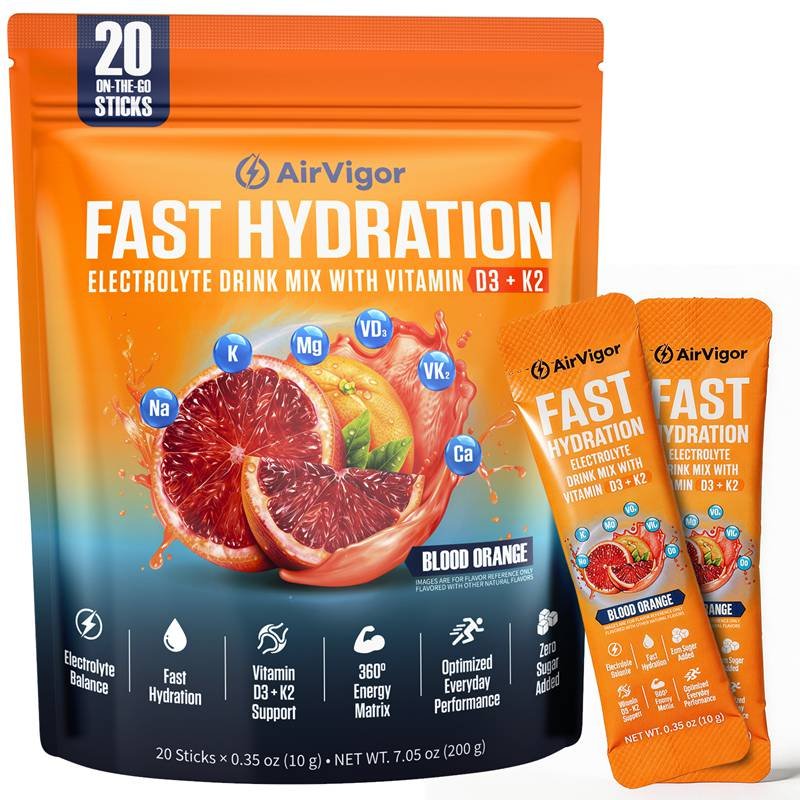
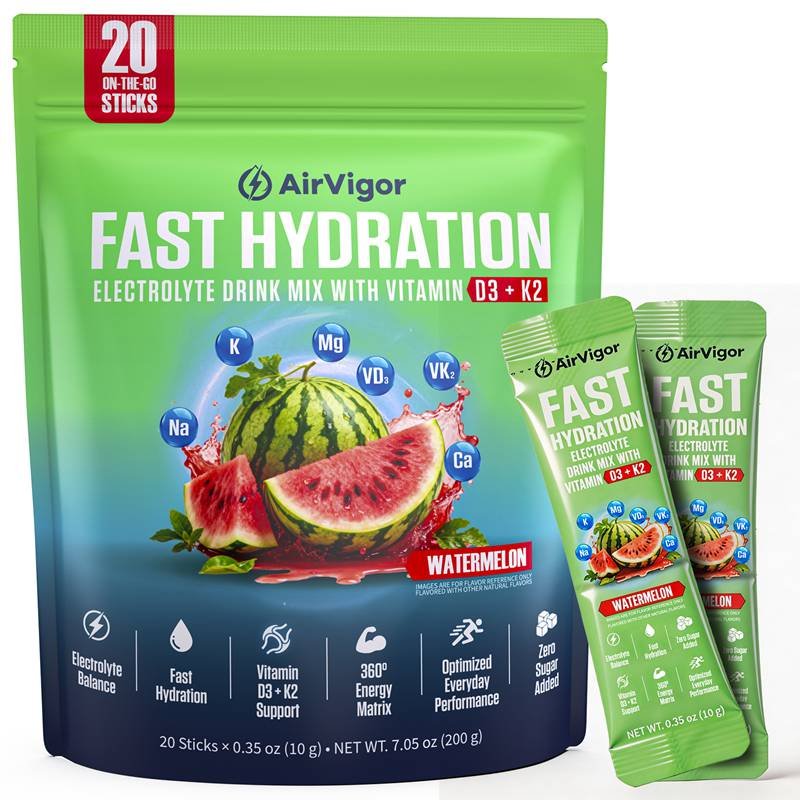
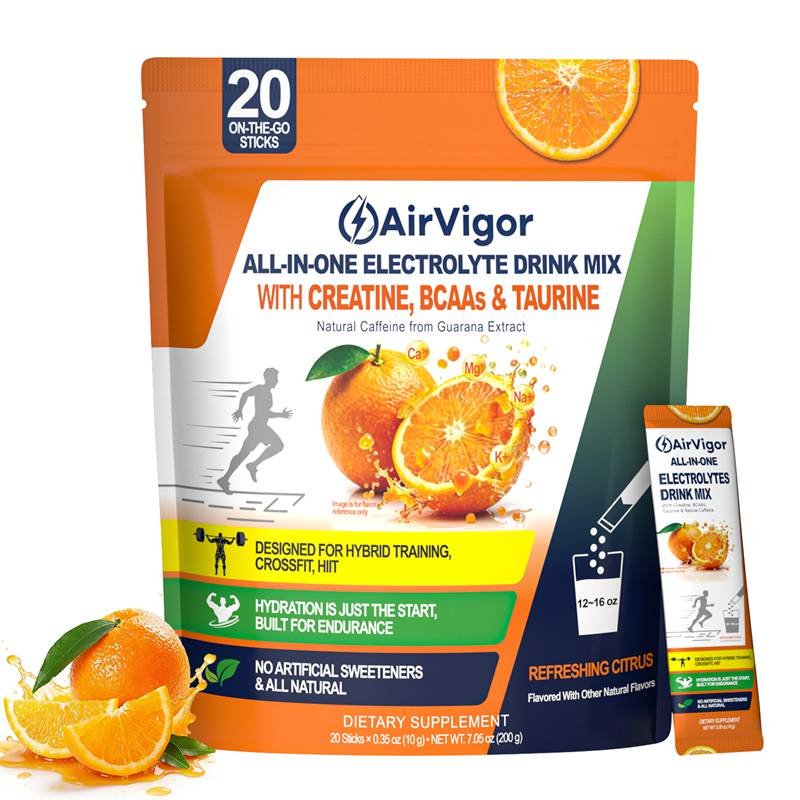
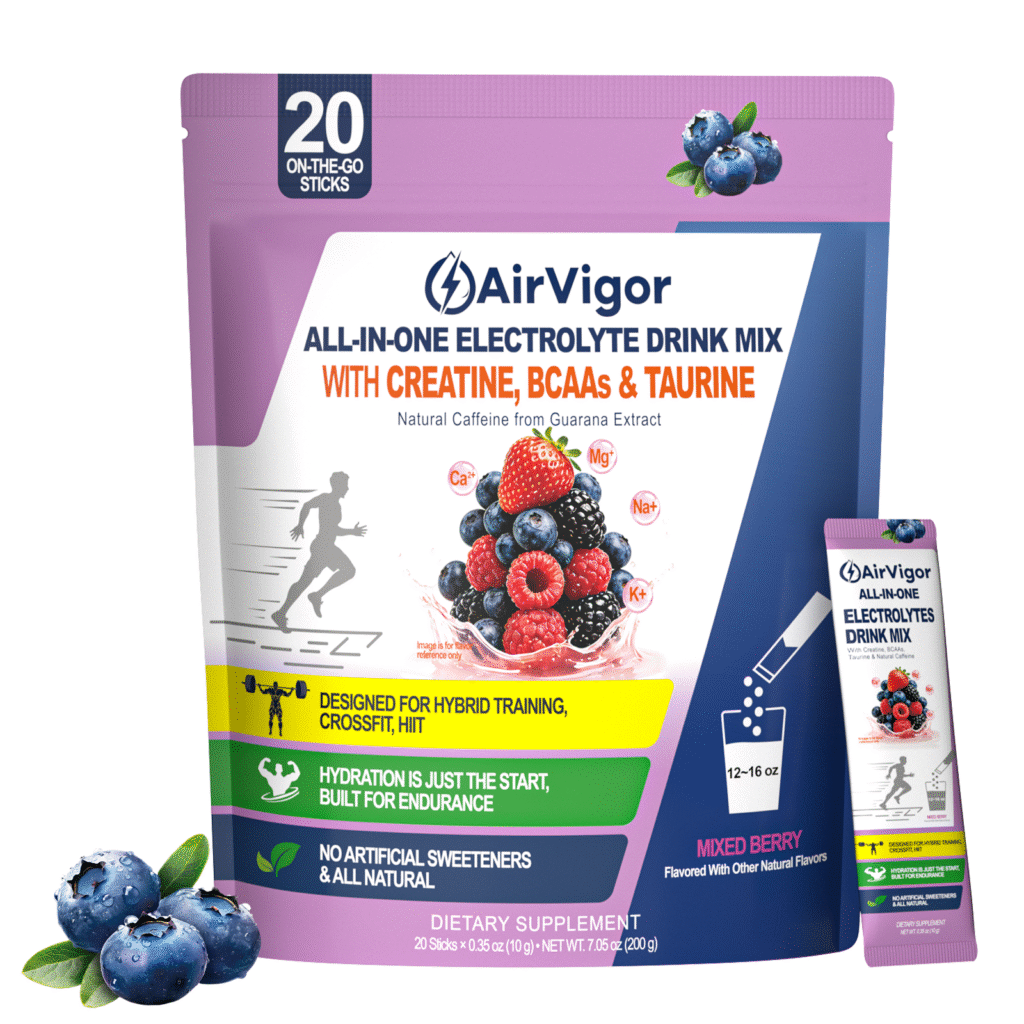
AirVigor electrolyte powder is a good fit for two-a-day training users who want a hydration product that is clear, portable, easy to mix, and simple enough to use repeatedly. For athletes training twice in one day, the product needs to support real sweat loss while fitting into work, travel, gym, and daily routines.
Why Choose AirVigor?
Choosing electrolyte powder for two-a-day training is not only about finding the strongest-looking formula. Most active users want something they can understand quickly, drink comfortably, and use again without feeling overloaded. A product may have a long ingredient list, but if the label is confusing, the flavor is too heavy, or the powder is inconvenient to carry, it may not become part of a real training routine.
AirVigor is built around clear formula expression and daily usability. The goal is to help individuals understand what they are drinking, when to use it, and how it fits into repeated training days. This is especially important for people who train before work, again after work, or during travel when meals and water intake are not always consistent.
| What Two-a-Day Users Need | Why It Matters | How AirVigor Fits |
|---|---|---|
| Clear formula information | Users want to know what they are drinking | Ingredient and serving details are presented clearly |
| Easy daily use | Repeated training needs repeatable habits | Powder format fits gym, work, and travel routines |
| Light drinking experience | Heavy drinks reduce repeat use | Designed for practical hydration routines |
| Stable product quality | Frequent use requires consistency | Quality review supports batch consistency |
| Portable format | Training happens across locations | Easy to keep in a bag, desk, locker, or travel pouch |
AirVigor’s broader product direction also gives it an advantage. The brand is not built around one isolated hydration product. Its supplement system covers hydration, minerals, vitamins, protein nutrition, creatine, collagen, probiotics, plant extracts, and daily wellness formulas. For active individuals, this creates a more connected product experience. For athletes, it reflects a deeper understanding of both training demands and long-term daily use.
The strongest value is not complicated wording. It is clarity. A good electrolyte powder should make the user feel confident before purchase and comfortable after opening the product.
How Does It Fit Daily Training?
Two-a-day training usually happens in the middle of real life. Very few people have a perfect recovery setup waiting after every workout. Most active users train early, work all day, train again, commute, travel, or manage family responsibilities. A hydration product that only works at home may not support the moments when hydration is actually needed.
AirVigor electrolyte powder fits daily training because it can be used at different points of the day without making the routine feel complicated.
Common daily use moments include:
- Before a morning workout when the body has gone several hours without fluids
- After the first session when sweat loss needs attention
- At work or school before the second workout begins
- During long, hot, or sweat-heavy training
- After the second workout to support next-day readiness
- During travel when meals, sleep, and water intake change
| Daily Moment | Common User Problem | AirVigor Use Case |
|---|---|---|
| Early morning | Little time to eat or drink | Mix with water before training |
| After first workout | Sweat loss and low appetite | Use with lunch or a post-workout meal |
| Workday | Hydration gets forgotten | Keep sticks at a desk or in a bag |
| Evening workout | Second session feels flat | Use before or during training as needed |
| Travel training | Meals and fluids are inconsistent | Carry single servings for easy use |
| Hot-weather sessions | Sweat loss increases quickly | Use around the hardest sweat periods |
For many individuals, the value is not a dramatic “boost.” It is the reduction of friction. A product that mixes easily, tastes clean, and travels well removes one more problem from a busy training day. That often matters more than expected.
A runner may keep a serving in the car after a morning run. A CrossFit user may drink one after class before heading to work. A cyclist may carry one for a long ride. An office worker may keep a few sticks in a drawer for evening gym days. These are small moments, but they decide whether hydration becomes consistent.
What Makes It Easy to Use?
Ease of use is one of the biggest reasons electrolyte powder becomes part of a routine. Two-a-day training already requires discipline. If hydration adds mess, clumping, strong taste, or confusing directions, usage often drops over time. The more frequently the product is used, the more important small details become.
AirVigor’s product approach considers the full experience, not just the formula. Packaging, serving size, flavor, mixing, storage, and label clarity all influence how the product fits into daily life. This is especially important for powder products where moisture protection and mixing behavior affect first impressions.
| Use Detail | Why It Matters for Two-a-Day Training |
|---|---|
| Fast mixing | Used in gym, office, car, or hotel rooms |
| Clear directions | Easy understanding for first-time use |
| Portable serving | Supports movement across the day |
| Light taste | Improves repeat use across sessions |
| Stable packaging | Protects powder during storage and travel |
| Clear ingredient information | Builds confidence before and after use |
For individuals comparing hydration products, these practical details often matter as much as the formula itself. A product may look strong online, but if it clumps, tastes too strong, feels too sweet, or leaves residue, it may not be used consistently.
AirVigor is designed for users who want hydration to be simple. The product fits natural behavior: open, mix, drink, continue the day. In the supplement category, that simplicity often determines long-term adoption.
A useful two-a-day training product should reduce effort, not increase it.
How Is Quality Managed?
Quality becomes more important when a product is used repeatedly. A person using electrolyte powder occasionally may focus mainly on taste. A two-a-day athlete may use it multiple times per week or during intensive training blocks. That requires stable quality, consistent labeling, and controlled production standards.
AirVigor operates with a supplement development system covering raw material review, formula validation, production control, finished product inspection, and packaging verification. The manufacturing framework follows GMP, HACCP, ISO-related systems, FSSC22000, and FDA registration standards. This supports consistency from formulation to final product.
| Quality Area | Why It Matters |
|---|---|
| Raw material screening | Ensures consistent ingredient input |
| Formula review | Confirms intended functional design |
| Production control | Reduces batch variation |
| Packaging testing | Maintains stability during storage and shipping |
| Label review | Ensures clarity and accuracy |
| Finished product checks | Confirms release consistency |
| COA/MSDS support | Provides documentation for partners |
AirVigor also works with a broader research and quality system involving nutrition science, food engineering, formulation evaluation, stability testing, solubility analysis, and flavor optimization. This ensures the product is not only visually presentable but also designed for real-world usage and long-term reliability.
This is particularly relevant in the electrolyte category because buyers are more label-aware than before. They evaluate sodium, sugar, serving size, and ingredient transparency before making a decision. A clear formula builds trust faster than marketing claims.

Do You Need Electrolyte Powder Every Day for Two-a-Day Training?
Not everyone needs electrolyte powder every day. It is most useful when training creates meaningful sweat loss, when workouts happen twice in one day, when heat or humidity increases fluid loss, or when the athlete struggles to recover between sessions. On light days, water and balanced meals may be enough.
When Does It Help?
Electrolyte powder helps most when the training day creates more sweat loss than normal. Two-a-day training is one of those situations because the body may not have a full day to reset. The need becomes stronger when the first session is intense, the second session is demanding, or the day includes heat, travel, caffeine, or inconsistent meals.
A person doing two light sessions in a cool room may not need the same support as someone doing a morning run and evening CrossFit class in summer. The goal is to match the product to the real day, not force the same routine every time.
| Training Day | Electrolyte Powder Value |
|---|---|
| Rest day with normal meals | Usually low |
| Light walk plus stretching | Usually low |
| One moderate gym session | Moderate if sweating heavily |
| Two workouts in one day | Often useful |
| Two hot-weather sessions | Very useful |
| Long endurance plus evening gym | Very useful |
| Travel day plus workout | Useful when meals and water are inconsistent |
| Heavy-sweat indoor class plus cardio | Often useful |
Electrolyte powder is especially helpful when users notice:
- Clothing becomes soaked after the first workout
- Salt marks appear on shirts, hats, or skin
- Thirst returns quickly after drinking plain water
- The second session feels much harder than planned
- Training happens in heat, humidity, or a poorly ventilated gym
- Meals are delayed or lighter than usual
- Travel disrupts normal water and food intake
The value becomes clear when the product is used at the right time. An electrolyte powder may not feel necessary on a rest day. But during a heavy training day, it can help make hydration more organized and easier to repeat.
For AirVigor users, the goal is flexible daily support. The product can be used more often during demanding weeks and less often during lighter weeks. That makes it easier to fit into real life.
When Is Water Enough?
Water is enough for many normal training days. If the workout is short, sweat loss is low, meals are balanced, and there is no second session planned, the body may not need extra electrolyte powder. This is an important point because clear guidance builds trust. A hydration product should be used when it makes sense, not because every situation is treated the same.
Water may be enough when:
- The workout is under 45 minutes and not intense
- The athlete does not sweat much
- Training happens in a cool environment
- There is only one workout that day
- Normal meals include enough minerals
- The person feels fine after training and recovers normally
| Situation | Why Water May Be Enough |
|---|---|
| Light stretching | Sweat loss is minimal |
| Short walk | Fluid loss is usually low |
| Easy 30-minute workout | Normal meals may cover minerals |
| Cool-weather training | Sweat rate may be lower |
| Rest day | No major training-related sweat loss |
| Low-sweat yoga | Electrolyte demand may be limited |
The problem appears when people use the same water-only approach for every condition. A short walk and a two-session summer training day are not the same. A low-sweat mobility day and a long outdoor run followed by evening lifting are not the same. Hydration should change with the demand.
This is why electrolyte powder should be viewed as a tool, not a rule. On light days, water may be enough. On heavier days, electrolyte powder may help support a more complete hydration routine. That balanced approach makes the product more practical and more relevant in real training life.
For individuals who prefer simple routines, the most practical way to think about it is: use electrolytes when sweat, heat, training volume, or recovery timing make plain water feel incomplete.
Are Two-a-Day Athletes Different?
Two-a-day athletes are different because they have less room for recovery mistakes. A person who trains once may have the rest of the day and night to recover before the next session. A person who trains twice may need to recover enough in only a few hours. That shorter window makes hydration, meals, rest, and timing more important.
Small mistakes show up faster. Skipping fluids after the first workout may become heavy legs later. A low-sodium lunch may become strong thirst during evening training. Too much caffeine may cover fatigue for a while but not replace fluid or mineral loss. A drink that tastes too strong may work once but become unpleasant when used repeatedly.
| One-Session Training User | Two-a-Day Training User |
|---|---|
| Usually has more recovery time | Needs recovery within a few hours |
| Can often hydrate after training | Needs hydration before, between, and after |
| May not notice small mistakes quickly | Feels mistakes during the second session |
| Can rely more on later meals | Needs better timing across the day |
| Uses supplements occasionally | Needs products that fit repeated use |
Two-a-day athletes need products that are realistic. The formula matters, but so does the format. A product that stays at home may not help during the workday. A product that tastes too sweet may not work after morning training and again later. A product that is hard to mix may be skipped when the user is tired.
This is where portable electrolyte powder becomes more than a drink. It becomes part of the day’s training structure. The goal is not to make athletes depend on supplements. The goal is to remove one common source of inconsistency: poor hydration between repeated workouts.
For serious active users, that consistency can make the week feel more manageable. Instead of guessing, they have a simple routine that supports the hardest part of two-a-day training: showing up for the second session ready enough to make it count.
Conclusion: Best Electrolyte Powder for Two-a-Day Training
The best electrolyte powder for two-a-day training should support real sweat loss, fit the short recovery window, mix easily, taste light, and be simple enough to use repeatedly. Athletes training twice in one day need hydration that works before the first session, between workouts, during longer training, and after the second session without making the routine more complicated.
AirVigor electrolyte powder is designed for active users who want clear formula expression, convenient use, stable product quality, and a hydration routine that fits real life. It is suitable for strength training, cardio, CrossFit, cycling, hot-weather workouts, travel training, and daily gym routines.
For ready-to-order AirVigor branded products, product questions, or order discussion, contact the AirVigor team. OEM/ODM customization is also available for brand partners who need formula, flavor, packaging, or production support.