Skip to content
Are Electrolytes Only for Athletes : Beginner’s Guide
# Your Trusted Dietary Supplement Brand In US
- Emily

Table of Contents
Electrolytes are often shown beside athletes, gym towels, running shoes, and sports bottles, so many people assume they only matter after intense training. Real life is wider than that. A person can lose fluid and minerals during a hot commute, a long work shift, a flight, a summer road trip, a sauna session, a fasting day, or a low-carb routine. None of these moments require a race bib, but they can still leave the body asking for better hydration support.
Electrolytes are not only for athletes. They are minerals such as sodium, potassium, magnesium, calcium, chloride, and phosphate that help the body manage fluid balance, muscle function, nerve signals, and normal hydration. Athletes often need more because they sweat more, but everyday users may also need electrolytes when heat, sweat, travel, diet changes, or irregular drinking habits make plain water feel incomplete.
Think about the person who drinks three cups of coffee before lunch, forgets water until 3 p.m., then wonders why they feel dry, tired, and heavy. Or the traveler who lands after a five-hour flight with a headache and a dry mouth. Or the parent standing on a hot soccer field all afternoon. Electrolytes are not about looking athletic. They are about understanding what your body loses during real days.
What Are Electrolytes?
Electrolytes are minerals your body uses to manage water, muscles, nerves, and daily physical balance. They are not special sports ingredients. Sodium, potassium, magnesium, calcium, chloride, and phosphate already exist in food, body fluids, and hydration routines.
Electrolytes in Simple Words
Electrolytes help water work inside the body instead of only passing through. They support fluid balance, muscle movement, nerve signals, and daily comfort during heat, sweat, travel, fasting, and active routines.
Most people think hydration means “drink more water.” That is true in many situations, but water is only one part of the picture. The body also needs minerals to help move fluid into the right places. These minerals are called electrolytes because they carry an electrical charge when dissolved in body fluids.
This is why someone may drink a full bottle of water and still feel thirsty, dry, tired, or heavy after sweating. The issue may not be water alone. The body may also need mineral replacement, especially after hot weather, exercise, long travel, sauna use, or a low-carb eating routine.
For daily users, electrolytes are easiest to understand through real moments:
| Daily Moment | What May Be Happening | Why Electrolytes Matter |
|---|---|---|
| Hot commute | Light sweat builds up over time | Sodium and potassium help support fluid balance |
| Gym session | Sweat removes water and minerals | Electrolytes help replace part of what is lost |
| Long flight | Dry cabin air and low water intake | Electrolytes may support better hydration rhythm |
| Fasting morning | Food and mineral intake are delayed | Sodium and magnesium may feel more noticeable |
| Outdoor work | Sweat continues for hours | Water alone may feel incomplete |
| Busy office day | Coffee replaces water | A light electrolyte drink may help rebuild the habit |
Electrolytes are not a shortcut, and they are not something everyone needs every hour. They are a useful hydration tool when the day creates more fluid and mineral demand than usual.
Electrolytes Your Body Uses
The body uses several key electrolytes every day. Each one supports a different job, and a good electrolyte product should make these minerals easy to identify on the label.
The most common electrolytes are sodium, potassium, magnesium, calcium, chloride, phosphate, and bicarbonate. In supplement products, consumers usually pay the most attention to sodium, potassium, magnesium, and calcium because these are easier to compare on nutrition labels.
A customer choosing electrolyte powder often asks very practical questions: How much sodium is in one serving? Does it include potassium? Is there magnesium? Is it low sugar? Will it work for daily use or only for hard workouts?
| Electrolyte | What It Supports | Customer-Friendly Meaning |
|---|---|---|
| Sodium | Fluid balance and water retention | Important after sweat, heat, sauna, or long outdoor time |
| Potassium | Muscle and nerve function | Useful for active days, daily movement, and low-carb routines |
| Magnesium | Muscle function and cellular processes | Often valued by people with active or recovery-focused routines |
| Calcium | Muscle contraction, nerve signals, and bone support | Helps connect hydration with broader daily wellness |
| Chloride | Fluid balance and digestion-related acid balance | Often naturally paired with sodium |
| Phosphate | Cell function and energy-related processes | Usually obtained from food, less visible in drink formulas |
A daily electrolyte formula does not need to be extreme. For many users, the best product is not the one with the highest numbers. It is the one with a balanced profile, clear label, light taste, and serving size that fits real routines.
For example, a person doing a short indoor workout may not need the same electrolyte level as someone working outdoors for eight hours in July. A traveler may care more about portability and low sugar. A fasting user may care more about sodium, potassium, calories, and whether the product contains sugar.
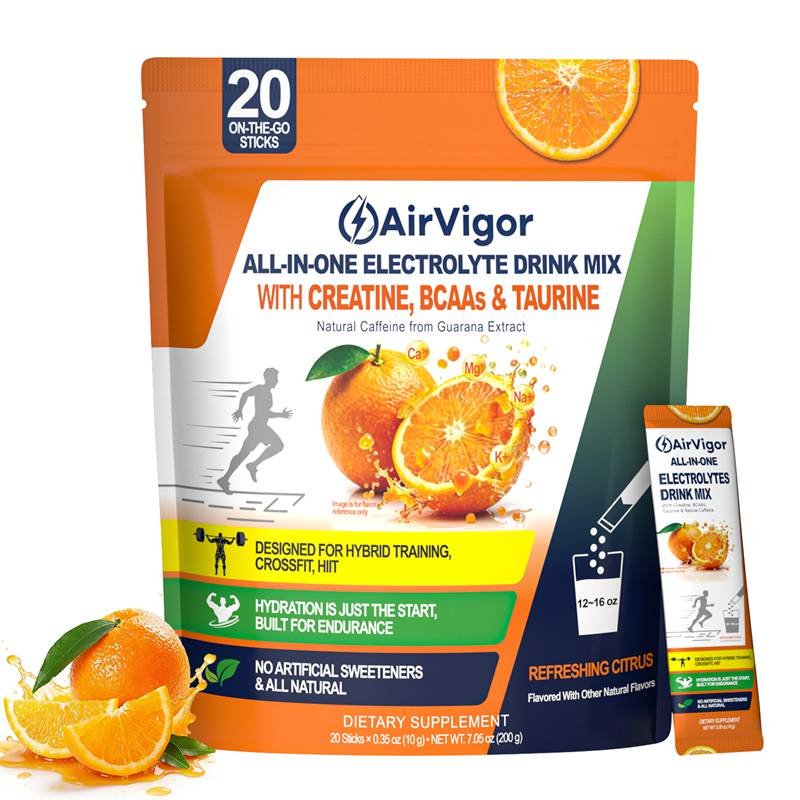
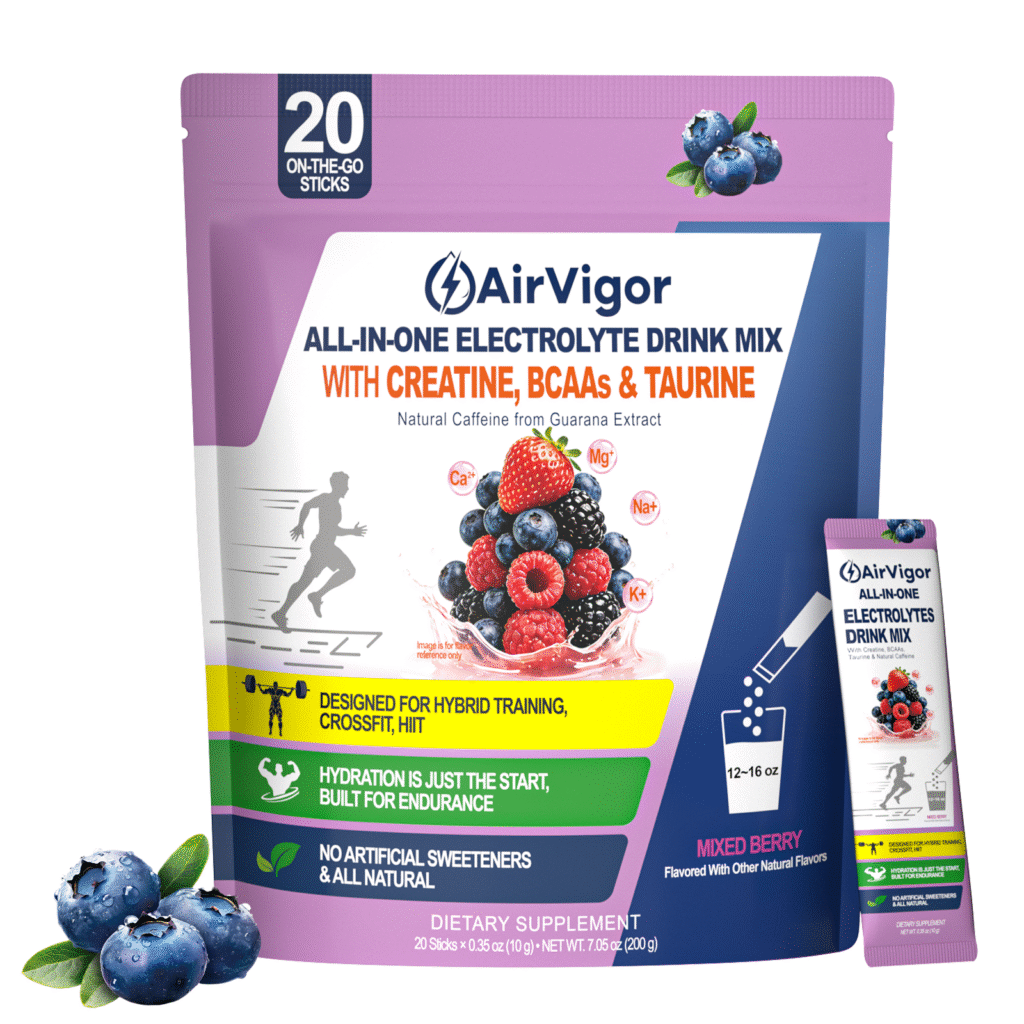
AirVigor’s electrolyte product direction is built around this customer logic: clear ingredients, easy serving format, and practical hydration support for more than just gym users.
Electrolytes From Food
Electrolytes come from normal foods, not only from powders or sports drinks. Balanced meals can provide sodium, potassium, magnesium, calcium, chloride, and phosphate throughout the day.
This matters because electrolyte powder should not be positioned as a replacement for food. A person eating regular meals, drinking enough water, and spending most of the day indoors may already get enough electrolytes from food and fluids. But real life often interrupts that balance.
People skip breakfast, drink coffee first, eat salty takeout, sweat during errands, train after work, travel across time zones, or follow fasting and low-carb routines. In these moments, an electrolyte drink can make hydration easier to manage.
| Food or Drink | Main Electrolytes | Real-Life Use |
|---|---|---|
| Banana | Potassium, magnesium | Easy snack before work, light exercise, or travel |
| Potato | Potassium, magnesium | Good with meals after active or hot days |
| Yogurt | Calcium, potassium | Simple breakfast or afternoon snack |
| Milk | Calcium, potassium, phosphate | Supports both hydration and nutrition |
| Leafy greens | Magnesium, potassium, calcium | Useful for daily mineral intake |
| Nuts and seeds | Magnesium, phosphate | Portable snack for work or travel |
| Soup or broth | Sodium, chloride, potassium | Useful when appetite is low or weather is cold |
| Beans | Potassium, magnesium, phosphate | Good for balanced meals and longer fullness |
The problem is not that people cannot get electrolytes from food. The problem is that many people do not eat and drink consistently enough on demanding days. That is where a portable electrolyte powder becomes useful.
For example:
- A traveler may not eat a balanced meal until late evening.
- A busy parent may drink coffee but forget water for half the day.
- A keto user may reduce carbs and notice changes in water balance.
- A hot yoga user may lose a large amount of sweat in one class.
- An outdoor worker may need hydration support before the shift ends.
AirVigor fits these gaps by offering a simple, portable way to support hydration without asking users to change their whole day.
Electrolytes and Plain Water
Plain water is still the foundation of hydration. Electrolytes do not replace water. They help explain why water sometimes feels enough and why other times the body may need more support.
For light thirst, short indoor days, mild weather, and balanced meals, water is usually enough. Electrolytes become more relevant when sweat, heat, travel, fasting, or fluid loss changes the body’s needs.
| Situation | Plain Water May Be Enough | Electrolytes May Help |
|---|---|---|
| Normal office day | Yes | Optional |
| Short walk in cool weather | Yes | Usually not needed |
| Hot outdoor errands | Sometimes | Often useful if sweating |
| Gym workout | Sometimes | Useful after moderate to heavy sweat |
| Hot yoga or sauna | Not always | Often useful |
| Long flight | Sometimes | Useful for many travelers |
| Fasting or keto | Sometimes | Often considered |
| Outdoor work shift | Not always | Often useful |
A smart electrolyte routine starts with observation. Users should pay attention to sweat, thirst, heat exposure, diet, and how they feel after drinking water. If water fixes the problem, keep it simple. If water does not feel complete after sweat or heat, electrolytes may be a better fit.
This balanced message builds trust. It tells readers that electrolytes are useful, but not magical. AirVigor’s role is to make the useful moments easier: one stick, one bottle of water, clear formula information, and a drink that fits work, travel, training, and active daily life.
Are Electrolytes Only for Athletes?
Electrolytes are not only for athletes. Athletes lose more through sweat, but everyday people also lose fluids and minerals during heat, travel, fasting, outdoor work, sauna, hot yoga, low-carb diets, and busy days with poor water intake.
Electrolytes Beyond Sports
Electrolytes became popular through sports drinks, but the body does not only lose minerals during exercise. Heat, sweat, travel, diet changes, and long workdays can also change hydration needs.
Many people still connect electrolytes with running, cycling, gym training, or professional sports. That connection makes sense because athletes often sweat heavily and need structured hydration. But it also creates a misunderstanding: people may ignore electrolyte needs unless they see themselves as “sporty.”
In real life, someone can spend five hours walking through a theme park in summer, stand in a hot warehouse all afternoon, sit through a long dry flight, or complete a fasting day with very little mineral intake. These are not athletic events, but the body may still feel dry, tired, heavy, or difficult to rehydrate with plain water alone.
The better question is not “Am I an athlete?” The better question is “Did my day increase sweat, heat exposure, fluid loss, or mineral demand?”
| Daily Situation | Athletic? | Electrolytes May Matter? | Why |
|---|---|---|---|
| 60-minute gym session | Yes | Yes | Sweat removes water and minerals |
| 8-hour warehouse shift | No | Yes | Heat and movement increase fluid loss |
| Long summer commute | No | Sometimes | Repeated sweating can build up |
| Hot yoga class | Active lifestyle | Yes | High sweat in a short time |
| Long-haul flight | No | Sometimes | Dry air and low water intake |
| Fasting day | No | Sometimes | Lower food intake may reduce mineral intake |
| Indoor office day | No | Usually not | Water and meals may be enough |
| Weekend yard work | No | Often | Heat, movement, and sweat combine |
Electrolytes are not a sports identity product. They are a hydration support tool. A person may need them after training, but they may also need them after a hot outdoor event, a travel day, or a demanding work shift.
Electrolytes for Daily Life
Daily electrolyte use should depend on routine, not marketing pressure. Some days only need water. Other days may need more support because sweat, heat, travel, coffee, or irregular meals make hydration harder.
Most everyday users are not looking for an extreme sports formula. They want something simple: a drink that mixes easily, tastes light, has clear mineral information, and does not add unnecessary sugar. This is why daily electrolyte powders have become more relevant for office workers, travelers, parents, service workers, fasting users, and people living in hot climates.
A realistic electrolyte routine may look different from person to person. One person may use electrolytes only after workouts. Another may use them during summer afternoons. A traveler may keep packets in a carry-on bag. A keto user may check sodium and potassium more carefully. A busy professional may use one serving when coffee has replaced water for half the day.
| User Type | Real Daily Problem | What They Usually Want |
|---|---|---|
| Office worker | Coffee, meetings, low water intake | Light hydration without sugar |
| Parent | Busy errands, outdoor activities, little self-care time | Convenient single serving |
| Traveler | Dry flights, airport meals, poor routine | Portable stick packs |
| Outdoor worker | Sweat for hours, heat exposure | Reliable mineral support |
| Fasting user | Long gaps without food | Zero sugar and clear minerals |
| Keto user | Lower carb intake changes water balance | Sodium and potassium clarity |
| Hot yoga user | Heavy sweat in one class | Easy post-class hydration |
| Weekend hiker | Long walking and warm weather | Packable hydration support |
For daily life, convenience matters as much as the formula. A powder tub at home is useful only when the person is at home. A stick pack can sit in a desk drawer, gym bag, travel pouch, car console, locker, or backpack. That makes it easier to use electrolytes at the moment they are actually needed.
AirVigor fits this daily-use logic by focusing on portable formats, clear formula expression, and practical hydration support. The product should not feel like something made only for athletes. It should feel like something that belongs in real routines.
Electrolytes and Sweat
Sweat is the clearest reason electrolytes may be needed. Sweat contains water and minerals, especially sodium and chloride, with smaller amounts of potassium, magnesium, and calcium.
People often underestimate how much sweating happens outside exercise. A person may sweat while cooking in a hot kitchen, commuting in summer, working in a warehouse, walking outdoors, gardening, cleaning the garage, or carrying groceries. The sweat may not feel dramatic at first, but over several hours, fluid and mineral loss can add up.
The body’s sweat level depends on many factors:
- Temperature and humidity
- Activity intensity
- Time spent outdoors
- Clothing and gear
- Body size and personal sweat rate
- Fitness level
- Sauna, hot yoga, or heated rooms
- Caffeine and water intake habits
Sweat is also personal. Some people sweat lightly and rarely see salt marks. Others finish a short workout with soaked clothes and white salt lines. Those users may feel thirsty again soon after drinking plain water.
| Sweat Sign | What It May Suggest | Electrolyte Use |
|---|---|---|
| Light sweat, mild thirst | Low fluid loss | Water may be enough |
| Damp clothes after activity | Moderate fluid loss | Electrolytes may help |
| Salty skin or white marks | Higher sodium loss | Sodium-containing electrolytes may be useful |
| Thirst returns quickly | Water alone may feel incomplete | Consider electrolytes with water |
| Heavy legs after heat | Heat and sweat may be involved | Rehydrate and replace minerals |
| Head-heavy feeling after sun | Fluid balance may be stressed | Cool down, drink water, consider electrolytes |
| Muscle tightness after sweat | Multiple causes possible | Electrolytes may support normal muscle function |
Electrolytes should be used with water, not instead of water. A good routine after sweat is simple: cool down, drink water, add electrolytes if sweat was moderate to heavy, and eat a balanced meal when possible.
Electrolytes Without Workouts
Electrolytes can be useful even on days without formal exercise. Travel, heat, fasting, sauna, long walking, active jobs, and skipped meals can all make hydration less predictable.
This is one of the most important points for readers who search “are electrolytes only for athletes.” Many people are trying to decide whether an electrolyte powder is reasonable for their lifestyle. They may not train hard, but they still have days when plain water does not seem enough.
Non-workout electrolyte situations often include:
| Non-Workout Moment | Why Hydration Changes | Practical Use |
|---|---|---|
| Air travel | Dry cabin air and low fluid intake | Use before or after flight |
| Long driving day | Less drinking to avoid stops | Keep packets in travel bag |
| Hot outdoor event | Sweat builds slowly | Use during or after heat exposure |
| Sauna or steam room | Fast sweat loss | Rehydrate after session |
| Fasting morning | Food and minerals delayed | Choose zero sugar if suitable |
| Low-carb diet | Water balance may change | Check sodium and potassium |
| Busy office day | Coffee replaces water | Use as afternoon hydration support |
| Outdoor chores | Heat and movement combine | Use after sweating |
Electrolytes do not need to be used every day by every person. That would be too broad. The smarter approach is situational. Use water as the base. Add electrolytes when the day creates more fluid loss, mineral loss, or hydration stress.
This balanced message is important for trust. People do not want to feel pushed into drinking supplements all day. They want to know when a product actually fits. AirVigor can support that need by making electrolytes easier to understand and easier to use: one stick, clear serving information, low-friction mixing, and practical support for real daily moments.
Electrolytes for Active People
Athletes are still an important electrolyte group, but they are not the only one. Active people include gym users, runners, cyclists, hikers, tennis players, hot yoga members, fitness beginners, and people who train a few times per week.
For active users, electrolytes are usually most relevant before, during, or after sweat-heavy sessions. The more intense or longer the activity, the more hydration planning matters. A 20-minute light stretch session may not need electrolyte powder. A 75-minute gym session, summer run, or hot yoga class may be different.
| Activity | Sweat Level | Electrolyte Timing |
|---|---|---|
| Light stretching | Low | Water usually enough |
| Short indoor workout | Low to moderate | Optional after sweat |
| Strength training | Moderate | Useful if session is long or sweaty |
| HIIT | Moderate to high | Before or after training |
| Running | Moderate to high | Before, during, or after depending on length |
| Cycling | Moderate to high | Useful for longer rides |
| Hot yoga | High | Often useful after class |
| Hiking | Moderate to high | Useful during warm or long routes |
Active users also care about taste and stomach comfort. If a drink is too sweet, too salty, or hard to mix, they may stop using it. Stick packs help because the serving is already measured, easy to carry, and quick to prepare.
AirVigor can serve both active users and everyday users because the core need is the same: clear hydration support that fits the moment. The product does not need to be framed only around performance. It can also support consistency, convenience, and smarter daily hydration.
Who Needs Electrolytes?
Electrolytes may help people who lose more fluid or minerals than usual. Heavy sweat, hot weather, travel, fasting, low-carb eating, outdoor work, sauna, and busy days with poor water intake can all make hydration harder to manage.
Electrolytes for Hot Days
Hot weather can raise fluid loss even without a workout. Long errands, outdoor events, warm offices, summer commutes, and active jobs may leave people thirsty, tired, dry, or harder to rehydrate.
Many people only connect dehydration with sports, but heat alone can change how the body feels. A person standing outside at a weekend event, walking through a parking lot in summer, working in a warm warehouse, or sitting in a non-air-conditioned room may sweat more than expected. The sweat may not feel intense at first, but over several hours, fluid and mineral loss can build up.
This is why electrolytes can be useful for people who live in hot climates or spend long hours outside. Water should still come first, but when heat exposure lasts for a long time, electrolytes may help support a more complete hydration routine.
| Hot Day Situation | What Users Often Feel | Electrolyte Fit |
|---|---|---|
| 30-minute hot commute | Dry mouth, light sweating | Optional if water intake is low |
| Outdoor shopping or errands | Repeated thirst, tired legs | Useful if sweating continues |
| Kids’ sports event | Long standing, sun exposure | Useful before or after heat exposure |
| Yard work or gardening | Damp clothes, muscle fatigue | Often useful after sweating |
| Warehouse or delivery work | Sweat over several hours | Stronger need for planned hydration |
| Summer travel day | Heat, walking, salty meals | Useful in stick-pack format |
A useful sign is how quickly thirst returns. If someone drinks water and feels thirsty again soon after, especially after heat or sweat, electrolytes may be worth considering. Salty skin, white sweat marks on dark clothing, heavy legs, and a head-heavy feeling after sun exposure can also suggest the body needs more careful hydration.
AirVigor fits hot-day use because single-serving stick packs are easy to keep nearby. Users do not need to carry a large tub or buy a sugary drink outside. One packet with water can fit a hot commute, outdoor work break, gym bag, or weekend activity.
Electrolytes for Busy Adults
Busy adults often drink too little water without noticing. Coffee, meetings, skipped meals, errands, and long screen time can create a hydration gap before the afternoon fatigue even starts.
Many office workers, parents, drivers, service workers, and business travelers do not feel “dehydrated” in a dramatic way. They simply feel dry, tired, slow, or unfocused. The pattern is familiar: coffee in the morning, a rushed lunch, a salty meal, little water, then another coffee when energy drops.
Electrolytes are not a replacement for water, sleep, or food. But they can help busy adults build a more useful hydration habit, especially when the day includes heat, sweating, long hours, or poor water intake.
| Busy Day Pattern | Common Problem | Better Hydration Move |
|---|---|---|
| Coffee before water | Mild fluid gap starts early | Drink water first, then coffee |
| Long meetings | Thirst ignored for hours | Keep water visible |
| Salty lunch | Water demand may increase | Drink more fluids after eating |
| Afternoon fatigue | More caffeine replaces water | Try water; add electrolytes if day is hot or active |
| Evening errands | Hydration gets delayed again | Carry a packet or bottle |
| After-work workout | Starts training already underhydrated | Hydrate before training |
For this group, convenience is often the deciding factor. A product can have a good formula, but if it sits in a kitchen cabinet, it may not help during a long workday. Stick packs are easier to place where life actually happens.
Good places to keep electrolyte packets include:
- Desk drawer
- Laptop bag
- Car console
- Gym pouch
- Work locker
- Kitchen counter
- Travel bag
AirVigor works well for busy adults because the serving is already measured. There is no scoop, no guesswork, and no need to carry a large container. For people who want a cleaner alternative to sugary drinks, a low-sugar electrolyte powder can also feel easier to use during work.
Electrolytes for Travel
Travel can quietly disrupt hydration through dry air, low water intake, salty food, time zone changes, walking, luggage, coffee, and long waits. Electrolytes can help travelers stay more prepared.
A traveler may start the day with coffee, avoid water to reduce bathroom stops, eat airport food, sit in dry cabin air, then walk for hours after landing. By evening, the body feels dry and heavy. This happens even without exercise.
Electrolytes are useful for travel because the format matters. A bottled drink is heavy. A tub is inconvenient. A stick pack is small, clean, and easy to use in an airport, hotel room, meeting space, rental car, or backpack.
| Travel Moment | Hydration Challenge | Electrolyte Use |
|---|---|---|
| Before flight | People often drink less water | Mix one serving if the travel day is long |
| During flight | Dry cabin air and low fluid intake | Sip water regularly |
| After landing | Dry mouth, tired feeling | Electrolytes may help restore rhythm |
| Hotel morning | Poor sleep, coffee first | Start with water; add electrolytes if needed |
| Sightseeing day | Walking, heat, salty meals | Carry packets in a day bag |
| Road trip | Less drinking to avoid stops | Use during planned breaks |
Travel users often care about product details that athletic users may overlook. They want packets that do not leak, flavors that do not feel too strong, and a serving that mixes quickly in bottled water.
For AirVigor, travel is a strong real-life use case. A product that fits global e-commerce also needs to fit global lifestyles. Frequent flyers, business travelers, students, digital workers, tourists, and road-trip families all need hydration options that are simple and portable.
Electrolytes for Fasting
Fasting can reduce food and mineral intake for several hours. Some users feel fine, while others feel flat, thirsty, foggy, or weaker than usual. Electrolytes may help when mineral intake becomes part of the issue.
People who practice intermittent fasting often search for electrolytes because they want hydration support without sugar or heavy calories. During a fasting window, meals are delayed, and so are the minerals normally supplied by food. Coffee intake may also rise, while water intake may stay too low.
Low-carb and keto users often pay close attention to sodium and potassium because changes in carbohydrate intake can affect water balance. This does not mean every fasting or keto user needs electrolytes daily, but it explains why this group often cares about label clarity.
| User Routine | Main Concern | What to Check on the Label |
|---|---|---|
| Intermittent fasting | Avoid sugar during fasting window | Sugar, calories, sweeteners |
| Keto diet | Sodium and potassium balance | Sodium, potassium, carbs |
| Low-carb beginner | Feeling flat or dry | Mineral amounts and serving timing |
| Morning faster | Coffee before water | Caffeine and hydration habits |
| Weight-conscious user | Avoid extra calories | Calories per serving |
| Evening faster | Avoid stimulants | Whether the formula contains caffeine |
A fasting-friendly electrolyte product should be easy to read. Users want to know exactly what is in one serving. They do not want hidden sugar, confusing blends, or unclear serving directions.
AirVigor can fit this group by focusing on clear mineral information, portable serving design, and a drink format that does not feel heavy. The product should support routine, not complicate it.
People with diabetes, kidney disease, blood pressure concerns, heart conditions, pregnancy, medication use, or medically supervised diets should ask a healthcare professional before using electrolyte supplements regularly.
Electrolytes for Active Jobs
People with active jobs may lose fluid for hours without calling it exercise. Delivery drivers, warehouse workers, restaurant staff, nurses, landscapers, construction workers, salon workers, and retail staff may need more planned hydration.
A person who works on their feet all day can lose more fluid than expected. The job may involve walking, lifting, warm rooms, protective clothing, outdoor routes, or long periods without water breaks. Unlike gym users, active workers may not get a clear “workout end” where they stop and recover. They need hydration that fits breaks, shifts, and real work conditions.
| Job Type | Hydration Stress | Electrolyte Moment |
|---|---|---|
| Delivery driver | Heat, walking, limited stops | Before shift or during break |
| Warehouse worker | Warm air, lifting, long hours | Mid-shift and after work |
| Restaurant worker | Heat from kitchen, constant movement | During break |
| Nurse or caregiver | Long shifts, missed water breaks | Before shift and after shift |
| Landscaper | Sun, sweat, physical labor | Planned use during hot days |
| Retail worker | Long standing, low water access | Break-time hydration |
| Salon worker | Warm indoor air, long standing | Light daily hydration support |
For active jobs, the product must be practical. It should not require a blender, a shaker, or long preparation. A stick pack can be poured into a water bottle quickly and used during a short break.
AirVigor’s stick format can help this group because it supports use outside the gym. It is not only for people wearing workout clothes. It can fit uniforms, work bags, lunch boxes, lockers, and car storage.

How Do Electrolytes Help?
Electrolytes help the body use water more effectively. They support fluid balance, normal muscle movement, nerve signals, and daily physical comfort, especially after sweat, heat, travel, fasting, low-carb eating, or long days with poor water intake.
Electrolytes and Water
Electrolytes help water move and stay balanced in the body. Plain water is important, but sodium, potassium, magnesium, and calcium help explain why water sometimes feels enough and other times feels incomplete.
Many people think hydration is only about drinking more water. That works for many normal days, but the body does not manage water like a simple bottle being filled. Fluids move between the bloodstream, cells, and tissues. Electrolytes help control that movement, especially when sweat, heat, diet, or activity changes the body’s fluid needs.
Sodium is especially important because it helps the body retain and distribute fluid. Potassium supports fluid balance inside cells. Magnesium and calcium support muscle and nerve function, which also affects how the body feels during active or hot days.
This is why someone may drink water after sweating and still feel thirsty, heavy, or dry. The body may not only need fluid. It may also need minerals that were lost through sweat or delayed through skipped meals.
| Situation | What Water Does | What Electrolytes Add |
|---|---|---|
| Normal indoor day | Replaces basic fluid needs | Usually not necessary if meals are balanced |
| Hot commute | Helps replace sweat loss | May support better fluid balance |
| Gym workout | Rehydrates after activity | Helps replace minerals lost through sweat |
| Long flight | Helps with dry mouth | May support hydration rhythm after low intake |
| Fasting window | Provides fluid without food | Minerals may help when food intake is delayed |
| Outdoor work | Replaces ongoing fluid loss | Helps support mineral balance during sweat-heavy hours |
| Sauna or hot yoga | Replaces heavy sweat loss | Often more useful after intense sweating |
Electrolytes are not better than water. They work with water. A good routine starts with enough water first, then adds electrolytes when the day creates extra demand.
Electrolytes and Energy
Electrolytes do not provide energy like food, carbohydrates, or caffeine. They support hydration and normal body function, which may help users feel more steady when tiredness is related to sweat, heat, travel, or low fluid intake.
Many customers search “do electrolytes give you energy” because they feel tired, slow, or foggy. The honest answer matters. Electrolytes are not a stimulant. They do not replace sleep, calories, or balanced meals. They also do not work like pre-workout caffeine.
But poor hydration can make daily energy feel worse. A person who sweats heavily, drinks mostly coffee, travels all day, skips meals, or spends hours in heat may feel drained because fluid balance is off. In that situation, electrolytes may help support a more normal hydrated feeling.
The difference is important:
| Low-Energy Feeling | Possible Cause | Electrolytes May Help When |
|---|---|---|
| Tired after poor sleep | Sleep debt | Electrolytes are not the main solution |
| Sluggish after hot weather | Sweat and fluid loss | Yes, especially with water |
| Foggy during fasting | Low food intake, low fluid, mineral gap | May help if sugar-free and suitable |
| Heavy after workout | Sweat and mineral loss | Often useful after training |
| Tired after long flight | Dry air, low water, poor sleep | May support rehydration |
| Afternoon crash at desk | Coffee, low water, skipped lunch | May help if hydration is part of the issue |
| Weak during illness | Fluid loss or medical concern | Professional guidance may be needed |
This kind of explanation builds trust because it does not promise fake energy. It tells users when electrolytes make sense and when they should look at other basics first.
For AirVigor, this is a strong positioning point. The product can be presented as hydration support for real-life tiredness caused by sweat, heat, travel, fasting routines, and active days—not as a magic energy drink.
Electrolytes and Muscles
Electrolytes support normal muscle contraction and relaxation. Sodium, potassium, calcium, and magnesium all help muscles respond properly, especially when the body has been sweating, moving, training, standing, or working for long periods.
Muscle function is one of the biggest reasons athletes care about electrolytes, but muscle use is not limited to sports. Carrying groceries, standing through a long shift, walking through airports, hiking, gardening, cleaning, doing hot yoga, or lifting boxes all require muscle work.
When sweat and movement happen together, electrolytes become more relevant. Sweat removes water and minerals. Muscles continue working. If the person does not drink enough or only replaces water after heavy sweating, they may feel heavier, tighter, or less comfortable.
| Muscle-Heavy Situation | Why It Matters | Electrolyte Fit |
|---|---|---|
| Strength training | Repeated muscle contraction and sweat | Useful after longer or sweaty sessions |
| HIIT | Fast sweat and high intensity | Useful before or after training |
| Hot yoga | Heavy sweat in a heated room | Often useful after class |
| Yard work | Heat plus repeated bending and lifting | Useful after sweating |
| Warehouse shift | Long hours of movement | Useful during breaks or after work |
| Hiking | Long-duration leg use | Useful during warm or long routes |
| Travel walking | Many steps, poor water intake | Useful after long walking days |
Electrolytes are not a guaranteed fix for cramps, soreness, or muscle fatigue. Those issues can also come from overtraining, poor sleep, low conditioning, shoes, posture, medication, health conditions, or not eating enough. Still, electrolytes are one practical piece of the hydration and muscle function picture.
AirVigor can fit muscle-focused users because the product is easy to use after real activity—not only after structured workouts. A user can mix one stick after training, hot yoga, hiking, outdoor work, or a long day on their feet.
Electrolytes and Heat
Heat increases sweat, and sweat increases fluid and mineral loss. Electrolytes can help support hydration when the body works harder to cool itself during summer, outdoor jobs, hot rooms, sauna, or humid weather.
Heat is one of the clearest moments when people notice hydration problems. They may feel dry, tired, thirsty, flushed, head-heavy, or slower than usual. Sometimes they drink water, but the relief does not last long. That is often when users start wondering whether electrolytes may help.
Humidity makes the situation harder because sweat does not evaporate as easily. The body may continue sweating without cooling down efficiently. Long heat exposure can make fluid loss build up slowly over the day.
| Heat Situation | Common User Feeling | Hydration Move |
|---|---|---|
| Hot outdoor errands | Repeated thirst | Water first, electrolytes if sweating continues |
| Summer sports event | Dry mouth, tired legs | Use before or after sun exposure |
| Outdoor job | Sweat for hours | Planned electrolyte use may help |
| Sauna | Fast sweat loss | Rehydrate after the session |
| Hot yoga | Heavy sweat in one class | Electrolytes often fit after class |
| Humid commute | Sticky sweat, fatigue | Water plus light electrolyte support |
| Warm warehouse | Slow fluid loss over shift | Use during breaks when allowed |
Users should not wait until they feel completely depleted. A better approach is to plan hydration around heat. Drink water before long heat exposure, keep fluids nearby, and use electrolytes when sweating becomes moderate or heavy.
AirVigor stick packs are useful because heat-related hydration often happens away from home. A packet can fit into a work bag, car, backpack, gym bag, or travel pouch, making it easier to respond when the day gets hotter than expected.
Do You Need Electrolytes Daily?
Not everyone needs electrolytes every day. Water and balanced meals are enough for many people. Daily electrolytes make more sense when sweat, heat, travel, fasting, low-carb eating, active work, or irregular hydration becomes part of the routine.
Electrolytes vs Plain Water
Plain water should still be the first choice for daily hydration. Electrolytes become more useful when the body loses minerals through sweat, heat, long activity, travel, or diet changes.
Most people do not need to replace water with electrolyte drinks. Water supports normal hydration, helps control thirst, and fits almost every daily routine. If someone spends most of the day indoors, eats regular meals, drinks enough fluids, and does not sweat much, plain water may be completely enough.
The confusion starts when water does not feel like enough. A person may drink water after a hot day and still feel dry. Another may finish a workout and feel heavy even after rehydrating. A traveler may land after a long flight feeling tired and thirsty even though they drank some water. These are the moments where electrolytes may fit better.
The goal is not to drink electrolytes all day. The smarter approach is to match the drink to the day.
| Daily Situation | Plain Water Usually Enough? | Electrolytes May Help? | Why |
|---|---|---|---|
| Indoor workday with regular meals | Yes | Usually optional | Low sweat and steady mineral intake |
| Short walk in mild weather | Yes | Usually not needed | Fluid loss is low |
| Light home workout | Yes | Optional | Depends on sweat level |
| 60-minute sweaty workout | Sometimes | Yes | Sweat removes water and minerals |
| Hot outdoor errands | Sometimes | Yes | Heat can increase fluid loss |
| Sauna or hot yoga | Not always | Often | Sweat loss is higher |
| Long flight | Sometimes | Often useful | Dry air and low water intake |
| Fasting or keto routine | Sometimes | Often considered | Food and mineral timing may change |
| Outdoor job shift | Not always | Often | Sweat may continue for hours |
For daily users, this table is more useful than a strict rule. A quiet Tuesday in an office may only need water. A hot Saturday with errands, yard work, and evening exercise may need more support.
AirVigor fits this flexible approach because stick packs do not force a daily commitment. Users can keep them nearby and use them when the day actually calls for electrolyte support.
Electrolytes After Sweat
Sweat is one of the clearest signs that electrolytes may be useful. The more someone sweats, the more important it becomes to replace both fluid and minerals.
Sweat contains water and minerals, especially sodium and chloride, with smaller amounts of potassium, magnesium, and calcium. The exact amount varies from person to person. Some people barely sweat during exercise. Others leave salt marks on shirts, hats, or skin after a short session in warm weather.
Electrolytes after sweat can make sense for athletes, but also for everyday users. Yard work, outdoor jobs, summer events, hot yoga, hiking, cleaning the garage, moving boxes, and long walks in heat can all create sweat loss.
Users may consider electrolytes after sweat when they notice:
- Clothes are damp or soaked after activity
- Skin tastes salty
- White marks appear on clothing or hats
- Thirst returns quickly after drinking water
- Legs feel heavy after heat or movement
- Body feels unusually tired after a hot day
- Plain water feels helpful but incomplete
| Sweat Level | Example | Hydration Choice |
|---|---|---|
| Low sweat | Short indoor walk, light stretching | Water is usually enough |
| Mild sweat | Casual gym session, warm commute | Water first; electrolytes optional |
| Moderate sweat | Strength training, outdoor errands, active chores | Electrolytes may help after activity |
| Heavy sweat | HIIT, hot yoga, sauna, summer run | Electrolytes often fit better |
| Long-duration sweat | Outdoor work, hiking, sports day | Planned electrolyte use may be useful |
A practical post-sweat routine does not need to be complicated. Drink water, cool down, add electrolytes if sweat was moderate or heavy, then eat a normal meal when possible. This routine works for many people because it covers both fluid and mineral replacement without turning hydration into a difficult process.
AirVigor’s single-serving format is useful here. One stick can be kept in a gym bag, work locker, car, backpack, golf bag, yoga tote, or travel pouch. When the sweat happens, the product is already there.
Electrolytes for Daily Routines
Daily electrolytes may fit people whose routines regularly include heat, sweat, fasting, low-carb eating, travel, active jobs, or long periods with poor water intake.
The word “daily” can be misleading. It does not always mean every person needs one serving every single morning. It means electrolytes can become part of a regular routine for people who repeatedly face hydration stress.
For example, a person living in Arizona during summer may use electrolytes more often than someone working indoors in a cool climate. A hot yoga member may use them after class three times a week. A frequent traveler may use them on flight days. A keto user may keep them available during the first weeks of diet adjustment. A warehouse worker may use them during hot shifts.
| Routine Type | How Often Electrolytes May Fit | Best Use Moment |
|---|---|---|
| Regular gym user | Workout days | Before or after sweaty sessions |
| Hot climate resident | More often in summer | During or after heat exposure |
| Frequent traveler | Travel days | Before flight, after landing, or hotel morning |
| Fasting user | As needed | During suitable hydration window |
| Keto or low-carb user | More often during adjustment | When mineral intake feels harder to maintain |
| Outdoor worker | Workdays with sweat | During breaks or after shift |
| Hot yoga user | Class days | After class |
| Office worker | Not always daily | When coffee replaces water or day runs long |
For users, the best question is not “Should I drink electrolytes daily forever?” A better question is “How often does my lifestyle create a reason for electrolyte support?”
AirVigor can support routine-based use because packets are easy to place in different parts of daily life. A customer may keep one box at home, a few sticks in the office, and several packets in a travel bag. This makes hydration support easier to repeat without measuring powder or carrying a large container.
Electrolytes for Fasting and Keto
Fasting and low-carb routines can make electrolyte intake more noticeable because food timing, carbohydrate intake, and water balance may change.
Many fasting users search for electrolytes because they feel flat, dry, foggy, or tired during longer gaps without food. Low-carb and keto users often pay attention to sodium and potassium because reducing carbohydrates may change how the body holds water. This does not mean every fasting or keto user needs an electrolyte powder every day, but it explains why the topic comes up often.
For these users, label details matter more than strong marketing claims. They usually want to know whether the product contains sugar, how many calories are in one serving, how much sodium and potassium are included, and whether caffeine is present.
| User Concern | What to Check | Why It Matters |
|---|---|---|
| Fasting window | Sugar and calories | Helps users match personal fasting rules |
| Keto routine | Carbs, sodium, potassium | Supports low-carb hydration planning |
| Morning use | Caffeine content | Some users may already drink coffee |
| Evening use | Stimulants and flavor intensity | Heavy or caffeinated drinks may not fit |
| Daily use | Mineral amounts per serving | Helps avoid guessing |
| Sensitive stomach | Sweetener type and taste | Easier long-term use |
A good fasting or keto electrolyte product should feel simple. Clear mineral amounts, zero or low sugar, low calories, and easy mixing are usually more important than an oversized claim on the front of the package.
AirVigor can fit this audience by keeping the formula easy to read and the serving easy to control. One packet gives users a measured amount without scooping, spilling, or guessing.
Electrolytes to Use Carefully
Electrolytes can be helpful, but more is not always better. People with certain health conditions, medication routines, sodium restrictions, or kidney concerns should be more careful with regular electrolyte use.
Electrolytes are minerals the body needs in the right balance. Taking too much or choosing the wrong formula may not be suitable for everyone. This is especially important for people who must monitor sodium, potassium, fluid intake, or blood pressure.
Users should ask a healthcare professional before regular electrolyte supplementation if they have:
- Kidney disease or reduced kidney function
- Heart disease or fluid restrictions
- High blood pressure or sodium restriction
- Medication that affects sodium, potassium, or fluid balance
- Pregnancy or breastfeeding concerns
- Diabetes or medically supervised diet needs
- Ongoing vomiting, diarrhea, dizziness, weakness, or unusual symptoms
| User Situation | Why Caution Matters | Better Action |
|---|---|---|
| Kidney concerns | Minerals may be harder to regulate | Ask a healthcare professional |
| Sodium restriction | Some electrolyte products contain sodium | Review label carefully |
| Blood pressure concerns | Sodium intake may matter | Choose only with guidance |
| Potassium-affecting medication | Potassium balance can be sensitive | Ask before regular use |
| Pregnancy | Needs vary by person | Use professional guidance |
| Ongoing illness symptoms | Fluid loss may need specific care | Do not rely only on supplements |
Clear product information helps users make safer choices. Serving size, mineral amounts, sugar content, calories, caffeine, directions, and warnings should be easy to find.
This is an important reason AirVigor emphasizes clear formula expression and quality-focused product management. Customers should not have to guess what they are drinking. A trustworthy electrolyte product should make the decision easier before the first serving is mixed.

Which Electrolytes Should You Choose?
Choose electrolytes based on your real routine, not only the front label. Sweat level, heat exposure, sugar preference, sodium needs, diet style, travel habits, taste, serving format, and label clarity all affect whether a product fits daily use.
Electrolytes With Clear Labels
A good electrolyte product should clearly show sodium, potassium, magnesium, calcium, sugar, calories, caffeine, serving size, and directions. If users need to guess what is inside, the product is harder to trust.
Many people buy electrolytes because the front of the package sounds healthy. But the real decision happens on the Supplement Facts panel or nutrition label. A useful electrolyte powder should make the main minerals easy to find. Users should not have to search through vague blends, unclear serving sizes, or marketing-heavy wording to understand what one serving provides.
The first label detail to check is sodium. Sodium is often the most important electrolyte for sweat-related hydration because it helps support fluid balance. But sodium needs are not the same for everyone. A person sweating heavily outdoors may need more sodium than someone sitting in an air-conditioned office. This is why the “best” electrolyte is not always the product with the highest number. It is the product that matches the use case.
Potassium, magnesium, and calcium also matter, especially for people who care about normal muscle function, active routines, low-carb eating, or daily mineral support. Sugar and calories matter for fasting users, keto users, office workers, and people trying to reduce sugary drinks. Caffeine matters because some users may not want stimulants during evening use or daily hydration.
| Label Item | Why Users Should Check It | What It Helps Decide |
|---|---|---|
| Sodium | Closely linked to sweat and fluid balance | Light daily use vs heavy sweat use |
| Potassium | Supports normal muscle and nerve function | Good fit for active or low-carb routines |
| Magnesium | Supports normal muscle function | Useful for active lifestyle formulas |
| Calcium | Supports muscle function and broader wellness | Helps round out mineral profile |
| Sugar | Affects fasting, keto, calories, and daily use | Sports drink vs clean daily hydration |
| Calories | Important for weight-conscious and fasting users | Whether one serving fits the routine |
| Caffeine | Not suitable for every timing | Morning use vs evening use |
| Serving size | Controls actual intake | Whether label numbers are realistic |
| Flavor system | Affects daily drinking comfort | Whether users will keep using it |
| Directions | Shows how easy it is to prepare | Work, gym, travel, or home use |
A clear label builds confidence before the first sip. When users can quickly compare minerals, sugar, calories, and serving size, they feel more comfortable choosing the product and using it repeatedly.
AirVigor’s product direction fits this customer behavior because the brand emphasizes clear formula expression, real ingredient addition, and easy-to-understand serving information. For electrolyte products, this is not just a technical detail. It is one of the main reasons customers decide whether to order, reorder, or ask about custom formulas.
Electrolytes With Low Sugar
Many daily users prefer low-sugar or zero-sugar electrolytes because they want hydration support without turning every serving into a sweet sports drink. Sugar may fit endurance fueling, but it does not fit every daily routine.
Traditional sports drinks often include sugar because they were originally built around athletic activity, fast fuel, and taste. For some long-duration endurance users, carbohydrates may be part of the plan. But many modern electrolyte shoppers are not looking for extra sugar. They are office workers, travelers, fasting users, keto users, hot yoga members, outdoor workers, or people trying to drink fewer sweet beverages.
Sugar changes how an electrolyte product feels in daily life. A drink may taste good once but feel too heavy for repeat use. It may also conflict with fasting windows, low-carb goals, weight management plans, or a user’s desire to avoid sugary drinks during work.
| User Routine | Why Sugar Matters | Better Electrolyte Direction |
|---|---|---|
| Daily office hydration | Frequent use can add sugar quickly | Zero sugar or low sugar |
| Fasting | Sugar may break personal fasting rules | Zero sugar, low calorie |
| Keto or low-carb | Carbs are being limited | Clear carbs and sugar information |
| Travel | Meals may already be salty or sweet | Light, cleaner hydration |
| Hot yoga | Heavy sweetness may feel uncomfortable | Light flavor, easy drinking |
| Evening use | Sugary drinks may feel too heavy | Low sugar, no stimulant if preferred |
| Family errands | Users want something simple | Low sugar and easy mixing |
Low sugar does not mean poor taste. A good daily electrolyte powder should still taste clean, dissolve well, and be easy to finish. If the flavor is too salty, too artificial, or too strong, users may stop using it even if the formula looks good.
For AirVigor, low-sugar positioning works well because the product can fit more situations. A user may drink it after sweat, during travel, at work, after hot yoga, or on a hot afternoon without feeling like they are drinking a traditional sugary sports beverage.
Electrolytes for Your Routine
The right electrolyte product depends on how you actually live. A traveler, fasting user, gym member, outdoor worker, and office worker may all search for electrolytes, but they do not always need the same formula.
This is where many customers get confused. They search for the “best electrolytes,” but the better question is “best for what?” A high-sodium formula may be helpful for heavy sweaters but unnecessary for light indoor use. A caffeinated formula may feel useful in the morning but not after an evening workout. A large tub may be cost-effective at home but inconvenient for travel.
A good electrolyte product should match the user’s main reason for buying. Someone who sweats heavily should check sodium and serving timing. Someone who fasts should check sugar and calories. Someone who travels should care about stick packs and easy mixing. Someone using electrolytes at work may want a mild taste and no heavy sweetness.
| Main Use Case | What to Prioritize | What to Avoid |
|---|---|---|
| Heavy sweat | Sodium, potassium, easy mixing | Very low-mineral formulas |
| Daily office use | Low sugar, light taste, clear label | Heavy sweetness or unclear blends |
| Travel | Stick packs, clean opening, no scoop | Bulky tubs or messy powders |
| Fasting | Zero sugar, low calories, clear minerals | Hidden sugars or unclear calories |
| Keto | Sodium, potassium, carbs, sugar | High-carb sports drinks |
| Hot yoga | Sweat support, light flavor | Thick or overly sweet drinks |
| Outdoor work | Practical serving format, mineral clarity | Products that require complex prep |
| After gym | Sweat replacement, taste, stomach comfort | Drinks that feel heavy after training |
Many users also need different electrolyte routines by season. A person may rarely use electrolytes in winter but use them several times a week in summer. A traveler may use them only on flight days. A gym user may keep them for harder sessions. This flexible behavior is normal.
AirVigor fits this routine-based approach because stick packs are easy to place in different parts of daily life: gym bag, office drawer, travel pouch, locker, car console, backpack, or kitchen counter. Convenience increases actual use, and actual use is what makes a supplement valuable.
Electrolytes for Sweat Level
Sweat level is one of the easiest ways to choose electrolytes. Light sweat may only need water, while moderate to heavy sweat often makes electrolyte support more useful.
Not every person sweats the same way. Some people finish a workout barely damp. Others sweat through clothes quickly or notice white salt marks on shirts, hats, or skin. Some people sweat heavily during exercise but not at work. Others sweat during warm commutes, outdoor shifts, or humid weather even without workouts.
Users should pay attention to sweat patterns instead of only activity labels. A 30-minute hot yoga class may create more sweat than a 45-minute weight session. A warehouse shift may cause more fluid loss than a casual gym visit. A long sightseeing day in summer may create ongoing sweat even without “exercise.”
| Sweat Sign | What It May Mean | Product Direction |
|---|---|---|
| Light sweat | Low fluid and mineral loss | Water may be enough |
| Damp shirt after activity | Moderate sweat | Electrolytes may be useful |
| Salty skin | Higher sodium loss | Sodium-containing formula matters |
| White marks on clothing | Noticeable salt loss | Check sodium level |
| Thirst returns quickly | Water may feel incomplete | Use electrolytes with water |
| Heavy legs after heat | Fluid loss may be involved | Rehydrate and replace minerals |
| Sweat for several hours | Ongoing fluid loss | Planned electrolyte use may help |
A useful sweat-based choice can be simple:
| Sweat Level | Example | Electrolyte Need |
|---|---|---|
| Low | Short indoor walk, light stretching | Usually low |
| Moderate | Gym workout, warm errands, active chores | Possible |
| High | HIIT, hot yoga, sauna, summer run | Often useful |
| Long-duration | Outdoor job, hiking, theme park day | Often useful |
| Salty sweat | Salt marks, salty skin, repeated thirst | More important to check sodium |
AirVigor can speak directly to this type of user because the product is designed for real-use timing. A stick after hot yoga, a packet in a work bag during summer, or one serving after outdoor activity is easier than guessing whether plain water will be enough.
Electrolytes With Easy Mixing
An electrolyte powder can have a strong formula, but if it clumps, tastes too strong, or needs a shaker every time, many users will not keep using it. Easy mixing is a real buying factor.
Customers often care about small product details that brands overlook. Does the powder dissolve in a normal bottle of water? Does it leave grit at the bottom? Does it taste too salty? Is the flavor light enough for daily use? Can the user mix it at a desk, in a hotel room, in a gym locker room, or at an airport?
These details matter because electrolyte use often happens outside the kitchen. People mix electrolytes in real places: cars, offices, gyms, hotels, parks, job sites, airports, and locker rooms. The product needs to work in those places.
| Product Detail | Why It Matters | User Benefit |
|---|---|---|
| Fast dissolving | No shaker required for many uses | Easier at work, travel, or gym |
| Single-serving packet | No scoop or measuring | Cleaner and faster |
| Light flavor | Better repeat use | Less flavor fatigue |
| Low residue | More pleasant drinking experience | Cleaner bottle and better mouthfeel |
| Easy tear packet | Useful outside the home | Less mess during busy moments |
| Portable format | Fits bags and drawers | More likely to be used when needed |
A product that is convenient gets used more consistently. This is one reason stick packs have become popular in hydration products. They help solve the gap between “I own electrolytes” and “I actually have electrolytes with me when I need them.”
AirVigor’s stick-pack direction supports this habit. Users can keep packets in multiple places and mix one serving without thinking too much. For busy customers, that simplicity is often the difference between occasional use and repeat purchase.
Electrolytes From AirVigor
AirVigor electrolytes are built for people who want clear formula information, practical daily use, and stable product quality. The brand focuses on real ingredient addition, transparent expression, portable packaging, and quality control from raw materials to finished products.
For customers, choosing electrolytes is not only about one mineral number. It is about trust. Does the label make sense? Is the product easy to use? Does the brand explain when to take it? Can it fit work, travel, gym, hot weather, or fasting routines? Is the packaging convenient enough to use outside the home?
AirVigor’s advantage is the combination of formula clarity and routine fit. The product is not limited to athletes. It can support hydration during active days, hot weather, work shifts, travel, fasting, low-carb routines, and post-sweat recovery.
| AirVigor Feature | What Customers Gain |
|---|---|
| Clear formula expression | Easier to understand what each serving provides |
| Real ingredient addition | Less reliance on vague front-label claims |
| Stick-pack format | Convenient for work, gym, travel, and outdoor use |
| Quality-focused production | More stable product experience across batches |
| Label and packaging review | Better information clarity before use |
| Multi-channel market fit | Suitable for Amazon, Shopify, retail, and wellness channels |
| OEM/ODM support | Useful for custom electrolyte powder projects |
AirVigor also fits business customers who want to launch or expand electrolyte products. Wellness brands, Amazon sellers, distributors, gyms, nutrition retailers, and private-label operators can inquire about formula direction, flavor development, stick-pack packaging, label planning, sample preparation, production timing, and quotation options.
For end users, AirVigor makes electrolyte use easier. For business partners, AirVigor provides a structured path from product concept to sample, packaging, and production. That combination makes the brand valuable in both daily consumer hydration and custom supplement development.
Final Answer on Electrolytes
Electrolytes are not only for athletes. They can support everyday hydration when sweat, heat, travel, fasting, low-carb eating, outdoor work, or busy routines make plain water feel incomplete. The best use depends on the person, the day, and the situation.
Electrolytes Are Not Just for Athletes
Athletes often need electrolytes because they sweat more, but non-athletes also face hydration stress. Hot weather, travel, fasting, outdoor work, sauna, and busy days can all increase fluid and mineral needs.
The simplest answer is this: electrolytes are for people who need better hydration support, not only people who train hard. A runner after a long workout may need electrolytes. So may a traveler after a dry flight, a parent standing outside during a summer sports event, a warehouse worker sweating through a long shift, or a fasting user who feels flat before lunch.
The body does not care whether the sweat came from exercise or daily life. Sweat still removes water and minerals. Heat still raises fluid loss. Long travel still disrupts drinking habits. Fasting and low-carb eating can still make mineral intake more noticeable.
| Person or Situation | Athletic? | Why Electrolytes May Matter |
|---|---|---|
| Runner after summer training | Yes | Sweat and sodium loss |
| Hot yoga user | Active lifestyle | Heavy sweat in a short time |
| Warehouse worker | No | Sweat over several hours |
| Frequent traveler | No | Dry air, low water intake, salty meals |
| Fasting user | No | Delayed food and mineral intake |
| Parent at outdoor sports event | No | Heat, sun, and long standing |
| Office worker drinking mostly coffee | No | Low water intake and afternoon dryness |
| Hiker on a warm trail | Active lifestyle | Long-duration sweat and movement |
Electrolytes should not be seen as a sports-only product. They are a practical hydration tool for days when the body loses more than plain water can comfortably replace.
Electrolytes Work Best With Context
Electrolytes work best when users match them to real situations. Water is enough for many normal days, while electrolytes become more useful after sweat, heat, travel, fasting, low-carb routines, or long active hours.
The biggest mistake is using one rule for every person. Some people do not need electrolyte powder daily. Others may use it several times a week because their lifestyle creates regular hydration challenges.
A person working indoors with balanced meals and low sweat may only need water. A person doing hot yoga three times a week may benefit from electrolytes after class. A traveler may only use them on flight days. A keto user may keep them available during diet adjustment. An outdoor worker may use them more often during summer.
| Use Pattern | Who It Fits | Practical Timing |
|---|---|---|
| Occasional use | Light activity, normal indoor routine | Hot days, travel, or rare heavy sweat |
| Workout use | Gym, running, cycling, HIIT | Before or after sweaty sessions |
| Seasonal use | People in hot climates | More often during summer |
| Travel use | Flyers, road-trip users, business travelers | Before flight, after landing, hotel mornings |
| Fasting use | Intermittent fasting or keto users | During suitable hydration windows |
| Workday use | Outdoor or active job users | During breaks or after shifts |
This is the kind of decision-making customers actually need. They do not want pressure to drink supplements all day. They want to know when a product fits their real life. AirVigor’s role is to make that choice easier with clear labels, portable packets, and practical hydration support.
Electrolytes With a Smarter Routine
A good electrolyte routine starts with water, food, and observation. Electrolyte powder becomes useful when sweat, heat, travel, fasting, or active work makes hydration harder to maintain.
People can build a smarter routine by watching how their body responds during the day. If plain water solves thirst and energy feels normal, electrolytes may not be needed. If thirst returns quickly after heat or sweat, or the body feels dry and heavy after travel, electrolytes may be a better fit.
A simple routine can look like this:
| Step | What to Do | Why It Helps |
|---|---|---|
| 1 | Drink water regularly | Keeps hydration foundation strong |
| 2 | Eat balanced meals | Provides natural electrolytes from food |
| 3 | Watch sweat and heat exposure | Shows when mineral loss may rise |
| 4 | Use electrolytes when needed | Supports hydration after higher demand |
| 5 | Review the label | Helps match sodium, sugar, calories, and minerals to your routine |
Useful moments for electrolytes include:
- After moderate or heavy sweating
- During hot outdoor days
- Before or after long travel
- After sauna or hot yoga
- During fasting or low-carb routines when suitable
- During active work shifts with repeated sweat
- When plain water does not feel complete after heat or activity
This approach keeps electrolyte use simple and realistic. It also helps people avoid both extremes: ignoring electrolytes completely or using them when they are not needed.
Electrolytes Made Easy by AirVigor
AirVigor makes electrolytes easier to use in daily life with clear formula expression, portable stick packs, quality-focused production, and practical product design for work, travel, training, heat, and active routines.
For individual users, AirVigor electrolytes are designed to fit real moments: a hot commute, a sweaty workout, a long flight, a busy office day, a fasting routine, or an outdoor weekend. One stick can be mixed with water without scooping, measuring, or carrying a large container.
For business customers, AirVigor also supports custom electrolyte supplement projects. Wellness brands, Amazon sellers, gyms, distributors, nutrition retailers, and private-label operators can inquire about electrolyte powder development, flavor direction, stick-pack packaging, label planning, sample timing, MOQ, and production quotation.
| AirVigor Support | Who It Helps | Value |
|---|---|---|
| Branded electrolyte products | End users and retail customers | Easy hydration support for daily routines |
| Stick-pack format | Travelers, workers, gym users | Portable and simple to use |
| Clear formula expression | Label-focused customers | Easier product comparison |
| Quality management | Long-term users and partners | More stable product experience |
| OEM/ODM service | Brands and distributors | Custom formula and packaging options |
| Sample planning | New product teams | Faster project testing |
| Packaging support | Amazon and retail sellers | Better market-ready presentation |
AirVigor does not need to make electrolytes complicated. The value is simple: clear minerals, convenient use, stable quality, and hydration support that fits more than the gym.
Conclusion
Electrolytes are not only for athletes. They are minerals the body uses for fluid balance, muscle function, nerve communication, and normal hydration. Athletes may need more because they sweat more, but everyday people can also benefit when heat, travel, fasting, low-carb eating, outdoor work, sauna use, or busy routines make plain water feel incomplete.
The smartest approach is simple: start with water, eat balanced meals, and use electrolytes when the day creates a real reason. Heavy sweat, salty sweat, hot weather, long flights, dry mouth after travel, or repeated thirst after drinking water are all moments when an electrolyte drink may fit better than plain water alone.
AirVigor brings electrolytes into real daily routines with clear formula expression, portable stick packs, quality-focused production, and easy-to-understand product design. For individual customers, AirVigor electrolyte products can support hydration during work, travel, heat, training, and active lifestyles. For wellness brands, Amazon sellers, gyms, distributors, and nutrition channels, AirVigor also supports custom electrolyte powder inquiries, including formula direction, flavor development, packaging options, sample planning, and production quotation.
Share:
Contact Expert Team
At AirVigor, performance becomes effortless. We transform advanced nutrition science into clean, effective supplements that help you hydrate, recover, and feel stronger every day. Shop AirVigor Supplements on Amazon and experience athlete-trusted formulas—backed by real science and supported by our world-class R&D and production capabilities.
Trust AirVigor
At AirVigor, turning your performance goals into reality is no longer a struggle—it’s a science-driven journey we build together. Whether you’re a runner, lifter, cyclist, yogi, outdoor athlete, or someone simply seeking better daily energy, AirVigor transforms advanced nutrition research into clean, effective, and trustworthy supplements you can feel.
Backed by our U.S. scientific team, global certifications, and world-class production standards, every formula is engineered to deliver real hydration, real recovery, and real performance. And when you’re ready to experience the difference, you’ll find AirVigor products available on Amazon and other major platforms—fast shipping, consistent quality, and a community of athletes already seeing results.
Behind the scenes, our R&D and manufacturing ecosystem also supports specialized formulation development, ensuring AirVigor continues to lead with innovation while keeping quality and safety uncompromised. But at the core, everything we create is built for you—your health, your performance, your momentum.
Choose AirVigor. Feel the science. Elevate your every day.


Subscribe to our newsletter
Sign up to our newsletter and we’ll keep you up to date with the latest arrivals.