Skip to content
Do Electrolytes Replace Water : A Complete Guide
# Your Trusted Dietary Supplement Brand In US
- Emily

Table of Contents
Most people only start thinking about electrolytes when plain water stops feeling like enough. Maybe a workout leaves your shirt soaked. Maybe a hot afternoon walk gives you a headache. Maybe you drink water after training, but your legs still feel heavy, your mouth still feels dry, or your energy drops faster than expected. That is usually when the question comes up: do electrolytes replace water, or do they only make water work better?
Electrolytes do not fully replace water. Water is still the main fluid your body needs every day. Electrolytes help support fluid balance, muscle function, nerve signals, and mineral replacement after sweat loss. For normal daily hydration, plain water and regular meals are often enough. For heavy sweat, long workouts, heat, travel, or low food intake, electrolytes may help hydration feel more complete.
A useful way to think about hydration is simple: water is the base, electrolytes are the support system. If you only drink water during a low-sweat day, your body may do fine. If you lose a lot of sweat and only drink plain water, you may still feel flat because sweat also carries minerals. Smart hydration is not about replacing every bottle of water with an electrolyte drink. It is about knowing when your body needs more than plain water.
Do Electrolytes Replace Water?
Electrolytes do not replace water completely. Water is still the main fluid your body needs every day, while electrolytes help when sweat, heat, long workouts, travel, or low food intake makes plain water feel less complete.
Can Electrolytes Replace Water Daily?
Electrolytes can support daily hydration for active or high-sweat users, but they should not replace every glass of water in a normal day.
For most adults, plain water should still be the first drink for daily hydration. A normal day usually includes sitting at a desk, commuting, walking, eating regular meals, and doing light activity. In that kind of routine, the body often gets enough electrolytes from food. Sodium comes from meals and seasonings. Potassium comes from foods such as bananas, potatoes, beans, yogurt, leafy greens, and many fruits. Magnesium and calcium also come from daily meals, dairy, nuts, grains, and vegetables.
Electrolytes become more useful when the day is not normal. A hard workout, hot weather, heavy sweating, long walking, outdoor work, sauna use, hot yoga, fasting, low-carb eating, or travel can change the hydration picture. In these moments, the body may lose more than water. That is when an electrolyte drink can be a smart choice.
The mistake many shoppers make is thinking electrolyte water is always “better” than plain water. It is not always better. It is more useful when the body has a reason for it. A person who drinks electrolyte beverages all day while sitting indoors may not need that extra sodium or mineral intake. A person who sweats heavily for 90 minutes in a warm gym may benefit from it much more.
| Daily Situation | Should Electrolytes Replace Water? | Better Choice |
|---|---|---|
| Normal office day | No | Plain water first |
| Short errands | No | Plain water |
| Light 20-minute walk | Usually no | Plain water |
| 30-minute easy workout | Usually no | Water, electrolytes optional |
| 60-minute sweaty workout | Sometimes | Water plus electrolytes |
| Hot yoga class | Often useful | Electrolytes after class |
| Summer outdoor work | Often useful | Water plus electrolytes |
| Travel with skipped meals | Sometimes useful | Water plus electrolytes when needed |
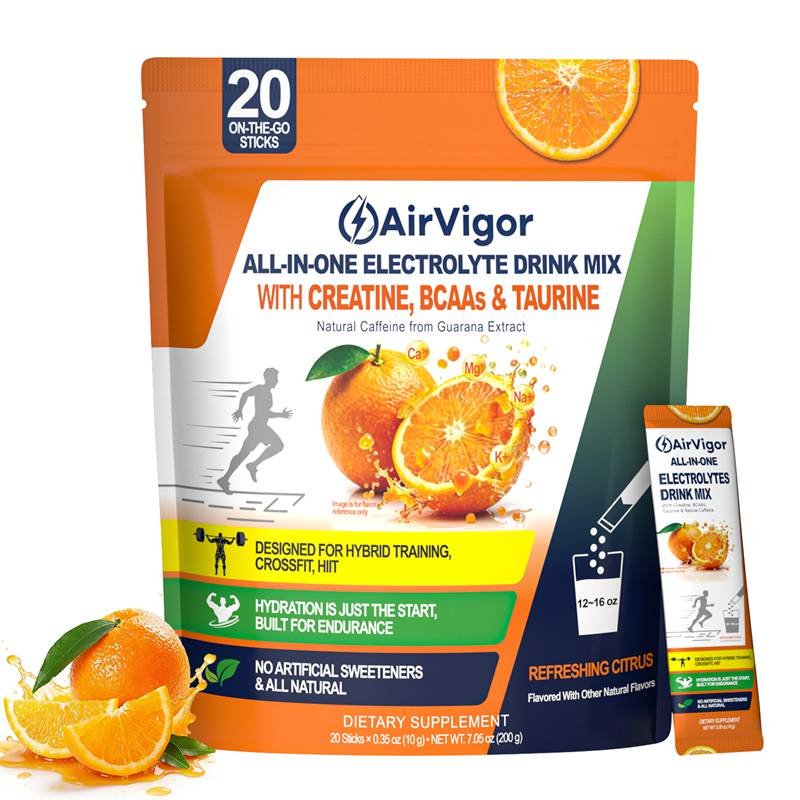
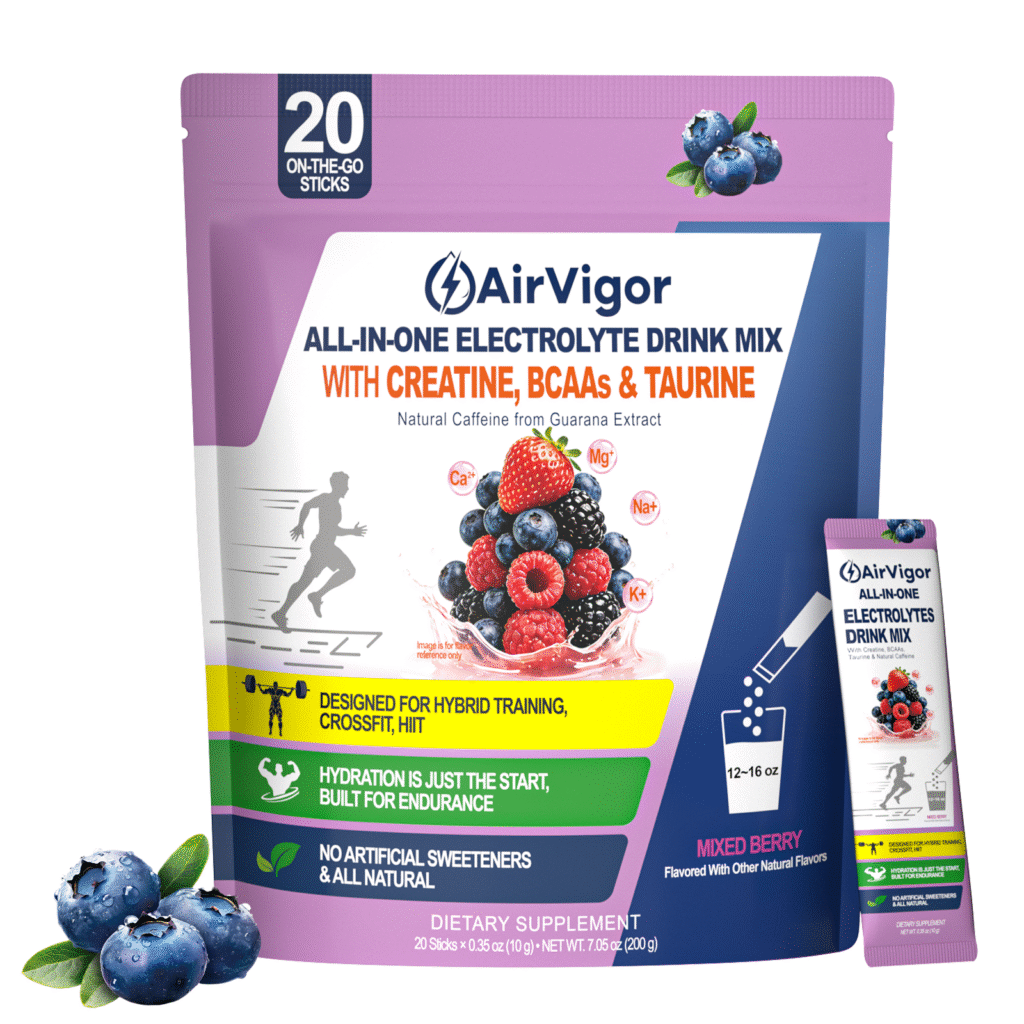
A better daily rule is simple: drink water as your foundation, then add electrolytes when the day creates a real need. AirVigor fits that kind of routine because stick packs are easy to carry and use only when needed, instead of turning every drink into a supplement serving.
Why Water Still Matters
Water still matters because it provides the fluid volume your body needs for circulation, cooling, digestion, nutrient transport, and normal daily function.
Electrolytes need water to work properly. A powder or mineral blend by itself does not hydrate the body. It has to be mixed into enough fluid. That is why electrolyte drinks should not be viewed as a replacement for water, but as a way to support water during higher-demand moments.
Water helps regulate body temperature through sweat. It helps blood move through the body. It supports saliva, digestion, kidney function, and waste removal. It also helps transport nutrients from food and supplements. If daily water intake is too low, adding electrolytes will not solve the whole problem.
This is especially important for people who drink a lot of coffee, forget water during work, or wait until the end of the day to catch up. Electrolytes may help in certain moments, but they are not a shortcut around basic water intake. A user still needs enough fluid throughout the day.
The amount of water needed varies by body size, activity, food intake, weather, and sweat level. Instead of chasing one fixed number, users can pay attention to practical signs:
| What You Notice | What It May Mean | What to Do |
|---|---|---|
| Pale yellow urine most of the day | Hydration may be on track | Keep water routine steady |
| Dark yellow urine | Fluid intake may be low | Drink more water |
| Dry mouth after drinking water | Could be heat, sweat, or low intake | Add water; consider electrolytes if sweating |
| Headache after heat or workout | Possible fluid and mineral loss | Rehydrate with water; electrolytes may help |
| Heavy legs after sweat | Possible incomplete recovery routine | Consider water plus electrolytes |
| Thirst returns quickly | Fluid intake may still be low | Drink gradually, not all at once |
AirVigor’s serving format helps users build a more realistic hydration habit. A stick pack does not ask users to change their whole day. It gives them an easy option when plain water does not feel like enough after sweat, heat, travel, or activity.
When Electrolytes Help More
Electrolytes help more when the body loses minerals through sweat or when daily conditions make hydration harder to manage.
The clearest reason to use electrolytes is heavy sweating. Sweat contains water and minerals, especially sodium. During light activity, mineral loss may be small. During hard training, hot weather, or long outdoor work, losses can be much higher. Some heavy sweaters may lose around 1 liter or more of sweat per hour during intense activity or heat. In that case, replacing only water may not feel complete.
Workout length also matters. For short, light sessions, water often works well. For longer or hotter sessions, electrolyte support becomes more useful. A runner training in humid weather, a cyclist riding for two hours, a CrossFit user finishing a high-sweat class, or a hot yoga user leaving the room drenched may need more than plain water.
| Activity Type | Common Hydration Need | Electrolyte Fit |
|---|---|---|
| Light walking | Low sweat | Usually not needed |
| Easy gym session | Low to moderate sweat | Optional |
| HIIT class | High sweat in short time | Useful |
| CrossFit training | Heavy sweat and repeated effort | Useful |
| Long run | Fluid and sodium loss | Strong fit |
| Cycling over 60 minutes | Steady sweat loss | Strong fit |
| Hot yoga | Heat plus sweat | Strong fit |
| Outdoor work | Long heat exposure | Strong fit |
| Sauna | High sweat in short time | Useful after session |
Electrolytes can also help when food intake is low. Many minerals come from meals. If someone trains early in the morning, skips lunch, travels all day, follows a low-carb eating pattern, or forgets to eat after training, plain water may not fully meet the moment. A well-timed electrolyte drink can help support hydration without needing a full meal immediately.
AirVigor is especially useful in these real-life cases:
- After a sweaty workout when plain water feels incomplete.
- During hot weather when thirst keeps returning.
- After hot yoga, sauna, hiking, cycling, running, or HIIT.
- During travel when water intake and meals are inconsistent.
- For active users who want a portable alternative to sugary sports drinks.
The key is not to use electrolytes randomly. The key is to match them to the day. When the body loses sweat, misses meals, or works in heat, electrolytes can be a practical support. When the day is calm, cool, and low-sweat, water may be enough.
Are Electrolytes a Water Substitute?
Electrolytes are not a full water substitute. They are best used as a support drink when water alone does not match the body’s fluid and mineral needs.
A product can be helpful without being used all day. This point matters because many shoppers compare electrolyte powders, sports drinks, flavored waters, and hydration tablets without knowing when each one makes sense. The better question is not “Can I stop drinking water?” The better question is “When should one of my drinks include electrolytes?”
For most users, a smart structure looks like this:
| Time of Day | Better Hydration Choice |
|---|---|
| Morning after waking | Plain water |
| With breakfast | Water or normal beverage |
| During desk work | Plain water |
| Before light activity | Plain water |
| Before hard training | Water; electrolytes if starting underhydrated |
| During long sweaty activity | Electrolyte drink can help |
| After heavy sweat | Electrolyte drink can help |
| Evening without workout | Plain water |
This approach keeps hydration simple. It also avoids overusing supplements when the body does not need them.
For AirVigor customers, the value is flexibility. One stick pack can be used when the day demands more hydration support, while plain water remains the everyday base. That makes the product easier to trust, easier to explain, and easier to keep using over time.
What Happens When Electrolytes Replace Water?
When electrolytes replace water too often, hydration can become less balanced. Electrolyte drinks are helpful after sweat, heat, or long activity, but they are not meant to replace every bottle of water during a normal day.
Too Much, Too Often
Electrolytes are useful when the body loses minerals, but drinking them all day without sweat or activity may add more sodium and minerals than needed.
Electrolyte drinks are not dangerous for every healthy adult, but they should still be used with purpose. The body already gets electrolytes from food. Sodium comes from salt, sauces, bread, soups, restaurant meals, snacks, and processed foods. Potassium comes from foods like potatoes, bananas, beans, yogurt, oranges, spinach, avocado, and tomatoes. Magnesium and calcium also come from regular meals.
If a person replaces most daily water with electrolyte drinks, the drink stops being targeted support and becomes a daily intake habit. That may not match the person’s actual activity level. Someone working at a desk in an air-conditioned room does not have the same need as someone doing hot yoga, running in summer, or working outdoors for 8 hours.
The issue is not one serving after a sweaty workout. The issue is repeated use without a reason. For example, drinking one electrolyte serving after a hard training session can be useful. Drinking three or four servings on a low-sweat office day may not provide extra value and may increase sodium intake unnecessarily.
| Use Pattern | What It Means | Better Habit |
|---|---|---|
| 1 serving after heavy sweat | Targeted use | Good fit for many active users |
| 1 serving during hot outdoor activity | Supports sweat-day hydration | Good fit when water intake is steady |
| 1 serving on a travel day | May help when meals and water are irregular | Useful if not overused |
| 2–3 servings without exercise or heat | May be more than needed | Return to plain water |
| Replacing all daily water | Not recommended for most users | Keep water as the base |
| Using strong formulas daily | Depends on diet and health status | Check sodium and serving directions |
A smarter routine is simple: plain water for normal hydration, electrolytes for higher-demand moments. AirVigor fits this kind of routine because single-serving stick packs make it easier to use the product only when needed, rather than casually pouring from a tub several times per day.
Sodium Adds Up
Sodium is important for hydration and muscle function, but daily intake can rise quickly when electrolyte drinks are added to salty meals.
Sodium is the electrolyte most people notice on a label because many hydration products include it for sweat replacement. This makes sense for runners, cyclists, HIIT users, CrossFit athletes, hot yoga users, outdoor workers, and heavy sweaters. Sweat contains sodium, so replacing some sodium after heavy sweat can support a better hydration routine.
But sodium also appears in many everyday foods. A person may eat a sandwich, soup, chips, frozen meal, takeout bowl, pizza, ramen, or salad with salty dressing and already consume a high amount of sodium before drinking any electrolyte beverage. If that same person does not sweat much that day, multiple electrolyte servings may not be necessary.
Sodium needs are not the same for everyone. The same electrolyte drink can be useful for one user and unnecessary for another depending on sweat, activity, weather, and diet.
| Daily Food and Activity Pattern | Electrolyte Need |
|---|---|
| Home-cooked meals, no workout | Low |
| Restaurant lunch, no sweat | Low |
| Salty snacks, desk day | Low |
| Light workout, normal meals | Low to moderate |
| Heavy workout, normal meals | Moderate to high |
| Long run, low food intake | Higher |
| Hot yoga, lots of sweat | Higher |
| Outdoor work in summer | Higher |
| Low-carb diet plus training | Often higher |
A practical label check helps users avoid overdoing it:
- Look at sodium per serving.
- Check how many servings are used per day.
- Consider how salty meals were that day.
- Use stronger electrolyte routines mainly around sweat, heat, or long activity.
- Ask a healthcare professional if sodium intake needs to be limited.
For AirVigor content, this is a strong trust point. The brand does not need to tell every person to drink electrolytes constantly. It can help customers match the product to the right moment, which feels more honest and useful.
Sugar Can Change the Drink
Some electrolyte drinks include sugar, which may help certain endurance situations but may not fit users who want lighter daily hydration.
Electrolyte drinks are not all the same. Some are designed like sports drinks with sugar and calories. Some are designed for endurance fuel. Some are designed as low-calorie hydration support. Some focus on flavor more than function. Customers often search “water vs electrolytes” because they are trying to understand these differences.
Sugar is not always bad. During long endurance exercise, carbohydrates can be useful because the body needs fuel. For a marathon runner, cyclist, or long-distance hiker, a carbohydrate-containing drink may have a role. But for a normal office day, light workout, or low-sugar routine, a sugary electrolyte drink may not be the best match.
For many everyday users, the goal is not energy fuel. The goal is hydration support without turning the drink into a sweet beverage habit. This is especially important for people who want zero sugar, low calories, keto-friendly routines, fasting-friendly habits, or cleaner-tasting hydration.
| Drink Type | Best Fit | Watch Out For |
|---|---|---|
| Plain water | Daily hydration | May feel incomplete after heavy sweat |
| Sugary sports drink | Long endurance or high-energy activity | Extra sugar and calories |
| Low-sugar electrolyte drink | Sweat support with lighter taste | Check mineral amounts |
| Zero sugar electrolyte powder | Fitness, travel, heat, daily support when needed | Do not overuse without sweat |
| Caffeinated hydration drink | Morning or training use | Not ideal for evening users |
| Strong salty formula | Heavy sweat users | May not fit low-sweat days |
AirVigor can appeal to users who want hydration support without making the routine feel heavy. The message should stay practical: choose the drink that fits the situation. A long bike ride may need a different drink than a normal workday. A hot yoga class may need different support than a short evening walk.
Balance Matters
Good hydration is not about replacing water with more minerals. It is about matching water, electrolytes, activity, weather, food intake, and personal need.
Electrolyte balance is more important than chasing the strongest formula. A product with a very high sodium level may fit a heavy sweater but feel unnecessary for a light user. A product with many extra ingredients may look impressive but confuse customers who simply want hydration support. A product with unclear serving directions may lead people to overuse it or mix it incorrectly.
Customers want simple answers:
| Customer Question | What They Need to Know |
|---|---|
| Can I drink this every day? | Only if it fits sweat, activity, diet, and health needs |
| Can it replace water? | No, water should still be the base |
| Should I use it after workouts? | Yes, especially after heavy sweat |
| Should I use it on rest days? | Usually optional |
| Is more electrolyte better? | Not always |
| Should I check sodium? | Yes, especially with salty meals |
| Does sugar matter? | Yes, depending on goals |
| Can I use it while traveling? | Yes, especially when intake is irregular |
A balanced electrolyte product should make daily decisions easier, not harder. Users should be able to understand what is inside, when to use it, how much water to mix, and how often to take it.
AirVigor’s value is strongest when the product is positioned around real hydration moments:
- after sweaty workouts
- during hot weather
- after hot yoga or sauna
- during travel
- after long walks, hikes, or bike rides
- during outdoor work
- when plain water feels incomplete after fluid loss
This makes the product more believable because the use case is clear. Electrolytes are not a replacement for all water. They are a smart support when the body has a real reason to need more than plain water.
When Should Electrolytes Replace Plain Water?
Electrolytes can replace one plain-water drink when the body loses more fluid and minerals than usual. Heavy sweat, hot weather, long workouts, outdoor work, travel, sauna, or low food intake are the main moments when electrolytes make more sense than plain water alone.
After Heavy Sweat
Heavy sweat is one of the clearest signs that electrolytes may be useful because sweat contains both water and minerals.
Plain water is important after sweating, but it may not always feel complete after a hard session. Sweat carries sodium, and smaller amounts of potassium, magnesium, calcium, and chloride. When sweat loss is high, the body may need both fluid and mineral support to feel steady again.
A person may sweat lightly during a short walk, or heavily during hot yoga, HIIT, CrossFit, running, cycling, outdoor work, or yard work in summer. The difference matters. A low-sweat day may only need water. A soaked-shirt day may be a better time for an electrolyte drink.
The easiest way for users to judge sweat loss is not by guessing exact numbers. It is by looking at real signs.
| What You Notice | What It Usually Means | Better Hydration Choice |
|---|---|---|
| Light sweat on forehead | Low fluid loss | Plain water is often enough |
| Damp shirt after training | Moderate sweat loss | Water first; electrolytes optional |
| Soaked shirt or towel | Higher sweat loss | Water plus electrolytes |
| White salt marks on clothes | Noticeable sodium loss | Electrolytes may help |
| Dry mouth after drinking water | Fluid or mineral gap may remain | Drink more water; consider electrolytes |
| Heavy legs after sweat | Recovery routine may be incomplete | Water plus electrolytes |
| Headache after heat or training | Possible fluid and mineral loss | Rehydrate carefully |
Some active users may lose around 0.5–1.5 liters of sweat per hour depending on heat, intensity, body size, clothing, and fitness level. In very hot conditions or intense training, heavy sweaters can lose even more. That does not mean everyone needs a strong electrolyte formula every day. It means the drink should match the day.
AirVigor fits this moment well because one stick pack is easy to use right after sweat. A runner can keep it in a backpack. A gym user can leave it in a locker. A hot yoga user can mix it after class. An outdoor worker can keep a few packs in a lunch bag. The user does not need to carry a tub or buy a sugary sports drink.
During Long Workouts
Long workouts increase the need for a better hydration plan because fluid and minerals are lost over time.
Workout length is one of the most useful ways to decide whether electrolytes should replace one bottle of plain water. Short, easy sessions often do not require much beyond water. Longer sessions, especially those with steady sweat, heat, or high intensity, are different.
For many people, the turning point comes around 60 minutes. A 20-minute walk in cool weather may not need electrolytes. A 75-minute CrossFit session, a 90-minute bike ride, or a long run in warm weather can create a stronger need.
| Workout Time | Common Hydration Need | Electrolyte Use |
|---|---|---|
| Under 30 minutes | Low fluid loss for most users | Usually not needed |
| 30–45 minutes | Depends on sweat level | Optional |
| 45–60 minutes | Moderate need if sweating | Useful for heavy sweaters |
| 60–90 minutes | Higher fluid and mineral loss | Good fit |
| 90+ minutes | More planning needed | Strong fit |
| Back-to-back sessions | Recovery between sessions matters | Useful before and after |
Different workouts also create different sweat patterns. A slow strength session with long rest periods may not cause much sweat. A short HIIT class can leave a person drenched in 35 minutes. A cyclist may lose fluid steadily for hours. A hot yoga user may sweat heavily even without fast movement.
Electrolytes can be useful before, during, or after long workouts depending on the situation.
| Timing | When It Makes Sense | Simple Use Idea |
|---|---|---|
| Before workout | User starts underhydrated or trains early | Mix one serving before training |
| During workout | Session is long, hot, or sweaty | Sip gradually |
| After workout | Shirt is soaked or body feels drained | Mix one serving after training |
| Between sessions | Two workouts in one day | Use with water and food |
For AirVigor users, the benefit is not only the formula. It is the easy routine. One serving can be packed before leaving home, mixed at the gym, or used after training without measuring. That small convenience can help people stay consistent.
In Hot Weather
Hot weather can make electrolytes more useful even when the activity does not feel like a workout.
Heat changes hydration because the body sweats to cool itself. A person can lose fluid while walking through a city, working outdoors, attending a sports event, gardening, hiking, standing at a summer market, or spending a full day at the beach. The activity may feel casual, but the body is still managing heat.
Humidity makes this harder. When the air is humid, sweat does not evaporate as easily. The body may keep sweating without cooling down as efficiently. That can make thirst, fatigue, and fluid loss build faster.
| Hot Weather Scenario | Why Plain Water May Feel Incomplete | Electrolyte Fit |
|---|---|---|
| Outdoor work shift | Sweat continues for hours | Strong fit |
| Summer hiking | Long activity plus limited refills | Strong fit |
| Theme park day | Walking, heat, and long lines | Useful |
| Beach or pool day | Sun exposure and salty snacks | Useful if sweating |
| Youth sports sidelines | Long hours outdoors | Useful |
| Travel in humid cities | Walking, heat, irregular meals | Useful |
| Yard work | Heat plus physical labor | Strong fit |
A smart hot-weather routine should not wait until the person feels wiped out. Drinking earlier works better than trying to catch up late. Plain water should stay nearby, and electrolytes can replace one drink when sweat is steady or the day is long.
AirVigor stick packs are useful for heat because they are small and easy to carry. Users can bring them without adding weight to a bag. They can mix one serving with bottled water or a reusable bottle when the day becomes hotter than expected.
During Travel Days
Travel can make electrolytes useful because water intake, meals, sleep, and daily rhythm often become irregular.
Travel does not always cause heavy sweating, but it often disrupts hydration. People drink less during flights to avoid restroom trips. They rely on coffee. They eat salty airport food. They skip meals. They walk more than expected. They spend time in dry cabin air, hot streets, long car rides, or crowded stations.
That combination can make plain water feel less satisfying, especially when the person is already tired.
| Travel Situation | Common Hydration Problem | Better Choice |
|---|---|---|
| Long flight | Dry cabin air and low water intake | Water first; electrolytes if intake is low |
| Road trip | Coffee, snacks, fewer stops | Water plus occasional electrolytes |
| Airport day | Salty food and irregular meals | Water first; electrolytes when needed |
| Business travel | Busy schedule and skipped meals | Electrolytes may help routine |
| Warm-weather vacation | Heat, walking, sweating | Stronger fit |
| Outdoor sightseeing | Long walking hours | Useful |
| Jet lag day | Poor sleep and low intake | Use gently with water |
Electrolytes should not replace all travel water. The better approach is to use them as a backup for messy days. One serving during a long flight, after a hot sightseeing day, or after skipping meals can be more useful than drinking sweet bottled beverages.
AirVigor’s stick-pack format is especially travel-friendly. It does not take much space, does not require a shaker tub, and can be used with bottled water almost anywhere. For frequent travelers, that convenience is often the reason a product gets used instead of forgotten.
With Low Food Intake
Electrolytes may help more when food intake is low because meals are a major source of daily minerals.
Many people get electrolytes from food without thinking about it. Sodium comes from salt and prepared foods. Potassium comes from fruits, potatoes, beans, dairy, and vegetables. Magnesium and calcium come from nuts, seeds, grains, dairy, leafy greens, and other foods.
When meals are skipped, delayed, or very light, electrolyte intake from food may also drop. If that same day includes exercise, heat, sweating, or travel, plain water may feel less complete.
Common low-food situations include:
- Training early before breakfast
- Skipping lunch during a busy workday
- Traveling with limited food options
- Following a low-carb or calorie-controlled routine
- Doing long workouts without enough meals
- Feeling too busy to eat after training
A simple comparison helps users understand the difference.
| Day Pattern | Hydration Need |
|---|---|
| Normal meals, no sweat | Water usually works well |
| Normal meals, heavy sweat | Electrolytes may help |
| Skipped meals, no sweat | Water plus food should be prioritized |
| Skipped meals, heavy sweat | Electrolytes may be more useful |
| Low-carb eating plus training | Electrolyte needs may be higher |
| Travel plus missed meals | Electrolytes can support routine |
Electrolytes are not a meal replacement. They do not provide full nutrition, protein, calories, or recovery fuel. But when food intake is low and sweat loss is high, they can help fill part of the hydration gap.
For AirVigor users, this is a practical message. The product can fit busy mornings, gym routines, airport days, and active schedules, but it should be used alongside enough water and regular nutrition whenever possible.

When Should Electrolytes Not Replace Water?
Electrolytes should not replace water when activity is light, sweat is low, meals are normal, or the diet already contains plenty of sodium. Plain water should stay as the daily base, while electrolytes are better saved for sweat, heat, long activity, travel, or low food intake.
Light Daily Activity
Light daily activity usually does not create enough sweat loss to require electrolyte drinks instead of plain water.
Most people do not need an electrolyte drink for every normal day. If the day mainly includes desk work, school, driving, cooking, errands, short walks, light stretching, or relaxing indoors, plain water is usually enough. Regular meals already provide minerals throughout the day, even when the user is not thinking about them.
A person may feel like electrolyte water is “healthier” because it sounds more advanced than plain water. But hydration does not work that way. Better hydration depends on need. If the body is not losing much sweat, adding more sodium and minerals may not give extra value.
For a low-activity day, the better routine is simple: drink water steadily, eat normal meals, and save electrolyte drinks for moments that actually demand more support. This keeps the product useful instead of turning it into a habit with no clear purpose.
| Daily Activity | Sweat Level | Better Drink Choice |
|---|---|---|
| Desk work | Very low | Plain water |
| Short commute | Very low | Plain water |
| Grocery shopping | Low | Plain water |
| Light stretching | Low | Plain water |
| Casual walking under 20 minutes | Low | Plain water |
| Housework without sweating | Low | Plain water |
| Light gym session | Low to moderate | Water first; electrolytes optional |
| Long warm-weather activity | Moderate to high | Water plus electrolytes |
A smart hydration routine should not make users feel guilty for drinking plain water. Plain water is still the foundation. AirVigor is more useful when the body has a stronger reason, such as sweat, heat, training, travel, sauna, hot yoga, or outdoor work.
Low-Sweat Days
Low-sweat days are usually water-first days because the body is not losing many minerals through sweat.
Electrolytes are most helpful when mineral loss increases. On a cool day with little movement, mineral loss through sweat is usually low. The body still needs water, but it may not need a dedicated electrolyte drink. Food can provide sodium, potassium, magnesium, and calcium across the day.
This is important for people who use electrolyte powders because they like the taste. A flavored electrolyte drink may help some people drink more fluid, but it should not crowd out plain water. If the user is not sweating, one serving may be enough or may not be needed at all.
Low-sweat situations often include:
- Cool-weather office days
- Short walks in mild weather
- Light yoga without heat
- Easy strength training with long rest periods
- Recovery days after hard training
- Indoor errands and home routines
| What the Day Looks Like | Electrolyte Need | Better Use |
|---|---|---|
| Cool weather, no workout | Low | Plain water |
| Rest day after training | Low to moderate | Water; electrolytes only if still depleted |
| Light yoga | Low | Plain water |
| Short walk | Low | Plain water |
| Low-intensity gym day | Low to moderate | Optional |
| Hot room, visible sweat | Higher | Electrolytes may help |
| Long outdoor walk | Moderate | Water plus electrolytes if sweating |
| Sauna or hot yoga | Higher | Electrolytes after session |
AirVigor can still be part of a weekly routine without being used every day. For example, a user may skip electrolytes on a quiet Monday, use one serving after a hard Wednesday workout, and keep a stick pack ready for a hot Saturday hike. That pattern feels natural and easier to maintain.
High-Sodium Meals
Electrolytes should be used carefully on high-sodium days because sodium from food can add up quickly.
Sodium is useful after heavy sweating, but many people already get a large amount from meals. Restaurant food, takeout, frozen meals, canned soup, sandwiches, pizza, ramen, chips, crackers, sauces, deli meat, cheese, and seasoned snacks can all increase sodium intake. The food may not always taste extremely salty, but the sodium can still be high.
If a person eats salty meals and does not sweat much, replacing water with electrolyte drinks may not be necessary. If that same person sweats heavily after a long workout or outdoor shift, electrolytes may still make sense. The difference is not the meal alone. The difference is the combination of food, sweat, heat, and activity.
| Food Pattern | Sweat Level | Electrolyte Need |
|---|---|---|
| Home-cooked meals | Low | Low |
| Home-cooked meals | Heavy sweat | Moderate to high |
| Restaurant lunch | Low | Low |
| Restaurant lunch | Heavy sweat | Moderate |
| Fast food day | Low | Low |
| Fast food day | Outdoor work in heat | Moderate |
| Salty snacks and no workout | Low | Low |
| Salty snacks and long run | Moderate to high | May be useful |
| Low-carb meals and training | Moderate to high | Often more useful |
Users can make a better choice by checking three things before mixing an electrolyte drink:
- Did I sweat enough today to lose minerals?
- Did I already eat salty meals or snacks?
- Am I using one serving for a clear reason, or just because the drink tastes good?
AirVigor works best when the serving has a clear purpose. If the day included salty meals but no sweat, plain water is usually the better choice. If the day included sweat, heat, or long activity, AirVigor may support a more complete hydration routine.
Short Workouts
Short workouts do not always require electrolytes, especially when the session is light and the user is already drinking enough water.
A 15–30 minute workout is not the same as a 90-minute sweaty training session. Many short workouts can be supported with plain water before and after exercise. This is especially true when the room is cool, the user does not sweat much, and meals are normal.
However, intensity matters. A short easy walk may not need electrolytes. A short but very intense HIIT class in a hot room may create more sweat than expected. That is why time is useful, but sweat level is even more important.
| Workout Type | Time | Sweat Level | Better Drink Choice |
|---|---|---|---|
| Easy walk | 15–30 min | Low | Plain water |
| Light stretching | 15–30 min | Low | Plain water |
| Easy bike ride | 20–30 min | Low | Plain water |
| Strength training with long rests | 30–45 min | Low to moderate | Water first |
| Short HIIT class | 30–40 min | Moderate to high | Electrolytes optional |
| Hot room workout | 30–45 min | High | Electrolytes may help |
| CrossFit class | 45–60 min | Often high | Stronger fit |
| Long endurance session | 60+ min | Moderate to high | Stronger fit |
A practical rule works well: if the workout is short and the shirt stays mostly dry, plain water is probably enough. If the workout is short but leaves the user drenched, electrolytes may be useful.
AirVigor can be used flexibly here. The product does not need to be forced into every workout. It can be saved for sweatier sessions, harder classes, hot rooms, or days when the user starts the workout already underhydrated.
Medical Caution
Some people should not replace water with electrolyte drinks regularly without checking whether extra sodium, potassium, or fluid changes fit their health needs.
Electrolyte drinks are common, but they still contain active minerals. That matters for users who have been told to watch sodium, potassium, or fluid intake. People with kidney concerns, heart conditions, high blood pressure, fluid restrictions, potassium restrictions, or medication routines should be more careful with daily electrolyte use.
This does not mean electrolyte drinks are a problem for everyone. Many healthy active adults can use them as directed around sweat-heavy activity. But health context matters. A formula that is useful for a runner after a hot workout may not be right for someone who needs strict sodium control.
| User Situation | Better Approach |
|---|---|
| Healthy adult with heavy sweat | Use electrolytes as directed around activity |
| Healthy adult with low activity | Plain water is usually enough |
| High blood pressure concern | Check sodium amount before use |
| Kidney-related concern | Ask a healthcare professional before regular use |
| Potassium restriction | Check label carefully |
| Fluid restriction | Follow professional guidance |
| Heart-related concern | Use extra caution with mineral drinks |
| Severe dehydration symptoms | Seek medical help instead of relying only on supplements |
| Ongoing vomiting or diarrhea | Medical guidance may be needed |
A hydration product should not make medical decisions for the user. AirVigor can support active hydration routines, but users with specific health concerns should choose electrolyte products with more care and professional guidance when needed.
How Do Electrolytes and Water Work Together?
Water provides the fluid your body needs. Electrolytes help that fluid stay balanced and support muscles, nerves, sweat response, and normal daily function. The best hydration routine is not water versus electrolytes, but water first, electrolytes when the body needs extra support.
Water Moves Fluid
Water is the main carrier in hydration. It supports circulation, cooling, digestion, nutrient transport, saliva, kidney function, and daily fluid needs.
Water does the basic work that every hydration routine depends on. It helps blood move through the body, supports normal body temperature, carries nutrients from meals and supplements, and helps the kidneys remove waste. Without enough water, electrolyte intake cannot solve hydration by itself.
This is why electrolyte powders should always be mixed with enough fluid. A dry powder does not hydrate the body. A strong mineral drink mixed with too little water may feel salty, heavy, or hard to finish. A drink mixed with the right amount of water is easier to sip and more practical during workouts, travel, or hot weather.
For many stick-pack hydration products, users often mix one serving with about 12–20 fl oz of water, depending on taste preference, activity level, and label directions. More water may feel better after heavy sweat. Less water may taste stronger, but it should still stay within the product’s suggested mixing range.
| Water Role | Why It Matters to Users |
|---|---|
| Supports blood volume | Helps the body move fluid and nutrients |
| Helps body cooling | Supports sweating and heat control |
| Supports digestion | Helps food and supplements move through the body |
| Supports kidney function | Helps remove waste through urine |
| Keeps mouth and throat moist | Helps reduce dry-mouth feeling |
| Carries nutrients | Helps transport minerals, vitamins, and other nutrients |
| Supports daily energy feeling | Low fluid intake can make the body feel sluggish |
Many people think they need electrolytes when they actually need more water first. A person who drinks mostly coffee all morning, forgets water at work, or only drinks at night may feel dry or tired simply because daily fluid intake is too low. In that case, electrolytes can help in specific moments, but the first step is still a steady water habit.
A practical water-first routine can look like this:
- Drink plain water after waking.
- Keep water nearby during work or errands.
- Drink water with meals.
- Add electrolytes after sweat, heat, long activity, or travel.
- Return to plain water once the high-demand moment has passed.
AirVigor fits this pattern because the stick pack is used when needed. It does not ask users to stop drinking water. It gives them an easy option when plain water alone does not match the day.
Electrolytes Hold Balance
Electrolytes help the body manage fluid balance, muscle signals, nerve activity, and sweat replacement. They are most useful when mineral loss increases.
Electrolytes are minerals that carry an electrical charge when dissolved in fluid. The main electrolytes people see on hydration labels include sodium, potassium, magnesium, calcium, and chloride. Each one supports different body functions, but they work together as part of a larger fluid-balance system.
Sodium is especially important for sweat replacement because it is the main electrolyte lost through sweat. Potassium supports normal cell function and muscle activity. Magnesium supports muscle and nerve function. Calcium supports muscle contraction and signaling. Chloride works closely with sodium in fluid balance.
| Electrolyte | Main Role in Hydration and Activity | When Users Notice the Need More |
|---|---|---|
| Sodium | Supports fluid balance and sweat replacement | Heavy sweating, hot weather, long workouts |
| Potassium | Supports normal cell and muscle function | Active days, low fruit/vegetable intake |
| Magnesium | Supports muscle and nerve function | Training routines, low dietary intake |
| Calcium | Supports muscle contraction and signaling | Active routines and general mineral balance |
| Chloride | Works with sodium for fluid balance | Sweat loss and daily electrolyte balance |
Electrolytes are not meant to overpower water. They help water work better when the body has lost minerals. This is why an electrolyte drink may feel more useful after a sweaty workout than during a low-activity afternoon. The body’s need changes with sweat, temperature, food intake, and activity.
A user may consider electrolytes when:
- Sweat is visible for a long period.
- Clothing is soaked after training.
- Salt marks appear on dark clothing.
- Plain water does not feel satisfying after heat.
- A workout lasts more than 60 minutes.
- Meals are skipped before or after activity.
- Travel disrupts normal drinking and eating.
AirVigor’s value is clearest in these moments. The product supports a more complete hydration routine when the body has lost both fluid and minerals, without making users carry bulky bottles or mix several products.
Muscles Need Both
Muscles need water for circulation and cooling, while electrolytes support normal contraction signals. During sweaty or intense activity, both can matter.
Muscle function depends on hydration in more than one way. Water helps maintain fluid volume and supports circulation. Electrolytes support the electrical signals involved in muscle contraction and nerve communication. When someone trains hard, works outdoors, or sweats heavily, both fluid and mineral needs can rise.
This is why people often feel the difference during activity. If fluid intake is low, the body may feel heavy, overheated, or slow. If electrolyte loss is high, especially after sweat, plain water may not feel fully satisfying. The user may still feel drained, thirsty, or slow to recover.
| User Situation | What Water Supports | What Electrolytes Support |
|---|---|---|
| Strength training | Circulation and temperature control | Muscle contraction support |
| HIIT or CrossFit | Fluid replacement during sweat | Sodium and mineral replacement |
| Long runs | Ongoing fluid intake | Sweat mineral balance |
| Cycling | Steady hydration over time | Electrolyte support during long sessions |
| Hot yoga | Fluid recovery after heat | Mineral replacement after heavy sweat |
| Outdoor work | Cooling and hydration | Support during repeated sweat loss |
| Hiking | Fluid supply during movement | Mineral support when food and water are limited |
Electrolytes do not replace training, sleep, protein, meals, or recovery time. They support one part of the routine: hydration balance. That distinction is important because real users do not want exaggerated claims. They want to know whether the drink will fit their workout, workday, or travel schedule.
For active users, a simple pattern works well:
| Timing | Better Choice |
|---|---|
| Before light activity | Plain water |
| Before hard training | Water; electrolytes if starting underhydrated |
| During short low-sweat workouts | Plain water |
| During long sweaty workouts | Electrolytes may help |
| After soaked-shirt training | Water plus electrolytes |
| On rest days | Plain water unless still depleted |
| After hot yoga or sauna | Electrolytes may help |
| During outdoor heat | Water plus electrolytes when sweating |
AirVigor can support users who want this routine to feel easy. One stick pack can be used after heavy sweat or during longer activity, while plain water remains the daily base.
Sweat Changes the Formula
Sweat changes hydration needs because the body loses both fluid and minerals, especially sodium. More sweat usually means a stronger reason for electrolytes.
Sweat loss is one of the biggest reasons water and electrolytes need to work together. During light activity, sweat loss may be small. During intense workouts, hot weather, sauna, hot yoga, or outdoor work, sweat loss can rise quickly.
Some adults may lose about 0.5–1.5 liters of sweat per hour during active or hot conditions. Heavy sweaters in intense heat can lose more. Sweat rate depends on body size, temperature, humidity, clothing, fitness level, and workout intensity. The exact number does not need to be perfect for a user to make a better decision. Real signs are enough.
| Sweat Sign | What It Suggests | Hydration Move |
|---|---|---|
| No visible sweat | Low fluid loss | Plain water |
| Light sweat | Mild loss | Water first |
| Damp shirt | Moderate loss | Water; electrolytes optional |
| Soaked shirt | Higher loss | Water plus electrolytes |
| Salt marks on clothes | Noticeable sodium loss | Electrolytes may help |
| Repeated thirst after water | Fluid or mineral gap may remain | Drink gradually; consider electrolytes |
| Heavy fatigue after heat | Hydration demand may be higher | Cool down, drink water, add electrolytes if appropriate |
This is where many users misunderstand hydration. They may drink a large bottle of plain water after a hard session and still feel “not right.” That does not automatically mean dehydration is severe, but it may mean the body needs a better mix of fluid, minerals, food, and rest.
AirVigor works well for sweat-based routines because it is easy to keep nearby. A user can save it for high-sweat moments instead of using it randomly all day. That makes the product more practical and easier to trust.
Why Choose AirVigor When Electrolytes Replace Water?
AirVigor is built for moments when plain water feels incomplete after sweat, heat, long activity, travel, or busy routines. The brand focuses on clear formulas, portable stick packs, quality control, and practical hydration products that are easy to understand and easy to use.
Clear Electrolyte Support
AirVigor focuses on clear hydration support, so users can understand what they are drinking, when to use it, and why it fits their routine.
Many people shopping for electrolyte powder do not want a complicated formula. They want to know whether the drink helps after sweat, whether it contains sugar, whether it mixes easily, and whether it is convenient enough to use more than once. AirVigor’s product direction is built around that simple need: make electrolyte support easier to choose and easier to repeat.
When electrolytes replace one plain-water drink, users care about the label. They want to see minerals clearly, not a vague blend. They want serving directions that make sense. They want to know whether the product fits workouts, hot weather, travel, sauna, hot yoga, or long outdoor days. A clear formula gives them more confidence before the first serving.
| What Users Check | Why It Matters | AirVigor Direction |
|---|---|---|
| Sodium level | Sweat contains sodium, especially after heavy activity | Clear electrolyte positioning |
| Potassium level | Supports normal cell and muscle function | Balanced mineral support |
| Magnesium and calcium | Common minerals users look for in hydration formulas | Broader electrolyte profile |
| Sugar content | Important for low-sugar and fitness routines | Clean daily-use direction |
| Serving size | Helps prevent overuse or confusion | Single-serving stick packs |
| Mixing method | Users want quick preparation | Easy water-mix format |
| Use timing | Helps users know when to drink it | Sweat, heat, activity, travel |
AirVigor works best when the user has a clear reason to add electrolytes. That reason may be a sweaty gym session, hot outdoor work, a long hike, a travel day, or a training routine where plain water does not feel like enough. This keeps the product practical rather than forcing it into every sip of the day.
Easy Stick Packs
AirVigor stick packs make hydration easier because users can carry one serving without a tub, scoop, shaker, or heavy bottled drink.
Convenience is a major reason people keep using a supplement. A formula can look good on paper, but if it is messy, bulky, or hard to prepare, users often stop after a few days. Stick packs solve that problem by making each serving portable and simple.
A user can keep AirVigor in several places:
- Gym bag for post-workout hydration
- Desk drawer for busy workdays
- Travel pouch for flights and road trips
- Backpack for hiking or outdoor activities
- Locker for hot yoga or sauna routines
- Lunch bag for outdoor work or long shifts
This format is useful because hydration needs often appear outside the kitchen. Someone may finish a hard class, leave a hot job site, walk through an airport, or spend hours outdoors before realizing that plain water does not feel complete. A stick pack makes it easier to respond in the moment.
| Format | Common Problem | AirVigor Advantage |
|---|---|---|
| Large tub | Hard to carry, scoop can be messy | Stick packs are portable |
| Pre-mixed sports drink | Heavy, often sugary, limited flavor control | Mix with preferred water amount |
| Tablets | May dissolve slowly for some users | Powder drink format is easy to prepare |
| Loose powder bags | Less convenient for travel | Pre-portioned serving |
| Multiple supplements | More steps and more bottles | One simple hydration serving |
For repeat use, small details matter. Tear, pour, mix, drink. That is the kind of routine users can actually follow after training, while traveling, or during hot weather.
Built for Sweat Days
AirVigor is especially useful on sweat-heavy days, when the body loses both water and minerals through exercise, heat, sauna, hot yoga, or outdoor work.
Sweat is one of the clearest reasons to use electrolytes. On low-sweat days, plain water may be enough. On high-sweat days, the body may need more than fluid alone. This is where AirVigor fits naturally.
Sweat-heavy situations can include:
| Sweat-Day Moment | User Need | How AirVigor Fits |
|---|---|---|
| HIIT or CrossFit | Fast sweat loss and post-class fatigue | Easy drink after training |
| Long run | Fluid and sodium loss over time | Portable hydration support |
| Cycling | Steady sweat during longer rides | Carry-friendly stick packs |
| Hot yoga | Heat plus heavy sweat | Simple post-class routine |
| Sauna | Short period of high sweat | Mix with water after session |
| Outdoor work | Repeated sweat across the day | Easy to keep in a lunch bag |
| Hiking | Sweat plus limited drink options | Lightweight to pack |
| Summer travel | Heat, walking, and irregular meals | Easy to mix with bottled water |
A useful hydration routine does not need to be complicated. Water should stay as the daily base. AirVigor can replace one plain-water drink when the body has a stronger reason: sweat, heat, long activity, or inconsistent intake.
This kind of timing helps users avoid two common mistakes. The first mistake is using electrolytes all day when they do not need them. The second mistake is waiting until they feel completely drained after sweat before doing anything. AirVigor gives users a middle path: use electrolytes when the day clearly calls for them.
Made for Real Routines
AirVigor is designed around the way people actually live, train, travel, work, and recover, not just perfect supplement routines at home.
Many hydration products sound good but do not fit real schedules. People forget their bottle. They skip meals. They drink coffee instead of water. They train after work. They travel with limited food options. They sweat during unexpected heat. A good electrolyte product should fit those imperfect days.
AirVigor can be used in simple, realistic ways:
| Routine | Common Hydration Challenge | AirVigor Use |
|---|---|---|
| Morning workout | Training before breakfast | Use with water before or after sweat |
| Office day | Forgetting to drink water | Keep packs in drawer for busy days |
| Evening gym | Low fluid intake after work | Mix one serving before or after training |
| Family outdoor day | Heat, walking, and long hours outside | Carry a few packs in a bag |
| Business travel | Flights, coffee, skipped meals | Use when intake is irregular |
| Weekend hike | Sweat and limited refill access | Pack lightweight servings |
| Hot-weather job | Repeated sweat during work | Use around high-sweat periods |
The value is not only in the ingredients. The value is in reducing friction. If the product is easy to bring, easy to mix, and easy to understand, users are more likely to use it at the right moment.
Quality Users Can Check
AirVigor supports hydration products with ingredient review, formula checking, production control, finished product testing, and label review.
Supplement users are paying closer attention to quality. They compare labels, read reviews, check serving size, look at sugar content, and want to know whether the brand takes production seriously. AirVigor’s company structure is built around long-term supplement development, not a one-time trend product.
AirVigor’s broader quality system includes:
| Quality Area | What It Means for Users |
|---|---|
| 25+ research team members | Product development is supported by nutrition, food science, and formula experience |
| 20,000+ formula models | Formula work is based on repeated testing and adjustment |
| 30+ quality staff | Product, packaging, label, and release checks receive ongoing attention |
| GMP-related production management | Manufacturing follows structured supplement production practices |
| HACCP and ISO system alignment | Process control and food safety management are considered |
| FSSC22000 framework | Production quality and food safety systems are part of the operation |
| COA and MSDS support | Documents can support channel, wholesale, and market needs |
| Label review process | Ingredient, serving, warning, and usage information are checked before launch |
For consumers, this means the product is not only about taste. It is also about consistency, serving clarity, packaging stability, and confidence in repeat purchase. For retailers and supplement partners, these details matter even more because product quality affects reviews, reorder rate, compliance preparation, and long-term channel performance.
AirVigor avoids making hydration feel mysterious. The product should be clear on the label, stable in packaging, and easy to use in real situations.

Conclusion
Electrolytes do not fully replace water. Water should remain the foundation of daily hydration, while electrolytes are most useful during sweat-heavy workouts, hot weather, long activity, travel, sauna use, hot yoga, or days when meals and fluid intake are inconsistent.
AirVigor is built for these real hydration moments. With clear formula expression, portable stick packs, quality-focused production, and easy daily use, AirVigor helps users add electrolyte support when the body needs more than plain water.
For branded AirVigor product orders, wholesale pricing, or custom electrolyte powder development, contact AirVigor to discuss product options, sample needs, packaging direction, and market-ready supplement solutions.
Share:
Contact Expert Team
At AirVigor, performance becomes effortless. We transform advanced nutrition science into clean, effective supplements that help you hydrate, recover, and feel stronger every day. Shop AirVigor Supplements on Amazon and experience athlete-trusted formulas—backed by real science and supported by our world-class R&D and production capabilities.
Trust AirVigor
At AirVigor, turning your performance goals into reality is no longer a struggle—it’s a science-driven journey we build together. Whether you’re a runner, lifter, cyclist, yogi, outdoor athlete, or someone simply seeking better daily energy, AirVigor transforms advanced nutrition research into clean, effective, and trustworthy supplements you can feel.
Backed by our U.S. scientific team, global certifications, and world-class production standards, every formula is engineered to deliver real hydration, real recovery, and real performance. And when you’re ready to experience the difference, you’ll find AirVigor products available on Amazon and other major platforms—fast shipping, consistent quality, and a community of athletes already seeing results.
Behind the scenes, our R&D and manufacturing ecosystem also supports specialized formulation development, ensuring AirVigor continues to lead with innovation while keeping quality and safety uncompromised. But at the core, everything we create is built for you—your health, your performance, your momentum.
Choose AirVigor. Feel the science. Elevate your every day.


Subscribe to our newsletter
Sign up to our newsletter and we’ll keep you up to date with the latest arrivals.