Skip to content
How Does Hydration Affect Muscle Function : A Science Guide
# Your Trusted Dietary Supplement Brand In US
- Emily

Table of Contents
Most people pay attention to hydration only when performance or comfort starts to change. A normal run feels harder than expected. Legs feel heavy halfway through a workout. Calves tighten after a hot yoga class. A long summer walk leaves the body feeling drained even after drinking water. These moments are often blamed on poor sleep, low motivation, or general fatigue, but hydration is often part of the picture. Muscles do not only depend on protein, stretching, or strength training. They also need enough fluid and key minerals to contract, relax, regulate heat, and communicate with the nervous system.
Hydration affects muscle function by helping the body maintain fluid balance, nerve signaling, temperature control, and normal muscle contraction. Water supports circulation and cellular function, while electrolytes such as sodium, potassium, magnesium, and calcium help muscles receive signals, contract, and relax. When sweat, heat, or low fluid intake disrupts this balance, muscles may feel weaker, tighter, slower, or more fatigued.
The key lesson is not to drink more water at every moment. A better approach is to understand when plain water is enough and when the body may benefit from electrolytes as well. A quiet office day, a sweaty training day, a sauna session, and a long travel day do not create the same hydration demand. Better muscle support starts with matching hydration to the way the body is actually used.
How Does Hydration Affect Muscle Function?
Hydration affects muscle function by supporting blood flow, fluid balance, nerve signaling, temperature control, and normal muscle contraction. When the body loses fluid through sweat, heat exposure, travel, or low daily water intake, muscles may feel weaker, tighter, slower, or more fatigued. Electrolytes become especially important when fluid loss also includes mineral loss.
Muscles depend on a stable internal fluid environment. Every step, rep, stretch, climb, or sprint requires the body to move water and minerals between the bloodstream, cells, and tissues. Water helps maintain circulation, which allows oxygen and nutrients to reach working muscles. It also supports temperature control, which becomes more important during exercise, hot weather, sauna, or hot yoga. Electrolytes such as sodium, potassium, magnesium, and calcium help support the electrical activity that allows nerves and muscles to communicate. When this system is well balanced, movement feels more controlled and efficient. When it falls behind demand, the body may still move, but the effort can feel heavier than usual.
Many people do not recognize hydration issues as hydration issues at first. They may notice that a normal workout feels harder, their legs feel heavy in the second half of training, their calves tighten after a hot class, or they feel drained after a long walk even after drinking water. These signs can also be related to sleep, food intake, training load, stress, or recovery, so hydration should not be viewed as the only explanation. However, when these feelings appear after sweating, heat exposure, long activity, or low fluid intake, hydration and electrolyte balance are worth reviewing.
Even a small amount of fluid loss can affect how the body feels during activity. A body weight drop of about 1–2% from sweat may be enough for some active people to notice lower endurance, higher perceived effort, or earlier fatigue. For a 150 lb adult, 1% of body weight is about 1.5 lb. Since 1 lb of body weight lost during exercise is roughly equal to 16 oz of fluid, a person can lose a meaningful amount of fluid during one demanding session, especially in heat or humidity. Sweat rate also varies widely. Some people may lose around 0.5 liter per hour during moderate indoor activity, while heavy sweaters training in heat may lose 1–2 liters per hour or more.
This is why hydration should be matched to real conditions rather than treated as one fixed rule. A 30-minute walk in cool weather, a 45-minute gym session, a 90-minute summer run, and a sauna session do not place the same demand on the body. Activity duration, sweat level, temperature, humidity, body size, clothing, diet, and training intensity all influence fluid needs. On low-sweat days with balanced meals, plain water may be enough. On high-sweat days, the body may need both water and electrolytes to support normal muscle and nerve function.
The most useful question is not simply how much water someone drank, but what the body lost that day. Sweat removes water and minerals together, with sodium being one of the main electrolytes lost through sweating. Potassium, magnesium, and calcium also contribute to normal muscle function, nerve signaling, and contraction. When a person only replaces water after heavy sweat, hydration may still feel incomplete because the mineral side of the routine has not been addressed.
| Situation or Signal | What It May Suggest | Hydration Response |
|---|---|---|
| Heavy legs during training | Fluid loss, low energy, or muscle fatigue | Drink water earlier; add electrolytes if sweat is high |
| Salt marks on clothing | Higher sodium loss through sweat | Use electrolytes after high-sweat activity |
| Thirst after drinking water | Fluid and mineral balance may still be incomplete | Add electrolytes when sweat or heat was involved |
| Tight calves after hot yoga | Heat, sweat, and muscle fatigue may overlap | Hydrate before and after class |
| Dry mouth during travel | Low fluid intake and dry air | Carry water and portable electrolyte sticks |
| Dizziness or severe weakness | Possible heat stress or medical concern | Stop activity and seek appropriate help |
Hydration is most effective when it is built into the routine before the body feels depleted. A person who starts exercise already underhydrated may feel fatigue earlier, especially in warm conditions. Drinking a large bottle only after training may help, but it may not fully address fluid and electrolyte loss if the session was long, hot, or sweat-heavy. A steadier approach works better: drink water across the day, add electrolytes when sweat is meaningful, and eat meals that provide minerals from foods such as fruits, vegetables, dairy, beans, soups, nuts, and leafy greens.
A simple post-sweat method is to check body weight before and after a hard session. If someone loses 1 lb during a sweaty workout, that represents roughly 16 oz of fluid loss. Many active adults aim to drink about 16–24 oz of fluid over the next few hours for each pound lost, depending on thirst, meals, sweat level, and climate. Electrolytes may be useful when the sweat session was long, hot, repeated, or followed by continued fatigue.
This does not mean every person needs an electrolyte drink every day. Plain water is usually enough for low-demand routines. Electrolytes become more useful when sweat, heat, long duration, travel, sauna, hot yoga, low-carb eating, or irregular meals increase hydration demand. AirVigor fits these moments by making electrolyte hydration easier to repeat. One stick pack can be mixed with water after training, sauna, hot yoga, travel, outdoor work, or warm-weather activity, giving users a simple way to support hydration without carrying a large tub or relying on sugary sports drinks.
Muscle Contraction
Muscle contraction begins when the nervous system sends an electrical signal to a muscle. The muscle fibers respond by shortening, producing force, and creating movement. This process depends on water, electrolytes, oxygen delivery, and available energy. Sodium and potassium help support the electrical activity involved in nerve and muscle communication. Calcium helps trigger the contraction process inside muscle fibers. Magnesium supports normal muscle and nerve function and contributes to many reactions involved in movement.
When hydration falls behind, the contraction process may feel less efficient. A lifter may lose power in later sets. A runner may struggle to hold pace. A hot yoga user may feel shaky earlier than usual. These signs do not prove dehydration by themselves, but they are common reasons active people begin to review their hydration routine. If the pattern appears mainly after sweat, heat, or long sessions, water and electrolyte timing should be improved before assuming the problem is only fitness, motivation, or recovery.
Fluid Balance
Fluid balance means the body is keeping water in the right places: in the bloodstream, around cells, and inside cells. Muscles rely on this balance for circulation, oxygen delivery, nutrient transport, heat control, and waste removal. Water helps refill the system, while electrolytes help the body manage how that water moves and is retained.
Sodium plays an important role after sweating because it helps support fluid balance outside cells and is one of the main minerals lost in sweat. Potassium helps support fluid balance inside cells. Together, they help explain why plain water may be enough on quiet days but may feel incomplete after heavy sweat. If a person drinks water after sauna, hot yoga, or outdoor training and still feels drained, the issue may be that fluid was replaced but minerals were not fully considered.
Nerve Signals
Muscles cannot contract properly without instructions from the nervous system. These instructions travel as electrical signals, and electrolytes help create the charged environment that allows those signals to move. Sodium, potassium, calcium, and magnesium all contribute to normal nerve and muscle communication in different ways.
When the body loses fluid and electrolytes, nerve-muscle communication may feel less smooth. Some people describe this as tightness, twitchiness, early fatigue, or reduced coordination. These symptoms can also be influenced by stress, caffeine intake, poor sleep, medication, training overload, or medical conditions. Still, when they appear after heavy sweating or heat exposure, hydration is one of the most practical areas to correct first. A clear electrolyte label also matters because users should know which minerals they are adding to their water and how much each serving provides.
Exercise Performance
Hydration can influence perceived effort, endurance, strength consistency, and post-workout comfort. When fluid loss increases, the body may have a harder time maintaining blood volume and controlling heat. A workout may not stop immediately, but the same pace, weight, or movement pattern can feel more difficult. This matters for gym users, runners, cyclists, hikers, hot yoga users, and anyone training in warm environments.
Performance should not be limited to athletic competition. For most people, it means completing a workout with better control, staying comfortable through the second half of training, or feeling less depleted afterward. A useful hydration routine includes water before activity, steady intake during longer sessions, and electrolyte support after sweat-heavy exercise. If performance drops mainly during hot, long, or high-sweat sessions, hydration should be adjusted. If performance drops across all training days, sleep, food intake, training volume, and recovery should also be reviewed.
Daily Muscle Comfort
Muscle function continues outside the gym. Standing, walking, climbing stairs, sitting for long periods, carrying bags, working outdoors, traveling, and caring for family all require muscle activity. Hydration gaps can appear during ordinary routines, especially when people drink little water, spend time in dry indoor air, travel, work in heat, or sweat repeatedly during the day.
Daily muscle comfort depends on consistent habits rather than one perfect drink. Water should remain the foundation. Mineral-rich foods should support the base. Electrolyte drinks are most useful when the day creates extra demand. AirVigor stick packs are designed for this type of real-world use because they can be stored in places where hydration needs actually happen: office drawers, gym bags, cars, backpacks, carry-ons, lockers, yoga bags, and kitchen counters.
Are Electrolytes Important for Muscles?
Electrolytes are important for muscles because they help support fluid balance, nerve signaling, muscle contraction, and relaxation. Sodium, potassium, magnesium, and calcium each contribute to normal muscle function in different ways. Their value becomes more noticeable after sweating, heat exposure, long activity, low fluid intake, or routines where plain water does not fully restore comfort.
Muscle movement is partly an electrical process. Before a muscle contracts, the nervous system sends a signal. That signal depends on charged minerals moving through body fluids and across cell membranes. Water provides the fluid environment, while electrolytes help maintain the charge differences that allow nerves and muscles to communicate. When hydration and electrolyte balance are stable, muscles can contract, relax, and repeat movement more efficiently. When fluid and mineral balance falls behind demand, the same activity may feel heavier, slower, or less controlled.
Sweat is one of the main reasons electrolytes become relevant for active people. Sweat contains water and minerals, with sodium usually being the main electrolyte lost. Sweat sodium loss can vary widely. Some people lose only a few hundred milligrams of sodium per liter of sweat, while salty sweaters may lose much more. This explains why two people can complete the same workout and feel very different afterward. One person may recover well with plain water and a meal. Another may feel unusually thirsty, tight, or drained because the sweat loss was higher or the mineral replacement was not enough.
Muscles do not rely on a single “best” electrolyte. Sodium supports fluid balance and nerve signaling, especially after sweat. Potassium helps support normal muscle contraction and fluid balance inside cells. Magnesium supports normal muscle and nerve function and is involved in many reactions related to energy and movement. Calcium helps trigger contraction inside muscle fibers. A strong electrolyte routine should respect this system instead of treating one mineral as the answer to every muscle concern.
Whether electrolytes are needed depends on the day. A short walk, normal office routine, or light workout in cool weather may only require water and balanced meals. Electrolytes become more useful when the body loses more fluid and minerals than usual. Hot yoga, sauna, outdoor labor, summer running, cycling, hiking, long gym sessions, low-carb eating, travel, and repeated sweat days are common situations where plain water may feel incomplete. The goal is not to drink electrolytes constantly. The goal is to use them when the body has a clear reason to need more mineral-aware hydration.
A quality electrolyte product should make the label easy to understand. Mineral amounts should be listed clearly, not hidden behind a vague blend. The sodium level should match the product’s intended use, whether daily hydration, workout support, or heavy-sweat replacement. Potassium, magnesium, and calcium should be shown in meaningful but reasonable amounts. Added sugar should also be checked because many people want hydration support without turning the drink into a sweet sports beverage. Serving size, water amount, flavor, portability, and mixability all affect whether the product becomes part of a repeatable routine.
| Electrolyte | Muscle-Related Role | Most Relevant Situations |
|---|---|---|
| Sodium | Supports fluid balance and nerve signaling | Heavy sweat, heat, sauna, endurance, outdoor work |
| Potassium | Supports contraction and cell fluid balance | Daily movement, post-sweat hydration, active routines |
| Magnesium | Supports normal muscle and nerve function | Training routines, daily wellness, mineral support |
| Calcium | Helps trigger contraction inside muscle fibers | General movement and nerve-muscle communication |
Electrolyte use should still be guided by context. More minerals are not automatically better. A person who eats balanced meals, spends most of the day indoors, and sweats very little may not need a strong electrolyte formula every day. People with kidney disease, heart disease, blood pressure concerns, or medications that affect sodium, potassium, or fluid balance should be cautious with electrolyte supplements and seek professional guidance when needed. For healthy active adults, the most sensible approach is to keep water as the foundation and add electrolytes when sweat, heat, activity length, or lifestyle demand increases.
AirVigor fits these higher-demand moments by making electrolyte hydration easier to carry and repeat. A stick pack can be mixed with water after training, hot yoga, sauna, outdoor activity, or travel without carrying a large tub or relying on sugary ready-to-drink sports beverages. This format is especially useful because the best hydration routine is often the one available at the exact moment the body needs support.
Sodium
Sodium is the electrolyte most closely connected with sweat replacement. It helps support fluid balance, blood volume, and nerve signaling. During heavy sweating, sodium loss can become meaningful, especially in hot weather, long workouts, sauna sessions, hot yoga, endurance training, and physically demanding work. This is why sodium is often the first mineral considered in serious hydration formulas.
The role of sodium can be misunderstood because many people associate it only with salt reduction. For individuals managing blood pressure, heart health, kidney concerns, or sodium-restricted diets, that caution matters. In high-sweat situations, however, sodium also helps the body retain fluid after sweating. Without enough sodium, drinking plain water may not fully address the way the body manages fluid after a long, hot, or intense session.
Sodium needs should match sweat level and daily context. A short indoor workout may not require much added sodium. A long summer run, repeated hot yoga class, outdoor workday, or sauna session may require more attention. Visible salt marks on clothing, salty skin, strong thirst after sweating, or feeling drained even after water can suggest that post-sweat hydration should include electrolytes rather than water alone.
Potassium
Potassium works closely with sodium, but its role is different. Sodium is more concentrated outside cells, while potassium is more concentrated inside cells. This balance helps support nerve signaling, fluid movement, and normal muscle contraction. Muscles depend on this relationship every time they receive a signal, contract, relax, and prepare for the next movement.
Diet is an important source of potassium. Bananas are well known, but potatoes, beans, lentils, leafy greens, avocado, yogurt, coconut water, and many fruits also provide potassium. People who eat balanced meals with enough produce may already get meaningful potassium from food. People who skip meals, travel often, eat very little produce, or follow restrictive diets may need to pay closer attention to overall mineral intake.
In electrolyte powders, potassium helps create a more balanced profile. A sodium-only approach can be useful in some heavy-sweat endurance situations, but many daily users prefer a formula that supports more than one part of the hydration and muscle function system. Potassium should still be used responsibly, especially by people with kidney issues or medications that affect potassium levels. Clear supplement facts are essential because users should know exactly how much they are adding to their water.
Magnesium
Magnesium is one of the most searched minerals for muscle comfort, but it should be explained with care. It supports normal muscle and nerve function and participates in many enzyme-driven reactions throughout the body. Active people often pay attention to magnesium because training, stress, irregular meals, and low-quality diets can make mineral intake less consistent.
Magnesium should not be framed as a guaranteed solution for every cramp or tight muscle. Muscle cramps can be related to sweat loss, dehydration, fatigue, sudden training increases, poor recovery, long standing, medication use, circulation issues, or nerve-related concerns. Magnesium can support normal function, but it is one part of a larger system. A more credible explanation helps readers understand why a complete routine matters more than chasing a single mineral.
In an electrolyte drink, magnesium adds value by supporting the broader muscle and nerve function story. It works best when combined with water intake, food-based minerals, appropriate training progression, and recovery habits. Dose also matters. Very high supplemental magnesium may cause digestive discomfort for some people, so a daily-use formula should keep the amount reasonable and clearly labeled.
Calcium
Calcium is usually associated with bones, but it also plays a direct role in muscle contraction. When a nerve signal reaches a muscle, calcium helps trigger the process that allows muscle fibers to contract. After contraction, the body must also manage relaxation, which requires coordinated activity between minerals, nerves, and muscle tissue.
Most people do not choose an electrolyte powder for calcium alone. They usually look for hydration support, post-sweat mineral replacement, lower sugar alternatives, or convenient drink mixes. Calcium still strengthens the formula story because it reminds readers that muscle function depends on several minerals working together, not only sodium and potassium.
Daily calcium intake usually comes from foods such as dairy, fortified drinks, tofu, leafy greens, and certain fish. In an electrolyte product, calcium is usually included as part of a balanced mineral profile rather than as a standalone calcium supplement. The goal is not to overload the body with one mineral. The goal is to support the normal processes involved in movement, contraction, and hydration.
After Sweat
After sweat is the moment when electrolyte support becomes easiest to understand. The body has lost fluid and minerals together. If the activity was short and light, water may be enough. If the session was long, hot, intense, or repeated, water plus electrolytes may support a more complete hydration routine.
Common signs that post-sweat hydration may need more attention include soaked clothing, salt marks, headache, strong thirst, dry mouth, heavy legs, unusual fatigue, or feeling drained after drinking water. These signs do not diagnose an electrolyte problem, but they are useful clues. They suggest that sweat level, fluid intake, food intake, and electrolyte replacement should be reviewed together.
A simple post-sweat routine can include water within the first hour, electrolytes when sweat was heavy or heat-related, and a meal or snack that provides minerals and protein. AirVigor is well suited for this moment because a stick pack can stay in a gym bag, yoga bag, office drawer, backpack, car, carry-on, or locker. Instead of waiting until later, users can mix one serving with water when the need is most obvious.

Is Water Alone Enough for Muscle Function?
Water is enough for many low-sweat days, but it may not be enough when the body loses both fluid and electrolytes through heavy sweating, heat exposure, long workouts, sauna, hot yoga, travel, or low-carb eating. Muscles need water to support circulation and cell function, while electrolytes help support fluid balance, nerve signaling, and normal contraction.
Plain water should remain the foundation of any hydration routine. It supports blood volume, temperature regulation, digestion, nutrient transport, and the normal movement of fluid throughout the body. For someone who spends most of the day indoors, eats balanced meals, performs light activity, and sweats very little, water plus regular food may provide enough support for normal muscle function. In this setting, an electrolyte drink is not always necessary. Many people would benefit first from drinking water more consistently across the day rather than reaching immediately for a stronger hydration formula.
The situation changes when sweat becomes meaningful. Sweat contains both water and minerals, with sodium usually being the main electrolyte lost. Potassium, magnesium, and calcium also support the larger muscle and nerve function system. When someone sweats heavily and replaces only water, fluid intake may improve, but mineral replacement may still be incomplete. This is one reason a person may drink water after training, sauna, or hot yoga and still feel unusually drained, tight, thirsty, or slow to feel restored. The issue is not that water failed. The issue is that the body may have lost more than water.
Muscle function depends on both fluid and electrical signaling. Water helps maintain the environment where muscle cells work, while electrolytes help create the charged conditions needed for nerve-muscle communication. During low-sweat routines, meals and water may be enough to maintain this balance. During high-sweat routines, the body may need additional mineral support to manage fluid more effectively. This distinction matters because many people treat hydration as a simple water-volume problem, when the better question is what the body actually lost during the day.
Sweat loss can vary widely from person to person. During moderate activity, some people may lose around 0.5 liter of sweat per hour. In hot or humid conditions, heavy sweaters may lose 1–2 liters per hour or more. One pound of body weight lost during a workout is roughly equal to 16 oz of fluid loss. For a 150 lb adult, a 1.5 lb drop during a sweaty session represents about 1% of body weight. Even this level of fluid loss may be enough for some active people to notice heavier legs, lower endurance, higher perceived effort, or slower post-workout recovery comfort.
Water alone is usually enough for a quiet workday, a short walk, mild weather, or a light stretch session. Electrolytes become more useful when the day includes visible sweat, salty skin, salt marks on clothing, high heat, long duration, repeated activity, low food intake, or feeling depleted after drinking water. Long runs, cycling, hot yoga, sauna, outdoor labor, summer sports, high-intensity gym sessions, and repeated sweat days are common situations where water plus electrolytes can make hydration feel more complete.
Timing also affects how well hydration supports muscle function. Many people drink too little before activity and try to correct hydration afterward. If someone begins a workout already underhydrated, muscles may feel tired earlier, especially in warm conditions. Drinking a large bottle after training may help, but it may not fully address fluid and electrolyte loss from a long or sweat-heavy session. A steadier routine is usually more effective: drink water across the day, use electrolytes around high-sweat moments, and eat mineral-rich foods consistently.
Water can also be overused in certain high-endurance situations. For normal daily life, most people are more likely to drink too little than too much. However, during long endurance events, extreme heat, or repeated high-sweat activity, drinking large amounts of plain water without enough sodium may dilute the body’s sodium balance. This is not a common concern for ordinary office hydration, but it is an important reminder that “more water” is not always the most complete strategy. Hydration should match sweat level, activity duration, temperature, food intake, and personal response.
| Daily Situation | Is Water Usually Enough? | When Electrolytes Make More Sense |
|---|---|---|
| Normal office day | Usually yes | When meals are skipped or water intake is very low |
| Short walk in mild weather | Usually yes | When heat is high or the person starts underhydrated |
| Light indoor workout | Often yes | When sweating is heavier than expected |
| Strength training with visible sweat | Sometimes | After long sessions, warm rooms, or repeated sets |
| Long run or cycling | Often not enough | During or after longer sweat-heavy sessions |
| Hot yoga or sauna | Often not enough | Before and after rapid sweat loss |
| Outdoor work in heat | Often not enough | During long hours with repeated sweating |
| Travel day | Sometimes | When dry air, low water intake, and irregular meals add up |
| Low-carb eating | Sometimes | When the person feels flat, thirsty, or low in sodium intake |
AirVigor electrolyte stick packs are designed for the moments when plain water may feel incomplete. A packet can be mixed into a bottle after workouts, sauna, hot yoga, travel, outdoor activity, or warm-weather days. The product does not replace water. It helps turn water into a more complete hydration routine when sweat, heat, or daily demand creates a stronger need for electrolyte support.
Plain Water
Plain water should remain the first layer of hydration. Many people interested in electrolyte products still need to improve basic water intake first. Coffee-heavy mornings, long meetings, errands, flights, and busy work shifts can reduce water intake without the person noticing. By the time thirst becomes obvious, the body may already be behind. Drinking a reasonable amount across the day is usually more effective than ignoring water for hours and then drinking a large amount all at once.
For low-demand routines, plain water and balanced meals can support muscle function well. Regular meals may provide sodium, potassium, magnesium, calcium, carbohydrates, and protein from everyday foods such as fruits, vegetables, soups, dairy, beans, grains, nuts, and leafy greens. In this type of routine, water does not need to be replaced by electrolyte drinks. It simply needs to be consumed consistently enough to support daily fluid balance.
Electrolyte Needs
Electrolyte needs rise when mineral loss or lifestyle demand becomes higher than usual. Sweat is the clearest example. Heat, long workouts, sauna, hot yoga, outdoor labor, and endurance training can all increase fluid and sodium loss. Travel and low-carb eating may also change hydration needs because meals are often irregular, water intake may be lower, and sodium intake may not match the body’s demand.
Sodium deserves special attention after sweat because it helps support fluid balance and is one of the main minerals lost through sweating. Potassium supports fluid balance inside cells and normal muscle contraction. Magnesium and calcium support normal muscle and nerve function. Together, these minerals explain why electrolyte hydration can feel different from plain water after high-sweat activity. A clear Supplement Facts panel is important because customers should understand what minerals they are adding, how much is in each serving, and when the formula makes sense.
Heavy Sweating
Heavy sweating is one of the strongest signs that water alone may not be enough. Sweat rate depends on body size, genetics, fitness level, temperature, humidity, clothing, and activity intensity. Some people finish a workout with a slightly damp shirt. Others soak through clothing quickly or notice white salt marks after the fabric dries. These differences matter because they change what the body loses and how much support may be needed afterward.
A heavy sweater may need a more intentional routine before, during, and after activity. Water before exercise helps the body start from a better place. During longer sessions, steady sipping can support comfort. After the session, electrolytes may help support mineral replacement, especially when the workout was long, hot, or repeated. Salt marks on clothing, gritty salt on the skin, strong thirst after water, headache after heat, heavy legs after training, or unusual fatigue later in the day are practical signals that hydration should include more than casual water intake.
Too Much Water
More water is not always a better strategy. In ordinary daily life, steady water intake is usually the priority. In long endurance events, extreme heat, or repeated high-sweat activity, however, drinking large amounts of plain water without sodium may create an imbalance. The body needs enough fluid, but it also needs the right mineral environment to manage that fluid.
Responsible hydration advice should avoid extremes. The goal is not to drink as much water as possible. The goal is to drink consistently, match fluid intake to sweat level, and use electrolytes when the body loses minerals through sweat. People with kidney disease, heart disease, blood pressure concerns, or medications that affect sodium, potassium, or fluid balance should be careful with electrolyte supplements and seek professional guidance when needed. For healthy active adults, a sensible routine is simple: water as the base, electrolytes for sweat-heavy demand, and food as the foundation for daily mineral support.
Do Electrolytes Help Muscle Cramps?
Electrolytes may help muscle cramps when cramps are related to sweat loss, dehydration, heat exposure, or low mineral intake. They are not a guaranteed solution for every cramp. Muscle fatigue, sudden training increases, poor recovery, tight muscles, medications, circulation concerns, and nerve-related issues can also contribute to cramping.
Muscle cramps are one of the most common reasons people look for electrolyte powders. A calf tightens during a run, a foot cramps at night, a hamstring seizes after leg day, or the legs feel stiff after hot yoga. These moments often lead people to ask whether they are low in sodium, potassium, magnesium, or another mineral. Electrolytes can be relevant, especially when cramps appear after sweating or heat exposure, but cramps should not be reduced to a single mineral problem. A muscle cramp is an involuntary tightening of one or more muscles. It may last a few seconds or several minutes, and the affected muscle may feel sore afterward. Cramps often occur in the calves, feet, thighs, or hamstrings, but they can affect many muscle groups. Because they can appear during exercise, after exercise, at night, after long standing, or after repeated use of a muscle group, the pattern matters more than one isolated episode.
Electrolytes matter because muscles rely on fluid balance and electrical signaling. Sodium, potassium, calcium, and magnesium help support normal nerve and muscle function. When someone sweats heavily, the body loses both water and minerals. Sodium is usually the main electrolyte lost through sweat, while potassium, magnesium, and calcium support the broader muscle function system. If a cramp appears late in a humid run, after a sauna session, during hot yoga, or after outdoor work in heat, hydration and electrolyte intake deserve attention. In these situations, plain water may help, but water plus electrolytes may better match what the body has lost.
The strongest hydration-related pattern is cramping that appears after visible sweat, heat, long duration, or low fluid intake. A runner who cramps near the end of a hot race, a hot yoga user whose calves tighten after class, or an outdoor worker who feels leg tightness after several hours in the sun may benefit from a more complete hydration routine. This does not mean an electrolyte drink treats cramps as a medical condition. It means electrolytes can support hydration and normal muscle function when sweat and mineral loss are part of the situation.
Muscle fatigue is another major factor, especially during exercise. A person may cramp because the working muscle has been pushed beyond its current conditioning level. This can happen after sudden mileage increases, hard leg workouts, long games, steep hikes, repeated sprint intervals, or returning to training after time off. A person may drink water and electrolytes appropriately and still cramp if the muscle is overloaded. This is why a more reliable cramp-support routine should include hydration, gradual training progression, warm-up, recovery, sleep, and food intake rather than relying only on a drink mix.
Cramps outside exercise need a broader view. Night leg cramps, foot cramps during rest, or repeated cramps after long sitting may involve hydration, but other factors may also be involved, including age, medications, muscle fatigue, poor circulation, nerve irritation, pregnancy, or underlying health conditions. If cramps become frequent, severe, unusual, one-sided, or appear with swelling, weakness, numbness, chest discomfort, shortness of breath, confusion, or pain that does not improve, they should not be treated as a simple electrolyte issue.
| Cramp Situation | When Electrolytes May Be More Useful | Other Factors to Review |
|---|---|---|
| Calf cramp during a hot run | Heavy sweat, strong thirst, soaked clothing | Pace, heat, sodium loss, training load |
| Leg tightness after hot yoga | High sweat and low fluid intake | Heat exposure, flexibility, muscle fatigue |
| Cramp after sauna | Rapid sweat loss and limited water intake | Session length, heat tolerance, recovery |
| Hamstring cramp after leg day | Sweat was high during training | Overload, warm-up, sudden volume increase |
| Foot cramps at night | Daily water and mineral intake are low | Long standing, footwear, medications, circulation |
| Repeated cramps after workouts | Hydration patterns are inconsistent | Program design, sleep, food intake, medical factors |
Electrolyte support is most useful when cramps appear alongside other hydration-related signs, such as strong thirst, dry mouth, salt marks on clothing, headache after heat, heavy legs, unusual fatigue, or feeling depleted after drinking plain water. These clues do not diagnose an electrolyte imbalance, but they suggest that fluid intake, sweat loss, meals, and mineral replacement should be reviewed together. In those situations, a clean electrolyte drink can help make hydration more complete.
AirVigor can be included in a normal active hydration routine when sweat, heat, travel, sauna, hot yoga, or outdoor activity increases demand. A stick pack can be kept in a gym bag, yoga tote, office drawer, backpack, car, locker, or carry-on, making it easier to mix electrolytes with water at the moment they are most relevant. The positioning should remain realistic and compliant: AirVigor is not a treatment for muscle cramps. It is a convenient hydration support product for healthy active adults whose routines may involve sweat and mineral loss.
Common Causes
Muscle cramps often have several overlapping causes. Dehydration and electrolyte loss are common considerations, especially after sweat, but cramps may also come from local muscle fatigue, sudden training changes, insufficient warm-up, long standing, repeated movement, heat exposure, poor recovery, low food intake, certain medications, or medical conditions. This is why the timing of the cramp is more useful than the symptom alone. A calf cramp during a hot outdoor run points more strongly toward sweat loss, heat, and training load. A hamstring cramp after a new lower-body workout may point toward overload. Foot cramps at night may require a broader review of hydration, daily movement, footwear, circulation, medication use, and mineral intake.
A strong routine should address several areas at the same time. Water intake should be steady, electrolytes should be used when sweat or heat is meaningful, training should progress gradually, and meals should provide minerals, protein, and enough calories. Muscles also need proper warm-up before harder activity and enough recovery afterward. This type of routine is more useful than assuming every cramp has the same cause.
Dehydration
Dehydration can contribute to muscle cramps because fluid supports circulation, temperature control, and normal muscle cell function. When the body loses fluid through sweat and does not replace it well, exercise may feel harder and muscles may become more prone to fatigue or tightness. If fluid loss also includes electrolyte loss, plain water may not fully match what the body needs after a demanding session.
Signs that dehydration may be part of the issue include dark urine, dry mouth, headache after heat exposure, dizziness, strong thirst, heavy legs, reduced workout output, or feeling depleted after sweating. These signs do not prove dehydration caused the cramp, but they make hydration a sensible place to start. Drinking water earlier in the day and using electrolytes around sweat-heavy activity is usually more effective than trying to correct everything after the body already feels depleted.
A simple post-sweat method is to compare body weight before and after hard activity. A loss of 1 lb during a workout represents roughly 16 oz of fluid loss. Many active adults drink about 16–24 oz of fluid over the next few hours for each pound lost, depending on thirst, meals, climate, and sweat level. Electrolytes may be especially useful when the session was long, hot, repeated, or followed by continued thirst or fatigue.
Muscle Fatigue
Muscle fatigue is one of the most important cramp triggers during exercise. A muscle that has been working harder than it is prepared for may become more difficult to control and relax. Long runs, repeated jumps, cycling climbs, heavy lower-body training, sprint intervals, and long sports games can all overload a muscle beyond its current conditioning level.
This distinction matters because some people assume electrolytes did not work if they still cramp after using a hydration drink. In many cases, the larger issue may be workload rather than mineral loss. A runner who increases mileage too quickly, a gym user who adds too many leg sets, or a weekend athlete who plays for hours after limited recent training may cramp because the muscle is not prepared for the demand. Hydration supports the system, but it cannot replace progressive training and adequate recovery.
To reduce fatigue-related cramping risk, training changes should be gradual. Warm-ups should match the activity. Tight areas should be addressed with mobility work. Recovery days should not be ignored. Food intake should support the workload, especially when training is longer or more intense. Electrolytes remain useful when sweat is involved, but they work best as part of a broader performance and recovery routine.
Warning Signs
Most occasional muscle cramps are not dangerous, especially when they happen after exercise, heat, or heavy sweating and improve with rest, stretching, hydration, and recovery. Some cramp patterns deserve more attention. Frequent cramps, severe cramps, cramps that repeatedly wake someone from sleep, one-sided swelling, redness, numbness, weakness, chest discomfort, shortness of breath, confusion, or pain that does not improve should be evaluated by a healthcare professional.
People with kidney disease, heart disease, diabetes, circulation problems, blood pressure concerns, or medications that affect sodium, potassium, magnesium, calcium, or fluid balance should be cautious with electrolyte supplements. Increasing minerals without understanding personal health status may not be appropriate for everyone. Clear boundaries make the article more trustworthy: electrolytes can support hydration and normal muscle function during active routines, especially after sweat and heat, but they should not be presented as a cure for cramps or a substitute for medical care.

How Should You Hydrate for Active Muscles?
The best hydration routine for active muscles should match sweat level, exercise length, heat exposure, food intake, and daily schedule. Water should remain the foundation. Electrolytes become more useful when the body loses minerals through sweat or when plain water does not fully restore comfort after workouts, sauna, hot yoga, travel, outdoor activity, or long physical days.
Hydration works best when it begins before the body feels depleted. Waiting until thirst, fatigue, muscle tightness, or cramping appears may be too late for a demanding session. Active muscles depend on fluid balance, blood flow, temperature control, and nerve-muscle communication. Once fluid intake falls behind sweat loss, the same pace, weight, or movement pattern can feel more difficult. A run may feel heavier in the second half, a strength session may lose power earlier than expected, and a hot yoga class may leave the legs feeling unusually drained later in the day.
A strong hydration routine has three parts: daily water intake, minerals from food, and targeted electrolyte support when demand rises. Water supports the basic fluid environment. Food provides sodium, potassium, magnesium, calcium, carbohydrates, protein, and other nutrients involved in movement and recovery routines. Electrolyte drinks become more relevant when sweat, heat, long duration, low food intake, or irregular daily schedules increase demand beyond what plain water and meals can comfortably cover.
Timing is one of the most important details. Before activity, hydration helps the body start from a more stable fluid position. During activity, fluid intake helps manage ongoing sweat loss and comfort. After activity, water and electrolytes help replace what was lost, especially when the session was long, hot, or sweat-heavy. This does not mean every workout requires electrolytes before, during, and after. A short walk in cool weather may only need normal water intake, while a 90-minute summer run, hot yoga class, sauna session, or outdoor work shift may require a more intentional plan.
Sweat rate can vary widely. During moderate activity, some people may lose around 0.5 liter of sweat per hour. In hot or humid conditions, heavy sweaters may lose 1–2 liters per hour or more. A loss of 1 lb during activity is roughly equal to 16 oz of fluid loss. This explains why two workouts of the same length can feel very different when one happens in an air-conditioned gym and the other takes place in summer heat. Hydration should respond to the actual conditions, not only to the clock.
Food should remain part of the plan. Electrolyte powders can support hydration, but they do not replace a mineral-rich diet. Soups, potatoes, beans, lentils, yogurt, dairy, leafy greens, avocado, nuts, seeds, fruits, and balanced meals all contribute to fluid and mineral balance. People who skip meals, train fasted, eat very low-carb, travel often, or sweat heavily may need closer attention because water and mineral intake may not match daily demand.
| Activity Situation | Main Hydration Need | When Electrolytes Make More Sense |
|---|---|---|
| Short walk or light stretching | Maintain daily water intake | Usually not needed unless heat is high |
| Indoor strength workout | Support fluid balance before and after training | When sweat is visible or the session is long |
| Long run or cycling | Replace ongoing sweat loss | During or after longer sweat-heavy sessions |
| Hot yoga | Prepare for heat and rapid sweating | Before and after class, especially with heavy sweat |
| Sauna | Replace fluid lost through heat exposure | After noticeable sweating or repeated sessions |
| Outdoor work in heat | Support repeated fluid loss across hours | During long shifts with visible sweat |
| Travel day | Address dry air, low water intake, and irregular meals | When thirst, dry mouth, or fatigue builds |
| Low-carb routine | Support fluid and sodium balance during intake changes | When the person feels flat, thirsty, or depleted |
The goal is not a complicated hydration formula. Most healthy active adults need a repeatable routine: steady water intake, mineral-rich meals, and electrolytes when sweat, heat, duration, travel, or irregular meals increase demand. Signs such as strong thirst after water, salt marks on clothing, headache after heat, heavy legs after training, or feeling unusually depleted after activity can help show when plain water may not be enough.
AirVigor is designed for these high-demand moments. A stick pack can be mixed with water after workouts, sauna, hot yoga, travel, outdoor activity, or warm-weather routines. The serving is portable, pre-measured, and easier to carry than a tub, which makes it more likely to be used when the body actually needs support.
Before Exercise
Hydrating before exercise helps the body begin activity with better fluid balance. Many people start training already behind because they drank mostly coffee in the morning, skipped water during work, ate lightly, or moved straight from a busy schedule into the gym. Under those conditions, muscles may feel tired earlier, especially in warm rooms, high-intensity sessions, or workouts that involve repeated sets and short rest periods.
A useful pre-exercise habit is to drink water steadily in the hours before activity instead of taking in a large amount immediately before movement. Many active adults do well with about 16–20 oz of fluid in the hours before training, then smaller sips closer to the session based on thirst and stomach comfort. Electrolytes become more useful before activity when heavy sweat is expected, such as long runs, cycling, hot yoga, summer sports, sauna use, outdoor workouts, or physically demanding work in heat. If the session is short, cool, and low-sweat, plain water is often enough.
During Exercise
Hydration during exercise should reflect duration, intensity, temperature, and sweat rate. Short, low-sweat workouts may not require much drinking during the session. Longer sessions or warm environments create a different demand because the body continues losing fluid while the muscles are still working. If fluid loss becomes meaningful before the session ends, the second half of training may feel harder than expected.
Small, steady sips are usually easier than drinking a large amount at once. A common range for longer or sweat-heavy sessions is about 4–8 oz every 15–20 minutes, adjusted for thirst, stomach comfort, heat, and activity type. A runner may prefer smaller amounts more often. A cyclist may drink more easily while moving. A lifter may only need water between sets unless the room is warm or the session is long. Electrolytes during exercise are most relevant when activity lasts longer than about an hour, sweat is heavy, humidity is high, or another training session will happen later the same day.
After Exercise
After exercise is one of the most important hydration windows because the body has already lost fluid through sweat. Many people finish training, shower, drive home, and continue the day without replacing enough fluid. Hours later, they may notice headache, heavy legs, strong thirst, tight muscles, or general fatigue. These symptoms can have multiple causes, but post-workout hydration is often worth reviewing when sweat was obvious.
A simple method is to compare body weight before and after a hard sweat session. Losing 1 lb during activity represents roughly 16 oz of fluid loss. Many active adults drink about 16–24 oz of fluid over the next few hours for each pound lost, depending on thirst, climate, meals, and sweat level. If the workout was long, hot, or repeated, electrolytes can make the rehydration routine more complete because the body lost minerals along with water. A post-workout meal or snack can also support the routine by providing sodium, potassium, carbohydrates, protein, and other nutrients involved in recovery habits.
Heat and Sauna
Heat increases hydration demand even when exercise intensity is not high. In hot weather, the body sweats more to cool itself. In a sauna or hot yoga room, sweat can rise quickly even without running or lifting. This makes heat-related hydration different from a normal indoor day. Fluid loss may happen quickly, and some people may feel lightheaded, drained, or unusually thirsty afterward if they do not replace water and electrolytes.
Hydration should begin before heat exposure. Entering a sauna, hot yoga class, summer run, or outdoor work shift already underhydrated can make the body feel worse sooner. After heat exposure, plain water may help, but electrolytes may be more useful when sweat was heavy or the person still feels depleted after drinking. Salt marks on clothing, gritty skin, headache after heat, strong thirst, or heavy legs later in the day are signs that the hydration routine may need adjustment. Electrolyte products are not a treatment for heat illness; faintness, confusion, severe weakness, nausea, rapid heartbeat, or symptoms that do not improve after cooling down should be handled as a safety concern.
Daily Routine
Daily hydration depends more on consistency than perfect calculation. A person who drinks water steadily, eats balanced meals, and uses electrolytes during higher-demand moments will usually have a stronger routine than someone who ignores hydration all day and tries to correct everything at night. Muscle support begins with ordinary habits: water in the morning, water during work, water before training, and electrolyte support when sweat or heat makes the day more demanding.
Lifestyle should shape the routine. A frequent traveler may need portable electrolytes because dry air and irregular meals make hydration harder. A hot yoga user may need them after class. A gym user may use them after sweat-heavy training. A runner may carry them for long or warm-weather sessions. An outdoor worker may need a hydration plan that covers several hours rather than a single bottle after work. AirVigor stick packs support this kind of routine because they can stay in a gym bag, yoga tote, car, office drawer, backpack, locker, or carry-on, making hydration support available where daily demand actually happens.
Why AirVigor
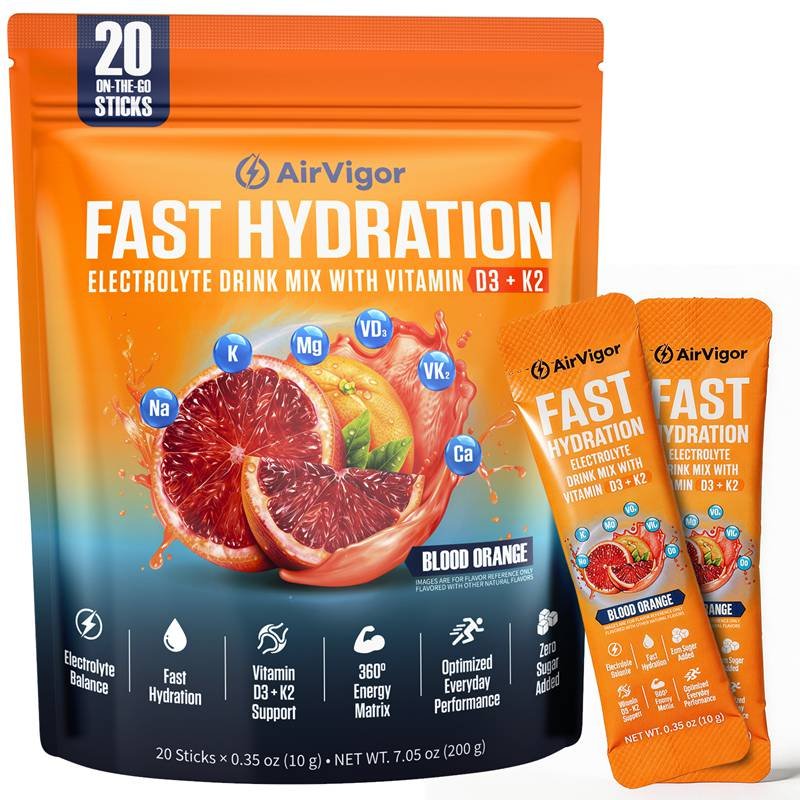
AirVigor is designed for people who want hydration support without adding complexity to the routine. The stick pack format solves a common problem in the electrolyte category: tubs are inconvenient outside the home, ready-to-drink bottles can be bulky or high in sugar, and capsules do not encourage water intake. A pre-measured packet is easier to carry, easier to portion, and easier to mix when the body needs fluid and mineral support.
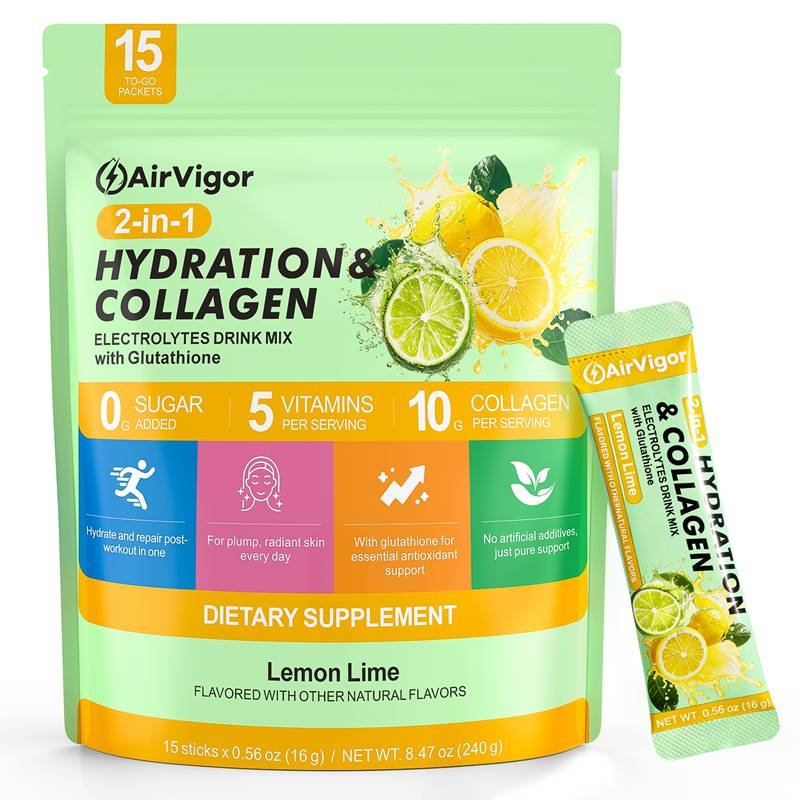
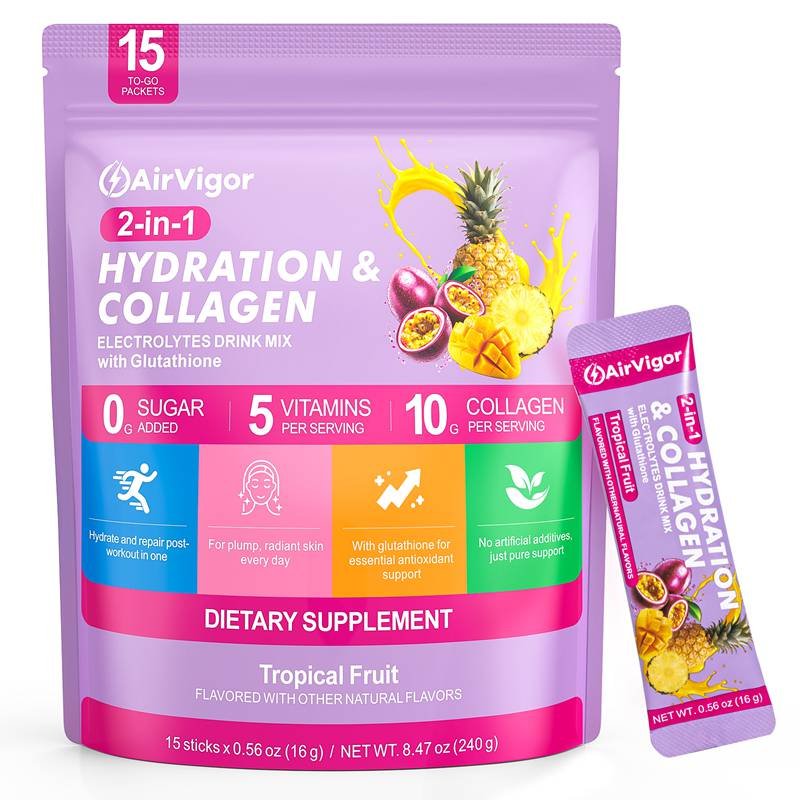
AirVigor Collagen Electrolytes fits active adults who connect hydration, sweat recovery routines, beauty nutrition, and daily wellness. Each serving provides electrolytes for hydration support, zero sugar, and 10g collagen peptides in a portable drink mix format. It can be used after workouts, running, hot yoga, sauna, travel, outdoor activity, or warm-weather days when plain water feels incomplete. The positioning stays clear: AirVigor is not a medical product, but a convenient hydration support option for healthy active adults who want an easier way to build water and electrolytes into daily routines.
Conclusion
Hydration and muscle function are closely connected. Muscles need water to support circulation, temperature control, and cellular function, but they also rely on electrolytes such as sodium, potassium, magnesium, and calcium to support normal contraction, relaxation, and nerve communication. That is why hydration is not only about drinking more water. The better question is whether the body needs plain water or water with electrolyte support.
For low-sweat days, plain water and balanced meals may be enough. For high-sweat days, the body often needs a more complete routine. Workouts, hot weather, sauna, hot yoga, travel, outdoor activity, long walks, low-carb eating, and repeated physical demand can all increase fluid and mineral needs. In these moments, electrolytes can help make water more useful by supporting fluid balance and normal muscle function.
Muscle cramps should also be viewed with balance. Electrolytes may help when cramps are related to sweat loss, dehydration, heat exposure, or low mineral intake. However, cramps can also come from muscle fatigue, sudden training changes, tightness, medications, circulation concerns, or nerve-related issues. The strongest routine is not built around one “miracle” mineral. It combines steady water intake, electrolyte support when sweat is high, mineral-rich foods, proper warm-up, gradual training progression, and attention to warning signs.
AirVigor Collagen Electrolytes is designed for this type of practical hydration routine. Each portable stick pack helps active users add electrolytes to water after sweat, workouts, sauna, hot yoga, travel, outdoor activity, or busy days. With 10g collagen peptides per serving, zero sugar, and an easy-to-carry format, AirVigor supports people who want hydration and collagen nutrition in one convenient daily drink.
AirVigor branded electrolyte stick packs are available for ready-to-use product ordering through current retail channels, making them the fastest option for customers and partners who want to start with an existing formula. Bulk order and custom product inquiries can also be discussed for select partners, including private label, flavor direction, packaging needs, and market-specific positioning.
Share:
Contact Expert Team
At AirVigor, performance becomes effortless. We transform advanced nutrition science into clean, effective supplements that help you hydrate, recover, and feel stronger every day. Shop AirVigor Supplements on Amazon and experience athlete-trusted formulas—backed by real science and supported by our world-class R&D and production capabilities.
Trust AirVigor
At AirVigor, turning your performance goals into reality is no longer a struggle—it’s a science-driven journey we build together. Whether you’re a runner, lifter, cyclist, yogi, outdoor athlete, or someone simply seeking better daily energy, AirVigor transforms advanced nutrition research into clean, effective, and trustworthy supplements you can feel.
Backed by our U.S. scientific team, global certifications, and world-class production standards, every formula is engineered to deliver real hydration, real recovery, and real performance. And when you’re ready to experience the difference, you’ll find AirVigor products available on Amazon and other major platforms—fast shipping, consistent quality, and a community of athletes already seeing results.
Behind the scenes, our R&D and manufacturing ecosystem also supports specialized formulation development, ensuring AirVigor continues to lead with innovation while keeping quality and safety uncompromised. But at the core, everything we create is built for you—your health, your performance, your momentum.
Choose AirVigor. Feel the science. Elevate your every day.


Subscribe to our newsletter
Sign up to our newsletter and we’ll keep you up to date with the latest arrivals.