Skip to content
Are Electrolytes for Active Women Lifestyle Really Helpful : A Practical Hydration Guide
# Your Trusted Dietary Supplement Brand In US
- Emily

Table of Contents
Many active women drink water all day but still feel thirsty, tired, dry, or heavy after workouts, hot yoga, long workdays, or travel. The problem is not always “not enough water.” Sometimes the body also needs minerals that help water work better inside the body. That is where electrolytes become useful.
Electrolytes for active women can help support hydration, sweat recovery, normal muscle function, and daily fluid balance. They are most useful after sweating, during hot weather, around workouts, after sauna, during travel, or when a busy schedule makes water intake inconsistent. They are not a replacement for meals, sleep, or recovery, but they can make hydration feel more complete when plain water is not enough.
For many women, the real question is not “Should I drink electrolytes every day?” The better question is “When does my lifestyle make hydration harder?” A woman leaving a hot yoga class, flying for work, training after a full office day, eating low-carb, or hiking on a warm weekend may all need a different hydration plan. This guide explains how to use electrolytes in a simple, realistic way.
What Are Electrolytes for Active Women?
Electrolytes for active women are key minerals that help water support the body more effectively during workouts, sweating, heat, travel, and busy daily routines. They are especially useful when plain water does not fully meet hydration needs.
Basic Electrolytes
Electrolytes are minerals such as sodium, potassium, magnesium, and calcium. For active women, these minerals support hydration, muscle function, nerve signals, and daily fluid balance during movement and sweat-heavy situations.
Electrolytes are not a special “fitness ingredient.” They are minerals the body already uses every day. The reason they matter more for active women is that exercise, heat, sweating, caffeine, travel, and inconsistent meals can increase the need for better hydration support.
When women sweat, they do not lose only water. Sweat also contains electrolytes, especially sodium. This is why some women can drink a full bottle of water after a workout and still feel thirsty, dry, or heavy. The water helps, but the body may also need minerals to support normal fluid balance.
For most active women, the four most important electrolytes in a hydration powder are sodium, potassium, magnesium, and calcium. Each one has a different role, and a balanced formula is usually easier to fit into daily routines than a product that only focuses on one mineral.
| Electrolyte | Main Role | Why Active Women Care |
|---|---|---|
| Sodium | Supports fluid balance and nerve function | Important after sweating, hot yoga, sauna, and outdoor activity |
| Potassium | Supports cell fluid balance and muscle function | Helpful for daily hydration and active routines |
| Magnesium | Supports normal muscle and nerve function | Useful for women focused on muscle comfort and recovery habits |
| Calcium | Supports muscle contraction and nerve signaling | Important for movement, strength, and active lifestyle support |
A good electrolyte drink should not make customers guess. The label should clearly show how much sodium, potassium, magnesium, and calcium are included per serving. This is important because active women often compare products based on daily use, sugar content, taste, and whether the formula fits workouts, travel, hot yoga, or low-carb routines.
Electrolytes are most useful when the body is under more hydration stress than usual. This can happen during:
- hot yoga or heated Pilates
- gym workouts and HIIT
- running, cycling, or hiking
- sauna or steam room use
- summer outdoor activity
- long travel days
- low-carb or lower-sugar eating
- busy workdays with low water intake
The point is not to drink electrolytes all day without reason. The point is to understand when the body needs more support than plain water alone.
Water vs Electrolytes
Water is the base of hydration, while electrolytes help support how fluid is balanced and used in the body. Active women may need electrolytes when sweat, heat, or routine changes make plain water feel incomplete.
Many women think hydration simply means drinking more water. In many cases, that is true. Water should always be the foundation. But active women often experience situations where plain water does not feel like enough. This is common after sweaty workouts, hot yoga, sauna, long flights, or outdoor activity in warm weather.
A woman may finish a class, drink water, and still feel dry or drained. Another may sip water during a flight and still feel tired or thirsty after landing. Another may start a workout after a long office day and feel flat before the session even begins. These situations do not always mean something serious is wrong. They often mean the hydration routine is not matching the day.
Electrolytes help make hydration more complete when the body has lost minerals through sweat or when daily habits make water balance harder to maintain. Sodium is especially important after sweat loss because it helps support fluid balance. Potassium, magnesium, and calcium support normal muscle and nerve function, which matters during and after movement.
| Daily Situation | Is Plain Water Enough? | When Electrolytes Make More Sense |
|---|---|---|
| Short indoor walk | Usually yes | Rarely needed unless the weather is hot |
| Light stretching | Usually yes | Usually not necessary |
| 30-minute gym session | Often yes | Helpful if sweating heavily |
| Hot yoga class | Sometimes not enough | Useful before or after class |
| Sauna session | Often not enough alone | Useful after heavy sweating |
| Summer hiking | May not be enough | Helpful before and after activity |
| Long flight | Water helps | Electrolytes can support a better travel hydration routine |
| Low-carb routine | Water helps | Electrolytes may help when thirst feels higher |
Electrolytes should not replace water. They work best when mixed into water and used at the right time. A good electrolyte powder should encourage women to drink more consistently, not make hydration feel complicated.
For active women, the easiest rule is simple: drink plain water every day, and use electrolytes when sweat, heat, travel, low-carb eating, or busy schedules make hydration harder.
Why Women Need Them
Active women may need electrolytes because daily life often combines exercise, sweating, caffeine, stress, travel, low water intake, and changing meal patterns. These small factors can build up and make hydration harder to maintain.
Women’s hydration needs are not only shaped by workouts. They are also shaped by schedule and lifestyle. A woman may wake up, drink coffee, work through meetings, eat a quick lunch, train after work, then run errands or take care of family responsibilities. Even if she drinks some water, her body may still feel behind by the end of the day.
This is why electrolytes are useful for more than just serious athletes. Many active women are not training for a marathon. They are doing Pilates, walking, lifting weights, taking hot yoga, cycling, traveling, working long hours, and trying to stay consistent with their health routine. Their hydration needs are real, even if their lifestyle does not look like professional sports.
Common signs that a woman may need better hydration support include:
- feeling thirsty soon after drinking water
- heavy legs after hot yoga or workouts
- dry mouth during travel
- feeling drained after sauna or summer activity
- afternoon headaches when water intake was low
- salty skin or salt marks on workout clothes
- stronger thirst during low-carb eating
- difficulty finishing workouts in hot conditions
These signs do not automatically mean electrolytes are the only answer. Food, sleep, total water intake, training load, and stress also matter. But when these signs appear around sweat, heat, travel, or inconsistent drinking, electrolytes may be a smart addition.
| Active Woman Profile | Why Electrolytes May Help | Best Use Moment |
|---|---|---|
| Hot yoga user | Heavy sweat in heated rooms | Before or after class |
| Gym user | Sweat and muscle demand | Before or after workouts |
| Busy professional | Low water intake during workdays | Midday or afternoon |
| Traveler | Dry air and irregular routine | During flight or after arrival |
| Low-carb user | More thirst and mineral shifts | Morning or pre-workout |
| Outdoor woman | Heat and long activity | Before and after activity |
The best electrolyte product for women should feel easy, not extreme. Most women do not want a complicated sports formula that only makes sense for endurance athletes. They want something that fits a water bottle, tastes clean, mixes quickly, and can be carried to work, gym, yoga class, or travel.
This is where product format matters. Stick packs are often more practical than tubs because they are pre-measured and portable. A woman can keep them in a gym bag, purse, office drawer, car, or carry-on. When hydration support is easy to access, it is more likely to become a real habit.
For active women, electrolytes are not about doing more. They are about helping the body handle the active life she is already living.
Which Active Women Need Electrolytes?
Active women who sweat often, train regularly, practice hot yoga, travel frequently, work long hours, use saunas, spend time outdoors, or follow low-carb routines may benefit most from electrolytes. The key is not fitness level, but hydration pressure.
Workout Women
Women who train regularly may need electrolytes when workouts involve sweat, heat, long duration, or repeated weekly sessions. Electrolytes can help support hydration before and after exercise, especially when plain water feels insufficient.
Workout women are one of the easiest groups to understand because the hydration trigger is visible. Sweat, thirst, wet clothing, flushed skin, and heavy legs are all signs that the body is working harder to manage fluid balance. This does not mean every short workout requires electrolyte powder. A light 20-minute stretch or an easy walk may only need water. But once training becomes sweaty, intense, or frequent, electrolytes become more useful.
Active women often train around busy schedules. Many do not work out in perfect conditions. They train early before breakfast, after office meetings, between school pickups, after coffee, or late in the evening. By the time the workout begins, water intake may already be low. In this case, using electrolytes before training can help support a better hydration starting point.
Electrolytes are especially useful for women doing:
| Workout Type | Hydration Challenge | Best Electrolyte Timing |
|---|---|---|
| HIIT | Fast sweat loss and high intensity | Before or after training |
| Strength training | Long sessions and muscle demand | Before or after workout |
| Running | Sweat, heat, and longer duration | Before, during, or after |
| Cycling | Long sessions and steady sweat | During or after ride |
| Boxing or dance fitness | High sweat and high movement | Before or after class |
| Pilates | Usually lighter sweat, but longer sessions | After class if sweating |
| Group fitness | Heat, crowding, and repeated sets | Before or after session |
For women who train three or more times per week, electrolyte use can become part of a recovery rhythm. It does not need to be taken after every workout, but it can be useful after harder sessions, hot classes, summer training, or days when the user did not drink enough water before exercise.
Practical signs that workout women may need electrolyte support include:
- sweating through clothes during class
- salty skin or salt marks on workout wear
- feeling thirsty soon after drinking plain water
- heavy legs after training
- poor workout comfort in hot weather
- feeling flat before evening exercise
- stronger fatigue after repeated weekly sessions
Electrolytes should work with the rest of the recovery routine. They do not replace protein, carbohydrates, stretching, sleep, or rest. But when sweat and hydration are part of the issue, they can make the routine feel more complete.
Hot Yoga Women
Hot yoga women often need electrolytes because heated rooms increase sweat loss quickly. Even low-impact movement can feel demanding when the body is working hard to cool itself during a warm, humid class.
Hot yoga is different from a regular indoor workout because heat changes the hydration demand. A woman may not be jumping or running, but she may still sweat heavily for 45–90 minutes. This can leave her feeling thirsty, lightheaded, dry, flushed, or unusually tired after class.
Many hot yoga users drink plenty of water, but still feel “empty” or drained after class. This is because sweat loss may include minerals, especially sodium. Plain water helps replace fluid, but it may not fully support the mineral side of post-sweat recovery. Electrolytes can be useful before or after class, depending on personal comfort.
A simple hot yoga hydration plan may look like this:
| Time | What to Do | Why It Helps |
|---|---|---|
| 1–2 hours before class | Drink plain water steadily | Avoid starting class under-hydrated |
| 30–60 minutes before class | Use a light electrolyte drink if needed | Supports hydration before heavy sweating |
| During class | Sip water if comfortable | Avoid overfilling the stomach |
| After class | Drink water or electrolytes | Supports post-sweat recovery |
Women should avoid chugging a large amount of liquid right before class. Too much fluid can feel uncomfortable during twisting, bending, and core work. A lighter drink before class and steady rehydration after class often feels better.
Electrolytes may be especially helpful for hot yoga women who notice:
- dizziness or head-light feeling after class
- strong thirst even after water
- salt marks on clothes or mat towel
- muscle tightness after heated sessions
- dry mouth or headache later in the day
- low appetite after class but strong thirst
The best electrolyte product for hot yoga should taste clean and light. Thick, syrupy, or very sweet drinks can feel unpleasant after heated exercise. A zero sugar stick pack mixed into cold water is often easier to use before or after class.
Busy Women
Busy women may need electrolytes because hydration often breaks down during long workdays, errands, meetings, commuting, childcare, and late workouts. The issue is not always heavy exercise; sometimes it is simply inconsistent water intake.
Many active women do not forget hydration because they do not care. They forget because their day moves too fast. Morning coffee replaces water. Meetings run long. Lunch is quick. A workout is squeezed in after work. By late afternoon, the body may feel dry, tired, or low on focus.
Electrolytes can help busy women build a more intentional water routine. A light electrolyte drink can make plain water more appealing and easier to finish. This matters because the best hydration product is not only about minerals. It is also about whether the customer actually drinks enough fluid.
Here is how electrolyte use can fit a busy day:
| Daily Moment | Common Problem | Electrolyte Use |
|---|---|---|
| Morning rush | Coffee first, water forgotten | Mix one stick with water after waking |
| Office hours | Long sitting and low water intake | Keep stick packs in desk drawer |
| Afternoon slump | Dry mouth, low focus, headache | Use electrolytes to restart hydration |
| Pre-workout | Training after a full workday | Drink 20–45 minutes before exercise |
| Commute or errands | No time for full routine | Carry stick packs in purse or car |
| Evening recovery | Tired after work and activity | Use after sweaty class or walk |
For busy women, product format matters more than many brands realize. A large tub may look economical, but it is not helpful if the user is rarely home when she needs it. Ready-to-drink bottles can be convenient, but they are bulky and not always easy to carry. Stick packs solve a real daily problem because they are clean, pre-measured, and portable.
A busy woman may benefit from electrolytes if she often notices:
- drinking little water before afternoon
- relying on coffee more than water
- feeling dry during workdays
- headaches when meals or water are delayed
- struggling with after-work workouts
- feeling thirsty during commuting or errands
- forgetting hydration while traveling between places
The goal is not to turn electrolytes into another task. The goal is to make hydration easier to complete on days that are already full.
Travel Women
Travel women may need electrolytes because flights, dry air, schedule changes, restaurant meals, caffeine, alcohol, and poor water intake can make hydration harder. Electrolytes help create a simple hydration routine when normal habits are disrupted.
Travel changes almost everything that supports hydration. Water intake becomes less regular. Meals become saltier or less balanced. Sleep is disrupted. Airplane cabins feel dry. Movement is limited. Coffee or alcohol may increase. Even women who hydrate well at home may feel dry, tired, puffy, or off-rhythm while traveling.
Electrolytes are useful because they are easy to pack and simple to use with bottled water. A few stick packs can fit in a carry-on, purse, suitcase pocket, gym bag, or hiking backpack. This makes them more practical than large tubs or ready-to-drink bottles.
A travel hydration plan can be simple:
| Travel Situation | Hydration Challenge | Electrolyte Use |
|---|---|---|
| Short flight | Dry air and limited water | Use after landing if feeling dry |
| Long flight | Low water intake and long sitting | Sip electrolyte water during flight |
| Road trip | Irregular stops and snacks | Keep stick packs in the car |
| Hotel stay | Changed routine and poor meal timing | Mix with bottled water in the morning |
| Fitness travel | Workouts away from home | Use before or after training |
| Warm destination | Heat and extra sweating | Use before outdoor activity |
| Work trip | Coffee, meetings, poor sleep | Use midday or after arrival |
Travel women often care about portability and taste. They do not want a product that spills, takes space, or requires a scoop. They also do not want something overly sweet after a long flight. A clean, zero sugar electrolyte stick pack is easier to use when the body already feels tired from travel.
Electrolytes may be especially useful for women who travel for:
- business meetings
- fitness events
- hiking trips
- beach vacations
- wellness retreats
- family trips
- long-distance flights
- hot-weather destinations
The best travel electrolyte should be sealed, lightweight, easy to mix, and clear on serving directions. If the product can be used with a normal bottled water, it is much easier for customers to keep using it away from home.
How Do Electrolytes Help Active Women?
Electrolytes help active women support hydration, sweat recovery, normal muscle function, and daily fluid balance. They are most useful when workouts, heat, travel, sauna, low-carb eating, or busy schedules make plain water feel less complete.
Sweat Support
Sweat support is one of the clearest reasons active women use electrolytes. When the body sweats, it loses water and minerals, especially sodium. Electrolytes help support rehydration after sweat-heavy activity.
Sweat is not just water. This is the first thing many customers do not realize. During workouts, hot yoga, sauna, summer walks, hiking, or outdoor sports, the body loses fluid through sweat, and that sweat contains minerals. Sodium is usually the electrolyte most closely connected with sweat loss, which is why hydration can feel incomplete if a woman only drinks plain water after heavy sweating.
The amount of sweat loss can vary a lot. A woman doing light indoor Pilates may not need much electrolyte support. A woman doing 60 minutes of hot yoga, a summer run, or a sauna session may need more. Climate, clothing, workout intensity, body size, sweat rate, and how much water she drank earlier in the day can all change the need.
A practical way to judge sweat support is not to overthink numbers, but to watch the body’s signals.
| Sweat Sign | What It May Suggest | Electrolyte Use |
|---|---|---|
| Clothes are soaked after class | Higher fluid loss | Use electrolytes after activity |
| Skin tastes salty | Sodium loss through sweat | Use electrolytes with water |
| Salt marks on clothes or hat | Heavier sodium loss | Consider pre- and post-activity use |
| Strong thirst after water | Plain water may feel incomplete | Use a balanced electrolyte drink |
| Heavy legs after heat exposure | Fluid balance may need support | Rehydrate slowly with electrolytes |
| Headache after hot activity | Hydration may be part of the issue | Use water, electrolytes, food, and rest |
For active women, sweat support matters most in common weekly routines, not only extreme sports. A heated Pilates class, a humid summer walk, a crowded group fitness studio, or a sauna session can all create enough sweat loss to make electrolytes useful. This is why electrolyte use should be tied to the actual day, not just the workout label.
Women may benefit from electrolyte sweat support after:
- hot yoga or heated Pilates
- outdoor running or cycling
- sauna or steam room use
- HIIT and circuit training
- long summer walks
- hiking or tennis
- physically active workdays
- travel to hot climates
The best sweat recovery drink should be easy to drink when the body is already warm. Many women do not want thick, syrupy, high-sugar drinks after sweating. A clean, zero sugar electrolyte powder mixed with cold water is often easier to finish and easier to repeat.
Muscle Support
Electrolytes support normal muscle function because muscles rely on fluid balance and mineral movement. Sodium, potassium, magnesium, and calcium each play a role in helping muscles contract, relax, and respond during activity.
Many active women think about muscle support only after cramps or soreness appear. But muscle function starts before the workout. If hydration is already behind before training, the body may feel less ready to move. A woman may notice that her legs feel heavy during squats, her pace drops during a run, or a hot yoga class feels harder than usual.
Electrolytes are not a magic fix for every muscle issue. Muscle soreness can come from training volume, poor recovery, lack of sleep, low protein intake, or new movements. But when the discomfort is connected with sweating, heat, long activity, or poor water intake, electrolytes can support the hydration side of muscle function.
Each key electrolyte supports movement in a different way:
| Electrolyte | Muscle-Related Role | Active Women Scenario |
|---|---|---|
| Sodium | Supports nerve signals and fluid balance | Heavy sweat workouts, hot yoga, sauna |
| Potassium | Supports normal muscle and cell function | Daily training, running, cycling |
| Magnesium | Supports normal muscle and nerve function | Recovery routines, tight-feeling muscles |
| Calcium | Supports muscle contraction and nerve signaling | Strength training, Pilates, active aging |
For a woman who trains regularly, muscle support is not just about one hard workout. It is about being able to keep moving through the week. She may lift weights on Monday, do yoga on Wednesday, walk daily, and hike on the weekend. If hydration is poor after every sweat-heavy session, the body may feel more drained over time.
A practical electrolyte routine for muscle support can look like this:
| Training Moment | Use Style | Why It Helps |
|---|---|---|
| Before workout | Mix one serving with water | Helps start training better hydrated |
| After sweaty workout | Drink slowly after activity | Supports sweat recovery |
| After hot yoga | Use with water and light food if needed | Helps replace fluid and minerals |
| After sauna | Drink during cooldown | Supports post-sweat hydration |
| During long activity | Sip if label directions allow | Helps maintain hydration during extended movement |
Women should also avoid expecting electrolytes to do the work of a full recovery routine. For better muscle comfort, hydration should work together with protein, carbohydrates when needed, stretching, sleep, and rest. Electrolytes are one part of the system, not the whole system.
Daily Hydration
Electrolytes help daily hydration by making water intake more intentional and more satisfying. For active women with busy schedules, a light electrolyte drink can help rebuild a hydration habit during work, travel, workouts, and errands.
Daily hydration is where many active women quietly struggle. The problem is often not a lack of knowledge. Most women know they should drink more water. The problem is that daily life gets in the way. Coffee comes first. Meetings run long. Lunch is rushed. A workout happens after work. By the time thirst becomes obvious, the day is already half over.
Electrolytes can help because they make hydration feel like a clear action instead of a vague goal. Mixing one stick pack into a water bottle can turn “I should drink more water” into “I will finish this bottle before my next meeting.” That small behavior change can be very useful for women who are active but busy.
Daily hydration needs may increase when several factors stack together:
| Daily Factor | How It Affects Hydration | Electrolyte Fit |
|---|---|---|
| Morning coffee | May replace early water intake | Use water or electrolytes after coffee |
| Long meetings | Reduces regular drinking | Keep bottle nearby |
| Afternoon workout | Training begins with low fluid intake | Use electrolytes before workout |
| Air conditioning | Can make mouth and skin feel dry | Sip water steadily |
| Warm weather | Increases sweat loss | Use electrolytes on hotter days |
| Low-carb meals | May change water balance | Choose zero sugar electrolytes |
| Travel | Breaks normal routines | Use stick packs with bottled water |
For daily hydration, a product should feel light enough for regular use. If the drink tastes like candy or feels too salty, many women will not want it often. If it mixes poorly, it becomes annoying. If it is packed in a large tub, it may stay at home when the user needs it at work or the gym.
This is why active women often prefer electrolyte stick packs. They fit in the places where hydration gaps happen: desk drawers, purses, gym bags, cars, lockers, carry-ons, and hotel rooms. The product format can directly affect whether the customer builds a real habit.
A simple daily hydration routine may include:
- one bottle of water after waking
- electrolytes before or after sweaty workouts
- a stick pack in the office drawer for low-water days
- electrolytes during travel or after landing
- extra water during hot weather or sauna use
The goal is not to drink electrolytes all day. The goal is to use them at the moments when plain water is easy to forget or does not feel like enough.
Low-Carb Support
Electrolytes can support active women on low-carb or lower-sugar routines because these eating patterns may change how the body handles water and minerals. A zero sugar electrolyte drink can help support hydration without adding unnecessary sugar.
Low-carb eating is common among women who care about body composition, blood sugar awareness, fitness goals, or lower-sugar daily habits. During the early stage of reducing carbohydrates, some women notice more thirst, more frequent urination, lower workout comfort, or a flatter feeling during training. This is one reason electrolytes are often discussed in low-carb communities.
The key point is that low-carb hydration should not rely on sugary sports drinks. Traditional sports drinks may contain sugar that does not fit the customer’s routine. For active women who want hydration support without changing their nutrition goals, zero sugar electrolytes are often a better fit.
A low-carb active woman may benefit from electrolytes if she notices:
| Situation | What She May Feel | What to Check |
|---|---|---|
| First weeks of low-carb eating | More thirst or dry mouth | Sodium and potassium |
| Morning workout | Lower training comfort | Electrolytes before exercise |
| Hot yoga or sauna | Stronger post-sweat fatigue | Use after sweating |
| Afternoon workday | Tired or low focus | Water intake and meals |
| Outdoor activity | Faster thirst in heat | Electrolytes plus water |
| Lower appetite | Less mineral-rich food intake | Magnesium and potassium |
Electrolytes are not a replacement for balanced eating. Low-carb women still need enough protein, calories, vegetables, minerals, and overall food quality. If a woman feels weak because she is under-eating, electrolytes alone will not solve the issue. But when thirst and hydration feel different because of lower carbohydrate intake, electrolytes can be a useful part of the routine.
For low-carb active women, label reading is especially important. The front of the package may say “hydration” or “fitness,” but the nutrition panel tells the real story. Customers should check:
- total sugar per serving
- total carbohydrates per serving
- sodium amount
- potassium amount
- magnesium amount
- calcium amount
- caffeine content
- water mixing directions
The best low-carb electrolyte product should be clear, zero or low sugar, easy to mix, and gentle enough for repeated use. For active women, the goal is not a harsh sports formula. It is hydration support that fits workouts, office days, travel, hot yoga, and long-term lifestyle habits.

What Electrolytes Should Active Women Choose?
Active women should choose electrolytes based on sweat level, workout type, sugar preference, daily routine, and label clarity. A good formula should clearly list sodium, potassium, magnesium, and calcium, while staying easy to mix, pleasant to drink, and practical for regular use.
Sodium
Sodium is the electrolyte most closely linked with sweat loss. Active women should not avoid sodium blindly, but they should choose the amount based on sweat level, heat exposure, workout duration, and personal health needs.
Sodium is often misunderstood. Many customers see “sodium” and immediately think it is something to reduce. In everyday diet, that can be true for some people. But in hydration, sodium has a specific role. It helps support fluid balance, especially when the body loses water and minerals through sweat.
For active women, sodium matters most in sweat-heavy situations. A woman doing a short indoor walk may not need much sodium from an electrolyte powder. A woman taking hot yoga, running outside in summer, hiking for several hours, or using a sauna may need more support because sweat loss is higher.
The practical question is not “Is sodium good or bad?” The better question is “Does this sodium level match my activity?” A daily hydration drink should not automatically be the same as a formula for endurance racing, summer construction work, or long-distance cycling.
| Scenario | Sodium Need | What to Look For |
|---|---|---|
| Light indoor activity | Low | Water may be enough |
| Office hydration | Low to moderate | Mild electrolyte support, not overly salty |
| Regular gym workout | Moderate | Clear sodium amount per serving |
| Hot yoga | Moderate to higher | Sodium plus potassium and magnesium |
| Sauna use | Moderate to higher | Good post-sweat hydration support |
| Summer running | Higher | Formula designed for sweat replacement |
| Long hiking or cycling | Higher | Stronger electrolyte profile may be useful |
Sodium may be especially useful if a woman notices salty skin, salt marks on clothing, strong thirst after sweating, or feeling drained after hot activity. These signs do not prove sodium is the only issue, but they suggest sweat-related mineral loss may be part of the hydration picture.
Women with high blood pressure, kidney disease, heart disease, fluid restrictions, or sodium-sensitive health concerns should be more careful and follow professional guidance. For healthy active women, sodium can be useful when used at the right time and in the right amount.
A good electrolyte label should show sodium clearly. Customers should not have to search through a hidden blend or guess whether the product is strong, light, or suitable for daily use.
Potassium
Potassium supports normal cell function, fluid balance, and muscle function. Active women should choose products that include potassium clearly, especially if they train often, eat irregular meals, travel, or do not consistently eat potassium-rich foods.
Potassium works closely with fluid balance inside the body’s cells. While sodium is often discussed after sweating, potassium is also important for a more complete hydration routine. Many active women focus only on sodium, but a product that includes potassium can feel more balanced for daily lifestyle use.
Potassium intake often depends on diet quality. Women who eat enough fruits, vegetables, beans, potatoes, yogurt, and other whole foods may already get meaningful potassium through meals. But many busy women do not eat that way every day. They may skip breakfast, grab a quick lunch, eat fewer vegetables during travel, or follow a lower-carb routine that changes food choices.
This is where a potassium-containing electrolyte powder can help support the routine. It should not replace real food, but it can make hydration more complete on active or inconsistent days.
| Food or Routine Factor | Potassium Concern | Product Selection Tip |
|---|---|---|
| Low fruit intake | Potassium may be lower | Choose a formula with potassium |
| Few vegetables | Daily mineral intake may be weaker | Pair electrolytes with better meals |
| Frequent travel | Food quality changes | Keep stick packs available |
| Low-carb eating | Food choices may shift | Check potassium and sugar |
| Heavy workouts | Muscle and fluid support matter | Look for sodium + potassium |
| Busy office days | Meals may be rushed | Use electrolytes when water intake drops |
Potassium is also useful from a customer trust perspective. A formula with sodium only may feel too narrow for women looking for daily hydration. When potassium is clearly included, the product feels more balanced and more suitable for active lifestyle support.
Good food sources of potassium include bananas, potatoes, sweet potatoes, spinach, avocado, beans, lentils, yogurt, tomatoes, and coconut water. An electrolyte drink should support the routine, not replace these foods.
The label should clearly show the amount of potassium per serving. If the product only says “electrolyte blend” without listing mineral amounts, customers may not know whether they are getting meaningful support or just flavored water.
Magnesium
Magnesium supports normal muscle and nerve function, making it important for active women who train, stretch, lift, run, walk, or practice yoga. A useful electrolyte product should include magnesium in a balanced amount that supports daily use without feeling too heavy.
Magnesium is one of the minerals many women actively look for because it connects with muscle comfort, relaxation routines, and recovery habits. In an electrolyte product, magnesium helps make the formula feel more complete, especially for women who do not want a sodium-only drink.
However, magnesium is also a mineral where “more” is not always better. Some women are sensitive to higher magnesium amounts, especially if the formula uses certain forms or if the product is taken too concentrated. Too much at once may feel uncomfortable for digestion. This is why a daily electrolyte powder should use a practical, comfortable level instead of trying to look impressive with an oversized dose.
Magnesium may be especially relevant for women who:
- train several times per week
- do hot yoga, Pilates, running, or strength training
- feel muscle tightness after activity
- follow low-carb or lower-sugar routines
- have inconsistent meals
- want a more complete mineral profile
- dislike hydration products that only focus on sodium
Magnesium should be viewed as part of a bigger recovery routine. If a woman feels sore because she increased training volume, slept poorly, or skipped protein, magnesium alone will not solve it. But when used in a balanced electrolyte formula, it can support the hydration and muscle-function side of daily activity.
| Use Situation | Why Magnesium Matters | What to Watch |
|---|---|---|
| Post-workout hydration | Supports normal muscle function | Avoid overly high amounts if sensitive |
| Hot yoga | Supports muscle and nerve function | Use with enough water |
| Evening movement | Fits recovery-style routines | Check if product contains caffeine |
| Low-carb routine | Helps round out mineral support | Check sugar and total carbs |
| Daily hydration | Adds balance beyond sodium | Choose a comfortable serving size |
For active women, the best magnesium-containing electrolyte product should be easy to drink regularly. If it causes stomach discomfort or tastes too mineral-heavy, customers will stop using it. A balanced amount, clear label, and good water ratio make a big difference.
Calcium
Calcium supports muscle contraction, nerve signaling, and long-term movement health. Active women should look for calcium as part of a balanced electrolyte profile, especially if they care about strength training, Pilates, running, hiking, and active aging.
Many customers think of calcium only as a bone mineral. That is understandable, but calcium also plays a role in normal muscle contraction and nerve communication. This makes it relevant for active women who rely on movement every day, whether that movement is training, walking, yoga, hiking, or regular physical activity.
In an electrolyte drink, calcium is usually not included at the same level as a dedicated calcium supplement. It should not be viewed as a full replacement for calcium-rich foods. Instead, it helps round out the mineral profile and gives the formula a more complete movement-support structure.
Calcium may be especially important for women who think long term. Many active women are not only trying to get through today’s workout. They want to stay strong, mobile, and consistent over years. A hydration product that includes calcium, magnesium, potassium, and sodium may feel more aligned with that broader active lifestyle.
| Active Lifestyle Goal | Why Calcium Matters | Best Product Fit |
|---|---|---|
| Strength training | Supports normal muscle contraction | Balanced electrolyte formula |
| Pilates and barre | Supports controlled movement | Light, easy-drinking hydration |
| Running and hiking | Supports movement function | Electrolytes after sweat |
| Active aging | Supports long-term movement habits | Clear mineral profile |
| Daily wellness | Completes mineral support | Moderate daily formula |
Women should still get calcium from food when possible. Common calcium sources include dairy products, fortified plant milks, tofu, leafy greens, sardines, and fortified foods. Electrolytes can support hydration, but they should not replace a nutrient-rich diet.
For customers comparing products, calcium can be a small but meaningful detail. A formula that includes calcium may feel more thoughtfully designed than one that only focuses on sodium and flavor. The key is balance: enough to support the mineral profile, but not so much that the product feels like a different supplement category.
Sugar Level
Sugar level is one of the most important things active women should check before choosing an electrolyte product. For daily hydration, zero sugar or low sugar is often easier to fit into workouts, travel, office routines, and low-carb lifestyles.
Traditional sports drinks often contain sugar because they are designed partly for energy during longer endurance activity. That can be useful in specific cases, such as long runs, long rides, or high-output sports sessions. But many active women use electrolytes for daily hydration, hot yoga, sauna, light training, travel, or office routines. These situations usually do not require a sugary drink.
A high-sugar electrolyte drink may not fit women who are watching calories, managing body composition, avoiding sweet beverages, following low-carb routines, or trying to reduce daily sugar intake. It can also feel too sticky or heavy after sweating.
| Use Case | Better Sugar Choice | Why |
|---|---|---|
| Daily hydration | Zero or low sugar | Easier for regular use |
| Hot yoga | Zero or low sugar | Feels lighter after heat |
| Office hydration | Zero sugar | Avoids turning water into a sweet drink |
| Low-carb routine | Zero sugar | Fits nutrition goals |
| Travel | Zero or low sugar | Easier on tired digestion |
| Long endurance sport | Sugar may be useful | Can support fuel needs during long sessions |
Active women should not only read the front label. Words like “hydration,” “clean,” or “wellness” do not automatically mean low sugar. Customers should check total sugar, total carbohydrates, and serving size.
For most active lifestyle use, a zero sugar electrolyte powder is a more flexible option. It can be used before workouts, after hot yoga, during travel, or at work without adding unnecessary sweetness to the day.
How Should Active Women Use Electrolytes?
Active women should use electrolytes when workouts, heat, sweating, travel, sauna, low-carb eating, or busy schedules make hydration harder. The best routine is simple: mix one serving with water, follow label directions, and adjust timing based on sweat level and daily activity.
Best Timing
The best time to use electrolytes depends on the reason for drinking them. Active women may use electrolytes before workouts, after sweating, during travel, after sauna, or during long workdays when water intake is low.
Timing matters because electrolyte needs are not the same every day. A woman taking a short walk in cool weather may only need water. A woman going to hot yoga after a full workday may need stronger hydration support before and after class. A woman flying for six hours may need electrolytes at a completely different time than a woman lifting weights in the morning.
The easiest way to use electrolytes is to connect them with clear daily moments. Instead of thinking, “I need electrolytes every day,” active women can think, “I use electrolytes when my body is about to sweat, has already sweated, or when my normal water routine is disrupted.”
| Use Timing | Best For | Practical Use |
|---|---|---|
| Morning | Early workouts, low water intake after waking | Drink with water before activity |
| 20–45 minutes before workout | Gym, running, cycling, HIIT, hot yoga | Helps start activity with hydration support |
| After workout | Sweat recovery, heavy legs, strong thirst | Drink slowly after cooling down |
| After hot yoga | Heavy sweat and heated-room recovery | Use after class or lightly before class |
| After sauna | Fast sweat loss | Drink during cooldown |
| During travel | Flights, road trips, hotel stays | Mix with bottled water |
| Afternoon | Busy workdays, low water intake | Use as a hydration reset |
| Hot weather | Outdoor activity, summer errands | Use before or after sweating |
Before workouts, electrolytes can help women avoid starting from a hydration deficit. This is especially useful for early morning exercisers, after-work gym users, runners, cyclists, and hot yoga students. If a woman has had coffee, meetings, and little water before training, a pre-workout electrolyte drink may be more useful than waiting until she already feels tired.
After workouts, electrolytes are helpful when sweat loss is obvious. Wet clothes, salty skin, strong thirst, flushed skin, or heavy legs can all be signs that the body needs more thoughtful rehydration. In this case, electrolytes should be paired with water and, when needed, a meal or snack.
For travel, timing is more flexible. Women can use electrolytes during a flight, after landing, before a long outdoor day, or the morning after a disrupted schedule. The goal is to keep hydration simple when normal routines are harder to follow.
Water Amount
Water amount affects taste, comfort, and hydration experience. Active women should follow the product label first, then adjust slightly based on taste, sweat level, and stomach comfort.
Many people focus only on the powder but ignore the water ratio. That is a mistake. If an electrolyte powder is mixed with too little water, it may taste too strong, too salty, or too sweet. If it is mixed with too much water, the flavor may feel weak and the customer may not enjoy drinking it. The right water amount makes the product easier to finish and easier to use again.
For most active women, a full water bottle is usually more practical than a small concentrated drink. Sipping over time often feels better than drinking quickly, especially after hot yoga, sauna, long flights, or intense workouts. A concentrated drink may sit heavily in the stomach, while a properly diluted drink feels cleaner and more refreshing.
| Situation | Water Use Tip | Why It Matters |
|---|---|---|
| Before workout | Mix with enough water and drink gradually | Avoids stomach heaviness |
| After workout | Sip slowly during cooldown | Helps the body rehydrate more comfortably |
| Hot yoga | Avoid chugging right before class | Too much liquid can feel uncomfortable |
| Sauna | Drink after cooling slightly | Supports post-sweat hydration |
| Travel | Mix with bottled water | Easy to use anywhere |
| Office use | Keep a bottle nearby and finish steadily | Builds better water habits |
| Outdoor activity | Pair electrolytes with extra plain water | Supports longer hydration needs |
Women should also remember that electrolyte drinks do not replace total water intake. They are part of hydration, not the whole routine. A woman can use one serving of electrolytes and still need plain water throughout the day.
A useful daily approach is:
- drink plain water after waking
- use electrolytes around sweat-heavy or high-heat moments
- sip steadily instead of drinking too quickly
- continue plain water between electrolyte servings
- follow the label serving directions instead of guessing
The product should also fit the bottle size customers actually use. If a woman carries a 16–24 oz water bottle to work or the gym, the serving should taste good in that range. If the drink only tastes right in a very specific container, daily use becomes harder.
Daily Use
Active women can use electrolytes daily when their lifestyle creates regular hydration pressure, such as frequent sweating, hot climates, workouts, travel, sauna use, or low-carb eating. Women with lighter routines may only need them a few times per week.
Daily use should not mean automatic use without thinking. The better approach is need-based daily use. A woman who does hot yoga four times per week, walks outdoors in summer, or trains after work may use electrolytes often. Another woman who does light indoor movement and drinks enough water may only use electrolytes after certain workouts or travel days.
The best daily-use formula should be easy to drink and not overly intense. A very salty formula may be useful for heavy sweaters but may not fit office hydration. A sugary sports drink may help during long endurance activity but may not fit a daily wellness routine. For active women, a zero sugar electrolyte powder with clear minerals is often more flexible.
| Lifestyle Pattern | Daily Electrolyte Need | Suggested Approach |
|---|---|---|
| Light indoor activity | Low | Use occasionally when needed |
| Regular gym training | Moderate | Use after sweaty or harder sessions |
| Hot yoga or sauna | Higher | Use around sweat-heavy sessions |
| Outdoor summer activity | Higher | Use on hot or long activity days |
| Frequent travel | Moderate to higher | Keep stick packs ready |
| Low-carb routine | Moderate | Use when thirst or training feels different |
| Busy office schedule | Occasional to moderate | Use when water intake is low |
| Heavy sweater | Higher | Use based on sweat level and label directions |
For women who want a simple rule, daily use should be tied to the day’s “hydration load.” That means looking at how much the body is being asked to handle. Heat, sweat, caffeine, travel, long work hours, low-carb eating, and intense training all add to that load.
A daily-use electrolyte should also be easy on the routine. If it is hard to scoop, messy, too sweet, or difficult to carry, it will not become a habit. This is why stick packs can work well for active women. They remove the guessing, reduce mess, and make it easier to use electrolytes in the places where hydration gaps happen.
Women with kidney disease, heart disease, high blood pressure concerns, pregnancy, breastfeeding, fluid restrictions, or medication use that affects minerals should ask a healthcare professional before regular use. Electrolytes are common minerals, but regular supplementation should still match personal health needs.
Common Mistakes
The most common electrolyte mistakes are using them too late, choosing products based only on flavor, ignoring sugar and sodium levels, mixing with the wrong water amount, or expecting electrolytes to replace food, sleep, and recovery.
Many active women only think about electrolytes after they already feel thirsty, drained, or headachy. At that point, hydration is already behind. A better habit is to prepare before high-sweat situations and rehydrate soon after activity. This is especially useful for hot yoga, sauna, long outdoor workouts, or training after a busy day.
Another mistake is choosing based only on taste. Flavor matters because women need to enjoy the drink, but a good product should also have clear mineral amounts, suitable sugar level, simple directions, and a format that fits real life. A product can taste good and still be too sugary, too weak, or too unclear for daily use.
| Mistake | Why It Happens | Better Choice |
|---|---|---|
| Waiting until very thirsty | Hydration was delayed too long | Drink before or soon after sweat-heavy activity |
| Using too little water | Stronger taste seems convenient | Follow label water directions |
| Choosing only by flavor | Front label looks attractive | Check sodium, potassium, magnesium, calcium, and sugar |
| Drinking high sugar daily | Confusing sports fuel with hydration | Choose zero or low sugar for daily use |
| Using electrolytes for every issue | Expecting one product to solve fatigue | Also check meals, sleep, stress, and recovery |
| Carrying only a tub at home | Product is not available when needed | Use stick packs for gym, work, and travel |
Electrolytes should not be used as a cover-up for poor routines. If a woman is under-eating, skipping meals, sleeping badly, or training too hard, electrolyte powder will only address hydration. It will not replace protein, calories, rest, or a better training schedule.
The smartest electrolyte habit is simple and flexible. Use them when there is a clear reason: sweat, heat, travel, sauna, low-carb eating, or poor water intake. Choose a product with clear minerals, low or zero sugar, good taste, and easy portability. Then build the routine around real life, not a perfect schedule.
Why Choose AirVigor Electrolytes for Active Women?
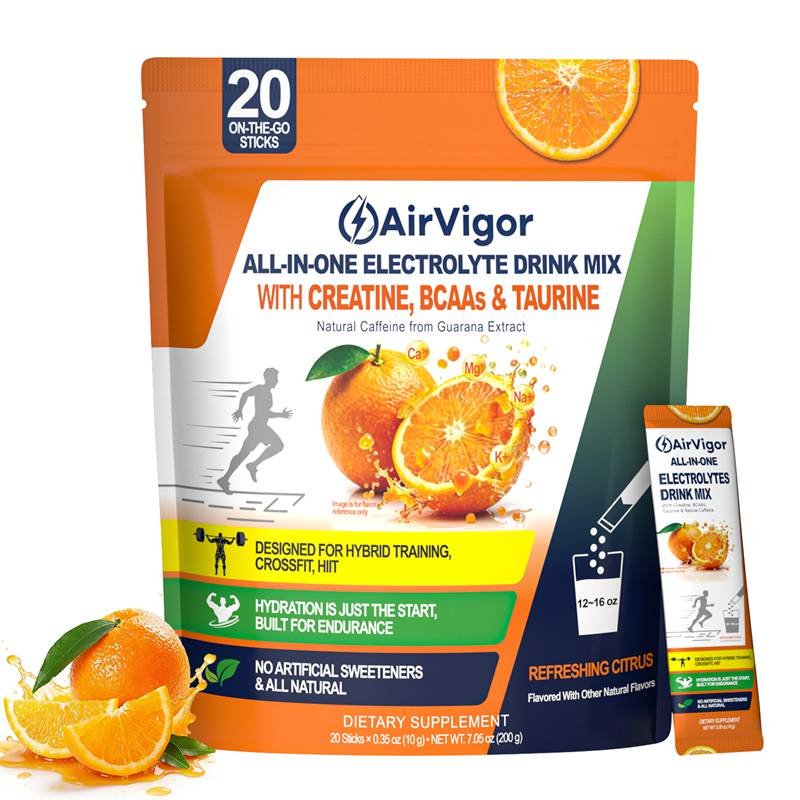
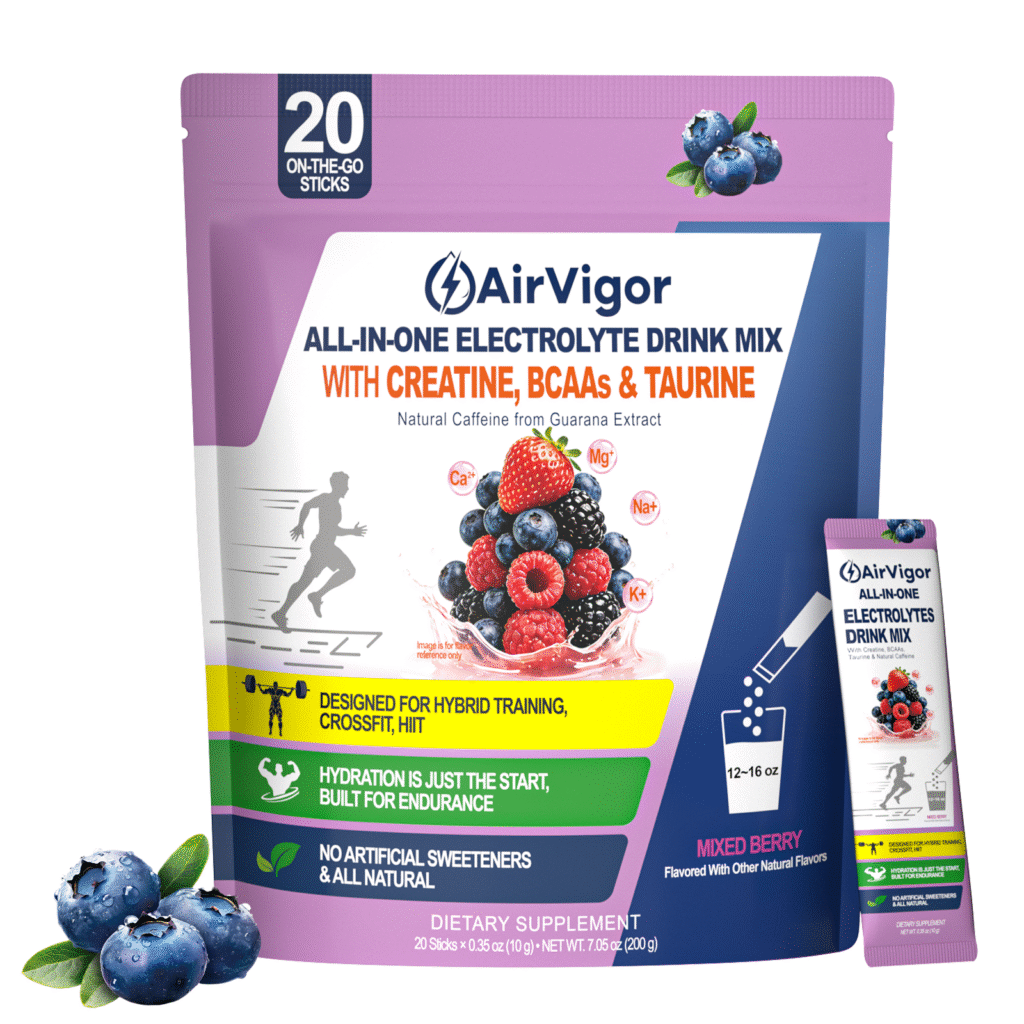
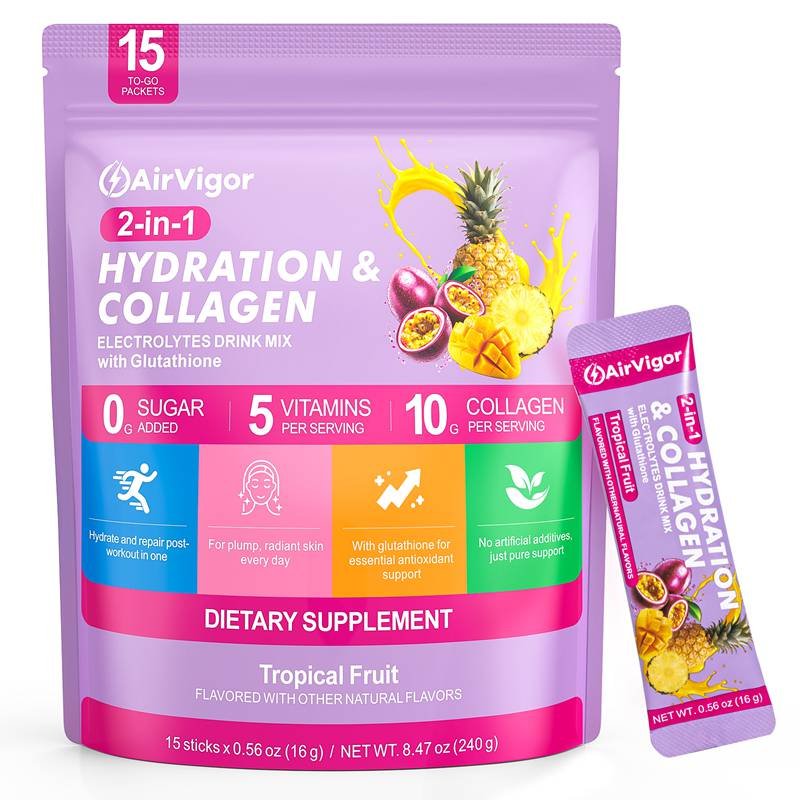
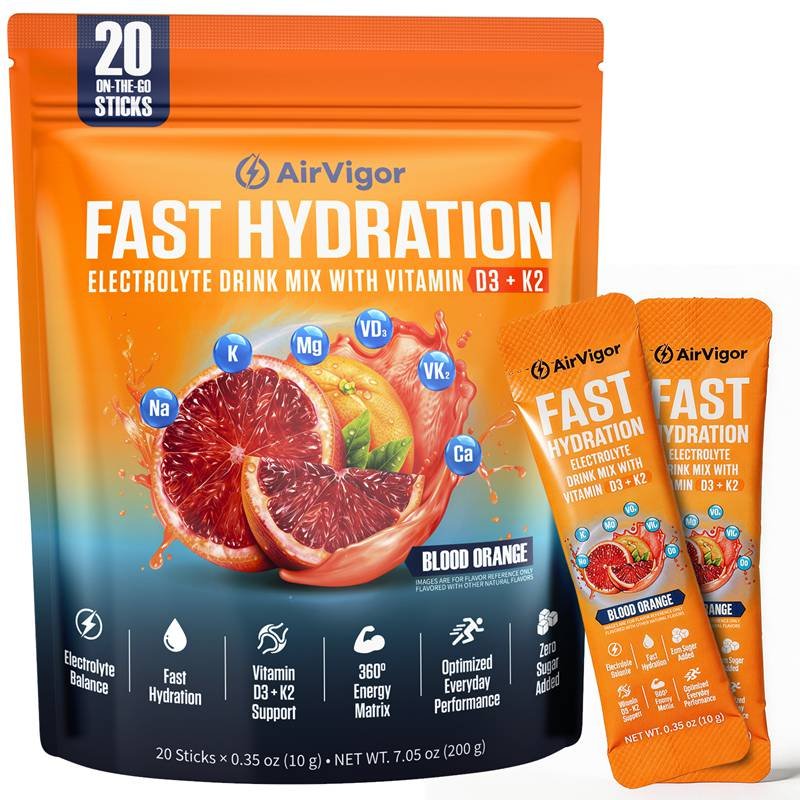
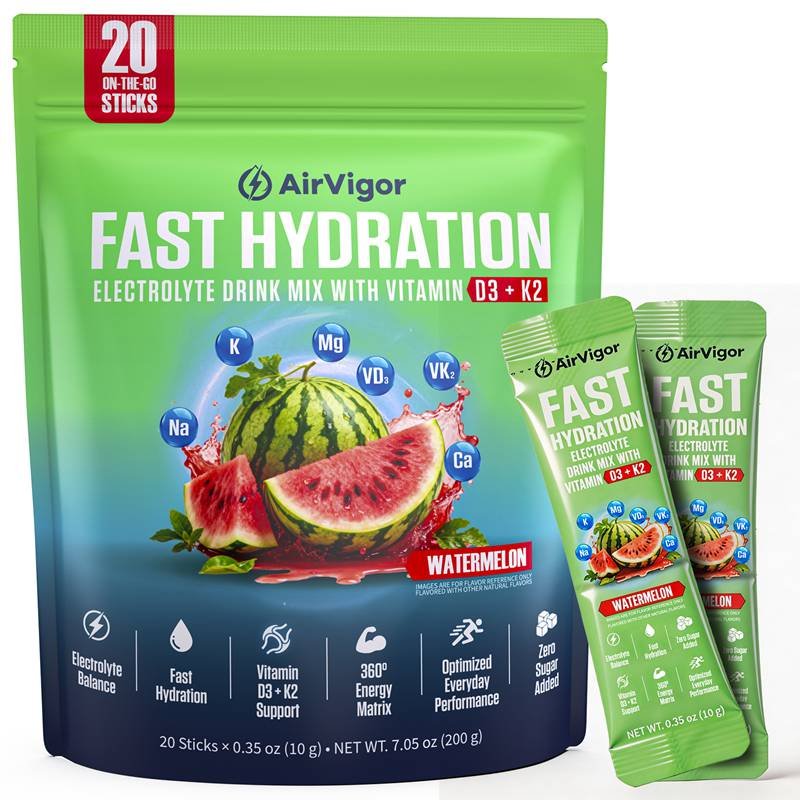
AirVigor electrolytes are designed for active women who want clear mineral support, zero sugar hydration, easy stick packs, and a product that fits workouts, hot yoga, travel, office days, sauna, and busy routines without making hydration complicated.
Clear Formula
AirVigor focuses on clear formula expression, so active women can understand what they are drinking. The product is built around practical electrolyte support, not confusing claims or hidden mineral blends.
For many active women, choosing an electrolyte product starts with the label. They want to know how much sodium is included, whether potassium is present, if magnesium and calcium are added, and whether the product contains sugar. If the label is unclear, the customer has to guess. That creates hesitation, especially for women who already use other supplements or care about daily nutrition balance.
AirVigor’s value is that it makes the hydration decision easier. The product is positioned around real use: sweating, workouts, hot yoga, travel, sauna, low-carb eating, and busy daily schedules. Instead of relying on vague hydration language, AirVigor emphasizes clear ingredient expression and practical use occasions.
This matters because active women often compare products across several categories: sports drinks, hydration tablets, electrolyte powders, wellness drinks, collagen drinks, magnesium supplements, and low-sugar beverages. A clear formula helps them understand where AirVigor fits.
| What Active Women Check | Why It Matters | AirVigor Advantage |
|---|---|---|
| Sodium | Helps support fluid balance after sweat | Clearly positioned for active hydration |
| Potassium | Supports cell and muscle function | Completes daily electrolyte support |
| Magnesium | Supports normal muscle and nerve function | Useful for recovery-focused routines |
| Calcium | Supports muscle contraction and nerve signaling | Adds a fuller mineral profile |
| Sugar | Affects daily use and nutrition goals | Zero sugar format fits modern routines |
| Serving format | Affects repeat use | Stick packs are portable and pre-measured |
| Usage scene | Helps customers know when to drink | Fits gym, yoga, travel, office, sauna |
Clear formula expression is especially helpful for repeat customers. A woman may first buy electrolytes for hot yoga, then later use the same product for travel, summer walks, or after-work gym sessions. When the label is easy to understand, she feels more comfortable making the product part of her routine.
For business customers, formula clarity also makes AirVigor easier to sell. Retailers, gyms, wellness stores, and online sellers need products that customers can understand quickly. A product that explains its role clearly is easier to introduce on product pages, Amazon listings, social media content, and in-store education.
Zero Sugar
AirVigor’s zero sugar format fits active women who want hydration support without turning every bottle of water into a sweet drink. It is useful for workouts, daily hydration, hot yoga, travel, and low-carb routines.
Many women avoid traditional sports drinks because they do not want extra sugar, sticky sweetness, or unnecessary calories during normal hydration moments. A sugary drink may be useful for certain endurance sports, but most daily active lifestyle scenarios do not require that kind of fuel. Office hydration, hot yoga, light training, sauna, travel, and low-carb routines usually need something lighter.
Zero sugar is not only a nutrition point. It is a repeat-use point. A product that feels too sweet may be exciting once, but difficult to drink regularly. Active women often want a drink that feels clean enough to use several times a week without feeling like they are adding another sweet beverage to the day.
AirVigor’s zero sugar format fits several customer groups:
| Customer Type | Why Zero Sugar Matters |
|---|---|
| Hot yoga users | Light taste feels better after heated classes |
| Gym users | Supports hydration without extra sugar after training |
| Low-carb users | Fits lower-sugar or carb-conscious routines |
| Busy professionals | Works as a workday hydration drink |
| Travelers | Easier to drink during flights or after arrival |
| Wellness-focused women | Fits daily routines without feeling heavy |
| Active moms | Simple hydration support without sweet drink habits |
For active women, zero sugar also gives more flexibility in timing. A woman can drink AirVigor before a workout, after a sweaty class, in the afternoon at work, or during travel without worrying that it feels like a sugary sports beverage. This makes the product easier to use beyond the gym.
The best hydration product should not force customers to choose between taste and routine. AirVigor’s zero sugar positioning helps women build a cleaner hydration habit that fits modern active lifestyles.
Easy Stick Packs
AirVigor stick packs make electrolyte use simple, clean, and portable. Each serving is easy to carry, easy to mix, and practical for women who move between work, gym, yoga, travel, errands, and outdoor activity.
Convenience is one of the biggest reasons customers stick with a hydration product. Many women understand that electrolytes may help, but they do not want to carry a tub, scoop powder, clean up spills, or guess the serving size. A product can have a strong formula, but if it is not easy to use, it will not become a habit.
AirVigor’s stick-pack format solves that problem. The serving is pre-measured, so users do not need to measure powder. The package is small, so it fits in the places where hydration support is actually needed. This is important because active women rarely have one fixed routine.
A normal week may include:
- Monday gym training after work
- Tuesday meetings and low water intake
- Wednesday hot yoga
- Friday airport travel
- Saturday hiking or outdoor walking
- Sunday sauna or recovery routine
A large tub at home may only help in one of those situations. A stick pack can help in all of them.
| Where Women Keep Stick Packs | Why It Helps |
|---|---|
| Gym bag | Ready before or after workouts |
| Yoga tote | Easy after hot yoga or Pilates |
| Office drawer | Useful when water intake is low |
| Purse | Works during errands or long days |
| Carry-on bag | Travel-friendly hydration support |
| Car console | Convenient after outdoor activity |
| Locker | Easy access before classes |
| Hiking backpack | Useful for long walks and warm weather |
Stick packs are also cleaner for customers. There is no scoop, no powder dust on the counter, no serving-size guesswork, and no need to carry a bulky container. For active women, that small detail can make the difference between using electrolytes once and using them consistently.
For retailers and business customers, stick packs are also easier to sample, bundle, display, and sell in multi-pack formats. They work well for Amazon listings, gym counters, wellness kits, travel packs, influencer campaigns, and subscription-style hydration routines.
Active Lifestyle Fit
AirVigor fits active women because it supports more than one use case. It can be used around workouts, hot yoga, travel, office hydration, sauna, summer activity, low-carb routines, and everyday busy schedules.
Many electrolyte products are positioned only for athletes. That can limit the customer. Active women may not identify as endurance athletes, but they still move, sweat, travel, train, and manage demanding schedules. They need a product that feels useful in real life, not only during race day or extreme workouts.
AirVigor fits the broader active lifestyle because it can be used in multiple everyday moments. A customer may start using it after workouts, then discover it also helps her build a better hydration routine during travel or long office days. This wider fit supports stronger repeat use.
| Active Lifestyle Scene | How AirVigor Fits |
|---|---|
| Gym workout | Mix before or after training |
| Hot yoga | Use after sweat-heavy classes |
| Office day | Keep in drawer for hydration reset |
| Travel | Carry stick packs for flights and hotels |
| Sauna | Use after heavy sweating |
| Summer walking | Drink before or after outdoor activity |
| Low-carb eating | Zero sugar format fits routine |
| Weekend hiking | Portable hydration support outdoors |
This multi-scene fit is important for product conversion. Customers are more likely to buy when they see several reasons to use the product. A woman may think, “I can use this after yoga, at work, and when I travel.” That makes the purchase feel more practical.
For AirVigor, the active women audience is not limited to gym-goers. It includes professionals, travelers, hot yoga users, runners, Pilates clients, hikers, sauna users, wellness-focused women, and anyone who wants hydration to fit a busy life. This gives the product a wider customer base and makes the article page more useful for Google search and AI-driven product discovery.
Quality Focus
AirVigor is backed by a supplement development and quality management system that emphasizes ingredient selection, formula review, production control, packaging stability, and finished product checks before products enter the market.
For active women, quality is not only about what appears on the front label. It is also about whether the product tastes consistent, mixes well, stays stable in packaging, and gives customers confidence to reorder. A hydration powder may be used several times per week, so the experience needs to feel reliable across batches.
AirVigor’s broader supplement background gives the brand a stronger foundation. The company works across multiple dietary supplement categories, including electrolytes, vitamins, minerals, protein nutrition, creatine, probiotics, collagen, and compound nutrition products. This helps the brand understand how active women actually use supplements together, rather than treating electrolytes as an isolated trend.
From a manufacturing and product management perspective, AirVigor emphasizes:
- selected raw materials
- formula review before production
- clear ingredient and serving expression
- packaging suitability for daily use
- stability considerations for powder products
- quality document management such as COA or MSDS when required
- production and packaging processes aligned with recognized supplement quality systems
This does not mean customers need to read technical documents before buying. It means AirVigor builds the product around consistency, clarity, and practical use. For women buying a product they may drink regularly, that matters.
| Quality Area | Why Customers Care |
|---|---|
| Ingredient selection | Helps build trust in the formula |
| Formula review | Supports consistent product expression |
| Powder solubility | Makes daily mixing easier |
| Packaging stability | Protects product during storage and travel |
| Clear label information | Reduces confusion before purchase |
| Stick-pack sealing | Supports portability and freshness |
| Batch consistency | Encourages repeat purchase |
For B2B customers, quality focus is also important. Retailers, distributors, gym owners, wellness stores, Amazon sellers, and supplement brand operators need products that can support repeat orders and customer confidence. AirVigor’s existing branded products can help partners launch faster, while OEM/ODM options can support more specific market needs when needed.

Conclusion
Electrolytes for active women are helpful when sweat, heat, workouts, travel, sauna, low-carb eating, or busy schedules make plain water feel less complete. The right product should be clear, easy to drink, low or zero sugar, and simple enough to use in real life.
AirVigor electrolytes are designed for women who want practical hydration support without complicated routines. With clear formula expression, zero sugar, portable stick packs, and active lifestyle use cases, AirVigor fits gym bags, yoga totes, office drawers, travel pouches, and daily water bottles.
Customers can choose AirVigor branded electrolyte products for ready-to-buy hydration support, while retailers, distributors, gyms, wellness stores, and supplement brands can contact AirVigor for wholesale supply or OEM/ODM custom inquiries when needed.
Share:
Contact Expert Team
At AirVigor, performance becomes effortless. We transform advanced nutrition science into clean, effective supplements that help you hydrate, recover, and feel stronger every day. Shop AirVigor Supplements on Amazon and experience athlete-trusted formulas—backed by real science and supported by our world-class R&D and production capabilities.
Trust AirVigor
At AirVigor, turning your performance goals into reality is no longer a struggle—it’s a science-driven journey we build together. Whether you’re a runner, lifter, cyclist, yogi, outdoor athlete, or someone simply seeking better daily energy, AirVigor transforms advanced nutrition research into clean, effective, and trustworthy supplements you can feel.
Backed by our U.S. scientific team, global certifications, and world-class production standards, every formula is engineered to deliver real hydration, real recovery, and real performance. And when you’re ready to experience the difference, you’ll find AirVigor products available on Amazon and other major platforms—fast shipping, consistent quality, and a community of athletes already seeing results.
Behind the scenes, our R&D and manufacturing ecosystem also supports specialized formulation development, ensuring AirVigor continues to lead with innovation while keeping quality and safety uncompromised. But at the core, everything we create is built for you—your health, your performance, your momentum.
Choose AirVigor. Feel the science. Elevate your every day.


Subscribe to our newsletter
Sign up to our newsletter and we’ll keep you up to date with the latest arrivals.