Skip to content
What Are the Best Electrolyte Powder Storage Tips : A Freshness Guide
# Your Trusted Dietary Supplement Brand In US
- Emily

Table of Contents
Electrolyte powder is one of the easiest hydration products to use, but it is also one of the easiest to store incorrectly. A tub left near the sink, a pouch opened with wet hands, or a stick pack forgotten in a hot car can change the way the powder looks, smells, mixes, and tastes. For customers who use electrolytes after workouts, during travel, in summer heat, at the office, or after sauna sessions, storage is not just a small household detail. It affects the product experience every time water is added.
The best electrolyte powder storage tips are simple: keep the powder sealed, dry, cool, and away from direct sunlight. Store it in a clean cabinet, use dry hands or a dry scoop, close the package immediately after each use, and avoid bathrooms, hot cars, damp gym bags, and kitchen steam. These habits help reduce clumping, protect flavor, and keep each serving easier to mix.
Most people do not notice storage problems on day one. They notice them after two or three weeks, when the powder feels sticky, the scoop pulls up clumps, or the flavor no longer tastes as clean as before. That small frustration is often enough to make a customer stop using the product. This guide explains how to keep electrolyte powder fresh in normal daily life, not in perfect lab conditions. It also explains why package format matters, especially for people who want hydration support that fits a gym bag, work drawer, suitcase, or outdoor routine.
What Electrolyte Powder Storage Tips Matter Most?
Electrolyte powder stores best when it stays dry, sealed, cool, and away from sunlight. Most storage problems come from moisture, heat, wet scoops, and loose packaging. Good habits help protect taste, texture, mixability, and serving consistency.
Keep Moisture Away First
Moisture is the biggest reason electrolyte powder clumps, sticks to the scoop, or becomes harder to mix. Most problems start with small daily habits, not one major mistake.
Electrolyte powder is often used around water, which makes storage tricky. Customers usually open the package near a shaker bottle, sink, coffee machine, gym towel, or kitchen counter. That is where the risk starts. Even a few drops of water on a scoop or wet fingers touching the package can create local clumping inside a tub or pouch.
Many electrolyte formulas contain mineral salts such as sodium, potassium, magnesium, and calcium. These ingredients are useful for hydration support, but they can also be sensitive to humid air. When moisture enters the package, the powder particles begin to stick together. At first, the change may only look like small dry clumps. Later, the powder can become sticky, compact, or uneven.
For customers, the most useful rule is simple: store electrolyte powder where crackers or cereal would stay crisp. If the place feels damp enough to soften dry snacks, it is not a good place for powder supplements. Bathrooms, laundry rooms, kitchen counters near steam, and gym bags with wet towels are common problem areas.
| Moisture Source | Common Customer Situation | What May Happen | Better Habit |
|---|---|---|---|
| Wet scoop | Scoop touches a damp shaker or counter | Clumps form inside the tub | Keep scoop completely dry |
| Humid room | Powder stored in bathroom or laundry room | Powder becomes sticky faster | Use pantry, drawer, or cabinet |
| Kitchen steam | Product sits near kettle, stove, or dishwasher | Flavor and texture may change | Store away from steam sources |
| Loose zipper seal | Pouch is not fully pressed closed | Moisture slowly enters package | Run fingers across the full seal |
| Damp gym bag | Product sits beside sweaty clothes or towel | Package may absorb moisture or smell | Use sealed stick packs in a dry pocket |
| Open container | Tub stays open while mixing | Air and humidity enter repeatedly | Open, scoop, close, then add water |
The most common mistake is leaving the package open while preparing the drink. A better routine is to add powder to a dry bottle, close the product immediately, and then add water. This small step helps keep the remaining powder away from splashes, wet hands, and bottle condensation.
Control Heat and Sunlight
Heat and sunlight may not damage electrolyte powder instantly, but repeated exposure can affect flavor, aroma, powder flow, and overall freshness. Cool, shaded storage works better for daily use.
Customers often think sealed powder is fully protected, but storage temperature still matters. A product left in a hot car, garage, sunny window, beach bag, or outdoor sports bag may experience more heat than expected. Even if the powder still looks normal, the drinking experience may become less clean over time.
Flavor is usually where customers notice heat exposure first. Citrus may taste less bright. Berry may smell weaker. A powder that used to feel light and refreshing may start to taste flat. Texture can also change if heat combines with humidity, especially in summer or in climates with high moisture in the air.
A parked car is one of the worst storage locations. On warm days, the inside of a car can become much hotter than the outside temperature. For customers who go to the gym before work or after work, leaving a tub in the trunk all day may create unnecessary quality risk.
| Storage Spot | Storage Quality | Main Risk | Better Choice |
|---|---|---|---|
| Dry pantry cabinet | Good | Low risk if sealed | Best for home storage |
| Desk drawer | Good | Low moisture, easy access | Good for office users |
| Gym locker | Medium | Heat, damp towels, poor airflow | Use sealed packets |
| Kitchen counter | Medium to risky | Steam, sunlight, splashes | Move inside cabinet |
| Bathroom cabinet | Risky | Shower steam and humidity | Avoid |
| Car or trunk | Risky | High heat and temperature swings | Carry only needed servings |
| Garage | Risky | Heat, cold, and humidity changes | Store indoors |
| Window shelf | Risky | Sunlight and warmth | Use shaded storage |
For daily users, the best setup is simple: keep the product in a room-temperature cabinet, away from water and direct light. For people who carry electrolytes outside the home, take only the number of servings needed for the day. Stick packs are especially useful here because one or two packets can be carried without exposing the full supply to heat.
Seal the Package Every Time
A tight seal protects electrolyte powder from air, humidity, odor, and accidental contamination. Most opened powder problems become worse when the package is left loose after use.
Customers often close a tub or pouch casually, especially when they are in a hurry after a workout. The lid may look closed but not be fully tightened. The pouch zipper may feel pressed but still have a small gap. Powder may also get trapped in the zipper line, stopping the seal from closing properly. These small gaps give air and moisture a way in.
For tubs, the lid should be closed immediately after scooping. For pouches, the zipper area should stay clean. If powder builds up in the seal, customers can gently tap the pouch so powder falls away from the zipper before closing it. This helps the seal work better and keeps the remaining powder protected.
Serving accuracy is another reason sealing matters. When powder absorbs air moisture, it may become denser or form clumps. A scoop of clumped powder may not measure the same way as a scoop of loose powder. For customers who use electrolyte powder around workouts, heat, or daily hydration goals, consistent serving size matters.
| Package Type | What to Check After Use | Common Problem | Best Storage Habit |
|---|---|---|---|
| Tub | Lid is fully tightened or snapped shut | Lid left slightly loose | Close before adding water |
| Resealable pouch | Full zipper line is sealed | Powder stuck in zipper | Clear the seal area before closing |
| Stick pack | Packet remains unopened until use | Opened packet saved for later | Use the full stick once opened |
| Travel pouch | Packets stay dry and uncrushed | Stored with leaking bottles | Use separate dry pocket |
One helpful routine is: open, pour, close, mix. This order is better than opening the package, adding powder, filling water, shaking the bottle, and then returning to close the product. The shorter the powder is exposed to open air, the better the storage result.
How Should Electrolyte Powder Be Stored Daily?
Electrolyte powder should be stored in a cool, dry, shaded place and closed tightly after every use. For daily use, the best storage spot is easy to reach but far from water, steam, sunlight, heat, wet scoops, and damp gym gear.
Choose a Dry Daily Spot
The best daily storage spot is a dry cabinet, pantry shelf, desk drawer, or supplement organizer. A good location should protect the powder while still fitting the customer’s normal routine.
Most electrolyte powder storage problems begin with location. Customers often place the product where they mix drinks, not where the powder stores best. That usually means a kitchen counter, sink area, coffee station, gym bag, or bathroom cabinet. These places feel convenient, but they often expose the powder to water, steam, sunlight, heat, or damp air.
For daily users, the storage place should be close enough to use often but protected enough to keep the powder stable. A kitchen cabinet away from the sink is usually better than leaving the package beside a shaker bottle. A desk drawer is better than placing packets near a coffee machine. A pantry shelf is better than a windowsill. The goal is not to hide the product so well that customers forget it. The goal is to give it a fixed dry home.
A simple rule works well: store electrolyte powder where dry snacks stay crisp. If cereal, crackers, instant coffee, or powdered drink mix would turn soft in that spot, electrolyte powder should not be stored there either. This helps customers understand storage without overthinking it.
| Daily Storage Spot | Good or Risky? | Customer Situation | Better Habit |
|---|---|---|---|
| Dry pantry shelf | Good | Home users who mix daily | Keep package upright and sealed |
| Kitchen cabinet away from sink | Good | Easy access before workouts or breakfast | Store away from steam and splashes |
| Bedroom drawer | Good | Users in humid kitchens or shared homes | Keep with other dry supplements |
| Office drawer | Good | Workday hydration users | Store packets away from coffee spills |
| Gym locker | Medium | Convenient for post-workout use | Use sealed stick packs only |
| Kitchen counter near sink | Risky | Fast access but frequent water exposure | Move inside a cabinet |
| Bathroom cabinet | Risky | Morning routine convenience | Avoid due to shower steam |
| Car or trunk | Risky | Gym or travel convenience | Carry only needed servings |
| Garage shelf | Risky | Bulk storage or overflow stock | Store indoors instead |
Daily storage should also match how fast the product is used. Someone who uses one serving every day may finish a 20-serving pack in about three weeks. Someone who uses electrolytes only after workouts may take one or two months to finish the same amount. Occasional users need more protection because the product sits longer after opening.
For tubs and pouches, this matters because the main package is opened repeatedly. For stick packs, the risk is lower because unopened servings stay sealed. That makes stick packs especially useful for customers who use electrolyte powder in more than one place: home, office, gym, hotel, car, hiking pack, or sports bag.
Keep It Away from Water
Electrolyte powder should never be stored near sinks, kettles, dishwashers, coffee machines, bathrooms, wet towels, or leaking bottles. Water exposure is the fastest way to create clumps and texture problems.
Because electrolyte powder is mixed with water, customers naturally keep it close to water. That is understandable, but it is also the reason many powders start clumping. The powder does not need to be splashed directly to be affected. Steam, condensation, wet scoops, damp fingers, or a shaker bottle with water on the outside can all introduce moisture.
One common mistake happens during mixing. A customer opens the tub, scoops powder, adds water to the bottle, shakes the bottle, then comes back to close the tub. During that time, the open powder is sitting near water and humid air. If this happens every day, the texture can slowly change.
A better daily routine is:
- Open the powder, add one serving to a dry bottle, close the package, then add water.
- Keep the scoop dry and never place a wet scoop back into the powder.
This order helps protect the remaining powder without making the routine complicated. It is especially useful for customers who mix drinks quickly before work, after training, or while packing for the day.
| Water Risk | What Customers Usually Do | What Can Happen | Better Routine |
|---|---|---|---|
| Wet shaker bottle | Scoop powder beside a damp bottle | Moisture enters package | Dry the bottle exterior first |
| Sink area | Store powder near faucet | Splash and steam exposure | Use cabinet away from sink |
| Coffee station | Keep packets near mugs and hot water | Steam and spills | Use desk drawer or dry shelf |
| Wet scoop | Scoop touches water or wet counter | Clumps form inside tub | Keep scoop inside dry container |
| Damp towel | Store product in gym bag with towel | Package picks up moisture or odor | Use separate dry pocket |
| Bathroom steam | Store powder near morning routine items | Humidity rises after showers | Move to pantry or bedroom drawer |
Water control is more important in humid climates or during summer. Coastal homes, rainy seasons, hot kitchens, shared bathrooms, and poorly ventilated apartments can increase moisture exposure. Customers in these conditions should be more careful with opened tubs and pouches. Stick packs can be a better choice because each serving stays sealed until the customer is ready to mix it.
Avoid Daily Heat Exposure
Electrolyte powder should not be stored in cars, garages, sunny windows, outdoor bags, or near appliances that create heat. Heat can make the product feel less fresh and may affect flavor, aroma, and powder flow over time.
Heat is a quiet storage problem. Customers may not notice it right away because the powder can still look normal. But after repeated exposure, the taste may feel flatter, the smell may seem weaker, or the texture may not pour as smoothly. This is especially noticeable with refreshing flavors such as citrus, berry, tropical, or watermelon-style drink mixes, where aroma and freshness are part of the customer experience.
The car is one of the most common daily storage mistakes. Many gym users keep supplements in the trunk or back seat so they are always ready. The problem is that car interiors can get very hot, especially in summer or direct sun. A product left in the car all day may face more heat stress than a product stored indoors. Even if one day does not ruin the powder, repeating this habit can reduce product quality.
Customers should also be careful with garages and windowsills. Garages often have large temperature swings. Windowsills add direct sunlight and warmth. Kitchen shelves above ovens, near dishwashers, or beside heating vents can also be poor choices.
| Heat Source | Common Customer Reason | Why It Is Risky | Better Option |
|---|---|---|---|
| Car trunk | Easy gym access | High heat and temperature swings | Bring one stick pack only |
| Garage | Extra storage space | Heat, cold, and humidity changes | Store indoors |
| Window shelf | Easy to see and remember | Direct sunlight warms package | Use shaded cabinet |
| Stove area | Kitchen convenience | Heat and steam | Move to pantry |
| Dishwasher area | Countertop convenience | Heat and moisture together | Store away from appliances |
| Beach bag | Outdoor hydration | Sun and damp towels | Use dry shaded pouch |
| Sports bag | Ready for practice | Heat, sweat, bottle leaks | Use sealed packets |
For daily carry, the smarter approach is to take only what is needed. A customer who goes to the gym can bring one stick pack instead of leaving a full tub in the car. A traveler can pack several packets in a dry pouch instead of placing a large opened container in luggage. This reduces exposure while keeping hydration convenient.
Use a Clean, Dry Scoop
For tubs and pouches, the scoop should stay clean and completely dry. A wet or dirty scoop can transfer moisture, oils, crumbs, or residue into the powder and make storage problems happen faster.
Scoops are easy to overlook because they feel like part of the package. But the scoop is often the direct connection between the customer’s hands, shaker bottle, counter, and powder. If the scoop touches a wet bottle opening, a sweaty hand, a sticky counter, or another supplement powder, it can carry that residue back into the container.
This matters because a small amount of water inside a tub does not spread evenly at first. It may create clumps in one spot. Customers may notice powder sticking around the scoop area or one side of the container. Over time, those clumps can become harder or spread as the product is shaken and used.
A clean scoop routine is simple. Keep the scoop inside the container only if it stays dry. If it falls on a wet counter, wash and dry it completely before putting it back. Do not use the scoop to stir a drink. Do not leave it on top of a wet shaker lid. Do not share it between different powders unless it is fully clean and dry.
| Scoop Mistake | What It Causes | Better Habit |
|---|---|---|
| Using scoop to stir a drink | Water returns to powder | Use a separate spoon or shake bottle |
| Placing scoop on wet counter | Local clumping | Place scoop on dry surface only |
| Touching scoop with wet hands | Moisture transfer | Dry hands before handling |
| Sharing scoop between products | Flavor or residue transfer | Use dedicated scoop |
| Dropping scoop in sink area | Possible contamination | Clean and fully dry before reuse |
| Leaving scoop outside tub | Dust or moisture exposure | Store scoop dry and protected |
For customers who dislike scoop management, stick packs are a cleaner option. Each serving is already measured, so there is no utensil to keep dry. This is one reason many busy customers prefer stick packs for office, gym, travel, and outdoor hydration.
What Electrolyte Powder Storage Tips Prevent Clumping?
Electrolyte powder clumps when moisture gets into the package and makes dry particles stick together. The best way to prevent clumping is to keep the powder sealed, dry, cool, and away from wet scoops, steam, humid rooms, sweaty gym bags, and open air.
Why Electrolyte Powder Clumps
Electrolyte powder clumps because moisture reaches the powder after opening. This can happen through humid air, wet hands, damp scoops, loose lids, poor pouch seals, steam, or storage inside gym bags and cars.
Clumping usually does not happen all at once. Most customers notice it slowly. The powder may first look slightly uneven. Then small pieces begin sticking to the scoop. After a few more uses, the powder may form larger chunks, collect around the zipper seal, or become harder to pour into a bottle. For a customer who expects a fast hydration drink, this small problem can quickly feel annoying.
Electrolyte powder is more likely to clump than some basic drink mixes because it often contains mineral salts such as sodium, potassium, magnesium, and calcium. These minerals are important for hydration support, but they can be sensitive to humidity. Fine powder particles, citric acid, natural flavors, and sweeteners can also affect how powder behaves when moisture enters the package.
The biggest issue is not always the formula itself. It is often the way customers use the product every day. Electrolyte powder is usually opened near water: beside a shaker bottle, sink, faucet, coffee machine, sports bottle, or gym towel. When the package stays open during mixing, the remaining powder is exposed to air and moisture. If this happens every day, clumping becomes more likely.
| Clumping Cause | What Customers Usually Do | What Happens Inside the Package | Better Habit |
|---|---|---|---|
| Wet scoop | Scoop touches a wet shaker or counter | Moisture creates clumps near the scoop area | Keep scoop completely dry |
| Loose lid | Tub is not fully closed after use | Humid air enters between servings | Close lid immediately after scooping |
| Poor pouch seal | Powder blocks the zipper line | Seal does not close tightly | Clear the zipper before sealing |
| Steam exposure | Product sits near kettle, stove, or dishwasher | Powder absorbs moisture faster | Store away from steam |
| Bathroom storage | Product is kept near shower steam | Humidity rises daily | Move to pantry or drawer |
| Damp gym bag | Product sits beside towel or sweaty clothes | Package may pick up moisture and odor | Use stick packs in a dry pocket |
| Hot car | Powder stays in trunk or back seat | Heat and humidity speed texture change | Carry only the servings needed |
A simple customer-friendly rule is this: if the place can make crackers soft, it can make electrolyte powder clump. Bathrooms, laundry rooms, sink counters, gym bags with towels, and hot cars are common problem areas.
Is Clumped Electrolyte Powder Safe?
Clumped electrolyte powder is not always unsafe, but it should be checked carefully. Small dry clumps may be caused by light humidity. Wet, sticky, discolored, bad-smelling, expired, or mold-like powder should not be used.
Customers often ask whether they need to throw away electrolyte powder as soon as they see clumps. The answer depends on the condition of the product. Small, dry clumps that break apart easily may only mean the powder has absorbed a small amount of moisture from the air. If the powder smells normal, has no color change, is within the expiration date, and still mixes normally, it may only be a texture issue.
The warning signs are different. If the powder feels wet, sticky, pasty, dark, uneven, sour-smelling, musty, or visibly contaminated, the customer should stop using it. Electrolyte powder is meant to be mixed with water and consumed, so quality doubt should be taken seriously. Saving a few servings is not worth drinking a product that no longer looks or smells right.
| Powder Condition | What It Usually Means | What Customers Should Do |
|---|---|---|
| Loose powder | Proper storage | Continue using as directed |
| Small dry clumps | Light humidity exposure | Check smell, color, date, and mixability |
| Soft clumps that break easily | Mild moisture exposure | Improve storage and inspect before use |
| Large hard clumps | Repeated moisture exposure | Use caution and check full condition |
| Sticky or wet clumps | Water contact or high humidity | Stop using |
| Musty or sour smell | Possible quality change | Stop using |
| Dark spots or uneven color | Possible contamination or degradation | Stop using |
| Damaged package seal | Higher exposure risk | Contact the brand or replace |
| Past expiration date | Quality no longer guaranteed | Stop using |
The best way to judge clumped powder is to check five things: expiration date, smell, color, texture, and package condition. If one of these looks wrong, the safer choice is to stop using it.
Customers should also avoid trying to “fix” badly clumped powder in unsafe ways.
- Do not heat powder in an oven, microwave, air fryer, or pan to dry it out.
- Do not add water to the full package and save it as a mixed drink for later.
These methods can create more quality problems. Electrolyte powder should be mixed one serving at a time, following the label directions.
How to Stop Clumps Before They Start
The best way to stop clumps is to keep moisture out before it reaches the powder. Customers should open the package briefly, use dry tools, close it quickly, and store it away from sinks, steam, bathrooms, wet towels, and hot cars.
Most clumping can be reduced with a better mixing order. Many people open the tub, scoop powder, add water, shake the bottle, drink, and then close the tub. That routine leaves the remaining powder open while water is being handled. A better routine is: open the package, add powder to a dry bottle, close the package, then add water.
This small change helps protect the rest of the powder from splashes, wet hands, bottle condensation, and humid air. It is especially useful after workouts because customers may be sweaty, rushed, or using a wet shaker bottle. For tubs and pouches, this habit can make a noticeable difference over several weeks.
| Prevention Step | Why It Works | Best For |
|---|---|---|
| Open, pour, close, then add water | Reduces time exposed to moisture | Daily home users |
| Keep scoop dry | Stops local clumps from forming | Tub users |
| Clean pouch zipper before sealing | Helps create a tighter seal | Resealable pouch users |
| Store away from sink and kettle | Reduces steam exposure | Kitchen users |
| Avoid bathroom storage | Prevents daily shower humidity | Morning routine users |
| Carry only needed servings | Protects the full supply from heat and moisture | Gym and outdoor users |
| Use stick packs for travel | Keeps each serving sealed | Travelers and occasional users |
Customers in humid climates should be more careful. Coastal areas, rainy seasons, summer heat, small apartments, hot yoga studios, and shared bathrooms can all raise moisture exposure. If clumping happens often even with careful handling, the customer may need a better package format rather than just better habits.
Which Storage Spots Cause Clumping Fastest?
The fastest clumping usually happens in places with moisture, heat, steam, or poor airflow. Bathrooms, sink areas, coffee stations, damp gym bags, cars, garages, and open pouches are the most common storage mistakes.
Customers often choose storage spots based on convenience. The product goes where they remember to use it: beside the sink, next to the coffee machine, in the gym bag, near the bathroom mirror, or inside the car. These spots are easy to reach, but they are not always good for powder.
Bathrooms are especially risky because shower steam raises humidity quickly. Kitchen counters near sinks or kettles are also risky because water and steam are used repeatedly. Gym bags can be a problem when powder sits beside sweaty towels, wet clothes, or leaking bottles. Cars and garages add heat, which can make moisture-related texture problems worse.
| Storage Spot | Clumping Risk | Why It Causes Problems | Better Choice |
|---|---|---|---|
| Bathroom cabinet | High | Shower steam and humidity | Pantry or bedroom drawer |
| Kitchen counter near sink | High | Water splashes and wet hands | Cabinet away from sink |
| Beside coffee machine | Medium to high | Steam and drink spills | Desk drawer or dry shelf |
| Gym bag with towel | High | Sweat, moisture, and odor | Separate dry pocket |
| Car trunk | Medium to high | Heat and temperature swings | Bring only one serving |
| Garage shelf | Medium to high | Humidity and temperature changes | Indoor cabinet |
| Pantry shelf | Low | Dry, shaded, stable | Good daily storage |
| Desk drawer | Low | Protected from water and light | Good for stick packs |
| Supplement cabinet | Low | Fixed dry location | Good for tubs and pouches |
The best storage place is usually plain and practical: a dry cabinet, pantry shelf, office drawer, or supplement organizer. Customers do not need special storage equipment. They just need to stop placing powder in environments that make clumping more likely.

Why Stick Packs Help Prevent Clumping
Stick packs help prevent clumping because each serving stays sealed until use. The customer does not repeatedly open one large container, manage a scoop, clean a zipper seal, or expose the full powder supply to humid air.
This is one of the strongest everyday advantages of stick-pack electrolyte powder. A tub may work well at home, but it depends on careful scooping and sealing. A pouch saves space, but the zipper must close properly every time. A stick pack is simpler. Tear one packet, pour it into water, and use it immediately.
Stick packs are especially helpful for customers who use electrolytes outside the kitchen. After a workout, hands may be sweaty. During travel, luggage may be squeezed. At the office, drinks can spill near the desk. Outdoors, heat and rain can change storage conditions quickly. A sealed stick pack protects the serving better than an opened tub in these situations.
| Customer Scenario | Clumping Risk with Tub or Pouch | Stick Pack Advantage |
|---|---|---|
| After gym workout | Wet hands, damp shaker, towel exposure | One sealed serving opens only when needed |
| Office hydration | Coffee spills or desk moisture | Clean packets fit in drawer |
| Travel | Heat, luggage pressure, bottle leaks | Pack exact number of servings |
| Humid climate | Repeated exposure to moist air | Unopened sticks stay sealed |
| Outdoor sports | Sweat, rain, dirt, direct sun | Easier to store in a dry pouch |
| Occasional use | Opened tub sits for weeks or months | Sealed servings remain separate |
| Family use | Different people may leave lid loose | Pre-measured packets reduce handling |
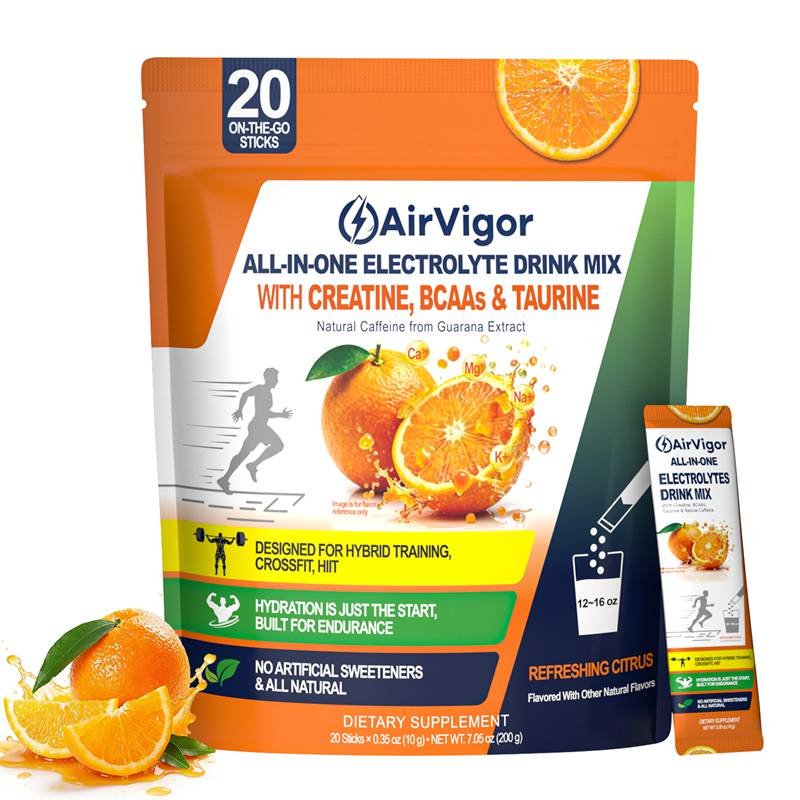
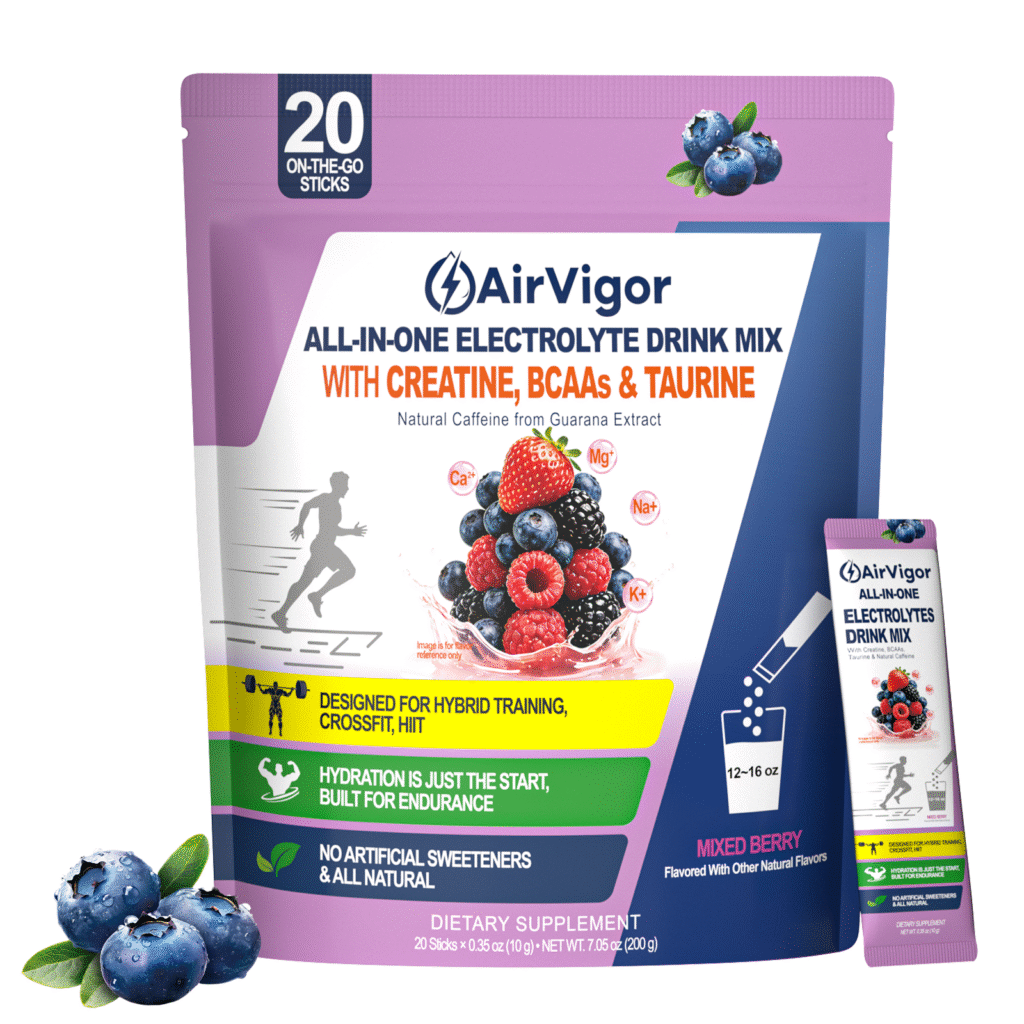
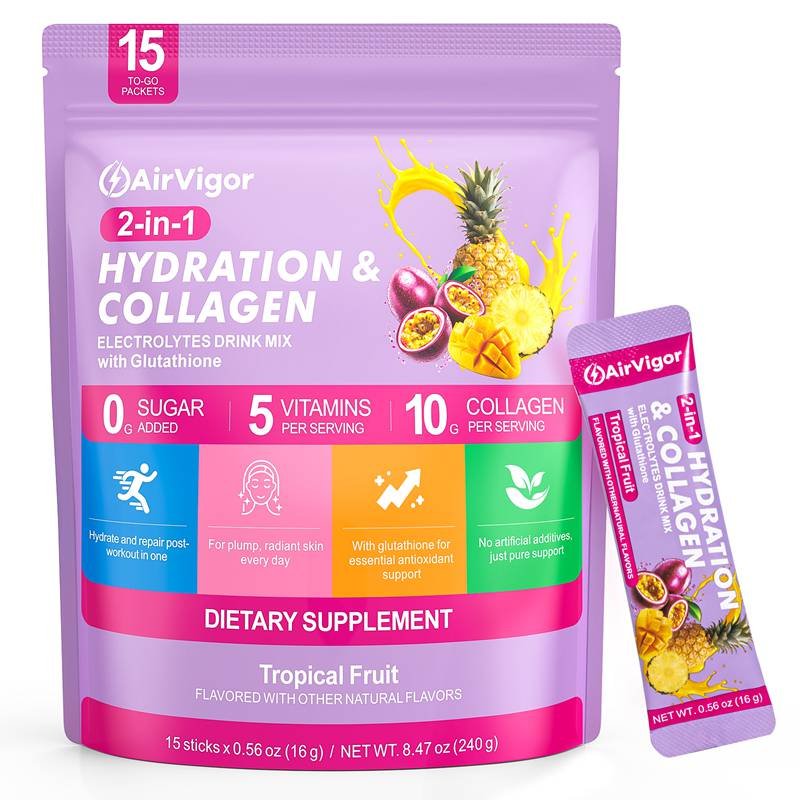
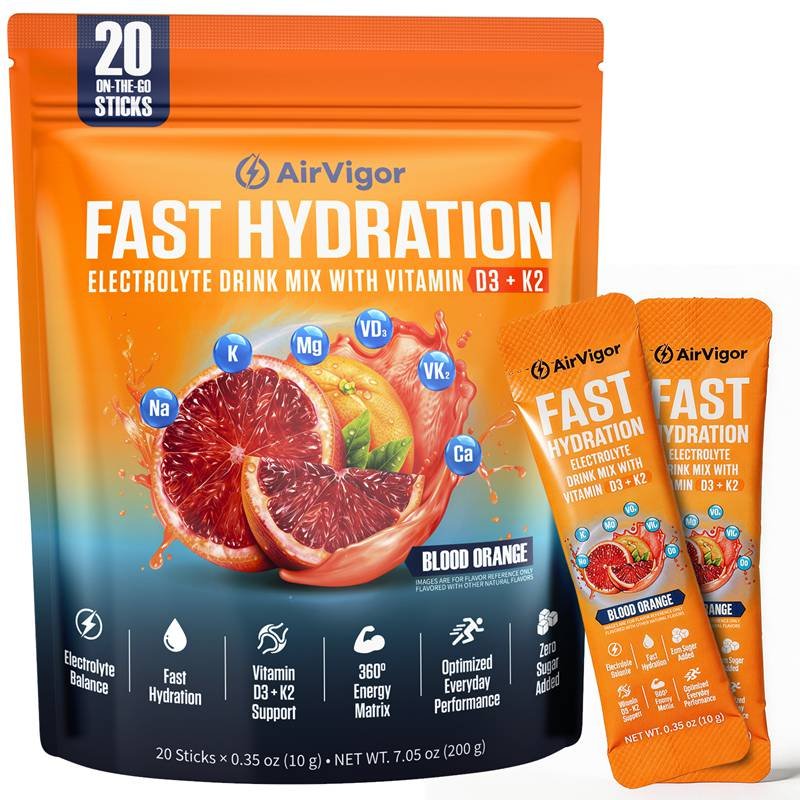
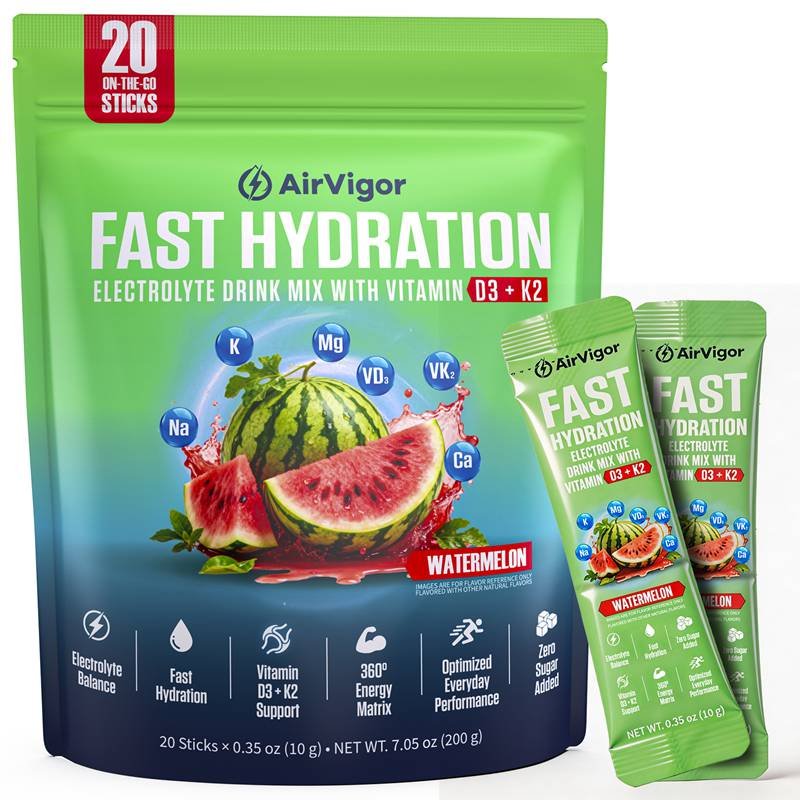
For AirVigor customers, this storage benefit is part of the daily product experience. Electrolyte powder should not feel messy or difficult to manage. A stick pack keeps the routine simple: one packet, one bottle, one serving. That makes hydration easier for workouts, travel, office use, hot weather, sauna routines, and everyday carry.
Which Electrolyte Powder Package Stores Better?
The best electrolyte powder package depends on how often and where the customer uses it. Tubs work well for frequent home use, pouches save space, and stick packs usually store better for travel, gym bags, offices, humid climates, and occasional use.
Tubs for Home Storage
Tubs are useful for customers who use electrolyte powder often at home. They usually offer easy scooping, more servings in one container, and better value for high-frequency users.
A tub can be a good choice when the customer has a stable storage spot and uses the product quickly. For example, someone who drinks electrolytes every morning, trains five days a week, or shares the product with family may prefer a tub because it is easy to open and scoop. The product stays in one place, usually a pantry or kitchen cabinet, and the user does not need to open individual packets every time.
The problem is repeated exposure. Every time the lid opens, the full powder supply meets air. If the room is humid, the scoop is damp, or the lid is not closed tightly, moisture can enter. Over several weeks, this may lead to clumping, texture changes, and less consistent scooping. Tubs require better habits than many customers expect.
| Tub Storage Factor | Customer Benefit | Storage Risk | Better Habit |
|---|---|---|---|
| Larger serving count | Good for daily users and families | Product stays open longer after first use | Finish within a reasonable time after opening |
| Built-in scoop | Easy to measure at home | Scoop may get wet or dirty | Keep scoop dry and inside the container |
| Wide opening | Fast access | More air exposure each time | Open briefly and close immediately |
| Hard container | Protects from crushing | Still sensitive to heat and humidity | Store in a dry indoor cabinet |
| Lower mess at home | Easy countertop use | Counter may be near sink or steam | Move away from water sources |
Tubs are not a poor package. They simply need a customer who can store them correctly. A tub is best when the powder is used frequently, stored indoors, and kept away from moisture. It is less ideal for people who carry products around, forget to close lids, or only use electrolytes occasionally.
Pouches for Space Saving
Resealable pouches are lighter and take less space than tubs. They can work well for pantry storage, refill use, and customers who want a smaller package footprint.
A pouch is often easier to fit into a kitchen cabinet, drawer, or travel bin. It uses less rigid space and may feel more convenient for customers who dislike bulky tubs. For e-commerce sellers, pouches can also be attractive because they are lightweight and easier to store in inventory compared with hard containers.
The main issue is the zipper seal. A pouch only stores well if the seal closes fully after every use. Powder can get stuck in the zipper track, especially with fine electrolyte powders. When that happens, customers may think the pouch is closed, but a small gap remains. That gap allows air and humidity to enter slowly.
| Pouch Storage Factor | Customer Benefit | Storage Risk | Better Habit |
|---|---|---|---|
| Flexible shape | Saves cabinet space | Can bend or spill if not upright | Store upright when possible |
| Resealable zipper | Easy to close after use | Powder may block the seal | Tap powder down before closing |
| Lighter package | Good for shipping and storage | Less crush protection than a tub | Keep away from heavy items |
| Smaller footprint | Fits drawers and shelves | Can be forgotten after opening | Store in a visible dry spot |
| Easy refill format | Good for repeat users | Seal quality depends on handling | Check full zipper line every time |
Pouches are a middle option. They are more compact than tubs, but they still expose the main powder supply every time they open. For customers who use powder at home and close the zipper carefully, they can work well. For humid areas, gym bags, or travel, stick packs may still be safer and cleaner.
Stick Packs for Easy Carry
Stick packs are usually the easiest electrolyte powder package to store because each serving is sealed separately. They reduce moisture exposure, remove scooping, and fit better into active routines.
Stick packs solve many real customer problems. There is no tub lid to forget, no scoop to keep dry, and no zipper seal to clean. The customer opens one packet only when ready to mix. The remaining servings stay sealed and protected. This is especially useful for people who use electrolytes in different places instead of one fixed kitchen shelf.
This format also makes serving size clearer. With tubs and pouches, customers need to scoop correctly. If powder clumps or settles, one scoop may feel different from another. With stick packs, the serving is already measured. That matters for customers who want simple hydration without guessing.
| Stick Pack Storage Factor | Customer Benefit | Storage Risk | Better Habit |
|---|---|---|---|
| Single-serving seal | Less moisture exposure | Packet can still be damaged | Keep packets dry and uncrushed |
| No scoop needed | Cleaner use | None related to scoop handling | Tear and pour directly into water |
| Portable size | Fits gym bags, drawers, purses, luggage | Can be left in hot cars | Carry only what is needed |
| Pre-measured serving | More consistent use | Not ideal for half-serving users | Use one full stick as directed |
| Good for occasional use | Unopened servings stay separate | Opened stick should not be saved | Use immediately after opening |
Stick packs are especially helpful for customers who have had clumping problems with tubs. They also work well for new users because the product feels simple from the first serving. One stick, one bottle, one drink. That kind of low-effort routine supports repeat use.
Which Package Fits Your Routine?
The best package is the one that matches the customer’s actual lifestyle. Daily home users may like tubs, organized pantry users may like pouches, and busy or mobile users often benefit most from stick packs.
Customers should choose packaging based on three questions: where will I use it, how often will I use it, and how careful am I with storage? A person who drinks electrolytes daily at home may not need stick packs every time. A person who travels often, works long shifts, goes to the gym, or lives in a humid climate may find stick packs much more practical.
| Customer Routine | Best Package | Why It Works |
|---|---|---|
| Daily home hydration | Tub or pouch | Easy access and good serving count |
| Family use | Tub | Better for shared high-frequency use |
| Small pantry or apartment | Pouch | Saves space |
| Office hydration | Stick packs | Clean, compact, desk-friendly |
| Gym bag use | Stick packs | No scoop, less mess, sealed serving |
| Travel | Stick packs | Easy to count and pack |
| Outdoor sports | Stick packs | Better for heat, rain, dirt, and sweat control |
| Humid climate | Stick packs | Less repeated moisture exposure |
| Occasional use | Stick packs | Unopened servings stay protected longer |
| Retail sampling | Stick packs | Easy to distribute and explain |
For many modern customers, electrolyte powder is not only a kitchen product. It moves with them. It goes to the gym, office, airport, hotel, beach, sports field, sauna, or hiking trail. That is why stick packs often store better in real life, even if tubs can work well at home.
Which Package Reduces Waste?
The package that reduces waste best depends on usage speed. Tubs reduce packaging material per serving for frequent users, while stick packs reduce product waste for occasional users who might let an opened tub clump or expire.
Customers often think about waste only as packaging waste, but product waste matters too. If a customer buys a large tub and half of it clumps, expires, spills, or tastes stale before use, that is also waste. For someone who drinks electrolytes daily, a tub may be efficient. For someone who uses electrolytes only during workouts, travel, or hot weather, stick packs may help prevent unused powder from going bad after opening.
| Waste Type | Tub | Pouch | Stick Pack |
|---|---|---|---|
| Packaging per serving | Lower | Medium | Higher |
| Product exposure after opening | Higher | Medium to higher | Lower |
| Risk of unused powder clumping | Higher for occasional users | Medium | Lower |
| Risk of spills | Medium | Medium to high if seal fails | Low |
| Serving accuracy | Depends on scoop | Depends on scoop | Pre-measured |
| Best waste profile | Daily users | Careful home users | Occasional, travel, gym, humid-climate users |
The practical answer is not that one format is always better. The better format is the one the customer will actually finish without quality problems. AirVigor stick packs are designed for customers who value portability, clean storage, and consistent serving size. For workouts, travel, office use, sauna routines, hot weather, and daily carry, this format helps reduce the most common storage frustrations while keeping hydration simple.
How Long Can Electrolyte Powder Be Stored?
Electrolyte powder can usually be stored until the printed expiration date when it stays sealed, dry, cool, and away from sunlight. After opening, storage quality depends on moisture control, package sealing, scoop hygiene, and how quickly the customer uses the product.
Check the Expiration Date First
The expiration date is the first thing customers should check before using electrolyte powder. It gives the clearest starting point for judging whether the product is still within its intended use period.
Customers often find electrolyte powder in different places: a pantry shelf, office drawer, gym bag, suitcase pocket, kitchen cabinet, or sports backpack. The product may look fine from the outside, but the printed date should always be checked first. This is especially important for customers who buy multiple flavors, stock up during promotions, or use electrolyte powder only during summer, travel, sauna sessions, or workouts.
The expiration date does not mean the product becomes bad at midnight on that day, but it does mean the brand no longer guarantees the same quality after that point. For a dietary supplement, customers should not treat expired powder like a casual snack. The product is consumed for hydration support, so the safer choice is to follow the label date.
| Product Situation | What to Check | Better Customer Decision |
|---|---|---|
| Sealed product in pantry | Printed expiration date and package condition | Use if within date and package is intact |
| Opened tub | Expiration date, smell, texture, color, lid condition | Use only if powder looks and smells normal |
| Stick pack in gym bag | Expiration date and packet damage | Use if sealed, dry, and within date |
| Product from old travel bag | Date, heat exposure, packet condition | Replace if packet looks damaged or date is unclear |
| Bulk purchase | Oldest date first | Use older products before newer ones |
| Multiple opened flavors | Opening date and powder condition | Finish one flavor before opening too many |
For customers who keep more than one product at home, a simple “first in, first out” habit helps. Use the product with the earlier date first. If a tub or pouch is opened, writing the opening month on the package can also help customers avoid keeping opened powder for too long.
Retailers, gyms, and wellness partners should pay even more attention to date rotation. Electrolyte powder should be organized by batch and expiration date, with older inventory sold first. A product that reaches customers with more usable shelf life feels fresher and reduces complaints.
How Storage Changes Shelf Life
Shelf life depends not only on the printed date, but also on how the powder is stored. Heat, humidity, sunlight, wet scoops, loose seals, and damaged packaging can make the product feel less fresh before the date arrives.
A sealed electrolyte powder stored in a dry indoor cabinet has a much better chance of staying in good condition. An opened tub stored near a sink, in a humid bathroom, or in a hot car may start clumping or losing freshness much sooner. Customers may notice this as a change in smell, texture, mixability, or taste.
This is why “how long can electrolyte powder last” is not always answered by one number. Two customers can buy the same product on the same day but have very different experiences. One keeps it in a cool pantry and closes it tightly. The other leaves it beside a wet shaker bottle and sometimes forgets to close the lid. After a month, the first product may still feel fresh, while the second may already have clumps.
| Storage Condition | Expected Product Experience | Risk Level |
|---|---|---|
| Sealed, dry cabinet | Best chance of staying fresh until expiration date | Low |
| Opened but tightly closed after each use | Usually good if handled with dry scoop | Low to medium |
| Opened near sink or steam | Clumping may appear faster | Medium |
| Stored in bathroom | Humidity may affect texture | High |
| Stored in car or garage | Heat swings may affect flavor and powder flow | High |
| Pouch not fully sealed | Air and moisture can enter slowly | Medium to high |
| Stick packs kept dry and sealed | Good protection for individual servings | Low |
| Stick packs crushed or torn | Higher exposure risk | Medium to high |
The biggest storage rule is simple: the date matters, but storage decides the experience. A product can be within date and still feel unpleasant if it was handled poorly. A customer should not ignore smell, color, texture, or package damage just because the date has not passed.
How Long After Opening?
After opening, electrolyte powder should be used while it still looks, smells, and mixes normally, and always before the expiration date. The faster it is used with proper storage, the better the product experience usually stays.
Opened powder is different from sealed powder. Once opened, the product is exposed to air every time the customer uses it. If the air is humid or the scoop is wet, the powder may start changing faster. This does not mean opened powder becomes unusable quickly, but it does mean the customer’s habits matter more.
For daily users, opened powder may be finished before storage problems have time to build up. For occasional users, the product may sit open for months. That is where problems often start. If a customer uses electrolytes only for travel, summer heat, hot yoga, or weekend workouts, stick packs may be easier because unopened servings stay sealed separately.
| User Type | Typical Use Pattern | Opened Powder Risk | Better Storage Plan |
|---|---|---|---|
| Daily user | Uses 5–7 servings weekly | Repeated opening but fast finish | Tub or pouch can work if kept dry |
| Workout user | Uses 2–4 servings weekly | Wet hands and gym bag exposure | Stick packs or dry cabinet storage |
| Occasional user | Uses 1–4 servings monthly | Opened tub sits too long | Stick packs or smaller package |
| Seasonal user | Uses mostly in summer | Product may sit unused for months | Buy closer to use season |
| Family user | Multiple people use it | Lid may be left loose | Set a clear closing habit |
| Traveler | Uses only during trips | Product may be forgotten in bags | Pack dated stick packs |
A good customer habit is to avoid opening too many flavors or containers at the same time. It is tempting to keep several flavors open, but each opened package starts facing air, moisture, and handling risk. Finishing one package before opening another helps protect freshness and reduces waste.
For tubs and pouches, customers can also write the opening date on the package. This does not replace the expiration date, but it helps them remember how long the product has been exposed after first use.
When Should You Stop Using It?
Customers should stop using electrolyte powder if it is expired, smells strange, feels wet or sticky, changes color, has dark spots, shows visible contamination, or has damaged packaging. Small dry clumps alone may not be a problem, but warning signs should not be ignored.
Many customers want to avoid waste, so they may be tempted to use powder that looks questionable. That is not a good idea. Electrolyte powder is mixed into water and consumed directly. If the product looks or smells wrong, saving the remaining servings is not worth the risk.
The best check is simple: date, smell, color, texture, package. If all five look normal, the product is more likely to be fine. If one of them is clearly wrong, stop using it and contact the brand if needed.
| Check Point | Normal Sign | Stop Using If |
|---|---|---|
| Date | Product is within expiration date | Product is past expiration date |
| Smell | Smells like the intended flavor | Musty, sour, stale, chemical-like, or unpleasant odor |
| Color | Even and consistent | Dark spots, patches, discoloration, or visible growth |
| Texture | Loose powder or small dry clumps | Wet, sticky, pasty, or heavily hardened powder |
| Package | Sealed, clean, undamaged | Torn, swollen, leaking, wet, or poorly sealed |
| Mixability | Mixes normally with water | Strange residue, off-smell, or unusual separation |
Customers should also avoid trying to repair powder that has clearly gone bad.
- Do not scrape off suspicious spots and use the rest.
- Do not heat, bake, or blend wet powder to “fix” it.
If the product condition is doubtful, replacing it is the cleaner choice. A hydration routine should feel simple and safe, not uncertain.
How to Store Extra Servings
Extra servings should be stored by date, kept sealed, and placed in a dry indoor location. Customers who buy multiple packs should use older products first and avoid opening several containers at the same time.
Stocking up can make sense for customers who use electrolyte powder often, especially during hot weather, training seasons, travel periods, or family use. But buying more also means storage needs to be more organized. Products should not be scattered across cars, backpacks, garages, and kitchen counters with no tracking.
For home storage, one dry shelf is better than several random places. For office or travel use, stick packs are easier because customers can move a few servings without opening the main supply. For gyms, wellness centers, and retail partners, products should be kept in clean, dry storage areas and rotated by date.
| Storage Goal | Better Method | Why It Helps |
|---|---|---|
| Keep pantry organized | Store all products in one dry area | Reduces forgotten packages |
| Avoid expired products | Use earlier dates first | Reduces waste |
| Protect opened powder | Finish one container before opening another | Limits air exposure |
| Prepare for travel | Pack only needed stick packs | Avoids carrying a full tub |
| Office hydration | Keep sealed packets in drawer | Prevents spills and mess |
| Retail or gym stock | Rotate by expiration date | Helps customers receive fresher product |
For AirVigor customers, stick packs make extra serving storage easier. A customer can keep several packets at home, a few at work, and a few in a travel pouch without opening the rest of the product. Each serving stays sealed until use, which helps protect freshness and makes electrolyte powder easier to manage across daily routines.
Why Do AirVigor Storage Tips Help?
AirVigor storage tips help because they match how customers actually use electrolyte powder: at home, at work, after workouts, during travel, in hot weather, and after sweating. AirVigor focuses on dry storage, sealed servings, clear usage guidance, and convenient stick-pack packaging.
Designed for Real Daily Use
AirVigor electrolyte powder is designed for customers who need hydration support in real routines, not only at home. The product format fits workouts, offices, travel, hot weather, sauna use, and busy schedules.
Many customers do not use electrolyte powder in one fixed place. They may drink it after a gym session, keep it in a desk drawer, pack it for flights, use it after hot yoga, or carry it during summer errands. That means the package has to handle movement, temperature changes, moisture risk, and quick use.
Traditional tubs can work well in a dry pantry, but they are not always ideal for customers who carry electrolytes outside the home. A tub can be bulky in a gym bag. A scoop can get wet after training. A lid may not close tightly if the user is rushed. A pouch can save space, but the zipper still needs to be sealed correctly every time.
AirVigor stick packs make the routine easier. Each serving is pre-measured and sealed until use. Customers do not need to manage a scoop, open one large container repeatedly, or worry as much about powder sitting exposed to air. This makes the product more practical for people who want hydration support without extra steps.
| Customer Routine | Common Storage Problem | How AirVigor Helps |
|---|---|---|
| Morning hydration | Product left near sink or coffee machine | Stick packs can be stored in a dry drawer or cabinet |
| Gym training | Wet hands, damp towels, shaker leaks | One sealed serving opens only when needed |
| Office workday | Desk spills, coffee station steam | Packets stay clean in a desk drawer |
| Travel | Tubs take space and may spill | Pack only the number of sticks needed |
| Outdoor heat | Sun, sweat, rain, and dirt exposure | Packets fit in a dry pouch or bag pocket |
| Sauna or hot yoga | Heavy sweating and humid bags | Sealed serving avoids scoop contact |
| Occasional use | Opened tubs sit too long | Unopened sticks remain separate |
For customers, the real value is convenience plus confidence. A product is easier to use when the serving is already measured, the packet is easy to carry, and the remaining supply stays unopened. This is especially useful for people who have stopped using powder supplements before because they clumped, spilled, or became annoying to manage.
Stick Packs Reduce Moisture Problems
Stick packs reduce moisture problems because each serving is sealed separately. The customer opens only one packet at a time, so the rest of the product is not repeatedly exposed to humid air, wet scoops, or loose lids.
Moisture is the main reason electrolyte powder clumps. With tubs and pouches, the customer exposes the main powder supply every time they use it. That may be fine for careful home users, but it becomes harder in real life. A customer may open the package after sweating, while holding a damp shaker, or in a humid kitchen. Over time, those small exposures can change the powder texture.
AirVigor stick packs reduce these daily risks. There is no scoop to dry, no zipper line to clean, and no large container to leave open. The customer tears one packet, pours it into water, and uses it immediately. The remaining servings stay sealed.
This format is especially helpful in moisture-prone situations.
| Situation | Tub or Pouch Risk | Stick Pack Advantage |
|---|---|---|
| Humid summer kitchen | Full powder supply exposed daily | One serving opens at a time |
| Gym bag storage | Scoop and package may contact damp items | Sealed sticks stay cleaner |
| Travel luggage | Lid or pouch may open under pressure | Individual packets are easier to pack |
| Office drawer | Spills or coffee steam nearby | Packets stay sealed until use |
| Hot yoga bag | Wet towel and humidity exposure | One serving can be kept in a dry pocket |
| Outdoor sports | Rain, sweat, dust, and heat | Packets are easier to protect |
Stick packs do not mean customers can ignore storage completely. They should still keep packets dry, avoid crushing them, and keep them away from high heat when possible. But compared with opened tubs, stick packs make correct storage much easier for normal daily use.
Clear Servings Make Storage Easier
AirVigor stick packs make storage easier because each packet contains one serving. Customers do not need to measure powder, guess scoop size, or worry that clumped powder has changed serving consistency.
Serving consistency matters more than many customers realize. With a tub, powder can settle, pack down, or clump. A scoop from loose powder may not feel the same as a scoop from hardened powder. Some customers may accidentally take more or less than intended, especially if the scoop is heaped, compacted, or uneven.
With stick packs, the serving is already portioned. This makes use simpler for new customers and more convenient for busy customers. It also reduces mess. There is no powder dust on the counter, no scoop to rinse, and no container to wipe after use.
| Storage Detail | Tub or Pouch | AirVigor Stick Pack |
|---|---|---|
| Serving measurement | Customer must scoop | Pre-measured |
| Moisture exposure | Main supply opens repeatedly | One packet opens once |
| Mess risk | Powder can spill around lid or scoop | Tear, pour, mix |
| Travel use | Bulky or spill-prone | Flat and easy to pack |
| Office use | Needs container space | Fits desk drawer |
| Occasional use | Opened product may sit for months | Unopened sticks stay separate |
| User confidence | Depends on handling | More consistent serving routine |
This is useful for customers who use electrolyte powder in different places. A few packets can stay at home, a few at work, and a few in a travel bag. Customers do not need to move one large container around, which lowers the chance of heat, moisture, or spills affecting the full product.
Quality Checks Support Freshness
AirVigor supports product freshness through formula review, packaging checks, sealing control, label review, and finished-product quality management. These steps help the product reach customers in a condition that is ready for normal storage and use.
Customers usually judge quality from the moment they open the product. Does the package look clean? Is the seal intact? Is the serving easy to use? Does the powder smell normal? Does it mix well? These details create trust quickly. If a product arrives damaged, unclear, or messy, customers may lose confidence before they finish the first serving.
AirVigor’s broader quality system focuses on consistency before the product reaches the customer. This includes attention to raw material selection, formula execution, packaging suitability, batch control, and product release checks. For electrolyte powder, these steps matter because the product must remain dry, portable, and easy to mix.
| Quality Area | Why Customers Care | AirVigor Focus |
|---|---|---|
| Formula consistency | Each serving should feel reliable | Clear ingredient and serving structure |
| Packaging seal | Powder should arrive protected | Seal and package review |
| Label clarity | Customers need storage and use directions | Clear usage and storage information |
| Batch control | Product should be traceable | Production and quality record management |
| Finished product check | Product should be ready to sell and use | Quality review before release |
| Transport readiness | Package should handle normal shipping | Packaging and logistics consideration |
For retail and channel partners, these details also matter commercially. A storage-friendly product can reduce customer confusion, product complaints, and repeat-use friction. When customers understand how to store and use a product, they are more likely to finish it and reorder.

Conclusion
Electrolyte powder stays fresher when it is kept dry, sealed, cool, and away from sunlight, steam, wet scoops, and hot cars. Small storage habits can make a big difference in how the powder mixes, tastes, and feels over time.
For customers who want easier daily hydration, AirVigor electrolyte stick packs offer a cleaner and more practical option than open tubs in many routines. Each serving is portable, pre-measured, and sealed until use, making it a strong fit for workouts, offices, travel, heat, sauna use, and busy daily schedules.
AirVigor branded electrolyte products are available for customers and channel partners who want ready-to-sell hydration products with clear positioning and convenient packaging. Custom formula and private label options are also available for partners with specific market needs.
Share:
Contact Expert Team
At AirVigor, performance becomes effortless. We transform advanced nutrition science into clean, effective supplements that help you hydrate, recover, and feel stronger every day. Shop AirVigor Supplements on Amazon and experience athlete-trusted formulas—backed by real science and supported by our world-class R&D and production capabilities.
Trust AirVigor
At AirVigor, turning your performance goals into reality is no longer a struggle—it’s a science-driven journey we build together. Whether you’re a runner, lifter, cyclist, yogi, outdoor athlete, or someone simply seeking better daily energy, AirVigor transforms advanced nutrition research into clean, effective, and trustworthy supplements you can feel.
Backed by our U.S. scientific team, global certifications, and world-class production standards, every formula is engineered to deliver real hydration, real recovery, and real performance. And when you’re ready to experience the difference, you’ll find AirVigor products available on Amazon and other major platforms—fast shipping, consistent quality, and a community of athletes already seeing results.
Behind the scenes, our R&D and manufacturing ecosystem also supports specialized formulation development, ensuring AirVigor continues to lead with innovation while keeping quality and safety uncompromised. But at the core, everything we create is built for you—your health, your performance, your momentum.
Choose AirVigor. Feel the science. Elevate your every day.


Subscribe to our newsletter
Sign up to our newsletter and we’ll keep you up to date with the latest arrivals.