Skip to content
Can You Take Electrolytes on Empty Stomach : A Practical Guide
# Your Trusted Dietary Supplement Brand In US
- Emily

Table of Contents
Waking up thirsty is more common than most people think. You may sleep for 7–8 hours without drinking water, wake up with a dry mouth, drink a full glass of water, and still feel like your body has not fully “switched on.” For people who train early, travel often, sweat heavily, drink coffee first thing, or follow a fasting routine, the question becomes even more practical: can you take electrolytes on empty stomach, or should you eat something first?
Yes, many healthy adults can take electrolytes on empty stomach when they are mixed with enough water and used in a reasonable serving. Electrolytes may be helpful before breakfast, before a morning workout, during fasting, after heavy sweating, or after a night of poor hydration. But not everyone feels good taking them without food. Some people may notice nausea, bloating, reflux, or a salty-heavy feeling if the drink is too concentrated or consumed too quickly.
The best answer depends on your body, your routine, and the formula you choose. A runner heading out at 6:30 a.m. may want a light electrolyte drink before training. A busy office worker may prefer electrolytes after breakfast. Someone with a sensitive stomach may need more water or a smaller serving. This guide breaks down what electrolytes do, when empty stomach use makes sense, when food is better, and how AirVigor supports a clearer, easier hydration routine for daily users and active lifestyles.
What Are Electrolytes?
Electrolytes are minerals that help your body use water, move muscles, send nerve signals, and stay balanced during daily activity. For people who sweat, travel, fast, work long hours, or train before breakfast, electrolytes can make hydration feel more complete.
What Do Electrolytes Do?
Electrolytes help control how fluid moves through the body. They also support normal muscle movement, nerve communication, and hydration balance, which is why they matter after sweating, early morning dryness, or long hours without enough fluids.
Most people think hydration only means drinking more water. That is partly true, but water needs mineral balance to work properly inside the body. Electrolytes help the body keep fluid in the right places, including the bloodstream, cells, and tissues. This is why plain water may not always feel enough after heavy sweating, hot weather, fasting, or a long workout.
Sodium is usually the most important electrolyte for sweat replacement because sweat contains sodium. Potassium supports normal cell function and muscle activity. Magnesium supports muscle and nerve function. Calcium helps with muscle contraction and signaling. These minerals work together, but they do not all do the same job.
For everyday users, the clearest sign is how the body feels. After a hot yoga class, long run, outdoor workday, sauna session, or travel day, some people feel thirsty even after drinking water. Others feel heavy, flat, foggy, or slower to recover after sweating. In those moments, electrolytes may help support a more complete hydration routine.
| Electrolyte | Main Role | When Users Usually Notice It |
|---|---|---|
| Sodium | Helps maintain fluid balance | Heavy sweat, hot weather, long workouts |
| Potassium | Supports normal cell and muscle function | Daily hydration, active routines, low food intake |
| Magnesium | Supports muscle and nerve function | Training recovery, muscle tightness, daily wellness |
| Calcium | Helps muscle contraction and signaling | Balanced mineral support |
| Chloride | Supports fluid balance and acid-base balance | General hydration support |
This does not mean more electrolytes are always better. A person sitting in a cool office and eating regular meals may not need the same electrolyte support as a cyclist riding for 2 hours in summer heat. The useful question is not “Do electrolytes work?” The better question is “Does my current routine create a reason to use them?”
AirVigor builds electrolyte products around this real-life difference. Some users want morning hydration. Some want workout support. Some want travel-friendly packets. Some want a cleaner alternative to sugary sports drinks. A good electrolyte product should help users match the formula to the moment, not make every person follow the same routine.
Why Do They Matter Daily?
Electrolytes matter daily because the body uses them constantly, not only during exercise. Even sitting at a desk, your body still needs fluid balance, muscle function, nerve signals, and normal energy metabolism to run smoothly throughout the day.
Daily electrolyte balance is usually supported by food and water. A balanced diet can provide sodium, potassium, magnesium, calcium, and other minerals. But modern routines often make hydration less consistent. Many people skip breakfast, drink coffee before water, work in air-conditioned rooms, eat salty restaurant meals, train after work, or travel across time zones.
This is why electrolyte products are no longer only for endurance athletes. Busy professionals, early gym users, hot yoga students, outdoor workers, low-carb eaters, and frequent travelers may all search for electrolyte support because they feel hydration gaps in daily life.
Common daily situations include:
| Daily Situation | What May Happen | How Electrolytes May Fit |
|---|---|---|
| Waking up dry | 7–8 hours without fluids | Light electrolyte drink before breakfast |
| Coffee before water | Morning fluid balance feels off | Electrolytes later in the morning |
| Skipped breakfast | Lower mineral intake early in the day | Small serving with enough water |
| Office work | Low water intake for hours | Bottle routine at desk |
| Travel day | Dry air and irregular meals | Portable stick pack hydration |
| Evening workout | Sweat after a long workday | Pre- or post-training support |
| Hot weather | More sweat loss | Use around outdoor activity |
For example, someone who wakes up at 6:30 a.m., drinks coffee immediately, works until noon, and trains after work may go through most of the day with inconsistent hydration. That person may not need electrolytes every hour, but a planned serving in the morning or around training may make more sense than randomly drinking water only when thirsty.
The biggest customer concern is usually convenience. People want hydration support that is simple, easy to mix, not too sweet, not too salty, and easy to carry. If a product tastes heavy or feels complicated, it will stay in the cabinet. This is why AirVigor focuses on practical use, clear serving guidance, formula transparency, and stable product experience.
What Is in Electrolytes?
Most electrolyte products contain minerals such as sodium, potassium, magnesium, calcium, and chloride. Some formulas may also include sugar, caffeine, amino acids, creatine, vitamins, collagen, or flavor systems, so users should always check the label before drinking them empty stomach.
Electrolyte products can look similar from the front label, but they may feel very different in the body. A low-sugar daily hydration powder is not the same as a high-sugar sports drink. A mineral-only formula is not the same as a pre-workout hydration blend with caffeine. A recovery electrolyte with amino acids or collagen may not fit the same timing as a fasting-friendly electrolyte.
This matters especially when taking electrolytes on empty stomach. Without food, the body may notice stronger flavors, acidity, sweetness, sodium level, or magnesium effects more quickly. A formula that feels fine after lunch may feel too strong before breakfast if it is mixed with too little water.
Before choosing an electrolyte product, users should look at these label details:
| Label Item | Why Customers Should Check It | Empty Stomach Note |
|---|---|---|
| Sodium | Main mineral lost through sweat | Higher sodium may taste salty if too concentrated |
| Potassium | Supports normal cell and muscle function | Some users need caution with medical conditions |
| Magnesium | Supports muscle and nerve function | Certain forms may affect digestion |
| Calcium | Adds broader mineral support | Usually part of balanced formulas |
| Sugar | Affects calories and taste | May not fit fasting or low-sugar goals |
| Caffeine | Adds stimulation | May feel strong before food or with coffee |
| Amino acids | Often used in sports formulas | May not fit strict fasting |
| Creatine | Supports performance formulas | Better matched to training routines |
| Flavor acids | Improve taste | May bother reflux-prone users |
| Water direction | Controls concentration | More water often improves comfort |
For customers, the best electrolyte formula is not always the strongest one. It is the one that matches the use case. Morning hydration usually needs something light and easy to drink. Heavy sweat workouts may need stronger sodium support. Travel may need portable packets. Fasting users may care more about calories and sugar. Sensitive-stomach users may care most about dilution, flavor balance, and timing.
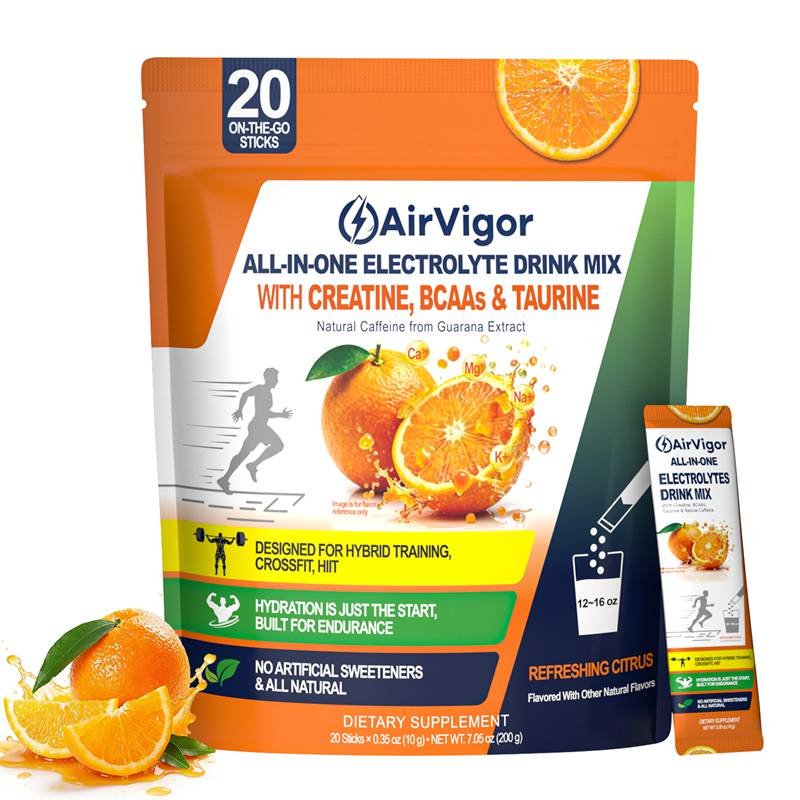
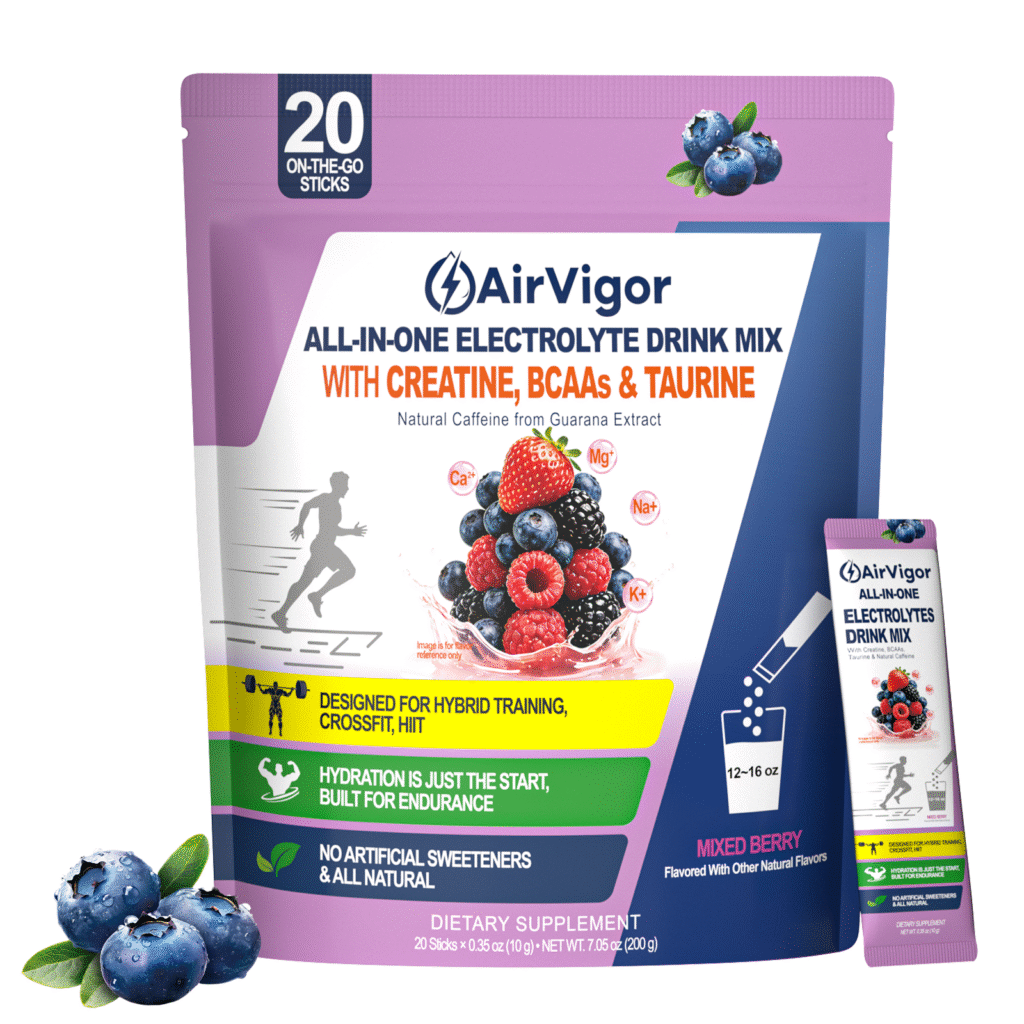
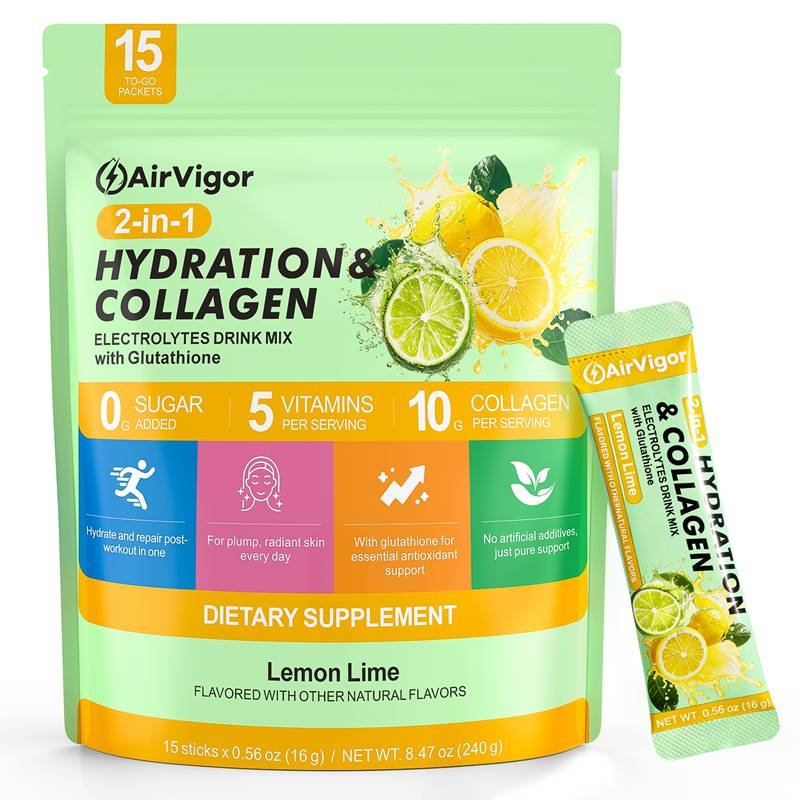
AirVigor’s product development direction fits this kind of customer decision-making. The brand emphasizes real ingredient addition, clear formula expression, stable quality management, and practical packaging formats. For end users, that means easier product understanding. For wholesale, private label, or OEM/ODM partners, it also means electrolyte formulas can be developed around real market scenarios instead of generic “one formula for everyone” positioning.
When Do You Need Electrolytes?
You may need electrolytes when water loss, sweat loss, low food intake, heat exposure, or irregular routines make plain water feel less complete. They are most useful when your body has a clear reason for extra hydration support.
Electrolytes are not necessary for every sip of water. Most healthy adults can meet many mineral needs through food. But certain moments increase demand or make hydration feel less stable. The most common trigger is sweating. The more you sweat, the more sodium and fluid you lose. The second trigger is routine disruption, such as fasting, travel, heat, illness-related fluid loss, or long gaps between meals.
Here is a simple user-focused guide:
| User Feeling or Situation | Possible Reason | Electrolyte Use |
|---|---|---|
| Dry mouth in the morning | Long hours without fluids | Try a light serving with water |
| Still thirsty after water | Sweat or low mineral balance | Use after activity or heat |
| Heavy sweating | Fluid and sodium loss | Use before or after sweat-heavy activity |
| Salt marks on clothes | Higher sodium loss through sweat | Consider stronger sweat support |
| Training before breakfast | No meal before sweat | Use a diluted drink before exercise |
| Fasting window | No food minerals for hours | Check formula calories and ingredients |
| Long flight | Dry air and irregular drinking | Carry packets and sip slowly |
| Outdoor heat | Increased sweat rate | Use around heat exposure |
| Stomach sensitivity | Drink may feel strong | Use more water or take with food |
For example, a person doing a 30-minute walk in cool weather may not need electrolytes. A person doing hot yoga for 60 minutes may benefit more. A person sitting at a desk all day may only need water and meals. A person flying, skipping meals, and drinking coffee may find electrolytes useful later in the day.
This is the kind of decision customers want help with. They are not asking for a chemistry lesson. They want to know when the product fits their life. AirVigor can speak directly to those moments: morning hydration, workout sweat, daily routine, travel, fasting, and active recovery.
How Are Electrolytes Different from Water?
Water replaces fluid, while electrolytes help the body manage that fluid more effectively. Plain water is enough for many normal situations, but electrolytes may be more useful when sweating, heat, fasting, or long gaps without food affect hydration balance.
Plain water should still be the foundation of hydration. Electrolyte powder is not meant to replace every glass of water. The value of electrolytes is more specific. They are most helpful when fluid loss includes mineral loss, or when daily routines make hydration feel incomplete.
A clear comparison helps customers understand the difference:
| Option | Best For | Limitation |
|---|---|---|
| Plain water | Daily drinking, low-sweat days, meals | May feel incomplete after heavy sweat |
| Electrolyte water | Sweat, heat, fasting, travel, workouts | Should be used according to serving directions |
| Sports drink | Long or intense activity needing carbs | Often higher in sugar |
| Coconut water | Natural potassium source | Usually lower sodium than sweat-focused formulas |
| Oral rehydration solution | Medical-style fluid replacement needs | Not the same as daily supplement use |
For empty stomach use, this difference matters. If you wake up slightly thirsty, plain water may be enough. If you wake up dry, plan to train, or had heavy sweat the day before, electrolytes may be more useful. The answer depends on context.
AirVigor electrolyte products are best positioned as practical hydration support, not as a replacement for normal water or food. That honest positioning creates stronger trust because customers feel guided instead of pushed.
Can You Take Electrolytes on Empty Stomach?
Yes, many healthy adults can take electrolytes on empty stomach, especially when they wake up thirsty, train early, sweat heavily, travel, or fast. The key is to mix them with enough water, drink slowly, and adjust based on stomach comfort.
Is It Usually Okay?
Taking electrolytes on empty stomach is usually okay for healthy adults when the serving is reasonable and the drink is properly diluted. It often works best when the body has a clear hydration reason, not just as a random flavored drink.
For many people, the most common time is early morning. After sleeping for 7–8 hours, the body has gone a long time without fluid. If the room is warm, you sweat at night, drink alcohol, eat a salty dinner, or wake up with a dry mouth, plain water may not feel fully satisfying. In that situation, a light electrolyte drink may feel more complete.
Morning workout users also often prefer electrolytes before food. A full breakfast before running, cycling, HIIT, CrossFit, hot yoga, or strength training can feel heavy. A diluted electrolyte drink can be easier to handle before movement, especially if the session involves sweat.
However, “okay” does not mean every person should drink a full serving immediately after waking up. Stomach comfort matters. A strong electrolyte powder mixed with too little water may feel salty, sour, or heavy. Some people feel better taking electrolytes after a few bites of food.
| User Situation | Empty Stomach Use | Better Routine |
|---|---|---|
| Wake up thirsty | Usually suitable | Mix with a full bottle of water and sip |
| Early workout | Usually suitable | Drink 20–45 minutes before training |
| Light office morning | Optional | Water may be enough if breakfast is soon |
| Sensitive stomach | Use carefully | Start with half serving or take with food |
| Coffee first thing | Use carefully | Try water first, then electrolytes or breakfast |
| Heavy sweat previous day | Often useful | Use in the morning with enough water |
| No sweat, regular meals | May not be needed | Plain water may be enough |
For AirVigor customers, the best use is not about forcing electrolytes every morning. It is about matching the product to real moments: dry mornings, sweat loss, long workdays, travel, fasting windows, and training routines.
Why It May Feel Different
Electrolytes may feel different on empty stomach because there is no food to soften the taste, acidity, sweetness, or mineral concentration. Without food, the stomach may notice strong flavors and minerals more quickly.
Food naturally slows digestion and acts as a buffer. When you drink electrolytes after eating, the stomach is already processing food, so the drink may feel gentler. When you drink electrolytes before food, the formula reaches the stomach more directly. For some users, that feels light and refreshing. For others, it may feel sharp or uncomfortable.
The formula also matters. An electrolyte drink with higher sodium may taste saltier. A formula with citric acid may feel sharp for reflux-prone users. A product with magnesium may feel different for users who are sensitive to certain mineral forms. A caffeinated electrolyte may feel too strong before breakfast, especially if the user also drinks coffee.
Many stomach complaints come from the routine, not only the product. A full serving in a small glass of water can feel much stronger than the same serving in a full bottle. Drinking too quickly can also cause bloating or nausea.
| What Makes It Feel Stronger | What Users May Notice | How to Adjust |
|---|---|---|
| Too little water | Salty, sour, or heavy taste | Add more water |
| Drinking too fast | Bloating or nausea | Sip over 10–20 minutes |
| Strong citric flavor | Reflux or stomach warmth | Take with food |
| Higher sodium | Salty mouthfeel | Dilute more |
| Magnesium sensitivity | Loose stomach or discomfort | Start with less |
| Caffeine included | Jitters or nausea | Avoid before food or coffee |
| Sweetener sensitivity | Aftertaste or bloating | Try a smaller serving |
This is why two customers can react differently to the same electrolyte powder. One person may say, “I love it before breakfast.” Another may say, “I need to eat first.” Both experiences are normal. A good hydration routine should fit the person, not force everyone into one timing.
When Food Helps More
Food helps more when electrolytes feel too strong, when your stomach is sensitive, or when you are using electrolytes for a daily routine rather than an immediate sweat or hydration need. A small snack is often enough.
Taking electrolytes with food does not make the routine less effective. For many users, it makes the routine easier to keep. If empty stomach use causes nausea or reflux, there is no reason to push through. A few bites of food can make the drink feel much smoother.
Food may help more in these situations:
| Situation | Why Food Helps |
|---|---|
| Sensitive stomach | Food reduces sharp mineral or acid feeling |
| Morning nausea | Food gives the stomach a buffer |
| Acid reflux | Food may reduce sour or burning feeling |
| Strong coffee routine | Food helps reduce stomach irritation |
| New electrolyte users | Easier first experience |
| Higher-mineral formulas | Less heavy mouthfeel and stomach impact |
| Daily wellness use | No need to drink it before food |
Good light pairings include banana, toast, oatmeal, yogurt, rice cakes, boiled eggs, crackers, or a small smoothie. The goal is not to turn electrolyte use into a full meal. The goal is to make the drink comfortable enough to use consistently.
For example, someone who wakes up at 6:30 a.m. and trains at 7:30 a.m. may drink electrolytes with water before training. But someone who wakes up slightly nauseous may eat half a banana first, then sip electrolytes. Both routines can work.
AirVigor’s product guidance can support both types of users. Some customers want a light drink before breakfast. Others want a bottle at work or after training. A flexible hydration product should fit different bodies and different schedules.
Is Empty Stomach Better?
Taking electrolytes on empty stomach is not automatically better. It may feel lighter before breakfast or workouts, but food can make the drink easier on digestion. The better choice depends on your stomach comfort, sweat level, routine, and product formula.
Does It Absorb Faster?
Electrolytes may move through the stomach faster without food, but faster does not always mean better. For most users, comfort, timing, water amount, and real hydration need matter more than chasing the fastest absorption.
When your stomach is empty, a diluted drink may leave the stomach more quickly than a drink taken with a full meal. That is one reason some people prefer electrolytes before morning workouts. They want fluid and minerals without the heavy feeling of breakfast. For runners, cyclists, HIIT users, and hot yoga students, this can feel more practical than eating too close to exercise.
But electrolyte absorption is not as simple as “empty stomach equals better.” The body regulates sodium, potassium, magnesium, calcium, and water based on current needs. If you did not sweat, are eating regular meals, and are already well hydrated, drinking electrolytes on empty stomach may not give a noticeable advantage. If you woke up dry, trained yesterday, or plan to sweat soon, the timing may feel more useful.
The customer’s real question is usually not scientific absorption speed. It is: “Will I feel better drinking this before food?” For some people, yes. For others, no. A person with a sensitive stomach may absorb the minerals just fine but still feel nausea because the drink is too strong or too acidic before breakfast.
| Situation | Does Faster Absorption Matter? | Better Choice |
|---|---|---|
| Early workout in 20–45 minutes | Yes, somewhat | Light electrolyte drink before training |
| Morning office routine | Not much | Empty stomach or with breakfast both work |
| Heavy sweat recovery | Moderate | Drink after sweating, food optional |
| Sensitive stomach | No | Comfort matters more than speed |
| Long fasting window | Depends on formula | Check calories, sugar, amino acids |
| Hot weather activity | Yes, if sweating soon | Sip before and during heat exposure |
| Normal low-sweat day | Usually no | Water and meals may be enough |
For AirVigor users, this is why practical usage guidance matters. An electrolyte product should not only list minerals. It should help users know when those minerals fit their day. Empty stomach use is useful when it solves a real problem: dry morning, early training, fasting, sweat, or travel. If there is no clear need, plain water may be enough.
Can Empty Stomach Feel Lighter?
Empty stomach use can feel lighter because there is no meal sitting in the stomach. This is one reason many people choose electrolytes before early workouts, travel, or fasting windows instead of eating first.
A full breakfast before movement does not work for everyone. Some people feel heavy if they eat before running. Others feel bloated during HIIT or hot yoga if they drink too much or eat too close to class. In those situations, a diluted electrolyte drink may feel like a middle option: more useful than plain water, but lighter than food.
This is especially common for people who train early. A 6:30 a.m. runner may not want oatmeal, eggs, or a protein shake before leaving the house. A 7:00 a.m. gym user may only have time to drink something while getting ready. A hot yoga student may want hydration support without feeling full in a heated room.
| User Routine | Why Empty Stomach May Feel Better |
|---|---|
| Morning run | No heavy food before movement |
| HIIT class | Less stomach bouncing or fullness |
| Hot yoga | Easier than eating before heat |
| Early strength training | Quick hydration before lifting |
| Fasted walk | Light support without a meal |
| Travel morning | Easier than airport food |
| Before coffee | May feel better than coffee first |
However, lighter does not always mean more comfortable. If the drink is mixed too strong, even a light routine can feel sharp. If the formula has caffeine, strong acidity, high sweetness, or a higher mineral load, some users may still prefer food first. Empty stomach use is best when the drink feels clean, diluted, and easy to sip.
AirVigor can support this routine by focusing on good mixability, balanced taste, and clear serving directions. The easier the drink feels before food, the more likely customers are to keep using it.
Is Food Better for Your Stomach?
Food may be better if electrolytes make you feel nauseous, bloated, acidic, or heavy before breakfast. A small snack can soften the drink’s impact and make the routine easier to repeat.
Food acts like a buffer. It slows digestion and reduces the direct feeling of minerals, flavor acids, sweetness, and saltiness. This can be helpful for people with reflux, sensitive digestion, morning nausea, or a history of stomach discomfort with supplements.
Taking electrolytes with food does not mean the product is less useful. It simply means the timing fits your body better. Many daily hydration users do not need the fastest possible timing. They need a routine they can actually keep. If a bottle with breakfast or lunch feels better than a bottle before food, that is a good routine.
Good light food pairings include:
| Food Pairing | Why It Works |
|---|---|
| Banana | Easy morning snack, gentle for many users |
| Toast | Light buffer without feeling too heavy |
| Oatmeal | Good for slower mornings |
| Yogurt | Fits breakfast hydration routines |
| Rice cake | Light option before activity |
| Crackers | Simple stomach buffer |
| Boiled egg | Small protein option |
| Smoothie | Useful when users prefer liquid breakfast |
Food may be especially useful when the electrolyte product includes caffeine, amino acids, creatine, stronger acids, or higher mineral levels. These ingredients may be useful for certain formulas, but they can feel different without food.
For users comparing empty stomach and food-based timing, the easiest rule is this: if empty stomach electrolytes feel good, use them that way. If they feel uncomfortable, add food. A comfortable routine is more valuable than forcing a timing that only sounds better.
What Is Better Before a Workout?
Before a workout, empty stomach electrolytes may be better if you train early, sweat heavily, or dislike eating before exercise. Food may be better if the workout is long, intense, or if you feel weak without calories.
Workout timing depends on the type of activity. A short morning walk may only need water. A 45-minute HIIT class may benefit from a light electrolyte drink if you sweat a lot. A long run or long bike ride may need both hydration and fuel. Electrolytes support hydration, but they do not replace carbohydrates, protein, or meals when your body needs energy.
For many users, the best pre-workout routine is a small, diluted electrolyte drink 20–45 minutes before exercise. This timing gives the body a chance to handle the fluid before movement begins. Drinking too much right before training can cause a sloshy stomach, especially during running, jumping, rowing, or cycling.
| Workout Type | Empty Stomach Electrolytes? | Better Routine |
|---|---|---|
| Short walk | Optional | Water may be enough |
| Light strength training | Optional | Electrolytes if morning thirst is noticeable |
| HIIT | Often useful if sweating | Sip 20–45 minutes before |
| Running | Often useful | Avoid too much liquid right before starting |
| Cycling | Useful for longer sessions | Sip before and during |
| Hot yoga | Often useful | Drink before class, then after sweating |
| Long endurance session | Electrolytes plus fuel may be needed | Do not rely on electrolytes alone |
| Evening workout after meals | Food timing matters more | Use electrolytes before or after sweat |
Some users feel better with electrolytes before exercise because they do not want food in their stomach. Others need a small snack because they feel weak when training fasted. Both can be correct. The best choice depends on workout length, sweat level, personal tolerance, and training goal.
AirVigor’s active lifestyle positioning fits this because different users need different routines. A CrossFit user, hot yoga student, cyclist, and office worker training after work should not all be told the same thing. A good electrolyte product should be flexible enough to support different training patterns.

When Should You Take Electrolytes?
The best time to take electrolytes is when your body has a clear hydration reason: morning dryness, sweating, workouts, fasting, travel, heat, or long gaps without enough fluids. Timing should match your routine, not a fixed rule.
In the Morning
Morning is a common time to take electrolytes because the body has gone several hours without fluids. If you wake up dry, thirsty, tired, or plan to exercise before breakfast, electrolytes may fit naturally.
After 7–8 hours of sleep, many people wake up with lower fluid intake simply because they have not been drinking overnight. This does not mean everyone is dehydrated every morning, but it explains why some people feel dry before breakfast. Warm rooms, heavy blankets, mouth breathing, alcohol, salty meals, late-night workouts, and low water intake the day before can make this feeling stronger.
Electrolytes in the morning can be useful when plain water does not feel satisfying. For example, someone may drink a full glass of water and still feel dry, flat, or slow to wake up. In that case, a light electrolyte drink may help support a more complete hydration routine. The key is to keep it gentle. A strong, concentrated drink before food may feel too sharp for some users.
A realistic morning routine may look like this:
| Morning Situation | Better Electrolyte Timing | Use Tip |
|---|---|---|
| Wake up with dry mouth | Before breakfast | Mix with a full bottle of water |
| Coffee first habit | Before coffee or after water | Avoid drinking strong coffee first if stomach feels sharp |
| Morning workout | 20–45 minutes before training | Sip slowly, do not chug |
| Sensitive stomach | After a small snack | Try banana, toast, yogurt, or oatmeal |
| Fasting morning | During fasting window | Check calories, sugar, and added ingredients |
| Travel morning | Before leaving hotel or airport | Carry stick packs for easy mixing |
| Hot weather morning | Before outdoor activity | Use before long sweat exposure |
For many users, the best order is simple: water first, electrolytes if needed, then coffee or breakfast. If the stomach feels comfortable, empty stomach use may work well. If not, take electrolytes with food. AirVigor’s customer-focused hydration approach supports both routines because real users do not all wake up the same way.
Before a Workout
Taking electrolytes before a workout can be helpful when you expect to sweat, train in heat, or exercise before eating. A light electrolyte drink can support hydration without the heavy feeling of a full meal.
Pre-workout electrolyte timing is especially useful for early training. Many people do not want breakfast before running, cycling, HIIT, CrossFit, hot yoga, or strength training. Food too close to movement may feel heavy, but training with only a few sips of water may also feel uncomfortable. Electrolytes can be a middle option.
A practical window is 20–45 minutes before exercise. This gives the body time to handle the fluid before movement begins. Drinking too much right before running, jumping, rowing, or cycling may cause a sloshy stomach. The higher the movement intensity, the more important it becomes to drink earlier and sip slowly.
| Workout Type | Electrolytes Before Workout? | Practical Use |
|---|---|---|
| Short walk | Optional | Plain water may be enough |
| Light gym session | Optional | Use if morning dryness is noticeable |
| HIIT | Often useful if sweating | Sip 20–45 minutes before class |
| CrossFit | Often useful | Avoid too much liquid right before high-intensity sets |
| Running | Useful for sweat-prone users | Drink earlier to avoid stomach bounce |
| Cycling | Useful for longer rides | Sip before and during the ride |
| Hot yoga | Often useful | Drink before class, then rehydrate after |
| Outdoor training | Often useful | Use before heat exposure |
| Long endurance workout | Useful, but may need fuel too | Electrolytes do not replace carbs or meals |
Pre-workout electrolytes are not the same as pre-workout stimulants. They should not be treated as an energy boost like caffeine. Their main role is hydration support. If the formula includes caffeine, creatine, amino acids, or other performance ingredients, users should read the label and choose timing more carefully.
AirVigor’s active lifestyle direction fits this scenario well. The product can support people who want quick mixing, clear serving instructions, and a hydration step that does not make training feel heavy.
After Sweating
After sweating is one of the most practical times to take electrolytes because sweat removes both water and minerals. The heavier and longer the sweat, the more useful electrolyte support may become.
Sweat loss is not the same for everyone. Some people sweat lightly and do fine with water and meals. Others lose a lot of fluid and salt, especially during hot weather, long workouts, sauna, hot yoga, outdoor labor, hiking, or team sports. These users may feel thirsty even after water, notice salt marks on clothes, or feel heavy and drained after activity.
Electrolytes after sweating may be useful when:
| Sweat Signal | What It May Suggest | Better Routine |
|---|---|---|
| White salt marks on clothes | Higher sodium loss | Use electrolytes after heavy sessions |
| Dry mouth after water | Fluid replacement may feel incomplete | Drink water plus electrolytes |
| Headache after training | Possible hydration gap | Rehydrate and eat balanced food |
| Heavy legs after sweat | Recovery feels slower | Use electrolytes after activity |
| Cramping tendency | Hydration and mineral balance may matter | Check overall routine, not only one drink |
| Hot yoga fatigue | High sweat in heated room | Drink after class |
| Outdoor work in heat | Repeated sweat for hours | Use electrolytes during and after work |
Post-sweat use should not be complicated. Drink water, add electrolytes when sweat was heavy, and eat a normal meal when possible. Electrolytes can help support fluid and mineral replacement, but they do not replace enough total water, calories, protein, or rest after hard exercise.
For example, after a 60-minute hot yoga class, a user may drink one bottle of electrolyte water slowly after class and continue normal water intake for the next few hours. After a long summer bike ride, a user may need electrolytes plus food. After a short low-sweat walk, plain water may be enough.
AirVigor can be naturally positioned here because customers want hydration products that are easy to drink after activity. Taste, mixability, and stomach comfort matter. If a post-sweat drink is too sweet or too salty, users may not finish it.
During Fasting
Electrolytes during fasting may be useful for some people, but the formula must match the fasting goal. Some users only avoid meals, while others avoid calories, sugar, sweeteners, amino acids, or flavored drinks.
Fasting users often ask about electrolytes because they may feel dry, light, tired, or less steady during long gaps without food. This can happen more often during longer fasting windows, low-carb routines, hot weather, morning workouts, or travel days. Since food provides many minerals, skipping food for long periods can change how hydration feels.
The important point is that electrolyte products are not all fasting-friendly. Some contain sugar, calories, carbohydrates, amino acids, BCAAs, collagen, protein, caffeine, or botanical ingredients. These may be useful in other formulas, but they may not fit strict fasting goals.
Before using electrolytes during fasting, check the label carefully:
| Label Detail | Why It Matters During Fasting |
|---|---|
| Calories | Strict fasting plans may avoid calories |
| Total sugar | Sugar usually does not fit fasting |
| Added sugar | Important for low-sugar routines |
| Carbohydrates | May matter for keto or low-carb users |
| Amino acids | May not fit strict fasting |
| BCAAs | Often avoided in stricter fasting routines |
| Collagen or protein | Adds calories and amino acids |
| Caffeine | May feel strong without food |
| Sweeteners | Depends on personal fasting rules |
| Serving size | Smaller serving may feel easier |
For flexible fasting, a low-calorie electrolyte drink may fit. For strict fasting, users should read the full ingredient panel and decide based on their own fasting method. If fasting causes severe dizziness, fainting, confusion, chest discomfort, or unusual weakness, electrolytes should not be used to push through warning signs.
AirVigor’s clear formula expression is especially helpful for fasting users. They want to know exactly what is inside the product before adding it to a fasting routine.
How to Take Electrolytes Safely?
Electrolytes are safest when you use the right serving, enough water, and the right timing. Do not treat electrolyte powder like unlimited flavored water. Use it around real hydration needs such as sweat, heat, fasting, travel, or morning dryness.
Mix with Enough Water
Electrolytes should be mixed with enough water so the minerals, flavor, acidity, and sweetness are not too concentrated. This is especially important when drinking electrolytes on empty stomach or before a workout.
Many users feel stomach discomfort not because electrolytes are wrong for them, but because the drink is too strong. A powder meant for a full bottle of water may feel salty, sour, or heavy if mixed into a small glass. When the stomach is empty, that strong taste and mineral concentration can feel even sharper.
A safer routine is to start with the water amount on the product label. If the taste feels strong, add more water instead of forcing yourself to finish it. For morning use, many people feel better with a lighter mix. For workout use, the drink should be easy to sip without creating a sloshy stomach.
| Mixing Habit | What May Happen | Better Approach |
|---|---|---|
| Too little water | Salty, sour, or heavy taste | Add more water |
| Powder first, little water | Clumps and uneven flavor | Add water first, then powder |
| Chugging after mixing | Bloating or nausea | Sip slowly |
| Very cold water only | May mix slower depending on formula | Shake longer or let it sit briefly |
| Strong taste in morning | Stomach may feel sharp | Dilute more or take with food |
| New product, full strength | Hard to judge tolerance | Start with a lighter mix |
A simple mixing routine works well:
| Step | What to Do | Why It Helps |
|---|---|---|
| 1 | Fill the bottle with the recommended water amount | Keeps the serving balanced |
| 2 | Add the electrolyte powder | Helps avoid powder sticking to the bottom |
| 3 | Shake or stir until fully dissolved | Gives a smoother drinking experience |
| 4 | Wait 10–20 seconds if foam appears | Makes the drink easier to sip |
| 5 | Taste before drinking quickly | Lets you adjust with more water |
| 6 | Sip over time | Reduces stomach discomfort |
For AirVigor customers, mixability is a real part of product value. A hydration powder should not create clumps, harsh first sips, or confusing serving habits. Clear mixing directions and stable dissolution make the product easier to use at home, in the gym, at work, or while traveling.
Start with Less
If you are new to electrolytes, start with a smaller serving first. This helps you test taste, stomach comfort, and timing before turning the product into a daily morning or workout routine.
A full serving may be fine for many healthy adults, but first-time users do not always know how their stomach will respond. This is especially true when taking electrolytes on empty stomach. A lighter first serving gives you a safer way to understand your body’s response.
Starting with less is useful for:
| User Type | Why Starting Small Helps |
|---|---|
| New electrolyte users | Helps test tolerance |
| Sensitive stomach users | Reduces nausea risk |
| Morning users | Easier before breakfast |
| Fasting users | Helps avoid stomach shock |
| Coffee drinkers | Avoids too many strong inputs at once |
| Workout users | Reduces sloshy stomach feeling |
| Older adults | Gives more time to assess comfort |
| Users trying a new flavor | Prevents strong taste rejection |
A practical first-use plan can look like this:
| First Try | Suggested Routine |
|---|---|
| Serving | Start with half serving if sensitive |
| Water | Use a full bottle or slightly more water |
| Speed | Sip over 10–20 minutes |
| Timing | Try on a normal morning, not before an important event |
| Food | Keep a light snack nearby if needed |
| Result | Adjust next time based on comfort |
This approach is especially helpful for customers who say they “cannot tolerate supplements.” Many times, they are starting too strong, too fast, or at the wrong time. A smaller serving with more water can make the experience completely different.
AirVigor’s product guidance can support this by giving customers clear usage options. Some users may follow a regular serving from day one. Others may need a gentler start. A product that allows flexible use is more likely to become part of a real routine.
Sip, Do Not Chug
Electrolytes are usually easier on the stomach when you sip them slowly instead of drinking the whole bottle at once. This matters most in the morning, before workouts, during fasting, and after heavy sweating.
When you chug a large amount of fluid quickly, the stomach has to handle volume, minerals, flavor acids, and sweetness all at once. This can lead to bloating, nausea, burping, reflux, or a heavy feeling. If you are about to exercise, it can also make movement uncomfortable.
Sipping gives your body more time. It also helps you notice whether the drink feels right. If it tastes too strong after a few sips, you can add water. If your stomach feels unsettled, you can pause or eat something light.
| Situation | Better Drinking Speed | Why |
|---|---|---|
| Empty stomach morning | Sip over 10–20 minutes | Gentler before food |
| Before workout | Start 20–45 minutes before activity | Reduces stomach bounce |
| During travel | Sip gradually | Supports steady hydration |
| After sweating | Drink steadily, not all at once | Easier after heat or exertion |
| During fasting | Sip slowly | Helps avoid stomach discomfort |
| Sensitive digestion | Sip and pause | Lets the body respond |
For workout users, timing and speed matter together. A runner may not want a full bottle right before leaving. A cyclist may sip before and during the ride. A strength trainee may drink more comfortably before warm-up. A hot yoga user may sip before class and continue after class.
AirVigor electrolyte products should fit these real use patterns. Customers want hydration that works in motion, not just on a kitchen counter. A drink that can be sipped comfortably has a better chance of becoming a repeat purchase.
Do Not Overuse Electrolytes
Electrolytes are useful, but more is not always better. Taking too many electrolyte servings without sweat, heat, fasting, or real hydration need may add unnecessary sodium, potassium, magnesium, or other minerals.
Many people make this mistake because electrolyte drinks taste better than plain water. They may drink one in the morning, one at work, one before the gym, and one after dinner without checking the mineral amounts. That routine may not be necessary, especially if they eat regular meals and do not sweat much.
A safer way is to use electrolytes when there is a clear reason:
| Use Reason | Electrolytes Make More Sense? |
|---|---|
| Heavy sweating | Yes |
| Hot weather activity | Yes |
| Morning dryness | Often |
| Early workout | Often |
| Fasting window | Depends on formula |
| Travel day | Often |
| Low-sweat desk day | Sometimes not needed |
| Already drinking sports drinks | Check total intake |
| High-sodium meals all day | Use carefully |
| Medical fluid restriction | Ask a professional |
Overuse can also happen when people stack products. For example, a person may take electrolyte powder, a pre-workout drink, magnesium capsules, a salty meal, and a recovery drink in the same day. Each product may seem fine by itself, but the total intake can become more than the person needs.
A simple daily check can help:
| Question | Why It Matters |
|---|---|
| Did I sweat today? | Sweat increases electrolyte loss |
| Did I train in heat? | Heat increases fluid needs |
| Did I already eat salty foods? | Sodium may already be high |
| Am I using other mineral supplements? | Totals may add up |
| Am I drinking this for need or just flavor? | Prevents unnecessary use |
| Do I have medical concerns? | Some users need limits |
AirVigor’s responsible positioning should make customers feel guided, not pushed. Electrolyte products are best used as targeted hydration support, not as a replacement for every glass of water.
Why Choose AirVigor Electrolytes?
AirVigor electrolytes are made for people who want hydration support that feels clear, convenient, and easy to use. From formula expression to packaging, the focus is on real daily routines: morning hydration, workouts, travel, fasting windows, hot weather, and active recovery.
Clear Electrolyte Formula
AirVigor focuses on clear formula expression so users can understand what they are drinking, when to take it, and how it fits their routine. This matters more when electrolytes are used before breakfast or around workouts.
Many customers do not want a hydration product that sounds impressive but feels confusing. They want to know the basics quickly: what minerals are included, whether there is sugar, how much water to use, whether it works before a workout, and whether it fits an empty stomach routine. Clear formula expression helps reduce hesitation before the first use.
For electrolyte products, transparency is especially important because different users care about different details. A fasting user checks sugar and calories. A heavy sweater checks sodium. A sensitive-stomach user checks flavor strength and water direction. A morning gym user checks whether the drink feels light before movement. A retailer or Amazon seller checks whether the product has a clear market position.
| Customer Question | Why It Matters | AirVigor Direction |
|---|---|---|
| What electrolytes are included? | Users want to understand the formula | Clear mineral structure |
| Does it contain sugar? | Important for fasting and low-sugar users | Transparent label expression |
| When should I drink it? | Morning, workout, travel, or sweat timing differs | Scenario-based usage guidance |
| How much water should I use? | Dilution affects taste and stomach comfort | Practical mixing direction |
| Is it for daily hydration or sports? | Use case affects customer expectations | Clear product positioning |
| Can I use it on empty stomach? | Many users drink before breakfast | Flexible guidance based on tolerance |
Clear formulas also build trust for repeat use. A customer may try an electrolyte powder once because of flavor or marketing, but they reorder because it is easy to understand and easy to use. AirVigor’s approach is to make the product feel less like a mystery supplement and more like a reliable hydration tool.
For B2B partners, formula clarity is also a sales advantage. Products with clear use cases are easier to explain on Amazon listings, Shopify pages, TikTok Shop videos, gym retail displays, and distributor catalogs. When the formula story is simple, customers make decisions faster.
Easy on Daily Routines
AirVigor electrolytes are designed around real habits, not complicated supplement schedules. Users can fit them into mornings, workdays, gym bags, travel bottles, fasting windows, outdoor activities, or post-sweat recovery without changing their whole routine.
Most people do not want hydration to feel like a task. They want something they can mix quickly, drink comfortably, and use only when it makes sense. That is why daily routine fit matters as much as the ingredient list. If a product is hard to mix, tastes too heavy, or needs too much explanation, many customers stop using it.
AirVigor focuses on the kinds of situations customers actually experience:
| Daily Moment | What Customers Feel | How Electrolytes May Fit |
|---|---|---|
| Waking up dry | Water does not feel enough | Light morning hydration |
| Before coffee | Stomach feels empty or dry | Water-first or electrolyte-first routine |
| Busy workday | Forgetting water for hours | Desk bottle routine |
| Early gym session | No time for breakfast | Light pre-workout hydration |
| After sweating | Dry mouth or heavy fatigue | Post-sweat mineral support |
| Long travel day | Dry air and irregular meals | Portable packet routine |
| Hot weather | More sweat than usual | Use around heat exposure |
| Fasting window | No food minerals for hours | Formula-dependent hydration support |
A simple use experience matters. Customers are more likely to finish and reorder a product when it mixes well, tastes balanced, and does not feel too sweet or too salty. A hydration powder should be easy enough for a weekday morning and reliable enough for a training day.
For AirVigor, this routine-based thinking also supports content marketing. Instead of only saying “supports hydration,” the brand can show exact moments: before a morning run, after hot yoga, during a travel day, after sweating in summer, or while working long hours. These real moments make the product easier for customers to picture in their own lives.
Made for Active Lifestyles
AirVigor electrolytes fit active lifestyles because sweat changes hydration needs. Runners, cyclists, gym users, HIIT athletes, hot yoga students, hikers, outdoor workers, and busy professionals may all need hydration support at different times.
Active users often know when water alone feels incomplete. After a hard class, long ride, outdoor shift, or humid summer run, they may feel thirsty, flat, heavy, or slower to recover. Electrolytes can help support a better hydration routine when fluid and mineral losses increase.
The important point is that active users are not all the same. A hot yoga student may care about a light drink after class. A cyclist may want portable packets for longer rides. A CrossFit user may want something before or after training. A hiker may need hydration support that fits in a small bag. A busy office worker may want something before an evening workout.
| Active User | Main Need | AirVigor Use Direction |
|---|---|---|
| Morning runner | Light hydration before breakfast | Sip before training |
| HIIT user | Sweat support without heaviness | Drink 20–45 minutes before class |
| Hot yoga student | Post-class rehydration | Use after heavy sweat |
| Cyclist | Portable support during longer sessions | Carry packets and sip gradually |
| Hiker | Heat and duration support | Mix with bottled water outdoors |
| Gym user | Flexible pre- or post-workout use | Match timing to stomach comfort |
| Outdoor worker | Heat and repeated sweat | Use around high-sweat work periods |
| Frequent traveler | Hydration during irregular days | Keep packets in bag or suitcase |
This is where AirVigor’s product direction becomes more practical. The brand does not need to force one use case on everyone. Electrolyte products can be positioned around different lifestyles and sweat levels, making them easier to recommend and easier to sell.
For customers, the benefit is simple: they can choose the timing that fits their body. For retail and private label partners, the benefit is stronger audience targeting. A product can be built for daily hydration, high-sweat sports, travel, fasting, or active recovery depending on the market need.
Built with Quality Control
AirVigor electrolytes are supported by a quality-focused production system that covers raw material review, formula confirmation, blending, packaging, label checks, and finished product control. This helps create a more stable experience across batches.
Electrolyte powder may look simple, but the user experience depends on many production details. If the powder absorbs moisture, it may clump. If blending is inconsistent, taste and mineral distribution may vary. If packaging is weak, humidity can affect the product. If label information is unclear, customers may misuse it.
AirVigor pays attention to the full product process, not only the finished front label. The company works within recognized production and quality management frameworks, including GMP, HACCP, ISO-related systems, FSSC22000, and FDA facility registration. The wider manufacturing support includes clean production environments, trained operators, equipment procedures, batch cleaning, packaging checks, and documentation support such as COA and MSDS when needed.
| Quality Area | Why It Matters for Electrolytes |
|---|---|
| Raw material review | Helps support ingredient consistency |
| Formula confirmation | Reduces mismatch between label and product |
| Blending control | Supports even taste and mineral distribution |
| Moisture management | Helps reduce clumping |
| Packaging review | Protects powder during storage and shipping |
| Label check | Helps users follow serving and warning directions |
| Finished product inspection | Supports batch release confidence |
| COA/MSDS support | Useful for B2B partners and market entry |
For consumers, these details mean better confidence when buying again. They expect the same taste, texture, mixing experience, and product condition each time. For wholesale buyers and custom product clients, these details help reduce risk when launching a new electrolyte product into Amazon, retail, gym channels, or regional distribution.
Quality control is not something most customers talk about every day, but they notice when it fails. AirVigor’s role is to make quality feel invisible in the best way: the product opens well, mixes well, tastes consistent, and gives users clear instructions.

Conclusion
Can you take electrolytes on empty stomach? Yes, many healthy adults can, especially when the drink is well diluted, used in a reasonable serving, and sipped slowly. It may be helpful in the morning, before workouts, during fasting, after sweating, on hot days, or while traveling. If your stomach feels sensitive, taking electrolytes with food is also a smart choice.
AirVigor makes electrolyte support easier to understand with clear formula expression, practical use guidance, quality-controlled production, and product options built for daily hydration and active lifestyles. For AirVigor branded electrolyte products, wholesale orders, or custom OEM/ODM electrolyte powder development, contact AirVigor to discuss product direction, sample timing, packaging format, and private label opportunities.
Share:
Contact Expert Team
At AirVigor, performance becomes effortless. We transform advanced nutrition science into clean, effective supplements that help you hydrate, recover, and feel stronger every day. Shop AirVigor Supplements on Amazon and experience athlete-trusted formulas—backed by real science and supported by our world-class R&D and production capabilities.
Trust AirVigor
At AirVigor, turning your performance goals into reality is no longer a struggle—it’s a science-driven journey we build together. Whether you’re a runner, lifter, cyclist, yogi, outdoor athlete, or someone simply seeking better daily energy, AirVigor transforms advanced nutrition research into clean, effective, and trustworthy supplements you can feel.
Backed by our U.S. scientific team, global certifications, and world-class production standards, every formula is engineered to deliver real hydration, real recovery, and real performance. And when you’re ready to experience the difference, you’ll find AirVigor products available on Amazon and other major platforms—fast shipping, consistent quality, and a community of athletes already seeing results.
Behind the scenes, our R&D and manufacturing ecosystem also supports specialized formulation development, ensuring AirVigor continues to lead with innovation while keeping quality and safety uncompromised. But at the core, everything we create is built for you—your health, your performance, your momentum.
Choose AirVigor. Feel the science. Elevate your every day.


Subscribe to our newsletter
Sign up to our newsletter and we’ll keep you up to date with the latest arrivals.