Skip to content
Should You Mix Electrolytes with Creatine : A Practical Guide
# Your Trusted Dietary Supplement Brand In US
- Emily

Table of Contents
Yes, you can mix electrolytes with creatine, and for many active adults, the combination makes more sense than taking them separately. Creatine supports repeated high-intensity effort, while electrolytes help the body manage fluid balance, sweat loss, nerve signals, and normal muscle function. If you lift, run, do HIIT, train in hot weather, or often feel drained after workouts, combining both in one drink can make your routine easier to follow.
The real value is convenience and consistency. Many people buy creatine, electrolyte powder, amino drinks, and sports drinks separately, but the routine becomes messy. One product stays at home, one gets forgotten in the gym bag, and one tastes too sweet to drink daily. A clear electrolytes with creatine formula solves that problem by giving users a simple bottle-based routine before, during, or after training.
Think about a busy person leaving work at 6:30 p.m., driving to the gym, and trying to train legs after a long day of coffee, meetings, and not enough water. They do not need a complicated supplement stack. They need something easy to mix, light to drink, and clear enough to trust. That is why electrolytes with creatine have become a practical choice for modern training, not just for serious athletes, but also for everyday active people who want a more reliable hydration and strength routine.
What Are Electrolytes with Creatine?
Electrolytes with creatine combine hydration minerals and creatine monohydrate in one drink. This type of formula is designed for people who sweat, lift, run, train hard, or want a simpler way to support hydration and workout consistency without using several separate powders.
What Do Electrolytes with Creatine Do?
Electrolytes with creatine support two common training needs at once: hydration balance and repeated effort. Electrolytes help replace minerals involved in fluid balance and muscle function, while creatine supports high-intensity movements such as lifting, sprinting, and interval training.
Most people do not think about electrolytes until they feel thirsty, crampy, lightheaded, or drained after sweating. But electrolytes are not only for extreme athletes. Sodium, potassium, magnesium, and calcium are involved in normal muscle contraction, nerve signals, and fluid movement. When training is longer, hotter, or more intense, the body loses more fluid through sweat, and plain water may not always feel like enough.
Creatine works in a different way. It is commonly used to support short bursts of effort, especially movements that require power and repeated output. This is why creatine is popular among people who lift weights, do HIIT, sprint, train CrossFit-style workouts, or combine strength and cardio in one routine.
When these two categories are combined, the user gets a more complete training drink. It is not meant to replace meals, water, sleep, or smart programming. It simply makes two useful habits easier to follow: drink enough fluid and take creatine consistently.
| Ingredient Group | Main Purpose | What Users Usually Notice |
|---|---|---|
| Electrolytes | Support hydration, fluid balance, nerve signals, and normal muscle function | Less reliance on plain water during sweaty routines |
| Creatine | Supports repeated high-intensity effort and strength-focused training | Easier consistency for gym and performance routines |
| Combined Formula | Brings hydration minerals and creatine into one drink | Fewer products to carry, mix, and remember |
For a real customer, this matters because supplement routines often fail due to inconvenience. A person may buy creatine, but forget to take it daily. They may buy electrolyte tablets, but only use them when they already feel worn down. A combined formula turns both into one easier habit.
Why Mix Electrolytes with Creatine?
Mixing electrolytes with creatine makes sense when a person wants one drink that supports both hydration and training output. It is especially useful for users who do not want to carry separate creatine, electrolyte powder, and sports drinks.
A lot of active people train in mixed ways now. They may lift weights on Monday, do HIIT on Wednesday, run on Friday, and take a hot yoga class on the weekend. Their supplement needs are not always separated into neat categories. One session may involve heavy lifting, high sweat, and short rest periods. Another may involve cardio, heat, and post-workout fatigue.
Electrolytes with creatine are useful because they connect two common customer problems:
“I want creatine, but I forget to take it.”
“I want hydration support, but I do not want sugary sports drinks.”
A clear combined formula can reduce that friction. It allows the user to mix one serving in a bottle and use it before, during, or after training depending on the day. This is especially helpful for busy people who train after work, travel often, or prefer portable stick packs.
| Customer Problem | Why a Combined Formula Helps |
|---|---|
| Too many supplement tubs at home | One formula reduces clutter |
| Forgetting daily creatine | Hydration drink makes creatine easier to remember |
| Sports drinks taste too sweet | Zero sugar or light-flavor formulas are easier to drink daily |
| Training includes both lifting and cardio | Electrolytes and creatine support different parts of the session |
| Hard to carry powders to the gym | Stick packs fit gym bags, cars, desks, and luggage |
| Confused by pre/intra/post workout products | One simple formula is easier to understand |
This is also why electrolytes with creatine work well for modern sports nutrition shoppers. Many customers are not looking for extreme formulas. They are looking for simple products that fit real life: a bottle before the gym, a stick after a run, or a clean drink during a hot training day.
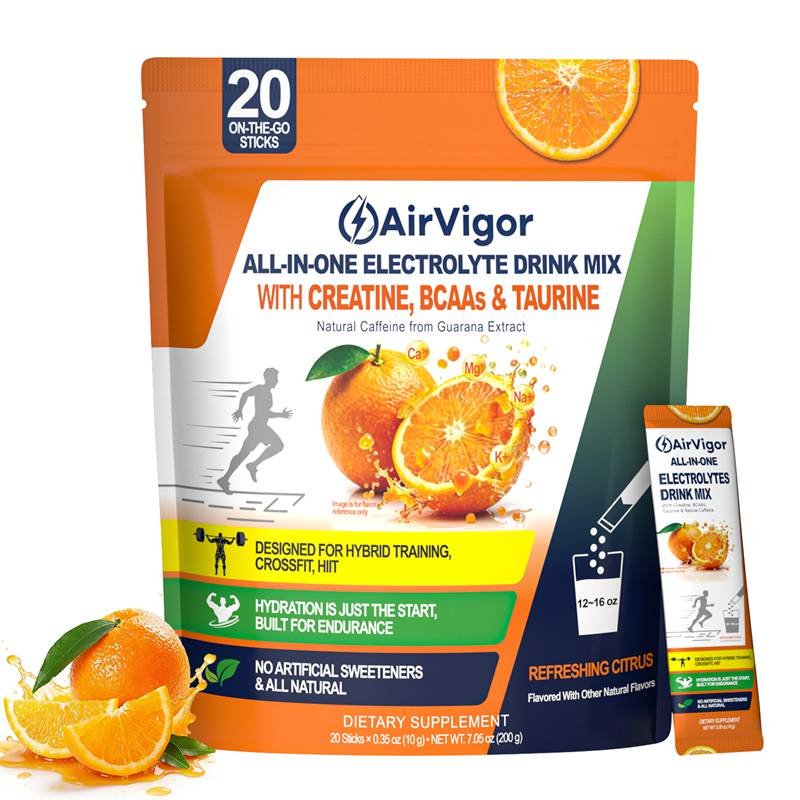
For AirVigor, this type of product fits the brand’s direction because it combines clear ingredient expression, practical serving design, and daily usability. The product is not only about putting two popular ingredients together. The value comes from making the formula understandable, drinkable, and easy to repeat.
Are Electrolytes with Creatine Different?
Electrolytes with creatine are different from plain creatine powder, regular electrolyte drinks, sports drinks, and plain water. The difference is that this formula supports both hydration minerals and creatine intake in one serving.
Plain water is useful, but it does not provide creatine or electrolytes. A regular electrolyte drink may help with hydration minerals, but it usually does not include creatine. A creatine-only powder may support strength routines, but it does not address sweat-related mineral intake. A sports drink may provide carbs and electrolytes, but it often contains sugar and may not fit daily gym users who prefer a lighter option.
| Product Type | What It Usually Provides | What It May Not Provide |
|---|---|---|
| Plain Water | Fluid intake | No creatine, no mineral structure |
| Creatine Powder | Creatine intake | No sodium, potassium, magnesium, or calcium support |
| Electrolyte Drink | Hydration minerals | Usually no creatine |
| Sports Drink | Fluids, sugar, and some electrolytes | Often no creatine and may be too sweet |
| Electrolytes with Creatine | Hydration minerals plus creatine | Depends on formula quality, dose, and taste |
This difference is important because shoppers often compare products based on the situation they are trying to solve. A runner may ask whether the drink is light enough after a hot run. A gym user may ask whether it has enough creatine to make sense. A HIIT athlete may ask whether it will feel heavy during burpees or intervals. A busy professional may ask whether it is easy enough to use after work.
A strong electrolytes with creatine product should answer these questions clearly:
| Buying Question | What the Product Should Show |
|---|---|
| How much creatine is included? | Clear creatine amount per serving |
| Which electrolytes are inside? | Sodium, potassium, magnesium, calcium, or other minerals listed clearly |
| Is it suitable for daily use? | Practical serving guidance |
| Is it easy to mix? | Solubility and water amount instructions |
| Does it contain sugar? | Clear sugar and calorie information |
| Is it portable? | Stick pack or travel-friendly packaging |
| When should I take it? | Before, during, after training, or rest-day instructions |
For customers, the difference is not only nutritional. It is emotional and practical. A product that is clear, light-tasting, and easy to carry feels less like a chore. That matters because repeat use drives the real value of creatine and hydration habits.
Is Electrolytes with Creatine Safe?
Electrolytes with creatine are generally suitable for many healthy adults when used as directed, mixed with enough water, and not stacked carelessly with other similar products. The safety question is less about whether they can be mixed, and more about dose, hydration, health status, and total daily intake.
Is Electrolytes with Creatine Suitable Daily?
Daily use can make sense for active adults who want a simple creatine and hydration routine. The key is using one clear serving, drinking enough water, and checking whether other supplements already contain creatine, sodium, magnesium, potassium, or caffeine.
For many people, the biggest benefit of daily electrolytes with creatine is habit-building. Creatine works best when the user takes it consistently over time. Electrolytes are more situational, but they can still fit daily routines when the person trains often, sweats heavily, works in warm conditions, travels frequently, or struggles to drink enough water.
The mistake is treating “daily use” as “more is better.” A customer using creatine powder in the morning, a pre-workout before training, and an electrolyte creatine stick after training may be getting more creatine than expected. The same can happen with electrolytes. A user may drink electrolyte powder, take magnesium at night, use mineral tablets, and eat a high-sodium diet without realizing the total intake is adding up.
A practical daily-use approach looks like this:
| User Situation | Daily Use Fit | What to Check |
|---|---|---|
| Lifting 3–5 days per week | Good fit | Total creatine from all products |
| HIIT or CrossFit-style training | Good fit | Sweat level and water intake |
| Running in warm weather | Good fit on training days | Sodium and fluid needs |
| Light exercise only | Optional | May not need extra electrolytes daily |
| Low-carb or keto diet | May fit well | Electrolyte intake from diet and supplements |
| High-sodium diet | Use carefully | Sodium amount per serving |
| Already using pre-workout | Check first | Creatine, caffeine, and mineral overlap |
| Rest days | Can be used for creatine consistency | Electrolytes may not be needed every time |
A daily serving should feel easy, not forced. If the drink tastes too strong, users can mix it with more water. If it feels heavy before training, they can take it after training instead. If they already get plenty of minerals from food and other supplements, they may not need an electrolyte-heavy product every day.
For AirVigor, this is why clear labeling matters. Customers should be able to see the serving size, ingredient amounts, suggested water volume, and daily use guidance without guessing. A transparent label helps both new users and experienced athletes use the product more responsibly.
Who Should Avoid Electrolytes with Creatine?
Some people should avoid electrolytes with creatine or ask a healthcare professional before using them. This includes users with kidney disease, kidney function concerns, heart conditions, uncontrolled high blood pressure, fluid restrictions, or medical diets that limit sodium, potassium, magnesium, or calcium.
This is not because every electrolytes with creatine product is dangerous. It is because creatine and electrolytes are handled through normal body systems that may already be under medical management for certain people. If someone has been told to limit fluids, sodium, potassium, or protein-related supplements, they should not add a sports nutrition product casually.
People taking certain medications should also be careful. This may include some blood pressure medications, diuretics, kidney-related medications, or any medication that affects fluid balance or mineral levels. Pregnant or breastfeeding users should also ask a qualified professional before adding creatine or concentrated electrolyte products.
| User Group | Why Caution Matters |
|---|---|
| Kidney disease or reduced kidney function | Creatine use may not be appropriate without guidance |
| Heart conditions | Fluid and electrolyte balance may need medical control |
| Uncontrolled high blood pressure | Sodium intake may need monitoring |
| Fluid-restricted users | Extra drink volume may not fit the medical plan |
| Low-sodium or low-potassium medical diets | Electrolyte amounts need review |
| Diuretic users | Mineral balance may be affected |
| Pregnant or breastfeeding users | Safety should be reviewed individually |
| Teens or younger athletes | Parent and professional guidance is safer |
A responsible product page should make this easy to understand without frightening healthy users. The message should be simple: healthy adults can often use electrolytes with creatine as part of a normal routine, but people with medical conditions or medication concerns should check first.
Customers should also stop and reassess if they notice unusual symptoms after use, especially when combining multiple products. Examples include ongoing stomach discomfort, unusual swelling, dizziness, abnormal weakness, or changes in urination. These signs do not always mean the product caused the issue, but they are reasons to pause and review the routine.
AirVigor’s advantage here is not exaggerated claims. It is product clarity. When a formula is clearly expressed, users and healthcare professionals can review the product more easily. That makes the brand feel more trustworthy than products that hide ingredient amounts behind vague blends.
What Can Go Wrong with Electrolytes with Creatine?
Most problems with electrolytes with creatine come from poor use, unclear labels, or stacking too many similar supplements. The combination itself is straightforward, but many users already take multiple powders, drinks, capsules, and tablets. Without checking labels, overlap can happen quickly.
The most common issue is taking creatine from several products at the same time. A user may have creatine in a pre-workout, a separate creatine scoop, and an electrolyte creatine drink. If they do not count the total amount, they may take more than planned.
Another common issue is mixing the product with too little water. A concentrated drink can taste too salty, too sweet, or too strong. It may also feel heavy on the stomach, especially before HIIT, running, or fast-paced training. Many users can solve this simply by using a larger bottle and sipping more slowly.
Electrolyte imbalance is another concern when people overuse mineral products. This is more likely when someone combines several electrolyte drinks, salt capsules, magnesium supplements, potassium products, and a high-sodium diet. More electrolytes do not always mean better hydration. The right amount depends on sweat, diet, weather, training duration, and health status.
| Common Problem | What Usually Causes It | Better Habit |
|---|---|---|
| Stomach heaviness | Too little water or drinking too fast | Mix with more water and sip slowly |
| Gritty texture | Poor mixing or low-solubility powder system | Shake longer and choose better-formulated products |
| Too much creatine | Stacking several creatine products | Count total creatine per day |
| Too much sodium | Electrolyte products plus salty diet | Check sodium on the label |
| Overly salty taste | High mineral load or too little water | Dilute with a larger bottle |
| Confusing routine | Too many powders and capsules | Use one clear formula when possible |
| Poor sleep | Using products with caffeine late | Check whether the formula includes stimulants |
| Low repeat use | Bad taste, clumping, or unclear instructions | Choose portable, clear-label, better-tasting formulas |
This is also where product quality becomes a real safety and satisfaction issue. If the label is confusing, the user may take it incorrectly. If the serving size is unclear, they may overuse it. If the powder clumps from moisture, the serving may feel inconsistent. If the flavor is too harsh, the user may mix it with too little water just to “get it over with,” which can make the experience worse.
A well-designed electrolytes with creatine product should reduce these problems. It should have a clear serving, clear water instructions, stable packaging, good flavor balance, and ingredient amounts that are easy to read. AirVigor’s focus on raw material screening, formula review, solubility testing, packaging protection, and label accuracy supports this kind of safer user experience.
How to Use Electrolytes with Creatine?
Electrolytes with creatine work best when the routine is simple: one clear serving, enough water, and timing that matches your workout. The goal is not to make supplementation complicated, but to help users stay consistent with hydration and creatine intake without carrying several powders.
How Much Electrolytes with Creatine?
The right amount depends on the product formula, your training style, sweat level, body size, weather, and other supplements you already use. Most users should start with the label’s suggested serving instead of adding extra scoops.
For creatine, many active adults commonly use a daily maintenance amount around 3–5 grams. Some electrolytes with creatine products may provide a full creatine serving, while others may use a moderate amount designed for daily hydration or stackable use. That is why the label matters. A customer should always check how much creatine is included in one serving before combining it with a pre-workout, creatine capsule, protein powder, or another creatine drink.
Electrolytes are more flexible because sweat loss changes from person to person. Someone training in a cool gym for 40 minutes may need less electrolyte support than someone doing hot yoga, outdoor running, or warehouse work in summer. Sodium is usually the electrolyte people lose most through sweat, while potassium, magnesium, and calcium also support normal muscle and nerve function.
| User Situation | Creatine Need | Electrolyte Need | Suggested Use Style |
|---|---|---|---|
| 45-minute strength training | Moderate to high consistency | Low to moderate | One serving before or after training |
| Heavy leg day | Strong daily consistency | Moderate | One serving around workout time |
| HIIT or CrossFit-style training | Useful for repeated effort | Moderate to high | One serving before or during training |
| Hot yoga or sauna | Optional depending on goal | High | One serving after sweating |
| Outdoor running in heat | Depends on routine | Moderate to high | One serving after or during long sessions |
| Light walking or casual movement | Usually optional | Low | Use only when needed |
| Travel or busy workday | Helpful for habit-building | Moderate | One portable stick with water |
The biggest customer mistake is stacking without counting. For example, if a user takes a pre-workout with creatine, a separate creatine powder, and an electrolyte creatine stick, the total creatine intake may be higher than expected. The same can happen with electrolytes if the user also takes salt tablets, magnesium capsules, mineral drops, or several hydration drinks in one day.
For most users, a good starting rule is simple: use one serving per day, follow the water instructions, and adjust only when the label or a qualified professional supports it.
How to Mix Electrolytes with Creatine?
Electrolytes with creatine should be mixed with enough water to keep the flavor light, the texture smooth, and the stomach comfortable. A full bottle of water usually works better than a small cup.
The easiest routine is to add water first, pour in one serving, shake well, and drink at a comfortable pace. Adding powder into an empty bottle first can sometimes cause powder to stick to the bottom or corners. Water-first mixing helps the powder move more evenly and usually gives a better drinking experience.
A practical mixing guide:
| Step | What to Do | Why It Helps |
|---|---|---|
| 1 | Add 12–20 oz water to a bottle | Gives the powder enough room to dissolve |
| 2 | Pour in one serving | Keeps dose controlled |
| 3 | Shake for 10–20 seconds | Improves mixability and taste |
| 4 | Let it sit for 30–60 seconds if needed | Helps foam and small particles settle |
| 5 | Shake once more before drinking | Creates a smoother final texture |
| 6 | Sip instead of chugging | Better for stomach comfort |
| 7 | Rinse bottle after use | Prevents odor and flavor buildup |
Cold water usually makes the drink taste fresher, especially for citrus, berry, tropical, or lemonade-style flavors. Room-temperature water can still work, but the taste may feel stronger. If the drink tastes too salty or concentrated, the easiest fix is to add more water.
Creatine can sometimes leave a small amount of settling depending on particle size, water temperature, formula design, and shaking time. A little settling does not always mean the product is low quality. However, the product should still feel comfortable to drink. If a powder clumps badly, tastes harsh, or leaves a heavy gritty layer, many customers will not continue using it.
For AirVigor, mixability is part of the customer experience. A strong electrolytes with creatine formula should not only look good on the nutrition panel. It should also dissolve well, taste clean, and feel easy to use after the third, tenth, and twentieth serving.
How Often to Take Electrolytes with Creatine?
Most users do not need electrolytes with creatine several times per day. One serving daily is usually the easiest routine for people who train regularly and want consistent creatine intake. Electrolyte use should still match sweat level, weather, and daily fluid intake.
Creatine works best when users take it consistently over time. Electrolytes are more situation-based. On heavy sweat days, they may be more useful. On light activity days with normal meals and good water intake, the user may not need extra electrolyte support beyond one planned serving.
| Day Type | How to Use Electrolytes with Creatine | Why It Makes Sense |
|---|---|---|
| Strength training day | Take before or after workout | Keeps creatine routine steady |
| HIIT day | Take before or during workout | Supports sweat-heavy training |
| Long cardio day | Take during or after activity | Helps rebuild hydration routine |
| Rest day | Take with water if maintaining creatine | Keeps daily habit simple |
| Hot weather day | Use around the sweatiest part of the day | Matches higher fluid loss |
| Travel day | Use one stick in a bottle | Easy when meals and water intake are irregular |
| Light activity day | Optional or one light serving | Avoids unnecessary overuse |
A simple weekly routine may look like this:
| Weekly Pattern | Practical Routine |
|---|---|
| 3 gym days + 2 cardio days | One serving daily, timed around workouts |
| 5 strength days | One serving daily before or after training |
| 2–3 light workouts weekly | Use on workout days or when hydration is poor |
| Hot outdoor work + evening gym | Use carefully; check total sodium and fluid intake |
| Frequent travel | Keep stick packs in bag and use with bottled water |
The best frequency is the one the user can repeat without confusion. If the product requires too many rules, many customers stop using it. A portable stick format makes this easier because the serving is already measured and can be used at the gym, office, airport, hotel, or outdoor training site.
How Much Water Should You Use?
Water amount affects taste, texture, stomach comfort, and how easy the product is to drink. Most electrolytes with creatine formulas work best in a full bottle of water, often around 12–20 oz, depending on flavor strength and serving size.
Using too little water can make the drink taste too salty, sweet, sour, or heavy. It can also make the powder feel more concentrated in the stomach, especially before running, HIIT, or fast-paced training. Using more water usually creates a lighter taste and makes the drink easier to sip.
| Water Amount | Best For | What to Expect |
|---|---|---|
| 8 oz | Strong flavor preference | More concentrated taste |
| 12 oz | Standard quick use | Balanced taste for many users |
| 16 oz | Gym bottle routine | Lighter taste and easier sipping |
| 20 oz | Hot weather or long sessions | More fluid support and softer flavor |
| 24 oz+ | Users sensitive to taste | Very light flavor, slower drinking |
Customers should not think of water as an afterthought. Electrolytes need fluid to be useful, and creatine is more comfortable when taken with enough liquid. A good label should make the water amount easy to understand.
For AirVigor-style stick packs, the ideal use case is simple: tear one stick, pour into a bottle, shake, and drink. No measuring scoop, no guesswork, no messy counter. That is the kind of experience customers remember and repeat.
When to Take Electrolytes with Creatine?
Electrolytes with creatine can be taken before, during, or after training. The best time depends on your workout type, sweat level, stomach comfort, and daily schedule. For most users, consistency matters more than perfect timing, especially for creatine.
Electrolytes with Creatine Before Workout
Taking electrolytes with creatine before a workout works well when you want to start training with better hydration habits and a steady creatine routine. This timing is useful for gym training, HIIT, hot-weather workouts, and evening sessions after a long workday.
Many people start workouts already slightly behind on fluids. They may drink coffee in the morning, sit through meetings, eat salty meals, commute, and then head straight to the gym. By the time training starts, they may not feel thirsty yet, but their body may still need fluid support. A pre-workout bottle with electrolytes and creatine can help turn hydration into a planned habit instead of a last-minute fix.
For timing, many users do well drinking one serving 20–60 minutes before training. People with sensitive stomachs can drink it earlier or use more water. People doing slower strength training may feel comfortable taking it closer to the session. For fast-paced HIIT, running, or jumping workouts, drinking it too close to exercise may feel heavy, so earlier timing is often better.
| Pre-Workout Timing | Best For | Why It Works |
|---|---|---|
| 60 minutes before | Sensitive stomach, running, HIIT | Gives more time for comfortable digestion |
| 30 minutes before | Gym training, CrossFit-style workouts | Easy balance between convenience and comfort |
| 15–20 minutes before | Strength training, light cardio | Works when the drink is light and well-diluted |
| On the way to the gym | Busy professionals | Simple habit after work or commute |
| With a pre-workout meal | Users who dislike empty-stomach drinks | May feel more comfortable |
A pre-workout serving is not meant to feel like caffeine. Creatine does not give a sudden rush, and electrolytes do not create instant energy. The value is more practical: better fluid planning, clear creatine intake, and fewer products to remember.
This timing fits these users especially well:
| User Type | Why Before Workout Makes Sense |
|---|---|
| Evening gym user | Often starts training after a long day with low fluid intake |
| Heavy lifter | Keeps creatine routine connected to training |
| HIIT athlete | Prepares for sweat-heavy intervals |
| Hot-weather runner | Starts hydration before sweat builds |
| CrossFit-style user | Fits mixed strength and conditioning sessions |
| Busy office worker | Easy to mix in one bottle before leaving work |
AirVigor can position this use case around preparation rather than hype. For customers, “drink before training” is easy to understand. It feels practical, repeatable, and less aggressive than high-stimulant pre-workout messaging.
Electrolytes with Creatine During Workout
Taking electrolytes with creatine during a workout can make sense for longer sessions, hot environments, heavy sweating, or hybrid workouts that combine strength and conditioning. This timing is less about creatine urgency and more about keeping the drink available while sweat and fluid loss build.
During-workout use is especially practical when the session lasts 60 minutes or longer, includes multiple training blocks, or takes place in a hot gym, outdoor area, or heated studio. A person doing a 25-minute light workout may not need to sip an electrolyte creatine drink throughout the session. But someone doing a 75-minute CrossFit class, long bike ride, warehouse shift, or outdoor bootcamp may benefit from having a bottle nearby.
The drink should be light enough to sip. If the formula tastes too strong, users are less likely to drink enough. If it feels heavy, it may sit poorly during fast movement. This is why water amount matters. Many users prefer 16–24 oz water for during-workout use because it makes the flavor softer and easier to drink over time.
| Workout Type | During-Workout Fit | Suggested Drinking Style |
|---|---|---|
| Heavy lifting under 60 minutes | Optional | Sip lightly if thirsty |
| Long gym session | Good fit | Sip between sets |
| HIIT class | Good if well-diluted | Small sips during breaks |
| CrossFit-style training | Strong fit | Sip before and after workout blocks |
| Indoor cycling | Strong fit | Sip throughout session |
| Outdoor training in heat | Strong fit | Use with a larger water bottle |
| Hot yoga | Usually better after class | Use carefully; avoid stomach heaviness during poses |
A common mistake is making the drink too concentrated. During exercise, a strong, salty, or overly sweet drink can become difficult to finish. A lighter mix usually works better. Users can add more water, use a larger bottle, or split the drink across the session.
For creatine, users do not need to worry that it must be consumed at one exact workout minute. During-workout use works mainly because it helps people stay consistent. If sipping during training is the easiest way to remember the product, that is a valid routine.
For AirVigor, this timing supports a strong product experience message: easy to carry, quick to mix, light taste, and practical for gym bags, bikes, training studios, and outdoor sessions. Stick packs are helpful because users can prepare a bottle at the gym without carrying a large tub.
Electrolytes with Creatine After Workout
Taking electrolytes with creatine after a workout is one of the easiest options for many users. It fits people who sweat heavily, dislike drinking supplements before exercise, train late, or want a lighter recovery drink after gym sessions, runs, cycling, hot yoga, or outdoor training.
Post-workout timing is popular because the body is already ready for fluids. Many people finish training thirsty, warm, and looking for something cold. A light electrolyte creatine drink can feel easier than a thick shake, especially right after HIIT or cardio. It also helps users keep creatine consistent even if they forgot to take it before training.
After training, users usually care about simple questions: What can I drink now? Will it taste clean? Will it feel heavy? Can I keep it in my bag? Does it help me stay on track with creatine? A portable electrolyte creatine product answers these questions better than a complicated supplement stack.
| Post-Workout Situation | Why This Timing Works |
|---|---|
| Heavy sweat session | Helps rebuild a fluid and mineral routine |
| Late-night workout | Lighter than a large shake |
| Hot yoga or sauna | Fits after sweating stops |
| Long run or cycling | Easy to drink when thirst is high |
| Forgot creatine before training | Keeps the daily habit consistent |
| Sensitive stomach | Often easier than pre-workout use |
| Travel workout | Stick packs are convenient in hotel gyms |
A good post-workout routine should still include food, water, rest, and enough protein across the day. Electrolytes with creatine are not a full recovery meal. They are a convenient drink that supports hydration habits and creatine intake.
The water amount can vary based on taste. Many users prefer 16–20 oz cold water after training because it feels refreshing and reduces strong mineral taste. If the user trained in hot conditions or sweat heavily, a larger bottle may be more comfortable.
AirVigor can use this timing as a strong repeat-purchase angle. Post-workout routines are easy to build because they happen at a predictable moment. When the drink tastes good and feels easy after hard training, customers are more likely to reorder.
Electrolytes with Creatine on Rest Days
Taking electrolytes with creatine on rest days can make sense if the user wants to keep creatine intake consistent. Creatine does not need to be used only on workout days. For many people, daily use is easier than remembering different rules for training days and off days.
The electrolyte side depends on the rest day. A rest day may still include sweating, travel, errands, hot weather, sauna, hiking, yard work, or low water intake. In those cases, electrolytes may still fit well. If the day is low activity, meals are normal, and hydration is already good, extra electrolytes may not be necessary.
| Rest-Day Situation | Should You Take It? | Practical Tip |
|---|---|---|
| Full rest at home | Optional | Use if maintaining creatine consistency |
| Travel day | Good fit | Carry stick packs and mix with bottled water |
| Hot weather errands | Good fit | Use with enough water |
| Sauna or hot bath | Good after sweating | Drink slowly after heat exposure |
| Active recovery walk | Optional to useful | Depends on sweat and fluid intake |
| High-sodium meals | Use carefully | Check sodium intake |
| Low-water workday | Good fit | Use as a reminder to drink fluids |
Rest-day timing can be simple. Users can drink one serving with breakfast, lunch, or an afternoon water bottle. Taking it with food may feel better for people who dislike supplements on an empty stomach. The goal is not to create strict rules. The goal is to make the routine easy enough to repeat.
This is useful for customers who ask, “Do I waste creatine if I take it on a rest day?” No. Rest-day creatine can still support consistency. The better question is whether the electrolyte level fits the day’s needs. If the user is barely sweating and already eating salty foods, they may not need an electrolyte-heavy routine that day.
AirVigor can make rest-day use easier with clear label directions and portable packaging. A product that works for both training days and daily hydration has more chances to become part of a customer’s lifestyle.

Who Needs Electrolytes with Creatine?
Electrolytes with creatine are useful for people who train, sweat, travel, or want a simpler way to stay consistent with creatine and hydration. The best fit includes gym users, HIIT athletes, runners, hybrid trainers, hot-weather exercisers, and busy adults who prefer one easy drink instead of several separate powders.
Electrolytes with Creatine for Gym Training
Electrolytes with creatine fit gym training because strength workouts often involve more than lifting a few sets. A real session may include warm-up sets, heavy compound lifts, accessory work, machines, short rest periods, and sometimes cardio finishers. During this process, the body uses repeated bursts of effort and may also lose fluid through sweat.
For gym users, creatine is often the main reason they look at this product category. Creatine supports repeated high-intensity effort, which is why it is commonly used by people who lift, sprint, jump, or train with explosive movements. Electrolytes add another layer by supporting normal fluid balance, nerve signals, and muscle contraction.
The biggest customer benefit is simplicity. Many gym users already know creatine is useful, but they forget to take it daily. A drinkable electrolytes with creatine formula makes creatine easier to connect with a normal workout routine.
| Gym User Type | Common Need | Why Electrolytes with Creatine Fit |
|---|---|---|
| Heavy lifter | Consistent creatine intake | One serving can become part of the gym routine |
| Beginner lifter | Simple supplement plan | Easier than buying several powders |
| Body recomposition user | Low-sugar hydration option | Can replace sweet sports drinks |
| Evening gym user | Hydration after a long workday | Easy to mix before or after training |
| High-volume trainer | Repeated effort and sweat support | Fits longer sessions |
| Traveler with gym routine | Portable supplementation | Stick packs are easier than tubs |
A 45-minute light gym session may not require a complex supplement plan. But for people training 4–6 days per week, using progressive overload, or combining lifting with cardio, a practical hydration and creatine routine becomes easier to justify.
AirVigor can speak directly to this user by focusing on clear dosing, light taste, easy mixability, and portable use. Gym customers do not want vague promises. They want to know how much creatine they are getting, whether the drink contains sugar, how much water to use, and whether the product fits both strength and conditioning days.
Electrolytes with Creatine for HIIT
Electrolytes with creatine are a strong match for HIIT, CrossFit-style workouts, bootcamp classes, and circuit training because these sessions combine sweat, short rest, repeated power output, and fast movement. A single workout may include rowing, cycling, jumping, kettlebells, sled pushes, wall balls, burpees, and strength sets.
This type of training often feels different from steady cardio or traditional bodybuilding. The user may feel fine during the first 10 minutes, then suddenly feel heavy, flat, or overheated. This can happen for many reasons, including pacing, food intake, sleep, conditioning, or hydration. Electrolytes with creatine do not solve every problem, but they can support a more complete preparation routine.
For HIIT users, the product must be easy on the stomach. A thick, overly sweet, or salty drink may feel uncomfortable during fast movements. A light formula mixed with enough water is usually more suitable.
| HIIT Situation | User Concern | Product Fit |
|---|---|---|
| 30-minute class | Quick preparation | One stick before class is easy |
| CrossFit-style session | Strength plus conditioning | Creatine and electrolytes support different needs |
| Hot indoor studio | Heavy sweating | Electrolyte support becomes more relevant |
| Short rest intervals | Repeated effort | Creatine consistency may matter |
| Morning training | Limited time | Simple bottle routine works well |
| Group fitness user | Repeat weekly habit | Portable servings support consistency |
The best timing for HIIT users depends on comfort. Some prefer drinking electrolytes with creatine 30–60 minutes before class. Others prefer using it after training because drinking too close to intense movement feels heavy. Both approaches can work if the user stays consistent with creatine and uses enough water.
AirVigor’s product direction fits HIIT customers when the message is practical: quick to mix, easy to carry, zero sugar if applicable, and light enough for regular use. This is more convincing than extreme performance language.
Electrolytes with Creatine for Running
Electrolytes with creatine can fit running, especially for runners who train in heat, sweat heavily, do intervals, combine running with strength work, or want a simple post-run drink. The message should be balanced because not every easy run needs the same level of support.
Runners usually care about hydration, stomach comfort, sweat loss, recovery routines, and flavor. They may not want a drink that feels thick or too sweet before a run. For this reason, many runners may prefer electrolytes with creatine after a run, during hot-weather training, or on days that include both running and lifting.
Creatine is often linked with gym training, but many runners also perform strength training, hill sprints, track intervals, trail climbs, and hybrid workouts. In these cases, creatine can fit into the broader training plan, while electrolytes help support hydration habits.
| Running Scenario | Product Fit | Best Timing |
|---|---|---|
| Easy 30-minute run | Optional | After run if maintaining creatine |
| Hot-weather run | Stronger fit | Before or after, depending on stomach comfort |
| Hill sprints | Good fit | Before or after training |
| Track intervals | Good fit | After session or 30–60 minutes before |
| Long run | Depends on fueling plan | May need carbs separately |
| Runner who lifts | Strong fit | Daily serving around either workout |
| Treadmill training | Useful if sweating heavily indoors | During or after |
Electrolytes with creatine should not be positioned as a full endurance fueling product for every long run. Longer sessions may require carbohydrates and a more detailed fueling plan. But for warm-weather runs, short intervals, post-run hydration, and hybrid running-strength routines, this product can make sense.
For AirVigor, the runner-friendly message should focus on light taste, quick mixing, portability, and daily routine. Runners are often loyal when a product is easy to drink and does not upset the stomach.
Electrolytes with Creatine for Hybrid Training
Electrolytes with creatine are especially useful for hybrid training because hybrid athletes do not train in one narrow category. They may lift weights, run, cycle, row, hike, do HIIT, and join group fitness classes in the same week. Their supplement routine needs to be flexible enough to move with them.
Hybrid training creates mixed demands. Lifting and sprinting require short bursts of effort. Running, cycling, and rowing increase sweat and fluid loss. Longer sessions may create fatigue from both muscular work and hydration strain. A combined formula can help simplify support across different training days.
| Hybrid Training Day | Main Demand | How Electrolytes with Creatine Fit |
|---|---|---|
| Strength + treadmill | Power plus sweat | Supports creatine habit and hydration routine |
| HIIT + weights | Repeated effort | Fits mixed training needs |
| Cycling + lifting | Endurance plus strength | One drink can cover both routines |
| Outdoor run + gym | Heat, sweat, and effort | Portable stick is practical |
| Weekend hike + recovery | Long activity and fluid loss | Useful after sweating |
| Travel workout | Limited supplement access | Easier than carrying multiple tubs |
Hybrid users often dislike complicated supplement stacks because their schedule changes. One day they train at the gym. Another day they run outdoors. Another day they travel. A stick pack or single-serving formula gives them more flexibility.
This audience is also highly valuable for sports nutrition brands because hybrid training is becoming a common lifestyle pattern. Many customers do not identify only as runners or lifters. They want a product that follows their active life, not one that only fits one workout type.
AirVigor can position electrolytes with creatine as a practical all-in-one training drink for people who move across gym, cardio, travel, and daily hydration scenarios.
Why Choose AirVigor Electrolytes with Creatine?
AirVigor Electrolytes with Creatine are built for active users who want a clear formula, easy daily use, and stable product quality. The brand focuses on real ingredient addition, transparent dosage expression, practical packaging, and manufacturing control that supports both consumer orders and custom supplement projects.
Clear Electrolytes with Creatine Formula
AirVigor focuses on formula clarity, so users can understand what they are drinking before they buy. A strong electrolytes with creatine product should clearly show creatine amount, electrolyte types, sugar content, serving size, water instructions, and suggested use timing.
Many customers now compare supplement labels carefully. They may search on Google, Amazon, Reddit, TikTok, or AI tools before placing an order. They want direct answers: How much creatine is included? Which electrolytes are inside? Is it zero sugar? Can I take it before training? Will it fit both lifting and cardio?
AirVigor’s formula direction is built around this kind of real customer behavior. Instead of using vague “performance blend” language, the product should help users quickly understand the role of each ingredient.
| Formula Item | Why Customers Care |
|---|---|
| Creatine amount | Helps users manage daily creatine intake |
| Sodium | Important for sweat-heavy hydration routines |
| Potassium | Supports normal muscle and nerve function |
| Magnesium | Supports normal muscle function and energy metabolism |
| Calcium | Supports normal muscle contraction |
| Sugar level | Important for low-sugar, keto, cutting, and daily users |
| Serving size | Helps avoid overuse or underuse |
| Water amount | Improves taste, texture, and stomach comfort |
A clear formula also helps business partners. Amazon sellers, Shopify brands, gym chains, and retailers need product content that is easy to explain. If the formula is understandable, the product page becomes stronger, customer questions decrease, and repeat purchase becomes easier to build.
For consumers, clear labeling builds trust. For B2B customers, it supports smoother listing creation, product education, retail training, and compliance review.
Real Ingredients for Real Training
AirVigor Electrolytes with Creatine are designed around actual training needs, not just label appeal. The formula direction connects hydration minerals with creatine, making it suitable for gym training, HIIT, running, hybrid workouts, hot-weather exercise, and busy daily routines.
Customers do not only buy ingredients. They buy a product for a moment in life: before a workout, after sweating, during a long session, or while trying to stay consistent during a busy week. A product that fits those moments has stronger long-term value.
| Training Moment | What the User Needs | How AirVigor Fits |
|---|---|---|
| Before gym training | Simple preparation | One drink can support hydration and creatine routine |
| During HIIT | Light, easy sipping | Electrolytes support sweat-heavy sessions |
| After running | Refreshing post-run drink | Helps rebuild hydration habits |
| Hot-weather workouts | More attention to fluids and minerals | Electrolyte support becomes more relevant |
| Travel workouts | Portable serving | Stick packs fit bags and luggage |
| Rest days | Creatine consistency | Easy daily water-bottle routine |
The value of AirVigor is not only combining creatine and electrolytes. The value is making the combination usable. A product may look impressive on paper, but if it tastes too strong, mixes poorly, or feels hard to remember, customers will not use it long term.
AirVigor’s approach focuses on a formula that can fit daily life: clear ingredient expression, practical serving design, and a drinking experience that works beyond the first trial.
Easy Electrolytes with Creatine Sticks
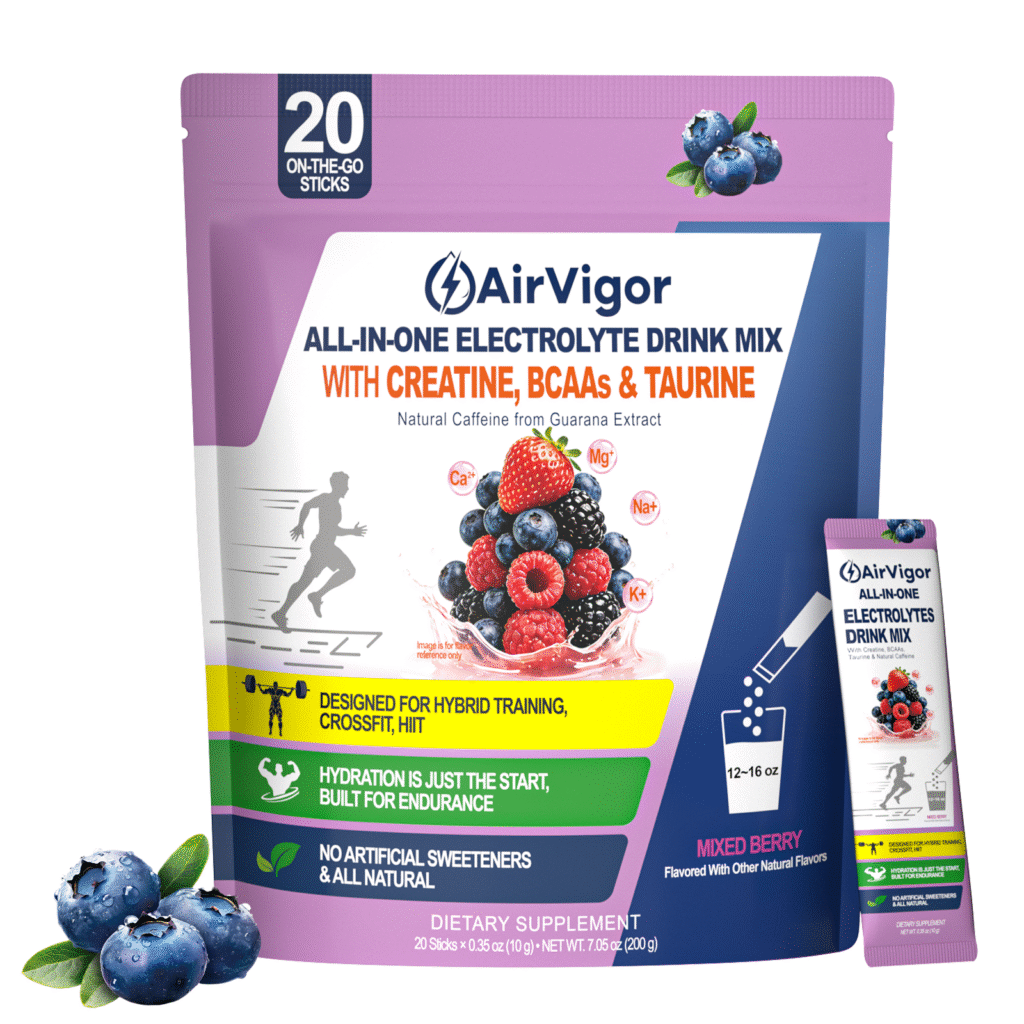
AirVigor stick packs make electrolytes with creatine easier to use because each serving is pre-measured, portable, and clean. This format helps users avoid messy scoops, bulky tubs, serving confusion, and missed daily creatine intake.
Convenience matters more than many brands realize. A customer may like a formula but stop using it because it is annoying to prepare. A stick pack solves many of those small problems. It can sit in a gym bag, office drawer, car, suitcase, bike pouch, backpack, or hotel room.
| Stick Pack Feature | Customer Benefit |
|---|---|
| One stick, one serving | Easier dosing and less guesswork |
| Small and lightweight | Easy for gym, office, and travel |
| No scoop needed | Less mess and faster use |
| Portable packaging | Works outside the home |
| Good for sampling | Easier for first-time users to try |
| Better routine building | Simple enough for daily use |
| Retail-friendly | Easier to display, bundle, and explain |
This format is especially useful for people who train after work. They can keep a stick in their desk, mix it before leaving, and drink it on the way to the gym. Runners can carry a stick for post-run hydration. Travelers can keep several in a carry-on without bringing a large tub.
For B2B customers, stick packs also create flexible sales opportunities. They work well for Amazon multipacks, gym sampling, influencer kits, subscription boxes, event giveaways, wellness packs, travel bundles, and private label launches.
Better Taste and Mixability Experience
Taste and mixability can decide whether customers reorder. AirVigor pays attention to flavor balance, powder texture, solubility, mineral taste control, sweetness level, and water compatibility, because users need a drink they can finish regularly.
Electrolyte formulas can easily taste salty or bitter if the mineral system is not balanced well. Creatine can sometimes leave sediment depending on particle size and formula design. If the product feels gritty, too sweet, too salty, or heavy in the stomach, many users will not continue after the first few servings.
A better user experience should feel simple:
| User Experience Detail | Why It Matters |
|---|---|
| Fast mixing | Customers can use it at work, gym, or travel |
| Light flavor | Easier for daily use |
| Low grit feel | Better drinking comfort |
| Balanced sweetness | Avoids sports-drink fatigue |
| Good mineral masking | Reduces salty or bitter aftertaste |
| Clear water instructions | Helps users get the right taste |
| Stable powder texture | Reduces clumping complaints |
AirVigor can use flavor development and solubility testing to make the product more repeatable. A supplement should not only work as a one-time trial. It should still feel enjoyable after one week, one pouch, and multiple repeat orders.
For consumers, good taste means the product becomes easier to keep in the routine. For sellers, better mixability and flavor can reduce negative reviews, improve ratings, and support repeat purchase.
Quality Control from Formula to Finished Product
AirVigor supports electrolytes with creatine through a quality-focused system that covers raw material selection, formula review, production control, packaging checks, label review, and finished product confirmation. This matters because powder supplements need consistency in taste, serving amount, mixability, moisture protection, and ingredient expression.
Customers may not see the full production process, but they feel the result. A stable product should taste similar from batch to batch, mix in a predictable way, arrive with intact packaging, and show clear instructions on the label. These details directly affect trust.
| Quality Area | What It Supports |
|---|---|
| Raw material screening | Ingredient consistency and formula reliability |
| Formula review | Better match between product design and label expression |
| Mixing control | More consistent servings |
| Fill-weight checks | More accurate portion control |
| Solubility review | Better drinking experience |
| Flavor testing | More acceptable daily use |
| Packaging seal checks | Helps protect powder from moisture |
| Label review | Reduces customer confusion |
| Finished product inspection | Supports release confidence |
AirVigor works within recognized manufacturing and quality management frameworks such as GMP, HACCP, ISO systems, FSSC22000, and FDA facility registration. The company also supports quality-related documents such as COA, MSDS, and market-specific compliance materials when needed.
This is important for both consumers and business partners. Consumers want a product they can trust. B2B customers need production stability, clear documentation, and a supplier that can support long-term sales, not just one trial order.

Conclusion
Electrolytes with creatine can be a smart choice for people who want hydration support and creatine consistency in one simple drink. It fits gym training, HIIT, running, hot-weather workouts, travel, and busy daily routines when the formula is clear, the serving is sensible, and the product is mixed with enough water.
AirVigor brings this combination into a practical supplement format with clear formula expression, real ingredient addition, quality-focused manufacturing, and user-friendly packaging. For consumers, it offers an easier way to build a daily hydration and training routine. For brands, retailers, gyms, and distributors, AirVigor also supports branded product supply, wholesale cooperation, OEM, ODM, private label development, sampling, packaging, and custom formula projects.
To order AirVigor branded products or request a custom electrolytes with creatine formula, contact the AirVigor team for product details, sample options, MOQ information, wholesale pricing, and production timelines.
Share:
Contact Expert Team
At AirVigor, performance becomes effortless. We transform advanced nutrition science into clean, effective supplements that help you hydrate, recover, and feel stronger every day. Shop AirVigor Supplements on Amazon and experience athlete-trusted formulas—backed by real science and supported by our world-class R&D and production capabilities.
Trust AirVigor
At AirVigor, turning your performance goals into reality is no longer a struggle—it’s a science-driven journey we build together. Whether you’re a runner, lifter, cyclist, yogi, outdoor athlete, or someone simply seeking better daily energy, AirVigor transforms advanced nutrition research into clean, effective, and trustworthy supplements you can feel.
Backed by our U.S. scientific team, global certifications, and world-class production standards, every formula is engineered to deliver real hydration, real recovery, and real performance. And when you’re ready to experience the difference, you’ll find AirVigor products available on Amazon and other major platforms—fast shipping, consistent quality, and a community of athletes already seeing results.
Behind the scenes, our R&D and manufacturing ecosystem also supports specialized formulation development, ensuring AirVigor continues to lead with innovation while keeping quality and safety uncompromised. But at the core, everything we create is built for you—your health, your performance, your momentum.
Choose AirVigor. Feel the science. Elevate your every day.


Subscribe to our newsletter
Sign up to our newsletter and we’ll keep you up to date with the latest arrivals.