Skip to content
Creatine Electrolyte Powder vs BCAA Drinks : What Should You Choose
# Your Trusted Dietary Supplement Brand In US
- Emily

Table of Contents
Walk into any gym today and you will probably see two types of workout drinks everywhere: creatine electrolyte powders and BCAA drinks. Both are marketed for workout support, recovery, and training performance, but they are designed for very different purposes. Many customers still feel unsure which one actually fits their routine, especially when balancing hydration, strength training, recovery, and daily fitness goals.
Creatine electrolyte powder is usually better for customers focused on strength, workout consistency, hydration, and repeated training performance. BCAA drinks are more commonly used for amino acid intake during workouts, especially during fasted training or calorie-controlled fitness routines. The better choice often depends on workout intensity, sweat loss, recovery habits, and overall diet quality.
The biggest shift in modern sports nutrition is that customers no longer want complicated supplement routines with multiple tubs and confusing stacks. Most people now prefer products that are easier to use, easier to carry, and more practical for everyday workouts. That is why hydration-focused performance formulas have become one of the fastest-growing categories in the supplement market.
What Is Creatine Electrolyte Powder?
Creatine electrolyte powder combines creatine with key hydration minerals to support workout performance, fluid balance, muscle function, and recovery. It is designed for people who want strength support and hydration support in one convenient daily formula.
How Creatine Electrolyte Powder Works
Creatine electrolyte powder helps support muscular energy production while also helping the body maintain hydration during training. This combination has become increasingly popular among gym users, runners, cyclists, and active adults who want fewer supplements but broader workout support.
Creatine works mainly through the ATP energy system. During intense exercise such as lifting weights, sprinting, HIIT training, or repeated explosive movements, muscles use ATP very quickly. Creatine helps the body recycle ATP faster, allowing muscles to continue producing short bursts of power more efficiently.
At the same time, electrolytes help regulate fluid balance and muscle function. When the body sweats, it loses more than water. It also loses sodium, potassium, magnesium, and other minerals that are important for hydration and muscular performance.
| Formula Component | Main Function | Why Customers Use It |
|---|---|---|
| Creatine Monohydrate | Supports ATP energy recycling | Helps support strength and repeated workout output |
| Sodium | Supports fluid balance | Helps maintain hydration during sweating |
| Potassium | Supports muscle signaling | Important during intense exercise |
| Magnesium | Supports muscle and nerve function | Often used for recovery support |
| Calcium | Supports muscle contraction | Helps maintain muscular function |
This is why many customers now prefer creatine electrolyte powder over traditional standalone creatine tubs. Instead of taking separate hydration drinks and separate creatine products, they can simplify their routine into one product.
For many people, convenience strongly affects consistency. A supplement that mixes quickly, tastes manageable, and fits daily life is more likely to become part of a long-term routine.
Creatine Electrolyte Powder Benefits
Customers usually choose creatine electrolyte powder because it supports multiple workout needs at the same time instead of focusing on only one area.
Traditional creatine products mainly target strength and power. Traditional electrolyte drinks mainly focus on hydration. Creatine electrolyte powder combines both functions into a single workout and recovery product.
| Customer Goal | How Creatine Electrolyte Powder Helps |
|---|---|
| Improve workout consistency | Supports repeated muscular performance |
| Reduce dehydration during training | Helps replace key minerals lost through sweat |
| Simplify supplement routines | Combines hydration and creatine support |
| Support gym performance | Helps support short-burst energy systems |
| Maintain workout endurance | Hydration support may help reduce fatigue feelings |
| Daily hydration support | Can be used beyond workouts |
One important reason customers like these formulas is practicality. Many active adults no longer want five separate products in their gym bag. They want:
- One simple hydration solution
- Easier supplement timing
- Portable serving formats
- Less flavor fatigue
- Better dissolvability
- Lower sugar intake than sports drinks
This shift is especially visible among people balancing work and fitness. Someone training after a long office day may care more about maintaining energy and hydration consistency than about extremely advanced bodybuilding supplementation.
Many users also report that hydration support becomes more noticeable during:
| Training Situation | Common Customer Experience |
|---|---|
| Hot-weather workouts | Heavy sweat loss |
| CrossFit sessions | Energy drops during circuits |
| Long cardio sessions | Dehydration fatigue |
| Evening gym workouts | Reduced recovery comfort |
| Fast-paced work schedules | Poor daily water intake |
Hydration quality often affects workout quality more than customers realize. Even mild dehydration may influence endurance, muscular function, and workout comfort.
Creatine Electrolyte Powder vs Traditional Sports Drinks
Many customers compare creatine electrolyte powder with regular sports drinks, but the two categories are designed very differently.
Traditional sports drinks are usually built mainly around hydration and flavor. Many contain high sugar levels and relatively small amounts of electrolytes.
Creatine electrolyte powders are often designed more specifically for active performance support.
| Feature | Creatine Electrolyte Powder | Traditional Sports Drink |
|---|---|---|
| Creatine included | Yes | Usually no |
| Electrolyte support | Yes | Yes |
| High sugar content | Usually lower | Often higher |
| Strength support | Yes | Limited |
| Workout performance focus | Stronger | Moderate |
| Portable stick packs | Common | Less common |
| Daily supplement positioning | Yes | Usually hydration-only |
This difference matters because customer expectations have changed.
Today’s supplement consumers increasingly want products that:
- Support multiple workout goals
- Offer cleaner ingredient systems
- Reduce unnecessary sugar intake
- Fit active lifestyles
- Simplify daily routines
That is why creatine electrolyte powder continues growing across sports nutrition, hydration wellness, and performance supplement categories.
What Are BCAA Drinks?
BCAA drinks are amino acid-based workout beverages designed to support muscle recovery, workout endurance, and intra-workout nutrition. Most formulas contain leucine, isoleucine, and valine, three branched-chain amino acids commonly used during training, fasted cardio, calorie-controlled diets, and long gym sessions where customers want lighter workout support than traditional protein shakes.
What Ingredients Are in BCAA Drinks?
Most BCAA drinks are built around three branched-chain amino acids: leucine, isoleucine, and valine. These amino acids became popular in sports nutrition because they are directly involved in muscle metabolism during exercise and recovery. Unlike complete protein powders, BCAA drinks are usually designed to feel lighter, mix faster, and be easier to consume while training.
| Ingredient | Main Role in the Formula | Why Customers Pay Attention to It |
|---|---|---|
| Leucine | Supports muscle protein synthesis signaling | Commonly associated with muscle recovery support |
| Isoleucine | Supports exercise energy metabolism | Often used in endurance and workout formulas |
| Valine | Supports muscular energy pathways | Common in long training session products |
| Sodium & Potassium | Hydration support | Helps support fluid balance during sweating |
| Magnesium | Muscle and nerve function support | Frequently associated with recovery comfort |
| Flavor System | Improves drinkability | Important for long-term daily use consistency |
In recent years, the structure of BCAA products has changed noticeably. Earlier generations of BCAA drinks focused heavily on bodybuilding-style marketing and extremely sweet flavor systems. Modern consumers are looking for something more practical. Many now prefer lighter hydration-style products that combine amino acids with electrolytes and cleaner ingredient systems.
This shift is strongly connected to changing workout habits. Today’s supplement customers are not only bodybuilders. Many are office workers, runners, travelers, hybrid training users, or people balancing exercise with busy schedules. These users often prioritize convenience, hydration, portability, and overall workout comfort as much as muscle-focused supplementation itself.
Why Do People Drink BCAA Drinks During Workouts?
One of the main reasons BCAA drinks became so popular is because they are easy to consume during exercise. Most customers do not want thick or heavy drinks while lifting weights, running, cycling, or doing high-intensity training. Compared with protein shakes, BCAA drinks usually feel lighter and more refreshing during movement.
| Workout Drink Type | Typical Customer Experience During Exercise |
|---|---|
| Protein Shake | Heavier texture and slower drinking experience |
| BCAA Drink | Lighter texture and easier sipping during training |
| Traditional Sports Drink | Mainly hydration-focused |
| Pre-Workout | Energy-focused, often stimulant-heavy |
For many customers, the appeal is not only amino acids themselves. The drinking experience matters just as much. A flavored BCAA drink often encourages people to consume more fluids during workouts, especially during longer gym sessions or hot-weather training.
This becomes especially relevant during fasted workouts. A customer training early in the morning may not want a full meal or thick protein shake before exercise. In these situations, BCAA drinks became popular because they provide a lighter option that still contains amino acids without creating a heavy stomach feeling.
Many gym users also prefer BCAA drinks during calorie-controlled dieting phases because they want something flavored and workout-oriented without the higher calorie load of some recovery shakes. Over time, BCAA products became strongly connected with intra-workout nutrition and gym culture because they felt easier to integrate into long training sessions.
Are BCAA Drinks Actually Good for Recovery?
BCAA drinks can support recovery, but the results often depend on the customer’s overall diet and workout routine. This is where many supplement buyers become confused. Recovery is influenced by much more than one ingredient category alone.
| Recovery Area | What Actually Matters Most |
|---|---|
| Muscle Repair | Total daily protein intake |
| Workout Recovery Comfort | Hydration and electrolyte balance |
| Training Consistency | Sleep, recovery nutrition, hydration |
| Muscle Soreness | Training volume and recovery habits |
| Energy Recovery | Overall calorie and nutrient intake |
BCAA drinks mainly provide amino acid support. They may be more useful for customers who train fasted, eat lower amounts of protein, or spend long periods exercising without meals. For example, someone doing endurance cycling or extended cardio sessions may prefer sipping a lighter amino acid drink during training instead of consuming solid food.
However, many active adults already consume sufficient protein from:
| Common Protein Sources | Typical Use |
|---|---|
| Whey Protein | Post-workout recovery |
| Eggs | Daily breakfast protein |
| Chicken & Lean Meat | Muscle-focused meal planning |
| Greek Yogurt | High-protein snack option |
| Dairy Products | Everyday protein intake |
For these customers, hydration support sometimes becomes a bigger performance issue than additional standalone BCAA intake. A person experiencing heavy sweat loss, dehydration fatigue, or poor workout endurance may benefit more from electrolyte-focused support than from amino acids alone.
This changing understanding is one reason modern supplement consumers increasingly compare BCAA drinks directly against creatine electrolyte powders and hydration formulas instead of automatically purchasing all categories separately.
Why Customer Expectations Around BCAA Drinks Are Changing
The BCAA category has changed significantly over the last several years because supplement customers have become more informed and more practical in their buying decisions.
| Older Market Trend | Current Customer Preference |
|---|---|
| Extremely sweet workout drinks | Cleaner and lighter flavor systems |
| Bodybuilding-only positioning | Broader lifestyle fitness support |
| Artificial color-heavy formulas | Simpler ingredient systems |
| Multiple supplement products | More convenient all-in-one solutions |
| Aggressive gym marketing | Practical daily usability |
Modern customers now pay attention to details such as dissolvability, portability, hydration support, ingredient transparency, and long-term consistency. Many no longer want five separate products for workouts. Instead, they look for formulas that fit naturally into daily life while supporting hydration, performance, and recovery together.
This broader market shift is one reason hydration-focused products and creatine electrolyte powders have grown rapidly alongside traditional BCAA products. Consumers increasingly want supplements that support both workout performance and real-world usability.
AirVigor develops products around these modern customer expectations by focusing on practical formulation systems, stable ingredient quality, convenient packaging structures, hydration compatibility, and supplement routines that customers can realistically maintain long term
Creatine Electrolyte Powder vs BCAA Drinks for Workouts
Creatine electrolyte powder and BCAA drinks support workouts in very different ways. Creatine electrolyte formulas are usually chosen for strength, hydration, and workout consistency, while BCAA drinks are more commonly used for lighter intra-workout amino acid support during training sessions.
Which Supports Strength and Training Output Better?
Creatine electrolyte powder is generally the stronger option for customers focused on strength, repeated workout performance, and training intensity. Creatine supports ATP energy recycling, which becomes important during heavy lifting, sprinting, HIIT circuits, and repeated explosive movements where muscles need fast energy repeatedly within short periods.
| Workout Goal | Creatine Electrolyte Powder | BCAA Drinks |
|---|---|---|
| Strength support | Strong support | Limited direct support |
| Repeated heavy sets | Helpful | Minimal effect |
| Explosive workouts | Highly relevant | Less relevant |
| Sprint intervals | Commonly used | Occasionally used |
| Long-term training consistency | Strong practical value | Moderate |
Many gym users notice the difference most clearly during the second half of workouts. A customer doing squats, deadlifts, sled pushes, or high-volume circuits may begin losing output after several rounds because ATP stores become stressed. Creatine helps support repeated short-burst performance, which is why it remains one of the most widely used sports nutrition ingredients globally.
BCAA drinks work differently. They do not directly support muscular power production in the same way. Their role is mainly connected with amino acid availability during exercise, especially in fasted or calorie-restricted situations.
This difference matters because many customers mistakenly assume all workout drinks improve strength equally. In reality, the effects depend heavily on what the formula is actually designed to do.
Modern training styles have also changed. Today’s customers are not only focused on bodybuilding aesthetics. Many now train for:
| Modern Training Goal | Common Customer Motivation |
|---|---|
| Functional strength | Better daily physical performance |
| Workout consistency | Maintaining weekly routines |
| Hybrid fitness | Combining cardio and strength |
| Energy management | Reducing post-work fatigue |
| Lifestyle fitness | Long-term sustainable training |
This broader approach to fitness is one reason creatine electrolyte products continue growing rapidly across mainstream sports nutrition categories.
Which Helps Hydration More During Workouts?
Hydration is one of the biggest differences between creatine electrolyte powder and traditional BCAA drinks.
Many BCAA products were originally designed mainly around flavor and amino acid delivery. Some contain very small amounts of electrolytes or none at all. Creatine electrolyte formulas, on the other hand, are usually built specifically to support hydration during sweat-heavy training.
| Hydration Factor | Why It Matters During Exercise |
|---|---|
| Sodium balance | Helps maintain fluid retention |
| Potassium support | Important for muscle signaling |
| Magnesium intake | Supports muscular function |
| Fluid replacement | Helps reduce dehydration fatigue |
Many customers underestimate how much sweat loss affects workout quality. Even moderate dehydration may contribute to:
- Faster fatigue during training
- Reduced endurance
- Muscle tightness
- Lower workout consistency
- Reduced comfort after workouts
This becomes especially noticeable during:
| Workout Situation | Common Customer Experience |
|---|---|
| Summer gym sessions | Heavy sweat loss |
| CrossFit classes | Rapid fatigue buildup |
| Long cardio sessions | Dehydration discomfort |
| Indoor cycling | Electrolyte depletion |
| High-stimulant pre-workouts | Increased fluid imbalance |
Amino acids alone may not solve these issues if the main problem is hydration imbalance rather than low protein intake.
This is one reason customers increasingly prefer hydration-performance formulas instead of traditional sugary sports drinks. Many consumers now actively avoid products with excessive sugar or overly artificial flavor systems because they want cleaner hydration support they can use regularly.
Creatine electrolyte powders are often positioned as a middle ground between sports hydration and workout performance support. Instead of only replacing fluids, they also support muscular performance systems used during training.
Which Feels Better During Training?
Workout drink experience strongly affects whether customers continue using a supplement long term.
Customers often stop buying products because of issues such as:
| Common Complaint | Why Customers Dislike It |
|---|---|
| Overly sweet flavor | Creates flavor fatigue |
| Chalky texture | Poor workout drinking experience |
| Heavy stomach feeling | Difficult during movement |
| Poor dissolvability | Inconvenient mixing |
| Artificial aftertaste | Reduces repeat use |
This is one reason BCAA drinks became popular originally. They felt lighter and easier to sip during workouts compared with heavier recovery shakes.
However, modern creatine electrolyte formulas have improved significantly in this area. Many now focus heavily on:
- Faster dissolvability
- Cleaner flavor systems
- Lower sugar positioning
- Portable stick-pack formats
- Easier intra-workout drinking experience
| Product Type | Typical Drinking Experience |
|---|---|
| Traditional protein shake | Thick and filling |
| Old-style creatine powder | Sometimes gritty or heavy |
| Modern BCAA drink | Light and flavored |
| Modern creatine electrolyte powder | Light hydration-style performance drink |
Customer expectations have changed significantly over the last few years. People increasingly want products that fit naturally into workouts instead of interrupting them.
This is especially true among:
| Customer Group | Common Preference |
|---|---|
| Women in fitness | Lighter flavor systems |
| HIIT users | Easy sipping during movement |
| Travelers | Portable hydration products |
| Busy professionals | Simpler supplement routines |
| Recreational gym users | Less complicated stacking |
For many modern consumers, the best supplement is not the most aggressive one. It is the one they can consistently use several times per week without discomfort or inconvenience.

Creatine Electrolyte Powder vs BCAA Drinks for Recovery
Creatine electrolyte powder and BCAA drinks both support recovery, but they focus on different parts of the recovery process. Creatine electrolyte formulas mainly support hydration, muscular energy recovery, and workout consistency, while BCAA drinks are more focused on amino acid intake during or after training.
Which Supports Muscle Recovery More Effectively?
Many customers think muscle recovery only means “less soreness,” but real recovery is much broader. Good recovery includes muscle repair, hydration balance, energy restoration, and being physically ready for the next workout.
| Recovery Area | Why It Matters |
|---|---|
| Muscle repair | Supports adaptation after training |
| Hydration restoration | Important after sweating |
| Electrolyte balance | Supports muscle and nerve function |
| Energy recovery | Helps maintain future workout quality |
| Sleep quality | Strongly affects recovery performance |
BCAA drinks mainly target amino acid support. This can be useful during periods when protein intake is low, especially for customers training fasted or following calorie-controlled diets.
However, many active adults already consume sufficient protein through meals and shakes. In those situations, hydration and muscular energy recovery often become more important recovery limitations than amino acid intake alone.
Creatine electrolyte powder supports recovery from a different angle. Instead of only supplying amino acids, it helps support:
- Fluid balance after sweating
- Muscular energy restoration
- Workout endurance recovery
- Consistent physical performance
- Hydration comfort after training
This is especially noticeable for customers doing:
| Training Style | Common Recovery Issue |
|---|---|
| HIIT | Rapid fatigue accumulation |
| CrossFit | Heavy sweat loss |
| Running | Fluid depletion |
| Cycling | Long-duration energy drop |
| Evening gym sessions | Next-day fatigue |
| Hybrid cardio-strength training | Recovery inconsistency |
Many customers notice that poor hydration recovery affects them more than expected. A person may finish a workout and still feel physically drained for several hours afterward, not because of muscle damage alone, but because fluid and electrolyte balance were not restored properly.
How Hydration Affects Recovery Quality
Hydration plays a much bigger role in recovery than many supplement customers realize.
During training, the body loses fluids and minerals through sweat. Replacing only plain water may not always fully restore hydration balance, especially after long or sweat-heavy sessions.
| Key Electrolyte | Role During Recovery |
|---|---|
| Sodium | Helps maintain fluid balance |
| Potassium | Supports muscular signaling |
| Magnesium | Supports muscle relaxation |
| Calcium | Supports muscular contraction |
Customers with poor post-workout hydration often report:
| Common Recovery Complaint | Possible Hydration Connection |
|---|---|
| Heavy legs after workouts | Fluid and electrolyte loss |
| Lingering fatigue | Incomplete hydration recovery |
| Muscle tightness | Electrolyte imbalance |
| Reduced next-day energy | Poor recovery hydration |
| Headaches after training | Dehydration |
This is one reason hydration-focused recovery products have grown rapidly across fitness markets. Customers increasingly understand that recovery is not only about protein intake. Hydration quality strongly affects:
- Recovery comfort
- Workout readiness
- Daily energy levels
- Muscle function
- Physical recovery consistency
Creatine electrolyte formulas fit this trend because they combine hydration support with workout performance support instead of treating them separately.
Many customers also prefer hydration-based recovery drinks because they feel lighter than thick recovery shakes, especially after intense workouts or summer training sessions.
Which Helps More With Next-Day Workout Readiness?
For many active adults, recovery is not only about feeling good immediately after training. The real question is whether the body feels ready to perform again the next day.
This is where creatine electrolyte powder often provides broader practical value.
| Recovery Goal | Creatine Electrolyte Powder | BCAA Drinks |
|---|---|---|
| Hydration recovery | Strong support | Moderate |
| Workout energy recovery | Strong support | Limited |
| Amino acid intake | Moderate | Strong |
| Recovery comfort | Strong practical value | Moderate |
| Next-day workout consistency | Strong | Moderate |
Customers who train several times per week often notice recovery problems such as:
- Feeling flat during the next session
- Reduced endurance
- Lower training motivation
- Persistent fatigue
- Reduced workout consistency
In many real-world situations, these problems are connected to hydration, recovery quality, and overall fatigue accumulation rather than amino acid intake alone.
This is especially common among:
| Customer Group | Common Recovery Challenge |
|---|---|
| Busy professionals | Poor sleep and dehydration |
| Frequent travelers | Irregular hydration and meals |
| High-caffeine users | Increased fluid imbalance |
| Outdoor athletes | High sweat volume |
| Parents balancing work and fitness | Inconsistent recovery habits |
Modern customers increasingly want products that help support consistent exercise routines, not just short-term workout intensity. This is one reason creatine electrolyte powders are becoming more popular among everyday fitness users instead of only strength athletes.
Can You Mix Creatine Electrolyte Powder and BCAA Drinks?
Creatine electrolyte powder and BCAA drinks can usually be used together because they support different workout functions. Creatine electrolyte formulas mainly focus on hydration and muscular performance, while BCAA drinks are commonly used for amino acid support during training or calorie-controlled fitness routines.
Do Creatine Electrolyte Powder and BCAA Drinks Work Well Together?
Many gym users combine creatine electrolyte powder and BCAA drinks because the products target different workout needs instead of competing directly with each other.
| Product Type | Primary Function During Training |
|---|---|
| Creatine Electrolyte Powder | Supports hydration, muscular energy, and workout performance |
| BCAA Drinks | Supports amino acid intake during workouts |
| Protein Powder | Supports complete post-workout protein intake |
| Pre-Workout | Supports workout stimulation and focus |
This combination is especially common among customers who train frequently or follow higher-volume workout routines. For example, someone doing strength training five days per week while also including cardio sessions may want both hydration support and intra-workout amino acid intake.
However, whether both products are truly necessary depends heavily on the customer’s overall routine.
A customer already consuming high daily protein intake through:
- whey protein,
- eggs,
- chicken,
- dairy products,
- or balanced meals,
…may notice less additional benefit from standalone BCAA drinks compared with someone training fasted or dieting aggressively.
This is why modern supplement buying behavior has become more practical. Customers increasingly ask not only “Can I combine these?” but also:
| Common Customer Question | Why It Matters |
|---|---|
| “Do I actually need both?” | Reduces unnecessary supplement spending |
| “Will this improve workout consistency?” | Focus on practical results |
| “Am I already getting enough amino acids?” | Better supplement efficiency |
| “What problem is this solving?” | More informed buying decisions |
For many customers today, the biggest workout limitations are often hydration, recovery quality, and routine consistency rather than amino acid deficiency alone.
Who Commonly Combines Both Products?
The customers most likely to combine creatine electrolyte powder and BCAA drinks are usually those with higher workout demands or more restrictive nutrition patterns.
| Customer Type | Why They May Combine Both |
|---|---|
| Fasted morning trainers | Amino acid intake without heavy meals |
| High-volume gym users | Additional workout support during long sessions |
| Endurance athletes | Hydration plus intra-workout nutrition |
| Cutting-phase athletes | Lower-calorie workout support |
| Two-a-day trainers | Higher overall recovery demands |
For example, a customer training early before work may drink BCAAs during exercise because they do not want a full meal before movement, while also using creatine electrolyte powder to support hydration and repeated performance output.
A long-distance cyclist may also combine both products during multi-hour training sessions where hydration and amino acid intake both become relevant.
However, many general fitness consumers may not need both products at the same time.
| Typical Everyday Gym User Situation | Often More Important Priority |
|---|---|
| Moderate training 3–4 times weekly | Hydration and recovery consistency |
| Already eating high protein | Electrolyte and performance support |
| Office lifestyle with low water intake | Hydration support |
| General fitness goals | Simpler supplement routine |
This is one reason many modern sports nutrition products are moving toward more multi-functional formulas instead of encouraging customers to buy several separate tubs for every training situation.
What Is the Best Time to Take Both Together?
Timing depends mostly on workout style, hydration needs, and meal timing.
Most customers use creatine electrolyte powder either before or during workouts because it fits naturally into hydration routines. BCAA drinks are commonly used during training sessions, especially fasted workouts or long exercise periods.
| Timing | Creatine Electrolyte Powder | BCAA Drinks |
|---|---|---|
| Morning | Common daily hydration support | Popular during fasted workouts |
| Before workout | Very common | Moderate |
| During workout | Highly popular | Highly popular |
| After workout | Sometimes used | Less common |
| Rest days | Frequently used daily | Often skipped |
One important difference is consistency.
Creatine works best when used regularly over time because muscle creatine saturation builds gradually. This is why many customers use creatine electrolyte powder daily, including on rest days.
BCAA drinks are usually more workout-specific. Customers often consume them mainly during:
- long training sessions,
- calorie restriction phases,
- fasted cardio,
- or intense summer workouts.
Another reason creatine electrolyte powder has become more popular is because it naturally encourages fluid intake. Many active adults struggle to drink enough water consistently throughout the day, especially during work schedules or travel.
Portable hydration-style formulas help customers build more regular hydration habits while also supporting workout performance.
Why Choose AirVigor Creatine Electrolyte Powder?
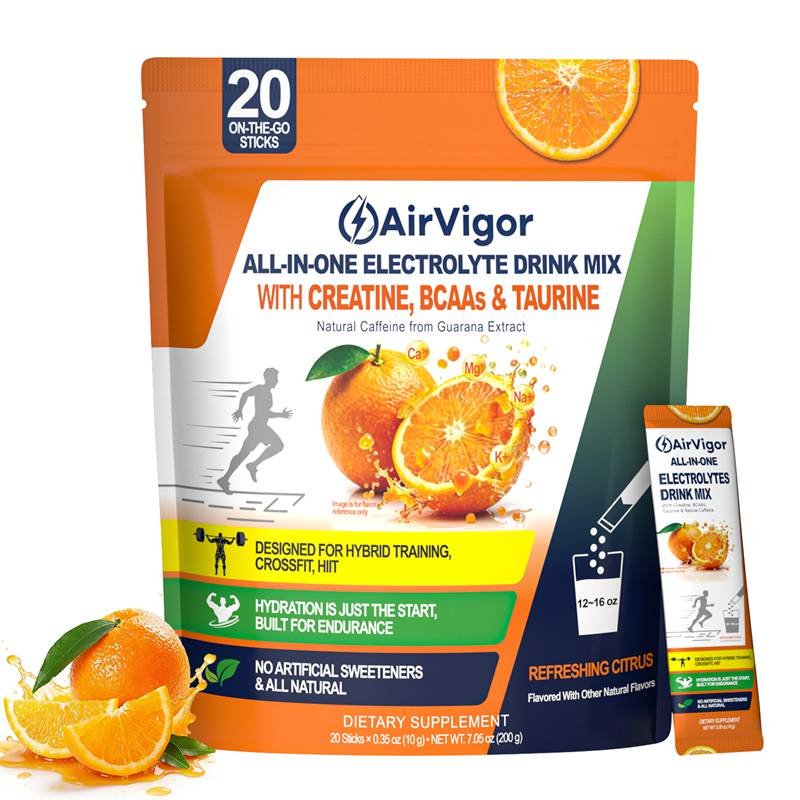
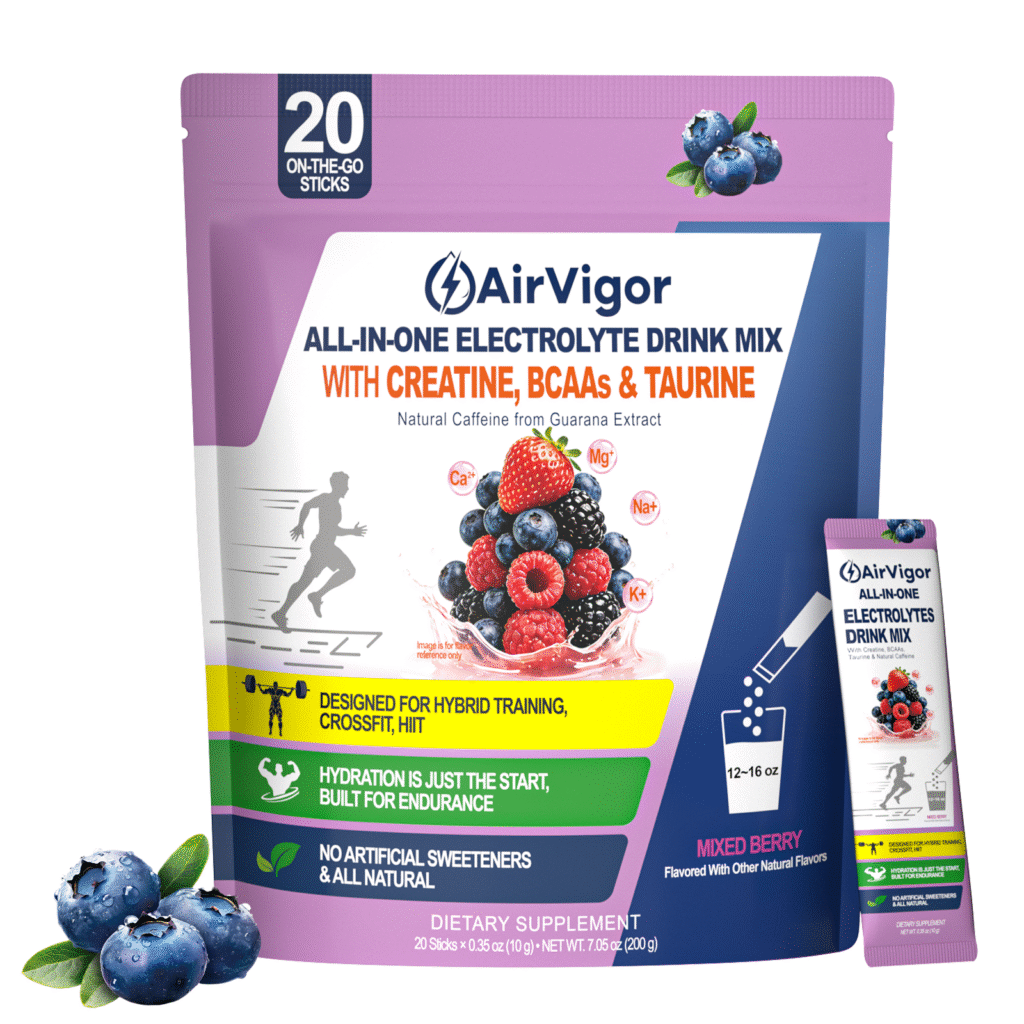
AirVigor creatine electrolyte powder is designed for customers who want practical hydration, workout performance support, and reliable daily usability in one formula. The product focuses on ingredient transparency, stable quality management, convenient packaging, and real-world workout routines instead of overly complicated supplement stacking.
Real Ingredient Transparency Customers Can Understand
Modern supplement customers are paying much closer attention to ingredient labels than before. Many no longer trust products filled with unclear proprietary blends, exaggerated claims, or confusing formulas that make it difficult to understand what they are actually consuming.
AirVigor focuses on clearer ingredient expression and practical formulation logic so customers can quickly understand what the product is designed to support.
| Formula Focus | Why Customers Care |
|---|---|
| Creatine support | Helps support workout performance and repeated output |
| Electrolyte balance | Supports hydration during sweat-heavy sessions |
| Transparent labeling | Easier supplement decision-making |
| Practical serving systems | Better daily consistency |
| Stable flavor systems | More comfortable long-term use |
This approach matters because today’s supplement users are more informed and more selective. Many compare:
- ingredient amounts,
- serving formats,
- hydration systems,
- portability,
- and long-term usability
before purchasing.
Customers increasingly want products that fit naturally into everyday life instead of products designed only around aggressive gym marketing.
AirVigor’s product direction reflects this broader shift toward practical sports nutrition products that customers can realistically use several times per week without routine fatigue.
Built Around Hydration and Performance Together
One major reason creatine electrolyte formulas are growing quickly is because many customers now realize hydration strongly affects workout quality.
Poor hydration may contribute to:
| Common Workout Problem | Possible Hydration Connection |
|---|---|
| Feeling drained during workouts | Fluid and electrolyte loss |
| Heavy fatigue after training | Incomplete hydration recovery |
| Muscle tightness | Electrolyte imbalance |
| Reduced endurance | Sweat-related fluid depletion |
| Low workout consistency | Poor recovery hydration habits |
AirVigor combines creatine with hydration-focused electrolytes because modern training often creates both performance stress and fluid loss at the same time.
This is especially relevant for customers doing:
| Training Style | Why Hydration Matters |
|---|---|
| HIIT workouts | High sweat volume |
| CrossFit | Repeated intense output |
| Running | Long-duration fluid loss |
| Cycling | Endurance hydration support |
| Strength training | Workout consistency support |
| Hot-weather training | Increased electrolyte depletion |
Many traditional sports drinks mainly focus on sugar and flavor. AirVigor’s formulation direction focuses more heavily on hydration compatibility and workout practicality instead of simply creating sweet workout beverages.
Customers today increasingly prefer products that:
- feel lighter during exercise,
- mix smoothly,
- avoid excessive sweetness,
- fit daily hydration habits,
- and support both workouts and recovery.
This broader hydration-performance positioning is one reason creatine electrolyte products have become popular among both serious gym users and everyday active adults.
Designed for Real Daily Use
One of the biggest reasons customers stop using supplements is not ingredient quality — it is inconvenience.
Many people begin highly complicated supplement routines but eventually stop because:
| Common Customer Problem | Why It Happens |
|---|---|
| Too many products | Routine becomes difficult |
| Large supplement tubs | Poor portability |
| Heavy flavors | Flavor fatigue over time |
| Poor dissolvability | Annoying daily preparation |
| Confusing instructions | Reduced consistency |
AirVigor develops products around long-term usability because consistency matters more than short-term excitement.
This is especially important for customers balancing:
- work schedules,
- travel,
- family responsibilities,
- fitness routines,
- and recovery management.
Portable stick-pack formats and hydration-style formulas fit naturally into these modern lifestyles.
| Daily Situation | Why Portable Hydration Products Help |
|---|---|
| Office workdays | Easier hydration support |
| Gym commutes | Better convenience |
| Travel schedules | Portable supplementation |
| Outdoor activity | Quick hydration support |
| Evening workouts | Less preparation effort |
Customers increasingly prefer products that simplify routines instead of adding complexity. Many no longer want separate tubs for:
- creatine,
- electrolytes,
- amino acids,
- hydration drinks,
- and recovery products.
This is why multi-functional workout formulas continue growing rapidly across sports nutrition markets.
Stable Manufacturing and Quality Management
Customers today are also more aware of manufacturing quality and consistency than in previous years. They want products that not only look good online, but are also produced under stable quality systems.
AirVigor supports product consistency through manufacturing and quality management systems designed around supplement stability, ingredient screening, and production control.
| Manufacturing Area | AirVigor Capability |
|---|---|
| Production workshop | 100,000-level clean production environment |
| Facility size | 30,000+ square meters |
| Staff scale | 1,000+ personnel |
| Nutrition R&D team | 25+ specialists |
| Formula development models | 20,000+ |
| Nutrition-related patents | 300+ |
| Quality management personnel | 30+ team members |
The company also works across multiple areas including:
- raw material evaluation,
- formulation review,
- dissolvability testing,
- packaging compatibility,
- stability testing,
- and label review systems.
This matters because modern customers increasingly expect products to maintain stable quality across repeat purchases.
For hydration-performance products specifically, consistency strongly affects customer experience in areas such as:
| Product Experience Area | Why It Matters |
|---|---|
| Flavor stability | Better repeat use |
| Mixing quality | Easier daily preparation |
| Packaging durability | Better portability |
| Moisture protection | Product stability |
| Serving consistency | Reliable customer experience |
AirVigor’s focus is not simply selling a supplement once. The company places strong emphasis on long-term product usability and repeat customer experience.
Global Fitness and Lifestyle Trends Are Changing
The sports nutrition industry today looks very different compared with several years ago.
Customers are no longer focused only on bodybuilding-style supplementation. Many now train for:
| Modern Fitness Goal | Customer Motivation |
|---|---|
| Daily energy | Better productivity and routine consistency |
| Lifestyle fitness | Sustainable exercise habits |
| Functional strength | Everyday physical performance |
| Recovery comfort | Easier long-term training |
| Hydration support | Better workout endurance |
This broader shift is changing what people expect from supplements.
Customers increasingly want products that are:
- easier to understand,
- easier to carry,
- easier to drink,
- and easier to use consistently.
AirVigor develops creatine electrolyte products around these modern expectations by focusing on practical hydration support, ingredient clarity, convenient packaging systems, and formulas designed for realistic daily routines instead of short-term fitness hype.
For many customers today, the best supplement is not the most extreme one. It is the one that fits naturally into consistent training, hydration, recovery, work schedules, and long-term lifestyle habits.

Conclusion
Creatine electrolyte powder and BCAA drinks both have a place in modern sports nutrition, but they support workouts differently. BCAA drinks are mainly used for amino acid intake during training, while creatine electrolyte powder offers broader support for hydration, workout performance, recovery comfort, and daily training consistency.
For many active adults today, hydration and sustainable workout performance have become just as important as muscle-focused supplementation. That is why more customers are moving toward simpler, multi-functional hydration formulas that fit naturally into everyday life.
AirVigor focuses on practical sports nutrition solutions built around real ingredient transparency, stable quality systems, hydration-focused formulation design, and long-term usability for modern fitness routines.
Share:
Contact Expert Team
At AirVigor, performance becomes effortless. We transform advanced nutrition science into clean, effective supplements that help you hydrate, recover, and feel stronger every day. Shop AirVigor Supplements on Amazon and experience athlete-trusted formulas—backed by real science and supported by our world-class R&D and production capabilities.
Trust AirVigor
At AirVigor, turning your performance goals into reality is no longer a struggle—it’s a science-driven journey we build together. Whether you’re a runner, lifter, cyclist, yogi, outdoor athlete, or someone simply seeking better daily energy, AirVigor transforms advanced nutrition research into clean, effective, and trustworthy supplements you can feel.
Backed by our U.S. scientific team, global certifications, and world-class production standards, every formula is engineered to deliver real hydration, real recovery, and real performance. And when you’re ready to experience the difference, you’ll find AirVigor products available on Amazon and other major platforms—fast shipping, consistent quality, and a community of athletes already seeing results.
Behind the scenes, our R&D and manufacturing ecosystem also supports specialized formulation development, ensuring AirVigor continues to lead with innovation while keeping quality and safety uncompromised. But at the core, everything we create is built for you—your health, your performance, your momentum.
Choose AirVigor. Feel the science. Elevate your every day.


Subscribe to our newsletter
Sign up to our newsletter and we’ll keep you up to date with the latest arrivals.