Skip to content

Sweating too much is more common today than many people realize. Long workouts, hot weather, outdoor jobs, stressful schedules, travel, caffeine, and high-humidity environments can all increase fluid and mineral loss throughout the day. Many people try to solve the problem by simply drinking more water, yet still experience headaches, muscle cramps, fatigue, dry mouth, or the feeling that they “cannot fully rehydrate.” In many cases, the issue is not only water loss — it is electrolyte loss.
Electrolyte powder for sweating too much has become increasingly popular because it helps replace important minerals lost through sweat, especially sodium, potassium, and magnesium. Compared with traditional sports drinks, modern electrolyte powders are often lighter, lower in sugar, easier to carry, and more practical for daily use. From gym training and running to outdoor work, travel, hot yoga, and summer heat exposure, many users now rely on electrolyte powders to support hydration balance and recovery more consistently.
The challenge is that not every hydration product works the same way. Some formulas are too sugary for everyday use, while others do not provide enough sodium for heavy sweaters. The best electrolyte powder should fit real-life routines: easy to mix, comfortable to drink, portable enough for busy schedules, and reliable enough for long-term use. This guide explains what causes excessive sweating, why electrolytes matter, how to choose the right formula, and why more active consumers are adding electrolyte powder into their daily hydration routine.
What Causes Sweating Too Much?
Sweating too much is usually caused by heat, humidity, exercise intensity, stress, physical work, lifestyle habits, or individual body differences. For many people, the problem is not sweating itself, but how quickly repeated sweating affects hydration, energy, recovery, and daily comfort.
Why Sweating Too Much Happens
Heavy sweating often starts as a normal body response. The body sweats to cool itself down and protect internal temperature balance. But the amount of sweat people produce can vary dramatically depending on environment, activity level, body composition, and genetics.
Some people begin sweating within minutes of walking outside in summer weather, while others stay relatively dry during the same activity. This difference is not always about fitness. Sweat production is influenced by how many sweat glands a person has, how active those glands are, body size, metabolism, stress response, and climate adaptation.
For example, someone living in Florida, Texas, Southeast Asia, or Australia may sweat much earlier during physical activity than someone living in a cooler climate. Over time, the body adapts to heat exposure by increasing sweat production earlier and more efficiently. While this cooling response helps regulate temperature, it also increases ongoing fluid and sodium loss.
Many users only realize sweating is becoming a hydration issue when recovery starts changing. Common real-life experiences include:
| Situation | What Users Often Notice |
|---|---|
| Afternoon outdoor work | Sudden fatigue and headaches |
| Long gym sessions | Tight muscles after training |
| Hot commutes | Constant thirst despite water intake |
| Busy office days | Dry mouth after coffee and stress |
| Summer travel | Swelling, fatigue, and dehydration |
| Night workouts | Poor recovery the next morning |
Sweat loss also accumulates quietly. A person may lose several liters of fluid across an entire day without fully noticing it. This is especially common among warehouse workers, runners, healthcare staff, restaurant workers, delivery drivers, and people constantly moving in warm environments.
One important point many consumers overlook is that sweating too much is not always caused by exercise. Stress, anxiety, caffeine, poor sleep, spicy foods, alcohol, and high-pressure work schedules may also increase sweat production throughout the day.
Does Heat Cause Sweating Too Much?
Heat is one of the biggest reasons people begin searching for hydration products and electrolyte powders. As external temperature rises, the body increases sweat production to release heat through evaporation.
However, high humidity changes how efficiently this process works. In dry weather, sweat evaporates relatively quickly. In humid conditions, sweat stays on the skin longer, making the body continue producing even more sweat while cooling becomes less effective.
This is why many people feel completely drained after spending time outdoors in humid weather, even without intense physical activity.
| Weather Condition | How It Affects Sweating |
|---|---|
| Dry summer heat | Sweat evaporates faster |
| Humid heat | Sweat stays on skin longer |
| Direct sunlight | Body temperature rises quickly |
| Poor airflow | Cooling efficiency decreases |
| Hot indoor environments | Continuous low-level sweating |
People working in outdoor industries often experience the highest hydration stress during summer months. Construction crews, landscapers, roofers, agricultural workers, and delivery personnel may sweat continuously for 6–10 hours daily.
In these situations, dehydration is usually gradual rather than dramatic. Many workers report that the first signs are not thirst, but reduced concentration, headaches, irritability, slower recovery, or muscle tightness later in the day.
Another important factor is sodium loss. Heavy sweaters frequently notice white salt marks on shirts, hats, backpacks, or workout clothes. This is often a visible sign that significant sodium is leaving the body through sweat.
Consumers today increasingly look for hydration support that fits daily heat exposure rather than only athletic performance. This is one reason low-sugar electrolyte powders have become more common among outdoor workers, travelers, and active lifestyle users.
Does Exercise Cause Sweating Too Much?
Exercise is naturally one of the largest triggers for heavy sweating because physical activity rapidly raises body temperature. The harder and longer the workout, the more cooling the body requires.
But not all workouts affect sweat loss equally.
| Workout Type | Sweat Loss Level |
|---|---|
| Light yoga | Low to moderate |
| Strength training | Moderate |
| HIIT workouts | High |
| CrossFit sessions | Very high |
| Long-distance running | Very high |
| Hot yoga | Extremely high |
| Indoor cycling | High due to poor airflow |
Workout environment matters just as much as exercise type. Indoor gyms with weak ventilation may produce surprisingly high sweat loss even during shorter sessions. Hot yoga combines both heat and humidity, which often explains why many users feel dizzy or drained afterward despite drinking water.
Many fitness users also underestimate how much sodium they lose during training. Research commonly shows that sweat sodium concentration varies heavily between individuals. Some people lose only moderate sodium levels, while others lose enough to visibly leave salt residue on clothing.
This helps explain why two people doing the same workout may recover completely differently.
A common pattern among gym users is:
- feeling strong early in training
- suddenly losing energy halfway through
- developing headaches afterward
- feeling unusually sore the next day
- craving salty foods after exercise
In many cases, these symptoms are connected not only to calories or muscle fatigue, but also to hydration quality.
Modern consumers increasingly prefer hydration systems that feel lighter and easier to use during workouts. Traditional sports drinks often feel too sugary for repeated use, especially during hot-weather training or high-intensity sessions.
This is why electrolyte powders are becoming more common among:
- runners
- cyclists
- CrossFit users
- gym members
- hot yoga participants
- recreational athletes
Portability also matters. A stick pack inside a gym bag is easier for many users than carrying several bottles throughout the day.
Is Sweating Too Much Normal?
For many people, sweating heavily is completely normal. Some individuals naturally sweat more because of genetics, body size, climate adaptation, or fitness level. Athletes often sweat earlier and more efficiently because their bodies are trained to regulate temperature faster.
However, there is a difference between normal sweating and sweating that begins interfering with daily life, recovery, comfort, or physical performance.
Consumers usually become concerned when sweating is combined with symptoms such as:
| Symptom | Why Users Notice It |
|---|---|
| Muscle cramps | Often linked to mineral loss |
| Dizziness | Common after prolonged heat |
| Constant thirst | Hydration imbalance |
| Headaches | Frequently reported after sweating |
| Fatigue | Recovery becomes slower |
| Poor concentration | Common during dehydration |
| Salt residue on skin | Suggests high sodium sweat loss |
Some individuals may also experience hyperhidrosis, a condition involving excessive sweating unrelated to temperature or exercise. This type of sweating may happen during work, social situations, or even while resting.
While electrolyte products do not treat the root cause of hyperhidrosis, hydration support may still matter because ongoing fluid and sodium losses can affect how people feel throughout the day.
Another overlooked issue is lifestyle stacking. Modern adults often combine multiple dehydration triggers at once:
- coffee intake
- long work hours
- poor sleep
- stress
- workouts
- hot weather
- alcohol
- travel
Individually, each factor may feel manageable. Together, they can quietly increase sweat loss and reduce hydration quality over time.
This is why many consumers today no longer use hydration products only for sports. They use them to support daily function, comfort, recovery, and energy consistency across busy schedules and active lifestyles.
Why Use Electrolyte Powder for Sweating Too Much?
Electrolyte powder helps replace minerals lost through heavy sweating, especially sodium, potassium, magnesium, and calcium. For people who sweat often, it can make hydration feel more complete than water alone, especially during workouts, hot weather, outdoor work, travel, or long active days.
What Does Sweat Remove?
Sweat is not just water. It also carries out important minerals that help the body manage fluid balance, muscle function, nerve signals, and recovery after physical stress.
When people sweat lightly for a short time, regular meals and water may be enough. But when sweating becomes heavy, repeated, or lasts for hours, mineral loss becomes harder to ignore. This is why some people drink plenty of water but still feel tired, thirsty, cramped, or foggy afterward.
Sodium is usually the main electrolyte lost through sweat. Potassium, magnesium, and calcium are also involved, but sodium is often the biggest concern for heavy sweaters because it helps the body hold and distribute fluid properly.
| Electrolyte Lost in Sweat | Why It Matters | What Users May Notice When Low |
|---|---|---|
| Sodium | Helps fluid stay balanced | Headache, thirst, weakness |
| Potassium | Supports muscles and nerves | Muscle fatigue, poor function |
| Magnesium | Supports relaxation and recovery | Tightness, cramps, poor recovery |
| Calcium | Supports muscle contraction | Muscle discomfort, weakness |
For heavy sweaters, the problem often builds slowly. A person may lose sweat during a morning workout, drink coffee at work, walk outside in hot weather, then finish the day feeling unusually drained. They may not connect that feeling with electrolyte loss because nothing dramatic happened at one single moment.
This is why electrolyte powder can be useful in daily life. It gives users a simple way to add key minerals back into water without relying on sugary sports drinks or carrying large bottles.
Why Does Sodium Matter?
Sodium matters because it is the electrolyte most closely connected with fluid balance during heavy sweating. When sodium loss is high, the body may struggle to retain and use water efficiently.
Many consumers are taught to avoid sodium, so they feel confused when electrolyte products highlight sodium as a key ingredient. The difference is context. Too much sodium from processed foods may be a diet concern, but sodium lost through heavy sweating needs to be replaced appropriately.
Heavy sweaters often notice signs such as salty skin, white marks on shirts, salt stains on hats, or stinging sweat around the eyes. These are practical clues that sodium loss may be higher than average.
| Heavy Sweat Situation | Why Sodium Becomes Important |
|---|---|
| Summer running | Sweat loss rises quickly in heat |
| Hot yoga | Heat and humidity increase fluid loss |
| Outdoor labor | Sodium loss continues for hours |
| Long cycling | Sweat evaporates before users notice it |
| HIIT training | Fast sweat loss in short time |
| Travel in hot climates | Walking, sun, and irregular meals combine |
Sodium also affects how water feels in the body. Some users say they drink bottle after bottle of water but still feel thirsty. Others feel bloated after drinking too much plain water but still lack energy. This can happen when fluid intake is not matched with electrolyte replacement.
The goal is not to overuse sodium. The goal is to use enough electrolyte support for the situation. A light indoor day may not need electrolyte powder. A sweaty 90-minute workout, long outdoor shift, summer hike, or humid travel day may benefit from it much more.
How Does Electrolyte Powder Help?
Electrolyte powder helps by turning plain water into a more useful hydration drink for high-sweat situations. Instead of only replacing fluid, it helps replace minerals that are lost through sweat and needed for normal body function.
For many users, the value is practical. They want to avoid feeling wiped out after sweating. They want fewer headaches after hot days. They want less cramping during workouts. They want to recover faster after exercise or outdoor work. Electrolyte powder supports these goals by making hydration more complete and easier to maintain.
| User Problem | How Electrolyte Powder May Help |
|---|---|
| “I drink water but still feel thirsty.” | Adds minerals that support fluid balance |
| “I cramp after workouts.” | Replaces sweat-related mineral losses |
| “I feel drained after heat exposure.” | Supports recovery after fluid and sodium loss |
| “Sports drinks are too sweet.” | Low-sugar powders may feel lighter |
| “I need something portable.” | Stick packs fit bags, cars, and desks |
Another reason people choose electrolyte powder is control. With bottled drinks, the formula is fixed. With powder, users can decide when to mix it, how strong they want it, and which situation calls for it.
This matters for real customers because hydration needs change day by day. A person may need more support after hot yoga on Monday, only plain water on Tuesday, then electrolyte support again during a weekend hike. Powder makes that routine more flexible.
For brands and retailers, this also explains why electrolyte powders continue to grow across fitness, wellness, travel, and workplace hydration markets. The product fits many real-world routines without requiring users to change their lifestyle.
Is Water Alone Enough?
Water alone is enough for many normal daily situations, especially when sweating is light and meals are regular. But for people who sweat too much, water alone may not always solve the problem because it does not replace electrolytes.
A simple way to think about it is this: water replaces fluid, while electrolyte powder helps replace fluid plus minerals. Heavy sweaters often need both.
| Situation | Water Alone Usually Works | Electrolyte Powder May Be Better |
|---|---|---|
| Sitting indoors | Yes | Usually not needed |
| Light walking | Yes | Optional |
| Short gym session | Often yes | Useful if sweating heavily |
| 60–90 minute workout | Maybe | Often helpful |
| Hot yoga class | Often not enough | Stronger need |
| Outdoor work in summer | Often not enough | Stronger need |
| Long travel day in heat | Maybe | Useful for many users |
Many people only notice water is not enough when symptoms repeat. They may feel fine during activity, then develop headaches, tired legs, dry mouth, or strong salt cravings later. These are common signs that hydration may need more than plain water.
Another issue is drinking large amounts of water too quickly after sweating. Some people feel bloated, heavy, or uncomfortable, yet still do not feel fully refreshed. In these cases, electrolyte powder can make hydration feel more balanced because it supports better fluid handling.
The best approach is not replacing water with electrolyte drinks all day. A more realistic routine is to drink plain water regularly and use electrolyte powder around the highest-sweat moments, such as workouts, hot outdoor shifts, travel, sauna sessions, humid weather, or recovery after heavy sweating.
Which Electrolyte Powder Is Best for Sweating Too Much?
The best electrolyte powder for sweating too much should replace the minerals most commonly lost in sweat, especially sodium, while still being easy to drink, low in unnecessary sugar, fast-dissolving, portable, and clear on the label. For heavy sweaters, daily usability matters as much as the formula.
Which Electrolytes Matter Most?
For people who sweat heavily, the most important electrolyte is usually sodium because it is the main mineral lost through sweat. Potassium, magnesium, and calcium also matter, but they play more supporting roles in muscle function, nerve signals, and recovery.
A good electrolyte powder should not simply list many minerals to look impressive. It should use a formula that matches real sweat loss and real user needs. Someone who sweats heavily during outdoor work, hot yoga, running, cycling, or high-intensity training usually needs more practical sodium support than someone who only wants light daily hydration.
| Electrolyte | Why It Matters for Heavy Sweaters | Customer-Focused Benefit |
|---|---|---|
| Sodium | Main electrolyte lost through sweat | Helps hydration feel more complete |
| Potassium | Supports muscle and nerve function | Helps maintain normal muscle response |
| Magnesium | Supports muscle relaxation and recovery | Useful for tightness and cramp concerns |
| Calcium | Supports muscle contraction | Helps overall muscle balance |
Many customers also want to know whether more electrolytes automatically means better results. Usually, the answer is no. Extremely high levels are not always necessary for daily users and may taste too salty or feel uncomfortable. The better choice is a balanced formula that fits your sweating level, activity type, and drinking habit.
For example, a person doing light office work in air conditioning may not need the same electrolyte level as someone doing roofing work in July heat. A hot yoga user may want a lighter flavor they can drink after class, while a long-distance cyclist may need stronger sodium support during extended rides.
That is why the best electrolyte powder should feel practical, not extreme.
Is Low Sugar Better?
Low-sugar electrolyte powder is often better for people who sweat too much during normal daily life, workouts, travel, or hot weather because it can be used more often without adding unnecessary sugar. Many traditional sports drinks were designed for long endurance events, not everyday hydration.
This matters because heavy sweaters may need hydration support several times a week, or even daily during summer. If every serving contains a large amount of sugar, the product becomes harder to fit into a healthy routine.
| Product Type | Sugar Level | Best Fit |
|---|---|---|
| Traditional sports drink | Often higher | Long endurance sports |
| Low-sugar electrolyte powder | Low to moderate | Workouts, heat, daily sweating |
| Sugar-free electrolyte powder | Very low | Daily hydration and light activity |
| Carb-electrolyte drink | Moderate | Long runs, cycling, races |
Many customers complain that high-sugar drinks feel sticky, heavy, or too sweet when they are already hot and sweating. This is especially common during HIIT, hot yoga, hiking, warehouse work, or outdoor summer shifts. A lighter electrolyte powder is often easier to drink consistently because it does not leave the same syrupy feeling.
However, sugar is not always bad. During very long endurance activity, some carbohydrates may help provide energy. The real issue is matching the formula to the use case. A marathon runner and a person sweating at work need different hydration tools.
For AirVigor-style product positioning, low-sugar hydration is especially suitable for users who want electrolyte support without turning every bottle of water into a sweet sports drink. This fits modern consumer needs better: lighter taste, easier daily use, fewer unnecessary calories, and better routine consistency.
Do Electrolyte Powders Work Better Than Sports Drinks?
Electrolyte powders can work better than sports drinks for many heavy sweaters because they are lighter to carry, easier to store, often lower in sugar, and more flexible in serving strength. Sports drinks still have value, but powders usually fit modern daily routines better.
The difference is not only about ingredients. It is about how people actually use hydration products.
A bottled sports drink is convenient when you buy it cold and drink it immediately. But it is bulky, fixed in formula, and often sweeter than many daily users want. Electrolyte powder is more flexible. You can keep it at home, in a desk drawer, in a gym bag, or in a travel pouch, then mix it when needed.
| Comparison Point | Electrolyte Powder | Sports Drink |
|---|---|---|
| Portability | Stick packs are easy to carry | Bottles are heavier |
| Sugar control | Often low-sugar options | Often sweeter |
| Serving flexibility | Can adjust water amount | Fixed formula |
| Storage | Easy for office, gym, travel | Takes more space |
| Daily use | Easier to repeat | Can feel heavy |
| Cost per serving | Often more flexible | Depends on bottle price |
For people who sweat too much, this flexibility is important. Sweat-heavy days are not always planned. A person may unexpectedly walk more during travel, work in hotter conditions than expected, or take a more intense gym class. Having electrolyte powder available makes hydration support easier to access.
Sports drinks may still be useful for endurance athletes who want electrolytes plus carbohydrates during long events. But for daily heavy sweating, many customers prefer powders because they feel cleaner, lighter, and easier to repeat.
What Ingredients Should You Avoid?
When choosing electrolyte powder for sweating too much, customers should avoid formulas that look impressive but are hard to understand, overly sweet, poorly dissolving, or filled with unnecessary ingredients that do not improve the drinking experience.
The best product should be simple enough to use regularly and clear enough for customers to trust.
| Ingredient or Formula Concern | Why Customers May Avoid It |
|---|---|
| Very high sugar | Hard to use daily |
| Unclear proprietary blends | Difficult to know real dosage |
| Artificial aftertaste | Reduces repeat use |
| Poor dissolvability | Leaves grit or clumps |
| Excessive coloring | Not preferred by clean-label users |
| Too much saltiness | Hard to drink during heat |
| Stimulants | Not suitable for all-day hydration |
Taste and texture matter more than many brands admit. Even if the formula looks strong, customers will not keep using it if it tastes harsh, feels gritty, or upsets the stomach. Heavy sweaters need a product they can drink repeatedly during real situations, not just once for testing.
This is especially important for people using electrolyte powder during work, travel, or hot weather. They usually want something light, smooth, and easy to finish.
AirVigor focuses on clear formula expression, real ingredient addition, and practical product experience. For electrolyte powder, this means customers should be able to understand what they are drinking, why each ingredient is included, and how to use it without confusion.

How Do You Use Electrolyte Powder for Sweating Too Much?
Electrolyte powder works best when it is used around the moments when sweat loss is highest. Most heavy sweaters use it before, during, or after workouts, hot-weather exposure, outdoor work, travel days, or long active schedules instead of waiting until they feel fully drained.
When Should You Drink It?
For heavy sweaters, timing matters. Drinking electrolyte powder only after feeling dizzy, cramped, or exhausted often means the body has already fallen behind on fluid and mineral replacement.
A better routine is to match intake with the sweating situation. For example, someone going for a summer run may drink electrolytes before training. A construction worker may sip it during the hottest part of the day. A hot yoga user may use it after class to recover more comfortably.
| Timing | Best Use Case | Why It Helps |
|---|---|---|
| 30–60 minutes before sweating | Running, gym, hot yoga, hiking | Helps prepare hydration before fluid loss rises |
| During activity | Outdoor work, long workouts, cycling | Supports steady fluid and electrolyte replacement |
| After sweating | Post-workout, sauna, summer travel | Helps replace what was lost through sweat |
| Throughout the day | Hot climates, high-sweat jobs | Keeps hydration more consistent |
Many users make the mistake of only drinking once activity is over. This may work for short, light sweating, but it is often not enough for long or repeated sweat exposure. If a person sweats heavily for several hours, hydration should be spread across the activity instead of delayed until the end.
For daily users, convenience is important. A powder stick pack is easier to carry than a large sports drink bottle, especially for people moving between work, gym, travel, and outdoor activities.
How Much Should You Use?
The right amount of electrolyte powder depends on sweat level, activity duration, weather, body size, and how often the person is sweating. There is no single perfect amount for everyone.
Most users should start with the serving direction on the product label, then adjust based on real conditions. Someone doing a 30-minute light workout may need less support than someone working outdoors for eight hours in summer heat.
| Situation | Sweat Level | Practical Use Approach |
|---|---|---|
| Light indoor day | Low | Water may be enough |
| Short gym session | Low to moderate | Electrolytes optional if sweating heavily |
| 60–90 minute workout | Moderate to high | One serving may be useful |
| Hot yoga class | High | Use before or after class |
| Outdoor work shift | High and repeated | Sip across the day |
| Long hike or cycling | High and extended | Use before and during activity |
Heavy sweaters should pay attention to body signals rather than guessing only by time. Strong thirst, headaches, salt stains, muscle tightness, dizziness, and unusual fatigue can all suggest that hydration support may need improvement.
It is also important not to assume that more powder always means better hydration. Over-concentrated drinks may taste too salty, feel heavy, or upset the stomach. A comfortable taste and steady intake usually work better than forcing a strong drink all at once.
For people using AirVigor-style electrolyte stick packs, the practical advantage is consistency. A clear single-serving format helps users avoid messy measuring and makes hydration easier to repeat during busy schedules.
Can You Drink It Every Day?
Many people can use electrolyte powder daily when they sweat frequently, train regularly, work outdoors, travel often, or live in hot climates. The key is choosing a formula that fits daily use, especially one with balanced electrolytes, clear labeling, and low unnecessary sugar.
Daily use is most common among people whose hydration stress repeats often.
| Daily User Type | Why They May Use Electrolytes Often |
|---|---|
| Gym users | Sweat loss from regular training |
| Outdoor workers | Long exposure to heat |
| Runners and cyclists | Repeated endurance sessions |
| Travelers | Dry air, walking, schedule changes |
| Hot climate residents | Frequent fluid loss |
| Busy professionals | Coffee, stress, and poor hydration routines |
For these users, electrolyte powder is not treated like a one-time sports product. It becomes part of a hydration routine. Someone may use it after morning training, during a summer workday, or while traveling through a hot city.
However, daily use should still be reasonable. People with sodium-restricted diets, kidney conditions, heart conditions, high blood pressure concerns, or medication-related fluid restrictions should follow professional medical advice before using electrolyte products regularly.
For most healthy active adults, the best daily routine is not replacing all water with electrolyte drinks. A more balanced approach is to drink plain water throughout the day and use electrolyte powder around the times when sweating, heat, travel, or physical activity increase hydration demand.
What Mistakes Should You Avoid?
The biggest mistake is treating all sweating situations the same. A light walk, a hot yoga class, and an outdoor work shift do not create the same hydration demand. Heavy sweaters need to adjust based on sweat level, not habit alone.
Another common mistake is drinking a large amount of plain water after heavy sweating without replacing electrolytes. This may leave users feeling bloated, tired, or still thirsty because the body needs minerals to manage fluid balance properly.
| Mistake | Better Approach |
|---|---|
| Waiting until dizziness or cramps appear | Drink earlier around high-sweat periods |
| Using only plain water during heavy sweating | Add electrolytes when sweat loss is high |
| Mixing powder too strong | Follow label directions first |
| Choosing very sugary drinks for daily use | Consider lower-sugar electrolyte powder |
| Ignoring salt stains on clothing | Treat them as a sign of sodium loss |
| Forgetting hydration during travel | Carry stick packs for long days |
A smaller but important mistake is choosing a product only by flavor. Taste matters, but heavy sweaters should also look at sodium content, potassium, magnesium, sugar level, serving size, and label clarity.
AirVigor focuses on practical hydration use because the best product is the one customers can actually keep using. A formula may look strong on paper, but if it is too sweet, too salty, hard to dissolve, or inconvenient to carry, it will not become part of a real routine.
Is Electrolyte Powder for Sweating Too Much Good for Workouts?
Electrolyte powder can be very useful for workouts when sweating is heavy, prolonged, or repeated several times per week. It helps many active users maintain hydration balance, reduce post-workout fatigue, and feel more stable during training, especially in hot or high-intensity conditions.
Is It Good for Running?
Running is one of the most sweat-heavy forms of exercise because it combines continuous movement, rising body temperature, and long periods of fluid loss. Outdoor running in warm or humid weather increases sweat rate even further.
Many runners notice that dehydration symptoms do not appear immediately. A run may feel normal for the first 30–40 minutes, then suddenly become much harder. Legs feel heavier, pace drops, breathing becomes uncomfortable, and recovery afterward takes longer than expected.
| Running Condition | Common Hydration Challenge |
|---|---|
| Summer road running | Fast fluid and sodium loss |
| Humid weather runs | Sweat evaporates poorly |
| Long-distance training | Ongoing electrolyte depletion |
| Trail running | Limited hydration access |
| Interval running | High sweat intensity in short bursts |
| Race-day conditions | Stress and heat raise sweat rate |
Heavy runners often report visible salt stains on hats, shirts, or hydration vests. This usually suggests that sodium loss is high enough to matter for hydration performance.
For many runners, electrolyte powder becomes useful because it is easier to carry and easier to adjust than bottled sports drinks. Stick packs fit naturally into running belts, hydration packs, backpacks, or race bags without adding much weight.
Another important factor is stomach comfort. Many traditional sports drinks feel too sugary during runs, especially in hot weather. This is why low-sugar electrolyte powders have become much more common among recreational runners, marathon users, and endurance athletes.
Some runners use electrolyte powder before training to prepare hydration levels. Others sip it during longer runs or use it afterward to support recovery. The best timing depends on distance, sweat rate, and weather.
Is It Good for Gym Training?
Gym workouts may not look as extreme as endurance races, but many people still lose significant fluid and sodium during training, especially during HIIT, CrossFit, strength circuits, boot camps, or indoor cardio sessions.
A common issue among gym users is focusing heavily on protein and pre-workout supplements while underestimating hydration quality. The workout begins with energy, but later sets feel harder than expected, muscles tighten earlier, and recovery becomes slower.
| Workout Type | Why Electrolytes Matter |
|---|---|
| HIIT | Fast sweat loss and repeated effort |
| CrossFit | Intense heat buildup and fatigue |
| Indoor cycling | Heavy sweating with poor airflow |
| Strength circuits | Long sessions with repeated exertion |
| Functional training | High movement intensity |
| Bootcamp workouts | Continuous sweating and limited recovery |
Many customers describe a similar pattern during training:
- energy drops sharply halfway through the workout
- muscles feel unusually tight
- post-workout headaches appear
- legs feel drained later in the day
- recovery the next morning feels slower
Hydration quality often plays a role in these experiences.
Electrolyte powder is popular in gyms because it fits modern workout habits better than carrying several large sports drinks. A single stick pack inside a shaker bottle or gym bag is simple, portable, and easier to repeat consistently.
Modern fitness users also prefer hydration products that feel lighter during training. Extremely sweet drinks can become unpleasant during high-intensity sessions, especially in warm gyms with poor airflow.
This is why many active users now choose electrolyte powders with:
- lighter flavor profiles
- lower sugar levels
- easy dissolvability
- portable stick-pack formats
- balanced sodium support
Is It Good for Outdoor Workouts?
Outdoor workouts usually create more hydration stress than indoor training because the body deals with both exercise and environmental heat at the same time.
Activities such as:
- outdoor boot camps
- cycling
- hiking
- tennis
- soccer
- beach workouts
- trail running
- outdoor CrossFit
can dramatically increase sweat loss during warm weather.
| Outdoor Factor | Why Sweat Loss Increases |
|---|---|
| Direct sunlight | Raises body temperature faster |
| Humidity | Reduces sweat evaporation |
| Wind exposure | Can hide sweat loss |
| Long duration | Extends fluid depletion |
| Limited shade | Increases heat stress |
| Heavy clothing or gear | Traps heat |
One reason outdoor users often underestimate dehydration is because sweat may dry quickly in windy conditions. Cyclists, for example, may sweat heavily without realizing how much fluid they are losing because airflow cools the skin continuously.
This delayed awareness often leads to late hydration correction. Users feel fine during activity, then suddenly experience fatigue, headaches, cramping, or heavy legs afterward.
Electrolyte powder helps many outdoor users because it is practical for movement-heavy situations. Powder sticks are lighter than carrying several bottled drinks, and users can mix them when needed based on temperature and workout duration.
Outdoor hydration has become increasingly important as more people exercise in hot-weather environments year-round.
Is It Good for Recovery After Workouts?
Recovery is one of the biggest reasons many customers continue using electrolyte powder long term. Sweating itself is not necessarily the problem. The bigger issue is how the body feels afterward.
Poor hydration recovery may affect:
| Recovery Issue | What Users Often Experience |
|---|---|
| Muscle tightness | Legs or back feel stiff later |
| Headaches | Common after intense sweating |
| Low energy | Fatigue lasts into the evening |
| Poor sleep | Body feels overstimulated |
| Slower next-day recovery | Training quality decreases |
| Cramping | More common at night |
For many heavy sweaters, electrolyte support helps workouts feel more repeatable across the week. Instead of feeling completely drained after each session, recovery feels smoother and more manageable.
This is especially important for people balancing fitness with busy schedules. Office workers training after work, parents exercising early in the morning, and travelers trying to stay active often care more about recovery consistency than extreme athletic performance.
Some customers also combine electrolyte powder with:
- protein shakes
- creatine
- collagen products
- amino acid blends
- recovery supplements
This reflects how hydration is increasingly becoming part of broader wellness and recovery routines instead of a separate “sports-only” category.
Is It Good for High-Sweat Training Styles?
Some workout styles naturally create much higher sweat levels than others. In these situations, electrolyte support often becomes more useful because both fluid and sodium losses increase rapidly.
| High-Sweat Training Style | Why Electrolytes Are Commonly Used |
|---|---|
| Hot yoga | Heat and humidity create rapid sweat loss |
| CrossFit | Intense repeated effort increases dehydration |
| Indoor cycling | Sweat builds quickly indoors |
| Long-distance running | Continuous fluid loss over time |
| Outdoor boot camps | Heat plus exercise stress |
| Boxing or martial arts | Fast-paced movement and heat buildup |
For example, hot yoga users frequently report dizziness, headaches, or heavy fatigue after class if hydration is poor. Indoor cycling participants often sweat heavily because airflow is limited inside studios. CrossFit athletes may experience sharp energy drops when sodium and fluid losses build across long sessions.
Electrolyte powder fits these workouts well because it is flexible. Some users prefer it before training, others during, and many after workouts for recovery support.
The portability also matters. Modern consumers want hydration systems that fit gym lockers, backpacks, office schedules, and travel routines without requiring complicated preparation.
Why Choose AirVigor Electrolyte Powder for Sweating Too Much?
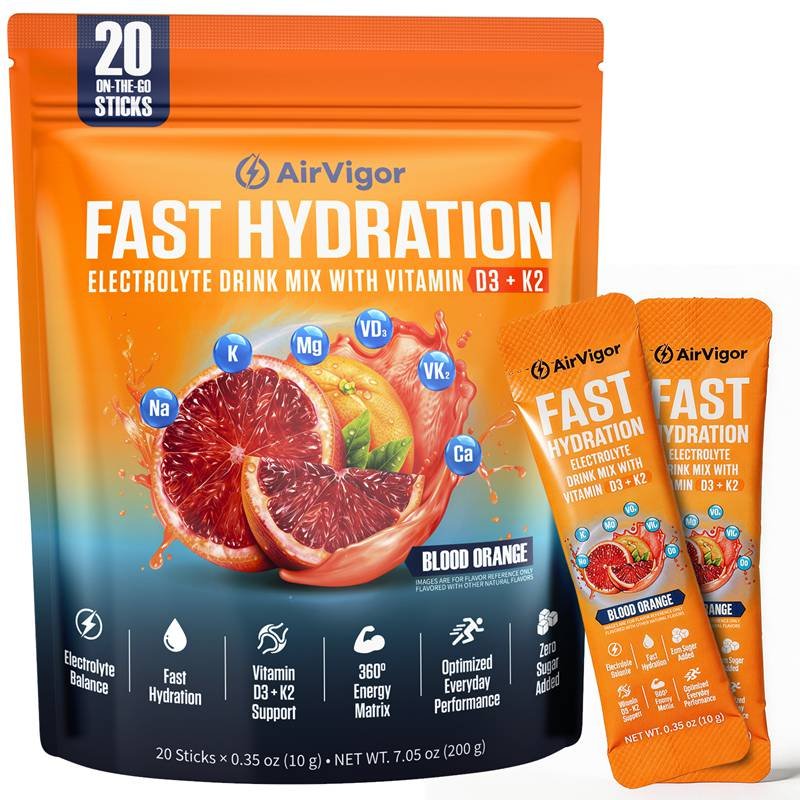
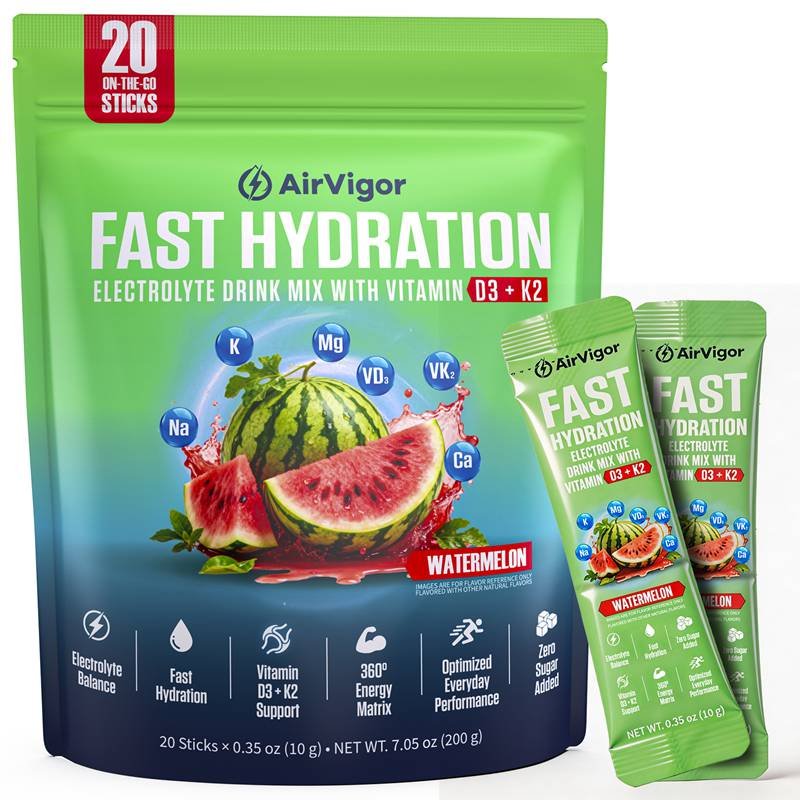
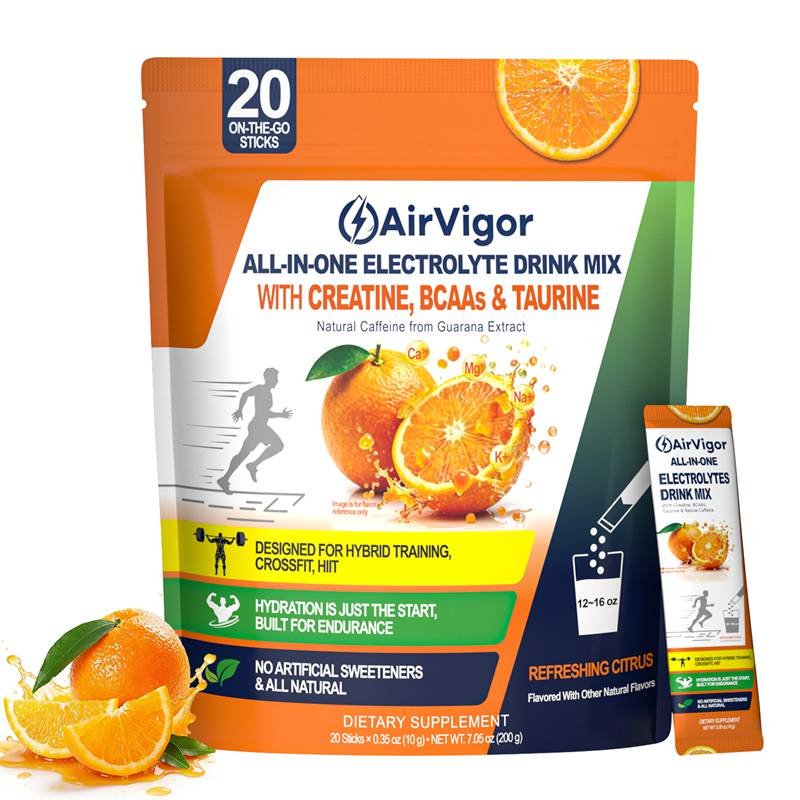
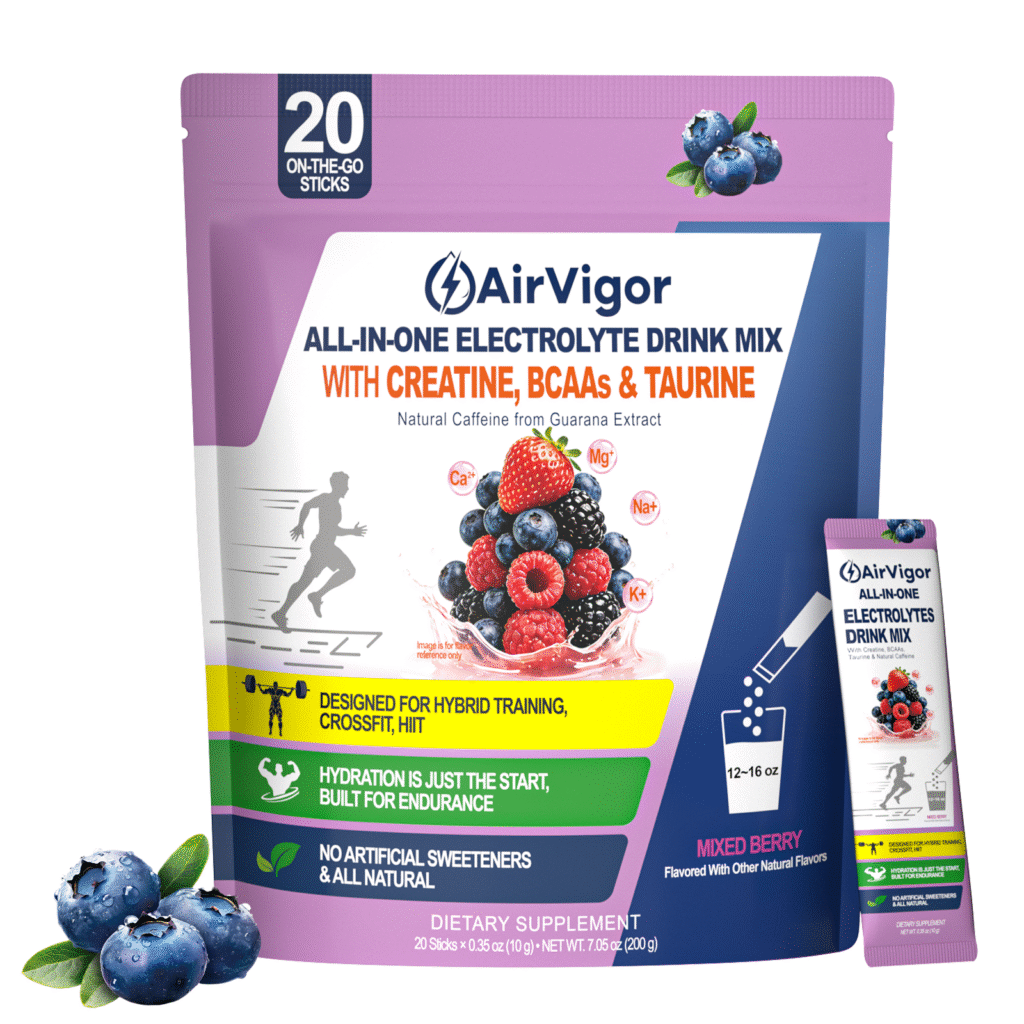
AirVigor electrolyte powder is designed for people who need hydration support that is clear, practical, and easy to keep using. It focuses on real ingredient addition, quality-controlled production, portable packaging, and formulas that fit workouts, hot weather, travel, and daily sweating.
Why Is the Formula Clear?
Clear formulas help customers understand what they are drinking, why each ingredient matters, and how the product fits their daily routine. This is especially important for electrolyte powder because many users take it repeatedly during workouts, summer weather, travel, or outdoor work.
AirVigor focuses on clear formula expression instead of confusing ingredient lists. For people who sweat too much, the core concern is simple: they want to replace what sweat removes without drinking a product that feels too sweet, too heavy, or difficult to understand.
| Formula Area | What Customers Care About | AirVigor Focus |
|---|---|---|
| Electrolytes | Sodium, potassium, magnesium, calcium | Practical hydration support |
| Sugar level | Not too sweet for daily use | More comfortable routine fit |
| Taste | Light and easy to finish | Better long-term use |
| Solubility | No heavy clumps or grit | Easier mixing experience |
| Label clarity | Easy to understand | Clear serving and ingredient display |
For heavy sweaters, a clear formula also reduces hesitation. A runner wants to know whether it fits training. An outdoor worker wants to know whether it can be used during a long shift. A traveler wants to know whether it is easy to carry. Clear product information helps customers make these decisions faster.
AirVigor’s product development is supported by a 25+ person research team and more than 20,000 formula model developments and optimizations over the past five years. This background allows the brand to build hydration products around real use conditions instead of only focusing on label appearance.
Why Are the Ingredients Reliable?
Reliable ingredients matter because electrolyte powder is often used during moments when the body is already under stress. Heavy sweating, heat exposure, intense exercise, and travel all make users more sensitive to taste, texture, stomach comfort, and hydration performance.
AirVigor emphasizes high-grade, high-purity raw materials and avoids unnecessary dilution, substitution, or quality reduction. This approach is important because customers do not only judge electrolyte powder by the first serving. They judge it by whether the taste, dissolving performance, and product experience stay consistent over time.
| Quality Area | Why It Matters to Customers |
|---|---|
| Raw material screening | Supports ingredient consistency |
| Formula review | Helps keep product experience stable |
| Production control | Reduces batch variation |
| Finished product testing | Supports safer release standards |
| Label review | Helps match formula and product claims |
AirVigor works within manufacturing systems that follow GMP, HACCP, ISO, FSSC22000, and FDA registration-related management frameworks. The company also has a 30+ person quality control team involved in production, packaging, label checks, and finished product confirmation.
For customers, this means the product is not only built around marketing language. It is backed by structured quality management, raw material review, production documentation, and batch-level control.
This is especially important for B2B clients who want private label or customized electrolyte powder. A formula may look attractive during sampling, but long-term commercial success depends on whether the finished product can remain stable across production, packaging, shipping, storage, and repeat customer use.
Why Is the Packaging Convenient?
Packaging matters because hydration products are used in motion. Heavy sweaters often need electrolyte support at the gym, in the car, at work, during travel, after a hot yoga class, or on outdoor days. If the product is hard to carry, people are less likely to use it consistently.
AirVigor pays attention to the full use experience, not only the formula. Stick packs are especially practical for electrolyte powder because they are light, clean, portable, and easy to portion.
| Usage Scenario | Why Portable Packaging Helps |
|---|---|
| Gym training | Fits shaker bottles and gym bags |
| Outdoor work | Easy to keep in lunch bags or coolers |
| Travel | Small enough for carry-on luggage |
| Office use | Can stay in desk drawers |
| Hiking | Lighter than bottled drinks |
| Daily routines | Easier to remember and repeat |
A heavy sweater may not need a large tub every time. Many users prefer single-serving packs because they reduce measuring mistakes and make hydration feel less complicated. This is especially useful for people who are new to electrolyte products and want a simple starting point.
AirVigor also considers packaging stability during production and transportation. Packaging materials are evaluated for sealing, moisture resistance, storage stability, and transport suitability. For powder products, this matters because moisture exposure can affect texture, clumping, flavor, and customer satisfaction.
For global markets, AirVigor also adapts labels, language versions, ingredient presentation, and usage instructions based on local platform and regulatory requirements. This helps customers understand the product more easily in different regions.
Why Do Users Keep Reordering?
Customers reorder electrolyte powder when it solves a real problem without making daily life harder. For heavy sweaters, that usually means the product is easy to mix, easy to drink, easy to carry, and easy to understand.
Many users do not want an extreme sports product. They want something they can actually use during a normal week. That may include a morning workout, an afternoon in the sun, a long flight, an outdoor work shift, or a humid summer commute.
| Customer Reason for Reordering | What It Means in Real Life |
|---|---|
| Light taste | Easier to drink often |
| Fast dissolving | Saves time before workouts |
| Portable format | More useful outside the home |
| Clear label | Easier to trust and repurchase |
| Stable experience | Less worry about batch differences |
| Low-burden routine | Fits busy schedules |
AirVigor’s customer examples show this pattern clearly. Active users often describe the product as easier to keep in a gym bag, office drawer, or travel pouch. They are not only looking for one-time hydration. They want a product that helps them build a routine.
For example, a CrossFit user in humid weather may care about avoiding sudden fatigue late in training. A long-distance cyclist may want something less sweet than sports drinks. A hot yoga user may want hydration support that feels light after class. A frequent traveler may want stick packs that do not take up space.
These are practical buying reasons. They are also the reasons customers return.
Why Is AirVigor Suitable for Brand Orders?
AirVigor is not only suitable for end consumers. It is also built for brand owners, supplement distributors, e-commerce sellers, and health product companies that want to develop electrolyte powder or related hydration products.
The company supports branded product orders, OEM, ODM, sampling, formula development, packaging coordination, and global market adaptation. This is useful for businesses that want to launch hydration products but need support across formulation, production, packaging, and compliance preparation.
| Business Need | AirVigor Support |
|---|---|
| Private label electrolyte powder | OEM production support |
| Custom hydration formula | ODM formulation development |
| Trial samples | 3–7 day standard sampling for many projects |
| Low starting quantity | Standard MOQ from 500 pcs |
| Packaging design | Stick packs, jars, bottles, pouches |
| Market adaptation | Label and language support |
| Global distribution | Warehousing and logistics coordination |
For B2B clients, speed and flexibility matter. AirVigor’s standard sample preparation time is generally 3–7 days for common projects, 7–10 days when additional raw materials are needed, and 10–12 days for more complex customized formulas. Regular bulk production usually takes 15–30 days depending on raw material preparation, packaging customization, order volume, and production schedule.
This makes AirVigor practical for Amazon sellers, Shopify brands, supplement startups, wellness retailers, and distributors who want to test hydration products before scaling.
Why Does AirVigor Fit Modern Hydration Demand?
The hydration market has changed. Customers no longer want only brightly colored sports drinks. They want products that feel cleaner, lighter, more portable, and easier to use regularly.
Heavy sweating is also no longer limited to athletes. Modern hydration customers include office workers, travelers, outdoor workers, gym users, hot yoga users, runners, cyclists, hikers, and people living in warm climates.
| Modern Hydration Demand | Why It Matters |
|---|---|
| Low-sugar options | Better for daily use |
| Clear formulas | Builds customer trust |
| Portable servings | Fits active lifestyles |
| Better taste balance | Improves repeat use |
| Quality control | Supports brand reputation |
| Multi-market readiness | Helps global sales |
AirVigor’s advantage is that it connects product formula, manufacturing management, packaging design, and global sales needs into one system. For consumers, this means a more reliable product experience. For business customers, it means a stronger foundation for launching electrolyte powder products in competitive markets.
Whether the goal is retail sales, Amazon listings, gym channel supply, wellness brand development, or customized hydration product creation, AirVigor can support both ready-to-order branded products and customized formula cooperation.

Conclusion
Sweating too much can make workouts harder, recovery slower, and daily hydration more difficult than many people expect. For heavy sweaters, electrolyte powder offers a more practical way to replace the minerals lost through heat, exercise, outdoor work, travel, and active lifestyles.
The best electrolyte powders are not only about hydration performance. They should also be easy to drink, easy to carry, low in unnecessary sugar, and simple to use consistently in real life.
At AirVigor, we focus on clear formulas, real ingredient inclusion, quality-controlled production, and hydration products designed for modern daily routines. Whether you are looking for a reliable electrolyte powder for personal use or planning to develop your own hydration brand through OEM/ODM customization, AirVigor provides practical product solutions for global markets.