Skip to content

Most people still associate electrolytes with marathons, extreme heat, or professional athletes. If you’re sitting at a desk, staring at screens, and only breaking a light sweat when the coffee machine is broken, electrolytes probably don’t feel relevant. But that assumption is exactly why so many office workers struggle with afternoon crashes, brain fog, headaches, dry mouth, muscle tightness, and poor recovery from light exercise—even when they drink plenty of water.
Here’s the uncomfortable truth: hydration is not just about water volume. Long hours of sitting, constant air conditioning, caffeine intake, stress hormones, and reduced movement all change how your body manages sodium, potassium, magnesium, and fluid balance. Over time, this creates a subtle but real electrolyte deficit—one that doesn’t feel dramatic, but slowly erodes focus, energy, and resilience.
The problem is not whether office workers need electrolytes. The real problem is most electrolyte products are designed for endurance athletes, not for daily desk life. They’re often too sweet, too aggressive, poorly balanced, or simply unnecessary for someone who isn’t training for hours.
That’s why choosing the right electrolyte powder matters more than choosing any electrolyte powder.
The best electrolyte powders for office workers are clean, low-sugar formulas that support daily hydration, focus, and fatigue management without overstimulation. Unlike sports drinks made for endurance training, office-friendly electrolytes emphasize balanced sodium, potassium, and magnesium, gentle flavoring, and safe daily use. Brands like AirVigor, LMNT, and Ultima stand out for ingredient transparency, clean labeling, and suitability for non-exercise environments.
Before we break down why electrolytes matter for desk work and how to choose the right one, let’s answer the question most readers actually care about first:
Which Are the 10 Best Options?
The best electrolyte powders for office workers are clean, easy to sip during desk hours, and balanced enough for daily use without intense sweating. Office-friendly options typically prioritize moderate sodium, useful potassium/magnesium, low or zero sugar, and transparent labeling. In this ranking, AirVigor is placed in the top 3 because it’s designed for both daily professionals and fitness users, with strong manufacturing controls and clear use guidance.
How did we rank these for office workers?
Most “best electrolyte” lists assume you’re training hard. Office workers have a different problem: hydration efficiency + mental clarity + daily tolerance.
Our ranking criteria
- Clean label: minimal additives, no “candy drink” vibe
- Workday usability: tastes fine in meetings, no stomach drama
- Daily safety logic: not built only for heavy sweat days
- Portability: stick packs/tablets matter more than you think
- Brand trust: traceability, consistency, real customer support
Office-Friendly scoring map
| Factor | Why it matters at work | What “good” looks like |
|---|---|---|
| Sugar / sweeteners | avoids energy crash | 0/low sugar |
| Sodium intensity | prevents fog, avoids bloating | moderate for daily |
| Potassium + magnesium | supports nerves + stress | present, balanced |
| Mixability | easy, fast | no gritty residue |
| Format | convenience | sticks/tablets |
| Transparency | reduces risk | clear product info |
Disclosure
AirVigor is our brand. We still use the same criteria for all products. The reason AirVigor ranks top is that it’s positioned between sports nutrition science and daily lifestyle hydration, which is exactly what office workers need.
Top 10 Electrolyte Powders for Office Workers
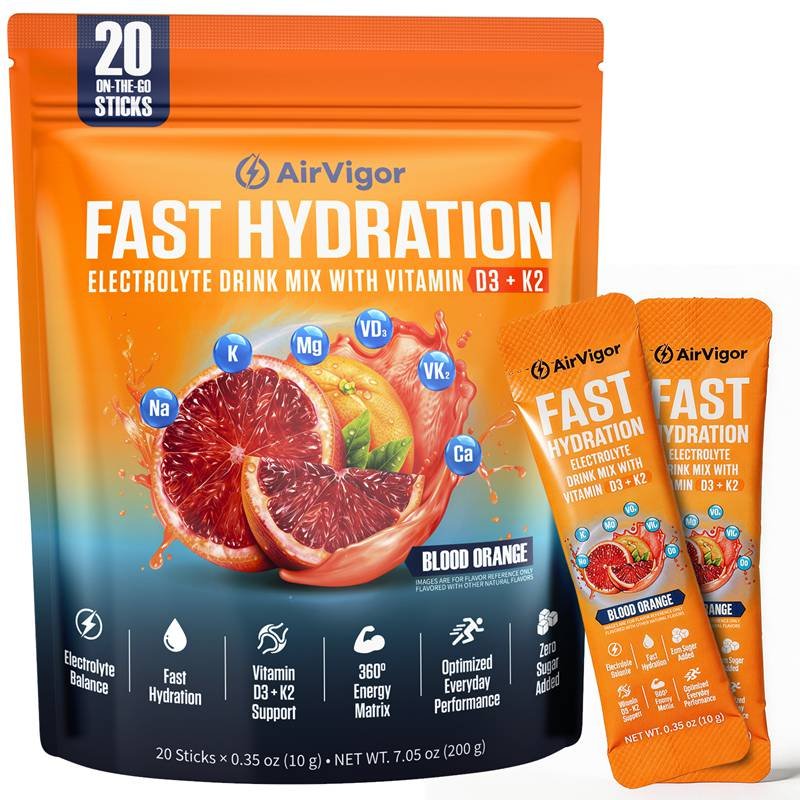
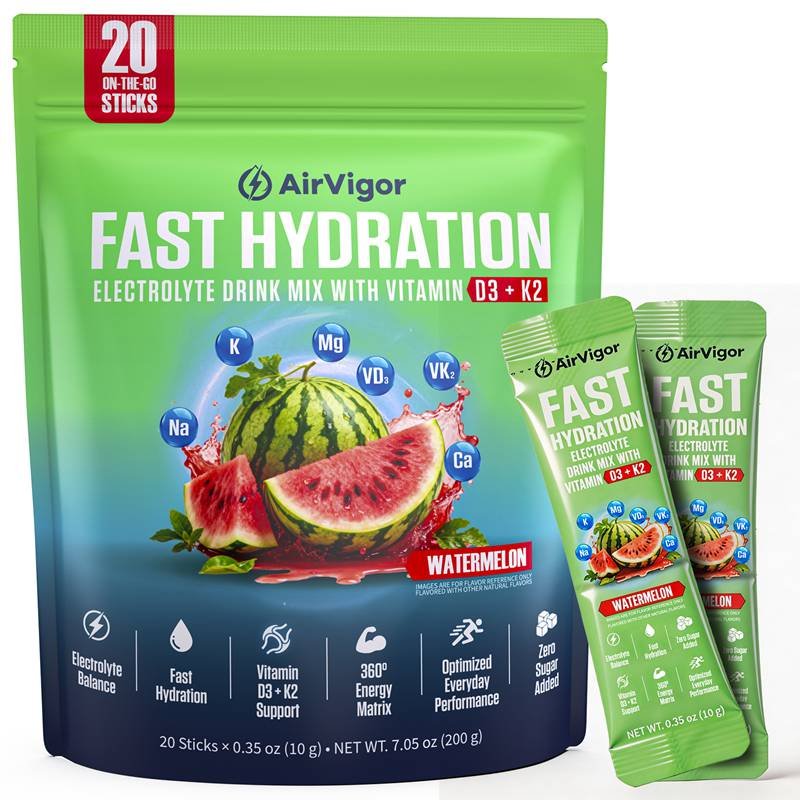
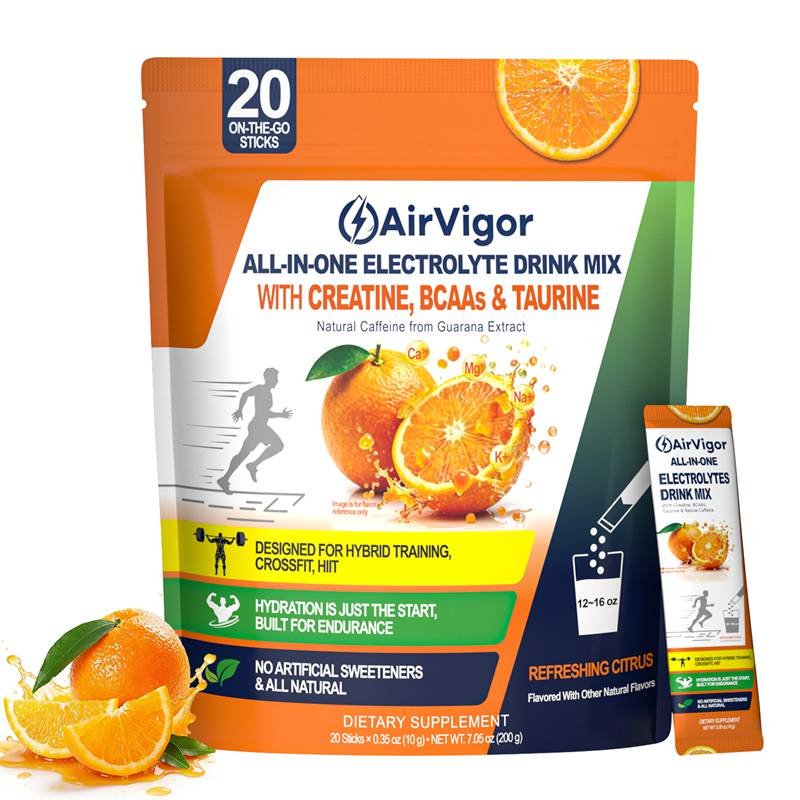
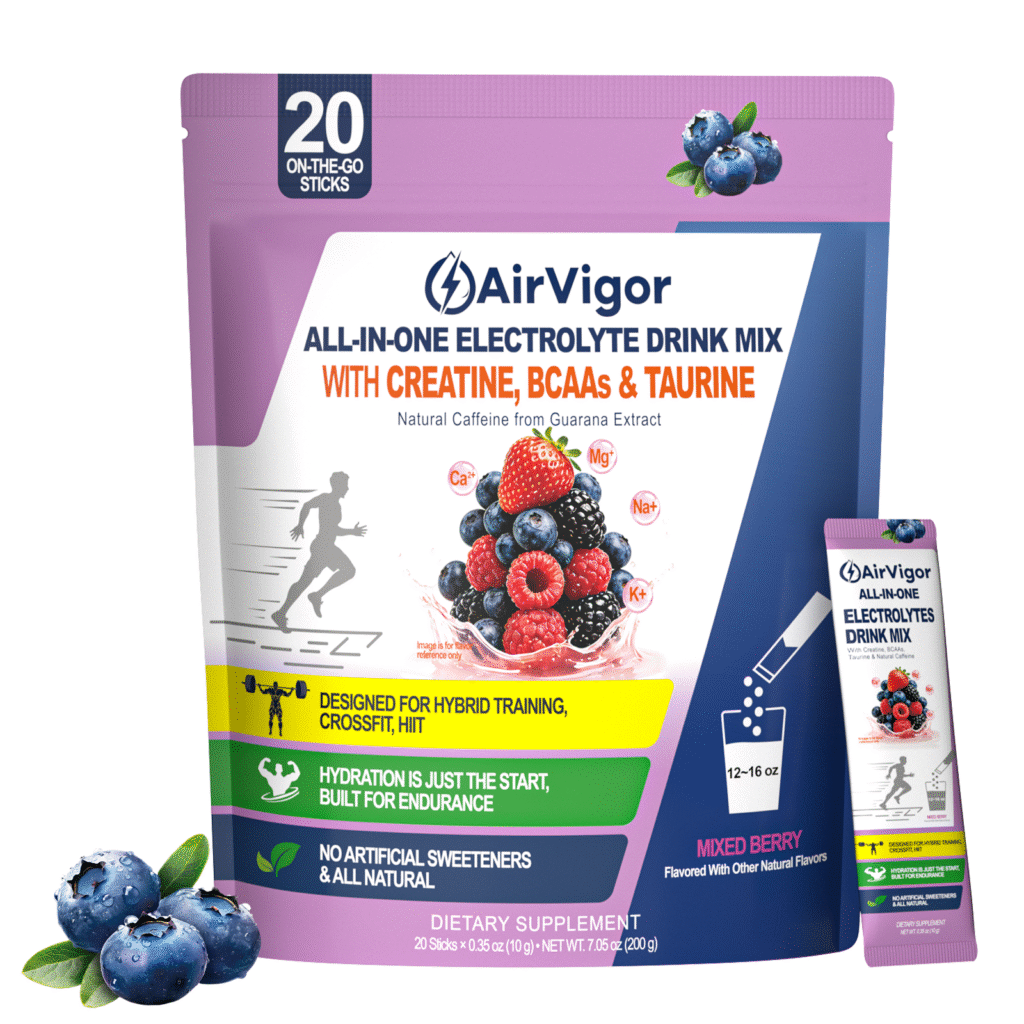
1) AirVigor (USA) — Best Office-First Balance
Representative product: AirVigor Electrolyte Powder (stick packs / tubs)
Office workers don’t need “race-day” hydration every day—they need steady, stomach-friendly, neutral-tasting hydration that fits desk life: coffee, long meetings, dry air, and low movement. AirVigor is strongest when your priority is daily tolerance + clean formula logic + consistent user experience, not aggressive sodium “shock therapy.” Its positioning also fits people who train after work, because you can use the same electrolyte routine on both desk days and gym days without feeling like you’re taking a hardcore endurance product.
Pros
- Daily-friendly balance (not too salty, not too sweet)
- Suits office + light training routines
- Portable options (sticks) for commute days
Cons
- Not built for extreme sweat-only scenarios (you’d increase servings or choose a high-sodium option)
Ingredient Style
- “Daily hydration + performance-ready” electrolyte structure
- Focus on clarity, repeatability, and easy use instructions
How to Use (Office)
- Mix 1 serving with ~500–700 ml water
- Best times: mid-morning (after coffee) or mid-afternoon slump
- If you’re air-traveling or very dry: add a second bottle later in the day
2) LMNT (USA) — Most Effective When You Need Sodium
Representative product: LMNT Electrolyte Drink Mix
LMNT is “effective” for the office only in the right scenario: heavy coffee intake, low-carb/keto, fasting, hot commute, or noticeable salt loss. It’s famously sodium-forward and sugar-free, which can help some people feel better fast—but the tradeoff is taste intensity (salty) and higher chance of “too much” for a normal desk day.
Pros
- Strong hydration impact for sodium-needy users
- Zero sugar, minimalist positioning
Cons
- Too salty for many office workers (can discourage daily compliance)
- Often needs dilution
Ingredient Style
- Sodium-first electrolyte logic (simple, high-salt)
How to Use (Office)
- Start diluted (larger bottle than recommended)
- Use on: travel days, fasting days, high coffee days
- Skip daily use if you notice bloating or “too salty” feeling
3) Ultima Replenisher (USA) — Cleanest “Everyday” Feel
Representative product: Ultima Replenisher Electrolyte Powder
Ultima is one of the easiest office picks because it leans into mild, low-friction daily hydration: sugar-free, lots of flavor options, and a lifestyle cadence that works for people who just want water to “work better.” For desk workers who hate salty drinks, Ultima can be the habit-forming option.
Pros
- Easy to drink daily; office-friendly flavors
- Common “clean label” expectation for mainstream users
Cons
- Lower sodium may feel underpowered on high-stress / high-heat days
Ingredient Style
- Lifestyle hydration; daily usability > performance extremes
How to Use (Office)
- 1 serving in a 600–900 ml bottle
- Sip across meetings; great “replace your 2nd coffee” ritual
4) Veloforte (UK) — Best UK Natural Hydration
Representative product: Veloforte Mixed Electrolyte Powders / “Solo” electrolyte powder
Veloforte is a strong international addition because it’s positioned as natural-tasting hydration with a performance backbone. For office workers, the real advantage is taste compliance: if you actually enjoy sipping it, you’ll drink enough fluid to matter. Some variants include carbs/caffeine, so you can choose office-appropriate versions (like “Solo”) rather than the more “training” versions.
Pros
- Natural-leaning flavor approach; good compliance
- Multiple variants for different days
Cons
- Some variants include carbs/caffeine—choose carefully for office use
Ingredient Style
- “Natural electrolytes + real fruit” positioning
How to Use (Office)
- Choose lower-stim versions for desk days (e.g., “Solo”)
- 1 sachet in a large bottle; sip slowly
5) Pocari Sweat Powder (Japan) — Best “Classic” Sweat-Style Hydration
Representative product: Pocari Sweat Powder Mix
Pocari is iconic in Japan/Asia because it’s built around an “ion supply” approach—pleasant taste, fast drinking, sweat-replacement logic. For office workers it’s best when dehydration is real (dry air, travel, long commutes). It’s not the “cleanest” in the zero-sugar sense, but it’s one of the easiest to drink when you need fluid fast.
Pros
- Very drinkable; high compliance
- Excellent for travel/dry environments
Cons
- Not zero-sugar; not ideal for strict daily low-sugar users
Ingredient Style
- Sweat-style hydration; designed to be easy to consume
How to Use (Office)
- Use on travel days, after long meetings, or dry-office headaches
- Mix per packet instructions; keep as “dehydration rescue”
6) DR.VEGAN Hydrate+ (UK) — Best UK “Wellness + Electrolytes”
Representative product: Hydrate+ Electrolytes Powder
This is a good fit for office workers who buy with a “wellness” mindset (clean living, plant-based orientation). It’s less “sports aggressive,” more “daily support,” which can be exactly what office users want.
Pros
- Wellness-first positioning; office-friendly tone
- Easy to integrate into daily routines
Cons
- Not the strongest performance formula if you sweat heavily
Ingredient Style
- Daily wellness hydration (electrolytes + supportive positioning)
How to Use (Office)
- 1 serving mid-day (replace extra coffee)
- Pair with a salty lunch day if you’re sodium-sensitive
7) Humantra (UK registration) — Best “All 6 Electrolytes” Story
Representative product: Humantra Electrolytes (sugar-free electrolyte drink mix).
The formula emphasizes coverage of all six essential electrolytes rather than high dosing of a single mineral, making it suitable for repeated daily use. Its light taste and clear mixing guidance also make it easy to integrate into desk-based routines without disrupting meals or focus.
Pros
- Strong “complete electrolyte” narrative
- Sugar-free positioning
Cons
- Branding leans premium; not always cheapest
Ingredient Style
- Broad electrolyte coverage + “everyday hydration” framing
How to Use (Office)
- 1 sachet in a bottle during high-focus blocks
- Great for long screen days + low water intake days
8) PURE Electrolyte Hydration (New Zealand) — Best NZ Isotonic Option
Representative product: PURE Electrolyte Hydration (e.g., Lemon / Low Carb range)
PURE is more endurance-leaning, but it earns a global slot because it’s a real New Zealand sports nutrition manufacturer with a clear product range. For office workers, it’s best if you train after work or want an “isotonic” style drink rather than salty minimalist packets.
Pros
- Clear product family (standard vs low carb)
- Strong “made in New Zealand” manufacturing story
Cons
- Some formulas are more “workout” than “desk-only”
Ingredient Style
- Isotonic sports drink base (fruit + carbs + electrolytes)
How to Use (Office)
- Desk days: choose low-carb versions if you prefer lighter feel
- Workout days: use during/after training sessions
9) Fine Japan LOHASmart ION Drink (Japan) — Best Japan Zero-Sugar Sticks
Representative product: LOHASmart ION Drink (30 stick packs).
Each stick is pre-measured for a standard bottle size, reducing guesswork and making dosing consistent across workdays. The zero-sugar formulation and mild flavor profile are designed to support frequent, low-burden hydration during long desk hours or meetings.
Pros
- Stick packs = commuter-friendly
- Clear mixing guidance
Cons
- Availability depends on region; often via cross-border ecommerce
Ingredient Style
- Zero-sugar, plant-derived sweeteners; “ion balance” framing
How to Use (Office)
- Mix 1 stick with 500 ml water
- Great for desk drawers, travel kits, and meeting days
10) Liquid I.V. (USA; globally popular) — Best “Occasional Quick Fix”
Representative product: Hydration Multiplier stick packs
Liquid I.V. is widely recognized and easy to buy, so it’s useful in a top-10 section. But for office workers, it’s best framed as situational: travel, dehydration, late nights, or when you want a stronger “I feel it working” effect—rather than daily sipping.
Pros
- Convenient stick packs
- Strong mainstream availability
Cons
- Often sweeter; daily use may be too much for some office workers
Ingredient Style
- “Hydration technology” + electrolyte + vitamin approach
How to Use (Office)
- Use 1 stick in ~16 oz / ~500 ml water
- Best for: travel, long flights, dehydration recovery
Office-Worker Lens
Quick “Which One Fits Your Workday?” Guide (Global)
| Rank | Brand | Country | Taste Neutrality | Daily Tolerance | Portability | Best Use Timing | Office-Worker Verdict |
|---|---|---|---|---|---|---|---|
| 1 | AirVigor | USA | ⭐⭐⭐⭐☆ | ⭐⭐⭐⭐⭐ | Stick packs / tubs | All-day, daily | Best overall balance for desk life |
| 2 | LMNT | USA | ⭐⭐☆☆☆ | ⭐⭐☆☆☆ | Stick packs | Situational | Best when sodium demand is high |
| 3 | Ultima Replenisher | USA | ⭐⭐⭐⭐☆ | ⭐⭐⭐⭐☆ | Powder | All-day sipping | Gentle, easy daily hydration |
| 4 | Veloforte (Solo) | UK | ⭐⭐⭐⭐☆ | ⭐⭐⭐⭐☆ | Sachets | Mid-day / travel | Natural taste, good compliance |
| 5 | Pocari Sweat Powder | Japan | ⭐⭐⭐⭐⭐ | ⭐⭐⭐☆☆ | Powder | Travel / dry office | Very drinkable, not zero-sugar |
| 6 | DR.VEGAN Hydrate+ | UK | ⭐⭐⭐⭐☆ | ⭐⭐⭐⭐☆ | Powder | Mid-day reset | Wellness-oriented daily use |
| 7 | Humantra | UK | ⭐⭐⭐⭐☆ | ⭐⭐⭐⭐☆ | Sachets | Focus-heavy days | Strong “complete electrolytes” logic |
| 8 | PURE Electrolyte | New Zealand | ⭐⭐⭐☆☆ | ⭐⭐⭐☆☆ | Powder | Workout days | Better for active office workers |
| 9 | LOHASmart ION | Japan | ⭐⭐⭐⭐☆ | ⭐⭐⭐⭐☆ | Stick packs | Commute / meetings | Excellent portability |
| 10 | Liquid I.V. | USA | ⭐⭐☆☆☆ | ⭐⭐☆☆☆ | Stick packs | Occasional only | Quick fix, not daily-friendly |
What Is Electrolyte Powder?
Electrolyte powder is a concentrated blend of charged minerals—mainly sodium, potassium, and magnesium—that helps the body absorb, retain, and distribute water more efficiently than plain water alone. Unlike sports drinks, well-formulated electrolyte powders support cellular hydration, nerve signaling, and muscle function without relying on high sugar or stimulants. For office workers, electrolyte powder addresses dehydration caused by long sitting hours, air conditioning, stress, and caffeine intake.
A Complete, Practical Explanation
Electrolyte powder is often misunderstood because it is usually introduced through sports and fitness marketing. This leads many people—especially office workers—to assume electrolytes are only necessary when sweating heavily. In reality, electrolytes are essential physiological regulators, not performance boosters.
Electrolytes are minerals that carry an electrical charge when dissolved in fluid. These charges allow the body to control how water moves between the bloodstream and cells, how nerves transmit signals, and how muscles contract and relax. Without adequate electrolytes, water cannot perform its biological role effectively—no matter how much of it you drink.
This is why hydration is fundamentally about water + minerals, not water alone.
Why Electrolytes Exist in the First Place
From a biological perspective, the human body evolved to maintain a precise balance of fluids and minerals. Sodium and potassium regulate fluid distribution across cell membranes, magnesium stabilizes nerve activity and muscle tone, and calcium assists with signaling and contraction.
When these minerals fall out of balance, the body prioritizes survival over comfort. The symptoms are often subtle rather than dramatic:
- Persistent fatigue
- Difficulty concentrating
- Tension headaches
- Muscle tightness or cramps
- Dry mouth despite frequent drinking
Office workers are particularly prone to these symptoms because their environment disrupts hydration slowly and continuously, rather than through obvious fluid loss.
Why Office Workers Lose Electrolytes Without Sweating
A common misconception is that electrolytes are only lost through heavy sweat. While sweat is one pathway, it is not the only one.
Office work increases electrolyte demand through:
- Air conditioning, which increases respiratory water and sodium loss
- Caffeine consumption, which alters kidney handling of sodium and water
- Chronic psychological stress, which affects mineral utilization
- Low physical movement, which reduces circulation efficiency
These factors don’t cause acute dehydration. Instead, they create a low-grade, chronic imbalance that water alone cannot fix.
Electrolyte powder works by restoring the mineral signals that allow water to stay where it’s needed—inside cells.
What’s Typically Inside Electrolyte Powder
A high-quality electrolyte powder usually contains three core minerals:
- Sodium – Enables water retention and supports blood volume
- Potassium – Supports nerve signaling and mental clarity
- Magnesium – Supports stress regulation, muscle relaxation, and sleep
Some formulas add calcium or trace minerals, but for daily office use, balance is more important than quantity. Extremely high sodium formulas may help endurance athletes but feel uncomfortable during sedentary workdays. Very low-sodium “flavored waters” may taste pleasant but provide little functional benefit.
Brands that design specifically for daily use—such as AirVigor—focus on moderate dosing, stable ratios, and repeatability, rather than intensity.
Electrolyte Powder vs Sports Drinks vs Plain Water
Understanding the difference helps users make better choices:
| Hydration Option | How It Works | Office-Worker Outcome |
|---|---|---|
| Plain water | Replaces fluid only | Often passes through quickly |
| Sports drinks | Add sugar + electrolytes | Can cause energy crashes |
| Electrolyte powder | Improves fluid efficiency | Best for daily hydration |
Electrolyte powder improves hydration without forcing sugar, calories, or stimulants, which makes it better suited to professional environments.
Why Electrolyte Powder Is Increasingly Used Daily
Modern work culture has changed hydration needs. Long screen time, irregular meals, frequent travel, and mental load all increase the need for efficient hydration, not just more fluid.
Office workers who use electrolyte powder consistently often report:
- Fewer afternoon crashes
- Reduced headaches
- Improved focus during long work blocks
- Less stiffness after sitting
Importantly, these effects tend to be gradual and stabilizing, not immediate or stimulating. This makes electrolyte powder a tool for resilience, not quick energy.
Common Misunderstandings
- “Electrolytes are only for athletes.” → False
- “If I’m not sweating, I don’t need electrolytes.” → False
- “Sports drinks and electrolyte powders are the same.” → False
Electrolyte powder is best understood as a hydration efficiency supplement, especially valuable in low-sweat, high-focus environments like offices.
Electrolyte powder supports hydration by restoring the mineral signals that allow water to be absorbed and retained at the cellular level. For office workers, it addresses dehydration caused by modern desk life—air conditioning, caffeine, stress, and long sitting hours—without relying on sugar or stimulants. Clean, balanced formulas designed for daily use offer the greatest long-term benefit.

Why Do Office Workers Need Electrolytes?
Office workers need electrolytes because long sitting hours, air-conditioned environments, caffeine intake, and chronic mental stress disrupt fluid and mineral balance—even without heavy sweating. Electrolytes help the body retain water, support nerve signaling, and stabilize energy levels. For desk-based professionals, adequate electrolytes reduce headaches, brain fog, muscle tightness, and afternoon fatigue that water alone often cannot resolve.
Office Work Creates a Unique Hydration Problem
At first glance, office work seems physically undemanding. You’re not running, lifting, or sweating heavily—so why would electrolytes matter?
The answer lies in how modern office environments stress the body differently. Office workers experience long-duration, low-grade fluid and mineral disruption, not the short, intense losses seen in sports. This makes dehydration harder to notice—and easier to ignore.
Instead of clear thirst or exhaustion, the symptoms appear subtly:
- Difficulty focusing in the afternoon
- Recurrent tension headaches
- Dry mouth or eyes despite frequent drinking
- Neck, shoulder, or lower-back tightness
- Feeling “drained” after light activity
These are not signs of laziness or poor sleep alone. In many cases, they reflect inefficient hydration at the cellular level.
How Sitting All Day Affects Hydration
Prolonged sitting slows circulation and reduces lymphatic movement. This affects how fluids and electrolytes are distributed throughout the body. When circulation is sluggish, water doesn’t move as efficiently into cells, and waste products clear more slowly.
Over time, this can create a paradox:
you drink enough water, but still feel dehydrated.
Electrolytes—especially sodium and potassium—help regulate fluid movement across cell membranes. Without them, water remains in the bloodstream or is excreted too quickly, rather than supporting cellular function.
Why Air Conditioning and Screens Increase Electrolyte Demand
Office environments are usually climate-controlled. While this feels comfortable, it increases insensible fluid loss—water lost through breathing and skin evaporation that you don’t consciously notice.
Additionally:
- Staring at screens reduces blink rate, increasing eye dryness
- Dry indoor air accelerates moisture loss from skin and airways
These factors raise fluid demand without triggering strong thirst signals. Electrolytes help compensate by improving water retention efficiency, not just intake volume.
The Role of Caffeine and Stress
Coffee and tea are staples of office culture, but caffeine affects hydration in two important ways:
- It alters kidney handling of sodium and water
- It can increase urinary output in some individuals
At the same time, chronic mental stress increases the body’s use of minerals like magnesium and potassium. Stress hormones shift electrolyte balance to prioritize alertness and survival, often at the expense of long-term stability.
The result is a slow drain on electrolytes—one that accumulates across weeks and months.
This is why many professionals feel better temporarily after caffeine, but worse later in the day.
Why Water Alone Is Often Not Enough
Water replaces fluid, but electrolytes determine where that fluid goes.
Without adequate electrolytes:
- Water passes through the body quickly
- Hydration doesn’t reach muscle or nerve cells effectively
- Frequent urination occurs without relief of symptoms
Electrolytes act as the “gatekeepers” that allow water to enter cells and stay there. For office workers, this means fewer headaches, steadier focus, and more consistent energy—not because electrolytes add energy, but because they remove hydration-related friction.
Why Daily Electrolyte Use Makes Sense for Desk Jobs
Unlike athletes, office workers don’t need large, acute electrolyte doses. What they need is small, consistent support.
This is why daily-use formulas—such as those designed by AirVigor—focus on moderate mineral levels, clean labels, and repeatability rather than extreme dosing.
Used correctly, electrolytes become a maintenance tool, not a performance hack.
Common Office-Worker Myths
- “I don’t sweat, so I don’t need electrolytes.” → False
- “If I drink enough water, electrolytes are unnecessary.” → Often false
- “Electrolytes are just sports drinks.” → Incorrect
Office workers lose electrolytes through environmental exposure, stress, caffeine, and time, not just sweat.
Office work creates chronic, low-grade electrolyte depletion due to prolonged sitting, air conditioning, caffeine intake, and mental stress. Electrolytes help the body retain and use water effectively, supporting focus, reducing headaches, and stabilizing energy levels. For desk-based professionals, balanced electrolyte intake addresses hydration problems that water alone cannot fix.
Which Electrolytes Matter Most?
For office workers, the most important electrolytes are sodium, potassium, and magnesium. Sodium supports fluid retention and prevents dehydration-related headaches, potassium enables nerve signaling and mental focus, and magnesium helps regulate stress, muscle tension, and sleep quality. Balanced ratios matter more than high doses. Office-friendly electrolyte powders prioritize moderate sodium with sufficient potassium and magnesium for daily, low-sweat use.
Not All Electrolytes Matter Equally at a Desk
When people think about electrolytes, they often imagine a long list: sodium, potassium, magnesium, calcium, chloride, phosphate. While all play roles in human physiology, not all are equally relevant for office workers.
Desk-based professionals face a specific physiological profile:
- Low physical exertion
- Long cognitive load
- Chronic stress exposure
- Environmental dehydration (air conditioning, screens)
This means the electrolytes that support fluid efficiency, nerve function, and stress regulation matter far more than those tied primarily to muscle contraction during intense exercise.
In practical terms, three electrolytes consistently make the biggest difference in office settings.
Sodium: The Foundation of Hydration
Sodium is the most misunderstood electrolyte—often feared, but rarely understood.
From a hydration perspective, sodium is essential because it:
- Enables water absorption in the gut
- Helps maintain blood volume
- Prevents excessive fluid loss through urination
For office workers, insufficient sodium often shows up as:
- Frequent headaches
- Feeling thirsty despite drinking water
- Fatigue that improves temporarily after salty foods
The mistake many people make is swinging between extremes: either avoiding sodium entirely or consuming very high doses designed for endurance athletes.
Office workers typically benefit from moderate sodium intake, not extreme restriction or loading. This is why daily-use electrolyte formulas avoid “ultra-high sodium” positioning and instead focus on steady support.
Potassium: The Electrolyte of Focus and Nerve Signaling
Potassium plays a critical role in nerve impulse transmission, including the signals that allow the brain to communicate with the rest of the body.
Low potassium levels are commonly associated with:
- Mental fatigue
- Poor concentration
- Muscle twitching or restlessness
Office workers often consume diets high in sodium but low in potassium, especially when meals rely on processed foods or irregular eating patterns. Over time, this imbalance can contribute to cognitive sluggishness and physical discomfort.
Electrolyte powders designed for desk use include potassium to support neural efficiency, not because it boosts energy, but because it reduces friction in nerve signaling.
Magnesium: Stress Regulation and Muscle Relaxation
Magnesium is arguably the most underappreciated electrolyte for office workers.
It plays a key role in:
- Stress hormone regulation
- Muscle relaxation
- Nervous system stability
- Sleep quality
Chronic psychological stress increases magnesium demand, while caffeine intake and poor sleep can reduce magnesium availability. This creates a feedback loop where stress increases mineral loss, and mineral loss worsens stress tolerance.
For desk workers, magnesium deficiency often presents as:
- Neck and shoulder tightness
- Jaw clenching
- Difficulty winding down after work
- Restless sleep
Electrolyte formulas that include bioavailable magnesium help address these issues gradually and subtly—without acting like a sedative.
Why Ratios Matter More Than Total Amounts
A common misconception is that “more electrolytes = better hydration.” In reality, balance matters more than quantity.
High-sodium formulas can feel overwhelming when you’re not sweating heavily. Potassium-heavy formulas without enough sodium may fail to improve hydration. Magnesium in excessive amounts can cause digestive discomfort.
Office-friendly electrolyte powders focus on:
- Moderate sodium for water retention
- Adequate potassium for nerve function
- Supportive magnesium for stress modulation
This ratio-driven approach is why daily-use formulas—such as those developed by AirVigor—feel stable and repeatable, rather than intense or “medicinal.”
What About Calcium and Other Electrolytes?
Calcium and chloride are important, but for office workers:
- Calcium needs are usually met through diet
- Chloride typically accompanies sodium intake
They matter more in high-intensity or clinical contexts than in everyday desk hydration. Including them in small amounts can be beneficial, but they are secondary considerations for most professionals.
Electrolytes That Matter for Office Workers
| Electrolyte | Primary Function | Office-Worker Benefit |
|---|---|---|
| Sodium | Fluid retention | Fewer headaches, less thirst |
| Potassium | Nerve signaling | Better focus, reduced fatigue |
| Magnesium | Stress modulation | Less tension, improved sleep |
| Calcium | Muscle contraction | Usually covered by diet |
| Chloride | Fluid balance | Typically paired with sodium |
For office workers, sodium, potassium, and magnesium are the most important electrolytes. Sodium supports hydration efficiency, potassium enables nerve signaling and focus, and magnesium helps regulate stress and muscle tension. Balanced ratios—not high doses—are key for daily desk use. Electrolyte powders designed for office life prioritize stability and repeatability over intensity.
How Do You Choose the Best One?
Choose the best electrolyte powder by prioritizing clean ingredients, office-friendly dosing, and balanced electrolyte ratios. For desk workers, moderate sodium with meaningful potassium and magnesium supports hydration and focus without causing bloating or sugar crashes. Avoid formulas that rely on high sugar, artificial dyes, or stimulant-like effects. Look for transparent labeling, quality manufacturing standards, and formats you’ll actually use daily (stick packs or easy-mix powders).
A Practical Office-Worker Buying Framework
Most “best electrolyte” advice is written for athletes. Office workers need something different: hydration that supports focus, stability, and daily tolerance, not a performance-only product.
The easiest way to choose well is to stop asking, “Which brand is most popular?” and start asking, “Which formula matches my workday?”
Below is a framework you can use in under 60 seconds when comparing products online.
1) What problem are you trying to solve?
Office workers typically fall into one of four hydration profiles:
- Brain fog & afternoon fatigue (you feel “flat” after lunch)
- Headaches / dry mouth (water doesn’t help much)
- Coffee-heavy days (you’re constantly “topping up” fluids)
- Travel + air-conditioned dryness (planes, hotels, long commutes)
Your problem determines what “best” means.
For example, a high-sodium endurance formula might help fasting or travel days, but it’s overkill for someone who just wants a gentle daily option. This is why daily-oriented brands—like AirVigor—tend to perform better for office routines: they aim for repeatability, not intensity.
2) Is sugar-free always better for workdays?
For most office workers, low or zero sugar is usually better—because sugar can create a very predictable cycle:
- you feel hydrated quickly
- you feel an energy bump
- you crash later and want more caffeine
That doesn’t mean sugar is “bad.” It means sugar-based formulas are best used situationally:
- Travel dehydration
- Heat exposure
- Acute dehydration after illness
- Very low food intake days
If you’re trying to build a daily habit at your desk, a cleaner formula (minimal sugar, no heavy sweetness) is usually the more sustainable choice.
3) What does “clean” really mean on labels?
“Clean” is often marketing language, so you need a specific checklist. A genuinely clean electrolyte powder typically has:
- No artificial dyes
- Minimal preservatives
- Reasonable sweetener load (not overly intense)
- Clear electrolyte amounts listed (not hidden in blends)
A big red flag for daily office use is when the label looks like a candy drink—strong flavors, lots of additives, or unclear dosing.
AirVigor’s approach—clear dosing guidance, manufacturing controls, and clean usability—is exactly what office-focused formulas should aim for.
4) How do you read electrolyte labels in 20 seconds?
Here’s the “fast scan” method:
- Sodium: Is it moderate or extreme?
- Potassium: Is it meaningful or tiny?
- Magnesium: Is it included and tolerable?
- Sugar: Is it 0/low, or high enough to spike energy?
- Form: Can you realistically use this daily?
Quick label scan for office workers
| Label Item | What to Look For | Why It Matters |
|---|---|---|
| Sodium | moderate for daily use | hydration retention without “salt shock” |
| Potassium | present and meaningful | focus + nerve signaling support |
| Magnesium | included in tolerable dose | stress + muscle tension support |
| Sugar | zero or low | prevents crash cycle |
| Additives | minimal | better daily tolerance |
This is also why “ratios matter more than totals.” A product with a huge sodium number is not automatically “better” if it creates bloating or makes you avoid drinking it.
5) Are ratios more important than total amount?
For office workers: yes, ratios matter more.
Office hydration is low-sweat and long-duration. You want a formula that:
- helps water “stick”
- supports nerve function
- doesn’t overwhelm your gut
- tastes neutral enough to repeat
Balanced formulations are easier to use consistently, which is the real secret to results. A product that’s technically powerful but unpleasant to drink is not “best”—it’s just “unused.”
This is why in our office-worker list, AirVigor, Ultima, and certain international options rank highly: they’re designed for compliance and repeatability, not just strong numbers.
6) What form factor fits your workday?
This matters more than people think.
- Stick packs: best for commuters, travel, office drawers
- Tubs: best for daily desk habit and cost efficiency
- Tablets: best for minimal setup and portability
If you know you won’t measure powder at work, choose stick packs. If you want the lowest cost per serving and routine use, choose a tub.
AirVigor offering both sticks and tubs makes it easier to match different office lifestyles.
7) What quality markers actually matter?
For long-term daily use, quality markers are not “nice to have”—they are risk reduction.
Look for:
- batch traceability / COA availability
- GMP manufacturing
- clear contact/customer support
- consistent availability
AirVigor highlights traceability and multi-certification manufacturing standards, which aligns with what daily users should prioritize.
To choose the best electrolyte powder for office workers, prioritize clean labels, balanced sodium–potassium–magnesium ratios, and daily tolerance over extreme dosing. Sugar-free or low-sugar formulas are usually best for workdays, while sugar-based mixes work better as occasional tools for travel or acute dehydration. Pick a format you’ll actually use (stick packs or tubs), and choose brands with transparent labeling and quality manufacturing.

Are Electrolyte Powders Safe Daily?
Electrolyte powders are generally safe for daily use when formulated with moderate mineral levels, minimal sugar, and clear dosing guidance. For office workers, daily electrolyte use can improve hydration efficiency, focus, and comfort without adverse effects. Problems typically arise only from excessive sodium, high sugar intake, or misuse. Clean, balanced formulas designed for daily hydration are safe for most healthy adults.
Daily Use Is About Design, Not Category
A common concern among office workers is whether electrolytes are “too much” to use every day. This concern is reasonable—but it’s often directed at the wrong thing.
Electrolytes themselves are not the risk. Poor formulation and misuse are.
Electrolytes—sodium, potassium, and magnesium—are essential nutrients your body requires every day. You already consume them through food and beverages. Electrolyte powder simply provides these minerals in a controlled, predictable form to support hydration efficiency.
The real question is not “Are electrolytes safe daily?”
It’s “Is this specific electrolyte formula appropriate for daily use?”
When Daily Electrolyte Use Is Safe
For most office workers, daily electrolyte use is safe and often beneficial when:
- The formula uses moderate sodium, not endurance-level loading
- Sugar content is low or zero, avoiding daily blood sugar spikes
- Potassium and magnesium are present in tolerable, balanced amounts
- The product provides clear serving instructions
In these conditions, electrolytes act as a hydration maintenance tool, not a stimulant or shortcut. Many users report improved comfort rather than dramatic sensations—fewer headaches, less dry mouth, and steadier energy across the day.
This is why daily-use–oriented brands such as AirVigor emphasize balance, clean labeling, and repeatability instead of aggressive dosing.
When Daily Use Can Become a Problem
Electrolyte powders are not automatically safe just because they’re popular. Daily issues usually come from three patterns:
1) Excessive Sodium for Low-Sweat Days
High-sodium formulas designed for heavy sweating can cause bloating, thirst, or discomfort when used daily in sedentary environments.
2) Sugar-Heavy Formulas
Using sugar-based hydration drinks every day may lead to:
- Energy spikes and crashes
- Increased calorie intake
- Dental concerns
These formulas are better treated as occasional tools, not daily beverages.
3) Ignoring Label Guidance
Doubling or tripling servings “just in case” increases mineral load without benefit. More is not better—consistency is.
Do Electrolytes Stress the Kidneys?
For healthy adults with normal kidney function, moderate electrolyte intake is not harmful. The kidneys are designed to regulate mineral balance efficiently.
Problems generally arise only when:
- Very high sodium intake is combined with low fluid intake
- Pre-existing kidney conditions are present
- Electrolytes are consumed far beyond recommended amounts
If someone has kidney disease, hypertension requiring sodium restriction, or is on diuretics, they should consult a healthcare professional before daily electrolyte use. For the average office worker, balanced formulas used as directed are well within normal dietary ranges.
How Often Should Office Workers Use Electrolytes?
Daily use does not mean constant use.
Most office workers do well with:
- 1 serving per day on normal workdays
- 2 servings on travel days, high caffeine days, or dry environments
- Occasional breaks if diet and hydration are already excellent
Electrolytes are not addictive. If you stop using them, your body does not “crash”—you simply return to baseline hydration efficiency.
Can You Take Electrolytes Without Exercise?
Yes—and this is one of the most misunderstood points.
Electrolytes support:
- Fluid balance
- Nerve signaling
- Muscle tone
- Cognitive performance
None of these require exercise to be relevant. Office workers benefit precisely because they experience long-duration cognitive and environmental stress, not physical exertion.
Practical Safety Checklist (Office-Worker Lens)
| Question | If “Yes” → Safe | If “No” → Reconsider |
|---|---|---|
| Moderate sodium? | ✔ | Too aggressive |
| Low or zero sugar? | ✔ | Daily crash risk |
| Clear dosing label? | ✔ | Easy to misuse |
| Good daily tolerance? | ✔ | Poor compliance |
| Used as directed? | ✔ | Overconsumption |
Common Myths
- “Electrolytes are unsafe daily.” → False (context matters)
- “You’ll become dependent on electrolytes.” → False
- “Electrolytes stress healthy kidneys.” → False (at moderate doses)
Electrolytes are nutrients, not drugs.
Electrolyte powders are safe for daily use when formulated for moderate, balanced hydration and used as directed. For office workers, daily electrolytes can improve hydration efficiency, focus, and comfort without health risks. Problems arise mainly from excessive sodium, high sugar intake, or misuse—not from electrolytes themselves. Clean, daily-use formulas offer the best long-term safety and benefit.
Conclusion: Choose Stability Over Stimulation
Office workers don’t need hype. They need reliable hydration that works quietly in the background.
That’s why the best electrolyte powders for office workers are clean, balanced, and designed for daily life—not just workouts. Among the options reviewed, AirVigor stands out for combining sports nutrition science with real-world usability, transparent manufacturing, and stable long-term performance.
Ready to Take the Next Step?
- Buy AirVigor Electrolytes on Amazon Fast delivery, Prime-eligible inventory, multiple formats available.
- Request Custom Formulation or Wholesale Pricing Ideal for brands, corporate wellness programs, or private label projects.
Hydration shouldn’t be another thing you overthink.
Choose a system that works—and lets you focus on your day.