Skip to content
How Does Vitamin D Support an Active Lifestyle: A Complete and Professional Guide
# Your Trusted Dietary Supplement Brand In US
- Emily

Table of Contents
An active lifestyle is not only about gym sessions. It is also about how the body feels during long workdays, morning movement, repeated walking, heat, travel, weekend training, and all the physical stress that quietly builds across a week. That is why vitamin D keeps appearing in conversations about everyday performance and daily support. Most people still associate it mainly with bones, but that is only part of the story. According to MedlinePlus, vitamin D helps the body absorb calcium, muscles need vitamin D to move, and nerves need it to carry messages between the brain and body. The NIH Office of Dietary Supplements also explains that vitamin D promotes calcium absorption and helps maintain the calcium and phosphate balance needed for normal bone mineralization. Taken together, that gives vitamin D a much broader role than many customers expect.
Vitamin D supports an active lifestyle by helping the body use calcium properly and by supporting normal muscle function. It is not a stimulant, not a hydration ingredient, and not a shortcut for energy. Its value is deeper than that. It helps the body stay better prepared for movement, repeated activity, and long-term physical support, which is why it fits naturally into daily-use formulas built for active routines rather than only post-workout moments.
That difference matters because customers are no longer satisfied with one-dimensional products. They want formulas that make sense not only after one workout, but across real life. A plain hydration product may solve thirst. A broader formula with vitamin D can speak to movement, mineral support, daily activity, and a more complete routine. Once you look at vitamin D through that lens, it becomes much easier to understand why it belongs in an active-lifestyle formula at all.
What Does Vitamin D Do for an Active Lifestyle?
Vitamin D supports an active lifestyle by helping maintain normal muscle function and by supporting calcium use, which matters for movement, stability, and how well the body holds up under repeated activity. It does not replace hydration, protein, or rest, but it adds a broader support layer that makes a formula feel more complete for active daily use.
What does vitamin D do in the body?
The clearest place to start is with what vitamin D actually does in the body. MedlinePlus explains that vitamin D helps the body absorb calcium, that muscles need it to move, and that nerves need it to carry messages between the brain and body. The NIH adds that vitamin D promotes calcium absorption in the gut and helps maintain normal calcium and phosphate concentrations needed for bone mineralization. Those are not small details. They explain why vitamin D belongs in a conversation about active living even before workouts enter the picture.
For customers, this matters because “active lifestyle” support is usually misunderstood as either energy support or workout recovery support. In reality, a lot of active living depends on more basic systems working well day after day. Movement depends on muscles. Muscles depend on nerve signaling. Bones and structure depend on calcium use. Vitamin D sits inside that chain of support rather than on the surface of it. That is why it often feels more like a foundational ingredient than a dramatic one.
A useful way to look at vitamin D in the body is this:
| Body support area | Why it matters in active life | Where vitamin D fits |
|---|---|---|
| Calcium handling | Helps support structure and physical readiness | Strong fit |
| Muscle function | Supports movement and everyday physical performance | Strong fit |
| Nerve signaling | Helps the body coordinate movement | Strong fit |
| Bone support | Helps the body hold up under repeated use | Strong fit |
This table matters because many customers still think vitamin D is only relevant if they are already worried about bone health. In fact, the same calcium-and-movement logic that supports bones also helps explain why vitamin D is so relevant to people who want to stay active consistently.
How does vitamin D support muscles and movement?
The most direct and customer-friendly explanation is simple: muscles need vitamin D to move. MedlinePlus says exactly that. That one sentence does a lot of work because it turns vitamin D from a vague “wellness vitamin” into something much easier to connect with daily life. When a nutrient has a documented role in muscle function, it immediately becomes relevant to anyone who cares about movement, not just to people who care about lab numbers or bone density.
This matters because movement is broader than exercise. It includes walking, carrying, climbing stairs, standing for long periods, commuting, repeated training, and the many small physical tasks that fill real life. An active customer does not always separate these into “sports” and “non-sports” moments. They just know whether the body feels capable, steady, and supported. Vitamin D fits that kind of support story much better than many people first assume.
A practical comparison helps:
| Support focus | What customers usually think of first | How vitamin D fits |
|---|---|---|
| Workout energy | Stimulants or quick carbs | Not the main role |
| Hydration | Electrolytes | Not the main role |
| Daily movement support | Muscles, coordination, readiness | Strong fit |
| Long-term physical support | Minerals and structure | Strong fit |
This is one reason vitamin D works especially well in active-lifestyle formulas instead of only in narrow workout products. It supports the body systems that help movement stay possible across a full week, not only in one training window.
Why is vitamin D important for active adults?
Active adults usually want more than one-purpose support. They are not only asking what helps after exercise. They are also asking what helps them stay physically capable across work, training, errands, travel, and repeated active days. That is where vitamin D becomes especially relevant. The NIH and MedlinePlus together make the basic logic clear: vitamin D supports calcium use, bone-related structure, nerve function, and muscle-related function. That combination matters more as the body is used more often.
This is especially true for people whose routines include:
- several workouts a week
- hot-weather activity
- physically active jobs
- long hours on their feet
- frequent travel
- a desire for broader daily support rather than one-time workout support
A product built for that kind of customer needs a stronger story than “use after sweating.” Vitamin D helps create that stronger story because it supports how the body handles movement and calcium across time, not just in one isolated moment. That is one reason it fits naturally into more premium active-lifestyle formulas.
How Does Vitamin D Help an Active Lifestyle?
Vitamin D helps an active lifestyle by supporting the body systems behind movement, muscle function, and calcium use. It is not a hydration ingredient and not an instant energy ingredient, but it strengthens the overall logic of a daily active-support formula and makes the product feel more complete for people who move often and want broader support.
How does vitamin D work with calcium?
This is one of the clearest and strongest parts of the topic. The NIH states that vitamin D promotes calcium absorption in the gut. MedlinePlus explains the same point in simpler language: vitamin D helps the body absorb calcium. That relationship matters because calcium is already one of the most familiar minerals in health products, but many customers still do not fully understand that calcium and vitamin D make more sense together than apart.
For an active-lifestyle product, this relationship gives the formula much stronger logic. A plain hydration formula usually answers one narrow question: how do I support fluid balance after sweating? A formula with calcium and vitamin D answers a broader question: how do I choose a product that supports movement and physical structure more completely? That is a more attractive story for customers who want more than a simple electrolyte drink.
A simple comparison shows the shift:
| Formula style | What it usually communicates |
|---|---|
| Calcium alone | Mineral support |
| Vitamin D alone | Broader support, but less complete |
| Calcium + vitamin D | Clearer structure and stronger formula logic |
This is one reason formulas that pair vitamin D with calcium often feel more premium. The customer does not need to read a research paper. They only need to see that the ingredient relationship makes sense.
How does vitamin D support daily movement?
Daily movement is broader than formal exercise. It includes walking, standing, commuting, climbing stairs, physical work, and the repeated low-to-moderate effort that makes up real life. Because MedlinePlus states that muscles need vitamin D to move and nerves need it to carry messages, vitamin D becomes easier to understand as a movement-support ingredient rather than only a bone-health ingredient.
That matters because many active adults do not live in “workout mode.” They live in work mode, travel mode, hot-weather mode, family routine mode, and movement throughout the day mode. A nutrient that supports systems involved in movement naturally becomes more relevant in that context. This is one reason vitamin D often belongs more naturally in broad active-lifestyle formulas than in narrow sports formulas. It helps the product fit movement across the day, not just a workout window.
A practical way to frame this is:
| Daily movement situation | Why vitamin D can matter |
|---|---|
| Long walking days | Supports muscles and broader physical readiness |
| Active workdays | Fits movement support beyond “sports nutrition” |
| Repeated training days | Helps the formula feel less narrow |
| General active routines | Connects the product to everyday movement |
This is exactly why vitamin D often improves the relevance of a formula even when the customer is not focused on “muscle recovery” in the traditional sense.
How does vitamin D fit into recovery support?
Vitamin D fits recovery support because recovery is not only about hydration or immediate soreness. It is also about whether the body feels supported enough to keep moving well over time. HSS explains that vitamin D affects bones, muscles, joints, and tissues. That is a much wider support frame than most customers first expect, and it helps explain why vitamin D belongs in active-lifestyle formulas aimed at repeated use.
A formula with vitamin D can speak more naturally to:
- daily active recovery
- repeated physical demand
- broader movement support
- a more complete mineral structure
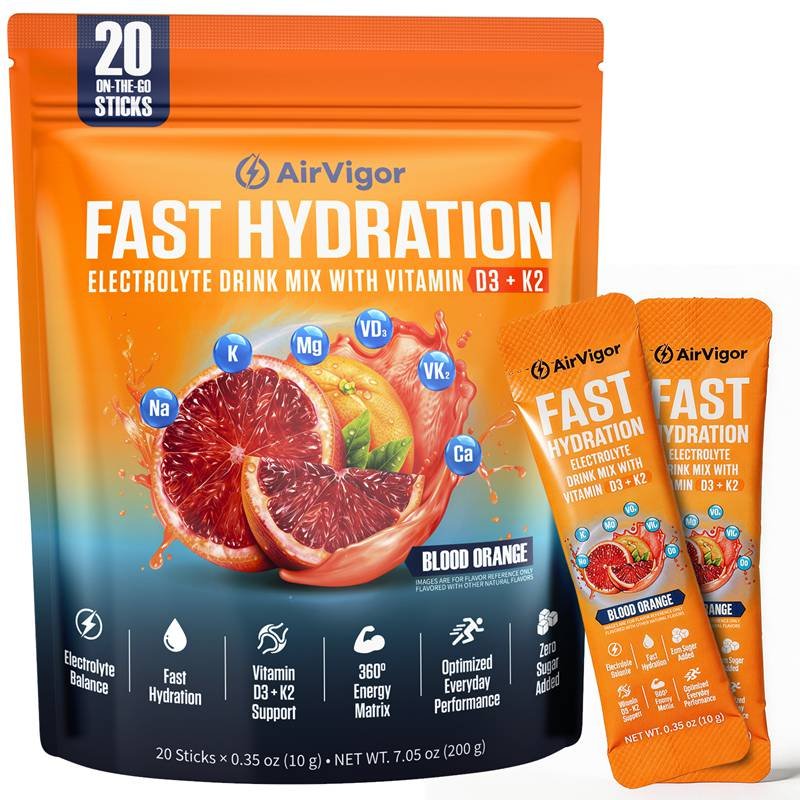
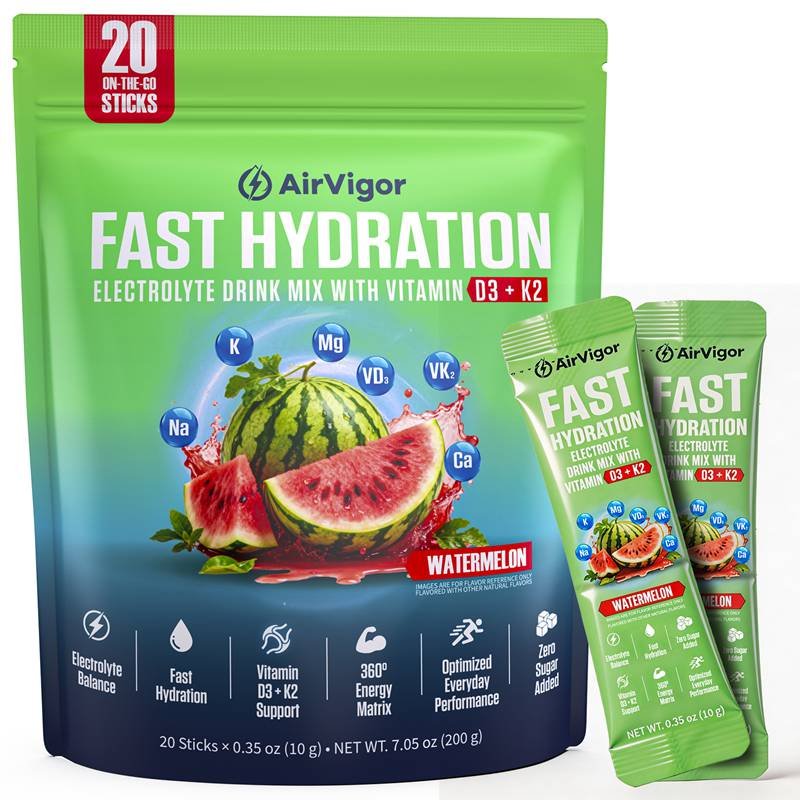
This is one reason a product like AirVigor can benefit from vitamin D in the formula. It gives the product a role beyond a basic hydration mix and makes it easier to position as an active-lifestyle support formula. Instead of saying only “use this after sweating,” the product can say “use this as part of a smarter routine for movement, activity, and daily support.” That is a much stronger place to compete.

Is Vitamin D Good for an Active Lifestyle?
Vitamin D is useful for an active lifestyle because it supports body systems that active people rely on every day. MedlinePlus explains that vitamin D helps the body absorb calcium, that muscles need vitamin D to move, and that nerves need it to carry messages between the brain and body. That means vitamin D is not only relevant to bone health. It also matters for movement, coordination, and how well the body handles repeated physical demands.
That distinction is important for customers because “active lifestyle” is broader than exercise. It includes walking more, training a few times a week, standing for long hours, hot-weather activity, commuting, travel, and simply wanting the body to feel better supported across the week. A product with vitamin D is not promising fast stimulation or instant hydration. It is offering broader support for a body that is expected to move often and recover repeatedly.
What does vitamin D do for active people?
For active people, vitamin D matters because activity depends on more than motivation or effort. It also depends on whether the body is properly supported for movement. The NIH explains that vitamin D promotes calcium absorption and helps maintain the calcium and phosphate balance needed for normal bone mineralization. When that is paired with MedlinePlus’ explanation that muscles need vitamin D to move, the role of vitamin D becomes much easier to understand in practical terms.
This matters because many people still think of vitamin D as a seasonal wellness nutrient or something mainly associated with bones. But active adults are often asking a different question: does this ingredient make sense for how I live? If the answer is framed around movement, muscle function, and calcium use, then yes, it makes sense. It helps explain why vitamin D belongs in products positioned for active routines, not only in products marketed for bone health.
A helpful way to look at it is this:
| Active lifestyle demand | What the body depends on | Why vitamin D matters |
|---|---|---|
| Repeated movement | Normal muscle function | Muscles need vitamin D to move |
| Physical readiness | Calcium use and structure | Vitamin D supports calcium absorption |
| Long-term active support | Muscles, nerves, and bones working together | Vitamin D fits all three areas |
| Daily routine consistency | Repeatable body support | Vitamin D makes the formula feel broader |
This is one reason vitamin D often improves the credibility of an active-lifestyle formula. It adds a deeper support story instead of only a surface-level appeal.
Which part of an active lifestyle does vitamin D support most?
The clearest answer is that vitamin D supports the movement-and-structure side of an active lifestyle. It is not a hydration ingredient. It is not a stimulant. It does not replace protein, sleep, or good habits. Its role is strongest where activity depends on muscles working normally and calcium being handled properly. MedlinePlus and NIH both support that core logic.
This is a useful distinction because many customers assume every “active” ingredient should create a quick feeling. But a lot of the most important support in an active routine is less dramatic. It is about whether the body keeps functioning well across repeated use. That is why vitamin D often feels more at home in a broader daily-support formula than in an energy-focused or hydration-only formula.
A simple breakdown makes that easier to understand:
| Formula focus | What it mainly supports | Where vitamin D fits best |
|---|---|---|
| Energy-focused product | Short-term stimulation | Limited fit |
| Hydration-focused product | Fluid balance after sweating | Secondary fit |
| Broad active-support product | Movement, minerals, and daily use | Strong fit |
| Daily routine product | Repeatable support across the week | Strong fit |
This is exactly why vitamin D can make an active-lifestyle product feel more complete. It gives the formula a role beyond one narrow need.
Does vitamin D matter more when levels are low?
Yes, and this is one of the most grounded ways to explain its value. The NIH states that serum 25-hydroxyvitamin D is the main indicator of vitamin D status and notes that lower concentrations are associated with a greater risk of inadequacy or deficiency depending on the threshold used. In simple terms, that means vitamin D matters even more when the body’s baseline support is not where it should be.
This is helpful because customers often fall into one of two extremes. Some expect vitamins to work like fast-acting performance enhancers. Others assume they do not matter unless there is a major problem. The more realistic middle view is this: vitamin D is part of the body’s normal support system for calcium handling and muscle function. It does not need to feel dramatic to be useful. It only needs to make sense inside a broader support formula.
That kind of explanation also makes a product sound more credible. It avoids hype while still making clear why vitamin D belongs in a serious active-lifestyle formula.
Who May Need More Vitamin D?
Vitamin D tends to become more relevant for people whose routines create repeated physical demand, repeated movement demand, or a greater need for daily support over time. The NIH and MedlinePlus both make vitamin D’s roles in calcium handling and muscle-related function clear. That is why the audience for vitamin D in active-lifestyle products is wider than many people first assume.
This category includes more than athletes. It also includes people who walk a lot, stand all day, stay active in warm weather, move frequently for work, or simply want a more complete formula than a basic hydration product.
Who may benefit most from vitamin D support?
The people who may benefit most are often those whose weeks are physically repetitive, not just intense. That can include adults who train several times per week, people with active jobs, customers who want a broader daily-support formula, and people who prefer more structured formulas over simple hydration products.
This matters because active-lifestyle customers are not always buying for one obvious moment. They are buying patterns. They want support for repeated activity, movement, and strain in real life. When a formula includes vitamin D, it can speak more naturally to those patterns because it connects to muscle function, calcium use, and a more complete support story. HSS also notes that vitamin D affects bones, muscles, joints, and tissues, which supports this wider positioning.
A comparison helps show why this audience is different:
| Customer type | Why vitamin D may feel more relevant | Best formula direction |
|---|---|---|
| Active adult | Repeated movement across the week | Daily active-support formula |
| Frequent exerciser | Training plus repeat recovery needs | Broader movement-support formula |
| Physically active worker | Long hours of body strain | Daily-use mineral-support formula |
| Premium supplement shopper | Wants stronger formula logic | More complete mineral structure |
This is one reason vitamin D can help a product stand out. It gives the formula a wider and more believable role than hydration alone.
Is vitamin D useful for non-athletes too?
Yes, very often. This is one of the strongest reasons vitamin D fits naturally into an active-lifestyle article. MedlinePlus says muscles need vitamin D to move, and HSS describes vitamin D as affecting bones, muscles, joints, and tissues. None of that is limited to athletes.
A non-athlete may still care about:
- daily physical fatigue
- active commuting
- long walking days
- standing for hours
- warm-weather activity
- a formula that feels more complete than plain hydration
That matters because a large part of the market now sits between two extremes. These customers are not high-performance athletes, but they are not living low-movement lives either. They often want products that feel smarter and more complete than standard hydration powders. That is exactly where vitamin D becomes commercially useful. It helps move the product from “sports support” to “active-body support.”
Which routines make vitamin D more relevant?
Vitamin D becomes more relevant when physical activity is not isolated but repeated. That often includes:
- training several times a week
- active workdays
- travel-heavy routines
- hot-weather activity
- repeated walking or standing
- customers building a daily support habit
This matters because a product for one hard workout is very different from a product meant to support active living across the whole week. A plain hydration product may be most relevant after one sweaty session. A broader formula with vitamin D may feel more relevant across multiple active moments because it supports a wider pattern of use.
A simple comparison helps show that shift:
| Routine type | Plain hydration-focused product | Product with vitamin D |
|---|---|---|
| One hard workout | Strong fit | Strong fit |
| Repeated weekly activity | Good fit | Better fit |
| Daily active routine | Moderate | Better fit |
| Broader lifestyle support | Limited | Better fit |
| Premium repeat-use formula | Moderate | Stronger |
This is one of the biggest reasons vitamin D works so well in active-lifestyle formulas. It helps the product fit more than one moment.
Why this audience matters for product positioning
This audience matters because it changes how the product should be positioned. A plain active-support product often competes mainly on flavor, convenience, hydration feel, and price. A broader formula with vitamin D can also compete on:
- completeness
- daily-use logic
- mineral-support structure
- premium positioning
- wider routine relevance
That is a much stronger commercial position. It gives the product a clearer role in the customer’s life and makes it easier to explain why the formula belongs in a daily active routine. For AirVigor, that matters a lot because a broader mineral structure with vitamin D can be positioned as a more complete active-lifestyle formula instead of just another hydration mix.
What Should You Look For in a Formula?
A strong active-lifestyle formula should feel connected. If vitamin D is included, it should have a clear role in the product, not just a decorative place on the label. The most convincing formulas are usually the ones that answer one practical question quickly: Why are these ingredients together? Vitamin D makes the most sense when it sits next to nutrients that reinforce the same support logic, especially calcium, magnesium, and, if the product also speaks to hydration, a credible electrolyte base. The NIH explains that vitamin D promotes calcium absorption, while MedlinePlus explains that vitamin D helps keep muscles and nerves working and that electrolytes support water balance, muscle function, and nerve function.
Which nutrients work well with vitamin D?
The most natural partners for vitamin D are usually calcium, magnesium, and, in many active-lifestyle products, electrolytes such as sodium and potassium. That combination works because each part plays a different role. Vitamin D supports calcium use. Calcium helps give the formula a stronger structural logic. Magnesium adds broader muscle- and nerve-related support. Electrolytes make the product more relevant for heat, sweat, and repeated movement. MedlinePlus and the NIH both support this structure by linking vitamin D with calcium absorption and muscle function, and by linking electrolytes with fluid balance, muscle function, and nerve function.
For customers, this matters because formulas are rarely judged one nutrient at a time. Most people look at the full label and ask whether the product feels basic, balanced, or thoughtfully built. A product with hydration minerals alone may feel practical. A product with hydration minerals, calcium, magnesium, and vitamin D usually feels more complete because it supports more than one part of active daily life at the same time. That is especially valuable for people who do not want one product for workouts, another for daily support, and another for broader mineral structure. A clearer formula architecture makes the product easier to trust, easier to explain, and easier to keep in the routine.
A simple formula map helps:
| Formula part | Main role | Why it improves the product |
|---|---|---|
| Electrolytes | Hydration and fluid balance | Supports heat, sweat, and repeated activity |
| Calcium | Mineral depth | Gives vitamin D a clear functional partner |
| Magnesium | Muscle and nerve support | Makes the formula feel more balanced |
| Vitamin D | Calcium-use and movement support | Makes the product feel broader and more complete |
Is calcium important in the formula?
Yes. Calcium is one of the most important nutrients to pair with vitamin D because it makes the formula much easier to understand. MedlinePlus says vitamin D helps the body absorb calcium, and the NIH says vitamin D is required to maintain adequate calcium and phosphate concentrations for normal bone mineralization. Once calcium appears on the label, vitamin D starts to feel much more purposeful. Without calcium, vitamin D may still look useful. With calcium, the formula immediately feels more structured.
This matters because active-lifestyle customers are often not only asking, “Will this help after I sweat?” They are also asking, “Does this formula make sense for how I live?” A hydration-only product answers one narrow question. A formula with calcium and vitamin D answers a broader one: it suggests support for movement, structure, and daily physical upkeep. That makes the product easier to position for customers who want more than a one-moment sports drink.
A quick comparison makes the shift easier to see:
| Formula style | What it usually communicates |
|---|---|
| Plain hydration formula | Rehydration and sweat support |
| Electrolytes + calcium | Hydration plus mineral depth |
| Electrolytes + calcium + vitamin D | Hydration plus clearer active-support logic |
That is why calcium is more than an extra mineral in this context. It helps explain why vitamin D belongs there in the first place.
Is magnesium important, too?
Yes, and in many formulas, magnesium is what makes the whole system feel balanced instead of simply “hydration plus vitamin D.” MedlinePlus includes magnesium among the major electrolytes and explains that electrolytes support muscle and nerve function and help balance the amount of water in the body. That makes magnesium highly relevant in products built for people who move often, sweat often, or want broader daily support than plain hydration alone.
Magnesium also matters because active living is not built only around workouts. It includes commuting in heat, walking a lot, being on your feet all day, repeating low-to-moderate activity across the week, and handling the physical wear of real routines. Calcium helps explain the vitamin D relationship more directly. Magnesium helps explain why the formula feels practical for muscles, nerves, and everyday movement. Together, they give the product more than one useful reason to exist.
A practical comparison:
| Formula type | Customer impression |
|---|---|
| Electrolytes only | Functional, but narrow |
| Electrolytes + vitamin D | Broader, but still incomplete for some users |
| Electrolytes + calcium + vitamin D | Stronger structure |
| Electrolytes + calcium + magnesium + vitamin D | More complete and more premium |
This is one of the biggest opportunities in formula design. The broader mineral system does not just add nutrients. It changes the entire story that the product can tell.

How Can Vitamin D Fit into Daily Use?
Vitamin D fits daily use best when the product is positioned as broader active support rather than only a workout add-on. It makes the most sense in routines where customers want more than simple hydration but still want something easy enough to use often and clear enough to justify regular use. Because vitamin D supports calcium use and normal muscle and nerve function, it fits naturally into products built for movement, daily activity, and long-term routine value instead of only one intense training window.
How can vitamin D fit into a daily routine?
Vitamin D fits a daily routine when the customer sees support as something that should work across the whole week, not just after one gym session. That can include training several times a week, active workdays, hot-weather schedules, repeated walking, travel, and routines where the body is under regular low-to-moderate physical demand. In those settings, a formula with vitamin D can feel much more appropriate than a product that only makes sense after one sweaty session because vitamin D supports a wider movement-and-mineral story. MedlinePlus explains that muscles need vitamin D to move and that nerves need it to carry messages between the brain and body.
This is where many daily-use formulas either succeed or fail. If the product looks too narrow, customers use it occasionally and forget it. If the formula looks useful across real life, it is easier to keep in rotation. Vitamin D helps with that because it gives the product a broader support role. It does not need to promise fast energy or an instant “kick.” It only needs to make the formula feel more grounded in daily movement support.
A routine map makes this clearer:
| Daily routine moment | Why vitamin D can fit |
|---|---|
| Morning after training | Adds broader support beyond hydration |
| Hot afternoon activity | Fits movement plus mineral-support logic |
| Repeated weekly exercise | Supports a more complete routine formula |
| General active lifestyle use | Feels less narrow than hydration alone |
How can vitamin D fit active lifestyles more naturally?
Vitamin D fits active lifestyles more naturally when the product is not marketed as if every customer were a high-performance athlete. Most active customers live in the middle. They may train a few times a week, stand a lot, walk a lot, sweat in the heat, or simply want more support than plain hydration. In that setting, vitamin D becomes useful because it supports systems behind movement rather than one narrow training outcome. MedlinePlus says muscles need vitamin D to move and nerves need it to carry messages, which is exactly why vitamin D fits a broader active-lifestyle formula so well.
That broader fit matters for product language too. Customers respond better when a formula matches their actual life:
- active days
- hot commutes
- repeated movement
- daily support
- broader physical upkeep
That feels more believable than pretending the product is only for serious athletes. It also gives the formula a much more commercial range, because more people can see themselves in the use case.
How can AirVigor position itself more clearly?
AirVigor can position vitamin D more clearly by making the internal formula logic easy to understand. The strongest message is not simply “now with vitamin D.” A stronger message is:
- electrolytes for hydration support
- calcium and magnesium for broader mineral depth
- vitamin D to support calcium use and normal muscle function
- a more complete formula for active daily living
That is much easier for customers to trust because it explains the role of the product in plain language. It also makes the formula feel more premium without sounding exaggerated.
For direct customers, this gives AirVigor several natural angles:
- hydration plus support
- active daily routines
- broader movement support
- a more complete-use product than plain electrolyte formulas
For OEM and ODM clients, it creates a stronger development direction, too. Instead of building another standard hydration powder, the concept becomes an advanced active-lifestyle formula with clearer premium potential. That matters in a crowded market where many products still compete mostly on flavor, convenience, or sodium level.
A positioning comparison helps:
| Positioning style | How it sounds | Commercial strength |
|---|---|---|
| Plain hydration powder | Rehydrate after sweating | Clear, but crowded |
| Electrolytes + vitamin D | Hydration plus broader support | Stronger differentiation |
| Electrolytes + calcium + magnesium + vitamin D | Active-lifestyle support with mineral logic | Strongest premium positioning |
A simple label checklist
Most customers do not need a long technical explanation. They need a practical checklist.
| What to check | Why it matters |
|---|---|
| Electrolyte base | Shows whether the formula has real hydration value |
| Calcium | Gives vitamin D a stronger role in the product |
| Magnesium | Makes the formula feel more balanced |
| Vitamin D dose | Supports the formula’s broader positioning |
| Sugar level | Affects whether the formula fits daily use or feels too heavy |
| Overall formula purpose | Helps avoid products that look crowded but unclear |
This matters because a strong product is not only about what is added. It is about whether the full formula feels connected.
Final Thoughts
Vitamin D does not replace hydration, electrolytes, or good daily habits in an active routine. It plays a different role. It supports calcium use and normal muscle and nerve function, which helps the whole formula feel broader, more structured, and more complete. That is why vitamin D belongs in an active-lifestyle conversation, even though it is not a stimulant, not a hydration ingredient, and not a quick-effect nutrient.
A plain active-support product can still be useful. But when vitamin D is combined with calcium, magnesium, and a credible hydration base, the formula becomes easier to position for:
- daily movement
- active routines
- broader muscle-and-mineral support
- customers who want more than a basic hydration product
That is exactly where a concept like AirVigor’s can stand out. A broader mineral structure with vitamin D gives the product a stronger reason to exist in a crowded category. It is no longer only about hydration. It becomes an active-lifestyle support with better formula logic.
Looking to Source a Better Formula or Build Your Own?
If you are looking for:
- a formula with vitamin D for active daily support
- a broader hydration-and-mineral product
- a product with calcium and magnesium support
- a more premium active-lifestyle positioning
- an OEM or ODM partner for custom formula development
AirVigor can support both finished branded products and private-label or custom formulation projects. Whether your goal is a market-ready product or a more distinctive formula for your own brand, the key is the same: build something that makes sense on the label, in the routine, and in the customer’s mind.
Share:
Contact Expert Team
At AirVigor, performance becomes effortless. We transform advanced nutrition science into clean, effective supplements that help you hydrate, recover, and feel stronger every day. Shop AirVigor Supplements on Amazon and experience athlete-trusted formulas—backed by real science and supported by our world-class R&D and production capabilities.
Trust AirVigor
At AirVigor, turning your performance goals into reality is no longer a struggle—it’s a science-driven journey we build together. Whether you’re a runner, lifter, cyclist, yogi, outdoor athlete, or someone simply seeking better daily energy, AirVigor transforms advanced nutrition research into clean, effective, and trustworthy supplements you can feel.
Backed by our U.S. scientific team, global certifications, and world-class production standards, every formula is engineered to deliver real hydration, real recovery, and real performance. And when you’re ready to experience the difference, you’ll find AirVigor products available on Amazon and other major platforms—fast shipping, consistent quality, and a community of athletes already seeing results.
Behind the scenes, our R&D and manufacturing ecosystem also supports specialized formulation development, ensuring AirVigor continues to lead with innovation while keeping quality and safety uncompromised. But at the core, everything we create is built for you—your health, your performance, your momentum.
Choose AirVigor. Feel the science. Elevate your every day.


Subscribe to our newsletter
Sign up to our newsletter and we’ll keep you up to date with the latest arrivals.