Skip to content
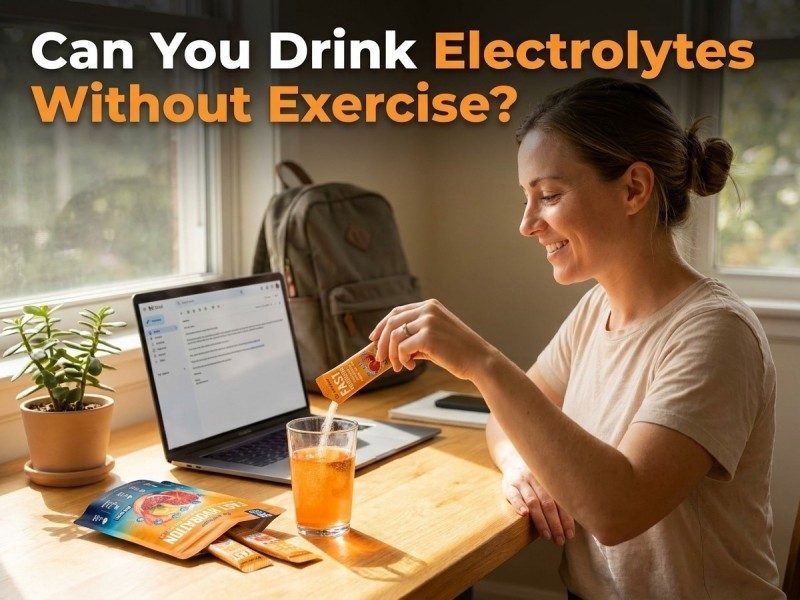
Electrolytes used to be discussed almost only in the context of sports. Now they show up in office drawers, travel bags, kitchen cabinets, and daily hydration routines. That shift is not hard to understand. A lot of people feel drained on hot days, after flights, during stomach bugs, or after long hours outdoors, even when they have not done any formal exercise. Harvard’s Nutrition Source notes that electrolyte beverages were first designed for athletes training hard in heat, but the category later expanded to a much wider audience, including people simply looking for better hydration support. That broader use is exactly why the topic needs a more careful explanation.
Yes, you can drink electrolytes without exercise. For many people on ordinary days, plain water and a balanced diet are enough, because food and regular fluids usually provide the electrolytes the body needs. Harvard says most people normally get enough electrolytes from food and water, while MD Anderson says electrolyte drinks become more useful in situations such as vomiting, diarrhea, prolonged sweating, or long periods in extreme heat. The real question is not “Can you?” but “When does it actually make sense?”
That difference matters because customers are no longer only asking about sports hydration. They are asking whether electrolytes fit real life: hot commutes, active workdays, illness, travel, and those days when water does not seem to do the whole job. The most useful answer is not extreme. It is practical. Water is still the default for ordinary hydration, while electrolytes are a situational tool for days when the body is losing or struggling to balance more than fluid alone. The stronger your product education is around that point, the more trustworthy the category becomes.
What Do Electrolytes Do Without Exercise?
Electrolytes do the same basic job whether you exercise or not: they help regulate fluid balance and support muscle and nerve function. The real difference is not what electrolytes do. The difference is whether your day creates enough fluid or mineral strain to make them more useful than plain water.
What do electrolytes do in the body?
Electrolytes are minerals with an electrical charge when dissolved in body fluids. Harvard explains that electrolytes are needed to contract muscles, regulate heart rhythms, and maintain healthy fluid levels inside and outside cells, while MedlinePlus lists sodium, potassium, chloride, calcium, magnesium, phosphate, and bicarbonate among the body’s key electrolytes. That means electrolytes are not “sports ingredients” in any narrow sense. They are part of basic body function.
From a customer’s point of view, this matters because hydration is often misunderstood as simply “drink more water.” Water is still the foundation, but the body also relies on minerals to manage that water correctly. MedlinePlus explains that sodium helps control the amount of fluid in the body and supports nerve and muscle function, potassium helps cells, heart, and muscles work properly, chloride helps control fluid and blood volume, and magnesium helps muscles, nerves, and the heart work properly. That is why electrolytes matter even on days with no workout at all.
A simple body-function map makes that easier to understand. The table below is based on MedlinePlus’ descriptions of the major electrolytes and what they do in the body.
| Electrolyte | Main role in the body | Why customers care |
|---|---|---|
| Sodium | Helps control fluid balance; supports nerves and muscles | Makes hydration feel more effective when sweat or heat is involved |
| Potassium | Helps cells, heart, and muscles work properly | Adds broader balance to the formula |
| Chloride | Helps control fluid, blood volume, and blood pressure | Strengthens hydration logic |
| Magnesium | Supports muscles, nerves, and heart function | Adds broader physical-support value |
| Calcium | Helps build and maintain strong bones and teeth | Makes a formula feel more complete |
This is one reason “electrolytes” should not be treated like a trendy extra. They are part of the system behind how the body manages fluid, movement, and basic function.
How do electrolytes help without exercise?
Electrolytes can help without exercise when the body is under hydration stress for reasons other than training. MD Anderson specifically points to illness with vomiting or diarrhea, prolonged exercise or heavy sweating, and spending a long time in extreme heat as times when electrolyte drinks may help. That is a very practical framework because it shifts the conversation away from “sports” and toward what the body is actually going through.
A lot of daily-life situations can create the same kind of hydration strain people normally associate with workouts. Outdoor work in summer, long hours at a festival, repeated sweating during errands in high heat, or a stomach bug can all leave a person dealing with more than simple thirst. In those moments, the customer is not really asking, “Was I exercising?” They are asking, “Why do I still feel dry, weak, or off even though I drank something?” That is exactly where electrolyte drinks can start to feel more useful than water alone.
A practical use-case comparison helps separate ordinary days from higher-need days. The scenarios below reflect Harvard’s general guidance that most people get enough electrolytes from food and water, alongside MD Anderson’s emphasis on heat, vomiting, diarrhea, and heavy sweating as stronger use cases.
| Situation | Is exercise involved? | Are electrolytes often more useful? |
|---|---|---|
| Mild indoor workday | No | Often no |
| Long hours in extreme heat | Not necessarily | Often yes |
| Vomiting or diarrhea | No | Often yes |
| Repeated heavy sweating at work | Sometimes no formal exercise | Often yes |
| Short, low-stress errands | No | Usually not necessary |
This kind of framing is useful because it gives customers a better decision rule. Electrolytes are not only for sports. They are for situations where hydration becomes harder than usual.
Why can electrolytes feel different from water?
Electrolytes can feel different from water because they add minerals to the fluid you are drinking. Harvard explains that electrolyte beverages are designed to be absorbed in the gut to help rebalance mineral and fluid levels. In the right situation, that can make the drink feel more effective than plain water.
But this is also where customers can get misled if the category is oversold. A stronger “feel” does not automatically mean a better everyday choice. The American Heart Association warns that electrolytes are helpful for important body functions, but too much sodium, potassium, or magnesium can cause problems, and most adults already consume far more sodium than recommended. That is why the right explanation is not “electrolytes are better than water.” The better explanation is “electrolytes can feel more useful when the body is dealing with more than ordinary thirst.”
A practical way to explain the difference is:
- Water is usually the right first answer for ordinary thirst.
- Electrolytes make more sense when thirst comes with heat, illness, sweating, or routine disruption.
That middle-ground explanation is far more believable than pretending everyone needs electrolyte powder every day.
Why this matters for product positioning
This distinction matters a lot for how a formula should be sold. A plain sports drink message is too narrow for modern use, but a “drink this all day no matter what” message is too broad and can undermine trust. Harvard explicitly says electrolyte drinks are heavily marketed and that there is no evidence they are healthier than water for the average person. The strongest product positioning usually sits between those two extremes.
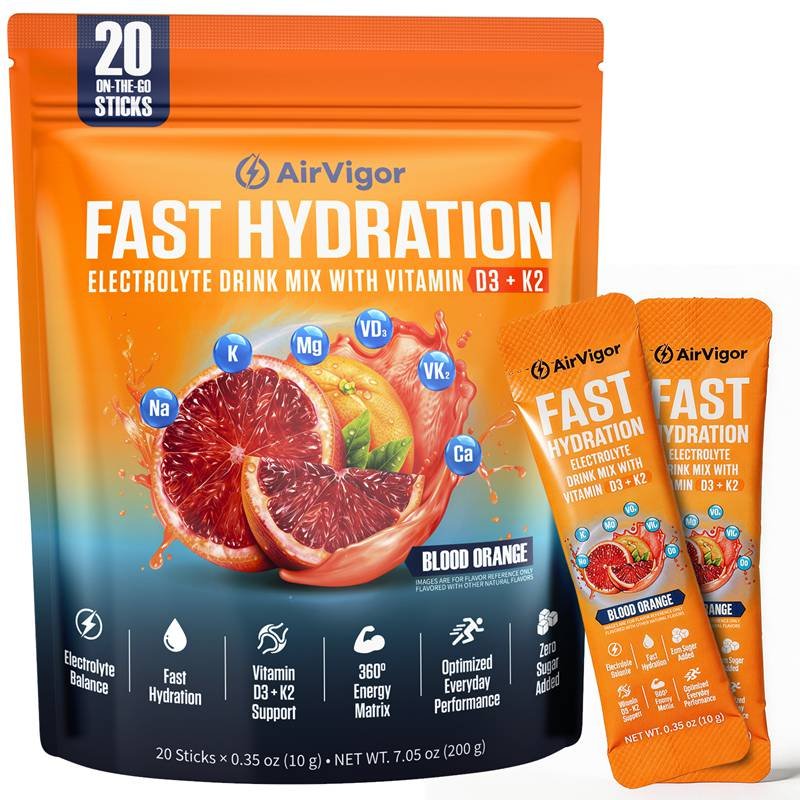
For a brand like AirVigor, that is actually an advantage. Instead of treating electrolytes as a universal daily beverage, the better strategy is to position them for the moments when water may feel incomplete: heat, travel, illness-related rehydration, long active days, and other routine strain. That makes the formula sound more credible, more useful, and much easier for customers to trust over time.
Can You Drink Electrolytes Without Exercise Every Day?
Yes, you can drink electrolytes without exercise, even daily, but that does not mean you need them every day. For many people in normal conditions, plain water and a balanced diet are enough. Electrolytes make more sense when daily life includes heat, illness, disrupted hydration, or repeated fluid loss that makes water feel less effective on its own.
Can you drink electrolytes without exercise daily?
You can, but whether you should depends on the kind of day you are having. Harvard says a balanced diet and regular fluids naturally provide adequate electrolytes for most people, and its bottom line is that there is no evidence that electrolyte drinks are healthier than water for the average person. That means a person may use electrolyte drinks daily without a problem, but daily use is not automatically necessary.
This matters because customers often confuse can with need. Plenty of people use an electrolyte tablet or powder in a morning bottle, during travel, or during heat waves, even when they are not exercising for some routines, which may feel helpful. But an ordinary indoor day with regular meals is not the same as a day spent sweating outside for hours or recovering from diarrhea. The more useful question is not “Can I take electrolytes every day?” It is “Does my routine create a real reason for them today?”
A decision grid makes that easier:
| Daily routine | Are electrolytes likely needed? |
|---|---|
| Mild indoor day | Often no |
| Hot climate or outdoor work | Sometimes yes |
| Frequent travel and delayed hydration | Sometimes yes |
| Illness with fluid loss | Often more useful |
This kind of framing is better for customers because it respects context instead of forcing a one-size-fits-all rule.
Is water enough without exercise?
For many people, yes. Harvard’s water guidance says that daily hydration needs vary, but for healthy adults, fluid from beverages and food usually covers normal needs. It cites the National Academy of Medicine guidance of roughly 13 cups a day for men and 9 cups a day for women from all beverages and foods combined. That is a helpful reminder that the default answer to ordinary thirst is still very often plain water.
This is important because hydration marketing can make water sound incomplete or outdated. In reality, most normal days do not require a special drink. The fact that electrolyte beverages are useful in some situations does not make water ineffective in general. Often, the more important fix is simply drinking enough and drinking consistently, especially earlier in the day rather than waiting until thirst becomes obvious.
A simple comparison helps:
| Situation | Is plain water often enough? |
|---|---|
| Indoor desk work | Usually yes |
| Regular meals and mild weather | Usually yes |
| Low-sweat daily movement | Often yes |
| Heat, vomiting, diarrhea, or prolonged sweating | Sometimes not |
This is one reason the most trustworthy hydration advice still sounds simple: water does most of the job most of the time.
When do electrolytes make more sense than water?
Electrolytes make more sense than water when the body is losing more than fluid alone or when drinking patterns are so disrupted that water does not seem to do the whole job. MD Anderson specifically highlights vomiting, diarrhea, heavy sweating, and extreme heat. MedlinePlus also says mild dehydration may often be treated with water, but if electrolytes have been lost, sports drinks may help. That is one of the clearest and most useful explanations in the category.
For customers, the common non-exercise situations include:
- hot days outdoors
- long flights and travel days
- stomach illness
- repeated mild sweating
- days when water still leaves you feeling depleted
The American Heart Association adds an important caution: electrolyte products can help, but overuse can also be a problem. That is why formula balance matters and why a daily-use product should feel sensible rather than excessive.
A practical “water vs electrolytes” guide helps:
| Situation | Water first? | Electrolytes may make more sense? |
|---|---|---|
| Mild thirst on an ordinary day | Yes | Often no |
| Hot day with long sweat exposure | Yes, but maybe not enough alone | Often yes |
| Vomiting or diarrhea | Sometimes not enough alone | Often yes |
| Travel with delayed drinking and fatigue | Yes | Sometimes yes |
This is also where AirVigor can position a product naturally. The strongest message is not “everyone needs electrolytes.” The stronger message is “some days need more support than water alone.” That is a much more credible promise.

Which Situations Need Electrolytes Without Exercise?
Electrolytes can make sense without exercise when the body is losing more than plain fluid or when normal hydration routines are disrupted enough that water alone may feel incomplete. MD Anderson specifically points to vomiting, diarrhea, prolonged heavy sweating, and spending a long time in extreme heat as situations where electrolyte drinks can be useful. Harvard’s Nutrition Source makes the broader point that most people usually get enough electrolytes from food and water, so the real issue is not whether you can drink electrolytes without exercise, but whether your day creates a real reason to need them.
Which daily situations increase electrolyte needs?
The most common non-exercise situations are usually less dramatic than people expect. They often include heat exposure, working or walking for long periods in warm conditions, and illness that causes fluid loss. What these situations have in common is simple: the body is being asked to manage more than ordinary thirst. On a cool indoor day, water is often enough. On a day with hours of heat, repeated sweating, or stomach illness, hydration becomes a different problem.
This matters because customers often look for one universal rule when the better answer depends on context. A calm office day is not the same as a day spent walking outside in summer, working in a warehouse, standing at an outdoor event, or recovering from diarrhea. Harvard’s guidance is especially useful here because it keeps the baseline clear: most people can rely on ordinary food and water under normal conditions. Electrolytes become more useful when the day becomes less normal.
A simple comparison helps separate ordinary days from higher-need days:
| Daily situation | Is exercise involved? | Are electrolytes often more useful? |
|---|---|---|
| Mild indoor workday | No | Often no |
| Long hours in extreme heat | Not necessarily | Often yes |
| Vomiting or diarrhea | No | Often yes |
| Repeated heavy sweating at work | Sometimes no formal exercise | Often yes |
| Short, low-stress errands | No | Usually not necessary |
That pattern is more useful than a blanket rule. Electrolytes are less about “sports” and more about stress on hydration.
How do heat and travel change hydration needs?
Heat is one of the clearest non-exercise reasons electrolytes may matter. OSHA says that for longer jobs lasting more than two hours in hot conditions, employers should provide electrolyte-containing beverages because workers lose salt and other electrolytes when they sweat. OSHA’s worker hydration fact sheet also says sports drinks can help replace electrolytes lost during sweating that lasts several hours in hot environments, while noting that most people can restore electrolytes through regular meals.
Travel is a little different. It is often not about obvious sweat loss, but about disrupted hydration habits: dry air, long stretches without drinking, extra caffeine, missed meals, and hours of sitting while fluid intake falls behind. The more honest way to explain travel is that water is still the first answer, but some travel days create enough routine disruption that a balanced electrolyte drink may feel more helpful than water alone. That is very different from saying every flight requires electrolytes. The stronger message is that electrolytes can be a situational support tool when the day makes hydration harder than usual.
This is also why formula balance matters so much. A product designed for non-exercise hydration should not feel like a sugary performance drink built for endurance events. It should feel practical for hot days, active work, travel, and other situations where the customer wants support without turning every bottle of water into a sports beverage. Harvard explicitly notes that electrolyte drinks are heavily marketed, but most people under normal conditions still do not need them by default.
Do illness and dehydration make electrolytes more useful?
Yes, and this is one of the clearest situations where electrolytes make sense even without exercise. MD Anderson specifically lists illnesses with vomiting and diarrhea as a straightforward time to use electrolyte drinks. CDC guidance on diarrheal illness also warns that dehydration can happen quickly and lists signs such as little or no urination, very dark urine, strong thirst, dry mouth or throat, and dizziness or lightheadedness.
This matters because people often underestimate how quickly illness can change hydration needs. If the body is losing fluids and minerals at the same time, plain water may not always feel like it is doing the whole job. That does not mean every mild upset stomach needs a special product, and it does not mean every sports drink is the best choice. It means electrolyte support becomes much easier to justify when the body is losing both water and salts together. That is one of the strongest non-exercise use cases in the entire category.
A symptom-based guide helps keep the message practical:
| Situation | Signs hydration may be under strain | Why electrolytes may help |
|---|---|---|
| Vomiting or diarrhea | Dark urine, dizziness, strong thirst, dry mouth | Helps replace fluid plus lost minerals |
| Long hot workday | Heavy sweating, weakness, muscle cramps, headache | Helps replace what sweat removes |
| Ordinary mild day | Mild thirst only | Water is often enough |
This kind of table builds more trust than vague language because it shows customers when electrolytes fit and when they probably do not.
Who May Benefit Without Exercise?
People who may benefit from electrolytes without exercise are usually the ones whose days are hotter, longer, more dehydrating, or more physically draining than average. That includes people in extreme heat, those recovering from vomiting or diarrhea, workers who sweat for hours, and people whose hydration routine is repeatedly disrupted. The biggest misunderstanding in this category is assuming “not exercising” means “not losing electrolytes.” Real life is more varied than that.
Who may need electrolytes without exercise the most?
The clearest groups are people in hot environments, people dealing with illness-related dehydration, and people whose work or routine causes hours of sweating, even if it is not formal exercise. OSHA’s heat guidance is especially useful here because it does not talk about athletes. It talks about workers. For shorter jobs in the heat, water is usually enough. For longer jobs with hours of sweating, OSHA says electrolyte-containing drinks can help replace the salts workers lose.
MD Anderson adds illness-related fluid loss to that list by specifically calling out vomiting and diarrhea. That expands the audience even further. Someone can be resting in bed, not moving much at all, and still have a stronger reason to use electrolytes than someone sitting indoors after a normal day. That is why good customer education in this category should focus less on identity and more on what the body is going through right now. It is a more accurate and more useful way to explain when electrolytes fit.
A simple user map helps:
| Person or situation | Why electrolytes may matter more |
|---|---|
| Outdoor worker in heat | Hours of sweating and salt loss |
| Person recovering from vomiting or diarrhea | Fluid and mineral loss together |
| Person in ordinary indoor conditions | Often does not need them |
| Person with repeated long hot days | Routine hydration stress builds up |
This kind of table is practical because it moves the conversation away from sports identity and toward real-life hydration strain.
Are electrolytes useful for non-athletes?
Yes, absolutely, but with context. The most honest answer is that electrolytes can be useful for non-athletes when their situation creates a meaningful hydration or mineral challenge. The strongest examples are heat, illness, and sweating through work or daily activity rather than formal training. Harvard’s Nutrition Source is especially helpful here because it keeps expectations realistic: most people still get enough electrolytes from normal food and water under ordinary conditions.
This wider relevance matters because the category is no longer limited to sports performance. The non-athlete user is often someone who says: I work outside all day. It is 105°F where I live. I had a stomach bug, and plain water is not enough. I am not exercising, but I am still sweating a lot. Those are real use cases, and they are much easier to defend than trying to convince every healthy sedentary person to drink electrolytes every day. That is also why a brand like AirVigor can be positioned more credibly around situational hydration support instead of exaggerated daily necessity.
Which signs suggest water may not feel enough?
The most useful signs are the ones associated with dehydration or heat strain. CDC descriptions of dehydration in diarrheal illness include little or no peeing, very dark pee, strong thirst, dry mouth or throat, and dizziness or lightheadedness. MedlinePlus lists many of the same adult dehydration symptoms, including thirst, dry mouth, urinating less than usual, dark-colored urine, tiredness, and dizziness. OSHA’s heat guidance adds muscle cramps and weakness as signs that heavy sweating may be costing the body more than water alone can easily replace.
This matters because many customers only think about hydration when they feel obviously thirsty. In reality, the better question is whether the body seems to be under strain. If the day includes heavy sweating, extreme heat, or fluid loss from illness, then electrolyte drinks become easier to justify. If the day is ordinary and the main problem is simply not drinking enough water, then the answer is often still to drink more water more consistently. That distinction helps customers make better decisions and builds more trust than making electrolytes sound like the answer to every low-energy moment.
A practical sign-based guide looks like this:
| Sign or situation | What it may suggest | First thought |
|---|---|---|
| Mild thirst on an ordinary day | Normal fluid need | Water first |
| Dark urine, strong thirst, dizziness after vomiting or diarrhea | Dehydration with possible electrolyte loss | Electrolytes may help |
| Heavy sweating, cramps, weakness in long heat exposure | Loss of water and salt | Electrolytes often make more sense |
| Minor indoor fatigue with no heat or illness | Not necessarily an electrolyte issue | Start with water and routine habits |
That is one of the most useful ways to explain the category. Electrolytes are not automatically necessary without exercise, but they are also not limited to exercise. The real issue is whether the body is dealing with circumstances that make plain water feel incomplete.
What Should You Look For in Electrolytes?
A good non-exercise electrolyte product should feel balanced, not extreme. It should have a clear reason to exist: support hydration on hotter, longer, more dehydrating days, not replace water all day for no reason. Harvard’s Nutrition Source says most people usually get enough electrolytes from food and water under normal conditions, and the American Heart Association warns that more is not always better. That is why formula balance matters more than flashy claims.
Which electrolytes matter most?
For most hydration formulas, the most important electrolytes are usually sodium, potassium, chloride, and magnesium. Sodium and chloride do much of the visible hydration work because they help the body manage fluid balance, while potassium and magnesium help the formula feel more balanced and more useful for muscles and nerves. Harvard notes that sports and electrolyte drinks are typically built around minerals such as sodium, potassium, magnesium, and calcium that are lost through sweat or help rebalance fluid levels.
From a customer perspective, this matters because not every formula is built for the same problem. A product designed for a two-hour heat-exposed work shift is different from one designed for casual daily use or travel. If the label leans too hard into one mineral without a clear reason, the formula can feel less suitable for ordinary life. A more balanced product is often easier to trust because it sounds like it was built for realistic use rather than maximum impact marketing.
A simple label map helps:
| Electrolyte | Main job in hydration support | Why customers care |
|---|---|---|
| Sodium | Helps the body retain and use fluid more effectively | Makes the product feel “effective” in heat or sweat |
| Potassium | Adds broader fluid and muscle balance | Makes the formula feel less one-dimensional |
| Chloride | Works with sodium in hydration balance | Strengthens the hydration logic |
| Magnesium | Supports muscle and nerve function | Adds broader physical-support value |
That is one reason the strongest products are often not the ones with the most complicated ingredient panel. They are the ones with the clearest hydration logic.
Is sugar-free better without exercise?
For many non-exercise situations, a lower-sugar or sugar-free formula often makes more sense. Cleveland Clinic notes that sports drinks can help rehydrate after a tough workout or illness, but they are specialty drinks and not something to grab when you are just thirsty. Harvard Health also notes that many electrolyte drinks include a lot of sugar and additives that people may not actually want or need.
This matters because people drinking electrolytes without exercise are often not looking for sports fuel. They may want something for hot weather, travel, stomach illness recovery, or routine strain. In those cases, a heavy sugar load can make the formula feel less appropriate for repeat use. That does not mean sugar is always wrong. It means the product should match the situation. A person spending hours sweating outdoors may need a different profile than someone sipping a hydration mix during a long flight or after a day of delayed drinking.
A practical comparison helps:
| Formula style | Best fit |
|---|---|
| High-sugar sports drink | Longer, harder sweat-heavy situations |
| Moderate-sugar electrolyte drink | Mixed-use situations |
| Low-sugar or sugar-free electrolyte formula | Daily support, travel, mild non-exercise use |
That is one reason sugar-free formulas are often easier to position for non-exercise hydration. They feel more practical for routine use and less like a performance drink.
What makes the formula feel more balanced?
A balanced formula is one that does not try to do everything at once. It has a clear electrolyte base, a sweetness level that fits the use case, and a believable daily role. The American Heart Association notes that excess sodium is already common in normal diets and that too much sodium, potassium, or magnesium can create problems. Cleveland Clinic makes a similar point by saying electrolyte drinks should be viewed as a specialty product to use when necessary, not as an all-day replacement for water.
That is why balance is such a strong trust signal. Customers are more likely to believe a formula that sounds useful for specific moments than one that claims everyone needs electrolytes constantly. For a brand like AirVigor, this is a real advantage. A product positioned for hot days, travel, light dehydration support, and routine strain feels more credible than one pretending every low-energy afternoon is an electrolyte emergency.
A practical checklist helps:
| What to check | Why it matters |
|---|---|
| Sodium level | Shows whether the product has real hydration value |
| Potassium and magnesium | Adds broader support without making the formula feel narrow |
| Sugar level | Helps determine whether it fits routine use or only performance use |
| Overall simplicity | Makes the formula easier to trust |
| Clear use case | Helps customers know when to reach for it |
How Can Electrolytes Fit Daily Use?
Electrolytes fit daily use best when they are treated as a situational tool, not as a replacement for water. Harvard says water is usually enough for everyday hydration in normal conditions, while MD Anderson says electrolyte drinks become more useful in situations such as heat exposure, vomiting, diarrhea, or prolonged sweating. That middle-ground view is the most useful one for both customers and brands.
How can electrolytes fit into daily hydration?
The best way electrolytes fit daily hydration is by filling a gap, not by replacing the whole routine. On calm indoor days with regular meals and ordinary thirst, water is often enough. On hotter, longer, more draining days, a balanced electrolyte formula may feel more supportive. Harvard’s beverage guidance says water is the best choice for thirst in general, while its electrolyte guidance says most people do not need special drinks under ordinary conditions.
This matters because customers often think in all-or-nothing terms. They either treat electrolyte powders like a miracle daily beverage or dismiss them as only for athletes. The better answer sits in the middle. A product like AirVigor can fit daily hydration naturally if it is positioned for the kinds of days when ordinary hydration is harder to manage, not as a substitute for water on every quiet office day.
A daily-use map makes this clearer:
| Daily situation | Is water often enough? | Can electrolytes help more? |
|---|---|---|
| Calm indoor workday | Usually yes | Often no |
| Long hot outdoor day | Sometimes not | Often yes |
| Travel day with poor hydration routine | Sometimes not | Sometimes yes |
| Illness with fluid loss | Sometimes not | Often yes |
That kind of framing is both practical and credible.
How can electrolytes fit heat, travel, and routine fatigue?
Heat is one of the strongest non-exercise use cases. OSHA says workers in heat should be encouraged to drink at least one cup of water every 20 minutes, and for work lasting two hours or more, they should also have access to fluids containing electrolytes. OSHA’s worker-hydration fact sheet adds that for sweating that lasts several hours, sports drinks can help replace lost electrolytes, though most people can restore them through regular meals.
Travel and routine fatigue work a little differently. They are often less about obvious sweat loss and more about delayed drinking, dry air, missed meals, extra caffeine, and long stretches of time when hydration falls behind. In those moments, the customer’s complaint is usually not “I exercised.” It is “I feel dry, flat, and off, and water does not seem to be doing the whole job.” That is a more natural and believable use case for a balanced electrolyte product than pretending every flight or every tired day automatically requires one.
A simple use map helps:
| Situation | Why electrolytes may fit |
|---|---|
| Heat exposure | Sweat and salt loss build up |
| Long travel day | Hydration habits break down |
| Stomach illness | Fluid and mineral loss happen together |
| Routine fatigue on an ordinary day | Water and better habits may still be the first step |
That is one reason balanced non-exercise formulas have strong commercial potential. They feel relevant to real life, not just sports.
How can AirVigor position itself more naturally?
AirVigor can position electrolytes more naturally by staying grounded in real non-exercise situations instead of pretending everyone needs them every day. The strongest message is not “drink this all day.” The stronger message is that the formula is built for days when hydration is under more strain than usual: heat, travel, long active routines, mild dehydration support, and other situations where plain water may feel incomplete. That approach lines up much better with Harvard, OSHA, and Cleveland Clinic than an aggressive “everyone needs electrolytes” pitch.
For direct customers, that creates several natural positioning angles:
- daily hydration support for hotter or more draining days
- travel-friendly hydration support
- support for routine strain tied to poor hydration habits
- a cleaner alternative to high-sugar sports drinks
For OEM and ODM clients, it creates a stronger development direction, too. Instead of making another performance-only sports formula, the concept becomes a more balanced hydration-support product with broader everyday relevance. That matters in a crowded market because the non-athlete, non-exercise use case is large, but only when the product sounds believable.
A positioning comparison helps:
| Positioning style | How it sounds | Commercial strength |
|---|---|---|
| Sports-only electrolyte drink | For workouts and athletes | Narrower audience |
| Everyday electrolyte for everyone | Broad, but less credible | Weaker trust |
| Situational daily hydration support | For heat, travel, routine strain, and non-exercise use | Strongest balance |
That is exactly where AirVigor can stand out: not louder, but clearer.
Final Thoughts
Yes, you can drink electrolytes without exercise. The more useful question is whether your day creates a real reason to need them. Harvard, MD Anderson, OSHA, and Cleveland Clinic all point toward the same middle-ground answer: most people still do fine with ordinary food and water on normal days, but heat, illness, long active work, and disrupted hydration routines can make electrolytes more useful.
That is why the best non-exercise electrolyte product is usually not the most extreme one. It is the one that feels balanced, easy to understand, and appropriate for the moments when water may feel incomplete. For a brand like AirVigor, that creates a strong opportunity: not just another sports drink, but a better-designed hydration-support formula for modern daily life.
Looking to Source a Better Formula or Build Your Own?
If you are looking for:
- an electrolyte product for non-exercise hydration needs
- a balanced formula for heat, travel, and routine support
- a lighter alternative to sugary sports drinks
- a broader daily hydration-support concept
- an OEM or ODM partner for custom electrolyte development
AirVigor can support both finished branded products and private-label or custom formulation projects. The strongest products in this category are the ones that solve a real problem clearly, and that is exactly where a well-positioned, balanced electrolyte formula can win.