Skip to content
How Creatine Improves Workout Performance: What Really Matters
# Your Trusted Dietary Supplement Brand In US
- Emily

Table of Contents
Most workouts don’t fail at the start—they fall apart halfway through. You begin strong, your first sets feel controlled, and your energy is steady. But as the session progresses, strength drops, recovery slows, and performance becomes inconsistent. This is not always a motivation issue. In many cases, it reflects how efficiently your body can produce and restore energy under repeated effort.
Creatine plays a direct role in this process by supporting ATP regeneration, the primary energy system used during high-intensity exercise. Instead of creating a short-term boost, it helps maintain strength, power, and output across multiple sets and sessions. This makes it especially relevant for resistance training, interval workouts, and any training format where repeated effort defines performance.
The real benefit of creatine is not measured in a single lift or one workout. It shows up over time—when your later sets stay stronger, your sessions become more consistent, and your training results become more predictable. That is where performance stops being random and starts becoming structured.
What Is Creatine for Workout Performance?
Creatine is a naturally occurring compound stored primarily in skeletal muscle that plays a direct role in rapid energy production during high-intensity exercise. For workout performance, it supports the body’s ability to regenerate ATP, maintain strength output, and reduce performance drop across repeated efforts. This makes it especially relevant for resistance training, sprint-based activity, and mixed high-intensity workouts where energy demand rises quickly and repeatedly.
What does creatine do for workout performance?
Creatine helps muscles regenerate ATP more efficiently during short, intense efforts, allowing for stronger output, better repetition quality, and more consistent performance across sets and training sessions.
In practical terms, creatine supports the part of training where most users experience limitations: repeated high-effort output. During a heavy set, sprint, or explosive movement, ATP is consumed rapidly. Once ATP availability drops, strength and power output decline, even if motivation remains high. Creatine increases phosphocreatine stores in muscle cells, which helps restore ATP more quickly between contractions.
This process has several measurable effects in training environments:
- Increased ability to sustain force during repeated sets
- Reduced drop-off in power output during explosive movements
- Improved repetition quality at a given working weight
- More stable performance in later stages of a workout
| Performance Factor | Without Creatine Support | With Creatine Support |
|---|---|---|
| ATP regeneration speed | Slower | Faster |
| Strength consistency | Declines quickly | More stable |
| Power output | Drops under fatigue | Better maintained |
| Set-to-set performance | Variable | More consistent |
For most users, the effect is not a noticeable surge in energy, but a reduction in how quickly performance declines during demanding sessions.
Why is creatine used in training?
Creatine is used because it improves training efficiency by helping users maintain output across multiple sets, which increases total productive work and supports better long-term progress.
Modern training is rarely based on a single maximal effort. Most programs rely on repeated sets, structured volume, and controlled rest periods. In this context, performance is determined not only by peak strength, but by how well that strength can be repeated.
Common limitations observed in training include:
- Significant strength drop after initial sets
- Reduced bar speed or movement quality under fatigue
- Incomplete recovery between sets
- Decreasing intensity across workout duration
Creatine addresses these limitations by supporting the energy system responsible for short-duration, high-intensity work. As a result, users are often able to maintain a higher level of output across the entire session.
From a training perspective, this leads to:
- Higher effective training volume
- More consistent execution of programmed sets
- Improved ability to maintain target intensity
| Training Variable | Impact Without Creatine | Impact With Creatine |
|---|---|---|
| Total reps completed | Lower | Higher |
| Strength retention | Decreases over sets | Better maintained |
| Training consistency | Fluctuates | More stable |
| Session quality | Uneven | More controlled |
Over time, these differences contribute to more reliable progression, particularly in strength and hypertrophy-focused programs.
Is creatine for beginners or advanced users?
Creatine is effective across all training levels, supporting beginners by improving early training stability and helping advanced users maintain performance under higher intensity and volume demands.
Beginners often experience rapid fatigue and inconsistent performance due to limited adaptation to training stress. Their challenge is not only strength, but the ability to sustain effort across a full session. Creatine can help reduce early fatigue and improve the overall training experience, making it easier to follow structured programs.
Advanced users face a different set of demands. Their training typically involves:
- Higher absolute loads
- Greater total volume
- More complex programming
In this context, small improvements in performance consistency can have a meaningful impact on outcomes. Maintaining strength across multiple heavy sets or preserving power output during demanding sessions becomes increasingly important.
| User Level | Primary Challenge | Role of Creatine |
|---|---|---|
| Beginner | Fatigue and inconsistency | Improves training stability |
| Intermediate | Plateau in performance | Supports higher training volume |
| Advanced | Maintaining output under load | Preserves strength and power |
Rather than being limited to a specific group, creatine is best understood as a support tool for any training environment that involves repeated high-intensity effort.
How Does Creatine Improve Workout Performance?
Creatine improves workout performance by supporting ATP regeneration during high-intensity exercise, helping maintain strength, power, and consistency across repeated efforts while reducing performance decline within a session.
How does creatine increase strength and power?
Creatine improves strength and power by supporting faster ATP regeneration, allowing muscles to produce force more efficiently and maintain output across repeated high-intensity contractions.
Strength and power depend on how quickly the body can access usable energy. During heavy lifts or explosive movements, ATP is depleted within seconds. Once energy drops, force production declines, even if effort remains high.
Creatine increases phosphocreatine availability in muscle cells. This supports faster ATP restoration, allowing muscles to maintain force output for slightly longer during each effort.
In practical training scenarios, this often results in:
- More stable bar speed across working sets
- Slight increases in total repetitions at a fixed load
- Better control in explosive or technical movements
- Reduced early drop in peak strength
| Strength Factor | Without Creatine | With Creatine |
|---|---|---|
| Force output | Drops faster | More stable |
| Repetition count | Lower | Slightly higher |
| Explosiveness | Declines quickly | Better maintained |
| Movement control | Less stable | More consistent |
Over time, even small improvements per set can significantly increase total training volume and quality.
How does creatine support endurance and output?
Creatine supports repeated high-intensity endurance by helping maintain output across intervals, rounds, and sets, rather than improving long-duration aerobic performance.
Most modern training relies on repeated efforts rather than continuous output. In these situations, the limiting factor is not total endurance, but how well performance can be maintained across multiple rounds.
Users typically notice:
- Less performance drop during later rounds
- More stable pacing across intervals
- Better control under accumulated fatigue
| Training Type | Without Creatine | With Creatine |
|---|---|---|
| HIIT | Rapid fatigue | More repeatable output |
| Circuits | Declining performance | More stable pacing |
| Sprint work | Power loss | Better retention |
| Mixed training | Uneven output | More controlled |
Creatine is most effective in training formats where performance depends on repeated high-intensity efforts.
How does creatine help recovery between sets?
Creatine improves recovery between sets by supporting faster ATP replenishment, allowing muscles to regain energy more efficiently and maintain consistent performance across repeated efforts.
Recovery between sets determines how much useful work can be sustained during a session. If energy is not restored efficiently, each subsequent set becomes weaker, even with sufficient rest time. Creatine supports faster phosphocreatine recovery, which helps prepare muscles for the next effort more effectively.
In real training, this often leads to:
- Reduced performance drop between sets
- Less need for extended rest periods
- More consistent strength output
- Improved session structure and pacing
| Recovery Factor | Without Creatine | With Creatine |
|---|---|---|
| Energy recovery | Slower | Faster |
| Set consistency | Lower | Higher |
| Fatigue buildup | Faster | More gradual |
| Session efficiency | Reduced | Improved |
This results in more total high-quality work within each session, which is essential for long-term progress.
Which Creatine Is Best for Workout Performance?
Creatine monohydrate is the most reliable and widely used form for improving workout performance. It provides consistent results in strength, power, and training stability, with strong evidence supporting its effectiveness across different training types and user groups. For most users, choosing a high-quality creatine monohydrate product with good solubility and clear labeling is more important than selecting newer or more complex variations.
Is creatine monohydrate the best option?
Creatine monohydrate remains the most effective option due to its consistent absorption, predictable results, and long-standing use across strength, power, and high-intensity training environments.
Creatine monohydrate is widely used because it delivers stable performance outcomes without unnecessary complexity. It has been used across different training populations, from beginners to advanced athletes, with consistent results in improving strength output and repeat effort performance.
From a practical standpoint, users choosing monohydrate benefit from:
- Reliable daily performance support
- Minimal variation between batches when purity is controlled
- Good compatibility with different training styles
- Lower cost compared to alternative forms
Many alternative forms are introduced as improvements, but most users do not experience meaningful differences in performance.
| Creatine Form | Performance Outcome | Practical Value |
|---|---|---|
| Monohydrate | Consistent improvement | High |
| HCL | Similar results | Moderate |
| Buffered | No clear difference | Low |
For most customers, the priority should be consistency and reliability rather than novelty.
Are other creatine types better or just marketing?
Most alternative creatine types provide similar performance results to monohydrate, with limited evidence of improved absorption or effectiveness, making them less relevant for most users.
Alternative forms such as creatine HCL, buffered creatine, or ester-based creatine are often marketed around improved absorption or reduced side effects. However, in typical usage conditions, these differences are not significant for the majority of users.
The actual factors that influence user experience are often unrelated to creatine type:
- Inconsistent daily intake
- Insufficient water consumption
- Poor mixing or low solubility
- Low-quality raw materials
These factors can affect performance outcomes more than the specific form of creatine.
| Factor | Impact on Results |
|---|---|
| Consistent intake | High impact |
| Hydration level | High impact |
| Product quality | High impact |
| Creatine type | Low to moderate impact |
For users making a decision, the focus should shift from “which type sounds better” to “which product is easier to use consistently and fits daily routines.”
How to choose a high-quality creatine?
A high-quality creatine product should offer high purity, good solubility, clear dosing information, and a formulation that supports real training conditions, including hydration and daily usability.
Selecting creatine is not only about the ingredient name. Product quality directly affects how easy it is to use consistently and how reliable the results are over time.
Key selection criteria include:
Purity
- Indicates the level of active creatine per serving
- Reduces the risk of unnecessary fillers
Solubility
- Affects how well the powder dissolves in water
- Influences daily usability and user compliance
Label clarity
- Clearly states grams per serving
- Avoids hidden blends or unclear dosing
Formulation context
- Whether the product considers hydration and electrolyte balance
| Selection Factor | What to Check | Why It Matters |
|---|---|---|
| Purity | High-grade creatine | Consistent dosing |
| Solubility | Fine, easy-mix powder | Daily convenience |
| Label transparency | Clear serving size | Better control |
| Formula structure | Hydration support | Improved performance stability |
Another important shift in product design is the move toward combining creatine with hydration-support components such as electrolytes. This reflects real training conditions, where performance depends not only on energy availability but also on fluid balance and muscle function.
For users training in high-intensity or high-sweat environments, this type of formulation can provide a more complete support structure compared to single-ingredient creatine products.

How Much Creatine for Workout Performance?
Most users achieve effective results with a daily intake of 3–5 grams of creatine, which is sufficient to maintain muscle saturation, support ATP regeneration, and improve training consistency over time. Higher doses do not necessarily improve performance and may increase the risk of discomfort. The key factor is consistent daily use rather than occasional high intake.
How much creatine should you take daily?
A daily intake of 3–5 grams of creatine is sufficient for most users to support performance, maintain muscle saturation, and improve strength, power, and training consistency over time.
For most individuals, the body reaches a saturation point where additional creatine does not lead to further performance benefits. Once muscle stores are filled, maintaining them becomes the priority rather than increasing intake.
A structured daily intake approach provides:
- Stable creatine levels in muscle tissue
- Continuous support for ATP regeneration
- Predictable performance benefits across training sessions
| Daily Intake Level | Expected Outcome | Practical Recommendation |
|---|---|---|
| 3–5g | Optimal saturation maintenance | Recommended for most users |
| 6–10g | No additional performance gain | Not necessary |
| 10g+ | Increased risk of discomfort | Avoid for daily use |
Users who train regularly tend to benefit most from a steady daily intake rather than adjusting dosage based on individual workouts. This supports long-term performance rather than short-term fluctuation.
Do you need a loading phase for performance?
A loading phase can accelerate muscle saturation, but it is not required, as consistent daily intake of creatine will achieve the same result over a slightly longer period.
There are two commonly used approaches:
Loading phase approach
- Around 20 grams per day
- Divided into 4 smaller doses
- Typically used for 5–7 days
Standard daily intake
- 3–5 grams per day
- Gradual saturation over 3–4 weeks
| Method | Time to Saturation | Ease of Use | Risk of Discomfort |
|---|---|---|---|
| Loading phase | Fast (within 1 week) | More complex | Higher |
| Standard intake | Gradual (3–4 weeks) | Simple | Lower |
Most users prefer the standard approach because it:
- Fits easily into daily routines
- Reduces the chance of digestive discomfort
- Requires less planning and monitoring
From a long-term perspective, both methods lead to the same outcome. The difference is only how quickly saturation is achieved.
Is daily use required for results?
Creatine requires consistent daily intake to maintain muscle saturation, as its benefits depend on accumulation in muscle tissue rather than immediate, short-term effects.
Creatine does not act as an instant performance enhancer. Its effect builds gradually as muscle stores increase. Once saturation is reached, maintaining those levels becomes essential for continued performance support.
Key usage principles include:
- Daily intake supports stable muscle creatine levels
- Missing occasional doses has minimal impact
- Frequent inconsistency reduces effectiveness
| Usage Pattern | Result |
|---|---|
| Daily consistent intake | Stable performance support |
| Occasional missed doses | Minimal impact |
| Irregular intake | Reduced effectiveness |
For users, this changes how creatine should be viewed. It is not tied to individual workouts but to overall training consistency.
A simple daily routine, such as taking creatine with a meal or at a fixed time each day, often leads to better long-term results than attempting to time intake around specific workouts.
When to Take Creatine for Workout Performance?
Creatine can be taken at any time of day, with consistency being more important than timing. Regular daily intake supports stable muscle creatine levels, which is the key factor for improving strength, power, and overall workout performance over time.
Is creatine better before or after a workout?
Creatine can be taken either before or after a workout, with no major difference in effectiveness, making it more important to choose a timing that fits consistently into a daily routine.
In practical use, timing is often determined by habit rather than physiological necessity. Some users prefer taking creatine before training because it aligns with their pre-workout routine, while others take it after training alongside meals or recovery nutrition.
From a usability perspective:
- Pre-workout intake is easy to combine with other supplements
- Post-workout intake is easier to pair with meals and daily habits
For most users, adherence is the deciding factor. A simple, repeatable routine leads to better long-term results than trying to optimize small timing differences.
| Timing Option | Practical Advantage | Limitation |
|---|---|---|
| Before workout | Fits pre-workout routine | Easy to forget on rest days |
| After workout | Easy with meals | May be skipped if routine changes |
| Any fixed time | Most consistent | No perceived timing benefit |
The most effective approach is to select one timing method and maintain it daily, including on non-training days.
Does timing affect workout performance?
Timing has a limited impact on performance because creatine works through long-term muscle saturation rather than immediate energy delivery during a single workout.
Creatine differs from supplements that produce immediate effects. It does not create a short-term increase in energy or stimulation during a session. Instead, it builds up in muscle tissue and supports performance over time.
This means:
- Taking creatine immediately before training does not create an instant boost
- Missing pre-workout timing does not reduce effectiveness if daily intake is maintained
- Long-term consistency matters more than exact timing
| Factor | Impact on Performance |
|---|---|
| Daily intake consistency | High |
| Hydration level | High |
| Timing precision | Low |
For users, this simplifies decision-making. Creatine does not require strict timing, which makes it easier to integrate into different schedules and lifestyles.
Can you take creatine with electrolytes?
Creatine can be taken with electrolytes to support hydration, fluid balance, and muscle function, which together help maintain stable performance during training.
Creatine increases the amount of water stored inside muscle cells, which can raise the body’s demand for proper hydration. Electrolytes such as sodium, potassium, and magnesium play a key role in regulating this fluid balance.
When creatine is combined with adequate hydration and electrolyte intake, it can support:
- More stable muscle contraction
- Reduced fatigue during high-intensity sessions
- Improved overall training consistency
| Component | Function in Training |
|---|---|
| Creatine | Supports energy regeneration |
| Electrolytes | Regulate fluid balance |
| Combined intake | Improves performance stability |
This combination becomes especially relevant in:
- High-intensity workouts
- Long-duration training sessions
- Environments with high sweat loss
For many users, combining creatine with hydration support provides a more complete approach to maintaining performance rather than relying on a single ingredient.
Is Creatine Safe for Workout Performance?
Creatine is considered safe for most healthy adults when taken at recommended doses of 3–5 grams per day. Long-term use has not been shown to cause harm in healthy individuals, and most reported issues are related to incorrect dosing, poor hydration, or low-quality products rather than creatine itself.
Does creatine cause water retention or bloating?
Creatine increases water inside muscle cells rather than under the skin, which supports muscle function and performance and does not typically cause visible bloating when used at standard daily doses.
Water retention is one of the most common concerns, but it is often misunderstood. Creatine draws water into muscle cells, which improves cellular hydration and supports muscle contraction.
This type of water retention can result in:
- Slight increases in body weight (typically 1–2 kg during early use)
- A fuller muscle appearance
- Improved muscle function under load
It does not typically cause:
- Visible “puffiness” under the skin
- Fat gain
- Long-term bloating
Situations where discomfort may occur include:
- Taking large single doses (above 8–10 grams)
- Using loading phases without dividing doses
- Poor mixing or low-quality creatine
| Situation | Likely Effect |
|---|---|
| 3–5g daily | No noticeable bloating |
| High single dose | Temporary discomfort |
| Poor hydration | Feeling of heaviness |
For most users, proper dosing and hydration eliminate these concerns.
Does creatine affect hydration during workouts?
Creatine increases the body’s need for proper hydration, and when combined with adequate water and electrolytes, it supports fluid balance and does not increase the risk of dehydration.
A common misconception is that creatine leads to dehydration or muscle cramps. In practice, creatine increases intracellular water storage, which means the body requires slightly higher fluid intake to maintain balance.
If hydration is not adjusted, users may experience:
- Faster onset of fatigue
- Mild cramping in high-sweat conditions
- Reduced performance stability
If hydration is properly managed, users often experience:
- Improved muscle function
- More stable performance in longer sessions
- Reduced fatigue during repeated efforts
| Hydration Level | Training Outcome |
|---|---|
| Adequate water + electrolytes | Stable performance |
| Low water intake | Increased fatigue |
| High sweat without electrolytes | Higher cramp risk |
For users training in warm environments or high-intensity conditions, adjusting water and electrolyte intake is often more important than changing creatine usage.
Who should avoid creatine?
Creatine is safe for most healthy adults, but individuals with kidney conditions, specific medical restrictions, or under clinical supervision should consult a professional before use.
While creatine has a strong safety profile, certain groups should approach supplementation with caution:
- Individuals with diagnosed kidney disease
- Those taking medications that affect kidney function
- Pregnant or breastfeeding individuals
- Users under medical supervision for chronic conditions
For healthy adults:
- Daily use at standard doses is well tolerated
- Long-term use does not require cycling
- No consistent evidence shows harm when used properly
| User Category | Recommendation |
|---|---|
| Healthy adults | Safe at 3–5g daily |
| Athletes | Widely used |
| Medical conditions | Seek professional guidance |
From a practical standpoint, creatine safety depends more on how it is used than on the ingredient itself. Consistent dosing, proper hydration, and selecting a high-quality product are the key factors that determine a safe and effective experience.

Conclusion
Creatine remains one of the most practical and reliable supplements for improving workout performance. Its value comes from supporting consistent strength, stable power output, and better recovery across repeated efforts, rather than delivering short-term stimulation.
For users focused on long-term progress, the priority is not simply adding creatine, but using it in a way that fits real training conditions—consistent intake, proper hydration, and a formulation that supports overall performance, not just energy alone.
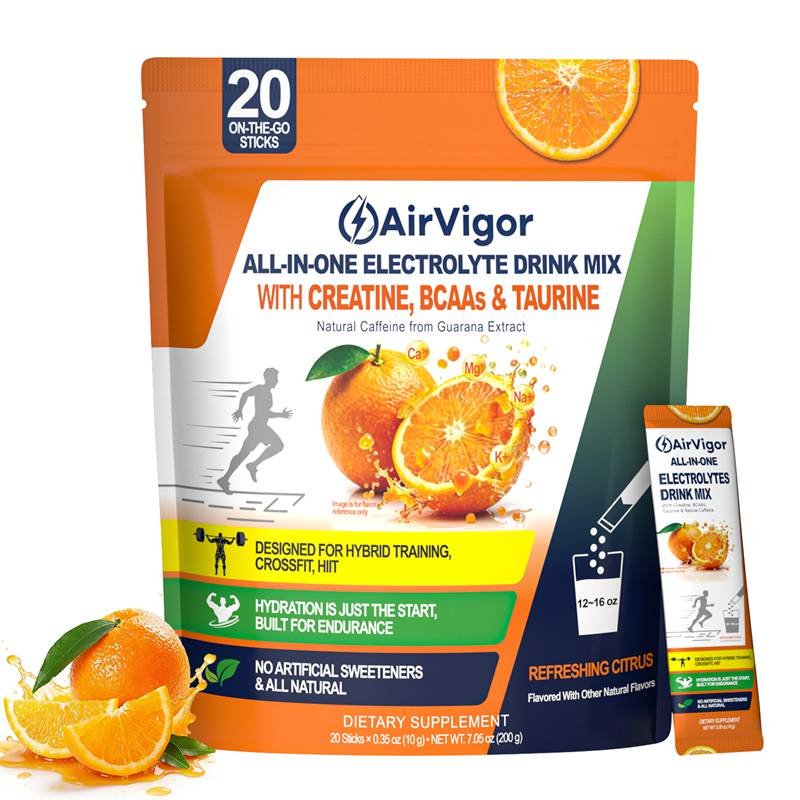
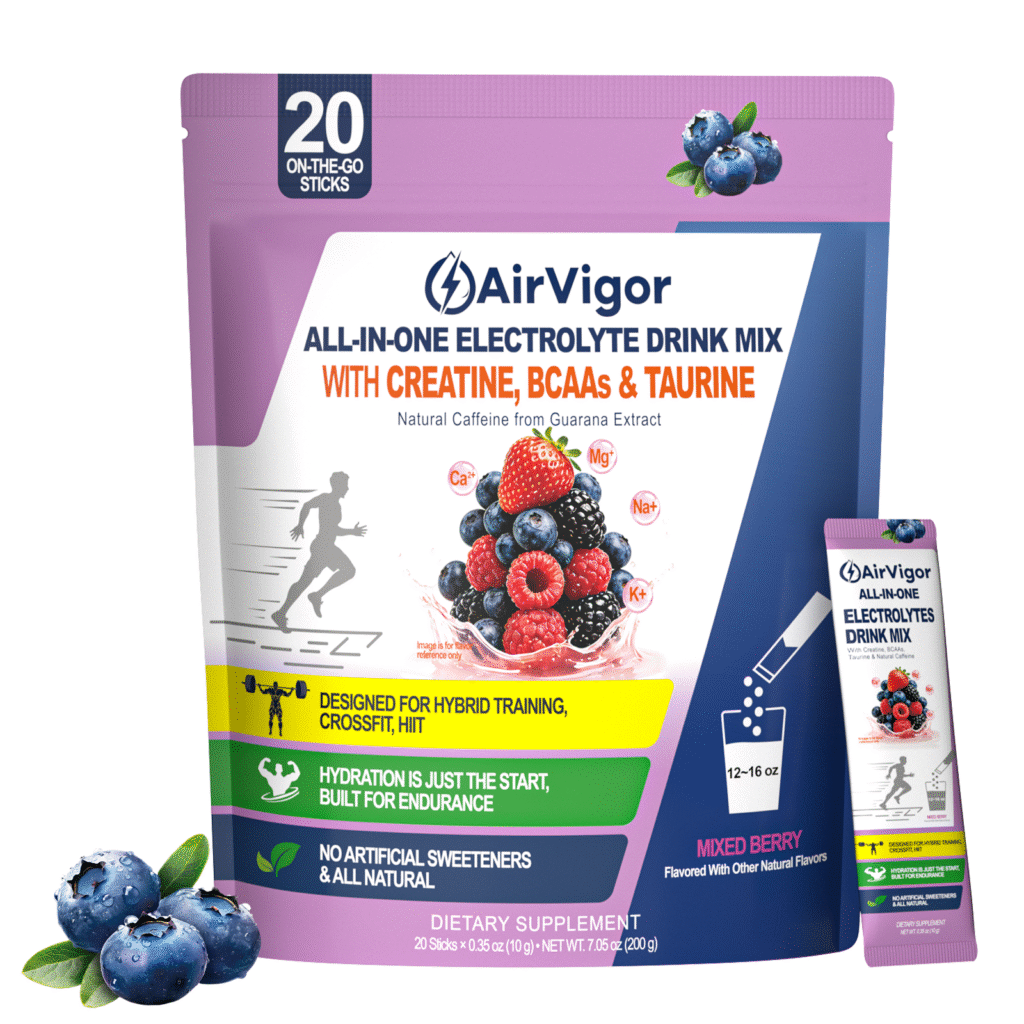
AirVigor approaches creatine from this perspective, focusing on ingredient quality, formulation clarity, and real-world usability. Whether for individual training or product development, the goal remains the same: to support performance that is stable, repeatable, and sustainable over time.
Share:
Contact Expert Team
At AirVigor, performance becomes effortless. We transform advanced nutrition science into clean, effective supplements that help you hydrate, recover, and feel stronger every day. Shop AirVigor Supplements on Amazon and experience athlete-trusted formulas—backed by real science and supported by our world-class R&D and production capabilities.
Trust AirVigor
At AirVigor, turning your performance goals into reality is no longer a struggle—it’s a science-driven journey we build together. Whether you’re a runner, lifter, cyclist, yogi, outdoor athlete, or someone simply seeking better daily energy, AirVigor transforms advanced nutrition research into clean, effective, and trustworthy supplements you can feel.
Backed by our U.S. scientific team, global certifications, and world-class production standards, every formula is engineered to deliver real hydration, real recovery, and real performance. And when you’re ready to experience the difference, you’ll find AirVigor products available on Amazon and other major platforms—fast shipping, consistent quality, and a community of athletes already seeing results.
Behind the scenes, our R&D and manufacturing ecosystem also supports specialized formulation development, ensuring AirVigor continues to lead with innovation while keeping quality and safety uncompromised. But at the core, everything we create is built for you—your health, your performance, your momentum.
Choose AirVigor. Feel the science. Elevate your every day.


Subscribe to our newsletter
Sign up to our newsletter and we’ll keep you up to date with the latest arrivals.