Skip to content

For years, sports supplements have relied on sugar to signal performance. Sweetness makes a drink feel effective, delivers a quick burst of energy, and works well for long endurance events. But most people using supplements today aren’t training for marathons—they’re working out after work, staying hydrated during busy days, or trying to avoid the afternoon energy crash without upsetting their stomach.
As supplement use has shifted from race-day fueling to daily hydration and routine training, the question has changed. Instead of asking “Which supplement gives me more energy?”, people now ask: Do I actually need sugar for this workout? Can I use this every day? Will it make me feel better—or worse—over time?
In the sugar-free vs sugar supplements debate, sugar-free options are generally better for daily hydration and long-term use, while sugary supplements still serve a role in prolonged endurance activity. Sugar-free formulas support electrolyte absorption without blood sugar spikes, reduce digestive stress, and fit modern lifestyles focused on consistency and metabolic health. The real decision isn’t about strength or taste—it’s about whether your body needs hydration support or true carbohydrate fuel.
What Are Sugary Supplements?
Sugary supplements are dietary supplements that contain added sugars—such as glucose, sucrose, maltodextrin, or fructose—to provide quick energy, enhance flavor, or support carbohydrate delivery. They are most commonly used in endurance-focused sports nutrition but may cause blood sugar spikes, digestive discomfort, and reduced suitability for frequent or daily use when consumed outside of high-energy-demand scenarios.
Sugary sports formulas became popular because they were built for endurance: long rides, long runs, and races where carbs matter. However, their widespread use today extends far beyond that original context—often without clear physiological necessity.
So here’s the real question: are you using sugar because you need fuel—or because the drink is designed to taste like ‘performance’?
What types of sugars are commonly used?
Most sugary supplements rely on fast-digesting carbohydrates that enter the bloodstream quickly. The most common include:
- Glucose (dextrose): rapidly absorbed, strong insulin response
- Maltodextrin: technically a polysaccharide, but metabolized similarly to glucose
- Sucrose: a glucose–fructose combination
- Fructose: often blended to increase total carbohydrate absorption capacity
These sugars are not inherently harmful. In fact, during prolonged endurance exercise (90–180+ minutes), they can help maintain blood glucose levels and delay fatigue. The issue arises when these same sugars are used in short workouts, daily hydration, or casual supplementation, where energy depletion is minimal.
In those cases, sugar often adds metabolic load without delivering proportional benefit.
Why do some supplements rely on sugar?
Sugar solves two real problems for brands:
- It hides the salty/bitter taste of minerals
- It makes the drink feel “more effective” fast
The downside is that some formulas lean on sweetness instead of nailing the electrolyte ratios and drinkability.
However, this reliance on sugar often substitutes for precise formulation. Instead of optimizing electrolyte ratios, osmolality, and solubility, some products depend on sweetness to create the impression of performance.
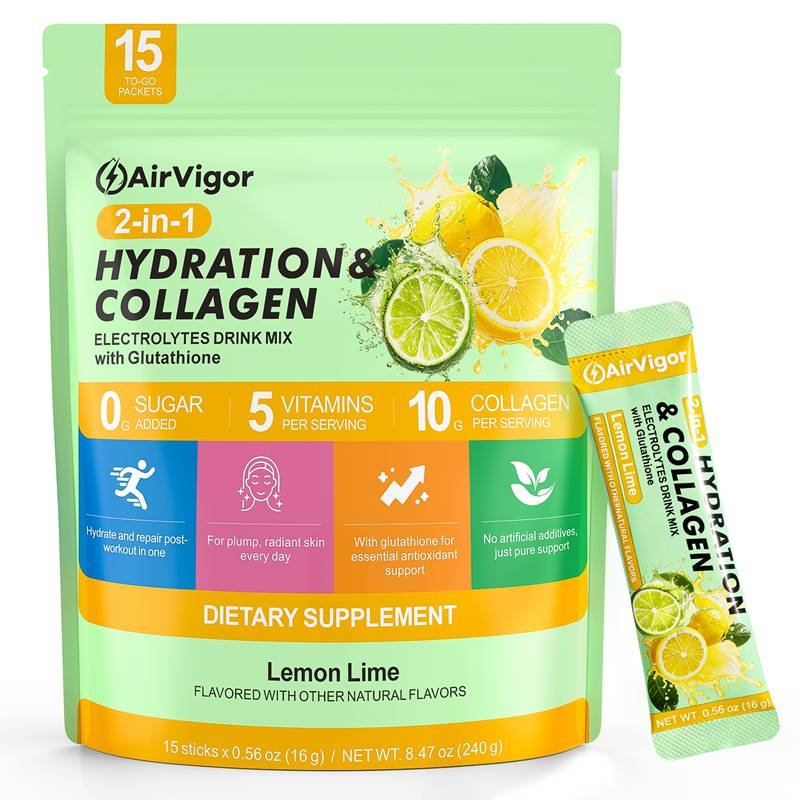
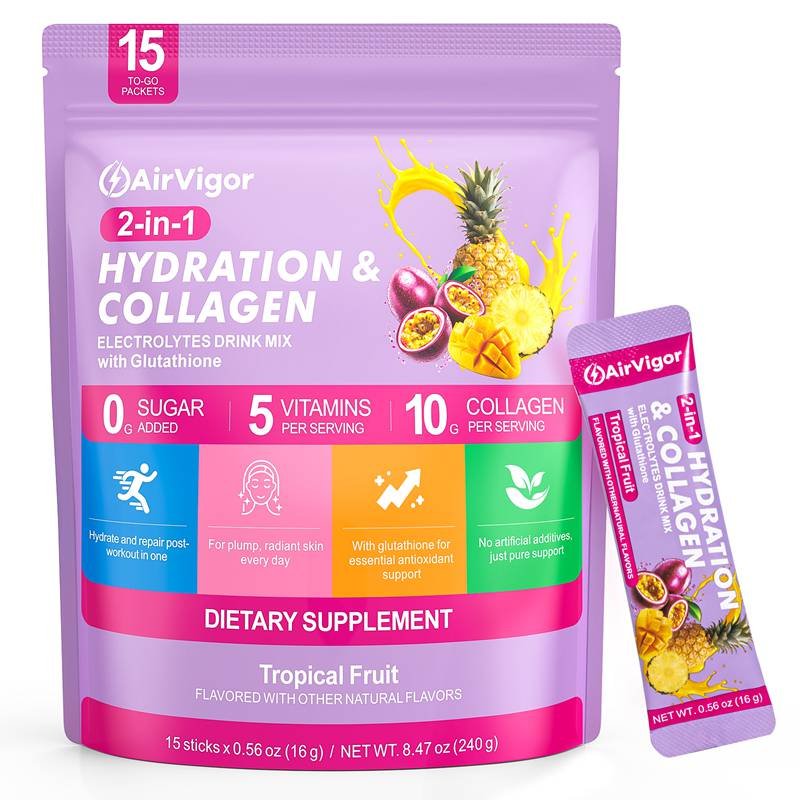
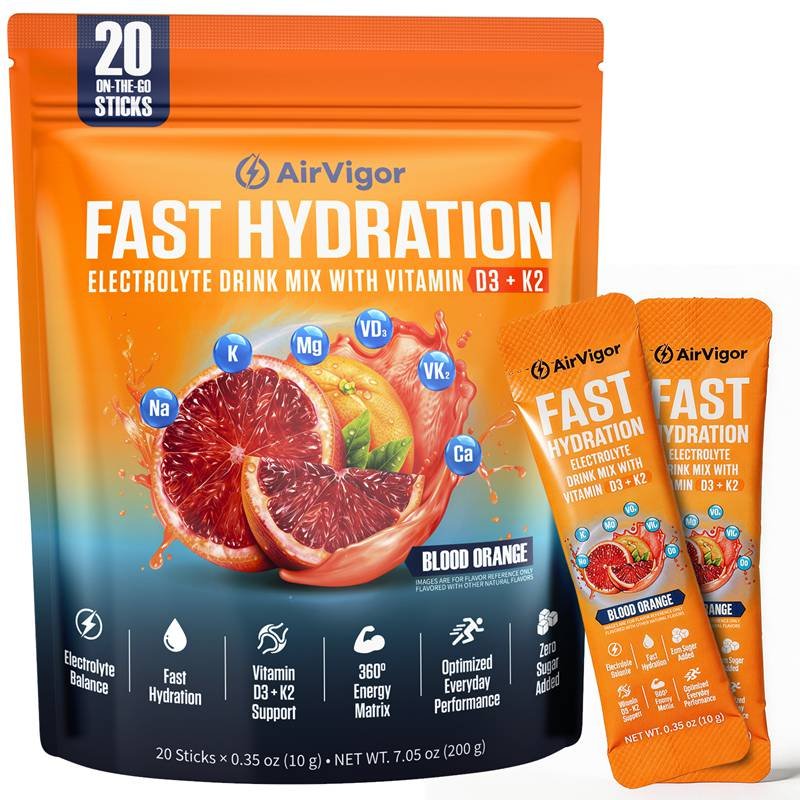
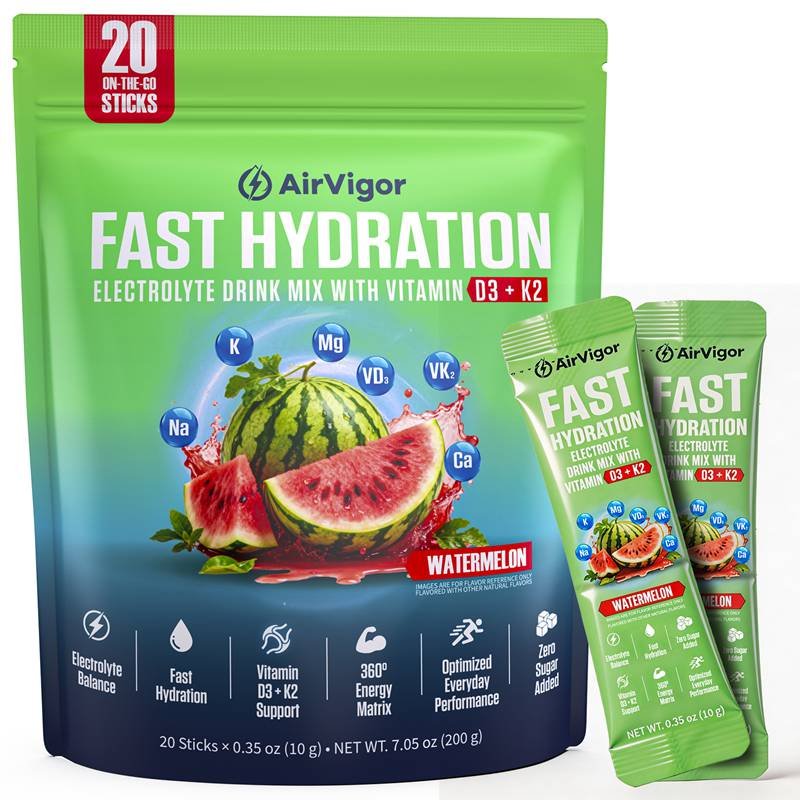
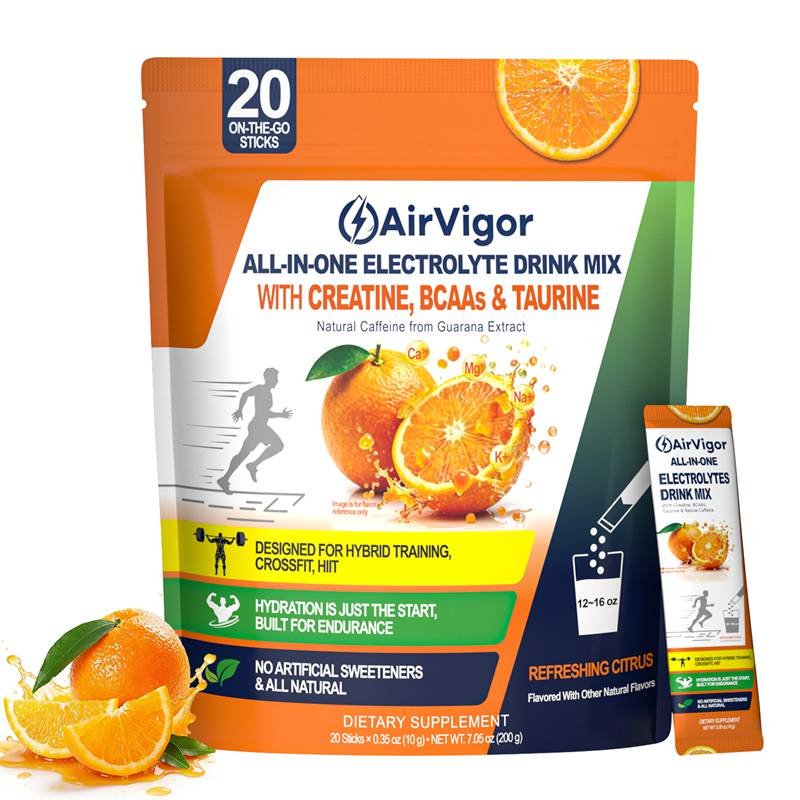
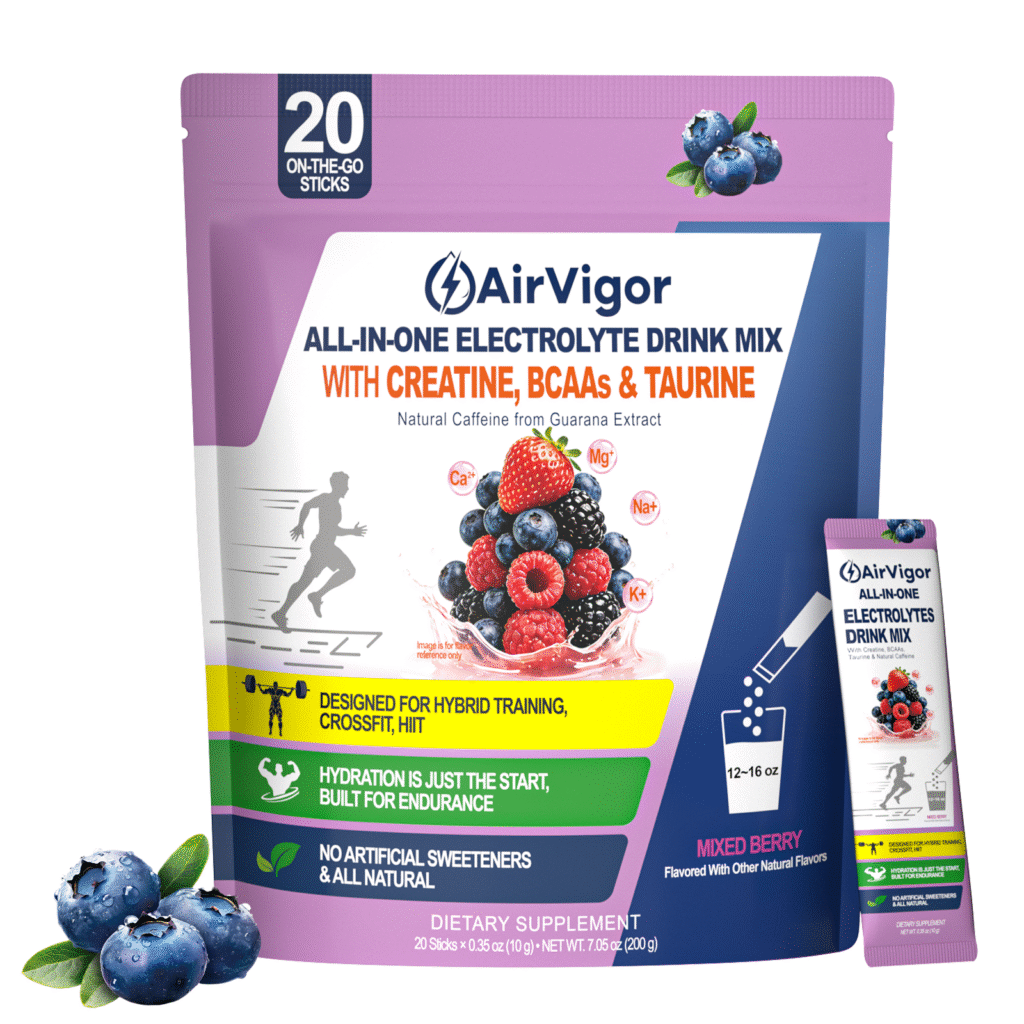
Modern brands that prioritize long-term usability—such as AirVigor—have moved away from this model, focusing instead on mineral balance and absorption efficiency rather than sugar-driven stimulation.
Is sugar added for energy or just for flavor?
In theory, sugar is added to provide energy. In reality, many sugary supplements contain too little carbohydrate to meaningfully fuel performance, but they can still affect insulin, appetite/thirst cues, and digestion—without truly fueling a long session.
Here’s the problem: it’s often enough sugar to affect your blood sugar and appetite, but not enough to actually fuel a hard, long session. Users may feel a brief lift, followed by thirst rebound, bloating, or fatigue—especially when the supplement is consumed repeatedly throughout the day.
For most non-endurance scenarios, sugar acts more as a sensory enhancer than a true performance ingredient.
Why this matters for modern supplement users
Today’s supplement consumers are not only athletes. They include:
- Office workers hydrating during long workdays
- Gym-goers training 45–75 minutes
- Travelers and frequent flyers
- People managing weight, blood sugar, or gut comfort
For these users, sugary supplements often introduce unnecessary complexity. Sugar-free alternatives exist precisely because hydration and electrolyte balance do not require sugar to function.
Understanding what sugary supplements are—and what they are not—helps users make decisions based on physiology rather than habit or flavor expectation.
What Are Sugar-Free Supplements?
Sugar-free supplements are dietary supplements formulated without added sugars such as glucose, sucrose, or maltodextrin. Instead of relying on carbohydrates for function or flavor, they focus on electrolytes, minerals, amino acids, or other active ingredients to support hydration, performance, or recovery. Sugar-free supplements are commonly used for daily hydration and frequent training because they avoid blood sugar spikes and reduce digestive and metabolic burden.
Sugar-free supplements are not simply “sugary supplements without sugar.” They represent a different formulation philosophy—one that prioritizes physiological efficiency, consistency, and long-term usability over immediate sensory impact.
Their rise reflects a broader shift in how people use supplements today: not just during extreme endurance events, but across everyday life, workouts, workdays, travel, and recovery periods.
What does “sugar-free” really mean on supplement labels?
From a regulatory standpoint, “sugar-free” means the product contains no added mono- or disaccharides and typically contributes negligible impact to blood glucose levels. However, nutritionally speaking, sugar-free goes deeper than a label claim.
A truly well-designed sugar-free supplement:
- Does not rely on sugar for absorption
- Does not use sweetness to mask weak formulation
- Can be consumed repeatedly without cumulative metabolic effects
This distinction matters because many users consume hydration or electrolyte supplements daily, sometimes multiple times per day. In that context, removing sugar is less about restriction and more about making the product sustainable.
What ingredients replace sugar in sugar-free supplements?
Sugar-free supplements typically rely on two ingredient categories:
- Functional actives
- Electrolytes (sodium, potassium, magnesium, calcium)
- Amino acids or creatine (in performance formulas)
- Low-impact sweeteners (optional)
- Stevia or monk fruit, used sparingly
- Included for palatability, not energy
Importantly, sweetness becomes a secondary consideration, not a functional driver. The supplement is designed to work even if the flavor is subtle. This is a key difference from sugary formulas, where taste often signals perceived effectiveness.
Brands like AirVigor intentionally keep sweetness light to reduce palate fatigue and gastrointestinal irritation, especially for users who hydrate frequently.
Are sugar-free supplements better than sugar-based ones?
For most modern use cases, yes.
Sugar-free supplements are generally better when:
- Hydration is the primary goal
- Training sessions last under 90 minutes
- Supplements are used daily or multiple times per day
- Users want stable energy without crashes
They support electrolyte balance and fluid absorption without interfering with blood sugar regulation, making them easier to integrate into varied lifestyles.
That said, “better” does not mean “universal.” Sugar-free supplements are optimized for consistency, not acute energy delivery. Their advantage lies in what they don’t do as much as what they do.
Why sugar-free supplements feel different to users
Many users describe sugar-free supplements as:
- “Lighter”
- “Cleaner”
- “More stable”
This is not subjective coincidence. Without sugar:
- Gastric emptying is often smoother
- Thirst signals are clearer
- There is less rebound fatigue
Instead of a noticeable ‘kick,’ you just feel normal—hydrated, steady, and able to train without your stomach fighting you. Over time, this predictability is what drives higher adherence and long-term trust.
Why sugar-free supplements fit modern lifestyles
Today, people are juggling work stress, inconsistent training schedules, travel (often in dry cabin air), and sometimes weight or blood sugar goals—all while trying to stay hydrated.
Sugar-free supplements reduce decision fatigue. Users don’t have to ask, “Is this the right time for sugar?”—they can simply hydrate and move on.
That simplicity is why sugar-free electrolytes, creatine blends, and recovery formulas have become the default choice for daily supplementation, while sugary products are increasingly reserved for specific, high-demand scenarios.

How Do Sugary Supplements Affect the Body?
Sugary supplements affect the body primarily by raising blood glucose and insulin levels. While this can provide short-term energy during prolonged endurance exercise, it may also reduce hydration efficiency, increase digestive stress, and cause energy fluctuations when used outside of high-demand scenarios. For frequent or daily use, sugary supplements can interfere with metabolic stability and gut comfort.
Sugary supplements influence the body through three main physiological pathways: blood sugar regulation, fluid absorption, and digestive response. Whether these effects are helpful or harmful depends almost entirely on context, dose, and frequency of use.
Understanding these mechanisms helps explain why sugar can feel beneficial in one scenario and counterproductive in another.
How does sugar impact blood sugar and insulin?
When a sugary supplement is consumed, glucose enters the bloodstream rapidly, triggering insulin release. This response is efficient and appropriate when muscles are actively consuming glucose—such as during long-duration endurance exercise.
However, in shorter workouts or sedentary contexts, insulin-driven glucose uptake may outpace actual energy demand. This can lead to:
- A brief sense of energy or alertness
- Followed by blood sugar decline
- Resulting in fatigue, thirst rebound, or hunger
Over time, repeated insulin spikes from “functional” drinks consumed casually can reduce metabolic flexibility, especially in users who hydrate multiple times per day.
This is why sugary supplements often feel powerful initially but inconsistent over longer use periods.
Does sugar improve short-term performance?
Sugar can improve performance only when energy availability is the limiting factor. This typically applies to:
- Endurance efforts lasting 90 minutes or longer
- Multi-hour events with continuous energy expenditure
In contrast, many training styles—strength training, interval work, Pilates, yoga—are limited by neuromuscular fatigue, hydration status, or mineral balance, not carbohydrate supply.
In these cases, sugar adds calories without addressing the true bottleneck. Users may mistake sweetness for effectiveness, even when performance gains are negligible.
How does sugar affect hydration and fluid balance?
Sugar alters hydration dynamics by increasing the osmolality of a drink. Higher osmolality can slow gastric emptying and fluid absorption, especially when sugar concentration exceeds physiological needs.
This can lead to:
- Delayed hydration
- Bloating or stomach discomfort
- Increased thirst after initial intake
Ironically, some sugary supplements marketed for hydration may hydrate less efficiently than well-formulated sugar-free electrolytes, particularly when used repeatedly throughout the day.
How does sugar influence digestion and gut comfort?
Sugary supplements can place additional strain on the digestive system. Unabsorbed sugars may draw water into the gut, increasing the risk of:
- Bloating
- Cramping
- Loose stools
This is especially common in warm environments, during exercise, or in individuals with sensitive digestion. Many users who switch to sugar-free formulas report improved gut comfort—not because sugar is inherently “bad,” but because it is often unnecessary.
What’s better for you: sugar or sugar-free?
For most modern supplement users, sugar-free is better. It supports hydration and mineral balance without introducing metabolic or digestive variability.
Sugar still has a role—but it is situational, not foundational. When used strategically, it can support endurance performance. When used habitually, it often complicates hydration and recovery rather than enhancing them.
Why this matters for long-term supplement use
Supplements are not one-time interventions. They are habits.
A formula that spikes energy but disrupts digestion or hydration is difficult to use consistently. Over time, users gravitate toward products that feel predictable, light, and easy to repeat—qualities more often found in sugar-free formulations.
This shift explains why brands like AirVigor emphasize sugar-free electrolyte systems designed for daily reliability rather than occasional intensity.
How Do Sugar-Free Supplements Work?
Sugar-free supplements work by supporting hydration, muscle function, and performance through precise electrolyte and active ingredient delivery—without relying on added sugars, which is why many people notice fewer stomach issues and more consistent workouts. They promote fluid absorption, nerve signaling, and cellular balance while minimizing blood sugar fluctuations and digestive stress, making them suitable for frequent or daily use.
Sugar-free supplements function not by stimulating energy spikes, but by restoring physiological balance. Their effectiveness comes from targeting the systems most commonly stressed during exercise and daily life: fluid regulation, mineral balance, and neuromuscular signaling.
Instead of relying on carbohydrates to “feel” effective, sugar-free formulas focus on what the body actually needs to function smoothly.
How are electrolytes absorbed without sugar?
Electrolyte absorption does not require sugar. Sodium, potassium, magnesium, and calcium move across intestinal membranes through electrochemical gradients and specialized transport channels, independent of glucose.
Sodium plays a central role by driving water movement into the bloodstream, while potassium and magnesium support intracellular fluid balance and muscle contraction. When electrolyte ratios are correctly formulated, hydration occurs efficiently—even in the absence of carbohydrates.
This is why well-designed sugar-free electrolyte supplements can hydrate as effectively as sugary drinks, especially in non-endurance contexts.
Do sugar-free supplements hydrate differently?
Yes. Sugar-free supplements typically produce steadier and more predictable hydration.
Without added sugar, drink osmolality remains lower, which can:
- Speed gastric emptying
- Reduce bloating
- Improve overall fluid uptake
Many users report feeling less “heavy” and experiencing fewer thirst rebounds after switching to sugar-free hydration. These effects become especially noticeable when supplements are used multiple times per day or in warm environments.
For this reason, sugar-free electrolytes are increasingly preferred for daily hydration, travel, and workday use, not just training.
How do sugar-free formulas support performance?
Performance is not only about energy—it’s about signal transmission and muscle efficiency.
Sugar-free supplements support performance by:
- Maintaining nerve impulse transmission through sodium and potassium
- Reducing muscle cramping risk via magnesium and calcium
- Supporting sustained contraction and relaxation cycles
Because they do not spike blood sugar, sugar-free formulas help users feel stable rather than stimulated, which improves coordination, focus, and endurance during moderate-intensity activity.
Are sugar-free supplements easier on the gut?
For many users, yes.
Without sugar drawing excess water into the intestine, sugar-free supplements often:
- Reduce bloating and cramping
- Improve tolerance during exercise
- Lower the risk of nausea in heat or motion
This gut-friendly profile is one reason sugar-free formulations have become popular among yoga practitioners, strength trainers, and individuals with sensitive digestion.
Brands like AirVigor design sugar-free products with fast dissolution and minimal fillers, further reducing digestive load.
What are the limitations of sugar-free supplements?
Sugar-free does not mean universally optimal. These formulas are not designed to provide rapid carbohydrate energy.
During:
- Ultra-endurance events
- Multi-hour competitions
- Situations of extreme glycogen depletion
Sugar-free supplements should be paired with appropriate fueling strategies rather than used alone. Their strength lies in supporting hydration and balance, not replacing calories.
Why sugar-free supplements work best as a daily foundation
Sugar-free supplements excel when used consistently. They remove the need to constantly evaluate whether sugar is appropriate, making them easier to integrate into daily routines.
This is why many modern users adopt a layered strategy:
- Sugar-free electrolytes for daily hydration and training
- Targeted carbohydrate intake only when truly needed
This approach reduces unnecessary sugar exposure while preserving performance where it matters most.
Which Is Better for Different Use Cases?
Neither sugar-free nor sugary supplements are universally better. Sugar-free supplements are ideal for daily hydration, short to moderate workouts, and long-term use, while sugary supplements are best reserved for prolonged endurance or extreme energy-depletion scenarios. The optimal choice depends on workout duration, intensity, frequency of use, and individual tolerance.
The most common mistake consumers make is asking “Which is better?” without first asking “Better for what?” Supplements are tools, and tools only make sense when matched to the task.
Below is a use-case–based breakdown that reflects how supplements are actually used in real life—not just how they are marketed.
Which is better for intense training sessions?
For high-intensity but time-limited workouts (30–90 minutes)—including strength training, HIIT, CrossFit, hot yoga, and group fitness—sugar-free supplements are usually the better choice.
In these sessions, performance is usually limited by two things:
- Hydration and electrolyte balance
- How well your nervous system can keep output high
And honestly, if your stomach gets upset mid-workout, that becomes the limiter fast.
Glycogen depletion is rarely the limiting factor. Adding sugar may create a brief sense of energy but does not meaningfully improve output—and may increase stomach discomfort, especially when training occurs after meals.
Sugar-free electrolyte formulas support focus and muscle function without overstimulation, making them easier to use consistently.
Sugar-Free Electrolytes vs Sports Drinks: What’s the Difference?
Sugar-free electrolytes are mainly for hydration and mineral balance, while sports drinks are typically designed for energy delivery (carbohydrates + electrolytes). If your workout is under ~90 minutes and you’re fueling with normal meals, sugar-free electrolytes usually make more sense. Sports drinks become more useful when sessions are long enough that both hydration and carbs are limiting.
Most people search “sugar-free electrolyte vs sports drink” because both come in bright packaging and both claim “hydration.” But the job is different.
- A sports drink is basically “hydration + carbs.” It’s meant to keep blood glucose steadier during long sessions. That can be helpful in endurance events, but it also means more calories, a stronger sweetness profile, and sometimes more GI risk if you sip it casually all day.
- A sugar-free electrolyte is “hydration without the fuel.” It’s easier to use daily, easier on the stomach for many people, and won’t create the energy spike/crash cycle.
A simple way to decide:
If you’re trying to hydrate (workday, travel, short workouts), go sugar-free. If you’re trying to fuel a long session (2+ hours), a sports drink or carb plan can help.
Which is better for daily hydration?
Sugar-free supplements are clearly superior for daily hydration.
Hydration is a baseline physiological need, not a performance event. When sugary supplements are used throughout the day, they introduce unnecessary variables:
- Repeated insulin responses
- Extra calories
- Palate fatigue and thirst rebound
Sugar-free hydration allows users to maintain fluid and mineral balance without influencing appetite, blood sugar, or digestion. This is why sugar-free electrolyte powders and tablets are increasingly used during workdays, travel, and sedentary periods.
Which is better for weight management?
From a weight management and metabolic perspective, sugar-free supplements are the safer and more predictable option.
Even small amounts of sugar can:
- Trigger cravings
- Blur hunger cues
- Accumulate unnoticed over time
Sugar-free supplements remove this risk entirely. Users can hydrate and replenish electrolytes without worrying about caloric intake or unintended energy spikes, making them compatible with calorie-controlled diets and body recomposition goals.
Which is better for endurance sports?
Sugary supplements still have a role in prolonged endurance activities, such as long-distance cycling, marathons, and ultra-endurance events.
Sugar can help in long events because it can:
- Keep blood glucose steadier late in the session
- Delay that “sudden drop” feeling
- And yes—sometimes it’s simply easier to keep moving when you’re not bonking
However, even endurance athletes increasingly separate their strategies:
- Sugar-free electrolytes for training, recovery, and daily hydration
- Targeted carbohydrate fueling only during long events
This approach reduces unnecessary sugar intake while preserving performance when it truly matters.
Which is better for gut comfort and tolerance?
Sugar-free supplements are generally easier on the digestive system.
Sugars increase drink osmolality and may draw water into the intestine, raising the risk of bloating, cramping, or loose stools—especially in heat or during movement.
Users with sensitive digestion often report improved tolerance after switching to sugar-free formulas, particularly when supplements are consumed during exercise or multiple times per day.
Which is better for long-term consistency?
Long-term consistency favors sugar-free supplements.
A product that causes occasional discomfort, energy crashes, or uncertainty is difficult to maintain as a habit. Sugar-free formulas tend to feel:
- Lighter
- More predictable
- Easier to repeat
This consistency is why brands like AirVigor design sugar-free electrolytes intended for daily use rather than occasional intensity.
| Use Case | Better Option | Why This Works Better |
|---|---|---|
| Daily hydration | Sugar-free | Sugar-free supplements support hydration without raising blood sugar or insulin, making them safe and repeatable for everyday use, including workdays, travel, and light activity. |
| 30–90 minute workouts | Sugar-free | In short to moderate workouts, performance is limited by hydration and electrolyte balance—not energy availability. Sugar-free formulas hydrate efficiently without unnecessary calories. |
| Weight management | Sugar-free | Sugar-free supplements provide electrolyte support without hidden calories or appetite stimulation, helping users maintain metabolic control and consistent dietary habits. |
| Sensitive digestion | Sugar-free | Lower osmolality and the absence of added sugars reduce bloating, cramping, and gastrointestinal stress, especially during exercise or heat exposure. |
| 2+ hour endurance sessions | Sugary (situational) | During prolonged endurance exercise, added carbohydrates help maintain blood glucose and delay fatigue when glycogen depletion becomes a performance limiter. |
| Multiple daily uses | Sugar-free | Sugar-free supplements remain metabolically stable when used several times per day, avoiding repeated insulin spikes and reducing long-term digestive and metabolic strain. |

Are Sugar-Free Supplements Healthier Long Term?
For most people, sugar-free supplements are healthier for long-term use because they support hydration and performance without repeatedly raising blood sugar, adding unnecessary calories, or increasing digestive stress. While sugary supplements can be useful in specific endurance scenarios, sugar-free formulas are better suited for daily or frequent use where metabolic stability and consistency matter most.
When evaluating long-term health, the key question isn’t whether sugar is “good” or “bad.” It’s whether repeated exposure to sugar through supplements provides meaningful benefit relative to its physiological cost. Over weeks, months, and years, small formulation choices compound into measurable differences in metabolic load, digestive comfort, and behavioral consistency.
Sugar-free supplements tend to perform better across these long-term dimensions.
Do sugary supplements increase long-term metabolic strain?
Sugary supplements stimulate insulin release every time they are consumed. While this is normal in the presence of meals or prolonged energy expenditure, frequent insulin spikes without corresponding energy demand can reduce metabolic flexibility over time.
For users who:
- Hydrate multiple times per day
- Train moderately rather than exhaustively
- Use supplements outside of competition
Added sugar often contributes little functional value while still engaging blood glucose regulation. Over the long term, this pattern may increase the risk of energy crashes, appetite dysregulation, and unintended caloric surplus.
Sugar-free supplements avoid this issue entirely by delivering hydration and minerals without altering blood glucose dynamics.
Are sugar-free supplements safer for daily use?
Yes—particularly when the supplement is designed with appropriate electrolyte dosing and transparent labeling.
Daily-use supplements must meet a higher standard than occasional performance fuels. They should:
- Be tolerable when used repeatedly
- Avoid cumulative metabolic effects
- Support normal appetite and thirst signals
Sugar-free formulas are inherently better aligned with these requirements. This is why sugar-free electrolytes are increasingly used not only by athletes, but also by office workers, travelers, and individuals focused on long-term health maintenance.
Brands such as AirVigor formulate sugar-free products specifically for repeat use, emphasizing mineral balance and solubility rather than sensory intensity.
Are Sugar-Free Tablets Better Than Sugary Tablets?
Often, yes—especially for daily use. Sugar-free tablets are typically better for people who want electrolytes without extra calories or blood sugar impact. Sugary tablets may make sense only when you specifically need carbohydrate energy during prolonged endurance training. The “best” option depends on how often you use tablets, your digestion, and whether you’re actually training long enough to require carbs.
When people ask “are sugar-free tablets better than sugary tablets,” they’re usually thinking about convenience: drop it in water, drink, done. The real difference isn’t the tablet format—it’s what’s inside.
- Sugary tablets can behave like a mini sports drink. Even small sugar amounts can still affect appetite and thirst cues, and if you take them multiple times per day, those “small” amounts add up.
- Sugar-free tablets are usually a better match for daily hydration because they don’t bring the blood sugar swings or extra calories.
Also, tablets vs powder is a common comparison: “sugar-free electrolyte tablets vs powder.”
In practice, tablets win on portability and simplicity. Powders win on flexibility (you can adjust strength and flavors more easily) and sometimes higher mineral dosing per serving. If you travel a lot, tablets are convenient; if you train hard and want precise dosing, powders may fit better.
So, is sugar-free better than sugar? For daily hydration and frequent use, usually yes. Sugar is a tool—helpful when you’re truly fueling a long session, but unnecessary for most everyday hydration.
How does sugar affect long-term consistency and adherence?
Consistency is one of the most overlooked factors in supplement effectiveness.
Products that cause:
- Occasional bloating
- Thirst rebound
- Energy spikes followed by dips
are harder to use consistently, even if they feel powerful at first. Many users gradually reduce intake or abandon these products altogether.
Sugar-free supplements, by contrast, tend to feel neutral and predictable. They don’t demand attention from the body, which makes them easier to integrate into daily routines. Over time, this predictability leads to higher adherence—and better real-world outcomes.
What is the safest sugar supplement to take long term?
If sugar is included, safety depends on dose, timing, and necessity.
The safest approach to sugar supplementation is:
- Use sugar only when energy depletion is expected (e.g., 2+ hour endurance events)
- Avoid sugar in products meant for daily hydration
- Keep carbohydrate intake intentional, not habitual
From a long-term health perspective, the safest sugar supplement is one that is used sparingly and strategically, rather than embedded into everyday routines.
Why long-term health favors sugar-free as a default
Modern lifestyles involve:
- Irregular training schedules
- Mixed activity intensities
- Frequent hydration needs
- Increased focus on metabolic health
Sugar-free supplements reduce decision fatigue. Users don’t need to ask, “Is this the right time for sugar?”—they can hydrate without second-guessing downstream effects.
This makes sugar-free formulations the healthier default choice over the long term, with sugary supplements reserved for clearly defined, high-demand situations.
| Factor | Sugar-Free Supplements | Sugary Supplements |
|---|---|---|
| Daily safety | Designed for daily or frequent use without triggering blood sugar fluctuations, making them safer for long-term hydration and routine supplementation. | Safe only when matched to high energy demand; frequent use may introduce unnecessary metabolic stress. |
| Blood sugar impact | Minimal effect on blood glucose and insulin, supporting metabolic stability and steady energy levels throughout the day. | Repeated blood sugar and insulin spikes, especially when used outside of endurance or fueling scenarios. |
| Digestive tolerance | Generally easier on the gut due to lower osmolality and absence of added sugars, reducing bloating and gastrointestinal discomfort. | Digestive response varies; added sugars may slow gastric emptying and increase bloating or cramping for some users. |
| Caloric load | None or negligible calories, allowing hydration and electrolyte support without contributing to daily caloric intake. | Calories accumulate over time, particularly when used multiple times per day or alongside regular meals. |
| Long-term adherence | High adherence due to predictable effects, light taste, and suitability for repeat use without side effects. | Often inconsistent adherence due to taste fatigue, energy crashes, or digestive issues over time. |
| Best role | Serves as a daily hydration and electrolyte foundation for training, workdays, travel, and recovery. | Functions best as a situational energy fuel during prolonged endurance or extreme energy depletion. |
How to Choose the Right Supplement for You?
To choose the right supplement, focus on how often you’ll use it, in what situations, and how your body responds. Daily or frequent use favors sugar-free supplements for stability and tolerance, while sugary supplements are best reserved for prolonged endurance needs. The right choice prioritizes consistency, digestion, and real physiological demand—not flavor intensity or marketing claims.
Choosing a supplement isn’t about finding the “strongest” formula—it’s about finding the most appropriate one. The best supplement is the one that fits seamlessly into your routine, supports your goals, and doesn’t introduce new problems over time.
Below is a practical, step-by-step framework to help users make decisions with confidence.
How often will you use the supplement?
Frequency is the most important—and most overlooked—factor.
If you plan to use a supplement:
- Daily or multiple times per day → sugar-free is almost always the better choice
- Only during long endurance events → sugar-containing options may be appropriate
A supplement used frequently must be metabolically quiet and digestive-friendly. Sugar-free formulas are designed with this repeatability in mind, while sugary supplements are better treated as event-specific tools, not daily staples.
What problem are you trying to solve?
Different supplements solve different problems. Be specific.
Ask yourself:
- Are you dehydrated or cramping? → electrolytes matter
- Are you fatigued after hours of activity? → energy may matter
- Are you struggling with consistency or gut comfort? → simplicity matters
If hydration, mineral balance, or recovery is the goal, sugar adds little value. Many users mistakenly choose sugary supplements when the real issue is electrolyte imbalance—not energy deficiency.
How does your body respond to sugar?
Individual tolerance varies widely.
Some users experience:
- Energy spikes followed by crashes
- Increased thirst shortly after drinking
- Bloating or stomach discomfort
If any of these sound familiar, sugar-free supplements are usually a better fit. They reduce variables and make it easier to interpret how your body responds, especially when used around workouts or throughout the day.
How long are your typical workouts?
Workout duration helps clarify whether sugar is functionally necessary.
- Under 90 minutes → hydration and electrolytes are the priority
- Over 2 hours of continuous effort → carbohydrate support may be useful
For most modern training styles—strength, HIIT, Pilates, yoga—sugar-free supplements fully cover physiological needs without adding unnecessary load.
How important is long-term consistency?
Supplements only work if you keep using them.
Products that cause:
- Digestive discomfort
- Energy volatility
- Uncertainty about “when to take them”
are harder to maintain as habits. Sugar-free supplements tend to feel neutral and predictable, which makes them easier to stick with over weeks and months.
This is why brands like AirVigor design sugar-free electrolytes and performance supplements specifically for daily reliability, not just acute intensity.
How to read labels without overthinking them
You don’t need to be a nutrition expert—but you do need to look past the front label.
Focus on:
- Sugar content per serving
- Electrolyte amounts and balance
- Serving size and recommended frequency
If sugar appears primarily for flavor and not for a clear performance reason, it’s likely unnecessary. A cleaner label often signals a more intentional formula.
| Question | If “Yes” | Better Choice |
|---|---|---|
| Will I use this supplement daily or multiple times per day? | Yes | Sugar-free — supports repeat use without blood sugar spikes or cumulative metabolic stress. |
| Are my workouts typically under 90 minutes? | Yes | Sugar-free — hydration and electrolyte balance matter more than carbohydrate energy at this duration. |
| Do I experience bloating, cramping, or stomach discomfort easily? | Yes | Sugar-free — lower osmolality and no added sugars improve digestive tolerance during activity. |
| Am I training or competing for 2+ hours continuously? | Yes | Sugary (situational) — added carbohydrates help maintain blood glucose when glycogen depletion limits performance. |
| Is hydration rather than energy my main goal? | Yes | Sugar-free — delivers fluid and minerals without unnecessary calories or insulin response. |
Do Athletes Really Need Sugar in Supplements?
Some athletes need sugar in supplements—but many do not. Sugar is beneficial during prolonged endurance exercise where glycogen depletion limits performance. For most strength, interval, and recreational athletes, sugar-free supplements provide adequate hydration and mineral support without unnecessary blood sugar spikes. The need for sugar depends on sport type, duration, and fueling strategy—not athletic identity alone.
The idea that “athletes need sugar” comes from a narrow slice of sports nutrition history—one dominated by endurance racing and carbohydrate-centric fueling models. While sugar still plays a role in specific contexts, modern training is far more diverse, and so are athletes’ nutritional needs.
To answer this question accurately, we need to stop grouping all athletes together.
Do endurance athletes need sugar?
Yes—in the right situations.
During prolonged endurance activities (typically 90–120+ minutes of continuous effort), muscle glycogen depletion becomes a real performance limiter. In these cases, sugar can:
- Maintain blood glucose
- Delay fatigue
- Support sustained power output
This is why marathon runners, long-distance cyclists, and ultra-endurance athletes often use carbohydrate-containing fuels during events.
However, even endurance athletes do not need sugar at all times. Many now separate:
- Sugar-free electrolytes for daily training and hydration
- Targeted carbohydrate intake during races or very long sessions
This reduces unnecessary sugar exposure while preserving race-day performance.
Do strength and power athletes need sugar?
In most cases, no.
Strength training, Olympic lifting, CrossFit-style workouts, and sprint-based sports rely primarily on:
- Phosphocreatine energy systems
- Neural drive and coordination
- Adequate hydration and electrolyte balance
These systems are not limited by immediate carbohydrate availability during typical training durations. Adding sugar rarely improves strength output and may increase digestive stress, especially when training occurs close to meals.
For these athletes, sugar-free supplements better support focus, muscle function, and repeatability.
Do team sport and interval athletes need sugar?
Sometimes—but not by default.
Athletes in sports like soccer, basketball, hockey, or combat sports experience intermittent high-intensity bursts, often within sessions lasting 60–90 minutes.
In these scenarios:
- Hydration and electrolytes are primary
- Sugar may help late in extended matches or tournaments
- Daily training rarely requires added sugar
Many athletes perform best using sugar-free hydration for most sessions and reserving carbohydrates for competition days or double-session training blocks.
Does sugar improve athletic performance—or just perception?
Sugar creates a strong sensory signal: sweetness, warmth, and perceived energy. This can feel like improved performance even when physiological output doesn’t change.
This distinction matters. Athletes may associate sugar with “feeling ready,” while the actual performance benefit is minimal or situational. Over time, relying on sugar for perceived readiness can mask hydration or recovery issues that sugar-free formulas address more directly.
Why many athletes are shifting toward sugar-free supplements
Across training communities, a pattern has emerged:
- Sugar-free for daily hydration and training
- Sugar only when energy demand clearly exceeds supply
This shift is driven by:
- Improved gut comfort
- More stable energy levels
- Better long-term consistency
Brands like AirVigor design sugar-free electrolyte and performance supplements specifically for this modern training reality—where athletes train frequently, not just occasionally at extremes.
| Athlete Type | Typical Physiological Need | Better Choice |
|---|---|---|
| Endurance athletes (2+ hours) | Sustained energy to prevent glycogen depletion and maintain blood glucose during prolonged continuous effort. | Sugary (situational) — added carbohydrates support endurance performance when energy availability becomes the limiting factor. |
| Strength / power athletes | Stable hydration, neuromuscular signaling, and focus rather than rapid energy delivery. | Sugar-free — supports muscle function and training quality without unnecessary blood sugar spikes. |
| HIIT / CrossFit athletes | Electrolyte balance and fluid replacement during high-intensity, short-duration sessions. | Sugar-free — hydration and minerals matter more than carbohydrates in workouts typically under 90 minutes. |
| Team sport athletes (training) | Hydration and recovery across repeated sessions without digestive or metabolic burden. | Sugar-free — allows frequent use without accumulating calories or disrupting blood sugar control. |
| Team sport athletes (matches / tournaments) | A combination of hydration and energy support depending on match length and intensity. | Context-dependent — sugar may be useful late in long matches, while sugar-free works better for early or shorter play. |
| Daily training athletes | Consistency, tolerance, and repeatability across frequent training days. | Sugar-free — designed for long-term use with predictable effects and minimal side effects. |

Sugar-Free vs Sugary Supplements: Final Comparison
Sugar-free supplements are better for daily hydration, frequent training, and long-term health, while sugary supplements are best used strategically during prolonged endurance or extreme energy depletion. The key difference is not effectiveness, but suitability: sugar-free formulas support consistency and metabolic stability, whereas sugary supplements function as situational energy tools. Most users benefit from sugar-free as the default choice.
After examining definitions, mechanisms, use cases, and long-term health effects, one conclusion becomes clear:
In practice, most people do best with sugar-free as the everyday option, and carbs only when the session is long enough to require it.
Sugar-free and sugary supplements serve fundamentally different roles. Problems arise when sugary supplements—originally designed for extreme endurance—are used as everyday hydration or training aids.
Key differences that actually matter
The most meaningful differences between sugar-free and sugary supplements show up over time, not in a single workout.
- Sugar-free supplements emphasize stability: hydration, electrolyte balance, gut comfort, and repeatability.
- Sugary supplements emphasize immediacy: rapid glucose availability and perceptible energy.
For most users training under 90 minutes or hydrating multiple times per day, immediacy is not the limiting factor—consistency is.
| Category | Sugar-Free Supplements | Sugary Supplements |
|---|---|---|
| Primary role | Designed to support hydration, electrolyte balance, and muscle function without relying on carbohydrates, making them suitable for frequent and daily use. | Designed to deliver rapid carbohydrate energy to maintain blood glucose during prolonged or high-demand endurance activity. |
| Blood sugar impact | Minimal to no impact on blood glucose or insulin, helping maintain metabolic stability and steady energy levels throughout the day. | Causes noticeable increases in blood glucose and insulin, which may be beneficial during endurance events but disruptive when used routinely. |
| Daily use | Well-suited for daily or repeated use, including workdays, travel, and regular training, without accumulating metabolic side effects. | Often excessive for daily use, as repeated intake can add unnecessary calories and increase metabolic load. |
| Digestive tolerance | Generally higher due to lower osmolality and absence of added sugars, reducing bloating, cramping, and stomach discomfort. | Variable tolerance; added sugars may slow gastric emptying and increase gastrointestinal discomfort, especially during heat or movement. |
| Energy spikes | Does not create artificial energy spikes, supporting stable focus and physical performance without crashes. | Produces rapid energy spikes that may feel effective short term but can be followed by fatigue or thirst rebound. |
| Long-term adherence | High adherence because effects are predictable, taste is lighter, and formulas are easier to tolerate over weeks and months. | Lower adherence over time due to taste fatigue, digestive issues, or inconsistent energy response. |
| Best use | Serves as a daily foundation for hydration, training, recovery, and long-term health maintenance. | Functions best as a situational tool for prolonged endurance or extreme energy depletion scenarios. |
This table reflects real-world usage, not idealized marketing scenarios.
Common myths clarified
Myth 1: “Sugary supplements hydrate better.”
Hydration is driven by fluid and electrolytes—not sweetness. In many cases, sugar increases drink osmolality and slows fluid absorption.
Myth 2: “Athletes always need sugar.”
Athletes need sugar only when carbohydrate availability limits performance. Most training sessions do not meet that threshold.
Myth 3: “Sugar-free means weaker.”
Sugar-free formulas are not weaker—they are more specific. They target hydration and mineral balance without unnecessary stimulation.
Why sugar-free works better as a default choice
Modern supplement use looks very different than it did 20 years ago. People now:
- Train more frequently
- Mix intensities
- Hydrate throughout the day
- Care about metabolic health and gut comfort
In this environment, sugar-free supplements reduce friction. Users don’t need to time intake perfectly or worry about cumulative effects. They can hydrate, train, and recover with minimal downside.
A lot of people end up doing this:
- Sugar-free electrolytes most days
- Carbs only when the session is truly long (or you’re stacking multiple sessions)
Where sugary supplements still make sense
Sugary supplements are not obsolete. They remain useful when:
- Exercise exceeds 2 hours continuously
- Energy depletion is expected and measurable
- Performance is limited by glycogen availability
Used intentionally, sugar can support endurance. Used habitually, it often adds complexity without benefit.
A simple rule: if you’re training under ~90 minutes, prioritize electrolytes; if you’re going 2+ hours, plan carbs.
When you stop treating sugar as a default ingredient and start treating it as a targeted option, supplement decisions become clearer, simpler, and more sustainable.
That’s the idea behind AirVigor’s sugar-free line—daily hydration and performance support without turning every bottle into a sugar hit
Conclusion
Sugar-free vs sugary supplements is not about which option is “stronger,” but which one fits your real needs.
For most people, most days, sugar-free supplements make more sense. They support hydration, electrolyte balance, and performance without unnecessary blood sugar spikes, digestive stress, or hidden calories. That makes them easier to use consistently—at the gym, at work, while traveling, and over the long term.
Sugary supplements still have a place. During prolonged endurance efforts where carbohydrate depletion truly limits performance, sugar can be a useful tool. The key is intentional use, not habit.
When you treat sugar-free formulas as your daily foundation and reserve sugar for specific high-demand scenarios, supplementation becomes simpler, more sustainable, and more aligned with modern lifestyles.
That’s the philosophy behind AirVigor: clean, sugar-free hydration and performance supplements designed for real-world, repeatable use—day after day.