Skip to content
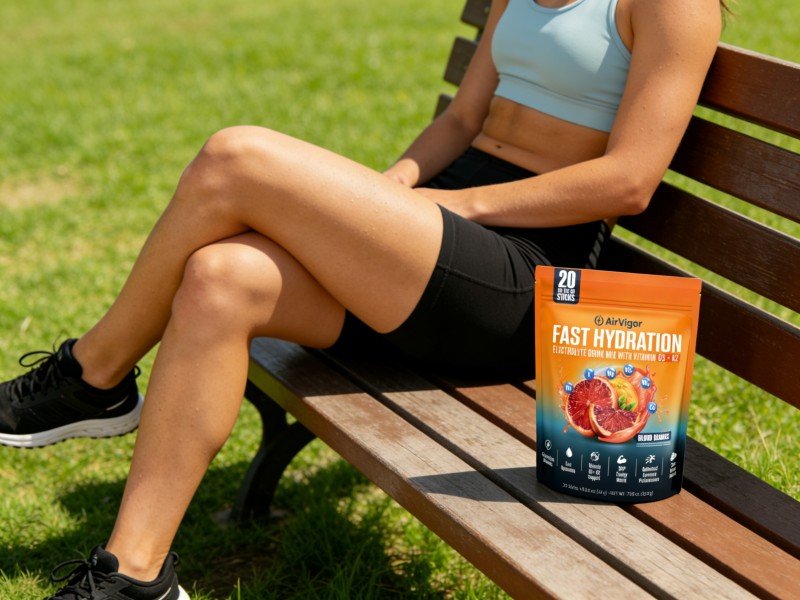
When people read an electrolyte label, they often look at magnesium first because it sounds advanced, or potassium because it sounds “cleaner.” But in real training and real hydration, sodium is usually the mineral doing the heaviest lifting. It is the electrolyte most closely tied to fluid balance outside cells, sweat loss, and the body’s ability to hold onto the water you actually drink. That is why sports-hydration guidance has emphasized sodium for decades, especially once exercise lasts beyond about an hour or sweat loss becomes meaningful. Classic ACSM guidance recommends including about 0.5–0.7 g of sodium per liter in rehydration fluid during exercise longer than 1 hour, because it can improve palatability, support fluid retention, and help reduce the risk of dilution-related problems in some people who overdrink plain water.
Sodium in Recovery Electrolyte with D3K2 supports hydration by helping the body maintain fluid balance and by making rehydration more effective than water alone in many longer or hotter exercise settings. In sports use, sodium is not the same conversation as everyday public-health sodium limits: WHO recommends adults keep total daily sodium intake below 2,000 mg/day to reduce chronic disease risk in the general population, but sports products are designed around sweat replacement and training context, not ordinary sedentary eating patterns. That distinction is one of the biggest reasons people get confused when reading electrolyte labels.
That is also what makes sodium such an important ingredient to explain well. Too little sodium in a workout drink and the product may feel flat, weak, or less effective in heavy sweat conditions. Too much sodium, used in the wrong situation, can make the drink overly salty or unnecessary for the session. The goal is not “more sodium is always better.” The goal is enough sodium to match the session, the sweat loss, and the user. If you have ever finished a hot workout feeling like water went in but did not really seem to “stick,” sodium is usually the first ingredient worth understanding.
What Is Sodium in Recovery Electrolyte with D3K2?
Sodium in Recovery Electrolyte with D3K2 is the formula’s main hydration-driving mineral. It helps support fluid balance, helps replace what is lost in sweat, and makes hydration feel more complete in workouts where plain water may not be enough on its own. For many active users, sodium is the ingredient that determines whether an electrolyte drink feels genuinely useful or just tastes like flavored water.
What Does Sodium in Recovery Electrolyte with D3K2 Do?
In real use, sodium does four jobs that customers can actually feel.
First, sodium helps support fluid balance during and after sweating. This is why sodium is usually the lead mineral in serious hydration formulas. It is not there just to make the label look more complete. It is there because sweat removes sodium in amounts that matter.
Second, sodium helps the drink better match what training actually costs the body. When a product contains very little sodium, it may still taste nice, but it can feel less useful in hot weather, long sessions, or repeated-sweat conditions.
Third, sodium can improve the practical effectiveness of the drink. ACSM guidance noted that sodium in rehydration fluid can help with palatability, support fluid retention, and reduce dilution-related problems in some people who drink excessive plain water during long exercise.
Fourth, sodium helps turn the drink into more of a real session tool instead of just a flavored beverage.
A practical breakdown:
| What sodium helps with | Why customers notice it |
|---|---|
| Fluid balance support | Hydration feels more effective |
| Sweat-loss replacement | Hot or long sessions feel easier to manage |
| Better drink utility | The bottle feels more “fit for purpose” |
| More complete rehydration | Post-workout drinking feels more satisfying |
For many customers, sodium is the reason an electrolyte formula feels like a real hydration product instead of a light wellness drink.
Why Is Sodium in Recovery Electrolyte with D3K2 Important?
Sodium is important because it sits exactly where hydration problems usually start: sweat loss and fluid replacement.
This matters most when:
- exercise lasts longer than about 60 minutes
- the environment is hot or humid
- sweat rate is high
- the user is a salty sweater
- the session happens repeatedly across the week
ACSM’s long-standing position recommended about 0.5–0.7 grams of sodium per liter of water in rehydration solutions for exercise lasting longer than 1 hour. More recent IOC guidance continues to support this same practical range for most athletes exercising longer than an hour, and notes that sodium may go higher in specific heat and cramp-prone situations.
A useful way to judge sodium importance is by session type:
| Situation | Why sodium becomes more important |
|---|---|
| Short cool workout | Sweat losses stay relatively low |
| Long workout | Sweat and sodium losses have more time to accumulate |
| Heat or humidity | Sweat rate often rises |
| Heavy sweater | Sodium loss can become much more meaningful |
| Long outdoor work | Fluid and sodium losses can build for hours |
For customers, this means sodium is not important because “science says so” in an abstract way. It is important because it often changes whether hydration feels temporary or effective.
Is Sodium in Recovery Electrolyte with D3K2 Better Than Water Alone?
Sometimes yes, sometimes no.
If the workout is short, cool, and low-sweat, plain water is often enough. Mayo Clinic guidance still makes that point clearly: water is generally the best way to replace lost fluids, but if exercise goes longer than 60 minutes, a sports drink can help maintain electrolyte balance.
But once the session gets longer, hotter, or more sweat-heavy, water alone may start to feel less complete. This is especially true for users who:
- sweat early and heavily
- train outdoors in summer
- do endurance sessions
- stack long workdays and workouts together
- often feel flat even though they “drank plenty.”
A practical comparison:
| Training situation | Water alone | Sodium-containing electrolyte drink |
|---|---|---|
| 20–30 min easy indoor workout | Usually enough | Often unnecessary |
| 45–60 min moderate workout | Sometimes enough | Sometimes useful |
| 60+ min workout | Can feel less complete | Usually more useful |
| Hot-weather session | Less targeted | Better fit |
| Heavy sweat training | Often less effective alone | Stronger fit |
The smarter question is not “Is sodium always better than water?”
It is “Is this the kind of session where water alone may stop feeling like enough?”
If yes, sodium usually becomes much more relevant.
Which Workouts Need Sodium in Recovery Electrolyte with D3K2?
The strongest fit is not simply “hard workouts.” It is workouts where sweat, heat, or duration make replacement more important.
That often includes:
- runs beyond about 60 minutes
- long cycling sessions
- hot outdoor training
- long gym sessions with visible sweat
- physically demanding outdoor work
A simple fit guide:
| Workout type | Need for sodium support |
|---|---|
| Easy mobility or stretching | Low |
| Short low-sweat workout | Low |
| 45–60 min moderate session | Moderate |
| 60+ min endurance session | High |
| Hot outdoor activity | High |
| High-sweat training | High |
This is also where customers should remember that sports sodium and everyday diet sodium are not the same conversation. WHO recommends adults keep total sodium intake below 2,000 mg/day for long-term public-health reasons, and the global average salt intake is still far above that target. But a workout drink is being used in a specific sweat-replacement context, not as a substitute for high-sodium processed food.
So the best way to understand what sodium does in Recovery Electrolyte with D3K2 is this:
- it helps match real sweat losses
- it helps fluid replacement feel more effective
- it becomes more important as workouts get longer, hotter, and sweatier
- it is often the first ingredient that tells you whether the formula is built for real hydration or just for label appeal
That is why experienced users often check sodium first. In many training situations, it is the ingredient most likely to decide whether the product truly fits the session.

How Much Sodium in Recovery Electrolyte with D3K2 Do You Need?
The right sodium amount depends on sweat loss, workout length, heat exposure, and the type of user the formula is built for. A useful sodium level for a long, hot, sweaty session is not always the same sodium level that makes sense for short daily hydration. The goal is not to chase the biggest number. The goal is to match sodium to how much the body is likely to lose and how the drink is actually meant to be used.
How Much Sodium in Recovery Electrolyte with D3K2 Per Serving?
For many active users, a practical sodium range per serving often falls around 300–700 mg, depending on:
- how large the bottle is
- how long the workout last
- how much sweat the user loses
- whether the product is built for light daily hydration or stronger sports use
That range is useful because it covers most real-world situations without making the drink automatically too weak or too aggressive.
A better way to read serving sizes is to ask:
- Is this product meant for a 500 mL bottle or a 750 mL bottle?
- Is it meant for light wellness hydration or real sweat replacement?
- Is the user a casual exerciser or a heavy sweater?
A practical guide:
| Sodium per serving | Best fit | Customer takeaway |
|---|---|---|
| 150–250 mg | Light hydration support | Fine for easier use, often too low for heavy sweat |
| 300–500 mg | Moderate training support | Strong everyday range for many users |
| 500–700 mg | Higher-sweat sessions | Better fit for longer or hotter workouts |
| 700+ mg | Specialized higher-loss use | Usually for heavier sweaters or endurance conditions |
This is why one product can feel great for one person and weak for another. The formula may not be bad. It may just be built for a different sweat profile.
How Much Sodium in Recovery Electrolyte with D3K2 During Heavy Sweat?
Heavy sweating changes the sodium concentration very quickly.
A person sweating lightly in cool weather may do well with a low-to-moderate sodium drink. But a person sweating heavily in heat can lose enough sodium that a lighter formula may start to feel less effective, even if the water volume looks adequate.
Published reviews report average sweat sodium often around 1 gram per liter, with meaningful variation from person to person, and sweat sodium concentrations can range widely across individuals. Sweat rates themselves commonly range around 0.5–2.0 liters per hour, and can go even higher in some athletes and hot environments.
That means the actual sodium cost of a session can vary a lot.
A practical illustration:
| Sweat rate | Sweat sodium level | Estimated sodium lost in 1 hour |
|---|---|---|
| 0.5 L/hour | 700 mg/L | 350 mg |
| 1.0 L/hour | 900 mg/L | 900 mg |
| 1.5 L/hour | 1,000 mg/L | 1,500 mg |
| 2.0 L/hour | 1,100 mg/L | 2,200 mg |
This table does not tell users they must replace every milligram immediately. It is showing why a light sodium formula may feel fine in one setting and clearly underpowered in another.
This is usually where customers say things like:
- “I drank enough, but still felt flat.”
- “The drink worked indoors, but not outside in summer.”
- “I needed something stronger for long rides.”
- “Water alone didn’t seem to hold.”
For heavy sweaters, sodium usually matters much more than it does for light sweaters.
What Is the Upper Limit for Sodium in Recovery Electrolyte with D3K2?
Here, context matters a lot.
There are two different sodium conversations:
- public-health sodium intake
- sports hydration sodium use
For public health, WHO recommends adults keep total sodium intake below 2,000 mg per day, and many health authorities use 2,300 mg/day as another widely cited upper target. These numbers are designed to reduce long-term blood pressure and cardiovascular risk in the general population.
But workout sodium is not the same as processed-food sodium. A sodium-containing electrolyte drink is being used in a specific context:
- sweat is actively removing sodium
- the user is trying to support hydration
- the product is being used around exercise, not just added to a sedentary high-salt diet
A practical context table:
| Sodium context | What it means |
|---|---|
| Less than 2,000 mg/day | WHO general public-health target |
| Around 2,300 mg/day | Common adult upper guidance reference |
| 300–700 mg in a workout serving | Sports-use context, depends on sweat loss |
| 700+ mg in a workout serving | More specialized, usually for higher-loss use |
The most important message is this:
A higher-sodium workout serving can make sense in a sweat-heavy session, but it still exists inside your total daily sodium intake.
That is why customers should think in terms of a whole-day context, not only the label on one stick pack.
Can You Get Too Much Sodium in Recovery Electrolyte with D3K2?
Yes — and this usually happens in very predictable ways.
The biggest risk patterns are:
- using higher-sodium products in sessions that do not really need them
- stacking multiple electrolyte products in one day
- combining sports sodium with an already high-processed-food diet
- ignoring blood pressure or medical advice about sodium restriction
A practical risk table:
| Pattern | Practical concern |
|---|---|
| Moderate sodium used in long sweaty training | Usually reasonable |
| Moderate sodium used in light exercise | Sometimes unnecessary |
| High sodium plus high-salt daily diet | More concerning |
| Multiple sodium products stacked daily | More concerning |
| High sodium despite medical sodium restriction | Highest concern |
For many healthy active users, the goal is not to avoid sodium completely. The goal is to avoid using sodium blindly.
A smarter customer checklist is:
- How long is my session?
- How much do I sweat?
- Is it hot?
- Am I using this for real training support or just a habit?
- What does the rest of my daily diet already look like?
That is usually the best way to decide how much sodium in Recovery Electrolyte with D3K2 actually makes sense. The right number is not the lowest possible number, and it is not the highest possible number. It is the one that matches your sweat, your session, and your overall intake.
How Does Sodium in Recovery Electrolyte with D3K2 Work?
Sodium works by helping the body handle water, sweat loss, and fluid distribution in a way that is actually useful during and after exercise. In plain language, sodium helps the fluid you drink feel more like real hydration and less like “just liquid passing through.” That is why sodium is usually the first mineral experienced athletes, coaches, and heavy sweaters look for on an electrolyte label. It is not there for label decoration. It is there because sweat removes a meaningful amount of sodium, and because sodium is closely tied to how well the body maintains fluid balance during physical activity. Classic ACSM guidance has long recommended sodium in sports drinks during exercise longer than an hour, around 0.5–0.7 g per liter, because it supports rehydration and helps replace sweat losses.
For real customers, sodium’s role usually shows up in practical ways:
- the drink feels more effective in the heat
- the second half of the workout feels steadier
- post-workout rehydration feels more complete
- plain water alone feels less satisfying in long or sweaty sessions
That is the real meaning of “how sodium works.” It does not work like caffeine. It does not create a fast “boost.” It works by helping the hydration side of the session stay more stable while the body keeps losing fluid and sodium through sweat.
How Does Sodium in Recovery Electrolyte with D3K2 Support Hydration?
Sodium supports hydration mainly by helping the body maintain extracellular fluid balance. That sounds technical, but the practical meaning is simple: sodium helps regulate the fluid outside your cells, and that is a big part of why hydration can feel stable or unstable during exercise.
When you sweat, you lose both water and sodium. If the workout is short and easy, this may not matter much. But when the workout gets longer, hotter, or sweatier, drinking only plain water can start to feel incomplete. This is exactly why some people say:
- “I drank a lot, but still felt dry.”
- “I was thirsty again very quickly.”
- “Water went down, but I still felt off.”
That does not mean water is bad. It means the session may be demanding more than water alone can comfortably cover.
A practical hydration comparison:
| Hydration situation | What often happens with water alone | What sodium support may improve |
|---|---|---|
| Short cool workout | Usually enough | Little added value |
| 60+ minute session | Water may feel less complete | Better hydration support |
| Hot-weather training | Sweat losses rise faster | Better fluid usefulness |
| Heavy sweat session | Replacement gap builds more quickly | Better match to losses |
For many users, sodium is the difference between drinking fluid and feeling hydrated.
How Does Sodium in Recovery Electrolyte with D3K2 Support Training?
Sodium supports training by reducing the chance that hydration quietly becomes a limiter in the middle or second half of the workout.
This is one of the most misunderstood parts of sports hydration. Sodium does not directly make you stronger, faster, or more explosive like a stimulant might seem to. Its value is more practical than that. It helps keep the training environment inside the body more manageable while the workout is still going.
That matters most in sessions like:
- endurance runs
- long cycling rides
- hot gym sessions
- repeated intervals
- outdoor training in summer
When hydration starts drifting, users often notice:
- pace feels harder than expected
- rest periods stop feeling long enough
- muscles feel heavier
- focus drops
- the second half becomes much less comfortable than the first
A useful training table:
| Training condition | What often happens when hydration slips | What better sodium support may help with |
|---|---|---|
| Long steady workout | Effort rises more than expected | Better mid-session stability |
| Hot-weather session | Session feels harder earlier | Better hydration support |
| Repeated intervals | Recovery between efforts feels worse | More stable session feel |
| Long gym session | Second half feels heavier | Better overall workout rhythm |
So when customers ask whether sodium “helps performance,” the most honest answer is: it often helps by making hydration-related drop-off less likely.
How Does Sodium in Recovery Electrolyte with D3K2 Support Recovery?
Sodium also matters after training because recovery hydration is not only about drinking more water. It is about replacing what sweat actually took away.
A common post-workout mistake is this:
- finish a hot or sweaty session
- drink a lot of plain water
- still feel like recovery is incomplete
This often happens because the rehydration plan replaced volume, but did not replace enough sodium to match the losses. Sports-hydration guidance repeatedly notes that sodium helps support better rehydration after exercise, especially when sweat loss has been meaningful.
A practical recovery comparison:
| Post-workout pattern | What may happen |
|---|---|
| Water only after high sweat loss | Rehydration may feel less complete |
| Fluid plus sodium | Recovery hydration often feels more effective |
| Large water intake all at once | May not match losses as well |
| More balanced fluid replacement | Better fit for sweaty sessions |
For customers, this usually feels very simple: the body settles better when recovery drinking better matches the workout cost.
What Evidence Supports Sodium in Recovery Electrolyte with D3K2?
Sodium is one of the most established ingredients in sports hydration. It is not a trendy ingredient, and it is not included because it sounds scientific. It remains central because it matches how sweat and hydration actually work.
Several key points are very consistent across sports-hydration research and guidance:
- sodium is the main electrolyte lost in sweat in meaningful amounts
- sodium becomes more relevant as workouts get longer
- sodium becomes more relevant in heat and humidity
- sodium-containing drinks are often more useful than water alone in longer, sweatier conditions
- sodium supports rehydration more effectively when sweat losses are meaningful
Classic ACSM guidance recommending around 0.5–0.7 g sodium per liter remains one of the best-known anchors for longer exercise. Published reviews also show wide variation in sweat sodium concentration between individuals, which helps explain why some users feel fine with lighter formulas while others clearly need more sodium support.
A practical evidence summary:
| Question | Practical answer |
|---|---|
| Is sodium a major sweat-loss mineral? | Yes |
| Does sodium matter more in longer workouts? | Yes |
| Does sodium matter more in heat? | Yes |
| Is sodium always necessary in every session? | No |
| Is sodium one of the most important hydration minerals? | Yes |
That is why sodium stays at the center of serious electrolyte formulas. In real training conditions, it is often the mineral most responsible for whether hydration support feels weak, adequate, or truly fit for purpose.

How Does Sodium in Recovery Electrolyte with D3K2 Work With Other Ingredients?
Sodium is usually the lead hydration mineral in an electrolyte formula, but it does not work alone. A well-built Recovery Electrolyte with D3K2 formula works better when sodium is paired with the right supporting ingredients in the right proportions. That is because real hydration is not just about replacing water. It is about replacing what sweat actually removes, supporting muscle and nerve function, and making the product usable in real conditions such as long sessions, heat, repeated sweating, and post-workout recovery. Sweat contains mostly water, but among minerals, sodium is lost in the greatest amount, while potassium, calcium, and magnesium are lost in smaller amounts. That is why sodium usually carries the main hydration job, while the other minerals help round out the formula.
A useful way to read the formula is this:
| Ingredient | Main practical role in the formula |
|---|---|
| Sodium | Main sweat-replacement and hydration driver |
| Potassium | Cell fluid balance and nerve/muscle support |
| Magnesium | Muscle function, nerve function, energy-related support |
| Calcium | Muscle contraction signaling and support |
| Vitamin D3 | Helps calcium absorption and supports normal muscle function |
| Vitamin K2 | Supports the broader calcium-handling and bone-health side of the formula |
For customers, this matters because a formula can look impressive on paper but still underperform if the mineral logic is weak. A drink that overemphasizes secondary minerals while underdelivering sodium may sound sophisticated, but in hot or sweaty sessions, it can still feel underpowered. On the other hand, a formula with meaningful sodium plus sensible supporting minerals usually feels more complete in real use.
How Does Sodium in Recovery Electrolyte with D3K2 Work With Potassium?
Sodium and potassium are often talked about as a pair, and that is fair, but they are not doing the same job.
In practical use:
- sodium is more important for sweat replacement and fluid balance outside the cells
- potassium is more important for fluid balance inside the cells and for normal nerve and muscle function
The NIH Office of Dietary Supplements describes potassium as the body’s main intracellular cation, while sodium is the main regulator of extracellular fluid volume, including plasma volume. That distinction is one of the most useful things a customer can understand when reading an electrolyte label. If sodium is too low, potassium does not “cover for it.” A formula can contain potassium and still feel weak for heavy sweat use if sodium is not high enough for the session.
A practical comparison makes the difference clearer:
| Question | Sodium | Potassium |
|---|---|---|
| Main sweat-loss concern | Higher | Lower |
| Main fluid role | Outside the cells | Inside the cells |
| Main reason it matters in sports drinks | Sweat replacement and hydration support | Cell balance and neuromuscular support |
| Can it replace the other? | No | No |
For real customers, the takeaway is simple: potassium improves the formula, but sodium usually determines whether the drink truly fits sweaty training. This is why products that highlight potassium heavily but keep sodium low may feel “clean” or “light,” yet still disappoint in long, hot, or high-sweat workouts.
How Does Sodium in Recovery Electrolyte with D3K2 Work With Magnesium?
Magnesium is one of the most misunderstood ingredients in hydration formulas. Many people connect it immediately with muscle cramps, relaxation, and recovery. Those associations are not random, but magnesium is not the main hydration engine of the formula.
According to the NIH magnesium fact sheet, magnesium is a cofactor in more than 300 enzyme systems and supports muscle and nerve function, protein synthesis, blood pressure regulation, and other core body processes. That is valuable, but it is different from sodium’s role. Sodium mainly helps the drink handle the fluid and sweat side of training. Magnesium mainly helps support the muscle, nerve, and metabolic side.
A practical way to think about the pairing is this:
| Ingredient | What it mainly helps with |
|---|---|
| Sodium | Hydration support, sweat replacement, fluid usefulness |
| Magnesium | Muscle function, nerve function, energy-related physiology |
This is why sodium and magnesium should be seen as complementary, not interchangeable. A drink with enough magnesium but very little sodium can still underperform in real sweat conditions. A drink with meaningful sodium but no broader mineral support may handle hydration reasonably well, but it feels less complete as a recovery formula. For many customers, the most satisfying formulas are the ones where sodium handles the main hydration job, and magnesium strengthens the broader recovery side of the product.
How Does Sodium in Recovery Electrolyte with D3K2 Work With Calcium?
Calcium usually receives less attention than sodium, potassium, or magnesium in sports hydration, but it still plays a real role. Calcium is important in muscle contraction signaling, and the NIH Office of Dietary Supplements notes that vitamin D is required to help calcium be absorbed in the gut and to maintain adequate calcium levels in the blood. That makes calcium part of the broader muscle-function and mineral-balance story, even if it is not the primary hydration driver.
In practical formula design:
- sodium handles most of the immediate hydration logic
- calcium contributes more to the supporting muscle and mineral side
- calcium does not replace sodium’s role in sweat replacement
A simple hierarchy table helps:
| Ingredient | Position in a hydration-focused formula |
|---|---|
| Sodium | Primary hydration driver |
| Potassium | Secondary electrolyte support |
| Magnesium | Muscle and neuromuscular support |
| Calcium | Supporting muscle-signaling and mineral role |
For customers, this means calcium can improve the overall structure of the product, but it should not be mistaken for the ingredient that makes the drink “work” in heat or heavy sweat. If the sodium level is weak, calcium will not fix that problem. But when sodium is well set, calcium can help the formula feel more complete for recovery-oriented positioning.
How Does Sodium in Recovery Electrolyte with D3K2 Work With D3K2?
D3 and K2 are not sweat electrolytes, so they do not overlap with sodium in the same direct way that potassium or magnesium do. Their relationship with sodium is more about formula purpose than mineral replacement.
Vitamin D promotes calcium absorption in the gut and helps maintain adequate calcium and phosphate levels, which is important for normal bone mineralization and also for normal muscle function. Vitamin K is often discussed in relation to bone health and calcium physiology. In other words:
- sodium handles the short-term hydration and sweat-replacement side
- D3K2 broadens the formula into a more complete active-lifestyle and recovery product
That is why D3K2 can make sense in a recovery electrolyte even though it is not part of sweat replacement itself. Sodium is the part that the customer is most likely to feel in hydration use. D3K2 is the part that supports the formula’s longer-term bone, calcium, and recovery positioning.
A practical role table makes this easier to read:
| Ingredient group | Main job in the product |
|---|---|
| Sodium | Immediate hydration support |
| Potassium / magnesium / calcium | Supporting electrolyte and muscle-mineral balance |
| D3K2 | Broader calcium and active-lifestyle support |
For customers, the simplest way to understand this is:
- if you want to know whether the product fits sweat and hydration, look at the sodium first
- if you want to know whether the formula is built as a broader recovery concept, look at how D3K2 and calcium-related support are positioned
That is what makes the ingredient system work well together. Sodium carries the practical hydration load. The supporting minerals make the product more complete. D3K2 gives the formula a wider recovery-and-wellness identity beyond plain electrolyte replacement.

Who Should Use Sodium in Recovery Electrolyte with D3K2?
Sodium in Recovery Electrolyte with D3K2 is most useful for people whose day creates a real sodium-loss problem, not just a general “health drink” situation. The simplest way to think about it is this: the more a session involves time, heat, sweat, or repeated exertion, the more likely sodium becomes important. That is why sodium usually matters more to endurance athletes, outdoor workers, and heavy sweaters than it does to someone doing a short indoor workout. Sports-hydration guidance has consistently treated sodium as more relevant once exercise extends beyond about 60 minutes, and classic exercise-fluid recommendations have long placed sodium in hydration fluids around 0.5–0.7 g per liter for longer exercise.
At the same time, sodium is not automatically “better” just because the label number is higher. The right user is the person whose training or work actually creates a sodium-replacement need. The wrong user is often someone doing low-sweat, short-duration activity who already gets plenty of sodium from daily food. So the best question is not, “Is sodium good or bad?” The better question is, “Does my routine make sodium replacement useful?”
A practical user guide looks like this:
| User group | Sodium need level | Why |
|---|---|---|
| Endurance athletes | High | Sweat loss builds over time |
| Heavy sweaters | High | Sodium losses are often greater |
| Hot-weather trainees | High | Heat usually raises sweat rate |
| Outdoor workers | High | Long exposure increases repeated losses |
| Light exercisers in cool conditions | Low | Water is often enough |
| Sedentary users on high-sodium diets | Low to moderate | Extra sodium may add little value |
For real customers, this section matters because it helps answer a very practical buying question: “Will this sodium level actually fit the way I live, train, and sweat?”
Who Benefits Most From Sodium in Recovery Electrolyte with D3K2?
The people who usually benefit most are the ones who keep running into the same problem: they drink, but the session or workday still feels harder than it should once sweating builds.
That often includes:
- runners doing sessions longer than about 60 minutes
- cyclists on longer rides
- gym users training in hot or poorly ventilated spaces
- outdoor workers in heat
- people who know they are “salty sweaters.”
- users doing repeated training days, camps, or double sessions
For these users, sodium can matter because sweat contains a meaningful amount of sodium, and the longer the activity lasts, the more those losses can add up. Published reviews report average sweat sodium often around 1 gram per liter, with wide variation, and sweat rates commonly around 0.5–2.0 liters per hour, sometimes higher in hot environments or larger athletes. That means some users may lose only a few hundred milligrams of sodium in an hour, while others may lose well over 1,000 mg in the same time.
A practical view:
| User type | What they often notice without enough sodium support |
|---|---|
| Long-distance runner | Second half of the run feels flatter |
| Cyclist | Water alone feels less satisfying on long rides |
| Outdoor worker | Heat becomes more draining as hours pass |
| Heavy sweater | Drink seems too weak for the session |
| Double-session athlete | Recovery between sessions feels less complete |
This is why experienced users often read sodium first. For them, sodium is not just a label number. It is often the part of the formula most likely to decide whether the product feels fit for the job.
Who May Not Need Sodium in Recovery Electrolyte with D3K2?
Not every person needs meaningful sodium support from an electrolyte product.
Many users may not need much sodium-focused support when they are doing:
- a 20–30 minute easy indoor workout
- short mobility or stretching sessions
- light walking in cool conditions
- low-sweat training with easy access to water
- short workouts after normal daily food and fluid intake
This matters because many customers overestimate how often they truly need a sports-hydration formula. If the session is short, the weather is mild, sweat loss is low, and food intake already covers a lot of sodium, a stronger sodium formula may add little practical benefit. Public-facing hydration advice also keeps this distinction clear: water is often enough for shorter and easier sessions, while sodium-containing drinks become more relevant as duration and sweat rise.
A practical decision table:
| Situation | Is stronger sodium support usually needed? |
|---|---|
| Easy yoga or mobility | Often no |
| 20-minute indoor workout | Often no |
| Short low-sweat gym session | Often no |
| 60+ minute sweaty session | Often yes |
| Outdoor heat exposure | Usually yes |
For customers, this prevents a common mistake: buying a higher-sodium product for sessions that do not really create enough sodium loss to justify it.
Who Should Be Careful With Sodium in Recovery Electrolyte with D3K2?
Some people should be more careful because the question is not only “How much do I sweat?” It is also “What else is going on in my health and diet?”
The main caution groups usually include:
- people with salt-sensitive hypertension
- people on medically restricted sodium diets
- people with certain kidney conditions
- people with edema or fluid retention issues
- people who already eat a very high-sodium processed-food diet
This is where sports sodium and public-health sodium overlap. WHO recommends adults keep total sodium intake below 2,000 mg/day as a population target, and U.S. guidance often uses 2,300 mg/day as a widely cited upper limit for general adults. Those are whole-diet targets, not workout-only targets, but they still matter for users with blood-pressure, kidney, or cardiovascular concerns.
A caution guide:
| Health or diet situation | Practical takeaway |
|---|---|
| Healthy active adult with regular sweat loss | Sodium support is often reasonable |
| Heavy sweater in heat | Sodium support is often useful |
| Salt-sensitive high blood pressure | Needs more caution |
| Medically advised low-sodium diet | Review first |
| Kidney disease or fluid retention | Review first |
| High processed-food intake already | Extra awareness needed |
For these users, the smartest move is not to guess. It is to treat the sodium number on the label as part of the whole-day sodium picture, not as something separate from it.
What Drug Interactions Matter for Sodium in Recovery Electrolyte with D3K2?
Sodium is not usually framed like vitamin K or potassium in interaction lists, but it still matters in medication situations that involve fluid balance, blood pressure, or kidney function.
The main medication-related situations include:
- diuretics, which can change fluid and electrolyte handling
- blood-pressure medications, especially when sodium restriction is already part of care
- medicines used in kidney disease or heart failure management
- treatment plans where sodium and fluid intake are already being monitored
This does not mean sodium-containing electrolyte drinks are automatically unsafe with these medications. It means these users should be more intentional. If sodium intake is already part of a doctor’s instructions, then the electrolyte label is part of that same conversation.
A practical medication table:
| Situation | Why sodium needs more attention |
|---|---|
| Diuretic use | Fluid and electrolyte balance may shift |
| Blood-pressure treatment | Total sodium intake may matter more |
| Kidney-related treatment | Sodium planning may already be restricted |
| Heart-failure management | Fluid and sodium may both be monitored |
| No relevant medical issues | Sports-use sodium is usually easier to judge |
For customers, the safest message is simple: if your doctor has ever talked to you about sodium, blood pressure, swelling, kidneys, or fluid restriction, do not treat the electrolyte label like it exists outside that advice.
Is Sodium in Recovery Electrolyte with D3K2 Good for Office Workers or Daily Users?
Sometimes yes, but not always in the same way it is for athletes.
Office workers and daily users can still benefit from sodium-containing electrolytes when they:
- sit in air conditioning all day
- drink too little water
- move into an evening workout, already underhydrated
- travel frequently
- work long hours and feel “dry but not obviously dehydrated.”
But their sodium needs are usually lower than those of endurance athletes or heavy sweaters. For this group, a moderate sodium formula often makes more sense than a very high-sodium endurance product.
A practical comparison:
| Daily-use profile | Better sodium fit |
|---|---|
| Office worker, short light exercise | Lower to moderate |
| Office worker + warm commute + evening workout | Moderate |
| Traveler with long dry-air exposure | Moderate |
| Outdoor laborer in summer | Moderate to high |
| Endurance athlete in heat | High |
This is an important distinction for customers because it helps them avoid buying a product that is either too weak for real sweat conditions or unnecessarily strong for light daily use.
The most practical way to decide who should use sodium in Recovery Electrolyte with D3K2 is this:
- more sweat = more likely to benefit
- more heat = more likely to benefit
- more duration = more likely to benefit
- more medical sodium restrictions = more caution
- more processed-food sodium in the daily diet = more context needed
That is the real answer most customers need. Sodium is not automatically right for everyone, and it is not automatically wrong either. It is most useful when the person’s actual sweat losses, workout pattern, and health context make sodium replacement genuinely worthwhile.
Working With AirVigor
Once you understand what sodium actually does, Recovery Electrolyte with D3K2 becomes much easier to evaluate. Sodium is not there to make the formula look more “serious.” It is there because in real sweat conditions, sodium is often the mineral that decides whether hydration feels effective or incomplete.
That matters for both end users and brand owners.
For end users, the product has to answer practical questions:
- Is sodium high enough to make sense for sweaty training?
- Is it still drinkable in real life?
- Does the formula fit light hydration, endurance use, or real recovery support?
- Is the electrolyte balance clear and easy to understand?
For businesses, sodium is one of the most important formulation decisions in the whole product. A serious electrolyte formula is not built by throwing minerals together. It has to answer real questions such as:
- What sodium level fits the intended user?
- Is the formula built for everyday hydration, hot-weather work, or endurance use?
- How should sodium balance with potassium, magnesium, and calcium?
- What serving size and bottle volume make the sodium level practical in real use?
- How salty can the formula be before taste starts working against compliance?
Based on the company profile you provided, AirVigor is positioned to support both finished-product ordering and custom product development. With its in-house R&D structure, internal testing systems, manufacturing standards, OEM/ODM support, and multi-market supply capability, AirVigor is well placed to help build sodium-forward electrolyte products that are not only technically sound but also practical for real users in real markets.
So whether you are:
- looking to order AirVigor branded products
- developing a private-label electrolyte formula
- planning a custom Recovery Electrolyte with D3K2 product built around specific sodium targets
The next useful step is to define the real use case clearly. Is the formula meant for everyday hydration, long training sessions, hot-weather labor, or heavy sweaters? Once that use case is clear, the right sodium range, supporting minerals, flavor strength, serving size, and packaging format become much easier to build correctly.
If you want to explore product ordering, OEM/ODM development, or custom formula pricing, contacting the AirVigor team is the most practical next step. The best sodium-containing electrolyte product is not the one with the loudest claims. It is the one whose sodium level actually matches the people who will use it.