Skip to content

Most people do not struggle with supplements because they refuse to take them. They struggle because the supplement aisle becomes too confusing too quickly. One product promises energy, another promises recovery, another supports hydration, another supports sleep, and before long a beginner may have five bottles on the counter without knowing which one is actually helping. A good supplement stack should not feel like a complicated routine made for professional athletes. It should feel like a practical support system that fits breakfast, work, training, travel, and daily life.
A simple supplement stack for beginners is a small group of basic supplements chosen to fill clear gaps in diet, hydration, training, or daily wellness. Most people should begin with food, water, sleep, and movement first, then add only the supplements that solve a real need, such as protein, creatine, electrolytes, vitamins, minerals, or omega-3.
The most useful beginner stack is not the one with the most products. It is the one that can be repeated without stress. A new gym member, a busy office worker, a light runner, a frequent traveler, and someone who often skips meals may all need different starting points. The right stack should answer simple questions: What am I missing? When will I use it? Can I tolerate it? Can I afford to keep using it? If the answer is clear, the supplement has a place. If not, it probably belongs on the shelf for later.
What Is a Supplement Stack?
A supplement stack is a planned group of supplements used together for a specific purpose, such as better daily nutrition, hydration, workout support, or recovery. For beginners, a stack should be small, clear, and easy to follow. Every product should have a reason, and no formula should overlap heavily without the user understanding the total intake.
What Does Stack Mean?
A supplement stack simply means that more than one supplement is being used as part of the same routine. The word often sounds advanced because it is common in fitness communities, but the idea itself is not complicated. If someone uses protein powder after training, electrolytes during sweaty workouts, and magnesium at night when appropriate, that is a stack. If someone takes a multivitamin with breakfast and omega-3 with meals, that can also be part of a stack.
The key difference between a smart stack and a random pile of products is purpose. A stack should not be built by copying another person’s gym bag or following every trending product online. It should be built around the user’s real lifestyle.
For example, a beginner who does strength training three times per week may benefit from protein and creatine before thinking about advanced pre-workout formulas. Someone who sweats heavily during summer walks or indoor cycling may need electrolytes more than another vitamin drink. A person who eats very little fish may consider omega-3, while someone who eats salmon several times per week may not need it as urgently.
A useful beginner stack usually answers one of these needs:
- Filling a daily nutrition gap
- Supporting workout performance
- Replacing minerals lost through sweat
- Making protein intake easier
- Supporting recovery between training days
- Helping the user stay consistent during travel or busy workdays
A stack should make life easier. If the routine becomes confusing, expensive, or hard to repeat, it has probably grown too fast.
Why Do Beginners Need Simplicity?
Beginners need simplicity because consistency is usually more important than product count. A stack with six or seven products may look impressive, but it often fails in daily life. People forget doses, take products at the wrong time, dislike the taste, experience stomach discomfort, or stop because the routine feels like too much work.
A simple stack gives the user a better chance to notice what is actually working. If someone starts protein, creatine, electrolytes, magnesium, vitamin D, omega-3, and a pre-workout all in the same week, it becomes very hard to understand which product improves the routine and which one causes discomfort. A better approach is to start with one or two products, use them consistently, and then add more only when there is a clear reason.
Simplicity also reduces the risk of ingredient overlap. Many supplements contain repeated nutrients. Energy powders may contain B vitamins. Multivitamins may contain magnesium. Electrolytes may contain magnesium and vitamin C. Pre-workouts may contain caffeine. Energy drinks may add more caffeine later in the day. None of these ingredients are automatically bad, but the total intake can become unclear when products are stacked without reading labels.
A beginner stack should follow a practical order:
- Start with food, water, sleep, and basic movement habits.
- Choose the first supplement based on the most obvious gap.
- Use one new product long enough to judge tolerance and convenience.
- Add the next product only when it solves a different problem.
- Review the full label before combining formulas.
- Avoid using multiple stimulant or “energy” products on the same day.
The best beginner routine often feels simple, even boring. That is not a weakness. It means the routine is realistic enough to last longer than one motivated week.
What Should Come Before Supplements?
Food quality, sleep, hydration, and training structure should come before supplements. This does not mean supplements are unnecessary. It means they work best when the basic routine is not completely broken. Protein powder can help when meals fall short, but it does not replace balanced eating. Electrolytes can support hydration, but they do not replace water. Creatine can support training output, but it does not replace progressive exercise. Vitamins can help fill gaps, but they do not cancel out a poor diet.
A beginner should first look at the day honestly. Are meals regular? Is protein intake low? Is water intake inconsistent? Is training intense enough to require recovery support? Is sweating heavy? Is the person indoors most of the day? Is the routine affected by travel, shift work, or long office hours? These questions make the stack more personal and more useful.
For many users, the first supplement should match the most repeated problem. If breakfast is often skipped, protein may be more useful than a complex performance formula. If the person trains in heat and feels drained, electrolytes may come before a multivitamin. If strength training is consistent, creatine may be a logical addition. If diet variety is poor, a basic vitamin and mineral product may help fill small gaps.
Beginner Stack Logic
| Real-Life Situation | What May Be Missing | Simple Stack Direction | What Not to Do |
|---|---|---|---|
| Skips breakfast often | Protein and steady nutrition | Protein powder or simple meal support | Replacing most meals with shakes |
| New to strength training | Muscle and performance support | Protein + creatine | Starting with stimulant-heavy formulas |
| Sweats heavily during workouts | Sodium, potassium, fluid balance | Electrolyte powder | Drinking only plain water during long sweat-heavy sessions |
| Works indoors most days | Possible vitamin D concern | Vitamin D discussion with a professional | Taking high doses without testing or guidance |
| Eats little fish | EPA/DHA intake may be low | Omega-3 from food or supplement | Assuming all omega-3 products have the same potency |
| Travels often | Irregular hydration and meals | Stick packs, capsules, portable formats | Carrying too many products and stopping completely |
| Trains after work | Low energy, dehydration, poor timing | Electrolytes, protein, creatine when relevant | Depending only on caffeine |
| Eats a limited diet | Micronutrient gaps | Basic vitamin/mineral support | Taking multiple overlapping multivitamins |
This is where AirVigor’s product direction fits naturally. A beginner-friendly supplement brand should not make people feel confused. It should help them understand what is inside the product, how much is included, when to use it, and why it belongs in the routine. Clear formulas, real ingredient amounts, practical packaging, and stable quality management are not just technical details. They are what make a supplement easier to trust and easier to keep using.
Which Supplements Should Beginners Start With?
Beginners should start with supplements that match common, realistic gaps: protein for low protein intake, creatine for strength or repeated high-intensity training, electrolytes for sweat and hydration needs, vitamins or minerals for diet-related gaps, and omega-3 when fish intake is low. The best first supplement depends on daily meals, exercise habits, sweat level, and lifestyle.
Which Protein Fits Daily Use?
Protein is often the easiest supplement for beginners to understand because the need is very practical. Many people do not consistently eat enough protein, especially when they skip breakfast, eat light lunches, train after work, or rely heavily on convenience meals. Protein powder is not a magic muscle product. It is simply a convenient way to raise daily protein intake when regular food is not enough or not available.
For active adults, many sports nutrition discussions place daily protein intake around 1.4–2.0 grams per kilogram of body weight depending on training goal, body size, age, and total diet. This does not mean every beginner must calculate every gram forever. It means a person weighing 70 kg may need much more protein than they realize if they are training regularly. If that person only eats a small breakfast, a carb-heavy lunch, and a normal dinner, a protein gap can appear quickly.
A practical protein serving often falls in the 20–30 gram range for many users, though needs vary by body size and meal pattern. The best protein supplement is the one that fits the person’s digestion, taste preference, budget, and daily routine.
Protein Type Comparison for Beginners
| Protein Type | Best Fit | Main Benefit | What to Watch |
|---|---|---|---|
| Whey protein | People who tolerate dairy | Fast, convenient, complete protein | May not suit dairy-sensitive users |
| Whey isolate | Users wanting lower lactose and lighter texture | Higher protein concentration | Usually costs more |
| Plant protein | Vegan or dairy-free users | Fits plant-based diets | Texture and amino acid profile vary |
| Protein blend | Users wanting balanced taste and texture | Can improve mouthfeel and amino acid coverage | Check source and added ingredients |
| Collagen protein | Beauty, skin, hair, nail, joint-positioned routines | Easy to mix, lifestyle-friendly | Not a complete protein for muscle support |
| Ready-to-drink protein | Busy schedules, travel, office use | No mixing required | Check sugar, calories, and price per serving |
For beginners, the label should answer basic questions quickly. How many grams of protein are in one serving? Is it dairy-based or plant-based? How much sugar is added? Does it contain artificial colors or heavy sweeteners? Is the serving size realistic? Does it mix in water, milk, or smoothies?
Protein works best when it supports a real eating pattern. A morning shake can help someone who skips breakfast. A post-workout serving can help someone who trains before dinner. A protein smoothie can help someone who struggles to eat enough during workdays. The goal is not to replace real meals. The goal is to make daily protein intake more reliable.
Is Creatine Good for Beginners?
Creatine can be a strong choice for beginners who do strength training, sprint work, CrossFit-style workouts, HIIT, repeated cycling intervals, or other activities that require short bursts of effort. It is widely used because it supports the body’s phosphocreatine system, which helps regenerate ATP during high-intensity movement. In simple terms, creatine helps support repeated power output.
Many beginners think creatine is only for bodybuilders, but that is too narrow. Creatine can be relevant for people who lift weights, train for performance, do functional fitness, or want better consistency during repeated high-effort sessions. It does not work like caffeine. It does not create a sudden “buzz.” It works through regular intake over time.
A common beginner approach is 3–5 grams of creatine monohydrate per day. Some people use a loading phase, but many beginners prefer the simpler daily approach because it is easier to follow and gentler on the routine. Creatine timing is flexible. It can be taken with water, with a meal, in a protein shake, or as part of a training support product if the formula clearly states the amount.
Creatine is most useful when the user is actually training with purpose. If someone is not doing resistance training or repeated high-intensity movement, creatine may not be the first supplement they need. But for a beginner who has started lifting three or four days per week, it can be one of the most practical additions after protein and hydration habits are addressed.
Beginner creatine questions usually include:
- Does it need to be taken before training?
- Will it cause weight gain?
- Is it a stimulant?
- Should it be cycled?
- Can it be mixed with electrolytes or protein?
For most users, the most helpful answer is simple: take it consistently, check the serving amount, drink enough fluids, and do not expect it to feel like an energy drink. Some users may notice small water-weight changes because creatine increases water stored in muscle tissue. This is different from gaining fat and should be understood before starting.
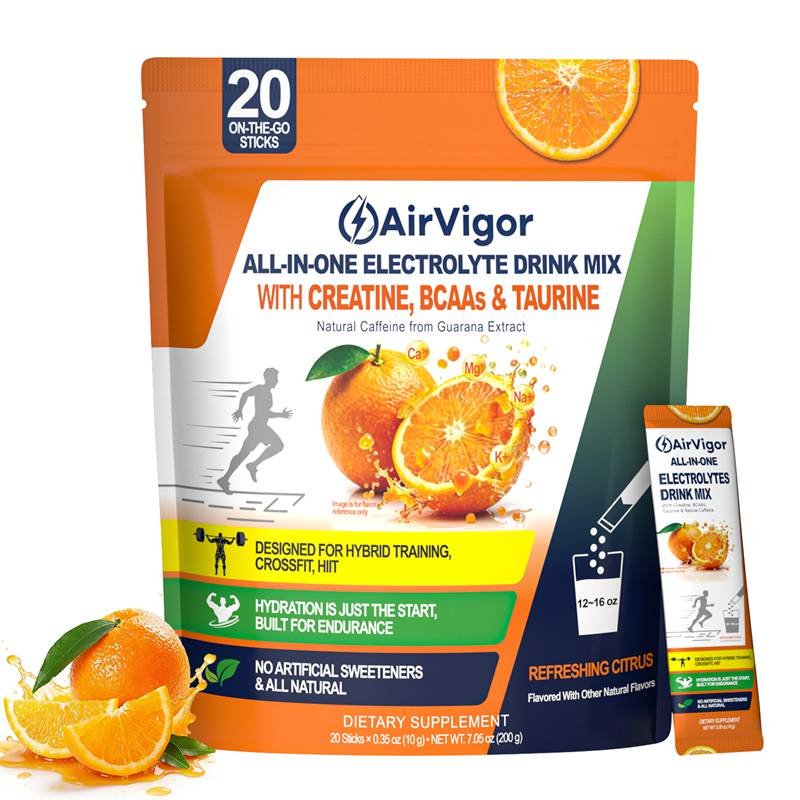
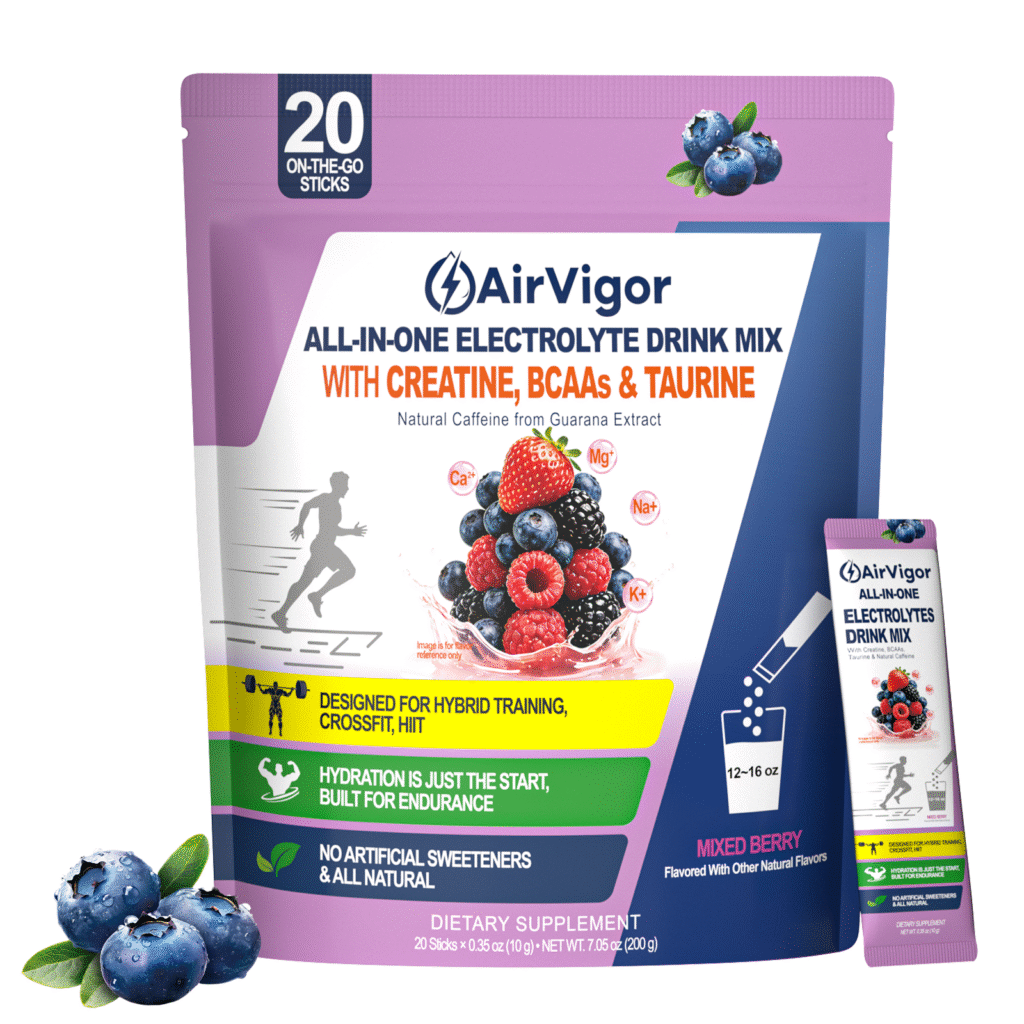
AirVigor’s all-in-one performance and hydration direction is useful for beginners who do not want to manage too many separate containers. When creatine, electrolytes, and other training-support ingredients are presented clearly in one portable format, the routine becomes easier to repeat.
Do Electrolytes Matter?
Electrolytes matter when the body is losing fluid and minerals through sweat, heat, long activity, travel, sauna use, or certain eating patterns such as low-carb diets. Sodium, potassium, magnesium, calcium, and chloride all help support fluid balance, nerve signaling, and muscle function. For beginners, electrolytes are not only for marathon runners or elite athletes. They can be useful for anyone whose daily routine creates meaningful hydration demand.
The mistake many people make is using the same hydration strategy for every situation. A light office day does not require the same support as a sweaty gym session. A 20-minute walk does not create the same mineral loss as a 90-minute summer run. A person training in a cool indoor gym does not have the same needs as someone doing outdoor work in humid weather.
Electrolyte needs vary by sweat rate, sodium loss, climate, workout length, diet, and body size. Some people barely sweat. Others finish a workout with soaked clothing and salt marks. This is why a beginner electrolyte stack should be based on use scenario rather than hype.
Electrolyte Use
| Situation | Why Electrolytes May Help | Beginner Product Direction |
|---|---|---|
| Heavy sweating | Replaces fluid-related minerals | Formula with clear sodium and potassium amounts |
| Hot weather | Supports hydration under heat stress | Stick pack or powder mixed into water |
| Long workouts | Helps maintain fluid balance over time | Electrolytes before or during training |
| HIIT or indoor cycling | Sweat loss can be high even indoors | Low-sugar electrolyte powder |
| Low-carb eating | Water and sodium shifts may be noticeable | Sodium-containing hydration support |
| Travel days | Irregular meals, dry air, long flights | Portable electrolyte sticks |
| Sauna or hot yoga | Heavy sweat in short time | Electrolytes after or around session |
A beginner-friendly electrolyte product should clearly show mineral amounts per serving. The label should not hide behind vague blend names. Users should be able to see sodium, potassium, magnesium, and calcium amounts directly. This is especially important because different products can be built for different needs. Some are light daily hydration powders. Some are stronger sweat-support formulas. Some combine electrolytes with creatine, amino acids, collagen, vitamin C, or B vitamins.
Sugar also matters. Some sports drinks contain meaningful sugar, which may be useful for long endurance sessions but unnecessary for many daily users. A zero-sugar electrolyte powder may be more suitable for office workers, gym beginners, low-carb users, and people who want hydration support without extra calories.
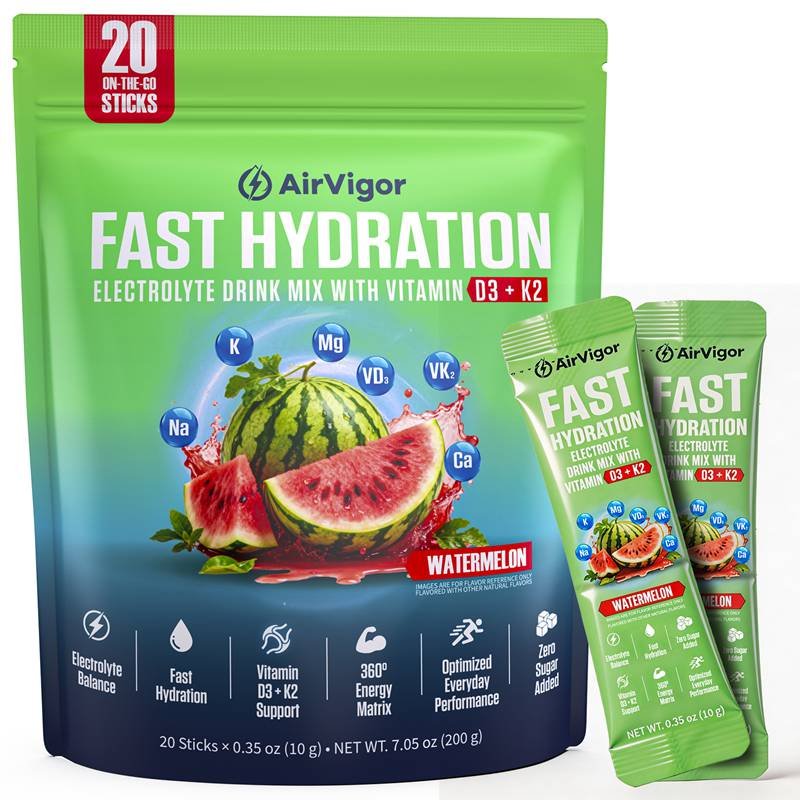
AirVigor’s electrolyte product direction is built around practical use: clear mineral expression, portable stick packs, easy mixing, low burden on the routine, and formulas designed for real-life training and active days. That matters because beginners often stop using products that are too sweet, too complicated, or inconvenient to carry.
What Vitamins Fill Gaps?
Vitamins and minerals should be chosen because they match a real dietary or lifestyle gap, not because a label contains a long list of nutrients. A multivitamin can be helpful for people with inconsistent meals, limited food variety, frequent travel, or busy work schedules. But it should not be used as an excuse to ignore diet quality.
Some nutrients receive more beginner attention because modern routines often create gaps. Vitamin D is commonly discussed because many people work indoors, use sunscreen, live in colder climates, or get limited sunlight. Magnesium is popular because it plays roles in muscle function, nerve signaling, and energy metabolism. Omega-3 is often considered when fish intake is low. Iron, calcium, zinc, and B vitamins may also matter in specific diets, but they should be used more carefully because needs vary.
A beginner should avoid treating all vitamins the same. Water-soluble vitamins and fat-soluble vitamins behave differently. Minerals can interact with each other. Iron should not be taken casually unless there is a reason. High-dose vitamin D is better guided by testing or professional advice. Magnesium form affects tolerance. These details do not mean beginners should be afraid. They mean the stack should be built with common sense.
Vitamin and Mineral Selection
| Nutrient | Common Reason People Consider It | Beginner Caution |
|---|---|---|
| Vitamin D | Low sun exposure, indoor lifestyle | Best guided by testing or professional advice |
| Magnesium | Muscle and nerve support, low intake patterns | Form and dose affect digestion |
| Omega-3 | Low fish intake | Check EPA and DHA amounts, not just total fish oil |
| Multivitamin | Inconsistent diet | Watch repeated nutrients from other products |
| Iron | Specific deficiency risk | Do not take casually without need |
| Calcium | Low dairy intake, bone health focus | Consider diet first and avoid unnecessary excess |
| B vitamins | Energy metabolism support | More does not always mean better energy |
| Zinc | Diet gaps, immune-support positioning | Too much can affect copper balance |
For beginners, the strongest vitamin strategy is targeted and moderate. Start with the most likely gap, choose a product with a readable label, and avoid stacking multiple multi-ingredient formulas without checking totals. For example, someone taking a multivitamin, an energy drink, and a hydration powder may already be getting repeated B vitamins. Someone using a multivitamin and a sleep formula may be doubling magnesium. The issue is not always danger; it is lack of clarity.
AirVigor’s approach to vitamins, minerals, and daily wellness products focuses on clear ingredient expression and real use scenarios. This is important for users who want to build a long-term routine without guessing what they are taking every day.
Which Stack Fits Different Beginner Goals?
Not every beginner has the same goal. Some people want to support workouts. Some want better daily nutrition. Some want hydration. Some want beauty and wellness support. Some simply want a routine that helps them feel more organized. A useful article page should help the reader locate themselves quickly.
Beginner Goal-Based Stack
| Beginner Goal | Possible Starting Stack | Why It Makes Sense |
|---|---|---|
| General daily wellness | Multivitamin + omega-3 if fish intake is low | Supports broad gaps without becoming complex |
| Gym beginner | Protein + creatine + electrolytes when sweating | Covers muscle support, strength routine, and hydration |
| Busy office worker | Protein or meal support + vitamin D discussion + hydration | Fits skipped meals, indoor work, and low water intake |
| Hot weather or outdoor work | Electrolytes + protein if meals are irregular | Supports sweat-heavy days and recovery from long shifts |
| Travel routine | Electrolyte sticks + capsules or compact daily vitamins | Portable and easy to pack |
| Beauty wellness | Collagen + vitamin C-containing food or formula + hydration | Supports a beauty-focused daily routine |
| Low-carb lifestyle | Electrolytes + magnesium if appropriate | Helps address fluid and mineral shifts |
| Light fitness user | Protein if intake is low + electrolytes as needed | Simple support without overbuilding the stack |
The best beginner stack should not feel copied. It should feel selected. A person should be able to look at each product and say, “I know why this is here.” If that is not possible, the stack needs to be simplified.
For AirVigor, this is also where product variety matters. A brand that covers electrolytes, protein nutrition, creatine, vitamins, minerals, collagen, probiotics, and other daily supplement formats can help users build a stack step by step. Beginners can start with one ready-to-use product and expand only when their lifestyle or goals become clearer.
How Do You Build a Basic Daily Stack?
A basic daily supplement stack should be built around real timing, real habits, and real gaps. Beginners should not ask, “How many supplements can I take?” They should ask, “Which product fits my morning, my meals, my workout, and my recovery?” The best stack is simple enough to repeat even on busy days.
Morning Use
Morning is often the easiest place to start a supplement routine because it already connects with daily habits: drinking water, eating breakfast, making coffee, packing a work bag, or preparing for training. If a supplement can attach to one of these habits, it becomes easier to remember. If it requires a separate complicated step, many beginners stop after a few days.
For most people, morning use should focus on basic support, not aggressive stimulation. A person who wakes up and goes straight to work may need hydration first. Someone who skips breakfast may benefit from a protein option. A person with a confirmed or likely nutrient gap may take a vitamin or mineral product with food according to label directions. A morning stack should make the day smoother, not make the body feel overloaded before 9 a.m.
One mistake beginners often make is using caffeine as the foundation of the morning routine. Coffee is common, but caffeine does not replace water, protein, minerals, or a real meal. If the morning begins with coffee only, then lunch is delayed, and training happens after work, the user may feel tired not because they need a stronger supplement, but because the day started with poor nutrition structure.
A simple morning stack can look different depending on the person.
| Morning Situation | Better First Step | Possible Supplement Fit | Why It Works |
|---|---|---|---|
| Skips breakfast | Add protein | Protein powder or protein drink | Helps reduce a repeated protein gap |
| Wakes up thirsty | Start with water | Electrolytes if hydration demand is high | Supports better fluid routine |
| Works indoors all day | Review vitamin D habits | Vitamin D if appropriate | Fits low sun exposure concern |
| Eats irregular meals | Basic nutrient coverage | Multivitamin or targeted vitamins | Helps cover small diet gaps |
| Trains before work | Workout support | Electrolytes, protein, creatine if relevant | Connects supplementation to training |
| Travels often | Portable routine | Stick packs or capsules | Reduces missed days |
For beginners, the morning stack should usually stay light. Taking too many products at once may cause stomach discomfort or make the routine feel heavy. If a product is better taken with food, it should not be forced on an empty stomach. If a product contains caffeine or other stimulating ingredients, the user should understand how it affects sleep, anxiety, heart rate, and afternoon energy.
AirVigor’s product format logic fits this kind of routine because many users do not want complicated preparation. Stick packs can sit in a work bag. Capsules or tablets can fit a breakfast habit. Powders can be mixed into water or a shake. The product should support the morning, not slow it down.
Workout Timing
Workout timing depends on the type of supplement. Protein, creatine, electrolytes, amino acids, carbohydrates, and caffeine are not used for the same reason. Beginners often put all workout supplements into one category, but that creates confusion. A protein powder is mainly about daily intake and recovery support. Creatine is about regular saturation and repeated high-effort output. Electrolytes are about fluid and mineral balance. Caffeine is about alertness and perceived effort, but it is not always needed.
The first question should be: what problem happens around training? If the user feels weak because they train without eating, the answer may be better meal timing or protein. If they sweat heavily and feel drained, electrolytes may help more than another stimulant. If strength progress is the goal, creatine may be useful. If the workout is short and light, the user may only need water and normal meals.
A beginner workout stack should match the workout intensity.
| Training Type | Before Training | During Training | After Training |
|---|---|---|---|
| Light gym session | Normal meal or water | Water | Protein only if daily intake is low |
| Strength training | Creatine daily, meal timing | Water or electrolytes | Protein-focused meal or shake |
| HIIT or CrossFit | Electrolytes if sweating heavily | Electrolytes for longer or hotter sessions | Protein, fluids, minerals |
| Long cardio | Hydration and light fuel if needed | Electrolytes, water, possible carbs | Meal, protein, hydration |
| Hot outdoor training | Electrolytes before starting | Electrolytes during session | Rehydration and food |
| Evening workout | Light pre-training support | Water or electrolytes | Protein without excessive caffeine |
The most common beginner mistake is using a strong pre-workout too early. A stimulant-heavy product may make someone feel motivated for a few sessions, but it can also lead to jitters, stomach discomfort, a racing feeling, or poor sleep if used late in the day. Many beginners do not need a strong pre-workout first. They may need hydration, protein, creatine, and better meal timing.
Creatine timing is also often misunderstood. It does not need to be taken only 15 minutes before exercise. For many users, daily consistency matters more than exact timing. Protein also does not have to be consumed within a tiny window, although having a protein-containing meal or shake after training can be practical when the user has not eaten enough during the day.
Electrolytes are more timing-sensitive because they relate to sweat, heat, and fluid balance. A user who trains in a hot gym or sweats heavily may use electrolytes before or during the session. A person doing light lifting in a cool room may not need them every time. This is why label clarity matters. Users should know how much sodium, potassium, magnesium, and calcium they are getting per serving.
AirVigor’s all-in-one electrolyte and performance direction can be useful for workout users because it reduces the need to manage several separate containers. A beginner who carries one stick pack to the gym is more likely to use it than someone who needs to measure four products before leaving home.
Rest Days
Rest days are part of the stack because recovery does not only happen while exercising. Muscle repair, hydration balance, nutrient intake, and sleep rhythm all continue outside the gym. However, rest-day supplementation should not automatically copy workout-day supplementation. The body’s needs may be different when there is no training session.
Protein still matters on rest days because total daily protein intake supports recovery and body composition goals. Creatine is often taken daily because consistent intake supports muscle creatine stores over time. Vitamins and minerals may still fit with meals. Electrolytes may still be useful during hot weather, sauna use, travel, long walks, outdoor labor, or low-carb eating. But strong pre-workout products and stimulant-heavy formulas usually do not belong on rest days unless there is a specific reason.
A simple rest-day stack should feel calm and easy. It may include protein if meals are low in protein, creatine if the person uses it daily, and basic vitamins or minerals when appropriate. Electrolytes can be added based on sweat or hydration needs, not simply because the product exists.
Rest days are also a good time to evaluate tolerance. If a supplement causes bloating, nausea, headaches, sleep disruption, or unusual discomfort, the user should review timing, dose, water amount, food pairing, and overlap with other products. Starting too many supplements at once makes this process harder. A simple stack makes it easier.
A practical rest-day check can include:
- Did I eat enough protein today?
- Did I drink enough water?
- Did I take creatine consistently if it is part of my routine?
- Did I actually sweat enough to need electrolytes today?
- Did any product upset my stomach?
- Did caffeine or late-day supplements affect sleep?
Beginners should not treat rest days as supplement-free by default, but they also should not treat them as another performance event. The right rest-day routine supports recovery without adding pressure.
Busy Schedules
Busy people do not need a more complicated supplement stack. They need a more portable one. The main reason many beginners stop using supplements is not because they reject the product. They simply forget it, cannot carry it, dislike the preparation, or do not know where it fits in the day.
A supplement routine becomes easier when it has a physical location. Protein powder may stay at home near the blender. Electrolyte sticks may stay in a work drawer, car, gym bag, or travel pouch. Capsules may sit near breakfast items. A daily vitamin bottle may stay next to the first meal of the day. The product should be placed where the habit naturally happens.
For a busy person, packaging is not a minor detail. It is part of whether the supplement works in real life. A large tub may be fine at home, but it does not help someone running from office to gym. A single-serving stick may be much more practical for hydration. A bottle with clear instructions may work better for daily capsules. A product that clumps, spills, smells strong, or requires too many tools will be used less often.
Busy Schedule Stack
| User Type | Main Challenge | Practical Stack Design | Useful Format |
|---|---|---|---|
| Office worker | Skipped meals, low water intake | Protein + hydration support | Powder, sticks, capsules |
| After-work gym user | Low energy and poor timing | Electrolytes + creatine + protein as needed | Stick packs and easy-mix powders |
| Frequent traveler | Irregular meals and dry environments | Electrolytes + compact vitamins | Stick packs, capsules |
| Parent with limited time | Inconsistent meals | Protein and basic daily wellness support | Simple powders or bottles |
| Outdoor worker | Heavy sweat and heat | Electrolytes with clear minerals | Stick packs or larger powder packs |
| Student or young beginner | Low budget and inconsistent routine | One or two essentials first | Affordable daily-use formats |
A strong beginner routine should work even when the day is not perfect. This is where AirVigor’s design thinking matters. Portable packaging, readable labels, clear serving instructions, and stable product formats help users keep the routine alive during real life. For long-term use, convenience is not a luxury. It is one of the main reasons people continue buying.
Stack Timing Examples
A beginner stack becomes much easier to understand when it is shown through real daily examples. The goal is not to tell every person to follow the same schedule. The goal is to show how different routines can stay simple while still being useful.
A person who works in an office and trains after work may use protein in the morning if breakfast is light, take creatine daily, and use electrolytes before or during training when sweating is heavy. On rest days, they may continue protein and creatine but skip workout-focused hydration unless the day is hot or travel-heavy.
A light fitness user who does yoga, walking, and occasional gym sessions may not need creatine first. They may start with basic hydration support, a protein option if meals are low in protein, and targeted vitamins or minerals if their diet pattern suggests a gap. Their stack should support consistency, not aggressive performance.
A frequent traveler may choose the most portable version of a stack. Electrolyte sticks can help during flights and irregular hydration days. Capsules or tablets may be easier than large tubs. Protein may be used only when meal access is poor. This person needs simplicity and portability more than a large supplement cabinet.
Daily Stack Example
| Daily Pattern | Morning | Around Activity | Evening or Rest Day |
|---|---|---|---|
| Office + gym | Water, protein if breakfast is light | Electrolytes and creatine if relevant | Protein meal, magnesium if appropriate |
| Outdoor work | Water and electrolytes when needed | Electrolytes during sweat-heavy periods | Food, fluids, recovery support |
| Light fitness | Basic vitamin or protein if needed | Water or light electrolytes | Normal meal routine |
| Travel | Electrolyte stick, compact daily supplement | Hydration support during flights or walking | Simple meal and water routine |
| Strength beginner | Protein-focused meal | Creatine daily, hydration | Protein intake check |
| Hot yoga or sauna | Water before session | Electrolytes around heavy sweat | Rehydration and minerals |
A beginner should not be afraid to start small. A stack can begin with one product used well. If that product solves a real problem and becomes easy to repeat, the user can add the next one. This creates a cleaner routine and a better long-term relationship with supplementation.
What Should Beginners Avoid?
Beginners should avoid taking too many supplements at once, using high-dose products without a clear reason, combining overlapping formulas, depending too heavily on stimulants, and ignoring personal health conditions or medications. A safe beginner stack should be gradual, readable, and easy to adjust. More products do not automatically create better results.
High Doses
High doses often look attractive on labels because large numbers feel powerful. But a bigger number does not automatically mean a better product. The body does not use supplements based on label drama. It responds based on need, absorption, tolerance, existing intake, and overall health status.
This is especially important for vitamins and minerals. Some nutrients can be taken in higher amounts without immediate concern, while others require more caution. Fat-soluble vitamins such as A, D, E, and K are handled differently from many water-soluble vitamins. Minerals such as iron, zinc, calcium, magnesium, and selenium all have different intake considerations. Beginners should not assume that taking more creates faster wellness benefits.
High doses can also reduce comfort. Too much magnesium from the wrong form may upset digestion. Too much caffeine can affect sleep or cause jitters. Too much sodium may not suit people who need to manage blood pressure. A large protein serving may cause bloating if the user drinks it too quickly or chooses a poorly tolerated formula.
The better beginner rule is simple: use an amount that fits the purpose. A daily supplement should be designed for repeat use. A workout formula should match training demand. A hydration formula should match sweat and heat. An occasional support product should not be treated like a daily requirement unless the label and personal need make sense.
High-dose products may be appropriate in some situations, but beginners should not start there just because the front label looks stronger. A moderate, clear, repeatable product often works better for long-term use.
Ingredient Overlap
Ingredient overlap is one of the most common problems in beginner stacks. It happens when multiple products contain the same ingredient, and the user does not realize the total amount is adding up. This is especially common with multivitamins, hydration powders, energy drinks, pre-workouts, sleep products, beauty formulas, and immune-support supplements.
For example, a user may take a multivitamin in the morning, an electrolyte powder in the afternoon, and a sleep formula at night. All three may contain magnesium. Another person may use coffee, an energy drink, and a pre-workout without realizing the total caffeine intake is much higher than expected. Someone taking a multivitamin, collagen drink, and immune powder may be getting repeated vitamin C.
Ingredient overlap does not always create an immediate problem, but it creates uncertainty. The user may not know why they feel wired, why their stomach feels uncomfortable, or why sleep becomes worse. It also makes the stack more expensive than necessary.
Common overlap areas deserve attention.
| Ingredient | Where It Often Appears | Why Beginners Should Check |
|---|---|---|
| Caffeine | Coffee, pre-workout, energy drinks, fat-metabolism formulas | Can affect sleep, heart rate, and anxiety |
| B vitamins | Multivitamins, energy drinks, hydration powders | More does not always mean more energy |
| Magnesium | Multivitamins, electrolytes, sleep formulas | Too much may affect digestion |
| Vitamin C | Immune blends, collagen formulas, multivitamins | Often repeated across wellness products |
| Sodium | Electrolytes, sports drinks, salty diet | Needs vary by sweat level and health status |
| Zinc | Multivitamins, immune products, mineral formulas | Excess can affect copper balance |
| Herbal extracts | Energy, stress, sleep, focus formulas | Effects and interactions vary |
A beginner stack should not require complicated math every day, but the user should at least compare labels before combining products. The easiest method is to place all products on the table and check repeated ingredients. If the same ingredient appears three or four times, the user should ask whether all those products are needed.
AirVigor’s clear formula expression is important here because users should be able to understand what they are taking. Transparent labels help beginners build smarter stacks and avoid accidental overbuilding.
Stomach Discomfort
Stomach discomfort is one of the biggest reasons people stop using supplements. Sometimes the product is not wrong, but the timing, serving size, water amount, or ingredient form does not fit the user. Beginners should pay attention to comfort because a supplement that feels bad will not become a long-term routine.
Protein powders can feel heavy if the serving is too large, the texture is too thick, or the person does not tolerate dairy well. Electrolyte powders may feel too sweet, salty, acidic, or intense during exercise if the flavor balance is poor. Magnesium can affect digestion depending on the form and amount. Creatine may cause discomfort for some users if taken in large amounts at once or with too little water. Multivitamins can feel harsh when taken on an empty stomach.
The solution is not always to quit immediately. Sometimes the user can adjust how the product is taken.
Practical comfort adjustments include:
- Start with a smaller serving for the first few uses.
- Mix powders with enough water.
- Take certain vitamins or minerals with food when the label suggests it.
- Avoid taking several new products on the same day.
- Choose a different protein source if digestion is poor.
- Reduce late-day caffeine if sleep is affected.
- Stop and seek professional advice if symptoms are strong or persistent.
The product experience also matters. Taste, mouthfeel, mixability, sweetness level, smell, and aftertaste affect long-term use. A formula can look strong on paper, but if people dislike drinking it, they will not keep using it. AirVigor’s attention to solubility, flavor performance, stability, and packaging fit is valuable because these details affect whether the user finishes the product and buys again.
Too Much Caffeine
Caffeine deserves its own attention because many beginners do not count it as part of the supplement stack. They count pre-workout, energy drinks, and fat-burning formulas, but forget coffee, tea, cola, or chocolate. As a result, total daily caffeine can become much higher than expected.
Caffeine can support alertness and perceived energy, but it can also create problems when overused. Some people feel anxious, shaky, nauseous, or unable to sleep. Others become dependent on higher amounts to feel normal. For beginners, caffeine should not be the foundation of a wellness or workout routine. It is a tool, not a replacement for sleep, hydration, food, or recovery.
This is especially important for evening exercisers. A person training after work may take a pre-workout at 6 p.m., finish training at 7:30 p.m., and then struggle to sleep. The next morning they feel tired and use more caffeine. This creates a cycle where the supplement routine is causing the problem it is trying to solve.
A better beginner strategy is to first improve hydration, meal timing, protein intake, and training consistency. If caffeine is used, the amount and timing should be intentional. A non-stimulant hydration or performance support product may be a better fit for evening workouts, heat training, or people sensitive to stimulants.
Unrealistic Expectations
Beginners should avoid expecting supplements to create instant transformation. A supplement stack can support a better routine, but it cannot replace the routine itself. Protein does not build muscle without training and enough total calories. Creatine does not create strength without repeated effort. Electrolytes do not fix poor hydration habits if the person barely drinks water. Vitamins do not erase weeks of poor sleep and low food quality.
This does not make supplements less valuable. It makes their role clearer. A good supplement stack reduces friction. It makes the right behavior easier to repeat. Protein makes it easier to reach intake goals. Electrolytes make it easier to manage sweaty days. Creatine makes it easier to support repeated high-intensity training. Vitamins and minerals help address gaps when diet or lifestyle creates them.
The best mindset is steady support, not overnight change. Many users feel the value of a stack through consistency: fewer missed protein days, better hydration habits, easier gym preparation, less confusion, and a routine that feels more organized. These results may not sound dramatic, but they are exactly what helps people continue.
AirVigor’s approach fits this long-term mindset. The brand is not built around confusing users with exaggerated promises. It is built around clear ingredient expression, practical formats, stable manufacturing, and product experiences that can fit into daily life. For beginners, that is often more useful than another loud claim.
Professional Guidance
Some supplement decisions should involve a healthcare professional. This is especially important for people who are pregnant or breastfeeding, taking medication, managing kidney, liver, heart, thyroid, blood pressure, blood sugar, or digestive conditions, preparing for surgery, or using high-dose vitamins and minerals.
Professional guidance is also helpful when a user has ongoing symptoms such as unusual fatigue, frequent cramps, weakness, persistent digestive discomfort, poor sleep, dizziness, or unexplained changes in body weight. Supplements can support nutrition gaps, but they should not be used to hide problems that need proper evaluation.
Beginners should be especially careful with iron, high-dose vitamin D, strong stimulant products, herbal extracts, blood-thinning concerns, and supplements that may interact with medications. Even common nutrients can be inappropriate in the wrong context.
A responsible supplement stack should make the user feel more informed, not pressured. It should give enough structure to start safely and enough flexibility to adjust when needed. This is why quality brands matter. Clear labels, realistic use directions, batch documentation, and customer support all help users make better decisions.
For AirVigor, this responsibility is part of the brand’s long-term value. The goal is not simply to sell more products into one routine. The goal is to help users choose products that make sense, fit their lifestyle, and support repeat use with confidence.

How Do You Choose Quality Supplements?
Quality supplements should be easy to understand before purchase and easy to trust after repeated use. Beginners should look for clear ingredient amounts, realistic serving sizes, stable packaging, proper manufacturing controls, and product information that explains how to use the supplement safely. A good product should not force users to guess what is inside or how it fits into daily life.
Label Clarity
The label is usually the first place where a beginner can judge whether a supplement is worth considering. A strong label does not need to look loud. It needs to be clear. Users should be able to understand the serving size, active ingredients, amount per serving, suggested use, warning information, allergen details, flavor, quantity, and storage instructions without searching through confusing language.
This matters because beginners often compare several products at the same time. One protein powder may list 25 grams of protein per scoop. Another may list a large serving size but only 18 grams of protein. One electrolyte powder may clearly show sodium, potassium, magnesium, and calcium. Another may hide minerals inside a general blend name. One creatine product may show 5 grams per serving. Another may combine creatine with other ingredients but make the real amount hard to find.
A beginner-friendly label should answer practical questions:
- How much of the key ingredient do I get per serving?
- How many servings are in the package?
- When should I take it?
- Should it be taken with food or water?
- Does it contain caffeine, sugar, allergens, or repeated vitamins?
- Is it suitable for daily use or only certain occasions?
For AirVigor, label clarity is not only a design choice. It is part of the product experience. Clear formula expression helps users understand why a product belongs in their stack. Real ingredient amounts help reduce confusion. Practical usage directions help people repeat the routine correctly. This is especially important for beginners who may be buying protein, creatine, electrolytes, vitamins, or minerals for the first time.
Ingredient Amounts
Ingredient amount is one of the most important details in any supplement stack. A product may look strong on the front label, but the real value is in the amount per serving. Beginners should not judge a supplement only by the number of ingredients. A formula with fewer ingredients at clear, useful amounts may be more practical than a crowded formula with small amounts of everything.
This is especially true for stack products. If a beginner is choosing protein, the grams of protein per serving matter. If choosing creatine, the actual creatine amount matters. If choosing electrolytes, sodium and potassium amounts matter. If choosing omega-3, EPA and DHA amounts matter more than the total fish oil amount. If choosing vitamins or minerals, the user should check the percentage of daily value and whether the product overlaps with other supplements.
Ingredient Amount
| Supplement Type | What to Check First | Why It Matters |
|---|---|---|
| Protein | Protein grams per serving | Shows how much it helps daily intake |
| Creatine | Creatine amount per serving | Helps users know whether the daily amount is meaningful |
| Electrolytes | Sodium, potassium, magnesium, calcium | Helps match sweat, heat, and hydration needs |
| Multivitamin | %DV and repeated nutrients | Helps avoid unnecessary overlap |
| Magnesium | Elemental magnesium amount and form | Affects tolerance and actual intake |
| Omega-3 | EPA and DHA amount | More useful than only checking total fish oil |
| Collagen | Collagen peptides per serving | Helps compare beauty and joint-positioned formulas |
Beginners should also pay attention to serving size. A powder may look affordable until the user realizes one serving requires two large scoops. A hydration product may look strong but require multiple servings per day to reach the stated benefit. A gummy may taste good but need several pieces to provide a meaningful amount of nutrients. These details affect value, convenience, and long-term use.
AirVigor’s formula philosophy focuses on real ingredient addition and clear expression. This is useful for users who do not want to decode a product. They want to know what they are taking, how much they are taking, and why it matters.
Manufacturing Standards
Manufacturing standards matter because supplement quality is not only about the formula idea. A product must be produced, filled, sealed, labeled, stored, and shipped correctly. Beginners may not always think about this when buying their first supplement, but they notice the results. They notice whether the powder clumps. They notice whether the taste changes. They notice whether the package seals properly. They notice whether the label is clear and consistent.
A reliable supplement brand should manage quality across multiple stages: raw material review, formula confirmation, production process control, finished product inspection, packaging review, and release documentation. This is especially important for products used daily because small quality problems become more noticeable over time.
AirVigor’s production system is built around structured manufacturing and quality management. The company works with supplement production facilities that operate under GMP, HACCP, ISO system management, FSSC22000-related standards, and FDA facility registration frameworks. The system includes powder, granule, capsule, tablet, gummy, drop, and liquid product development and production capabilities. This gives the brand flexibility across different supplement formats while keeping quality control connected to the product category.
For users, this matters in a simple way: a supplement should feel consistent from the first serving to the last serving, and from one order to the next. For business partners, it matters even more because product consistency affects reviews, repeat orders, platform performance, and long-term trust.
Testing and Documentation
Testing helps confirm that a supplement is not only well designed but also properly executed. A formula can look excellent on paper, but the product still needs to be checked for ingredient consistency, appearance, flavor, solubility, microbial control, heavy metal concerns where applicable, packaging condition, and label accuracy.
For powder products, users care deeply about solubility, taste, serving consistency, and moisture control. A hydration powder that does not dissolve well becomes frustrating. A protein powder that clumps may feel low quality. A creatine blend that is hard to mix may reduce repeat use. For capsules and tablets, users care about serving accuracy, bottle quality, odor control, and ease of use. For gummies and liquids, flavor stability and packaging compatibility become even more important.
Testing Areas That Matter
| Testing Area | What It Helps Control | Why Users Notice |
|---|---|---|
| Raw material review | Ingredient identity and supplier quality | Supports formula reliability |
| Active amount review | Key ingredient consistency | Helps match label expectations |
| Solubility testing | Mixability in water or other liquids | Affects daily use experience |
| Flavor stability | Taste across storage time | Supports repeat purchase |
| Microbial review | Product safety and cleanliness | Important for trust |
| Packaging inspection | Seal, moisture, and transport protection | Helps product arrive in good condition |
| Label review | Ingredient and usage accuracy | Reduces confusion before use |
AirVigor has a 25+ person R&D team and a 30+ person quality inspection team. The brand has completed more than 20,000 formula model optimizations over the past five years and holds more than 300 supplement-related technical patents. These details are important because beginners and repeat users both want the same thing: a product that does not feel random. They want stable taste, clear use instructions, practical serving size, and a formula that stays consistent across normal use.
For B2B partners, documentation also matters. COA, MSDS, label review support, packaging confirmation, and product specification documents can help with channel review, platform listing, retail preparation, and market entry. This is one reason AirVigor is suitable not only for direct product sales but also for wholesale, private label, OEM, and ODM projects.
Packaging Practicality
Packaging is often underestimated, but it directly affects whether beginners keep using a supplement. A product may have a strong formula, but if the package is messy, hard to carry, poorly sealed, or difficult to measure, users may stop using it. Packaging should protect the product and make the routine easier.
Different supplement formats need different packaging logic. Stick packs are useful for electrolyte powders, creatine hydration blends, travel products, and gym-bag routines. Tubs or jars are useful for protein powders and high-frequency home use. Bottles fit capsules, tablets, gummies, softgels, and drops. Stand-up pouches can work well for refill-style products or flexible storage. Larger formats may fit families, fitness communities, high-use users, or B2B supply.
Packaging Format
| Packaging Format | Best Use Case | User Benefit |
|---|---|---|
| Stick pack | Electrolytes, hydration, travel, workout use | Portable, pre-measured, easy to carry |
| Bottle | Capsules, tablets, gummies, drops | Simple daily routine |
| Tub or jar | Protein powder, creatine powder, larger daily use | Better for home storage |
| Stand-up pouch | Refills, powder products, flexible storage | Lightweight and space-saving |
| Bulk pack | High-frequency use or business supply | Better for larger-volume needs |
AirVigor considers packaging from both the user side and the production side. The brand reviews packaging structure, seal performance, moisture protection, temperature and humidity tolerance, label readability, transportation fit, and serving convenience. This matters for global markets because products may move through different warehouse environments, climate conditions, shipping routes, and platform requirements.
For beginners, good packaging lowers the chance of missed use. For business partners, good packaging lowers complaints, improves presentation, and supports repeat purchasing. A supplement stack should not only be scientifically reasonable. It should also be easy to open, store, carry, and use.

Why Choose AirVigor for a Beginner Stack?
AirVigor is a strong fit for beginner supplement stacks because the brand focuses on clear formulas, real ingredient amounts, stable quality management, practical packaging, and multiple supplement categories. Users can start with basic products for hydration, protein, creatine, vitamins, minerals, probiotics, collagen, or daily wellness, then build gradually as their needs become clearer.
Beginner-Friendly Product Logic
AirVigor’s value for beginners comes from making supplements easier to understand. Many new users do not want an overly technical formula or a product that makes unrealistic promises. They want to know what the product does, how to use it, how much is included, and whether it fits their lifestyle.
A beginner may start with one AirVigor product for a specific reason. Someone who sweats during workouts may start with an electrolyte powder. Someone who trains consistently may add creatine support. Someone with irregular meals may look for protein nutrition. Someone focused on beauty and daily wellness may consider collagen or vitamin-based products. Someone with digestive or lifestyle goals may explore probiotics or daily wellness formulas. The stack grows from real use, not pressure.
AirVigor Product Direction for Beginner Needs
| User Need | AirVigor Product Direction | Why It Fits |
|---|---|---|
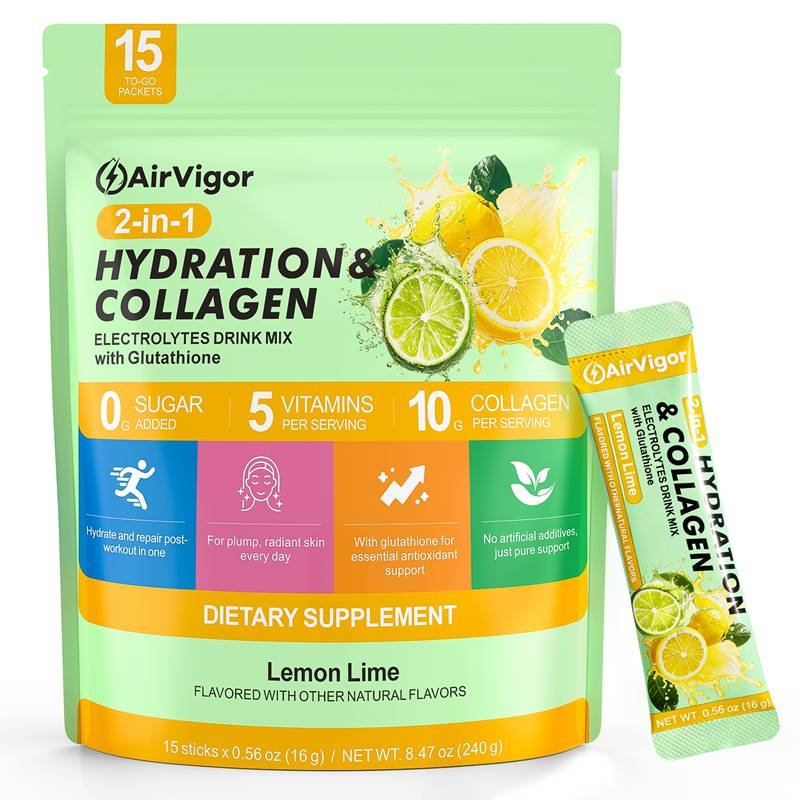
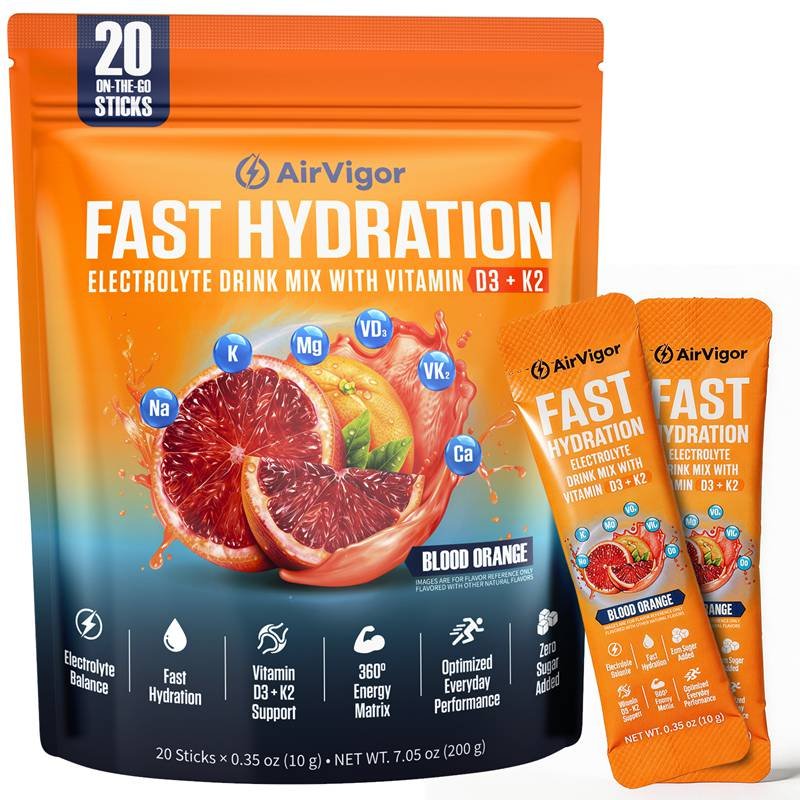
| Hydration during workouts | Electrolyte powders and stick packs | Easy to mix and carry |
| Strength training support | Creatine-based formulas | Useful for repeated high-effort exercise |
| Daily nutrition gaps | Vitamins and minerals | Helps support basic intake patterns |
| Protein convenience | Protein nutrition products | Useful for skipped meals or training routines |
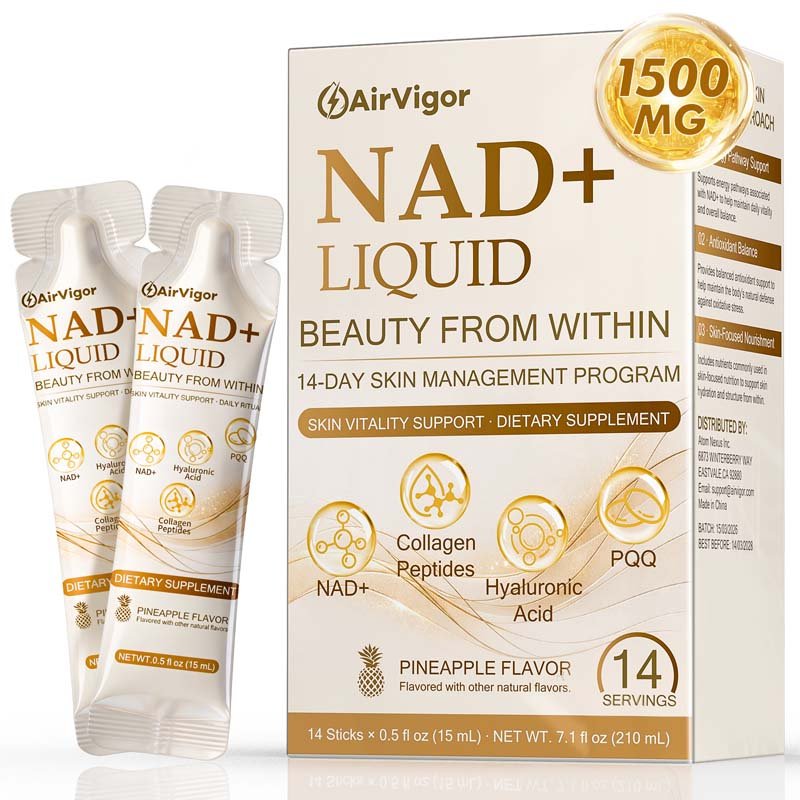
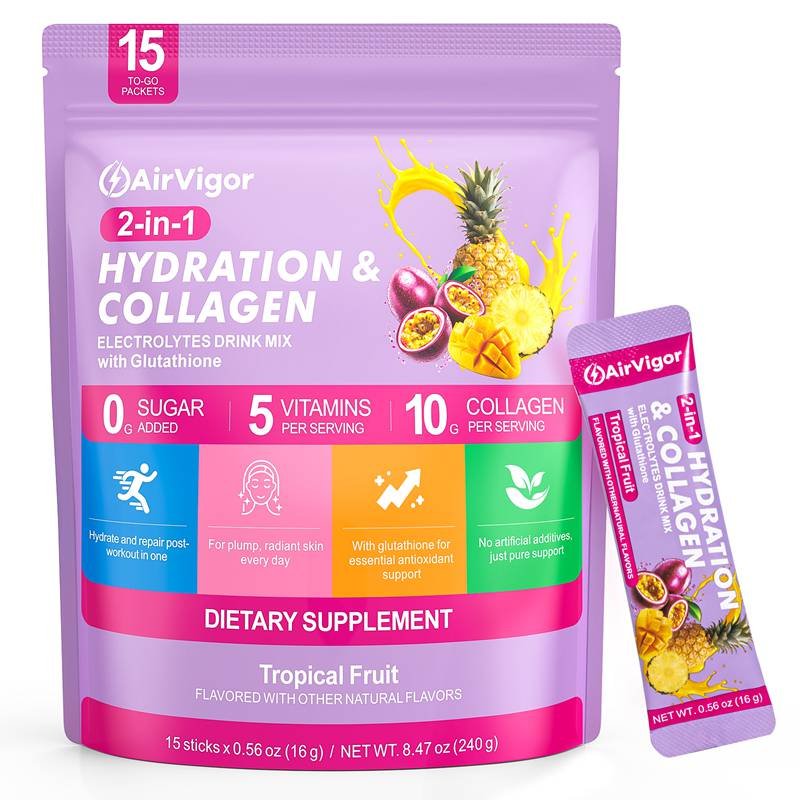
| Beauty wellness | Collagen and beauty nutrition | Fits skin, hair, nail, and lifestyle routines |
| Gut support | Probiotic products | Fits daily digestive wellness goals |
| Travel and busy schedules | Portable packets and bottles | Easier to use outside the home |
This makes AirVigor suitable for different beginner types: office workers, gym beginners, runners, cyclists, hot-weather users, travelers, beauty wellness users, and people who simply want a more organized daily routine.
Clear Formula Expression
Clear formula expression is one of AirVigor’s core strengths. A beginner should not have to guess whether a product contains meaningful amounts of the key ingredients. The label should show what matters. This is especially important in supplement stacks because users may combine several products.
A clear formula helps users avoid two common problems. The first is underdosing, where a product includes an ingredient but not enough to make practical sense for the intended use. The second is overlap, where several products contain the same nutrient and the user does not realize totals are adding up. Transparent ingredient amounts help users compare products and build a more sensible routine.
AirVigor emphasizes real ingredient addition, high-purity raw material selection, and stable formula execution. This does not mean every user needs every product. It means when a user chooses a product, they should be able to understand why the formula was built that way.
For example, an electrolyte product should clearly show mineral amounts. A creatine formula should clearly present creatine dosage. A vitamin product should make daily values easy to understand. A protein product should clearly state protein grams per serving. A collagen product should show the collagen amount instead of only using beauty language.
For beginners, clear formulas reduce hesitation. For repeat users, clear formulas build loyalty. For B2B partners, clear formulas make product education, listing content, and customer support easier.
Stable Quality System
AirVigor’s quality system is designed to support long-term product consistency. This matters because supplement users often judge a brand after multiple purchases, not only after the first order. If the first batch tastes good and the second batch feels different, trust drops quickly. If packaging is inconsistent or labels are unclear, users hesitate to reorder.
AirVigor works through a structured production and quality management system that covers raw material selection, formula review, process control, finished product inspection, packaging confirmation, label review, and documentation support. The company’s manufacturing network includes 100,000-level clean production workshops, 30,000+ square meters of factory space, and a 1,000+ person operational scale. It supports powders, granules, capsules, tablets, gummies, drops, and liquid products.
This broad production capability matters because a full supplement stack often involves more than one format. A hydration product may be a stick pack. A vitamin may be a capsule or tablet. A collagen product may be a powder. A probiotic may be a capsule or sachet. A beauty formula may be a liquid or gummy. Managing different formats requires different process controls and packaging decisions.
For users, stable quality means fewer unpleasant surprises. For partners, it means better long-term supply, more consistent product presentation, and stronger market reliability.
Ready-to-Buy Convenience
For most end users, the easiest path is to purchase ready-to-use AirVigor brand products through supported sales channels as product availability expands. This is the most direct option for people who want a simple beginner stack without waiting for custom formulation or packaging development.
Ready-to-buy products are especially important for beginners because they reduce decision fatigue. A user can start with one product, test whether it fits their routine, and reorder if the experience is good. This is much easier than trying to design a full stack from scratch.
AirVigor’s sales network is being built across major e-commerce and retail ecosystems, including Amazon, eBay, Walmart, Shopify-related channels, and other regional platforms. The brand also supports global market expansion across North America, Europe, Japan, Korea, Australia, Southeast Asia, the Middle East, South America, and additional regions.
For customers, the value is simple: clearer purchase paths, more stable availability, practical product formats, and better repeat-use convenience. A beginner supplement stack should not only be correct in theory. It should be easy to buy again when the product becomes part of the routine.
Wholesale and Custom Support
AirVigor also supports wholesale, private label, OEM, and ODM cooperation for business partners who want to develop supplement products. This is useful for Amazon sellers, wellness brands, gyms, distributors, retail channels, online stores, and regional nutrition businesses that want to enter or expand supplement categories.
The company can support product directions such as electrolyte powders, protein nutrition, creatine formulas, vitamin and mineral products, probiotics, collagen, beauty nutrition, capsules, tablets, gummies, drops, powders, and liquid supplements. The advantage is not only formula development. AirVigor can also connect packaging selection, label review, production execution, quality documentation, and global market preparation.
For sample development, regular sample timing is usually 3–7 days. Projects requiring additional raw material sourcing may take about 7–10 days. More complex custom formulas may take around 10–12 days. Standard MOQ starts from 500 pcs, while regular bulk production usually takes around 15–30 days depending on product type, formula complexity, packaging structure, raw material preparation, order volume, and production schedule.
| Cooperation Type | Best For | AirVigor Support |
|---|---|---|
| Wholesale | Retailers, distributors, online sellers | Ready product supply and channel support |
| Private label | Brands wanting their own label | Product, packaging, and label adaptation |
| OEM | Businesses with existing formula direction | Production and packaging execution |
| ODM | Businesses needing full product development | Formula, flavor, packaging, and production support |
| Sample development | New product testing | 3–7 days for regular samples |
| Bulk production | Market launch and replenishment | Usually 15–30 days depending on project |
For business partners, AirVigor’s value is the ability to move from product idea to finished supplement with a more complete support system. For end users, the same production foundation supports ready-to-buy products with clearer formulas and more stable quality.
Conclusion
A simple supplement stack for beginners should begin with real life, not product hype. The right stack should support what the user actually needs: better protein intake, stronger hydration habits, basic nutrient coverage, workout consistency, recovery support, or easier daily wellness. It should be small enough to repeat, clear enough to understand, and practical enough to fit busy mornings, training days, travel, and normal meals.
Most beginners do not need ten products. Many can start with one or two essentials, such as protein, electrolytes, creatine, vitamins, minerals, or omega-3 depending on their diet, sweat level, training routine, and lifestyle. Once the routine feels easy, the stack can grow slowly. A smart stack should make the user more consistent, not more confused.
AirVigor is built around this long-term approach. With clear formula expression, real ingredient addition, strict raw material selection, stable manufacturing management, practical packaging, and global product support, AirVigor helps users build supplement routines that are easier to understand and easier to continue. Customers can purchase available AirVigor brand products for daily use, while retailers, distributors, and supplement brands can contact AirVigor for wholesale supply, private label cooperation, or custom formula development.