Skip to content
How Do Busy Professionals Stay Hydrated Daily : A Hydration Guide
# Your Trusted Dietary Supplement Brand In US
- Emily

Table of Contents
Most busy professionals do not ignore hydration on purpose. They simply get pulled into meetings, emails, calls, errands, commutes, and deadlines before they notice their water bottle is still full. By mid-afternoon, the body starts sending small signals: dry mouth, tight shoulders, a dull headache, low patience, heavy eyes, or the feeling that one more coffee is the only way to keep going. Hydration is often treated like a small habit, but for people with packed schedules, it can quietly affect how steady the day feels.
A simple hydration plan for busy professionals means drinking water at the right moments, using electrolytes when the day demands more support, and making hydration easy enough to repeat. The best plan does not require exact tracking every hour. It works through simple anchors: water after waking, water before or with coffee, a visible bottle at work, a refill around lunch, and extra hydration during heat, sweat, travel, or workouts.
The goal is not to drink as much water as possible. The goal is to stay ahead of thirst without making hydration feel like another job. A good plan fits into real life: the morning rush, the first meeting, the desk lunch, the airport gate, the evening workout, and the long ride home. Once hydration becomes part of those moments, it stops being something you remember too late.
What Is a Simple Hydration Plan?
A simple hydration plan is a daily drinking routine that helps busy professionals stay consistently hydrated without strict tracking. It uses water as the base, adds electrolytes when needed, and connects drinking habits to real workday moments like coffee, meetings, lunch, travel, and workouts.
Simple Hydration Plan Basics
A simple hydration plan works best when it is built around timing, access, and real daily behavior. Instead of chasing a perfect number, it helps people drink earlier, refill smarter, and adjust based on sweat, heat, caffeine, and activity.
Most busy professionals already know they should drink more water. The problem is not knowledge. The problem is that water is easy to forget when the day becomes crowded. A simple hydration plan solves this by making hydration visible, repeatable, and connected to moments that already exist in the day.
For example, a professional may not remember to drink water every hour, but they can remember to drink before coffee, refill before lunch, and drink before the afternoon coffee decision. These small anchors are easier to follow than strict tracking rules.
A simple hydration plan usually includes three parts: daily water, situational electrolytes, and hydration-friendly foods. Water covers the basic daily routine. Electrolytes become useful when the body loses more fluid and minerals through sweat, heat, travel, long activity, or irregular meals. Foods such as fruits, vegetables, soups, yogurt, and smoothies also contribute to total fluid intake.
| Hydration Element | What It Does | Best Use Scenario |
|---|---|---|
| Plain water | Supports everyday fluid intake | Desk work, meals, normal daily routine |
| Electrolytes | Help support fluid and mineral balance | Sweat, heat, workouts, travel, long active days |
| Water-rich foods | Add fluids through meals | Lunch, snacks, light meals, busy workdays |
| Low-sugar drinks | Add flavor without heavy sugar intake | Afternoon hydration, office routine |
| Timing anchors | Help people remember to drink | Coffee, meetings, lunch, commute, workouts |
A realistic simple hydration plan should not make the user feel like they failed if they miss one checkpoint. It should be easy to restart. If someone forgets water during the morning, they can refill at lunch. If they miss the lunch refill, they can reset before the afternoon work block. The plan should guide behavior, not create pressure.
For busy professionals, the most useful hydration routine is the one that fits the workday without interrupting it.
Simple Hydration Plan Benefits
A simple hydration plan helps reduce long gaps without fluids, supports a steadier daily routine, and makes drink choices easier. It can also help professionals use coffee, electrolytes, and low-sugar drinks more intentionally instead of drinking randomly.
The biggest benefit of a simple hydration plan is consistency. Many professionals do not have a drinking routine; they have a reaction pattern. They drink when they feel thirsty, tired, dry, or when a drink is finally available. A plan helps them drink before the body has to send stronger signals.
This is especially important during long office days. A person may start the morning with coffee, sit through several meetings, delay lunch, and not notice low fluid intake until the afternoon. At that point, they may blame the tired feeling on workload alone. Workload matters, but hydration habits often add to the problem.
A simple plan also improves decision-making. When someone has no plan, the easiest drink often wins. That may be coffee, soda, sweet tea, or an energy drink. With a plan, water becomes the default choice, and electrolyte drinks are used with a clear reason.
| Common Workday Problem | How a Simple Hydration Plan Helps |
|---|---|
| Forgetting water before noon | Adds morning and coffee-based drinking anchors |
| Afternoon dry mouth | Encourages lunch refill and afternoon water check |
| Too much coffee reliance | Pairs caffeine with water instead of replacing fluids |
| Travel dehydration | Adds portable hydration options before and during travel |
| Workout fatigue after work | Encourages water and electrolytes around sweat loss |
| Sugary drink habit | Replaces some sweet drinks with low-sugar hydration options |
Another benefit is better habit control. Hydration becomes less dependent on mood or memory. The bottle on the desk, the refill before lunch, and the stick pack in the bag all become small environmental cues. These cues matter because busy people often make choices based on what is easy and visible.
For customers, the value is not just “drink more water.” The value is feeling that hydration finally fits into real life. A good plan respects time pressure, coffee habits, meetings, travel, and workouts instead of pretending every day is calm and perfectly organized.
Simple Hydration Plan Mistakes
The most common simple hydration plan mistakes include drinking too late, relying too much on coffee, ignoring sweat loss, choosing sugary drinks too often, and using electrolytes without understanding when they are needed. A better plan keeps hydration steady and situation-based.
One common mistake is trying to catch up at night. Many professionals drink very little during the workday, then drink a large amount after dinner because they realize they are behind. This may increase restroom trips and make the routine feel uncomfortable. A better approach is to spread fluids earlier across the day.
Another mistake is treating all drinks the same. Coffee, soda, sweetened tea, juice, water, and electrolyte drinks all add fluid, but they do not serve the same purpose. Some add caffeine. Some add sugar. Some are better for taste than daily hydration. Some are better for sweat and heat. A simple hydration plan should help the user choose the right drink at the right time.
Electrolytes are another area where people get confused. Some people think they are only for athletes. Others think they should use them all day. The better middle ground is simple: electrolytes make more sense when the day includes sweating, heat, long travel, workouts, outdoor activity, or missed meals. On a calm desk day with normal meals, water may be enough.
| Mistake | Why It Becomes a Problem | Better Simple Hydration Plan Fix |
|---|---|---|
| Waiting until thirsty | Thirst may appear after long low-fluid periods | Drink at routine checkpoints |
| Coffee-only morning | Water gets pushed too late | Drink water before or with coffee |
| Catching up at night | Can feel uncomfortable and poorly timed | Drink more steadily before evening |
| Ignoring sweat | Water and minerals may both be lost | Use electrolytes during high-sweat days |
| Overusing sugary drinks | Adds sugar without solving the core habit | Choose water or low-sugar hydration |
| Leaving bottle in bag | Hydration stays out of sight | Keep bottle on desk or near laptop |
| Using electrolytes randomly | May not match real daily needs | Use based on heat, sweat, travel, or activity |
A simple hydration plan should feel practical, not extreme. The goal is not to force more fluids every hour. The goal is to avoid the same weak points: no water before coffee, no refill before lunch, no plan for travel, and no hydration support during sweat-heavy days.
When these mistakes are corrected, hydration becomes easier to maintain. The user does not need a perfect routine. They need a repeatable structure that works on busy days, not only on ideal days.
Why Busy Professionals Need a Simple Hydration Plan?
Busy professionals need a simple hydration plan because their schedules often make hydration inconsistent. Long meetings, coffee-heavy mornings, delayed meals, screen time, dry office air, travel, and after-work workouts can all create hydration gaps that slowly affect comfort, focus, and daily routine.
Simple Hydration Plan for Work
A simple hydration plan for work helps professionals avoid long hours without fluids. It connects water intake to office habits like coffee, meetings, lunch, calls, and task breaks, making hydration easier to repeat during busy schedules.
Workdays are full of small hydration traps. A person may arrive at the office with coffee, open the laptop, answer messages, join a meeting, and suddenly realize it is almost noon. The water bottle may be nearby, but if it is not part of the routine, it still gets ignored.
The problem is not laziness. The problem is that work demands attention. When the brain is focused on deadlines, clients, reports, product launches, or team messages, hydration becomes background noise. A simple hydration plan brings it back into the day without asking the person to stop working.
A good workplace hydration routine should be built around moments that already happen:
| Work Moment | Common Habit | Better Hydration Move |
|---|---|---|
| Arriving at desk | Open laptop immediately | Drink water before starting |
| First coffee | Coffee only | Drink water before or beside coffee |
| Long meeting | No fluids for 1–2 hours | Take several sips before joining |
| Lunch break | Eat quickly, forget water | Refill bottle before eating |
| Afternoon fatigue | Get another coffee | Drink water first, then decide |
| End of workday | Notice bottle is still full | Check bottle before leaving |
This kind of routine works because it does not depend on perfect discipline. It depends on placement and timing. If a bottle is beside the keyboard, drinking becomes easier. If it is inside a backpack, it becomes invisible.
Professionals with different jobs may also need different hydration strategies. A desk worker may mainly need bottle visibility. A salesperson may need hydration between calls. A warehouse manager may need water and electrolytes during warm or active periods. A teacher, presenter, or customer service worker may need more regular sips because speaking for long periods can make the mouth and throat feel dry.
| Work Style | Hydration Challenge | Simple Hydration Plan Fix |
|---|---|---|
| Desk-based work | Long sitting and screen focus | Keep bottle in direct view |
| Sales or client calls | Talking for long periods | Sip before and after calls |
| Retail or floor work | Standing and moving | Carry a bottle nearby |
| Warehouse or operations work | Heat, movement, sweat | Use water; add electrolytes when sweating |
| Remote work | Irregular breaks | Drink at task transitions |
| Trade shows/events | Long standing and limited breaks | Pack water and electrolyte sticks |
| Business travel | Limited access and dry environments | Sip regularly in small amounts |
The goal is not to drink constantly. The goal is to avoid the common workday pattern of “coffee early, water late.” Once hydration is attached to work habits, it becomes easier to repeat even on busy days.
For a hydration product to fit this setting, it must be simple. Customers care about whether it mixes fast, tastes light, fits in a drawer, and has clear serving directions. A product that adds more steps will not last in an office routine. A product that works with real work habits has a much better chance of becoming part of the day.
Simple Hydration Plan for Focus
A simple hydration plan for focus helps reduce common workday distractions linked to low fluid intake, such as dry mouth, thirst, and afternoon heaviness. It supports a steadier routine before professionals reach for more caffeine.
Focus is one of the biggest reasons busy professionals care about hydration. They may not describe the problem as “hydration.” They may say, “I feel slow after lunch,” “I cannot focus in the afternoon,” “I need another coffee,” or “My head feels heavy during long calls.” These feelings can come from many causes, including sleep, food, stress, screen fatigue, and workload. Hydration is not the only answer, but it is one of the easiest areas to improve.
The modern workday often creates long periods of mental effort without physical movement. People sit, stare at screens, analyze data, write emails, manage ads, review documents, and jump between tasks. During these blocks, drinking water may feel unimportant because the body is not obviously sweating. But low fluid intake can still build slowly.
A simple hydration plan for focus should be based on prevention, not reaction. Instead of waiting until the afternoon slump, the routine should place water earlier in the day.
| Focus Challenge | Possible Hydration Issue | Better Routine |
|---|---|---|
| Heavy morning workload | Water delayed by coffee and meetings | Drink water before first task block |
| Long screen sessions | Body signals get ignored | Keep bottle beside monitor |
| Back-to-back calls | No natural break to drink | Sip before each call block |
| Afternoon slump | Fluid intake may be low | Drink water before caffeine |
| Dry mouth while speaking | Long talking without fluids | Keep water nearby during calls |
| Brain-heavy tasks | Drinking forgotten during deep work | Use task transitions as water cues |
One practical method is the “water before caffeine” rule. This rule does not remove coffee from the routine. It simply prevents coffee from becoming the first answer to every low-energy moment. When the afternoon dip arrives, drink water first, stand up briefly, and then decide whether coffee is still needed.
For many professionals, focus also depends on stable habits. A chaotic hydration pattern often matches a chaotic work pattern: skipped breakfast, coffee only, delayed lunch, no refill, late catch-up. A simple plan creates small checkpoints that make the day feel more organized.
A focus-friendly hydration rhythm may look like this:
| Time Block | Hydration Cue | Purpose |
|---|---|---|
| 8–9 a.m. | Water before coffee | Starts the day with fluid |
| 10–11 a.m. | Sip during first work block | Avoids long dry periods |
| 12–1 p.m. | Refill before lunch | Creates midday reset |
| 2–3 p.m. | Water before second coffee | Checks hydration before caffeine |
| 4–5 p.m. | Final desk bottle check | Prevents late-day catch-up |
This plan is especially useful for professionals who do high-concentration work: content writing, design, finance, Amazon operations, coding, project management, customer service, consulting, and sales planning. These roles may not look physically demanding, but they are mentally demanding. A simple hydration routine helps remove one avoidable source of discomfort from the workday.
Simple Hydration Plan for Energy
A simple hydration plan for energy supports steadier daily performance by helping professionals avoid long fluid gaps. It does not replace sleep, meals, or rest, but it can make the day feel less uneven when paired with better routines.
Many professionals use the word “energy” when they are really describing several problems at once. They may be tired from poor sleep, mentally overloaded from meetings, hungry from skipping lunch, tense from stress, or underhydrated from drinking mostly coffee. Because these problems overlap, the quick fix is often caffeine. But caffeine does not solve every cause of low energy.
Hydration works differently from caffeine. It is not a stimulant. It does not create an instant rush. Its value is more basic: it supports the body’s normal fluid balance so daily work, movement, digestion, and recovery can feel more stable. For busy professionals, that stability matters.
A simple hydration plan for energy should focus on the parts of the day where energy usually drops.
| Energy Drop Moment | Common Cause | Hydration-Focused Fix |
|---|---|---|
| Mid-morning tiredness | Coffee without water or breakfast | Add water before or with coffee |
| After lunch heaviness | Large meal, low movement, low fluids | Refill bottle and walk briefly |
| 3 p.m. crash | Long screen time and delayed hydration | Drink water before more caffeine |
| Post-commute fatigue | Heat, stress, or long drive | Sip water before and after commute |
| After-work workout fatigue | Starting exercise underhydrated | Drink in late afternoon; add electrolytes if sweating |
| Travel-day exhaustion | Dry air, schedule disruption | Sip regularly and carry hydration support |
A common mistake is assuming tiredness always means more caffeine is needed. Sometimes the better first step is water, a balanced snack, and five minutes away from the screen. If the person still wants coffee after that, it becomes a choice instead of an automatic reaction.
For professionals who train after work, hydration becomes even more important. Many people arrive at the gym already behind on fluids because the workday was coffee-heavy and water-light. Then they sweat during training and wonder why they feel drained afterward. A better plan starts before the workout:
| Workout Timing | Hydration Step |
|---|---|
| 1–2 hours before training | Drink water steadily |
| Before leaving work | Check bottle and drink if needed |
| During training | Sip based on sweat and intensity |
| After training | Use water; add electrolytes if sweat was high |
| Evening meal | Continue steady fluids, avoid late overdrinking |
Electrolytes may be helpful on high-sweat days because sweat does not remove only water. It also removes minerals, especially sodium. This is why someone may drink plain water after a tough session and still not feel fully settled. In those cases, a well-designed electrolyte drink can fit naturally into the plan.
Energy-focused hydration should also consider sugar. Many people reach for sweet drinks when they feel tired. These drinks may taste satisfying in the moment, but they can add extra sugar without fixing the underlying routine. A low-sugar hydration option may be more suitable for everyday professional use, especially when the person wants flavor without turning hydration into a dessert-like drink.
The most useful energy rule is simple: check water before caffeine, check meals before snacks, and adjust hydration when sweat, heat, travel, or exercise increases demand. This keeps the routine grounded in real needs rather than quick reactions.

How Much Water Fits a Simple Hydration Plan?
The right water amount in a simple hydration plan depends on body size, sweat level, climate, meals, caffeine, work style, and activity. Busy professionals do not need one strict number. They need a realistic daily range, steady timing, and smart adjustments for heat, travel, exercise, and long workdays.
Simple Hydration Plan by Body Needs
A simple hydration plan should start with personal needs, not a fixed rule. Body size, sweat rate, food choices, caffeine habits, and activity level all change how much water a professional may need during the day.
Many people want a single answer, such as “drink eight glasses a day.” That can be a helpful reminder, but it is not always precise enough for real life. A person who works indoors, eats regular meals, and does light activity may need a different routine from someone who trains after work, sweats easily, travels often, or works in hot environments.
A better approach is to build a baseline first. For busy professionals, the baseline can be simple: drink water in the morning, keep a bottle visible during work, refill around lunch, and check hydration before the afternoon slump. From there, adjust based on the day.
The key is to look at your body and your schedule together. If you are thirsty often, your urine is usually dark yellow, your mouth feels dry during calls, or you regularly finish the day with a nearly full bottle, your routine probably needs more structure. If you are forcing large amounts of water and running to the restroom constantly, you may need better timing, not simply more volume.
| Personal Factor | What It May Mean | Simple Hydration Plan Adjustment |
|---|---|---|
| Larger body size | May need more total fluid | Use a larger bottle or add one refill |
| Smaller body size | May need less than larger users | Focus on steady timing, not overdrinking |
| High sweat rate | More fluid and minerals may be lost | Add water and electrolytes on sweat-heavy days |
| Low sweat, desk-only day | Basic fluid needs may be lower | Water and meals may be enough |
| High caffeine intake | Water may be pushed too late | Pair each coffee with water |
| Skipped meals | Less fluid and minerals from food | Add water, electrolytes, and a balanced snack |
| High-protein meals | More fluid attention may support comfort | Drink water with meals |
| Hot climate | Sweat loss may rise | Drink earlier and carry water outside |
| Frequent travel | Routine becomes unstable | Use bottle plus portable hydration support |
A simple hydration plan should also consider food. Many people forget that food contributes fluid. Fruits, vegetables, soups, smoothies, yogurt, and cooked grains all add water to the day. Someone eating a hydrating lunch may need less bottled water than someone who skips lunch or eats dry snacks at the desk.
Here is a practical way to compare workday patterns:
| Workday Pattern | Likely Hydration Risk | Better Daily Setup |
|---|---|---|
| Coffee and no breakfast | Morning fluid gap | Water before coffee, water with snack |
| Desk lunch with salty food | Thirst later in the day | Refill bottle before lunch |
| Long meetings until noon | No regular sipping | Drink before each meeting block |
| Afternoon workout | Starting exercise underhydrated | Drink in late afternoon before training |
| Business travel | Low access and dry air | Sip small amounts regularly |
| Outdoor commute | Heat and sweat | Add extra water before and after commute |
For AirVigor customers, this is why hydration products should not be positioned as “one-size-fits-all.” A better message is more practical: use water daily, use electrolytes when your day asks for more, and build a routine you can repeat.
Simple Hydration Plan and Coffee
A simple hydration plan can include coffee, but coffee should not replace water. Busy professionals can keep coffee in their routine by pairing every cup with water and avoiding a coffee-only morning.
Coffee is part of many professional routines. It helps people start the day, stay alert during meetings, and feel more ready for demanding work. The issue is not coffee itself. The issue is when coffee becomes the main drink before lunch.
A common workday pattern looks like this: coffee after waking, coffee during the commute, coffee during the first meeting, and then water sometime around lunch. By that point, the body has received fluid, but not in the most balanced way. Many coffee drinks also include sugar, syrups, creamers, or large serving sizes, which can make the routine feel more like a treat than a hydration habit.
A better simple hydration plan does not ask users to quit coffee. It gives coffee a water partner.
| Coffee Moment | Common Habit | Better Simple Hydration Plan |
|---|---|---|
| Right after waking | Coffee first, no water | Drink 8–12 oz water before coffee |
| During commute | Coffee in the car | Keep a water bottle in the car or bag |
| First meeting | Sip coffee only | Keep water beside coffee |
| After lunch | Coffee for energy | Drink water first, then decide |
| Late afternoon | Coffee to push through fatigue | Check water, food, and movement first |
This approach is especially useful for professionals who feel tired in the afternoon. Many people reach for caffeine automatically, but low fluid intake may also be part of the problem. The “water before caffeine” rule is simple and realistic. Drink water first. Wait a few minutes. Then decide whether coffee is still needed.
Coffee routines also affect product choices. A hydration drink designed for busy professionals should not compete with coffee in a complicated way. It should fit around it. A light electrolyte drink in the afternoon, a stick pack in the office drawer, or water beside the morning coffee station can all help support a better routine.
Here is a practical coffee-and-water rhythm for a normal workday:
| Time | Drink Choice | Purpose |
|---|---|---|
| Wake up | Water | Starts the day with fluid |
| Breakfast or commute | Coffee plus water | Keeps caffeine from replacing hydration |
| Mid-morning | Water | Supports steady intake during work |
| Lunch | Water or unsweetened drink | Adds fluid with food |
| Afternoon | Water first, coffee if needed | Avoids automatic caffeine dependence |
| After work | Water or electrolytes if active | Adjusts for commute, heat, or exercise |
The goal is not to make coffee the enemy. The goal is to stop coffee from becoming the only plan.
Simple Hydration Plan Tracking Tips
A simple hydration plan is easier to follow when tracking stays visual and low-effort. Busy professionals can use bottle refills, urine color, workday checkpoints, and routine anchors instead of counting every ounce.
Most professionals do not need another complicated app or strict hourly alarm. They already have enough notifications. Hydration tracking should feel simple enough to use on a busy day, not only on a calm day.
The easiest method is the bottle method. Choose a bottle size you like and turn it into your daily marker. A 20 oz bottle finished twice gives about 40 oz from bottled water. A 24 oz bottle finished twice gives about 48 oz. A 32 oz bottle finished once and halfway again gives about 48 oz. Meals and other drinks add to the total.
| Bottle Size | Easy Workday Target | Approximate Bottle Water |
|---|---|---|
| 16 oz | Finish 3 times | 48 oz |
| 20 oz | Finish 2–3 times | 40–60 oz |
| 24 oz | Finish 2 times | 48 oz |
| 32 oz | Finish 1.5–2 times | 48–64 oz |
This does not mean every person must hit the same number. The bottle method is useful because it shows whether water is actually being used. If the bottle is still full at 2 p.m., the issue is not knowledge. The issue is that hydration has not been built into the workday.
The second method is the checkpoint method. Instead of measuring every sip, use the structure of the day.
| Checkpoint | Hydration Question | Better Action |
|---|---|---|
| Morning | Did I drink before coffee? | Drink water before opening email |
| First work block | Is water visible? | Place bottle near laptop |
| Lunch | Did I refill? | Refill before eating |
| Afternoon | Am I reaching for coffee first? | Drink water before caffeine |
| Commute | Will I have water available? | Carry bottle or stick pack |
| Workout | Did I sweat today? | Add electrolytes if needed |
| Evening | Am I catching up too late? | Sip steadily, avoid overloading |
The third method is body feedback. Urine color can be a simple everyday signal. Pale yellow often suggests hydration is reasonable for many people. Dark yellow may suggest the person needs more fluids. Clear urine all day may mean the person is forcing too much water or drinking too quickly. This signal is not perfect, but it is easy and practical.
Professionals can also track comfort signs:
- Dry mouth during calls
- Headache patterns after long screen time
- Feeling unusually thirsty after lunch
- Needing coffee before checking water
- Muscle tightness after sweaty workouts
- Bottle still full late in the day
- Large water intake right before bed
A good tracking plan should help users adjust, not make them feel guilty. If the morning was missed, restart at lunch. If lunch was missed, restart before the afternoon work block. If the entire workday was busy, prepare the bottle and hydration support for tomorrow.
For AirVigor, this is where portable hydration support fits naturally. When the customer can keep a product in the desk, bag, gym pouch, or suitcase, tracking becomes easier because the solution is already nearby. Hydration becomes less dependent on perfect planning and more connected to real life.
Which Drinks Fit a Simple Hydration Plan?
The best drinks for a simple hydration plan are water, low-sugar beverages, unsweetened drinks, and electrolytes when the day requires extra support. Busy professionals should choose drinks based on work schedule, sweat level, caffeine use, sugar goals, travel, exercise, and daily comfort.
Simple Hydration Plan with Water
Water should be the base of a simple hydration plan because it is easy, calorie-free, and suitable for most daily routines. The key is not only drinking water, but placing it where busy professionals will actually use it.
Plain water is still the most practical drink for daily hydration. For most office days, water plus normal meals can support a steady routine without adding sugar, caffeine, or unnecessary ingredients. The problem is that plain water is often too easy to ignore. It has no flavor reward, no caffeine effect, and no strong reminder. That is why many people know they should drink water but still finish the day with a nearly full bottle.
A water-based hydration plan should begin with access. If water is in the fridge, inside a backpack, across the room, or left in the car, it does not help much during a packed workday. If it is beside the laptop, next to the coffee cup, or inside the meeting room, it becomes easier to drink without thinking.
A simple water routine can look like this:
| Daily Moment | Water Habit | Why It Works |
|---|---|---|
| After waking | Drink water before coffee | Starts the day before caffeine takes over |
| During coffee | Keep water beside the cup | Prevents a coffee-only morning |
| First work block | Bottle beside laptop | Makes water visible during focus time |
| Before lunch | Refill bottle | Creates a clear midday checkpoint |
| Afternoon | Drink before another coffee | Helps reduce automatic caffeine use |
| Commute | Carry water in bag or car | Prevents long gaps outside the office |
| Dinner | Drink with meal | Adds fluid without late catch-up |
The best water bottle is not always the largest one. It is the one the person will actually carry and use. Some professionals like a 32 oz bottle because it reduces refills. Others prefer a 20 oz bottle because it fits a bag or cup holder better. The right choice depends on convenience.
| Bottle Type | Best For | Possible Issue |
|---|---|---|
| 16 oz bottle | Small bags, short meetings, light users | Needs more refills |
| 20 oz bottle | Office desks, cars, daily carry | Moderate capacity |
| 24 oz bottle | Balanced workday use | May not fit all bags |
| 32 oz bottle | Fewer refills, gym users | Can feel bulky |
| Insulated bottle | Hot weather, long commute | Heavier to carry |
| Clear bottle | Visual tracking | Less temperature control |
Some people also need flavor to drink water consistently. That does not mean they need sugary drinks. Lemon slices, cucumber, mint, berries, orange peel, or unsweetened sparkling water can make water easier to repeat. For customers who dislike plain water, flavor is not a weakness. It is a habit tool.
Water should stay the foundation, but it does not need to work alone. On days with sweat, heat, travel, or workouts, electrolytes can add another layer of support. The smart plan is not “water only forever.” It is “water first, then adjust.”
Simple Hydration Plan with Electrolytes
Electrolytes fit a simple hydration plan when sweat, heat, travel, workouts, or irregular meals increase fluid and mineral needs. They are especially useful when plain water alone does not feel like enough after active or demanding days.
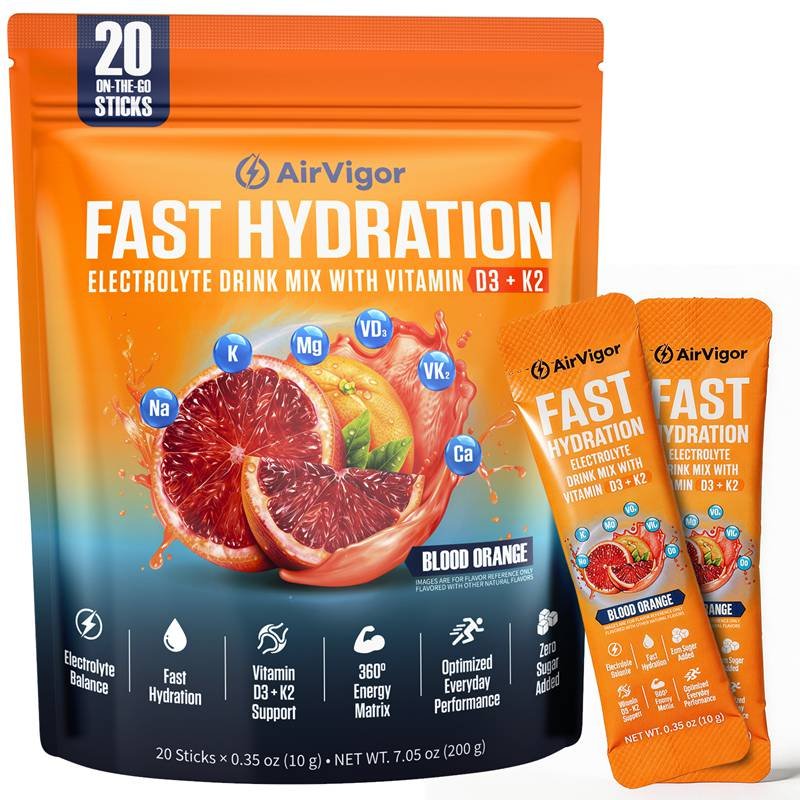
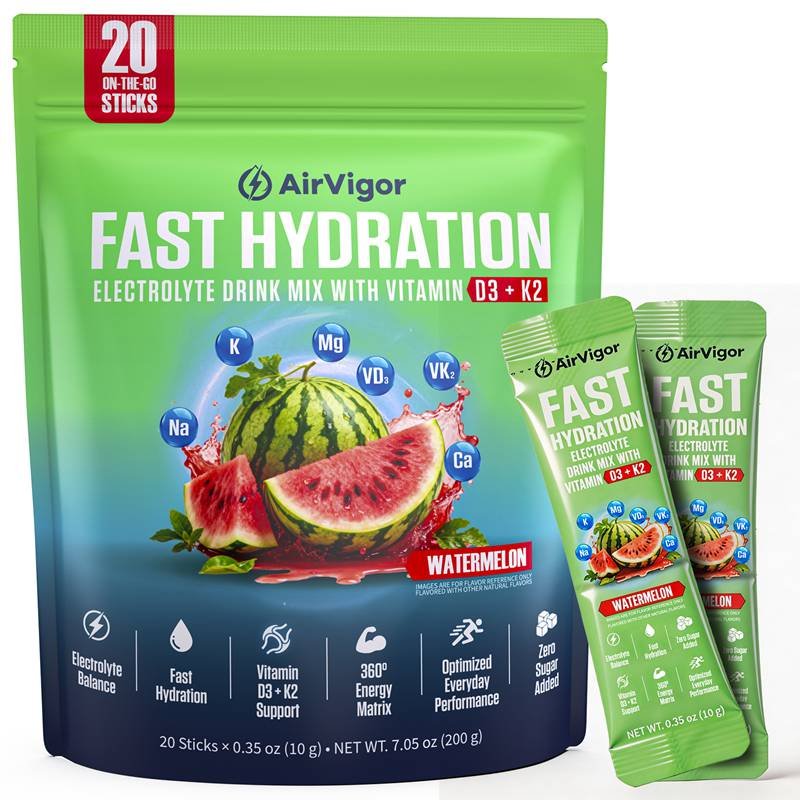
Electrolytes are minerals that help the body maintain normal fluid balance and support muscle and nerve function. Common electrolytes include sodium, potassium, magnesium, and calcium. For busy professionals, this matters because not every demanding day looks like a gym session. A long outdoor commute, a summer trade show, a warehouse visit, a flight, or an after-work workout can all increase hydration needs.
The most important thing is to use electrolytes with context. Some customers think electrolytes are only for athletes. Others drink them all day without thinking. A better approach sits in the middle: use water as the base, then add electrolytes when the day creates extra demand.
| Situation | Water Enough? | Electrolytes May Help? | Why |
|---|---|---|---|
| Normal desk day | Usually yes | Not always needed | Low sweat, normal meals |
| Hot commute | Sometimes | Yes | Heat may increase sweat |
| Long meeting day | Often yes | Maybe | Useful if meals or water are missed |
| Flight day | Sometimes | Often useful | Travel disrupts normal drinking |
| After-work workout | Sometimes | Yes if sweating | Fluid and minerals may both be lost |
| Outdoor event | Sometimes | Yes | Standing, heat, and talking add demand |
| Warehouse visit | Sometimes | Yes if warm or active | Movement and heat can increase fluid loss |
| Missed lunch | Maybe | Sometimes | Less fluid and minerals from food |
For hydration products, the formula should be easy to understand. Customers want to know what they are drinking and why it fits their day. A good electrolyte product does not hide behind vague wording. It clearly shows the minerals, serving size, sugar level, flavor, and best-use moments.
| Electrolyte | Why Customers Care | Common Use Context |
|---|---|---|
| Sodium | Supports fluid balance, especially during sweat | Hot weather, workouts, travel |
| Potassium | Supports normal muscle and nerve function | Daily hydration, active days |
| Magnesium | Supports normal muscle function | Workouts, active routines |
| Calcium | Supports muscle and nerve signaling | Balanced electrolyte formulas |
Busy professionals also care about how the drink feels. If an electrolyte drink is too salty, too sweet, too strong, or hard to mix, it will not become a daily tool. The best product experience is light enough for work, practical enough for travel, and clear enough for repeat use.
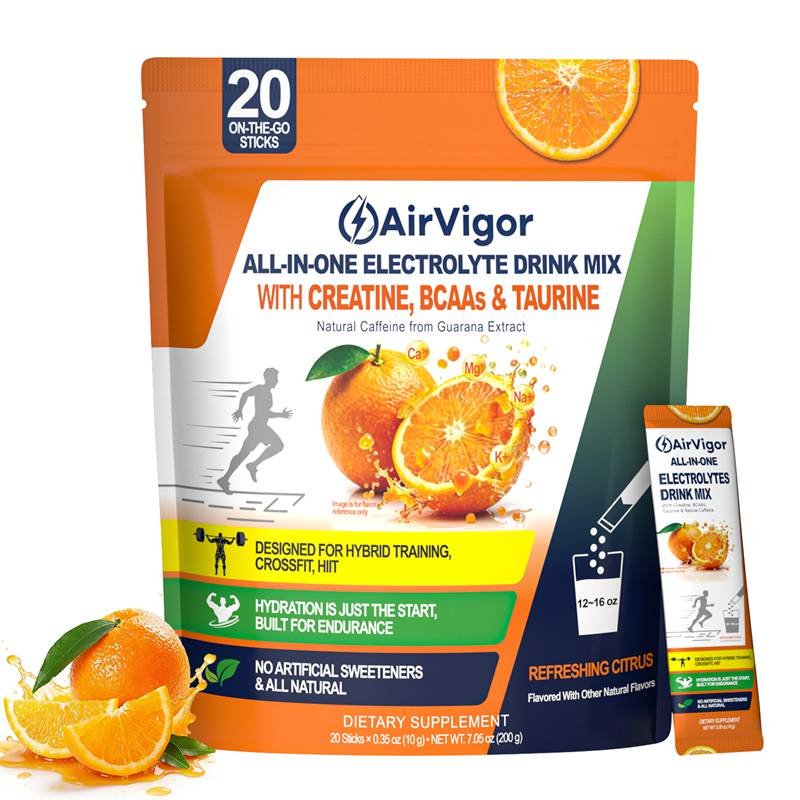
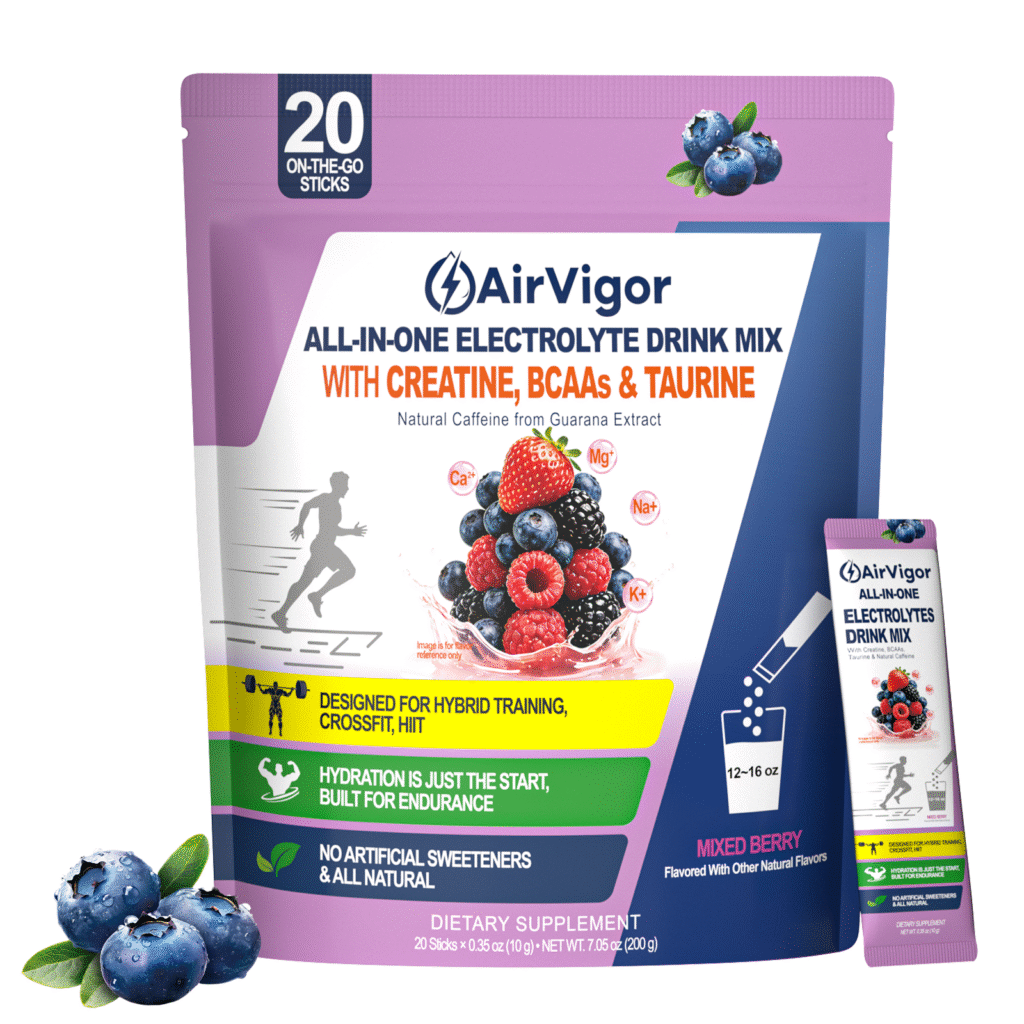
AirVigor’s hydration direction fits this need because professional customers usually want simple use, clear formula expression, and portable packaging. A stick pack can sit in a desk drawer, gym bag, suitcase, car, or laptop bag. When the day becomes hotter, longer, or more active, the user already has a convenient option ready.
Simple Hydration Plan Without Sugar
A simple hydration plan without sugar helps professionals stay hydrated without turning daily drinks into extra dessert-like calories. Low-sugar drinks, unsweetened options, and clear electrolyte formulas can support routine hydration while fitting modern wellness goals.
Many busy professionals do not realize how quickly drink sugar adds up. A sweet coffee in the morning, bottled tea at lunch, soda in the afternoon, and a sports drink after work can turn hydration into a steady sugar source. These drinks may taste good, but they may not match the user’s goals if they are trying to manage daily calories, reduce sugar, or keep energy more stable.
A lower-sugar hydration plan does not mean every drink must be plain. It means choosing flavor more carefully. For daily office use, water, sparkling water, unsweetened tea, and low-sugar electrolyte drinks usually fit better than soda, sweet tea, or sugar-heavy sports drinks.
| Drink Choice | Sugar Level | Best Use | Watch Out For |
|---|---|---|---|
| Plain water | 0g | Daily base | Some users find it boring |
| Sparkling water | Usually 0g | Flavor variety | Choose unsweetened versions |
| Unsweetened tea | 0g | Desk drink, meal pairing | Caffeine varies |
| Low-sugar electrolyte drink | Low or 0g | Sweat, heat, travel, workouts | Check mineral levels |
| Coconut water | Natural sugar | Light activity, flavor variety | Sugar can still be high |
| Sports drink | Often higher sugar | Longer exercise or heavy sweat | Not always needed for desk work |
| Soda | High sugar | Occasional enjoyment | Poor daily hydration fit |
| Sweet coffee drink | Often high sugar | Treat or caffeine drink | Can become a daily habit |
The sugar question is especially important for office professionals because many workdays are low-sweat but high-stress. People may use sweet drinks for comfort, taste, or energy, not because the body needs sugar. Over time, this can make the hydration routine less aligned with wellness goals.
A practical low-sugar hydration plan may look like this:
| Time | Better Drink Choice |
|---|---|
| Morning | Water before coffee |
| Coffee time | Coffee with less syrup or sweetener |
| Mid-morning | Plain water or sparkling water |
| Lunch | Water or unsweetened tea |
| Afternoon | Water first; low-sugar electrolyte drink if needed |
| After workout | Water plus electrolytes if sweating |
| Evening | Water with dinner, avoid sugary late drinks |
Customers often want flavor because plain water alone feels repetitive. A low-sugar electrolyte product can solve this problem when it is designed well. It gives taste and minerals without making hydration feel heavy. The formula should still be transparent, because low sugar alone is not enough. Users also care about mineral balance, serving size, and how the drink fits their routine.
For AirVigor, this is an important product angle. Busy professionals want hydration that feels clean, convenient, and repeatable. A low-sugar hydration format can meet that need when it mixes easily, tastes light, and explains its purpose clearly.
How to Follow a Simple Hydration Plan Daily?
A simple hydration plan works best when it follows your real schedule. Busy professionals can build it around morning water, coffee habits, desk bottles, lunch refills, afternoon checks, travel preparation, and post-workout recovery instead of trying to follow a strict hourly drinking rule.
Simple Hydration Plan in the Morning
A simple hydration plan in the morning should start before coffee, emails, and meetings take over. Drinking water early helps create a better rhythm for the rest of the day without adding another complicated task.
Morning is the easiest time to either start strong or fall behind. Many busy professionals wake up, check their phone, make coffee, rush into work mode, and forget water until late morning. Once that pattern starts, the whole day becomes harder to manage because hydration is already behind before the first meeting begins.
The morning routine does not need to be complicated. A good target is to drink water within the first 30–60 minutes after waking. For many people, 8–12 oz is a realistic starting amount. If someone trains early, wakes up after a hot night, or has a long commute, they may need more. If the morning is calm and breakfast includes fruit, yogurt, or a smoothie, the plan may stay simple with plain water.
| Morning Moment | Simple Hydration Plan Action | Why It Helps |
|---|---|---|
| Right after waking | Drink 8–12 oz water | Starts hydration before the day gets busy |
| Before coffee | Take several sips of water first | Prevents a coffee-only start |
| During breakfast | Drink water or unsweetened tea | Adds fluid with food |
| Packing for work | Put bottle or stick pack in bag | Prevents “I forgot” later |
| Before first meeting | Place water beside laptop | Makes hydration visible |
The biggest morning mistake is letting coffee become the first and only drink. Coffee can stay in the routine, but it should have a water partner. A simple rule works well: water first, coffee second. This does not require giving up caffeine. It simply stops caffeine from replacing hydration.
For professionals who rush out the door, preparation matters. Place a bottle near the keys, coffee machine, laptop bag, or bathroom sink. If you use electrolyte sticks on active or travel-heavy days, keep a few where you pack your bag. The goal is to make the right choice easy before the day becomes crowded.
A strong morning plan also reduces late-day pressure. When water intake starts early, the person does not need to “catch up” aggressively at night. The day feels more balanced because hydration is spread across normal moments.
Simple Hydration Plan at Work
A simple hydration plan at work should be visible, repeatable, and tied to office habits. The easiest system is to keep water on the desk, refill before lunch, and drink before reaching for afternoon caffeine.
Work is where hydration usually breaks down. People may have water available, but availability is not the same as use. A bottle inside a backpack, behind a monitor, or left in the car will not help during a meeting-heavy day. The bottle needs to be visible enough to become part of the workspace.
A practical office plan can be built around two bottle goals: one before lunch and one after lunch. This is easier than tracking every sip. If the bottle is still full at noon, the morning plan needs work. If it is empty after lunch but never refilled, the afternoon is the weak point.
| Workday Time | Simple Hydration Plan Action | Easy Check |
|---|---|---|
| Start of work | Put bottle beside laptop | Is water visible? |
| Mid-morning | Drink during task transition | Has the bottle level changed? |
| Before lunch | Refill or finish first bottle | Did you drink before eating? |
| After lunch | Refill again | Is water ready for afternoon? |
| Afternoon dip | Drink water before coffee | Are you thirsty or just tired? |
| End of day | Check remaining water | Did the plan actually happen? |
This plan works for desk professionals, remote workers, managers, operators, and content teams because it uses natural work transitions. Instead of setting constant reminders, drink when you change tasks, finish a call, return from lunch, or open a new project.
Different work styles need different adjustments:
| Work Style | Common Hydration Problem | Better Daily Fix |
|---|---|---|
| Desk worker | Water ignored during screen focus | Bottle beside keyboard |
| Remote worker | Breaks become irregular | Drink at task changes |
| Sales professional | Talking dries mouth | Sip before and after calls |
| Manager | Back-to-back meetings | Drink before each meeting block |
| Warehouse or operations role | Heat and movement | Water plus electrolytes when sweating |
| Trade show or event staff | Long standing, limited breaks | Carry bottle and stick packs |
| Business traveler | Limited access and dry air | Sip smaller amounts more often |
Afternoon is the most important workday checkpoint. Many professionals feel tired between 2 p.m. and 4 p.m. and immediately choose coffee or something sweet. Sometimes caffeine is fine, but water should come first. A simple rule is: drink water, stand up briefly, then decide if coffee is still needed.
This is also where a portable hydration product can fit naturally. A low-sugar electrolyte stick in the drawer or bag gives the user a better option on hot days, travel days, or after a workout. It should not replace plain water, but it can support days when water alone does not feel like enough.
Simple Hydration Plan After Work
A simple hydration plan after work should change based on the evening. Normal evenings may only need steady water, while workouts, hot commutes, errands, travel, or heavy sweating may call for extra fluids and electrolytes.
After work is when many people realize whether their hydration plan worked. If they arrive home thirsty, tired, dry-mouthed, or with a nearly full bottle, the workday routine probably did not hold up. The fix is not to drink a huge amount right before bed. The fix is to build a smoother late-afternoon and evening pattern.
A good after-work plan starts before leaving work. Drink water before the commute, especially if the weather is hot or the drive is long. If you go directly to the gym, drink in the late afternoon instead of waiting until training begins. If you are running errands, keep water in the car or bag.
| After-Work Situation | Hydration Need | Simple Hydration Plan Action |
|---|---|---|
| Normal commute home | Moderate | Drink before leaving work |
| Hot commute | Higher | Water before and after commute |
| Gym after work | Higher if sweating | Water before training; electrolytes after if needed |
| Evening errands | Moderate to higher | Carry bottle instead of waiting |
| Late meeting or overtime | Easy to forget | Keep water beside laptop |
| Travel after work | Higher consistency needed | Sip regularly in smaller amounts |
| Quiet evening at home | Moderate | Water with dinner, steady sipping |
For people who exercise after work, hydration should not start at the gym door. Many professionals train after a long day of coffee, meetings, and low water intake. That can make the session feel harder and recovery feel slower. A better plan is to drink water during the late afternoon and use electrolytes when the workout is sweaty, intense, long, or done in a warm environment.
| Workout Type | Hydration Approach |
|---|---|
| Light walk or stretching | Water is usually enough |
| Pilates or yoga | Water; electrolytes if sweating heavily |
| Strength training | Water before and after; electrolytes if sweat is high |
| HIIT or CrossFit | Water plus electrolytes may fit well |
| Running or cycling | Add fluids based on sweat, heat, and duration |
| Hot yoga | Electrolytes may be useful after heavy sweating |
Evening hydration also needs timing. Trying to catch up with a large amount of water late at night may feel uncomfortable and may disturb sleep for some people. A better routine is to sip steadily from late afternoon through dinner. If you notice you are always thirsty at night, the real problem may be earlier in the day.
The goal after work is simple: replace what the day took out without overloading the evening.

Why Choose AirVigor for a Simple Hydration Plan?
AirVigor supports a simple hydration plan with clear formulas, portable formats, practical serving guidance, and quality-focused supplement development. For busy professionals, the value is not complicated wellness language. It is a hydration product that is easy to carry, easy to understand, and easy to use consistently.
Simple Hydration Plan Made Easy
AirVigor helps make a simple hydration plan easier by focusing on daily convenience. Busy professionals need hydration support that fits into office drawers, laptop bags, gym bags, cars, suitcases, and real workday routines.
For busy professionals, the biggest barrier to hydration is not always motivation. It is friction. If a drink takes too long to prepare, needs too many steps, tastes too heavy, or is hard to carry, it usually disappears from the routine after a few uses. A hydration product has to work in the middle of life, not only in a perfect kitchen setup.
AirVigor’s product direction is built around this kind of real use. A simple hydration plan works better when the product can be used during a normal workday: before a meeting, after a commute, between calls, after a workout, or while traveling. This is why portable formats matter so much. A stick pack or compact serving can stay close to the customer instead of sitting forgotten at home.
| Daily Situation | What Customers Need | How AirVigor Fits |
|---|---|---|
| Morning rush | Quick hydration before coffee | Easy-use format with simple directions |
| Office work | Desk-friendly routine | Portable packs for drawers or bags |
| Afternoon slump | Better option before another coffee | Hydration support without complicated prep |
| Business travel | Lightweight and easy to pack | Travel-friendly serving format |
| After-work gym | Convenient post-sweat support | Easy to mix after training |
| Hot commute | Hydration available outside the home | Carry-ready format |
| Long workday | Routine that does not interrupt work | Simple serving and clear use timing |
Customers also care about taste and mixing experience. A product may look impressive on the label, but if it clumps, tastes too strong, feels overly sweet, or leaves an unpleasant aftertaste, it will not become a daily habit. For hydration products, repeat use depends on the small details: mouthfeel, sweetness level, flavor balance, mixability, and how light the drink feels during work or travel.
A practical hydration product should answer the customer’s real questions:
| Customer Question | Why It Matters |
|---|---|
| Can I use it at work without hassle? | The product must fit busy schedules |
| Can I carry it easily? | Portability affects daily use |
| Does it mix fast? | Poor mixing reduces repeat use |
| Is the taste light enough? | Heavy flavor can become tiring |
| Is the serving clear? | Clear directions reduce confusion |
| Does it fit my coffee routine? | Many professionals drink coffee daily |
| Can I use it after sweating? | Workouts, heat, and travel change needs |
AirVigor’s simple hydration positioning is not about making the customer follow a strict wellness plan. It is about giving them a practical tool that can support the routine they already live. For many users, that means keeping hydration support close enough to use before the day gets away from them.
Simple Hydration Plan with Clear Formula
AirVigor supports a simple hydration plan with clear formula expression, visible ingredient logic, and practical serving guidance. Customers want to know what they are drinking, why it fits their day, and when to use it.
Hydration customers are becoming more label-aware. They compare sugar levels, electrolyte types, serving sizes, flavors, and usage instructions before deciding whether a product fits their life. A vague formula may create short-term curiosity, but clear information builds longer-term trust.
For a simple hydration plan, customers usually want answers to a few direct questions:
| Formula Question | Customer Concern |
|---|---|
| What electrolytes are included? | They want to understand the product’s role |
| How much is in each serving? | They want clear daily use guidance |
| Is it low sugar or sugar-free? | They want hydration without extra burden |
| When should I use it? | They want workday, travel, or workout timing |
| Does it taste light? | They want something repeatable |
| Is it easy to mix? | They do not want clumps or extra steps |
| Is the label clear? | They want confidence before purchase |
AirVigor’s brand direction emphasizes real ingredient addition and clear formula expression. This is important because hydration products are often used repeatedly. Customers do not want to guess whether a product is for daily office use, sports use, travel use, or recovery use. They want the label and product page to explain the situation clearly.
For electrolyte hydration products, the most commonly understood minerals include sodium, potassium, magnesium, and calcium. Each one plays a different role in supporting normal body function. The customer does not need a chemistry lesson, but they do need a clear reason why the formula exists.
| Electrolyte | Customer-Friendly Role | Suitable Daily Context |
|---|---|---|
| Sodium | Helps support normal fluid balance | Sweat, heat, workouts, long travel |
| Potassium | Supports normal muscle and nerve function | Daily hydration and active routines |
| Magnesium | Supports normal muscle function | Active days and recovery routines |
| Calcium | Supports muscle and nerve signaling | Balanced electrolyte formulas |
Clear formula expression is also valuable for online selling. On Amazon, Shopify, Walmart, or independent brand websites, customers often make decisions quickly. If the product page clearly explains serving size, mineral structure, flavor, sugar level, and best-use scenarios, the buying decision becomes easier.
For AirVigor’s B2B customers, this matters even more. A clear formula is easier to turn into product images, A+ content, comparison charts, SEO articles, landing pages, retail education, and social media content. When the formula logic is clear, the whole marketing system becomes easier to build.
Simple Hydration Plan for Busy Lives
AirVigor fits busy lives because its hydration concept is built around real daily scenarios: office work, commuting, travel, training, outdoor activity, long meetings, and irregular meals. The product should support the routine instead of making it more complicated.
Busy professionals do not live inside one clean wellness moment. Their day changes constantly. They may start with coffee, sit through meetings, skip lunch, commute in heat, train after work, and then pack for travel the next morning. A hydration product that only fits one situation may not stay useful for long.
A better product should cover several realistic use cases:
| Busy Life Scenario | Hydration Challenge | AirVigor Use Direction |
|---|---|---|
| Office desk routine | Water gets ignored | Keep hydration support visible and easy |
| Long meetings | No drinking for hours | Use water before meeting blocks |
| Heavy coffee day | Water gets pushed back | Pair hydration with coffee routine |
| Business travel | Routine becomes unstable | Carry portable hydration servings |
| Hot weather | Sweat may increase | Add electrolyte support when needed |
| After-work workout | Starting exercise underhydrated | Hydrate before and after training |
| Weekend activity | More movement and outdoor time | Use water plus electrolytes if sweating |
| Irregular meals | Less fluid and minerals from food | Add fluids and balanced support |
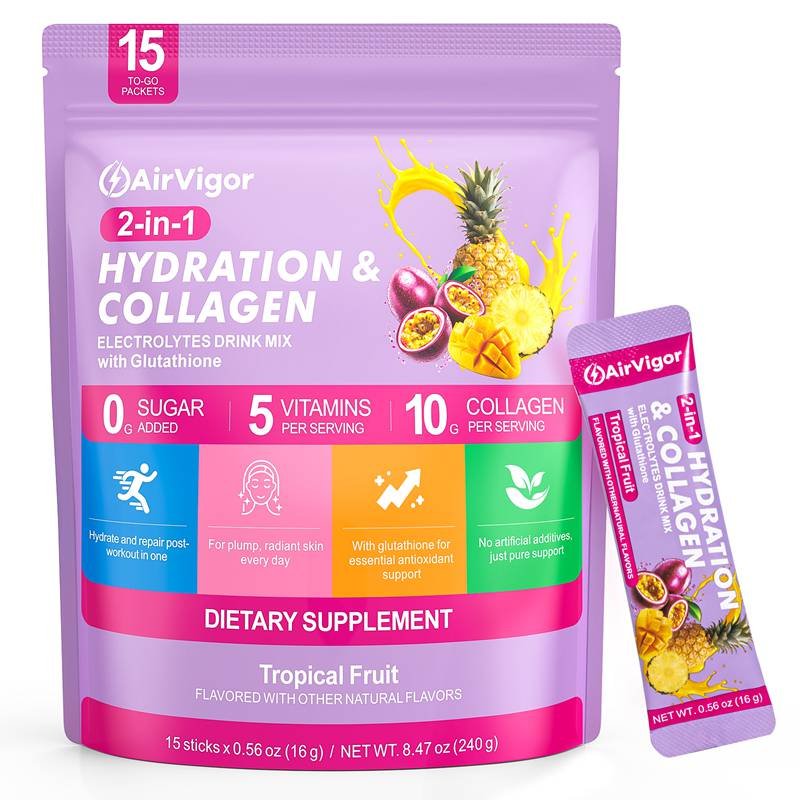
AirVigor’s value is that hydration can become part of a larger daily wellness system. A customer who starts with electrolyte hydration may also care about vitamins, minerals, protein, collagen, creatine, probiotics, botanical extracts, or other functional supplements. AirVigor’s broader product development direction allows the brand to support different lifestyle needs under one clear supplement system.
This is useful for consumers because they can stay within a brand style they understand. It is also useful for business customers because hydration can be the entry point into a larger product line. A brand may start with electrolyte sticks, then expand into creatine hydration, collagen hydration, vitamin powders, beauty wellness sticks, or daily mineral support products.
| Product Expansion Direction | Possible Customer Need |
|---|---|
| Electrolyte drink mix | Daily hydration, heat, sweat, travel |
| Creatine electrolyte powder | Training, strength, performance routines |
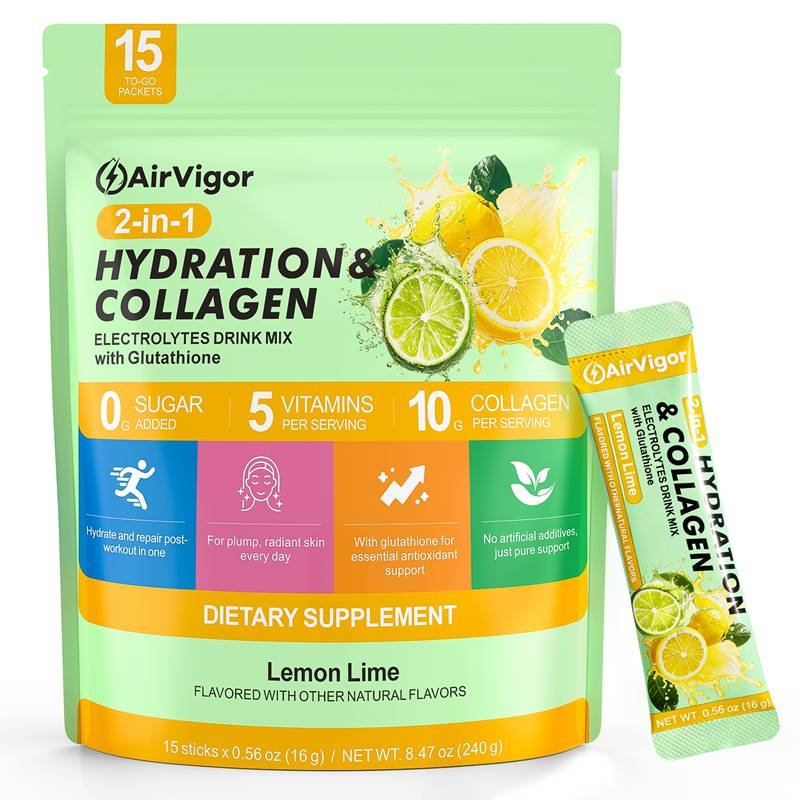
| Collagen hydration | Beauty wellness and post-workout support |
| Vitamin hydration | Daily wellness and convenience |
| Mineral formulas | Foundational nutrition support |
| Protein powders | Fitness and recovery routines |
| Probiotic supplements | Digestive wellness routines |
| Functional wellness sticks | Busy lifestyle and daily supplement habits |
A simple hydration plan becomes more powerful when it is connected to real life. AirVigor’s product direction gives customers practical hydration support and gives business partners a flexible foundation for long-term product planning.
Simple Hydration Plan with Quality Support
AirVigor supports a simple hydration plan with quality-focused development, selected raw materials, formula review, production control, packaging checks, and documentation support. Customers want products that are convenient, but they also want to feel confident about what they use.
Quality matters because hydration products are often used repeatedly. A customer may use the product at work, after workouts, during travel, or in hot weather. If the taste, mixing, packaging, serving size, or label information feels inconsistent, trust drops quickly. Good quality management is not only a factory topic. It directly affects the customer’s daily experience.
AirVigor’s product development process pays attention to several key areas:
| Quality Area | Why It Matters to Customers |
|---|---|
| Raw material selection | Supports formula consistency and product confidence |
| Formula review | Helps keep ingredient expression clear and accurate |
| Mixing and solubility testing | Affects daily drinking experience |
| Flavor adjustment | Helps improve repeat use |
| Packaging suitability | Protects product during storage and transport |
| Label review | Reduces confusion and supports compliant presentation |
| Finished product checks | Helps maintain batch-to-batch consistency |
| COA/MSDS support | Useful for business customers and documentation needs |
AirVigor works within structured manufacturing and quality management frameworks, including GMP, HACCP, ISO, FSSC22000, and FDA registration-related requirements. These systems support more standardized production, packaging, quality checks, and documentation management.
For consumers, this means the product is developed with more attention to consistency, clarity, and use experience. For business customers, it means the project has stronger support behind formula development, label preparation, production communication, and market entry.
Packaging is also part of quality. A hydration product may travel through warehouses, delivery networks, office drawers, gym bags, and suitcases. If the packaging does not protect the powder well, the customer experience suffers. AirVigor considers packaging structure, sealing, moisture resistance, storage stability, and transport suitability during product planning.
| Packaging Detail | Customer Benefit |
|---|---|
| Stick pack format | Easy to carry and portion-controlled |
| Moisture-resistant packaging | Helps protect powder quality |
| Clear serving information | Reduces use confusion |
| Compact size | Fits office, travel, and gym routines |
| Stable sealing | Supports storage and transport |
| Clean visual layout | Helps customers understand the product quickly |
This is especially important for hydration products sold online. Customers cannot taste or test the product before buying. They rely on clear information, reliable packaging, product images, reviews, and brand trust. Quality support helps the product perform not only in the factory, but also in the customer’s real routine.
Conclusion
A simple hydration plan should be easy to follow, not hard to maintain. For busy professionals, the best routine starts with water, uses clear daily checkpoints, adjusts for coffee, heat, travel, workouts, and sweat, and adds electrolytes when the day calls for more support.
AirVigor makes hydration easier to fit into real life with clear formulas, portable product formats, practical usage guidance, and quality-focused supplement development. For customers looking for daily hydration support or businesses planning a custom hydration product, AirVigor offers a reliable path from product concept to real daily use.
Share:
Contact Expert Team
At AirVigor, performance becomes effortless. We transform advanced nutrition science into clean, effective supplements that help you hydrate, recover, and feel stronger every day. Shop AirVigor Supplements on Amazon and experience athlete-trusted formulas—backed by real science and supported by our world-class R&D and production capabilities.
Trust AirVigor
At AirVigor, turning your performance goals into reality is no longer a struggle—it’s a science-driven journey we build together. Whether you’re a runner, lifter, cyclist, yogi, outdoor athlete, or someone simply seeking better daily energy, AirVigor transforms advanced nutrition research into clean, effective, and trustworthy supplements you can feel.
Backed by our U.S. scientific team, global certifications, and world-class production standards, every formula is engineered to deliver real hydration, real recovery, and real performance. And when you’re ready to experience the difference, you’ll find AirVigor products available on Amazon and other major platforms—fast shipping, consistent quality, and a community of athletes already seeing results.
Behind the scenes, our R&D and manufacturing ecosystem also supports specialized formulation development, ensuring AirVigor continues to lead with innovation while keeping quality and safety uncompromised. But at the core, everything we create is built for you—your health, your performance, your momentum.
Choose AirVigor. Feel the science. Elevate your every day.


Subscribe to our newsletter
Sign up to our newsletter and we’ll keep you up to date with the latest arrivals.