Skip to content
Powder vs Capsules Electrolytes : A Complete Comparison for Hydration
# Your Trusted Dietary Supplement Brand In US
- Emily

Table of Contents
Electrolytes are essential for maintaining proper hydration, supporting muscle function, and promoting recovery during physical activity or daily routines. Today, more people use electrolyte products not only for athletic training but also after gym sessions, sauna use, outdoor work in heat, long flights, or even busy office days. Choosing between electrolyte powders and capsules requires understanding how each format delivers minerals, fluid, and convenience, and which best fits individual hydration needs.
Electrolyte powders generally provide faster and more complete hydration because they combine fluid and minerals in one drink. Capsules supply minerals but do not replace water, making powders more effective for heavy sweating, workouts, travel, and sauna use. Capsules are better suited for users who prefer compact, flavorless supplementation.
Selecting the optimal format affects daily use and performance. Powders transform water into a hydration solution, encouraging consistent fluid intake, while capsules offer portability and convenience without facilitating drinking. Whether standing in a gym locker room, sitting on a long flight, working outdoors under heat, or recovering after sweating, the choice of electrolyte format determines how effectively hydration is achieved at the right moment.
What Are Electrolyte Powders and Capsules?
Electrolyte powders and capsules are two common ways to supplement key minerals such as sodium, potassium, magnesium, and calcium. Both formats can support fluid balance, muscle function, and normal nerve signaling, but they are not used in the same way. Powder is mixed with water and consumed as a hydration drink, so it delivers fluid and minerals together. Capsules are swallowed like pills and mainly provide mineral support, which means the user still needs to drink enough water separately. This difference affects absorption timing, dosage flexibility, daily convenience, workout use, and customer satisfaction.
Electrolyte Powder
Electrolyte powder is a drink mix designed to dissolve in water before use. This format is especially useful when the goal is hydration rather than simple mineral intake. After sweating, exercise, sauna use, hot-weather exposure, or long travel, the body usually needs both water and electrolytes. A powder serving mixed into 12 to 20 ounces of water helps the user consume fluid while taking in minerals at the same time. This makes powder a strong choice for people who do not drink enough plain water or need a more structured hydration routine during active days.
Most electrolyte powders are built around sodium, potassium, magnesium, and calcium, but the formula strength can vary widely. Sodium is usually the most important mineral for sweat replacement because it helps maintain fluid balance and supports the body’s ability to retain water. Potassium supports normal muscle and cellular function. Magnesium is commonly included for muscle and nerve support, while calcium plays a role in normal muscle contraction. A light daily hydration powder may contain around 100–300 mg of sodium per serving, while a workout or sweat-focused formula may provide 300–600 mg or more, depending on the target user and serving size. Customers should check the Supplement Facts panel carefully instead of assuming all electrolyte powders provide the same level of support.
Powder also allows more complete product design. A single serving can include meaningful electrolyte levels, flavor systems, citric acid for taste balance, natural sweeteners, and added functional ingredients such as amino acids, vitamin C, B vitamins, collagen, creatine, or taurine. This flexibility is difficult to achieve in capsules because capsule capacity is limited. For hydration products aimed at gym users, travelers, outdoor workers, sauna users, or wellness customers, powder gives the formula more space to match real usage scenarios.
The main weakness of traditional powder is convenience. Large tubs are not ideal for gym bags, office drawers, airplanes, hiking packs, or outdoor work sites. Scoops can be messy, servings may be inconsistent, and repeated opening can expose the powder to moisture. Single-serving stick packs solve many of these problems by keeping the powder portable, sealed, pre-measured, and easier to use outside the home. A stick pack keeps the hydration advantage of powder while reducing the inconvenience of tubs.
| Powder Type | Common Use Case | Formula Focus |
|---|---|---|
| Daily hydration powder | Office, travel, light activity | Moderate minerals, clean taste, low or zero sugar |
| Workout electrolyte powder | Gym, HIIT, running, cycling | Higher sodium, potassium, magnesium support |
| Outdoor hydration powder | Heat, hiking, labor, long walks | Stronger sweat-replacement support |
| Recovery hydration powder | After sweating, sauna, post-workout | Fluid replacement plus minerals |
| Functional hydration powder | Beauty, wellness, performance | Electrolytes with collagen, creatine, amino acids, or vitamins |
Electrolyte Capsules
Electrolyte capsules contain minerals in pill form and are usually swallowed with water. Their biggest advantage is compact portability. They are easy to store in a backpack, suitcase, desk drawer, running vest, hiking bag, or supplement organizer. They also avoid flavor completely, which can appeal to people who dislike sweetened drinks, flavored powders, or acidic drink mixes. For users who already take capsules or tablets every morning, electrolyte capsules can fit naturally into an existing supplement routine.
Capsules work best when the user already has a reliable water-drinking habit. A hiker with a hydration bladder, a traveler carrying bottled water, or an office worker who consistently drinks throughout the day may find capsules convenient. In these cases, capsules can provide mineral support without changing the taste of water. They can also be useful as a backup format during long trips, outdoor events, races, or situations where mixing a drink is less convenient.
The key limitation is that capsules do not replace fluid. This is important because many people use the word “electrolytes” as if minerals alone equal hydration. They do not. If a person loses fluid through sweat, taking capsules with only a few sips of water will not fully address hydration needs. The capsule may provide sodium, potassium, or magnesium, but the body still requires enough water to restore fluid balance. This makes capsules less suitable as the primary option after heavy sweating, sauna use, long workouts, high-heat exposure, or travel dehydration.
Capsule dosage can also be limited by size. Meaningful amounts of sodium, potassium, magnesium, and calcium may require multiple capsules per serving, especially for users with higher sweat loss. Some customers are comfortable with that, but many mainstream hydration users prefer one drink instead of several pills. Magnesium-heavy capsules may also feel less comfortable for some users when taken on an empty stomach. These limitations do not make capsules ineffective, but they narrow the situations where capsules are the best choice.
| Capsule Strength | Main Limitation |
|---|---|
| Very compact and easy to carry | Does not replace water |
| No taste or flavor fatigue | Does not encourage fluid intake |
| No mixing or shaker required | May require multiple capsules |
| Easy to add to a supplement routine | Less suitable after heavy sweating |
| Good for users with planned water intake | Mineral levels may be lower than expected |
Key Differences
The clearest difference between electrolyte powder and capsules is the user experience. Powder functions as a hydration drink. Capsules function as a mineral supplement. Powder is usually the stronger choice when the user needs fluid and minerals together, such as before training, during hot weather, after sweating, during travel, or after sauna use. Capsules are better when the user wants compact, flavorless mineral support and already drinks enough water throughout the day.
Powder also gives the customer more flexibility. It can be mixed lighter or stronger depending on water volume, used before or after different activity levels, and combined with other functional ingredients. Capsules are simpler but more fixed. The customer takes the serving as directed, but has less control over concentration, taste, and fluid intake. For sports hydration, workout recovery, and daily water habits, powder often provides a broader solution. For minimalist travel, hiking backup, or pill-based routines, capsules can still be useful.
| Comparison Point | Electrolyte Powder | Electrolyte Capsules |
|---|---|---|
| Product format | Drink mix | Pill or capsule |
| Main benefit | Fluid plus minerals | Compact mineral support |
| Hydration support | Stronger because it is mixed with water | Depends on separate water intake |
| Portability | Strong in stick packs | Very strong |
| Taste | Flavored or unflavored | No taste |
| Dose flexibility | Higher | Lower |
| Mineral capacity | Better for complete formulas | Limited by capsule size |
| Workout use | Easy to sip before, during, or after training | Better as backup support |
| After-sweat use | Strong fit | Must be paired with enough water |
| Best audience | Active users, travelers, office workers, sauna users, heavy sweaters | Pill-friendly users, minimalist travelers, hikers with water plans |
When comparing the two formats, the most useful question is not simply which one contains electrolytes. Both can. The better question is whether the customer needs help drinking enough fluid or only wants additional minerals. If hydration behavior is the main challenge, powder is usually the better fit. If compact storage and flavorless mineral support are the priority, capsules may be more suitable.
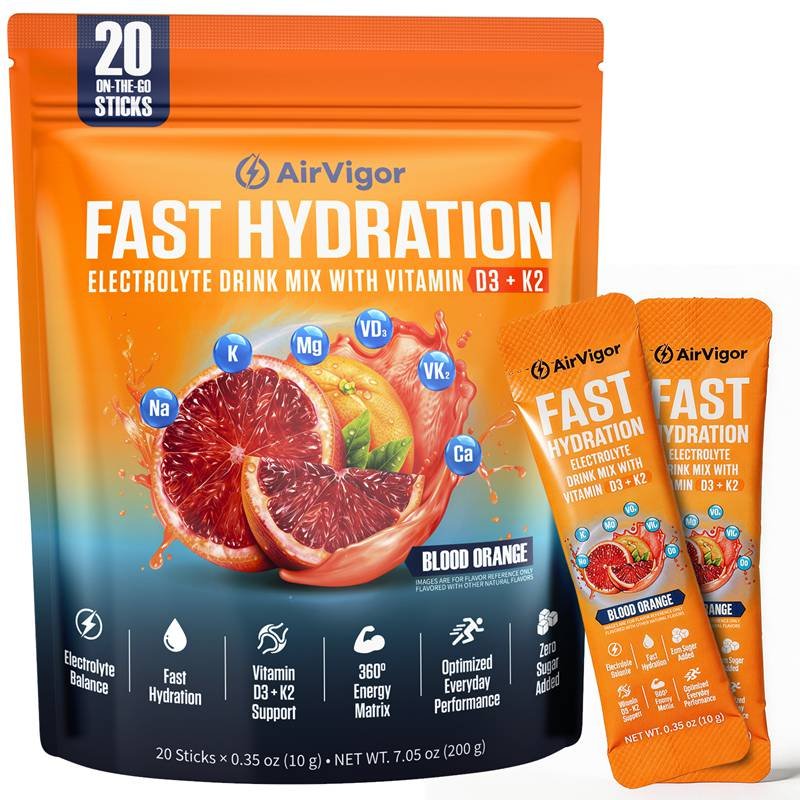
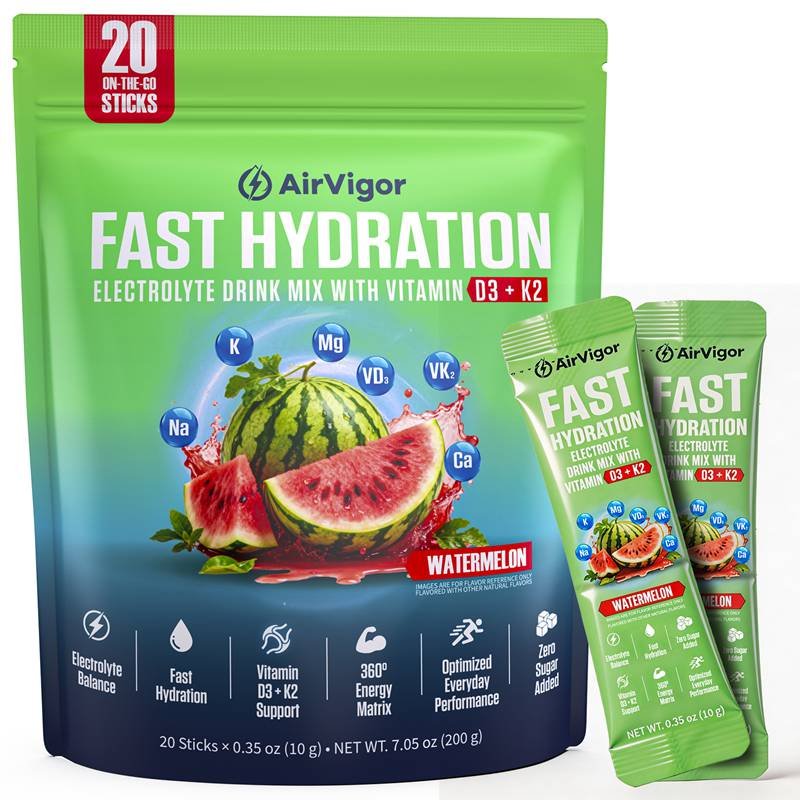
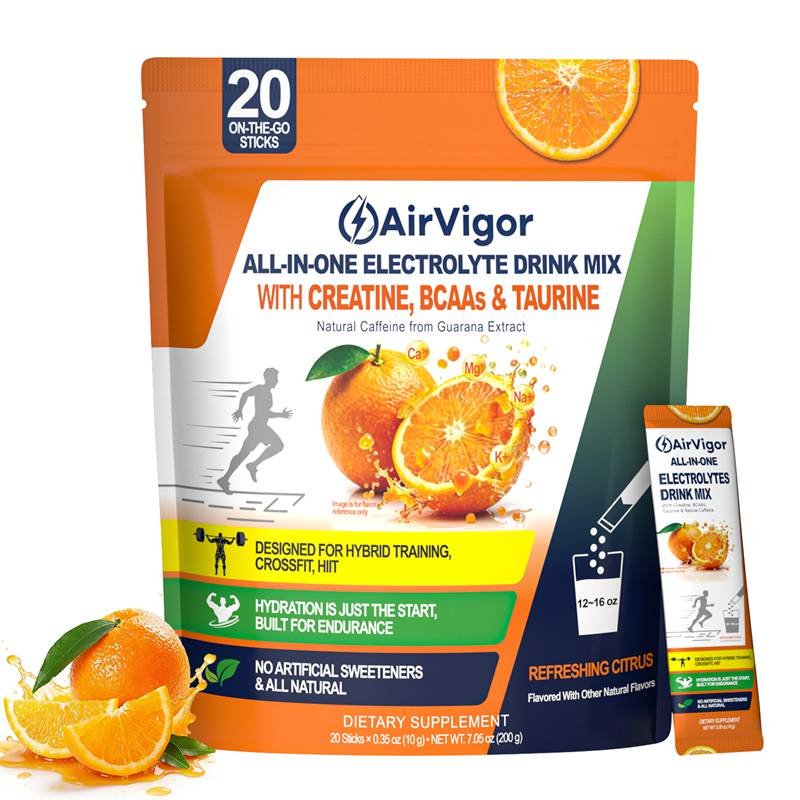
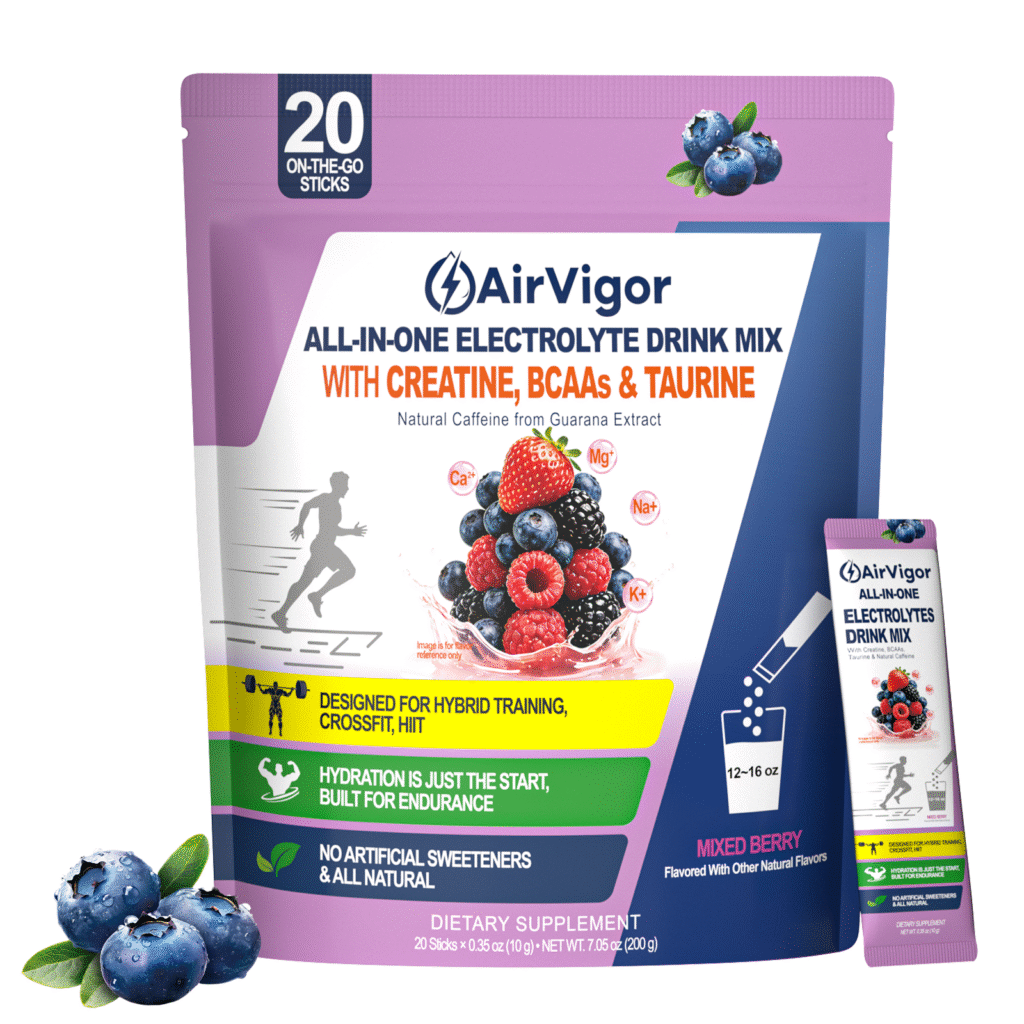
This distinction also explains why stick-pack powder has become a strong format in the electrolyte category. Traditional powder tubs can be inconvenient outside the home, while capsules do not create a hydration drink. Stick packs combine portability with drinkable hydration. One sealed serving can be mixed into water at the gym, in the office, at the airport, after sauna use, or during outdoor activity. For AirVigor, this format fits the way customers actually use hydration products: they want clear mineral support, zero sugar, easy mixing, light flavor, and a serving format that works across daily routines, workouts, travel, and sweat recovery.
A strong electrolyte product should make the choice easy for the user. The mineral amounts should be clearly listed. The serving should be simple to prepare. The taste should support repeat use. The format should match real situations rather than only looking good on a supplement shelf. In the powder vs capsules comparison, powder is usually the stronger hydration format, while capsules are better understood as compact mineral support.
Which Form Hydrates Better?
Electrolyte powders typically provide more complete hydration because they deliver minerals together with fluid. Capsules supply minerals but do not replace water, which limits their effectiveness in scenarios with high fluid loss, such as heavy sweating, long workouts, sauna use, hot-weather activity, or travel. For daily hydration, powders encourage regular water intake and help maintain consistent hydration routines, whereas capsules are most effective when the user already consumes sufficient water throughout the day.
How Fast Do Powders Work
Powders dissolve fully in water, allowing electrolytes to be absorbed along with fluid. Sodium helps maintain blood volume and fluid balance, potassium supports muscle and cellular function, magnesium contributes to nerve and muscle health, and calcium assists in normal muscle contraction. When used before, during, or after exercise, powders ensure both minerals and fluid are available for immediate hydration needs. For example, a 70 kg runner losing roughly 1 liter of sweat per hour may require 300–600 mg sodium and 150–400 mg potassium per hour. Powder allows adjustment of concentration according to sweat rate and environmental conditions. Flavored powders also improve adherence, particularly for office workers, travelers, or gym users who might otherwise neglect fluid intake. Powder can also combine additional nutrients such as amino acids or B vitamins for recovery and performance support, making it a versatile hydration solution.
Do Capsules Replace Fluid
Capsules provide minerals without delivering fluid, meaning proper hydration depends on additional water consumption. A capsule providing 150–200 mg of sodium does not replenish the water lost through sweat. If only a few sips of water are consumed with the capsule, hydration remains incomplete. Capsules are convenient for users who consistently drink enough water, such as hikers with hydration bladders, travelers carrying bottled water, or office workers with established fluid routines. They are also suitable when portability is the primary concern. However, capsules are generally less effective for situations that require rapid fluid replacement after heavy sweating or prolonged exercise, as they cannot deliver fluid and minerals simultaneously.
Which Minerals Matter Most
The key electrolytes to consider are sodium, potassium, magnesium, and calcium, each with distinct physiological functions:
| Mineral | Function | Typical Sweat Loss | Powder Advantage | Capsule Limitation |
|---|---|---|---|---|
| Sodium | Fluid retention, blood volume | 500–1200 mg/hour | Flexible dosing, rapid absorption with water | May require multiple capsules to meet needs |
| Potassium | Muscle and cellular function | 200–400 mg/hour | Easily included in powder | Fixed dose per capsule limits adjustment |
| Magnesium | Muscle and nerve support | 10–50 mg/hour | Can be combined with other nutrients | High doses may cause gastrointestinal discomfort |
| Calcium | Muscle contraction, nerve signaling | 5–20 mg/hour | Included in complete formulas | Often low or omitted in capsules |
Powder allows users to tailor their electrolyte intake based on weight, sweat rate, and activity intensity. Capsules offer pre-measured doses that may be insufficient for high sweat loss, limiting their effectiveness for prolonged or high-intensity exercise.
Electrolyte powders are generally better for users who need fluid and mineral replacement together, including before, during, and after exercise, sauna use, travel in hot climates, or other high-sweat situations. Capsules are more suitable for compact mineral support when water intake is already sufficient or for users who prefer pill formats. Single-serving stick-pack powders combine the advantages of both: they provide pre-measured, portable servings that are easy to mix with water, support hydration and minerals simultaneously, and can be carried in gym bags, backpacks, or travel pouches.

How Do They Compare for Daily Use?
Daily hydration depends less on the supplement format itself and more on whether that format fits the user’s routine. Electrolyte powders are stronger when the goal is to drink more water while taking in minerals. Capsules are useful when the user already drinks enough water and wants compact, flavorless mineral support. For office days, gym routines, travel, hot weather, and sauna use, stick-pack powders often provide the best balance of portability, hydration support, and repeat use.
Which Is Easier to Carry
Capsules are the smallest and easiest format to store. They fit into a work bag, purse, travel pouch, hiking pack, desk drawer, or supplement organizer without taking much space. This makes capsules attractive for users who already take daily supplements or dislike carrying drink powders. The limitation is that capsules still require a water source. A capsule bottle may be convenient to carry, but it does not help the user drink more fluid unless water intake is already planned.
Traditional powder tubs offer more formula flexibility, but they are not ideal for daily carry. A large tub works well at home, in a kitchen, or in a family hydration setup, but it is less practical for commuting, office use, air travel, gym lockers, or outdoor work. Scoops can spill, serving sizes may vary, and moisture exposure can affect the powder when the container is opened repeatedly. These small inconveniences often reduce real-world use, even when the formula itself is strong.
Single-serving stick packs solve many of the daily-use problems that come with tubs while keeping the hydration advantage of powder. One stick can be stored in a backpack, car, suitcase, locker, or office drawer and mixed into a bottle of water when needed. This format is especially useful for customers who do not want to measure powder or carry a large container. It also makes the product easier to use outside the home, which is where many hydration problems actually happen.
Which Supports Consistent Hydration
Electrolyte powder supports consistent hydration because each serving is consumed as a drink. This matters for people who often drink too little water during busy days, after coffee, during long meetings, while traveling, or after exercise. A light, zero-sugar electrolyte powder can make water easier to finish without turning hydration into a sugary sports drink. Taste is not just a flavor issue; it affects whether the user repeats the habit.
Capsules can support mineral intake, but they do not improve water intake unless the user already has a reliable drinking routine. Someone may take capsules in the morning and still go several hours with very little fluid. In that situation, the mineral dose is only part of the hydration equation. Capsules work better for users who already carry water, such as hikers with hydration packs, office workers who keep a bottle nearby, or travelers who intentionally drink throughout the day.
Daily hydration also changes with environment. Air-conditioned offices, long flights, high temperatures, dry indoor air, and repeated caffeine intake can all increase the need for a more intentional hydration routine. In these situations, powder has a behavioral advantage because it gives the user a clear serving of water to drink. Capsules are easier to carry, but powder is more likely to create the actual drinking event.
Which Fits Busy Routines
A good daily electrolyte product should fit into the moments when hydration is usually missed. Office workers may sit through meetings, drink coffee, and forget water until the afternoon. Gym users may finish training and delay rehydration until they get home. Travelers may spend hours in airports, cars, or airplanes with inconsistent fluid intake. Outdoor workers may sweat throughout the day but avoid carrying bulky supplement containers. These are not extreme athletic scenarios, but they are common situations where hydration habits break down.
Powder stick packs are well suited to these routines because the serving is pre-measured and portable. A user can mix one stick into bottled water before a commute, after a workout, during a hotel stay, or after a sauna session. The format removes several common barriers: no scoop, no tub, no guesswork, and no need to swallow multiple capsules. When the product tastes clean and is not too sweet, it becomes easier to use several times per week without flavor fatigue.
Capsules fit a different routine. They are more suitable for users who prefer pills, avoid flavored beverages, or already manage water intake carefully. They can be useful during hiking, minimalist travel, or supplement-focused routines where the user wants minerals without changing the taste of water. The format becomes less suitable when the user expects the capsule itself to solve hydration, especially after sweating or during long periods without enough fluid.
What Matters Most in Daily Use
The best daily format is the one that helps the user stay consistent. Powder is stronger when the main challenge is drinking enough fluid. Capsules are stronger when the main priority is compact mineral support. Stick-pack powder sits between the two because it is portable enough for daily life and still works as a hydration drink.
| Daily Use Factor | Powder | Capsules |
|---|---|---|
| Fluid intake | Encourages the user to drink water with minerals | Requires separate water intake |
| Portability | Strong in stick packs, weaker in tubs | Very strong |
| Taste experience | Can improve repeat drinking when flavor is light | No taste, good for flavor-sensitive users |
| Dose flexibility | Easier to adjust with water volume and serving use | Fixed serving, less flexible |
| Best daily setting | Office, gym, travel, sauna, outdoor heat, post-sweat use | Travel backup, hiking, pill-based supplement routines |
| Main limitation | Needs water and mixing | Does not create a hydration drink |
For most daily hydration situations, stick-pack powder offers the broadest fit. It gives customers a simple way to drink water with electrolytes, avoids the inconvenience of tubs, and provides more complete hydration support than capsules alone. Capsules still have a place for users who value minimal size and flavorless mineral support, but they work best when water intake is already consistent. AirVigor’s zero-sugar stick-pack format is designed around this daily-use reality: portable enough to carry, clear enough to dose correctly, and easy enough to use across work, gym, travel, outdoor activity, and sweat recovery.
Which Is Better for Workouts?
Electrolyte powders provide a complete hydration solution for workouts because they combine fluid and minerals in a single drink. Capsules deliver minerals but do not replace water, limiting their effectiveness during intense sweating or prolonged exercise. For gym users, runners, cyclists, CrossFit athletes, hot yoga participants, or anyone performing in heat or sauna conditions, powder supports both hydration and mineral replacement, while capsules are most effective as a portable backup when water intake is already planned.
Before Training
Hydration before exercise affects performance and comfort from the start. Beginning a session under-hydrated can increase perceived effort, accelerate fatigue, and lead to dry mouth or reduced muscle efficiency. Electrolyte powders can be consumed 20–45 minutes before training, mixed in 12–20 ounces of water, providing both fluid and minerals such as sodium, potassium, magnesium, and calcium. Sodium supports fluid retention and blood volume, potassium aids muscle and cellular function, magnesium supports nerve and muscle health, and calcium contributes to normal contraction and signaling. Pre-training capsules can be taken alongside water, but they do not inherently provide the fluid component, making powders generally more effective for pre-workout hydration.
| Pre-Workout Situation | Powder | Capsule |
|---|---|---|
| Morning or fasted workouts | Provides fluid and minerals together | Needs water separately |
| Hot gym sessions | Supports fluid replacement during heat exposure | Mineral-only support |
| Long runs or cycling | Easy to sip and adjust concentration | Fixed dose, limited flexibility |
During Exercise
During exercise, gradual sweat loss requires fluid and minerals to be replenished progressively. Powder allows sips throughout the session, matching sweat rate and maintaining performance. Users in endurance training, HIIT, CrossFit, or outdoor activities can replace sodium and other minerals in real time, reducing cramping, fatigue, and dehydration-related discomfort. Capsules can provide minerals but require separate water consumption, which may be inconvenient during high-intensity movement or long-duration sessions. Powder also allows optional inclusion of amino acids or B vitamins to support recovery and performance within a single serving.
| Workout Type | Powder Fit | Capsule Fit |
|---|---|---|
| Strength training | Good for moderate sweat | Limited if water is not consumed |
| HIIT or CrossFit | Strong | Less practical during exercise |
| Running or cycling | Strong | Moderate if combined with bottles |
| Hot yoga | Strong | Limited effectiveness |
| Hiking / outdoor activity | Strong | Capsules work as backup only |
After Sweating
Post-workout recovery requires both mineral and fluid replacement. Powder supports immediate rehydration by providing a drinkable solution, allowing the user to restore sodium, potassium, magnesium, and calcium lost through sweat. This is critical for reducing post-exercise fatigue, muscle cramping, and slow recovery. Capsules can provide minerals, but they do not replace the fluid lost, which reduces overall hydration effectiveness if water is not consumed alongside them. Powder’s flavored, zero-sugar formulas also help encourage repeat consumption without overloading on sweetness.
Workout Use Comparison
Powder is generally the stronger format when training involves visible sweating, high intensity, or long duration. Capsules are more suitable for users who already carry sufficient water and prefer a compact, flavorless mineral supplement. Stick-pack powders combine the advantages of both formats: pre-measured, portable, and easy to mix with water while still delivering full hydration and mineral replacement.
| Workout Question | Recommended Format | Reason |
|---|---|---|
| Pre-workout hydration | Powder | Provides fluid and electrolytes together |
| Intra-workout hydration | Powder | Can be sipped continuously to match sweat loss |
| Post-workout recovery | Powder | Supports fluid and mineral restoration |
| Minimalist or pill preference | Capsules | Compact and flavorless, requires water |
| Travel or outdoor activity | Stick-pack powder | Portable, pre-measured, easy to use anywhere |
AirVigor’s stick-pack powders are designed for this workflow: a single serving can be carried in a gym bag, locker, travel pouch, or office drawer and mixed with water when needed. This format ensures effective hydration before, during, and after exercise while remaining convenient and easy to repeat, supporting real training routines across different environments.

How Should You Choose?
Choosing the right electrolyte format depends on the user’s primary goal: replacing fluid and minerals, maintaining hydration during workouts, supporting daily water intake, portability, flavor preference, or convenience. Powder is generally the best choice when fluid replacement is the priority, particularly for people who sweat heavily, train in heat, use saunas, travel, or have long workdays. Capsules are more suitable for users who already maintain sufficient water intake and prefer compact, flavorless mineral support. Stick-pack powders combine the benefits of both formats, providing drinkable hydration in a portable, pre-measured format that works across multiple daily scenarios.
Choose Powder
Electrolyte powders provide both fluid and minerals, making them ideal for users who need to hydrate effectively before, during, or after activity. A pre-workout serving can be mixed into 12–20 ounces of water 20–45 minutes before exercise to support fluid balance, sodium replacement, and overall mineral intake. Sodium is critical for retaining water lost in sweat, while potassium, magnesium, and calcium support muscle and nerve function. For daily hydration, moderate mineral levels with zero sugar are often preferred. For high-intensity workouts or hot environments, stronger sodium and potassium support may be required.
Powders also allow inclusion of additional functional ingredients, such as amino acids, creatine, or vitamins, within a single serving. This versatility makes powder a practical option for users seeking hydration plus recovery or performance benefits. Office workers, travelers, gym users, or outdoor workers benefit from powder because it encourages sufficient fluid intake while also providing mineral support. Poorly formulated powders, however, can taste too salty or too sweet, so customers should verify clear Supplement Facts, serving size, and mineral levels.
Choose Capsules
Electrolyte capsules offer compact, flavorless mineral support for users who already manage water intake consistently. Capsules are easy to store and carry in backpacks, luggage, or desk drawers, making them convenient for travel or pill-based routines. They can supplement hydration when water is available but do not replace fluid, which can limit effectiveness during sweat-intensive activities. Multiple capsules may be required to achieve full sodium, potassium, magnesium, and calcium intake, particularly for users with higher sweat loss. Capsules are suitable for hikers, travelers, or supplement users who prefer pills, but less effective when hydration needs demand a drinkable solution.
Choose Stick Packs
Stick-pack powders combine portability with the hydration benefits of powder. Each serving is pre-measured and sealed, eliminating the need for scooping or measuring while keeping the product convenient for gym bags, office drawers, travel pouches, or lockers. Stick packs are particularly useful for users who need hydration support across multiple daily situations, including workouts, hot yoga, sauna recovery, outdoor labor, or travel. The format encourages fluid intake and provides minerals in a simple, repeatable routine.
| Format | Best Use | Advantage | Limitation |
|---|---|---|---|
| Powder Tub | Home use, pantry storage | Flexible formula, higher serving capacity | Not portable, requires scooping |
| Capsules | Travel backup, hiking, pill-based routines | Compact, no flavor, easy to carry | Does not provide fluid |
| Stick-Pack Powder | Gym, travel, office, outdoor, daily hydration | Portable, pre-measured, drinkable hydration | Requires water for mixing |
Stick-pack powders also support clear brand positioning for companies. They are easy to explain, sample, and distribute, making them effective for private label or retail applications. AirVigor’s zero-sugar stick packs provide a portable, pre-measured serving that supports hydration before, during, and after exercise or daily activity. This design helps users maintain sufficient fluid intake and mineral replacement without the inconvenience of tubs or the limitations of capsules.
Decision Considerations
The optimal format is determined by the user’s environment, routine, and hydration habits. Powder is better when fluid replacement, taste, and hydration behavior are key. Capsules are preferable for compact mineral supplementation when water is already available. Stick packs often provide the broadest fit, combining the hydration advantage of powder with the portability of capsules. Customers should consider their sweat rate, activity type, convenience needs, and taste preferences when selecting the best electrolyte format.
Conclusion
Choosing between powder and capsule electrolytes is more than a format decision—it’s about how effectively people hydrate. Capsules are compact, simple, and convenient for users who already drink enough water, serving primarily as mineral support. Powders deliver both fluid and electrolytes, making them more effective for real hydration needs during workouts, heavy sweating, hot environments, travel, sauna use, and daily routines.
Stick-pack powders are the most versatile modern option. They combine portability with drinkable hydration, eliminating the bulk of tubs while maintaining mineral delivery. One serving can be mixed quickly in a water bottle and used before training, during travel, after sweating, or throughout a busy day. Zero-sugar, light-flavored stick packs make it easier for users to maintain consistent hydration without compromising taste or convenience.
AirVigor develops electrolyte products around real customer routines, not just ingredient lists. Branded AirVigor stick packs are ready-to-sell hydration solutions with clear positioning, portable packaging, and daily-use appeal. For most partners, using AirVigor branded products accelerates market launch because the product format, serving logic, and customer guidance are already built into the solution.
For brands seeking tailored solutions, AirVigor offers custom electrolyte formulations. Options include sports hydration, daily wellness, travel support, hot-weather use, beauty hydration, collagen or creatine enrichment, and private label stick packs. Flavor, serving size, mineral profile, packaging, and order volume can be adjusted to meet the target market’s needs.
To order AirVigor branded products or request a custom formula, contact the team with your preferred product concept, target customer group, flavor preference, serving size, packaging type, and expected order quantity. AirVigor helps turn electrolyte demand into a product that customers understand, use consistently, and reorder, whether the goal is rapid retail launch or a fully customized hydration solution.
Share:
Contact Expert Team
At AirVigor, performance becomes effortless. We transform advanced nutrition science into clean, effective supplements that help you hydrate, recover, and feel stronger every day. Shop AirVigor Supplements on Amazon and experience athlete-trusted formulas—backed by real science and supported by our world-class R&D and production capabilities.
Trust AirVigor
At AirVigor, turning your performance goals into reality is no longer a struggle—it’s a science-driven journey we build together. Whether you’re a runner, lifter, cyclist, yogi, outdoor athlete, or someone simply seeking better daily energy, AirVigor transforms advanced nutrition research into clean, effective, and trustworthy supplements you can feel.
Backed by our U.S. scientific team, global certifications, and world-class production standards, every formula is engineered to deliver real hydration, real recovery, and real performance. And when you’re ready to experience the difference, you’ll find AirVigor products available on Amazon and other major platforms—fast shipping, consistent quality, and a community of athletes already seeing results.
Behind the scenes, our R&D and manufacturing ecosystem also supports specialized formulation development, ensuring AirVigor continues to lead with innovation while keeping quality and safety uncompromised. But at the core, everything we create is built for you—your health, your performance, your momentum.
Choose AirVigor. Feel the science. Elevate your every day.


Subscribe to our newsletter
Sign up to our newsletter and we’ll keep you up to date with the latest arrivals.