Skip to content
What Are Electrolytes Good For:Science-Backed Benefits for Hydration, Performance, and Daily Health
# Your Trusted Dietary Supplement Brand In US
- Emily

Most hydration advice stops at “drink more water.” But if you’ve ever finished a workout, traveled on a long flight, or spent a hot day outside—and still felt headachy, tight, foggy, or unusually tired—you’ve already learned the real rule: hydration isn’t only water. It’s water plus minerals, in the right balance. Those minerals (electrolytes) help your body control where fluid goes, how well muscles contract, and how nerves fire—so you don’t just drink… you actually feel normal again.
Electrolytes are especially useful when you sweat, train hard, work in heat, travel, or drink lots of plain water without replacing minerals. When levels run low or the balance drifts, the “symptoms” often look like everyday problems: cramps, dull headaches, fatigue, dizziness, or flat performance. The goal of this guide is simple—show you what electrolytes are good for, how to spot when you truly need them, and how to use them safely without overdoing it.
What Are Electrolytes?
Electrolytes are minerals in your body fluids that carry an electrical charge—like sodium, potassium, chloride, magnesium, calcium, and phosphate. They help regulate how water is distributed in your body, support nerve impulses and muscle contraction, and help maintain acid–base balance. You lose electrolytes through sweat and normal fluid turnover, so you need regular intake from food and—when conditions demand—electrolyte drinks or powders.
What are electrolytes in the body?
Electrolytes are the “switches and signals” that help your body run basic functions: muscle contraction, nerve communication, blood volume stability, and cellular hydration. If water is the fuel, electrolytes are the control system that decides where the fuel goes and how effectively it’s used. That’s why two people can drink the same amount of water and feel totally different—one feels fine, the other feels washed out or headachy—because the mineral context differs.
The easiest mental model: hydration = water + retention + distribution. Electrolytes influence the last two. Without enough electrolytes, water may not stay where you need it (like circulating blood volume or inside working muscle cells). That’s when you see the classic “I keep peeing but I still feel dry” pattern.
What minerals count as electrolytes?
The main electrolytes you’ll hear about include:
- Sodium + chloride: tightly linked with sweat loss and extracellular fluid balance
- Potassium: supports intracellular fluid balance and normal cell function
- Magnesium: supports muscle and nerve function and helps regulate many enzyme systems
- Calcium + phosphate: structural and signaling roles, including muscle signaling
- Bicarbonate: supports acid–base balance
Most people don’t need to memorize the list. You just need to know this: sodium is usually the anchor for sweat-related hydration, while potassium and magnesium often matter for how your muscles feel and how smooth recovery is.
Why are electrolytes electrically charged?
Electrolytes dissolve into ions—particles with a positive or negative charge. Those charges create gradients across cell membranes, essentially powering the signals that tell muscles to contract and nerves to transmit messages. When the gradients drift too far, signaling can become unstable. That’s when people notice weird symptoms: cramps, twitching, dizziness, fatigue, or headaches.
This isn’t about “electrolytes are magic.” It’s about electrolytes are the price of admission for normal physiology—especially when you’re training hard or living in conditions that accelerate mineral loss.
Which electrolytes matter most?
For most active adults, the highest-impact electrolytes are:
- Sodium: the big one for sweat and fluid retention
- Potassium: helps maintain normal cell function and fluid balance inside cells
- Magnesium: supports muscle relaxation and nerve function, often relevant to recovery feel
If you’re choosing an electrolyte powder and the label is vague, a simple rule helps: if sodium isn’t clearly stated, it’s probably not a serious hydration product. If potassium and magnesium are tiny trace amounts, it may not deliver a meaningful recovery benefit.
| Electrolyte | What it’s good for (real life) | Common “low/imbalanced” moments |
|---|---|---|
| Sodium | Holding fluid in circulation; steadier output | Heavy sweat, heat exposure, long sessions, “water-only” overdrinking |
| Potassium | Cellular hydration and muscle/nerve function | Weakness, sluggish recovery, “flat” feeling |
| Magnesium | Muscle/nerve support; relaxation side of recovery | Twitching, cramp tendency, poor sleep feel |
| Chloride | Works with sodium for fluid balance | Often drops alongside sodium with sweat loss |
| Calcium/Phosphate | Signaling + structure | More diet-driven; complex symptoms |
What Are Electrolytes Good For?
Electrolytes are good for hydration efficiency, stable fluid balance, nerve signaling, and muscle contraction. Practically, they help you feel less “washed out” after sweat, reduce late-workout drop-offs, and support smoother recovery—especially when sodium, potassium, and magnesium are restored appropriately. They’re most useful during heavy sweating, heat exposure, long workouts, travel, and post-workout recovery when water alone isn’t enough.
What are the benefits of drinking electrolytes?
People want benefits they can feel, not textbook definitions. Here are the main wins—without the hype:
You feel hydrated faster and stay hydrated longer.
Electrolytes help your body retain and distribute water instead of sending it straight out. That’s why “water-only” sometimes feels like it doesn’t stick.
Your energy feels steadier.
When fluid balance is off, your heart works harder, your perceived effort rises, and your day feels heavier. Electrolytes can remove that avoidable drag.
Your muscles feel more cooperative.
If you’re prone to cramps or twitching after sweaty training, electrolyte balance is one of the first things worth fixing. It won’t solve every cramp, but it’s a high-leverage lever.
Recovery feels less punishing.
This is where recovery-focused electrolyte powders shine. A post-workout mix that restores sodium plus meaningful potassium and magnesium can help reduce the “next-day tightness” pattern—especially in people who train frequently.
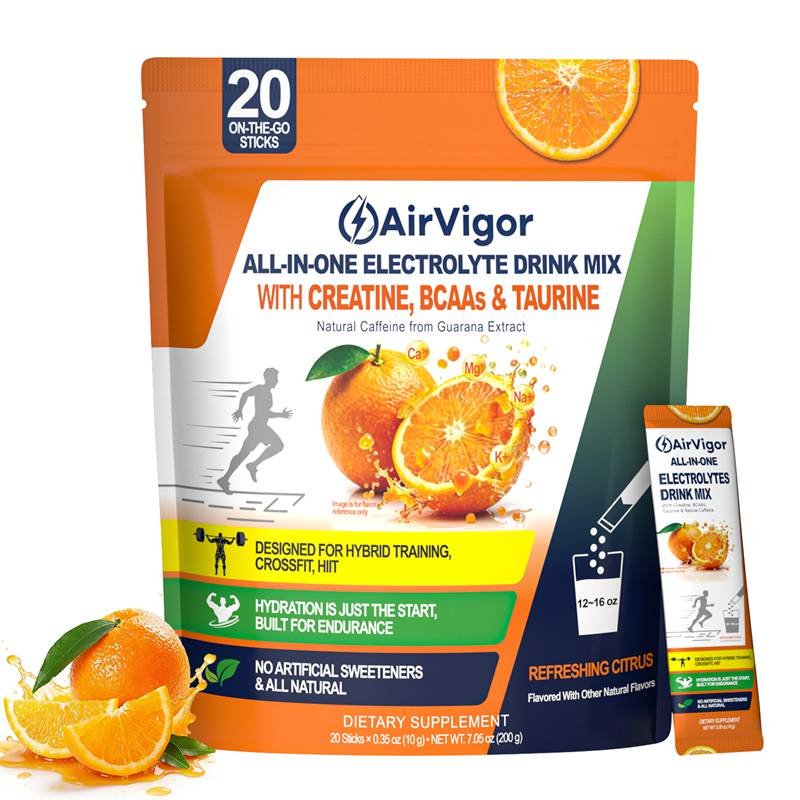
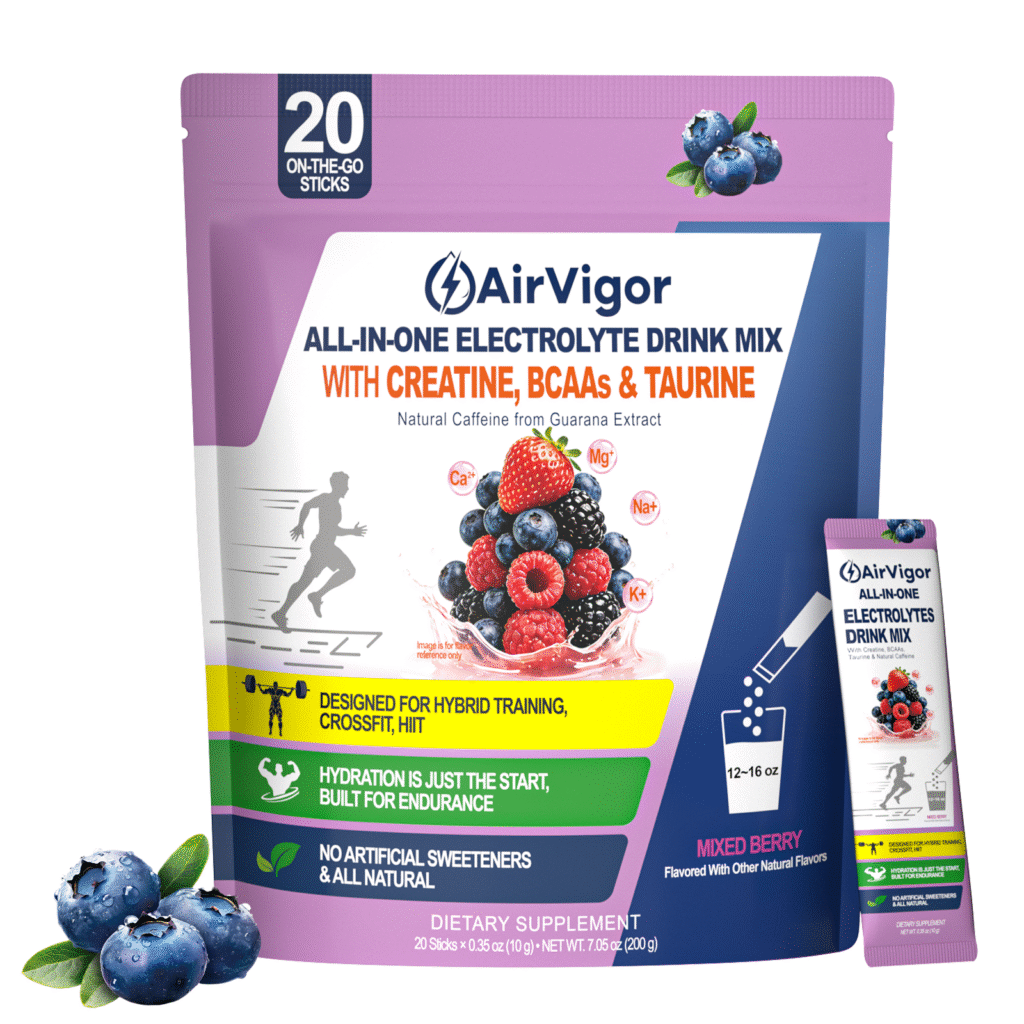
This is also why AirVigor’s Recovery Electrolyte Powder is designed to be easy to drink after training: clean taste, fast dissolution, and a mineral profile that supports both hydration and the recovery feel (not just “salt water”).
What do electrolytes do in hydration?
Hydration is not just “adding water.” It’s maintaining the conditions that let water stay in the right compartments:
- enough circulating fluid for stable blood pressure and performance
- enough intracellular fluid for muscles to function smoothly
- balanced signaling so your body doesn’t overcorrect by dumping fluid
Electrolytes—especially sodium—help regulate those compartments. When sodium is low relative to water intake, people often feel worse: headache, fatigue, nausea, and general “off-ness.” Even without a medical condition, mild dilution can produce that “I drank a ton but I feel worse” experience.
How do electrolytes support muscles?
Muscles contract when electrical signals fire correctly. Nerves transmit those signals using ion gradients. Potassium plays a major role in the normal function of cells; magnesium often influences the “calm and reset” side of neuromuscular function. When levels are off, you can feel it as tightness, twitching, or reduced ability to sustain output.
A useful lens: training is the stress; recovery is the adaptation. If your electrolytes are low, recovery quality often suffers first—sleep feels lighter, legs feel “wired,” and soreness feels stickier. That’s why many consistent athletes treat electrolytes as a recovery tool, not just a workout tool.
Why electrolytes affect energy?
Fluid balance affects circulation. Circulation affects oxygen delivery. Oxygen delivery affects brain and muscle performance. When hydration status is unstable, your brain often feels it as fog, irritability, or reduced focus. That’s why electrolytes can matter on “non-athlete” days too: long meetings, high caffeine, travel, or heat exposure. It’s not that electrolytes are stimulants; it’s that they help your baseline physiology run smoothly.
| What users search / feel | Common cause pattern | What electrolytes can do |
|---|---|---|
| “Why am I still thirsty after water?” | Mineral dilution or sweat loss | Improve retention + distribution |
| “Leg cramps at night” | Heavy sweat, low magnesium/potassium context | Support neuromuscular balance |
| “Headache after workout” | Dehydration, heat, sodium mismatch | Restore fluid balance faster |
| “I crash after training” | Fluid + mineral debt post-session | Support recovery steadiness |
How Do Electrolytes Improve Hydration?
Electrolytes improve hydration by helping your body absorb water efficiently and retain it where it’s needed. Sodium is especially important because it supports fluid balance and helps prevent the “water in, water out” problem that happens when minerals are low. In sweat-heavy or high-fluid-intake situations, electrolytes often make hydration feel faster, steadier, and less dependent on constant drinking.
How electrolytes help water absorption?
Your gut absorbs water more effectively when the fluid contains the right solutes. That’s one reason balanced electrolyte solutions are used in rehydration contexts: sodium (and sometimes carbohydrate) supports transport that pulls water along. You don’t need a medical formula for daily use, but the principle is evergreen: pure water isn’t always the best absorber when you’re mineral-depleted.
Practical translation: if you’re doing a sweaty session, adding electrolytes to some of your fluids can reduce the feeling that you need to drink endlessly just to feel normal. It can also reduce the “sloshy stomach” issue some people get when they try to rehydrate with too much plain water too quickly.
Why water alone may not hydrate well?
Water fails most often in three scenarios:
- High sweat loss: you’re losing sodium and chloride faster than you replace them.
- High water intake: you dilute sodium and feel headachy or weak.
- Long duration: the longer you go, the more mineral debt accumulates.
If you’ve ever seen someone finish a long workout and immediately crave salty food, that’s not random. It’s the body trying to restore the mineral side of hydration.
Do electrolytes hydrate better than water?
Sometimes, yes—when electrolytes are the limiting factor.
A simple “decision rule”:
- If you’re not sweating and eating normally: water is usually enough.
- If you’re sweating, traveling, or training long: electrolytes can be the better hydrator because they help water stick.
Also: concentration matters. More isn’t always better. A well-designed electrolyte powder lets you adjust strength (one stick in 16–24 oz, or half-stick if you’re sensitive). That flexibility is why many people prefer powders over ready-to-drink beverages.
| Situation | Water-only | Electrolytes |
|---|---|---|
| Light activity, mild weather | Usually enough | Optional |
| 45–60 min gym, light sweat | Often enough | Helpful if cramp-prone |
| Hot yoga / sauna | Often not enough | Strongly helpful |
| 90+ min training | Usually not enough | Helpful during + after |
| Post-workout “recovery slump” | Often incomplete | Recovery electrolytes help |
| Travel dehydration pattern | Sometimes | Often helpful |
Which Electrolytes Support Performance

Performance hydration is driven primarily by sodium replacement during sweat loss, while potassium and magnesium often influence how muscles feel and how steady recovery is. Sodium supports fluid balance during training; potassium supports normal cellular function; magnesium supports muscle and nerve function that can matter for cramps, relaxation, and recovery feel. A performance plan works best when it’s matched to sweat rate, duration, and heat.
Which electrolytes help muscle contraction?
Muscle contraction is electrical signaling plus fuel plus fatigue management. Electrolytes don’t replace training or calories—but they can prevent avoidable performance loss. Sodium supports the extracellular environment and fluid balance, which is crucial in heavy sweat. Potassium supports normal cellular function. Magnesium supports muscle and nerve function and may influence the “tight vs relaxed” feel after intense sessions.
If you do high-intensity intervals, CrossFit, long cycling, or heavy lifting in heat, sodium is often the first limiting factor. If your main issue is post-training tightness and night cramps, potassium and magnesium context may matter more.
How electrolytes reduce cramps and fatigue?
Cramps are complicated. They can be caused by neuromuscular fatigue, poor pacing, heat stress, and yes—electrolyte imbalance. The key is context. If cramps show up after high sweat loss or heat training, electrolyte replacement becomes a high-probability fix. If cramps happen in totally non-sweaty conditions, you may be looking at fatigue, mobility, or sleep.
Fatigue is where electrolytes feel “quietly powerful.” When fluid balance is off, training feels harder than it should. When you restore the mineral side of hydration, effort often feels smoother. Many athletes report that the biggest difference is not peak performance—it’s fewer late-session drop-offs and better next-day readiness.
This is exactly the positioning of AirVigor Recovery Electrolyte Powder: not “beast mode,” but recover better so you can train again.
Are electrolytes good for headaches?
Sometimes—especially when headaches are connected to dehydration, heat exposure, sweat loss, or “water dilution” from drinking a lot of plain water.
A simple test:
- Did the headache follow sweating, travel, sauna, or a long session?
- Are you also feeling low energy, dizziness, or nausea?
- Did you drink a lot of water but eat very little salt?
If yes, electrolytes are a reasonable first move. If headaches are frequent, severe, or accompanied by neurological symptoms, do not self-treat—treat that as medical territory.
Are electrolytes only for athletes?
No. Athletes are just the easiest case because the loss is obvious.
Electrolytes can matter for:
- heat workers and outdoor jobs
- frequent travelers
- desk workers who drink lots of coffee and forget meals
- low-carb or fasting routines where sodium intake drops
- people who want smoother post-workout recovery
If your lifestyle produces mineral loss, electrolytes are not “sports-only.” They’re “reality-compatible.”
When Do You Need Electrolytes Most?
You need electrolytes most when you lose minerals faster than you replace them—heavy sweating, heat exposure, long workouts, travel dehydration patterns, or high water intake with low mineral intake. Common signs include cramps, headaches, dizziness, fatigue, and “flat” performance. The most reliable approach is to match electrolytes to your sweat and recovery demands instead of using them randomly.
How do you know if your body needs electrolytes?
The best signal is pattern + context, not a single symptom.
Look for repeatable triggers:
- cramps or twitching after sweaty sessions
- dull headache after hot workouts or travel
- fatigue that feels disproportionate to the workout
- “I drank water but I still feel off”
- unusually poor next-day readiness
If those symptoms disappear when you use a balanced electrolyte drink, you’ve basically run your own N=1 experiment. That’s enough for practical decision-making.
When should you drink electrolytes?
Use timing that matches the problem you’re solving:
- Pre-training: if you sweat a lot, train in heat, or usually fade late
- During training: if sessions go 90+ minutes or sweat is heavy
- Post-training (recovery focus): if your problem is next-day tightness, sleep quality, or lingering fatigue
This is where recovery electrolytes are an easy win. A simple post-workout routine (electrolytes + water + normal food) often works better than chasing recovery with random supplements.
Are electrolytes helpful during heat or travel?
Yes—and travel is underrated here.
Travel stacks dehydration triggers: dry air, irregular meals, more caffeine/alcohol, disrupted sleep. A recovery electrolyte routine on travel days can reduce the “arrival headache” and help you feel normal sooner—especially if you also eat a real meal with it.
If you’re a frequent flyer or do business trips plus workouts, this is one of the highest ROI habits you can build.
| Your profile | Typical issue | Best timing | What to look for |
|---|---|---|---|
| Heavy sweater | Late-session fade, cramps | Pre + during + after | Clear sodium amount |
| HIIT / CrossFit | Post-workout crash | After + evening | Sodium + magnesium support |
| Endurance (90+ min) | Headache, fatigue | During + after | Sodium anchor + tolerance |
| Hot yoga / sauna | Dizzy, drained | After | Easy-to-drink formula |
| Desk + caffeine | Afternoon fog | Midday | Mild dose, clean taste |
| Frequent traveler | Travel headache | Arrival + post-workout | Portable sticks, recovery focus |

Are Electrolyte Supplements Safe to Use?
Electrolyte supplements are generally safe for healthy adults when used appropriately, but safety depends on dose, total diet, and health conditions. People with kidney disease, heart failure, uncontrolled blood pressure, or those taking certain medications should consult a clinician before frequent high-sodium products. The safest strategy is matching intake to sweat loss and using transparent formulas with clear labeling.
Should I drink electrolytes daily?
You can, if your life creates daily mineral loss.
Daily makes sense if you:
- train most days
- sweat heavily
- live/work in heat
- travel frequently
- drink lots of plain water
- experience repeatable symptoms that electrolytes solve
Daily may be unnecessary if you’re sedentary, sweat little, and eat balanced meals.
A practical compromise: use electrolytes “daily” during high-demand seasons (summer, training cycles, travel periods), and scale down during low-demand periods.
Are electrolyte powders safe daily?
For most healthy adults, yes—when the formula is transparent and you’re not stacking multiple high-sodium products.
Common mistakes that create problems:
- combining electrolyte powders + sports drinks + salty snacks daily
- using “performance-level sodium” on non-sweat days
- ignoring medical conditions
If you’re building a long-term habit, you want something that is:
- clearly labeled
- easy to dose up/down
- easy on the stomach
- consistent across batches
That’s the product philosophy behind AirVigor’s manufacturing approach: you shouldn’t have to “guess” what’s in your serving.
How much electrolytes is too much?
There isn’t one universal number. Sweat rate varies massively, and diets vary too.
Instead of chasing a “perfect” number, use guardrails:
- If you’re not sweating much: keep electrolyte drinks lighter and less frequent.
- If you’re sweating a lot: prioritize sodium replacement and consistent intake.
- If you have medical risk factors: treat electrolyte supplementation as a medical conversation.
For most customers, the best “dose” is the one that:
- resolves symptoms (cramps/headache/fatigue)
- doesn’t cause GI upset
- fits their training and climate realities
What should you look for on labels?
Here’s the short label checklist that prevents 80% of bad purchases:
- Sodium amount is explicit (no proprietary blends hiding it)
- Potassium and magnesium are meaningful (not “fairy dust” quantities)
- Sugar is appropriate for your goal (recovery hydration doesn’t require lots of sugar)
- Ingredients are simple (less junk, less GI drama)
- Quality signals exist (COA availability, consistent manufacturing standards)
If your main goal is recovery, look for a formula that supports both hydration and muscle feel—this is exactly why recovery electrolytes exist as a category.
How Should You Choose an Electrolyte Powder?
Choose an electrolyte powder based on sweat loss, training duration, and whether your main goal is performance fueling or recovery hydration. For recovery-focused use, prioritize transparent sodium dosing plus meaningful potassium and magnesium, low sugar unless you specifically want carbs, clean ingredients, and a product that tastes good enough to use consistently. The best formula is the one you’ll actually drink after hard sessions.
What makes a high-quality electrolyte supplement?
A high-quality product is not just “more minerals.” It’s:
- right minerals, right amounts for your use case
- consistent manufacturing so the label matches reality
- habit-friendly experience (dissolves fast, tastes clean, doesn’t upset your stomach)
Recovery is where habit matters most. You might be motivated during training, but after training you’re tired and hungry. A recovery electrolyte must be easy to execute—grab, mix, drink, done. AirVigor builds around that reality with portable formats and clear usage guidance.
Which electrolyte ratios work best?
There’s no universal ratio. But there is a useful hierarchy:
- If sweat is the driver → sodium is the anchor
- If recovery tightness is the driver → ensure magnesium context
- If cellular “flatness” is the driver → potassium context matters
Think of ratios as adjustable knobs. If you’re consistently crampy in heat, you likely need more sodium support. If you’re consistently tight at night, magnesium context may be under-supported. If you feel “flat” despite fluids, potassium context might matter.
How sports formulas differ from sports drinks?
Traditional sports drinks are often designed for carb delivery during long endurance events. Many are high sugar, which can be useful for fueling—but not always ideal for daily recovery hydration.
Recovery-focused electrolyte powders tend to emphasize:
- hydration without heavy sugar
- mineral balance that supports next-day readiness
- clean taste and easy digestion
If your goal is “recover well so I can train tomorrow,” a recovery electrolyte powder is often the cleaner tool than a sugary sports drink—unless you specifically need the carbs for fueling.
The Recovery Electrolyte Routine
If your main goal is recovery, this is a simple, repeatable plan:
- After hard training: mix a recovery electrolyte in 16–24 oz water and drink within 60 minutes post-session
- If you sweat heavily: add a second serving later in the day (or increase concentration slightly)
- If you cramp at night: make recovery electrolytes part of your evening routine (not just during workouts)
- On travel days: drink recovery electrolytes upon arrival + after workouts
- Still feeling off? Add a real meal—electrolytes work best when paired with food, not used as a replacement for it
Conclusion
Most hydration advice stops at “drink more water.” But if you’ve ever finished a workout, traveled on a long flight, or spent a hot day outside—and still felt headachy, tight, foggy, or unusually tired—you’ve already learned the real rule: hydration isn’t only water. It’s water plus minerals, in the right balance. Those minerals (electrolytes) help your body control where fluid goes, how well muscles contract, and how nerves fire—so you don’t just drink… you actually feel normal again.
Electrolytes are especially useful when you sweat, train hard, work in heat, travel, or drink lots of plain water without replacing minerals. When levels run low or the balance drifts, the “symptoms” often look like everyday problems: cramps, dull headaches, fatigue, dizziness, or flat performance. The goal of this guide is simple—show you what electrolytes are good for, how to spot when you truly need them, and how to use them safely without overdoing it.
Buy AirVigor Recovery Electrolytes
If you want fast delivery and the simplest buying path, purchase AirVigor Recovery Electrolyte Powder on Amazon (in-stock). Choose:
- Stick packs for gym bag + travel
- Larger formats for daily recovery routines at home
Want Custom Recovery Electrolytes?
Building a brand, launching a recovery formula, or need bulk supply with documentation? AirVigor (Atom Nexus Inc.) supports OEM/ODM and compliant production with typical sampling and lead times.
Share:
Contact Expert Team
At AirVigor, performance becomes effortless. We transform advanced nutrition science into clean, effective supplements that help you hydrate, recover, and feel stronger every day. Shop AirVigor on Amazon and experience athlete-trusted formulas—backed by real science and supported by our world-class R&D and production capabilities.
Trust AirVigor
At AirVigor, turning your performance goals into reality is no longer a struggle—it’s a science-driven journey we build together. Whether you’re a runner, lifter, cyclist, yogi, outdoor athlete, or someone simply seeking better daily energy, AirVigor transforms advanced nutrition research into clean, effective, and trustworthy supplements you can feel.
Backed by our U.S. scientific team, global certifications, and world-class production standards, every formula is engineered to deliver real hydration, real recovery, and real performance. And when you’re ready to experience the difference, you’ll find AirVigor products available on Amazon and other major platforms—fast shipping, consistent quality, and a community of athletes already seeing results.
Behind the scenes, our R&D and manufacturing ecosystem also supports specialized formulation development, ensuring AirVigor continues to lead with innovation while keeping quality and safety uncompromised. But at the core, everything we create is built for you—your health, your performance, your momentum.
Choose AirVigor. Feel the science. Elevate your every day.


Subscribe to our newsletter
Sign up to our newsletter and we’ll keep you up to date with the latest arrivals.