Skip to content
Do Electrolytes Improve Strength Output: Real Answers Guide
# Your Trusted Dietary Supplement Brand In US
- Emily

Table of Contents
Most strength athletes focus on the big levers—progressive overload, technique, protein, sleep. That’s exactly right. But once those basics are solid, performance can still swing: one day the bar flies, the next day the same weight feels “dead,” even though nothing in your program changed.
That’s where electrolytes get interesting. They don’t create strength like training does, but they can help you express the strength you already have by supporting hydration status, nerve signaling, and muscle contraction efficiency—especially when you sweat, train long, lift in heat, diet low-carb, or drink lots of water without enough sodium.
So the real question isn’t “Are electrolytes a shortcut?” It’s: Are you losing strength output because your system is under-hydrated or under-salted? If you care about bar speed, rep quality, and late-set drop-off, this guide will show you when electrolytes matter, which minerals actually move the needle, and how to use them without turning it into a daily dependency.
What Is Strength Output?
Strength output is the force your body can produce right now—in this session, on this set, under today’s conditions. It isn’t just muscle size. It’s nervous system drive, coordination, hydration status, fuel availability, and fatigue resistance all rolled together. Strength output can shift within a workout. When hydration or electrolytes are off, you may still lift, but the reps get slower, shakier, and more expensive sooner.
What does strength output mean?
I like to think of strength output as “available strength.” You have a baseline capacity (what training has built), and you have what you can access on demand. Those are not always the same.
If you’ve ever hit a clean triple at RPE 8 on Monday and then on Thursday that same weight feels like an RPE 10 grinder, you didn’t lose muscle in 72 hours. Something about the system changed—sleep debt, stress, low carbs, dehydration, low sodium, heat, travel, caffeine timing, you name it.
Electrolytes enter the conversation because muscles and nerves aren’t just “tissue.” They’re electrochemical systems. If the electrical environment shifts, your output shifts. That’s not magic. That’s biology.
Is strength only about muscle size?
No—and lifters who stick around long enough learn this the hard way.
Muscle size raises your ceiling. Skill, nervous system readiness, and recovery determine how often you can actually touch that ceiling. A bigger lifter who’s under-hydrated and under-salted can get outperformed that day by a smaller lifter who is simply in a better state.
This matters because it changes what you expect from supplements. Electrolytes won’t build the ceiling. They can help keep the ceiling from feeling “lower” than it really is on certain days.
How is force production measured?
If you’re a competitive lifter, you think in numbers: 1RM, 3RM, 5RM. But day-to-day, “strength output” shows up in subtler, more actionable signals:
- Bar speed at working weights
- Rep quality (tight positions, stable bracing, consistent depth)
- Drop-off across sets (do sets 4–6 look like a different athlete?)
- Grip and trunk endurance (the first things to go when output is unstable)
This is why electrolytes often get credited with “strength gains” when what they really improved was consistency. Consistency makes training more productive. And productive training builds strength.
What Are Electrolytes?
Electrolytes are charged minerals—mainly sodium, potassium, calcium, and magnesium—that regulate fluid balance, nerve impulses, and muscle contraction. You lose electrolytes primarily through sweat (and to a lesser extent urine). Replacing them matters most when sweat loss is meaningful, sessions are long, you train in heat, or you start workouts slightly dehydrated. Water helps, but water alone can’t fully restore electrolyte balance after heavy sweating.
What are electrolytes in the body?
Electrolytes aren’t a trendy add-on. They’re part of the basic wiring.
Inside your body, fluids are separated into compartments (inside cells vs outside cells). Electrolytes keep those compartments stable. That stability supports:
- nerve firing (signal quality)
- muscle contraction (execution)
- circulation and plasma volume (delivery of oxygen and nutrients)
- perceived effort (how “hard” a given weight feels)
Water is necessary, but it’s not the whole solution. If you lose a lot of sodium through sweat and only replace water, you can drift into a state where hydration feels “weird”: you drink, but you don’t feel better. You may even feel more headache-prone or flat.
Many lifters experience this without knowing what it is. They just call it “one of those days.”
Which electrolytes matter most?
All of them matter. But in lifting contexts, sodium is the one that most often moves the needle, because it’s lost in sweat in meaningful quantities and it affects blood volume and signal transmission.
Potassium, calcium, and magnesium support contraction cycles and neuromuscular control. They’re important for overall stability, especially if your diet is inconsistent or you’re in a hard training block.
| Electrolyte | What it mainly affects | What “low” feels like in training |
|---|---|---|
| Sodium | Plasma volume, nerve signal transmission | Early fatigue, low “pop,” headaches, sudden bar speed drop |
| Potassium | Resetting muscle cells after contraction | Weakness late-session, crampy feeling, poor repeatability |
| Calcium | Initiating contraction | Rarely low from diet, but critical to contraction mechanics |
| Magnesium | Relaxation, neuromuscular control | Tightness, twitching, poorer sleep, cramp-prone feel |
A quick reality check: cramps are not the only sign. In strength training, electrolyte issues often show up as “soft” performance: the lift is there, but it’s less crisp, less repeatable, and more exhausting.
Are electrolytes good for you when pregnant?
Electrolytes are essential nutrients, including during pregnancy. The context changes because blood volume and hydration needs change, and certain symptoms (nausea, vomiting, heat sensitivity) can make hydration harder.
What I would emphasize:
- Keep it simple. No stimulants, no aggressive “performance” claims.
- Moderate electrolyte support can be useful for hydration consistency.
- If there’s any history of hypertension, kidney issues, preeclampsia risk, or medical complications, personalization matters more than generic advice.
This article isn’t medical advice, and pregnancy is one of those situations where “ask your clinician” is not a cop-out—it’s the correct move.

How Do Electrolytes Affect Muscles?
Electrolytes help muscles contract and relax by enabling nerve impulses and maintaining electrical gradients across cell membranes. Sodium and potassium regulate signal transmission; calcium triggers contraction; magnesium supports relaxation and stability. When electrolytes are low—especially with dehydration—muscles still work, but less efficiently: bar speed slows, coordination degrades, and output drops faster across sets.
How do electrolytes support muscle contraction?
Every rep starts as an electrical event. That’s not poetic—it’s literal.
A simplified chain:
- Sodium helps generate and propagate nerve impulses.
- Calcium triggers contraction inside the muscle fiber.
- Potassium helps restore readiness for the next impulse.
- Magnesium helps regulate excitability and supports relaxation.
When this system is supported, you feel “connected.” When it’s off, you don’t necessarily fail immediately—you just get sloppy earlier than usual, and heavy reps feel like they require more effort than they should.
Why does sodium affect force production?
Sodium is strongly tied to performance because it influences:
- plasma volume (how much fluid is circulating)
- blood pressure stability during effort
- nerve conduction quality
Low sodium doesn’t always feel like cramps. It often feels like a mismatch between intention and output: you want to move the bar fast, but the body responds slowly. Lifters interpret this as weakness or low motivation. In many cases, it’s simply the system running underpowered.
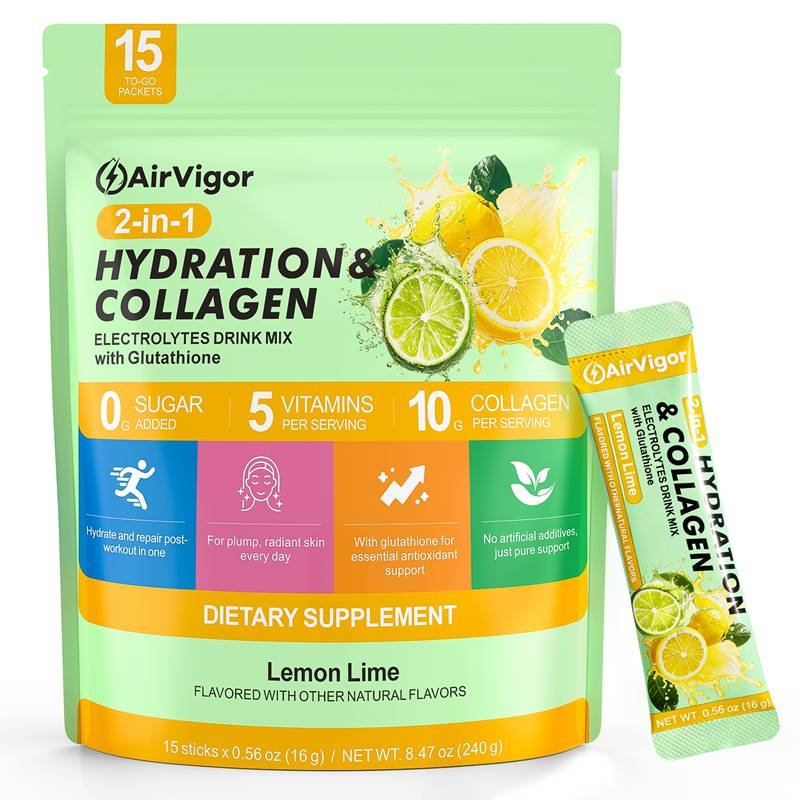
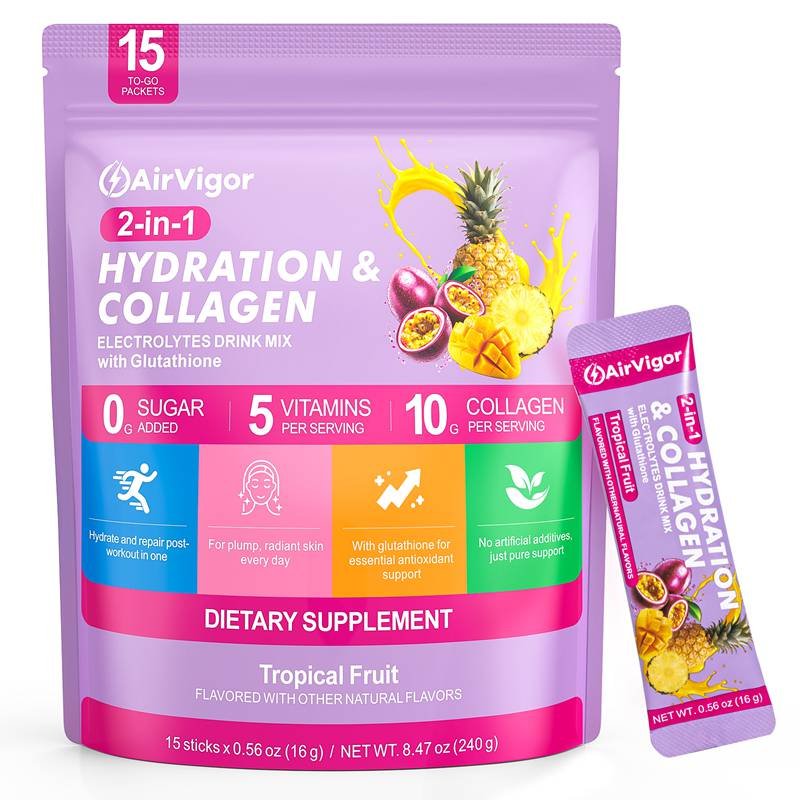
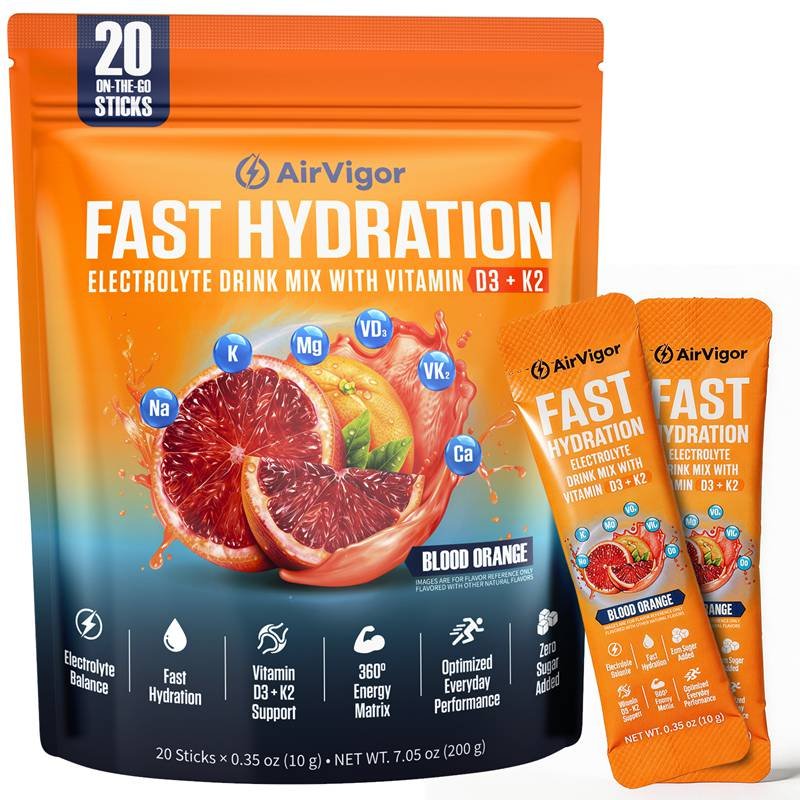
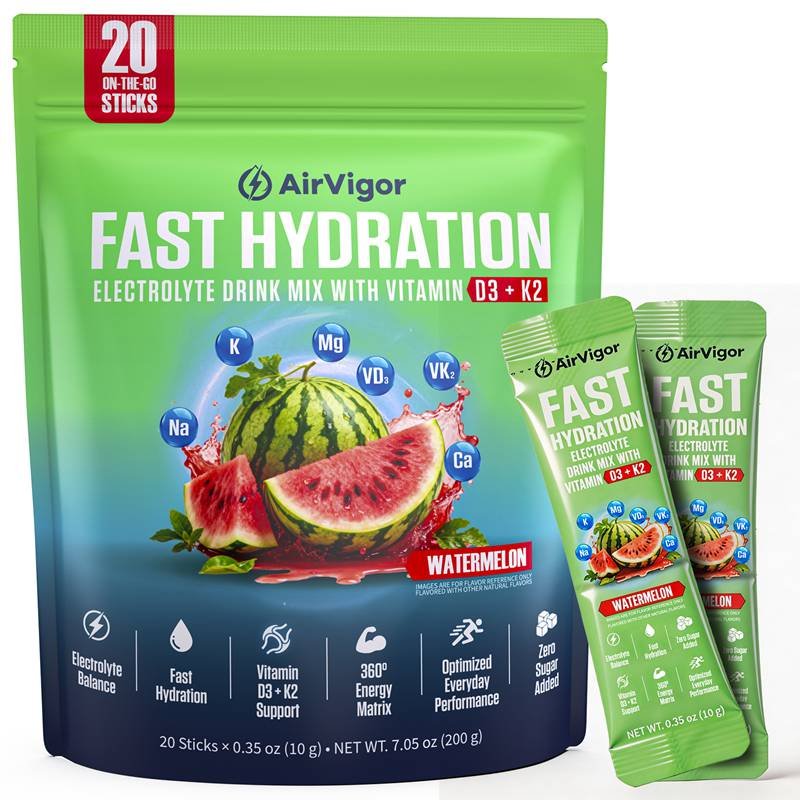
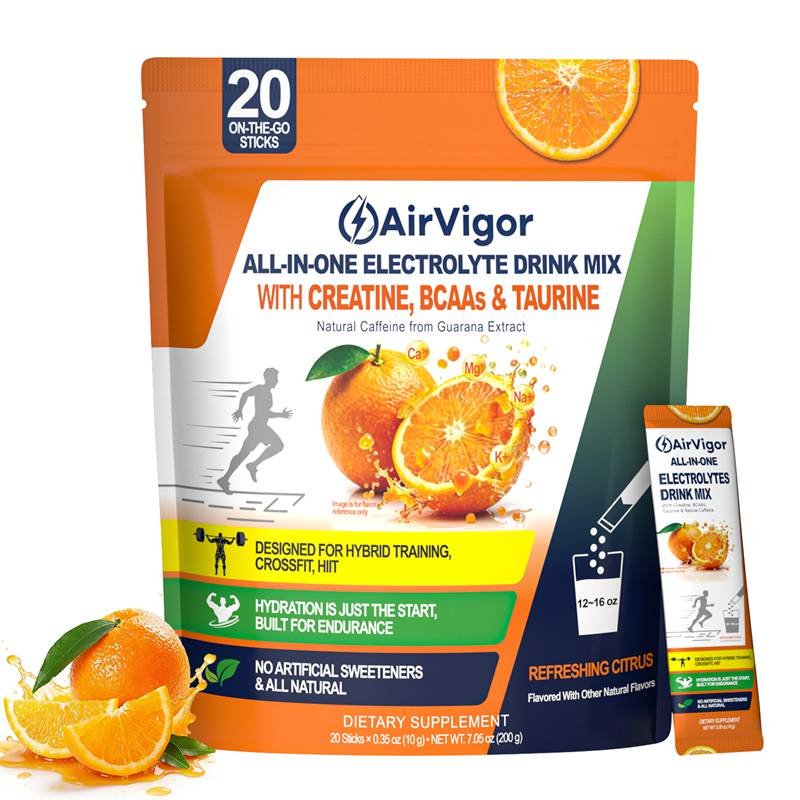
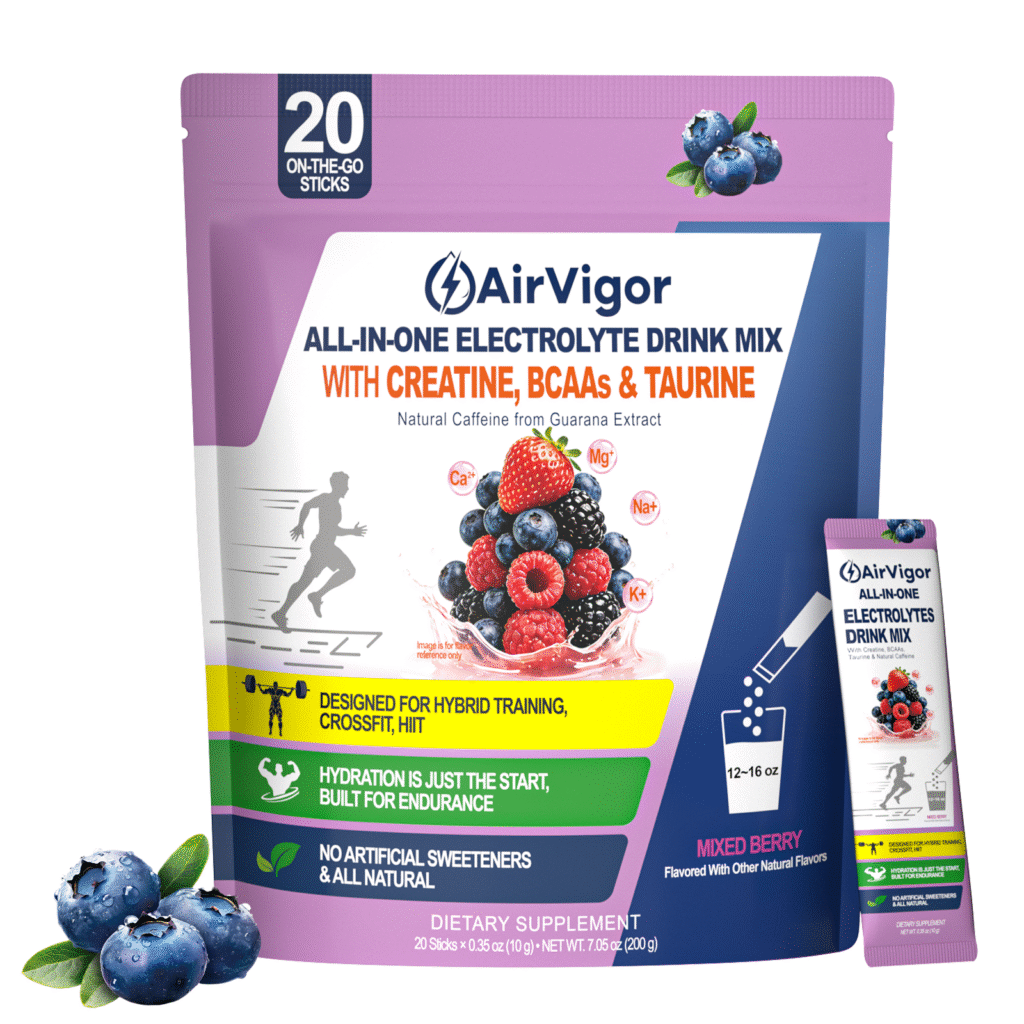
This is also why a well-designed electrolyte formula can feel very different from plain water. When AirVigor develops electrolyte powders, the goal isn’t a sweet sports drink vibe—it’s a training-friendly profile that supports real sweat losses without turning your bottle into syrup.
How do potassium and calcium interact?
Calcium starts contraction. Potassium helps reset the system so you can fire again. In the gym, that matters for:
- repeated reps under load
- speed work
- sets where technique must stay consistent
When repeatability breaks down, you get shaky reps, collapsing bar speed, and that “why does the weight feel heavier every set?” feeling.
Do Electrolytes Improve Strength Output?
Electrolytes don’t directly build strength like progressive training does, but they can improve strength output by preventing avoidable performance loss. They support hydration, nerve signaling, and muscle contraction efficiency—helping you maintain bar speed, reduce early fatigue, and complete more high-quality sets. Benefits are most noticeable when sweat loss is high, sessions are long, you train in heat, or you start workouts slightly dehydrated.
Do electrolytes increase strength?
If we’re talking long-term strength gains—higher 1RM months later—electrolytes aren’t the primary lever. Training, recovery, and nutrition drive adaptation.
But if “increase strength” means raising the strength you can express today, electrolytes can matter. Not by adding capacity, but by reducing the penalties that come from dehydration and electrolyte drift.
Here’s the clean way to think about it:
- Training raises the ceiling.
- Electrolytes help you stop feeling like the ceiling is lower than it really is on certain days.
That’s not a sexy promise, but it’s the truth—and truth is what ranks long-term.
Do electrolytes help you lift more?
Sometimes yes, and it’s usually in one of two situations:
- You’re losing output inside the session (late-set collapse).
- You’re training in heat or sweating more than you realize.
Signs electrolytes may help:
- You start strong and fade fast
- Grip gives out early (especially on pulls)
- You feel lightheaded or oddly “flat”
- Perceived effort spikes for no clear reason
- You drink water but don’t feel rehydrated
Electrolytes won’t turn a bad program into a good one. But they can help you complete the work you already planned, and that is how you make training productive.
| Goal | What electrolytes can help with | What they can’t replace |
|---|---|---|
| “Lift more reps today” | Maintain output when sweat/hydration is limiting | Progressive overload, skill, recovery |
| “Keep bar speed late session” | Support nerve signaling and plasma volume | Muscle growth |
| “Stop feeling flat” | Reduce dilution/low sodium effects | Sleep, calories, stress management |
| “Be consistent week to week” | Reduce avoidable drop-off | A poorly built training plan |
Do electrolytes prevent strength drop-off?
This is the strongest “yes,” and it’s the part that makes electrolytes genuinely useful for many lifters.
Strength drop-off has many causes. Electrolytes don’t solve all of them. But they help with the dehydration/electrical efficiency piece, which is often underestimated.
If you’ve ever had a session like:
- Set 1–2: smooth
- Set 3: bar speed starts dying
- Set 4: everything feels heavier than the math says it should
…that’s the classic pattern where electrolytes can reduce the falloff when sweat loss is part of the equation.
It’s also where formula quality matters. Many drinks are too sugary (good for endurance carbs, not always desirable for lifting). Others are so weak they’re basically flavored water. AirVigor’s positioning is simple: training-friendly electrolytes, transparent dosing, and manufacturing controls that match what serious customers expect (COA, batch testing, quality systems).
When Do Electrolytes Matter Most?
Electrolytes matter most when sweat loss is high or performance demand is high: long workouts, hot gyms, high-volume strength blocks, CrossFit-style sessions, double training days, or naturally salty sweaters. They matter less for short, low-sweat exercise. If you train in climate control, sweat lightly, and eat normal meals, you likely don’t need electrolyte supplementation every day.
Do electrolytes matter for heavy lifting?
Heavy lifting is nervous-system heavy. Even small changes in hydration can make heavy work feel different—especially if you’re doing multiple heavy sets or short rest work.
Important nuance: one heavy set doesn’t “burn electrolytes.” The bigger issue is arriving already slightly behind (under-hydrated, low sodium), then pushing hard, then drinking plain water and diluting further.
A practical lifter’s rule: if your heavy day repeatedly “falls apart” midway through, don’t jump to exotic explanations. Check sleep, check food, and check hydration/electrolytes.
Are electrolytes useful during long sessions?
Yes—this is probably the most reliable use case.
If you train 75–120 minutes, do multiple compounds, add conditioning, or train in a warm space, your sweat loss becomes meaningful. Water helps, but water alone can shift the sodium balance in the wrong direction if sweat loss is high.
Intra-workout electrolytes work well because they’re easy to sip, and they don’t rely on stimulants. For many athletes, the benefit feels boring: you just finish your session without the late-workout crash.
That “boring” is a feature.
Why don’t you need electrolytes for everyday exercise?
Because over-supplementing creates noise and doesn’t make you healthier.
If you’re doing:
- a 30–45 minute lift in a cool gym
- light cardio
- yoga/pilates
- low sweat sessions
…normal meals usually cover your electrolytes. You don’t need a supplement to replace something you didn’t meaningfully lose.
Electrolytes become relevant when:
- sweat loss is obvious (or the gym is hot)
- sessions are long/intense
- you’re dieting hard / low carb (water and sodium shifts are common)
- you’re a heavy sweater
- you’re training twice a day
| Situation | Likely need? | Why |
|---|---|---|
| 30–45 min lift, low sweat | Usually no | Food + water are enough |
| Heavy lift day + sweating | Often yes | Sodium loss + output stability |
| 90+ minute session | Often yes | Cumulative loss adds up |
| Hot gym / summer training | Strong yes | Heat accelerates sweat loss |
| CrossFit/HIIT + lifting | Often yes | High sweat + high demand |
| Pregnancy + nausea/heat | Sometimes | Hydration support, caution |

How Should Electrolytes Be Used?
Use electrolytes based on sweat rate, session length, and environment. Many strength athletes do best with a moderate sodium-focused mix pre- or intra-workout on heavy or sweaty days, and no electrolytes on light days. Start with the minimum effective dose, watch how your performance holds across sets, and adjust. A flexible approach beats daily dependence.
How should electrolytes be dosed?
There’s no universal number that fits everyone because sweat rate varies wildly. Two people can train in the same gym and lose completely different sodium amounts. That said, “minimum effective dose” is the right mindset.
Practical approach:
- Light workout, low sweat: skip it
- Heavy session with sweating: moderate dose
- Long session or heat: larger dose, possibly split
Also consider your diet. Very low-carb diets often lead to more water and sodium loss. Highly salty processed diets may reduce the need for extra sodium (though balanced minerals can still help).
AirVigor’s strength for many users is that dosing and labeling are straightforward and consistent batch to batch—something that matters more than people think when a product becomes part of routine.
Should electrolytes be taken pre-workout?
Pre-workout electrolytes are most useful when:
- you train early and start “dry”
- you tend to sweat a lot
- the gym is warm
- you often feel flat in the first 20 minutes
A simple routine that works for many lifters:
- Pre-workout: small dose 20–30 minutes before
- Intra-workout: sip steadily if the session is long or sweaty
If you have a sensitive stomach, start smaller. Electrolytes should feel supportive, not like a challenge.
Are electrolytes needed daily?
Not for most people.
Daily use makes sense if:
- you train hard most days
- you work outdoors or in heat
- you sweat heavily
- you travel frequently and hydration is inconsistent
But if your training is moderate and you sweat lightly, daily electrolytes are usually unnecessary. It’s okay to use them like a tool: when they solve a real problem.
Conclusion
Electrolytes won’t replace training, but they can reduce avoidable performance loss by improving fluid retention, nerve signaling, and muscle contraction—so your bar speed and rep quality hold up longer. Most lifters only need them when sweat loss or heat is real, sessions are long, or you consistently feel “flat” after drinking plain water.
If you want a simple, repeatable approach, treat electrolytes like a tool: use a sodium-forward mix on heavy/sweaty days, skip it on low-sweat days, and adjust based on how your sets hold up. AirVigor is built for that exact use-case—clear dosing, training-friendly formulas, and an easy routine you can stick to.
FAQ
Do electrolytes make you stronger?
They don’t build strength the way training does. They can help you perform closer to your true strength by supporting hydration and muscle firing, especially in high-sweat situations.
Do electrolytes help you lift more?
They can help you complete planned reps and maintain bar speed if dehydration or sodium loss is limiting you. The biggest benefit is often reduced late-session collapse.
Are electrolytes only for endurance athletes?
No. Strength athletes can benefit during hot training, long sessions, high-volume blocks, and mixed conditioning/lifting days.
Why do I feel weaker when I sweat a lot?
Sweat loss reduces fluid and sodium, which can lower blood volume and impair nerve signaling. The result is higher perceived effort and less consistent output.
Are electrolytes safe during pregnancy?
Electrolytes are essential nutrients, but pregnancy is a special case. Moderate, simple electrolyte support may help hydration, but product choice and medical context matter. Avoid stimulants and consult a clinician.
Where AirVigor Fits
If you’re reading this as an athlete, you probably don’t want a hype pitch. You want something that doesn’t get in the way and that actually matches how people train.
AirVigor is positioned around that reality:
- performance-first electrolyte powders designed for real training conditions
- clear labeling and practical use guidance
- stable manufacturing and quality systems (COA, batch testing, compliance documentation)
- formats that match use (stick packs for the gym bag, larger formats for daily training blocks)
If your main issue is strength drop-off, “flat” sessions, or training in heat, electrolytes are one of the simplest “boring but effective” upgrades you can make—when you actually need them.
Buy Now or Build Your Own Formula
1) Want something in-stock and simple?
Buy AirVigor electrolytes on Amazon for fast delivery and easy reorders—especially if you train hard, sweat a lot, or want more consistent sessions without adding stimulants.
2) Want custom electrolytes for your brand?
If you’re building a product line and want a custom electrolyte formula (flavor, mineral ratios, sweetness level, packaging: sticks/tubs/pouches), AirVigor can support OEM/ODM from sampling to scale, with compliance and documentation support.
Share:
Contact Expert Team
At AirVigor, performance becomes effortless. We transform advanced nutrition science into clean, effective supplements that help you hydrate, recover, and feel stronger every day. Shop AirVigor on Amazon and experience athlete-trusted formulas—backed by real science and supported by our world-class R&D and production capabilities.
Trust AirVigor
At AirVigor, turning your performance goals into reality is no longer a struggle—it’s a science-driven journey we build together. Whether you’re a runner, lifter, cyclist, yogi, outdoor athlete, or someone simply seeking better daily energy, AirVigor transforms advanced nutrition research into clean, effective, and trustworthy supplements you can feel.
Backed by our U.S. scientific team, global certifications, and world-class production standards, every formula is engineered to deliver real hydration, real recovery, and real performance. And when you’re ready to experience the difference, you’ll find AirVigor products available on Amazon and other major platforms—fast shipping, consistent quality, and a community of athletes already seeing results.
Behind the scenes, our R&D and manufacturing ecosystem also supports specialized formulation development, ensuring AirVigor continues to lead with innovation while keeping quality and safety uncompromised. But at the core, everything we create is built for you—your health, your performance, your momentum.
Choose AirVigor. Feel the science. Elevate your every day.


Subscribe to our newsletter
Sign up to our newsletter and we’ll keep you up to date with the latest arrivals.