Skip to content
What Does Electrolyte Powder Misuse Explained Mean for Safe Daily Use:Practical Guide
# Your Trusted Dietary Supplement Brand In US
- Emily

Table of Contents
Electrolyte powder is now everywhere: gym bags, office desks, travel kits, hot yoga studios, hiking packs, and daily wellness routines. It can be genuinely useful when your body loses water and minerals through sweat, heat, long workouts, or short-term fluid loss. But when electrolyte powder becomes an automatic daily habit, the line between smart hydration and overuse can get blurry.
Electrolyte powder misuse happens when people take more servings than they need, mix the powder too strong, use it without real sweat loss, or combine it with other mineral-heavy drinks and supplements. The result may be bloating, unusual thirst, stomach upset, headache, weakness, or simply feeling worse instead of better. The goal is not to avoid electrolytes completely, but to use them at the right time, in the right amount, and with enough water.
Think of electrolyte powder like a hydration tool, not just flavored water. One serving after a sweaty workout may make sense. Several servings on a low-activity office day may not. This guide breaks down what electrolyte powder misuse looks like, how to spot it early, and how to build a safer routine that actually fits your body, your sweat level, and your daily lifestyle.
What Is Electrolyte Powder Misuse?
Electrolyte powder misuse means using electrolyte powder in a way that does not match your real sweat loss, fluid needs, diet, serving directions, or health condition. It usually happens when people take too much, mix it too strong, or use it every day without a clear reason.
What Misuse Means
Electrolyte powder misuse is not always dramatic. In most real customer situations, it starts with small habits: one extra packet, less water than recommended, or using electrolytes whenever plain water feels boring.
Electrolyte powder is designed to help replace minerals lost through sweat, heat, intense activity, travel stress, or short-term fluid loss. Misuse begins when the product is used as an all-day flavored drink instead of a targeted hydration tool. The powder may still be high quality, but the timing, amount, or user situation may be wrong.
For example, one serving after a sweaty gym session may be reasonable for many healthy adults. But using three servings on a low-activity office day may add more sodium, potassium, magnesium, sweeteners, and acids than the body needs. The issue is not only “too much electrolyte powder.” It is also using the wrong formula for the wrong situation.
| Use Situation | Better Understanding | Misuse Risk |
|---|---|---|
| After a long sweaty workout | Helps replace water and minerals lost through sweat | Low when label directions are followed |
| During hot outdoor activity | May support fluid balance during heat stress | Low to moderate, depending on serving count |
| As a daily water flavor at work | May add minerals without real sweat loss | Moderate |
| 2–4 servings per day without tracking intake | Total sodium and mineral intake can build up | High |
| Mixed with half the suggested water | Drink becomes too concentrated | High |
| Combined with sports drinks or pre-workout | Ingredients may overlap | Moderate to high |
A simple way to explain misuse is this: electrolyte powder should answer a real hydration need. If there is no sweat loss, heat exposure, long activity, illness-related fluid loss, or specific reason for extra minerals, plain water may be the better choice.
Why Misuse Happens
Electrolyte powder misuse often happens because the product feels light, convenient, and harmless. Customers see a fruit-flavored drink mix, not a mineral supplement that affects daily sodium, potassium, and magnesium intake.
Many people also copy hydration routines from athletes, fitness creators, or wellness influencers without having the same lifestyle. A person training in hot weather for 90 minutes may need a different formula than someone sitting indoors most of the day. When customers copy the habit but not the context, misuse becomes easy.
Another reason is that common body signals are confusing. Thirst, fatigue, headache, muscle tightness, and low energy do not always mean the body needs electrolytes. Sometimes the body needs water. Sometimes it needs food. Sometimes it needs sleep, rest, or less caffeine. Electrolyte powder can help in the right setting, but it should not become the first answer to every uncomfortable feeling.
Common reasons customers overuse electrolyte powder include:
- They think more electrolytes always mean better hydration.
- They use it mainly because it tastes better than plain water.
- They do not check sodium, potassium, or magnesium per serving.
- They drink it on low-sweat days out of habit.
- They stack it with sports drinks, pre-workout, mineral water, or recovery powders.
- They do not notice how many servings they take in one day.
| Customer Belief | What May Actually Be Happening |
|---|---|
| “I feel tired, so I need electrolytes.” | Tiredness may come from low sleep, stress, low calories, or overtraining |
| “If one serving works, two must work better.” | Extra servings may increase mineral load without improving hydration |
| “It is just flavored water.” | Each serving can add sodium, potassium, magnesium, acids, and sweeteners |
| “I should drink it every day.” | Daily use should depend on sweat, heat, activity, diet, and health status |
| “A stronger mix works faster.” | Too little water may cause stomach discomfort or bloating |
Good product education should help customers pause before using another serving. The right question is not “Can I drink this again?” but “Do I actually need another electrolyte serving today?”
When Misuse Starts
Electrolyte powder misuse usually starts when use becomes automatic instead of intentional. At first, a customer may use one packet after a workout. Then they begin using it before workouts too. Later, they keep it at the office, drink it during travel, add it to their morning routine, and use another serving when they feel tired in the afternoon.
This pattern is common because electrolyte powder is convenient. Stick packs fit easily into gym bags, lunch bags, desk drawers, handbags, and travel kits. Convenience is a strength, but it also makes overuse easier if customers do not track servings.
Misuse often begins in these everyday moments:
| Moment | How Misuse Starts | Better Habit |
|---|---|---|
| Morning routine | Drinking electrolytes automatically after waking | Start with plain water unless there is a reason |
| Office work | Using packets to make water taste better | Limit use and alternate with plain water |
| Light workout | Taking electrolytes even with little sweat | Save it for heavier sweat sessions |
| Hot weather | Taking repeated servings without tracking | Plan servings and water intake together |
| Travel | Using electrolytes all day due to dry air | Use strategically, not continuously |
| Post-workout | Taking multiple servings because recovery feels slow | Add food, rest, and plain water too |
A useful customer check is to look at the whole day, not just one drink. If someone takes one serving after hot yoga, that may make sense. If they also had salty meals, mineral water, a pre-workout drink, and another electrolyte packet later, the total intake may be more than expected.
Electrolyte powder misuse is more likely when customers notice these signs:
- They no longer read the serving directions.
- They use electrolytes on days with little or no sweating.
- They mix the powder stronger than recommended.
- They feel bloated or thirsty after drinking it.
- They take multiple servings without checking total sodium.
- They use electrolytes instead of improving meals, sleep, or water intake.
Why Balance Matters
Electrolytes are useful because the body needs balance, not because the body needs unlimited minerals. Sodium helps the body hold fluid and supports nerve function. Potassium supports normal muscle and nerve activity. Magnesium plays a role in muscle function and energy metabolism. Calcium supports muscle contraction and other body processes.
But each mineral has a useful range. Too little can be a problem. Too much can also be a problem. This is why electrolyte powder should be used based on real need rather than routine pressure or social media trends.
| Electrolyte | Why Customers Want It | Why Overuse Can Be a Concern |
|---|---|---|
| Sodium | Helps replace salt lost through sweat and supports fluid balance | Too much may contribute to thirst, bloating, puffiness, or blood pressure concerns in sensitive users |
| Potassium | Supports muscle and nerve function | Higher intake may be risky for people with kidney issues or certain medication routines |
| Magnesium | Supports normal muscle function and recovery routines | Too much may cause loose stool or stomach discomfort in some users |
| Calcium | Supports muscle contraction and normal body function | Usually not a major issue in normal servings, but total intake still matters |
| Chloride | Works with sodium for fluid balance | Often rises along with sodium intake |
This is why a “more is better” mindset does not work well with electrolyte powder. The body does not become better hydrated just because minerals keep going in. Hydration depends on water, electrolytes, food, temperature, sweat rate, activity length, and individual health.
What Smart Use Looks Like
Smart electrolyte powder use starts with matching the product to the moment. Customers should think about activity level, sweat loss, weather, serving size, water amount, and how many other mineral-containing products they used that day.
For many healthy adults, smart use may look like one serving after a sweaty workout, during a long hot outdoor activity, after hot yoga, while hiking, or during travel when normal hydration habits are disrupted. On a low-sweat day, plain water and regular meals may be enough.
| Smart Use Question | Why It Helps |
|---|---|
| Did I sweat heavily today? | Helps decide if extra minerals are needed |
| Was I in heat or humidity? | Heat increases fluid and sodium loss |
| How long was the activity? | Longer activity usually increases hydration demand |
| Did I mix it with enough water? | Proper dilution improves comfort |
| How many servings have I already used? | Prevents accidental overuse |
| Did I eat salty foods today? | Helps estimate total sodium intake |
| Am I taking medication or managing a health condition? | Some users need professional guidance |
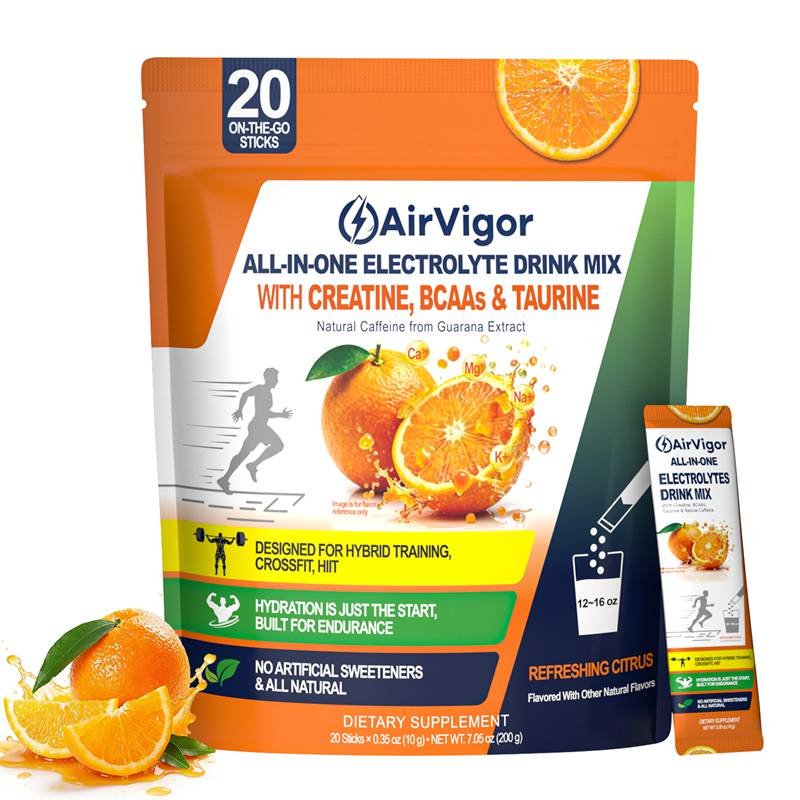
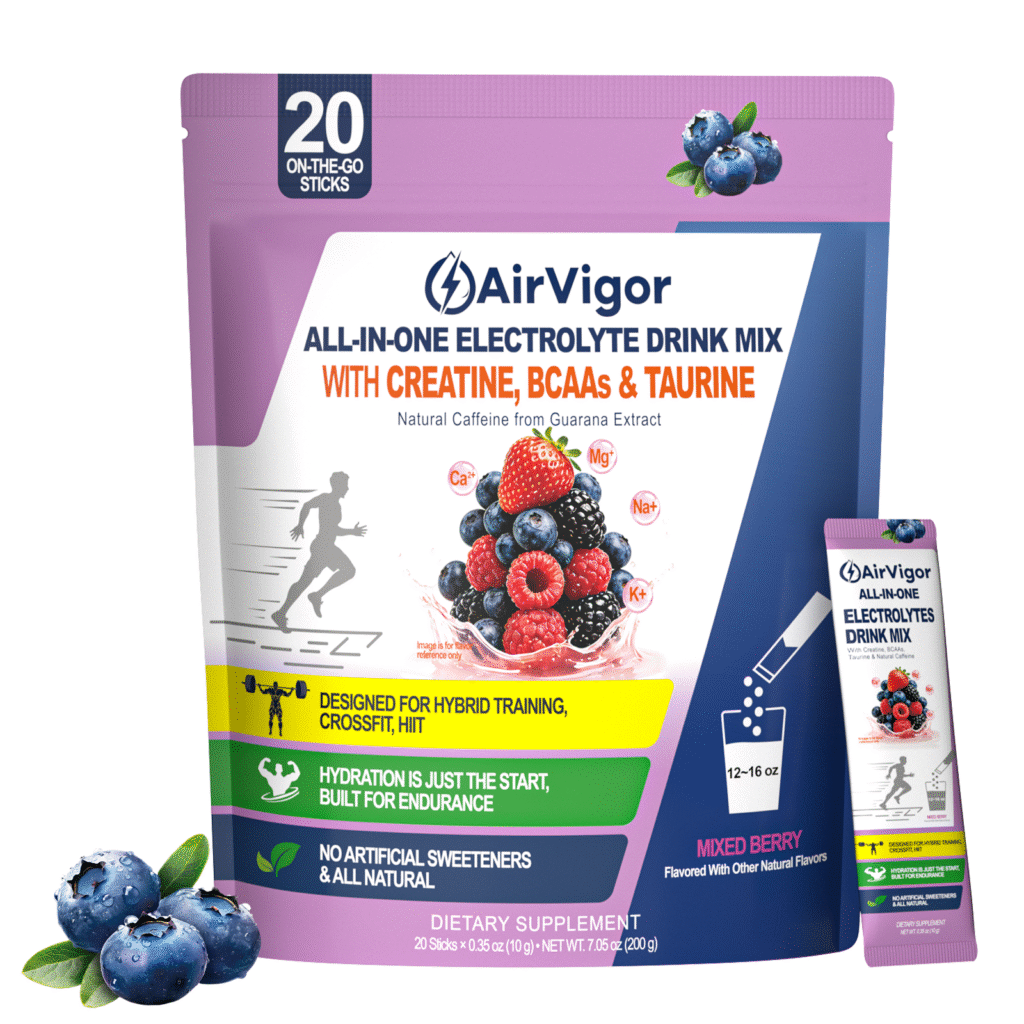
AirVigor’s approach to electrolyte products is built around this kind of practical use. A good electrolyte powder should not make customers guess. It should clearly show the serving size, main minerals, water amount, usage timing, and precautions. When customers understand what they are taking and why, they are more likely to use the product correctly, feel the benefit, and keep the habit in a safe, realistic way.
Can Electrolyte Powder Misuse Happen?
Yes. Electrolyte powder misuse can happen when people take more servings than needed, use strong sweat-replacement formulas on low-sweat days, mix powder with too little water, or combine it with other drinks and supplements that also contain minerals, caffeine, sugar, or performance ingredients.
Too Much Sodium
Sodium is useful when the body loses salt through sweat, but too much sodium from electrolyte powder, salty meals, sports drinks, and packaged foods can build up quickly across the day.
Sodium is often the main electrolyte in hydration powders because it helps the body hold fluid and supports normal nerve and muscle function. For people who sweat heavily, sodium matters. Long runs, summer sports, outdoor work, sauna sessions, hot yoga, hiking, cycling, and humid-weather training can all increase sodium loss through sweat.
The issue is that many customers already get sodium from regular food before they ever open an electrolyte packet. Restaurant meals, frozen meals, sauces, soups, chips, cheese, deli meats, instant noodles, bread, and fast food can all add sodium. If a customer adds several electrolyte servings on top of that, the total can become higher than expected.
For a heavy sweater, one electrolyte serving during or after a workout may feel helpful. For someone sitting indoors with low activity, the same serving may be unnecessary. The formula is not automatically wrong. The use case may be wrong.
| Daily Pattern | Sodium Risk Level | Better Customer Choice |
|---|---|---|
| Sweaty 90-minute workout + 1 serving | Low to moderate | Usually reasonable if label directions are followed |
| Hot outdoor work + planned servings + plain water | Moderate | Useful, but serving count should be tracked |
| Office day + salty lunch + 2 electrolyte packets | Moderate to high | Plain water may be better after salty meals |
| Restaurant dinner + sports drink + electrolyte powder | High | Avoid stacking sodium drinks |
| High blood pressure concern + daily high-sodium powder | Higher caution | Ask a healthcare professional before frequent use |
A simple way for customers to think about sodium is this: if sweat loss is high, sodium may support hydration. If sweat loss is low and food sodium is high, extra sodium may not be needed.
Too much sodium may make some users feel:
- More thirsty than expected
- Bloated or puffy
- Heavy after drinking
- Uncomfortable after salty meals
- Less refreshed despite drinking more fluid
This is why electrolyte powder should not be used only because the flavor is enjoyable. Sodium has a purpose, and that purpose should match sweat, heat, and activity.
Too Much Potassium
Potassium supports normal muscle and nerve function, but higher potassium intake from powders should be handled carefully, especially by people with kidney concerns or certain medication routines.
Many customers see potassium as a “good” electrolyte because it is associated with bananas, muscle function, and wellness. Potassium is important, but it is not something every person should increase without thinking. The body needs potassium balance, and the kidneys play a major role in keeping that balance steady.
For most healthy adults, moderate potassium from food and normal supplement use is usually not a problem. But frequent use of potassium-containing electrolyte powders may be unsuitable for some people, especially those who have kidney disease, reduced kidney function, heart-related concerns, or take medications that affect potassium levels.
The bigger customer problem is that potassium often feels less “visible” than sodium. People may notice salty taste and think about sodium, but they may not check potassium on the label. If they use multiple servings or combine electrolyte powder with mineral drops, greens powder, potassium-rich drinks, or other supplements, the total may become harder to understand.
| Customer Situation | Potassium Consideration |
|---|---|
| Healthy adult using 1 serving after sweating | Usually lower concern when label directions are followed |
| Multiple servings per day | Potassium intake should be checked |
| Kidney function concerns | Higher caution is needed |
| Blood pressure or heart medication use | Professional guidance is safer |
| Combining electrolyte powder with mineral drops | Total potassium may become unclear |
| Using “high potassium” products daily | Not ideal without a clear reason |
Potassium should be treated as a meaningful part of the formula, not just a healthy-sounding ingredient. A good electrolyte powder label should make the potassium amount easy to find, and customers should know whether the product is built for sweat replacement, daily hydration, or a specific active lifestyle need.
For brands, this is important because customers increasingly compare electrolyte products by numbers. A higher potassium number may look attractive, but it is not always better for every use case. A responsible formula should fit the target customer, not simply chase a bigger label number.
Too Many Servings
Too many servings is the easiest way electrolyte powder misuse happens because stick packs and flavored powders make repeated use feel normal throughout the day.
One serving may fit a workout, a hot afternoon, or a long travel day. The problem starts when customers repeat servings without tracking them. A packet in the morning, another at the office, another before training, and one more after training can turn a simple hydration habit into a high-mineral day.
This matters because every serving multiplies the full formula. Customers are not only repeating electrolytes. They may also be repeating:
- Sodium
- Potassium
- Magnesium
- Calcium
- Sweeteners
- Acids
- Flavor compounds
- Sugar, if included
- Caffeine, if included
- Vitamins or performance ingredients, if included
For example, if one serving contains 500 mg of sodium, two servings contain 1,000 mg, and three servings contain 1,500 mg before counting meals. If one serving contains 100 mg of magnesium, three servings contain 300 mg, which may be uncomfortable for some people depending on the form and personal tolerance.
| Number of Servings | What Customers Should Think About |
|---|---|
| 1 serving | Is there a clear sweat, heat, travel, or recovery reason? |
| 2 servings | Did both servings match real fluid loss? How much sodium is total? |
| 3 servings | Are you using it for need or habit? What did you eat today? |
| 4+ servings | Higher misuse risk unless under planned high-sweat conditions |
The best customer habit is not to ask, “Can I have another packet?” The better question is, “What happened today that makes another packet useful?”
If the answer is heavy sweating, long outdoor heat exposure, or extended training, another serving may make sense within label guidance. If the answer is flavor, boredom, or habit, plain water is usually the safer choice.
What Are Electrolyte Powder Misuse Signs?
Electrolyte powder misuse signs may include bloating, unusual thirst, nausea, loose stool, headache, weakness, dizziness, puffiness, stomach heaviness, or feeling worse after drinking it. These signs do not always mean danger, but they are clear reminders to pause, drink plain water, and review serving intake.
Stomach Upset
Stomach upset is one of the most common early signs of electrolyte powder misuse. It often happens when the drink is too concentrated, taken too quickly, or used too often without enough plain water.
Many customers first notice misuse through the stomach, not through obvious “electrolyte imbalance” symptoms. The drink may feel heavy, too salty, too sour, or too sweet. Some people feel bloated within 20–60 minutes after drinking it. Others may feel nausea, stomach tightness, gas, cramping, or loose stool later in the day.
This does not always mean the electrolyte powder is poor quality. In many cases, the product is being used in a way the stomach does not like. For example, mixing one full serving into a small bottle instead of the recommended water amount creates a stronger solution. Drinking it quickly before running, HIIT, CrossFit, cycling, or hot yoga can also make the stomach feel uncomfortable.
Magnesium may also be a factor. Many electrolyte formulas include magnesium because it supports normal muscle function, but some people are sensitive to higher magnesium intake, especially when they take multiple servings or combine electrolyte powder with magnesium supplements. Sweeteners, flavor acids, and carbonation from mixing with sparkling water may also increase stomach discomfort for some users.
| Stomach Sign | Possible Reason | Better Customer Action |
|---|---|---|
| Bloating after one serving | Too little water or strong formula | Use more water next time |
| Nausea before exercise | Drank too fast or too close to activity | Sip earlier and slower |
| Loose stool | Too much magnesium, sweetener, or repeated servings | Reduce serving frequency |
| Stomach heaviness | Concentrated mix or chugging | Follow water directions |
| Cramping or gas | Formula sensitivity or stacking products | Avoid combining multiple powders |
A practical customer rule: if the drink makes the stomach feel worse, do not solve it by taking more. Stop, switch to plain water, and check how the serving was mixed.
Unusual Thirst
Unusual thirst after drinking electrolyte powder can be a sign that the product was too concentrated, too high in sodium for that moment, or not matched to the customer’s real sweat loss.
This symptom is confusing because customers expect an electrolyte drink to make them feel more hydrated. When they feel more thirsty afterward, they may assume they still need another serving. That can lead to a cycle: drink electrolytes, feel thirsty, drink more electrolytes, feel bloated, then keep drinking because the body still feels “off.”
Sodium is often the reason this happens. Sodium helps the body hold fluid, which is useful after heavy sweating. But if the user did not sweat much, already ate salty foods, or used a strong sodium formula, the body may ask for more plain water. The user may feel dry-mouthed, puffy, or thirsty even after drinking.
Unusual thirst can also happen when the powder is mixed with too little water. One serving may be designed for 16–20 oz of water, but if the customer mixes it into 8 oz, the mineral concentration becomes much stronger. The body may respond by making the user want more fluid.
| Situation | Why Thirst May Happen | Better Response |
|---|---|---|
| Electrolytes after salty meal | Sodium intake is already high | Drink plain water |
| Strong mix in small bottle | Mineral concentration is high | Dilute properly |
| Multiple servings at work | Sweat loss is low | Reduce servings |
| High-sodium formula on rest day | Formula does not match need | Save for sweat days |
| Electrolytes plus sports drink | Sodium and sugar may overlap | Avoid stacking |
If thirst increases after electrolyte powder, customers should not immediately add another packet. They should drink plain water, wait, and review sodium intake, serving count, and mixing amount.
Bloating or Puffiness
Bloating, puffiness, or a heavy feeling can happen when electrolyte powder adds more sodium than the body needs, especially on low-sweat days or after salty meals.
Some customers describe this as “water weight,” “puffy face,” “tight rings,” “heavy stomach,” or “not feeling refreshed.” This is more common when electrolyte powder is used repeatedly without sweat loss. Since sodium helps the body retain fluid, it can be helpful after sweating but uncomfortable when used casually.
Bloating may also come from drinking too much fluid too quickly. A customer might chug a large bottle of electrolyte drink before a workout, then feel heavy during movement. In that case, the issue may be timing and drinking speed rather than only the formula.
For fitness users, bloating can be frustrating because they often take electrolyte powder to feel lighter and better during training. If the product is mixed too strong or taken too close to activity, it may create the opposite experience.
| Bloating Pattern | Likely Cause | Practical Fix |
|---|---|---|
| Bloating after salty lunch + electrolytes | Too much sodium in one period | Use plain water after salty meals |
| Bloating before running | Too much drink too close to activity | Sip earlier, not all at once |
| Puffiness after daily use | Electrolytes used without sweat loss | Use only on higher-need days |
| Heavy stomach after strong mix | Too little water or too much powder | Follow label dilution |
| Bloating after stacking powders | Overlapping minerals or sweeteners | Use one functional drink at a time |
A good electrolyte routine should leave customers feeling steady, not swollen or heavy. If bloating appears often, the routine should be adjusted.
Headache or Weakness
Headache and weakness are difficult signs because they can come from both dehydration and misuse. Customers should look at the full day before deciding they need more electrolyte powder.
A person may feel weak after a long sweaty workout because they lost fluid, sodium, and energy. In that case, electrolyte powder may help when paired with water and food. But another person may feel headache after taking several electrolyte servings at work. In that case, more powder may not help at all.
Headache can also come from caffeine changes, poor sleep, stress, low blood sugar, heat exposure, screen fatigue, alcohol, illness, or overtraining. Weakness can come from not eating enough, training too hard, dehydration, poor recovery, or medical issues. Electrolyte powder can support hydration, but it cannot fix every cause of feeling tired or weak.
Customers should use timing as a clue. If headache or weakness appears after heavy sweating, check hydration, food, and electrolytes. If it appears after repeated servings, check total intake and stop adding more powder.
| Customer Situation | What It May Mean | Better Next Step |
|---|---|---|
| Weak after long sweaty workout | Fluid, sodium, and calorie loss | Rehydrate gradually and eat |
| Headache after several packets | Possible overuse or poor dilution | Stop powder and drink plain water |
| Weak during fasting + electrolytes | May need calories, not only minerals | Add food when appropriate |
| Headache after hot outdoor work | Heat stress or dehydration possible | Cool down and hydrate carefully |
| Severe weakness or confusion | Could be serious | Seek medical help |
Electrolyte powder should not be used as the only answer to headache or weakness. Customers need to consider the whole routine: water, food, rest, temperature, activity, and health status.
Loose Stool
Loose stool can happen when electrolyte powder contains magnesium, certain sweeteners, high acidity, or when the user takes too many servings in one day.
This is an important customer concern because digestive discomfort directly affects repeat purchase. Even a formula with good ingredients can feel unsuitable if the user experiences urgency, loose stool, or stomach discomfort. Sometimes the formula is not the problem. The serving pattern is.
Magnesium is often included in electrolyte powders for muscle function and recovery positioning. However, magnesium can affect bowel movements, especially when total intake rises. If a customer takes electrolyte powder plus a magnesium supplement, greens powder, sleep formula, or multivitamin, their total magnesium intake may be higher than they realize.
Sweeteners and flavor acids can also contribute. Some customers are sensitive to sugar alcohols or strong acidity. Others experience loose stool when they drink a concentrated mix too quickly.
| Possible Trigger | How It Happens | Customer Adjustment |
|---|---|---|
| Multiple servings | Magnesium and sweeteners repeat | Reduce daily servings |
| Magnesium supplement + electrolyte powder | Total magnesium increases | Check both labels |
| Strong mix | Concentrated minerals and acids | Add more water |
| Drinking too fast | Gut receives too much at once | Sip slowly |
| Sensitive stomach | Flavor system may not fit | Try a gentler formula |
Customers who experience loose stool should stop using repeated servings and return to plain water. If it happens often, they may need a lower-magnesium, lower-sweetener, or more gentle daily hydration formula.

Is Daily Electrolyte Powder Misuse?
Daily electrolyte powder is not automatically misuse. It becomes misuse when people drink it every day without real sweat loss, heat exposure, long activity, travel stress, or fluid loss. For many users, electrolyte powder works best as a situational hydration tool, not an all-day habit.
Normal Sweat Days
On normal sweat days, many healthy adults do not need electrolyte powder. Plain water and regular meals often provide enough fluid and minerals.
A normal sweat day means the body is not losing much fluid through heat, exercise, or long outdoor activity. This could be a desk-work day, a light errand day, a short walk, easy stretching, or a low-intensity workout in a cool room. On these days, the body may not need extra sodium or potassium from a drink mix.
Food already provides electrolytes. Sodium comes from salt, sauces, bread, soups, cheese, restaurant meals, and packaged foods. Potassium comes from bananas, potatoes, beans, leafy greens, dairy, and many fruits. Magnesium comes from nuts, seeds, whole grains, legumes, and greens. Calcium comes from dairy, fortified drinks, tofu, and certain vegetables.
This matters because electrolyte powder is not the only source of electrolytes in the day. A customer may think, “I only had one packet,” but that packet is added on top of meals, snacks, mineral water, sports drinks, and other supplements.
| Food or Drink Source | Electrolytes It May Add | Customer Note |
|---|---|---|
| Restaurant meal | Sodium | Often much higher than home-cooked food |
| Packaged snacks | Sodium | Easy to underestimate |
| Milk or yogurt | Calcium, potassium | Counts toward daily minerals |
| Bananas and potatoes | Potassium | Useful food-based source |
| Nuts and seeds | Magnesium | Can add up with magnesium powders |
| Mineral water | Sodium, magnesium, calcium | Label varies by brand |
| Sports drink | Sodium, sugar | May overlap with electrolyte powder |
On normal sweat days, the most practical approach is simple: start with plain water. If the customer wants flavor, use electrolyte powder occasionally rather than repeatedly. If they do not sweat much that day, they probably do not need several servings.
Heavy Sweat Days
Heavy sweat days are where daily electrolyte powder can be more useful, especially when sweating is long, repeated, or intense.
Sweat is not just water. It also contains electrolytes, especially sodium. When people sweat heavily for a long time, they may lose enough fluid and minerals to feel drained, crampy, lightheaded, or unusually tired. This is why electrolyte powder can be helpful for long workouts, hot outdoor work, hiking, cycling, running, tennis, team sports, hot yoga, sauna, and humid-weather training.
Some people are also “salty sweaters.” They may notice white marks on dark clothing, salt crystals on hats, stinging eyes, salty skin, or gritty residue after exercise. These users may need more electrolyte attention than someone who sweats lightly.
That said, heavy sweat does not mean unlimited servings. Customers still need to think about water amount, timing, activity length, temperature, and food intake.
| Sweat Situation | Electrolyte Powder Use | Customer Guidance |
|---|---|---|
| 30-minute light workout | Usually optional | Plain water may be enough |
| 60-minute sweaty workout | Often useful | 1 serving may fit |
| 90+ minutes in heat | More useful | Plan water and electrolytes together |
| Outdoor work for several hours | Higher need | Use structured intake, not random packets |
| Hot yoga or sauna | Often useful | Rehydrate gradually afterward |
| Repeated training sessions | Higher need | Track servings and meals |
| Light sweat in cool room | Lower need | Avoid unnecessary daily use |
For heavy sweat days, timing can also improve comfort. Instead of waiting until the body feels exhausted, customers may do better by drinking water before activity, sipping electrolyte drink during longer or hotter sessions, and rehydrating after activity with both fluids and food.
Electrolytes help with fluid balance, but they do not replace calories. If someone feels weak after a long workout, they may need carbohydrates, protein, and rest in addition to electrolytes.
Higher-Risk Users
Some people should not turn electrolyte powder into a daily habit without professional guidance.
This includes people with kidney disease, reduced kidney function, heart disease, high blood pressure, fluid restriction, sodium restriction, potassium restriction, pregnancy-related medical concerns, or medication routines that affect fluid balance, sodium, potassium, or blood pressure.
These customers may still need hydration support in certain situations, but they should not copy general fitness routines from social media. Their bodies may handle sodium, potassium, and fluid differently. A formula that works well for a healthy athlete may not be suitable for someone who has been told to limit sodium or potassium.
| Higher-Risk Situation | Main Concern | Practical Guidance |
|---|---|---|
| High blood pressure | Sodium intake | Avoid frequent high-sodium use without advice |
| Kidney concerns | Potassium and mineral balance | Ask a professional before regular use |
| Heart disease | Fluid and sodium balance | Avoid casual overuse |
| Diuretic medication | Sodium, potassium, hydration shifts | Check with a professional |
| Sodium-restricted diet | Extra sodium | Read labels carefully |
| Potassium-restricted diet | Extra potassium | Avoid high-potassium formulas unless approved |
| Pregnancy with medical concerns | Fluid and mineral needs vary | Use professional guidance |
This is where responsible product communication matters. Electrolyte powder should never be presented as something every person should drink every day without context. The safer message is: daily use depends on your sweat, diet, health status, and the formula.
How To Avoid Electrolyte Powder Misuse?
To avoid electrolyte powder misuse, use it for a real hydration reason, follow the serving size, mix it with enough water, and track how many servings you take in one day. The safest habit is not “more electrolytes,” but better timing, better dilution, and better product matching.
Read the Label
The label tells customers how strong the formula is, how much water to use, and whether the product fits daily hydration, workouts, hot weather, or heavy sweating.
Many electrolyte powder misuse problems start because customers only read the front label. They see “hydration,” “recovery,” “zero sugar,” or “daily minerals,” but they may skip the part that matters most: serving size, sodium amount, potassium amount, magnesium amount, suggested water volume, and daily use guidance.
A strong electrolyte powder should make these details easy to find. Customers should not need to guess whether one packet is for a light office day or a high-sweat workout. They should be able to understand the formula within a few seconds.
Before using any electrolyte powder, customers should check:
- Serving size: one scoop, one stick pack, or one measured serving
- Water amount: how many ounces or milliliters to mix with one serving
- Sodium per serving: especially important for sweat replacement and daily sodium control
- Potassium per serving: important for people with kidney concerns or certain medication routines
- Magnesium per serving: useful, but may affect digestion in sensitive users
- Sugar or sweeteners: important for daily use, keto users, and stomach comfort
- Caffeine or active blends: important if using with pre-workout or energy drinks
- Suggested timing: before, during, or after activity
- Daily serving guidance: whether repeated servings are recommended or not
| Label Item | Why Customers Should Check It | Misuse It Helps Prevent |
|---|---|---|
| Serving size | Shows how much powder equals one use | Accidental double serving |
| Water amount | Shows proper dilution | Strong mix, nausea, bloating |
| Sodium | Main sweat-replacement mineral | Too much sodium on low-sweat days |
| Potassium | Important for mineral balance | Risk for sensitive users |
| Magnesium | May support normal muscle function | Loose stool or stomach discomfort |
| Sugar | Affects calories and daily intake | Unwanted sugar stacking |
| Caffeine | Can overlap with energy products | Jitters, sleep issues, overuse |
| Use directions | Shows intended scenario | Using the wrong formula for the wrong day |
A customer who reads the label is already less likely to misuse the product. The goal is not to memorize every mineral number. The goal is to know what one serving adds to the day.
For example, if a product is built for heavy sweating and contains a higher sodium level, it may be useful after hot yoga, long runs, outdoor sports, or summer work. But that same formula may be too much for someone sitting at a desk all day. Reading the label helps customers match the formula to the moment instead of using it blindly.
Use Enough Water
Using enough water is one of the easiest ways to reduce electrolyte powder misuse. A full serving mixed into too little water becomes stronger, heavier, and harder for some stomachs to tolerate.
Many customers think stronger flavor means stronger hydration. That is not how electrolyte powder works. If the label recommends mixing one serving with 16–20 oz of water, using only 8 oz does not make the product “work faster.” It simply makes the drink more concentrated.
A concentrated drink can feel too salty, too sour, or too sweet. It may sit heavily in the stomach, especially before running, CrossFit, HIIT, cycling, or hot yoga. Some customers may notice bloating, nausea, cramping, thirst, or loose stool after drinking a strong mix.
Water amount also affects how enjoyable the product feels. If a powder is too strong, customers may blame the formula when the real problem is dilution. A well-formulated electrolyte powder should taste clean and drinkable when mixed as directed.
| Mixing Pattern | What May Happen | Better Habit |
|---|---|---|
| 1 serving in too little water | Strong taste, bloating, thirst | Follow label water amount |
| Extra powder for stronger taste | Higher mineral intake | Do not use powder as flavor booster |
| Chugging before exercise | Stomach heaviness | Sip slowly before activity |
| Mixing with sparkling water | Gas or stomach pressure for some users | Use still water if sensitive |
| Mixing with sports drink | Sodium and sugar overlap | Use plain water unless directed |
| Mixing multiple powders together | Ingredient stacking | Use one functional powder at a time |
For daily customers, the best method is simple: mix one serving with the recommended water amount, stir or shake until dissolved, and sip it naturally. For workout users, it may feel better to start drinking earlier instead of taking a large amount right before training.
The right water amount also helps customers avoid false signals. If someone drinks a strong electrolyte mix and feels thirsty afterward, they may think they need another serving. In reality, they may simply need plain water because the first serving was too concentrated.
Match Your Sweat
Electrolyte powder should match sweat loss. The more someone sweats through heat, exercise, sauna, outdoor work, or long activity, the more useful electrolyte support may be.
Customers often ask, “Should I take electrolyte powder every day?” A better question is, “Did I sweat enough today to need it?” This makes the routine more practical and less wasteful.
Sweat level changes from day to day. A 30-minute light workout in an air-conditioned room does not create the same hydration need as a 90-minute outdoor run in summer. A calm office day does not create the same mineral loss as a full afternoon of landscaping, hiking, tennis, or hot yoga.
Customers can use body and clothing clues:
| Sweat Clue | What It May Mean | Electrolyte Use |
|---|---|---|
| Shirt lightly damp | Mild sweat loss | Electrolytes optional |
| Clothes soaked | Higher fluid loss | Electrolytes may help |
| White salt marks on clothes | Higher sodium loss | Sodium-containing formula may fit |
| Stinging eyes from sweat | Salty sweat | Electrolytes may be useful |
| Long activity over 60 minutes | More fluid and mineral loss | Plan water and electrolytes |
| Hot or humid weather | Faster sweat loss | Use more intentionally |
| Little or no sweating | Low mineral loss | Plain water likely enough |
Matching sweat also helps prevent unnecessary sodium intake. If a customer did not sweat much, a high-sodium electrolyte powder may not be needed. If a customer sweated heavily, plain water alone may not feel like enough, especially when activity is long or repeated.
A practical routine may look like this:
| Day Type | Better Hydration Choice |
|---|---|
| Indoor office day | Plain water, normal meals |
| Light exercise day | Plain water first, electrolytes optional |
| Moderate gym day | 1 serving if sweating is noticeable |
| Heavy sweat workout | Electrolyte drink may be useful before, during, or after |
| Outdoor summer work | Plan water plus electrolytes over time |
| Hot yoga or sauna | Rehydrate gradually afterward |
| Travel day | Use strategically, not continuously |
This approach helps customers get more value from the product. They use electrolyte powder when it is most likely to help, instead of wasting servings on days when plain water is enough.
Why AirVigor Prevents Electrolyte Powder Misuse?
AirVigor helps reduce electrolyte powder misuse by making the formula, serving size, water-mixing guidance, and use scenarios easier to understand. The goal is not to push customers to drink more, but to help them use electrolyte powder at the right time, in the right amount, and with the right expectations.
Clear Formula
A clear formula helps customers quickly understand what they are drinking, how strong the product is, and whether it fits workouts, hot weather, travel, daily hydration, or recovery.
Many electrolyte powder problems begin before the customer even opens the package. If the formula is unclear, customers may guess. They may not know whether the product is designed for heavy sweating, daily hydration, gym performance, low-sugar routines, or recovery. Once customers guess, misuse becomes easier.
AirVigor’s product direction is built around real formula expression. This means customers should be able to see the key electrolyte structure clearly, including sodium, potassium, magnesium, calcium, serving amount, water amount, and suggested use. For electrolyte products, this clarity matters more than decorative wording. A customer wants to know: “Is this light enough for daily use?” “Is this strong enough for heavy sweating?” “Can I take this after hot yoga?” “Should I use this before or after training?”
A clear formula does not need to feel complicated. It should make the customer feel confident within seconds.
| Formula Information | Why Customers Care | How It Reduces Misuse |
|---|---|---|
| Sodium amount | Helps judge sweat replacement strength | Prevents high-sodium use on low-sweat days |
| Potassium amount | Important for muscle and mineral balance | Helps higher-risk users notice caution points |
| Magnesium amount | Linked to muscle support and digestion comfort | Reduces repeated use that may upset the stomach |
| Calcium amount | Supports normal muscle function | Helps customers understand the mineral profile |
| Serving size | Shows how much equals one use | Prevents accidental double dosing |
| Water amount | Shows correct dilution | Reduces bloating, nausea, and strong-mix issues |
| Use timing | Explains when the product fits best | Prevents automatic all-day drinking |
For AirVigor, the formula should not create confusion. A product can have strong market appeal and still be easy to understand. That is especially important for customers who compare multiple electrolyte powders online. They do not want to decode vague ingredient language. They want a product that tells them what it does, who it fits, and how to use it correctly.
Real Dosage
Real dosage means the serving amount should match the product’s purpose, not just look impressive on the label.
In the electrolyte powder category, bigger numbers are not always better. A high-sodium formula may be useful for endurance athletes, outdoor workers, and heavy sweaters. But the same formula may be too strong for someone using it at a desk. A higher magnesium formula may sound attractive for recovery, but it may not be comfortable if the customer takes multiple servings or already uses a magnesium supplement.
AirVigor focuses on dosage logic that fits real use. This helps customers avoid the common mistake of thinking that a stronger formula automatically means a better formula. The better question is: “Does this dosage fit my actual use case?”
For example, customers using electrolyte powder after a 60-minute sweaty workout need a different experience from customers using it during travel or office hydration. A gym formula may need more sweat-support positioning. A daily hydration formula should feel lighter and easier to drink. A recovery formula may include a different mineral balance and stronger post-activity guidance.
| Product Direction | Dosage Focus | Customer Use Case |
|---|---|---|
| Daily hydration | Lighter mineral profile, easy drinking | Office, travel, low-to-moderate activity |
| Gym hydration | Balanced sweat support | Training, HIIT, CrossFit, strength sessions |
| Hot-weather hydration | Stronger fluid and sodium support | Summer activity, outdoor work, sports |
| Recovery electrolyte | Comfort, mineral balance, post-sweat support | After training, hot yoga, sauna |
| Performance blend | Clear active ingredient limits | Electrolyte + creatine or amino acid routines |
| Beauty wellness hydration | Gentle, pleasant, repeatable use | Electrolyte + collagen lifestyle formulas |
Real dosage also helps reduce refund risk and poor customer experience. When a formula is too strong for its intended customer, users may complain about saltiness, bloating, stomach upset, or feeling too heavy. When a formula is too weak for its intended customer, users may feel it does not support their sweat-loss needs. AirVigor’s value is in matching the formula strength to the actual customer group.
For business clients, this also matters for product planning. A private label electrolyte powder should not be developed only around trend keywords. It should be built around a real user: heavy sweater, gym user, daily wellness user, outdoor worker, traveler, or recovery-focused customer.
Better Guidance
Better guidance helps customers know when to use electrolyte powder, when to skip it, how much water to mix, and how many servings make sense in real life.
A good electrolyte powder should not leave customers guessing. Many people misuse electrolyte powder because they do not know the difference between daily hydration, sweat replacement, and performance supplementation. They may use the same product after a long workout, during an office day, before bed, and while traveling, without adjusting based on need.
AirVigor’s approach places stronger attention on practical use guidance. The product should tell customers more than “mix and drink.” It should help them understand which situations make sense.
Useful guidance may include:
- Use after noticeable sweating.
- Use during long workouts or hot-weather activity.
- Use during travel when normal water intake is disrupted.
- Use after hot yoga, sauna, hiking, cycling, or outdoor sports.
- Do not use repeated servings only for flavor.
- Mix with the recommended amount of water.
- Use plain water on low-sweat days.
- Check with a professional if managing kidney, heart, blood pressure, sodium, or potassium concerns.
| Customer Question | Guidance AirVigor Should Help Answer |
|---|---|
| Can I drink it every day? | Daily use depends on sweat, heat, activity, diet, and health status |
| How much water should I use? | Follow the recommended dilution amount on the label |
| Can I take two servings? | Only when there is a real need and within label guidance |
| Can I use it at work? | Yes, but light-use days may not need repeated servings |
| Is it good for workouts? | Yes, especially when sweating is noticeable |
| Should I use it after salty meals? | Plain water may be a better choice |
| Can I stack it with pre-workout? | Check sodium, caffeine, magnesium, and other overlapping ingredients |

Conclusion
Electrolyte powder misuse usually starts when a helpful hydration product becomes an automatic habit. Taking too many servings, mixing powder too strong, using it on low-sweat days, or stacking it with other supplement drinks can make the body feel bloated, thirsty, unsettled, or uncomfortable.
The smarter approach is simple: read the label, match use to sweat and activity, mix with enough water, track daily servings, and choose a formula that fits your real lifestyle. Electrolyte powder works best when it supports a clear need, such as workouts, hot weather, travel, outdoor activity, sauna, hot yoga, or short-term fluid loss.
AirVigor focuses on clear formula expression, real dosage guidance, stable quality control, and practical product design, helping customers use electrolyte powder with more confidence. For branded electrolyte products, private label formulas, OEM/ODM customization, sample requests, or packaging development, contact AirVigor to build a hydration product that is easier to understand, easier to use, and better matched to real customer needs.
Share:
Contact Expert Team
At AirVigor, performance becomes effortless. We transform advanced nutrition science into clean, effective supplements that help you hydrate, recover, and feel stronger every day. Shop AirVigor Supplements on Amazon and experience athlete-trusted formulas—backed by real science and supported by our world-class R&D and production capabilities.
Trust AirVigor
At AirVigor, turning your performance goals into reality is no longer a struggle—it’s a science-driven journey we build together. Whether you’re a runner, lifter, cyclist, yogi, outdoor athlete, or someone simply seeking better daily energy, AirVigor transforms advanced nutrition research into clean, effective, and trustworthy supplements you can feel.
Backed by our U.S. scientific team, global certifications, and world-class production standards, every formula is engineered to deliver real hydration, real recovery, and real performance. And when you’re ready to experience the difference, you’ll find AirVigor products available on Amazon and other major platforms—fast shipping, consistent quality, and a community of athletes already seeing results.
Behind the scenes, our R&D and manufacturing ecosystem also supports specialized formulation development, ensuring AirVigor continues to lead with innovation while keeping quality and safety uncompromised. But at the core, everything we create is built for you—your health, your performance, your momentum.
Choose AirVigor. Feel the science. Elevate your every day.


Subscribe to our newsletter
Sign up to our newsletter and we’ll keep you up to date with the latest arrivals.